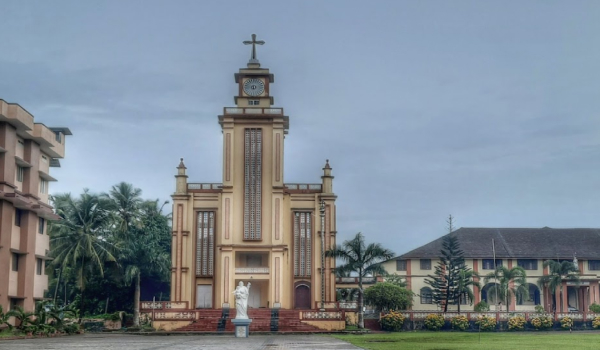
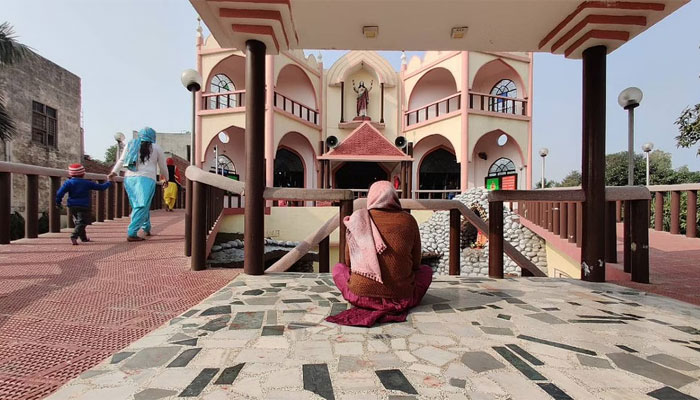
The Archdiocese of Thalassery in Kerala, Archbishop Mar Joseph Pamplany, has raised concerns over the rising cases of alleged targeting of girls from Christian families through “love traps”. In a pastoral letter, he urged the parents to be cautious against such incidents. The letter was read in the churches under the archdiocese in Kerala on Sunday, August 4.
The letter read, “During this eight-day Lent of Mary, let us fervently pray for the sorrows of parents who feel helpless when their children fall into the traps of religious extremists.” The letter further urged the members of the church to make use of the program to create awareness among teenagers as well as their parents to ensure they do not fall into the “trap” of extremist groups.
It read, “We have envisaged three action programs as a birthday present to St Mary – to protect all believers from extremists, donate land to provide houses for the landless, and to ensure that all residents have proper paths to their houses.”
It further added, “During these times when atrocities against women are on the rise, we should learn to respect women and womanhood as we respect the Holy Mother.” It is notable that last year the department of catechesis of the diocese of Thamarassery issued a handbook that warned about ‘Love Jihad’.
The handbook mentioned that Love Jihad was being implemented in nine stages and went on to explain the same. It also had a section on how to avoid falling into the trap set by extremist groups. Following the controversy over the handbook, the Thalassery diocese withdrew the controversial remarks published in the handbook by the diocese.
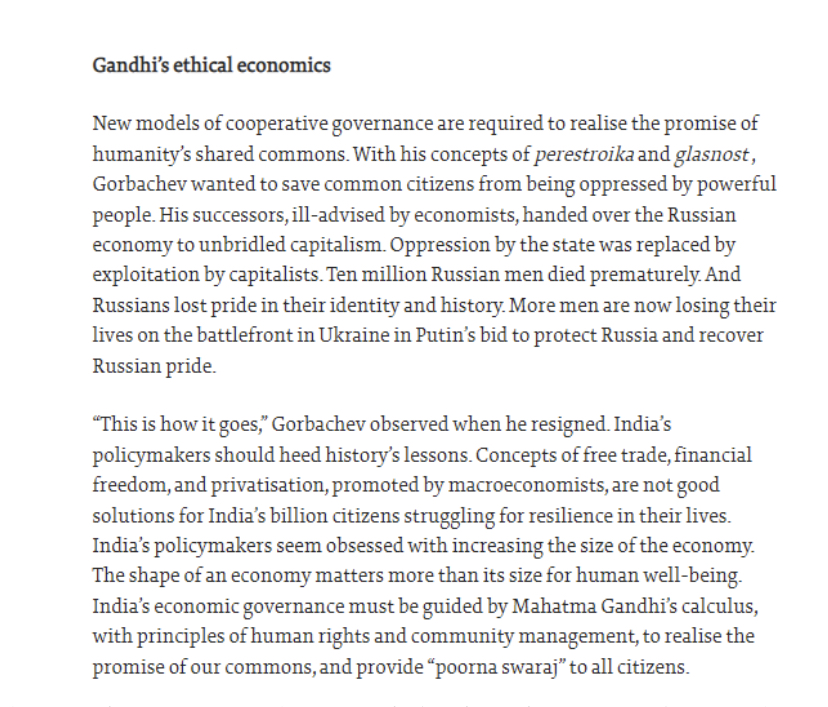
Mikhail Gorbachev passed away on August 30th, 2022. Ever since I was eagerly waiting for the Indian media to take this opportunity to criticise the Modi government. After 8 full days, The Hindu went a step further and utilised this opportunity to criticise the people of India themselves! Today (September 6th), The Hindu published a staggering opinion article on their editorial page, titled “Gorbachev, Macro-economics, and Gandhi”.
I would like to draw your attention to the text in the sub-title below the headline. “Concepts of free trade, financial freedom, and privatisation are not the right solutions for India’s citizens”
I am sure you have re-read the line again to make sure what you are reading is actually what has been printed. For a moment, let’s put aside the acutely insulting, preachy and condescending tone of the author (and the editor who allowed this). Have you ever heard before that “financial freedom” is actually a bad thing? Why would someone not want their fellow citizens to have “financial freedom”? Why would someone object to the concept of “free trade” that will make fellow citizens prosperous and therefore financially independent?
The answers to these questions lay in the bio of the author, published at the end of the piece. The author, Arun Maria, was appointed as a member of the Planning Commission in the year 2009 (by Sonia Gandhi-led UPA). The mind boggles at the quality of people who have been put in high positions by Sonia Gandhi’s party. Positions from which people like Arun Maria actually decide what is the “right solution for India’s citizens”.
Arun Maria also claims in this article that he was part of a group that went to Russia in 1989 to explain the “Indian model” to Gorbachev because he wanted that advice from Rajiv Gandhi. Not only does Arun Maria rue that the “Washington economics model” won over the “Indian Model” in Russia then, but he is very dejected that “it also reached India’s shores in 1991.” Clearly, Arun Maria was prone to regressive thinking for a very long time.
Arun Maria jumps from topic to topic in his article and more often than not, the topics are all not even linked to the headline in the first place! We are told that there has been a “shift in balance from democracy to capitalism in the last 30 years” in the world itself. I believe we need some extra-terrestrial intelligence to decode this statement. He writes about how his definition of capitalism has wreaked havoc in the entire world today (remember the article was supposed to be about Gorbachev!); of how meaningful property rights have increased a divide in the world; and of how capitalism created, wait for it, climate change!
But what is Arun Maria’s solution for all these devastating problems that the world is currently undergoing? Apparently, it is “Gandhi’s ethical economics?
Source: The Hindu
Intellectual fraudsters often think that using fancy terms such as these will cover up all the lofty and empty arguments that emanate from their pen. “Gandhi’s ethical economics” is one such term that no one has heard before and therefore no one will understand now. Arun Maria seeks to explain this term in the weirdest manner possible.
He tells us that “India’s policymakers seem obsessed with increasing the size of the economy.” I must say that I heaved a sigh of relief after this line because now everything falls into place! The author had to somehow link India’s recent achievement of becoming the 5th largest economy to a doomsday scenario. That he chose Gorbachev’s death to do this speaks volumes about the vacuousness in his cranium (I used cranium instead of the brain to sound like an intellectual!).
We are told that “The shape of an economy matters more than its size for human well-being.” By now, I have given up on trying to decode what he meant to convey with phrases like “shape of an economy”. The article now predictably ends with a recommendation to follow “Mahatma Gandhi’s calculus”, whatever that means!
The author (and the editor) use a lot of irrelevant data to make us feel that this is an intellectual piece. Once you separate the alleged intellectual chaff and realise what the undertone of this article is, you are bound to get very angry. Angry that they actually want Indians to remain poor; angry that they do not want Indians to prosper; Angry that such regressive thinkers were part of decision-making bodies in India; angry that they continue to propagate such regressive thinking, years after their leaders have been booted out of power by Indians.
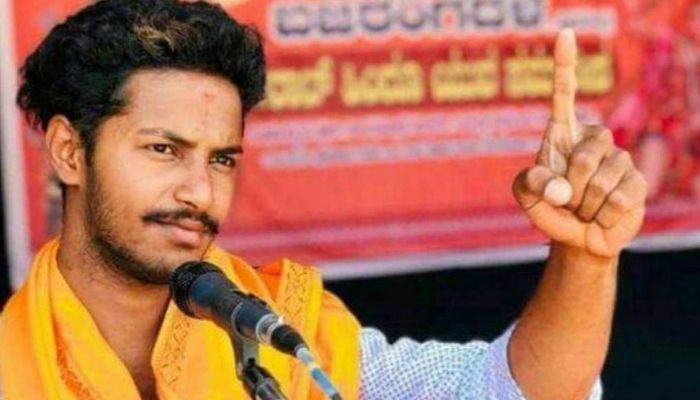
The National Investigation Agency (NIA) has filed a chargesheet in the NIA special court in Bengaluru against the accused in connection with the murder of Bajrang Dal activist Harsha in the Shivamogga district. It has been mentioned in the chargesheet that ‘Hate was the reason behind the murder of Bajrang Dal activist’.
‘Hatred due to issues of Hijab’: #NIA Files charge-sheet on the murder of 28-year old Bajrang-Dal Activist Harsha, hacked to death in Shivamogga on Feb 20th.@KeypadGuerilla & @kritsween with more on the charge-sheet. pic.twitter.com/yhyfnjSOA2
The investigating officers have submitted a chargesheet of more than 750 pages in the case. The case was transferred to the NIA in March this year. On February 20, 26-year-old Harsha was brutally murdered, over a Facebook post related to the hijab controversy, near Kamat Petrol Pump on NT Road in Shivamogga, Karnataka.
Many points were raised by NIA authorities in the chargesheet provided to the court. According to the prosecution document, the accused’s main motivation was to murder a Hindu organisation worker. It is stated that Harsha was slain after waiting for 15 days with the purpose of instilling terror if a Hindu is killed. Harsha was a member of a Hindu group, and the accused in the case sought to avenge an old grievance by murdering him.
Harsha murder case
Harsha was stabbed to death by a group of Muslim teens on the night of February 20 at Kamat petrol pump in Karnataka’s Shivamogga district. He was from Seegehatti and worked as a tailor. Harsha was a Bajrang Dal member who was spotted wearing a saffron shawl to seek consistency in school and college dress regulations.
According to a friend of the Bajrang Dal activist, Harsha had been under monitoring for some weeks and the murder was a “well-planned plot.” The cold-blooded murder of the Bajrang Dal activist sparked widespread outrage, compelling the district administration to enforce a curfew and close educational institutions.
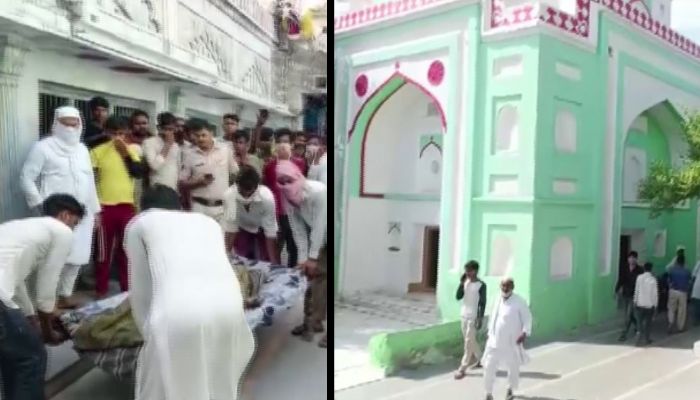
On Monday (September 5), the dead body of a minor boy was recovered from a madrasa in Shah Chokha village in Punhana sub-division in Nuh district of Haryana.
As per reports, the 11-year-old boy went missing on Saturday (September 3) evening. He left his house to offer prayers at the madrassa but did not return home that night. The family kept on searching for the boy until Sunday and registered a missing complaint with the police on Monday.
On the same day, the child’s body was found buried in sand inside the premises of the madrassa. While speaking about the matter, SHO (Pinangwan police station) Satbir Singh informed that the police received information about the discovery of the victim’s body in the madrassa.
He was 11 years & was studying in this madrasa for 1 year. I was told that my nephew had left the madrasa but did not reach home. We searched for him but couldn’t find it anywhere. This is murder. We demand that action should be taken in this: Kin of the deceased (05.09) pic.twitter.com/VFWleyVRNu
He informed, “The boy’s partially decomposed body was found in the room buried in the sand. A foul smell had started emanating from the room, after which we were alerted.”
The victim’s uncle, Iqbal, informed, “We received a call from the madrassa on Saturday late evening that my nephew had gone missing.” He said that that the cleric (Haji) called him on Monday to inform him about the fate of his nephew.
“My nephew has been murdered and I want the police to find the accused soon,” he emphasised. A First Information Report (FIR) was lodged against unidentified people under the Indian penal Code (IPC) Section 302 (murder).
The child’s father had passed away. He is survived by his mother and 3 sisters. The body was learning Urdu and Arabic with religious texts in the madrasa for the past 1 year.
Recently, a 21-year-old madrasa caretaker was arrested in the Santosh Nagar Police Station area of Hyderabad for sodomising a 14-year-old boy. The offender was produced before a magistrate and then remanded to judicial custody.
A brutal incident of triple-murder driven by superstition has emerged from Jharkhand’s capital Ranchi. Three women were allegedly beaten to death on accusations of witchcraft at around 8:30 pm on Sunday, September 4, 2022. The incident occurred at Ranadih, the last village in the Sonahatu police station jurisdiction of Ranchi district.
In this case, police said on Tuesday, September 6, 2022, that the bodies of two victims were retrieved on Sunday, while another body was recovered on Monday.
Jharkhand | Three female bodies recovered in Sonahatu area of rural Ranchi. All are above 60 yrs of age. They have been murdered by fellow villagers on the accusations of practicing witchcraft.Four persons have been detained. Investigation underway: Naushad Alam, SP Ranchi, Rural pic.twitter.com/L6czaqnlzz
According to media reports, three ladies were assaulted with sticks by a group of locals who claimed that they practised witchcraft and that some individuals in the hamlet had been bitten by snakes as a result.
After they died, their bodies were “dumped” in a hilly area close to the village.
The news of the violent murder of three ladies, including an elderly woman, has caused quite a stir in the neighbourhood.
Meanwhile, Senior Superintendent of Police (SSP) Kaushal Kishore informed that thirteen people, including the husband and the son of one of the murdered women, have been booked in connection with the killings. Eight people have so far been arrested and a search is on for the rest. The police have also detained the husband of one of the victims for questioning after he was named in the complaint filed by the woman’s nephew.
Story of ‘witchcraft’ concocted by an exorcist led to the brutal murder of the three women
In what transpired, Raj Kishore Munda, an 18-year-old student at Tamar’s Eklavya Vidyalaya and a resident of the hamlet, passed away from a snake bite on Thursday (September 1) evening. He was Ranadih inhabitant Ramsakal Singh Munda’s son.
Following the tragedy, locals went to a snake-charmer who also doubles up as an exorcist in the Ranadih hamlet. He informed the locals that the death was caused by some local women practising witchcraft and that if they were not eliminated, the village would be destroyed. The quack somehow convinced the locals to believe that the women would soon murder another young person from their own family.
Incidentally, on Friday, September 2, a boy named Abhimanyu Singh Munda was also bitten by a snake. Though he was saved after getting medical aid.
Taking Ojha’s superstition into account, a village assembly was held in the village, and Railu Devi (45 years), wife of Abhimanyu Singh Munda, was brought in and beaten up. She was asked to confess to being a witch. Under duress, Railu Devi admitted that she practised withchcraft. At this point, when she was pressurised to name other witches in the villages, she, out of fear, named Dholi Devi and Aloomani Devi. The three women were then taken to a mountain near Ranadih and beaten to death.
Mukesh Hembram, the station in charge of Sonahatu police station, learned of the murders. The police team arrived at the village on the orders of the higher officers. When people were questioned, it was discovered that the police’s information was accurate.
Speaking about the case, Senior Superintendent of Police (SSP) Kaushal Kishore said, “We had constituted an SIT to probe into the ghastly incident. So far eight persons named in the FIR have been arrested. Search is on for another 16 persons. We will also be arresting the quack who had instigated the villagers.”
On Monday (September 5), West Bengal Chief Minister Mamata Banerjee courted controversy after she claimed to have built 500 IITs and polytechnic colleges in a span of 11 years.
She made the contentious remarks on the occasion of Teacher’s Day at the Biswa Bangla Mela Prangan in Kolkata. At about 45 minutes into the event, Banerjee claimed, “We have been able to do one thing – skill development. We are number one in it.”
While boasting about her achievements, she lost the track of numbers. “I have built about 500 IITs and polytechnic colleges.” During her speech, she made several claims and none appeared as far-fetched as her claim about the Indian Institute of Technology.
Interestingly, there are only 23 IITs in India. This has left many wondering as to what could possibly be the basis of such an outlandish claim. West Bengal BJP leader Keya Ghosh mocked the West Bengal CM and wrote, “500 IITs built by Mamata Banerjee’s Govt in last 11 years. IIT?? Seriously?”
500 IITs built by Mamata Banerjee’s Govt in last 11 years. . . . IIT?? Seriously? ?♀️?♀️ pic.twitter.com/tVbhFkneVD
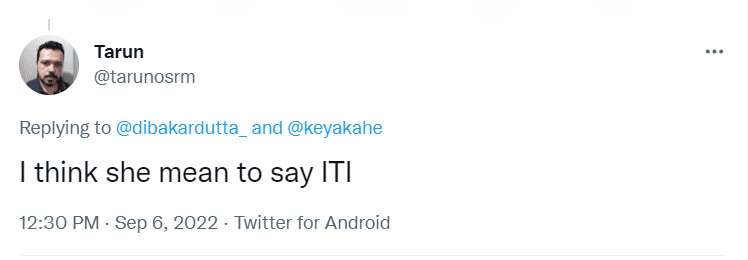
A Twitter user (@tarunosrm) said that Mamata Banerjee perhaps wanted to discuss ITIs (Industrial Training Institutes) but ended up referring to the IITs. A disastrous slip of the tongue by the Head of a State would have drawn public ridicule but the West Bengal CM has somehow been immune to it.
Nonetheless, the remainder of Banerjee’s speech hinted at the possibility that she had the Industrial Training Institutes in mind and not the IITs. “Do you know the result of opening 500 IITs and polytechnic colleges?” she asked the audience.
Mamata Banerjee claimed that her efforts have helped pull a plug on unemployment by upskilling the job seekers. “We have created a portal to connect those undertaking training to the recruiters,” she said.
Screengrab of the tweet by Tarun
“Imagine, you are learning to drive. Once your driving licence is issued, a company offers you a job. In the following 15 days, I will provide employment letters to 30000 young boys and girls after they are hired through these skill development programmes,” she alleged.
It becomes evident that Banerjee intended to speak about ITIs, except she committed a verbal blunder. However, even then, her claims do not make sense.
According to the West Bengal Government’s Department of Technical Education, Training and Skill Development, there are only 75 government polytechnics in the State. At the same time, the total number of Industrial Training Institutes in West Bengal stands at 46.
In total, there are 121 ITIs and government polytechnics in the State, many of which existed prior to Mamata Banerjee’s rise to power in 2011. While the West Bengal Chief Minister has been misleading people with her claims of 500 IITs, the reality of the State’s education sector is shrouded in obscurity.
Despite being caught peddling information in a public event, neither Mamata Banerjee nor her party members bothered to apologise or issue a clarification about the matter.
On September 6, a report was published by article 14 on Christian conversions and alleged attacks on pastors in Punjab. Despite subtly acknowledging that conversion is on the rise in the state of Punjab, the author tried to water down the rampant conversions and blamed the state for coming up with the laws that criminalised forced religious conversions. To understand the situation and how Article 14’s report missed the actual situation in Punjab, it is essential to counter a few misleading facts mentioned.
The report started with the introduction of one pastor Raju Rangila who hails from Gurdaspur and claims to be among the first pastors in Punjab who recorded gospels in Punjabi. Pastor Rangila owns a bungalow in village Dhariwal, located 13 KM southwest of Gurdaspur, Punjab. He holds events for the people who “want to learn about Jesus Christ” six days a week in the hall of his bungalow that can easily accommodate 100 people.
Now the interesting part of the report was that they categorically mentioned that Raju Rangila was not the only one in the area who had a Church. There are dozens of such “independent” and “home” churches where the “pastors” spread the words of “Jesus Christ”. Quoting George Soni, president of the Punjab Christians United Front, the report noted, “Tough to put a number on it as we do not have lists of all such churches, but I would say there has been a 5-10% increase in the past three years.”
Here, Soni talked only about the past three years and said that the number of Christians has increased by 5% to 10% in that area itself. Such small churches are unaccounted for in any government records and often attract people, notably from the Dalit community and mazhabi Sikhs community, to join Christianity.
As per the 2011 census that Article 14’s report mentioned repeatedly, there were only 1.5% Christians in Punjab, almost a similar number of Muslims was recorded, Hindus were almost 36%, and the remaining over 60% were Sikhs in the state. However, in the past 12 years since the last census was released, the demographic change has happened at a drastic level in the state. The number of Christians, no matter whether they call themselves Christians on paper or not, has increased at a very alarming rate.
Thanks to pastors like Raju Rangila, Bajinder Singh, Ankur Narula, Deepti and others, a number of Dalits from both the Hindu and Sikh community have converted to Christianity. There have been several videos of these pastors making rounds on social media platforms where they could be seen indulging in superstitious ‘healing’ activities in front of lakhs of people in every meeting.
However, Article 14 nowhere raised the alarm over this. Another interesting aspect of the report was a statement of 46-year-old Monty Singh, who visited the Church of Signs and Wonders in Khambra village of Jalandhar, who is a regular churchgoer. Interestingly, Monty Singh is still a Sikh on paper, but speaking to Article-14, he said, “Even though I am Sikh on paper, I feel Christian at heart.”
In simple words, Monty Singh has already converted to Christianity but did not reveal the conversion on paper. There is a high possibility that Monty Singh would lure other Hindus and Sikhs from his neighbourhood to join him for Sunday Mass and try to convince them to “join the fold”. This is any way how they convert people to Christianity. First, a family gets converted, then they convert four others and then the four new Christian families would convert four new families. It is like a multilevel marketing scheme but involves religious conversions.
Another 22-year-old churchgoer named Happy Kaur also mentioned in the report that she has a family of 11, and all go to Church. These 11 people have also retained their caste certificates. Kaur knows if she reveals her conversion on papers, her caste privileges or the benefits like reservation would be stripped from them. People like Kaur are converts. They do not believe in Hinduism or Sikhism and only have faith in Christianity. They will happily go out and spread the words of Jesus Christ but do not tell the government that they have converted in order to retain the privilege.
With such worrying details emerging from Punjab, where Sikhs and Hindus are converting to Christianity but retaining their original name and even caste certificate if they are Dalit, the issue of “reservation for Dalit Christians” becomes far more worrying. Essentially, it is evident that there is not only rampant conversion in Punjab but stealth is being employed to ensure that the real percentage of Christians remains unknown. On top of that, Dalit Hindus who convert to Christianity and have no faith in Hinduism are retaining their caste certificate to get benefits from the state. If Dalit Christians are given reservation, it would only act as an incentive for more such nefarious activity to take place.
The growing number of churches worried Sikh and Hindu leaders
Hindu organisations like Vishwa Hindu Parishad and Bajrang Dal have been voicing against the rampant conversions in Punjab for a long time. Initially, Dalits were getting converted at a mass scale, and Sikh leaders were not bothered that much. The situation took a drastic change in the last 2-3 years after videos of several Pastors dressed as Sikhs started circulating on social media platforms, and locally, it became visible that Sikhs, especially Mazhabi Sikhs or Dalit Sikhs, were converting to Islam.
Last year, Shri Gurudwara Prabandhak Committee (SGPC) announced a program to put a stop to the rampant conversion in the state, but the Sikh leadership has not achieved much in breaking the chain. A point that Article 14 raised linked to the statements given by Sikh leaders was that there had been an alleged increase in attacks on pastors and churches. Local Sikh bodies and Nihang Sikhs have clashed with Christian missionaries, which was highlighted in the Article 14 report.
The reality is different from what has been projected. In general, no one has any problem with any religious program happening in Punjab. I am from Punjab and have seen events happening in harmony for a long time. The issue started with missionary programs mushrooming in areas where no Christians live, or the number of Christians is almost negligible.
Article 14 specifically pointed out a May 2022 incident where locals had stopped a Christian event in Zirakpur. OpIndia had exclusively covered the event, and Article 14 linked the source as the video published by one of the church members who had recorded the whole incident. There are a few points that need to be considered.
First of all, though they had permission from the local administration, the residents of Green City, Mamata Enclave and Laxmi Enclave surrounding the location of the event were not informed, or permission from the residents’ association was not sought. There was not even a single person from these three localities who were part of the event. All of them were outsiders that raised red flags.
The local BJP leaders and Hindu organisation members, along with the residents, resisted the Christian event, and they got irked when they found out that the pastor was using a car with Police written on it. The car allegedly belonged to an on-duty Police officer who was a member of the Church. Using such a car was against the law, and the BJP leader demanded action against them and stopped the car from being removed. It was allowed to go only after Police issued a challan and promised action.
Article 14 report mentioned that the pastor was allegedly attacked in this incident. As someone who was present at the scene the whole time, I can say that it was completely false. No one was attacked by the Church. In fact, female members of the Church were sent in front of the car to push the BJP leader, of which we have the video proof.
In other cases as well, like the recent case of Village Daduana, it was reported that the local Sikh leaders have been complaining to the administration against the Christian events and said people were forcefully converted. The Nihang Sikhs swung into action only after the administration failed to take any action on the complaint of the locals against the Church.
Demographic change on and off the paper is a concern for all communities
Article 14’s report said the attacks on the Church are based on the “conspiracy theories” of the demographic change, similar in other states. They mentioned 2011 data as the source that demographic change was just a conspiracy theory, but the report itself has contradictory statements. First, the report mentioned there is an increase in small churches in rural areas.
Secondly, George Soni himself said while speaking to Article 14, “If we make a list of all the members of major churches, we can approximately say that up to 15% of Punjab are Christians.” If he is to be believed, only in 11 years did the number of Christians go from just 1.5% to a whopping 15%, but it is still not an alarming change in demography as per Article 14. Notably, most of these 15% are converts, and it cannot be confidently said how many more have not said publicly that they have shunned their previous faith and accepted Christianity just to ensure they keep getting caste benefits.
Emanuel Nahar, chairman of Punjab’s Minority Commission, has said in a statement that the official number of Christians remains low because the Dalit Sikhs do not formally convert to Christianity but continue going to Church.
The identity crisis faced by the Christian converts was pointed out in February as well. AAP leader Rohit Khokkar, who was previously associated with BSP, had told Indian Express that 98% of the Christians in Punjab were converts. He had also embraced Christianity but did not let go of his caste identity for obvious reasons.
Rohit Khokhar said that these people don’t even want to convert officially because they get the benefits of reservation while sticking to the original faith, at least on paper. He further added, “If there is some issue of religious persecution, a person will vote as a Christian. If there is some Dalit rights issue, they may vote as Dalit.” In the end, the vote was not going to the matters related to development in the region but to matters related to caste or religion.
Dalit Sikhs are stuck in the conversion traps for a “better life”
But why do Sikhs convert to Christianity? The reason is the caste system that is much prevailed in Sikhism as well. Most of the “Dalit Sikhs” or Mazhabi Sikhs accepted Sikhism with the hope of getting better treatment from their fellow Sikhs from the Jat community. However, things did not turn out well in their favour, and until recently, there were reports that Dalit Sikhs have separate Gurudwaras, and they are often not allowed to Gurudwaras managed by Jat Sikhs. Details about Dalit Sikhs can be read here.
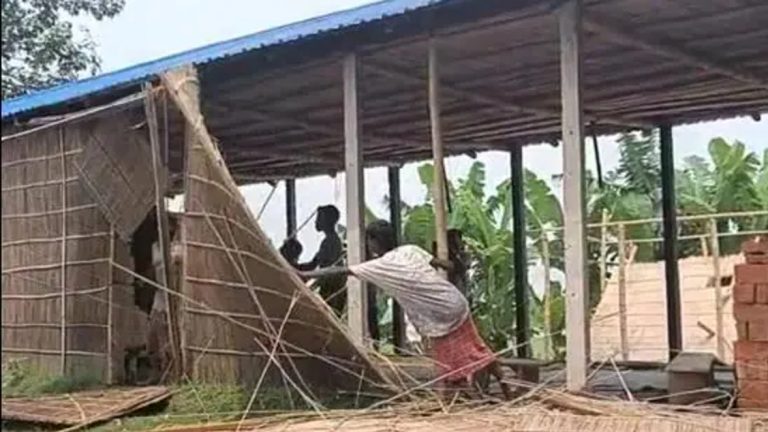
According to reports, the inhabitants of Goalpara town deliberately razed a Madrasa and a house close to it on Tuesday, which had previously been used by two suspected Bangladeshi nationals. Two Bangladeshi nationals reportedly utilised the Dargar Alga Madrassa in Pakhiura Char under Matia police station and the neighbouring house for terrorist operations.
The use of the Dargar Alga Madrassa buildings for anti-national activity was discovered following the arrest of Jalaluddin Sheikh, a madrasa cleric. Both of the absconding Bangladeshis who worked as instructors at this Madrasa are said to have interacted with Jihadi terrorist Jalaluddin Sheikh between 2021 and 2022. The absconding Bangladeshis, Aminul Islam alias Usman alias Mehdy Hasan and Jahangir Alom, were reportedly linked with Al-Qaeda Indian Subcontinent (AQIS) and Ansarullah Bangla Team (ABT).
On Tuesday, residents of Goalpara bulldozed the building by themselves to show their support for the government’s current battle against Madrasas having ties to terrorism. It’s noteworthy that no public money was used for the demolition. The northwest part of the state has seen the demolition of four madrasas so far. Three others had already been demolished by state authorities.
According to authorities, the building next to the Madrasa housed illegal Bangladeshi immigrants with ties to the terrorist organisation Ansar-ul-Bangla. Jihadis would masquerade themselves as religious teachers and infiltrate the state, carrying out subversive and anti-state operations.
Crackdown on Madrasas in Assam
The Assam government is getting more stringent in tracking down and penalizing madrasas accused of having ties to terrorist organisations. Madrasas were demolished at Moirabari, Morigaon district, on August 4, Dhakaliapara, Barpeta, on August 29, and Jogighopa, Bongaigaon, on August 31.
The Jamiul Huda Madrasa in Moirabari was razed by the Morigaon district administration on August 4. On August 29, the district administration and police in Assam’s Barpeta district razed a Madrasa managed by Maulvis Akbar Ali and his brother Abul Kalam Azad, who had been arrested for their ties to the Bangladesh-based terror outfits AQIS and ABT. On August 31, officials in Bongaigaon demolished a madrasa with connections to terrorist organisations AQIS and ABT.
In one of the largest anti-drug operations in India, the Special Cell of the Delhi Police on Saturday arrested two Afghan nationals for possessing drugs worth crores of rupees. The Police also recovered 312.5 kgs of methamphetamine and 10 kgs of heroin worth over Rs 1,200 crores in the international market.
According to the reports, both the Afghan nationals arrested were living in India since the year 2016. The seizure of methamphetamine drugs from the two accused is the largest in the country. The Police confirmed the incident and said that they arrested the Afghan individuals and later interrogated them to recover 606 bags of methamphetamine from a godown in Lucknow, Uttar Pradesh.
It is one of the largest seizures of methamphetamine drugs in the country’s history. Both Afghan nationals were living in India since 2016. Further interrogation had led to the recovery of 606 bags from a godown in Lucknow: HGS Dhaliwal, Special CP, Delhi Police https://t.co/Kp2sGGGdGhpic.twitter.com/B2Ix04K4NK
“It is one of the largest seizures of methamphetamine drugs in the country’s history. Both Afghan nationals were living in India since 2016. Further interrogation had led to the recovery of 606 bags from a godown in Lucknow,” said HGS Dhaliwal, Special CP, Delhi Police.
Reports mention that methamphetamine is one of the world’s most costly illicit substances. It is a highly addictive and strong stimulant that affects the central nervous system. It is chemically identical to amphetamine (drug), which is used to treat attention deficit hyperactivity disorder (ADHD) and narcolepsy, a sleep condition. In the foreign market, the best quality medication might cost up to Rs 30,000 per gram.
Methamphetamine crystals resemble glass pieces or sparkling, bluish-white boulders. It is typically a white, bitter powder or tablet. According to the reports, BJP politician Sonali Phogat, who died under strange circumstances was force-fed methamphetamine.
Also, previously on September 4, the Delhi Police Crime Branch, in collaboration with the Gujarat Anti-Terror Squad (ATS), busted an international drug smuggling ring and detained an Afghan citizen in the Vasant Kunj neighborhood of the national capital, recovering 4 kg of high-grade heroin from him. The substance confiscated was worth Rs 20 crores in the global market.
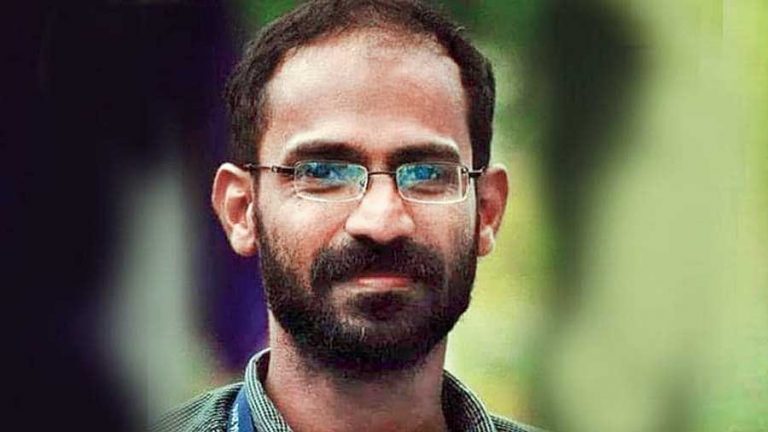
The state of Uttar Pradesh has filed a Statement of Objections, sworn to by the Deputy SP, STF Unit Agra, Uttar Pradesh, the Investigating Officer in the Hathras conspiracy case, opposing the bail plea of UAPA accused Siddique Kappan. Kappan claims to be an independent journalist, however, Uttar Pradesh in its affidavit has provided details of the investigation where they have demonstrated his deep links to Islamist outfit PFI. In the affidavit, the UP government has said that the investigation has revealed Kappan’s personal links to the top leadership of PFI and CFI, their student organisation. The affidavit further makes a connection between CFI and Al Qaeda, the Islamic terrorist organisation, through organisations like IHH in Turkey.
“High Court has meticulously considered the chargesheet, case diaries and evidence against the Petitioner before finding a prima facie case is made out and only then rightly refused bail,” the affidavit read. The affidavit further opposed the bail plea of Kappan saying that the accused knew how to take advantage of the loopholes in the law and that if he was released, it would pose a credible threat to the lives of the witnesses in the case.
In the affidavit, the Uttar Pradesh government also meticulously listed in a table the issues that Siddique Kappan had lied about and the facts he had suppressed from the court in order to secure bail.
1. Misrepresents his employment in Saudi Arabia and links to PFI
In his bail plea, Siddique Kappan categorically states that he was “employed” in Saudi Arabia from 2002 – 2011. It is further stated by Kappan that in 2011, he “resigned from his job in Saudi Arabia and settled in Kerala” and that “since he was very passionate about journalism and was an occasional writer…he opted to join as a sub-editor of the ‘Thejas’ Newspaper at Kozhikkode. In this, he fails to mention who his employers were in Saudi Arabia, for whom, he reportedly worked for almost a decade.
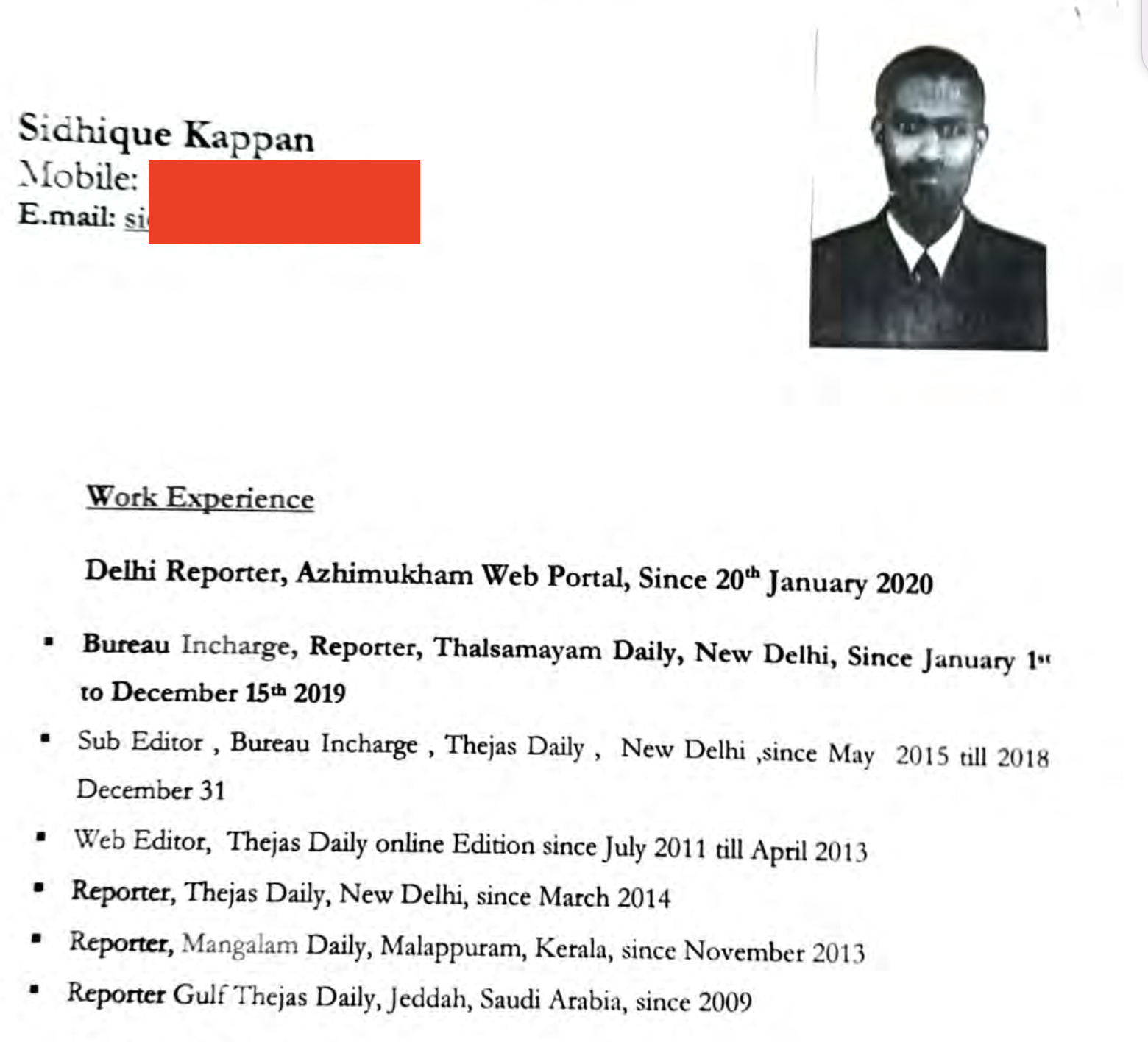
Uttar Pradesh government’s investigation revealed that at least from 2009, Siddique Kappan was employed with Gulf Tejhas Daily in Jeddah as a reporter. In the FSL analysis of his laptop in Agra, word File titled “Sidhique Kappan Resume.docx” was found by the police which lists his employment details.
Resume for Siddique Kappan
The affidavit says, “‘Thejas’ is a Malayalam language mouthpiece of the extremist organization Popular Front of India (PFI) with six editions in Kerala and international bureaus in Saudi Arabia, Qatar and Bahrain. The publication was compelled to shut down in India in 2018 amidst reports (including by a Kerala High Court-appointed independent committee) that the paper’s coverage was aimed at creating religious discord”.
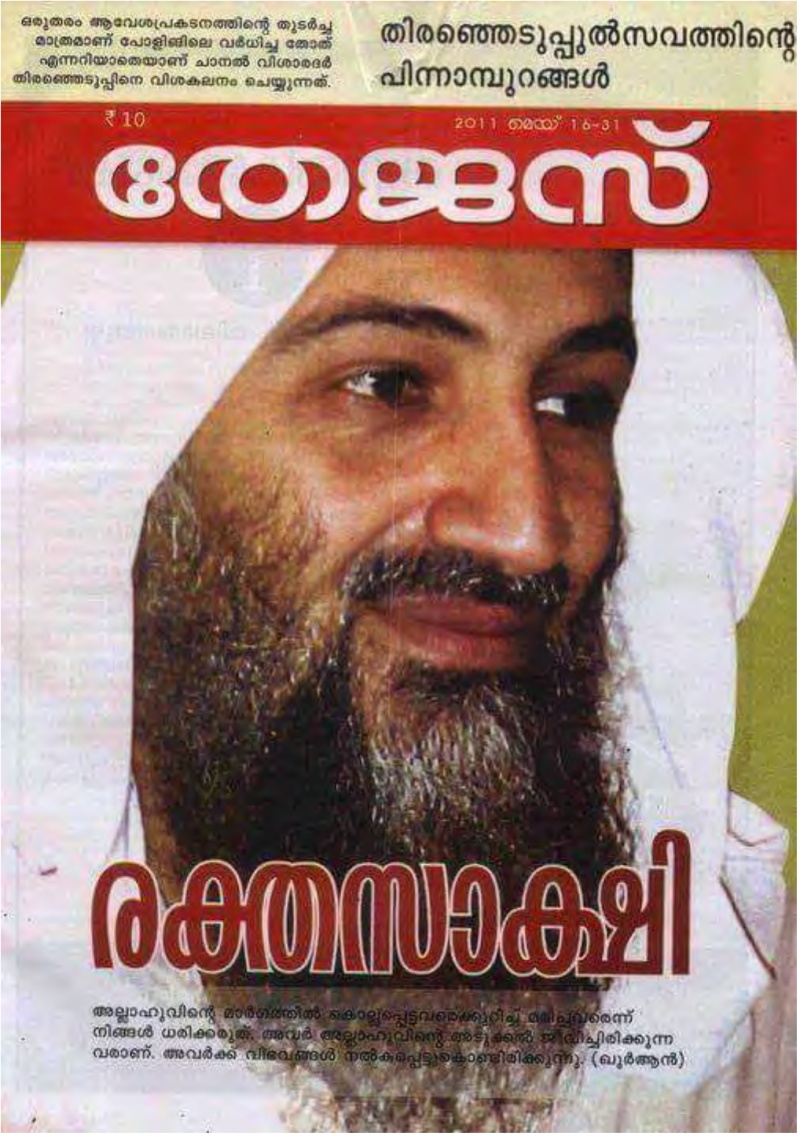
The UP government’s affidavit further states in May 2011, after the US had neutralised Islamic terrorist Osama Bin Laden, the magazine that Kappan worked for published its edition with his picture on the cover along with a Quranic verse and the word “Martyr” on it.
Tejhas cover from 2011
The verse of the Quran on the cover page translates to, “Do not think they are dead; the people who killed in the way of Allah; they are living with Allah; they are provided resources (gifts)”.
The affidavit says that as per his own admission, Siddique Kappan was employed with the magazine when this cover was published and has been associated for over a decade with an employer that espouses a terrorist ideology.
2. Kappan lies, says he was not carrying the Tejhas ID card when he was arrested, on his way to Hathras
In his bail plea, Siddique Kappan claimed that when he was arrested on his way to Hathras, he was not carrying the ID card of Tejhas, but was only carrying the Press Club of India card. However, the Uttar Pradesh affidavit exposes this lie peddled by Kappan as well.
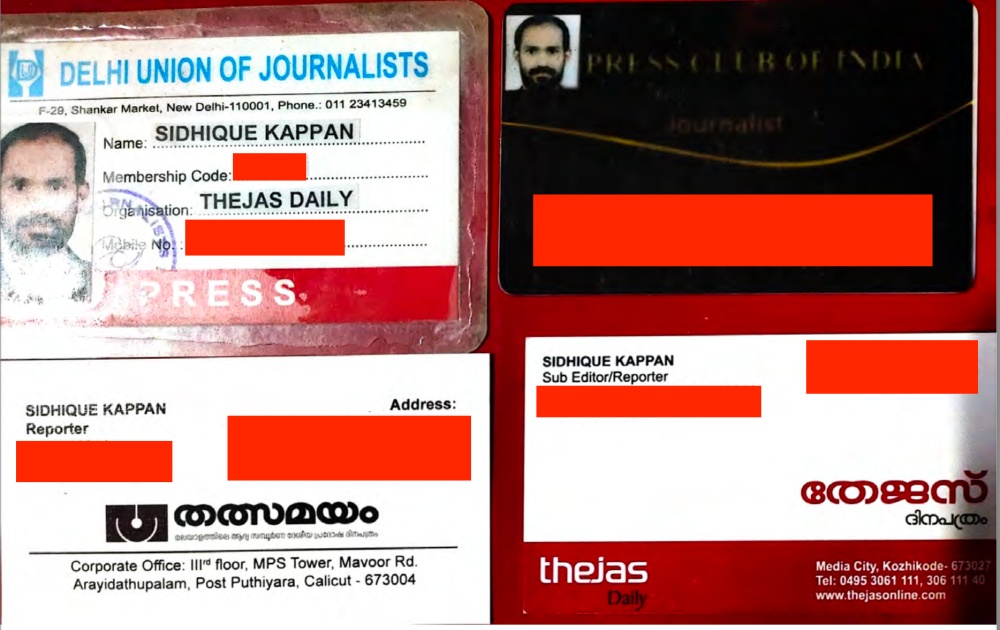
In the affidavit, it is mentioned that when Kappan was arrested on the 5th of October 2020, while on his way to Hathras, 4 ID cards were recovered from his possession. 2 of which were of Thejas Daily, 1 was of the Delhi Union of Journalists (which itself noted Siddique Kappan’s employment with Tejhas) and 1 was a card of Press Club of India.
ID cards of Kappan
3. Siddique Kappan says that he was not deployed by PFI/CFI to go to Hathras
Kappan says that he was deputed by his “present employer” and not by PFI or CFI to go to Hathras. The Uttar Pradesh govt has given details of the people he was travelling with when he was on his way to Hathras and how he is connected to PFI and CFI.
The govt said he was travelling with persons who were named accused in previous riots, namely:
Atik–ur–Rahman, National Treasurer of CFI, accused in relation to Muzaffarnagar riots (Case Crime No. 1161/2019, PS Kotwali Nagar, Muzaffarnagar)
Masood Ahmad, former General Secretary of the Delhi chapter of CFI, was accused in relation to the Behraich riots (Case Crime No. 225/2020, PS Jarwal Road, Behraich)
The 3rd co-accused in the car, i.e. the driver Alam, was the brother-in-law of co-accused Danish Khan, who is also an accused in relation to the Delhi riots (Case Crime 59/2020, PS Crime Branch Cell, Delhi).
The government’s contention is that if he was merely carrying out his journalistic duties, why was he travelling with the riot accused? This question was posed to Kappan and he was unable to provide a satisfactory answer for the same.
The affidavit further says, “Per contra, it has come out in the investigation that the Petitioner was actually part of the PFI/CFI delegation to meet the family of the Hathras victim and foment discord and spread terror. The investigation has revealed that the said delegation was sent to Hathras on the directions of co-accused Rauf Sharif (National General Secretary, CFI, prime fundraiser and financial transaction handler for PFI/CFI), who had also provided finances for the trip”.
Further, Rauf Sharif sent a Whatsapp message to Kappan at 12:26 pm on 05/10/2020. The affidavit says, the WhatsApp message “specifically stated: “What’s the status there” meaning thereby that Sharif was well aware of the Petitioner’s whereabouts on the date. The same is also confirmed by co-accused Rauf Sharif’s 161 statement in the present case”.
The fact that Kappan was deputed by PFI/CFI is further evidenced by the fact that even the statement of the Editor of Azhimukhum nowhere states that the said publication had deputed the Petitioner to cover the Hathras incident, it merely states that the Petitioner had at 12.10 am on 5.10.2022, sent the office a whatsapp message that he is going to Hathras.
4. Siddique Kappan claims in his bail plea that no incriminating evidence was collected from his possession upon arrest
Siddique Kappan has played the victim and claimed that no incriminating evidence was recovered from him when he was arrested on his way to Hathras, however, the UP govt has contested the claim and called it “patently untrue”.
They say, “3 sets of a 17-page pamphlet with the front page having the words “Justice for Hathras victim” and another page having the words “Am I not India’s Daughter (made with Carrd) were recovered from the car. A perusal of the pamphlet would demonstrate that it is nothing more than a “Rioting 101” for rioters, teaching them how to, inter alia, conceal themselves from the police, which “riots” to attend, to “recognize the place you are rioting in“.
5. What did Siddique Kappan get money for?
Kappan in his bail plea has claimed that the Rs 25,000 he got in September in cash and the Rs 20,000 he got in October was not meant for (i) conducting a secret workshop in September and (ii) making the trip to Hathras in October to foment religious discord and spread terror.
The UP govt says that Kappan’s assertions are untrue based on their investigation and also, according to his own submissions in the high court, the statements seems contradictory.
The govt’s affidavit says, “In the present Petition, the Petitioner has claimed that the Rs. 25000 of 15.09.2020 was money deposited by him which he had saved to construct a house and that the Rs. 20000 of 4.10.2020 was money that had been borrowed by friends and returned to him. However, in his Supplementary rejoinder before High Court, the Petitioner has (at p. 364) states that “the alleged payments made to the applicant are relating to his salary paid for working at Tejas Daily.” Thus, there is a clear contradiction in the Petitioner’s own version of the source of the said funds”.
Further, the govt says that there are chats between Kappan and Kamal KP, General Secretary, PFI (comprising largely of voice notes) that reveal that there was a secret workshop in September that Kappan had to conduct. Kappan, in his voice note to Kamal KP also tells him to “delete the voice note after he hears it”. It was after this workshop that Kappan was paid Rs 25,000 in two tranches. The affidavit says, “Further, the Section 161 statement of co-accused Rauf Sharif (Annexure R/7) stated that Kamal KP deposited cash in the account of the Petitioner for the purpose of the Hathras journey. The Petitioner has, later in the High Court, pleaded that the workshop referenced in the 09.01.2020 voice note was merely a Wikipedia workshop; however the same begs the question: why would the Petitioner ask the recipient (Kamal KP) to delete the voice note if it were for something as innocuous as a Wikipedia workshop”.
6. Siddique Kappan claims he had no personal connection with PFI/CFI leadership beyond his employment at Tejhas
The affidavit, countering this claim by Kappan says, “This is patently untrue. The investigation (detailed hereinafter) has revealed a close nexus and deep connection of the Petitioner with the extremist PFI and its chapters including CFI, a close nexus with top leadership of PFI/CFI (which is basically formed of ex-SIMI members), who in turn have been found to have connections with Al Qaeda linked organizations like IHH in Turkey. An analysis of the Whatsapp chats between the Petitioner and the said top leadership of PFI reveal that his relationship with them was not, as claimed, merely in relation with his so called journalistic work with Thejas, but rather, went much deeper, in which he warned them of government suspicions of PFI, discussed his ambitions, has written articles in other publications on the directions of such PFI members, and has, in one chat specifically even admitted that he is a “PFI person”.”.
The Supreme Court will hear Kappan’s bail plea for final disposal on 9th September. There are several shocking revelations in the response filed by the Uttar Pradesh government, however, it is amply clear that the “journalist”, who has found support from several liberal quarters, is closely associated with the PFI, was on his way to Hathras on their instructions and has lied in his bail plea application to the Supreme Court according to the UP government.
Siddique Kappan among 4 arrested under UAPA by Uttar Pradesh police
Siddique Kappan was arrested by the UP Police on October 5 while he was proceeding to cover the Hathras case where a 19-year-old Dalit woman had died after a strangulation attempt. He was arrested along with three other persons, under stringent sections of UAPA and sedition charges for attempting to create a caste-conflict in the state amidst the ongoing Hathras case controversy.
Apart from Kappan, Siddique of Nagla in Muzaffarnagar, Masood Ahmed of Jarwal in Bahraich district, and Alam of Kotwali area in Rampur district were arrested.
According to the FIR, the UP Police has charged all the accused under Section 17 of the UAPA that deals with raising funds for a terrorist act. The four people who were apprehended from Mathura on October 5 were then sent to 14-day judicial custody.
Reportedly, all the arrested four had connections with radical Islamic organisations Popular Front of India (PFI), and were planning to cause caste-based unrest in the state.