Home Blog Page 2990

PM Modi writes to cricketer Ravindra Jadeja’s wife, lauds her for opening Sukanya Samrddhi accounts for 101 girls on their daughter’s 5th birthday

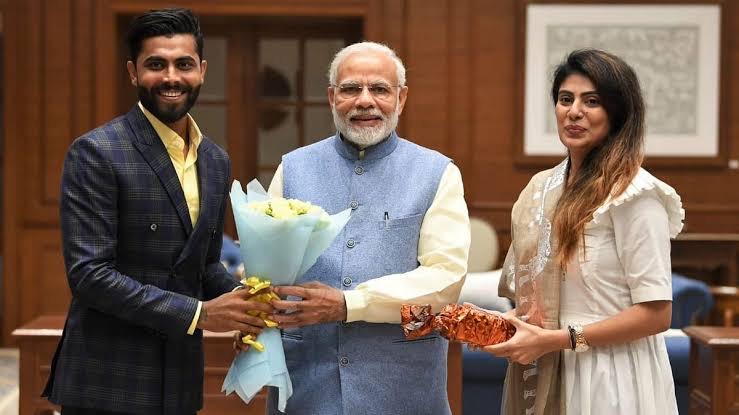
On August 8, Cricketer Ravindra Jadeja shared a letter from PM Modi lauding her wife, Rivaba Jadeja, for opening Sukanya Samriddhi accounts in the post office for 101 girls and making an initial deposit in them to celebrate their daughter’s fifth birthday.

“The philanthropic initiative to make the initial deposit in every account to celebrate the 5th birthday of your daughter, Nidhyanaba, is admirable,” PM Modi wrote in his letter.

Lavishing praises on Rivaba Jadeja for her unselfish deed of helping 101 underprivileged girls, PM Modi wrote, “Our culture has always been guided by the spirit of selfless service. India is the bearer of such an intellectual tradition of the world where we say that the woman is a manifestation of the divine.”

“We firmly believe that our Narishakti has immense potential that can be harnessed to further the process of women-led development. Exceptional achievements of our daughters in many fields today make us proud,” the letter read. 

PM Modi wished her to continue contributing toward the larger good of the society and added that such voluntary efforts have the potential to generate a positive message within the society and serve as an inspiration to all. 

Sukanya Samriddhi Yojana for securing the future of girl child

Launched by PM Modi in 2015 and as a part of the Beti Bachao Beti Padhao initiative, the Sukanya Samriddhi Yojana scheme is aimed at the betterment of girl children in the country. Sukanya Samriddhi scheme offers a means of saving for the girl child in every family. Tenure of SSY is 21 years from the date of opening of the account or till the marriage of the girl after she attains the age of 18 years.

According to the scheme, a minimum of Rs 250 must be deposited in the account initially. Thereafter, any amount in multiples of Rs 100 can be deposited. However, the maximum deposit limit is Rs 150,000. The girl can operate her account once she reaches the age of 10. The scheme allows withdrawal of 50 per cent of the amount at the age of 18 for higher education purposes.

The maturity of the scheme is 21 years and deposits in the account can be made till the completion of 15 years, from the date of the opening of the account. At the completion of this period, the account will earn only the applicable rate of interest.

Advocates write to the AG seeking contempt of court proceedings against Kapil Sibal over his controversial remarks on judiciary

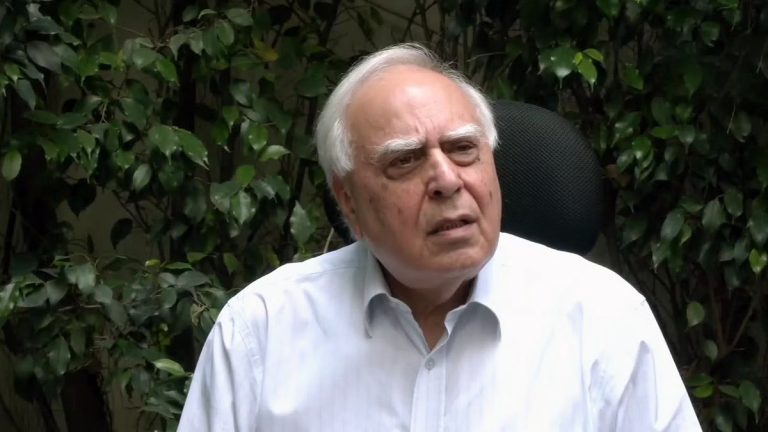
Advocates Vineet Jindal and Shashank Shekhar Jha have written separate letters to Attorney General of India KK Venugopal asking him to initiate criminal contempt proceedings against Senior Advocate and Rajya Sabha MP Kapil Sibal. The two advocates sent this request following the veteran advocate‘s controversial statements about the Indian judiciary and Supreme Court of India.

In a letter to the AG, advocate Vineet Jindal said “Mr. Kapil Sibal has directly made allegations with intent to disgrace and scandalise the sitting judges of the highest court, the Supreme Court, of our country. The statements by Mr. Sibal have scandalized the judgments passed by the Supreme Court judges and accused the judges of being corrupt.”

Advocate Jindal further said, “Mr. Sibal’s statement was aired widely speculated on internet and News Publication in which Mr.Sibal has passed derogatory and scandalous statements in context of Hon’ble Supreme Court of India.”

Vineet Jindal has sought the Attorney General’s consent under section 15 (1)(b) of the Contempt of Courts Act 1971, read with rule 3 of the rules to regulate the proceedings for the Contempt of the Supreme court 1975 to initiate criminal contempt against Kapil Sibal.

In a separate letter, Advocate Shashank Shekhar Jha also sought consent from the AG to initiate criminal contempt proceedings against Kapil Sibal.

In his letter, Jha said, “That this is becoming a common trend and setting the wrong precedence that lawyers with political affiliations use judiciary as a means to push their political agenda thereby criticising the Court and the whole legal system by making reckless allegations against judges who do not decide cases in their favor.”

The controversial remarks made by Kapil Sibal against the judiciary

While speaking at an event called “People’s Tribunal”, organized to discuss the “Judicial Rollback of Civil Liberties”, Kapil Sibal had made several controversial remarks about the judiciary and the processes being followed by the Supreme Court of India.

During his speech, Kapil Sibal said, “I do not want to talk like this about a Court where I have practiced for 50 years but the time has come. If we don’t speak it, who will? The reality is such that any sensitive matter which we know has a problem is placed before certain judges and we know the outcome.”

Sibal also went on to question the independence of the judiciary and raised questions over the procedure through which different benches are constituted for different cases.

Sibal even went on to remark that if you think you will get relief from Supreme Court, you are highly mistaken.

As ‘BoycottLaalSinghChaddha’ gains momentum, Aamir Khan pulls out the victim card and starts weeping in an interview: Here is why

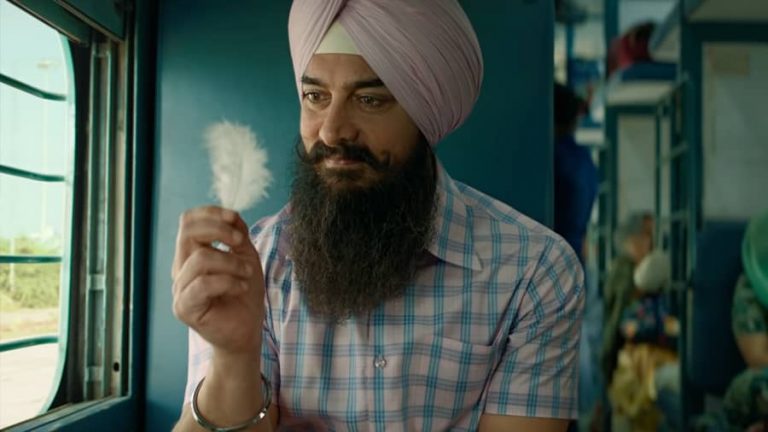
As the release date of Aamir Khan starrer Laal Singh Chauhan draws closer, the ballooning boycott campaign the movie has been facing seems to have put the actor on edge. With the calls for a boycott gaining momentum, the PK actor has leaned on the victim card as perhaps the last-ditch effort to salvage his upcoming film. 

In a recent interview with the Humans of Bombay, Khan welled up while recalling his childhood days, when his family was allegedly in debt and had no money to pay for his school fees. Khan said he and his siblings would get late paying their school fees, adding that the school principal often their names in the assembly to embarrass them and issue warnings over late fees. 

Speaking about the struggle his family had to go through in paying their school fees, Aamir said the fee structure was – ₹6 for the 6th standard, ₹7 for the 7th standard, ₹8 for the 8th standard and so on. However, Aamir and his siblings ‘were always late to pay their fees’. After a couple of warnings, the principal would announce their names in the assembly, Aamir recounted with tears in his eyes. 

However, it is worth noting that Aamir is the son of film producer Tahir Hussain and his wife Zeenat Hussain. He is the eldest among four siblings-Faisal Khan, Farhat Khan and Nikhat Khan. Aamir had also appeared as a child artist in the blockbuster Yaadon Ki Baaraat (1973). As an adult, he debuted alongside Juhi Chawla as lead actor in Qayamat Se Qayamat Tak (1988). 

The “emotionally charged” interview comes ahead of the release of Aamir Khan’s upcoming movie Laal Singh Chaddha, a remake of Hollywood classic Forrest Gump, which has been a subject of an online boycott campaign for a host of reasons: the actor’s controversial statements over “rising intolerance”, mocking Hindu Gods in his “PK” movie, and the lack of ingenuity and blatantly copy-pasting a Hollywood movie.

Social media websites are replete with posts carrying #BoycottLaalSinghChaddha hashtag, with critics urging others to not watch the upcoming Aamir Khan flick. The campaign has gained momentum, especially in the last few days, as the theatrical release of the movie inches closer. 

Aamir Khan urges people to not boycott Laal Singh Chaddha, and claims he “really loves India”

A few days back, Khan took cognisance of the hashtags like #BoycottLaalSinghChaddha that had started trending on Twitter. Urging people not to boycott his film, which he has also co-produced, the Bollywood actor, claimed that he loves India, contrary to the impression some people may have.

While some people want to boycott Laal Singh Chaddha because they fear that Aamir has ruined another Hollywood classic, most are boycotting it because of Aamir’s anti-Hindu stance in his movie PK and subsequent anti-India statements despite India making his film the highest ever grosser. 

Speaking to PTI, the Bollywood actor said, “That Boycott Bollywood… Boycott Aamir Khan… Boycott Laal Singh Chaddha… I feel sad also because a lot of people who are saying this in their hearts believe I am someone who doesn’t like India… In their hearts, they believe that… And that’s quite untrue.”

The actor added, “I really love the country… That’s how I am. It is rather unfortunate if some people feel that way.” Asking his fans and the audience to give his film a fair chance, Aamir Khan further said, “I want to assure everyone that it’s not the case so please don’t boycott my films, please watch my films.”

Pertinently, the actor’s reaction came after some Twitter users dug up Aamir’s controversial 2015 “India’s growing intolerance” statement and made it viral. Back in 2015, Aamir Khan had said that he and his wife Kiran Rao (now ex-wife) were feeling petrified of the rising intolerance in the country and were seriously considering migrating to some other country.

Pakistani fast bowler Shoaib Akhtar undergoes surgery after being in ‘great pain’, shares emotional video

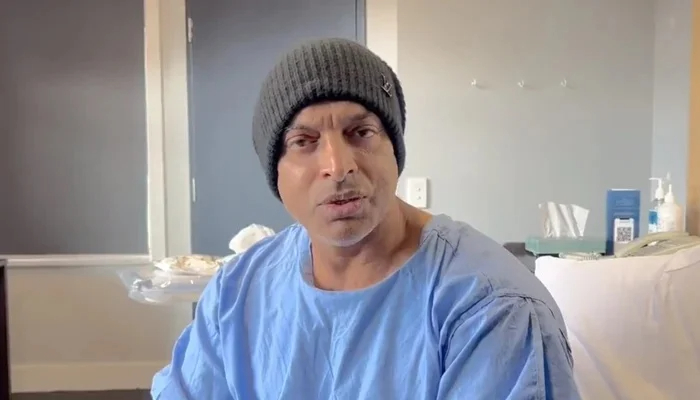
Former Pakistani fast bowler Shoaib Akhtar has undergone yet another knee surgery in Australia, his 6th in total. Plagued with injuries throughout his playing career, looks like the speedster’s injury woes are far from over even in retirement. Akhtar underwent the surgery on both his knees in a Melbourne hospital.

In the video that Shoaib Akhtar posted on social media, he gave an update on his health and appealed for prayers from his fans for a quick recovery. Akhtar also shared that he is in great pain right now. He mentioned that this is his 6th surgery and he hopes it will be the last one.

Akhtar also lamented in the video that his playing career was also cut short due to these injury problems. “I could have played for another four to five years. But I was aware that if I did, I would become wheelchair-bound. That’s the reason why I retired from cricket,” Akhtar said in the video.

After lamenting about the injuries shortening his career, Akhtar was quick to say that he still thought it was worthwhile to put his body through it. He said, “Again, it was all worth it for Pakistan. Parks of bowling fast, this is what happens, you have to lose bones, but that’s ok, if I had to do it all over again, I will do it”.

After the surgery, Akhtar shared another video saying that the surgery went well and he is on the road to recovery.

Shoaib Akhtar played 46 Tests, 163 ODIs, and 15 T20s for Pakistan, taking 444 wickets in total during his international career. After a controversial and injury-ridden career, Akhtar finally resigned to his body and retired from international cricket in 2011.

BJP’s Pasmanda outreach could be a game changer but two questions must be answered: Will they bite and will it take away Hindu votes

At the outset let me be clear – I am not claiming to be a political pundit, or the first or the only one that argues BJP should build bridges with the minorities. However, I had written an article earlier about this topic (OpIndia, 11 Jan 2022) and I think I am entitled to some bragging rights given recent events.

What I said was this: “Now it’s time for the next big project – bringing on board large sections of secular, nationalistic Muslims into the mainstream and into its vision. This is not just a favour to themselves – they will become undefeatable – it is the biggest gift they can offer to India”

That is exactly what is happening as a few recent events have shown clearly. In fact, some of the more intelligent among the dynastic serfs have woken up to this existential threat and are ratcheting up the propaganda assault, again exactly as I had predicted.

Of course, the route adopted by BJP and PM Modi is not what I had mentioned – instead of going after the intelligentsia as I had written, they are doing the opposite. I hate to be wrong like anyone else but must agree with Modi’s choice. Intelligentsia is invariably elitist and therefore wedded to the status quo. It is also easily corruptible and has no real stakes in peace, progress or prosperity. In fact, quite the reverse. They have a vested interest in continued conflict, chaos and poverty to keep their business running.  Reason – their reward systems, mostly external in source, work that way. 

BJP’s choice of going for the “deprived” is wise. Be that as it may, the result is what matters. 

What are the recent events that prompted this article?

  1. March: Danish Ansari’s appointment as a minister in the Yogi 2.0 cabinet. He is from the so-called Pasmanda section of the (aka marginalised) Muslim community.
  2. June: BJP winning minority-dominated SP strongholds in the recent LS by-polls for Azamgarh and Rampur. Whether or not this is due to more Muslims voting for the saffron party, or other factors, the optics are significant enough.
  3. July: PM Modi reportedly asking BJP cadre to reach out to “deprived sections” of minorities. 
  4. July: BJP fielding almost eight times as many Muslims as it did in 2014 (380) in the recent MP local body polls – and managing to get 92 elected

If you think all this is just random events, you have a cushy post in Congress party waiting for you. Try applying.

This development has rattled the ancient regime and its ecosystem. Shekhar Gupta warns them “If you are the Modi-Shah BJP’s rivals, victims, or prospective challengers, you can ignore these points at your own cost

You don’t have to be a political genius to anticipate the propaganda onslaught that will follow. This is what I said back in January:

“They will face vehement opposition, visceral hate and sustained, relentless, venomous, vicious attacks by the left-dynasty continuum. And they will be playing in a pitch dug up and turned into a minefield by left’s ecosystem and its international partners”

Just sit back, stock yourself with sufficient popcorn and watch the fun. CONLEFT ecosystem and its brown-nosed coolies in academia and media as well as professional outrage experts and Stalinist propaganda warriors will twist themselves into pretzels trying to derail the Modi/BJP juggernaut as it chugs down this track.

They might as well bark at the moon. BJP is not trying to sell them anything. If you are going to wait for the day when Wire, Chindu or Wagle have good things to say about BJP that day will never come. While their antics and tactics need careful watch, they don’t matter as much.

What matters is this:

  • Will the target audience bite?
  • Will it take away Hindu votes? In other words, will NaMo end up like UT?

The answer to these questions will decide what happens in 2024 and beyond, actually far beyond. Let us examine them briefly.

The answer to the first question is clear to me – but before that – some things need to be spoken about. Firstly, with everything that happened historically and everything that continues to happen to this day, the ire that BJP faced for reaching out to the Pasmanda community is understandable. However, this article is simply to understand the political ramifications of this decision. Politically, reaching out to the marginalised is a far better strategy than trying to convince the elite. There is a section of the Muslim society that is looking for economic and social security and a fair chance in the action. Demands that are perfectly legitimate and easy for BJP to concede. They are also lurching from one pseudo-secular party to the other and have come to realise they are simply enabling dynastic dacoity and palatial lifestyles for the looter dynasts and select corrupt elites amongst them but nothing for themselves.

The recent discovery of crores of scam-tainted cash in Kolkata that shocked the conscience of most Indians would have also shaken the Muslims. After all, as one Maulvi claimed, this government (he meant the TMC regime) is theirs and came to power riding on their shoulders. This makes them ripe for a takeover, to use a business term.

It should not surprise anyone that a section of them think it is (as the old Tamil saying goes) better to strike a deal with the litigant than endlessly bribing the witness that is supposed to testify for you and is blackmailing you. Nobody is saying that the entire 85% Pasmanda population would favour BJP. It might not even be a widely significant percentage or that there are no “sar tan se juda” elements that are committed to irrevocable hostility and wet dreams of reviving the glory of the Mughal era. But the inroads that BJP could make into the marginalised Pasmanda community could be just about politically sufficient to dent the opposition trying to capitalise on the Muslim vote bank. 

That brings us to the next question – what will Hindu voters do?

Many Hindus will legitimately feel abandoned. After all, facing murderous attacks and venomous propaganda daily, on top of being accused as aggressors and denied a platform to speak about their plight, it is easy to see some of them abandoning BJP in frustration. We have already seen some glimpses of this in Karnataka.

Even the much larger middle ground may slip under the BJP’s feet if they are seen as going back on their “no appeasement” policy. In fact, most of the “liberal” attacks will be mocking BJP for going back on its “ideology”, to wean away Hindu support. You can be assured no leftist or pseudo-liberal, who attacks BJP for “othering” minorities, will applaud if it tries to mainstream them. As I said before, it affects their entire business model. 

The UT trap is real. BJP cannot ignore it.

This is where PM Modi has a BIG role to play. One naturally assumes he thought through this issue before he spoke in Hyderabad. He must convince the core voter base that representing genuine Hindu interests is not a zero-sum game. There is absolutely no need to dilute one for the other. One can robustly take on Isalmo-fascists, who are mostly of the elite class, even as the deprived are wooed. One can question and challenge leftist fake history that paints murderous fanatics like Aurangzeb as heroes and at the same time, reach out to the section of Muslims who have been marginalised by their own upper-caste Ashrafs. 

This broad narrative has been clear from RSS chief’s recent remarks too, when he spoke about not looking for Shivling in every mosque.

By not lying about or burying historical grievances but encouraging genuine dialogue and acceptable solutions much can be done to keep the core voters happy without needless conflicts. 

Frankly Modi, BJP and therefore India has a once in a century sort of opportunity to do this. No one else can do it or could have done it in recent history.

And the left cabal knows this. That is why they will get more venomous in the days ahead. But we must wish the PM well in his efforts. There is just too much at stake.

The Economist draws ire for calling women in Arab countries fatter

On July 28, The Economist published a report on the Body Mass Index (BMI) gap between the genders in Middle Eastern and African countries, for which it has been receiving criticism. In the report, the author suggested that the women in these regions often do not get a chance to indulge in physical work or sports, which leads to obesity. On the contrary, men in these countries enjoy sports, do labour-extensive work and go out frequently, shedding calories.

The Economist, which is a British weekly newspaper, is on the receiving end of criticism because of its report titled “Why women are fatter than men in the Arab world”. Twitter user Sarah Mahmoudh said, “It is absolutely appalling and shameful that the West is being fed by this orientalist, sexist nonsense regarding Middle Eastern women. As an Arab woman who has lived in an Arab country, I do not feel represented but rather degraded. The Economist needs some serious reform!”

Another Twitter user, Amad, said, “And again, the racist Western stereotype of Arab families. Arab women aren’t fat because they are at home all day, they are because our entire culture and society are about food and hospitality. Try to visit any Palestinian home and not feel like a stuffed turkey afterwards!”

Islamist and terror apologist Lucknow resident Irena Akbar said, “A pile of racist filth. Will this trashy publication do an article on why women in the West are fatter than men? The article itself says women everywhere are fatter than men. As if they should be slimmer than men in the first place! Misogynistic garbage with latent Islamophobia.”

Balsam Mustafa pointed out that the feature image used by The Economist is of an actress who has worked extensively in the field since the 1990s. He said, “The lady in the lead image is an Iraqi actress who started her career at a very young age in the 1990s, breaking many taboos in her TV drama roles. She deserves a piece that honours her career, not one that body-shames her & other women in Arab majority countries.”

Twitter user Apex_Pretty said, “The Economist is trash. The US & UK obesity rates outdo other countries. I think we shouldn’t talk.”

What does Economist say about the BMI gap in Arab countries?

In its report, The Economist suggested that after a certain age, females are not allowed outside homes in Arab countries. However, in adolescence age, girls do play with boys. The women in these countries are allegedly deprived of participating in sports and passive exercise, which leads to obesity.

The report started with a story of a woman from Baghdad who could only meet the ends as the owner of the restaurant where she worked gave her leftovers. The food that she gets is high in fat resulting in obesity in her and her children.

It read, “Only a fifth of women in Arab countries has paid jobs, says the World Bank. In Iraq, the share is one in ten. This means that most Arab women spend most of the day indoors, missing out on passive exercise. Working women in other regions bustle around in hospitals, classrooms and restaurants. But in Arab countries, many such jobs are done mainly by men. In Gulf countries, many of the heavier menial household chores are done by foreigners.”

It further stated that poor families in Arab countries are less likely to let women out of the house. As a result, women in poor families are fatter compared to women in rich families. Furthermore, the report suggested that a carbohydrate-rich diet of the Arab people is also a reason for obesity, especially in women who tend to stay at home.

Film critic and reviewer KRK endorses Arvind Kejriwal, known for regularly reviewing movies, for the post of PM of India 

0

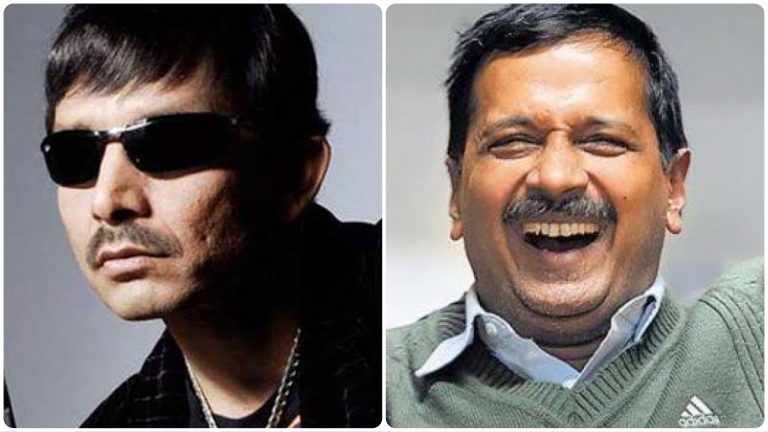
Kamaal R Khan aka KRK, a self-styled film critic and reviewer known for his mercurial outburst of temper and quirky tweets aimed at courting controversies, has thrown his weight behind AAP supremo Arvind Kejriwal for the post of Prime Minister of India. 

To his 5.1 million followers on Twitter, a majority of whom are allegedly bought, KRK said if given a choice to choose between the current generation of leaders he would like to see as Prime Minister, the former actor said Arvind Kejriwal.

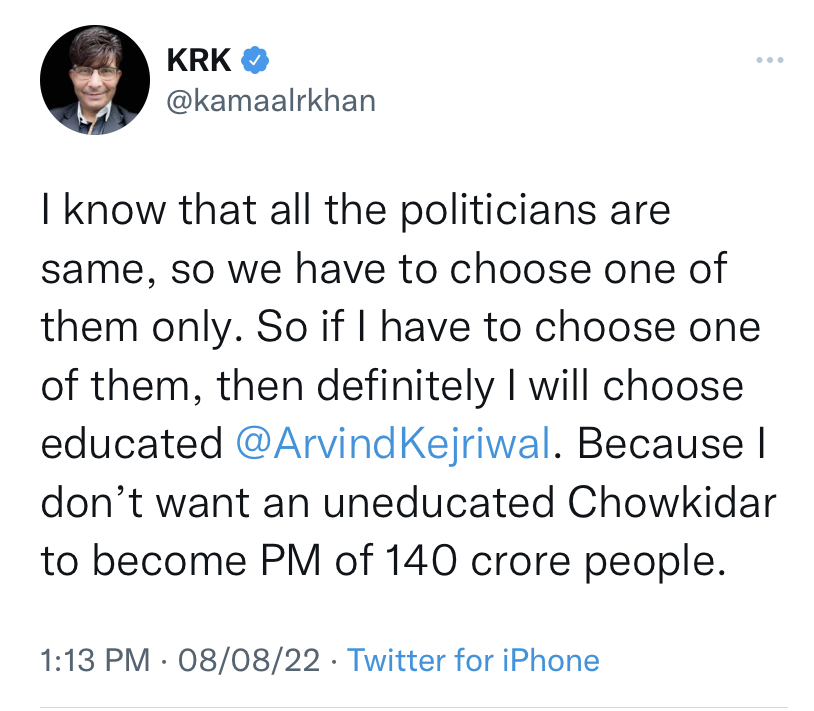
“I know that all the politicians are same, so we have to choose one of them only. So if I have to choose one of them, then definitely I will choose educated @ArvindKejriwal. Because I don’t want an uneducated Chowkidar to become PM of 140 crore people,” tweeted KRK, whose own conduct online suggests he is anything but educated. 

Source: Twitter

Never bored of stoking controversies, Kamaal R Khan has, over the years, mastered the art of making outrageous claims to entertain his followers and keep himself in the news. KRK has also been a staunch opponent of PM Modi, routinely attacking him online and making disparaging comments against the BJP.

KRK, who seldom honours what he promises online, had pledged to leave Twitter and India forever if Narendra Modi got elected as the prime minister of the country in the 2014 general elections. As it turned out, KRK had eggs on his face when the BJP swept the Lok Sabha elections and Narendra Modi became the country’s Prime Minister.

Despite vowing to leave Twitter, KRK continued to be on Twitter and visit India as he claims to live in Dubai. Over the years, KRK has often made eye-popping claims and announcements, with little regard for honouring or fulfilling them.

Nevertheless, KRK’s endorsement for the post of Prime Minister of India is for someone who is known for reviewing Bollywood movies. After becoming the chief minister of Delhi, Kejriwal often took opportunity to review movies and suggest people on which movies to watch. Speaking at the Delhi Assembly, Kejriwal had even insulted the sacrifice of Kashmiri Pandits driven out of the Valley, saying that ’The Kashmir Files’, a movie that chronicled the hardships and atrocities faced by Pandits, as a “jhoothi film”.

Even so, this is not the first time that Arvind Kejriwal is projected as a contender for the post of Prime Minister. The Islamofascist left-liberal side has endorsed a laundry list of opposition leaders, including Kejriwal and TMC chief Mamata Banerjee, to challenge PM Modi.

Kejriwal himself had once dreamt of leading the country but was chastened by the election results that knocked a sobering realisation about his desire to become the Prime Minister.

In 2014, Arvind Kejriwal suffered a humiliating defeat in the General elections after he decided to take on NDA Prime Ministerial candidate Narendra Modi from the Varanasi constituency. Modi polled 3.35 lakhs more votes than Kejriwal, putting paid to the dreams of the AAP chief of positioning himself as a worthy challenger to Modi’s expanding aura.

Since then, Kejriwal’s party has received poll drubbings almost everywhere in the country, except in Delhi and Punjab, where the internecine squabbling among Congress leaders and lack of cohesive strategy to fight the state elections pave the way for an AAP government.

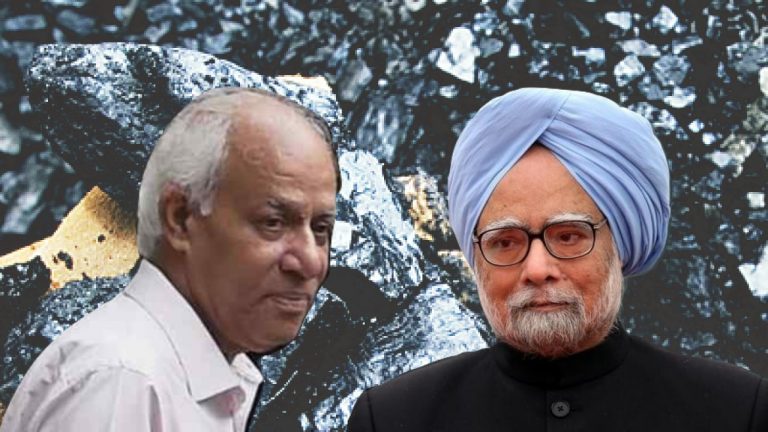
Former Union Coal Secretary and Manmohan Singh aide HC Gupta given three-year jail term, charged 1 lakh fine in UPA-era coal scam

A special CBI court Monday awarded a three-year jail term to former Union Coal secretary HC Gupta in the coal scam case. It has also asked the UPA-era bureaucrat to pay a fine of Rs 1 lakh. Besides, Special Judge Arun Bhardwaj also granted a jail term of two years and imposed a fine of Rs 50,000 on former Joint Secretary KS Kropha, a co-accused in the case.

The court, additionally, imposed a fine of 2 lakhs on Nagpur-based firm Grace Industries, and its Director and another accused in the case Mukesh Gupta was sentenced to four years imprisonment.

He was also fined Rs 2 lakhs.

Former Union Coal Secretary HC Gupta, who worked under Manmohan Singh convicted along with two others

The special CBI court in Maharashtra had convicted both for criminal conspiracy, criminal breach of trust, cheating and corruption in the case related to the allocation of the Lohara East coal block on July 29.

The CBI court of special judge Arun Bharadwaj found HC Gupta, KS Kropha and Mukesh Gupta guilty under various provisions of the Prevention of Corruption Act. The sentences will be decided on August 22. The case was registered by the CBI in September 2012 under sections 120B r/w, 420 IPC r/w, 13(2) r/w, 13(1)(d) of the Prevention of Corruption Act, 1988.

Notably, in its initial charge sheet filed in October 2014, the CBI had named Mukesh Gupta and his Grace Industries Ltd. The court, however, asked the probe agency to continue further investigation into the matter to ascertain the role of senior government staffers in the allocation of coal blocks.

The CBI had reportedly found that Mukesh Gupta had obtained coal block allocations for Grace Industries Ltd through cheating and fraudulent documents and that his actions were aided and supported by senior government officials like HC Gupta and Kropha. The irregularities in allocation were reported between 2005-2011. CBI had also alleged that Mukesh Gupta had used false documents to show his company’s net worth as 120 crores while its actual net worth was just 3.3 crores.

In August 2014, the Supreme Court of India cancelled the entire allocation of coal blocks. During the hearing of the case, the special court had also observed that the conduct of officials from then Prime Minister Manmohan Singh’s office was not satisfactory.

A total of 34 witnesses were produced by the CBI in the case.

The anatomy of protests: The devil, the people, the truth behind the truth and a protest against protests

Protests are a very important tool in a vibrant democracy. They allow informed people to register their voice in a set-up where public opinion is often diluted after elections. Protests are sometimes necessary to keep an elected government on its toes and to prevent them from taking their electorate for granted. Protests allow the minority to amplify their voice and ensure that they are also heard. In rare cases, protests become a means for the majority to assert their demands on an unheeding government. Protests, therefore are a desirable part of democracy when used as a catalyst for progress.

However, just as an airplane, which makes the world a smaller place, can be used to cause 9/11, protests can also be weaponised by people with mal-intent. Instead of taking the country forwards, protests can be used to derail its growth and push it into a regressive downward spiral. India has been experiencing many such degenerative protests in recent times. Let us analyse how and why.

The much-publicised farmers’ protests, which rocked the country and forced the government to roll back the Farm Laws, exposed the toxic nature of protests. Only after the laws were repealed was it disclosed that 85% of farmers of India wanted the laws and would have benefited from them! Why then could the 15% minority create such a divisive environment in the country?

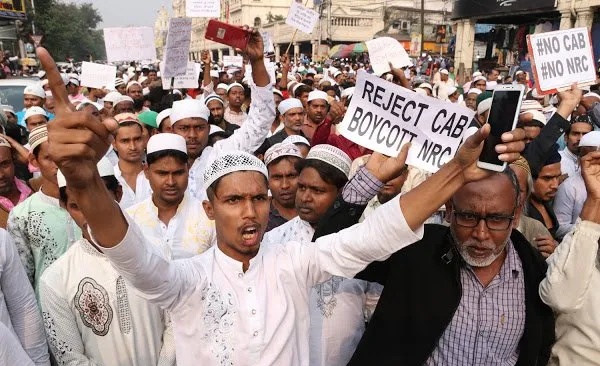
The Citizenship Amendment Act (CAA) is a humane law that only reduces the time required for applying for Indian citizenship, and only for the religiously prosecuted minorities from the neighbouring countries of Pakistan, Bangladesh and Afghanistan.

Why then was it met with such violent protests across the country? Why did they receive support from so-called activists? The 75 acres Aarey car-shed project, which has been delayed due to protests, is right next to the 520 acres of film city developed after cutting down the forest. It has more pros than cons. Why then are the few people opposing the project able to hold the government to ransom?

Another question that these examples beget is that if the laws/ projects were beneficial then why did a section of the public oppose them? To answer this, we must first understand the psyche of the current opposition in the country and others who rake these protests.

The Devil

The current opposition is a group of poor losers. They are not accustomed to staying out of power for so long. They had been taking the country and its people for granted and considered their privileges to be their rights. The opposition is desperate, so much so that it now puts power before the nation. They have stooped to a level where they are willing to deal even with the devil, just to return to the chair. Protests have become a weapon in the hands of this desperate and compromised opposition, and they don’t hesitate to use them.

And who is the devil? There are two other sections of people who fuel these draconian protests – the greedy and avaricious activists and NGOs, and the religious extremists. Some of these so-called activists and NGOs that we see actively participating in violent and aggressive protests have only one purpose – to hoard wealth and to gain name and fame. They are like mercenaries, available to the highest bidders. They will take money from politicians (like Teesta Setalvad did). They will take money from ISI, Khalistanis, and other anti-India foreign bodies. They will sell their souls to the likes of purported atheist and billionaire George Soros, and dance naked to his tunes.

They are available for use by the desperate opposition mentioned earlier. They will sleep with religious extremists. Protests have become their profession. It allows them their lavish lifestyles, even if it means siphoning public funds (like Rana Ayub), supporting murderers and terrorists, or working against the country.

Religious conversion agents and extremists are a more dangerous breed of disruptors. They have an agenda, which makes them formidable and something to be concerned about. They are the Islamists who want to establish Sharia Law in India, and the evangelists who want to convert the country to their religion. They are hardliners, intolerant of the religious beliefs and way of life of others. They are murderous, well-connected, well-funded and well-organised.

They form a vote bank and control the political narrative of the current opposition. They have even found a strong foothold in the legislature of the country. We can see the power they exert in their actions – when a Chishti of Ajmer dargah calls for the economic boycott of Hindus when a maulana explains to his followers that violent protests are desirable as they cause economic losses to India when a believer announces an award to behead Nupur Sharma when a people want to establish Dar-ul-Islam and declare jihad against all kafirs, when mosques announce – ‘galive, tsaliv ya raliv’ and instigate a genocide when stone pelters are eulogized by a sold media, when a rapist priest can go scot-free, and when politicians enact laws to undermine the majority. These religious fanatics cause protests in order to further their agenda.

These people light the match, add the fuel, and hold the poker that keeps the fire of anti-India protests alive. They make protests and protesters seditious. They must be dealt with an iron fist.

The People

Now, most common people are what we call headline-readers. They neither know nor understand the laws/ projects as they actually are. The instigators take advantage of this uninformed and ill-informed public. Lies, deceit, money, power, influence, violence, murders, rapes and blackmail are all tools used to misguide and motivate the public to protest. It is important to better communicate with this section of people and prevent them from getting influenced.

There is another section of self-motivated people who are just looking for an excuse to destabilize the country and establish its rules. They generally form a part of the extensive network of religious extremists. Only strong laws and stronger implementation of such laws can keep them on a leash.

While the opposition seeks only to return to power through these protests, the devils they collude with have even ulterior motives. These anti-India elements find an opening through these politicians and use protests to make inroads in the country with the hope of destroying it from the inside out.

The Truth behind the Truth

The anti-farm laws protests received support and funding from anti-India separatist Khalistanis. They saw the protests as a means to once again find a foothold in the country. And they did so successfully, as is evident from the recent Khalistani overtures in Punjab. The CAA protests allowed the Islamists to raise their ugly agenda in India, designed to divide and convert the country. Anti-India elements, including the ISI, are rumoured to have funded these protests across the country. The protests allowed the ‘tukde tukde’ gang to propagate their agenda under the spotlight.

Sometimes protests are also used as a distraction when something, even more, sinister is going on. The drugs racket run from Shaheen bagh, the Khalistani infiltration during the anti-farmers protests, and the involvement of the church in the Sterlite Copper protests that downgraded India from a net exporter to a net importer of copper, the CAA protests where Sharjeel Imam asked people to agitate and cut off the chicken-neck corridor to isolate Assam (Northeast) from rest of India; all highlight the real reason behind the protests. Even a section of the media rallied behind these protests because they are either one with them, or paid by them. The media was exposed when it was discovered that terrorist organizations like the PFI will only speak to NDTV, BBC or the Wire because these media houses will carry their narratives.

The people who are the real reason behind the protests make efforts to create and control the narrative in the country. They seek to destabilize and weaken the country and its government to make it easy for them to realize their goals.

My Protest against Protests

Protests against the government are required sometimes. But protests against the country should not be allowed. Protests that are violent should be made illegal and dealt with surely and swiftly. Equality, as was outlined by Article 14 of the Constitution, should be the only scale used for dealing with the devils mentioned in this article. Law should be designed to prevent appeasement of any by any. Religious vote-banks should not be allowed to exert undue power. Freedom of speech should not be allowed to become an excuse for abetting violence. Those celebrating or calling for murder/ genocide should be silenced. In dissecting protests, and discovering and understanding their anatomy, I hereby register my protest against the growing cancer of protests in India.

(This article was first published on organiser.com)

AAP leader turns bully: MLA Karambir Singh Ghuman gets toll forcibly opened, forcibly passes 20+ vehicles without paying toll

0

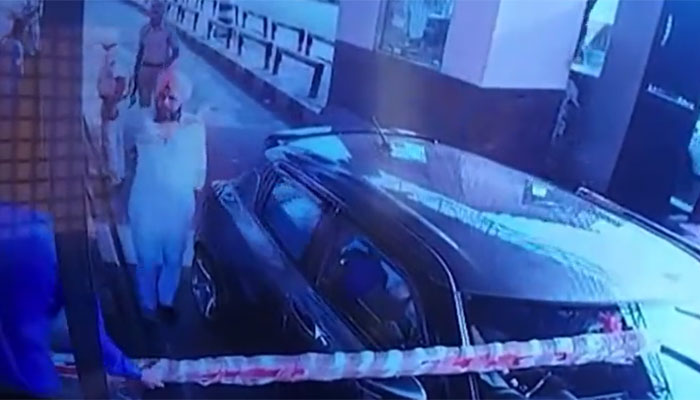
On August 6, Aam Aadmi Party (AAP) MLA Karambir Singh Ghuman forcibly got toll barriers opened at Chaulang Toll Plaza of Hoshiarpur and got 20 vehicles passed through it without paying any toll. As per reports, Ghuman, who is MLA from Dasuha, got irked as the VIP lane was not functional at the toll plaza, and he had to wait for a minute to cross it. He reportedly got out of his car and ordered the workers to open the barrier.

When the toll plaza employees did not open the barrier, he allegedly broke it. In the CCTV video footage that has been making rounds on social media, Ghuman can be seen bullying the plaza employees to open the barrier. The Police personnel that appeared to accompany him were also shouting at the employees.

Ghuman kept the barrier under his control for 10 minutes and let pass at least 20 vehicles. While toll plaza employees have accused Ghuman of hooliganism, the MLA said there was no employee to open the barrier thus, he took action. He claimed that toll plaza employees do not open the VIP lane. “Many times in the past, my associates have opened the VIP lane as employees did not. If they do not open the lanes, anyone will get agitated. My name is being circulated in the media because I am an MLA.”

The toll manager accused Ghuman of occupying the toll booth

Mubarak Ali, Chaulang Toll Plaza manager, accused Ghuman of abusing his employees. He said an employee named Hardeep Singh was abused by the MLA. The gunmen and the associates who accompanied the MLA allegedly occupied the booth and kept it open for several minutes. The manager accused Ghuman of breaking the barrier as well. The manager has informed the National Highway Authority of the matter.