Home Blog Page 3059

Rajasthan: Parents in Kota protest against a school for weaning children away from the Hindu culture, teaching them to call parents ‘Ammi-Abbu’

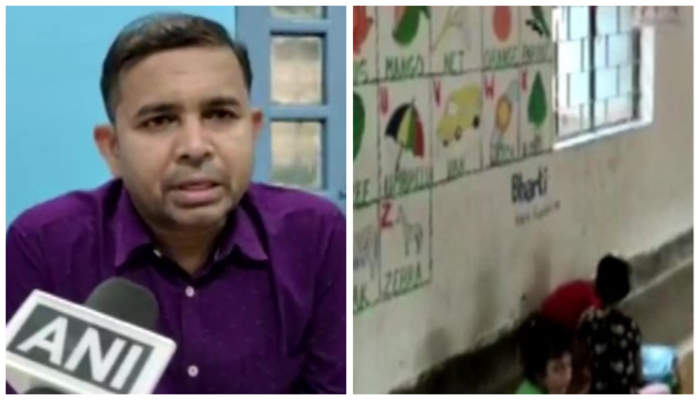
A private school in Rajasthan’s Kota is embroiled in a row over a textbook used to tutor Class 2 students. The book contains Urdu terms and names.
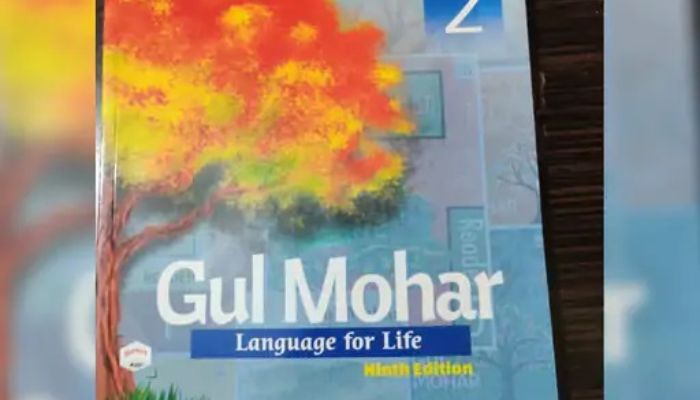
According to reports, the book is being read by the majority of non-Muslim pupils. The students in the second standard are taught, through this book called Gulmohar, to call their parents Ammi and Abbu. The 113-page book costs Rs 352.

The ‘Gulmohar Book’ given to second-class children at Shiv Jyoti Convent School in Kota city has many words that have angered parents. The family members alleged that the children have started asking for Biryani after reading this book and non-Muslim children have also started calling their parents Ammi and Abbu.

Parents have reported that their children, who attend a private English medium school, have begun to use phrases like Abbu and Ammi to refer to them at home, and have also begun to want Biryani to eat. Gulmohar is a book published by a Hyderabad-based publisher. Parents raised concerns about the book to local Bajrang Dal activists, who filed a formal complaint to the education department. The book is viewed as an attempt to Islamize the classroom curriculum.
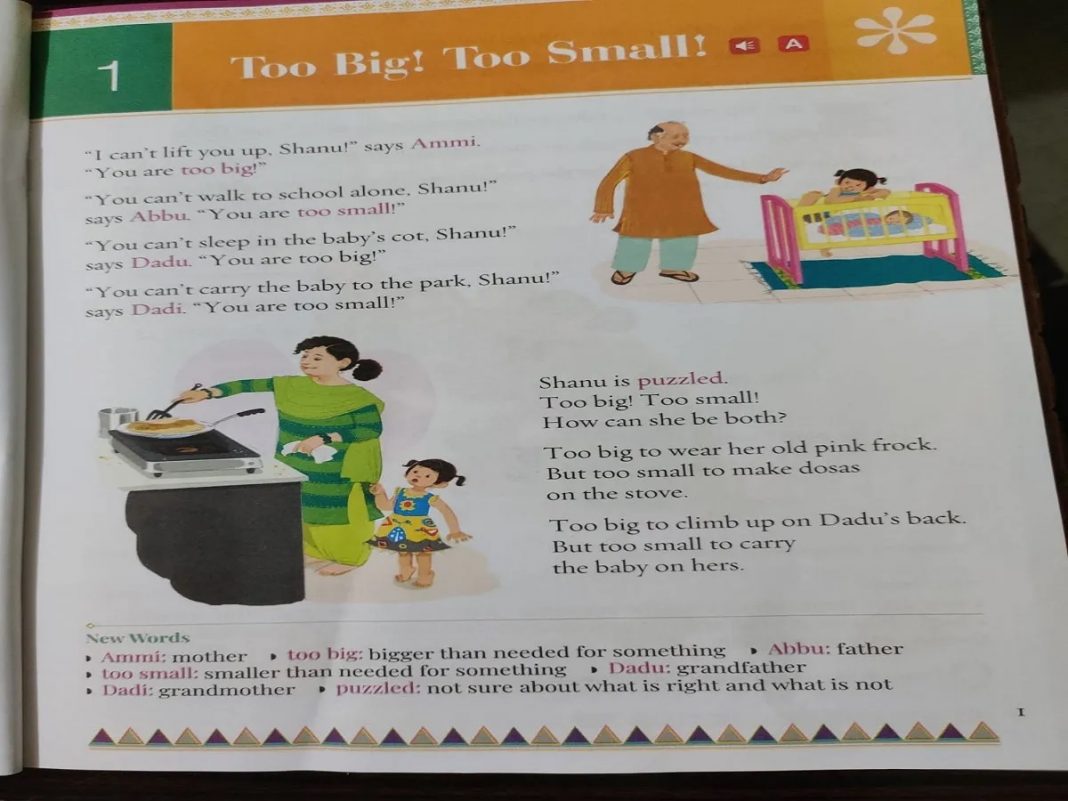
In the Gulmohar book, children are taught to call their mother Ammi. Image Source: Times Now Navbharat

Parents of the pupils attending this school said, “How can these things be taught to our children in the schools? We don’t know how Biryani is made and the school asks kids to have Biryani once a week and bring it to schools in their tiffins. What kind of school is this? What are they teaching to our kids? And what good they are doing for our kids by giving such education?”

“We are poor people, earning our livelihood by working hard. We enrolled our kids in the school with the hope that they will learn something better. But what these schools are teaching them? If we wish, we can shut your schools forever. But right now we don’t intend to do anything like that. Our kids tell us that they are told in school to call their mother Ammi and father Abbu. And kids continue to like what they are taught. Then why not teach them in our language? Teach them in our language. Tell them that mother means Maa and father means Baba. Why are you teaching them that mother means Ammi and father means Abbu?” they further said.

Another woman said about the curriculum, “See they are teaching the kids to call their parents Ammi and Abbu. Is this our culture? Should the kids be taught like this? What will be the fate of our culture if the kids are taught like this? Schools are meant to inculcate good values and culture into the kids. And this school is teaching the kids to call their parents Ammi-Abbu. Are we paying our hard-earned money for this? Now, see this book. They are asking kids to make Biryani at home once a week and bring it to school. Can we make Biryani? Should this be taught to the kids?”
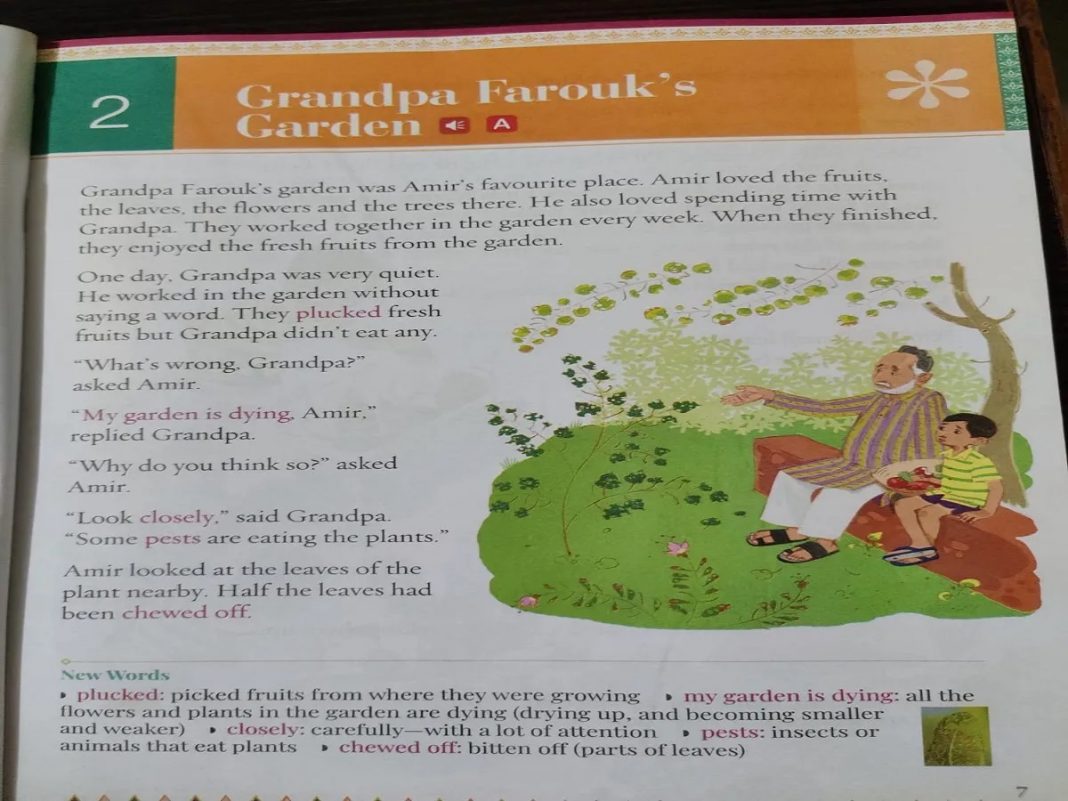
There are many non-Hindu characters in the book. Image Source: Times Now Navbharat

Another male parent said, “This Gulmohar book is being taught in a reputed convent school. The language is being changed in the name of educating the kids. Had it been some community school of particular religion or faith, or some school that gives religious education, then there would not be any objection. But the kind of language being taught here in the name of a convent school, it is clear that they are trying to take the children away from their Hindu culture.”

Many characters in the book are non-Hindus. The first chapter in this book is titled “Too Big! Too Small!”. In this chapter, the kids are taught to speak mother as a new word. The meaning of mother is given as Ammi and that of a father is given as Abbu. Another chapter in this book is titled as “Grandpa Farouk’s Garden”. Yogesh Renwal, the state co-convener of the Bajrang Dal, said that he has been receiving calls from many parents about the book being taught in this school and they are complaining about the excessive use of words related to other religions.

The incident occurred during a period when there is a major controversy in Jharkhand as a result of more than 100 government-run schools rearranging the weekly off from Sunday to Friday, purportedly without consent from the administration, in Muslim-dominated sections of the state’s Jamtara district.
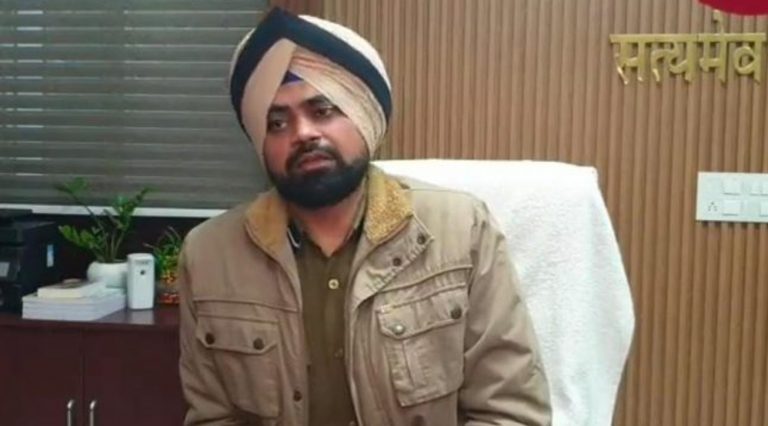
Patna SSP, who was slammed for going slow on Munger murder of Hindu boy, now compares PFI arms training to RSS, gets support from RJD

The Senior Superintendent of Police of Patna, Manavjit Singh Dhillon, has sparked outrage by comparing the Rashtriya Swayamsevak Sangh (RSS) Shakha to a Popular Front of India (PFI) training camp where anti-India activities were being planned.

The Rashtriya Janata Dal (RJD) and Jitan Ram Manjhi’s Hindustani Awam Morcha (HUM) have endorsed the SSP, while the Bharatiya Janata Party (BJP) has condemned Dhillon’s remarks, seeking an apology or his resignation from the Indian Police Service (IPS).

Meanwhile, Dhillon has received a show cause notice from the Bihar Police Headquarters to be responded to within 48 hours. The SSP was asked to respond to the statement in which he compared the PFI to the RSS. He will have to file a reply regarding his statement within the stipulated time.

SSP Dhillon equated the PFI training camp to Rashtriya Swayamsevak Sangh (RSS) Sakhahs. He stated that much as training with sticks is provided in RSS Shakhas, training under the pretext of physical training is provided in PFI training camps, and youths are brainwashed. It has to be mentioned here that while RSS trains its members to use a stick, PFI, in its recent vision document, has spoken about arms training to teach “coward Hindus” a lesson, spoken about the murder of Hindus and Hindu leaders and about establishing an Islamic government in India by 2047.

The RJD has backed Dhillon’s statement, saying that the senior superintendent of police in Patna was correct regarding Sangh’s tactic of spreading misinformation and hate in the garb of physical training and rioting. According to Danish Rizwan, spokesperson for the Hindustani Awam Morcha (HAM), the SSP is being dragged into controversy for no cause. Rizwan posed the question, “If talking about an Islamic nation is illegal, is it legal to talk about Hindu Rashtra?”

Patna High Court had transferred Dhillon for going slow on Munger murder of a Hindu boy named Anurag Poddar

In 2021, the Patna High Court had reprimanded CID officials for being too easy on sub-inspector Brijesh Kumar Singh, the main accused in the Munger firing incident case of 2020. The Patna High Court ordered the transfer of then-superintendent of police MS Dhillon in April 2021 for being too tardy in the investigation of the Munger firing case.

Dhillon was in charge of the Special Investigation Team formed by Munger ranger DIG Manu Maharaaj to look into the Munger shootings case. The court further directed the additional director general of CID to form an SIT comprising senior officers above the rank of DSP to question the police officials facing investigation in the case.

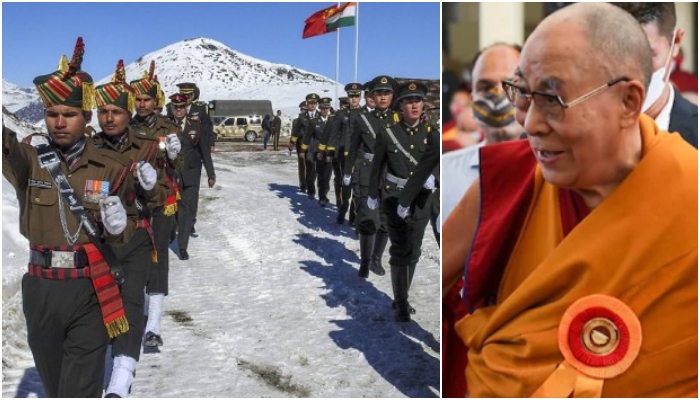
Dalai Lama suggests India-China to solve border issues peacefully, says ‘use of military force outdated’

On Friday, Tibetan spiritual leader His Holiness Dalai Lama slammed China on its expansionist policy in Ladakh. The leader said that the use of military forces for expanding the territory was an outdated technique and suggested resolving the matter through peaceful talks. Dalai Lama is on a two-day visit to Jammu and Kashmir and Ladakh.

“India and China, the two populated neighbours should resolve this problem through talks and peaceful means. Use of military force is outdated”, the Tibetan spiritual leader said on July 15. According to the reports, Dalai Lama also slammed China yesterday and said that he was trying to protect Buddhist culture.

“Not Chinese people, but some Chinese hardliners consider me a separatist. Now, more and more Chinese are realizing that Dalai Lama not seeking independence but within China meaningful autonomy and to preserve Tibetan Buddhist culture,” said the highest spiritual leader while responding to the media queries in Jammu.

When asked about China’s opposition to his arrival, the Dalai Lama stated, “This is typical. The Chinese do not oppose… an increasing number of Chinese are becoming interested in Tibetan Buddhism. Some of their experts have discovered that Tibetan Buddhism is highly scientific. Things are evolving.” The Dalai Lama, whose true name is Tenzin Gyatso, was awarded the Nobel Peace Prize in 1989 and is revered across the world for his support of Tibetan independence and other causes.

To note, before the arrival of the Tibetan leader in Jammu, Chinese Foreign Ministry spokeswoman Zhao Lijian had encouraged New Delhi to label the Dalai Lama as ‘an anti-China separatist (in) nature’. She went on to say that India must uphold ‘its commitment to China, talk and behave responsibly, and refrain from utilizing Tibet-related concerns to intervene in China’s domestic affairs.

Also, Beijing had recently chastised Prime Minister Narendra Modi for congratulating the Dalai Lama on the occasion of his 87th birthday. PM Modi had called the Dalai Lama and wished him a warm 87th birthday. “I called His Holiness the Dalai Lama earlier today to wish him a happy 87th birthday. We wish him a long and healthy life”, Prime Minister Modi tweeted on July 6. China then stated that India should refrain from interfering in China’s domestic affairs through Tibet-related concerns.

The Dalai Lama has begun a two-day journey to Jammu and Kashmir and Ladakh. This is his first official excursion outside of his base in Dharamsala since the COVID-19 epidemic broke out. The visit also comes only three days before the 16th round of India-China Corps Commander-level talks, which are set to commence on July 17. Reports mention that the Dalai Lama is likely to visit the famed monastery in Leh during his tour.

Jharkhand: Probe initiated over media reports of conversion of 33 state-run schools in the Dumka district into Urdu schools

Three days after media reports emerged that more than 33 state-run schools in Dumka, Jharkhand, have been converted into Urdu schools, the Department of School Education has taken cognisance of the same. On Thursday, July 14, ANI quoted the DSE of Dumka, Sanjay Kumar Das as saying, “We have written a letter to the BO of the 33 schools advising them to enquire about this matter. All the schools have Urdu in their names.”

On July 12, OpIndia reported how 33 government schools in Dumka, the hometown of Chief Minister Hemant Soren, have made several modifications in response to the whims of the local Muslim population in the area. They have converted to Urdu schools and the weekly offs have been changed from Sunday to Friday (Jumma).

Speaking about the arbitrary modifications, the DSE Dumka, further said that an investigation is being conducted on how Urdu is tied to these institutions and under what conditions the weekly holiday on Friday is offered in govt schools. “There’s no instruction from dept to keep schools closed on Friday. After receiving the report, we’ll start an investigation,” Das further told the media.

As per reports, ten state-run schools in Dumka’s Shikaripara Block, eight in Ranishwar Block, seven in Saraiyahat Block, two in Jama Block and Jarmundi Block, Kathikund Block and Dumka Block have changed their weekly offs from Sunday to Friday. Most of these institutions sport name boards suffixing “Urdu school” along with the names of the schools.

Islamification of state-run schools in Jharkhand

Notably, the government schools in Jharkhand have recently been in the headlines for their steady Islamification. Several state-run schools have reportedly been making modifications in response to the whims of the local Muslim population.

Only yesterday, OpIndia reported how a class 4 student was brutally thrashed by Mohammad Abul Kalam, the headmaster of a government school in  Giridih, Jharkhand, for writing ‘Jai Shri Ram’ on the classroom’s blackboard.

Recently, it was reported how Sharia and Islamic practices were being imposed on the students of a state-run school in Jharkhand’s Garhwa district, with children forbidden from praying with their hands folded. Then reports emerged on how state-run schools in areas like Jamtara and Dumka, which is the hometown of Chief Minister Hemant Soren, were being converted into Urdu schools, and the weekly offs changed from Sunday to Friday (Jumma).

In April, a ruckus ensued in the Government Jagannathpur Polytechnic college in Jharkhand after students chanted ‘Jai Shri Ram’ and Bharat Mata Ki Jai slogans while celebrating ‘Nav Samvatsar’, the first day of Hindu New Year. 

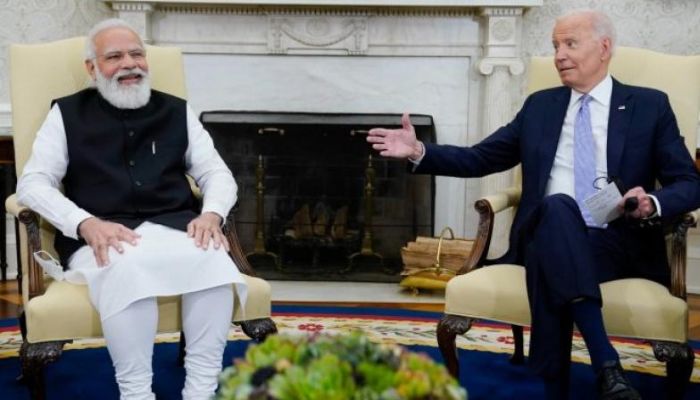
US House of Representatives gives nod to CAATSA waiver for India to remove threat of sanctions for ties with Russia, Iran

In an important development for India, the United States House of Representatives approved an India specific-waiver under CAATSA i.e. Countering America’s Adversaries through Sanctions Act on Thursday (July 14). Aimed at deepening defence ties, the legislation is considered the most significant step since the 2008 US-India nuclear deal. It was proposed by the Indian-origin Democrat Ro Khanna.

The CAATSA provides for sanctions by the USA against any country that maintains conducts significant transactions with Iran, North Korea or Russia. Under this federal law, US govt can impose economic and financial penalties on any country that have significant ties with the three nations. For India, it meant US could sanctions for defence ties with Russia, and trades with Iran.

After the CAATSA waiver, India will be able to continue its defence and trade ties with the three nations, especialy with Russia and Iran, without the looming threat of US sanctions. However, the waiver needs to be first approved by the senate and after that signed by the president.

The legislation sought to amend the National Defence Authorization Act (NDAA) to counter the looming threat of China against India’s security. The proposed amendment received the support of 330 Congressmen while 99 voted against it.

The CAATSA waiver is particularly important for the S-400 missile defence system deal that India has signed with Russia. US seas this state of the art missile defence system as a threat, and have threatened sanctions against any country that acquires it. India has already some units of the system which have been deployed along the borders. While the US govt undecisive on imposing sanctions on India for this deal, the waiver will mean that the threat of sanctions will cease to exist.

In a statement, House Representative Ro Khanna remarked, “The United States must stand with India in the face of escalating aggression from China. As Vice Chair of the India Caucus, I have been working to strengthen the partnership between our countries and ensure that India can defend itself along the Indian Chinese border.”

“This amendment is of the utmost importance, and I am proud to see it pass the House on a bipartisan basis,” he added. Khanna emphasised that the bilateral ties between India and the United States is rooted in democratic values and critical to counter threats in India-Pacific regions.

Khanna had also proposed that Congress recognised the serious nature of border threats received by India from China. He underlined that the United States must support India in meeting its immediate defence needs and helping it end its reliance on Russian weapons.

The Indian-origin Democrat also hailed the US-India Initiative on Critical and Emerging Technologies (ICET) to accelerate bilateral cooperation in artificial intelligence, semiconductor manufacturing, quantum computing, biotechnology, and aerospace.

A large number of politicians in US see India as an effective counter against growing Chinese influence in the region, and they recognise India’s need to maintain defence ties with Russia due to historical reasons. The CAATSA waiver has been initiated as a result of the same.

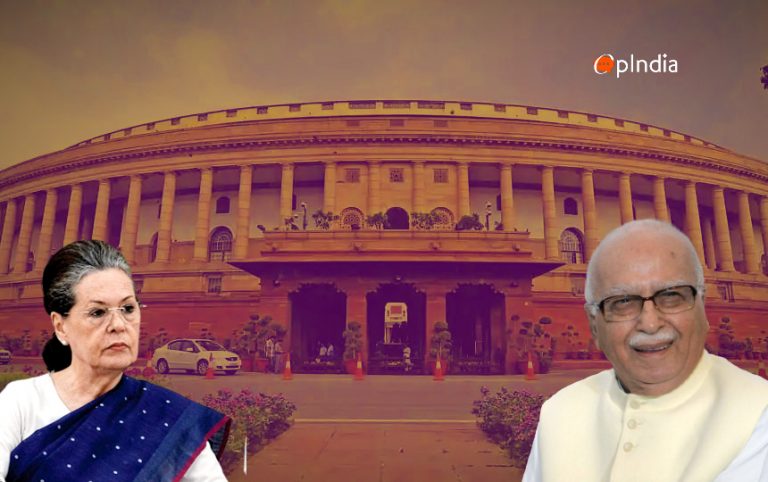
Did you know: Sonia Gandhi got LK Advani’s comments in Parliament expunged in 2012. Here is all you need to know

In the midst of the discussion around the 50-page list of terms that the Lok Sabha secretariat deemed inappropriate for use in Parliament, it is significant to mention how Congress President Sonia Gandhi exhibited a rare outburst of wrath in the Lok Sabha in August 2012 after the treasury benches took strong exception to a remark by Bharatiya Janata Party (BJP) leader L.K. Advani. Advani’s statement that “UPA-2 is an illegitimate government” sparked outrage in the House.

Immensely enraged Sonia Gandhi persuaded Congress Members of Parliament (MPs) to protest. During the spat between the ruling and Opposition benches, Meira Kumar, the Speaker of the Lok Sabha, urged Advani to retract his statement during the altercation between the opposition and government benches. Eventually, Advani’s remarks were expunged from the records of the house.

Under fire from Congress leaders over his remarks, Advani clarified that his comments referred to the 2008 confidence vote for which “crores of rupees” were spent to save the government.

“The UPA-2 is illegitimate. It has never happened in the history of India…crores of rupees were spent to get votes,” Advani said sparking anger among the treasury benches.

Advani’s remarks raised the hackles of Sonia Gandhi, who appeared animated with fury over his comments calling the UPA-II government illegitimate. Gandhi strongly protested against the comments and egged on her party members to vociferously register their protest against Advani’s remarks, following which the BJP leader was forced to withdraw the remarks.

Notably, ahead of the Monsoon Session, which starts on July 18, an argument broke out Thursday over a 50-page list of words and phrases issued by the Lok Sabha secretariat deemed unacceptable for use in Parliament. The opposition called the unparliamentary language list a “gag order” designed to protect the Modi government from “criticism.”

The controversy

A new handbook published by the Lok Sabha Secretariat lists a number of expressions that have been deemed unprofessional and improper for usage in the Parliament and that, at the chair’s discretion, would not be captured when the parliamentary proceedings are being recorded.

The handbook states that any criticism of the Chair in both chambers, whether in English or Hindi, will be deemed unparliamentary and will be expunged from the records of Parliament. It contains terms that have been removed from the records of both the Lok Sabha and the Rajya Sabha in recent decades.

The opposition called the unparliamentary language list a “gag order” intended to insulate the Narendra Modi government from “criticism,” but Lok Sabha Speaker Om Birla stressed that “no words had been banned.” He stated that it is the Chair’s discretion to remove words.

It is worth noting that the list is not a new recommendation, but rather a compilation of words that have already been eliminated from the Lok Sabha, Rajya Sabha, or state legislatures’ recordings. The opposition has made an unreasonable fuss about the subject.

What rules say

The practice of compiling expunged terms has reportedly been in use since 1954, and the list simply acts as a guide for MPs. These phrases were viewed as being unparliamentary even during the UPA’s government. In the past year, 62 new words have been added to the list; some of them may now be under evaluation.

Additionally, in accordance with Rule 380 (Expunction) of the Rules of Procedure and Conduct of Business in the Lok Sabha, the Speaker may, at his or her discretion, order that words used in debate be omitted from the proceedings of the House if they are deemed to be defamatory, indecent, improper, or undignified.

In both the English and the Indian languages, there are literally thousands of words and phrases that are regarded as inappropriate. The Presiding Officers are responsible for keeping such phrases out of the records of Parliament. The presiding officers’ choices determine when new words and phrases are added to the list.

For their convenience, the Lok Sabha Secretariat has produced a sizable book named “Unparliamentary Expressions.” The most recent of these books was published in 2009, under the UPA government. Since then, the list has been uploaded to the MPs portal and the Lok Sabha intranet.

The Lok Sabha Speaker, Om Birla, said on Thursday that there are no terms or expressions that are forbidden in the House and that members are free to speak their minds. He said that the government has no influence over the choice to expunge and that it is made purely at the Speaker’s or Chairman’s direction.

“It has been a routine practice since 1959. No words have been banned. Members are free to express their views; no one can snatch that right of members, but the expression of their words should be as per decorum of Parliament,” Birla told the media. “Earlier, a book of such unparliamentary words used to be released. To avoid wastage of paper, we have put it on the internet,” he further added.

“Expunged words” during UPA

According to a report, the list from 2012, i.e., under the UPA government, includes even commonly used phrases like ashamed, falsehood, corrupt, nonsense, bundles of lies, fool, lawlessness, liar, cheating, looted, dishonest, dishonesty, fraudulent, mad, mislead, goons, James Bond, and bribe.

User gets Twitter notice for criticising SC judges who made comments against Nupur Sharma, injunction filed by Congress worker: Full details

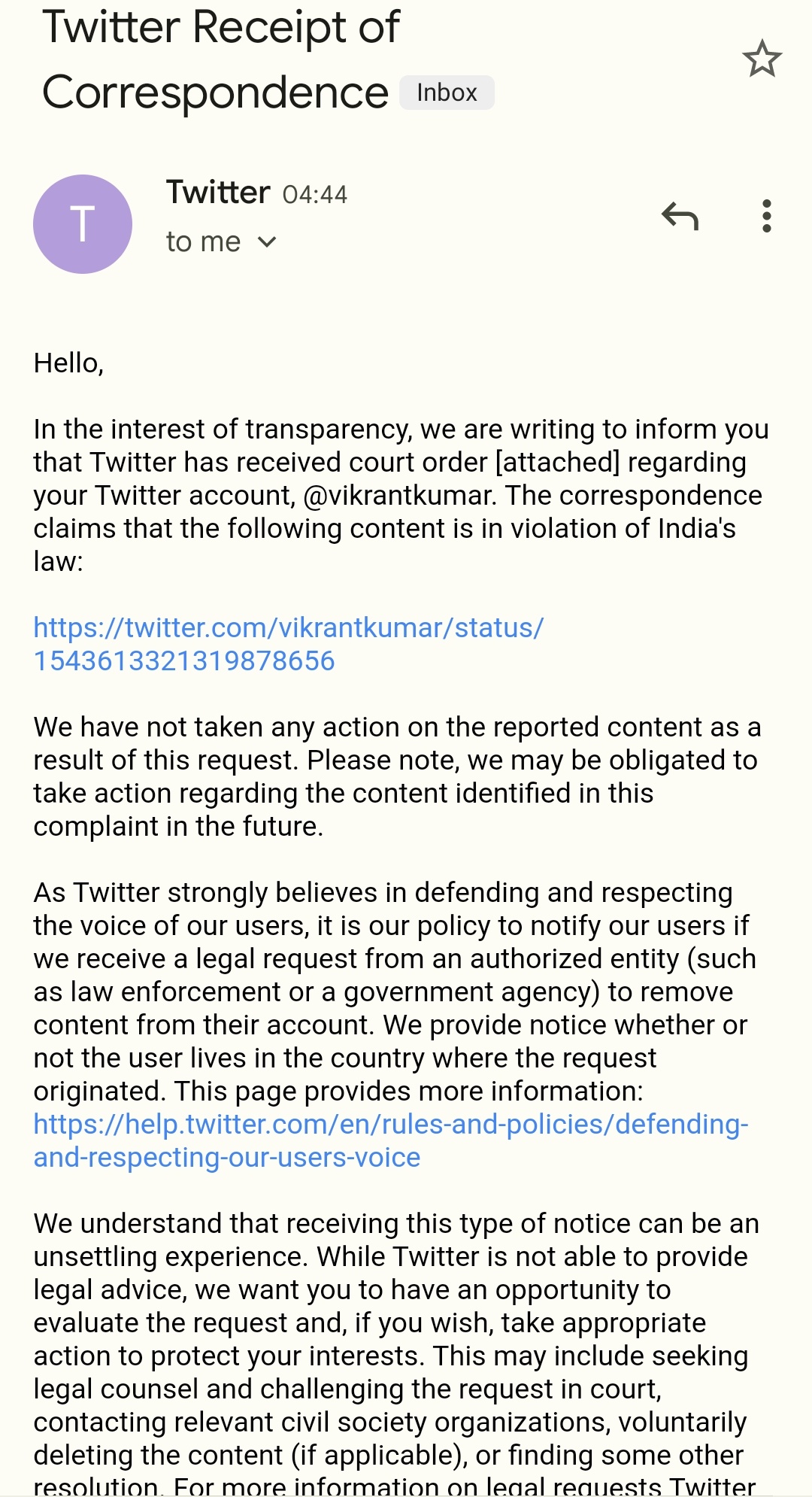
On the 1st of July, two Supreme Court Judges made certain remarks, blaming ex-BJP spokesperson Nupur Sharma’s “loose tongue” for the beheading of Kanhaiya Lal by Islamic fanatics. The observations, that did not make it to the written order, drew widespread condemnation from all quarters. On social media particularly, the criticism minced no words. One such individual who criticised the observations by the SC Judges was Vikrant Kumar. He has now tweeted that he has got a notice from Twitter, saying Congress had filed a lawsuit and got an injunction from the court, for a post where he criticised the oral observations against Nupur Sharma.

The post that Congress approached the court against, and Twitter got intimated to pull down, was one where Vikrant had pointed out that Taliban had appreciated the oral observations by Judges Surya Kant and Pardiwala, and that these judges should introspect instead of gagging criticism.

Vikrant Kumar got an email from Twitter that informed him about the injunction against his tweet. In the email, Twitter said that it had not taken action against the tweet for now, however, they may have to at a later date if they are asked to by the courts.

Email by Twitter to Vikrant Kumar

The email said that the legal notice has claimed that Vikrant’s tweet is against Indian laws.

In the email itself, that OpIndia has perused, the injunction copy was attached.

What did the court order and the legal notice to Twitter say

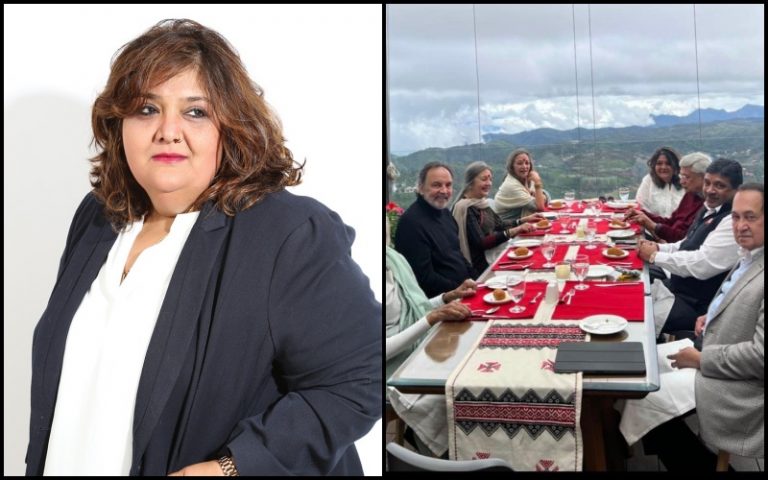
On the 7th of July, Congress post holder Dipali Sikand approached the sessions court in Bangalore to get an injunction against commentary that was being made about a picture, where several individuals were seen dining at a club owned by Sikand.

The MindScapes Club, owned by Sikand, had posted a picture where Sikand was seen dining with Finance Minister – Tamil Nadu, P. Thiagarajan, NDTV’s Prannoy Roy and Radhika Roy, CPIM’s Brinda Karat and Prakash Karat, The Hindu’s N. Ram and his wife.

Since this was just after the Supreme Court observations, rumours started floating that in this picture, Judge Surya Kant and Pardiwala were also present, therefore, alluding to a certain communist bias.

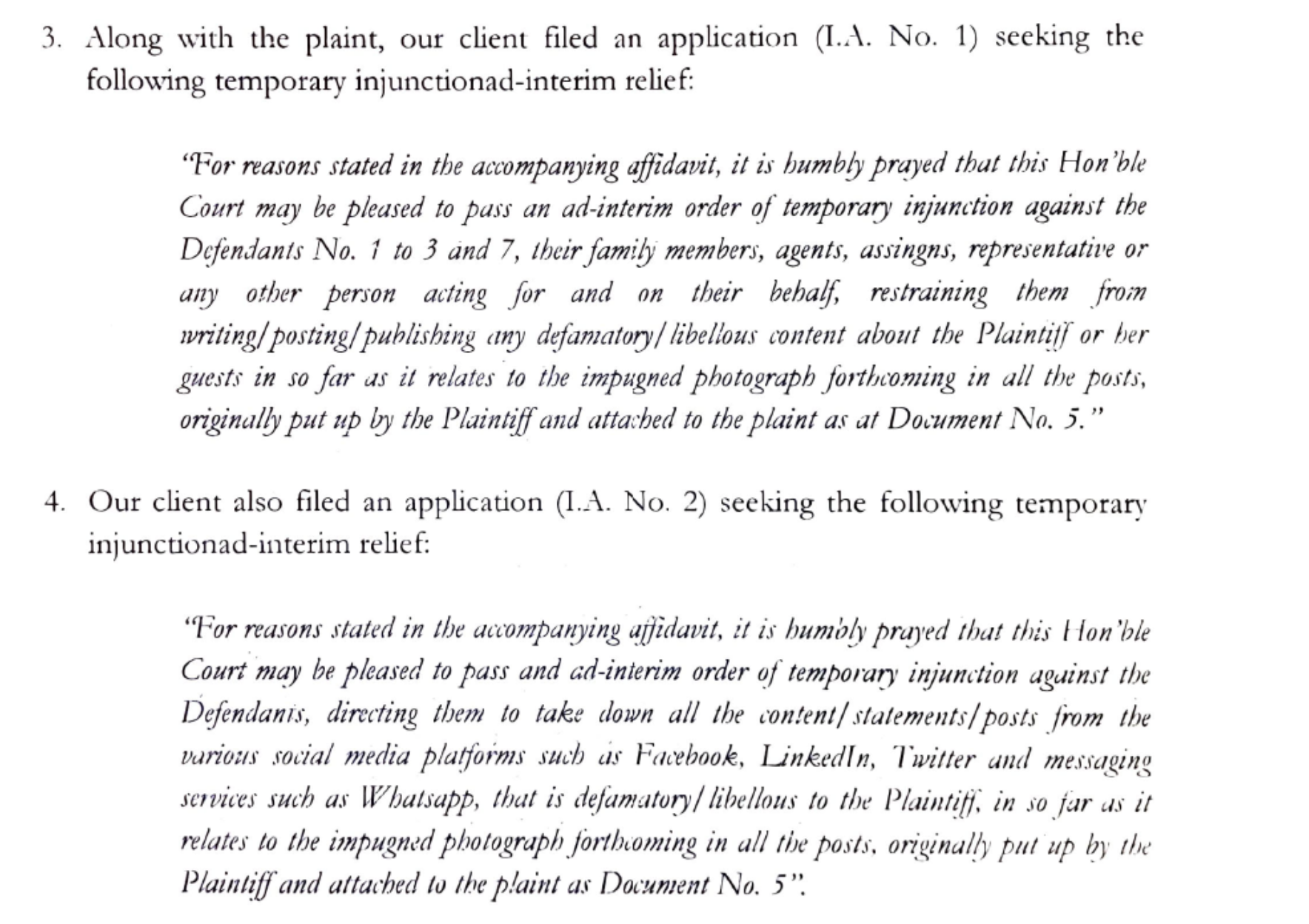
The injunction sought was against certain Twitter handles that were supposedly posting “defamatory” content against Dipali Sikand and her “guests who dined at the MindScapes Club”. The suit sought an injunction restraining people from writing about the picture, Dipali Sikand or her guests (N Ram et al). The suit also sought to force people to take down their posts about this picture.

Excerpt of injunction

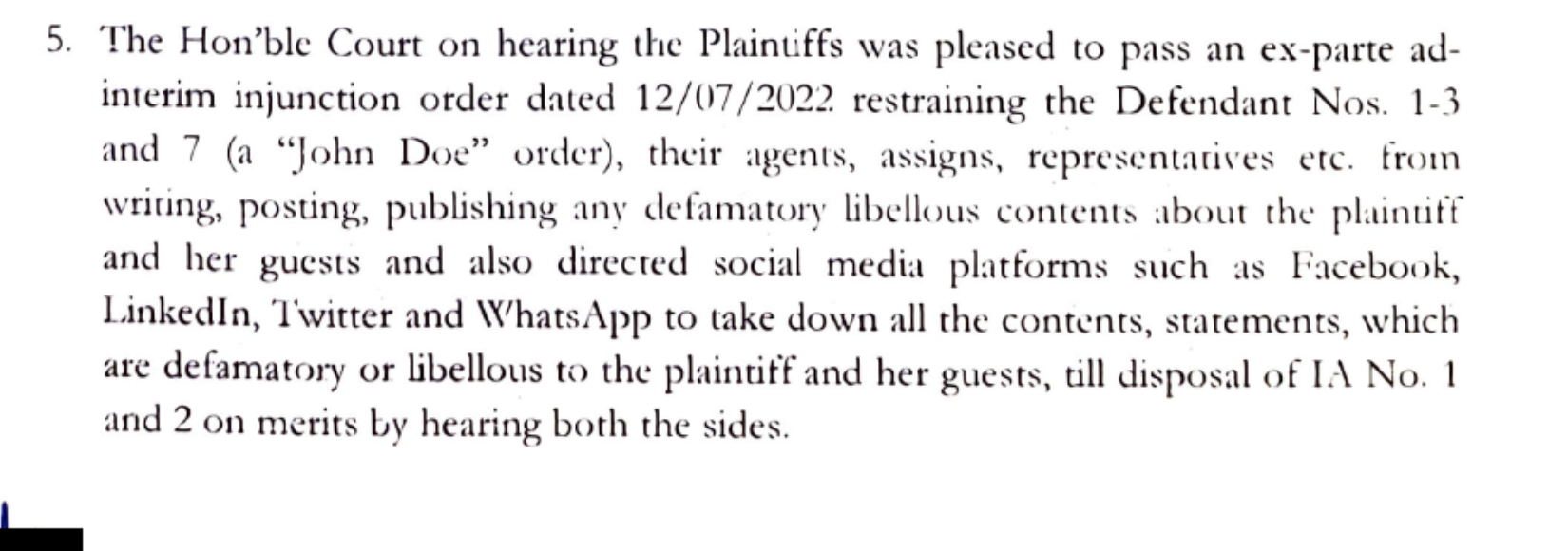
The Sessions Court had passed an ex-parte injunction forcing the netizens mentioned by Sikand to not post anything about the picture or the people present at that luncheon and also, asked Twitter, Facebook, WhatsApp etc to pull down the posts mentioned in the suit.

Excerpt of injunction

In the suit, Dipali Sikand had mentioned that there were several people who were “giving this a political colour” by alleging that Justices Surya Kant and Pardiwala were a part of the luncheon when they were not. This had defamed the guests who were present at the luncheon and given it a political colour. Therefore, she had asked the court to restrain not just the Twitter handles mentioned, but also the “unknown entities” who were tweeting about this. She had contended that the tweets were being posted to lower the reputation of the Judges involved as well.

Who is Dipali Sikand

Dipali Sikand is an entrepreneur, but more important, she is a post holder of the Congress party.

On the 2nd of January 2021, Rajeev Gowda, Congress leader and spokesperson had posted a tweet congratulating Dipali Sikand for being appointed as a national coordinator of Congress.

She is also the founder of Founder, LesConcierges, ClubConcierge, MindEscapes.

Why did the tweet by Vikrant Kumar, criticising the Judges, make it to the list by Dipali Sikand

The injunction, a copy of which Vikrant Kumar got, was about the picture of Dipali Sikand, other communist leaders, NDTV journalists and The Hindu’s N Ram, however, Vikrant’s tweet was specifically criticising the oral observations by Justice Pardiwala and Surya Kant. So how did Vikrant’s tweet make it to the list of tweet URLs that Dipali Sikand, Congress worker, provided to the court for an injunction?

It is pertinent to note that N Ram, who had cropped Rafale papers and ran the fake news for weeks, had outraged about the picture and claims that the two judges were present at the lunch.

It is also pertinent to keep in mind that the entire Congress ecosystem had condemned the criticism of the Judges for their oral remarks.

In the suit by Sikand, she had mentioned that the comments on the picture also defamed the two judges – Surya Kant and Pardiwala.

Since Congress was enthusiastic about the shameful oral observations against Nupur Sharma, while it is possible that Vikrant’s tweet was added by mistake, it seems more likely that this was Congress’ way to shut down criticism of not just the lavish lifestyle led by avowed Communists and the nexus between Media and the Communist party functionaries as evident in the picture, but also criticism of Judges Surya Kant and Pardiwala.

Pakistani man kills and boils wife in cauldron in front of their six children in Sindh

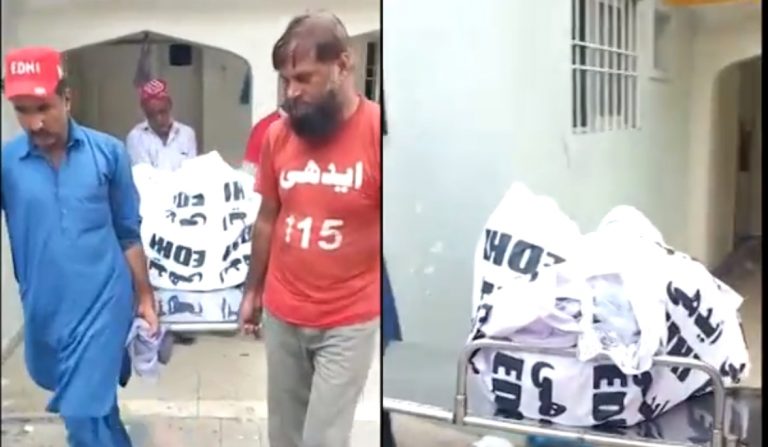
On July 13, Wednesday, a Pakistan man allegedly killed his wife, severed one of her legs from her body and then boiled her in a cauldron (large metal pot) in front of his six children. The gruesome incident was reported from a private school in the Gulshan-e-Iqbal area in Pakistan’s Sindh province. According to media reports, the deceased, identified as Nargis, was allegedly killed for not submitting to her husband’s demands to engage in illicit relationships.

The incident came to the fore after Nargis’ 15-year-old daughter, who was one of the witnesses to the heinous act, called the local police to inform them about the incident. She told the police that her father Ashiq fled with her three siblings following the harrowing incident.

According to the police, the woman’s husband Ashiq from Bajaur Agency worked as a watchman and lived in the servant quarters of the school that had been closed for about eight to nine months. As per the child’s statement and preliminary probe, at first Ashiq suffocated his wife to death with a pillow and then boiled her in the cauldron in front of her children. One of the woman’s legs had also been severed from her body, said the police.

Though the police are yet to ascertain the reason behind the barbaric act, it is being speculated that the husband had forced his wife to engage in illicit relationships and murdered her when she refused to give in to his demands.

District East Senior Superintendent of Police (SSP) Abdur Rahim Sherazi was quoted by Geo News as saying that the police has custody of the other three children.

“They are shaken and traumatised,” said SSP Sherazi, adding that the deceased’s body has been taken to Jinnah Postgraduate Medical Centre for medico-legal formalities.

A case has been registered and raids are being carried out to arrest the suspect, said the police. While the suspect took three of the children with him, the other three children are now in police custody. “They are shaken and traumatised,” said SSP Sherazi.

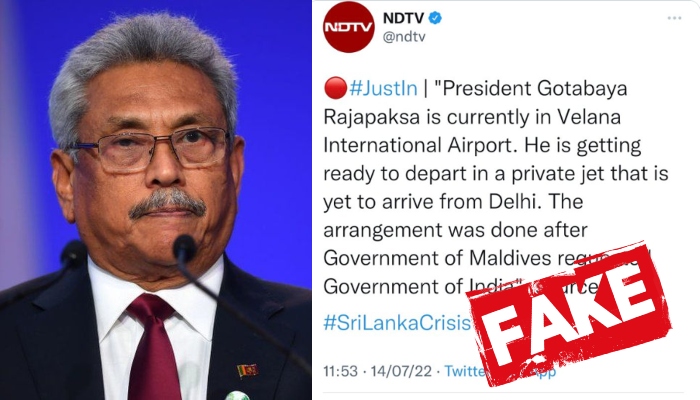
Sri Lanka crisis: NDTV falsely claims ‘India sent a private jet for Rajapaksa’, deletes tweet after MEA rubbishes such rumours

On Thursday, the Indian government reiterated that it has no role to play in the travel of the former President of Sri Lanka, Gotabaya Rajapaksa and that the country had never helped him escape from Sri Lanka.

The Ministry of External Affairs (MEA) and the High Commission of India in the Maldives rubbished all such claims made by the media channels who said that India had sent a private jet to the Maldives for Rajapaksa at the request of the Government of Maldives.

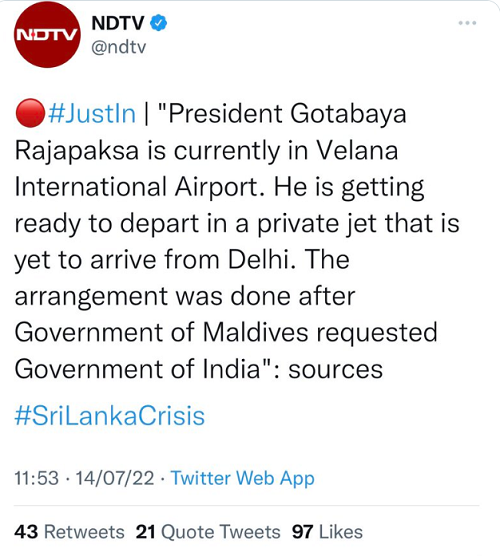
This is probably after NDTV, the Leftist news channel falsely claimed in a report that Rajapaksa was transported from the Maldives to Singapore in a private jet that was sent by India. “#JustIn: President Gotabaya Rajapaksa is currently at Velana International Airport. He is getting ready to depart in a private jet that is yet to arrive from Delhi”, NDTV had tweeted.

Screenshot from Twitter

The media channel also added in the tweet that the arrangement for Rajapaksa was done after the Government of Maldives requested the Government of India to help in the case. The Indian government rubbished all such claims and reiterated on Thursday that it had no hand in arranging the travels of Rajapaksa. “India has no role in Sri Lanka President Rajapaksa’s travel from the country or in facilitating the same”, MEA said.

Reportedly, the NDTV pulled down the tweet with false claims on July 14. Earlier too, the Indian High Commission in Colombo had refused to have helped the outgoing Sri Lankan president Gotabaya Rajapaksa flee to the Maldives. Extending support to the people of Sri Lanka amid the mounting political and economic problems in the country, the High Commission had said that the media reports which claimed that India helped Rajapaksa escape from Sri Lanka were ‘baseless and speculative’.

The MEA meanwhile added that India will stand by the people of Sri Lanka as they seek to realize their aspirations for prosperity and progress through democratic means and values, established democratic institutions, and a constitutional framework.

Sri Lanka’s troubled President Gotabaya Rajapaksa resigned on Thursday, just after arriving in Singapore, according to the House speaker’s office. Speaker Mahinda Yapa Abeywardena’s spokesperson said Rajapaksa resigned by email, hours after the 73-year-old leader arrived in the city-state after demonstrators overran his palace over the weekend.

In the evening, a Saudi Airlines flight carrying Rajapaksa touched down at Singapore Changi International Airport. In response to media inquiries, a representative for the Singapore Ministry of Foreign Affairs stated that he had not requested or been given asylum. According to the spokeswoman, Singapore does not normally accept asylum requests.

Sri Lanka, a nation of 22 million inhabitants, is experiencing an unparalleled economic downturn, the worst in seven decades, with millions unable to purchase food, medication, energy, and other commodities. Wickremesinghe, the country’s acting president, proclaimed a state of emergency yesterday.

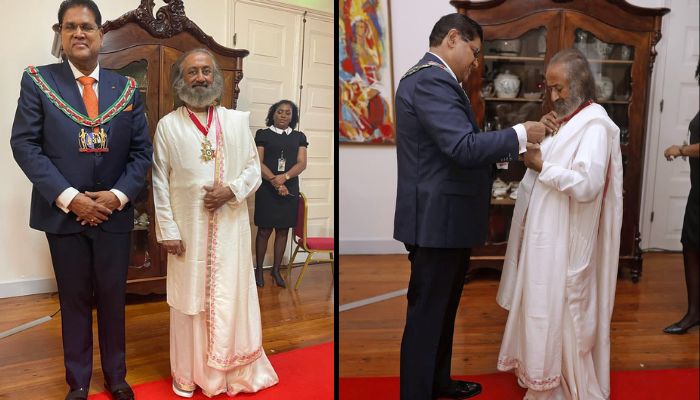
Sri Sri Ravi Shankar receives the highest State honour of Suriname

On Friday (July 15), the Republic of Suriname bestowed its highest State honour on Indian spiritual leader Sri Sri Ravi Shankar.

In a tweet, the yoga guru wrote, “Honoured to receive Suriname’s highest award – The Honorary Order of the Yellow Star (Ere-Orde van de Gele Ster).”

“I credit this award to the teachers & volunteers who have been doing commendable service in this country. I thank President Santokhi & the judges for this honour,” he further stated.

While speaking about the matter, the President of Suriname, Chan Santokhi, remarked, “Gurudev ji, I applaud you for keep shining your light. I congratulate you that this decoration… May you lead us all to peace and harmony…People of Suriname will always welcome you with a warm heart.”

Interestingly, the President of Suriname is the Grand Master of the Honorary Order of the Yellow Star. Commissioned in 1975, it is awarded to meritorious individuals for exemplary service to the nation and its people. Foreigners are also eligible to receive the award. The Order is cited in 2 divisions – civil and military.

Sri Sri Ravi Shankar had earlier said he had denied the Padma award

It must be mentioned that Sri Sri Ravi Shankar had earlier turned down the Padma award, which was to be awarded to him during the 66th Republic Day. In a statement, he said, “Rajnath Singhji called to inform me about Padma Awards. I thank Govt for considering me. Instead of me, I’d like them to honour someone else.”