Home Blog Page 3357

Gorakhpur temple attack accused Murtaza used a code language full of Arabic words, received e-mails from ISIS

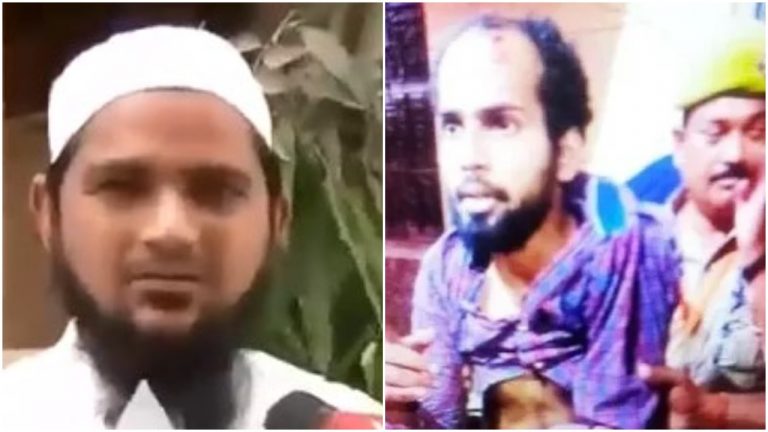
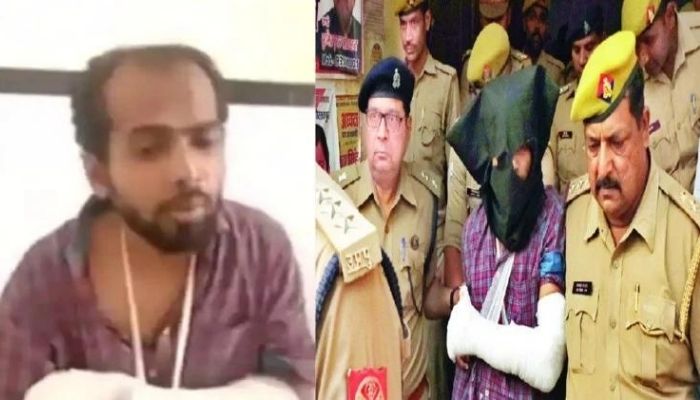
Ahmad Murtaza Abbasi, accused of attacking security personnel outside Gorakhpur’s Gorakhnath temple, used a code language consisting of Arabic words. Ahmed Murtaza Abbasi was in touch with a young woman from the ISIS camp. He came in contact with the young woman through e-mail. During interrogation, it has also been revealed that Murtaza had sent money several times to the account mentioned by the young woman.

According to a report by Amar Ujala, Murtaza, who was preparing to join ISIS, said during an Anti-Terrorism Squad (ATS) investigation that he was e-mailed by a young woman from the ISIS camp. The young woman sent her photo to him and promised to meet him when she came to India. Murtaza had sent 40 thousand rupees on her demand. During interrogation, Murtaza revealed that in the year 2017, he started learning computer programming on the internet. Here, he began to have thoughts that he was in Paradise, but Allah was unhappy with him.

From January 2020, Murtaza started learning high-tech computer coding. During this time, he once again came in contact with Syrian terrorist organizations. Impressed by them, he sent eight lakh rupees from Nepali accounts.

Murtaza felt that the whole world was harassing Muslims. Radical ideology and Jihadi mentality took over his mind. In the meantime, he went to the suspected madrasas on the Nepal border and heard the speeches.

Murtaza has sent money to several accounts. After this information came to light, the ATS is now also collecting details of his assets. It will be seen how much his earnings were and how much money he has sent to other people. It will also be seen where the money in his account came from. And if the money came, where was it used?

Ahmad Murtaza Abbasi Used to speak in the code of the Arabic language. The ATS has found jihadi literature from Murtaza’s house. There’s also an Arabic book. Initial investigations believed that Murtaza read it because of his allegiance to the religion. Along with Murtaza, the ATS also took the book to the Lucknow headquarters. On close examination, several words have been found underlined in the book.

Code words used by Murtaza

While talking on the phone in the country or outside the country, he used the Arabic word Rihlat Tayaran for flight. This Arabic word means flight. Murtaza had highlighted the word with a marker in the book. The Arabic word Aljihad was used to brainwash Murtaza. Murtaza was given information about Paradise which is Jannat to make him fidayeen which literally means a person sacrificing himself. In the conversations that led Murtaza on the path of jihad, his name was not used. He was called Abdulla in such conversations. Whenever an outsider came to meet Murtaza, he was first informed about it. The code word for outsiders was Mehman. Whenever there was any funding-related conversation with Murtaza, the word Bakhshish was used for that. In the conversations with Murtaza, the police or security agencies were called khatmal which means mosquito.

Murtaza thought he was homosexual. When the family came to know about these things, they started treating him. Doctors described it as a hypomania disease. On 6th April 2022, Samajwadi Party chief Akhilesh Yadav also mentioned that the accused has bipolar disorder. However, the doctor who treated Abbasi refuted the claims that he was mentally unstable.

Crowdfunding fraud accused Rana Ayyub downplays embezzled fund value as ‘small amount’, agrees to ‘ignorant’ host

Alleged journalist Rana Ayyub has once again courted controversy after she tried to downplay allegations of misusing funds, meant for Covid-19 relief work, for personal gains.

In an interview with the International Center for Journalists (ICFJ) Director Julie Posetti, Ayyub insinuated that ₹10-12 crores is a small sum of money that did not merit public scrutiny.

“Now there is a case of money laundering against me. I will give you a small example. The other day when I was trying to get a court verdict to come here to speak. Just look at the lawlessness. The Judge said that this is just a small amount. Even if it was 10 or 12 crores, why does it merit coming here?”, Ayyub remarked.

“You know what news channels were saying: Judge accuses Rana Ayyub of money laundering 10-12 crores”, she further continued. At that point, the host interjected, “Just for the context, we are talking about 20,000 Dollars essentially.”

Instead of bothering to correct Julie Posetti, Rana Ayyub chose to play along with that. While being aware that the audience members were not well-versed with the dollar to rupee exchange rates, she responded with ‘exact.’

Ayyub thereby gave the impression to the audience that ₹10-12 crores equaled a mere USD 20,000, a supposedly ‘small amount’ for which a journalist of her stature should not be questioned. In reality, 12 crores in Indian rupees amounts to nearly 1.6 million US dollars.

Allegations of fund embezzlement against Rana Ayyub and Delhi High Court order

On February 10, OpIndia had reported that ED seized Rs 1.77 crore in Ayyub’s and her family’s accounts under the Prevention of Money Laundering Act. A few days after the expose, Ayyub alleged in a statement that she was being framed for her “journalism” and she did not misuse the money.

However, all her claims were debunked by a Twitter user Hawk Eye who was the first to share details of alleged charity fraud last year. The ED has, in its attachment order, said, “Rana Ayyub has cheated the general Public Donors in a pre-planned manner and with the intention to cheat the general public donors.”

The order emphasised that the ‘scam’ started from the time she received the funds, which she did not use for Covid-19 relief work. She instead made a fixed deposit of ₹50 lakhs and transferred the amount to the savings account of her father, and sister through net banking. You can read the details about the allegations of misuse of Covid-19 funds by clicking on the link here.

On March 29, Rana Ayyub was stopped by Indian Immigration officials from boarding a flight to London due to the pending money laundering case against her. On April 4, she was granted permission to travel abroad by the Delhi High Court with the pre-requirement that she divulges details of her travel, contacts and her place of stay.

Karnataka: Hindu outfit campaigns to not hire Muslim cab drivers when visiting temples, says ‘they have impure food choices’

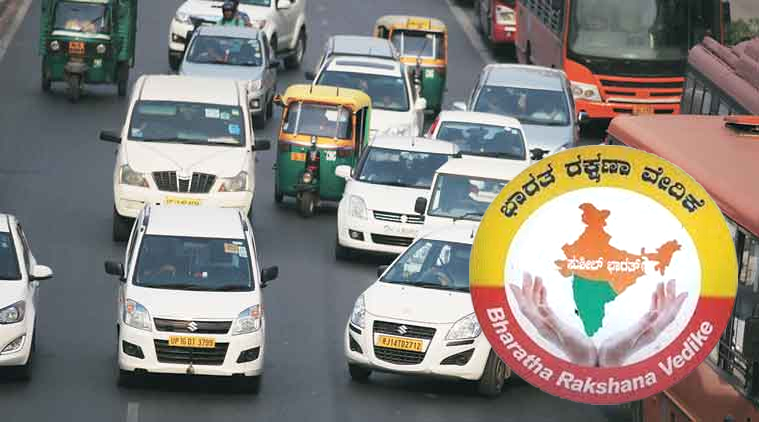
Amid the hijab row, halal meat issue, and loudspeaker row ongoing in the state of Karnataka, a new issue of ban on Muslim cab services emerged on Friday. The Bharata Rakshana Vedike, a Hindu right-wing organization, on April 8 called for a campaign asking all the Hindus to avoid the services of Muslim cab drivers across the state while visiting Hindu religious places.

According to the reports, the members of the organization went from door to door of Hindu families to explain to them the reason behind not employing the Muslim cab drivers. The organization stated that the Hindus must not use Muslim cabs, especially when visiting the Hindu temples or pilgrimages.

Speaking on the issue, Bharat Shetty, the chief of the Bharata Rakshana Vedike said that Hindus don’t eat non-veg and it will be a disrespect to our religion if we take someone to a temple who does not believe in God, has impure food choices.

“When we go to temples or shrines, we do not eat non-veg and taking someone who does not believe in our gods or make us impure with their food choices would be a disrespect to our culture and religion. They call us kafirs (non-believers) and just as their religion is important to them, ours is to us,” Shetty was quoted.

The chaos of Muslim persons wearing hijab in educational institutions-

The state of Karnataka has witnessed huge controversies, some also leading to the national level in recent times. The Karnataka hijab row was chaotic as the Muslim girls stayed adamant about wearing hijab in the schools and colleges even after the High Court decision. Some Muslim students at Karnataka’s Pre University College petitioned the High Court to be allowed to attend lectures while wearing the hijab. They were denied admission to courses because the hijab is not part of the college uniform according to the college administration. The students demonstrated, and hit the streets while wearing burqas.

On March 15, the Karnataka High Court dismissed the plea filed by Muslim girls seeking permission to wear hijab in educational institutions. The court stated that the hijab is not an essential practice of the Islamic faith. The students then confessed that they had a meeting with Campus Front of India (CFI), the student branch of the Islamist organization Popular Front of India (PFI) in October 2021, and began wearing hijab in December 2021.

Ban on Halal products-

Another controversy that flared up meanwhile was a ban on Halal products. On March 28, the Hindu Janajagruti Samiti called for a boycott of halal meat as it launched a nationwide campaign demanding a ban on Halal products. Spokesperson Mohan Gowda in the statement said that crores of rupees were being collected over certifying meat as halal and that it would pave the way for India to become an Islamic state. Gowda also said that Halal certification was against the precepts of Secularism and gross injustice to the traditional butchers and meat traders.

The matter reached the High Court after Lawyer Rehmatullah Kotwal filed the petition seeking directions to not impose any restrictions upon the Muslim meat traders. He also sought directions from the court to refrain politicians from giving ‘provocative’ statements immediately. The High Court however has refused to hear the matter urgently, saying it will hear the case as per the list.

The issue of Azaan offerings on loudspeakers-

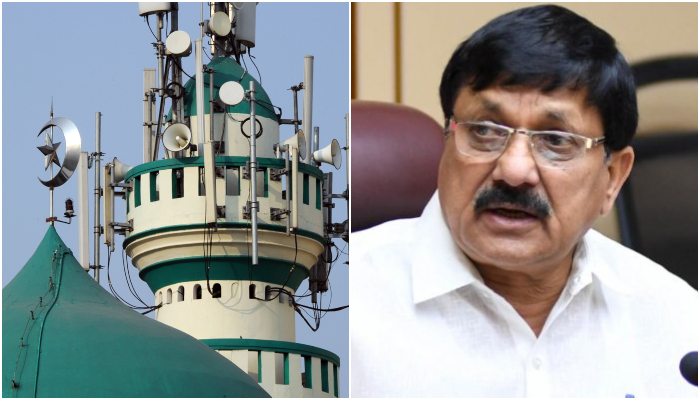
Lately, the issue of Azaan offerings on loudspeakers is grabbing massive attention. The state of Karnataka on April 6 has issued notices to religious institutions across the state, ordering them to maintain the noise of loudspeakers within the prescribed limit. The notices have been sent by Bengaluru Police to 301 mosques, temples, churches, and other establishments.

This is after right-wing organizations in Karnataka complained about the noise pollution being created due to the loudspeakers. Also, BJP leader and Panchayat Raj Minister KS Eshwarappa had noted that prayers through loudspeakers in mosques were disturbing the elderly persons, students, and patients.

Several Hindu organizations in Karnataka have stated that they would play bhajans every morning if the Azaan on loudspeakers is not stopped. State Home Minister Araga Gyanendra meanwhile has warned of severe action against 125 mosques, 83 temples, 22 churches, 12 industries, and 59 pubs and bars if the noise of the loudspeakers is not reduced to the permissible limit.

‘Recording higher cases than other states’: Centre writes to 5 states including Maharashtra to warn about rising Covid-19 cases, asks not to let guard down

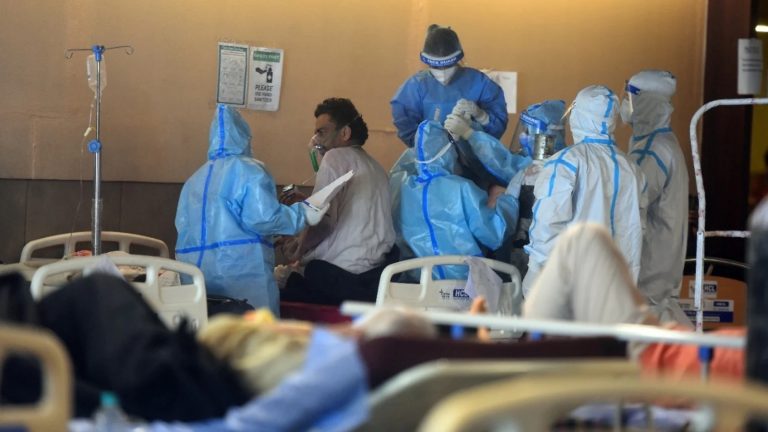
With COVID cases again on the increase in several states, the Union Health Ministry addressed a letter to five states including Delhi and Maharashtra on Friday, recommending that state authorities maintain a close eye on the situation and take immediate action if necessary. Delhi, Haryana, Kerala, Maharashtra, and Mizoram are the States concerned.

In the letter, Union Health Secretary Rajesh Bhushan directed the state authorities to continue monitoring the spread of coronavirus infection and to adhere to the five-pronged approach of Test-Track-Treat-Vaccination and Adherence to COVID appropriate behaviour. States have also been instructed to regularly monitor influenza-like illness (ILI) and SARI cases in all health institutions in order to discover early warning signs.

“A sustained and significant decline in the number of Covid-19 cases has been observed in India over the past 2 months, with the country reporting less than 1,000 daily new cases for the past few days. The weekly positivity rate has remained below 1 per cent. There are a few states which are reporting a higher contribution to India’s daily new cases,” the letter read.

Union Health Secretary Bhushan explicitly stated that Kerala had recorded 2,321 new cases in the previous week, accounting for 31.8 per cent of all new cases in India. “The state has also seen an increase in positivity in the last week from 13.45 per cent to 15. 53 per cent,” he wrote.

“Laxity at any level may nullify the gains in pandemic management so far. Regular monitoring and follow-up action in emerging areas of concern is crucial,” the letter further added.

The health secretary also cautioned the states that it is vital that they maintain a close eye on any regions of concern and, if required, take preventive steps to minimise the spread of sickness. To track the virus’s transmission and development, testing and surveillance are still required.

The letter emphasised in the context of Maharashtra that the state had registered 794 new COVID cases in the previous week, accounting for 10.9 per cent of all new cases in India. Similarly, Delhi was advised to be cautious, as the Union Territory’s positive COVID cases grew from 0.51 per cent to 1.25 per cent in the previous week.

The ministry has also recommended authorities conduct genomic sequencing on samples taken from both international travellers and local clusters of patients. The ministry has expressed the states that it will continue to provide the necessary support in order to contain the outbreak.

According to the Union Health Ministry, India recorded a single-day increase of 1,109 new coronavirus infections on Friday, bringing the overall number of COVID cases to 4,30,33,067, while active cases decreased to 11,492.

Watch: Mani Shankar suffers meltdown when confronted with tough questions, old video goes viral

Strangely, on Saturday, an old interview of controversial Congress leader Mani Shankar Aiyar became viral on social media platforms.

Without any specific context or reason, netizens took to Twitter to share a three-year-old interview of Mani Shankar Aiyar to highlight the Congress leader’s theatrics in response to tough questions posed by the journalist.

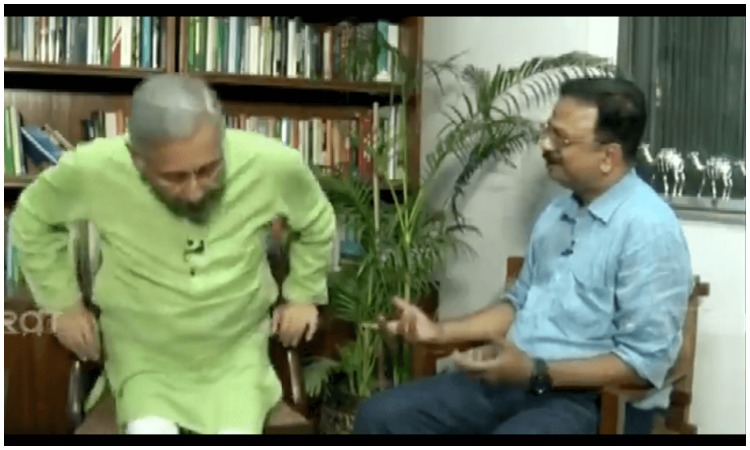
Twitter user Mihir K Jha put out a video of Mani Shankar Aiyar’s interview with ETV Bharat journalist Rakesh Tripathi. “How did I miss this interview?” asked the Twitter user as he mocked the Congress leader for his dramatics during a TV interview.

The interview with ETV Bharat was published on August 13, 2019, in which Mani Shankar Aiyar was posed tough questions on the party’s stand on the Kashmir issue and other developments surrounding Kashmir.

During the interview, senior Congress leader Mani Shankar Aiyar was confronted by the journalist on his controversial ‘chaiwala’ remark. It is pertinent to note that just before the 2014 general elections, Aiyar had claimed that Modi would never become a PM and he could arrange it for him to sell tea at the AICC meet if Modi so wished.

While the full version uploaded by ETV Bharat has this portion edited out, the following clip has gone viral on social media. As the ETV Bharat journalist asked Aiyar about this degrading remark, the veteran Congress not only denied making a controversial ‘chaiwala’ remark against Prime Minister Narendra Modi but also lost his cool.

The Congress leader also tries to defend his comments which were made at the Talkatora Stadium, saying that he was misinterpreted.

“I had said ‘if he (Modi) wanted to’ and not because ‘he was’ a chaiwala. I only said that he would lose, and if he wanted to sell tea, we would help him,” Mani Shankar Aiyar claims in the interview.

The journalist points out to Aiyar how it is a little demeaning to say something like that. However, Aiyar hits back by saying that that is what the journalist is thinking. Aiyar then asked the reporter to stick to Kashmir and not stray away from the topic.

When the reporter replied, saying that Aiyar could not dictate the questions that the reporter should ask, the Congress leader tried to evade the situation with his histrionics.

“Your questions on Kashmir are over, so the interview is now over,” Aiyar says, making a gesture of getting up. He then tells the journalist to get back to Kashmir and then threatens to get up from the interview.

Aiyar was reminded that as a journalist, he could ask him questions, especially in a democracy.

The Congress leader suffers a huge meltdown at the end as the journalist tells Aiyar that he respects him because he has been a great leader. Aiyar suddenly loses whatever cool he had left and starts making strange sounds and says ‘thank you’ with folded hands in a very dramatic voice. He even touches the journalist’s feet while continuing to talk in a strange voice and mannerisms.

‘Started talking about living with Jamaatis’: UP Maulvi and his aide arrested for attempting to convert a Hindu man into Islam

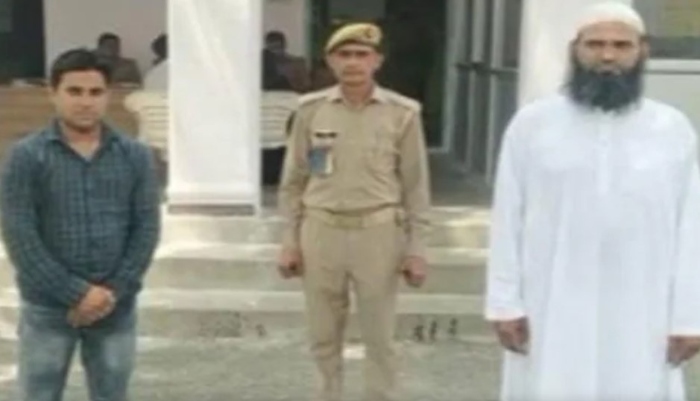
Rampur police in Uttar Pradesh have arrested a Maulvi and one of his accomplices for trying to convert a Hindu youth to Islam. The action was taken based on a complaint lodged by the victim’s mother. The police have charged the duo under the Uttar Pradesh Prohibition of Unlawful Conversion of Religion Act.

The Rampur police have also taken to its official Twitter account to inform the same. Sharing screenshots of news articles, the Rampur police Tweeted in Hindi that under the direction of Rampur SP, the Kotwali police have arrested the two accused, involved in the forced conversion case. The police informed that the accused have been booked under the Uttar Pradesh Prohibition of Unlawful Conversion of Religion Act. 

According to reports, the complainant, a resident of Nalapar Kalghar potter’s street, Mohalla of Kotwali area of ​​the city had met the Superintendent of Police along with some people on Thursday. April 7. She informed the police that her son used to go to the accused to learn embroidery work. The accused, in turn, brainwashed her son to adopt Islam.

The mother went on to say that her son began reading Namaz and observing Roza during Ramzan after being influenced by the accused. She was concerned that her son had begun to act strangely in the house as well. She lamented that he frequently talks about adopting the Muslim religion and living with the Jamaatis.

Concerned for her son, the mother urged the SP to take action against the accused as soon as possible.

The Superintendent of Police, acting quickly on the mother’s request, directed the City Kotwali Police to investigate the matter, who, in turn, arrested the two accused.

According to City Kotwali in charge, Kishan Avtar, one of the arrested accused was identified as Maulvi Gulvez, a resident of Rampur’s Kotwali area, and the other as Nadeem Ahmed, a resident of Ajitpur Bazar in the Civil Lines Kotwali area.

Earlier in the day, OpIndia reported that the Uttar Pradesh police had booked a doctor named Dr Farooqui Kamal based on a complaint lodged by his employee, accusing the doctor of forcefully converting him to Islam. The victim, Ramraj Yadav had claimed that he was made to recite Quran verses and that his Aadhaar card was also made in the name of Karam Hussain.

Karnataka loudspeaker row: Home Minister issues notice to religious institutions including mosques, warns of action if ‘noise not reduced to permissible limit’

Amid the ongoing loudspeaker controversy in Karnataka, state Home Minister Araga Gyanendra said on Friday that the government has sent notices to religious institutions across the state, ordering them to maintain the noise of loudspeakers within the prescribed limit. The notices have been sent by Bengaluru Police to 301 mosques, temples, churches, and other establishments

‘Religious institutions of the entire state have been warned by issuing notices. They have also been instructed to reduce the noise to the prescribed limit. If not, action will be taken. Everyone has to follow the orders of the court”, Gyanendra said on April 8.

According to the reports, notices have also been served to restaurants, pubs, and bars. Out of 301 notices issued by the Bengaluru Police, 125 have been sent to mosques, 83 to temples, 22 to churches, 12 to industries, and 59 to pubs and bars.

This is after Hindu organizations in Karnataka complained about the noise pollution being created due to the loudspeakers. Also, BJP leader and Panchayat Raj Minister KS Eshwarappa had noted that prayers through loudspeakers in mosques were disturbing the elderly persons, students, and patients. “The community has for long followed the tradition of calling for prayers using loudspeakers, and this is an issue even for their own children’s studies,” the minister had said.

Later Karnataka chief minister Basavaraj Bommai stated that the issue of Azaan on loudspeakers in the state would be solved by considering everyone. He cited the High Court order regarding Azaan and said that the installation of decibel meters is being implemented in stages. “It is a job which needs to be done by taking everyone into confidence, it is not a job to be done by the force in any way”, the Chief Minister said.

Meanwhile, Congress leader Siddaramaiah accused the ruling BJP in Karnataka of raising communal issues for political gains with an eye on the Assembly elections. He also called out Bommai for his alleged silence on the issue and asked ‘speakers were installed in temples, mosques, and churches for a long time now. What harm did it cause to people till now’. He accused the Chief Minister of being weak and not being able to take action against those who are causing a disturbance in society.

The Azaan row first flared up in the state of Maharashtra last week when Maharashtra Navnirman Sena (MNS) chief Raj Thackeray called his party workers to play Hanuman Chalisa from loudspeakers in public places across the state.

“Why loudspeakers in mosques are played at such high volume? If this is not stopped, there will be speakers outside mosques playing Hanuman Chalisa at higher volume”, Raj Thackeray said as the MNS workers played Hanuman Chalisa in front of its office in Kalyan town.

Some BJP leaders supported the move including Karnataka’s Panchayat Raj Minister KS Eshwarappa. “Anyone who needs a loudspeaker to install it in a temple can ask us for free! All Hindus should have one voice! Jai Shri Ram! Har Har Mahadev”, BJP leader Mohit Kamboj tweeted.

Several Hindu organizations in Karnataka also said that they would play bhajans every morning if the Azaan on loudspeakers were not stopped. Meanwhile, Mohammed M Imran Rashadi, Chief Imam and Khateeb of Jamia Masjid, Bengaluru said that the regulations issued by the Supreme Court will be followed. “We’ve arranged a device that controls the sound as required so that no problems arise. We’ll follow all the SC-issued notices. Similarly, temples should also follow”, he said.

As per the Supreme Court order, the Karnataka government has allowed the noise of 75 decibels during the daytime and 70 decibels at night in the industrial area. However, in commercial areas noise of 65 decibels during the day and 55 decibels at the night is allowed. In residential areas 55 decibels in the daytime and 45 decibels at night time. Also, in the silence zone, 50 decibels of noise is permitted during the day and 40 decibels at the night.

Another attempt to whitewash? One Maulana Ilyasi talks about his 2016 meeting with the Gorakhnath temple attack accused: Here is what he said

Days after the Gorakhpur temple attack, where the accused Ahmad Murtaza Abbasi forcibly tried to enter the premises of the temple and attacked two cops with sharp weapons, one Maulana Ilyasi has told the police that the accused was under the influence of black magic. Maulana Ilyasi is a teacher in the same Madarsa that Ahmad Murtaza Abbasi had attended.

According to a report by ABP Live, the Maulana stated in his statement recorded at Navi Mumbai’s NRI Police Station that Ahmad Murtaza Abbasi’s father approached him in 2016 and expressed concern that someone had done black magic on Murtaza. Murtaza’s father had told the Maulana about his son’s sudden change in behaviour, according to the Maulana. Murtaza, he claimed, stayed awake all night and acted strangely.

This could very well be another attempt to whitewash the Jihadi antecedents of the attacker, given that earlier, his father had claimed that he was mentally unstable – a claim which the doctors refuted.

The Maulana went on to call the attacker an extremely timid and quiet person. He said that during his childhood days, Murtaza did not have many friends. He liked to mostly be on his own. The Maulana stated that Murtaza had stayed in the Taj Height building from 2014 to 2020. There was a Madarsa built in the basement of the same building where the Maulana was a teacher. During that period, Murtaza used to frequently visit the Madarsa to offer Namaz and then return home quietly without interacting with many people, said Maulana Ilyasi.

Attacker was trying to develop ‘jihadi app’, planning to join ISIS

Meanwhile, Murtaza Abbasi’s interrogation revealed that he was attempting to develop a jihadi app called ‘Jarima’ at the behest of Islamic terror groups. In Arabic, the word ‘Jarima’ means ‘oppression.’ Abbasi used to exchange messages via the Pir2Pir app before creating this Arabic-language jihadi app, which is widely used by Islamic ultras.

The investigation also revealed a ‘honey trap’ angle.

According to reports, Abbasi’s interest in radical ideas began with an email from a girl in an ISIS camp in Syria. Ahmad Murtaza Abbasi admitted to interrogators that he had transferred money several times into the girl’s account. He was also planning to join the terrorist organisation ISIS.

Abbasi revealed that a girl from an ISIS camp in Syria sent him an email, as well as a photo, and promised to meet him in India. Abbasi, in turn, sent her Rs 40,000. They began communicating via e-mail, and as a result, Abbasi came into contact with ISIS terrorists. He was also rumoured to be on his way to Syria via Nepal.

How SP chief Akhilesh Yadav downplayed the Gorakhnath Temple attack

Interestingly, prior to this, the Samajwadi Party chief Akhilesh Yadav had attempted to downplay the seriousness of the Gorakhnath Temple attack claiming that the attacker was suffering from psychiatric problems. He had alleged that the BJP was exaggerating the matter.

Soon after the attack, the family members of the accused had also claimed that he was mentally ill.

Doctors refute claims that the attacker was mentally unstable

However, the doctor who treated Abbasi refuted the claims that he was mentally unstable. The Superintendent in Chief of Gorakhpur District Hospital JSP Singh said that the accused was talking coherently during the medical examination. He was responding to the queries of the Police and the doctors. He further added Abbasi did not display any signs of being violent, which made the doctors believe he was not mentally unstable.
It is pertinent to note that on March 31, the intelligence agencies had sent a list of 16 suspects to UP Police. Ahmad Murtaza’s name was on the list. Earlier, it was reported that Murtaza was under ATS’s scanner. The investigation agencies have also sealed Murtaza’s house for further investigation. Reports suggest that during the attack, Abbasi was accompanied by another man who escaped when Abbasi was overpowered by the Police personnel. During the investigation, the security agencies found he was influenced by banned Islamic preacher Zakir Naik and might have ISIS links.

Gorakhnath temple attack

On April 3, Ahmad Murtaza Abbasi attacked Police personnel outside Gorakhnath Temple, Gorakhpur. The incident took place a day before CM Yogi Adityanath was scheduled to visit the temple. Abbasi severely injured two Police personnel with a sharp weapon. Reports suggest he was with another man who escaped when Abbasi was overpowered by the Police personnel.

It is pertinent to note that Uttar Pradesh Chief Minister Yogi Adityanath is the head priest (Mahant) of Gorakhnath Temple and has his personal accommodation on the temple premises. At the time of the attack, CM Yogi was not at the temple.

‘Got instructions from Pakistan’: Jammu and Kashmir police arrest mastermind of pro-terror slogans at Jamia Masjid in Srinagar

A day after ‘Azadi’ and anti-India slogans were raised by Islamists at the Jamia Masjid in Srinagar, the Jammu and Kashmir police apprehended the mastermind behind the genocidal sloganeering, reported The Tribune.

The accused, identified as Basharat Nabi Bhat, is a resident of Hawal in Nowhatta town of Srinagar. While confirming the development, officials associated with the Srinagar police informed that raids were conducted by the cops at several locations for arresting Bhat.

The Tribune reported that several suspects were summoned for interrogation and formal arrests would be made once their role becomes clear in the Friday incident. The police are also investigating the Pakistani angle in connection to the case.

“It also came out that the main accused had received instructions from Pakistan-based handlers of terror outfits to disrupt Friday prayers in Jamia Masjid and cause law and order situation,” the police told The Tribune.

The Background of the Case

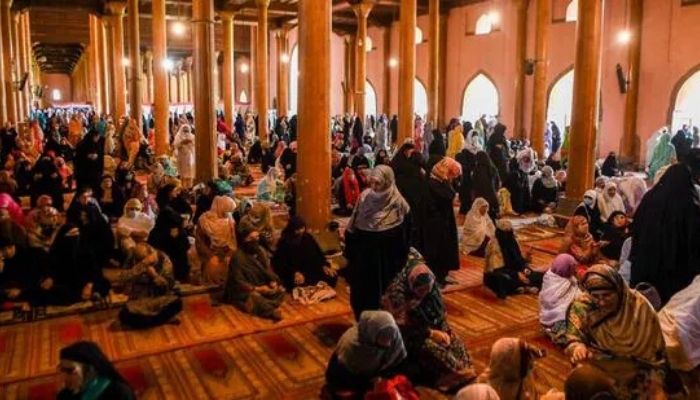
On Friday (April 8), the Jamia Masjid in Srinagar reverberated with Azadi and anti-India slogans, following the Jumma Namaz. A large mob, which had gathered for the Friday prayers, was heard chanting Azadi slogans and hailing terrorist Zakir Musa.

Musa was the Chief of the terrorist group Ansar Ghazwat-ul-Hind and was neutralised by the Indian Army in an encounter in May 2019. Ashraf Wani, a journalist with India Today group, had shared a video clip where Islamists could be heard shouting slogans that called for secession from India.

Along with Azadi slogans, screams of “Nara e Taqbeer, Allahu Akbar” could be heard in the video clip attached by Wani. Stone-pelting was also witnessed outside the mosque where personnel of the Jammu and Kashmir Police and Central Reserve Police Force were deployed.

Earlier, journalist Aditya Raj Kaul reported that the Jammu and Kashmir police had initiated action against those who raised pro-Islamist terror slogans inside the mosque.

Bhopal court summons Samajwadi Party MP and actress Jaya Bachchan for cancelling land deal after receiving payment: Details

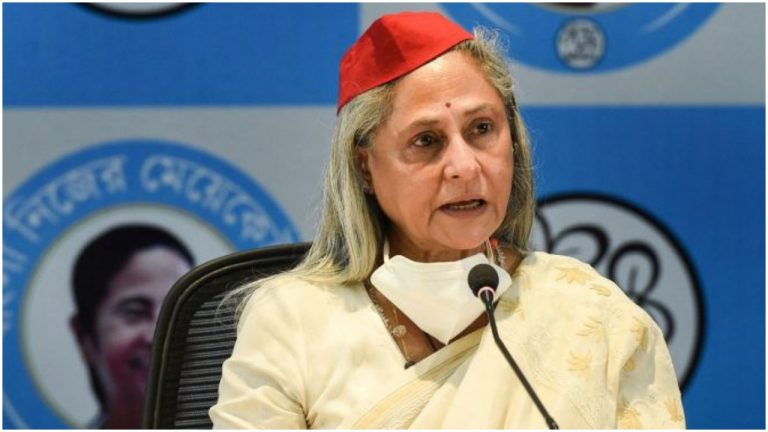
Actress and Samajwadi Party (SP) MP Jaya Bachchan has been asked to appear before a court in Madhya Pradesh’s Bhopal over irregularities in a land deal.

According to the reports, a local court in Bhopal has asked actor-turned-politician Jaya Bachchan to appear before the court in connection with a land deal. Rajya Sabha MP Jaya Bachchan is accused of refusing to sell her five acres of land after taking payment from the buyers.

Former BJP MLA from Bhopal Jitendra Daga’s son Anuj Daga had filed a case against the Samajwadi Party MP Jaya Bachchan, alleging that Jaya Bachchan had cancelled a land deal after receiving the payment. The complainant had also alleged that the controversial actress had demanded a higher price than the agreed amount.

As the buyers did not agree to her demands, the actress violated the agreement and cancelled the land deal despite receiving the payment, the complainant said.

According to Daga’s lawyer Enosh George Carlo, Jaya Bachchan had bought the five acres of land in Sevania Gaur in the Bhopal district nearly 12 years ago. The lawyer said that Jaya Bachchan had authorized Rajesh Hrishikesh Yadav to sell the land.

Apparently, Daga had bought the land by paying Rs.1 crore as advance payment to Jaya Bachchan. The amount was deposited in Jaya Bachchan’s account, however, on the sixth day, i.e. March 25, the money was returned to Anuj Daga’s account. Later, they demanded a higher price than the negotiated amount, i.e., Rs.2 crore per acre of land and then broke the agreement.

“When an offer is made under the Indian Contract Act, it is accepted. Once the consideration is paid, the contract is completed. The agreement between my party and Jaya Bachchan was done digitally, and Rs one crore was paid into the bank account as agreed under the agreement,” the lawyer said.

The court has accepted the suit for consideration, and notices have been issued. The next hearing will be on April 30. Jaya Bachchan has been asked to present before the court.