Home Blog Page 3373

Kannadigas are set to be branded bigots like Gujaratis: Here is why they need our support

It was on the 21st of February 2022, only recently, when it was reported that a Karnataka youth was brutally attacked by Islamists because he posted a bunch of emoticons on a post about the Islamic tyrant Tipu Sultan. On February 19, A youth named Prakash Lonare had allegedly commented with a ‘smiley emoji’ on a post dedicated to tyrant Tipu Sultan triggering an enraged mob of 15-20 people who attacked him. The mob had attacked him with sharp objects, including knives because Lonare had no affection towards a despot who had unleashed Islamic barbarity against Hindus.

Tipu Sultan, an Islamic tyrant, was hailed as a “freedom fighter” by the Congress party on several occasions, up until recently before the government in Karnataka changed. Commemorative stamps were released in his honour (1947) and events were held to lionise the despot.

Tipu Sultan’s reign was so fearsome that thousands of temples were looted and desecrated, pujaris fled due to the fear of getting killed or converted and women took their own lives because they did not want to be dishonoured by the tyrant or his tyrannical barbarians. In 1788, there is evidence that Tipu Sultan gloated about taking 40,000 Coorgis and forcefully converting them to Islam. After that, he inducted them into the Ahmadi army. Thereafter, he forcefully transported over 7,000 Muslim families who belonged to the upper castes of the Muslim communities to Coorg so as to change the demography of the area.

In a letter Tipu Sultan wrote to his military officer, Sultan talks about how his marauding was in the service of Islam. He wrote, “With the grace of Prophet Mohammed and Allah, almost all Hindus in Calicut are converted to Islam. Only on the borders of Cochin State a few are still not converted. I am determined to convert them also very soon. I consider this as Jehad to achieve that object. Your two letters, with the enclosed memorandums of the Naimar (or Nair) captives, have been received. You did right in ordering a hundred and thirty-five of them to be circumcised, and in putting eleven of the youngest of these into the Usud Ilhye band (or class) and the remaining ninety-four into the Ahmedy Troop… I have achieved a great victory recently in Malabar and over four lakh Hindus were converted to Islam”.

Despite the copious amounts of documentation of the Islamic scourge by Tipu Sultan, Hindu youths in Karnataka are still attacked for merely laughing at this lionisation of a barbarian. Karnataka was ravaged by Islam, to an extent, that Mandyam Iyengars, to this day, spend Diwali mourning, because, on the day of Naraka Chaturdasi, Tipu Sultan rounded up 800 Hindus and slaughtered them at Melkote.

Given their history, one would expect that the push back against Islamism raising its ugly head would be fierce in Karnataka. We got a glimpse of that recently when Kannadigas stood strong against the Hijab controversy in colleges and started a campaign against Halal meat. Neither of these issues came from a place of bigotry or hate. There are legitimate reasons why each of these issues found resonance with the local Hindus of Karnataka.

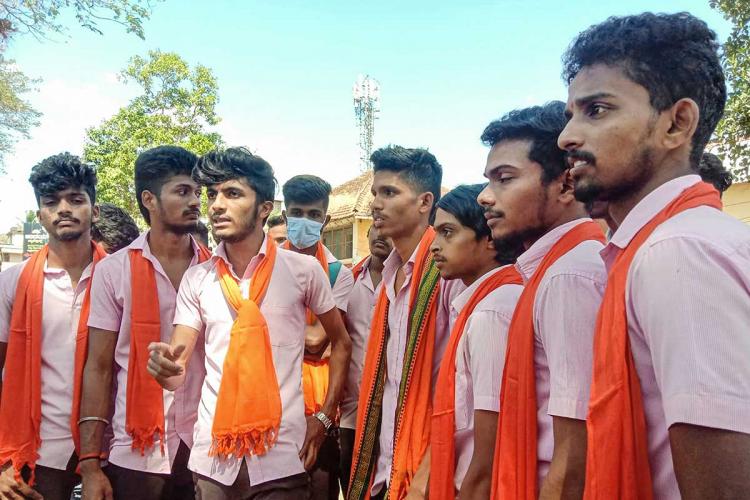
On the 3rd of February 2022, more than 20 hijab-wearing female students were prohibited from entering Bhandarkar College in Kundapur, Karnataka’s Udupi district. The PU College problem first came to light on January 2, 2022, when six Muslim female students insisted on wearing hijab in the classroom, in violation of the uniform rule. The reaction by the Hindus boys on campus was swift and peaceful. They wore saffron scarves to school, which they promptly removed to enter the classrooms. The point of their counter-protest was simple – “We can wear our faith on our sleeve too. Like we did with the saffron scarf. But we removed it because we respect uniform rules. You must too”. What transpired was not entirely unexpected. Incidents of Muslims stone pelting, attacking Hindus, students and sundry came to light. After the global Left ecosystem lied through their teeth about the controversy, claiming that India was “banning” Hijab, the courts finally adjudicated the case, ruling that schools had the right to uphold their uniform rules and therefore, Hijab need not be allowed inside school premises.

Delhi riots accused Asif Iqbal Tanna went as far as to say that the Hijab row in schools and colleges was an affront to Sharia. Evidence emerged of Islamic organisations funding the pro-hijab protests and a reward was announced for a hijab-wearing student who had merely walked, shouting Allahu Akbar, passing Hindus who were sloganeering against the imposition of Sharia in their educational institutions.

The global Left and Islamists of all shades came together to stand against Karnataka Hindus and uphold Sharia. To put things in perspective, a Burqa is worn by Muslim women because Sharia says any show of skin by the woman may titillate the men enough to rape them – it is just that simple. We can, as much as we want, call it religious faith or a choice between modesty and promiscuity, but the foundational principle that Islam seems to follow in this aspect is that a woman’s skin (even if the “woman” is as young as 5 years old) bears the sole responsibility of arousing desperate men to rape them.

It is this very tyranny of Islam that several women, from Afghanistan to Iraq, risked their lives to escape. Do we remember this iconic image that was hailed across the globe, even by those who were fighting FOR Hijab in India? At that time, they had hailed the courage of the marginalised Muslim women.
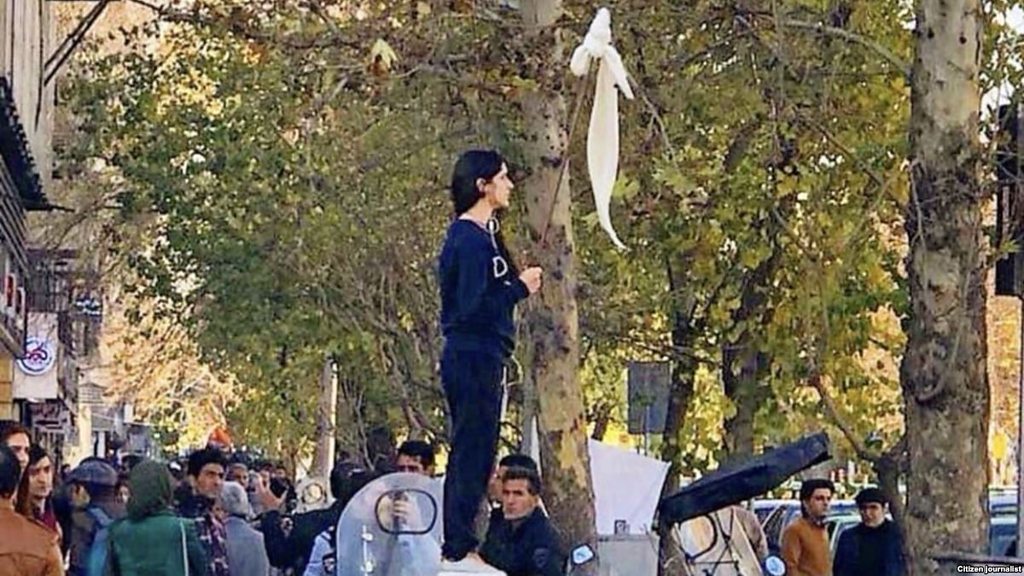
Woman protesting against Hijab in Iran

Or do we remember this picture? Of a woman ripping away her burqa after she escaped the captivity of ISIS?
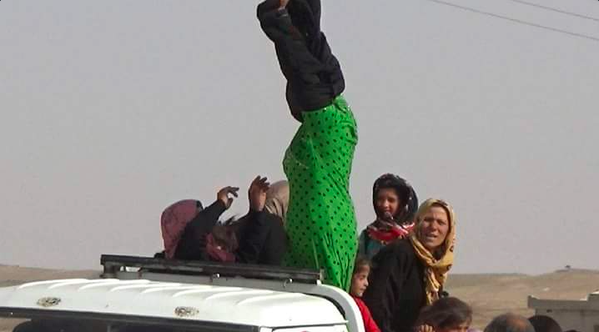
Woman escaping ISIS rips open her burqa

It is in a democratic and free country like India where Liberals, who themselves walk around in short dresses and shorts, have the luxury of propagating an attire that is the symbol of oppression in the Islamic world, for those countless women who are enslaved, abused and oppressed.

Be that as it may, in India, the case was only limited to the donning of a Hijab in colleges and schools, breaching the uniform rules of that institution. Despite the garment being wildly oppressive, India has in no way banned the Burqa. While the global ecosystem had a reason to lie and twist facts, the Hindus of Karnataka had the fortune of remembering their history so they are saved from a repetition of the tyranny. Any demand for Sharia compliance is the first step towards Islamisation of a people, whether we like to acknowledge the naked facts or not. Karnataka Hindus, who have had to bear the brunt of Islamic despots, fought not against a woman’s right to wear what she wants, but the imposition of Sharia and the forced acceptance it seeks to find among Hindus. They fought against the normalisation of the thought that women need to cover themselves in an all-encompassing black robe simply because the slightest sight of their skin can titillate men. They fought against Islamic organisation and their manufactured controversy to normalise Sharia as the “secular” tenets of the nation.

The other issue where Kannadigas were vilified was that of the recent Halal controversy. A Hindu organisation started a nationwide agitation against Halal meat because it is inherently discriminatory against Hindu butchers and the proceeds of Halal almost seem like a Jiziya that Hindus need to pay. The meat is butchered after reciting the Islamic shahada, only Muslims are employed in the industry, and almost every major business has exclusively acclimatised itself to bow down to Islamic demands in the industry. While the liberals constantly claim that Halal is a dietary preference, one has to realise that Halal is anything but that – it is the blatant, naked and shameless imposition of Islamic tenets on non-Muslims – including Sikhs who, per faith, consume only Jhatka meat.

If you combine the two issues together, what the Islamists and their liberal ideological compatriots are saying is that Hindus have to, mandatorily, in the name of secularism, accept the Muslim community’s religious tenets as their own because it is their “choice” to disrespect Hindus’ preferences and even the opprobrium of such a skewed perspective makes one a bigot at best and a genocide enabler at worst (sans proof, of course).

Essentially, unless the Hindus give up their freedom of choice to respect the Muslim community’s unreasonable impositions, Hindus are marginalising the seemingly already marginalised Muslims – the very Muslims who are enforcing Islam on practising Hindus.

The vexatious propositions that Hindus are being made to submit to, and the Kannadigas are gloriously resisting, reminds one of Mohandas Karamchand Gandhi’s rants as the Moplah Muslims were massacring Hindus while demanding a Caliphate in Turkey, during the Khilafat movement.

“If the Mussalmans of India offer non-cooperation to Government in order to secure justice on the Khilafat, it is the duty of every Hindu to co-operate with their Moslem brethren”, Gandhi had said. It is to be kept in mind that this speech was made in August 1920 when the Muslims had already started to massacre Hindus in their demand to establish a caliphate and in their support for the caliphate in Turkey. Not just this, in 1921, while thousands of men were being slaughtered, women were being raped and children were being slaughtered, Mohandas Karamchand Gandhi told Hindus that they essentially had an obligation to remain “non-violent”. While the Moplah Muslims were massacring Hindus because of their Muslim fanaticism, Gandhi blamed the government for angering the Muslims enough that they became “indisciplined and violent”.

The Kannadiga Hindus are fundamentally being told that they have no right to resist the cultural genocide that is being attempted by the Islamists and the Leftists because they have an obligation to simply accept the impositions of Sharia and Islam as the normal order of the day so the brotherhood between Hindus and Muslims, the mythical brotherhood that has often resulted in the genocide of Hindus, remains intact.

Kannadigas, who are bravely resisting such obtrusions are promptly branded bigots, much like the Gujaratis who have, for decades, exercised their agency to resist such advances. While the Malabar Hindus being killed, raped and converted were called “despotic landlords” marginalising the “poor Muslim peasants” who were doing the killing, Gujarati Hindus were vilified after their state was thrown into chaos because of Islamic hoards burning Hindus to death.

They were called genocide enablers for merely remembering their own genocide. They were called violent extremists because they remembered how Hindus were burnt alive on a train by Islamic barbarians who wanted to savour the smell of Hindu blood and burning flesh. They were called the soldiers of a despot because they chose, repeatedly, to vote for a government that they believed would treat all citizens equally instead of claiming that Muslims had the first right to resources.

Kannadigas stand at a similar precipice today. They will be blamed for polarisation, they will be called Hindu extremists and fascists, and they will be branded as bigots simply because they wish to do today what they could not do while Tipu Sultan and Haider Ali scourged their state. At the time, except for instances of local resistance, one would be hard-pressed to think of a mass movement of Hindus that resisted the reign of tyranny unleashed upon them by the likes of Tipu. Local, valiant warriors fought and laid their lives down, saving a temple here and a temple there. Today, however, the sitch is different from what it was back then. Hindus, Kannadigas, in one voice, are resisting the imposition of Sharia and the flagellum of Islamic oppressors. They are, the young and the old, in one voice, saying thus far and no further. They are, in unison, saying they will not let another Tipu ravage their culture and be called a “freedom fighter”. The Gujaratis were left alone. Hindus would do well to stand by the Kannadigas as they embark on this uphill battle.
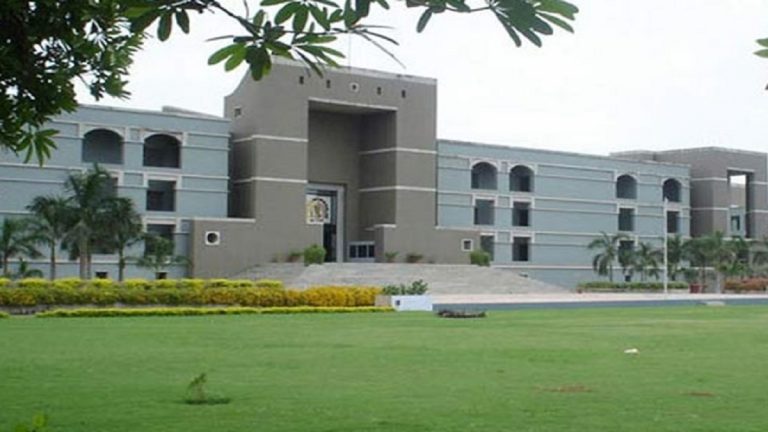
Bharuch mass conversion case: Gujarat High Court rejects anticipatory bail of a Maulvi from Surat

A Maulvi from Surat district who fears arrest in connection with the forced religious conversion case of tribal people in Amod town, Bharuch district, was denied anticipatory bail on Monday by the Gujarat high court.

Maulvi Abdul Vahab Varyava (36) of Palsana in Surat district had petitioned the high court after a lower court denied him anticipatory relief. Charged with violating the Gujarat Freedom of Religion Act, the Atrocities Act, criminal conspiracy, and inciting discord, he was looking for anticipatory bail in the matter.

Varyava stated in his appeal that there was no particular complaint against him, but that during the inquiry, presumptions were made against him and other religious leaders and intellectuals.

The case was filed by a person named Pravin Vasava, alleging that he was converted to Islam in 2018 by many accused and given the new name Salman Vasant Patel.

During the inquiry following Vasava’s accusation, officers discovered that 37 indigenous families had been converted. The FIR was filed against nine people who reportedly raised funds for the cause and allegedly used money and gifted houses to entice tribal people to convert to Islam.

Mass religious conversion in Bharuch

Recently, mass religious conversions to Islam were recorded in Bharuch, Gujarat, where various tribal groups were forcibly converted.

As OpIndia reported in November 2021, an FIR was filed against Fefdawala Haji Abdullah, Salahuddin Sheikh, and others based on a complaint filed by Pravin Vasava of Kankariya village in Amod Taluka of Bharuch district in Gujarat. Vasava alleged that the religious conversion of people from the Vasava community (Scheduled Tribe) to Islam was carried out by luring them with financial gains such as a job and a house. The FIR described how funds from other countries were moved to India to help with the aforementioned religious conversion efforts.

The forcible conversions in Bharuch were also linked to the Uttar Pradesh mass religious conversion racket, which was uncovered in June-July 2021, with Salahuddin Sheikh and Umar Gautam as main suspects. Fefdawala and others allegedly funneled funds via Sheikh’s NGO AFMI, which was then used for anti-social operations. In December 2021, the NGO’s FCRA registration was revoked by the Home Ministry.

OpIndia also did on-the-ground reporting on the problem of religious conversions in Bharuch, which can be read here.

Congress strongman late Ahmed Patel’s son frustrated with top brass, says he is keeping his options open

On April 5, Congress strongman late Ahmed Patel’s son Faisal Patel said on Twitter that he was tired of waiting around as the top leadership of the party has not shown any encouragement. He added that he was keeping his options open.

Ahmed Patel was one of the tallest leaders of Congress during Sonia Gandhi-era, and one of her closest confidants. However, looks like his son does not enjoy the same trust of the party leadership.

Notably, a week ago, Patel had refused to comment if he would formally join politics and had said he was not sure about it. However, he was supporting the party from behind the scenes. On March 27, he had tweeted, “Starting April 1, I will be touring the seven assembly seats of Bharuch & Narmada districts. My team will assess the current reality of the political situation and will make major changes if needed to accomplish our main goal- win all seven seats, god willing.”

Interestingly, Faisal had met AAP supremo Arvind Kejriwal last year fueling speculation that he may be joining the Aam Aadmi Party. Now with AAP looking to expand in Gujarat ahead of the upcoming elections, that option may be on the table again.

Patel proposed Patel

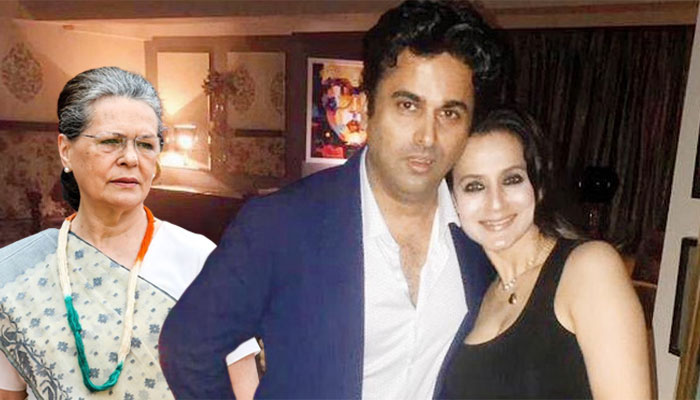
There are rumors that he is in a relationship with actress Ameesha Patel. In January 2022, Ameesha had wished Faisal his birthday. Replying to the tweet, he had thanked her and “officially” proposed to her on Twitter but later deleted the tweet. Ameesha and Faisal have been seen together on several occasions.

Court sends Gorakhnath temple attacker Ahmad Murtaza Abbasi on 7 day Police remand, links to Zakir Naik and ISIS emerge

On April 4, Chief Judicial Magistrate Deepak Nath Saraswati sent Ahmad Murtaza Abbasi to Police remand for seven days. Abbasi had attacked police personnel outside Gorakhnath Mandir in Gorakhpur with a sharp weapon. He was trying to forcefully enter the temple premises while shouting Allah-Hu-Akbar. However, he was apprehended by the Police officers stationed at the temple.

The Zakir Naik link

As per reports, the Police found evidence that Abbasi was influenced by controversial banned Islamic leader Zakir Naik. He regularly listened to his videos on YouTube. A bag was recovered from the scene in which the Police had found a pen drive. When checked, the storage drive was filled with instigating videos. The Police are also checking the phone numbers stored on his mobile phone. STF, ATC and Police teams are investigating every aspect of the case.

Furthermore, there were claims made in some media reports that Abbasi was mentally upset and suffering from depression. However, the reports suggest such claims have been dismissed in the investigation. The real motive behind the attack is unclear, and the security agencies are maintaining silence. Police also found a book written in the Arabic language. It is being investigated when and where he purchased the book.

Possible link to ISIS

Pramod Kumar Singh, Senior Associate Editor with The New Indian, said Police found Abbasi was linked to the terrorist organization ISIS. He further said it was a planned attack, and Abbasi had done a detailed recce of the temple complex. Gate no 3 is regularly used by CM Yogi when he visits the temple.

Abbasi was on the ATS radar

As per a report in Amar Ujala, Abbasi did not initiate the attack in haste. He was already on ATS’s radar for some time. On Saturday, a couple of men came to meet Abbasi on a bike with a Lucknow number plate. The meeting continued for an hour, and after that, Abbasi went missing. ADG Law & Order of UP, Prashant Kumar said the Police have not ruled out the involvement of terrorist organizations in the attack and they are pursuing all possible angles in the case. He further added it was a well-planned conspiracy to attack the temple premises.

Accused travelled extensively in the past

Abbasi had travelled extensively in the past. He had visited Mumbai, Jamnagar, Coimbatore, and Nepal. During the investigation, Police found that he had visited Nepal after leaving the house on Saturday. On his way back, he had purchased a weapon from Mahrajganj. An investigating team has gone to Maharajganj for further investigation.

CM Yogi met injured Police personnel

On April 4, Uttar Pradesh Chief Minister Yogi Adityanath reached Gorakhpur and took stock of the situation. He met the injured Police personnel at the hospital and directed authorities to ensure the safety and security of the temple premises.

During a meeting with higher officials, CM Yogi said that Gorakhnath Mandir is not the only place of worship for the people of UP but also for the devotees from across the world. CM Yogi announced that the government of UP would pay for the treatment of the two Police officers, Gopal Gaur and Anil Paswan, who got severely injured during the attack. He further announced Rs 5 lakh reward for every Police personnel involved in capturing Abbasi.

Attack on Gorakhpur temple

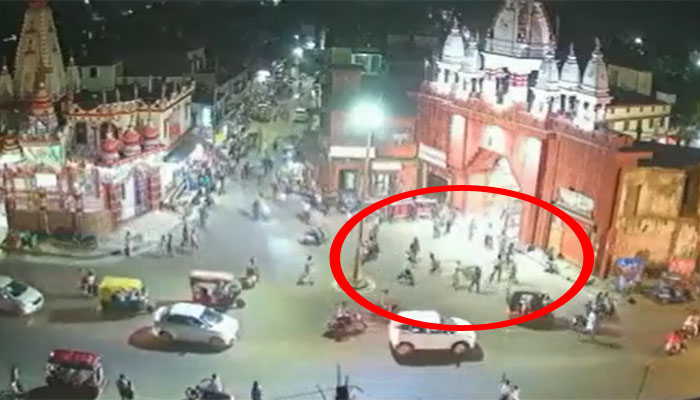
On April 3, a man identified as Ahmad Murtaza Abbasi, armed with a sharp weapon, attacked Police personnel lodged at Gorakhpur temple gate no. 3. At first, he tried to snatch the weapons from Police personnel, but when he failed, he injured them with the sharp weapon. CCTV footage of the incident was shared by Zee PHH journalist Aashdeep Thind on social media on Monday.

He tried to enter the temple premises but was apprehended by other security officers at the gate. Reports suggest he was accompanied by another person who escaped when Abbasi was caught by the Police.

Maharashtra: Police seize 92 swords from courier facility, were sent from Punjab to Aurangabad

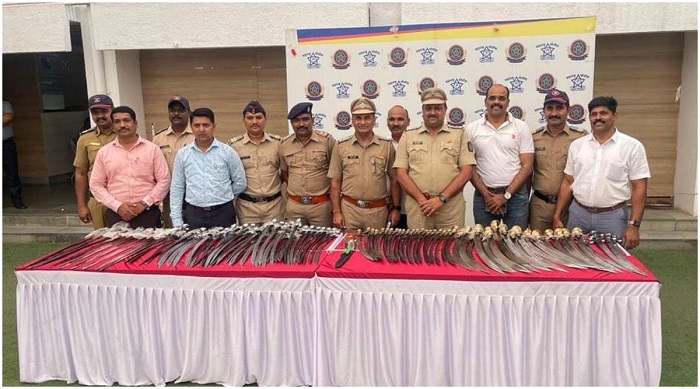
The Pimpri Chinchwad Police on Monday recovered 92 swords, 2 daggers, and 9 scabbards from the wooden box storage of a private courier company in Dighi. The boxes were reportedly sent by one Umesh Sood, a resident of Amritsar to Anil Hon of Aurangabad. The Police have registered a case against the two under the provisions of IPC and the Arms Act.

According to the reports, the matter came to light when the courier company employees scanned the parcels through electronic machines on April 1 and found out that swords were being sent via courier. The employees informed the police about the matter. A team of police officials then reached the spot and recovered 92 swords, 2 daggers, and 9 scabbards. The price of all the weapons seized has been estimated at Rs 3.7 lakhs.

The Pimpri Chinchwad Police commissioner on April 5 informed that the swords had been seized from the Dighi area and that the consignment was supposed to be sent to Aurangabad in Maharashtra. The Police had asked the courier companies to scan the parcels carefully after a similar incident had occurred on March 30.

The Aurangabad Police on March 30 had confiscated 37 swords and a dagger from the office of a leading courier company. The Police had then begun the investigation in the case to know that the box filled with swords was sent from Maninder, a resident of Punjab to Akash Patil of Ahmednagar. The Police had also booked them under the relevant sections of the IPC and the Arms Act.

Earlier in July 2021, a man named Irfan Khan in Aurangabad was booked after he was caught purchasing 49 swords from an online portal.

The investigation in the current case is led by Dilip Shinde, Senior Police Inspector of Dighi police station of Pimpri-Chinchwad who has asked the officers of the courier company coming under his jurisdiction to carefully scan all the parcels. While the police have booked Umesh Sood and Anil Hon in the current case, it is investigating to know the reasons behind the transportation of weapons from Punjab to Maharashtra.

The Times of India is yet to change the distorted map of India even after 24 hours of publication

A day after netizens pointed out that The Times of India had included the Indian territory of Pakistan Occupied Kashmir (PoK) in the map of Pakistan, the news publication did not bother to remove the contentious image from its social media handles.

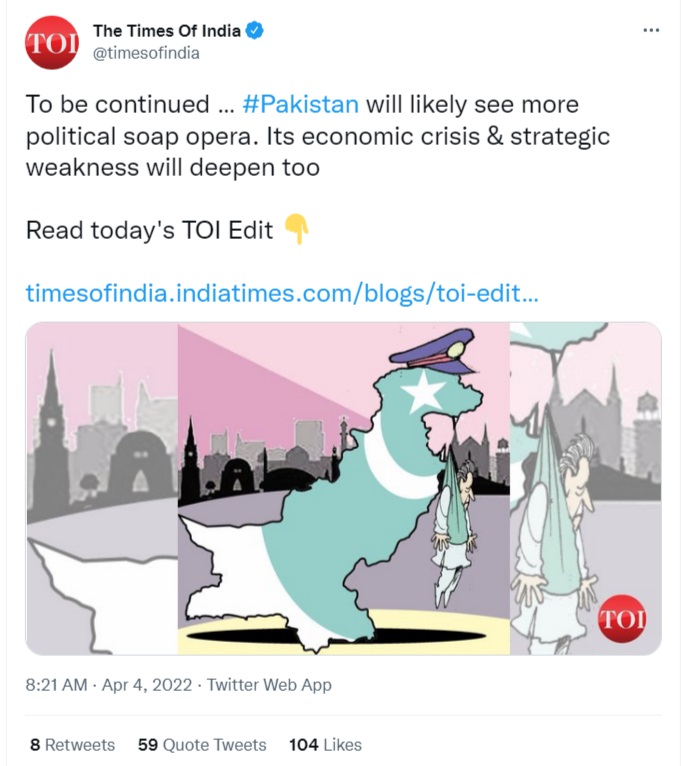
On Monday (April 4), the English Daily had shared a wrong map where it had given away PoK to Pakistan. The contentious image was featured in an article, which talked about the economic crisis and strategic weakness of Pakistan.

Even after 24 hours had passed, The Times of India did not delete its contentious tweet wherein it gave away an integral part of India’s territory to Pakistan. It has also not apologised for its actions or issued any clarification.

The cartoon that TOI published in the tweet covered a significant portion of J&K and Ladakh (Gilgit-Baltistan). The portion of Kashmir that has been illegally occupied by Pakistan and China is an integral part of India.

This is not the first time a news agency has shown the wrong map depicting PoK as part of Pakistan. In the past, India Today, CNN, Aaj Tak, Google and Twitter have made blunders in a similar manner. In April 2020, India Today showed a distorted map of India in a graphic during a show hosted by Rajdeep Sardesai.

In August 2017, CNN posted the wrong map of India on Independence Day. The map was changed after the uproar. In December 2020, Aaj Tak streamed the wrong map of India while discussing Bharat Bandh. In June 2021, BBC showed the wrong map of India while covering the Delta variant of Covid-19.

In June 2021, Google showed the wrong map of India, depicting Pakistan Occupied Kashmir and Aksai Chin as separate entities and not a part of the Indian Union. In the same month, Twitter reiterated the mistake and showed a distorted map of India in the career section on its website. Notably, Twitter has been a repeat offender in this context.

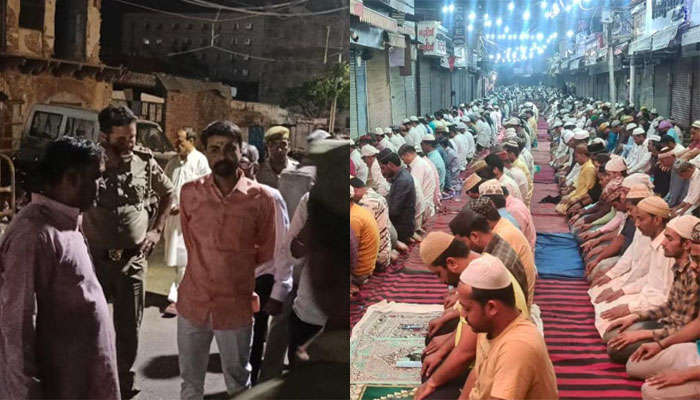
Agra: Hindu groups object to Namaz held on the roads outside Imli Wali Masjid, cite traffic issues and business loss

On April 3, activists of Hindu Mahasabha objected to Namaz being offered on the road outside Imli Wali Masjid in Agra. The Mosque is located in the Gur Ki Mandi of Agra, which is dominantly run by the Sindhi community. The organization demanded that the Namaz should be offered inside the Mosque and not on the road.

Speaking to OpIndia, Ronak Thakur, district head of Hindu Mahasabha, said the Muslim community do not let the shops run duing Namaz time. He claimed that they block the road and emergency vehicles like ambulances often get stuck. He said, “The shopkeepers have to close the shops early and move their vehicles away from the road. If anyone’s vehicle is not removed on time, they call up the Police and get challan issued against the shopkeeper.”

He further said that when the Police officials arrived, they urged them to stop the protest and asked the Muslim community to open one side of the road to ensure traffic movement. He said, “We agreed to let them offer Namaz provided one side of the road remained clear. Our activists will check the situation in the evening, and if they fail to follow the agreed terms, we will restart the protest. We cannot allow them to occupy public space and cause discomfort to the shopkeepers and commuters.”

Hindu Mahasabha spokesman Sanjay Jaat questioned if Namaz could be offered on the road, and why they were not allowed to chant Hanuman Chalisa.

‘It is all peaceful now’ SP City

Speaking to OpIndia, SP City Vikas Kumar said the situation is under control, and the matter was resolved between the communities. SSP Sudhir Kumar Singh was quoted by India Today saying the Police would not allow anyone to disturb the peace and tranquillity of the district. He said, “The police will ensure that both Hindu and Muslim festivals are celebrated peacefully.”

‘The Namaz is being offered for the past 40 years’ – Muslim community

The Muslim community claimed that they have been offering Namaz outside the Mosque for the past 40 years, and they have permission from the local authorities for the same. Notably, at the Imli Wali Masjid, they read out all the verses of the Quran in just five days during Tarabiyan, i.e. the evening Namaz. The Muslim community said because of that reason, every day, around 10,000 Muslims visit during the evening Namaz to offer prayers.

They further added there was no dispute over offering Namaz in the past and claimed St. John’s Church and SN Medical College support them by providing space for Namaz and parking on their premises. Bhartiya Muslim Vikas Parishad’s Chairman Sami Aghai was quoted by India Today claiming the Mosque was the symbol of brotherhood between Hindus and Muslims in Agra. He said, “This is the site where the historic Ram Barat of Agra has been welcomed by local Muslims, led by Syed Irfan Salim, and showered with flowers for the past 45 years.”

The controversy around offering Namaz in public spaces

The Hindu community have raised objection to roads and public spaces being blocked for Namaz several times for many years. In Gurugram, the issue attracted headlines for months when Hindu groups objected to Muslims offering Namaz in public spaces and parks. Reports emerged in December 2021 that Hindu groups chanted ‘Jai Shri Ram’ at the open spaces where Muslims were offering Namaz on Fridays. They had demanded that Namaz should be offered inside the Mosques and not in public places like parks etc, as it causes disturbance and traffic woes. 

NCPCR writes to NCERT over Harsh Mander story in school textbook, says it fails the Juvenile Justice Act

A day after netizens expressed their shock over the decision of the NCERT to include a chapter by Anti-Hindu Delhi riots accused Harsh Mander in the English textbook of Class XI, the National Commission for Protection of Child Rights (NCPCR) took cognisance of the matter.

On Monday (April 4), NPCPR Chairman Priyank Kanoongo fired off a letter to the Director of the National Council of Educational Research and Training (NCERT), questioning its decision to include a story titled ‘Weathering the Storm in Ersama’ by Mander, who is accused of money laundering while running child shelters.

“Upon receiving the complaint, the content of the story has been examined and it has been found that the story contains text that is beyond the Juvenile Justice Act, 2015 which is the primary law for children in the country and is hence, outdated as it negates the different provisions of the Act,” the letter emphasised.

It further added, “Also, the narrative of the story is built in a way to suggest that the rescue and welfare work are only carried out by non-government organizations and undermines the country’s mechanism including disaster management agencies and other authorities.”

Priyank Kanoongo said, “Similarly, it seems that the other two stories titled ‘A Home on the Street’ and ‘Paying for his Tea’- given as suggested readings at the end of the chapter also present a similar picture and have been included without cross-checking the present scenario of care and protection of children in the country.”

The NCPCR pointed out that the Juvenile Justice Act was enacted in 2015 while the model rules came into effect in 2016. It stated that the book has been revised 5 times between 2016 and 2021 without referring to the law of the land and without being sensitive to the issue of child protection.

“Also, how the said stories are relevant to the NCF needs to be examined. Therefore. the matter is being forwarded to you for your comments and to take appropriate action in this regard,” it said. Kanoongo had sought the comments of the NCERT Director in this regard and directed him to ensure that no misguiding accounts are made in other chapters of the class textbooks.

The Background of the controversy

On Sunday (April 3), columnist Saket Suryesh shared a screenshot of an NCERT English textbook of Class XI to highlight that he found a story written by Harsh Mander, a person accused of money laundering and inciting violence before the Delhi Riots. The author also sarcastically said that the essay written by ‘brilliant literary person’ Mander was interspersed between “smaller writers” like O. Henry and Oscar Wilde.

The textbook also carried stories written by authors such as Mulk Raj Anand, RK Lakshman, Ruskin Bond, etc. The American writer William Sydney Porter, better known by his pen name O. Henry, and Irish writer Oscar Wilder are considered to be among the greatest short-story writers and playwrights in the world.

Saket Suryesh expressed his shock that the NCERT, the autonomous body that decides on the contents of the textbooks, had decided to include a chapter written by Harsh Mander, a notorious anti-Hindu propagandist close to Congress leader Sonia Gandhi and an accused in the Anti-Hindu riots case.

The screenshot shared by Saket Suryesh showed that NCERT has carried a story – ‘Weathering The Storm In Ersama’, written by Harsh Mander, based on the adventures of a teenager Prashant during his stay at cyclone-hit Odisha.

Another social media user also took a pot shot at NCERT for including a chapter written by a riot-accused. Anand Kumar said it was wonderful to see ‘literary giants’ like Harsh Mander find a place in the English textbooks of NCERT.

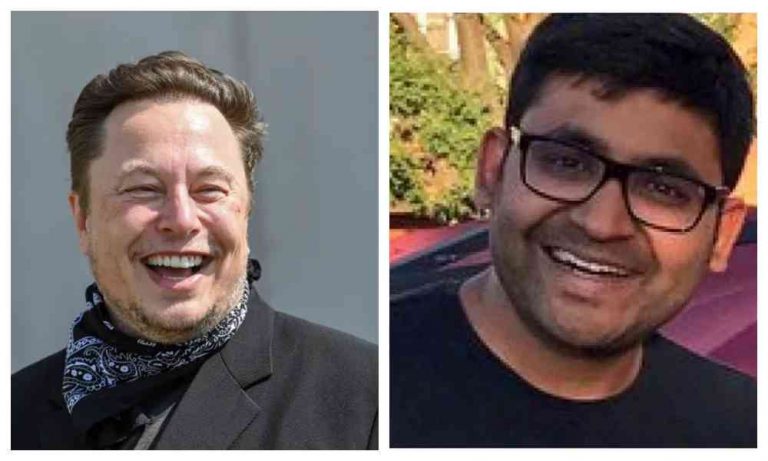
Vote carefully, says Twitter CEO on Elon Musk’s poll about ‘edit’ button after latter becomes top shareholder

Twitter CEO Parag Agarwal on Tuesday cautioned Twitter users to vote carefully on the poll by eccentric billionaire Elon Musk. Musk has asked his followers would they like the edit button. To that, Agarwal said that the consequences of this poll will be important.

“Please vote carefully,” Agarwal tweeted.

Musk, on Monday became top shareholder of Twitter Inc after acquiring 9.2% shares. Just few days back Musk had ran a Twitter poll questioning if the social media behemoth was rigorously adhering to the principles of free speech.

After a majority of respondents said the company had failed in upholding the ideals of free speech, Musk had responded to one of the Twitter users saying he is giving “serious thought” to building a new social media platform.

At the time of this report, Musk’s poll has little over 75% people voting for ‘yse’ (yes) option while 24.9% people are voting for ‘on’ (no). Over 11 lakh people have already cast their vote and 21 hours are remaining for the poll to be over.

Prior to this, as a likely April Fool’s prank, Twitter had tweeted that it is working on an edit button. Twitter had remained non-committal whether it was working on bringing the edit button.

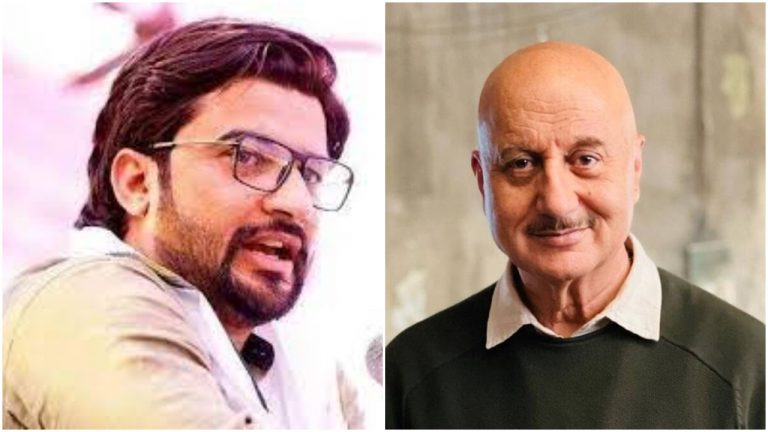
Congress leader Salman Nizami calls ‘The Kashmir Files’ actor Anupam Kher an ‘Islamophobic’, ‘bigot’ after he wishes Ramadan Mubarak

As the Islamic month of Ramzan started on April 2, Bollywood actor Anupam Kher took to his official Twitter account on April 3 to wish his fans and followers. “Ramadan Mubarak to all. Love, peace and prayers always,” tweeted the actor. Anupam Kher’s benevolence in wishing all of his Muslim followers ‘Ramadan Mubarak’ irked Congress leader Salman Nizami, who went on to hurl abuses at the actor.

In response to Anupam Kher’s Tweet, Salman Nizami wrote, “Coward, hypocrite, Neech, Islamophobic, bigot, hatemonger. Get lost!”

Congress leader Salman Niazi’s penchant for abusive and derogatory language toward actor Anupam Kher

Congress leader’s disparaging words aimed at Anupam Kher came as no surprise. On several occasions in the past, Nizami has used extremely vulgar and offensive language against the veteran actor. Last year, in April Nizami, had insulted the actor by calling him a ‘political pimp’. He had Tweeted, “Anupam Kher is a political pimp — first he reaped benefits over bodies of Kashmiri Pandits. Now seeking to do same over pyres of Covid victims. Coward!”

In 2019, when Anupam Kher had lauded the Modi government for the abrogation of Article 370 of the Constitution that gave special status to Jammu and Kashmir, then too the Congress leader took to social media to humiliate Anupam Kher. “Hypocrisy thy name is Anupam Kher,” Nizami had Tweeted.

From blaming women for sexual assaults to playing down killings of migrants in Kashmir: Salman Niazi’s past antics

Salman Nizami, a Congress leader from the Union Territory of Jammu and Kashmir is often seen on Twitter sharing anti-BJP rants and spreading fake news. In fact, only last year, the Congress leader had played down the killing of UP-Bihar migrants in Kashmir by Islamic terrorists.

In October 2021, two migrants from Bihar were shot dead while one was critically injured. While people are condemning these attacks and demanding strict action against the terrorists, Congress leader Salman Nizami said, “Two more killings, this time innocent labourers from Bihar. I condemn it- a cowardly terror act. Total Civilian killings in last 7 days touches 12. What has BJP achieved by revoking Article 370 in J&K except bloodbath? Let’s be together & establish peace & harmony!”

He is in fact, the same Congress leader who had asserted in 2013 that “Only attractive women are raped.” In another 2013 Tweet, Nizami is seen claiming, “Women provoke sexual assault by their appearance. Sexual attractiveness is the primary reason why a rapist selects a victim.” Not just the attractiveness of women, Nizami has also blamed women for getting raped. As per Nizami, women who ‘dress provocatively’ are asking for trouble.

After the old tweets were widely shared on social media today, Nizami has deleted them and has been blocking people who are asking him about the tweets. It is pertinent to mention here that the disgusting tweets were made only weeks after Nirbhaya was gang-raped and murdered on the 16th of December, 2012. He made these tweets when the country was still recovering from the shock of the heinous crime and mourning the tragedy.

Interestingly, Salman then took to Twitter to offer a rather ridiculous explanation for his terrible tweets. He said that the tweets from 2013 were in response to other politicians and he was a “journalist” at the time. Salman seems to think that being a journalist sure gives you a pass to talk a lot of rubbish.