Home Blog Page 3754

Pfizer’s ‘trust science’ tweet gets ratioed, pharma giant ‘hides’ uncomfortable tweets: Read what happened

American pharmaceutical giant Pfizer Inc on Tuesday posted a tweet with an image of a plane which read a banner “Know who’s good at science? Scientists”.

Pfizer has been under a lot of fire over wanting protection against getting sued if the vaccines give side effects. Pfizer is marketing its mRNA Covid-19 vaccine across the world, which was developed in collaboration with German biotechnology company BioNTech SE but it has not yet received approval in India.

Pfizer has been insisting on protection from legal liabilities, which it has been given by other countries, including the United States and several European nations. In several Latin American nations, Pfizer has asked the countries to pledge their sovereign and military assets, including federal reserves and embassies in foreign countries, as indemnity against any future liability that may arise due to side effects of the vaccine or any negligence of the company. The Pharmaceutical giant had also asked the countries to deposit bank guarantees in foreign countries as part of such indemnity.

Naturally, many Twitter users took up the opportunity to give a befitting reply to Pfizer and the tweet got ratioed.

On Twitter, a ratio, or getting ratioed, is when replies to a tweet vastly outnumber likes or retweets. This usually means people are disagreeing with the tweet and considering its content bad.

Twitter user pointed out how not taking responsibility about possible side effects does not really help instil confidence in science, the way Pfizer wants one to.

Another Twitter user pointed out the record USD 2.3 billion settlement on widespread drug fraud which Pfizer was forced to pay. Pfizer was also accused of paying kickbacks to healthcare providers to induce them to prescribe the drugs. In 2009, it was the largest ever civil fraud settlement in history against a pharmaceutical company.

Ouch.

Clearly it opened a can of worms where Twitter users pointed out unfair and criminal practices Pfizer was accused of following.

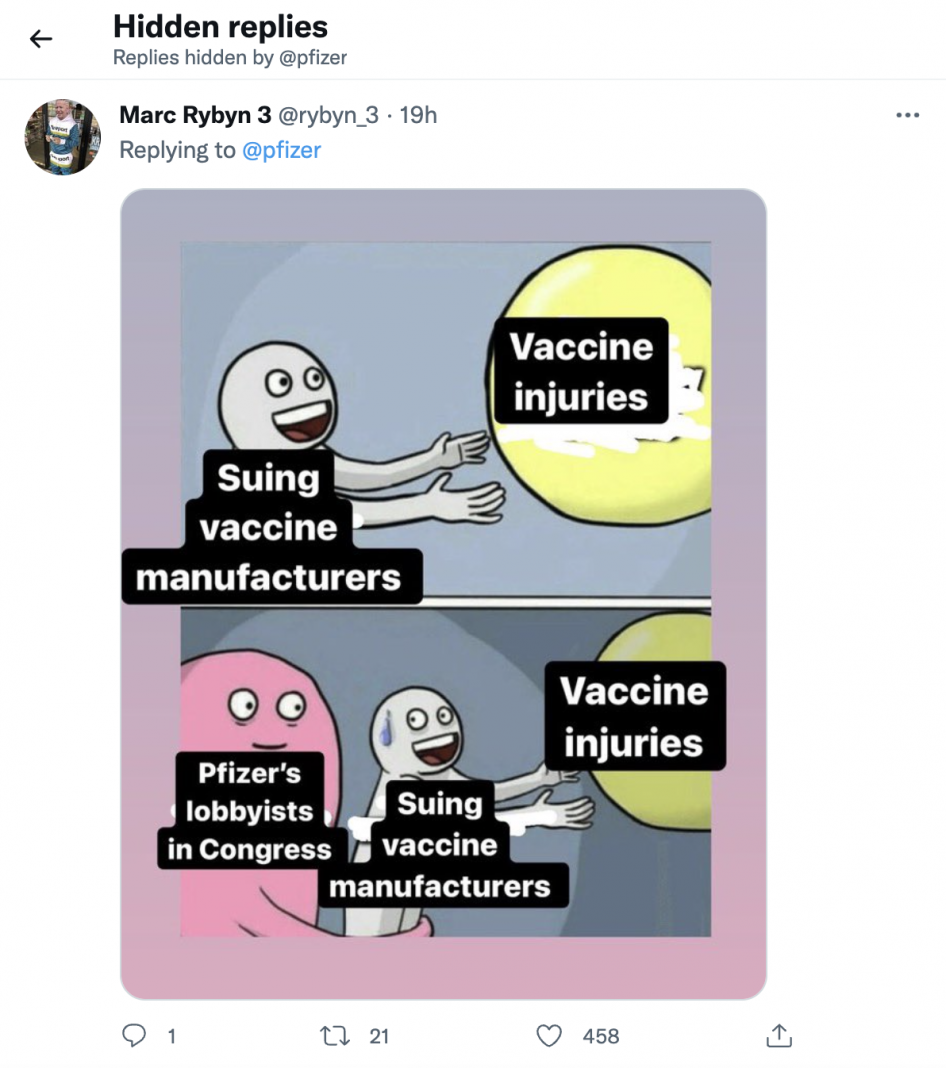
Pfizer, however, went on to ‘hide’ some of the replies to the tweets which were quite uncomfortable.

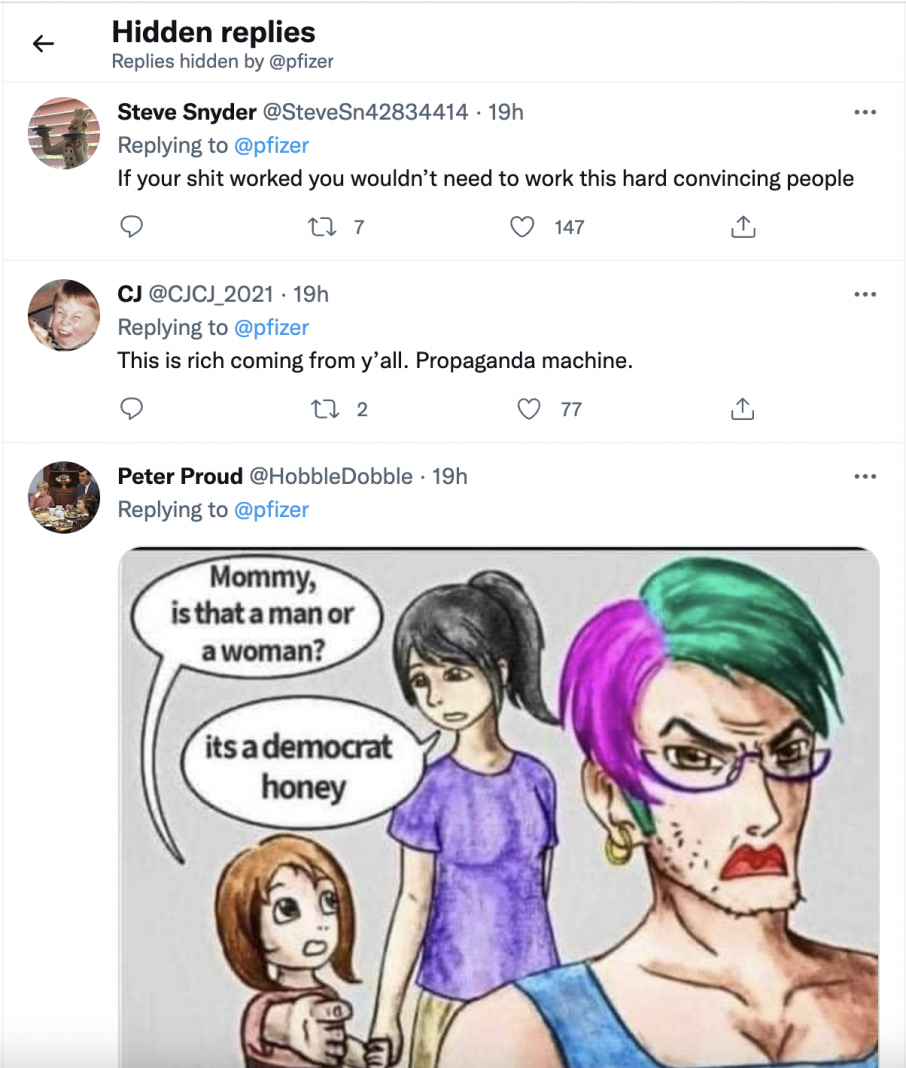
Hidden replies by Pfizer

At first Pfizer hid the memes and replies that either mocked it or reminded the company of the criminal case and charges against it.

Pfizer replies

However, after the tweet got ratioed, it kind of gave up on hiding the tweets mocking the meme.

It must be mentioned that the World Health Organisation (WHO) has earlier asked global vaccine manufacturers to share technology with companies in Asian and African countries to help in increasing local vaccine manufacturing. However, the major pharma giants have refused to share their vaccine formula and insisting on governments signing commercial agreements to avail vaccines for their population.  

Youth Congress wants to jail journalist Ajeet Bharti for saying ‘Nehru-Gandhi duo were subservient to British’ in ‘Gangs of Wasseypur’ style

Disclaimer: If you are under the age of 18 and have not seen Gangs of Wasseypur, consider going back and reading another article. Below article contains reporting on strong language.

The otherwise proponents of freedom of expression and speech now appear so rattled that a video by DoPolitics’ Ajeet Bharti has gotten Youth Congress to take legal action against him so as to send him to jail.

In a tweet, Indian Youth Congress’ legal cell said that they will be lodging a formal complaint against DoPolitics journalist Ajeet Bharti on instructions of IYC President Srinivas BV. The IYC Legal Cell was quoting a snippet of Bharti’s video where he was critical of Mohandas Karamchand Gandhi and Jawaharlal Nehru and their dealing with the British and India’s independence.

The snippet is a part of video published by YouTube channel of DoPolitics titled “Haan, Bheekh Me Hi Mili Azadi | Ajeet Bharti Decodes Kangana Ranaut’s Statement on Times Now”.

Bharti, in a rustic, conversational tone, much like it was shown in Anurag Kashyap’s film ‘Gangs of Wasseypur’ was discussing Kangana Ranaut’s statement on India having gotten independence in alms and how true independence came after 2014 when Narendra Modi government came to power.

Bharti said how Kangana, on Times Now, was discussing Veer Savarkar with Navika Kumar where the conversation steered from Savarkar’s larger than life persona to British rule and first war of Independence to getting independence in alms. Bharti said that from the 6ish minute long clip, just one portion of 1 minute was cropped and made viral on social media to twist Kangana’s statement.

“I am saying it very clearly that yes, we got independence in alms. The fact that the British left India on one date does not prove that we got independence by driving them away. After the formation of United Nations, many leaders like Subhas Chandra Bose and others took up the matter on international platform and pressurised the British to leave India. I am using the term ‘alms’ because the country’s “Bapu” and “Chacha” used up their entire nationalism and self respect to weigh the testicles of the British. They were busy lobbying on how to become the prime minister,” he said.

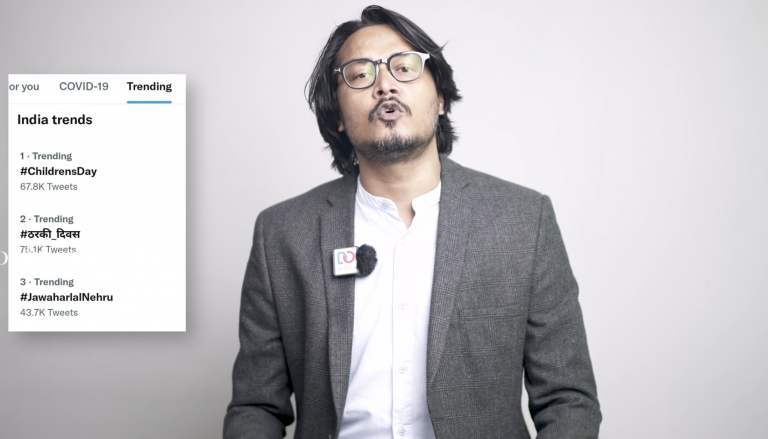
Bharti further said how the leaders went on hunger strike to divide their own nation and pushed it into a state of chaos and war till eternity. “This kind of leaders are made for poems like ‘char chavanni ghode pe’. They were giving us freedom ‘bina khadag bina dhaal’?” He also pointed out how netizens were trending ‘tharki diwas’ on Jawaharlal Nehru’s birth anniversary on 14th November.

“Someone revolted, someone gave sacrifice, someone else went to London and killed the British and someone else gets selected as Prime Minister but eventually Nehru was made the PM. For their own selfish interests, people like Nehru had compromised and begged,” Bharti said.

Bharti went on to say how Nehru, in a letter dated 28th April, 1948 Nehru had written Her Majesty to Queen Elizabeth thrice in just nine lines and said how this language was not of a man who had snatched Independence from the British, but more like being subservient to the British monarchy even after having attained freedom.

“If Nehru had spine, he would have demolished the symbols of slavery in India on the very first day, would have set the Victoria Memorial on fire since the British Prime Minister Winston Churchill presided over the deaths of lakhs of Bengalis during the great famine,” he said.

He added that when Kangana said India got independence in alms, she is right. But that does not dismiss the sacrifices of all those who laid down their lives for the cause. Even their soul would cry when they see people like Nehru refer to India as “Dominion of India” and seek permission from ‘Her Majesty’ on how to run the independent nation.

However, Bharti’s conversational tone with strong language seems to have upset Congress and hence are contemplating legal action against him.

Responding to the threat of legal action, Bharti asked Congress to take a print out of the same and ‘shove it.’

A husband, a father, a son: How Kerala RSS worker A Sanjith’s wife was made to witness her husband’s murder

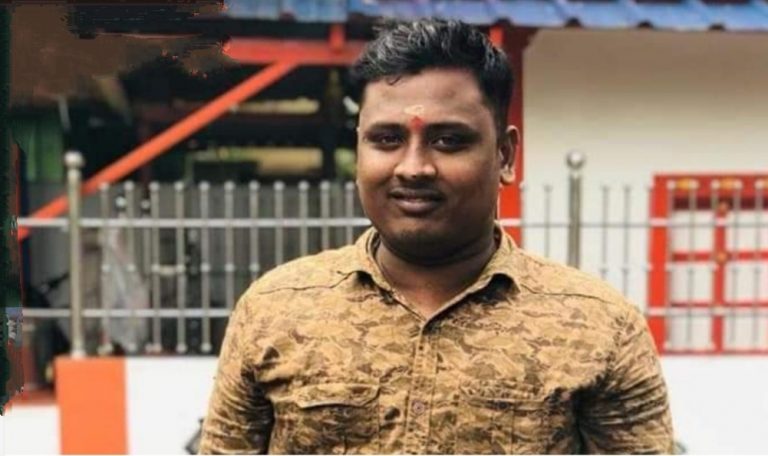
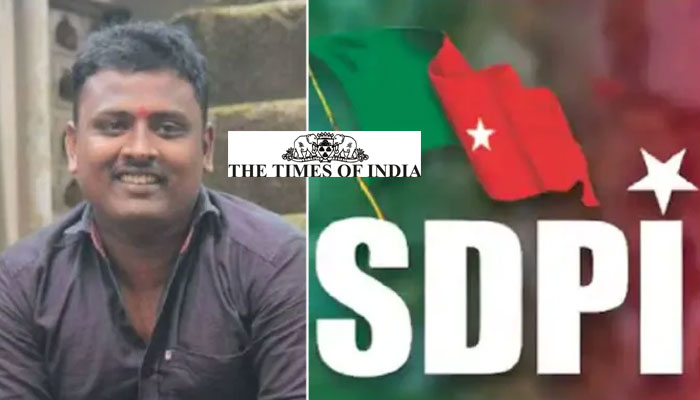
Earlier this week, an RSS activist was hacked to death in front of his wife in Kerala’s Palakkad district. The murder was allegedly carried out by the members of Social Democratic Party of India (SDPI), the political wing of the Islamist organisation Popular Front of India.

The incident took place at Elappully in Palakkad district at 9:30 in the morning. A Sanjith was on a bike with his wife when they were waylaid by car-borne assailants, who attacked and hacked him multiple times in front of his wife. The attackers had followed the couple in a car, hit their two-wheeler from behind and when they fell down, 4 assailants came out of the car and started hacking at Sanjith with complete abandon.

Sanjith was rushed to a nearby hospital where he was declared brought dead. According to reports, Sanjith was stabbed more than 50 times by his assailants. 

Who is S Sanjith?

Sanjith, who worked at a private firm, was an RSS mandal boudhik pramukh of his area and one of the prominent workers of the Sangh in Kerala’s Palakkad district. He is survived by a wife, a one-year-old daughter and a mother. 

Following the tragic incident, the role of the Social Democratic Party of India (SDPI) in Sanjith’s murder is suspected. The police said an investigation has been launched to trace the accused who fled the scene after the incident. 

Sanjith’s wife, Arshika, recently recounted the harrowing details of her husband’s murder. She said when they fell on the ground, one of the assailants dragged her and held her in such a way that she was forced to witness the brutality inflicted on her husband.

‘Assailants held me back in such a way so that I was forced to see my husband’s murder’: Sanjith’s wife

“I saw a white car parked nearby. I am not sure about its make or model. When we fell, one man dragged me and pushed me into a drain on the side of the road,” Arshika said. She further added that her husband was hacked to death on a busy street teeming with bystanders, including a school bus full of children and several other vehicles and two-wheelers nearby.

Source: YouTube

“They (the attackers) were not wearing masks. I can recognise them if I see them now.” The police said that the vehicle was a white Maruti car. Arshika is the primary eyewitness in the case.

Arshika also revealed that she sensed Sanjith was under some kind of danger, but was unaware of the nature of the threat. She also alleged that she suspected danger to Sanjith was something to do with the SDPI. Sanjith would never stay in public for long and always kept his wits about him, she said. Arshika said owing to the threat, Sanjith was staying at her place, away from his home. Two weeks back, ab SDPI worker was attacked at Elappully. Since then, Sanjith, listed as accused, had been staying away from his house.

Sanjith had survived past attempts at his life, allegedly by SDPI members

It is worth noting that this is not the first time that an attack was carried out against Sanjith. The RSS activist was among the prime targets of the SDPI, the political wing of the Islamist organisation PFI, and which had a history of violent conflicts with the Sangh. He had survived a few attempts at his life, allegedly by SDPI members.

Last year, Sanjith escaped a murder attempt planned against him by SDPI workers. Four people were arrested in the case, including Sabeer Ali and Anwar Sadiq, who were nabbed while they were trying to flee to Tamil Nadu after trying to kill Sanjith.

Following the gruesome murder of Sanjith, BJP had trained its guns against the SDPI, accusing it of being behind killing the RSS activist. “SDPI is killing political rivals without provocation. These criminals have the backing of ruling CPI(M) and their police. If the government cannot control the SDPI, BJP will be forced to marshal people for retaliation,” he said.

Political violence unleashed against RSS worker in Kerala an alarmingly common occurrence

For the last few years, political murders have become an alarmingly common occurrence in Kerala. Umpteen number of violent incidents have been reported from the state. In an overwhelming number of such incidents, the victims have been RSS/BJP supporters and workers while the accused were said to be belonging to the left-leaning and Islamist organisations. 

Recently, another RSS worker named Biju, 35, was hacked to death at Chavakkad in Thrissur district. Police had ascribed the murder to personal enmity, but BJP had alleged that the two people arrested in the case were SDPI members. 

Earlier in February 2021, R. Nandu alias Nandu Krishna, 22-year-old Rashtriya Swayamsevak Sangh (RSS) Shakha Mukhya Shikshak at Nagamkulangara in Wayalar village panchayat in Alappuzha was hacked to death allegedly by the Social Democratic Party of India (SDPI) goons.

CBI raids 76 locations in the country to bust online child pornography racket, raid team attacked by locals in Odisha

In a major crackdown against online child pornography networks and child sex abuse, the Central Bureau of Investigation CBI carried raids at 76 locations across 14 states and detained 10 people yesterday (November 16). The CBI also seized a large number of electronic equipment like mobile phones, data storage devices and others.

This is the first major action of the CBI against online pedophiles and their international network.

The CBI revealed that raids were carried in Tirupati and Kanekal in Andhra Pradesh; KonchJalaun in Delhi; Mau, Chandauli, Varanasi, Ghazipur, Siddharthanagar, Moradabad, Noida, Jhansi, Ghaziabad, Muzaffarnagar in Uttar Pradesh; Junagarh, Bhavnagar, Jamnagar in Gujarat; Sangrur, Malerkotla, Hoshiarpur, Patiala in Punjab; Patna and Siwan in Bihar; Yamuna Nagar, Panipat, Sirsa, Hisar in Haryana; Bhadrak, Jajapur, Dhenkanal in Odisha; Tiruvalure, Coimbatore, Namakkal, Salem, Tiruvannamalai in Tamil Nadu; Ajmer, Jaipur, Jhunjhunu, Nagaur in Rajasthan; Gwalior in Madhya Pradesh; Jalgaon, Salwad, Dhule in Maharashtra; Korba in Chhattisgarh and Solan in Himachal Pradesh. 

The chief information officer of the CBI RC Joshi informed the OpIndia that on November 14, the agency had lodged 23 FIRs against 83 accused persons for allegedly circulating, storing and viewing Child Sexual Exploitation Material (CSEM) through various social media platforms and groups. They have been booked under section 120B (criminal conspiracy) of IPC and 67B (punishment for publishing or transmitting of material depicting children in sexually explicit) of the IT Act. The CBI said that the CSEM racket involves 5,000 offenders from around 100 countries spread across Asia, Africa, the Americas and Europe.

The CBI has said that a large number of suspects are from Pakistan, Canada, Bangladesh, Nigeria, Indonesia, Azerbaijan, United States, United Kingdom, Egypt, Yaman, Ghana and Belgium. If required the agency will seek the help of law enforcement agencies of the concerned countries via Interpol, the CBI said.

So far in the preliminary investigation, the CBI has identified around 50 such online groups involved in circulating CSEM and it is coordinating with other agencies to track offenders.

While the special unit of CBI ‘Online Child Sexual Abuse and Exploitation Prevention/ Investigation’ (OCSAE) has been entrusted with the investigation, the CBI has revealed details of accused persons. OCSAE was set up about two years back.

CBI team assaulted in Odisha during the raid

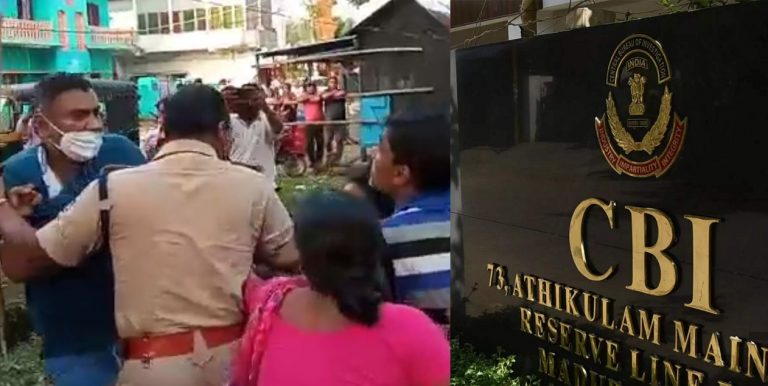
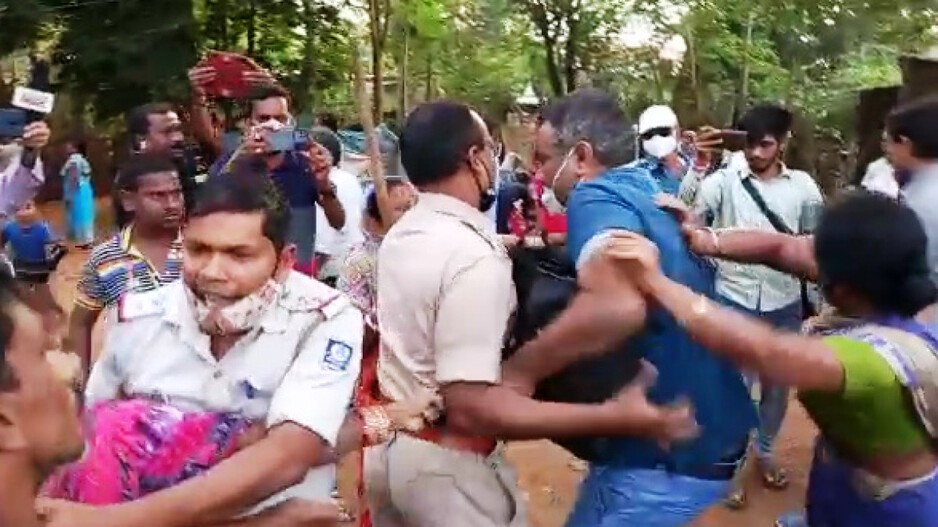
During the course of the raid, a five-member of the CBI team led by CBI inspector, Delhi, Sandeep Kumar Tiwari was even attacked and confined by the mob at Jadupati Vihar in Dhenkanal district of Odisha.

A CBI official in a blue T-Shirt is seen being manhandled by a group of women in Dhenkanal district of Odisha during the raid.

As the team visited the house of suspect Surendra Nayak and started questioning him, the mob consisting of some women and lathi-wielding youths tried to free the suspect and attacked the CBI team. The mob even tried to stop the local police from rescuing them. Later on, the CBI team detained the suspect.

The immoral trade of CSEM is worth billions

Investigation revealed that Nayak was an active member of social media sites like Desi MMS. He admitted to having created a WhatsApp group having members from different parts of the country. He said that he had joined the racket barely two months back. He was sharing pornographic content from one website to other sites and groups. He had even received a sum of 21 USD for sharing links. It has been revealed that users are also paid for spreading content.

Balasaheb Thackeray: On his death anniversary read how Shiv Sena has veered away from its founder’s ideals

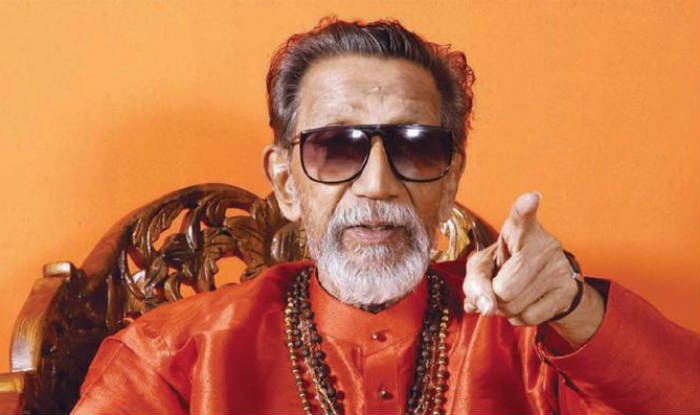
17 November 2021 marks the ninth death anniversary of one of Maharashtra’s most towering politicians and influential figures, Bal Thackeray or as he was popularly known, Balasaheb Thackeray. It was on this day in 2012 that Balasaheb Thackeray, one of the tallest leaders of Maharashtra, breathed his last after living a long, eventful and influential life for over eight decades.

Balasaheb Thackeray was born on January 23, 1926, in Maharashtra, to Keshav Sitaram Thackeray, a journalist and a cartoonist, the same profession that played a key role in propelling Balasaheb towards his future prominence. 

Keshav Thackeray was also a social activist who was deeply invested in championing the cause of Samyukta Maharashtra Movement, a campaign demanding the creating of a unified, distinct and separate state for Marathi speakers. This dedication and pride for Marathi-hood eventually rubbed off on Balasaheb Thackeray and proved to be critical in shaping his then embryonic political ideology. 

After completing his education, Balasaheb Thackeray started working as a cartoonist at the Free Press Journal. Later, he quit the job to start his own newspaper. However, it did not survive for too long. Then, he began Marmik, a weekly political cartoon series focused on raising concerns about problems faced by the Marathi youth.

His mordant cartoons depicting the difficulties endured by people of Marathi origins caught the fancy of the restive regional population who saw him as an iconoclast who was willing to challenge established beliefs and was unapologetic about conveying his stance in public. His popularity soared and he instantly became a toast of the Marathi-speaking masses. 

However, his most seminal contribution to India’s polity was with the creation of Shiv Sena. In 1966, Balasaheb Thackeray formed Shiv Sena as a part of his efforts towards emancipating Marathi youth. His political inclination was far-right, and he roundly castigated everything towards left-lean. 

In its initial years, Shiv Sena’s focus was solely on raising awareness about problems bedevilling the Marathi youth. However, in the early 1970s, it tried to broaden its scope of acceptance by aligning with the larger Hindutva movement that was steadily gaining momentum around the idea of reclaiming the then disputed land in Ayodhya and building a Ram Mandir over it. 

Through the tumultuous years of 1980s, Balasaheb Thackeray was amongst few political leaders who made no bones about their support to a Ram Mandir in Ayodhya. Shiv Sainiks, as the supporters of Shiv Sena are called, participated in widespread protests across the country for demanding the reclamation of land where a controversial and an abandoned structure attributed to Mughal ruler Babur was standing. 

As per various accounts, Shiv Sena supporters and workers were also among those involved in felling the controversial structure on December 6, 1992. The demolition of Babri structure by an uncontrollable mob sparked violence in some parts of the country, including in Mumbai, the capital of Maharashtra and the stronghold of Shiv Sena. A few months after the demolition, a series of 12 bombs rocked the city of Mumbai, carried out at the behest of the D-company. 

Balasaheb Thackeray, an unapologetic proponent of Hindutva and a rare ability to influence friends and adversaries alike

It was said that the bomb blasts were in response to the events that transpired in Ayodhya on December 6, 1992. The blasts touched off a wave of Hindu-Muslim riots, similar to those erupted after the demolition of the controversial structure. It is widely believed that Shiv Sainiks took up the cudgel to defend Hindus against the riotous mobs. Later, Balasaheb Thackeray claimed credit for the Babri demolition. In his ‘Aap ki Adalat’ interview with Rajat Sharma in 1993, Balasaheb Thackeray unabashedly admitted to Shiv Sena’s role in demolishing the controversial structure and partaking in the riots that ensued the demolition. 

Three years later, in 1995, Shiv Sena in coalition with the BJP, came to power in Maharashtra. Their common adherence to the Hindutva ideology became the binding glue that brought the two parties together for an alliance to rule over Maharashtra for the next five years. This was the time when Balasaheb Thackeray was at the zenith of his political journey. Even though he was not a part of the government, he wielded enormous clout to control and effect its functioning.

He was an excellent public orator, often resorting to demagoguery and cracking wisecracks to keep his audience enthralled and engaged. His immense popularity, coupled with his unrepentant support to Hindutva ideology earned him the appellation of Hindu Hriday Samrat or Emperor of Hindu hearts. He had this rare ability of inspiring awe and fear both at the same time. 

Through his charismatic personality, he was able to enchant his friends as well as influence his opponents. His chief legacy was to consolidate power without ever holding any public office. However, above everything else, he will be most remembered for his unwavering and steadfast support in upholding the ideals of Hindutva. 

With Balasaheb Thackeray’s demise, Shiv Sena turns its back on its founder’s legacy

Unfortunately, with his demise ended Shiv Sena’s commitment to their founder’s ideals. The priorities of the party changed dramatically following the death of Balasaheb Thackeray. Principles and beliefs that were once uncompromising and immutable suddenly became flexible and malleable. The culmination of this perversion was witnessed in the aftermath of the 2019 Maharashtra assembly elections when Sena snapped its decades-old association with the BJP and formed an unholy nexus with its ideological opponents NCP and Congress. 

The party, which had for decades resisted the urge of coming to power at the expense of compromising its ideology, felt no compunction in allying with political parties whose beliefs ran counter to those cherished by Balasaheb Thackeray. While in politics there are no perpetual enemies or eternal friends, Shiv Sena’s conspicuous perfidy of bartering Hindutva in exchange for the chief ministerial post underscored party’s readiness in shunning the legacy of its founder for the sake of making short-term political gains.

Back in 1999, Bal Thackeray had used the term “scoundrel” when asked about the possibility of an alliance with the NCP during his interview with the NDTV. He rejected the possibility of any alliance with Sharad Pawar. He said, “It is for a man to decide whether he wants to remain a gentleman or a scoundrel. How can I stop? If anybody is trying to become a scoundrel… Okay. But I will not go along with a scoundrel, whoever he may be. I will never, never, an enemy is an enemy,” Balasaheb further said.

In January 2012, Balasaheb raked up the issue of Sonia Gandhi’s “foreign origin” during an interview to Saamna, the Shiv Sena mouthpiece. “What love will she have for this country and what is her contribution here,” he asked. “You see what is going on in the country. There is controversy over the Army chief’s age and the matter is in court. Whose reputation is in jeopardy? There is no question of Sonia’s reputation as she is a foreigner,” he said.

Balasaheb did not spare Rahul Gandhi either. He said, “He was born yesterday and wants to be prime minister today. Is the PM’s post up for auction?” He had heavily criticized the series of corruption cases during the Congress regime as well. He asserted, “The Yuvraj of Congress (Rahul Gandhi) is very vocal on the corruption by Mayawati. However, he is not saying anything about the corruption by his government.” He also wrote, “His mummy (Sonia Gandhi) is also quiet on the issue. The Prime Minister is also not opening his mouth. The truth is hidden in the silence”.

For Shiv Sena, power and greed has taken precedence over loyalty to one’s ideological beliefs

Balasaheb was unsparing in his attack against the NCP and the Congress party. He balked at the idea of joining hands with the Sharad Pawar’s party and becoming a coalition partner with Sonia Gandhi’s Congress. Yet, when the opportunity presented itself in Maharashtra, the current crop of Shiv Sena’s leadership paid no heed to Balasaheb’s staunch disapproval in the past and fell over itself to align with the Congress and the NCP. The hankering for power and political dominance took the precedence over conformity to the founding principles laid down by its founder Balasaheb Thackeray. 

From being one of the most fervid proponents of Hindutva and cutting itself the figure of a Hindu revivalist force, Shiv Sena has devolved into an opportunist turncoat that had no qualms in striking a Faustian bargain with its political adversaries in order to satiate its political greed. Its willingness to compromise its beliefs suggests the party has no ideological moorings, and its primary focus is to somehow cling to power, even if that means betraying the confidence of its votaries and renouncing the path shown by Balasaheb Thackeray. 

From ‘died in accident’ to ‘hacked to death’: How TOI reported the same news about RSS worker’s murder in different editions

News Agency Times of India has recently reported the news of an RSS worker being hacked to death allegedly by SDPI members in a different manner based on the edition. In the Kerala edition, while it clearly stated that the murder had happened, in Tamil Nadu and Mumbai editions, the news agency reported that an RSS worker died in an accident.

A Twitter user, BefittingFacts, published three snippets of news reports from different editions of the Times of India newspaper. In the first edition from Kerala, the report said that an RSS worker was hacked to death in front of his wife in Palakkad. Sanjith, the victim, was travelling with his wife on a bike when attackers hit him with swords. It also mentioned that the Police said the preliminary investigation indicated it was a political murder.

The tone of the report, however, changed in the other two editions. In the Tamil Nadu edition, the report stated that Sanjith died in a road accident. It further added BJP accused SDPI of the murder. Towards the end, the report mentioned, “There were 30 wounds on his body and six on the head.” It suggested that a post-mortem report revealed that the victim died of head injuries.

Furthermore, in the Mumbai edition, which was shared by Twitter user irah777, more or less similar language was used as from the Tamil Nadu edition. But, interestingly, the report did mention that he died of head injuries but nowhere mentioned that he had 30 wounds on the body and six on the head.

The death of RSS worker Sanjith

On November 15, it was reported that an RSS worker identified as A Sanjith from Elappully, Kerala, was hacked to death by the Social Democratic Party of India (SDPI) goons. SDPI is the political wing of the Islamist organisation Popular Front of India (PFI).

The incident occurred at Ellapully in Palakkad district at 9:30 in the morning. He was going for his work on his motorcycle with his wife when he was brutally attacked by the SDPI members. Reports suggest that the assailants came in a car. They stopped his bike and attacked him in broad daylight in front of many people, including his wife. Sanjith was rushed to the hospital in serious condition. He later succumbed to his injuries.

‘Only Muslims are being arrested in India, RSS and Mossad creating wars in Muslim countries’: Bizarre claims in news debate about spitting on food

0

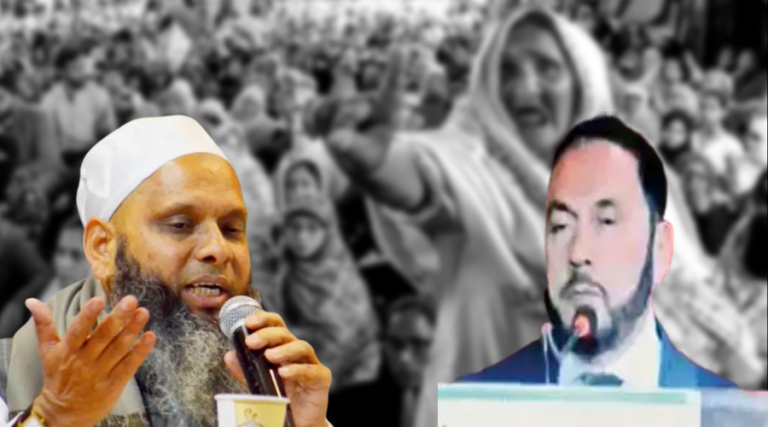
On November 16, News 18 Hindi held a debate on the issue of people being caught spitting on food. During the discussion, while Maulana Alimuddin Asadi tried to whitewash the acts of spitting on food, political analyst Masood Hashmi alleged that under PM Modi and CM Yogi, ‘only Muslims are being caught and harassed’.

In the past few months, several people have been arrested after videos of them spitting on food while cooking went viral. Incidentally, all the people who have been arrested belong to a particular community that is raising the question of whether there is something common among them that is pushing them to indulge in such acts. Delhi University Professor Sangeet Ragi, Maulana Alimuddin Asadi, Supreme Court Advocate Ashwini Upadhyay, Hum Hindu founder Ajay Gautam and political analyst Masood Hashmi were the panellists in the News 18 debate.

‘This is faith’ claims Maulana Alimuddin Asadi about viral video

During the debate, Maulana Alimuddin Asadi pointed towards a particular video in which a group of Muslims are seen licking the utensils to clean the remaining food items. He alleged that this was about faith and it was not a crime. Ignoring the fact that the other videos that were shown during the debate clearly showed several cooks spitting on food while cooking or showed people spitting on fruit, bread, outside houses etc., Asadi kept praising those who were licking the utensils.

Asadi said, “We respect our elders and gurus and happily eat the leftover food from the plates. It is about faith, and there is nothing wrong with it. These people are from the Bohra community. Our religion teaches us not to waste food.”

When anchor Aman Chopra questioned him about the remaining videos and pointed out how he could say it was about faith, Asadi alleged Chopra was trying to twist his statement. A point came during the debate where he tried to deny that the fruit seller was spitting or licking the fruit that he was about to sell. He said, “He is cleaning the fruit and not licking it.”

Asadi talked about the roadside vendors who were caught on camera adding urine in Dahi Bhalle. He questioned why no action was taken against them. Asadi might be pointing out the viral video of a roadside vendor whose video had gone viral on social media platforms where he was seen adding urine in Panipuri water. The vendor, identified as 60-year-old Akrul Sahini, was arrested for the crime by Bharalumukh Police.

Notably, a similar incident was caught on camera in 2017 in Gujarat, where one Chetan Nanji Marvadi was seen adding urine in Panipuri water. He was sentenced to six months in jail. These incidents show that the allegations that one particular community is being vilified is false and it is about hygiene and health, not about communal hatred.

It is, in fact, being made communal when some people try to defend the acts linking them to faith.

‘Muslims are being targeted because of UP elections’

Asadi further alleged that Muslims are being targeted in the country because UP elections are coming. When Chopra asked if people should eat food that had been spat on by the vendors just because to maintain ‘harmony’ during UP elections, Asadi changed the tone and asked why the person was not targeted who was sprinkling ‘gaumutra’ on the food. We could not find a single report of any such incident. There were only a few fact-checks to bust the same ‘urban legend’ that is apparently popular among the western countries that Hindus sprinkle Gaumutra on their food.

‘Only Muslims arrested under Modi-Yogi raj’

Political analyst Masood Hashmi had a whole different defence on why only Muslims were being caught spitting on the food. Chopra asked Hashmi what could be the reason that nine people have been arrested in the past nine months for spitting on food, and all of them were Muslims. Hashmi, being the political analyst, brought politics into the matter and alleged under PM Modi and CM Yogi governments, only Muslims are arrested and harassed.

Those who have been arrested in these cases are Naushad, Anwar, Khalid, Shahrukh, Irshad, Chand Mohammad, Mohammad, and Abdul Salam. Hashmi further claimed that it has nothing to do with religion. Chopra asked him if there was anything common while pointing out the names, but Hashmi kept saying there was nothing common in those cases.

‘Hindus should have right to ask if the is Halal or Jhatka’

Professor Sangeet Ragi said, “If a Hindu is going to Kareem’s to eat chicken, he should have right to ask if the meat is Halal or Jhatka. Being a Hindu, I should have the right to eat Jhatka. Why Hindus should eat Halal food that is made while reciting Islamic verses?”

‘If Indian Muslims were not peaceful, India would not have existed’, says Hashmi

Masood Hashmi alleged people do not understand the meaning of Jihad. He said, “If Indian Muslims had not learnt to live peacefully, India would not have existed the way it exists.” He further questioned the identity of the people who had been caught. He said, “It is a matter of investigation to find if the people who were caught spitting on food were actually Muslims or not.”

He claimed Hinduism is inferior to Islam and said, “If Hinduism is so good, why people across the world are converting to Islam? Why are they not converting to Hinduism? There must be a reason they are leaning towards Islam.” To his comment, Ajay Gautam said, “If Islam was so good, on one side I would have Ram Singh, and on the other side I would have Ram Shukla. It was because of the atrocities of the Muslim invaders that people had to convert.”

Ashwini Upadhyay questioned Hashmi to explain the reason why countries like Iran, Syria and others are burning? Hashmi blamed Israeli Intelligence Agency Mosaad, American Intelligence Agency CIA and India’s Rashtriya Swayamsevak Sangh (RSS) for the unrest in the Muslim nations. He said, “It is because of agencies like Mosaad, CIA and RSS that the world is burning. You are behind the unrest.” He further said, “Those who watch Mahabharat and Ramayana are questioning Islam. Those who have Gods with countless weapons in their hands are questioning Islam. Look at yourself first, then question us.”

While several tweets by News18 on the debate are still available on their Twitter account, one particular Tweet where they pointed out that Asadi said it was about faith has been deleted.

It is notable here that some self-proclaimed ‘fact-checkers’ have even tried to defend the acts of spitting on food by claiming it is a ritual called “Fatiha jalana” and the viral videos are about ‘blowing air on food’ and not spitting.

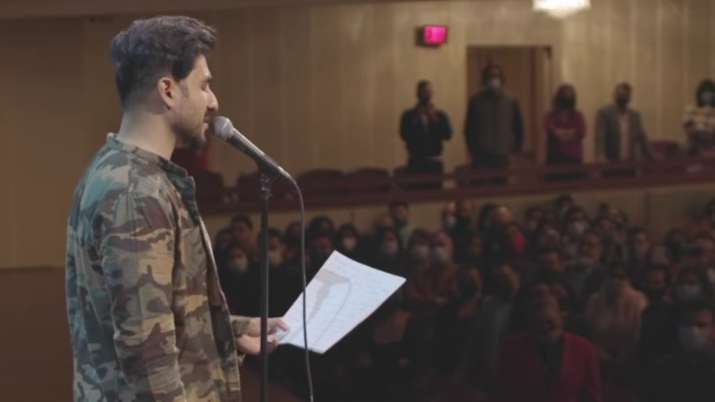
Delhi: One more complaint against ‘comedian’ Vir Das over his ‘Two Indias’ monologue at Kennedy Centre in the US

A day after a complaint was lodged with Mumbai Police against comedian Vir Das for his unhinged rant against India at an event held in the United States, another complaint has been filed against the stand-up comedian at Tilak Marg Police Station in Delhi. In the latest complaint, Das is accused of using derogatory language against the nation in his latest monologue at the Kennedy Center in Washington, DC.

Earlier yesterday, a complaint was filed against actor-comedian Vir Das with the Mumbai Police after his video insulting and mocking India during one of his gig in the United States sparked outraged online. Advocate Ashutosh J Dubey, a practising legal solicitor at Bombay High Court and the legal advisor of BJP-Maharashtra, who shared a copy of the complaint he filed against the comedian through his Twitter account.

In his complaint, a copy of which was also marked to the commissioner of police, Mumbai, the complainant accused Das of “defaming and spoiling the image of India in the USA”, which he said, “is venomous and inflammatory”.

Advocate Dubey accused the ‘comedian’ of willfully spelling inciting and derogatory statements against India, Indian women and the Prime Minister of India in his show at the John F. Kennedy Center for the Performing Arts in Washington DC.

Vir Das goes on a 7-minute unhinged rant against India at the Kennedy Center in the US

On Monday (November 16), comedian Vir Das shared a Youtube video “I come from two Indias” wherein he peddled anti-India propaganda under the garb of comedy. Das used humour to push anti-India propaganda in his 7-minute monologue. He talked about politics, religion, and nationality, all while instilling fear that India, which was once built by great men, would soon be forgotten. The comedian carefully sandwiched the propaganda material between comic elements and punchlines in his tirade.

Besides spreading lies and raking up internal matters to deride India and particularly Hindus on foreign soil, Vir Das also resorted to fear-mongering about losing the ‘idea of India’. He had concluded, “But as I stand here before you, I am reminded that I represent a great people. Great people, who built a great thing (India) that is turning into a memory.”

Comedian issues clarification after facing online backlash over his video

The video sparked massive outrage, with people criticising and hurling brickbats at the comedian for showing India in a poor light on a foreign soil. Responding to the swelling criticism, Das took to Twitter to issue a clarification. In his statement, Das alleged that his intention was to remind that the country, despite its issues, was “great”.

Calling the video satire, he claimed that he wanted to show the dual image of India. He said, “The video is a satire about the duality of two very separate Indias that do different things. Like any nation has light and dark, good and evil within it. None of this is a secret.”

Funding for religious conversion to anti-CAA protests to rehabilitating Rohingyas: Fefdawala Haji Abdullah, accused in Bharuch conversion case

On 15 November 2021, OpIndia had reported about the religious conversion of 37 tribal families in Kankariya village in Bharuch. An FIR has been registered against nine people in the case on allegations of luring these Hindus to embrace Islam by promising money, employment, marriage amongst other things. One of the names that has emerged in the case is of Fefdawala Haji Abdullah. His name had earlier featured in the Uttar Pradesh mass conversion racket unearthed by the state Anti-Terrorism Squad (ATS).

Who is Fefdawala Haji Abdullah/Abdul

Fefdawala Haji Abdullah or Fefdawala Abdul or Abdul Fefdawala as he is referred to as in various reports, is a native of Nabipur in Bharuch and has been in the UK since a few years now. He is associated with a UK-based trust, Majlis-e-Alfalah.

In October this year, it was reported that in 2019, he gave a provocative speech in Vadodara and had invoked the 2002 Gujarat riots which took place in aftermath of burning down of a train in Godhra where karsevaks returning from Ayodhya were burnt alive. According to DS Chauhan, ACP (Crime), Fefdawala had spoken about the 2002 riots and claimed that members of minority community were targeted and killed. He had claimed women were raped and children murdered and when he heard about it, he decided to do something about it.

He then said that in 2003, he set up the trust in UK where he contacted about 125 donors and started sending donation money to India. Fefdawala had said that the money was collected to strengthen the community so it can ‘defend itself against attacks from other religions’. For an hour, Fefdawala continued to speak about ‘strengthening community’ in Gujarat.

The said event was also attended by Salahuddin Sheikh and Umar Gautam, who were recently arrested for their involvement in hawala and religious conversion. It is believed Fefdawala has routed ‘donations’ of over Rs 150 crore in past 18 years to India.

American Federation of Muslims of Indian Origin (AFMI) charitable trust

In October this year, the Special Investigation Team (SIT) of Vadodara city police found that city-based American Federation of Muslims Of Indian Origin (AFMI) had routed hawala funds for activities including construction of 400 flats for ‘displaced’ Bangladeshi and Rohingya Muslims near Ghaziabad. It was also accused of funding maulvis near the Indo-Nepal border.

Salahuddin Sheikh is one of the trustees of this trust and Fefdawala amongst biggest beneficiaries. Sheikh started the trust after getting influenced by Islamic preacher Zakir Naik in Mumbai a few years back.

Fefdawala introduced Sheikh to Umar Gautam sometime in 2017. Subsequently, they met again multiple times in Vadodara to discuss anti-CAA protests. Kalim Siddiqui, another accused in the UP ATS case also met with Fefdawala and Umar Gautam. According to Assistant Commissioner of Police (ACP), Crime, DS Chauhan, Fefdawala routed money through hawala with help of businessmen in Mumbai and Dubai to construct houses for Rohingyas and Bangladeshi Muslims during the time anti-CAA protests were held.

Sheikh had further admitted to having given funds to Fefdawala and one another maulvi Zakaria. He had also met one man named Shabbir in Kashmir who was Fefdawala’s acquaintance. Gautam and Sheikh had admitted to having sent Rs 5 lakh to Shabbir to ‘help poor people’ but police suspect it was part of terror funding. Further, the money received through hawala was sent to places in India like Malegaon, Malda, Assam, Bihar, Kerala, Uttar Pradesh, Delhi and even Nepal.

As per the Indian Express report, about 14 foreign trusts had deposited about Rs 19 crore in AFMI Charitable Trust since 2017. Gujarati Muslim Association had transferred Rs 7.44 crore while Fefdawala’s Majlis-e-Al-Fala Trust has transferred Rs 2.06 crore. Police has also issued summons to one Dubai based businessman, Mustafa Thanawala, who is accused of helping Sheikh route the money through hawala.

Gujarat: Namaz offered at Vastrapur lake in Ahmedabad, VHP conducts purification ritual as protest

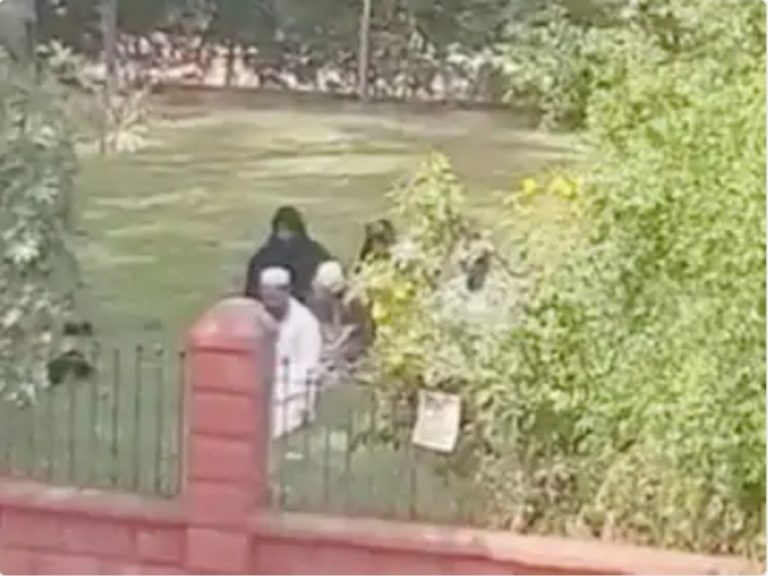
Like Gurugram of Haryana, Ahmedabad of Gujarat too has witnessed a trend of namaz at the public place as a video has gone viral of a group of Muslim men and women offering namaz at a lake garden in Vastrapur area of Ahmedabad.

In about a minute and a half long video, one can see some burqa clad women and some men offering the Islamic prayer, namaz, on the garden near the lake in Ahmedabad. The video has been making round on social media since past few days.

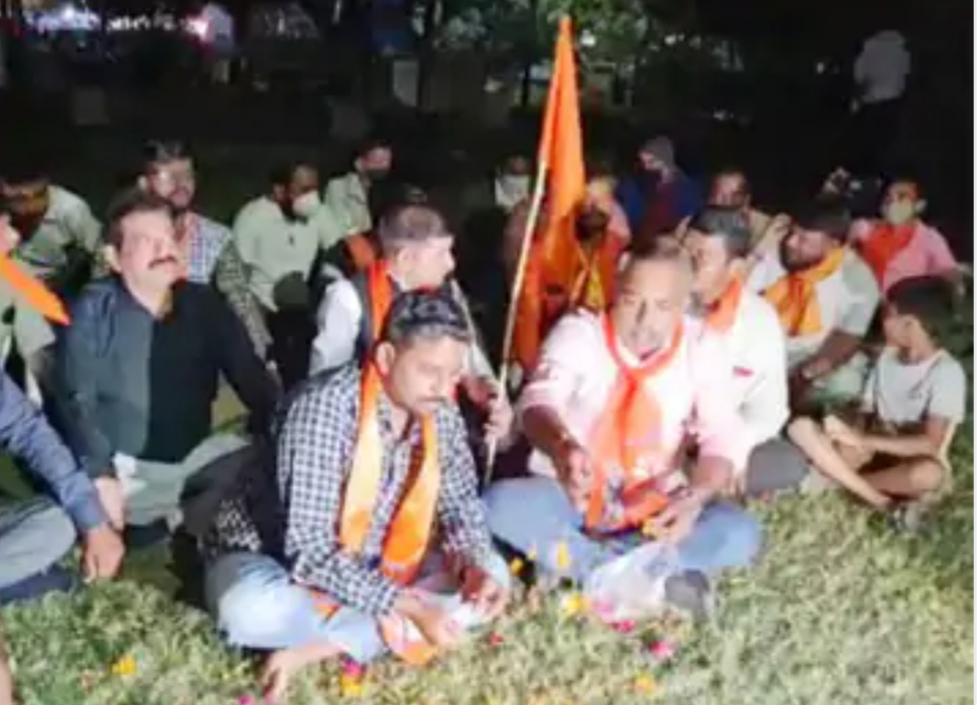
On getting this information, over a dozen members of the Vishva Hindu Parishad (VHP) on Monday (November 15) evening performed a purification ritual, sprinkled Ganga jal at the garden and recited the Hanuman Chalisa.

members of VHP carrying rituals of purification of the lake park at Vastrapu following a namaz offered a by a group of Muslim men and women.

Ashok Raval, secretary of Gujarat VHP confirmed purification of the lake park of Ahmedabad was carried by VHP members. Raval said that this was done to create awareness among the masses. VHP said that this was seen that often casual namaz eventually resulted in the claim being staked on that piece of land.

According to media reports officer in charge of Vastrapur police inspector Sandip Khambhla said that no FIR was lodged in this regard and no one has approached the police over the purification carried by the VHP workers.

So far there is no confirmation of the group of people who offered namaz and one who shot it. But some media reports have gone to suggest that might have come to see their kin admitted in a private hospital situated near the lake.