Home Blog Page 391

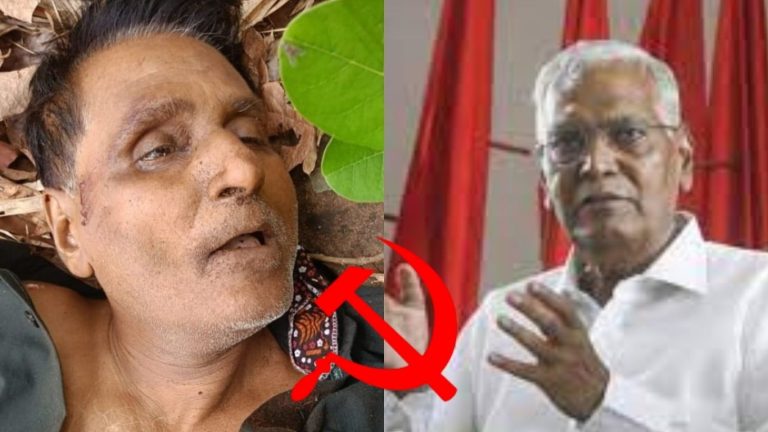
Karni Sena president Vinay Singh found dead in Jharkhand’s Jamshedpur, bullet injury, gun in left hand: What we know so far

On 20th April, Jharkhand’s Rashtriya Rajput Karni Sena president, Vinay Kumar Singh, was found dead in the Baliguma locality near the Mini Punjab Hotel in Jamshedpur. The 46-year-old Singh had a bullet wound to his head and a country-made pistol in his left hand when the body was discovered. Notably, he was reported missing by his family on 19th April. Police recovered the body using mobile location tracking.

According to the police, Singh left his home on 19th April and was untraceable throughout the day. The distress led to a missing person complaint, eventually leading the police to the crime scene. His motorcycle was also recovered from the scene. Deputy Superintendent of Police, Bachan Deo Kujur, said that the matter is under investigation.

Murder on highway while returning home

Media reports suggest that Singh was returning home with a few associates when unidentified gunmen opened fire near a hotel along National Highway-33. The attack resulted in his immediate death. A manhunt has been launched by the police to apprehend the culprits. The police are examining CCTV footage and call records.

Apart from the gunshot wound, there were several injury marks on his hands and legs. Eyewitnesses stated that after police reached the spot, the body was kept on the road for around two hours as no ambulance was available.

The news of Singh’s death quickly spread across Jamshedpur and neighbouring areas. Karni Sena supporters rushed to the crime scene. The delay in ambulance arrival fuelled anger among his supporters present at the scene, who protested against the police. They also prevented the body from being moved without proper arrangements.

The protests continued till late into the night. The supporters demanded the immediate arrest of the culprits. Eventually, at around midnight, an ambulance arrived and the body was shifted to MGM Hospital. During that time, traffic came to a complete standstill on NH-33 due to the massive congestion caused by the protesters. At around 1 am, the Rural Superintendent of Police arrived at the site and assured the supporters that there would be swift action in the matter, after which the blockade was lifted.

Billa Pathak connection under scanner

Media reports have indicated that Singh had recently got close to Govindpur-based gangster Billa Pathak, which might have possibly triggered the attack. It is being suspected that the rivals of the Mashooq Manish group might be behind the murder. Notably, Singh had been under surveillance for over a month, and he was reportedly aware of it. However, whether the rival gang is involved remains under investigation.

SIT formed, Karni Sena threatens shutdown

Police have classified the incident as a planned assassination and formed a Special Investigation Team (SIT) to investigate all possible angles. Leaders from Karni Sena have issued a 48-hour ultimatum, demanding the immediate arrest of the culprits. They said that if police failed to apprehend the culprits within 48 hours, it would result in a state-wide Jharkhand bandh and intensified protests.

Police have not issued any statement confirming the motive behind the murder. Several angles, including political enmity and personal rivalries, are being probed.

US: Former law firm partner of pro-Khalistani Harmeet Dhillon dogwhistles against Indian-orign FBI special agent for arresting terrorist

On Saturday (19th April), the former law firm partner of pro-Khalistani Harmeet Dhillon, the assistant attorney general in charge of civil rights in the US Department of Justice, was seen dog-whistling against an Indian-origin FBI special agent.

The development came two days after the FBI field office in Sacramento arrested a terrorist named Harpeet Singh, who was responsible for carrying out attacks in the Punjab State of India.

“Linked to two international terrorist groups, he entered the U.S. illegally and used burner phones to evade capture,” tweeted FBI Sacramento on Thursday (17th April).

John-Paul S Deol is a partner at Dhillon Law Group Inc., which was founded by pro-Khalistani Harmeet Dhillon in 2006. Dhillon left the firm in 2025 after being appointed the assistant attorney general in charge of civil rights in the US Department of Justice by Donald Trump.

Deol, the now ex-partner of Harmeet Dhillon, was seen dog-whistling against Indian-origin Siddhartha Patel, the Special Agent in Charge of the FBI Sacramento Field Office.

Given that the particular FBI office had arrested a Khalistani terrorist (Harpeet Singh in this case), Deol was insinuating that it must be the handiwork of an Indian-origin FBI agent supposedly working for Indian interests against Khalistani cause.

Screengrab of the now-deleted tweet of John-Paul S Deol

“Accha? (Okay),” he tweeted alongside a picture of Patel. Deol thus shrewdly painted a target on the head of the Indian-origin FBI agent by unleashing pro-Khalistani extremists on his way.

After being called out for his dog-whistling (here and here), the former partner of Harmeet Dhillon quietly deleted his tweet.

Deol later tried to rationalise his actions by claiming that FBI Sacramento itself has posted about its special agent.


Screengrab of the tweet of John-Paul S Deol

“Someone, quick, advise the FBI that they posted the name and picture of their Special Agent in Charge and that it’s been out there for a year,” he tweeted.

Appointment of Harmeet Dhillon in Trump 2.0 cabinet

Harmeet K. Dhillon had long been accused of being a terror sympathiser and harbouring Khalistani sentiments—an extremist ideology that uses violence as a tool to push its objectives and calls for the secession of the Punjab state from India and the establishment of an independent Sikh-majority Khalistan.

Nothing corroborates her pro-Khalistan bent more starkly than her stance on the Khalistani Hardeep Singh Nijjar’s killing.

In March 2024, she quoted The Economist report on how Indian migrants were helping PM Narendra Modi in campaigning at home and lobbying for India abroad.

Quoting the report, Dhillon repeated the baseless accusations that the Indian government is assassinating critics in the diaspora.

Maharashtra: Wadala Police stop Ram Navami procession, detain 30, Hindus say permission was repeatedly denied

On 20th April, a tense standoff occurred between Hindus and the Wadala police over a Ram Navami procession. The situation escalated and there were allegations of the police using excessive force. Around 30 attendees of the procession were detained by the police. However, later the procession was allowed to proceed. The incident occurred as the Hindu organisations had reportedly tried to take out the procession even after permission was denied by the police.

The procession was organised by Vishwa Hindu Parishad (VHP) and its associated organisations. It began from Shri Bhole Mandir and proceeded to Hanuman Tekdi Mandir in Wadala. Deputy Commissioner of Police (DCP) Mohit Garg stated that there was permission for the procession to be taken out on 6th April, the day of Ram Navami. However, no fresh approval was granted to the Hindu groups for the 20th April procession.

Despite the lack of permission, Hindu activists gathered in large numbers and tried to take out the procession, leading to police intervention. While the organisers accused the police of using a lathi-charge against them, the police denied the allegations.

‘Permission was denied at the last minute’

VHP activists stated that the rally had been planned well in advance and that they had sought formal permission via proper channels. However, they said that clearance was withheld at the eleventh hour without proper justification, which led to hundreds of Hindu activists gathering regardless.

Several videos of the incident went viral on social media, where Hindu activists were seen getting into a minor scuffle with the police who had come to stop the procession. At least six Hindu activists were reportedly injured.

Slogans, arrests and a sit-in

As the procession was stopped by the police, around a thousand Hindus gathered outside the Wadala police station and raised slogans of “Jai Shri Ram”. They demanded the release of detained attendees, as at least 30 of them were taken into custody for attempting to carry out the procession without approval. Among the detained were local leaders and activists of Hindu organisations like VHP and Bajrang Dal.

The sit-in protest continued for over an hour. They recited the Hanuman Chalisa and refused to disperse until their demands were heard. Minister Mangal Prabhat Lodha intervened and arrived at the police station to mediate.

Procession later allowed to proceed

After hours of negotiations, permission was granted to resume the procession. Over 1,000 Hindu devotees took part and the procession moved under heavy security without any further disruptions. Additional police force was deployed in Wadala to ensure peace.

Over 67,000 Pakistanis may miss Hajj this year due to delays and mismanagement, PKR 36 billion collected from pilgrims stuck in Saudi Arabia

0

Around 67,000 Pakistani pilgrims may miss the Hajj this year due to delays and mismanagement by private tour operators, ARY News reported, citing sources.

According to sources, the crisis has also left PKR 36 billion, collected from pilgrims, stuck in Saudi Arabia, with the Saudi government reportedly refusing refunds and instead offering to adjust the funds for next year’s pilgrimage.

According to ARY News, the delay in approving Pakistan’s Hajj Policy 2025 prevented private operators from submitting applications on time. However, the funds were transferred to Saudi Arabia, and insufficient time and failure to coordinate timely arrangements with Saudi authorities led to incomplete preparations.

Further, the sources noted that the lack of prompt communication and coordination with the Saudi government further exacerbated the issues.

The Ministry of Religious Affairs reported that some private companies obtained court injunctions, which stalled the allocation of the private Hajj quota. As a result, only 23,620 pilgrims will be able to perform Hajj 2025 under the private scheme, a significant drop from the usual 90,000 Pakistanis who undertake the pilgrimage annually through private operators.

Notably, the Ministry of Religious Affairs has issued guidelines regarding the Private Hajj Scheme 2025, urging all approved Hajj operators to ensure visa issuance by April 18, as per ARY News.

The Ministry of Religious Affairs has asked that private Hajj operators submit copies of their service agreements in accordance with the newly allocated quota. The ministry has also published an updated list of authorised operators on its official website and the Pak Hajj mobile app.

Pilgrims can now check the status of their applications and the services offered by operators through these platforms. To ensure a smooth experience, private pilgrims are advised to use the Pak Hajj 2025 mobile app for real-time updates and service tracking.


(This news report is published from a syndicated feed. Except for the headline, the content has not been written or edited by OpIndia staff)

While Rahul Gandhi called IUML ‘secular’, the offshoot of Jinnah’s Muslim League calls itself “a political entity dedicated to safeguarding Muslim rights” in petition challenging Waqf Act

The enactment of the Waqf Act by the Parliament has stirred up countrywide protests by Muslims who are calling the Act a violation of and intrusion into their religious rights. A slew of petitions have been filed by various Muslim organisations and political parties before the Supreme Court challenging the Act. The Indian Union Muslim League (IUML), popularly known as the Muslim League, is also one of the petitioners before the Apex Court. Notably, the IUML was also the principal petitioner in the Supreme Court among the writ petitions contesting the CAA.

On page 3 of the writ petition, the first paragraph of the synopsis states, “The Indian Union Muslim League (IUML), a political entity dedicated to safeguarding Muslim rights, files this Public Interest Litigation under Article 32 to challenge the Waqf (Amendment) Act, 2025 (the “2025 Act”), as an unconstitutional assault on the religious autonomy and personal rights of the Muslim community in India”.

Moreover, on page 22 of the writ petition, it is mentioned, “Petitioner No.1 (IUML) has among its objectives to strive to preserve and promote and honour the religious and cultural identity of Muslims and other minorities and backwards communities of India, enriching national life and strengthening its secular and democratic foundations.”

When Rahul Gandhi called the IUML a “completely secular party”

Interestingly, the IUML, which Congress leader Rahul Gandhi once boasted of as a ‘secular party’, has described itself as “a political entity dedicated to safeguarding Muslim rights” in its petition filed before the Supreme Court. During his visit to the US in June 2023, an interviewer asked Gandhi why Congress was in alliance with a Muslim party (IUML) in Kerala when it opposes the ‘Hindu’ BJP. “You talked about secularism and democracy while opposing the Hindu party BJP, however, the Congress in Kerala has been in alliance with the Muslim party, the Muslim League in Kerala, the state from which you were an MP,” the interviewer asked. Responding to the question, Gandhi asserted that the Muslim League (IUML) was “a completely secular party”. “Muslim League is a completely secular party, there is nothing non-secular about the Muslim League. I think the person has not studied the Muslim League, “Gandhi said.

Pertinently, the IUML, which is an offshoot of the Muslim League that played a significant role in the partition of India, has links with Jammat-e-Islami and the Social Democratic Party of India (SDPI), both accused by the National Investigation Agency (NIA) of spreading radicalism in Kerala, Rahul Gandhi had called the IUML a ‘secular’ party.

The IUML and its “secular” identity

The IUML, which claims to have come into existence after 1948, is an offshoot of the All India Muslim League (AIML), a party founded by Pakistan’s founder and Islamist leader Mohammad Ali Jinnah. After partition, the AIML was succeeded by the Muslim League in Pakistan and the Indian Union Muslim League (IUML) in India. It is a known fact that the Muslim League openly demanded the establishment of a separate nation for Muslims, and their demand was fulfilled with the creation of Pakistan.

The formation of the IUML was a part of the plan to keep the spirit of the AIML alive. It is evident from the fact that the first president of the IUML, Muhammad Ismail, actively participated in the partition movement of the country and was an ardent supporter of the creation of Pakistan. Besides, Ismail, who on one hand claimed that the IUML was a secular outfit, supported the retention of Sharia law for Indian Muslims in the Constituent Assembly after independence. Not just that, Ismail went to bargain with the Congress to “recognise the League as the sole representative of Muslims” on the lines of Jinnah’s claim that AIML was the sole representative of the Muslims in undivided India.

The IUML is known for flaring up communal incidents in the state of Kerala. As per the report of the Justice Thomas P Joseph Commission, which was set up to investigate the 2003 Marad massacre in Kerala, the IUML was found involved in the planning as well as the execution of the brutal violence. The report had declared the massacre as “a clear communal conspiracy, with Muslim fundamentalist and terrorist organisations involved”. In 2017, the Central Bureau of Investigation (CBI) filed an FIR in connection with the Marad massacre, naming IUML leaders P.P. Moideen Koya and Moyeen Haji as accused of funding, conspiring and executing the riots

Clearly, in light of these facts, the claim of Rahul Gandhi, whose great-grandfather Jawaharlal Nehru had rejected Jinnah’s offer to form a coalition government with the Muslim League, that the IUML is a secular party does not hold water.

Madhya Pradesh: Doctor and Red Cross worker terminated for assaulting and dragging out 77-year-old man from Chattarpur Hospital, Superintendent suspended

After a video of a 77-year-old man being assaulted and dragged out of a govt hospital in Madhya Pradesh went viral on social media, the authorities have sacked two persons involved in the incident and suspended the superintendent of the hospital. The Public Health and Medical Education Department of Madhya Pradesh said that the services of Dr Rajesh Kumar Mishra have been terminated with immediate effect by the Mission Director, National Health Mission, while the services of Redcross worker Raghvendra Khare have been terminated by Indian Red Cross Society, District Chhatarpur (MP).

Additionally, Dr. G.L. Ahirwar, Civil Surgeon cum Chief Hospital Superintendent of the Chhatarpur District Hospital, has been suspended by the department. Orthopedic Specialist Dr Rajesh Kumar Mishra was employed with National Health Mission and posted as Contract Post Graduate Medical Officer at the hospital.

In the incident caught on cameras, 77-year-old Udhavlal Joshi was seen dragged out of the hospital by Dr Rajesh Mishra and Redcross worker Raghvendra Khare for allegedly jumping queue. The incident took place at around 11.30 AM on Thursday, when Joshi had arrived at the hospital along with his wife for her treatment.

As per reports, due to large number of patients, Joshi had to wait for a long time, and then requested Dr Joshi, who was attending to OPD patients at that time, to examine his wife sooner. This led to an argument, which led to the man being dragged out by the doctor and the worker.

Defending the assault, Dr Mishra alleged that the man had misbehaved with him and used curse words for him for the delay. He also claimed that the Joshi had slapped him.

On the other hand, Joshi denied jumping the queue. He said that had waited in the queue with a valid slip but was assaulted by the doctor when his turn came. However, Dr. GL Ahirwar, civil surgeon and superintendent of the hospital, claimed that Joshi had broken the queue.

Joshi later lodged an FIR against the duo. Dr. GL Ahirwar had said that action will be taken against the two for the assault, and termination proceedings will be initiated.

The termination order issued by the National Health Mission said that the act of Dr Mishra misbehaving with and assaulting Joshi was probed by authorities, and the allegations was found to be true. After that, a show cause notice was issued to the doctor. However, the reply to the notice was not acceptable.

After considering the reply to the notice, the video on social media, and the report submitted by the investigation committee, it was confirmed that Dr Rajesh Mishra assaulted elderly couple. The order states that the acts of the doctor falls in the category of misconduct as per provisions given in clause number 11.1 of the Human Resource Manual 2025 of the National Health Mission. Therefore, his service has been terminated with immediate effect.

Similarly, the order issued by the Indian Red Cross Society states the response of Raghavendra Khare to the show cause notice was not satisfactory. On the basis of the report of the investigation committee, he has been terminated from the job. They added that the act by Raghavendra Khare is extremely objectionable and unforgivable.

The state health dept has suspended hospital superintendent Dr. G.L. Ahirwar, saying that the incident shows that he does not have control over his sub-ordinates. The order states that Dr. Ahirwar proved incapable of discharging the responsibilities of Civil Surgeon cum Chief Hospital Superintendent, and therefore he is suspended with immediate effect under Rule 9 (1) of Madhya Pradesh Civil Services (Classification Control and Appeal) Rules, 1966.

During the period of suspension, Dr. Ahirwar will be placed under the Chief Medical and Health Officer, District Balaghat.

Talking about the incident, SP Agam Jain said that proceedings have begun against the doctor and the Red Cross worker, and a case has been registered under BNS sections 115(2), 296(3) and 351.

Newslaundry ropes in ‘journalist’ to downplay exodus of Hindus from Murshidabad, tries to shield Muslim mobs by claiming ‘provocation’: Here is the actual truth

On Saturday (19th April), leftist propaganda outlet Newslaundry roped in a ‘journalist’ to downplay the atrocities committed on the Hindu community in Murshidabad by violent Muslim mobs and the subsequent exodus of victims to the Malda district of West Bengal.

During the course of the podcast, the Newslaundry CEO, Abhinandan Sekhri, inquired about the exodus of the Hindu community from Murshidabad due to mob violence. “No, that’s a wrong view,” claimed Kolkata-based ‘journalist’ Nirmalya Mukherjee.

He then attempted to contextualise the violence against Hindus by alleging an invisible force of ‘provocation.’

“I am living with you. You live next door to me. Suddenly, one morning, I come up and I kill you. So, unless there is a provocation, this never happens with a certain interest. And that provocation could be a state provocation, could be an international provocation,” he brazened out.

To shield the violent Muslim mobs, Nirmalya Mukherjee further claimed, “The provocateurs are successful. They have been able to titillate these idiotic, foolish political parties who do play religious games for their own benefit.”

He thereafter attempted to blame the BJP during the course of discussion on Newslaundry. “In Bengal, this thing (violence) has emerged after BJP retained its almost 40% vote in two consecutive elections,” he alleged.

This is not the first time when Newslaundry had attempted to trivialise the mayhem unleashed by Muslim mobs in Murshidabad. OpIndia had previously reported how Newslaundry tried to shame news channels for covering the violence against Hindus.

The Truth about the Hindu exodus from Murshidabad

The Muslim-dominated Murshidabad district has witnessed large-scale incidents of violence, vandalism, arson and targeted attacks against the Hindu community on 11th April in the garb of protests against the newly enacted Waqf Amendment Act.

OpIndia has reported in detail how Hindus were selectively targeted, including their homes, shops and temples. The carnage began soon after Jumma Namaz on 11th April in the name of ‘protests’ against the new Waqf law and continued till 12th April.

The situation became so grim that 1000s of Hindus had to flee their homes in Dhuliyan in Murshidabad to the town of Par Lalpur in Kaliachak III subdivision of Malda district.

An elderly woman could be seen weeping and narrating how she left her hometown to save her life. “They (Muslim mobs) have burnt down everything”, another woman lamented. Hindu men and women alike could be seen breaking down in tears.

“Nothing happened to Muslim homes…Only Hindu houses were selectively set ablaze,” one woman informed. All the Hindu victims were reassured of their safety and security by the locals of Par Lalpur.

One Hindu woman said that bombs were being hurled in Murshidabad, prompting her to flee her home. Another woman said, “They told us that Modi passed the Bill (Waqf Amendment), and so we will not allow any Hindus to live here.”

“They (Muslims) are talking about raping mothers of Hindus, vandalising and looting our houses. They have taken away our gold ornaments and other valuable and set our houses on fire,” she pointed out.

“They have burnt every single Hindu house in the area. Muslims are supporting this arson. Our children are starving, women are being threatened with weapons, Muslims are committing atrocities.”

A middle-aged Hindu woman was heard saying in a viral video that Muslims have poisoned water tanks belonging to the Hindu community.

Screengrab of the video testimony of a Hindu victim

“We couldn’t drink water as it had been laced with poison,” she said. In the video, it could be seen that several Hindu women have escaped from Murshidabad with young kids, even infants as old as 6 days.

“We have come here with a lot of pain… We do not have a house or a roof over our heads. Everything has been set on fire. They (Muslims) doused our house with petrol, held a knife to our throats and poisoned our water tanks. How do we survive now,” a destitute woman who has now fled Murshidabad told ABP Ananda.

One Hindu man recounted how he returned home to find his house turned into ashes. “I couldn’t take out anything…I do not have anything anymore,” he said as he broke down in tears.

The Hindu man pointed out that the attackers are locals and that they have destroyed over 150 vehicles.

“They (Muslims) are committing unspeakable atrocities on us. They are setting homes on fire. The atrocities do not seem to have an end…We have nowhere to go,” a Hindu man, who fled to Malda, stated in a viral video.

A woman standing behind him narrated, “Our houses have been burnt. We have nothing left.”

Mamata Banerjee’s government has been unsuccessful in containing the escalating violence against the Hindu community.

Her appeasement politics have emboldened radical Muslims to the extent that they do not fear orchestrating violence, vandalism and arson against Hindus living in West Bengal.

Dehi: Nine people including main accused ‘Lady Don’ Zikra and two minors arrested for murder of Hindu boy in Seelampur

0

Nine people, including women and minors, have been held by the Delhi Police in connection with the murder of a 17-year-old boy in the Seelampur area.

According to Delhi Police, the main accused, ‘Lady Don’ Zikra, along with Sahil (18), Zahida (42), Nafish (32), Sohaib (35), Aneesh (19), Vikas (29) and two minors aged about 17 and 15 years, have been taken into custody.

Police teams from the North-East District carried out raids across Delhi-NCR, including Ghaziabad, Meerut, Moradabad, and Amroha in Uttar Pradesh. Based on technical surveillance, clues, and local inputs, the suspects were arrested on April 20.

During the investigation, evidence was collected against Zikra, Sahil, and two minors referred to as “Children in Conflict with Law” (CCLs). Police allege that these individuals planned the attack on the victim, Kunal.

The police said, “Relevant evidence was collected, which confirmed the involvement of the accused in this heinous crime during the probe.”

It was revealed that Sahil had an old rivalry with Kunal. On April 17, the group allegedly caught Kunal and stabbed him multiple times.

Giving more details, police said, “On April 17, at about 7:38 PM, information regarding the stabbing of a person in J-Block, Jhuggi Seelampur, was received at the Seelampur Police Station.”

When the police team reached the location, they found the victim had already been taken to JPC Hospital by his family, where doctors declared him dead.

The victim was identified as Kunal, a 17-year-old boy from the New Seelampur area in Delhi.

A case was registered at Seelampur Police Station under Sections 103(1)/3(5), and an investigation began. Given the seriousness of the case, the Operations Wing of North-East Delhi joined the Seelampur Police team. Multiple teams were formed to trace and arrest those involved.

Based on the evidence collected from different sources, the suspects were identified. Zikra, one of the key accused, was arrested on the evening of April 18.

On Saturday, Delhi’s Karkardooma Court remanded Zikra to two days of police custody in connection with the case. She will be produced before the court again on Monday after her police remand ends.

During questioning, Zikra told the police that her cousin Sahil was attacked in November last year by two boys named Lala and Shambhu, who were friends of Kunal. Kunal was also present at the time, but his name was not mentioned in the FIR because he was a minor.

Zikra and Sahil believed Kunal was responsible for that attack, and they carried out this act as “revenge.”

Delhi Chief Minister Rekha Gupta reacted to the incident and said, “I have spoken to the Police commissioner about the murder of a 17-year-old boy, Kunal. He was attacked with knives and was rushed to the Jai Prakash hospital, where he was pronounced dead on arrival.”

Following the murder, Kunal’s relatives and residents in Seelampur held protests demanding justice.


(This news report is published from a syndicated feed. Except for the headline, the content has not been written or edited by OpIndia staff)

Rahul Gandhi invokes Nehru’s legacy of truth and courage; forgets how Motilal Nehru pulled strings to get Jawaharlal out of Nabha prison, abandoned a freedom fighter

On 19th April, Congress MP Rahul Gandhi paid a personal tribute to his great-grandfather and first Prime Minister of India, Jawaharlal Nehru, via a podcast-style conversation with Congress leader Sandeep Dikshit. While doing so, he claimed that Nehru’s legacy lies not in politics but in giving the people of India the courage to confront fear and seek truth.

During the discussion, which was shared on multiple social media platforms, Gandhi talked about the values he believes he has inherited from Nehru. He said, “Nehru didn’t teach us politics – he taught us to confront fear and stand for the truth,” while describing the freedom struggle as rooted in truth, not just ideology.

Gandhi claimed that Nehru was a “seeker” who faced danger with a smile. He credited his grandmother, and former Prime Minister of India, Indira Gandhi, with stories that shaped his understanding of his lineage. He said, “My mother still watches birds in the garden. I do judo. These aren’t just hobbies – they reflect who we are.”

Speaking on the current political situation in the country, Gandhi said, “In today’s India – where truth is inconvenient – I’ve made my choice. I’ll stand for it. No matter the cost.” He further claimed that he believes leadership is about compassion, not control. He said, “Whether I speak to Bill Gates or Chetram Mochi, I meet them with the same curiosity,” while calling truth and courage the foundation of resistance, art, and science.

While his statements look glittery from the outside, the reality is different from what has been said about Nehru, especially when it comes to facing “fear” with “courage”.

How Motilal Nehru pulled strings to get Jawaharlal out of Nabha prison

According to the plaque at the Nabha jail site, Nehru was arrested along with K Santanam and AT Gidwani on September 22, 1923, for defying an order banning entry into the princely state of Nabha. He was awarded a jail term of 2 years. However, not being able to withstand the complexities, Nehru, only after two-weeks signed a bond, never to enter the princely state of Nabha again. Prof Chaman Lal, renowned chronicler of India’s freedom struggle and an ex-professor at Delhi’s Jawaharlal Nehru University (JNU) had confirmed that “Nehru was detained for a few hours in the Jaitu police cell, while he was kept for around two weeks in the Nabha jail.”

Prof Lal stated that compared to other jails where Nehru was kept, including Naini and Gorakhpur, he received ill-treatment at the hands of the police and jail authorities in Nabha. “Nehru was released from the Nabha jail only after he signed a bond that he would never enter the princely state again!” he said.

It is believed that Nehru’s father, Motilal Nehru, had even reached out to the Viceroy asking for a recommendation to get him released. K Santanam, a freedom fighter who was imprisoned with Nehru, in his famous memoir ‘Handcuffed with Jawaharlal’ had said: “Our imprisonment in the Nabha jail was not known to the outside world. Pandit Motilal Nehru got worried and tried to ascertain our whereabouts from various officials and non-officials in Punjab. Failing to get any reply, he approached the Viceroy himself who got the information from Nabha.”

“This took two to three days. The authorities of the Nabha jail suddenly changed their attitude and arrangements were made for our bathing. Our clothes were given to us and friends from outside were allowed to send fruits and other eatables,” Santanam had recalled.

In his autobiography, Nehru had himself mentioned that the atrocities, he and his colleagues, faced in Nabha Jail, prompted them to sign a bond of compliance with the British, to never enter the territory of Nabha, again.

“In Nabha Jail we were all three kept in a most unwholesome and unsanitary cell. It was small and damp, with a low ceiling which we could almost touch. At night we slept on the floor, and I would wake up with a start, full of horror, to find that a rat or a mouse had just passed over my face,” wrote Jawaharlal Nehru.

Jawaharlal Nehru had deserted his colleague Acharya Gidwani

When violence broke out on 21st February February, 1924 during which 19 Sikhs were officially believed to have been killed, Nehru’s aide Acharya Gidwani had visited Jaitu to help the wounded. He was in turn arrested by the Nabha State police and had to spend almost a year in jail, before he was released on health grounds. A shrewd Jawaharlal Nehru, who conceded that he did not want to relive his short jail term in Jaitu, deserted Gidwani and chose not to remain loyal to his colleague and visit Jaitu.

In his own words, the former Prime Minister recounted, “I took shelter behind the advice of friends and made of it as a pretext to cover my own weakness. For after all it was my own weakness and disinclination to go to Nabha Gaol again that kept me away, and I have always felt a little ashamed of thus deserting a colleague. As often with us all, discretion was preferred to valour.”

While the Congress party and its trolls have been busy shaming freedom fighter Veer Savarkar despite the torture and ill-treatment meted out to him, a ‘valiant’ Jawaharlal Nehru was quick to get his sentence suspended by signing a bond with the aide of his influential father.

Ironically, Nehru who buckled under mere two weeks pressure and deserted his colleague is branded as a great leader, freedom fighter and a nationalist by the Congress.

Canada: Over half a million people with Khalistan flags join Khalsa Day Vaisakhi Parade in Surrey, effigies of Modi, Shah and Jaishankar in jail paraded with call to arrest them

On 19th April, over 550,000 people took to the streets of Newton for the annual Khalsa Day Vaisakhi Parade in Surrey. It is one of the world’s largest Sikh religious gatherings. While the event was described as a celebration of Sikh unity and diversity, the display of Khalistan flags and anti-India visuals, including “Wanted” posters featuring Indian Prime Minister Narendra Modi, Home Minister Amit Shah, and External Affairs Minister S. Jaishankar, drew sharp criticism.

The procession began at Gurdwara Dashmesh Darbar and wound its way through the city with nearly two dozen floats. Despite its overt spiritual theme honouring the establishment of the Khalsa in 1699 by Guru Gobind Singh, it was marked by visible expressions of separatist sentiments.

Speaking to the media, spokesperson of the parade, Moninder Singh, called it a “beautiful expression of unity, diversity and shared joy”. He said, “The Surrey Nagar Kirtan is an opportunity for the Sikh community to share its history, practices, commitment to human rights and sovereignty.”

However, sovereignty for many at the event seemingly referred to the Khalistan movement. The attendees were seen waving Khalistan flags. There were visuals criticising the Government of India, including posters labelling PM Modi, HM Shah and EMA Jaishankar as wanted.

The parade also included a large trailer truck with a mock-up of a jail. Inside this ‘jail’, effigies of Prime Minister Narendra Modi, Home Minister Amit Shah, and Foreign Minister S Jaishankar were seen in orange jail uniforms. Beside the ‘jail’, posters calling for their arrest were displayed, calling them ‘enemies of Sikhs’ and accusing them of killing Khalistani terrorist Nijjar.

Another poster on the truck said ‘Balkanize India’, a call to break up India into several smaller territories. It also announced a ‘Khalistan Referendum’ at Vancouver on 1st November 2025.

The event, notably, took place just hours after a Vancouver Gurdwara was defaced by pro-Khalistani elements with anti-India and pro-Khalistan graffiti. There were chants of “Kill Modi Politics”, “Who killed Nijjar? Indian Government” and many such slogans raised during the parade. The Indian flag was desecrated during the parade as it was seen hanging behind the floats, touching the ground.

Federal NDP leader Jagmeet Singh and Conservative leader Pierre Poilievre attended the parade but failed to condemn the separatist sentiments on display. Several local MLAs, MPs and municipal representatives were also present.

Interestingly, Khalistani terrorist Santokh Singh Khela was also present at the parade and called for separating Punjab from India to form Khalistan during his speech at the stage. Terrorists including Hardeep Singh Nijjar and Kanishka bombing mastermind Talwinder Singh Parmar were celebrated at the parade.

The broader message of the event appeared politically charged. For the second year in a row, questions are being raised in India over the lack of condemnation by Canadian leaders of the Khalistani elements increasingly visible at such public events. In fact, just for the sake of votes, the Canadian politicians are sheltering anti-India, pro-Khalistani elements including terrorists.

The Khalsa Day Parade has been happening in Surrey since 1998. It has grown into the largest of its kind outside India. The recurring appearance of separatist propaganda has resulted in growing concerns in New Delhi over Canada’s inaction against anti-India rhetoric on its soil.