An IndiGo flight that encountered a violent hailstorm and turbulence on its route from Delhi to Srinagar on 21st May, was reportedly guided by the Indian Air Force (IAF) to a safe landing in Srinagar. A violent hailstorm hit the Delhi-NCR region and some other parts of northern India on Wednesday in which the IndiGo operating flight 6E 2142 got caught resulting in the flight experiencing a 8,500-feet-per-minute descent around four times.
According to NDTV, after facing the rough weather, the pilots made emergency contact with the northern command of the IAF seeking permission for a flight path deviation to avoid the storm. A path deviation would have required the flight to enter Pakistan’s air space briefly which has been shut for Indian aircrafts since 11th May amid the recent military escalations between India and Pakistan. However, Pakistani authorities refused permission for the aircraft to enter its airspace. Pak civil aviation authority’s NOTAM (Notice to Airmen) that specified that Pakistani airspace was “not available to Indian-registered aircraft and aircraft operated/owned/leased by Indian airlines/operators, including military flights”, was effective till midnight on 23rd May, which has been extended for a month.
The flight was assisted in coordinating a route diversion by contacting the Delhi ATC and passing contact frequencies for Lahore ATC for overflight weather diversion request. The pilots then contacted Lahore Air Traffic Control directly for clearance to briefly enter Pakistani airspace to avoid the storm. However, Lahore ATC denied their request.
Faced with with limited options and a thunderstorm growing violent, the pilots of the IndiGo flight first considered returning to Delhi but dropped the idea as by that time, the aircraft was in close proximity of the storm. Subsequently, the pilots moved towards Srinagar. “Once Lahore refused overflight clearance, and the aircraft proceeded towards Srinagar, the flight was subsequently professionally assisted till safe landing at Srinagar…” said an IAF source as quoted by NDTV.
After being hit by the thunderstorm, the aircraft experienced severe turbulence and malfunctions. The pilots somehow kept the aircraft stable till it was able to exit the storm. After this, the crew ticked a checklist and declared emergency and the aircraft was guided by the Srinagar ATC which assisted it to safe landing. However, the nose of the aircraft was significantly damaged in the thunderstorm.
A formal investigation is being carried out by the DGCA which has grounded the two pilots. The flight data and cockpit voice recordings are being assessed by technical teams from IndiGo.
As many as 427 Rohingya are feared dead in twin boat tragedies two weeks ago near the Myanmar coast. As per The UN High Commissioner for Refugees (UNHCR), if confirmed, this will be the deadliest tragedy at sea involving Rohingya refugees attempting to flee this year.
While details are not confirmed yet, the UNHCR said in a statement on Friday that two boats carrying around 514 Rohingya Muslims sunk in the sea, taking down majority of the passengers. One boat was carrying 267 people, around half of them were from the massive refugee camps in Cox’s Bazar in Bangladesh, while the rest were people fleeing persecution in the Rakhine State in Myanmar. This boat sank on 9th May, and only 66 out of the total 267 survived.
The second boat also carried refugees from Cox’s Bazar camps and Myanmar’s Rakhine, totalling 247 Rohingya Muslims. The second boat reportedly capsized on 10th May, with only 21 survivors. Therefore, it is feared that out of 514 people, only 87 people survived, leaving 427 dead.
It has been assumed that the boats could not face the strong winds, rainfall and rough seas, as the annual monsoon has arrived in the region. UNHCR said that the boats were travelling at a particularly dangerous time, reflecting the desperation of those making such journeys.
The statement said that a third boat carrying 188 Rohingya was intercepted leaving Myanmar on 14 May.
“The dire humanitarian situation, exacerbated by funding cuts, is having a devastating impact on the lives of Rohingya, with more and more resorting to dangerous journeys to seek safety, protection and a dignified life for themselves and their families,” said Hai Kyung Jun, Director of UNHCR’s Regional Bureau for Asia and the Pacific.
427 Rohingya people are reported dead in two tragic shipwrecks in the Indian Ocean —- a reminder of the desperate situation of discriminated Rohingya communities in Myanmar, and of the hardship faced by refugees in Bangladesh as humanitarian aid dwindles. https://t.co/d28u4Cv8Vl
In a post on X, UNHCR High Commissioner Filippo Grandi said, “427 Rohingya people are reported dead in two tragic shipwrecks in the Indian Ocean —- a reminder of the desperate situation of discriminated Rohingya communities in Myanmar, and of the hardship faced by refugees in Bangladesh as humanitarian aid dwindles.” UNHCR said that it requires $383.1 million in 2025 to stabilize the lives of refugees and their host communities across Bangladesh, India, Indonesia, Malaysia, Thailand and those displaced inside Myanmar. So far, only 30 per cent of this amount has been received, the statement added.
During the inauguration of the ‘Rising North East Investors Summit’ on Friday (23rd May), PM Modi reiterated his government’s zero tolerance policy towards terrorism and Naxalism in the country. Over the last 10 years, the Modi government has dealt with the menace of Naxalism with an iron hand by adopting a multi-pronged strategy which includes aggressive military operations to eliminate Naxal terrorism as well as development efforts to integrate the Left-wing extremism (LWE) affected areas and people into the mainstream as per the National Policy and Action Plan launched in 2015.
The government has been working on strengthening security as well as civil infrastructure in the Naxal-affected areas by setting up security camps, enabling development projects and launching initiatives like Bastar Olympics housing.
Operation Kagar: last nail in the coffin of Maoist terror
Reintegration of Naxalism-affected people is not possible without eliminating the threat they face from the Naxal terrorists who use the locals to shoot their guns off their shoulders. The Modi government has resolved to uproot Naxalism from the country by March 2026. To achieve this end, the government adopted an aggressive military approach to counter Naxal terrorism which entered its last phase thanks to Operation Kagar.
Operation Kagar was launched by the government in January 2024 to eradicate Naxalism in Chhattisgarh, Maharashtra (Gadchiroli), Odisha, Jharkhand, Madhya Pradesh and Telangana as well as installing new camps as part of the military offensive by security forces. Under the operation, around 1 lakh para-military troops, including the Central Reserve Police Force (CRPF), its elite CoBRA units, District Reserve Guards DRG), and state police, equipped with modern technology, have been deployed in the left-wing terrorism affected areas to completely uproot the naxal terrorism from its last remaining strongholds. Since the inception of the operation, the security forces have eliminated over 400 naxal terrorists so far while more than 800 Maoists have surrendered.
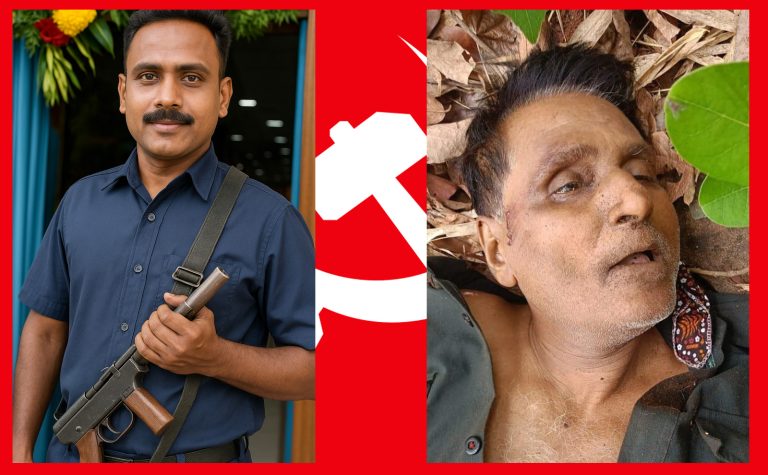
Two days agao, in a major breakthrough, the security forces neutralised the elusive Maoist commander Nambala Keshav Rao alias Basavaraju along with 26 naxals in a fierce gunbattle in Abujhmad area of the Narayanpur district of Chhattisgarh.
Significant decrease in Naxal-affected areas
The governmemt’s zero tolerance policy, along with an aggressive military approach, has bore significant results with the Maoist violence going down by 77% between 2010 to 2021. There has been considerable decrease in the incidents of violence from 2258 incidents in 2009 to 509 incidents in 2021. The number of naxal-affected districts has also reduced over the past 10 years from 106 districts in 2015 to 6 districts (Bijapur, Kanker, Narayanpur, and Sukma in Chhattisgarh, West Singhbhum in Jharkhand and Gadhchiroli in Maharashtra). Additionally, the deaths resulting from Maoist terror have reduced by 90%.
The number of Naxalites killed in encounters has increased from 63 to 2089. In 2024, 928 Naxalites surrendered, and so far, 718 have surrendered in the first four months of 2025. From 2019 to 2025, the central forces, in collaboration with state police, have established a total of 320 camps in Naxal-affected states, including 68 night-landing helipads. The number of fortified police stations, which was 66 in 2014, has now increased to 555.
Speaking in the Pariliament in March, Union Home Minister Amit Shah said that Parliament that Naxalism will be eradicated from the country by March 31st, 2026. He stated that between 2004 and 2014, 16,463 violent incidents were registered , but in the last ten years, this number has gone down by 53 per cent. The deaths of security personnel have also reduced by 73% in the past 10 years.
Depleting Naxal leadership and the approaching end of Maoist terrorism
With the Naxal leadership being wiped out steadily by the security forces, the Naxal movement is now staring at its inevitable end. The recent killing of Maoist leader Basavaraju, who used to walk around with a multi-layer security cover of about 60-70 armed naxals, demonstrates the enhanced accuracy of the security forces in carrying out recent anti-naxal operations. This is surely going to hit the morale of the depleting Maoist cadre
The significance of this achievement of the government and the security forces in their decades-old fight against Maoist terror is underlined by the statement of RK Vij, a former DGP, who played a key role in the formation of District Reserve Guard (DRG) unit of Chhattisgarh Police in 2015.
“This was no ordinary kill. Basavaraju, an engineering dropout from Andhra Pradesh, was not just a guerrilla commander. He was the ideological and military head of India’s most potent insurgent force. He succeeded Ganapathy in 2018 and brought a militant edge to the party, shifting focus from political mobilisation to aggressive militarisation,” said Vij.”The neutralisation of such a heavily guarded general secretary, surrounded by 60-70 armed cadres, shows how deep our intelligence has gone. More importantly, it will shake their cadre’s confidence to the core. You will see a rise in surrenders.” he added.
Basavaraju not only oversaw combact activities of the Maoist cadre but also provided ideological direction. After him, the Maoist cadre reportedly has two contenders, Devji and Venugopal Rao to take his place.
Devji has served as a field commander after receiving training in the early 1990s. He played a key role in launching the first armed platoon of the People’s Liberation Guerrilla Army (PLGA), the armed wing of the CPI(Maoist), and led the 2007 attack on Geedam police station in Dantewada which strengthened his military reputation among his cadre. He currently heads the Central Military Commission (CMC), the highest operational command of the PLGA. Basavaraju also held the position before becoming the general secretary of the CPI(Maoist). While Devji has proven combat abilities, he lacks ideological finesse.
According to former DGP Vij, “Devji is not just a field operative, he is a strategist. He understands terrain, troop movement and morale. His elevation to the General Secretary post would signal a return to militant hard-lining.”
Venugopal Rao alias Bhupathy, on the other hand, has the reputation of a seasoned Central Committee member. His journey with the Maoist movement started in 1994 with the formation of the Dandakaranya Special Zonal Committee (DSZC) in which he was appointed as the first General Secretary. A native of Andhra Pradesh, Venugopal has fluency in Telugu, Gondi and Hindi, which provide him an edge in communication in tribal belts. At present, he heads the central bureau, which oversees Maoist operations across Chhattisgarh, North Telangana, parts of Maharashtra and Odisha.
“He knows the geography, culture and conflict points of central India like the back of his hand. His political sharpness and combat credibility make him a strong contender,” Vij said. Unlike Devji, Venugopal is good at building political census, managing local recruitment and negotiating the regional dynamics.
With shrinking Maoist stronghold due to agressive anti-naxal operations of the security forces, it remains to be seen how long before the Naxal movement cedes the ground.
General Secretary of CPI (Maoists) Basavaraju, who was neutralised by security forces at Abujhmad area in insurgency-hit Narayanpur district, had received training in targeting security forces from the LTTE.
After the elimination of the top naxal leader, the banned organisation suffered a major dent in terms of technical know-how as well as military power.
Responding to the query of ANI about Basvaraju obtained training from LTTE, Bastar Range Inspector General of Police (IG) Sundarraj P said that the outlawed organisation has separate groups like insurgency groups and militant groups to execute incidents like IED blasts, ambushes and attacks on camps of security forces.
There were multiple inputs received (in past) that they (referring to the naxal organisation) had taken training from the LTTE, said the IG, adding that they had taken training from a foreign organisation and also exchanged technical know-how.
He further said that since Basvaraju was the general Secretary of CPI (Maoists) and held the responsibility of the Central military commission, he directly or indirectly had a role in the military action that took place in past. After the death of Basvaraju we can say that the banned organisation had suffered major dent in terms of technical knowhow and the military power will also face a major decline.
Bastar IG said that the naxal organisation has been directionless and has not seen any face who can revive the outfit.
“After Ramanna, the Secretary of DKSZC, died, no one was officially nominated as Secretary. Even after five to six years, the banned organisation failed to develop any new leadership. The existing leadership is around 70 years old. They did not have leadership at the next level because the organisation failed to attract youth due to its destructive actions,” he further added.
“We believe that the banned organisation did not require any general secretary because it will be eliminated soon. The organisation, heading towards its end, did not require any Secretary and General Secretary,” said Sundarraj.
Speaking about the status of PLGA-1 and Hidma, the officer said that effective campaigns were carried out against the PLGA battalion-1 in the south and west of Bastar. Be it Hidma, Barsa Deva of PLGA battalion-1, or any company Commanders and cadres, they have only one option left: shun the path of violence and surrender. Otherwise, they are going to meet their fate like other senior cadres.
In 2024 and 2025, naxal organisation has suffered serious damage and the entire organisation is on the backfoot, said Sundarraj, adding that the number of cadres also declined significantly. The areas of their dominance are also shrinking.
“We hope that naxal problems will be resolved soon, peace will be established, and developmental works will gain momentum”, said Sundarraj.
Speaking about the chronology of the encounter, the IG said that we cannot divulge the details of operations due to preventive measures. Still, the intelligence-based operations in the last two to three years led to fruitful results.
In 2024, the bodies of six state-level committee members and PLGA members were recovered. Similarly, a central commitee member and general Secretary of CPI (Maoists), along with another cadre, were recovered after Narayanpur encounter in 2025.
Sundarraj said, “In this encounter, separate teams of DRG were mobilised from two to three launchpads, acting on precise intelligence inputs.”
The officer elaborated that the terrain was tough and challenging due to hills and dense forest. Overcoming all the challenges, the security personnel acted tactfully so that their location would not be revealed to the Naxals. Security personnel successfully met out the challenge in the form of IEDs planted by naxals, reached the spot and surrounded the cadres of the banned organisation. Keeping their damage very minimum, the personnel cause significant damage to insurgents.
Notably, 27 naxals, including Basvaraju, were killed in an encounter with the DRG at the dense forest of Abujhmad in Narayanpur district of Chhattisgarh on May 21. Search carried out by security personnel at the spot of encounter site resulted in recovery of firearms including AK-47 rifles, SLRs, Insas, carbines and others.
(This news report is published from a syndicated feed. Except for the headline, the content has not been written or edited by OpIndia staff)
On Thursday (22nd May), a Muslim mob carried out arson attacks on Hindu homes in Dahar Mashihati village in Abhaynagar upazila in Jessore district of Bangladesh.
The development was confirmed in a report (archive) published by Bangladeshi daily Prothom Alo.
The incident occured soon after the killing of a 50-year-old Krishak Dal leader Tariqul Islam over the ownership dispute of a fish enclosure. Islam was shot and hacked to death.
#Bangladesh ?? | On the night of 22.05.2025, Islamist mobs attacked Hindus in Moshiyahati village, #Jessore (Abhaynagar Upazila).
Houses were vandalized, looted, and set on fire. everything of value was taken.
— Voice of Bangladeshi Hindus ?? (@VHindus71) May 23, 2025
Thereafter, a mob of Muslim extremists set fire to more than 20 Hindu homes in the Dahar Mashihati village. They vandalised 4 shops and set 2 others on fire. More than 10 people were injured in the targeted attacks.
It has come to light that Tariqul Islam had an ongoing dispute with one Piltu Biswas over a parcel of land, the lease of which had expired. Both Islam and Biswas wanted the piece of land. The Krishak Dal leader wanted to farm fish and build an enclosure.
Following the murder of Tariqul Islam, Muslim mob ambushed Hindu homes in the village and set their houses and shops on fire. Visuals of destroyed homes belonging the persecuted minority community have now surfaced on social media.
?Jessore, Bangladesh
Hindu colony of Abhaynagar sub-district was burned down at yesterday night.
Even Fire Service officials were restricted from entering by local Islamic extremists. pic.twitter.com/pe3tlQuW4m
When a journalist from Prothom Alo went to the Dahar Mashihati village, he found that all Hindu homes and their belongings were turned to ashes. The journalist reported the destruction of 6 vehicles (one van, 5 bikes) in the arson attack.
He added that all male members of the houses had fled the area fearing their safety. Some Hindu women had remained behind. Most of the victims belonged to the Matua community.
One victim told Prothom Alo that a mob of 4-5 extremists first attacked their house. The attackers were then joined by over 150 people. The victim informed that the mob vandalised their houses, looted all belongings and set them ablaze.
Raw photos of vandalized sites. The victim villagers are all of Hindu matua sect. 31 cows hav bin stolen, stores vandalized, n set everythin on fire in the Hindu village. Jhsts killed a local Farmer leader, but they attacked Hindus when Hindus gathered for religious festival. pic.twitter.com/jgmnLO0km8
— The Hindu Ladka ?? (@LadkaTheHindu) May 23, 2025
A 25-year-old Hindu youth named Sagar Biswas was also abducted by Muslim extremists. The police, army officers and fire service personnel came only after two hours of the carnage.
A Hindu woman named Panna Biswas stated, “There was a TV, fridge, gold coins, passport, prescriptions for medicines, 1.5 lakh Tk cash in the house. Now there is nothing left in the house.”
Another victim named Smriti Biswas informed, “First, the mob broke into the house and then looted gold and money. Then, they thrashed me mercilessly and kicked me to the ground.”
News of anti-Hindu violence is coming from the #Jessore district of #Bangladesh.
Yesterday night(22-05-2025), Islamists attacked Hindu minorities in the #Moshiyahati village under #Abhaynagar Upazila.
In the meantime, the Hindu youth Sagar Biswas was rescued. A large team of police and army personnel were deployed to bring the law and order under control.
Attack on Hindus in Bangladesh since the ouster of Sheikh Hasina
OpIndia has been vetting and reporting cases of atrocities on Hindus since the ouster of Sheikh Hasina on 5th August 2024.
There have been at least 205 attacks on Hindu temples, shops and businesses within 3 days of the fall of Dhaka.
We previously exposed how Muslim students have forced as many as 60 Hindu teachers, professors and government officials to resign from their positions.
Human rights activist and exiled Bangladeshi blogger, Asad Noor, has recently revealed that the minority community is now being coerced into joining ‘Jamaat-e-Islami’.
On 6th September, a procession of Hindu devotees carrying the idol of Lord Ganesha came under attack in the Kadam Mubarak area in Chittagong city of Bangladesh.
Ahead of the Durga Puja celebrations, a radical Muslim man named Yasin Mia vandalised the idols of Goddess Durga and other Hindu deities in Gouripur town in the Mymensingh district of Bangladesh on 25th September.
In the latest series of attacks, idols of Goddess Durga and other Hindu deities were vandalised at the Rishipara Barwari Puja Mandap and the Manikadi Palpara Barwari Pujamandap on 28th September and 1st October respectively.
The attacks were carried out in Sujanagar upazila in Pabna district in Rajshahi Division of Bangladesh. While a total of 4 idols were defaced at the Rishipara Barwari Puja Mandap, another 5 Hindu idols were destroyed at the Manikadi Palpara Barwari Pujamandap.
On 3rd October, 7 idols of Hindu deities were destroyed at the Gopinath Jiur Akhara Durga Puja mandap in Kishoreganj, Dhaka Division, Bangladesh.
On 5th November, the Hindu community came under attack from police and law enforcement authorities in Hazari Goli in Chittagong city of Bangladesh.
On 29th November, a violent Muslim mob attacked Hindu minorities and vandalised 3 temples in Patharghata in Chittagong district of Bangladesh.
The Hindu religious sites that the Muslims targeted included the Shantaneshwari Matri Temple, the Shoni Temple, and Shantaneshwari Kalibari Temple. The attack took place immediately after the conclusion of Jumma Namaz.
On 30th November, a prominent Hindu journalist named Munni Saha was arrested by the police from Karwan Bazar in Dhaka city of Bangladesh.
A group of extremists attacked the Mahashmashan Kali Mata Mandir, vandalised 7 idols of deities and stole gold ornaments on 13th December 2024.
On 19th December, a Muslim man identified as Alal Uddin vandalised an idol at the Polashkanda Kali Temple and then attempted to create a fake alibi. The incident occurred in Haluaghat upazila in the Mymensingh district of Bangladesh.
Another 37-year-old Muslim man identified as Azharul vandalised several idols of deities in Haluaghat Upazila in the Mymensingh district of Bangladesh.
The recent arrest of Chinmoy Krishna Das Prabhu and his aides, attempts at banning Hindu organisation ISKCON and stiffling Hindu protests with cases of ‘sedition’ highlight systematic persecution under the interim government of Muhammad Yunus.
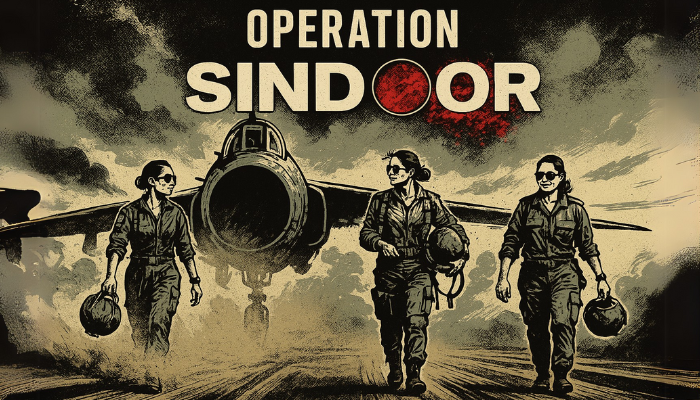
Over 200 terrorists and Pakistani military personnel were killed in India’s bold and meticulously planned military campaign, Operation Sindoor. The campaign was launched by the armed forces in response to the deadly 22nd April Pahalgam terrorist attack in Jammu and Kashmir that claimed the lives of 26 innocent Hindu tourists.
According to an exclusive report by CNN News18, top defence sources said that at least 42 Pakistani soldiers and 170 terrorists were neutralised in the strikes that were initiated by Indian armed forces targeting the terrorist bases and Pakistani airbases across Pakistan and Pakistan-occupied Jammu and Kashmir (PoJK). Notably, women pilots of Indian Air Force played a crucial role in the operation.
Indian women pilots play historic role
Operation Sindoor was first-of-its-kind as several Indian women pilots played active combat roles. It became a landmark moment not just in military terms but in gender inclusion within the armed forces. These women were part of precision air missions that destroyed nine terrorist bases on 7th May, including the Jaish-e-Mohammad base in Bahawalpur where several of the family members of terrorist Maulana Masood Azhar were killed.
After that, 9th and 10th May strikes on Pakistan’s airbases in Sargodha, Rahim Yar Khan and the strategic Nur Khan base demolished the Pakistani infrastructure to a large extent. According to News18 sources, the operation was an outcome of years of military readiness post the Doklam standoff in 2017.
Operation paused, not ended
Despite the success, officials have categorically noted that Operation Sindoor is only “paused, not over”. India remains on high alert, anticipating possible retaliation. According to sources, “Pakistan has been humiliated. We expect them to try something. All forces are on alert.”
Notably, General Asim Munir of the Pakistani Army has been promoted to Field Marshal after his failure in leading the Pakistan Army during Indian operation. Indian officials have called it a “face-saving” move.
PM Modi’s powerful address – ‘They tried to erase our sindoor. We turned them to dust’
On 22nd May, Prime Minister Narendra Modi confirmed that India had struck back hard to take revenge for the Pahalgam terrorist attack. He hailed the armed forces and unveiled what he called a “new doctrine” of Indian security – swift, unrelenting, and unapologetic retaliation.
He declared, “Our forces have created a chakravyuh that has brought Pakistan to its knees.” He added, “Rahim Khar air base is now in the ICU,” while referring to Pakistan’s failed strike attempt on India’s Nal airbase.
Ending on a warning, he asserted, “If you attack India, you’ll face fire. And nuclear threats don’t scare us anymore.”
The inquiry into the espionage case concerning the popular YouTuber and vlogger Jyoti Malhotra from Hisar has been disclosing alarming details consistently. According to the reports, Ehsan-ur-Rahim, also known as Danish, expelled staffer of the Pakistan High Commission, attempted to cultivate over two dozen people in the capital who had either filed for a visa to Pakistan or were related to the applicants.
Notably, the conspiracy extended far deeper than it initially appeared. A special branch officer indicated that the Delhi Police launched a preliminary probe in response to information from the Pakistan desk of the police’s intelligence branch that raised concerns. An investigation by Delhi Police unveiled that Danish was an inspector-rank officer with Pakistan’s notorious Inter-Services Intelligence (ISI) rather than a visa officer as the high commission had stated.
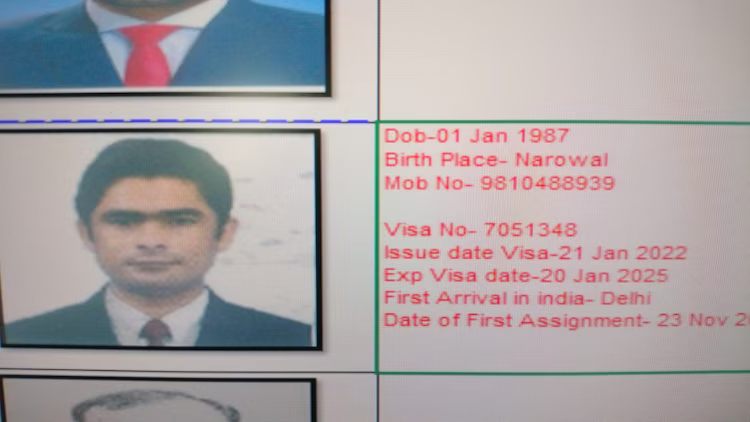
“He was reporting to a senior ISI officer named Shoaib and was tasked with arranging Indian SIM cards, besides recruiting influencers. Danish’s passport was issued at Islamabad, and he was granted a visa for India on 21st January 2022. According to documents, Danish was born in Narowal in Pakistan’s Punjab province,” according to a source, reported The Times of India.
Image via India Today
Danish was banned from India on 13th May after it was revealed that he assisted in hiring and supervising Indian nationals who were assigned to collect confidential data and spread pro-Pakistan sentiments on the internet. He was in contact with Jyoti Malhotra who was arrested from the New Aggarsain Extension on 16th May.
She ran her YouTube channel “Travel with JO” and went to Bangladesh, China, Pakistan and a few more places. She has around 4 lakh subscribers on the platform and 1,32,000 followers on Instagram.
According to authorities, Jyoti Malhotra was charged under sections of the Bhartiya Nyay Sanhita and the Official Secrets Act. She is currently being held by the Haryana Police and her custody extended by four days on 22nd May. Her laptop and three cell phones have been transferred for forensic analysis by the police.
Her four bank accounts are also under probe. The nature of the intelligence she shared with the Pakistani operatives is being looked into by agencies. She was questioned by representatives of the Intelligence Bureau, the National Investigation Agency and military intelligence. They are also examining her travel itinerary and business dealings.
Ties between Jyoti and Danish
Danish received a visa for India on 21st January 2022 and his passport was issued from Islamabad. He was born in Narowal, in the Punjab province of Pakistan, according to a report in India Today. Security organizations are currently investigating if Danish was his true name or an ISI-provided code name.
According to sources, he worked at the Pakistan High Commission’s visa desk in Delhi but his true duties included espionage and laying traps for Pakistani spies. Jyoti Malhotra was being swiftly developed as an intelligence asset by him. The YouTuber admitted to security agencies that she first spoke with him in 2023 while applying for a visa at the Pakistan High Commission.
She took his number and they stayed in touch. She had been in constant communication with him ever since. He assisted her in obtaining an extension for her Pakistani visa, organized place for her to stay and facilitated introductions to various intelligence operatives,
The vlogger added that she met Ali Hassan, Danish’s contact in Pakistan, who made travel and lodging arrangements for her. Shakir and Rana Shahbaz, two intelligence officials were introduced to her by the former. She reportedly met them in Lahore and saved Shakir’s phone number as “Jatt Randhawa.”
Shakir targeted Indians, particularly YouTubers, in search of financial gain or travel chances. He changed his name three times in a single year – Walton, Mehr Shakir and Shakir Date. Following Jyoti Malhotra’s arrest, his WhatsApp business account was deleted. He also uses a Saudi number. He made two Facebook pages to connect with Indian vloggers and he has several Indians on his friend list.
In a further twist of events, a United Arab Emirates (UAE) company is now under the lense, adding another layer to the case. According to sources, the sponsorship that Jyoti Malhotra received from a travel firm based in the United Arab Emirates is of special interest to the investigative authorities. The company Wego, which is also licensed to operate in Pakistan has sponsored several of her videos.
It is a travel firm licensed to operate in Pakistan and has operations in Singapore and Dubai. The International Air Transport Association (IATA) has also granted it accreditation. Although there isn’t evidence that Wego is sponsoring Pakistan, the company’s activities there have prompted suspicions.
Pakistan’s spy-ring in India
Jyoti Malhotra is among multiple Pakistani spies recently apprehended following “Operation Sindoor” which occurred in the aftermath of the Pahalgam terror attack. The startling revelations following the development and the Islamic Republic’s strategy to destabilize India from within might come as a shock or surprise, however, the country has been previously exposed for using similar tactics.
According to reports, Pakistani officials screened people like job applicants and sought signs of monetary need, enthusiasm in traveling to Pakistan and financial desperation. Jyoti Malhotra was a YouTuber with access and social reach, traveling alone and unemployed following Covid and hence she turned into an ideal candidate.
“She could easily blend in anywhere. That made her useful to Pakistani handlers. That’s when she was contacted by an intelligence agent,” per Dainik Bhaskar.
The Delhi Police and Military Intelligence (MI) conducted a sting operation in 2021 as well, exposing a visa officer of Pakistani descent named Rana Mohammad Zia. It was discovered that he was an ISI spy employed by the Pakistan High Commission as a visa officer. Habib, a military contractor connected to him was detained in Pokhran .
Two such Pakistan High Commission officials were discovered to be ISI operatives on 31st May 2020, after being exposed by Delhi Police’s Special Cell and MI for acting as visa officers in India. They were identified as Tahir Khan and Abid Hussain. The officials were sent back to Pakistan after being deemed persona non grata.
The strength of the Pakistan High Commission was reduced from 180 to 90 immediately following this incident. Security services have been often contacted over the years by employees of the Pakistan High Commission who are ISI agents. They create their passports under false pretenses and travel to India for espionage purposes.
Mehmood Akhtar, an ISI officer who masqueraded as a visa officer at the high commission was unmasked by Delhi Police and MI in 2016. Two of his Indian friends were detained, revealing their method of operation while he was released on diplomatic immunity. He was hired by ISI and assigned to the Delhi high commission in 2013.
At the time of his arrest, documents pertaining to border and defense deployment were uncovered from his possession. Likewise, a spy ring linked to Pakistani intelligence was busted by Delhi Police and military intelligence in 2015, leading to the arrest of five individuals, including an Air Force officer.
Pakistan High Commission and espoinage
It is noteworthy that there has long been a connection between espionage and the Pakistan High Commission in New Delhi. Sources mentioned that ISI rotates its operatives among different positions while planting them in the high commission for its sinister plans.
The inquiry into these Pakistani intelligence officials (PIOs) revealed that the ISI consistently reintegrates army officers, provides them with training in espionage techniques and dispatches them to the high commission using bogus passports and identities.
The Public Information Officers assist visa applicants in locating vulnerable members of the army or paramilitary forces in exchange for easier visa processing. Additionally, the visa seekers aid them in acquiring Indian mobile SIM cards, which are subsequently utilized for reaching out to potential agents, as stated by a senior official. The probe found out that PIOs were attempting to enlist a few Indian social media personalities to promote their agenda.
It is clear that the recent revelations represent merely the tip of the iceberg and there are numerous other YouTubers and influencers on Islamabad’s payroll in the country. While Pakistan may not possess the skills or ability to combat India in warfare, it certainly excels in employing unscrupulous methods and fabricating a tapestry of lies and trickery.
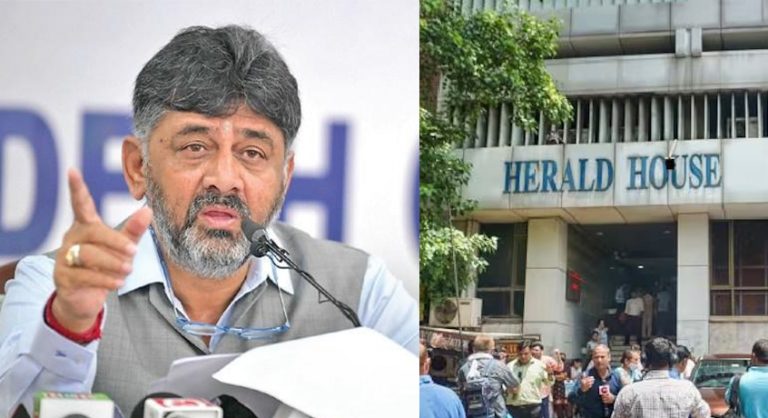
Karnataka Deputy Chief Minister DK Shivakumar on Friday admitted that he had donated Rs 25 lakh to the National Herald, which he said was a newspaper run by his party.
“I donated Rs 25 lakh to the National Herald. It is a newspaper run by our party. My brother and I have given money to the publication. We have also given donations from our trust. We have given our hard-earned money; there is nothing to conceal,” Shivakumar told reporters.
The National Herald newspaper remains under the scanner of the Enforcement Directorate (ED) in relation to an ongoing investigation by the central investigative agency. The investigation involves top Congress leaders, including Lok Sabha Leader of Opposition (LoP) Rahul Gandhi and Sonia Gandhi.
Shivakumar’s reaction comes after his brother DK Suresh and Telangana CM Revanth Reddy were named in the chargesheet filed by ED in connection with the National Herald case.
Meanwhile, Bharat Rashtra Samithi (BRS) working president K.T. Rama Rao (KTR) on Friday, alleged that Telangana has become an “ATM for Scamgress” (Congress), with Chief Minister A Revanth Reddy implicated in corrupt practices.
Taking to X, sharing screenshots of newspaper reports related to National Herald case, he wrote, “Telangana has become an ATM for Scamgress and it’s been now corroborated by agencies As the ED charge sheets Telangana “Bag Man” in National Herald case, he is trying his best to distract the people’s attention from his corrupt practices The million dollar question is whether the NDA Govt will act this time or pardon Revant Reddy as they’ve done in the case of Amrut Scam, RR Tax and Civil supplies scam”
On Wednesday, the ED presented its opening arguments before Delhi’s Rouse Avenue Court regarding the cognisance of its complaint against Congress leaders Sonia Gandhi, Rahul Gandhi, and others in connection with a money laundering case linked to the National Herald.
In the opening submissions, Additional Solicitor General (ASG) S V Raju submitted that an offence of money laundering is made out in this case. He also submitted that there were proceeds of crime. It was also submitted that there was continuing criminal activity for the generation of proceeds of crime, which constitutes the offence of money laundering.
After hearing the opening submitted by ASG S V Raju and Special Counsel for ED Zoheb Hosain, the Special Judge listed the matter for remaining arguments from July 2 to July 8. Special judge Vishal Gogne listed the matter for day-to-day hearing on the point of cognisance of ED’s Prosecution complaint against Gandhi and other accused persons.
The court listed the matter in July after hearing the submissions of defence counsel, who urged a hearing in July and gave voluminous documents totalling 5,000 pages.
(This news report is published from a syndicated feed. Except for the headline, the content has not been written or edited by OpIndia staff)
Pakistan keeps outdoing itself in setting new lows. Days after using civilian airlines as a shield against India’s retaliatory attacks during Operation Sindoor, Pakistan denied permission to a distressed IndiGo Delhi-Srinagar flight on 21st May from entering its airspace briefly to avoid a fierce hailstorm. However, the crew’s PAN PAN call to Srinagar ATC helped the pilots navigate a safe landing at Srinagar International Airport.
What began as a routine flight from Delhi to Srinagar turned into a harrowing ordeal for 222 passengers aboard IndiGo Flight 6E 2142 on Wednesday evening, as the aircraft was violently caught in a hailstorm and severe turbulence near Pathankot. Startlingly, the Lahore’s Air Traffic Control had denied the pilots’ desperate requests to deviate from their course to avoid the impending weather threat, according to a DGCA statement released Friday (May 23, 2025).
According to the DGCA, the incident unfolded after the crew attempted to return to Delhi upon detecting a thunderstorm cell ahead. But boxed in by restricted military airspace and a closed Pakistan corridor, they had little choice. The Indian Air Force first declined permission to reroute toward the international border, and Lahore ATC refused a similar request shortly after. With the storm fast approaching, the pilots made a split-second decision to proceed through the weather system rather than risk circling back.
PAN PAN call and how the Indigo flight pilots and the Indian Air Force ensured a safe landing
As Lahore ATC denied permission to use Pakistani airspace briefly, the pilots manually flew the aircraft through the storm, maintaining remarkable control despite the extreme conditions. After navigating the worst of the turbulence, the crew declared a PAN PAN call to Srinagar Air Traffic Control, indicating an urgent situation requiring assistance but was not immediately life-threatening.
The PAN PAN call, which stands for “Possible Assistance Needed”, is a standard aviation protocol used to prioritise communication and request support, such as radar vectors. Radar vectors are specific navigational headings provided by ATC to guide the airplane along a safe flight route.
The Srinagar ATC promptly responded to the PAN PAN call by the distressed flight by providing radar vectors, which helped the pilots stabilise the aircraft carrying more than 200 passengers and navigate to a safe landing at the Srinagar International Airport at around 6:30 PM.
Although the nose radome of the aircraft suffered significant damage, all the passengers and the crew were safe. As per the DGCA, the incident is under investigation.
“Crew flew the aircraft manually till they exited the hailstorm.”. Upon completing all check list procedures (ECAM procedures), the crew announced PAN PAN (urgency message) to Srinagar ATC and asked for RADAR vectors and landed safely with auto thrust in normal condition. There was no damage to any of the passengers on the flight. Post-flight walk-around indicated Nose radome damage,” the DGCA stated.
Meanwhile, the Indian Air Force is reported to have confirmed assisting the safe landing of the Indigo flight by providing control vectors and groundspeed readouts.
A NOTAM A0220/25 issued by Pakistani Civil Aviation Authorities was in vogue upto 23 May 25 midnight (2359 hrs), which mentions, “Pakistan airspace is not available for Indian registered aircraft and aircraft operated/owned or leased by Indian airlines/operators, including military flights. Northern Area Control advised the Indigo crew within the frame of the NOTAM (which is also a regular planning feature for all airlines in their route planning), ensuring the safety of aircraft and passengers.”
“The aircraft was immediately assisted in coordinating their route diversion by contacting Delhi Area and passing the requisite contact frequencies of Lahore control for an overflight weather diversion request. Once Lahore refused overflight clearance, and the aircraft proceeded towards Srinagar, the flight was subsequently professionally assisted till a safe landing at Srinagar airfield by giving control vectors and groundspeed readouts,” the IAF sources said.
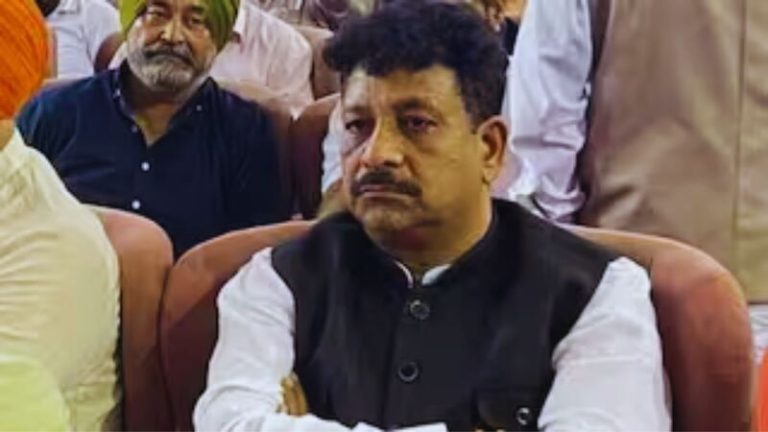
AAP MLA from Jalandhar Central, Raman Arora, was arrested by the Punjab Vigilance Bureau (PVB) on Friday (23rd May) in connection with a corruption case after raiding his house in the morning. He was arrested after 8 hours of interrogation. The case also reportedly involves Sukhdev Vashisht, former assistant town planner (ATP) of the municipal corporation who was arrested last week.
Days before Arora’s arrest, his security cover of 14 police personnel was withdrawn by the Punjab government on 12th May. Ironically, he has been holding anti-corruption drives in Punjab. In the preceding three years, Arora is the third AAP MLA to face corruption charges.
Interestingly, the Aam Aadmi Party posted on X taking credit for taking action against its own MLAs facing serious corruption charges. The party said that Arora used to extort money from common people by sending them false notices in connivance with officials of Jalandhar Municipal Corporation.
भ्रष्टाचार के ख़िलाफ़ AAP सरकार की Zero Tolerance Policy- अपने ही विधायक पर लिया सख़्त एक्शन!
?पार्टी के ही विधायक रमन अरोड़ा के ख़िलाफ़ मिली शिकायत पर विजिलेंस की रेड
?जालंधर नगर निगम के अधिकारियों के साथ मिलकर आम लोगों को भेजे जाते थे झूठे नोटिस, और फिर उन्हें दबाने के बदले… pic.twitter.com/tn67ULOjLW
As per reports, Arora’s name came up when the PVB was interrogating Vashisht who was arrested following the complaint filed by colonisers and commercial unit owners for allegedly demanding a bribe of ₹30,000 on 14th May. “Vashisht enjoyed Arora’s patronage. He was posted in Jalandhar Central zone for one-and-a-half years and was deployed in Jalandhar West zone before that for four years,” a VB official was quoted as saying. “The complainants alleged he had been delaying file approvals and extorting money from applicants,” the official added.
Vashisht allegedly threatened to seal the buildings of complainants if they failed to pay the bribe. He is said to have admitted to have issued around 350 notices to stakeholders from April 2022 to March 2025 which are being investigated by the authorities. The PVB has seized documents relating to permissions granted for change of land use, notices issued to commercial and residential units to pay their dues and authorisation granted to residential colonies and development of commercial hubs in Jalandhar Central and West assembly constituencies in the last 2 years.
On May 22, 2024, the PVB arrested former health minister and Mansa MLA Dr Vijay Singla on corruption charges. A year before that, in February 2023, Bathinda Rural AAP MLA Amit Rattan Kotfatta was also arrested in a corruption case.