Home Blog Page 4158

Yogi govt steps up Uttar Pradesh Defence Industrial Corridor project, allots more than 55.4 hectares of land in Aligarh to 19 companies

In what can be seen as a major accomplishment, the Aligarh district in Uttar Pradesh has taken a steady lead, going on to become the first out of the 6 nodes or centres to get its first lease deed done in the Uttar Pradesh Defence Industrial Corridor project.

The Uttar Pradesh Expressways Industrial Development Authority (UPEIDA), the state government-run nodal agency for the defence corridor project, has completed the first lease deed in Aligarh and allotted more than 55.4 hectares of land to 19 defence manufacturing companies, which would be investing more than Rs 1,245 crores in the district. Prime Minister Narendra Modi will soon lay the foundation stone for it.

Meanwhile, the work of constructing boundary walls, building a powerhouse, and a 4-lane road at a cost of Rs 10.21 crore has kickstarted in Aligarh, confirmed Avneesh Awasthi, the Additional Chief Secretary Home and Chief Executive Officer of UPEIDA.

Aligarh in Uttar Pradesh becomes the first district in the country to get its first lease deed

According to a Daily Pioneer report, the first lease deed was done with Aligarh’s Allen & Elvon Private Limited (drone maker). In Khair Tehsil, the officers of UPEIDA gave the company certificate of land on lease for 30 years. 

Besides, Anchor Research Lab LLP,  a strong player in the Defence and Aerospace Industry, has been allotted 10 hectares of land in Aligarh. The company will be investing Rs 550 crore in the district.

The UP Defence Industrial Corridor projects were announced in Aligarh in August 2018. Land for this ambitious project was set aside in Andla village in Khair Block in Aligarh District of Uttar Pradesh.

Defence Industrial corridor: BJP Govt’s ambitious step towards making country’s defence sector self-reliant

After opening up private investment and liberalizing foreign direct investment (FDI) in defence production, the BJP government, during the 2018-2019 national budget announced the establishment of two Defence Industrial production corridors. Indigenous Defence manufacturing is one of the key focus areas of PM Modi’s ‘Make in India’ initiatives. The first Defence Production Corridor is planned to be established in Tamil Nadu and the second one in Uttar Pradesh.

The first corridor called as Tamil Nadu Defence Quad will extend from Chennai, Hosur, Coimbatore, Salem and Tiruchirappalli. 

The second defence industrial corridor was announced on the occasion of the Uttar Pradesh Investors Summit 2018. At the summit, PM Modi had said: “of one of the two defence industrial corridors mentioned in the budget, one is proposed in the Bundelkhand region of the state which will bring an investment of Rs. 20,000 crore and generate employment avenues for 2.5 lakh people.”

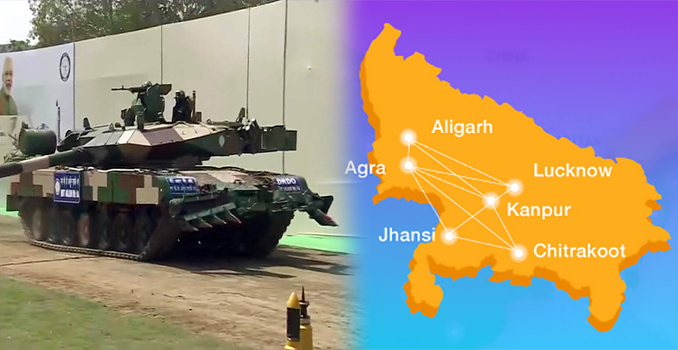
The project envisages building land banks for defence companies to set up their production plants around six nodes in the state, notably in the backward Bundelkhand area too. The 6 nodes – Lucknow, Kanpur, Jhansi, Agra, Aligarh and Chitrakoot – will be connected to various upcoming expressways which would provide better connectivity to these places.
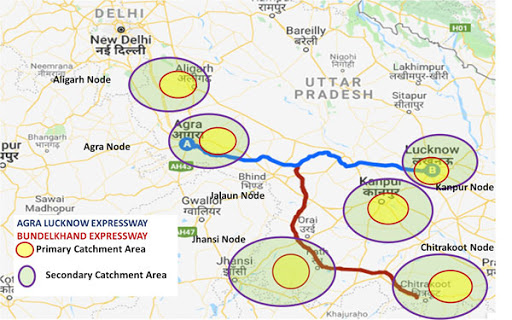
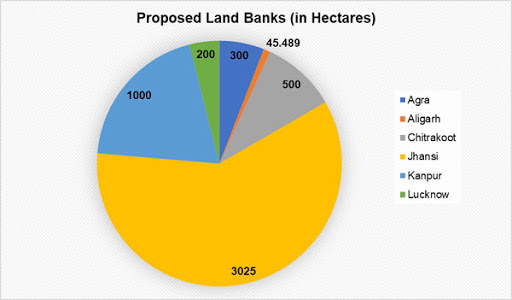
Image source: upeida.up.gov.in

Since the announcement, the Yogi Adityanath government has been consistently working towards making the success in the state.

Until now, the world’s top defence manufacturing companies have stepped in to invest in Uttar Pradesh. It’s worth noting that the BJP government’s ambitious Defence Industrial Corridor running through Uttar Pradesh has garnered more than Rs 50 thousand crores worth of investments in pledges and commitments from both national and foreign private investors. The project was announced with the aim of spurring job creation as well as encouraging foreign and domestic companies to support defence manufacturing in India. Now with this accomplishment, India can be seen inching closer to becoming self-reliant in the defence sector as well.

Apart from UP, the central government had announced the second defence corridor in Tamil Nadu. 
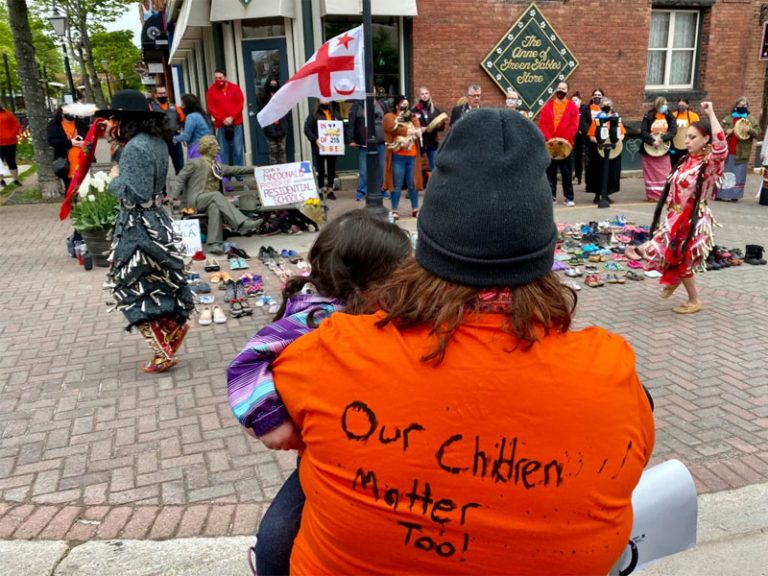
Crimes of the Church: Canada’s residential schools where countless indigenous children suffered, died and were forgotten

On June 30, another mass grave was reported near a former residential school in Canada. This is the third such reporting in the last few weeks. The Lower Kootenay Band, a member band of the Ktunaxa Nation, said that remains of 182 people were found in mass graves close to former St. Eugene’s Mission School in Cranbrook. The graves were spotted with the help of ground-penetrating radar.

The residential school were funded by Canadian govt and managed by Church

The Lower Kootenay Band said, “Some of the findings had the human remains buried in shallow graves only three to four feet deep.” They further added that many Lower Kootenay Band members were forced to attend the St. Eugene’s Mission School. Around 100 band members attended the school.

As per the statement issued, the search for the burial sites begun last year after an unknown and unmarked grave was found during remedial work around a cemetery located adjacent to the former school. Initial investigations revealed 182 burial sites. The statement mentioned that the graves were shallow, approx a metre deep, located within the cemetery grounds.

The Aq’am community started to identify if the graves belonged to the children who were forced to attend the school. The community leadership would like to stress that although these findings are tragic, they are still undergoing analysis and the history of this area is a complex one,” the statement read.

Canadian PM Trudeau said, “Today’s finding adds to the growing number of unmarked burial sites discovered near residential schools across Canada. Words always seem to fall short at moments like this. But to the Ktunaxa Nation and Indigenous peoples across the country, know that we’re here for you.”

Around 1000 graves located earlier

Notably, two mass graves had been found earlier, one with 215 graves in Kamloops was found on May 27, 2021, and 751 graves in Saskatchewan were found just a week ago, on June 24. Rosanne Casimir, Chief of Tk’emlúps te Secwépemc Kukpi7 had said, “We had a knowing in our community that we were able to verify. To our knowledge, these missing children are undocumented deaths,” while informing the press about the 215 graves found in Kamloops.

Canadian PM Justin Trudeau had said, “The news that remains were found at the former Kamloops residential school breaks my heart – it is a painful reminder of that dark and shameful chapter of our country’s history. I am thinking about everyone affected by this distressing news. We are here for you.”

While talking about the discovery of graves in Saskatchewan, Cowessess Chief Cadmus Delorme said, “This is not a mass gravesite. These are unmarked graves.” Though teams were unable to confirm if there were more graves at the site, finding 751 of them at a single site had shocked the whole nation. He said the penetrating radar work has a 10 to 15 per cent error rate.

Canadian PM Justin had said after the discovery of unmarked graves in Saskatchewan, “The findings in Marieval and Kamloops are part of a larger tragedy. They are a shameful reminder of the systemic racism, discrimination, and injustice that Indigenous peoples have faced – and continue to face – in this country. And together, we must acknowledge this truth, learn from our past, and walk the shared path of reconciliation, so we can build a better future.”

‘You cannot fully prepare for this’

Chief Jason Louie of Lower Kootenay Band said, “You can never fully prepare for something like this.” He added that the situation is very difficult. “It was very impactful when we got the news of the 215 souls that were located in Kamloops. And now it’s very, very personal,” he said. As of now, the investigation is at the early stages, and more information will be provided in time.

The Aq’am cemetery was reportedly established by the settlers in 1865. It was used to bury the local residents who died at St. Eugene Hospital after it opened in 1874. In the late 1800s, the community began to bury its members in the cemetery. The graves were traditionally marked with wooden crosses that deteriorate over time resulting in an unmarked grave.

The statement read, “These factors, among others, make it extremely difficult to establish whether or not these unmarked graves contain the remains of children who attended the St. Eugene Residential School.”

The church must be held accountable

Chief Louie urged that the Catholic Church must be held legally accountable for operating the institution. He said, “We were robbed of future elders. Those children, if they had not passed away, could have been elders and teachers in our communities, the keepers of knowledge. It’s devastating.”

Bob Chamberlin, former vice-president of the Union of B.C. Indian Chiefs said, “This is not something that you casually set aside and carry on with your days. It’s something that’s heavy on the hearts of First Nations people and stays in the mind as we go through our days. There are many people that are going to be struggling to a great degree.”

A brief history of Canada’s residential school’s for indigenous children

Between 1874 and 1996, the Indian Residential School system was established by the Canadian government and Churches. Though funded by the government, the schools were administrated by Churches. It was established as a part of the government policy of forced absorption of the indigenous communities that resulted in the oppression of generations of indigenous children. During that period, there were over 130 such schools in Canada

Reports suggest that the children were forcefully removed from their families to attend these schools. In the 1920s, attending these schools was made mandatory by law for indigenous children. If refused, the parents would face prison. The students would live in the school premises from September to June and were allowed to meet family members only on Christmas and Easter.

The aim of these residential schools was to “clean” out the native culture, language and heritage of the children. Their main objective was to make the children denounce their ways of life and make them more ‘suitable’ for a white, Christian society. This objective was achieved by forcibly keeping the children away from their families, mental, physical and emotional torture and a complete ban on native language and lifestyle within the school premises. The children were often given minimal education and were forced to do hard agricultural labour.

The search for the ‘missing children

According to the Truth and Reconciliation Commission (TRC), a large number of indigenous children that attended residential schools never made it back to their home communities. Some children ran away while others died at the schools. These students are now called the “Missing Children”. The Missing Children Project documents and deaths and burial sites of such children who died while attending the residential schools. So far, the project has identified over 4,100 children who died while attending a residential school.

In a report published in 2015 after a six-year investigation into the now-defunct system, it was termed as “cultural genocide”. The report documented horrific details of abuse, rape, malnutrition and other atrocities suffered by the students who attended the school. As many as 150,000 were known to have attended the school system between the 1840s and 1990s. The recently discovered remains of 215 are believed to be new burial sites and not included in the list of over 4,100 students who died at the schools.

In 2008, the Canadian government formally apologized for the system.

Fake farmers, staged rural life: Read how China created a fake town in Xiapu for photo enthusiasts to capture their dream images

Xiapu, a small county in Fujian province of China, has become the world’s latest fascination as several lifestyle images captured by photographers in this little Chinese province has turned out to be a sensation. Several photo enthusiasts and professional photographers from across the globe storm into this small town in Southeast China to capture the lively images of themselves in the scenic beauty of ‘rural China’.

For years, many enthusiasts who watched these lovely images thought that these were real, hoping that people in rural China really lived the way it was depicted in that grandeur. The town of Xianpu feels like it has been lost in time, stuck in China’s past, filled with striking landscapes and a population that appears as though they travelled directly from that era.

An young lady of Xiapu captured by photographers. Image Source: Unusual expedition

Thousands of enthusiasts, nature lovers, thronged to Xiapu to be part of its magnificent landscapes. However, something shocking was waiting for them. As they hit the ground in Xiapu, these travellers, who had admired the Chinese way for a long time, realised that this is just another quintessential Chinese marketing. In simple words, it was all FAKE.

They realised that the entire town was just a setup and the images captured were not real or live events, but these are faked lifestyle photos taken from staged events. The entire town of Xiapu is nothing but a setup developed by the Chinese to make the country the world’s best photography hot spot.

According to Insider, the most popular and breathtaking landscapes and street photos that are doing rounds on social media platforms may have been captured at Xiapu. These fascinating images are entirely manufactured in a town that specialises in creating perfect photo moments for visitors.

The “rural” city of Xiapu is entirely fake, created by several teams of photo crews and actors who disguise themselves as farmers and local villagers to provide tourists with perfect, repeatable photo opportunities.

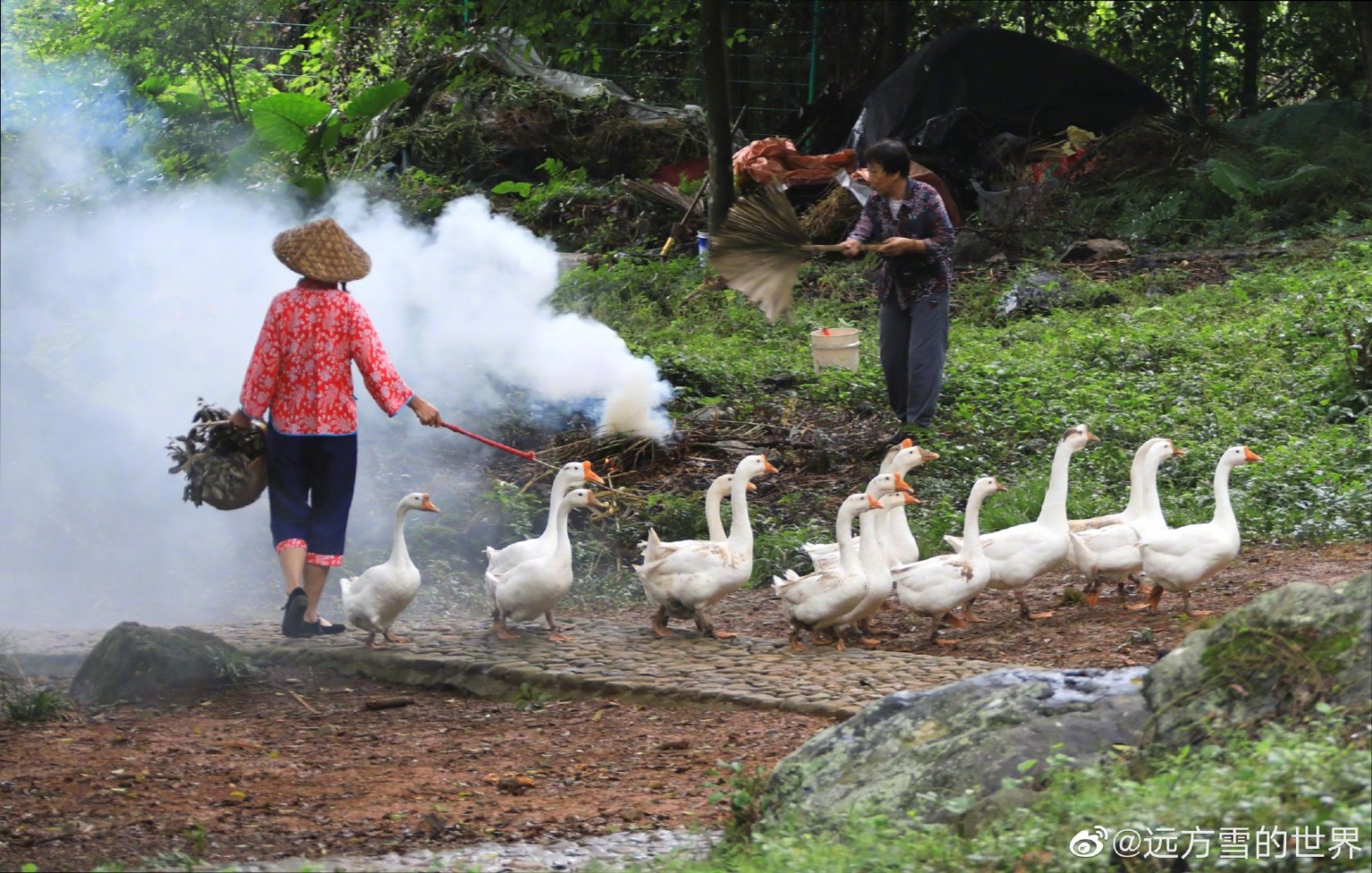
Here is an image captured from Xiapu that has been shared widely across social media platforms:

Woman driving geese through smoke that serves to give the appearance of mist in photos. Photo by Insider/Weibo.

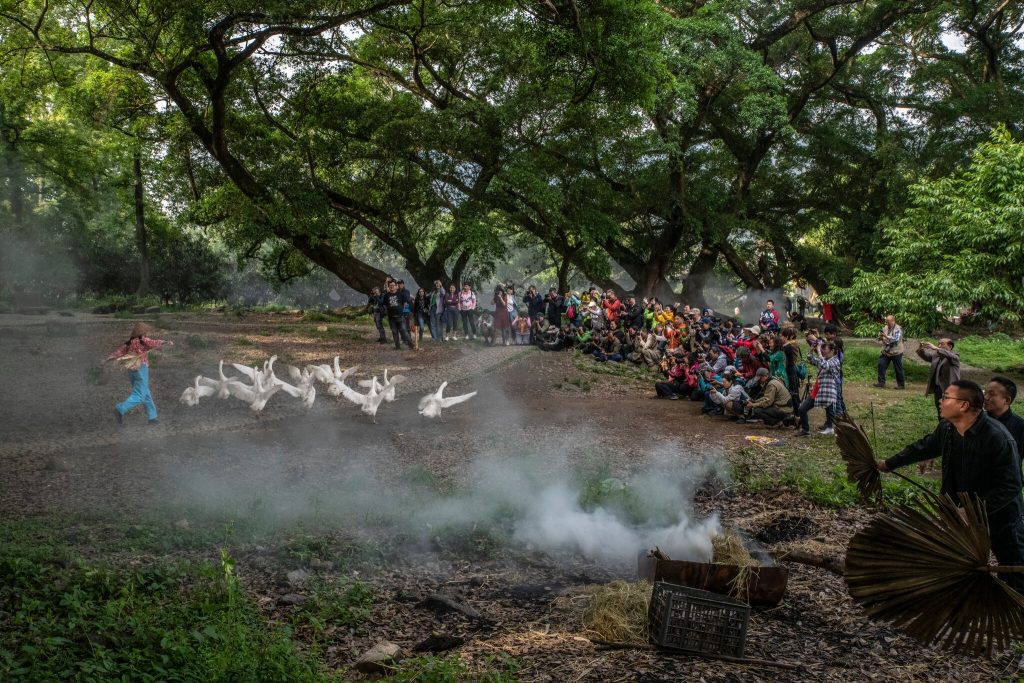
And now take a look at the behind-the-scenes images revealing the reality of the above shot that was published on Chinese social media platform Weibo.

Image Source: NYT

According to the reports, Xiapu earlier used to be known for its seafood and dining, however, after several years of bad harvests, the local economy deteriorated, and the local government had the idea of “cashing in on rural tourism”. Since then, the town has become a tourist hub, always flocked with people who want to capture the perfect photograph. However, these perfect images come with a huge cost.

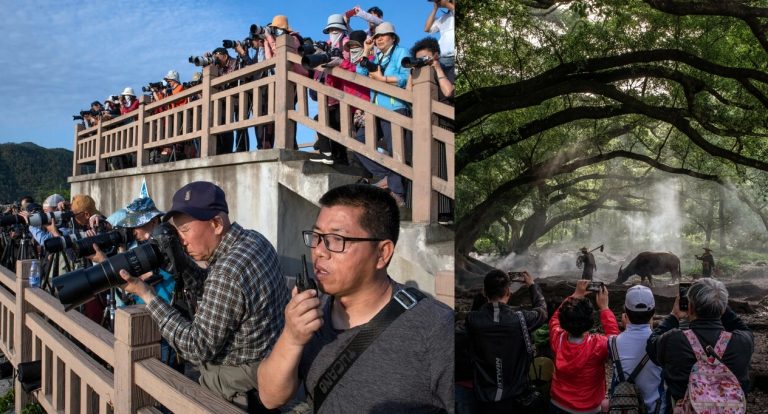
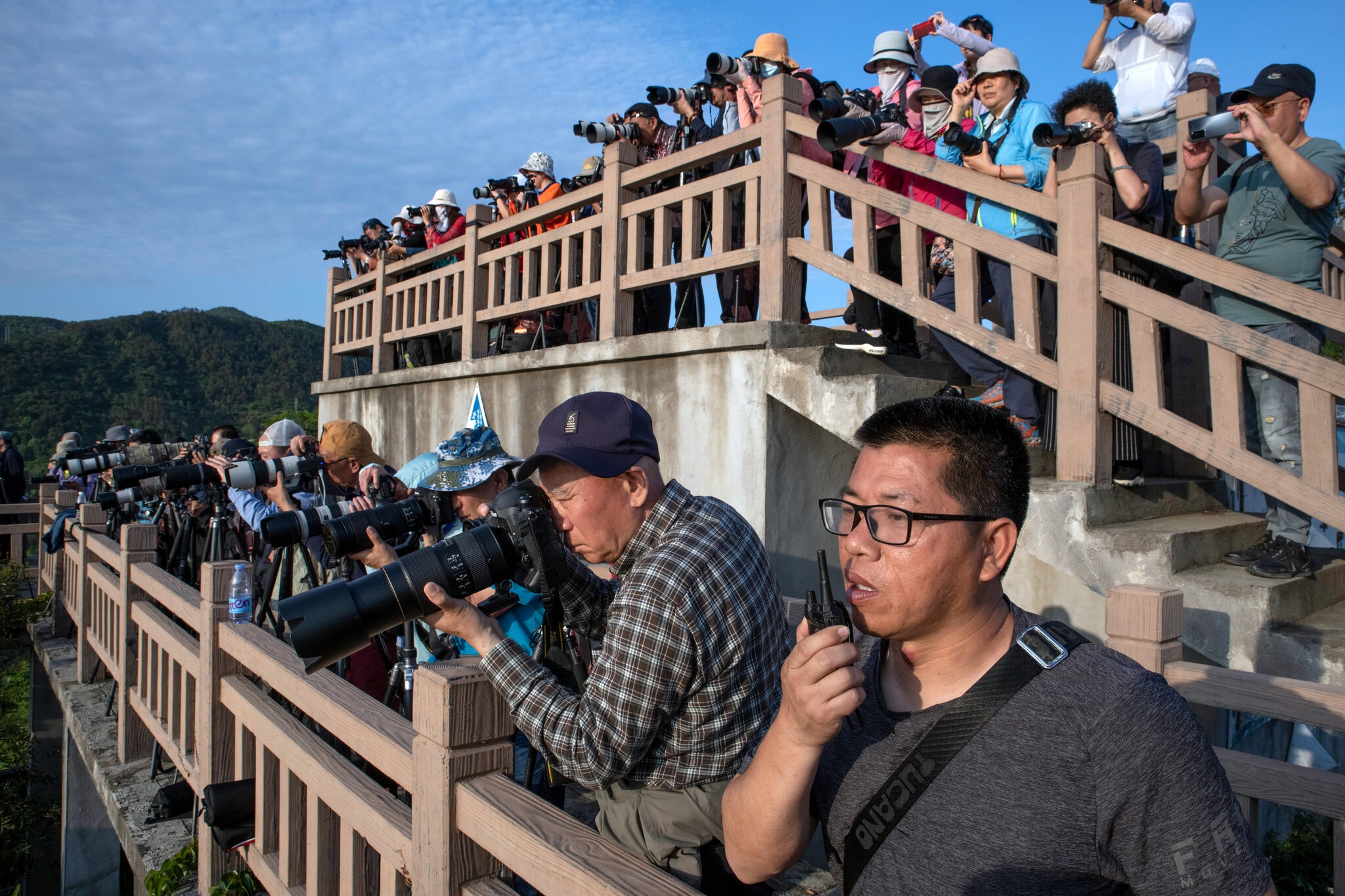
A New York Times report suggested these “perfect photoshoots” sensation has been driving Xiapu County’s economy ever since the fishing economy collapsed. Hoards of photographers line up in a row and await their chance to capture a staged photo of a model or a local villager dressed in traditional attire who performs several tasks as intended by them.

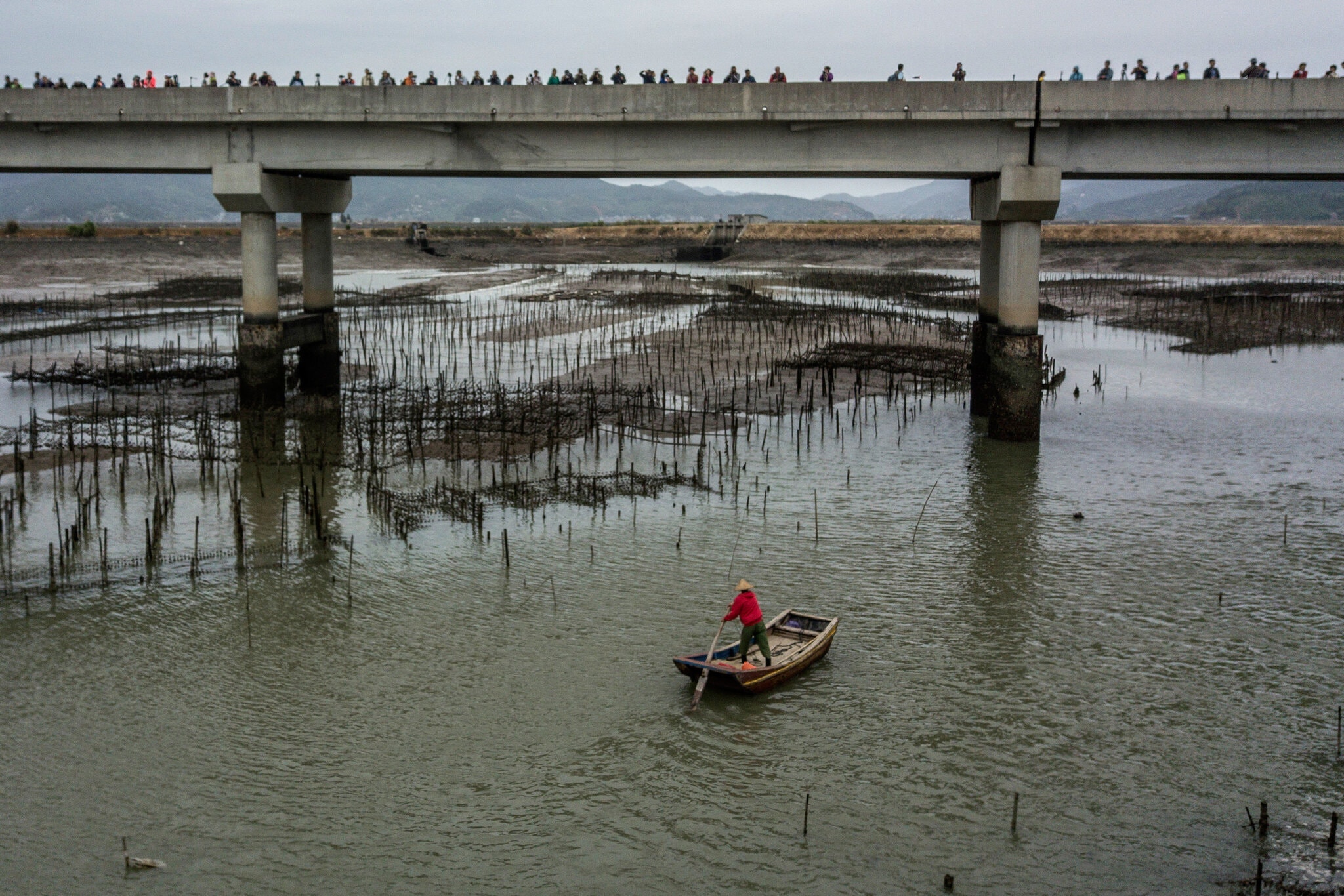
Below is a “behind-the-scenes” image of several cameramen waiting to click a perfect image as the model rows a boat in the river.

A model was paid $30 to row a boat as amateur photographers wait near a bridge in Xiapu County/ Image Source: NYT

These groups of photographers/clients plan in detail and position themselves around exotic locations in different parts of the county and wait for their turn to get their dream photos.

The fortunes of the local villagers have changed drastically ever since the trend began. The villagers receive at least 500 visitors per day to a particular site, each paying $3 to capture images of models. The organisers of such photoshoots are called “coordinators”, who are eager to help and often direct the models via walkie-talkies to ensure the action happens on queue and the photographers are ready.

A local owner guiding the client  by walkie-talkie to help them to get a perfect shot/ Image Source: NYT

Sometimes, photographers set up artificial sets that include creating fake mists for the action images. Then, the photographers burn small patches of straw and fanning the flame to provide the ideal level of haze in those scenes.

Even though the images captured are visually stunning, many critics have pointed out that the images are fake and do not have a real feel in them. Some have said they were tricked into visiting the city, who had believed the city was a real untouched rural environment.

“Teenagers are getting cheated into making their way down to this hot spot thinking it’s all real. What’s worse is when they find out the farmers are fake and just ‘modelling,’ they still don’t expose it because they’d rather post pretty photos,” one visitor said.

While some lament about this fake rural community, however, many tourists and professional photographers feel that towns like Xiapu offer amazing photo opportunities to capture many images that would otherwise be categorised as impossible.

According to the NYT, the popularity of such staged locations for photographs have increased due to several factors. The country has a growing number of retirees, who are living longer and with more money to spent. The Chinese government is encouraging rural tourism in the name of poverty alleviation. Moreover, there is nostalgia for imagery of rural China of the past, as real rural China is fast disappearing due to rapid modernisation of the country.

Zydus Cadila applies for emergency use approval for its ZyCov-D vaccine, ready to produce 5 crore doses by 2021 end

Cadila Healthcare’s (Zydus Cadila) COVID-19 vaccine ZyCoV-D has demonstrated 66.6 per cent efficacy against symptomatic RT-PCR corona positive cases in the interim analysis. With promising results, the company is now all set to boost its production.

The company has now filed an application with the Drug Controller General of India (DCGI) seeking emergency use authorization (EUA) of the ZyCoV-D vaccine which is the world’s first Plasmid DNA vaccine.

Sharing the robust production plans, Sharvil Patel, MD, Cadila Healthcare said, “We expect to produce 1 crore vaccine doses per month from August onwards and 5 crore doses by December this year. Our target is to produce 10 crore vaccine doses in a year.”

About the vaccine

The company informed, “The primary efficacy of the three doses vaccine was at 66.6 percent for symptomatic RT-PCR positive cases in the interim analysis.”

“Whereas no moderate case of COVID-19 disease was observed in the vaccine arm post administration of the third dose suggesting 100 percent efficacy for moderate disease,” it added.

Zydus also revealed that no severe cases or deaths due to COVID-19 occurred after the administration of the second dose of the vaccine.

The Phase-3 clinical trials were carried out on over 28,000 volunteers in more than 50 clinical sites across the country. The trials were conducted during the peak of the second wave of COVID-19 confirming that the vaccine is effective even against the new mutant strains, especially the delta variant.

As of now, the vaccine is following a three-dose regimen, however, attempts are being made to reduce it to a two-dose regimen. The company informed that the immunogenicity of the two-dose regimen results “had been found to be equivalent to the current three-dose regimen.”

“This will further help in reducing the full course duration of vaccination while maintaining the high safety profile of the vaccine in the future,” said the company.

Divulging more information on the plasmid DNA vaccine, Patel informed, “As the first-ever plasmid DNA vaccine for human use, ZyCoV-D has proven its safety and efficacy profile in our fight against Covid-19. The vaccine, when approved, will help not only adults but also adolescents in the 12 to 18 years age group.”

As per reports, the ZyCoV-D vaccine has been proved to be safe for children in the age group of 12 to 18 years. 

This vaccine will be administered through a needle-free applicator called the PharmaJet to ensure painless intradermal vaccine delivery.

Meanwhile, India has administered over 27 lakh doses today and 33,26,04,590 doses to date overtaking the USA. 

13-year-old boy in Syrian camp for ‘Caliphate Cubs’ narrates how children were taught guns and Quran by ISIS, wants to go home in London

There are tens of thousands of young children, as young as 10-11 years old, accused of carrying out terror activities on behalf of ISIS, now living in rehabilitation facilities in Iraq and Syria. During its heydays, the Islamic State had recruited such young boys and trained them to use guns and explosives, to run its rule of terror. One such boy is 13-year-old Abdullah, who is held at a Kurdish-run Syrian detention centre for ‘Caliphate Cubs’, who has expressed his urge to go back to his ‘home’ in Britain.

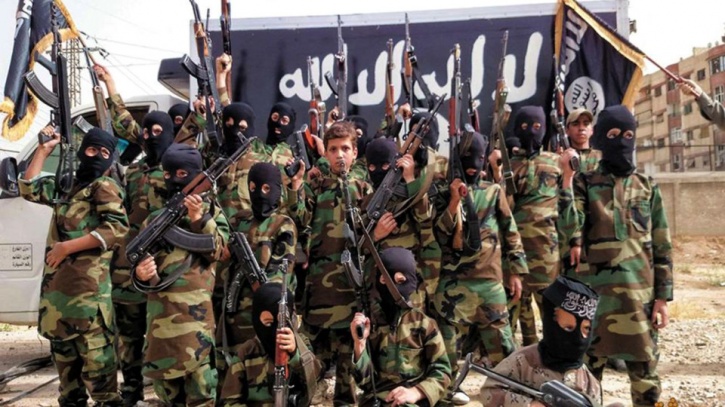
‘Caliphate cubs’ refers to a programme by ISIS in which they used to indoctrinate, recruit and train children between the ages of 10 and 15 so that they can be used to carry out jihadist activities. This practice is what ISIS has always boasted of in pictures and videos displayed across the Internet with titles such as the “Cubs of the Islamic State.”

According to a report by Daily Mail, one journalist, Andrew Drury, travelled to Syria in early June this year for the filming of his upcoming movie ‘Danger Zone’, when he spoke to the 13-year-old boy, Abdullah.

Abdullah brought to live under ISIS at the age of eight

Abdullah, who grew up in London with his Pakistan origin family, was eight when his parents brought him to live under the Islamic State in Syria, along with his siblings, two sisters and two brothers. At an early age, when children generally enjoy watching cartoon serials and playing with toys, Abdullah, a fan of Chelsea and McDonald’s, was taught how to use an AK-47 rifle by ISIS terrorists in Syria.

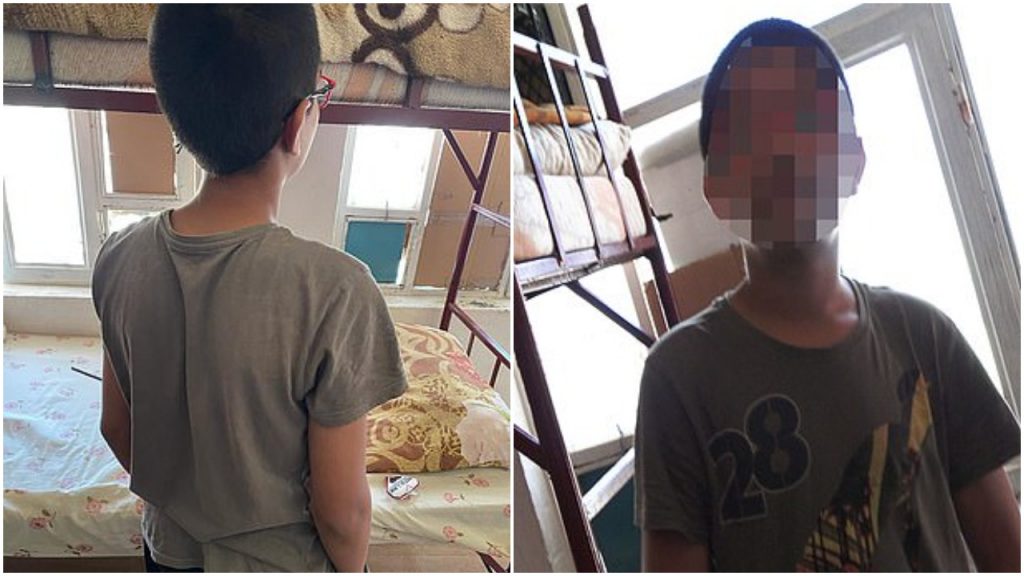
13-year-old Abdullah in the rehabilitation facility (Image source: Daily Mail)

The young boy told the journalist that all his family members are dead now, most of whom were killed in the village of Baghouz, ISIS’ last bastion in Syria.

For the uninitiated, in 2019, the then US President Donald Trump had declared that ISIS was “100 percent” defeated, after Baghouz, the last stronghold of ISIS fell after a long battle. 

‘First school they taught me to hold weapon, second they taught Quran’, the teenager in the ISIS centre

Speaking about his ordeal, Abdullah said that in as less than one and a half years of his stay in Syria, he was introduced to arms and ammunitions. He was taught how to use an AK-47 assault rifle. He claimed that he never used it to date, though, he and the other children under the ISIS rule were expected to do so.

Abdullah narrated to the journalist how the schools in Syria under ISIS rule used to teach weapons and Islam to the children.

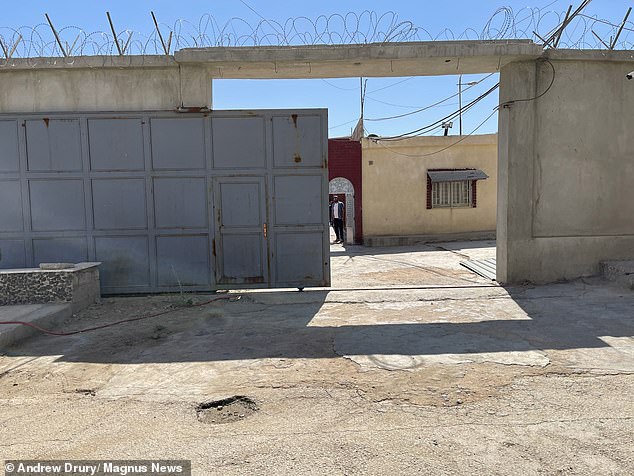
The Kurdish-run Hori Centre in the northeastern town of Tal Marouf (Image source: Daily Mail)

He said, “The first day I go to school they learn me how to use the weapons. And then I tell my mum, I can’t do these kind of things, and then my mum tell me go to second school. And the second school they learn me like the Quran and this kind of thing”.

The young boy, who had been living in the shelter after the fall of ISIS, added that he does not remember how old was he when his parents brought him there, nor does he remember his own birthday. He has also forgot a lot of things that happened in the last 4-5 years. “I don’t remember (how old I was when I came here), in Baghouz there was a lot of airstrike, and this kind of thing, and I forgot a lot of things,” he said.

‘I don’t remember (when my birthday is) before I know, but I forget”, Daily Mail quoted the traumatised teenager telling the journalist, adding: “In London when I was celebrating my birthday, we were eating cake and this kind of thing. But here we can’t do anything”.

Spoken about his family, Abdullah said he misses his mother, recalling how she was killed in Baghouz. “I never saw her. A lot of people told me she got killed”, said the boy.

Abdullah also remembers how his siblings- his elder sister, his younger sister and two brothers- one younger to him and the other one elder to him, all got killed. He said, “the bigger brother he got killed in al-Shaddadi, and smaller than me he got killed with my mum and my sister. My older sister got married and that man, I was living with that man, and then he got killed. He was ISIS”.

Abdullah added that once he witnessed how an ISIS recruit in Baghouz blew himself up. “I saw snipers, there was a lot of these kind of things”, added the boy.

Life at the detention centre

The juveniles kept at the shelter are considered former aides of ISIS, as they were trained to conduct terror activities, and therefore they are kept under vigilance. According to the report by Daily Mail, Abdullah and other boys are kept locked during the night for 9 hours, from 9 pm to 6 am. He said, “9 pm, they shut the doors, and then they wake us at 6 am and we make sport (sic) and then we eat breakfast and after 1 pm we eat and then we sit and I talk with my friends.”

Kurdish Democratic Union Party (PYD), which runs the rehabilitation facility, hopes to rehabilitate the children.

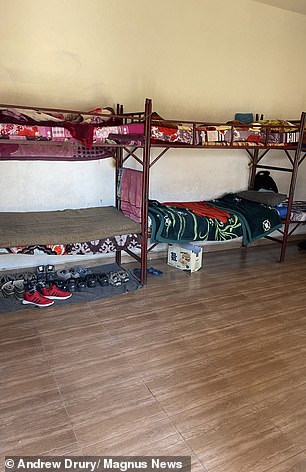
The dormitory where Abdullah stayed (Image source: Daily Mail)

“I’m here one-and-a-half year. I was living in Raqqa (Syria) for like one year, it was better than Baghouz, we got house and internet, we have a car. But there was no McDonalds”, said the teenager remembering his life in ISIS ruled Syria before coming to the shelter.

‘I have PlayStation and Xbox in London, want to go back’, the teenage boy laments

“I have PlayStation and Xbox in London. I like Chelsea. Usually, I like Xbox, and these kind of things, but here we can’t do anything because it’s prison”, lamented the youngster, saying: “I want to go back to London”.

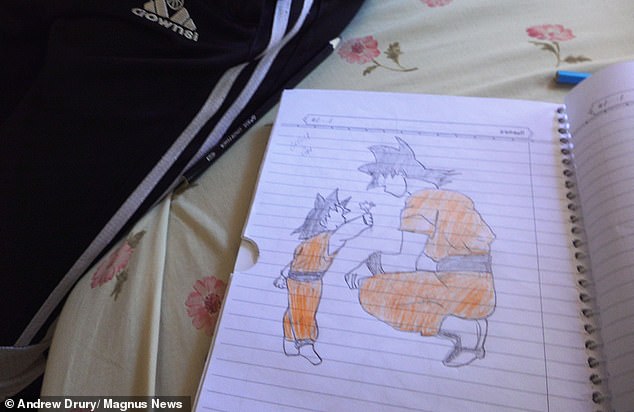
A sketch made by Abdullah (Image source: Daily Mail)

However, according to the report, Abdullah’s mother had burnt the family passports to show loyalty to ISIS, putting a question mark on the boy’s return to UK.

After his visit and a chat with Abdullah, journalist Andrew Drury also interviewed British ISIS bride, Shamima Begum on the trip. Drury opined that the UK government and the public must address this problem.

He said: ‘People have seen Shamima and some of them want her to rot, but what do you want for this little boy? Who was only eight years old when he went out there, should he rot too?

The journalist, disturbed to see the depraved conditions in which these young children are having to live their lives in Syria detention camps, told Daily Mail that a female prison officer told him that all the children in there have done and seen some very bad things under the ISIS regime. The journalist expressed his angst while adding that the children in there, most of whom weren’t even 10 years old, were asked to hold an AK-47 by ISIS.

ISIS encourages having as many children as possible

Over the course of its ‘Caliphate’ project (2014–2017), the Islamic State in Iraq and Syria (ISIS) sought to indoctrinate and radicalise minor children, in some cases as young as 4-years-old, to make them understand the world through ISIS’ binary view of jihad. It is ISIS’ effort to instil extremism and jihadism in the minds of these young children and then actively recruit them as their next generation of fighters.

Traditionally, ISIS used these radicalised children in suicide operations. At the tender age of 4 or 5, these children were introduced to detonators and rifles. These impressionable minds were encouraged to watch public stonings, amputations and beheadings, serving to inculcate natural feelings of anger and vengeance. Such an emotional reprogramming culminates in the acceptance by children of violence as a natural way of life and helps youngsters move to violence themselves.

‘We weren’t happy with his relationship with Sikh girl’: Sister of accused in J&K abduction and conversion to Islam row says

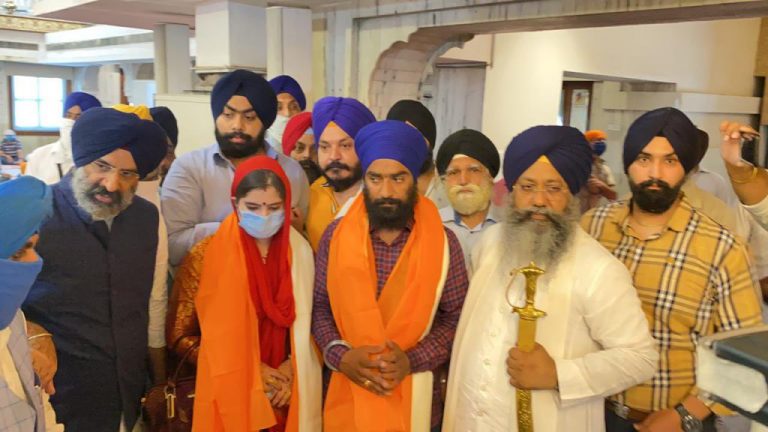
The family of Shahid Nazir Bhat, man accused and arrested in abduction and religious conversion of Sikh girl in Jammu & Kashmir, says that they were not happy with his purported relationship with Manmeet Kaur. As per reports, Ruqaiya Bhat, claimed that her brother left their home on 21 June at 7 AM and are not aware if he has married Manmeet. However, she did say that they were not happy with their relationship.

Ruqaiya added that her brother was married previously and divorced his wife after two years and has a six year old daughter who lives with them. She said that they barely make ends meet and survive on his father’s income who works as an ironsmith. Shahid Nazir Bhat would reportedly help the father in his work and would do some travel related work occasionally.

Bhat’s three elder sisters are unmarried and live with the family. Ruqaiya further added that she had tried to alert the Sikh community about the relationship between her brother and Manmeet.

Sikh girl abduction and conversion case

As per reports, the family members of 18 year old Manmeet Kaur, a Sikh girl in Kashmir has alleged that she was abducted and married off after being converted to Islam. Sikh leaders have alleged that the conversion was forced. Two days later, she was handed back to her family and later married off to a Sikh man after she returned home. Bhat is currently lodged in jail.

UP mass conversion: ATS arrests 6th person, NGO run by accused had received Rs 10 crore in foreign funding in 4 years

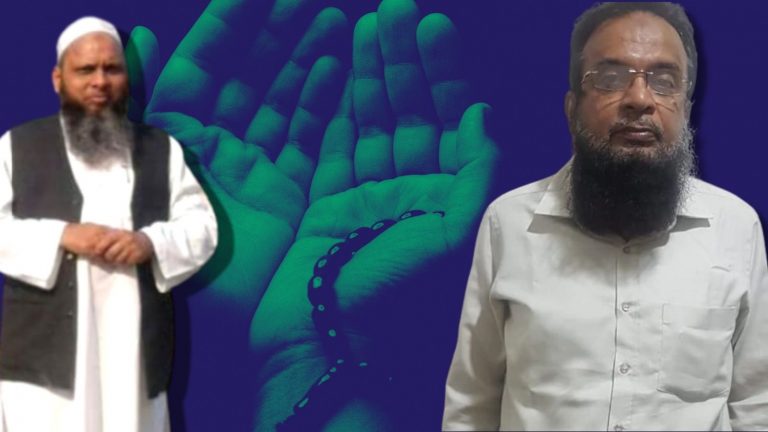
The Uttar Pradesh ATS, intensifying its search operations in the illegal mass conversion case, has made the sixth arrest. The accused Salahuddin Sheikh was nabbed in a joint operation by the Gujarat and UP ATS in Gujarat.

Sheikh who is the Managing Trustee of AFMI Charitable Trust in Vadodra, used to divert the foreign funds to Umar Gautam for religious conversions, as per a Desh Gujarat report.

Interacting with The Indian Express, a senior official of the Gujarat ATS revealed, “Accused Salahuddin Sheikh was arrested from Vadodara and produced before a court in Ahmedabad on Wednesday evening. We have received the transit remand till July 3 for the accused and he has been handed over to the UP ATS team, which will take him to Lucknow.”

UP ATS in a statement has informed that Sheikh confessed to knowing Umar Gautam and diverting hawala money to Umar to fund the religious conversion.

Sheikh had allegedly diverted Rs 30 lakhs to Umar Gautam, the founder of Islamic Da’wah Centre which is under scanner for illegal religious conversions. 

Details of the funding

As per FCRA (Foreign Contribution Regulation Act) submissions, Sheikh’s NGO received nearly Rs 10 crore in foreign funds in a period of four years during 2016-2021 as per its.

As per the Desh Gujarat report, Salahuddin Sheikh’s NGO had received around Rs 4 crore directly from a foreign source during the financial year 2019-20. In 2018-19 AFMI received funds to the tune of Rs 2.75 crores while in 2017-18 the NG received over Rs 1.4 crores. A similar amount was donated to the NGO in the financial year 2016-17 which reflected to be around Rs 1.62 crores. However, the data for 2020-2021 is not clear as yet. 

The majority of the funds received by the Salahuddin’s NGO were from UK and American based organizations- Zulekha Zinga Foundation (UK), Majlis Al Fatah Trust (UK), Gujarati Muslim Association of America (US), Firdous Foundation (UK), lkhar Village Welfare Trust (UK) and North West Relief Trust (UK).

These funds were allegedly being taken under the garb of maintaining hospitals and educating the poor. Some NGO listings website claim that AFMI Charitable Trust runs a 50-bed charitable hospital, provides monthly rations to widows and destitute and runs an English medium school in the tribal area of Chhota Udepur.

Gautam had close ties with hate speech peddler Zakir Naik and Bilal Philips

According to report published on Republic TV, Umar Gautam has links with fugitive hate speech peddler Zakir Naik and his close aide Bilal Philips, who in turn is associated with terror outfits such as Taliban and Hamas.

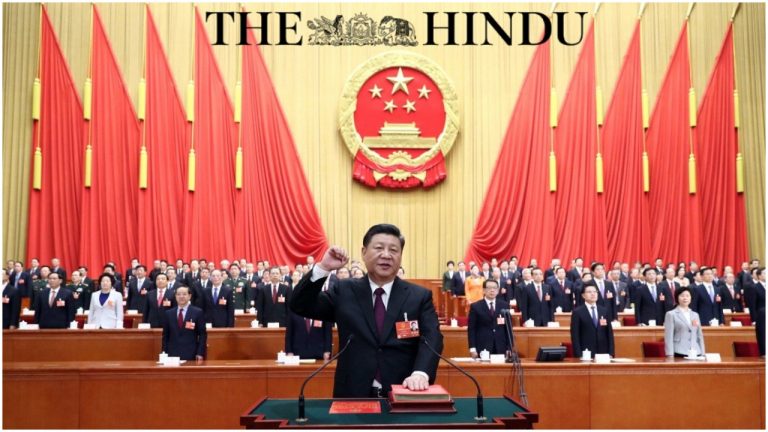
Left-wing outlet The Hindu kneels before Chinese money, puts full-page advertorial celebrating 100 years of Communist Party of China

As the Wuhan virus continues to wreak havoc around the world, the Communist Party of China is now getting ready to celebrate the party’s 100th year of foundation. As they celebrate the centenary events, the CPC has gone on a propaganda overdrive across several mediums and has spent considerable resources on this self-glorifying act.

While China faces global condemnation for its alleged Coronavirus experiments in the Wuhan Lab and subsequent misinformation propaganda regarding the origin and spread of the Pandemic, its aggression along the LAC and several other issues, ‘The Hindu’ has chosen to further its commercial and ideological interests by promoting Communist China’s propaganda material.

On July 1, the Hindu published a full-page advertorial paid for and planted by China on the occasion of the centenary anniversary of the Communist Party of China. The paid content appeared on the third page of the paper.

The Hindu newspaper carrying out China ads

Interestingly, the paid content by China that the Hindu has published appears just like any other routine report for an untrained eye. However, upon closer examination, it becomes clear that the full-page feature was content paid for by China.

Ironically, the advertorial contains a message by the Chinese Ambassador to India where he talks about how the Communist Party of China has developed itself in the new era and contributed to the global upliftment.

If some looks closely at the right corner of the advertorial, one can see “Advertisement” written in tiny black letters, which can be easily otherwise missed by routine readers of the newspaper.

Paid content of Communist Party of China carried by The Hindu

An advertorial is an advertisement in the form of editorial content. Essentially, it is a method in which an advertisement is placed in a newspaper after paying the publisher, but the advertisement is presented as an editorial column to make people take the advertisement seriously. In the above advertorial, the disclaimer that the content is a paid placement is hidden somewhere in tiny font, making it hard for common readers to know that this is a paid campaign.

Even though it is nothing unethical about publishing advertorials if the necessary disclaimers are in place and the reader is not being fooled into thinking that the advertorial is the publisher’s opinion, however, it becomes problematic when the paid content is placed in a national daily by a country that has very recently been in open conflict against India and still engaged in a territorial dispute along the LAC.

The Hindu is euphoric over CPC’s centenary celebrations

Well, the Hindu’s euphoria over the centenary celebrations of the Communist Party of China is not just limited to an advertorial. The Hindu and its editorial team seem to be extremely excited about CPC completing 100 years of its foundation and has been aggressively reporting on the celebrations in glorifying terms.

In less than two days, two editorials have been published by the Hindu exalting Communist Party of China and its supreme leader Xi Jinping. One article has been published by the Hindu on July 1, written by a Chinese expert Alka Acharya from the Jawaharlal Nehru University.

Here is the professor of Chinese Studies from the JNU, extolling the Communist Party of China on its 100th anniversary, that too on the left-wing outlet – The Hindu.

In the below article, Chinese ‘expert’ Alka Acharya hails the Communist Party of China under Xi Jinping for being ‘Qiang Qilai’ – a powerful force and highlights how CPC has fought both external and internal crises and emerged stronger in recent times.

Image Source: The Hindu

In her piece, written on the occasion of the 100 years celebrations of CPC’s formation, the China ‘expert’ Alka Acharya claimed that China has finally come out of its colonial hangover and dreams about a “resurgent and new” China taking on other global powers under the CPC’s leadership.

It seems that the Hindu had begun the centenary celebrations a week before the actual celebrations began as it has been publishing articles surrounding centenary celebrations since last week.

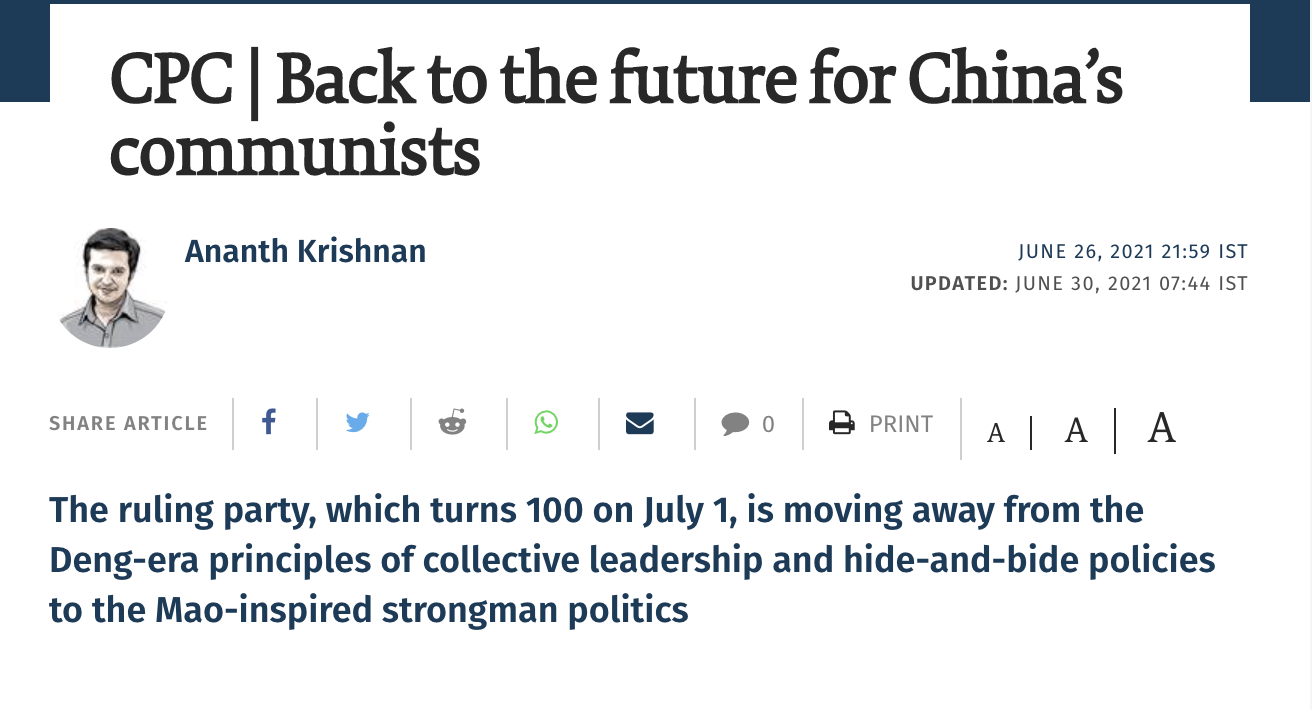
An article was published on June 26 claiming how the ruling party of China – Communist Party of China has moved away from Deng Xiaoping’s era of collective leadership to Mao-inspired strongman politics under Xi Jinping. The article was authored by Ananth Krishnan.

To put in simple terms, the article explains how the Communist Party of China has evolved strongly since its inception in 1921 till today and goes on to speak about how various leaders from Mao Zedong to Deng Xiaoping till Xi Jinping have been responsible for building the party and protecting the ideology of the Communist party.

However, if one reads the article, one finds that the writer seems to be in awe of these Communist leaders, as he fails to mention the atrocities and human rights violations they have committed in the last few decades to maintain their political stronghold. Maybe, one should not expect such courtesy from the Hindu when it comes to issues related to the People Republic of China.

Not just it, the Hindu has also published a podcast on the occasion of the anniversary to discuss CPC’s rise and its future. Anant Krishnan, the China ‘expert’ associated with the Hindu, spoke to another China ‘expert’ from the United Kingdom, who identified himself as Rana Mitter.

In the podcast, the two China ‘experts’ discussed the evolution of CPC, its political status in China and the world, as well as the party’s future. Further, the experts extensively spoke on the Chinese supreme leader Xi Jinping, especially on how he is seeking a greater global role for China even while championing a message of assertive nationalism back home.

In addition to these opinion editorials, podcasts and paid advertorials, the Hindu has been publishing several reports about the 100th anniversary of the Communist Party of China. At least four articles have been published in the last few days informing their readers how China has been eagerly waiting to celebrate the centenary celebrations of the Communist Party of China.

Well, one cannot know how excited the Chinese population are about this event. Still, one can definitely conclude that the left-wing media outlet Hindu is definitely very thrilled about the celebrations as it is clearly visible in its reportage.

The Hindu and its curious case of Chinese advertorial

Interestingly, this is not the first time that the left-wing media outlet Hindu has provided a golden opportunity for the Communist Party of China to peddle its propaganda on Indian soil. Last year, a few months after the deadly clash between the Indian Army and Chinese troops at the Galwan valley leading to the death of 20 brave Indian soldiers, the Hindu had published a similar advertorial favouring China.

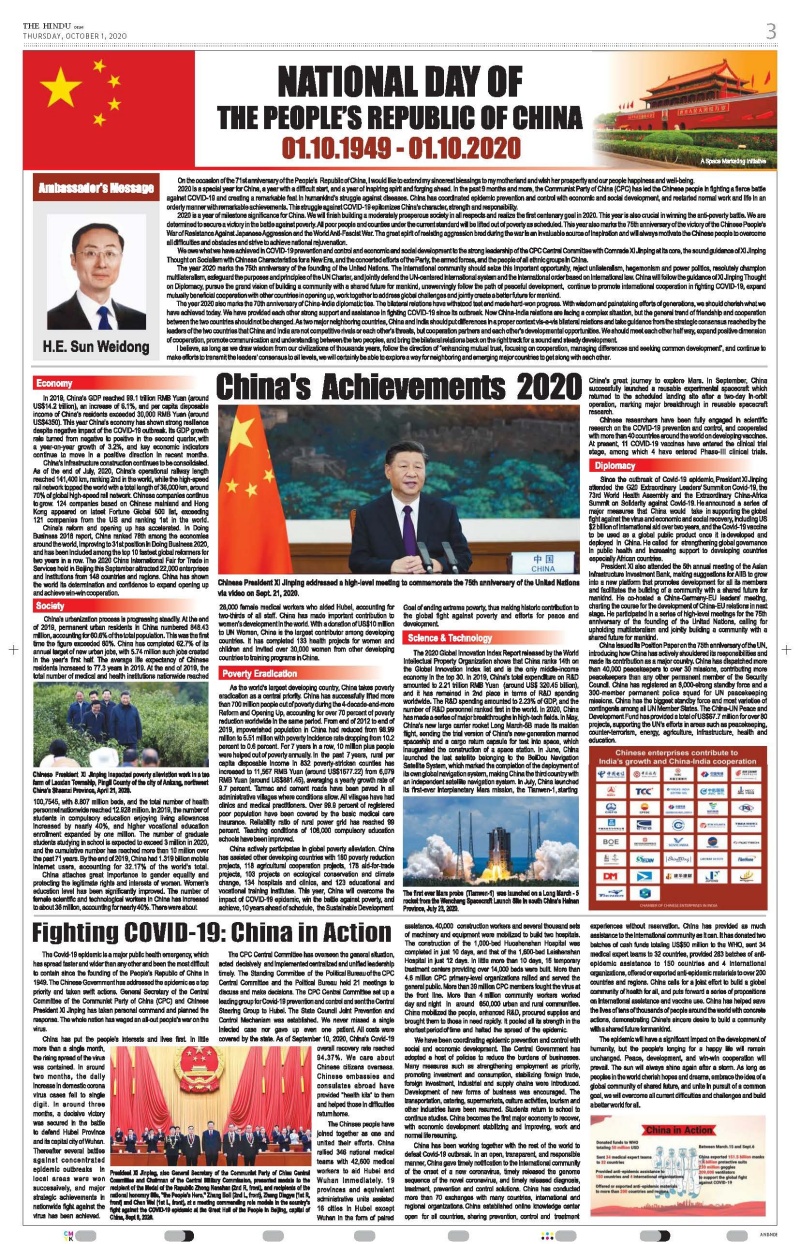
On October 1, 2020, The Hindu had run a full-page advertorial paid by China on the occasion of its national day. In a hurry to make money and further the Communist propaganda, the Hindu had published a Chinese advertorial in an open disregard for the sacrifice of Indian soldiers.

Here is the advertorial that Hindu had published last year in October:

Paid content by China featured by The Hindu in October 2020

The advertorial contained a message by the Chinese Ambassador to India where he talked about how bravely China had helped the world battle the pandemic that started from Wuhan. Further, after exonerating China of responsibility for the spread of the Wuhan Coronavirus and instead of painting them as the saviours, the ambassador talked about the India-China relationship and the recent tension.

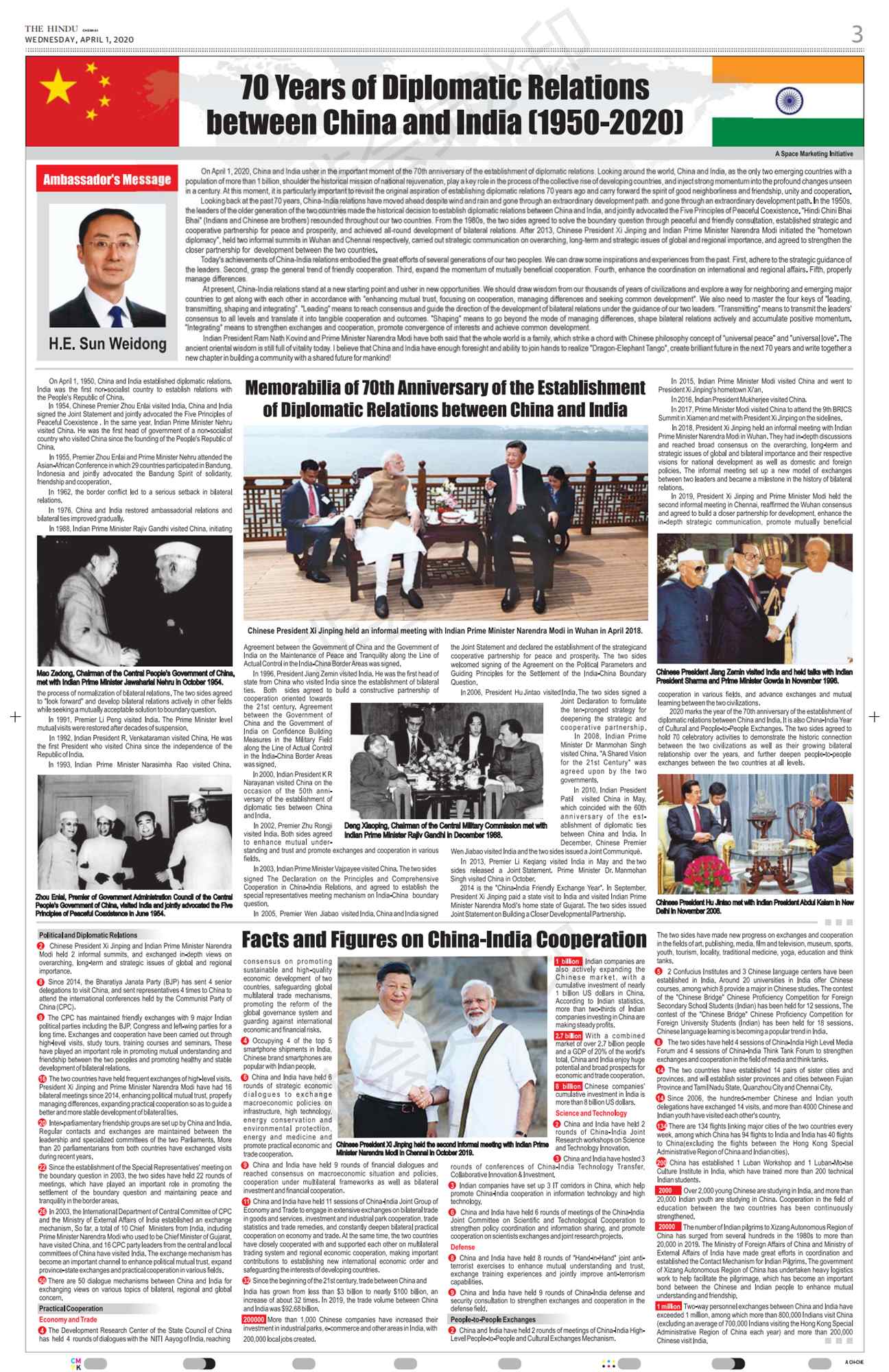
Similarly, On April 2, 2020, The Hindu had published another advertorial by China. The advertisement was placed to celebrate 70 years of diplomatic relations between China and India, even as China continued to betray India on the promises made.

Paid content by China on The Hindu

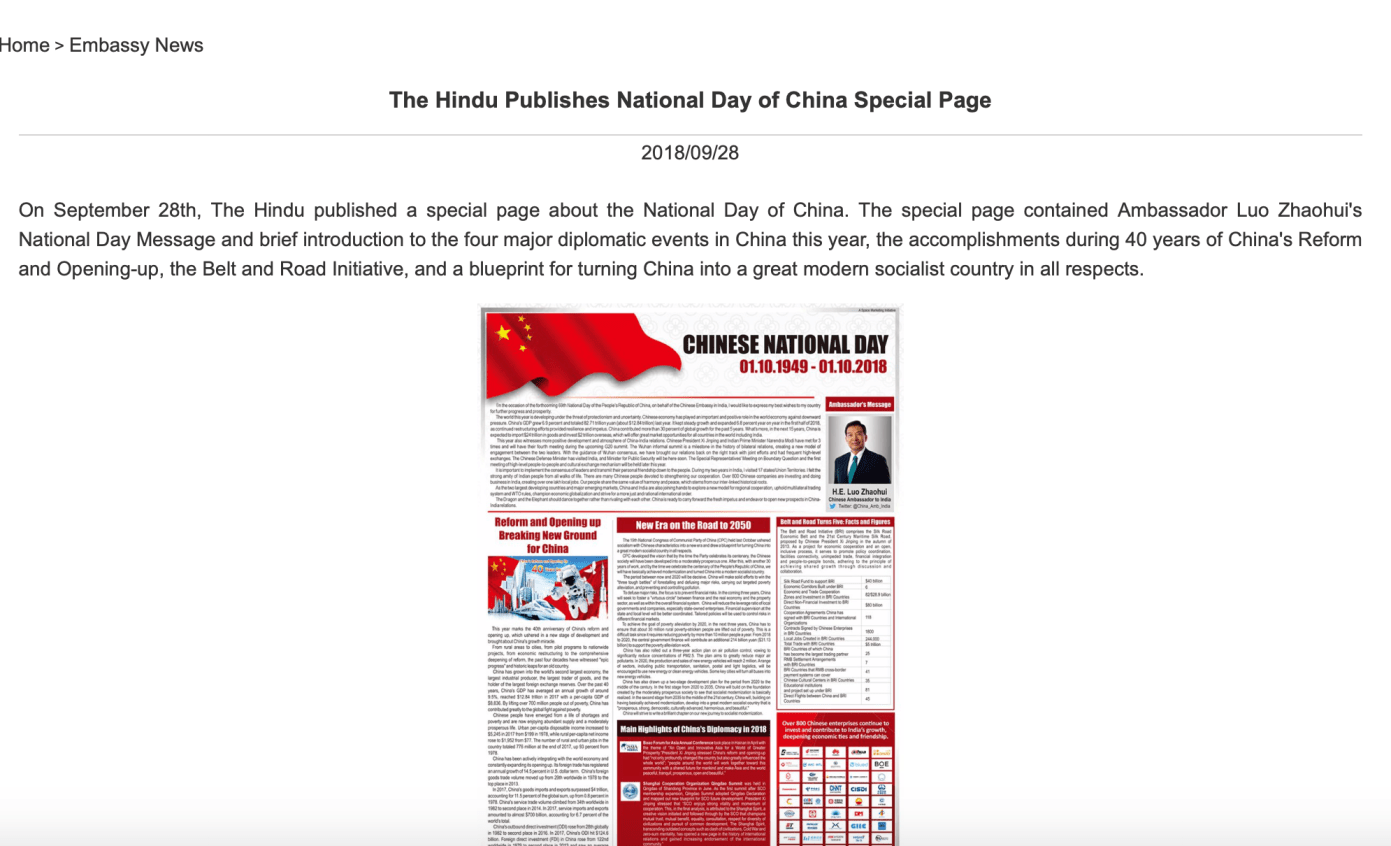
The Chinese Embassy, which paid The Hindu, basically presented the paid content as a “special page” that The Hindu had published on its own on the 70th anniversary of the establishment of diplomatic relations between China and India. The Hindu had done exactly the same in 2018 as well.

Paid content by China on The Hindu

At a time when China’s predatory international projects, its atrocities on the Uyghurs and its terrirotial aggression at Ladakh and South China Sea are facing a global backlash, not to mention its open conflict and statements against India in the recent months are being condemned globally, The Hindu’s clear obsession with the Chinese Communist Party seems odd, and questionable.

Dehradun: Bajrang Dal stops Welham school’s Halal meat tender, objects to Hindu students being forced to eat Halal

On June 26, a tender notice was published in the local classified section of newspapers where Welham Boys School, a prominent boarding school in Dehradun, invited bids for supplying Halal meat and poultry products.

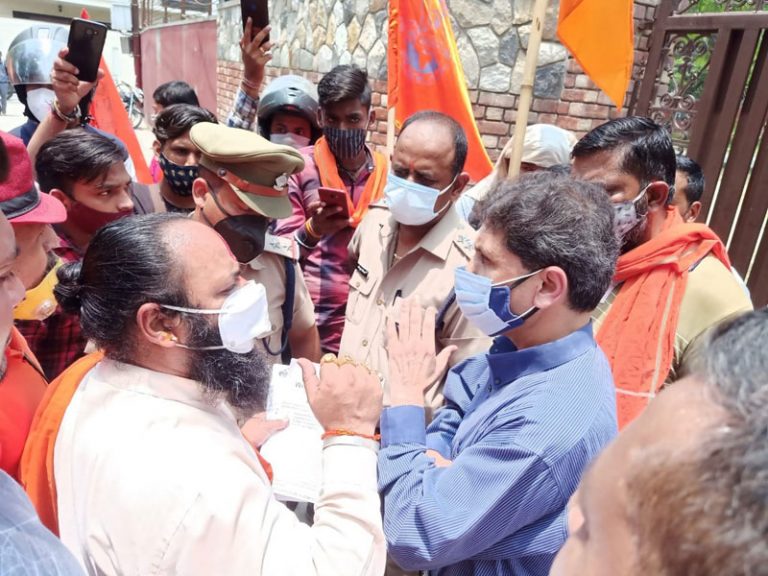
Retaliating against the ‘Halal’ specification for meat procurement, the Dehradun chapter of Bajrang Dal urged the Police to take action against the school. As per reports, Bajrang Dal activists protested outside the school premises and demanded school authorities call back the tender.

Why serve Halal meat when the majority of students are Hindu, asked Bajrang Dal

OpIndia talked to Vikas Verma, City Convenor of Bajrang Dal, about the whole case. Verma said the majority of the students at the school belong to the Hindu community. “We are unable to understand why the school wants to impose meat butchered by Islamic method on Hindu children.”

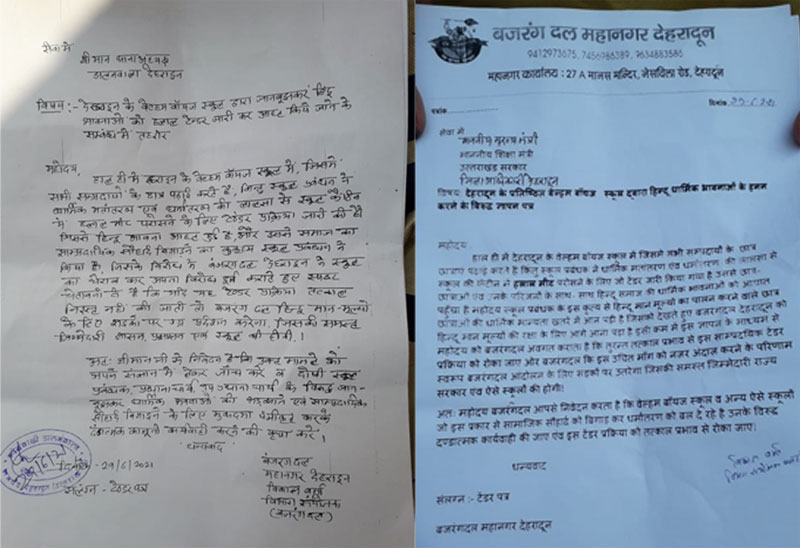
Bajrang Dal has filed a complaint at Dalanwala Police station and wrote to CM, Uttarakhand as well. In the complaint, the organization said that there are students from every community in the school. “The tender for Halal meat is an insult to Hindu students and community. With this complaint, we would like to bring the matter to your notice and urge you to take immediate action to recall the tender.” The organization further said that in case the administration and Police fail to take any action against the school, they will take the matter to the roads and call for protests across the city.

Left: Complaint filed at Police Station. Right: Complaint submitted to CM Uttarakhand. Source: Vikas Verma, Bajrang Dal, Dehradun

‘It is an attempt to fan communal tension’: Bajrang Dal

Verma called it an attempt to fan communal tension in the region and said Police must take immediate action against the school. He said when they approached the school administration about the tender, they informed the organization members that the school serves both Halal and Jhatka meat at school on a daily basis. “However, when we asked for documentation for any tender they had flouted in the past calling for bids for Jhatka meat, no one in school administration was able to provide any documents.”

School failed to show previous tenders for Jhatka meat

Mahesh Kandpal, Vice Principal of Welham School, told News18 that the tender for Halal has already been floated, but for Jhatka, it would be floated on Saturday. Interestingly, while talking to Jagran, School Principal said that Halal and Jhatka meat is served three days a week, respectively. She also added that they have different suppliers for Halal and Jhatka meat. Notably, when we accessed the tender floated by the school, there were several products on the list like bread, pulses, rice etc. It is unknown why would school flout a separate tender just for Jhatka meat.

Tender flouted by welham school. Source: Dehradunclassified.com

Police hesitating to take action, says Bajrang Dal

Verma further added that Dehradun Police is hesitating to take action against the school. They claim there are no provisions under the law to file a case on the school. Manibhushan Shrivastava, the Station in charge of Dalanwala, said they had received the complaint and the Police will investigate the case.

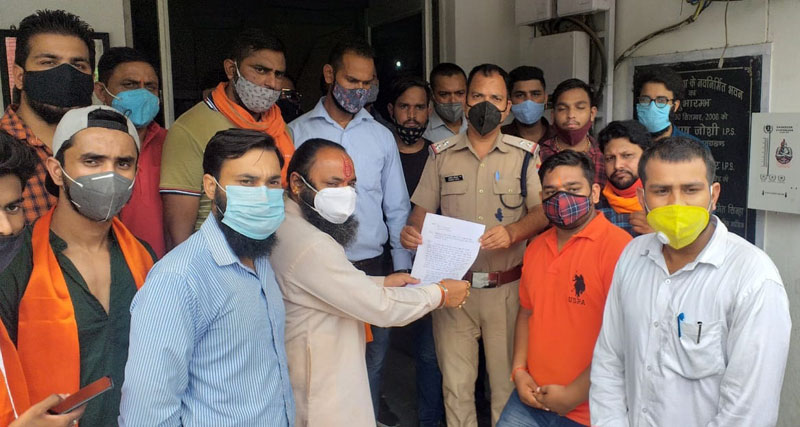
Bajrang Dal activists led by Vikas Verma submitting complaint at Police Station. Source: Vikas Verma

‘Hindu and Sikh butchers are losing jobs’

Verma said that as a result of such biased in favour of Halal meat is harming Hindu and Sikh butchers. The butcher community within Hindus and Sikhs are losing business to Halal suppliers who are predominantly Muslims. Reports suggest that there are roughly 40-million Hindus and Sikhs all over the country associated with the Butchering business. “By promoting Halal meat, institutes, restaurants, and other establishments are causing harm to these communities,” added Verma.

Do not eat at Halal-serving restaurants if they deny eating Jhatka meat

While talking to Pahad TV, Verma suggested a simple method of testing if the eateries are discriminatory towards Hindu and Sikh butchers. He said to take a dish prepared with Jhatka meat and ask the eatery owner to eat it. If he refuses to do so, never eat at the establishment. “The idea is to encourage people to learn what Halal means. If someone searches about the Halal method, he would understand how painful the process is for the animal,” he added.

Halal vs Jhatka

In the last few years, Hindu and Sikh communities have started to raise voice against Halal products. Interestingly, Halal is no longer limited to meat products but has penetrated to vegetarian products too. It is common to find “Halal Certified” stamps on vegetarian items like biscuits, flour, rice and other products in the market. Experts believe that through such certification is not government-approved, it is still legal at the same time. The Muslim community is using Halal certification to ensure their methods are followed by business establishments even if their products or services have nothing to do with Islam.

It is notable here that Halal is a method of slaughtering an animal for meat. In Islam, it is mandatory to eat Halal meat only. The business of Halal Certification exclusively benefits Muslims. By definition, Halal can only be performed by a Muslim man. Thus, non-Muslims are automatically denied employment at a Halal firm.

Additionally, there are a number of other requirements which make sure that the entire process is exclusive for Muslims in terms of employment and benefit.

The voice against Halal is showing results

In January 2021, it was reported that restaurants and retailers in South Delhi would have to compulsorily display what meat they are selling as per the South Delhi Municipal Corporation. In the same month, the first-ever non-Halal restaurant opened in Kerala, Ernakulam district. Even Christian outfits have raised their voice against Halal propaganda of the particular community. In September 2020, VHP had called an increasing number of Halal products in the market and ‘economic expansionism of Islam’ and warned against it. Though the voices against Halal imposition is making headlines, there is still a lot that can be done to stop it.

Verma said if needed, Bajrang Dal would not hold back from bringing the matter to roads and protest against all eateries and establishments that force Halal on non-Muslim communities.

Maharashtra: Thane resident asked to collect his own COVID-related death certificate

A 55-year-old teacher of a school in Ghatkopar, received a call from the Thane Municipal Corporation on Tuesday only to learn that he has been declared dead by the civic body. Chandrashekhar Desai, a resident of Manpada in Thane, reportedly received a call from TMC, asking him to come and collect his death certificate.

According to Desai, he himself took the call of the woman employee of the health department of Thane Municipality, who informed him that she had called regarding the issuance of the death certificate of Chandrashekhar Desai.

“She told me that the TMC wanted to issue the death certificate of one Chandrashekhar Desai. When I told her that she was speaking to Chandrashekhar Desai she was surprised and asked if anyone else in the family had died or been infected to covid,” Desai said adding that the caller later hung up.

TMC shrugged off the responsibility saying the name was in the list of ICMR: Desai

Upon receiving the call, Desai rushed to the office of the civic body to know further details. He said that the TMC officials, initially, had a very cold response to his questions. They showed him a printout of a death certificate, which clearly mentioned his name and address. Not wanting to take the onus of the blunder, the officials told Desai that his name was in the list of ICMR. “But my question is how can the name crop up in the ICMR list if it is not sent by the Corporation”, said Desai adding that the department eventually assured him that necessary steps would be taken to rectify the mistake.

“It was shocking. I shudder to think that if I had forgotten my phone at home and my wife or elderly mother picked up the call. They would have panicked with the news. I hope it is rectified soon and that I do not face any problem due to the same,” said Desai. He said he has submitted a complaint to the authorities.

“My family and I are in a state of shock. If this is not rectified soon, I will find it difficult as the records state that I am dead,” added Desai.

According to the school teacher, he had tested positive for Covid 19 in August 2020 and was subsequently cured after receiving treatment at his house. During his quarantine period, Desai had received a call once to inquire about his health.

However, according to the TMC’s records, Desai tested positive in August 2020, and was in home quarantine till May, when he lost his life. 

Thane Municipal Corporation calls issuing a death certificate to an alive man a “technical error” by ICMR

Speaking about the gross error, TMC said it was a “technical error” in the Indian Council of Medical Research (ICMR) reports that come from Pune.

“There is a list that is issued by the state government, which comes from ICMR, Pune. It includes all those who have died outside Thane city, but are residents of Thane. Due to some error, Desai’s name was also part of this list, however, TMC has not issued any death certificate. It was just a verification call and we have now rectified the mistake as well,” said Naresh Mhaske, mayor, Thane.

Meanwhile, the TMC commissioner, Vipin Sharma explained that there is a process the civic body follows to track the deaths. “This is a part of our routine. We regularly get updates from the state government, including reconciled deaths as well. Many times, deaths happen outside Thane city. Hence, we verify before updating our records”, said Sharma, adding that a similar verification call was made to Desai as well.

Sharma further added that there have been multiple instances in the past when the person does not pick up the call. In such situations, TMC sends its officers to their residences for verification. “This is a part of our protocol”, explained the TMC commissioner.

Regarding Chandrashekhar Desai’s case, Sharma confirmed that the concerned department has made the necessary updates.