Home Blog Page 5024

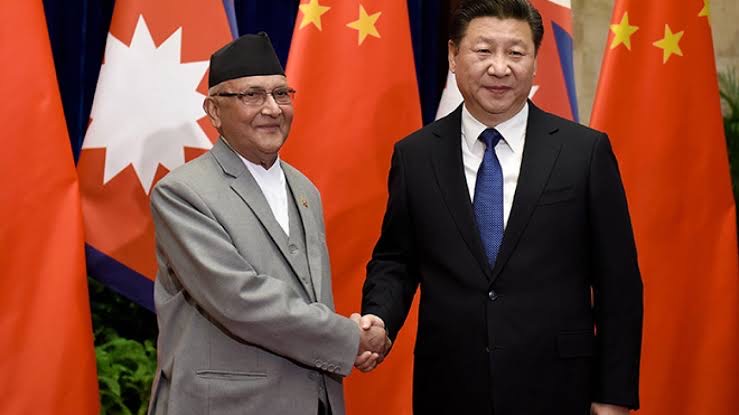
FinCEN files reveal names of Nepalis companies, banks involved in helping Iranian and Chinese firms avoid US sanctions

0

An investigation by the Center for Investigative Journalism (CIJ), along with the International Consortium of Investigative Journalists (ICIJ) and BuzzFeed has found that a few companies based out of Nepal, along with some Nepalese banks are allegedly involved in siphoning off money received suspiciously from abroad.

The investigation report released on Sunday exposes the shenanigans of Nepali companies and banks in attempting to evade the US sanctions and trade, particularly on Iran and China.

The report, dubbed as ‘FinCen Files’, is prepared by ‘Financial Crimes Enforcement Network’, a US government body that monitors financial transactions system in the US. As per the report, 9 banks and 10 companies and several individuals in the time period between December 2006 to March 2017 were found to have made suspicious transfer under the pretext of carrying out cross-border trade.

Nepali organisations have links with international smuggling rackets

The ‘FinCEN Files’ shows that several of the Nepali business organisations have connections with the international smuggling rackets of gold, antiquities, bitumen, and telecommunication equipment.

Banks such as Standard Chartered Bank, Prime Commercial Bank, Bank of Kathmandu, Nepal Investment Bank, Everest Bank, Mega Bank, Himalayan Bank, Apex Development Bank of Kaski, and Nepal Bangladesh Bank are amongst the financial institutions mentioned in the list of entities involved in indulging in dubious transactions.

‘FinCEN files’ expose $300 million in suspicious transactions through Nepal’s banks

Furthermore, 10 Nepali companies have been reportedly linked with sending or receiving funds illicitly. According to reports, a staggering amount of 292.7 million US Dollars have been routed through with the help of the banks and companies in the duration of 11 years.

The names of the companies mentioned in the report are: Rauniyar Brothers & Company, SubhaSamriddhi Traders Pvt. Ltd., Shasta Trading Company, Setidevi Export Import Pvt. Ltd., L.D. International Pvt. Ltd., Felt and Yarn Pvt. Ltd., Woman’s Paper Crafts, Acme Money Transfer Service, and Sunny Enterprises.

Amongst these, companies such as Rauniyar Brothers & Company, Shubha Shambridhi Traders, Private Limited, are under the scanner for being involved in suspicious transactions through Dubai based company called ‘Kite International FZE, who conducts business of importing and exporting petroleum products such bitumen, engine oil for vehicles, lubricants, and rubber processing oil.

The investigation has found sensitive details about these Nepali companies. Rauniyar’s company has imported the goods from Iran, a country under the US trade embargo. But the documents have been faked to show they have been imported from Dubai.

One of the directors of the Rauniyar company, Narayanji Rauniyar, said that his companies have stopped operating since the last four-five years. However, FinCEN files claim that Naranyanji’s son Prakash Kumar Rauniyar, was the mastermind behind the business.

Both the companies— Rauniyar Brothers & Company, SubhaSamriddhi Traders Pvt. Ltd. are registered under the name of Narayanji Rauniyar of Birgunj and his four sons—ShyamBabu, JyotiBabu, Prakash Kumar, and Deep Kumar Babu.

Ties between a Nepali Bank and ZTE

The documents further state that Zhongxing Telecommunication Equipment (ZTE) Corporation, China’s largest telecommunications service provider company, remitted 213.3 million US Dollars to other countries, including Nepal, from March 17, 2011, to March 1, 2017.

ZTE had done the transaction through Beijing-based China Construction Bank. The US-based New York branch of China Construction Bank had discovered that the transacted amount was suspicious.

In the duration of three years and four months from November 4, 2013, to February 27, 2017, ZTE was found to have deposited some amount in Nepal Investment Bank, according to ‘FinCEN’.

In the description, four separate amounts: $5,709.09, $5,244.76, $40,357.75 and $10 are found to be deposited by ZTE Corporation in Nepal Investment Bank, Kathmandu.

According to FinCEN, the investigation mentioned ‘several conspiracies’ that the ZTE created to evade US sanctions. The company “makes the purchase of telecommunications equipment from the United States and sells it illegally to Iran as ZTE’s equipment.” According to FinCEN, the ZTE traded suspicious funds in various countries to deceive regulating bodies against US sanctions.

Banning broadcast of Sudarshan News content not under SC jurisdiction, OpIndia, Indic Collective and UpWord intervention contends in Court

OpIndia, Indic Collective and UpWord have filed an intervention application in the Sudarshan News ‘UPSC Jihad’ case. A report titled “A Study on Contemporary Standards in Religious Reporting by Mass Media”, prepared by OpIndia was submitted in the Court. The matter was heard in the Court today. J Sai Deepak, representing the petitioners, said that there are three issues that have been submitted.

First, whether Supreme Court has jurisdiction over the matter. When Justice Chandrachud sought to confirm whether the contention was that the Supreme Court had no jurisdiction over the matter, J Sai Deepak confirmed that indeed it was. The plea contends whether any statute or the Constitution itself permit Courts to step into the shoes of the State to restrain the broadcast of such content.

Second, the definition of hate speech. And third, the OpIndia report which tracks the contemporary landscape on the standards set by mass media in religious reporting. On being enquired about the report, Sai Deepak contended that “the episodes of Sudarshan News TV must be assessed in light of the contemporary standards of religious reportage observed by mainstream media, instead of being examined in isolation”.

Justice Chandrachud said that all intervenors including the OpIndia, Indic Collective and UpWord will be heard after the parties have been heard. It has also been indicated that petitioners and intervenors in support of the core petition concerned will be heard first and then it will be followed by the Solicitor General, J Sai Deepak, Mukul Rohatgi and others on the other side.

While arguments were being made, J Sai Deepak quipped that the judges “will also want to consider that there is a question of chilling effect of an order and what example does it state for future orders though it may be only for this series”. nJustice Chandrachud responded, “We agree with you. We are concerned about balance between speech and dignity. Here the community is a large amorphous group and we can’t ask them to approach civil remedy.”

The matter will be taken up next on the 23rd of September at 2 pm. You can read the full intervention application filed by OpIndia, Indic Collective and UpWord and the OpIndia report attached at the end here.

Richa Chadha to sue sexual assault survivor for naming her in allegations against Anurag Kashyap

Days after the sexual assault survivor Payal Ghosh opened up on the alleged sexual harassment she faced in the hands of filmmaker Anurag Kashyap, Bollywood actor Richa Chadha has taken to Twitter to affirm that she has initiated legal action against Payal Ghosh for dragging her name into the controversy.

Richa’s statement read: “No woman can be allowed to misuse their liberties to harass other women with unsubstantiated or non-existent, false and baseless allegations.”

“Our Client has initiated appropriate legal action and shall further pursue her legal rights and remedies in law as may be advised in her best interest,” the letter by Chadha’s lawyer Saveena Bedi Schar stated.

Richa followed it up with another Tweet against Payal Ghosh insinuating that the latter had a hidden agenda behind the name-calling: “Attempt to rape is a serious allegation. She should have gone to the cops. Do you think feminism is women dragging your name in an obscene, unnecessary way in their personal battles? So I can make cheap allegations about you on TV? – Your agenda has blinded you towards truth. Shame.”

Some on social media call Richa Chadha’s reaction as ‘double standards’

Richa Chadha’s Tweet was in response to another user’s Tweet, who had shared one of Richa’s old 2018 interviews where she had vociferously spoken against the concept of casting couch prevalent in Bollywood and advocated that women in the film industry should not be afraid of the big and influentials and stand up for themselves. The user had alluded that by going against the victim, Chadha is displaying double standards.

Actor Payal Ghosh accuses filmmaker Anurag Kashyap of sexual assault

Actor Payal Ghosh, the sexual assault survivor, had on September 19 claimed that she was sexually harassed by filmmaker Anurag Kashyap and told that physical relationships between filmmakers and actresses are very common in the movie industry in order to make her comfortable about the whole situation. She claimed that Anurag Kashyap had told her that all the actors who had worked with him in the past, like Huma Qureshi, Richa Chadha, Mahi Gil, etc were just a call away.

Payal Ghosh had called Anurag Kashyap a ‘f***ing hypocrite’ for speaking on matters of women empowerment and the patriarchy.

‘Liberals and feminists’ jump in to rescue Kashyap

As expected, soon after Payal Ghosh’s allegations of sexual harassment against Anurag Kashyap surfaced, the so-called feminists and liberals, many of whom who had earlier vociferously supported the MeToo movement, jumped in to defend the filmmakers, absolving him from all the allegations.

Over 2,000 Salafist organisations active in Turkey, ready for civil war, says pro-Erdogan Islamist cult leader

0

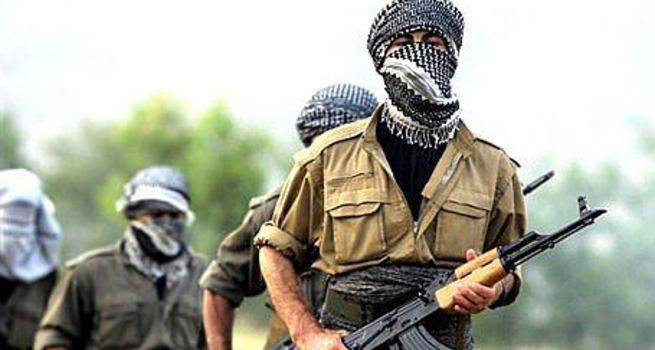
Turkish authoritarian leader Recep Tayyip Erdogan had long shunned the secular foundations of modern Turkey and pushed for a more medievalist Islamisation of the country. This was evident with his recent decision to convert the 6th-century Byzantine-era cathedral in Istanbul once again into a mosque. Now, a report published in Arab News reveals that there exist radical Salafist groups in Turkey to take on the Kurds, which have been the primary enemies for Ankara.

Islamic cult leader Ahmet Mahmut Unlu announces the existence of more than 2000 Salafist organisations in Turkey

The revelation that there are legions of Salafist organisations active in the country came from an Islamic cult leader Ahmet Mahmut Unlu, a pro-government figure, had recently announced that he was ready to disclose 150 Salafi associations, along with their locations, as a part of preparations to fight in Turkey.

Unlu added that there are more than 2000 Salafist organisations across the country, ready to wage a civil war, particularly in the southeastern provinces of Batman and Adiyaman.

The groups have reportedly threatened people with death threats and issued warning to the government against taking measures to place a curb on them.

It is also worth noting that the southeastern provinces of Adiyaman was earlier a breeding ground for enlisting and deploying ISIS cells in Turkey.

However, the interior minister of Turkey, Suleyman Soylu, has strongly denied the accusations that rabid Salafist organisations are active in the country.

Analysts believe Salafist organisations in Turkey took root during in the wake of the Syrian conflict

According to Colin Clarke, a senior research fellow on terror financing networks with the Soufan Group, some Salafi groups might have struck an agreement with the Erdogan government in Turkey, as per the Arab News report . Clark added that Erdogan considers these groups as a counterbalance against the Kurds, which still remain the number one enemy for the ruling establishment.

He added that while Turkey has promised to wage fight against ISIS and other terror groups, it has hardly taken credible action to limit their presence on Turkish soil, as per the Arab News report.

About 4 years ago, Turkish police had reported that there were more than 20,000 active Salafi organisations in the country.

Erdogan’s Islamist policies benefits Salafist organisations in Turkey

Analysts also believe that a high number of Salafi organisations in Turkey can be ascribed to its policy of facilitating foreign fighters sympathetic to ISIS to cross the border into Syria and wage a jihad against the Assad regime, which ultimately resulted in the strengthening of the Salafi-jihadist groups, including Jabaat Al-Nusra and ISIS.

However, later Turkey was at the receiving end of the wrath of these Salafist organisations, many of whom turned their rage towards Ankara, that resulted in a spate of terror attacks on Turkish soil. There were 10 suicide bombings, bomb attacks which led to the killing of more than 315 people.

Experts also believe that Recep Erdogan’s move to cater to the neo-Islamists in the country may also enjoy Salafi organisations’ support, who adhere to a more puritanical version of Islam. The increasingly radical political environment push for Islamism, most notably with the reversion of Hagia Sophia into a mosque, provides Salafi organisations with enough reasons enough to back him as their leader and consequently diminished incentives for the Turkish dictator to act against the Salafis.

Dawood’s financier and Pakistani national Altaf Khanani laundered 14-16 billion USD annually to fund terror and drug cartels: Reports

0

The US Financial Crimes Enforcement Network (FinCEN) has revealed how Pakistani national Altaf Khanani, also the chief financier of Dawood Ibrahim, was involved in laundering $14-$16 billion annually and funding drug cartels and Islamist terror outfits across the world such as the Taliban, Hezbollah, and al-Qaeda.

Altaf Khanani received $49.78 million from ‘Moscow Network’

The revelation came at the backdrop of Suspicious Activity Reports (SARs) that were filed by Standard Chartered Bank in New York. FinCEN, in its 20-page Intelligence report, has exposed how Khanani laundered money through Dubai-based Mazaka General Trading LLC and 54 shell companies (also called the Moscow Network). Through these companies, Khanani moved funds from Russia to other parts of the world via European security markets.

Such a practice is often known as mirror trading. In this trade, an individual purchases securities in one jurisdiction and sells them in another jursidiction. While there is no economic gain in this process, the individual can conceal the fund source and the final destination. Those supporting Khanani in his money laundering business are his family members, based in Pakistan. Reportedly, he received $49.78 million from the Moscow Network between March 2013 – October 2016.

His parent trading company, Mazaka General Trading LLC, also procured funds Ask Trading PTE, a Singapore-based mirror trading company. Transactions for the mirror trade was facilitated through JP Morgan Chase Bank in New York, United Overseas Bank in Singapore, and Bank of Baroda (Dubai branch).

His lawyer Mel Black claimed, “Mr Khanani has pled guilty and served a lengthy sentence, during which his brother died and he was separated from his family. He is in bad health. He is financially destitute and his ability to earn money is destroyed by his being blocked by an OFAC designation and the freezing of his accounts. He has not been involved in any business activities of any kind for five years. He looks forward to moving ahead in a simple law-abiding life.”

The connection between Khanani and Indian company Rangoli

Khanani had also traded to the tune of $10.65 million with Rangoli International Private Limited, a New Delhi based company set up in 2009. Reportedly, transactions were done through the Punjab National Bank, Central Bank of India, Vijaya Bank, Bank of Maharashtra, Oriental Bank of Commerce, and Corporation Bank. One such transaction via Punjab National Bank took place on June 18, 2014, during which $136, 254 was traded between the two, the investigative report by Indian Express said.

As per the report n Indian Express, Rangoli witnessed losses to the tune of ₹74.87 crores, despite a sales revenue of ₹339.19 crores. Amidst ‘decline in profitability’, the company was listed as a ‘wilful defaulter in February 2020. The Allahabad bank had listed Rangoli as a top 50 NPA in March 2015. While Punjab National Bank allowed for e-mortage of Rangoli’s ‘mortaged properties’ in 2016 and 2019, the Corporation bank listed auction of the company’s immovable assets in October 2019.

Similar steps for loan recoveries was taken by the Union Bank in July this year. Reportedly, the Bank of Maharashtra has listed the company as a wilful defaulter in february 2020. Responding to the allegations, Rangoli’s MD Luv Bhardwaj said, “To the so-called ‘around 70 transactions concerning Rangoli International of the years 2013-2014’ that you refer in your query, of which we have no data for, responding in any manner would be a paradox.”

He dismissed claims of reception of $136, 254 from Punjab National Bank through Khanani’s mirror trading company.

Altaf Khanani was apprehended in 2015, financier of Dawood Ibrahim

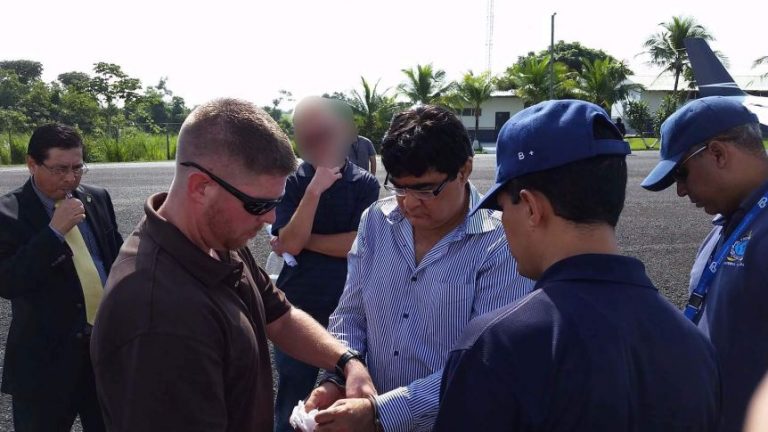
Khanani was arrested in the US at the Panama airport during a trans-continental operation in 2015. He was kept in a Miami prison until July 2020. The association of Khanani with Ibrahim was established by the US Office of Foreign Assets Control (OFAC) while issuing sanctions notice, post his arrest.

The sanctions notice stated how he channelised funds to global terrorists, drug traffickers, and criminal organisations via his Money Laundering Organisation (MLO). The notice emphasised, “Altaf Khanani, the head of the Khanani MLO, and Al Zarooni Exchange have been involved in the movement of funds for the Taliban, and Altaf Khanani is known to have had relationships with Lashkar-e-Tayiba, Dawood Ibrahim, al-Qaida, and Jaish-e-Mohammed.”

The arrest of Khanani was seen as a breakthrough by Indian intelligence agencies given the Dawood Ibrahim connection and the fact that Lashkar-e-Toiba and Jaish-e-Mohammed had been specifically mentioned by the OFAC as terror organisations funded by him.

‘Tablighi Jamaat spread Coronavirus infection among many, investigation into Maulana Saad underway,’ Govt tells Parliament

0

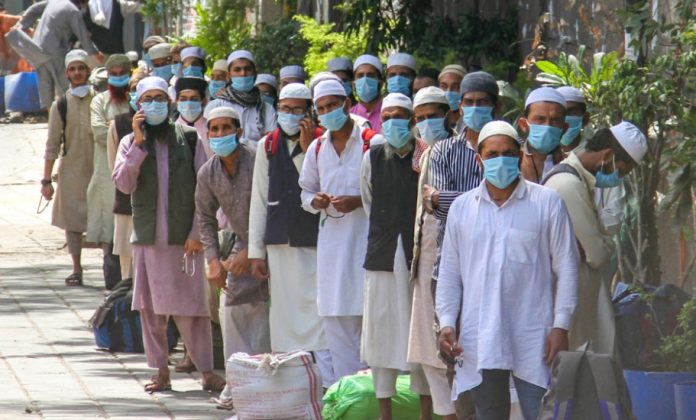
G. Kishan Reddy, Minister of State for Home, has said in reply to a question in the Rajya Sabha that members of the Tablighi Jamaat were responsible for spreading the Wuhan Coronavirus. He also said that 2361 people have been evacuated from Nizamuddin Headquarters of the Tablighi Jamaat since the 29th of March.

In response to a question whether “a major reason of spread of corona in Delhi and other States was assembly of Tablighi jamaat people”, Reddy replied, “As reported by Delhi Police, despite guidelines/ orders issued by various authorities in pursuance of the outbreak of COVID-19, a huge gathering assembled inside a closed premise; over a protracted period of time; without any semblance of social distancing or provision of masks and sanitizers. This also caused spread of Corona Virus infection amongst many persons.”

Reddy also said that 233 people associated with the Tablighi Jamaat have been arrested by the Delhi Police but investigations into Nizamuddin Markaz chief Maulana Saad is still under way. A case has been registered against him by Delhi Police, under sections 304, 308, 336, 188, 269, 270, 271 and 120-B of the Indian Penal Code, Section 14-B of the Foreigners Act 1946, Section 3 of the Epidemic Diseases Act 1897 and Section 51/58 Disaster Management Act 2005.

The Tablighi Jamaat time bomb erupted across the country in the last week of March when around 200 people with Wuhan Coronavirus symptoms were admitted to various hospitals in Delhi from the Markaz Nizamuddin and surrounding places. Subsequently, the area around the Markaz Nizamuddin was cordoned off by the Delhi Police. Soon, cases began to erupt across the country with links to the Tablighi Jamaat and the country stood horrified as the magnitude of the Islamic Missionary organization’s transgressions became known.

‘Will quit Twitter if anyone proves I called farmers as terrorists’: Kangana Ranaut hits out on ‘Champu sena’

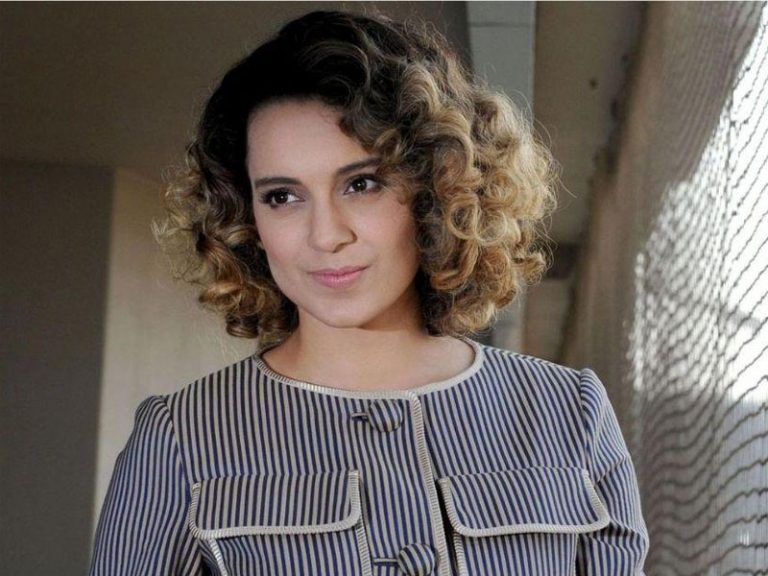
On 20th September, Kangana Ranaut quoted Prime Minister Narendra Modi’s tweet on various agriculture Bills and said it is impossible to explain anything to someone who is pretending to sleep. She called out people causing unrest among farmers. Likening the ones spreading misinformation regarding the Bills to terrorists, Kangana Ranaut said that they are like the ones who spread similar misinformation during CAA.

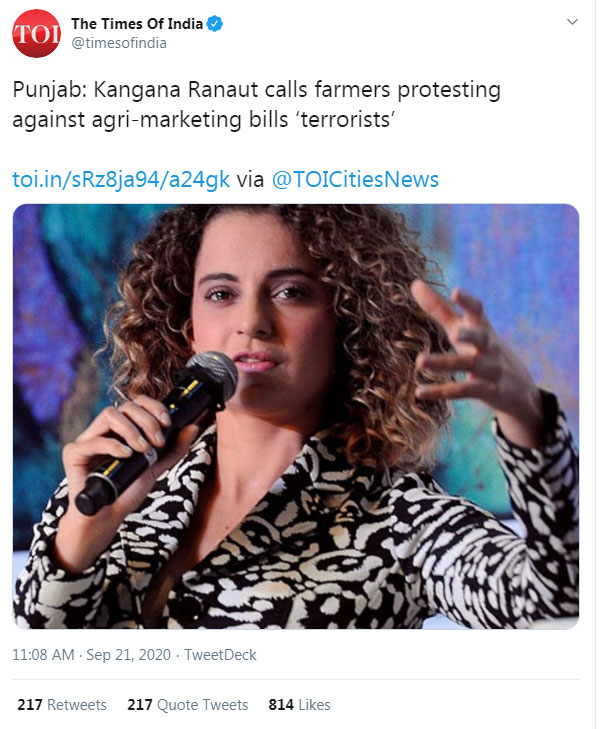
She said how in CAA, not a single Indian citizen has last his/her citizenship but the propagandists spread misinformation regarding the same that led to violence. Media outlets like the Times of India twisted the statement and projected that Kangana Ranaut was calling farmers as terrorists. In its report, TOI alleged that Kangana Ranaut called out protesters as “the same terrorists who indulged in bloodshed even as no citizen lost citizenship due to CAA.” However, she referred to those who provoked anti-CAA protests across India that led to anti-Hindu riots in Delhi in February 2020.

Times of India’s tweet on Kangana Ranaut

Such lies were spread on social media too

Some netizens also tried to twist her statement and alleged she called farmers as terrorists. People who have studied in India’s premier institute were also unable to comprehend the tweet in Hindi.

Along with her, other usual propagandists too continued to spread misinterpretation of her tweet, thereby proving her point that the ‘terrorists’ are out to burn down the nation.

Following the attack on her tweet, Kangana took to Twitter to call out the ones who were abusing her.

Referring to those spreading rumours as ‘champu’, Kangana said that if anyone can prove that she referred to farmers as terrorists, she will quit Twitter forever.

Rajya Sabha passes agriculture Bills

Modi Government got three bills passed from Lok Sabha and Rajya Sabha that will not only enable farmers to do contract farming with large corporate but also allow them to sell their produce anywhere in India without government’s intervention. The opposition is trying to project these Bills as anti-farmers and stating that it will remove MSPs. However, the government has ensured it will procure produce at MSP as before. PM Modi has assured several times that the government is not stepping back from procuring produce at Minimum Support Price (MSP). Kangana Ranaut has been in limelight for calling out the Maharashtra government and B-town celebrities in the last few months since Sushant Singh Rajput’s death in June.

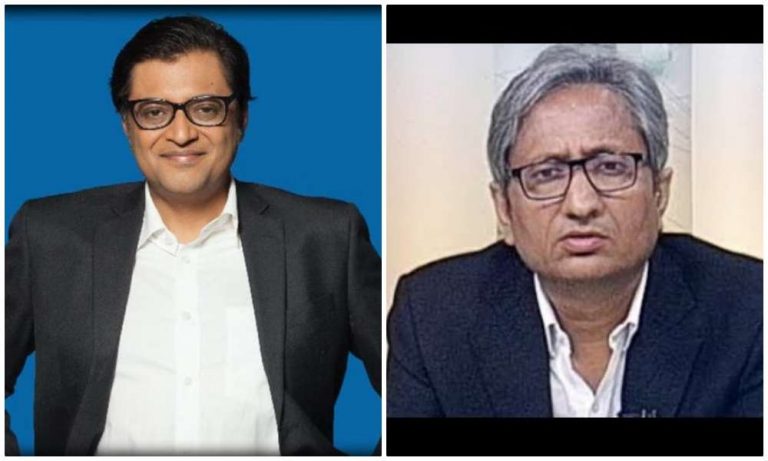
Why Arnab vs Ravish is like India vs China

The other day, while hearing the Sudarshan News case, the Hon. Justice K M Joseph of the Supreme Court made the following observation about the way debates are conducted on television:

Certain channels mute panelists when they express views which go against the anchor’s views. This is unfair.

This made me wonder. Which channel is the Hon. Justice K M Joseph watching? It also made me smile. Because it is always reassuring to know of an ordinary human side to someone as eminent as His Highness Justice K M Joseph. Turns out eminent people can be a little bit like us. Who knew?

Speaking of news channels, we have to talk about Arnab. They say Arnab is loud, they say his show is chaotic and you can barely hear anything. They are right.

On the other extreme, there is Ravish Kumar. Ah! NDTV : the one true channel of Indian liberalism. The sweetly pessimistic voice of Ravish Kumar, night after night, telling us how everything went wrong since Sonia Gandhi lost power.

Which is better? I know liberals are rolling their eyes right now. How can you even compare the Magsaysay winning Ravish Kumar to Arnab? Seriously? Haven’t you heard that Arnab has destroyed Indian journalism? The other day a liberal who probably made a ton of money as a once frequent guest on Arnab’s show referred to his channel as a “gutter.”

It has to be true. Arnab has destroyed Indian journalism. With his support for nationalism and communal agendas. You can hear all about this from Indian liberals explaining this to Al Jazeera, the official mouthpiece of the Islamic theocracy of Qatar.

But let us think again about what Justice Joseph said. There is indeed something that just feels wrong, sort of undemocratic about a TV channel muting a panelist when they don’t agree with the anchor. These TV channels are privately owned, so there isn’t much of a free speech argument. And yet, as citizens of a democracy, it just “feels” wrong to watch somebody being stopped from speaking, isn’t it?

So why is there shouting on Arnab’s show but no shouting on Ravish Kumar’s show? Because there is something in Arnab’s show that Ravish Kumar never has: an opposing voice.

He may shout over it. But it’s there. In fact, he has to pay these panelists to come to his show and disagree with him. However you look at it, there is something honorable about that. Something democratic. Like our nation itself.

Take our Lok Sabha – the house of the people. Often times, it is chaotic. Members interrupt each other. There is shouting. There is sloganeering. Often times, members break all rules of decorum and burst into the well of the house. Sometimes, they say things that are downright abusive.

And just like Arnab’s show, the outcome of these Lok Sabha “debates” is never in doubt. We always know which side has the numbers. That side always wins. And yet, it is important to have the opposition and the government in the Lok Sabha, facing each other, if only to shout.

You can complain about the tone and quality of the Lok Sabha debate. But would you do away with the ritual of it? Sure, it would be better if members didn’t shout. But would you ever replace it with the Chinese way?

In China’s parliament, known as the Great Hall of the People, nobody ever shouts or screams. Nobody ever disagrees. I mean the President of China comes in, issues his orders and everyone applauds.

Remind you of Ravish Kumar’s show? One man, one view. Sometimes, “guests” come in, only to tell him that he is right.

The China model? You can hear what Ravish Kumar is saying. You are simultaneously reminded that your place is never to speak, but only to listen. There is never a conflict or disagreement and Ravish never has to mute any panelist for disagreeing with him.

Which do you prefer? The Arnab model of chaos and conflict? Or the Ravish Kumar model of “one true journalist”? Which one appeals to your democratic spirit?

I will tell you my preference. I prefer the Republic of Arnab to the “People’s Republic” of Ravish Kumar.

Everyone knows that Arnab has the highest TRPs. The smart people insist that is because most people are dumb. Have they considered this : perhaps people tune in to Arnab’s show because the format appeals to their democratic spirit? Our way may be loud and inefficient, but we Indians are a free people. The China model does not appeal to us.

When I shared these views on Twitter the other day, some liberal friends pointed out that I am being unfair. They said to me that Ravish Kumar has an open invitation for PM Modi to come to his show any time and disagree with him.

If that is true, I guess Ravish Kumar does allow people to disagree with him on air. To have that honor, you just have to be the Prime Minister of India.

For that matter, the Chinese government does make exceptions to their no disagreements rule : it allows countries like US, India and Japan to operate embassies in Beijing. Maybe that means China is also a democracy. I do apologize to China. I also apologize to Ravish Kumar.

Governor expresses concerns over law and order situation in West Bengal, says anguished by DGP’s ‘two sentence response’

0

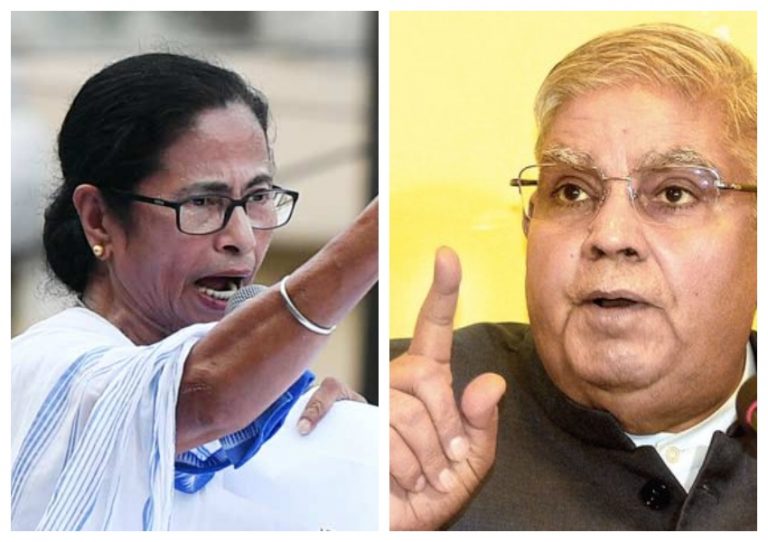
West Bengal Governor Jagdeep Dhankar, who has been extremely critical of the Mamata Banerjee-led government in the state several times in the past, has taken to Twitter to express deep anguish on the “two-sentence response” from the DGP “sent unusually” to the secretary to the Governor.

State DGP’s “two sentence response” irks the West Bengal Governor

The DGP’s response purportedly came after Dhankar had on Saturday raised concerns over the “alarming decline” in law and order in the state following the arrest of nine terrorists associated with a Pakistan-sponsored module of the al-Qaeda from several locations in West Bengal’s Murshidabad and Kerala’s Ernakulam early on Saturday by the National Investigation Agency.

“DGP’s two-sentence response dated September 10 to my ‘confidential’ communication dated September 5, sent unusually, to Secretary to Governor, has surprised and anguished me. His response to the critical issue raised in thus: West Bengal police firmly adheres to the path laid down by law. There is no discrimination for or against anyone in an extra-legal sense“.

Quoting West Bengal’s Director General of Police (DGP), the Governor said that “There can just be no takers of his assertions in the state and outside.” Dhankar said: “Nothing could be further from the grim reality that the state has become safe heaven to terror, crime, flourishing illegal bomb-making, corruption resulting in atrocious violation of the human right and the oppressive quelling of all opposition”.

Tearing into West Bengal’s Director General of Police, Dhankar said that his response his reflective of his ‘don’t care’ attitude. Accusing the state police of being extremely biased and beguiled by the Mamata government’s appeasement politics, Dhankar said: “Turning Nelson’s eye to the grim reality, one sided police actions against a particular set of people in all communal situations are brazenly and overzealously rubbished; as well as unleashing hurtful misinformation campaign on social media, purportedly under ruling party hired specialists; arresting people of partcular hue to satiate political whims and allowing oters to go on a rampage, even when they are spreading far more intense venomous hatred!”

State has become home to illegal bomb-making: West Bengal Governor tore into Mamata government following NIA arrest

It is pertinent to note here that the West Bengal Governor was extremely enraged at the state administration after the National Investigation Agency (NIA) arrested nine terrorists associated with a Pakistan-sponsored module of the al-Qaeda from several locations in West Bengal’s Murshidabad and Kerala’s Ernakulam early on September 19 (Saturday).

Following the incident, Jagdeep Dhankhar on Saturday said that the state has become “home to illegal bomb-making” and the administration cannot escape its accountability for the “alarming decline” in law and order. 

“State has become home to illegal bomb-making that has the potential to unsettle democracy. Police @MamataOfficial busy in carrying out political errands and taking on the opposition. Those at helm @WBPolice cannot escape their accountability for this alarming decline in law and order,” Dhankhar tweeted.

The governor alleged the state director general of police is distanced far from reality and his “ostrich stance” is “very disturbing”.

“How far distanced is DGP @WBPolice from reality is the cause of worry. His ”Ostrich Stance” is very disturbing. Appreciate the role of policemen in general-they r working in difficult situations. Problem is with those at the helm who r unmindful of conduct and r politically guided,” Dhankhar said in another Twitter post.

 NIA arrests 9 Al-Qaeda terrorists, were planning multiple attacks

The National Investigation Agency (NIA) has busted a major terror module in the country after it nabbed 9 Islamic terrorists linked to Pakistan-sponsored Al Qaeda from West Bengal and Kerala on Friday.

According to the reports, the National Investigation Agency arrested nine terrorists linked to Al-Qaeda from Murshidabad in West Bengal and from Ernakulam in Kerala. The officials also seized some digital devices and documents.

The arrested terrorists have been identified as Murshid Hasan, Iyakub Biswas, Mosaraf Hossein, Najmus Sakib, Abu Sufiyan, Mainul Mondal, Leu Yean Ahmed, Al Mamun Kamal, Atitur Rehman.

“A large quantity of incriminating materials, including digital devices, documents, jihadi literature, sharp weapons, country-made firearms, a locally fabricated body armour, articles and literature used for making home-made explosive devices have been seized from their possession,” the NIA statement has said.

How Kolkata girl Tania Parveen turned to violent jihad to ‘find answers’

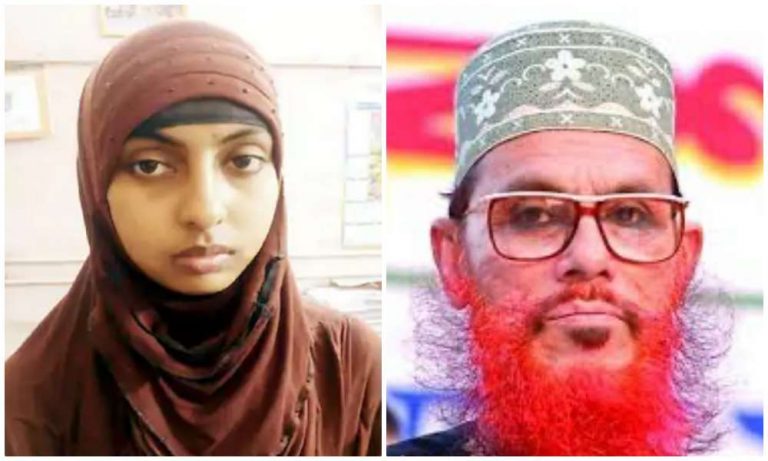
Born to Nurnehar Khatun and Alamin Mondal in Malaypur village in West Bengal’s North 24 Parganas, 21-year-old Tania Parveen had a tough childhood. As per a report by News18, despite the hardships, her mother ensured she gets best education. Parveen, along with her younger sibling studied in a private school, the London Missionary Society where she scored 90% in her exams. In 2019, she earned her Bachelor’s degree in Arabic from Kolkata’s Moulana Azad College.

However, as per the report, a 2017 incident of communal violence sowed the seed of violent jihad in her mind. On 2nd July 2017, a teenaged boy posted an image of Prophet Muhammad on Facebook and Kaaba. This sparked outrage and a Muslim mob went on a rampage and attacked Hindu homes. Dozens of houses and shops belonging to Hindus were gutted. One person was killed and almost two dozen were left injured.

Tania Parveen turned to Delwar Hossain Sayeedi

To find ‘answers’ for the questions, in 2018, as per the NIA, Tania Parveen turned to Bangladeshi Islamic preacher Delwar Hossain Sayeedi. Sayeedi has been accused and convicted in connection with the war crimes that were meted out on the people of East Pakistan who supported the idea of an independent sovereign nation of Bangladesh. Sayeedi was a member of the private militia ‘Razakars’, raised by the Pakistani Army as a part of its crackdown against the pro-Bangladeshi supporters.

Delwar Hossain Sayeedi, the top Jamaat-e-Islami leader, presided over the genocide of Hindus and pro-Bangladeshi supporters during the 1971 war. The International Crimes Tribunal(ICT) in 2013 charged him of 20 counts including guilty of charges including mass murder, torture, forcefully converting Hindus to Islam and brutal rapes of women. Of the 20 charges against him, Sayeedi was sentenced to death for two—the murders of Ibrahim Kutti and Bisabali, and for setting fire to Hindu households in Pirojpur in 1971.

Inspired by Sayeedi’s messages, Tania Parveen joined various Islamist-leaning WhatsApp groups named Voice of Islam, Islamic Ummah and Human Brotherhood. As per News18 report, all these WhatsApp groups talked about same message that India is a part of countries who are going to carry out genocide against Muslims. And the only way to counter this was armed jihad.

Tania Parveen and violent jihad

As per the report, an analysis of Parveen’s WhatsApp conversations showed that she found freedom and adventure in jihad which her everyday life denied her. News18 describes Parveen’s jihadi dreams as an Islamist version of the female superhero Wonder Woman who was leading like-minded pack of other ‘superheroes’ fighting the evil, that is is Indian state.

She even developed a romantic relationship with Kashmir-based Altaf Ahmed Rather. While the romance did not go anywhere, Rather’s WhatsApp group brought her in tough with Bilal Durrani, a Lashkar-e-Taiba terrorist working in Pakistan. He gave Parveen a virtual Pakistani number to join the WhatsApp group as Indian numbers are banned fearing surveillance.

Rise of Tania Parveen in Jihadi hierarchy

Under the pseudonym ‘Abu Jundal’, Tania Parveen soon grew as a jihadi and began administering as many as five WhatsApp groups towards the end of 2019. These were all linked to Lashkar-e-Toiba, says NIA. Tania Parveen was in touch with multiple Lashkar commanders based in Pakistan.

Soon, she got in touch with Pakistan’s intelligence agency, ISI officer ‘Rana’. ‘Rana’ offered her money to recruit local jihadis. However, she had little success. She added two of her female friends to her WhatsApp group, Ghumnaam Tigers, who left immediately. Her college acquaintances also showed little interest in jihadi activities. Only one of her friend was active in the jihadi WhatsApp group.

Here, ‘Rana’ was unhappy that Parveen could not recruit more people and hence asked her to try and seduce Indian Air Force and Indian Army personnel through fake Facebook ID, Priya Sharma. A junior officer even contacted her but she panicked when the officer asked for a video chat.

‘Rana’ asked her to go ahead with the video chat but Tania Parveen schooled him on how Islam forbids her from removing her veil. The two got into heated arguments and Praveen broke all contacts with ‘Rana’. As per the charge sheet, in March, 2019, when the NIA arrested over a dozen people linked to online jihadist activity, Praveen was running at least six pseudonymous accounts: ‘Mustafa, ‘Hamza Tahir’, ‘Mutahijab’, ‘Abrar Fahad’, ‘Ibnu Adam’ and ‘Abu Thurab’.

NIA arrested Tania Parveen in March 2020

Tania Parveen was arrested on 20th March 2020. Several Pakistani SIM cards were found in her possession. She was reportedly traced through her social media.