Rajasthan High Court today dismissed a plea filed by sacked IPS officer Sanjiv Bhatt requesting the closure of a case filed under the Narcotics Drugs and Psychotropic Substances Act, 1985 (NDPS Act) as reported by Live Law. The case was reportedly going on before the Special Court (NDPS) in Palanpur, Gujarat.
In his petition, Bhatt had contended that the Jodhpur Special Court had first taken cognisance in the NDPS case and later on a charge sheet was filed against him in the Gujarat Special Court. According to him, both the proceedings have the same foundation, therefore, section 186 of the Code of Criminal Procedure, 1873 (CrPC) is attracted. Under section 186 of the CrPC, a High Court can decide the place of inquiry or trial of an offence where two or more courts have taken the cognisance of the same offence and a question has arisen as to which one of them should inquire into or try the offence.
In the order dismissing the plea, Justice Manoj Kumar Garg observed that the two complaints registered in Gujarat and Rajasthan are distinct. The complaint registered in Gujarat relates to conspiracy and offence relating to the NDPS Act by placing contraband and the complaint filed in Rajasthan pertains to the false implication in NDPS case arising out of a property dispute. He clarified that section 186 applies only in a case where the complaints filed in different courts are related to the same offence. Noting that the petition lacks merit, the court observed, “Moreover, the conduct of the present petitioner is writ large from the observations made by Honourable Gujarat High Court mentioning that the applicant has scant respect for the courts”.
Bhatt was arrested by the Gujarat CID on the accusation of falsely implicating a lawyer Sumersingh Rajpurohit by planting opium in a hotel room in Palanpur. The tainted cop’s lies were also exposed by the Nanavati Commission in its report wherein it debunked his allegation on the then Chief Minister of Gujarat Narendra Modi that he had called a meeting at his residence post-Godhra riots to allow Hindus to vent out their anger against Muslims.
In Bihar’s Lakhisarai, Naxals kidnapped a pujari, Neeraj Jha, and killed him a week later. His body was later dumped in a jungle. This has angered the local residents. Jha was kidnapped by Naxals on 23rd August who used his phone to make ransom call demanding Rs 1 crore to his family. Even as the family members awaited his safe return, the Naxals killed him and dumped his body in the jungle.
The body was so badly mangled that the family took very long to ascertain whether it was Neeraj Jha. At first the family members failed to recognise him. Later, his brother Pankaj Jha, recognised him from the janeu he was wearing.
The incident comes a month after Maoists kidnapped three people including a teacher who was later set free. Later, a fierce encounter broke out between the security forces and the Maoists at the Lakhisarai-Munger border. Unconfirmed reports later suggested that the remaining two, the mukhiya of panchayat and the moneylender, were also released.
On the intervening night of August 29 and 30, a contingent of Chinese soldiers stealthily attempted to transgress into Indian territory on the southern bank of Pangong Tso lake in Eastern Ladakh, triggering a fresh wave of confrontation between the Armed Forces of the world’s two most populous nation.
However, Indian forces, having had the first-hand experience of Chinese treachery in Galwan Valley, were vigilant of the possibility of another clandestine attempt by China’s PLA troops to nibble away at Indian territory. This time Indian forces outfoxed the Chinese manoeuvres and pushed back about 400-500 Chinese soldiers while managing to take control of a previously unoccupied ‘strategic height’ in the area.
While the Chinese proceeded on a surreptitious plan to renew hostilities along the simmering Line of Actual Control, its penchant for inciting provocation belies the raft of domestic woes that are staring the authoritarian ruler Xi Jinping in his face.
China facing a food crisis as floods inundate large swathes of the country
China is also suffering from a looming food crisis. However, this crisis has been spun by the Chinese premier as a crusade against food wastage. China’s food shortage was also tacitly acknowledged by Xi Jinping when he launched a campaign against food waste. Jinping launched a campaign known as “Clean Plate”, urging people to order fewer plates of food while visiting restaurants and avoid wasting food.
Reports claim that farmers in China are hoarding crops. They believe that a shortage of food supply might be imminent. A senior agriculture minister has issued reassuring statements that consumers should not resort to panic buying. But, it appears that such reassurance have fallen on deaf ears.
Excessive rains and subsequent flooding have already disrupted the production of wheat, rice and other crop production in the provinces along the entire Yangtze River.
The campaign calling for judicious use of food came after southern China witnessed mass flooding, wrecking farmers and ruining tons of farm produce. Since early June, China has been severely impacted by massive downpouring that has inundated large tracts of Southern China.
The catastrophic floods, described as the worst since 1998, had reportedly affected more than 63 million people and cause a direct economic loss of more than $26 billion.
China’s agriculture is also pummeled by the scourge of African swine flu that has led to the death of more than a million hogs. Last year, the African flu killed more than 180 million swine, about 40 per cent of China’s pig population. Meanwhile, the locusts have devoured about 3 millions of acres of cropland along their way. The onset of the floods has only exacerbated the government’s efforts to control the spread of the locust damage and the raging infection among the swine.
China’s top banks reporting enormous losses
China is currently in the throes of grave economic crisis, with its banks reporting inordinate losses. Chinese banks–Industrial and Commercial Bank of China, China Construction Bank, Agricultural Bank of China, Bank of China and Bank of Communications have lost billions of dollars in profit. One of the reasons is because the Chinese government has pressed them into “national service”, wringing money out of them to support the economy that is staggering under the coronavirus crisis.
As per reports, the Chinese Communist Party has asked its banks to forgo 219 billion dollars and to reduce the lending rates and postpone the payments on loans. Besides, Chinese banks have to deal with non-performing loans of worth $ 480 billion, a statement released by China’s top banking regulator says.
Oil companies in China staring at cratering losses
In addition, China’s oil companies are also reeling under the coronavirus-induced lockdown across the world. Sinopec, one of Asia’s biggest refineries has reported a staggering loss of $3.2 billion, as the demand for oil has plummeted amidst pervasive lockdown. This is Sinopec’s world ever loss over a period of 6 months.
Another Chinese oil behemoth, Petrochina, the country’s biggest oil producer, has posted an even bigger loss of approximately $4 billion.
Beset by a host of domestic problems, China’s bold pursuit of aggressively claiming overlapping territorial disputes with more than 14 of its neighbours, including India, betrays that it might be a ploy by the embattled Chinese premier Xi Jinping to cause a distraction away from the internal woes, and rally support by leaning on nationalism.
Every powerful nation in the world has its secret force and India is no exception to it. But, for India, it was a necessity rather than its display of might.
The ‘idea’ behind India’s elite secret force
After 5000 Indians soldiers were martyred in the Indo-Sino war of 1962, the country felt the need for a highly trained secret force that could challenge the ‘superior’ Chinese People’s Liberation Army (PLA) on difficult mountainous terrain. On the insistence of the then Intelligence Bureau chief Bhola Nath Mullik and World War 2 veteran Biju Patnaik, Prime Minister Jawarharlal Nehru commissioned the Special Frontier Forces (SFF) on his birthday on November 14, 1962.
Nehru had written two letters to the United States during the war, seeking intervention against the Chinese high-handedness. While the US suggested a ceasefire, the Central Intelligence Agency (CIA) had other plans in mind. US Defence Secretary Robert McNamara and CIA chief John McCone flew to India’s National Capital and in partnership with the Intelligence Bureau, set up the training programme.
CIA provided arms and ammunition during initial training
The newly commissioned secret force was to train Tibetan guerrilla fighters, also called Khampa warrior, who were accustomed to the tough Himalayan terrain. They were recruited with the help of Chushi Gangdruk leaders while the CIA provided initial logistical support such as arms and ammunition.
As such, in early 1963, the first batch of 12000 Tibetans was trained in Chakrata near Dehradun in Uttarakhand under the command of former army veteran and guerrilla warfare expert Sujan Singh Uban. Since Uban was a part of the 22 Mountain Regiment during the Second World War, the Special Frontier Force in India is also known as Establishment 22. The Secret Frontier Force was initially governed by the Intelligence Bureau but was later placed under the Research and Analysis Wing (RAW).
The loyalty of Special Frontier Force to Dalai Lama
Interestingly, the Tibetan guerrilla fighters who are recruited to the Special Frontier Force are believed to be loyal to Dalai Lama and are committed to the idea of a ‘free’ Tibetan kingdom. As such, the fighting spirit against the Chinese forces is emboldened, given that Tibet has fallen prey to the Chinese occupation.
They express their desire and belief in free Tibet whenever they sing their special ‘Vikasi song’ that goes as (translated), “We are the Vikasi, The Chinese snatched Tibet from us and kicked us out from our home. Even then, India kept us like their own. One day, surely one day, we will teach the Chinese a lesson. Whenever opportunities arise, we will play with our lives.” Even today, Tibetan children in schools who do not make a ‘certain grade’ are expected to join the SFF.
The toughness of the Special Frontier Force commandos
Recounting the toughness of the Special Frontier Force commandos, Captain Manmohan Singh Kohli said, “The SFF men were real tough… Once, when we were building a helipad a large rock had to be removed. It needed seven men to lift — even six wouldn’t do. Then, one of the SFF guys said, ‘Put it on my back.’ And he alone carried it about 15 feet and threw it.”
Ex-Gurkha regiment captain Dinesh Tiwari, who had trained the commandos during a 44-week course between 1969-1975, stated, “They can survive in any condition… On some winter mornings, I would watch some of them taking chilly water into their mouth, warming it, and then spitting it out to wash their face.”
Reportedly, the SFF commandos are trained in guerilla warfare, mountain warfare, mountaineering, paratrooping, intelligence gathering, and conducting tough operations.
The lid of ‘secrecy’
Due to the secrecy surrounding the force, the SFF commandos do not receive public recognition. Their tale of valour and hardship is hidden from the public eye. While the number of commandos was 20,000 in the 1970s, it shrunk to less than 10,000 over a period of time. The secrecy around India’s strongest elite personnel implies that we do not know their exact count presently.
The Operations undertaken by the Special Frontier Forces are classified so much so that the Indian army might be unaware of it. The covert force report directly to the Prime Minister of India through the Directorate-General of Security in the cabinet secretariat. Due to the mystery surrounding the elite force, it is also hailed as ‘Vikas’ by several people and the commandos are known as ‘Vikasi’.
India’s secret force ensured success in several military operations
The Sino-Indian war ended on November 21, 1962, just seven days after the secret force was originally commissioned. But, the fear of another episode of Chinese aggression ensured that the force of elite commandos was made stronger with time.
The Special Frontier Force had outlived its purpose and had since ensured the success of Operation Bluestar (the defeat of Khalistani forces and the seize of Golden Temple in Amritsar in 1984), Operation Meghdoot (India’s successful capture of Siachen Glacier from Pakistan in 1984), and Operation Vijay (the victory against Pakistani forces in the Kargil war of 1999) and checking insurgency in Kashmir.
While the Special Frontier Force lost 56 men during Operation Eagle in Chittagong in 1971, they successfully foiled the intrusion of Pakistani forces into the territory of Myanmar. This strategic victory helped in turning the fortunes in India’s favour during the Bangladesh Liberation war.
Countering Chinese Intrusion in Indian territory
The Indian Army announced on Monday that on the intervening night between the 29th and 30th of August, the Chinese PLA “carried out provocative military movements to change the status quo.” National Security Analyst Nitin Gokhale had informed that the Indian Army had noticed suspicious PLA movements in response to which they moved to occupy “unheld features along LAC to dominate” the South Bank of Pangong Tso. He said that Indian troops had not breached the LAC.
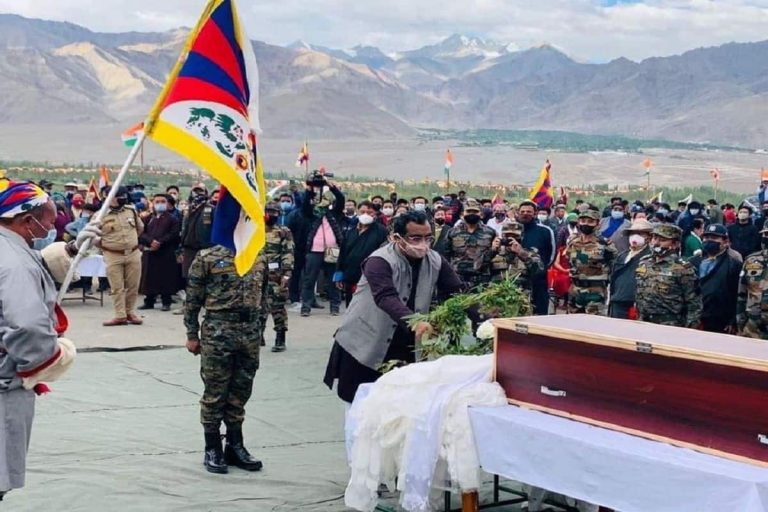
As per reports, the operation was made possible by the covert Special Frontier Force that has been serving this country since 1962 with no penchant for recognition of any kind.
North-east Delhi riots accused and JNU student Devangana Kalita has been granted bail by the Delhi High Court today on the grounds of lack of evidence. The Delhi High court said that the police could not produce any material establishing Kalita’s role in instigating the violence.
In the bail order, Justice Suresh Kumar Kait observed, “I have gone through the inner case diary produced in a sealed cover along with the pen drive and found that though her presence is seen in peaceful agitation, which is a fundamental right guaranteed under Article 19 of the Constitution of India, however, failed to produce any material that she in her speech instigated women of a particular community or gave hatred speech due to which precious life of a young man sacrificed and property damaged”.
The court granted the bail after noting that Devangana Kalita satisfied the triple test which is a prerequisite for granting bail. The test requires that there should be no chance of the person absconding, no probability of tampering with the evidence and of coercing the witnesses. Justice Kait further observed, “In my considered opinion, no prejudice will be caused to the respondent’s investigation by the grant of relief to the petitioner and she would be prevented from suffering from further unnecessary harassment, humiliation and unjustified detention”.
Devangana Kalita is one of the founders of the far-left Pinjra Tod group that claims to work for gender equality. She was booked by the police under the provisions of the Unlawful Activities Prevention Act (UAPA) for allegedly conspiring to incite the riots. She was arrested by the police in the month of May by the crime branch of the Delhi police after earlier being released on bail earlier.
Kalita is named as an accused in an FIR lodged in the Jafrabad police station under the Indian Penal Code, the Arms Act and the Prevention of Destruction of Public Property Act.
While it is true that the coronavirus pandemic has hit the Indian economy and middle and lower middle class is the worst affected, a section of people are spreading their own propaganda on the tragedy. Recently, some videos were shared on social media where claims were made that the boatsmen in Varanasi are facing financial crunch and that as many as 350 families are forced to sleep hungry.
Film actor Sonu Sood reacted to the post on Tuesday and promised aide.
वाराणसी घाटों के यह 350 परिवारों का कोई भी सदस्य आज के बाद भूखा नहीं सोएगा।आज मदद पहुँच जाएगी ??? https://t.co/yKzaw6vdcx
Some media house had reported that the boatsmen were forced to sell off their jewellery and had appealed to Bollywood actor Sonu Sood who promised help.
Media reports on Varanasi boatsmen
However, the truth is far from what is propagated. Speaking to OpIndia, members of Nishad community clarified how they have never had to beg for food and the media reports of 350 families being hungry are all rumours. Local councillor Narsingh Das was engaged in distributing ration even when OpIndia contacted him.
“There is no denying that coronavirus has impacted us all in India. But no one can die of hunger in Varanasi. Every year the water levels in Ganga rise and the boats are either taken off the river or are run for limited time. But this does not lead to hunger for the families as reported. The community comes together to help out people in such trying times,” he said.
He said that in past six years, after PM Modi fought and won elections from Varanasi constituency, the tourism has increased and people have started earning better.
Many such people OpIndia spoke to refuted the allegations that the 350 families in Varanasi are sleeping hungry.
पीएम @narendramodi का संसदीय क्षेत्र होने के कारण वाराणसी में कोरोना काल के दौरान कई प्रकार की अफवाह फैलाई गईं. इस बार मीडिया गैंग के निशाने पर वाराणसी का निषाद समाज है, जबकि 350 नाविकों के भूखे होने की सच्चाई खुद निषाद समाज बता रहा है. विस्तृत रिपोर्ट – https://t.co/EN4M0qzgTQpic.twitter.com/2kPfoUPZmZ
Adinath Sahni, a boatsman, while speaking to OpIndia also refuted these rumours that the community is facing crunch.
मनगढंत कहानी गढ़ने में माहिर गिरोह, वाराणसी में मल्लाहों की भुखमरी की कहानी चला रहा है…. @OpIndia_in ने निषाद समाज के आदिनाथ, संतोष, दीपू, शोभनाथ सहित कई नाविकों और नगर निगम के उपसभापति से भी बात की, गिरोह का प्रोपेगेंडा यहाँ भी फेल रहा…..
A video was also shared by BJP leader Naveen Kapoor where another boatman had the claim that 350 boatmen in Varanasi are unable to survive the coronavirus lockdown due to lack of financial help. Bhagat Nishad said that the claims of boatmen’s families not having food to eat are fake. He said that in the city blessed by Baba Vishwanath and Mata Annapurna, it is not possible that anyone may have to sleep hungry.
मां अन्नपूर्णा एवं बाबा विश्वनाथ के इस नगरी में कोई भूखा नहीं सो सकता है अतः काशी में निषादों के भूखा सोने की गलत अफवाह फैलाई गई है जो पूर्णतया गलत है काशी का निषाद समाज माननीय प्रधानमंत्री जी के नेतृत्व में हजारों लोगों को भोजन कराने में सक्षम हैं @SonuSood@iShashiShekharpic.twitter.com/g5iPBZPmL3
While thanking Prime Minister Narendra Modi for the help they got from the government, he said, “We received timely help during the lockdown. We appreciate what PM Modi has done for his constituency Varanasi and the country during the coronavirus pandemic.”
Further, various NGOs had also come forward to help the distressed families. Piyush, Founder of Samarpanam Foundation, replied to Sonu Sood and said they are already taking care of the boatmen in Varanasi. He added that they had supplied essential groceries to the families of boatmen, and Sonu Sood should verify the case and try to provide help using proper channels.
Tensions between India and China are simmering at the Line of Actual Control in Ladakh after clashes at Galwan Valley and more recently, on the intervening night between the 29th and 30th of August. Ever since the conflict began, the Indian Government has taken stern action against Chinese businesses operating in India. Towards that end, numerous Chinese apps were banned.
However, the wings of Chinese firms run deep in India and there are numerous sectors in which such firms have made significant investment in order to increase the influence of the Chinese government. Investments have been made in sectors such as entertainment and news aggregator apps. In this report, we shall look into some of the investments that have been made by China in relevant sectors.
News aggregators
News and eBook app DailyHunt secured a $25 million funding in 2016 led by ByteDance, the same company that owns TikTok, an app that has been banned in India. With the investment, Bytedance founder & CEO Zhang Yiming joined the Board of Daily Hunt. In 2016, the news aggregator app had a user base of over 120 million app downloads and 28 million monthly active users reading approximately 4.5 billion pages.
Similarly, NewsDog, another news aggregator app, announced a $50 million Series C round in 2018 led by Chinese internet giant Tencent. It claimed to have over 50 million users. It provided its services in as many as 10 Indian languages. In addition, it established a platform ‘WeMedia’ where users could submit their own stories.
Entertainment
Xiaomi, a Chinese smartphone company, led a $25-million investment into Hungama Digital Media Entertainment. When the investment was made in 2016, Hungama boasted over 65 million monthly consumers across its music, video and movies platforms. At the time, it had partnerships with over 700 content creators and offered over 8,000 movies in Hindi, Tamil, Telugu, Malayalam, Bengali, Punjabi and other Indian languages on its platform.
Gaana, a music streaming service, the largest in India, was the beneficiary of investment to the tune of $115 million led by Tencent. “With data prices so low, having easy access to crores of songs which are editorially curated and personally recommended is a better experience than piracy, where quality is unpredictable and selection is limited, Prashan Agarwal, CEO, Gaana had said then. “We have penetrated only 5-6% of India. Over the next few years, we want to take this to 20-30%,” he said.
“As more affordable mobile data plans are driving smartphone penetration in India, we believe growth in the music streaming market will accelerate. By investing in and collaborating with Gaana, we look forward to bringing more innovation and better experiences to all Indian music lovers,” said Tencent President Martin Lau.
Tencent has made investment in another entertainment platform, MX Player, that offers playback as well as streaming services. In October 2019, it was announced that the platform had raised $110.8 million in financing led by Tencent. India is MX Player’s largest market, with 175 million monthly users until October 2019.
The case of Grindr
In March, it was reported that Chinese gaming giant Beijin Kunlun had agreed to sell its hugely popular gay dating app Grindr after the US administration deemed it to be a national security threat. Committee on Foreign Investment in the United States (CFIUS) told the Chinese company that its ownership of the site constituted a national security threat.
CFIUS expressed concern that the personal data of its close to 27 million users could be misused by the Chinese regime. It has been reported in the past that engineers in Beijing could access the personal data of Grindr users, including their private texts and HIV status. It is easy to see how such data could then be used to blackmail people.
Why should India be concerned?
It is widely recognised that Chinese companies often work as extended arms of the Chinese government. There are grave privacy issues associated with Chinese apps, which prompted the Indian government to ban numerous such apps. Even so, there are numerous apps with Chinese investments that often have users running into tens of millions. It is very possible that the data of all such users are at risk, which then has the potential to poser a grave threat to Indian national security.
The Indian Government has also taken steps to check Chinese influence in the Indian economy in recent times. However, there is still a lot that remains to be done and a concerted approach needs to be launched in order to curb the growing influence of Chinese firms in India.
OpIndia recently had a conversation with one of the most prolific news anchors in the country, Arnab Goswami, the Editor-in-chief and owner of the Republic TV News Network. In conversation with OpIndia’s Nupur Sharma, Arnab Goswami talked on a range of issues, spanning from the circumstances that led him to leave his job and start his media venture, Republic TV’s soaring success, his style of loud and persistent journalism and his views on his implacable detractors.
Elaborating about what inspired him to have his own media network, Arnab revealed that while he was working with the Times Now, despite achieving what they did, he and his team was stifled from working freely by being “constantly looked upon over their shoulders”. Arnab added that he wasn’t truly free to pursue his areas of interest while working in the Times Now, making him realise that he can only attain the complete “Freedom” to do as he wished by having his own media network.
“When I questioned myself what will give me complete and absolute freedom, I realise that my news channel will grant me that freedom. That’s one of the reasons how Republic TV started,” Arnab said.
Arnab’s take on accusations of BJP bankrolling Republic TV News network
When asked if BJP leaders held a stake in his channel and Republic TV would not have started had it not been for the BJP’s support, Arnab rubbished the accusations levelled against him, saying it is done by those who harboured professional jealousy against him. He added that Asianet News Network bought 15 per cent stake in his channel and the remaining 85 per cent was owned by him. He said that Rajiv Chandrashekhar made a professional decision of investing in his channel and he had stepped down when he joined the BJP.
“Rajiv made an excellent business decision by investing in Republic TV through Asianet Network. The company had grown since then manifold and they have made excellent returns on their investment. In fact, they have sold their share and currently hold only 6 per cent stake. About close to 90 per cent stake is owned by me,” Arnab said while denouncing the accusations that BJP leaders bankrolled Republic TV in its incipient days.
He also revealed that Rajeev Chandrashekhar and he continue to be great friends and hardly talk business.
Lutyens Cabal is not loyal to any ideology but to their own self-interest and self-preservation
Arnab was also unsparing against the left-leaning Lutyens Cabal, claiming that the members of the clique were not loyal to any ideology but to “self-interest and self-preservation”. He added that the Lutyens cabal is lamenting today because they have been deprived of the access, privilege and money that they once enjoyed before PM Modi got elected to power.
“After PM Modi came to power, they are no longer getting entry to the super-elite clubs in Delhi. They are now dinosaurs. They are not getting entry into the power corridors of Delhi. Money is not coming in, privilege is not coming, access is not coming. They have no allegiance to any ideology. These people have abused the notions of Freedom of Expression, that is enshrined in the Constitution. They are the followers of Burhan Wani,” Arnab thundered.
Arnab defends his style and brand of journalism
About the accusations that he pursues the case for too long and represents a loud brand of journalism, Arnab defended himself saying that it is his style and he doesn’t believe in having soft conversations and putting up pretences. Arnab also asserted that he persisted with the stories for too long so that sweeping them under the rug is no longer possible for the authorities. He cites the relentless coverage of Republic TV in Sushant Singh Rajput’s case that led the investigation to be transferred to the CBI.
“I will push a case for too long because I believe If I don’t push a case for long, Sushant Singh Rajput won’t get justice. It is my channel, I will do what the hell I want to do. Those people who are having problems with my persistence, they are actually jealous of Republic TV,” Arnab said, adding, “The people who do coquettish interviews with scamsters have no moral right to ask me why I do things for too long.”
Arnab also added that he will also relentlessly follow the Palghar mob incident where two sadhus were brutally lynched by a mob while they were on their way to Surat.
I’m not neutral and I have the courage to accept it: Arnab Goswami
Making no bones about it, Arnab unapologetically admitted that he is not neutral. Neutrality in journalism, according to him, is rubbish. He claimed that the lofty notions of exercising neutrality in journalism are harped upon by the self-congratulatory pseudo-leftists
“I have the courage of saying I’m not neutral. Neutrality is a camouflage. I am not calling you penguins but you(Lutyens Cabal) have lost your Antarctica, go find another place to live. There has been a tectonic shift in the thinking of the country. Your lies about being neutral were exposed the moment you came out in the support of Burhan Wani. They give their platform to Nirbhaya’s rapist, citing Freedom of Expression. You don’t have the courage to stand for what is right,” Arnab said.
The Republic TV Editor-in-Chief further elaborated that because of the nexus between the political parties and the journalists, the politicians hold disproportionate power over the scribes, effectively influencing the stories and the news pursued by these journalists.
“State broadcasters are allowed to uplink material for free. Afzal Guru is being eulogised by the news channels. The politicians pull the levers to control these journalists. It is important to develop lever-less journalism. It is equally important to investigate how these journalists live beyond their means. Did a political party use to pay journalists when their treasuries were full? How did some journalists receive large tracts of land as gifts under Congress-ruled states? It might be incidental, but surely it speaks a lot about the sanctimonious show of neutrality that these journalists espouse,” Arnab said.
Arnab Goswami remains firm on his stand on Sabarimala verdict
Responding to the question that if he would change his stand on Sabarimala verdict, Arnab responded that the issue is very close to his heart because it was first his assignment as a journalist to visit the place and report about a woman district magistrate was helping the pilgrims but was not allowed to enter the shrine. He further said while he has been covering politics, he was catapulted to issues such as gender inequality by the gruesome Nirbhaya rape case.
“We must prepare the country for the Uniform Civil Code(UCC). We need to set the right precedent before the country. I have nothing personal against Sabarimala verdict. But, we need to get into the constitutionality of the matters instead of giving importance to personal beliefs,” Arnab said while claiming his stand on the Sabarimala verdict remains the same, against those who have been arguing in the favour of the tradition.
When asked would he ever change his position if facts contrary to his position are laid out, Arnab said that he thinks he is never wrong. Claiming that he follows the principle of “essential truth”, Arnab cited how nobody in the Bollywood came to object actor Kangana Ranaut when she said 99 per cent of them are drug addicts.
Speaking about the rare feat of Republic TV racking up the highest viewership in both Hindi and English segment, Arnab said that it was the sheer hard work of the entire organisation that has made the achievement possible.
Withdrawing Delhi riots book was a complete assault on the Freedom of Expression: Arnab Goswami
Lashing out at the craven submission of Bloomsbury, Arnab said that it is important that the truth about the Delhi riots come out in open. He alleged that the Delhi riots were falsified to portray them as an anti-Muslim pogrom. Arnab emphatically stated that by pulling back the publication of the Delhi riots book, Bloomsbury has attacked the Freedom of Expression and it should be banned from publishing any book in India for this transgression.
Arnab also shared an anecdote about the violence that took place in the wake of anti-CAA protests that rocked several parts of the country in December 2019. He was in Varanasi on a personal trip when he was advised against visiting a minority-dominated lane because riots had erupted there some time ago. Arnab claims that just like the violence in Jamia Millia Islamia was orchestrated, similarly, the riots in that lane in Varanasi was also orchestrated from the outsiders, to build a narrative that the violence was systematically meted out against the minority community.
Union Minister Ravi Shankar Prasad has written a letter to Facebook head Mark Zuckerberg, pointing towards the inherent bias of the platform against certain political factions and ideologies that seem to go against the established Left narrative, in not so many words. In the letter, the Union Minister says that any individuals working for an organization may have their individual likes or dislikes, but that must not have any bearing on the public policies and performance of the organization.
The Union Minsiter’s letter can be read verbatim here:
Dear Mr. Mark Zuckerberg,
Greetings from India!
At a time when we are all collectively battling a global pandemic, let me share my best wishes for you and your family members’ well-being.
I am writing this letter to raise serious concerns, some of which we have also raised in the past with senior officials of Facebook.
I have often heard you and your senior management talk about the general benefits of connectivity, and more specifically in the context of your products, to the global community. Facebook’s stated mission is to give people the power to build communities and bring the world closer. The global scale achieved by the products of the Facebook group makes it one of the prime movers in this goal of achieving connected communities across the world.
However, what we have seen in the last few months goes contrary to achieving the stated goals of Facebook.
I have been informed that in the run-up to 2019 General Elections in India, there was a concerted effort by Facebook India management to not just delete pages or substantially reduce their reach but also offer no recourse or right of appeal to affected people who are supportive of the right-of-centre ideology. I am also aware that dozens of emails written to Facebook management received no response. The above-documented cases of bias and inaction are seemingly a direct outcome of the dominant political beliefs of individuals in your Facebook India team.
As a transnational digital platform, Facebook must not only be fair and neutral, but also visibly seen to be so, to users of diverse beliefs and ideologies. Individuals working in any organization may have their individual likes or dislikes, but that must not have any bearing on the public policies and performance of the organization.
It seems from credible media reports that Facebook India team, right from the India Managing Director to other senior officials, is dominated by people who belong to a particular political belief. People from this political predisposition have been overwhelmingly defeated by the people of in successive free and fair elections. After having lost all democratic legitimacy, they are trying to discredit India’s democratic process by dominating the decision-making apparatus of important social media platforms. Facebook is the latest tool in their arsenal to stoke internal divisions and social disturbances.
It is problematic when Facebook employees are on record abusing the Prime Minister and senior Cabinet Ministers of India while still working in Facebook India and managing important positions. It is doubly problematic when the bias of individuals becomes an inherent bias of the platform. And it is unacceptable when political biases of individuals impinge on the freedom of speech of millions of people.
However, looking at recent media reports, it seems that these deeply entrenched vested interests aren’t satisfied with the shrinking space for one side of the spectrum in India and want to throttle it completely. The spate of recent anonymous, source-based reports is nothing but an internal power struggle within your company for ideological hegemony.
No other logic can explain how facts are being spun by the selective leaks from within your company to try to portray an alternate reality. This interference in India’s political process through gossip, whispers and innuendo is condemnable. This collusion of a group of Facebook employees with international media is giving a free run to malevolent vested interests to cast aspersions on the democratic process of our great democracy.
I would like to point out that there have also been multiple instances recently where Facebook has been used by anarchic & radical elements whose sole aim is to destroy social order, to recruit people and to assemble them for violence. However, we are yet to see any meaningful action against such elements. Is this action also held back by the same vested interest groups who have an incentive in stoking political violence and instability in India?
A major issue with Facebook is the outsourcing of fact-checking to third party fact-checkers. How can Facebook absolve itself of its responsibility to protect users from misinformation and instead out-source this to shady organizations with no credibility? We have seen in India that right from the assessors for on-boarding fact-checkers to the fact-checkers themselves harbour publicly expressed political biases. Regularly vigilant volunteers on social media have to fact-check the fact-checkers! Even after onboarding so many fact-checkers, lot of misinformation related to COVID-19 and its aftermath went unchecked. How can an organisation like Facebook be oblivious to these realities?
A transnational digital platform with a wide user base cannot remain immune to local sensitivities either. A certain act which may be acceptable as per social norms in a particular country but many not be conducive to the social norms of another country. Facebook Community Guidelines must acknowledge this aspect of diversity and respect it. To respect the social, religious, cultural and linguistic diversity of India, Facebook should put in place country-specific Community Guidelines.
Facebook has been a novel experiment in democratizing the expression of people and giving a platform to millions of ordinary citizens to freely express their views, connect, build communities, associate and communicate. I hope that you are cognizant that this experiment should not be allowed to be hijacked by a vested lobby that abhors free speech and tries to enforce one world view and rejects diversity.
I wish you and your family the best of health.Yours truly,
(Ravi Shankar Prasad)
Essentially, Union Minister Ravi Shankar Prasad has written to Facebook CEO Mark Zuckerberg drawing his attention towards Facebook’s inherent political bias which he says is not conducive for a social media platform as big as Facebook. He also slams Facebook for its inaction, which he says is a direct outcome of the dominant political beliefs of individuals in the Facebook India team.
In his letter to Facebook, Union Minister Ravi Shankar Prasad tears into the social media platform saying that as a transnational digital platform, Facebook must not only be fair and neutral as everybody regardless of his or her ideology has the right to air their views on the social media platform.
OpIndia English Editor Nupur J Sharma conducted a tell-all interview with one of India’s most prolific journalist Arnab Goswami, the Editor-in-chief and owner of the Republic TV News Network. At around 1 hour, 14 minutes and 55 seconds into the candid interview, Arnab spoke of how he felt that the Republic TV’s investigation and reporting on the Palghar mob lynching incident was still incomplete and he was not going to abandon the story despite being hounded by the Congress party for it.
Arnab Goswami is heard saying: “I feel I left the investigation half-way, I believe it’s a job not done”. Saying so, Arnab tells the OpIndia editor that “you and I should investigate it further”. Arnab furthers that “23 accused in the case have been given bail, the prosecution has been weakened, the Supreme Court is monitoring, I feel we should get back on the story”. The Republic TV editor-in-chief asseverated that the Palghar incident, where two Sadhus and their driver was brutally lynched by a blood-thirsty, frenzied mob on April 16 2020, will be picked up again and it will be pursued until it does not reach its logical conclusion.
Arnab Goswami hounded by Maha Govt after her questioned Sonia Gandhi’s silence on the Palghar lynching case
It becomes imperative to note here, that Arnab Goswami had accused the Maharashtra govt of subjecting him to “political, malicious and motivated” charges, after the latter badgered the journalist for questioning Congress interim President Sonia Gandhi’s silence on the Palghar lynching case. Multiple cases by Congress functionaries were filed against him over his comments where he questioned Congress interim President Sonia Gandhi’s silence over Palghar Sadhu lynching. 2 notices in 12 hour period for immediate interrogation was sent to him by the Mumbai police. Thereafter, the Mumbai police had interrogated the Republic TV owner for over 11 hours continuously.
However, on June 30, the Bombay High Court had stayed the FIRs filed against Republic TV Editor-in-Chief Arnab Goswami by the Mumbai Police. The Court observed that Mumbai Police had failed to demonstrate any prima facie case against him. The Bombay High Court has ordered that no coercive actions be taken against him.
Palghar Mob Lynching incident
On April 16 2020, two Sadhus associated with the Juna Akhara, 70-year-old Kalpavrishka Giri Maharaj, and 35-year-old Sushil Giri Maharaj along with their driver 30-year-old Nilesh Telgadewere were on their way from Mumbai to Gujarat to give Samadhi to another Sadhu, when a wild and frenzied crowd of over more than 100 people attacked them at Gadakchinchale village. The villagers, who deemed them as thieves, started brutally attacking them. The police claim that their team which had rushed to the spot to rescue the 70-year-old man also came under the attack of the violent mob.
But later videos emerged which completely debunked the claim of police. Contrary to the claims, the police personnel had allegedly handed over the Sadhus to the frenzied mob, which went on to beat them to death in front of the policemen.
Reports emerged that the killing of the Sadhus may have been intentional and politically motivated. The involvement of Christian Missionary organisations and some local NCP leaders and leftists were also suspected.