Home Blog Page 5204

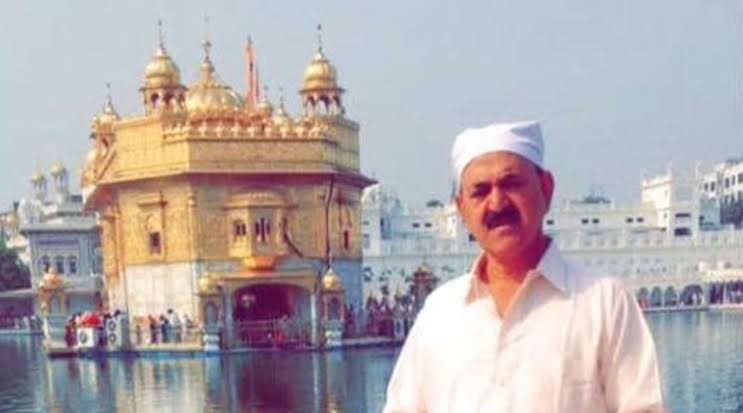
Twist in the tale of Sikh man’s kidnapping in Afghanistan, family says he was abducted in a bid to grab Gurdwara

Murkier details into the abduction of a Sikh man from Afghanistan have surfaced, suggesting that the kidnapping might be the handiwork of local land mafia and not Taliban as previously alleged, says a report published in Indian Express. 

The involvement of a local land mafia was alleged by the family of the Sikh man who was abducted by armed men from Thala Sri Guru Nanak Sahib gurdwara in Chamkani district of Afghanistan in Paktia province near the Pakistan border,

The kidnapped man, Nidan Singh Sachdeva (55), was an Afghan national living in Delhi over a Long Term Visa, was on a visit to Afghanistan in March to perform sewa at gurdwara and participate in the annual fair. As per his family’s account, he was abducted by ‘armed men’ from the gurdwara on the night of June 17 and since then they have no idea about his whereabouts.

Worrying about the fate of the kidnapped man, the family had written a letter to PM Modi seeking his intervention for the release of the Sikh man and asking for Indian Citizenship. 

Local land mafia responsible for Nidan Singh’s abduction

According to Charan Singh Sachdeva, Delhi-based cousin of Nidan Singh, the family came to know that the Sikh man was abducted by a local land mafia and not Taliban. He added that the abductors had earlier sent the family photos, videos on Whatsapp about Nidan Singh seeking his details. Singh is diabetic and needs proper care. Sachdeva said that communication with the abductors has since then stopped. 

Furthermore, Sachdeva said that the mafia had taken control over the Gurudwara land because people hardly go there, save for the annual fair visit. 

“Nidan was trying to get control of the land back. The land belongs to the Sikh community in Afghanistan and our family was caretaker of this particular gurdwara. It is located near the Pakistan border and hardly any Sikh lives there now,” Sachdeva said. 

Singh’s abduction came on the heels of a gruesome attack by the Islamic State at Gurdwara Har Rai Sahib in Kabul on March 25 in which 25 Sikh community members were killed.

Earlier, it was suspected that Taliban was involved in Singh’s kidnapping but Chhabol Singh, member, managing committee, Gurdwara Dashmesh Pita Sri Guru Gobind Singh ji Singh Sabha Karte Parwan, Kabul, confirmed that it was the local land mafia who were eyeing the gurudwara land that had abducted Singh.

Nidan Singh’s family writes a letter to PM Modi

Meanwhile, the family of Nidan Singh had written a letter to PM Modi seeking his intervention in the release of the abducted man. Nidan’s wife Mahrwanti has written that her husband, “A Hindu Sikh minority, Afghan national has been abducted by armed disgruntled elements from Chamkani, Paktia from Gurdwara Thala Sahib. He went on a visit to Afghanistan in March this year to renew his Indian Long Term Visa and to maintain historical gurdwara. Our family ancestrally hails from Paktia.”

“I and my family members had tried to communicate with my husband but all attempts have gone in vain… We are deeply concerned for his welfare as he suffers from serious ailments like diabetes, hypertension..The abductors who have not disclosed their identity have confirmed his captivity through voice messages and his images sent over WhatsApp from his phone number and their own phone number,” the letter read.

Mahrwanti also drew PM Modi’s attention towards the plight of minorities in Afghanistan. “The minorities in Afghanistan are subjected to severe atrocities and do not have any sort of guarantee for their safety. The Government of India is requested to provide us appropriate assistance and take appropriate action as deemed fit. Our appeal may be taken up with concerned counterparts at the highest level in order to secure his safe release at the earliest… Kindly repatriate him to New Delhi immediately after his release and grant us Indian citizenship at the earliest,” the letter said.

Amidst chants of Allah hu Akbar and ‘Jai Bheem Jai Meem’, Vinod Kashyap was murdered: The Dalit killing fields of North East Delhi

It was the 24th of February 2020 and the atmosphere was tense in Delhi with anti-CAA protests turning into anti-Hindu riots and the news of terrible disturbances being broadcast in the media. By night gloom descended on the house of a Dalit in the area. This was the house of Vinod Kashyap a devout Shiv Bhakt, a man who was ready to help everyone.

His father Sri Chadda was in the army and their family had earned their respect in the neighbourhood. Vinod Kashyap was a man of strong will and was determined to excel in life. He started his life doing odd jobs he knew that his hard work only will decide his destiny and luck. When you work honestly for something, you gain expertise; you gain knowledge and become smart. This happened with Vinod Kashyap. His expertise, knowledge and skills helped him to climb the ladder of success. He first started to take odd electrical jobs, he was soon established and then over the years he built his own house got his son married. He lived a life he loved.

Every year he would take a month off, travelling with his Kanwar. He was very popular in the community. Of strong built and imposing personality which came from years of experience, he was a person who was remembered by the community in any hour of need. He was a much-demanded DJ the neighbours recall his favourite songs. Bhole Baba would always be humming Bum Bum Bhole in praise of Lord Shiva. His son Nitin Kumar whose nickname is Monu lived with his father along with his wife and son Yash. Monu also worked along with his father as a DJ. It was a perfect family happy and with dreams for future until the fateful night of 24 Feb 2020.  

The killing of a Dalit – Vinod Kashyap

On the night of 24 February 2020 the family of Vinod Kashyap was clearly disturbed as their grandchild Yash was suffering from high fever and it was not ebbing despite all the ‘desi ilaj’ which they had done. Vinod Kashyap’s Wife Madhu and daughter in law, both had been putting a wet cloth on the child’s forehead for the past two hours but the fever just wouldn’t let up. It was past 10 and thinking that the child’s condition might deteriorate in the night, Monu, decided to step out to get medicines. He could not see the suffering of the poor child.  

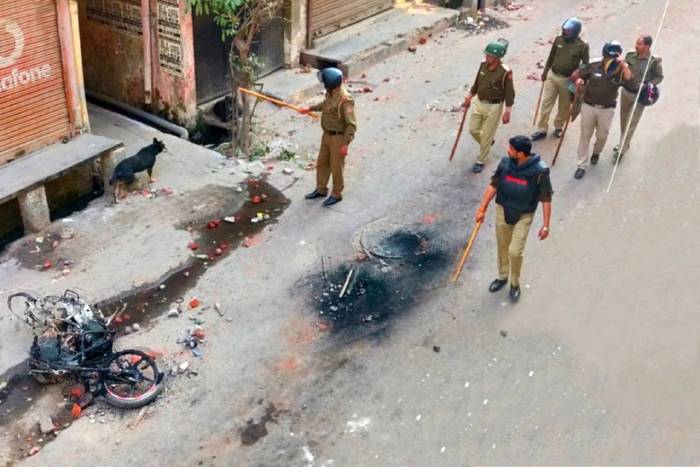
The rioting had already started in Brahmpuri area of North East Delhi, but then the medical shop Kalyan Medical Store was just around the corner. Monu recalls “I thought this is my place, my house, this can’t really be dangerous”. Vinod Kashyap, ever on the go, seeing his son going alone decided to go with him. It was 10.30 PM when both stepped out of the house never to return again as a duo. They both were riding the bike, Monu was driving. The streets were unusually empty and ominous but then this is MY ILAKA Monu recalls thinking. So many times the slogan Jai Bheem ..Jai Meem had reverberated in the air.  

But he was so wrong. As as they were going, suddenly a stone came and hit him on the head, the bike slipped and they both fell. All of a sudden from nowhere a crowd of over 200 men with stones, iron rods and sticks came surging in. There were warlike cries of Allah Hu Akbar and the crowd started to pelt stones.

Monu recalled with a shudder how the crowd closed in and started to hit in a frenzy. Monu got hit by stones and became semi-conscious, seeing no way to escape, he pretended to be dead. Presuming Monu to be dead, the crowd turned to Vinod Kashyap..the Shiv-Bhakt. They kept chanting Allah hu Akbar and Nara-e-Taqbeer as they smashed Vinod’s face with stones, rods and sticks. They smashed his face in and murdered him because his bike had a Jai Shree Ram picture. That is all. He was killed because he was a Dalit. Because he was a Hindu.

The man who always stood tall was now lying in the pool of blood. After Monu regained consciousness seeing his father he crawled up to him bleeding profusely, he could hardly see around. He inched up to his father and he could not believe that the man so strong is lying on the street. Monu shook his father. Social media images show him bleeding from his head trying to shake and slap his dead father into consciousness. He kept shouting ‘papa utho’, while his father gasped for air, clinging to life as it slipped and the Shiv Bhakt met his SHIVA.

Monu fell unconscious and was taken to Jag Pravesh Chandra Hospital, Shastri Park on a scooty by his neighbour. He was given 40 stitches on his head and has survived, but is distraught for life. He still cries tears of blood as he recalls the incident. The whole house seems to be scared and scarred. The neighbours point out the road where the lynching took place. We were told that Vinod Kashyap made the mistake of crossing the ‘border’ that exists between Hindu and Muslim areas on Wazirabad road. 

Will Indians henceforth live in religious ghettos screaming their respective identities from the mastheads? Will the sound of gunfire and pelting stones wake up Indians from their daily sleep in its capital city? Will mundane tasks like buying medicines or daily bread become matters of life and death? In short, Is this the New Wagah?

(The article has been authored by Professor Vijita S Aggarwal who teaches at GGSIPU, Delhi)

Suspended Hindustan Times reporter issues apology after Hinduphobic tweet goes viral, says her comment is being taken out of context

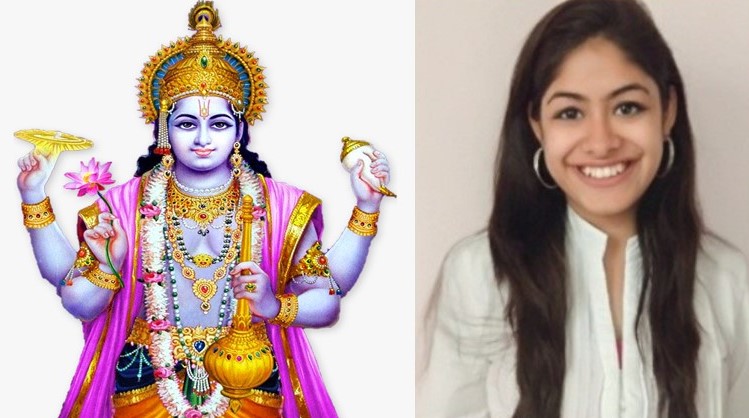
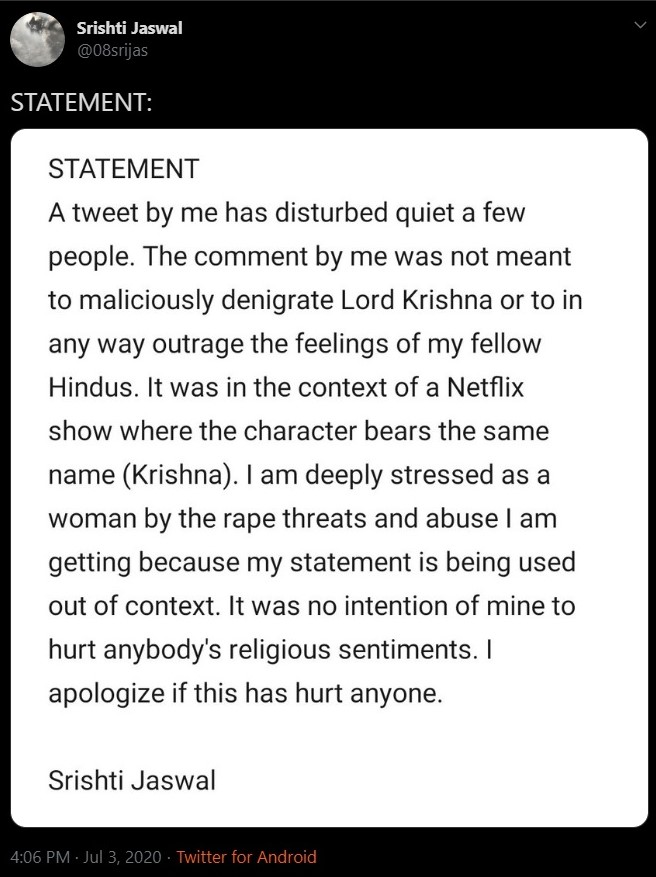
Suspended Hindustan Times reporter Shristi Jaiswal has now issued an apology after her Hinduphobic tweet insulting Lord Krishna went viral on social media. In her apology, she claims that her tweet was related to a character on a show on Netflix of the same name. She said that it was not her intention in any manner to insult Shri Krishna or hurt the sentiments of her “fellow Hindus”.

Apology by Shristi jaiswal

Shristi Jaiswal said, “I am deeply stressed as a woman by the rape threats and abuse I am getting because my statement is being used out of context.” She said that it wasn’t her intention to hurt anyone and apologised if anyone was indeed hurt by her tweet. It appears cynical for her to claim that her comment was about a Netflix character given the fact that she explicitly made a reference to Hindu theology.

Shristi Jaiswal said in her tweet, “Because this is what Krishna did. He was a womanizer, a fuckboi, and commitment phobic maniac. And I am a Hindu and I’ve read mythology.” Subsequently, a complaint was registered against her for the same. The complainant alleged, “Working with such Media platform and having such views being posted publicly can lead communal disharmony and religious animosity.”

Subsequently, Hindustan Times distanced itself from her comment and said it was made in her personal capacity. They also said that she had been suspended with immediate effect and a code of conduct committee had been set up to probe the matter.

Rahul Gandhi shares video to call PM Modi a liar, gets Congress workers, non-residents to act as Ladakhis

There is no end to Rahul Gandhi’s baseless attack on PM Narendra Modi on the Indo-China conflict issue. Hours after the prime minister visited Leh and Indian Army’s Nimu base in Ladakh, Rahul Gandhi chose to peddle his repeated lies again, claiming that the PM is lying on the border issue.

While the Indian govt has been maintaining that Indian soldiers had evicted Chinese soldiers from their unauthorized positions along the LAC and at present there is no Chinese incursion inside the LAC, the Congress party, particularly former president Rahul Gandhi, refuses to believe that and keeps claiming that China has occupied large swathes of land in Ladakh.

Re-iterating the same claim, Rahul Gandhi posted a video today, claiming that it contains testimonials from people from Ladakh saying that China has occupied Indian territory. Posting the tweet, the Gandhi scion insinuated that PM Modi is lying while claiming that China has not occupied Indian territory.

https://twitter.com/RahulGandhi/status/1278961998869360644

But a scrutiny of the people featured in the video exposes Rahul Gandhi’s propaganda. It has been found that several people who said that China has occupied Indian land in Ladakh are in fact, Congress workers and leaders, and some of them don’t even belong to the Union Territory of Ladakh.

In the following video compiled by Political Kida, one can see that several persons are members and office bearers of the Congress party.

Congress workers, non-Ladakhis featured to peddle Congress’ lies

The fifth person to appear in the video, Sachin Mirupa, is not only the General Secretary of NSUI, the student wing of Congress party, but he is also from Himachal Pradesh, not Ladakh. The video also features one Tundup Nubu Cheetha claiming that media is misleading the public on the border issue. He said that PM Modi’s claim of China not occupying Indian land is incorrect. Tundup is General Secretary of District Youth Congress in Leh. Similarly, Dorjay Gyaltson who appears in the video is the Working President of Leh District Youth Congress.

Another person featured in the video is Namgyal Durbuk, who has been quoted by several media houses over the last several weeks claiming that Indian govt is lying about the border situation. He was also interviewed by journalist Barkha Dutt for her online venture Mojo, where he has been introduced as a former councilor of the Congress party.

Several other persons appearing in are also either linked to the Congress party or are politicians. Angdu Sonam, for example, is the sarpanch of Thiksay village in Ladakh.

The Shishupala Moment: Here is how antagonising India led by PM Modi could be China’s fatal mistake

For some time, the threat of Chinese expansionism has weighed heavy across countries in the world. China’s uninhibited lust towards the acquisition of more land and more power antagonised quite a few countries in the neighbourhood and their ambitious assault on the global world order antagonised the West as well. However, none were too sure on how to proceed.

And then something happened: Doklam 2017. At Doklam, the Elephant stared down the eyes of the Dragon until the latter was forced to look away. And the world took notice. It became evident that the Dragon could not be subdued without the might of the Elephant. For its part, the Elephant for a long time remained befuddled in its drunken stupor but there was sufficient indication that now, it was gearing up for battle.

It is under these circumstances that the Dragon made its move at Ladakh and the stage was set against a global pandemic. Quite evidently, the Dragon had decided that attack was the best form of defence and in order to distract the world from its gross management of the virus that ultimately led to a global economic collapse, it began to spread its wings militarily.

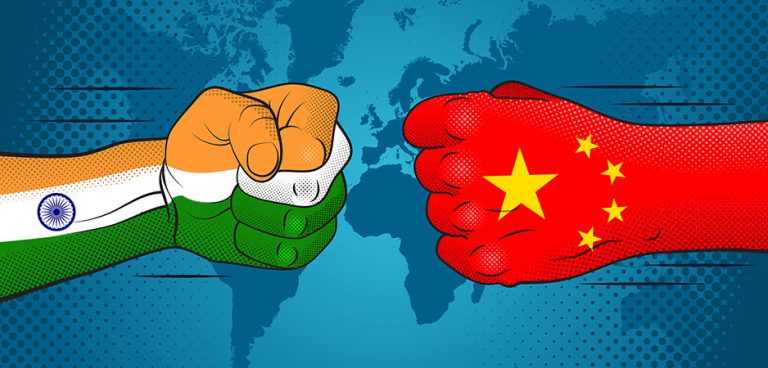
After the clash at Galwan Valley, where by all accounts China suffered more casualties than India and has not been able to make any ostensible gain, China wants India to believe that it extends an arm of friendship in good faith. Between patronising India and insinuating that the Indian Government was acting under the influence of the West, it also promoted awkward cartoons of Pandas and Dragons and Elephants in its attempt to convince the world that it truly wanted friendship with India.

But no one was buying what they were selling, not this time, and certainly not India. India retaliated by banning 59 Chinese apps, including the widely popular TikTok, and stripping Chinese companies from investments in Indian projects. It was not merely a government initiative, it was truly a collective Indian effort towards minimising Chinese influence in Indian economy.

It is under these circumstances that Prime Minister Modi paid Leh a surprise visit. The Chinese were, of course, not happy. But then, Narendra Modi went a step further and invoked the spirit of Veer Bhogya Vasundhara and took not-so-subtle digs at Chinese expansionism. It is indeed quite a shift from the days of yore. The New India does not encourage conflict but does not shy away from it either.

The Shishupala Moment?

During his speech, which was littered with references to India’s Hindu roots, Narendra Modi invoked Shri Krishna. He said that India worships Krishna in all His forms. Bansurishari Krishna is just as dear to us as the Krishna who wields his Sudarshan Chakra. It was, again, a reference to the fact that India will not shy away from conflict if circumstances make it a necessity.

In this regard, the story of Shishupala comes to mind. Shishupala could commit a hundred sins and yet, escape punishment because Krishna had promised his cousin’s mother that He will forgive a hundred of his sins. Shishupala, of course being Shishupala, committed a hundred sin and then committed one more.

As soon as the hundred and first sin was committed, Shri Krishna separated his head from his neck with his Sudarshan Chakra. There is a certain lesson in here. India is, of course, not Shri Krishna and could never be. However, in the past and even until now, India has demonstrated a remarkable willingness to forgive the sins of those who do not deserve such forgiveness and as a consequence, has suffered a million indecencies in a million different ways.

But, given the manner in which India and the ruling dispensation has reacted to the clash at Galwan Valley, it could very well prove to be China’s Shishupala Moment. It could very well prove to be the one line it should never have crossed, the limit that should have been respected at all costs. Of course, it is too early to say it for sure but it has the potential to set in motion a chain of events that could end with the decimation of China’s global ambitions.

The Elephant and the Dragon

It has become conventional wisdom of late, and it has been repeated numerous times by numerous prominent individuals, that the 21st Century will belong to Asia. It is postulated that in the 21st Century, after centuries of dominance by Europe, the global power centre will shift to Asia. Every trend does indicate that it is the likeliest scenario.

Concurrently, the 21st Century will also be defined by the epic rivalry between India and China. The 20th Century was defined by the great rivalries between Western Powers. The United States, the United Kingdom, Germany and Russia were the most prominent of them all. Similarly, if the 21st Century is to be Asia’s century, the world will witness a similar battle for supremacy between India and China.

China is an enemy that India cannot wish away. It is a monster that India will have to confront at some point or the other. And finally, with the onset of the global pandemic and the economic collapse, the inevitability of it has become evident across wide sections of the population. Chinese media might publish pictures of the Dragon and the Elephant enjoying a merry ride on a boat but everyone knows fully well, the Dragon and Elephant are locked in eternal combat.

Not a time for Cynicism

There is often a cynical despondency among Indians regarding our prospects at the world stage. They do not appear to notice that India has become an important player in international politics. The swagger with which MEA Jaishankar carries himself is a demonstration of that fact. The resigned acceptance among Western governments regarding India’s decision to abrogate Article 370 is further confirmation of it.

India trails China in almost every important department but it ought to be remembered that China turned around its fortunes completely in three decades flat. There’s no reason why India could not achieve the same feat if it put its heart and soul into it. Achieving it, of course, will require a collective demonstration of strength, of loyalty, of sacrifice and of honour. But it is certainly achievable.

Banning Chinese apps is only the first step towards it. Reducing Chinese influence in the Indian economy and Indian trade deficits with China is only part of the solution. India’s battle against China will not be won only at the borders or by banning apps and Chinese businesses. It could only ever be won when the dream of ‘Aatmnanirbhar Bharat’ is realised.

A Road Not Travelled

There is a certain sense of irony here. The global world order that China is at war with is as much of an enemy to India as it is to them, for it is based on Western hegemony. China’s bid towards undermining it has actually given us more room to exercise our strength. The surgical strikes against Pakistan, the Balakot Airstrikes, the abrogation of Article 370, the passage of the Citizenship Amendment Act, all of it was made possible due to China’s assault on western hegemony.

This is more reason why the current scenario could very well end up being China’s Shishupala Moment. The smarter thing for China to do would have been to make India an offer the government couldn’t have refused. Throwing Pakistan under the bus and allowing India to take back Pakistan-occupied Kashmir and Gilgit Baltistan would have been a sweet deal to make in return for India’s help in its war against the West.

However, driven by conceit and consumed by its own arrogance, China has decided to make an enemy of the one power it shouldn’t have in these troubled times. In doing so, it might have lain the seeds of its own demise. India might have been willing to give China a free pass over its gross management of the Coronavirus should the Chinese had compensated us adequately. China could have escaped without any culpability for its gross conduct. However, all that is in the past. Chinese transgressions at the Line of Actual Control have decided turned India’s mood against them.

The future is uncertain and there is a lot that could happen between today and tomorrow. However, should China bite the dust in the years to come, it will not regret the awful treatment it meted out to Hong Kong. It will not regret the forced demographic genocide of Uighur Muslims. It would not regret its occupation of Tibet. The only thing it will regret is the day when it embarked on its misguided venture against India, the day when it turned a billion people into its enemy with one of the strongest Prime Ministers India has ever had at the helm.


No, BJP leader Vikas Dubey is not the gangster who killed 8 policemen in Kanpur, read how Congress trolls spread fake news

Hours after eight Uttar Pradesh policemen were killed by a notorious gangster Vikas Dubey near Kanpur, there has been a barrage of misinformation being peddled by people associated with the Congress party and other trolls on social media claiming that the gangster Dubey had connections with the Bharatiya Janata Party.

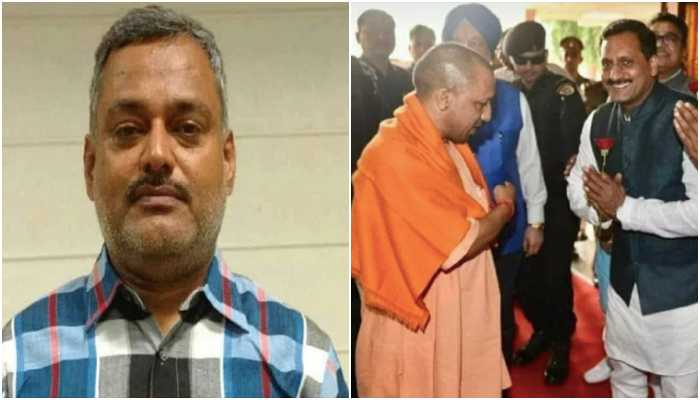
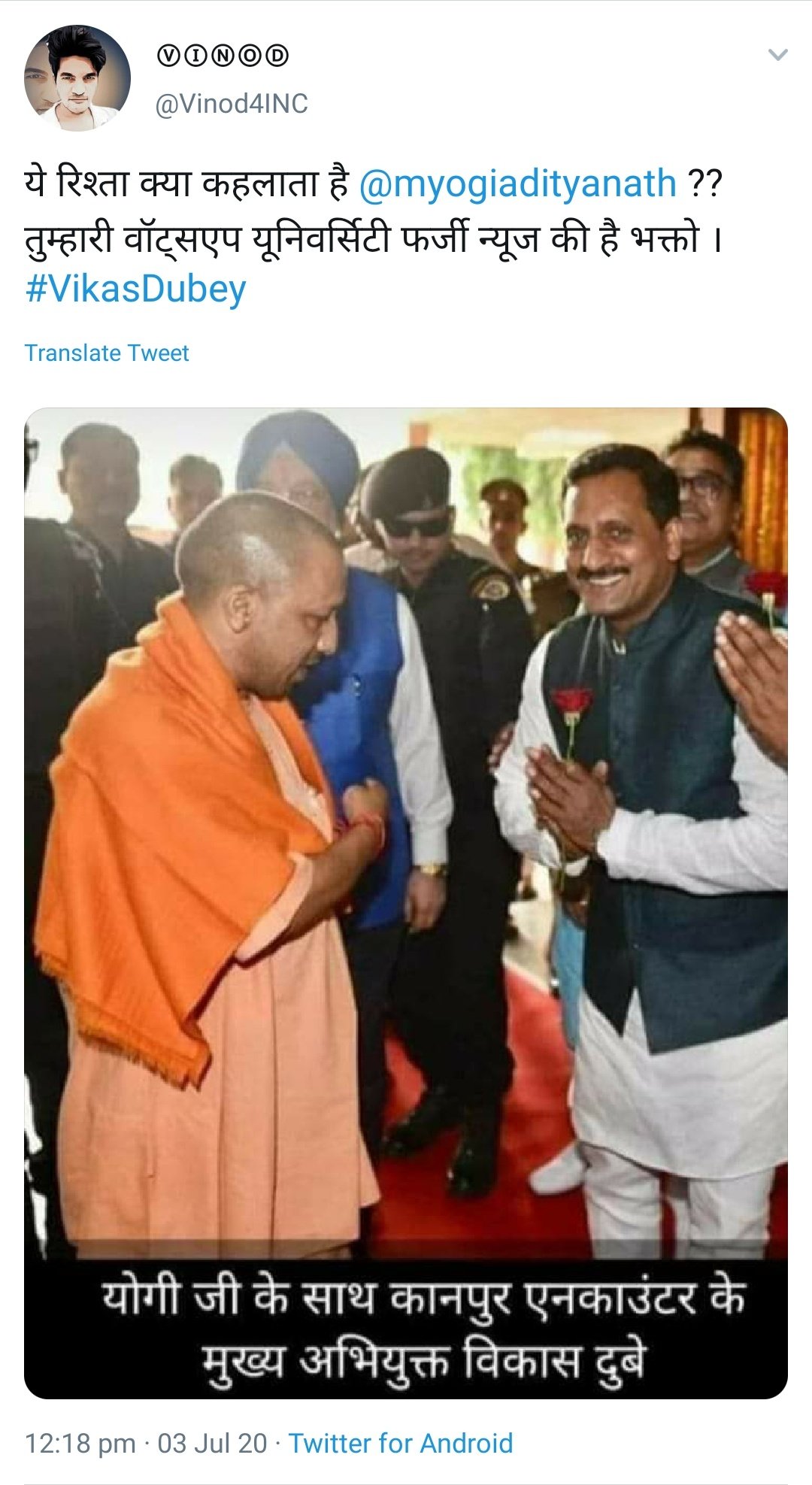
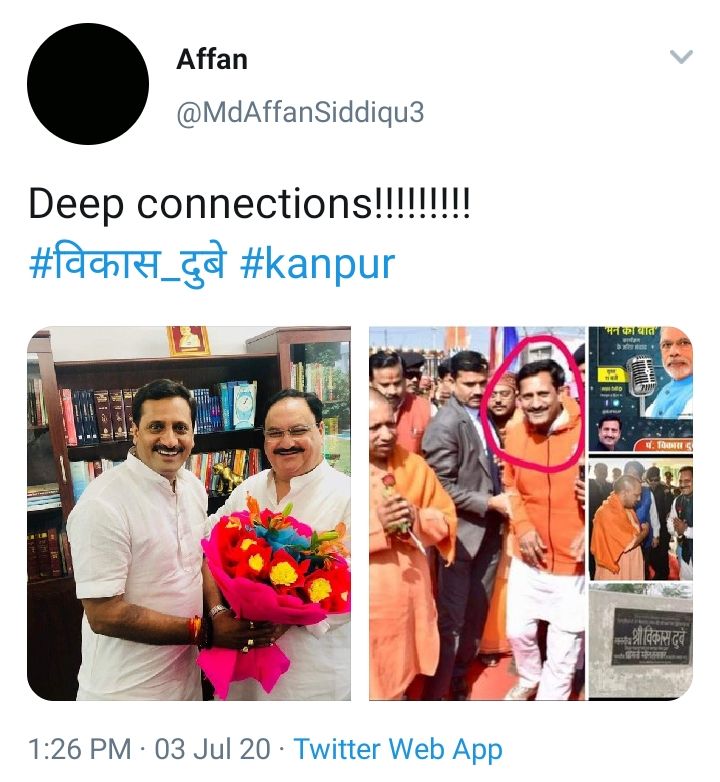
Several trolls took to social media to share an image of a BJP leader along with Uttar Pradesh Chief Minister to claim that the person was the notorious gangster Vikas Dubey, to allege that he belonged to BJP.

A social media user named Vinod, allegedly a Congress party worker took to Twitter to insinuate that the gangster had a close relationship with Yogi Adityanath.

Image Source: Ankur Singh

Similarly, another Congress worker Arun Sahu, also shared the same image to claim that the gangster was close to Uttar Pradesh Chief Minister Yogi Adityanath.

Image Source: Arun Sahu

Affan, shared an image of BJP President JP Nadda with an individual, to whom he referred to as Vikas Dubey to claim that the party had ‘deep connections’ with the gangster, who killed eight Uttar Pradesh policemen and injured six other in a gunfight on Thursday night.

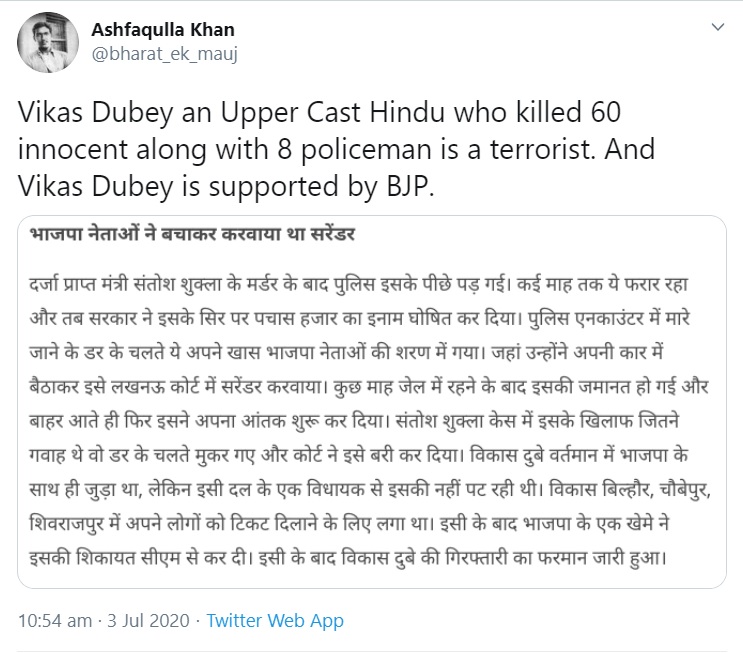
Another troll named Ashfaqulla Khan claimed that Vikas Dubey, an upper caste hindu, who killed 60 policemen, was supported by BJP.

Fact check:

The images passed by the Congress party workers and Islamists claiming that the person standing next to Uttar Pradesh CM Yogi Adityanath and BJP President JP Nadda is Vikas Dubey, the gangster, is a blatant lie.

The person in the viral images is also named Vikas Dubey, who is a senior BJP leader in the state. He has been associated with the BJYM too and is a popular leader from Bundelkhand.

Vikas Dubey, the BJP leader, himself had to post a Facebook post to ask people not to spread false rumours and appealed on his Facebook page requesting people to be alert against fake news.

In his Facebook post, Dubey wrote in Hindi stating, “Be alert against fake news. There are some people who are spreading false information on social media instead of honouring the policemen. They are passing off my photos to malign me and the party.”

The viral picture of Vikas Dubey along with UP Chief Minister Yogi Adityanath was uploaded on Dubey’s Facebook page on November 15, 2019.

Gangster Dubey was a former BSP member, wife belongs to Samajwadi Party

Contrary to the claim made by social media users that Vikas Dubey belonged to BJP, the notorious gangster had, in fact, was a member of Bahujan Samajwadi Party (BSP). Vikas Dubey, a former Bahujan Samaj Party (BSP) leader, was also elected as a member of the Nagar Panchayat.

According to journalist Sushant Sinha, Vikas Dubey’s wife Richa Dubey had contested on a Samajwadi Party ticket in one of the Zilla Panchayat elections. A poster of Vikas Dubey and his wife seeking votes for the elections has become viral now, in which Samajwadi Party leaders Mulayam Singh Yadav and Akhilesh Yadav’s images were seen along with the images of Vikas Dubey and his wife.

Gangster Vikas Dubey kills eight policemen, injures six others

In a shocking incident, eight police personnel were killed and six cops were injured in Uttar Pradesh’s Kanpur during a police raid to nab the hardened criminal and murderer Vikas Dubey on July 2 late night.

A team of 15-16 Uttar Pradesh police had carried out raids in search of criminal Vikas Dubey in Chaubepur in Kanpur. The raid was carried out at 1 am on the intervening night of July 2-3 in Bithoor area in Chaubepur.

The police personnel were ambushed by Dubey’s men who were prepared with arms on the roof of a building and continuously shot at them. The criminals had already blocked the road with a JCB machine to prevent the policemen from escaping.

According to the police, Vikas Dubey and his men were already aware of the police raid and were on high alert. The criminals managed to flee from the spot after killing the police personnel. The deceased cops of Kanpur have been identified as DSP Devendra Kumar Mishra, SO Mahesh Yadav, Chowki Incharge Anup Kumar, Sub-Inspector Nebulal, Constables Sultan Singh, Rahul, Jitendra and Bablu.

Pakistan: At least 19 Sikh pilgrims returning from Nankana Saheb killed, read initial details

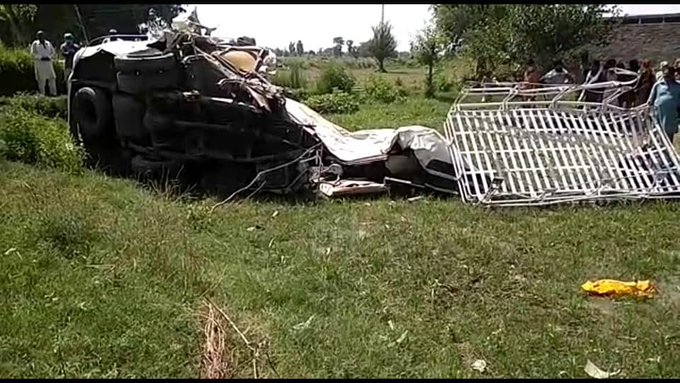
In a major tragedy, 19 Sikhs, reportedly from the same family, have been killed in Farooqabad, Pakistan when an express train rammed into a bus. As per reports, the incident occurred when the bus carrying the Sikh pilgrims collided with the Karachi-Lahore Shah Hussain Express in the Sheikhupura district.

As per reports, the pilgrims were returning to Gurudwara Sacha Sauda after performing religious rituals at Nankana Saheb. The dead bodies are being shifted to local hospitals. The bus was reportedly carrying 25 members. Police officials and rescue workers are on the site ascertaining damages.

Initial reports with photographs from the scene show a completely damaged bus. The bus was reportedly crossing the railway tracks when it was rammed by an oncoming Shah Hussain Express. The pilgrims were reportedly returning from Nankana Saheb.

It is a developing story. More details are awaited.

How Power Sector Liberalisation in 2009 led to a Chinese monopoly, Rs 3 Trillion NPAs and crippled domestic manufacturing

The Union Power minister R K Singh this week said the government is planning to impose curbs on Chinese power-equipments as Indian firms can manufacture almost all critical items used for generating, transmitting and distributing electricity. A meeting between the minister and his state counterparts is taking place today.

India-China trade deficit (imports against exports) in 2014 was 33 times that of 2004.  In 2020, India has INR 65 billion imports from China and INR 25 billion exports. The current government cannot just unplug imports from China due to WTO commitments. However, the government can certainly curb imports.

Here’s a look at why import curbs are essential and how a decade of cheap Chinese imports hurt the Indian power sector.

As part of the power sector liberalisation, duties for imported power-equipments were slashed to zero in the mega power policy while domestic companies had to pay different taxes and duties. Indian industry had been demanding a level playing field since 2008 by urging the government to remove the 10-20% price disadvantage it faced against Chinese power equipment suppliers.

In the last decade, the Indian government never imposed anti-dumping duty on cheap Chinese imports despite the recommendation of a high powered government panel. The cheap imports also destroyed the local MSME manufacturers and suppliers. 

About 60,000 MW to 65,000 MW of the total 90,000 MW coal-based power capacity in the private sector was under financial stress, according to a Parliamentary Standing Committee on Energy 2018 report. Indian banks are under severe balance sheet pressure due to exposure of INR 3 Lakh Crore to such assets weighed by a slow resolution process and tepid power demand from distribution companies, the report said. 

We will look at three specific examples to understand how the power sector dream of 2009 crash-landed. First, we look at how it hurt a state-owned premier Maharatna manufacturer of capital goods equipment, then we find out how plants running on Chinese equipment have negligible resale value, and finally, we see how influential promoters got huge bank loans to set up power plants. 
 

BHEL

The power sector liberalisation not only brought misery to banks but also led to the collapse of a 56-year old state-run Maharatna company – BHEL. Shares of BHEL used to be known as the crown jewel among India’s Navaratna companies have lost 90% since 2008. In 2009, the Indian government removed import duty on Chinese power equipment which led power plants to use cheap Chinese equipment.

Private power generation companies were given government sops and mushroomed at the cost of struggling homegrown companies. The homegrown companies, including BHEL, were not only producing high-quality components but they were exporting to the Middle East and Africa. Once allowed inroads into the power sector, the Chinese companies set up plant, machinery and labour clout in India. 

Athena Chhattisgarh Power

Vedanta Ltd. had submitted a resolution plan to the lenders for the corporate insolvency resolution process of Athena Chhattisgarh Power, which offered to pay much lower than the liquidation value for the under-construction 1,200 MW thermal power plant, according to media reports. The low bid of around INR 2.5 million per MW bid was mainly due to concerns about potential problems servicing Chinese equipment used in the construction and getting the spare parts, especially after Covid-19.

Also, investors are wary after several government agencies are cancelling contracts given to Chinese companies due to the on-going border dispute between the two countries. Athena Chhattisgarh, which has a debt of INR 5,442 crore, should have got a liquidation value of INR 10 million to INR 15 million per MW. The replacement value of a distressed thermal power plant in India is between INR 20 million to INR 30 million per MW depending on the plant’s age, condition, fuel supply and the power purchase agreements. Analysts say the huge discount for Athena is mostly due to its Chinese build.

Lanco Group

The stressed power plants promoted by the Lanco group show how private companies often in unrelated sectors aggressively commissioned a slew of power plants after the mega power policy was amended in 2009.

Lanco Amarkantak Power Limited was commissioned in 2009 and was initially planned to set up thermal power plant with an aggregate capacity of 3,240 MW, according to the company website. The power firm has defaulted on its outstanding debt of more than INR 50,000 crore and has been making consistent losses for the past five years citing high fuel costs and low capacity utilization. 

Its market cap fell from INR 18,777 crore in December 2007 to INR 138 crore now. The firm’s executive chairman L. Madhusudhan Rao is a brother of Lagadapati Rajagopal, a former Lok Sabha member of the Congress.

Clearly, liberalisation of the power sector in 2009 was supposed to unleash the animal spirit in the economy. Instead, it ended up saddling state-owned banks with INR 3 trillion rupees of non-performing assets, cheap Chinese power-equipments flooding the local market and a crippled domestic manufacturing sector.

Brave Hindus of Pakistan decide to defy Fatwa and go ahead with construction of Krishna temple in Islamabad

In face of grave religious persecution, including fatwa (Islamic decree) issued by a Lahore-based prominent Islamic seminary and threats from Muslim fundamentalists, brave Hindus in Pakistan have decided to go ahead with building a temple dedicated to Lord Krishna in the country’s capital Islamabad.

Braving the odds of building a Hindu temple in a predominantly radicalised Islamic country, the tiny Hindu population of Islamabad have made up their mind of building a Sri Krishna temple on the 20,000 sq ft land allotted to them by the Pakistani government.

Fatwa issued against the construction of Hindu temple in Islamabad

The decision to build a Hindu temple in defiance of threats from fundamentalists and Islamic seminaries is of particular significance, given the country’s troubled history of religious persecution of minorities, especially Hindus. As per media reports, a Lahore chapter of seminary Jamia Ashrafia has issued a fatwa, prohibiting the construction of a new temple but “permitting” the minority community to repair their places of worship. 

The fatwa said that in Islamic nations, renovation of existing places of worships of non-Islamic religions are allowed but the construction of new places of worship for such religions is forbidden.

Other than the fatwa, a petition was also filed in the Islamabad High Court against the construction of the temple. The petitioner said that the scheme does not fall under the master plan prepared for national capital Islamabad. The High Court has issued a notice to the Capital Development Authority (CDA). The petition urged that the land allotted for the construction of the temple in Sector H9 of Islamabad should be withdrawn and that the construction funds for the temple should also be withdrawn.

First Hindu temple constructed in Pakistan’s capital

It is worth noting that this is the first time that a Hindu temple is being built in Pakistan’s capital city, Islamabad. Earlier, there were two Hindu temples in the city, one of which was transformed into a tourist place and the other one is locked in a litigation case.

Following the groundbreaking ceremony of Sri Krishna Temple held on June 23, the Islamabad Hindu Panchayat had met Pakistan Prime Minister Imran Khan on June 25. According to a PTI’s Member National Assembly, Lal Chand Malhi, the construction of Sri Krishna Temple is going in full swing, adding that about 3000 Hindus live in the Pakistani capital and they had been championing the cause of constructing a temple dedicated to Sri Krishna since 2017.

Malhi further added that the Capital Development Authority in 2017 had allotted the plot to the Hindu Panchayat for a temple and crematorium and it took nearly three years for the formal ratification, including seeking approval of site plan, and for the construction of a new temple. 

The PTI’s MNA said that he had urged the Prime Minister to authorise Rs 10 crore for the construction of the temple. “He had immediately sanctioned Rs 10 lakh and if we get financial support from the government, the construction will complete soon or else it could take some time,” he said.

Medical college owned by Congress leader refuses to pay stipend to students, Rajdeep Sardesai blames PM Modi’s call to hail corona warriors

Even as India is amidst an acute coronavirus crisis, with the number of caseloads steadily rising, some journalists are trying to exploit this adversity by furthering their political propaganda. To this end, journalist Rajdeep Sardesai recently posted a tweet regarding non-payments of stipends to the medicos in a hospital in Karnataka and took a sly dig at the Prime Minister for demonstrating his respect for the corona warriors by asking people to clang Thalis but not paying them their due salaries.

“In a hospital in Davanagere in Karnataka, resident doctors have not been paid for 16 months, that’s right 16 months! There is no point in saluting corona warriors, beating Thalis if basic stipends/salaries are not paid on time. Time to walk the talk! Good night, shubhratri,” Rajdeep tweeted.

As per Rajdeep’s assessment of the unfortunate misery faced by the resident doctors in a hospital in Davanagere in Karnataka, PM Modi is to be held responsible for the non-payment of salaries to the medicos.

Hospital owned by Congress leader Shamanur Shivashankarappa

Responding to Rajdeep’s tweet, a Twitter user informed him that the hospital in question was the JJM Medical College where stipends were not paid for about 15 months. The Twitter user also added that the college hospital is owned by a Congress leader–Shamanur Shivashankarappa.

JJM Hospital website

The governing body of the JJM medical college is headed by Dr Shamanur Shivashankarappa, a veteran Congress leader and a Member of the Legislative Assembly from the Davanagere South Assembly Constituency.

However, these details were not mentioned by Rajdeep Sardesai in his tweet, because, perhaps the aim was to cast aspersions on PM Modi’s commitment to the wellbeing of the doctors and other frontline coronavirus warriors.

Stipend of medicos in JJM college stopped under Congress-alliance rule in Karnataka

While Rajdeep took a swipe at PM Modi for the interminable deferment of stipend to the doctors at a hospital in Karnataka, he conveniently did not reveal the full details of the matter and its origin. The resident doctors of JJM college have been on indefinite strike against non-payment of stipend for over 16 months now. The BJP formed the government in Karnataka in July 2019, almost six months after the doctors at JJM college staged protests against the non-payment of their due salaries. Before them, the Congress-JDS alliance was at the helm of affairs in the state of Karnataka when the medicos started their protest against the non-payment of the stipend.

On the expected lines, Rajdeep deems it inconsequential to apprise his Twitter followers of the genesis of the protests that had its roots in the tenure of HD Kumaraswamy government in Karnataka.

BJP government in Karnataka had asked college authorities to pay the stipends

It is also pertinent to note that the Karnataka Government had already directed the JJM authorities to pay the pending stipends to the doctors. Taking cognisance of a letter written to the Karnataka Health and Family Welfare Department, seeking for the release of funds to pay interns stipends for up to 11 months, the BJP government in Karnataka in February 2020 had ordered the principals of Kasturba Medical College (KMC), and JJM Medical College, to pay the outstanding stipend of the medicos which were yet to be paid.

The Yeddyurappa government in Karnataka had instructed the hospital authorities to pay the pending stipend to the protesting doctors in February 2020 but the governing body of the medical college, chaired by a veteran Congress leader, did not heed the instructions. As per the Medical Council of India, medical colleges need to have their own hospital and should pay for students serving in the said hospitals.

In May 2020, Karnataka Medical Education minister K Sudhakar had even warned the authorities of the private medical colleges, including JJM college, who had not paid stipends of the students at par with stipends paid by government colleges.

In an interaction with the minister, students of JJM Medical college had raised the issue of non-payment of dues.