Home Blog Page 5740

HDFC Independent Director exposes SEBI analyst and The Wire columnist for deliberately lying about the bank’s quest for new MD

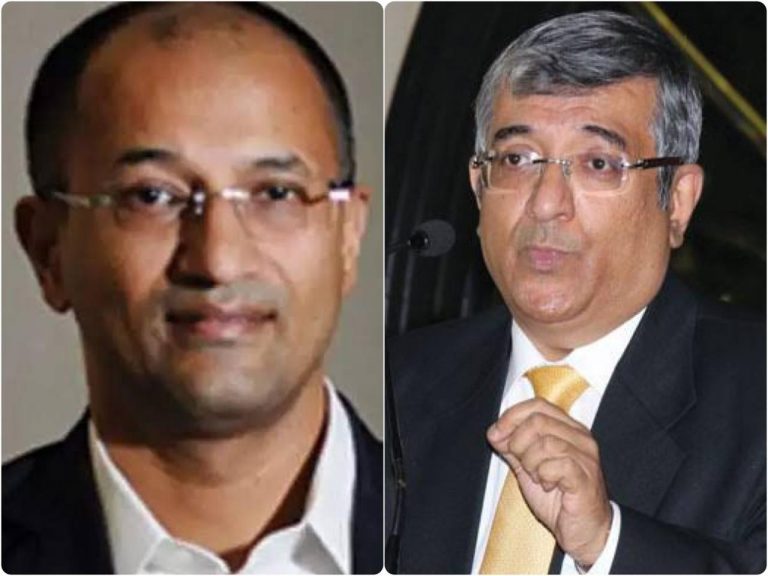
A SEBI Research Analyst, who also happens to be a columnist at the Wire, Hemindra Hazari, wrote to the HDFC bank complaining about “inappropriate behaviour” of an Independent Director on board of the bank, Sandeep Parekh, for debunking lies on Twitter about the bank’s quest for the new MD. Parekh had rubbished ‘source’ based Reuters report on Bank’s process to determine Aditya Puri’s successor on the Twitter following which Hazari not only penned an opinion piece on the unfounded Reuters article but also sought action against Parekh for divulging details of Bank’s internal process in public.

In a scathing attack against conspiracy theorists like Hazari, Sandeep tweeted that when it comes to exposing frauds their frauds, everything is acceptable under ‘freedom of expression’, while when it comes to others, even pointing out their lie is a grave error deserving of retributory action such as getting them axed from their job.


Sandeep Parekh, who is a securities lawyer and serves as an Independent Director on HDFC board had earlier taken to Twitter to debunk misplaced assertions doing the rounds on the Internet about the bank’s search for identifying the new MD. Quoting a Reuters story reported in an Indian daily, Parekh claimed that barring the headlines which read “HDFC Bank to tap Egon Zehnder to identify Aditya Puri’s successor”, rest everything in the article was made-up by the author and factually wrong.

When this was brought to the attention of the SEBI analyst, Hemindra Hazari, he initially trivialised the issue with his tweets and later suggested Parekh and the HDFC bank to approach the courts and initiate legal proceedings against Reuters for doing a story based on unfounded sources.

Read: Shaheen Bagh mastermind and The Wire columnist Sharjeel Imam’s seditious speech well planned, he has no regrets: Delhi Police

Taking After this saga, Hazari posted an opinion piece about the alleged tussle in HDFC bank over the selection of the new MD. Parekh then accused Hazari of deliberately lying since he was privy to his displeasure of the Reuters piece and had interacted over the same with him on Twitter.  “This is a lie-knowingly told because a kind twitter user had brought my tweet (about the Reuters piece) to his attention BEFORE he wrote his ‘opinion'”, Parekh tweeted.


After this, Hazari wrote to the HDFC Bank, claiming himself to be a ‘shareholder’, asking for a list of spokespersons for the HDFC Bank and seeking clarification from the bank on whether it is appropriate for an independent director, a member of the NRC and a member of the selection committee to publicly comment on matters which he has deliberated on and which is price-sensitive information.

Hazari also asked the Bank if Sandeep Parekh’s comments on Twitter on the sensitive issue of the circumstances of selecting a successor to Aditya Puri are in contravention of condition 17 in his letter of appointment as an independent director of HDFC Bank.


In effect, Hazari was tacitly asking the bank to initiate action against Parekh for revealing details in public domain regarding the Bank’s selection process for the new MD.

However, when HDFC Bank did not respond to Hazari’s queries, he threatened to go public on this issue stating that the bank is not responding on an issue pertaining to the inappropriate behaviour of an Independent director.


Responding to these insinuations, Parekh asserted that neither had he breached the law and contract nor had he breached his fiduciary duties. In fact, Parekh stated that he was in line with his fiduciary duties and had supported the law in catching Hazari’s lies.


Parekh further added that it was Hazari who knowingly committed securities fraud and created a false market he knew to be false. Parekh accused Hazari of criticising others based on established falsehoods. “When a rumour is debunked authoritatively, it can no longer be called rumour,’ Sandeep tweeted while implying that despite exposing the lies, Hazari continued to believe them and wrote an opinion piece based on it.
Shaheen Bagh: Parents of the dead infant show no regret, defend taking children out in cold, blame government

0

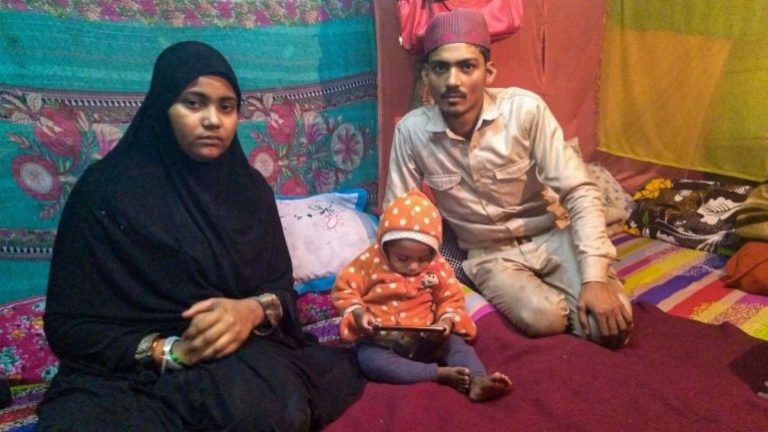
Nazia, the mother of the four-month-old infant Mohammad Jahaan who reportedly died last week due to severe cold during anti-CAA protests in Shaheen Bagh said that she will continue to protest.

While speaking to ANI, Nazia said, “My son has caught a cold, there was no other health issue. We will still go to protest for our country. We don’t have any documents, what will we do? We demand that Modiji and Amit Shah Ji take back CAA & NRC “.


The infant died last week after he acquired a severe cold and congestion because of the exposure towards the chilling winter at the outdoor demonstration. However, his mother is determined to participate in the protests, saying it is “for the future of her children”, ignoring completely that CAA does not even concern Indian Muslims.

As per reports, Mohammad Arif and Nazia, the infant’s parents live in a hut put together with plastic sheets and cloth in the Batla House area and have a five-year-old daughter and a one-year-old son other than Mohammad Jahaan.

They hail from Bareilly in Uttar Pradesh, Arif is reportedly an embroidery worker and also drives an e-rickshaw.

“I had returned from Shaheen Baag at around 1 AM. After putting him and other kids to sleep, even I went to sleep. In the morning, I suddenly found him motionless. He was gone in his sleep,” Nazia said.

The couple asserted that they took their motionless infant to the nearby Alshifa Hospital on the morning of January 31 where he was declared dead on arrival.

Nazia has reportedly been visiting the Shaheen Bagh protest venue every day since December 18 along with the infant.

Speaking to media, Nazia even defends taking the infant out every night in Delhi’s winter. She says that it is the fight of the children too, and they will also accompany parents to the protest venue.

The death certificate issued by the hospital doesn’t mention any severe reason for death. However, the parents who took the infant out every night in Delhi’s severe cold, are unwilling to admit that an infant health and wellness is the primary responsibility for the parents.

Read: Shaheen Bagh ground report: A well-organised ‘organic’ protest, estimated costs of Rs 5L every day and protestors spying on you

“Why was I doing this? For my children and the children of all us who need a bright future in this country. The CAA divides us on religion and should never be accepted. I don’t know if there is politics involved but I know that I must question what is against the future of my children”, Nazia was quoted saying.

Arif, the infant’s father, also puts the blame squarely on the government. He has stated that they had to go out to protest only because the government brought CAA and NRC. None of them seems to register that NRC has not even been started yet and CAA has nothing to do with Indian citizens.

OpIndia had also reported on the death of a two-month-old child who had been accompanying its mother to Shaheen Bagh protests. However, we are unable to confirm whether the cases are the same or there has been the death of two infants.

After wrongly blaming Savarkar for two-nation theory, Congress blames BJP for creating Shaheen Bagh

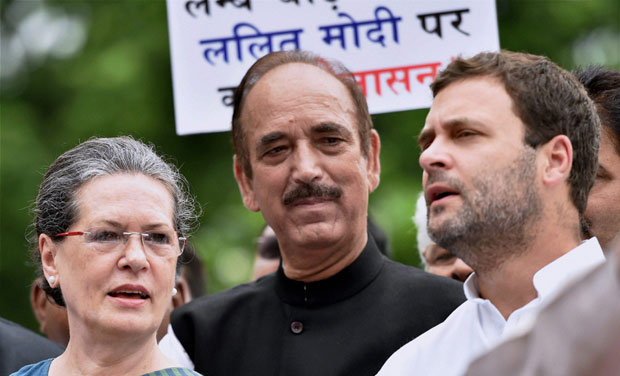
Ghulam Nabi Azad, a senior leader of the Congress party, has now blamed Narendra Modi and the BJP for the Radical Islam that is on blatant display at Shaheen Bagh in the protests against the Citizenship Amendment Act. Furthermore, he has threatened that more Shaheen Baghs will come up all across India if the government carries on with its current policies.


Azad said, “If you had brought constructive matters, we would have bowed before you, but you brought destruction. What is Shaheen Bagh? It is your creation. If you will do such work, then Shaheen Bagh will come up everywhere in India.” It appears that according to the Congress party, providing shelter to the persecuted Hindus and Sikhs and other religious minorities from the Islamic States of Pakistan, Afghanistan, and Bangladesh is a ‘destructive’ effort.

Read: Nexus between Congress and Islamists in stoking anti-CAA riots? PFI spent over 120 crores, transferred huge sums to Kapil Sibal and Indira Jaising: Read details

Furthermore, the Congress party has thus far not condemned the blatant anti-Hindu bigotry that was on display in these anti-CAA protests nor has it called out the Radical Islamic nature of them. Shashi Tharoor did offer a squeak, however, he had to face massive backlash for his resistance. The Congress party since then has left Tharoor to fend for himself.

Blaming the BJP or the RSS for the sins committed by Radical Muslims is nothing new for the Congress party. Earlier, it had claimed that it was Vinayak Damodar Savarkar for the two-nation theory when it is an established fact that the theory was proposed by Muslim intellectuals of British India. Now, it is blaming the BJP for creating Shaheen Bagh when, in fact, it was masterminded by Sharjeel Imam, a Radical Muslim that eulogizes Muhammad Ali Jinnah like the Congress party’s Mani Shankar Aiyer.

Read: I provide help to Shaheen Bagh protesters, they keep calling me: Delhi Congress candidate Mukesh Sharma

Ghulam Nabi Azad’s claim that “Shaheen Bagh will come up everywhere in India” comes across as a veiled threat in light of the admission by a Congress candidate from Delhi that he had provided help to the Shaheen Bagh protesters. It appears obvious now that the Congress party will not be an ally in India’s fight against Radical Islam.

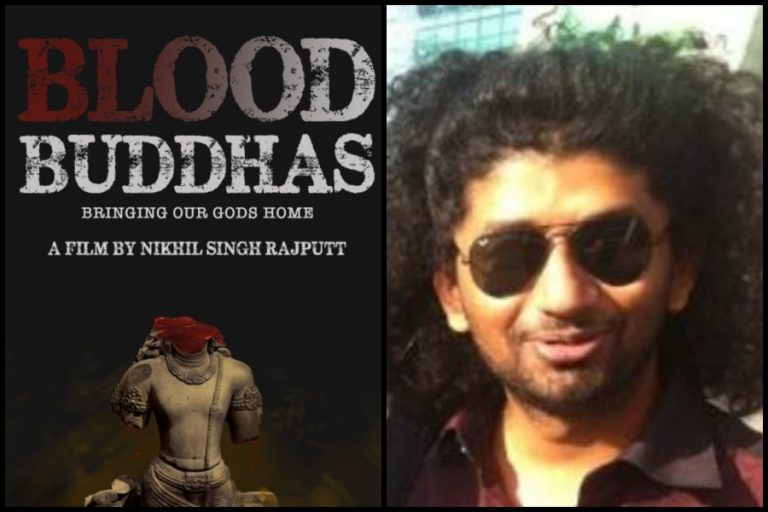
Blood Buddhas: Not just about theft of antiquities, but a portrayal of much deeper malaise of societal apathy towards heritage

I have watched Blood Buddhas four times. And it has shocked me afresh every single time. The first time I watched it at the Arth festival, I was admittedly sceptical about whether it would be worth the time. But I came out enriched and educated, even though the subject was not unfamiliar to me. I can only imagine the impact of the documentary on the ‘blank-state’ viewer, someone who doesn’t have any prior exposure to the issue of the theft of our gods and goddesses from right under our noses.

The issue is not just restricted to the theft of antiquities, which would have been a relatively docile beast to tame. The film rightly portrays the act of smuggling as a symptom of a much deeper malaise, namely the shocking apathy of Indian society towards its cultural and religious heritage. The narrative then navigates it’s way downstream and throws light on the consequences of this large-scale smuggling racket, which is when the alarm bells ring the loudest. Although the link between the stolen murti from the temple nearby and the funding of jihadi terrorism in Syria is not easy to imagine it is there nonetheless. It is hard to miss the painful irony that the theft of our gods is funding terrorist organizations whose raison d’etre is the hatred of our gods.

The film goes beyond merely raising awareness about the issue and the story has been painstakingly crafted to convey the gravity of the situation, leaving you to reconcile the contradiction between a clear intellectual appreciation of the problem and an uneasy feeling in the heart that comes from a sense of helplessness. But it is not just about narratives and emotions. The film copiously cites data and numbers that give us an objective understanding of the magnitude of the problem. For example, it gives us an idea of how much money is involved when we are informed that a single raid at one of the hundreds of antique art dealers all over the world yielded Indian antiquities worth 106 Million US$ or 650 crore Indian Rupees. The Indian government predictably has no official data on the number and total value of heritage items stolen from India in the decades following independence. However, as per one United Nations report, we have lost about 10,000 artefacts amounting to a value of 10 Billion dollars or 70 thousand crores in Indian Rupees.

Although the documentary deals with a grim subject, it does give us many reasons to smile, primary among which is introducing the viewers to the phenomenal work done by India Pride Project in bringing the gods back home. This is significant because not only does the organization identify artefacts, track their current location and coordinate with intergovernmental agencies to bring them back to India, they are absolutely clear about the fact that getting the murtis back to India is only half the battle won if they end up being relegated to the neglect of dilapidated warehouses of the ASI.

We are given a glimpse of the disturbing apathy and ignorance of government officials who have not even been trained to carefully handle these immensely valuable items and as a result, artefacts worth millions of dollars are kept on the floor, exposed to obvious the risk of physical damage. Therefore, it is critical to have a mechanism in place for these murtis to be reinstalled in the same temples from where they were stolen in the first place. Because, as the film informs us, for the people of India, the murtis are not just valuable art but living deities who must be worshipped and adored in their own abode, which is the temple.

Another reason to smile, or maybe chuckle, while watching the film is to see two eminent politicians, Dr Subramanian Swamy and Dr Shashi Tharoor, both unequivocally endorse the work of India Pride Project, keeping their serious ideological differences aside for a change. In an age, where meaningful debates between political parties have become a myth of sorts, the fact that the issue has kindled the spirit of bipartisanship between two bitterly opposed individuals is itself a cause for celebration.

All in all, Blood Buddhas is a superbly crafted documentary that tells one of the most important stories of our times from a civilizational perspective and it is to the credit of the filmmaker, Nikhil Singh Rajput, that the film is able to cut through the indifference of the average viewer and deliver the message straight to the heart, without being self-indulgent like filmmakers of this genre often tend to be

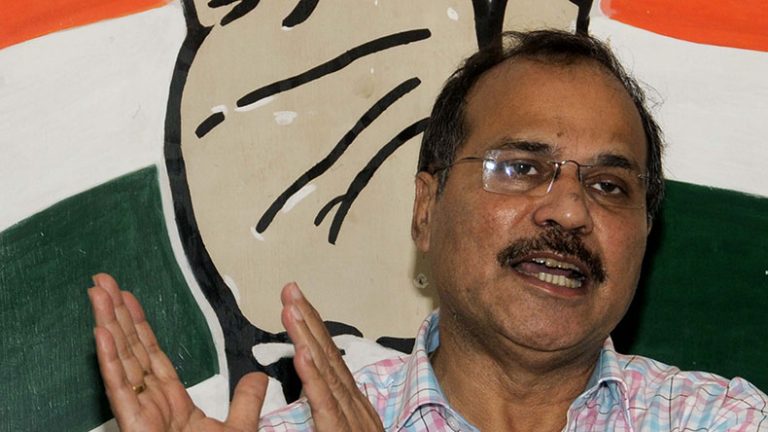
Congress leader Adhir Ranjan Chowdhury uses unparliamentary language in Lok Sabha while attacking BJP MP, says ‘Ye Ravan ke aulad hain’

Leader of Congress in Lok Sabha, Adhir Ranjan Chowdhury, on Tuesday, sparked a fresh controversy after he used a derogatory slang against the Bharatiya Janata Party in the ongoing session of the Lok Sabha, calling all of its leaders “Ravan ki aulad”.


While addressing the Lok Sabha the foul-mouthed Congress leader said, “How can they utter such words for a man who not only greatly contributed towards the freedom struggle, but also spread the message of peace and non-violence in the entire world. Those who call Mahatma Gandhi’s Satyagraha to be a drama are ‘Ravan Ki Aulad’ (Ravan’s child). They are abusing a worshipper of Lord Ram.”

Chowdhury was reacting to Karnataka BJP MP Anantkumar Hegde’s remark wherein he had said that the ‘Independence movement’ was ‘staged with the consent and support of the British’.

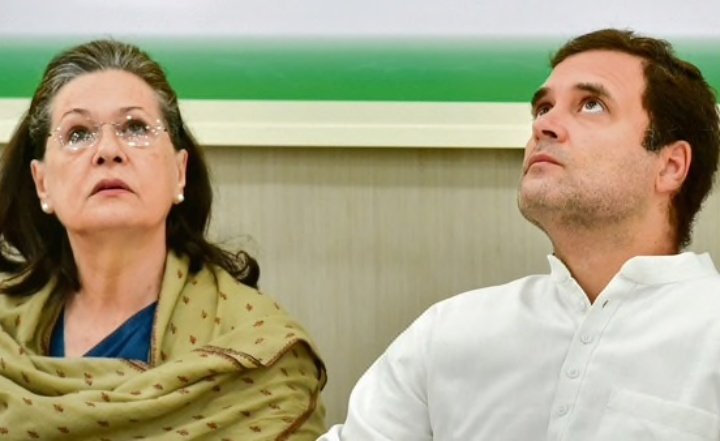
After Chowdhury’s made the remarks in Lok Sabha, Union Minister Pralhad Joshi retorted: “We, people of Bharatiya Janata Party, are the real Bhakts. We are the real followers of Mahatma Gandhi. These people are the followers of ‘nakli’ Gandhi like Sonia Gandhi and Rahul Gandhi.”

Meanwhile, Hegde said on Tuesday that he did not make any statement against Gandhi. “I own my statement made on Feb 1, 2020. I never made any reference to any political party or Mahatma Gandhi or anybody else, I was just trying to categorize freedom struggle.”

He further said: “The speech is in the public domain. If anyone wants to see, it is available online and on my website. I never said a word against Mahatma Gandhi and Pandit Nehru. I was just discussing our freedom struggle.”

According to ANI the issue of BJP MP Ananth Kumar Hegde’s remarks on Mahatma Gandhi has been referred to the party’s disciplinary committee for further action.

This unfitting behaviour displayed by the Congress leader in the Lok Sabha does not surprise anyone as this has become a habit with Adhir Ranjan Chowdhury. Speaking in the context of the NRC, Chowdhury had recently labelled Narendra Modi and Amit Shah as illegal immigrants.

Following the abrogation of Article 370, he kicked up a storm by questioning the government whether Article 370 and the state of Jammu and Kashmir is an internal matter. He questioned how can matters related to Jammu and Kashmir be ‘internal’ if it is being monitored by the UN since 1948. Earlier in June, Adhir Ranjan Chowdhury had likened Prime Minister Modi to a ‘gandi naali’.

More recently, in November, Chowdhury had used derogatory remarks against the European Parliament members who had recently visited Jammu and Kashmir to review the situation. He had said that the European delegation that visited Kashmir were all “kiraye ke tattu (hired hacks)”.

Azad Maidan police files sedition charges against 50 people for anti-national slogans at LGBTQ event

The Mumbai police have registered a case at Azad Maidan police station against 50 odd people for chanting slogans in support of the radical Islamist, Sharjeel Imam at the ‘Mumbai Pride Solidarity Gathering’ held on Saturday.


The police have filed charges under IPC Sections 153 B (Imputations assertions prejudicial to National Integrity), 124 A (Sedition) and 505 (statements conducing public mischief). A complaint was filed by Kirit Somaiya, a former BJP MP, on 2nd February.

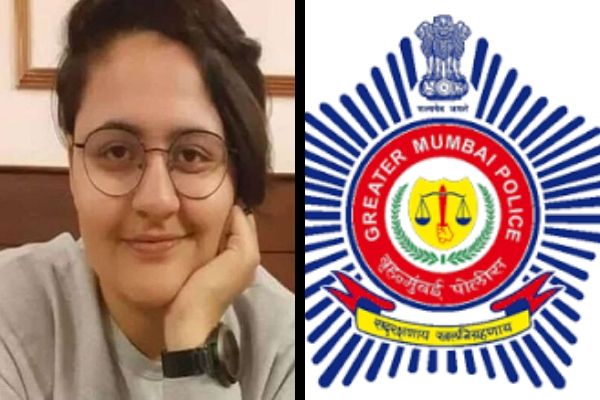
The FIR comes at the backdrop of a  video from the gathering that went viral on social media wherein “Sharjeel tere sapno ko manzil tak pahunchayenge,” was chanted by a group of people. One of the prime accused in the case has been identified as activist Urvashi Chudawala.

the Queer Pride March event also saw participants chanting slogans of ‘Azaadi’ against the CAA, NRC and NPR. One of the placards also demanded independence of Kashmir, along with criticising CAA and NRC.


Urvashi is pursuing her MA degree in media and culture at Tata Institute of Social Science (TISS). The police also scrutinized her social media posts before filing the case. She was called for questioning on two occasions but did not turn up for the preliminary inquiry. It has now been reported that she has gone underground. Reports say that her Facebook page had several posts in support for Sharjeel, but now it has been deactivated.


The police have, however, made it clear that no case has been filed against the organizers of the event but only against those involved in the anti-national sloganeering. Earlier, an Anti-CAA protestor was booked by the Mumbai police for carrying a placard that read “Free Kashmir.”

Read: Big win for nationalists: In a first, organisers of pride parade disassociate themselves from radical Islamist slogans in rally

It is important to mention that the Mumbai police had initially denied permission to organise LGBTQ pride parade. When the controversial video surfaced, the organizers were quick to disassociate themselves from those trying to undermine the integrity of India.

It is notable here that radical Islamist and JNU student Sharjeel Imam has been arrested by the Delhi police after videos of his violence-inciting hate speech calling for the partitioning of Assam and the North East from India went viral.

Congress lies about Budget 2020, claims Modi Govt has reduced funds for Indian Railways: Here are the facts

The Union Budget for the financial year 2020-21 was declared by Finance Minister Nirmala Sitharaman on Saturday. The said budget had many salient features such as a new optional tax regime for the taxpayers of the country. However, as expected, there were many issues that needed clarification and the government has been working hard to remove the doubts that people have regarding specific issues. Under these circumstances, the Congress party has resorted to spreading misinformation and lies on the provisions of the budget.

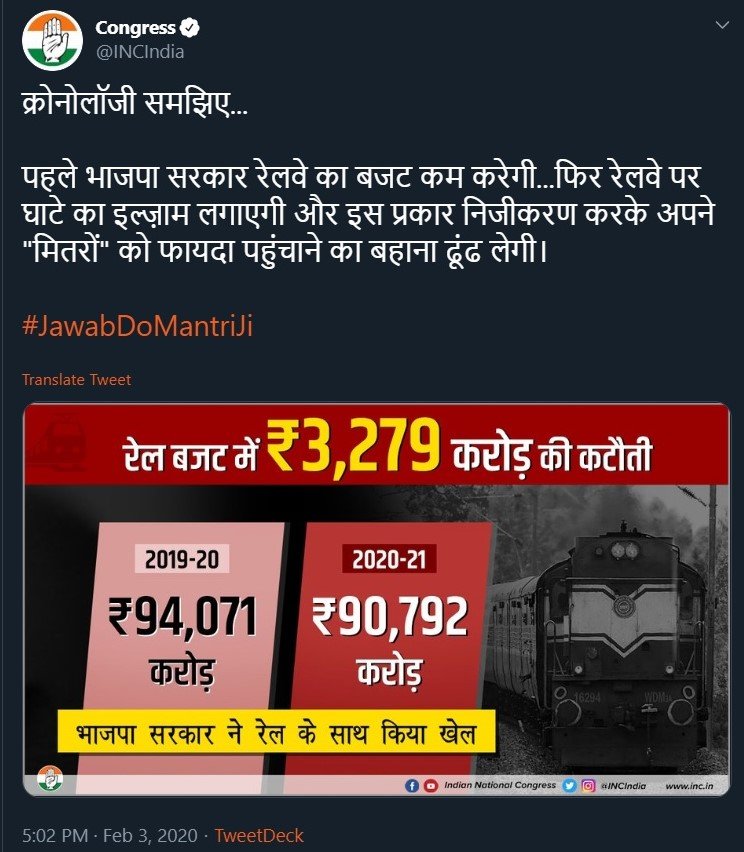
The Congress party on Monday claimed that the Railway Budget had been cut by the Indian government in the Budget. In a tweet posted through its official handle on Twitter, the party claimed that allocations for Railways had been reduced by Rs. 3,279 crores from Rs. 94,071 crores in 2019-20 to Rs. 90,792 crores for the year 2020-21. It is unclear where the Congress got these numbers from but they are patently false.

According to the Congress party, the government had reduced the budget so that it could justify its privatization of the Railways, a claim that is extremely farfetched, to put it mildly. The Congress claimed, “Understand the chronology… First, the BJP government will reduce the budget of the Railways… then the Railways will incur losses and thus find an excuse to privatize in order to benefit their “friends”.”

The tweet by Congress

In reality, the Gross Budgetary Support for Railways in the Budget has been increased to Rs. 70,000 crores, which marks a 3.19% increase compared to 2019-2020. The GBS was Rs. 67,837 crores last year. Furthermore, the Capital Expenditure for Railways has been set at Rs. 1,61,042 crores, which is again 2.99% higher when compared to the previous year. In 2019-20, the Capital Expenditure was Rs. 1,56,351 crores.

The Congress party appears to have invented the numbers out of thin air as the said numbers do not find any mention in the budget. Or it has engaged in some massive sleight of hand to emerge at these numbers. Regardless, the claim made by the Congress party that the NDA government has reduced the allocations for the railway budget in comparison to the previous is just not true. The Congress party appears to be laying the ground for a concerted hysterical campaign in the future should the Narendra Modi-led government initiate some disinvestment proceedings.

The Budget has some extremely significant provisions for the Indian Railways. One of the more significant announcements was the Rs 18,600 crore plan for the 140 km long Bengaluru suburban rail. It was also proposed that large solar power capacity will be set alongside railway tracks on railway owned land. It was announced that more Tejas type trains will be launched across the country. In addition to that, four-station redevelopment programs will be launched under the PPP model.

The Congress, of course, has an established track record of lying for political mileage. The party ran its entire Lok Sabha Elections campaign on the basis of the Rafale Lie. The Congress party has time and again whipped up a frenzy and mass hysteria over measures taken by the Modi government for the welfare of the country. It was most recently observed in the wake of the Citizenship Amendment Act. Therefore, the Congress party lying about allocations for the Railway in the Budget is just more evidence of their remarkable consistency.

A chronology of how Arvind Kejriwal betrayed the 12 principles AAP was founded on

In November 2012, as Aam Aadmi Party was launched, the national media romantically lapped up the idealistic vision and its call for a political revolution, with Arvind Kejriwal as the messiah. At the heart of such romantic idealism, were 12 founding principles, which Kejriwal vowed to follow, and codified it on AAP’s own national website to represent the USP of AAP as to ‘How we are different‘. Since that November of 2012, the nation has witnessed the wilful betrayal of each of those 12 founding principles in an alarmingly opportunistic manner, sacrificing at the altar of political expediency all the core beliefs of AAP. This article catalogues each of the 12 founding principles, and the chronology of how these principles were violated, to leave AAP without an ideology, at the hands of a leader who seems to have the taken the mould of political mercenary leading a party without a cause.

Principle 1: ‘There is no central high command in Aam Aadmi party.’

The testament to the devolution of AAP into a central high command led the party, did not come as much from the opposing parties, as from co-members within the highest national body of AAP itself – it’s National Executive. Between 2014 & 2018, 10 National Executive leaders, who represented nearly 44% of AAP’s National Executive, were either unilaterally sacked, quit out of severe disgruntlement with the high command culture or were ostensibly sidelined. This included leaders such as Ashok Aggarwal who quit in March 2014 saying AAP functions like a private limited company, Shazia Ilmi who quit in May 2014 citing lack of inner-party democracy, Prashant Bhushan, Yogendra Yadav & Ajit Jha who were manhandled in March 2015 by bouncers in a national council meeting while ousting them unceremoniously, Subhash Ware who quit in October 2015 citing the undemocratic way in which a state unit was dissolved, Professor Rakesh Sinha who was sacked in April 2015 for raising questions on the way Internal Lokpal was summarily dismissed, Mayank Gandhi who quit in November 2015 citing gutter-level politics, Ilias Azmi who quit in May 2016 saying he couldn’t bear Kejriwal’s autocratic style of functioning, and last but definitely not the least, Kumar Vishwas who was sidelined after being removed as the Rajasthan state-in-charge in April 2018.

Principles 2 & 3: ‘No MLA or MP of this party will use red lights or any other beacons on his or her vehicles.’ ‘No MLA or MP of this party will use any special security. We believe that elected people’s representatives need the same security as a common man.’

These principles were driven over soon after AAP tasted its first electoral success in 2014, with several ministers opting for swanky new official cars as a means of transport merrily abandoning the ‘Aam Aadmi’ modes of transport. By March 2017, the party MLAs in Punjab had en-mass segregated themselves from the ‘common man’ by accepting not just official vehicles, but also armed gunmen for security. In 2018, Kejriwal passed a resolution in the Delhi Assembly targeting the PM for “failing to ensure the security of an elected CM”. For a party that started with a principle of not needing any security for its leadership, to go on to condemn m the lack of adequate security through an assembly resolution is quite a remarkable volte-face.

Principle 4: ‘No MLA or MP of our party will live in opulent and luxurious government housing.’

It only took a mandate with 54% of the votes in the Delhi Assembly elections of 2015, to hang up on this principle. In March 2015, the CM Arvind Kejriwal readied himself to move into a 5 bedroom, 2 office bungalow with a sprawling lawn that could host 300 people. The bungalow was secured after a special request to the Urban Development Ministry. His Deputy Manish Sisodia took up the same bungalow as was accorded to the previous CM – Sheila Dixit and the rest of the AAP ministers followed suit.

Principle 5: ‘No one would need to buy an election ticket in our party. Candidates contesting elections from an area will be selected by the people of that area.’

This was a promise to hold primaries for every area to select a candidate. No primary was ever held. Instead, there were accusations flying thick and thin, on the amount of cash exchanged to secure tickets in AAP, and it reached a crescendo when AAP picked the cash-rich Gupta from the Congress party for a Rajya Sabha seat in early 2018, overlooking Kumar Vishwas’ popularity among the cadre. By the 2019 LS elections, the son of a Lok Sabha AAP candidate Balbir Jhakar was offering video testimony of 6 crores that were paid to Kejriwal to secure the ticket.

Principles 6 & 9: ‘In all political parties today criminals and mafia goons are given election tickets. Such people will never be given tickets to our party.’ ‘No two members of the same family will be eligible to contest elections in our party and no two members of the same family can become members of the Executive Body.’

By the second Delhi assembly election that AAP fought in 2015, AAP had 1/3rd of its MLAs in the assembly facing criminal charges. As of February 2020, AAP has improved this tally to an impressive 51% of its candidates facing criminal charges. For a party that was known to drop candidates on a whisper of wrongdoing, serious criminal charges among its candidate pool are now par for the course. And to those who insert the disclaimer of a lack of convictions, Jitender Tomar, convicted for defrauding the election process, secured an AAP ticket for his wife for the 2020 assembly elections, perhaps inspired by another convicted political criminal Lalu Prasad Yadav.

Principle 7: ‘This party will function with full financial transparency.’

Never has an avowed declaration of financial transparency been so transparently buried. In April 2014, the party shut down the web link that used to, until then, transparently post the donation data, citing technical reasons. The party continued to double down on this strategy as it blocked donor declarations on its website starting with the Punjab Assembly Elections in 2017, and in 2018 went on to ignore an Election Commission warning to declare donors in line with stated transparency norms.

Principles 8 & 10: ‘Every member of the Aam Aadmi Party will have to follow a strict internal code of conduct or internal Lokpal.’ ‘We will enact a Right to Reject law’

A member can only follow directions of an Internal Lokpal if it is allowed to exist. In March 2015, Arvind Kejriwal summarily sacked AAP’s internal Lokpal Admiral L Ramdas, without giving any tangible reasons, and anointed a successor. The internal Lokpal eventually decayed into non-existence, when Kejriwal refused to even appoint replacement members after the anointed one resigned within a month. The right to reject law faced a similar fate, with no action initiated either within the party or legislatively. In fact, the party’s defence of a convicted Jitender Singh Tomar, and subsequent awarding of a ticket to his wife, indicates the brazenness with which the party now operates.

Principle 11: ‘Aam Aadmi Party is fully committed to the principles of gender equity’

Even ignoring the fact that the party lost its National Executive member Shazia Ilmi by 2014, the fact that the current national executive of AAP has barely 4 women among 23 positions, and ZERO ministers in the Delhi govt points to its woeful inadequacy in adhering to this principle. Even the Indian National Congress has 5 women in its top body, the AICC.

Principle 12: ‘Aam Aadmi Party is committed to the principles of justice for all and will coopt representatives from the Dalit and other minority segments’

A woman Dalit national executive member resigned from AAP in December 2016 ahead of the Punjab Assembly terming the party anti-Dalit. In the 2018 Rajya Sabha seat contest, the party calculated carefully along caste lines to allot tickets to two baniyas, and clearly avoided any Dalit representation. In an analysis published in the outlook in 2016, it was dimly observed ‘the AAP’s key leadership positions remain with non-SC and non-OBC leaders‘.

So, what does a party, that has wilfully, systematically and repeatedly betrayed each one of the 12 principles on which it was founded, stand for? What should a voter or an AAP volunteer look towards as the core beliefs of a party that he/she votes for or supports if none of the core principles of a party survives? Is there any ideology remnant in such a party? Or is AAP a party without a cause, with a political mercenary at its helm?

Bihar: Dispute over Rs 200 linked with CAA and NRC, Hindus in Darbhanga village attacked by Muslim mob

0

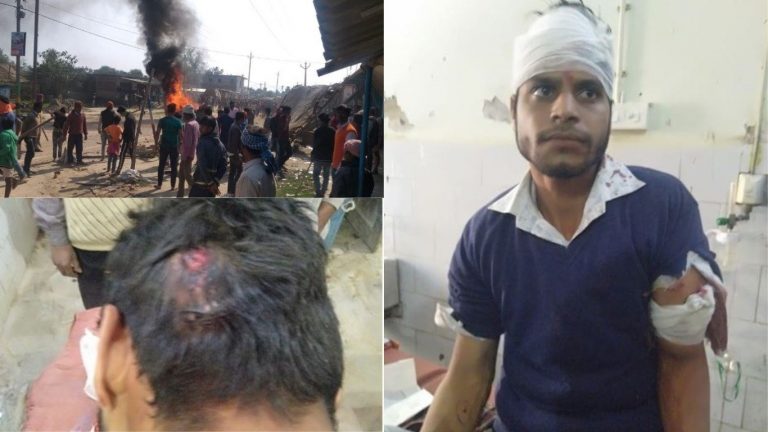
Bihar’s Dahoda village of Manigachhi block in Darbhanga district witnessed severe communal violence on February 2, after a petty dispute over a sum of Rs 200 between two people of different communities was falsely associated to the newly introduced Citizenship Amendment law and NRC.

People belonging to the Muslim community allegedly resorted to arson, stone-pelting and vandalism causing severe damage to public property and life. Many local Hindus were reportedly chased and attacked by the Muslims in the area.

On receiving the information, police from several police stations including Manigachhi, Nehra, Bajitpur, Behera, Sakatpur reached the spot. Six policemen were also reportedly injured in the violence.

In what transpired on February 2, a small argument broke out between one local Hindu named Gunanand and a Muslim mechanic named Mohammad Murshid over a transaction of Rs 200. According to reports, after Murshid refused to pay back a sum of Rs 200 which he owed to Gunanand, the later spilt mud on Murshid’s shop.

Miffed over this, Murshid reportedly invoked the Citizenship Amendment law and NRC here which aggravated the dispute, confirmed an eyewitness to OpIndia. Many local Muslims at this point got involved and started resorting to violence, stone-pelting and vandalism. According to locals, heavy stone-pelting was carried out from the Mosque in the area. Many Hindus of the village were reportedly chased and thereafter attacked in the ensuing violence.

This petty dispute over a small sum of money, which was needlessly linked to CAA and NRC, within no time turned communal.

Some of the people amongst the violent mob also allegedly ransacked and looted the local shops. The situation became so grave that most of the shopkeepers of the market closed their shops and fled. According to initial reports, the damages caused were to the tune of Rs 4 lakhs. However, right now people say that this estimate may increase. The surveys conducted by the local administration have identified around 21 damaged shops until now.

According to the report of Dainik Jagran, local legislator Lalit Kumar Yadav reached the spot and tried to placate the situation by conducting a peace march there. Congratulating the administration for effectively bringing the situation in control, Yadav appealed to the locals to maintain peace. He requested people to cooperate with the administration to ensure that such an incident does not happen again.

According to reports, the local administration has also appealed to form a peace committee to keep the situation in the district under control. They have asked the locals to identify those spreading any sorts of rumours and intimate the local administration about it immediately. The villagers also demanded deputation of the police force along with the magistrate in the village till the atmosphere became normal.

According to the latest information, an FIR has been registered against the rioters. 23 have been named and 150 unknown people have been made accused on the basis of an application from sub-inspector Ramashankar Pandey. Moreover, out of the 23 people named, 18 have been sent to judicial custody on Monday, said SDPO Umeshwar Chaudhary.

At present, efforts are being made to set up a meeting of the peace committee to normalize the village atmosphere. On Monday, the meeting of this committee was chaired by BDO Manoj Kumar Rai. It appealed to all people to maintain mutual harmony and brotherhood.

Recently, rumours regarding CAA and NRC have led to stray incidents of violence not only in Bihar but many other states in the country. On January 26, a team of researchers from Lucknow mistaken as surveyors for NRC were held hostage by locals in Bihar’s Darbhanga. As the 12-member team, which included four women, reached the village and began visiting households to collect information, word spread that they were NRC surveyors.

Furious and panicked villagers took them to the Jamalpur police station, where the situation was diffused and it was later found that they were working with a US-based PhD scholar from the Yale University.

In a similar incident, the house of a 20-year-old Chumki Khatun was set on fire by a mob in West Bengal’s Birbhum over rumours that she was collecting data for NRC. As per reports, Khatun worked with an NGO on a contract where it was training rural women to use smart phones effectively. As part of her training, Khatun collected some general data. This fuelled the rumours that she was collecting data for NRC. However, the police had denied that the incident was linked to NRC.

Despite Times Now predicting AAP winning Delhi, this is how they can still lose the elections

Among the supporters of all political parties, it’s the BJP supporters on social media who take opinion polls most seriously, perhaps even more seriously than those conducting such polls. One of the reasons could be that most of such supporters tend to trust data more than ‘mahaul’ – which is why they kept asking for data whenever a narrative on lynching, hate-crime, Jai Shri Ram, etc. was built by the opposition. Opinion polls deal with data, and thus BJP supporters find it a bit difficult to dismiss it, as it goes against their innate beliefs.

The wider held opinion among this support base, to whom my article is targeted at, was that BJP was nowhere in competition as the 2020 assembly elections drew closer, but with Amit Shah himself leading from the front and BJP going aggressive on cultural and ideological issues in the last couple of weeks, the game had changed and it was now an equal fight between BJP and AAP in Delhi.

However, the latest opinion poll by Times Now, which is being claimed as having been conducted between January 27 and February 1 i.e. during a duration when BJP is supposed to have surged ahead, has somewhat spoiled this enthusiasm among a section of BJP’s online support base. The poll gives an unbeatable 52% vote share to the ruling Aam Aadmi Party that could help AAP win as many as 60 out of the total 70 seats in the Delhi assembly.

Interestingly, the same opinion poll says that 52% of the voters were against the anti-CAA protests at Shaheen Bagh, which has been made a central issue by the BJP in the Vidhan Sabha elections. It also says that the BJP will win all the seats in Delhi again if a Lok Sabha election was to be conducted at the same time. While it may appear contradictory, it indeed is a reality that people vote on different issues in state and general elections.

Read: Shaheen Bagh ground report: A well-organised ‘organic’ protest, estimated costs of Rs 5L everyday and protestors spying on you

So does that mean that BJP is not likely to win the Delhi assembly elections? I don’t think that is something that should be taken as a foregone conclusion. Here are 5 reasons:

The usual reason: Opinion polls are not an exact science

In the last assembly elections i.e. in 2015, virtually no opinion poll could predict the unprecedented victory AAP finally went on to register, winning 67 out of 70 seats. Half of the polls were predicting BJP getting majority while others gave AAP an edge. Opinion polls similarly have missed many other wave elections in other parts of the country, which should actually make their life easier, as against predicting a closely fought elections.

Read: Exit Polls and their methodology have too many flaws to ignore: Is this exercise turning out to be a complete farce?

The reason is that opinion polls are not an exact science. It is very difficult to get the true sample that represents the actual electorates. Furthermore, factors like voter turnout that in turn depends upon a party’s booth management abilities, and decisions by ‘undecided voters’ can change the voting patterns. BJP is far better in booth management and having a network of workers on the ground. AAP is lacking the army of self-driven volunteers, mostly young men and women, that it was able to attract last time.

‘Modi for PM, Kejriwal for CM’ might not be as strong as before

The Times Now poll virtually retains the vote shares that were obtained by BJP and AAP respectively in 2015. AAP is losing marginally and BJP is gaining marginally (less than 2% votes). This coupled with the fact that their own survey says that bulk of the voters still prefer Modi in the centre, suggests that nothing has changed in people’s outlook since 2015. ‘Modi for PM, Kejriwal for CM’ was a popular phrase, so much so that AAP itself had used it in a banner on their official website as part of the poll promotion. It was perhaps the first-ever case when a political party had used the face and name of their opponent to seek votes. Embarrassed, they had to soon remove the banner from their website.

If the Times Now opinion poll is to be believed, nothing has changed since then, and this sentiment remains strong. This assumption I believe is fallacious because after winning 2015, Kejriwal has never lost an opportunity to attack Modi in the most virulent terms. It was a totally different Kejriwal that people had seen before 2015, who, even though having fought directly against Modi in 2014 Lok Sabha elections, didn’t indulge in polemics like calling Modi a “coward and psychopath”. This name-calling became worse after demonetisation and continued even in wake of India-Pakistan tensions, which ended up Pakistanis trending a hashtag in support of him.

It’s true that Kejriwal is trying to undo the damage and change that image. Recently he rejected support from a Pakistani minister for Delhi polls and has not made any ‘mental’ statement against Modi after the 2019 Lok Sabha results. But I don’t think people will forget his past antics so easily. The ‘Modi for PM, Kejriwal for CM’ voter block from the last elections would be in much smaller number this time, and that will hurt AAP.

Kejriwal is not Modi

One of the reasons why media and pollster believe that AAP will repeat its 2015 elections is why Modi could repeat, rather better, his 2014 performance. Almost all of the journalists and pollsters had got the intensity of Modi’s 2019 victory wrong, and I think they are overcompensating it when it comes to Kejriwal. Even if their own data may not show Kejriwal winning this big, perhaps they are adding that “x-factor” that they had missed for Modi’s 2019 victory. Basically, once bitten twice shy.

But it’s not just ‘once bitten twice shy’, but it’s also because many of them actually believe that Kejriwal is like Modi and thus they are prone to believe that Kejriwal will repeat in 2020 what Modi could do in 2019, and thus adding that x-factor.

Read: Delhi govt led by Arvind Kejriwal failed to deliver on 75% promises made: Detailed analysis of all 70 promises made in 2015

It’s no secret that a huge section of media loves Kejriwal. During last elections, NDTV’s Ravish Kumar had written a blog that virtually argued that Kejriwal must win to keep the hope in democracy alive. Kejriwal did win and democracy thrived, which somehow gets suffocated when Modi wins elections. That aside, Kejriwal has been the original pyaar of the leftist ecosystem, which saw in him a nemesis of Modi. However, once Kejriwal failed to win Goa and Punjab, the ecosystem got disillusioned and some decided to go back to the patron Congress and joined the chorus of Rafale scam, while others kept looking for Modi’s nemesis in random JNU students and likes of Hardik Patel and Jignesh Mevani or in leaders like Mamata Banerjee.

After 2019 Lok Sabha verdict, the ecosystem has been repeating everything that they did after the 2014 results. Having belief in Kejriwal is part of being in that repeat mode. And they have reasons to believe that Kejriwal in Delhi is like Modi at the national stage. Both have delivered to the lower classes what matter to them. If Modi gave them gas cylinders, electricity, houses, etc., Kejriwal has at least given water and electricity “free”. While journalists kept on dreaming bad press due to imaginary Rafale scam, Modi was winning support on the ground. Kejriwal could similarly have support on the ground due to his free bijli and paani.

But the truth is Kejriwal is not Modi. Rafale scam was imaginary, but Kejriwal’s failure to deliver on his myriad of promises are real. BJP has been trying to highlight those failures and Amit Shah himself has led from the front. Modi doesn’t allow his detractors to trap him and force him to follow their narrative, while Kejriwal was trapped by Shah and he has been forced to talk about his unfulfilled promises. The dynamics that worked for Modi in 2019 are not directly applicable for Kejriwal in 2010, because they are very different personalities.

Delhi is not India

Apart from Kejriwal not being Modi, other difference is that Delhi is not India. It is a region that appears to get influenced by ‘mahaul’ more easily than other places in India, perhaps due to the disproportionate focus of the mainstream media on the region. Rise of AAP, which the party couldn’t replicate anywhere else in the country, is in a way testament to that theory. That is another reason why direct parallels between Modi’s 2019 performance can’t be made with an assumed repeat performance of Kejriwal in 2020.

And this is where BJP might not be erring in treating the elections as some sort of national elections, and creating a ‘mahaul’ around nationalism and civilizational issues. Obviously, the big difference is that while others get support from the ‘liberal media’ in creating such mahaul, BJP will not have that luxury. However, there is pretty good chances that this ‘mahaul’ could affect the Delhi electorates beyond those residing in areas near Shaheen Bagh.

What the party need to do is to have a healthy mix of creating this mahaul while nailing Kejriwal on his unfulfilled promises. There are reports that BJP volunteers have been asked to spend time in jhuggis ahead of the elections. They shouldn’t be talking only Shaheen Bagh there but explain to them how “free” is not really free and other such issues.

Last over batting by Modi

Narendra Modi’s rallies are coming. That’s a reason in itself.