Home Blog Page 5872

Documents reveal hideout of slain former ISIS chief Baghdadi had Internet connection sourced from Turkey

In a stunning revelation by the journalist Jenan Moussa, the compound where Baghdadi was holed up and later died by detonating a suicide vest had an Internet connection. Baghdadi was hiding in a nondescript compound in the Barisha town of Idlib district in northern Syria.


The Internet connection was bought by the owner of the compound-Abu Muhammad al-Halabi via a local Internet provider in Idlib city. Internet reaches Barisha town in Syria from Turkey. From Barisha, the Internet reaches Idlib through several antennas. Through Idlib, with the use of several antennas, the connection reached the Barisha town where former ISIS chief had taken refuge. Baghdadi’s compound was 5 kms away from border separating Turkey and Syria.

According to Moussa, the Internet connection was subscribed and bought under the name of the compound owner-Abu Muhammad al-Halabi. The cost of the connection was 5000 Syrian pounds per month that are equivalent to USD 8 per month. According to the documents, the Internet connection was activated on February 1 this year. It was still active when the US troops attacked the compound in the wee hours of October 27, 2019.

Read: Washington Post glorifies ISIS chief Abu Bakr al-Baghdadi in its obituary, changes headline after public backlash

The username of the connection was ‘mhrab’ and hours before the US attack, the residents of the compound had accessed Internet 7 times for the total of 1 hour 29 minutes and 34 seconds.

The documents show that around 211 GBs of download was consumed so far while 11 GBs were uploaded via the Internet connection.

Though the documents do not conclusively prove that Abu Bakr Al-Baghdadi himself was using the Internet but it does show that the compound where he had taken shelter was connected to the Internet sourced from Turkey and it was used by the residents until 12 hours before the US raid took place.

Rising number of dengue cases: BJP protest against government inaction, workers allege manhandling by Kolkata police

The Kolkata police employed brute force against the protestors demanding action against the menace of dengue outside the Kolkata Municipal Corporation. The BJP on Wednesday had organised a rally in Kolkata to register their protest against the spike in dengue cases in the city and accused the incumbent Trinamool Congress of hushing up figures of dengue cases in the state.


Leading the rally, BJP state president Dilip Gosh told reporters, “The state government is deliberately trying to hide the actual number of dengue cases. They are more interested in concealing the actual number of dengue incidents than tackling the menace.”

The protest march was organised by BJP’s Yuva Morcha. It was started from the Central Avenue and culminated at the Kolkata Municipal Corporation headquarters. Police have stated that barricades were set up near Chandini Chowk Metro Station to stop the rally beyond that point.

BJP leader Rimjhim Mitra stated that despite having permission to carry out peaceful protests, male police personnel manhandled them. The police had also used water cannons to disperse the crowd.


Dengue is a water-borne disease, caused by a bite of a female infected mosquito. The dengue mosquitos prefer to breed in fresh stagnating water. When a mosquito bites a person who has dengue virus in his or her blood, the mosquito becomes infected with the dengue virus. An infected mosquito can later spread that virus to healthy people by biting them. Dengue cannot be spread directly from one person to another, and mosquitoes are essential for the transmission of the dengue virus.

According to the report by the state health department, about 44,852 dengue cases have been reported from Kolkata and its adjoining areas so far. As many as 25 people have died of dengue in Kolkata since January this year.

Uttar Pradesh: Imam amongst those arrested for hiding explosives inside mosque in Kushinagar, report suggests ‘something big’ was planned

The Uttar Pradesh police have nabbed four persons including a Muslim cleric in connection with a blast at a mosque in Kushinagar in Uttar Pradesh. As per Jagran report, the explosives were procured in April 2019 itself. One Haji Kutubuddin had reportedly told the youth who had stored the explosive that ‘something big’ is being planned. The explosives reportedly weigh around 8-10 kgs.

As per Jagran report, role of Haji Kutubiddin’s grandson Ashfaq’s role is also being investigated. Ashfaq and his wife are working with in the health department of the Indian Army and are posted in Hyderabad. It is believed Ashfaq was in Kushinagar when the blast took place on Monday and he reached the spot and immediately cleaned it up. Agencies are also investigating whether the explosives reached the mosque via Ashfaq.

According to the reports, the UP police had registered an FIR against seven persons. Among the four arrested is the Imam of the mosque, Maulana Azmuddin, while three others are absconding.

Vinod Kumar Mishra, SP (Kushinagar) said that the others arrested are Izhar, Aashiq and Javed, who are residents of the Bairagi Patti village. The Uttar Pradesh police are yet to ascertain the motive behind the blast that occurred at the mosque on Monday.

Read: Mosques in the valley under scanner, Amit Shah’s Home Ministry seeks the details of mosques in Jammu and Kashmir

According to the forensic reports, the explosion was caused by explosives stored in the mosque. Initially, it was believed that the blast was caused by an explosion in an inverter battery. However, it further investigation had revealed that it was not the case.

ATS Gorakhpur, intelligence agencies and Local Intelligence Unit (LIU) teams have joined the investigation. During interrogation, the cleric admitted that he and some other youths had kept the explosives in the mosque.

The blast took place in Bairagai Patti village here on Monday afternoon. The explosion was strong enough to rip apart doors and windows in the mosque.


Chief Justice of India is a ‘public authority’, comes under the ambit of RTI Act : Supreme Court

0

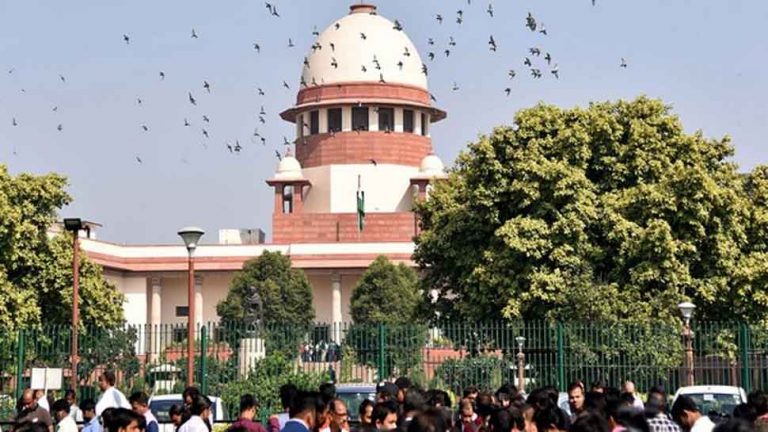
In a significant judgement, the Supreme Court on Wednesday held that the office of the Chief Justice of India comes under the definition of “public authority” under the Right to Information Act, 2005 (RTI Act), adding that judicial independence cannot be attained by holding back information.

According to the reports, the five-judge bench of the Supreme Court led by Chief Justice Ranjan Gogoi upheld a 2010 decision of the Delhi High Court, which had brought the Chief Justice of India under the ambit of the RTI Act. The Supreme Court bench agreed in principle to share information but on a case-to-case basis and subject to RTI safeguards.

Reading out the majority verdict, Justice Sanjiv Khanna said public interest demands that transparency is maintained. “Transparency does not undermine judicial independence,” the judge, who is also in the line of succession to be the CJI, stated.

The order was passed by a five-judge Constitution bench headed by Chief Justice Ranjan Gogoi. Other members of the bench are Justices NV Ramana, DY Chandrachud, Deepak Gupta and Sanjiv Khanna. Justice NV Ramana stated there should be a balance between RTI and privacy, and that information-seeking should be calibrated.

Justice DY Chandrachud said the principal consideration should be public interest and that judges are not above the law. He said the Information Officer should weigh competing claims and decide.

Reportedly, the Central Public Information Officer of the Supreme Court had filed a petition against a 2010 Delhi High Court judgement that held the office of the CJI was a public authority and directed the secretary-general of the top court to disclose details of the assets of judges sought by RTI activist SC Agarwal.

In 2010, a three-judge bench of the Delhi high court comprising justices AP Shah, Vikramjit Sen and S Murlidhar had held that the office of the CJI is a “public authority” and hence it comes under the RTI Act. But the ruling was later challenged in the Supreme Court, which had stayed the implementation of the judgment while admitting the appeal.

In 2007, RTI activist Agarwal, under the RTI Act had sought a copy of the resolution dated 7th May 1997 of the full court of the Supreme Court, which requires all judges to make a declaration of assets possessed by them.

In 2016, a three-judge bench headed by Gogoi then had referred the case to a constitution bench to decide whether the office of the CJI comes under the RTI Act or not. The five-judge Constitutional bench had begun to hear the case in April this year.

Agitation and student protest at BHU South Campus over RSS flag removal, deputy chief proctor resigns

0

Students of Banaras Hindu University’s Rajiv Gandhi South campus in Barkachha reportedly staged a dharna (sit-in-protest) demanding the resignation of the college’s Deputy chief proctor Kiran Damle alleging that she had uprooted the RSS flag from the campus during a Shakha (session) organised by the students of the college.

Kiran Damble while resigning, reportedly admitted her mistake and apologised for his actions and said that he had ordered the flag removed as it was on a path.

As per reports, the resident students of various hostels in the college reportedly organise such Shakha’s every morning in the playground within the campus. On Tuesday, many students had put up an RSS flag to set up a Shakha. The deputy chief proctor, who reached the stadium during her morning rounds allegedly uprooted the flag stating that the flag had damaged the track since the students dug up a hole on the road to place the flag. This angered the students who then staged a dharna demanding her resignation and apology for displacing the flag.

Students have claimed that as they were practising ‘Pranayam’ and had their eyes closed, they could not see the flag being removed.

As the information spread, more and more students joined the agitation. Police reached the spot and urged the students to end the protest. MLA Ratnakar Mishra and RSS district Karyawah Chandramohan also reached the campus and criticised the deputy chief proctor’s reaction.

Police confirmed that Chandramohan had filed a complaint against the proctor and a case has been registered against her.

Meanwhile, Damble has said that she had no idea about the rules of the RSS flag and confirmed that it has been kept safely. Damle furthered that some outsiders had misguided and instigated the students.

The Liberhan Commission report on Babri Masjid Demolition: 10 things ‘liberals’ don’t want you to read

The Liberhan Commission was commissioned by the then Congress government ten days after the Babri Masjid demolition to investigate the events that led to it and those responsible for it. The Commission report came down hard on the ‘Sangh Parivar’ and after it was finally submitted to the government seventeen years later, the Congress used it to go hammer and tongs at the BJP. The BJP, for its part, dubbed it more of a political report than anything else.

While the report overwhelmingly is focused on the BJP, RSS, VHP and Bajrang Dal, and it was loved by the intellectuals and the Congress for it, it does suffer from some glaring inconsistencies. While Liberhan accurately describes certain matters, on other issues, he was completely wrong. Broadly speaking, although he was wrong about basically everything regarding historical events, he occasionally got it correct about matters of pre-Independence India while being horribly wrong about Independent India on a consistent basis.

Here are ten such statements from the Liberhan Commission report.

1. “The constant bitterness between the two communities is a historically accepted and recorded fact. This Hindu-Muslim discord may possibly have been the catalyst for the birth of Hindu nationalism, Hindutva, cultural  nationalism, Hindu Rashtra and for the organisation of divergent groups of Hindus within the Hindu society.”

Unlike liberals of today, Liberhan admits that there has been continuous strife between the Hindu and Muslim communities. He also notes that the discord between the two communities may have contributed to the rise of Hindutva. He is only partly right in his observations. Hindutva was fueled primarily by the rise of nation-states around the world while its nature was determined by the existing relationships between various religious communities.

2. “There was Hindu-Muslim divide before the partition of the country. Bitterness between the two communities was constant and persistent from times immemorial. This divide escalated steadily and peaked at the time of the partition of the country in 1947 when Pakistan was carved out of India. Pakistan declared and constituted itself as an Islamic state. India chose to declare herself a secular, multi-religious, multi-regional and multicultural state. The partition resulted in an unruly exchange of populations, which left a sad scar on the psyche of a large section of society in the country that persists till day in spite of a half a century having gone by.”

Liberhan further admits rather candidly what liberals of today seek to consistently deny. The Hindu and Muslim communities were not divided by the British, they have always been divided and the differences, as Liberhan says himself, have existed ‘from times immemorial’.

Read: The comprehensive legal History of Ram Janmabhoomi case: A case that will have its relevance for generations to come

Furthermore, Liberhan also notes that the scars of partition persist in our country to this day. It’s only natural that it persists since the partition was a monumental event in Indian history. It won’t be farfetched to assert that it was a cataclysmic event in history and the memories of such events will not ever fade.

3. “The post partition leadership, inspite of its undisputed credibility and sincerity, failed to root out communalism and the division on the basis of casteism, religionalism, regionalism etc. which are the sources of communalism. The post-partition leaders did make substantive effort to root out communalism or reduce the cleavage between Hindus and Muslims.”

4. “Ayodhya is accepted in popular Hindu tradition as the birthplace of the  Hindu God Rama and is therefore regarded as a holy and historical city. There is a plethora of ancient treatises, travelogues and histories written by innumerable authors about Ayodhya and its culture. The prominent mention of Ayodhya in the much venerated holy Hindu text, Ramayana, lends itself to a very significant place for this place in the Hindu perception.”

While Leftist historians have consistently sought to deny the significance of Ayodhya to the Hindu community, even Liberhan, who has been extremely critical of Hindu politics, admits that Ayodhya holds a ‘very significant place’ in the heart of the Hindu community. This is a fact that Leftist historians have often sought to deny altogether. They claim that reverence for Ayodhya is a modern development. But as we can see, even Liberhan admits that Ayodhya gains its significance from the Ramayana itself.

Read: Will Ram Lalla finally come home: The culmination of a people’s movement spanning over 491 years

5. “Muslim members of the legislative assembly (MLAs) of UP met the Chief Minister to request a relocking of the site. It is noteworthy that no member of the Muslim community from Ayodhya was a member of the Babri Masjid Action Committee or any other committee protesting the opening of locks at the disputed structure. Sultan Shahabuddin Owaisi, a member of parliament from Hyderabad challenged the opening of locks and along with some others became a forerunner for taking on the Hindu organisations.”

The Babri Masjid Action Committee was set up after the gates of the Babri Masjid were opened to allow Hindus to worship at the place. It is notable that not a single Muslim from Ayodhya was a member of the Committee then.

6. “Muslims variously protested between 1st of January to the 30th of March 1987. Apart from giving calls for, boycotting Republic Day (which call was later withdrawn) bandhs were observed and a public rally held at Boat Club in Delhi. Public threats of violence were made by personalities no less than the Shahi Imam of the Jama Masjid, Shahabuddin and Suleiman Sait etc.”

Liberals often give a free pass to the toxic leaders from the Muslim community but here we can see that leaders as prominent as the Shahi Imam of the Jama Masjid gave public threats of violence in 1987. The Shahabuddin mentioned here is presumably Sultan Shahabuddin Owaisi as mentioned in quote #5. However, it could also be Syed Shahabuddin, another prominent Muslim leader, the report doesn’t clarify. Significantly enough, calls were made to even boycott the Republic Day celebrations, which was withdrawn later.

7. “There have been suggestions that the arms of local police and PAC were withdrawn and only the personnel trusted by VP Singh were posted. That 90% of the police personnel supported the Karsevaks , and in fact the police opened the locks at the gates; that the CRPF and BSF Jawans refused to open fire despite direct orders; guns were snatched from the Jawans of 61st and 68th Battalions. No evidence to this effect was produced before the Commission. The only remote support for the suggestion is drawn from the text of a book “Karseva Se Karseva Tali by a journalist wherein it was recorded that the BSF Commandant ordered his men to commence firing, which was defied.”

8. “RSS is a tightly structured organization with BJP as its political wing. They are extraordinary men, whose ability has been continuously underestimated.”

While the first part of the quote can be disputed, the second part cannot. Liberals often deny the capabilities of the leadership and claim that they merely use public discontent to fuel their political ambitions. However, they ought to heed Liberhan’s conclusions in this regard.

Read: Road to Ram Janmabhoomi, Ayodhya: How Hindus fought for Shri Ram

9. “Except for the self-serving hyperbole, the Ayodhya campaign did not enjoy the willing and voluntary support of the common person, even of the average Hindu… While traditionally, the word movement has been used to denote a collective desire of the public to secure a particular result, the Ayodhya campaign never achieved proportions even close to those levels. The use of the word movement notwithstanding, the Ayodhya episode was never accompanied by a public movement.”

This, perhaps, is the biggest reason why liberals ought to have taken the conclusions reached by Liberhan a little less seriously. It is insanity to deny that the Ram Janmabhoomi Movement was the greatest political movement in Independent India. No movement has had more of an impact in the political landscape of the country.

Given the huge crowd that the movement managed to attract and the massive ramifications it had, it shows the extent to which Liberhan’s eyes were clouded by his biases. Everyone knows that the movement had such huge public support that it incapacitated the machinery of the secular state on several occasions. Therefore, to claim that the ‘Ayodhya episode was never accompanied by a public movement’ shows that other conclusions reached by Liberhan on critical issues of the movement shouldn’t be taken too seriously.

10. “The reporting of events in 1992 was possibly not as tactful and mature as it could have been. In reporting, some sections of the media overshot the restraints of common place prudence and were perceived as inimical to one or the other sides to the artificial dispute which had taken the country’s polity by storm. The close patronage of certain newspapers, journals and electronic media by one or the other interest groups tended to expose them to allegations of malice and bias against the others.”

The media never likes to be told about its own follies. Thus, it’s quite natural that these observations on the conduct of the media were entirely ignored. However, it’s a fact that remains true to this day. The media hasn’t fared very well while reporting on matters of national significance.

Having said that, given the biases of Liberhan, it appears as though he would have preferred that the media censored certain crucial facts so as to contain the movement and the episode which, in his own words, “was never accompanied by a public movement”.

Supreme Court to scrutinise efficacy of Odd-Even scheme, asks NCT Delhi to furnish AQI data

0

Even as Chief Minister Arvind Kejriwal plans to extend the Odd-Even scheme in Delhi, the Supreme Court has raised doubts about the effectivity of the scheme that was envisaged by the Delhi government to arrest the degrading environmental condition in the national capital.

The Supreme Court has asked NCT Delhi to provide details of Air Quality Index(AQI) data of Delhi during the period in which odd-even scheme was implemented by the Delhi government. As per reports, the apex court ha directed the Delhi government, central government and Central Pollution Control Board for Delhi’s pollution data for October and till November 14.

The court will examine the pollution levels on a day-by-day basis from the start of Odd-Even till November 14 to determine if the scheme had any impact on the pollution of the city.

Read: Odd-Even rule makes a comeback in Delhi, pollution had increased when it was enforced for the first time in 2016

The apex court had asked for empirical data suggesting that the odd-even had actually helped in reducing the pollution levels of the national capital.


In addition to this, the court has also issued a notice to the Delhi government on a Public Interest Litigation(PIL) filed by an advocate Sanjiv Kumar, challenging the Kejriwal government on the odd-even scheme and terming it an illegal classification of vehicles. The court has listed the matter to be heard on November 15.


Even as questions are being raised about the effectiveness of the odd-even scheme in lowering the pollution levels in Delhi, Arvind Kejriwal hinted at the extension of the much-debated scheme.


The Supreme Court had last week asked the NCT Delhi the rationale behind bringing in the odd-even scheme. The bench headed by Justices Arun Mishra and Deepak Gupta questioned the government on the extent of the scheme since it was applied only for private cars, leaving out 2 wheelers, 3 wheelers and taxis which are much more polluting than cars. The court had then asked the Delhi government to place data to determine if any significant drop is witnessed in the pollution levels by restricting plying of private cars.

Indian Consulate in Dubai reaches out to woman after her tweet seeking help on social media from domestic violence goes viral

The Indian Consulate in Dubai has reached out to Indian woman Jasmine Sultana, who had sought help on social media and had accused her husband of domestic violence.

In a video that has gone viral on social media, Sultana had requested authorities to help her get out of the UAE. She had accused her husband, Mohammed Khizar Ullah of domestic violence.


In an unclear video, the woman who identified herself as Jasmine Sultana in the tweet could be seen with swollen eyes and bleeding. She could be heard pleading for help from her parents and one Lubna and one Debu, presumably her relatives. She can be seen crying towards the end of the video.

While other details are not clear from her video, in another tweet, she said she does not want to stay in the UAE with her husband and wants to come back to her home country India.


Jasmine Sultana says that she is from Bangalore, India and currently in Sharjah, UAE. She says she has one 5-year-old child and one 17-month-old child. Various people have tagged authorities in Dubai and in India on Twitter asking them to help her.

Following her appeal for help, the Ministry of External Affairs swung into action and reached out to her.


Indian Consulate in Dubai said that they got in touch with Jasmine and will provide whatever help possible to her. Her husband, whom she had accused of domestic violence, has also been called to the Consulate. Local authorities are already questioning him on the allegations levelled by his wife.

Note: The above report is updated with latest information.

Indian Army’s ‘Sindhu Sudarshan’ exercise: Over 40000 troops, tanks, attack helicopters currently displaying strike power in Rajasthan

0

The Indian Army is carrying out a major exercise comprising more than 40,000 troops, besides several tanks, artillery guns and attack helicopters near Pakistan border in Barmer district of Rajasthan. The large-scale exercise, named ‘Sindhu Sudarshan’ will continue till December 5.


This is an annual exercise in which the Indian Army tests the ‘battle readiness’ of the Strike Corps. The Army’s field force is grouped into Corps. Some of these are defensively oriented and have, over the years, acquired an unofficial name – ‘Holding’. The others are called, ‘Strike’ Corps. The principal offensive formations of the Indian army are the three Strike Corps – 1 Corps, 2 Corps and 21 Corps.

The Bhopal-based strike 21 Corps, christened as the ‘Sudarshan Chakra Corps’ was formed in July 1990. In this year’s exercise named Sindu Sudarshan-VII, undertaken by the Sudarshan Chakra Corps of the Southern Command, the Army attempts to validate the operational effectiveness and warfare capability of the Indian Army’s 21 Corps, one of service’s three so-called strike corps, in an integrated air, land battle scenario.

“The exercise underscores Indian Army’s resolve to implement the integrated launch of Strike Corps in desert terrain in consonance with its pro-active strategy using Integrated Battle Groups (IBGs) along the Western Front,” said an Army officer.


General officer commanding of 21st Core, Lieutenant Yogendra Dimri, will review the exercise on November 15. The finale of this exercise will be at Pokhran Field Firing Range, Jaisalmer between November 29 and December 4. It will be attended by defence minister Rajnath Singh, the army chief General Bipin Rawat and other senior officers of the Indian Army and IAF.

For the first time, the K-9 Vajras, Indian Army’s self-propelled howitzers, are displaying their firepower in the Sindhu Sudarshan exercise. Apart from K-9 Vajras,  the Advanced Light Helicopters ‘Rudra’ and Pinaka MBRLs will also be demonstrated.

The exercise aims at rapid mobilisation of the Strike Corps and making speedy multiple offensives deep into enemy territory before the enemy has a chance to mobilise its own resources for a counter-attack or for offering a heavy resistance.

“All can be seen, all can be destroyed”, is the Army’s slogan for the exercise.

The tactics being rehearsed in this exercise will allow the Army formations to break through multiple obstacles in a restricted time frame.

The focus of the exercise will be on new and efficient ways of fighting a war in a synergised battlefield. The exercise is likely to see mechanised manoeuvres in an entire spectrum of a new generation of equipment, including major weapon platforms.

As far as the Army is concerned, the exercise will involve the mobilisation of its armoured and mechanized formations, artillery division, air defence elements along with other supporting arms and services, the sources said. The real-time streaming of data, including live video feed from the battlefield to the highest formation headquarters, will also be tested.

Priyanka Gandhi Vadra continues to stay in govt accommodation despite removal of SPG cover

Two days after the Central Reserve Police Force (CRPF) took over the charge of security of the Gandhi family, Congress general secretary Priyanka Gandhi Vadra continues to live in the government accommodation at Lodhi Estate. Priyanka Gandhi Vadra, a private citizen, was allotted Type IV bungalow in February 1997 on recommendation of the SPG, home ministry and cabinet secretariat. With SPG cover gone, she is yet to vacate her government accommodation, considering she does not hold any public office.

The SPG cover provided to Congress interim President Sonia Gandhi her children Rahul Gandhi and Priyanka Gandhi Vadra was withdrawn and replaced by CRPF on Monday. The CRPF personnel reviewed the arrangements. They are currently being assisted by SPG.


A group of commandos of the special VVIP security unit of the central paramilitary force, armed with Israeli X-95, AK series and MP-5 guns, have been placed at the residence of Rahul Gandhi at Tughlaq Lane. Another team has taken over the security of Congress General Secretary Priyanka Gandhi Vadra’s house in Lodhi Estate.

According to the reports, CRPF commandos took over the security at Congress president Sonia Gandhi’s 10 Janpath residence on Monday. Similarly, a contingent of CRPF force has also been deployed at the residence of Wayanad MP Rahul Gandhi for his ‘Z-plus security’ cover.

Read: Here are some facts about Priyanka Gandhi and Robert Vadra’s controversial new home in Shimla

The three leaders were given ‘Z-plus security’ by the Centre after their Special Protection Group (SPG) was removed. Following the withdrawal, the CRPF will also guard the premises of the three members of the Gandhi family besides a security cover an all-India basis.

According to the authorisation approved by the Union Home Ministry, the new CRPF cover provides for an advanced security liaison (ASL) drill for the three VVIPs that will enable the commandos to conduct an advance reconnaissance of the venues and area to be visited by them. The security contingent will also have a dog squad component with them.

Reportedly, the officials of the SPG will be aiding the CRPF in the task for some days. Later on, the CRPF security team will provide the protection independently with assistance from Delhi Police in the national capital and respective state’s police outside Delhi.

The Home Ministry had decided to replace the SPG category status of the Gandhi family with Z-plus security after the intelligence agencies had conducted a detailed review of threat perception of the Gandhis and had advised downgrading of security protection accorded to them from SPG cover to ‘Z-plus security’.

The intelligence agencies had concluded that while evaluating the danger posed to the Gandhis, that their safety would be ensured by replacing the SPG with ‘Z-plus’. The ‘Z plus’ security means the Gandhis will be guarded by around 100 CRPF personnel.

An expert committee from various intelligence agencies put forth their recommendations to the Home Ministry and the Cabinet Secretariat, where the final decision is taken after due consultation with the government. The threat perception to individuals is annually evaluated and a decision is taken based on the appraisal arrangements for security after evaluation.