Home Blog Page 6239

Here are 6 ways in which ‘One Nation One Election’ can help India

We know that elections are fascinating. The day to day job of governance, not so much. Anybody who has watched social media turn into a yawn fest after May 23 can attest to this.

But like most things in life, it is the “boring” stuff that adds up to real, lasting success. After winning the 2019 General Election comprehensively, PM Modi invited all parties to a discussion on “One Nation – One Election.” In other words, one simultaneous election every five years for both the Lok Sabha and State Legislatures.

Now, several major parties did not even attend the meeting and others are openly hostile, so we do not know how far this idea will go. Nevertheless, I want to show that there is a very strong case for ‘One Nation – One Election.’ And many of the concerns that are being expressed are either exaggerated or have no basis in reality.

First, we have to talk about the problem. The country was mostly at a standstill for almost six months due to the huge General Election. But there is not much respite coming. Maharashtra is India’s second largest state and it will be going to polls in September/October, along with Haryana and Jharkhand. In just three months after that, there’s Delhi. And then a big election in Bihar. Within six months of that, we have elections scheduled for states like Bengal, Tamil Nadu, Assam, Kerala, etc. Then, there’s going to be Uttar Pradesh and Gujarat and Punjab and others going to polls in a single year. The year after that will be the last one before the General Election of 2024 and it will see elections in Karnataka, Madhya Pradesh, Rajasthan, Telangana and Chhattisgarh.

Phew!

Think about the amount of “election downtime” for the government every year. At the very least, this is costing us 3-4 months of governance per year. Legally speaking, the model code of conduct itself puts a brake of at least 2 months of policymaking. But the time that the government is forced to spend in “election mode” is longer than that. It’s not the upfront cost of the election that matters, but the “opportunity cost.”

Here is where we encounter the first objection.

Okay, but is it not the choice of the ruling party to go into “election mode”? So if somebody is concerned about that, let them opt out of election mode. 

Yes, in theory. But the reality is that incentives matter. If you want to change behaviour, you have to change incentives. You will get nowhere by expecting people to become self-sacrificing moral giants. This is why the “profit motive” in capitalism brought hundreds of millions of people out of poverty, but the “sharing of resources” under Communism has never helped anyone.

Let me address the next objection.

Repeated elections keep the ruling party at the Center accountable. If there is only one election every five years, there will be no checks on the ruling party. 

Again, yes, but in an extremely self-destructive way. This is like saying that rejecting annual medical checkups will end your worries about falling sick.

The current system of major elections every few months actually helps the ruling party at the Center. There is no feedback as comprehensive and as compelling for politicians as election results. Frequent elections don’t make the ruling party ‘accountable,’ they help the ruling party constantly monitor people’s reaction, react and fine-tune their strategy for the big General Election.

There is only one thing more dangerous than anti-incumbency. And that is “bottled up” anti-incumbency. State elections can often act like safety valves. Think about Chhattisgarh from last year. The electorate was angry. If the state election had happened in May this year, the fury of the electorate might have come out simultaneously against the BJP at the Center. Similarly, it is doubtful if BJP could have pulled off 25/25 in Rajasthan or 28/29 in Madhya Pradesh if anti-incumbency of the kind seen in Dec 2018 had been bottled up and seething below the surface.

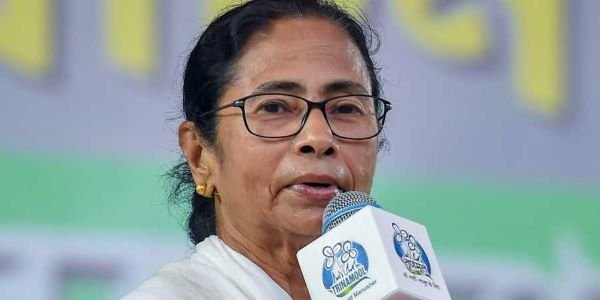
If you want another example, think about Bengal. Don’t you think Mamata Banerjee would have been happier if the state election had happened already in May? She would still have won a majority, albeit a thin one. After all, in the Lok Sabha election, she did have her nose ahead by 22 seats to BJP’s 18. But now she must wait two full years as the TMC collapses at the grassroots. She has to wait for the “bottled up anti-incumbency” to blow away the TMC in 2021.

So who would simultaneous elections really help?

Do simultaneous elections reduce the importance of regional players? Is this dangerous for our federal setup?

Of course not! Quite the opposite, actually. In fact, it is at the time of General Elections that regional parties are best positioned to bargain with national parties.

It’s simple: Both the Vidhan Sabha and the Lok Sabha election matter to the big national party.

This means that, if the VS and LS polls happen separately, the national party can have two different strategies in the two polls. The regional party does not enjoy this luxury, because the Lok Sabha election is not very important for them at all.

Think of regional parties like JDS (allied with Congress in Karnataka), or Shiv Sena (allied with BJP in Maharashtra) or JDU (allied with BJP in Bihar). Now that the General Election is over, these regional parties don’t have much leverage left with their big partners.

A single election means that everything will be fought on ‘national issues’, with local issues forgotten.

The voter is far too clever for this. Here is a phenomenon that is well known, but scarcely ever commented upon. The turnout in Vidhan Sabha polls in most states is much higher than Lok Sabha polls. The General Election 2019 had a turnout of just about 67%. The Madhya Pradesh election last year had a turnout of over 75%. In the General Election, the state saw just 71%! Sometimes, the gap in turnout between VS and LS polls can even get close to 10%.

In Gujarat 2017, the turnout was 69%. In the Lok Sabha election, it was 64%. A significant gap of 5% voter turnout!

Check the map of India. You will be hard pressed to find even one state where LS turnout is higher than the VS turnout.

So, whatever the opinions on this, the facts of the whole matter are clear. The “local issues” voter actually comes out during state polls and stays home during LS polls. This is the voter who is more likely to vote for regional parties as well! If you have simultaneous polls, the “local issues” voter is likely to vote in LS polls for the first time. So, go figure.

How about a “compromise”? What if the state elections are clubbed into two groups, with half the states going to polls every two and a half years?

This is really the worst of all possibilities. Almost 15 states going to polls together at the midpoint of the term of the Central Government! That would be almost as big as the General Election. This would make almost every single year into a pre-General Election year. There would be no time to govern. Only elections.

Okay, but how would you manage this? A Parliamentary setup is part of the “basic structure” of the Constitution and cannot be amended.

No, but there are several simple workarounds. A No Confidence motion could simply be tied to a Confidence motion, i.e., a sitting CM or PM cannot be voted out by the legislature until they simultaneously express confidence in somebody else.

And no, this won’t lead to “undemocratic” minority governments. Even if a CM or PM manages to stay in the chair (for a few days) without enjoying a majority in the legislature, they can’t get anything done. Because budgets won’t pass the house. And without money, everything comes to a halt. Should there be such a situation, sooner or later, the opposing majority in the house is bound to find some other individual to express confidence in?

That way the Parliamentary setup stays. It is only required to change the rules regarding No Confidence Motions.

In short, one nation – one election will likely increase electoral participation. The fears about federalism and regional parties are quite unwarranted. If anything, this works in their favour. And as for the fears about “dictatorship”, well those are simply being expressed in bad faith by those who cannot digest Modi’s victory. So there is no need to address those and no argument can convince them.

In fact, this could be a chance for the public to focus on dissecting governance rather than discussing election results. I started with a facile remark about governance being relatively “boring.” But it is not. If you really get into it, governing this vast nation of 1.2 billion people, slowly bringing it out of poverty and turning it into a superpower is the most fascinating event in human history. We just have to start taking an interest in it. Only then it can happen.

Doctors explain why Anjana Om Kashyap and Ajit Anjum heckling doctors to report on Encephalitis was insensitive and way off the mark

After the recent outbreak of Encephalitis in Bihar, the media has been visiting hospitals around Bihar and trying to ascertain why the children are not being treated adequately. Recently, the reportage of Aaj Tak journalist Anjana Om Kashyap and TV Bharatvarsh journalist Ajit Anjum raised concerns of how bullish and high-handed the media was being with unsuspecting doctors who were only doing their job.

Anjana Om Kashyap had barged into the ICU of a Bihar hospital and heckled the doctor on duty, asking him questions about Encephalitis care. She had essentially stopped the doctor, who was doing his job, and asked him why a patient who had just come in was not being attended to. She had also heckled a nurse in the process of her third-degree interrogation.

In a similar video, Ajit Anjum of TV Bharatvarsh had displayed brute behaviour when he hackled and yelled at a nurse while in a Bihar hospital trying to cover the Encephalitis outbreak. Ajit Anjum went and heckled a senior doctor who was on duty questioning him about the number of ICUs, deaths and treatment being administered, trying his best to insinuate that there was a dearth of doctors treating children. He even blamed the doctor of being in one ICU while death had occurred in another ICU, insinuating inadequate treatment without finding out the condition of the patient.


While on the face of it, the conduct of both journalists is reprehensible, to truly understand the depth of the errors in journalism here OpIndia reached out to several doctors to understand what could have been done differently and how the journalists concerned endangered lives of the patients with their overzealous reportage.

Access to ICU questionable

The doctors OpIndia spoke to unanimously said that the first and foremost problem with the reportage of Anjana Om Kashyap and Ajit Anjum was their access to the Intensive Care Unit. The consensus was the journalists should not have barged into an active and busy patient care area like that.

The doctors also pointed out that the journalists did not seem to care about the patients’ and relatives’ permission to be recorded on video. This would need consents as there will be privacy and sensitivity issues.

Heckling while working

The doctors said that in both videos, Anjana Om Kashyap and Ajit Anjum seem to be heckling the nurses and doctors while they were actually working. This not only disturbs their workflow, it also flusters people and leads to them making errors in such a demanding situation.

Can’t tell a doctor how to prioritise medical work

In both videos, journalists Anjana Om Kashyap and Ajit Anjum seem to ask doctors as to why they prioritised the work in the manner that they did. While Anjana was asking why a patient who had been wheeled in moments ago was not being taken care of, Anjit was heckling the doctor about why patients in other ICUs are not being taken care of.

The doctors OpIndia spoke to took strong exception to this line of questioning by the journalists.

One doctor said, “It was none of their business to tell how the doctor who was working how to prioritize his day or work. He wasn’t lazing around, just that his priorities of patients were different from what she insisted upon. This is actual ‘interference in medical care’ and could certainly land her behind bars in many countries”.

Specifically, in Anjana Om Kashyap’s case, the doctor said, “She assumed that the patient that was just wheeled in had to be seen straight away (leaving all other work aside). It’s possible the child was seen and stabilized on admission in the Emergency Department or other areas- as in primary observations, IV access etc. Often nurses would do the primary observations and interventions before the doctors would do more specific diagnostics”.

Interestingly, Ajit had done exactly the same while heckling the doctor about why a doctor was not present in one of the ICUs. This is the same issue that the doctor concerned had raised that journalists are not in the position to pass judgements on how doctors should be prioritising their work.

“How many died today?”

Anjana Om Kashyap had in a brazen manner questioned the doctor about ‘how many children had died’ on that day. The tone was, of course, accusatory and arrogant, but beyond that, one has to understand why technically that was a silly question to ask the doctor in the first place.

The doctor we spoke to said, “It was certainly not meant to help. The individual doctor manning the ward isn’t obviously the person to ask such statistics. He wouldn’t have the live audit of the hospital with him, he would have info about individual patients he was managing. Such data questions should be asked to the administration office/medical superintendent office where the reports are compiled. She obviously asked it just to further heckle the doctor, implying he was responsible for all those deaths”.

The overwhelming consensus was that the two journalists simply deteriorated the mental stability of doctors who are overworked and are already dealing with a stressful situation of caring for 100s of children. Information regarding an outbreak like this should be availed from administrative offices instead of heckling the doctors directly. However, if they really did want to interact with people directly involved in care, the line of questioning should have been extremely different.

The journalists ideally should have asked the doctors what they would need to provide better care for the patients instead of heckling and blaming them while they were working. The questions should have also been posed to them while they were off duty instead of taking time away from the actual patients to blame and humiliate them on national television.

In fact, one of the doctors we spoke to went as far as to say, “All that heckling and anxiety generated from that and being on TV and in such negative way, that doctors’ performance in hospital and the mental situation will be bad for who knows how long!”

With both the journalists, the aim was to assign blame of the deaths of children suffering from Encephalitis and in the process, they ended up humiliating overworked doctors on national television. Doctors in government hospitals usually work with fewer facilities and are underpaid. For them to now see their faces on national television, being humiliated, will go to shatter morale and eventually, affect the care they are providing to patients.

Congress MP Shashi Tharoor opposes Triple Talaq bill in the Lok Sabha

The much awaited Muslim Women’s Protection of Rights in Marriage (Triple Talaq bill) was tabled in the Lok Sabha today. The NDA government had promised that it is committed to clearing the bill for bringing justice to Muslim women.

However, Congress’ Shashi Tharoor has objected to the bill.


As per reports, Tharoor has put forward 3 points opposing the bill. Tharoor said that he is not defending the Triple talaq but opposing the text and draft of the bill.

He said that the bill conflates civil law and criminal law by criminalising the Triple Talaq, which is an ‘irregular’ form of divorce already null and void in our country post the SC’s decision on the Shayara Bano vs the Union of India case.

Tharoor asked whether the action of abandoning the wife and children without taking responsibility the criminal act or the form of desertion, namely doing it by uttering Talaq three times is to be considered the crime under the bill.

He further added that if the desertion is a criminal act, there should be a universal law applicable to all Indians that criminalises the act of deserting a wife and children.

Tharoor stated that by framing a law that specifically criminalises Muslim husbands for a void act, the bill becomes a textbook example of ‘class legislation’, which will violate article 15 and 14 of the constitution.

He added that the bill does nothing to help Muslim women who suffer from numerous other social issues like Nikah Halala, therefore, the bill cannot claim the benefit of an exception under article 15(3). He argued that instead of protecting Muslim women, the bill only punishes Muslim men.

Finally, Tharoor argued that the bill does not have any procedural safeguards and therefore might be misused for violating a person’s rights under article 21.

AIMIM chief Asaduddin Owaisi also opposed the bill in the parliament.

After ‘We were conned’, it is ‘Rahul Gandhi did not listen to advisers’: New excuses emerge for Congress’ election debacle

As Congress party seems busy looking for scapegoats to shift the blame from the Gandhi family post their humiliating defeat in the 2019 Lok Sabha elections, a set of new reports are emerging pointing fingers directly towards Congress President Rahul Gandhi for failure to act on the advice given to him by senior leaders to re-strategise his campaign beyond data analytics.

According to Congress-friendly journalist Pallavi Ghosh, a senior editor with CNNNews18, the Congress party’s over-reliance on data and failure of its leadership to read the ground reality relayed by a section of party leaders has cost the party dearly in the Lok Sabha polls.

An article by Pallavi Ghosh on News18.com says that a set of emails exchanged between election managers of the Congress party has been ‘accessed’ by CNN-News18, which indicates that the Congress party leadership was informed of the ‘wave for the BJP in the wake of the Pulwama terror attack.’ The communication also sought remedial and corrective tweaks in the party strategy ahead of polling.

Reportedly, a few party insiders had flagged certain issues with the Congress leadership which could trigger a complete rout for the party and its allies in the Hindi heartland, but no action was taken on the advice. A key insider sent an email to Rahul Gandhi, saying Pulwama terror attack would be a major game changer and could wipe out the Congress in the Hindi heartland if the party didn’t react to it with something soon.

An email sent to Gandhi on February 16 said, “This is an opportunity for Congress to mobilise its workforce on the ground and ensure that there are ground-level activities like public drives.”

During these communications, they had also warned that “not much would help if people would start believing that change in the government would not be judicious at the time of national terror attack and armed conflict. Instead of just verbally countering them, a smarter strategy would be to showcase to the people that the Congress cares for soldiers more than the BJP.”

Out of the 145 rallies held by Gandhi, only eight rallies made any reference to national security. And of the eight press conferences Gandhi held, only in a single briefing did he mention the Pulwama attack, and that also to express condolences.

According to the communique, the Rafale issue has been one of the major points of the party’s campaign strategy, which failed to make any mark during the run-up to the polls. The senior leaders had adviced the party to set up camps, go to the border, set up a team of volunteers to be assertive about national security issues, but nothing was followed.

Instead, the party relied heavily on feedback by Data Analytics and Operation Shakti, a flagship mass contact programme with a technological interface. On November 26 last year, the first email was sent based on work done by the Shakti app from September to November.

“However, the total YouTube views for the http://bit.ly/MODI-DISASTER is only 20,000. It means that most people are not even seeing the videos despite them receiving the SMS and clicking on the links. We spent a total of Rs 18,45,019 on this campaign. Out of which Rs 6,63,742 was spent on undelivered messages. The message was sent to 5,97,739 Shakti users in Rajasthan at a rate of Rs 0.07 (7 paise) per SMS. In Hindi, 60 characters count as 1 SMS and the following message would require 5 SMSs (274 characters). We spent Rs 2,09,208 (Two lakh, nine thousand, two hundred eight),” read the email according to the report.

However, Praveen Chakravarty, the head of data analytics of the Congress party, who is now caught in the eye of the storm, said, “…all political parties communicate with voters and workers through SMS, IVR (integrated voice response), WhatsApp and other mediums as relevant. It is nonsensical to claim post facto that SMS communication is a wasted effort.”

As defeat in the Lok Sabha election has begun to engulf the Congress party, the old and the new guards of the Congress party have blamed each other for the humiliating defeat in the 2019 Lok Sabha elections. Praveen Chakravarthy, a close aide of Rahul Gandhi has become the newest ‘whipping boy‘ for the Congress leadership to keep the Gandhi Parivar away from facing any criticism.

Also, it is interesting to note that instead of realising their mistake and analysing the actual causes of the people’s disenchantment with the Congress, the party, or its senior leadership continues to play the blame game. The excuses are even contradictory in nature. Earlier, Priyanka Gandhi had expressed that Congress lost because ‘Chowkidar Chor Hai’ was not said and repeated loudly enough. Indicating that Congress ‘underplayed’ the ‘Rafale Scam’ angle.

This recent article which claims ‘Rahul did not listen to senior leaders’ gives notions that some ‘senior leaders’ think ‘Rafale scam’ allegations were a mistake. Blaming their data analytics advisor or their social media head, claiming the president did not listen to senior leaders are mere excuses, excuses to ignore the actual issues, the glaring blunders and fallacies that are crumbling the grand old party from within. The very claim that there was a ‘wave’ for BJP after Pulwama attack, reveals that the senior leadership is still unwilling to see the glaring truth before them.

Congress has a formidable hold over mainstream media narrative and it may keep peddling or planting such excuses, but the public is no longer at the mercy of wine sipping loyals of mainstream media. It is a different game now, Congress will continue sinking faster and faster if it does not realise that.

Video and statistics highlight from Australia v Bangladesh match

Australia’s day at the Trent Bridge, a comfortable win, at top of the points table, Warner and Starc lead in batting and bowling chart. What else Australian fans want from the team at this stage of the tournament.

For the first time in this World Cup, Finch won the toss, and without giving a second thought, decided to bat first. The pitch, a dream to bat on, produced 381 runs for Australia.

Warner and Finch (51) opened the batting for Australia and yet again added a hundred run partnership for the team. Warner has been scoring runs consistently in the tournament and scored a splendid hundred, his second of the edition. During his 166, Warner became the first player to reach 400 runs in the competition and also became the highest run scorer of World Cup 2019. With Khawaja (89), Warner added 192 runs for the second wicket. Maxwell then murdered Bangladesh’s bowling attack as he smashed 32 runs in just ten balls helping Australia to reach their second highest score of World Cup history.

Watch: Australian Innings 

Chasing a score of 381 is never easy, especially when you have to face Starc and Cummins. Although Bangladesh scored 333 for 8 in their 50 overs, the chase was never on. From the beginning, they required a run rate of around 8 in an over for the successful hunt, but they batted at six runs per over till 40th over, which meant they had to chase 140 odd runs in the last 60 balls. Even in the T20 age of cricket, the task was impossible to achieve. Shakib (41) had a rare failure, but he managed to cross the mark of 400 runs in the tournament. Rahim (102) and Mahmudullah (69) just completed the formality in the end.

Watch: Bangladesh Innings

STATS

  • Shakib became the first Bangladeshi batsman to score 400 or more runs in a World Cup edition.
  • Warner scored his 6th 150 or more runs in ODI. Only Rohit Sharma (7) has scored more 150+ runs in ODI innings.
  • Warner 166 is his 16th ODI Hundred, only Ponting (29) and Mark Waugh (18) have scored more ODI hundreds for Australia.
  • Starc has now 37 wickets in the World Cup, only McGrath (71) has more wickets than Starc for Australia in the World Cup.
  • 714 runs were scored in the match by both teams, most in a World Cup match. Four of the top seven total aggregates have taken place in the current edition.

World Cup Match Preview, England v Sri Lanka: Another run feast day?

England against Sri Lanka could be another run feast day and one-sided affair. Despite having just the top 10 teams in the competition, most games in this edition of the World Cup have remained boring due to so many one-sided results.

England, as usual, will be looking to score anything over 350 against Sri Lanka. Their batsmen are consistently scoring runs in all the matches, and they could have been the only side in the tournament to score 300 in each innings had they not bowled first against West Indies. With the kind of batting line they have, even 400 is very much possible against the Lankans.

Sri Lanka with 4 points are at number 6, thanks to two washout games, else they would have been sitting just above Afghanistan in the points table. Their star players are going with the worst form of their career, and that has hampered their chances against the top teams of the tournament. Sri Lanka has to win this game to keep their hopes intact for reaching the semis. A loss here would be the end of the road for them in this competition.

The weather is predicted to be bright and sunny for the day with moderate wind.

Players to watch out

Joe Root, who has already scored 367 runs in the competition, would be eagerly waiting to go out to bat in front of his home crowd. It would be interesting to see if he could surpass the record of most runs (447) of the current edition in this game or not.

Malinga, the only bowler in Sri Lankan line up who can restrict England under 300. He needs to pick wickets early on, especially of Bairstow and Root, who generally take time to settle. He would be hoping for some help from his opening partner Udana to keep the pressure on from the other end.

England v Sri Lanka in ODIs:

Overall: Matches 74, England Won 36, Sri Lanka Won 35, Tied 1, No Result 2

World Cup: Matches 10, England won 6, Sri Lanka Won 4

Recent Form (most recent first): England W W W L W, Sri Lanka L NR NR W L

ICC Rankings: England (1), Sri Lanka (9)

Upcoming Records:

Joe Root has scored 367 runs in this World Cup and needs three more to reach the 400 runs milestone. He will become only the second English player after Gooch and Pietersen to score 400 or more runs in a World Cup edition.

Morgan needs 41 more runs to become the 8th England batsman to reach 500 runs milestone in the World Cup tournament.

Lasith Malinga has taken 47 World Cup wickets and needs three more to become the third Sri Lankan player to reach the 50 wickets milestone.

Squads:

England: Eoin Morgan (capt), Moeen Ali, Jofra Archer, Jonny Bairstow (wk), Jos Buttler (wk), Tom Curran, Liam Dawson, Liam Plunkett, Adil Rashid, Joe Root, Jason Roy, Ben Stokes, James Vince, Chris Woakes, Mark Wood.

Sri Lanka: Dimuth Karunaratne (capt), Avishka Fernando, Suranga Lakmal, Lasith Malinga, Angelo Mathews, Jeevan Mendis, Kusal Mendis (wk), Kusal Perera (wk), Thisara Perera, Nuwan Pradeep, Dhananjaya de Silva, Milinda Siriwardana, Lahiru Thirimanne, Isuru Udana, Jeffrey Vandersay.

BBC’s whitewashing: Paints Sanjiv Bhatt as a ‘whistleblower’ victim while lying about 59 Karsevaks burnt alive by Muslim mob

Prime Minister Modi has been the thorn on the ‘liberal’ side ever since Gujarat and the media, especially foreign media like BBC has been trying tooth and nail to demonise not just him but even the Hindu community of India ever since. To that end, after tainted cop, Sanjiv Bhatt was awarded a life sentence for a 30-year-old custodial death case, BBC seems to have gone on an overdrive to shield Bhatt. While reporting the ruling in the Sanjiv Bhatt case, BBC not only put out an extremely confused report but also lies profusely about the Godhra case where 59 Karsevaks were brutally burnt alive.

The BBC article at the very outset tries to confuse its readers.

Part of the BBC article

Firstly, the case in which Sanjiv Bhatt has been convicted has nothing to do with Prime Minister Modi in the first place.

On October 30, 1990, Bhatt detained around 150 people following a communal riot in Jamjodhpur town after a ‘bandh’ call against the halting of veteran BJP leader L K Advani’s ‘rath yatra’ for the construction of a Ram temple in Ayodhya.

One of those arrested, Prabhudas Vaishnani, died in a hospital after his release by the police. Subsequently, his brother lodged an FIR accusing Bhatt and six other policemen of killing his sibling by torturing him while he was in police detention.

In 1990, Narendra Modi was moving up the party ranks and became the CM of Gujarat only in 2001.

Why the BBC or any other media outlet conflate the two without giving a proper explanation about which case Sanjiv Bhatt has been prosecuted for, is a mystery.

Further, BBC calls Sanjiv Bhatt a ‘whistleblower’, which would be absolutely incorrect. Perhaps BBC either fails to recall or are unaware that the Supreme Court had basically said that Sanjiv Bhatt had pressurised his driver to file an affidavit that suited him, testifying that Bhatt was present at the 27 February 2002 meeting where Modi, according to Bhatt, had said that Hindus should be allowed to vent their anger against Muslims.

Bhatt’s driver had earlier confirmed his version but later recanted. In fact, Bhatt had insisted that the SIT examine the driver under his supervision and the court had held that this amounted to pressure tactics.

Firstly, the records had established that constable KD Panth (the driver) was not even in Gujarat between 25 February and 28 February 2002. Not only that, when Bhatt wanted Panth to testify that he drove Bhatt to then CM Modi’s residence, Bhatt took Panth to the then President of the Gujarat Congress and Chairman of the Legal Cell for the preparation of his affidavit.

There are email exchanges between Bhatt and a Gujarat Congress leader showing receipt of a “package”, of Bhatt being “underexploited” (in the case) and him asking the Congress member to “try to mobilise support/pressure-groups in Delhi to influence him (the Amicus Curiae Raju Ramachandran) in a very subtle manner”.

Then there are email exchanges between Bhatt and a journalist, wherein Bhatt tries to have the journalist mention that he had met Bhatt on 27 February when he was “about to go to the disputed meeting”. Bhatt later emailed a TV channel member that he had filed an affidavit stating that the journalist was with him when he had to leave for a meeting at Modi’s residence and that the channel member should “confirm through your sources in SC”. Bhatt even asked the journalist whether he would be comfortable with another media person. The Supreme Court had held that Sanjiv Bhatt was trying to ‘recreate’ the events of the night.

In fact, the Supreme Court had found that as alleged by Sanjiv Bhatt, Haren Pandya was not present at this alleged meeting at all. His cell phone location showed that he was exposed Bhatt’s lies completely. The court had held that Bhatt had not come to the court with clean hands and that he was ‘catering to interests elsewhere’.

Essentially, Sanjiv Bhatt had fabricated the entire meeting and that he was present. He had also lied that Prime Minister Modi had made the comment about Hindus venting their anger against Muslims.

In the face of all of this, one wonders how BBC, without getting their facts straight as mentioned by the Apex Court itself, called Bhatt a ‘whistleblower’ thereby trying to insinuate that it is the Modi government that has a vendetta against Bhatt.

The lies of the BBC do not stop there.

Part of the BBC article

The BBC report says that “The cause of the train blaze was never clearly established. Hindu groups allege that the fire started by Muslim protesters, but an earlier inquiry said the fire was an accident”.

Referring to the Godhra train burning, it is staggering that the BBC has managed to peddle several lies in two short sentences.

Firstly, BBC itself, in 2011, had reported that the Sabarmati Express was attacked by a Muslim mob and that 31 people were convicted in the case.

BBC article from 2011

All the 31 people who were held guilty of burning Karsevaks alive were Muslims.

A report from 2011 reads:

Additional sessions judge P.R. Patel held 31 persons guilty of a “pre-planned conspiracy” and setting fire to coach S-6. In the incident, 59 people, mostly Vishwa Hindu Parishad kar sevaks, were killed. Of the 31 found guilty, the court sentenced to death 11 convicts, particularly those it believed were present at a meeting, held the previous night, where a conspiracy was hatched, and those who, it agreed, had actually entered the coach and poured petrol before setting it afire. The other 20 convicts were sentenced to life imprisonment.

According to some of the observations made by the judge, the court believed that had there been no pre-planned conspiracy, “it would not have been possible to gather Muslim persons with deadly weapons within five to six minutes and reach near “A” cabin on the railway track” after the train was made to stop by chain pulling a second time.

The judge also accepted the prosecution theory of the perpetrators having collected petrol the previous night, after the meeting at the Aman Guest House. Had petrol not been kept ready in loose form in carboys the previous night near Aman Guest House, “it would not have been possible to reach with carboys containing petrol in a huge quantity immediately, that is within 5 to 10 minutes, near coach S-6.”

Thus, the courts while convicting 31 people, some of whom got life imprisonment and some got the death penalty believed that it was a pre-planned conspiracy to burn Karsevaks alive. In fact, even the petrol was bought the night before.

The Nanavati Commission which was held by Justice G.T. Nanavati and Justice Akshay H. Mehta had also concluded that the train burning was no accident and was in fact, the work of a Muslim mob.

Part of the Justice Nanavati Commission report

BBC peddles another dangerous lie.

In trying to prove that the Sabarmati Express was not set ablaze by a Muslim mob, it alludes to an “earlier inquiry that said the fire was an accident”.

The inquiry report that the BBC was alluding to was the UC Banerjee report that was deemed unconstitutional and illegal by the Courts.

The Banerjee Commission was a one-man commission that was formed soon after the Congress government came to power under the instruction of Lalu Prasad Yadav, the then Railway Minister.

The High Court had held that the Commission was illegal since the Nanavati Commission was already probing the matter.

In fact, Justice K.G. Shah of the Nanavati Commission had alleged that Justice Banerjee had not even examined officers of the Gujarat police or forensic science experts. He had also vehemently contested the motivations of the commission and the conclusion it reached.

The Congress party had insisted that the report be tabled immediately, as, at the time, it was busy creating the theory of “Saffron Terror”.

The High Court had held that the constitution of the UC Banerjee Commission was a “colourable exercise of power with mala fide intentions”, and its argument of accidental fire “opposed to the prima facie accepted facts on record.” The High Court also directed that the report should not be tabled in the Parliament.

One wonders why BBC would bother citing a debunked report just to assert that Hindus were burnt alive by “accident” just to shield a Muslim mob that has been convicted and in turn, shield Sanjiv Bhatt who has also been convicted in an unrelated 30-year-old case.

BBC has a long history of peddling fake news and motivated agendas against India and Hindus in general.

The British Broadcasting Corporation (BBC) had recently released a shoddy research branding Nationalists as the driving force behind fake news only to later retract the generalisation slyly. It had also recently handpicked anti-India interviews for its documentary on Kashmir and deliberately left out pro-India views.

SC transfers complaint by journalist against Chidambaram using ‘Sr Advocate’ title to Bar Council

Journalist J Gopikrishnan had in January, sent a written complaint to the Chief Justice of India about the scam accused Chidambaram couple using the Sr Advocate title.

J Gopikrishnan, in his two-page letter to the Chief Justice, had accused P Chidambaram of ‘clearly misusing the position’ despite being an accused of corruption and money laundering cases. In his letter, he says, Congress leader P Chidambaram appeared in cases before trial courts in his Senior Advocate attire while his lawyers, Senior Advocates Kapil Sibal and Abhishek Manu Singhvi argued for his bail, which is a “clear misuse of holding Senior Advocate Designation” by an accused under the Prevention of Money Laundering Act.

Gopikrishnan today took to Twitter to inform that he has got a message from the Supreme Court stating that his written complaint has been transferred to the concerned Bar Council for ‘action deemed fit’.


Gopikrishnan has requested CJI Gogoi to suspend the Senior Advocate designation to both P Chidambaram and Nalini Chidambaram until the trials against them have concluded. He has also requested the CJI to consider the implementation of an annual affidavit to be filed by all Senior Advocates disclosing cases against them.

In his letter, he had mentioned that P Chidambaram had managed to secure interim protection from arrest several times from Judge OP Saini. He had alleged that Chidambaram has been getting an undue advantage due to his ‘senior advocate’ title.

The letter also cited the instance of Chidambaram’s wife, Nalini Chidambaram, managing to obtain interim protection from arrest from the Madras High Court on a second Saturday, while she was charge-sheeted by a trial court in Kolkata for her connections to Saradha chit fund scam.

The HC bench headed by Justice Ilanthirayan had even allowed her to appear before a Chennai court to seek bail. Nalini Chidambaram was allowed bail and interim protection from arrest for 15 days by the evening. Gopikrishnan questions the CJI whether such benevolence from the courts can be expected for common citizens.

CVC gives permission to prosecute four former Congress era finance ministry officers in the INX Media case

The Central Vigilance Commission (CVC) has found a prima facie case for prosecuting four retired and serving bureaucrats who had served under the Ministry of Finance to issue a sanction to prosecute in the corruption case involving INX Media in which Congress leader P Chidambaram and his son are also in the dock.

According to the reports, the CVC had advised the Department of Economic Affairs to grant sanction for prosecuting four retired and serving bureaucrats, including former NITI Aayog CEO Sindhushree Khullar, former secretary of the Ministry of Micro, Small & Medium Enterprises Anup K Pujari and current principal secretary in the Himachal Pradesh government, Prabodh Saxena for their involvement in the INX media corruption case.

The CBI had earlier sought sanction for prosecution against four former officers, including three IAS officers, working in the Finance Ministry in the INX Media case involving charges of bribery against former Finance Minister P Chidambaram and son Karti.

These officers were then working at the Department of Economic Affairs (DEA) had illegally approved the FIPB clearance to INX Media. Khullar was then additional secretary in the DEA and was earlier OSD to P Chidambaram between 11 April 2004 and 11 September 2008. Pujari was the joint secretary from 29 September 2006 to 30 September 2010 and Saxena served as the director of the department between 2 April 2008, and 13 July 2010.

The CVC had also sought sanction to prosecute Rabindra Prasad, the under-secretary in the Department of Economic Affairs during the period in question.

Reportedly, the Central Bureau of Investigation (CBI) is looking into the role of few officials of the finance ministry including the four bureaucrats in connection with the FIPB approvals granted to INX Media. The FIPB, which functions under the Department of Economic Affairs, at its board meeting on 18 May 2007, had allegedly recommended the proposal of INX Media Pvt Ltd for the inflow of foreign direct investment up to Rs.4.6 crore while clearly stating that downstream investment in INX News will require a separate FIPB approval. However, violating the approval, INX Media had made a downstream investment of 26 per cent in the capital of INX News Pvt Ltd without this fresh FIPB approval.

The CBI had filed an FIR on May 15, 2017, against the alleged irregularities in FIPB clearance to INX Media for receiving overseas funds to the tune of Rs 305 crore in 2007 when P Chidambaram was the finance minister in the UPA government.

The CBI had alleged that the concerned officers of the FIPB unit of the Ministry of Finance, by virtue of the influence exercised over them by Karti Chidambaram, not only ignored the serious illegality on the part of INX Media on both counts but also deliberately embarked on showing undue favour to the INX Group by abusing their official position.

Karti Chidambaram, who is facing investigation in a number of cases including money laundering, has been charged in cases like INX Media case and Aircel Maxis case and is facing probe from the central agencies. P Chidambaram has also been facing an investigation by the Enforcement Directorate (ED) in the Aircel Maxis case.

Karti was arrested in February 2018 by the CBI in the INX Media case. CBI had accused him of receiving a bribe of Rs 3.5 crores from the Peter and Indrani Mukherjee owned INX Media Pvt Ltd. INX Media was later named as 9X. However, he was later granted bail.

Congress justifies Rahul Gandhi’s disrespectful conduct, says he was on phone during President’s speech looking for meaning of Hindi words

Rahul Gandhi on Thursday displayed disrespect for the President of India by using his phone and speaking in the Parliament during President Ram Nath Kovind’s speech addressing the joint session of the Lok Sabha.

Seemingly, such unpleasantry coming from the head of the grand old party wasn’t enough for the day, that now the party has come out to defend their chieftains sassiness.

Congress spokesperson Anand Sharma refuting the charges on the Congress president of being disrespectful, said, “He was listening to what was important, there were certain queries about certain Hindi words which were not heard clearly. There was no disrespect on his part. I think it is very frivolous of the party to make such a comment. If the footage is taken half of the BJP president will be seen talking to each other.”

Moreover, following his party’s trajectory, Sharma went on to say that the President’s speech was not of much significance to Congress. “Today’s speech by the President in the parliament just repeats the government’s announcements until now. We don’t think it is important to give today’s speech much significance,” he said.

Earlier in the day, during the entire presidential speech which was telecast live by Lok Sabha TV and several other News channels, Rahul Gandhi was seen busy with his mobile phone several times.

The Congress president was sitting beside his mother Sonia Gandhi, and at least once Sonia Gandhi was seen asking him to be attentive. In another incident when Sonia Gandhi was thumping the desk along with other MPs when the president mentioned the surgical strikes, Rahul Gandhi didn’t do it, and it seemed that he was trying to stop his mother from doing so.