Home Blog Page 6254

Times of India whitewashes Aligarh murder, downplays brutality, blames social media for ‘communal spin’

The brutal murder of two-and-a-half-year-old Tina Sharma (name changed) in Aligarh has shaken the collective conscience of the nation. However, over a week after the murder, mainstream media continues to whitewash the crime and downplay the brutalities the perpetrators carried out on the child.

In a report titled ‘How crime is getting a communal spin’, the Times of India today claimed that the ‘police investigation has confirmed neither rape not (sic) torture’. This statement is inaccurate on multiple levels. Police statement has claimed that the rape cannot be confirmed. That means, the child may or may not have been raped. The case is currently being probed under the Protection of Children against Sexual Offences (POCSO) Act. That means, rape cannot be conclusively ruled out yet. Moreover, the post-mortem report has been sent further to doctors. Only a swab analysis could reveal whether she was raped or not. Hence, this statement is false.

Moving on to the second part where Times of India claims that the police investigation has confirmed the child was not tortured is also an utter lie. The post mortem report has revealed that her right arm was amputated.

Post-mortem report on Aligarh case (image: journalist @anjanaomkashyap on Twitter)

OpIndia showed the post-mortem report to a couple of doctors and they said that the baby died due to injuries caused to her. “The injuries were severe enough to lead to shock and eventually death. Shock is confirmed by the collapse of vessels (antemortem sign). Major blood loss happened before death,” a doctor confirmed that there were brutalities on the child.

“The most important of all is that her abdominal organs are missing, including uterus and genital organs. She might have been subjected to extreme torture and this can also be the cause of excessive blood loss and collapse of the blood vessels. Other injuries include fracture of leg below knee and amputation of humerus (arm). These injuries point towards brutality. Vaginal swabs have been taken for examination but due to decomposition they are less likely to be useful. It should be made clear that negative results on swab does not rule out sexual act.”

According to the Times of India, amputated arm, fractured leg, excessive blood loss leading to collapse of blood vessels, missing abdominal organs including the uterus and genital organs, is not ‘brutal’ enough.

The Times of India report then says that the report was given a communal angle by those who demanded justice for the child, like those in the Kathua case and says how the perpetrator should not be judged on the basis of religion. Very conveniently forgetting that in Kathua case, it was the same so-called liberals who brought the communal angle by focusing on where the child was raped (Devisthan, or temple) instead of focusing on the crime itself (rape and murder).

The report then states the dubious propaganda outfit, ‘Hate Crime Watch’, a multi-organisation effort headed by FactChecker.in of IndiaSpend, in collaboration with Aman Biradari and NewsClick.in. Readers should also remember that the founding trustee of Indiaspend, factchecker.in’s parent organization, is now the Data Analytics head of Congress party and has reportedly fled after charging Congress Rs 24 crore for his flawed data analysis in recently concluded general elections.

It is pertinent to mention that the creators of the propaganda themselves admit that they do not aspire to be an exhaustive record of all hate crimes in the country. Such an admission allows them the opportunity to cherry-pick data to peddle their narrative.

They ignore cases where Hindus are victims, they label crimes where Muslims are victims as ‘hate crime’ even though there is nothing to suggest that the crime is motivated by religion and they attempt to create a narrative that portrays Hindus as aggressors and Muslims as victims.

To give readers an idea about the manner in which factchecker.in manipulates data, when Vidharam Katheria, a Dalit, was murdered by a group of Muslims over a family dispute, IndiaSpend did not consider a hate crime claiming that there was no evidence to suggest that the crime was motivated by religious hatred. But when one Azhar Khan was murdered for fishing near a Temple, it was treated as a religious hate crime although there was nothing to suggest that the crime was motivated by religion. This is merely a single instance. There have been several occasions where factchecker.in has indulged in such malpractice. You could read more about data manipulation by ‘Hate Crime Watch’ here, here, here and here.

We have also comprehensively exposed the manner in which factchecker.in concocts an agenda in an earlier report. The HCW is a concerted effort to manufacture what can only be described as sophisticated Fake News.

Moreover, there have been multiple reports on Aligarh case where they have given clean chit to the perpetrators claiming that the child was not raped. We have shown how self-proclaimed fact-checkers had based an entire fact-check on police statement which were later found contradictory to the post-mortem report. Despite that, the ‘fact-checkers’ stuck to their report and claimed that the child was not brutalised (something which even this TOI report claims). Since AltNews’ attempts to whitewash the crimes and downplay the brutality has failed, elements in mainstream media has taken it upon themselves to push the narrative.

Times of India’s reliance on dubious data and blatantly lying in its reportage on Aligarh murder case in this report displays shoddy and biased journalism.

In the biggest crackdown on terror funding, NIA registers cases against top separatist leaders, Hawala operators and stone pelters

In a major breakthrough, the National Investigation Agency (NIA) has registered a case against 13 accused including 7 top separatists, 2 hawala conduits and some stone pelters in the Jammu and Kashmir terror funding case of 2017. The separatist leaders who have been charge-sheeted include the co-founder of Lashkar-e-Taiba, Hafiz Saeed, and Hizbul Chief, Syed Salahuddin.


Earlier in 2017, the NIA had arrested Syed Shahid Yusuf, son of Hizbul Mujahideen head Syed Salahuddin, who was questioned in 2011 terror funding.

One of the main hawala conduits, Zahoor Ahmed Shah Watali, who used to receive and generate funds from Pakistan, through various shell companies, has also been charge-sheeted. Recently, the Enforcement Directorate(ED) was in the process of attaching 25 properties worth crores, which are part of “proceeds of crime” invested by Watali.

During the investigations, searches were conducted in various locations across Jammu and Kashmir, Delhi and Haryana as well. Evidence was recovered which pointed towards the pattern of raising, collecting, transfer and use of funds for terrorists and separatist activities.

The matter pertains to a 2017 case filed against terrorists belonging to Jammat ud Dawah, Duktaran-e-Millat, Lashkar-e-Toiba, Hizb-ul-Mujahideen and other separatist leaders in the State of J&K.

The investigation has revealed that the separatists have developed an organized network of stone-pelters and cadres who are incited to attack Indian sovereignty on Kashmiri soil. The investigation has also revealed that the separatists were receiving funds from Pakistani agencies through hawala conduits and that money was routed through fake and bogus companies floated abroad and remitted to Hurriyat leaders in Jammu and Kashmir.

The NIA conducted searches at over 60 locations and hundreds of damning documents and electronic devices were seized during the process. In addition, there are 300 witnesses in the case. The evidence collected has revealed that the persons accused were orchestrating violence against the Indian Army and stone-pelting and promoting and inciting other subversive activities against the Indian State. The investigation has also established an intimate link between separatists in Kashmir and their Pakistani handlers.

The 1279-page chargesheet was filed before the Court in New Delhi and permission has been sought to continue the probe.

The raids conducted by NIA in various locations across Jammu and Kashmir, Haryana and Delhi reflected the ‘No Tolerance’ policy adopted by the NDA government against anti-India activities. The screws have been tightening around the separatists and terrorists in Kashmir and they have been feeling the heat under the Narendra Modi government. The case was first registered by the NIA in May 2017 and the first arrests were made later in July.

The NIA had in April 2019 got the infamous JKLF chief Yasin Malik in custody for 12 days in the terror funding case. As per NIA sources, Yasin Malik had then admitted that he was instrumental in bringing together the disparate factions of Hurriyat conference and formed the Joint Resistance Leadership (JRL), which spearheaded the violent agitations in 2016 in Kashmir Valley, by issuing “Protest Calendars” leading to economic shut down for over four months.

Meanwhile, in the aftermath of the ghastly Pulwama attack, the NIA had tightened its noose on Kashmiri separatists. It also took the custody of Masarat Alam Bhat, the alleged kingpin of stone pelting and Chairman of the Jammu and Kashmir Muslim League, along with Shabir Shah and Asiya Andrabi.

Asiya Andrabi heads the women’s secessionist group Dukhtaren-e-Millat had then revealed that she had been collecting funds and donations from foreign sources and Duktaran-e-Milat had been organising protests by Muslim women in the valley.

Moreover, during the custodial interrogation, Shabir Shah, chief of the Jammu and Kashmir Democratic Freedom Party, was also confronted with evidence relating to the transfer of money by Pakistan based agents and representatives of APHC factions to parties affiliated to Hurriyat in Jammu & Kashmir.

Meanwhile, Masarat Alam Bhat, the so-called poster boy of stone pelters and violent agitations in Kashmir valley, had revealed that Pakistan based agents route the funds through hawala operators which were transferred to the separatist leaders including Syed Shah Gilani Chairman APHC (G).

Masarat Alam also revealed that there are rifts in the Hurriyat conference regarding collection and use of funds.

The NIA investigation attempts to identify other key players in the nexus of the terror funding, stone-pelting at the forces and vandalization of government institutes.

Following the Pulwama attack in February, the government had withdrawn security cover of 18 separatists including Mirwaiz Umer Farooq and Naseem Geelani and 155 politicians and ‘activists’, calling it a ‘wastage of resources’.

AAP MP Sanjay Singh exposes ignorance about symbolic protest, questions why protesting doctors have injury at the same place

After claiming that the income of Delhi Metro will increase due to free metro travel scheme for proposed by the AAP government in Delhi, party’s Rajya Sabha MP Sanjay Singh displayed his ignorance while reacting to a photograph of doctors demanding action against the goons who had attacked doctors in a Hospital in Kolkata.

Reacting to a photograph with new agency ANI logo on it, Sanjay Singh wondered whether it is really an ANI photo or is it Photoshopped, since all the doctors in the photo seem to have injuries on the same place. All the doctors in the photo have bandages wrapped around their heads, with a red patch on the forehead.


It seems that the AAP leader is not following the news about the doctors’ strike in Bengal which has received support from doctors in the entire country with symbolic protests. And as a mark of protest against the attack on doctors at NRS hospital in West Bengal, doctors are wrapping red-stained bandages on their heads, and some were also seen wearing helmets. The image that Sanjay Singh reacted to is from AIIMS, where the doctors did the same. This is similar to the use of black bands used in protests, and everyone in the country knows that, except the AAP MP.

A doctor helps a colleague in applying red stain on bandage

Later Sanjay Singh tweeted that one journalist friend has informed him that doctors in AIIMS are protesting with fake bandages, and added that this is not right. He said that doctors should stay away from such protests because from such images a narrative can be created that doctors in the entire country are being beaten.


Mr Singh clearly does not understand the meaning of the use of symbols in protests, and he thinks that people will mistake the symbolic bandages as the result of real attacks on the doctors.

India and Pakistan clash is not just a game, but a culture war between two hostile countries, bigger than even the Finals

Across the world, it is often debated as which sporting event is considered to be the greatest rivalry in its history. Is it the El-Clasico or the historical rivalry between Manchester United and Liverpool in English football? Or was it the contests between Bjorn Borg and John McEnroe or Nadal vs Federer in Tennis?. Alain Prost vs Ayrton Senna in the Formula 1 or is it the Ashes between the oldest rivals in cricket- Australia and England.

None. It is India and Pakistan facing each other in a World Cup match. It is not just a sporting event but a sense of cultural war between two hostile countries which is indirectly manifested in the form of a cricket match. Both India and Pakistan have managed to keep these sporting events as a ‘Quasi-war’ despite the stakeholders claiming the rivalry as just a sporting event.

The battle between the two teams is so intense such that more than a billion people are stuck to their TVs with two economies stuck in a state of pause as the minds and hearts of the fellow countrymen stay glued on the scoreboard. It is not just typical sporting rivalries where two teams play out against each other. While one team loses after an intense game and all of them go home as the match ends and everybody ends up being happy ever after.

No, it is not the case with India-Pakistan rivalry. The clash between two countries on a cricket ground is beyond any sporting events. It is not just 22 players sweating out in the field. It is the hope of more than a billion people as players on the field will be representing a whole country while carrying the burden of almost every individual belonging to their respective homeland.

It is some sort of a cultural war which is being fought in a different way – maybe with a bat and ball. But, the favouring results give a sense of satisfaction and glory similar to a victory what it could have been on a battlefield. Most of Indians share a similar sentiment even if the victory is a small one, be it on a different arena all together which has no connect to geopolitics wars.

India and Pakistan fighting each other in ICC Cricket World is arguably modern era’s greatest sporting event, not because of the sheer amount of viewership it garners but also because of sharing an honour of a ‘war sport’. In fact, in modern day cricket, India-Pakistan clash in the world cup is considered to be so as it devalues the importance of the all-important ‘Finals’ match. In fact, the players, fans and fellow countrymen believe that defeating their neighbouring team is itself a larger goal than winning the world cup itself. Winning a world cup without defeating Pakistan would be tantamount to a defeat for India.

Today, it has been synonymous with one of the eternal truths that India has never lost to Pakistan in the world cup. Almost everyone who follows cricket in India knows this fact. India has defeated Pakistan six times previously in the world cup clashes while Pakistan is still yet to taste victory against India in world cup history.

Here is the summary of the clashes between India and its hostile neighbour Pakistan.

  • March 4, 1992, Sydney: The India and Pakistan clashed for the first time in the World Cup in 1992 in Australia. On March 4, 1992, India defeated Pakistan by 43 runs at Sydney Cricket Ground, registering its first victory over arch-rival Pakistan in world cup event.
  • March 9, 1996, Bangalore, Quarter-Final: The second victory came on March 9, 1996, Bangalore, in a quarter-final match, where India had won by 39 runs. Navjot Singh Sidhu had anchored the Indian batting and top-scored with 93 and Ajay Jadeja’s cameo of 45 of 25 balls by decimating Waqar Younis was the game-changer for India. Amir Sohail dismissal to Venkatesh Prasad has been one of the most celebrated events in India’s cricketing history.
  • June 8, 1999, Manchester: India’s third victory against Pakistan in World Cup came in 1999 world cup at Manchester, Jun 8 1999, the same venue in which India will be taking on Pakistan two decades later. India had won by 47 runs.
  • March 1, 2003, Centurion: Despite Saeed Anwar’s hundred in the first innings, Pakistan lost the match to India by 6 wickets thanks to a partnership between  Dravid and Yuvraj Singh. The 2003 world cup match is also an important clash as Pakistan had fielded its deadliest trio of legend Wasim Akram, Waqar Younus and Rawalpindi express Shoaib Akthar. The uppercut by Sachin Tendulkar to Shoaib Akhtar over the third man for a six still reverberates in minds of every Indian who had witnessed that.
  • March 30, 2011, Mohali, Semi-Final: Considered to be one of the closest and crucial victories for Indian side during its road to 2011 World cup victory, Pakistan was very close to defeating India during one phase of the game before displaying their usual instincts.  India won by 29 runs to reach its third world cup final.
  • February 15, 2015, Adelaide: With Virat Kohli scoring a century – 107 and considerable performance from Shikhar Dhawa and Suresh Raina’s had helped India posted 300 on board, making it the highest total for India in World Cup clashes against Pakistan. Pakistan fizzled out for just 224, making it as one of the easiest victories against Pakistan in World cup.

Despite the claims of peaceniks, that India and Pakistan clash on the field is just one of those everyday sporting events that occur across the world, the common folks in the country see it as a victory beyond a mere sporting exercise and are proud of the fact that India has the ability to show Pakistan its deserving place not only in war field but also in global non-military, cultural or sports events. For a common Indian, the fight against Pakistan is a war no matter in what form it is manifested.

Ajaz, a civil police officer, hacked to death his colleague Soumya Pushpakaran with a sword, set her on fire

On Saturday afternoon woman police officer, Soumya Pushpakaran, died after being hacked with a sword and set ablaze by a fellow police officer, Ajaz, in Alappuzha district of Kerala.

Soumya is a Civil Police Officer (CPO) who worked at the Vallikunnam police station, aged approximately 35 years old was a mother of three children and her husband is working in the Middle East.

Reportedly, the victim after completing her duty with student police cadet members in a nearby school was returning home from the police station on a scooter at about 4 pm. Ajaz, who was waiting in a rented car near her house, on seeing her approach her house, proceeded to ram into her vehicle. The victim was knocked down and tried to run. However, Ajaz got up with a machete in his hand after which he chased her to a neighbouring house.

He hacked the victim, took out the petrol that he had brought along with him and set her on fire. Ajaz has suffered 40% burns after the victim had tried to resist him. He was admitted to ICU in Alappuzha Medical College Hospital.

As per reports, the 33-year-old N.A. Ajaz was posted with the Aluva traffic police. He had taken a 15-day duty leave, a week ago. Despite having joined the police station a year ago, his colleagues have said that Ajaz didn’t have a close relationship with any of them. Several reports also suggest that this was a love affair that had gone wrong. However, the police have said that the motive of the murder is still not clear.

Soumya was selected to train at the Kerala Police Academy, Thrissur on June 16, 2014. A friend of Soumya had revealed that the two had met during the last few months of training after which they became friends. Ajaz came as havildar for imparting training and had trained her team for 2-3 months.

An officer had also revealed that after Soumya’s husband went abroad, Ajaz tried to force Soumya to stay with him. She refused and kept her distance from him.

As India takes on Pakistan in Cricket World Cup, here is a trip down memory lane

The latest episode of India-Pakistan Cricketing rivalry is here, weather permitting, and Pakistan will be looking to register their first ever win over India in the game’s premier tournament. After losing their matches to West Indies and Australia, and a washout against Sri Lanka, Pakistan need a win to rekindle their hopes in the tournament. India on the other hand, is sitting comfortably in the table despite the washout against New Zealand, and a win here will almost guarantee their spot in the semi-finals.

While the World Cup matches between the 2 sides have been mostly one-sided, they have produced some really memorable events that stick long into the memory.

  1. Miandad mocking More 

    The very first World Cup encounter between the 2 sides was in Australia during the 1992 World Cup. Batting first, India had posted 216/7 thanks to a half century from Sachin Tendulkar and useful contributions from Ajay Jadeja and Kapil Dev. In response, Pakistan lost their first 2 wickets early but then Aamir Sohail and Javed Miandad combined for a long albeit slow partnership. The tension was mounting during that partnership and with the score at 85/2, we got to see one of the most comical moments on a cricketing field. Miandad was unhappy with Indian wicketkeeper Kiran More’s frequent and very exuberant appealing, even going to complain to umpires about it, but to no avail. Then at the end of a Sachin Tendulkar over, Miandad gave us one of the most iconic images from the 92 World Cup with him jumping up and down to mimic More, with his bat held above his head. More wasn’t too impressed about the whole thing and Miandad was eventually dismissed for a painstaking 40 with India winning comfortably by 43 runs in the end.

  2. Ajay Jadeja’s assault on Waqar Younis 

    The second World Cup encounter between the two teams, in the Quarter Final of the 1996 World Cup was played in front of a packed stadium in Bengaluru. India rode on a 93 from opening batsman Navjot Sidhu to reach 200/4 by the 42nd over. A good platform was set but it needed a big finish to take the total beyond Pakistan, it arrived and how! India scored 48 runs in last 3 overs, and 2 of them were bowled by one of the deadliest fast bowlers in the world, Waqar Younis. It was started by Anil Kumble, who took 2 boundaries off Waqar, and then Jadeja took over for one of the most memorable cameos in Indian cricket history. Sixes over wide Long On and Long Off, slapping the ball past covers and point, it was short, it was beautiful, and it was match-changing. He was eventually dismissed by Waqar in the final over but by that time, Ajay Jadeja had cemented his place in Indian cricket folklore.

  3. Aamir Sohail bowled Venkatesh Prasad

    Indians were sitting pretty after the Ajay Jadeja assault in Bengaluru but then the Pakistani opening pair of Aamir Sohail and Saeed Anwar started at a cracking pace. The runs were flowing from both ends and even after Saeed Anwar’s dismissal by Srinath, Pakistan looked in control of the chase with Sohail firing on all cylinders. In the 15th over, with Prasad back for his second spell, Sohail continued to toy with his bowling, advancing down the track and smashing Prasad to the cover boundary for yet another four. He followed it up with a lot of chatter, telling Prasad where he will hit him for a boundary, and he set himself up very nicely for the next ball. Prasad bowled it lot fuller than the previous ball, Sohail swung, the ball took out the off stump and Prasad shut Sohail up in the best possible way.

  4. Sachin-Sehwag in 2003 

    First time in a World Cup, Pakistan was batting first against India and they did very well. Riding on the last international century from India’s long-term nemesis Saeed Anwar, Pakistan posted 273/7. With a bowling attack boasting of Wasim, Waqar, Shoaib Akhtar, they would have fancied their chances. However, Pakistani hopes were extinguished in the first 5 overs itself with a sensational start from the 2 Indian openers. Backfoot punches, square cuts, drives, and an upper cut for 6 later, Indian openers had put on 50 runs from the first 5 overs. The required rate was already below 5 and Pakistani team was shell shocked. Waqar Younis did pick up 2 wickets in the 6th over to try and mount a fight back, but the start gave enough cushion to the Indian batsmen to just bat sensibly and finish the chase well within their 50 overs.

  5. Sehwag vs Umar Gul in 2011 

    The most high-profile World Cup encounter between the two sides, the Semi-Final of 2011 World Cup. India won the toss and elected to bat first. After a sedate start in the first 2 overs, Sehwag burst into life in the 3rd, Umar Gul’s second. First ball, on leg stump, sent to the mid-wicket boundary, 2nd ball, again on leg stump, again sent to the mid-wicket boundary, a little squarer this time. 3rd ball, miraculously a dot ball but the 4th one, again down the leg side and Sehwag helping it to the square leg boundary. 5th ball, Gul over compensated and gave a short wide one to Sehwag to cut it to the point boundary, another four. Next ball, Gul oversteps and Sehwag creams it through the covers for 5 boundaries off 5 legitimate balls. The innings was suddenly off to a flier, Pakistan’s premier fast bowler was hammered. Sehwag collected 2 more boundaries off Umar Gul’s next over before being dismissed for 38.

Chhattisgarh: Pakistan Army gun recovered from Maoists, strengthens suspicion of their links with Pakistani terrorists

The Chhattisgarh police recovered a Heckler & Koch G3 Rifle used by NATO and Pakistan army after an encounter with Maoists in Murner village of Kanker in North Bastar on Friday.

Since these kinds of rifles are not used by Indian forces or security personnel but are used by the Pakistani Army the recovery of one has raised the suspicion that the Maoists could be having links with Pakistani terrorists in Kashmir, supported and funded by the Pakistani government.

In an encounter which broke out at the Tadoki Police Station limit in Murner forest range on June 14, arms and ammunition like two SLRs, one 303 rifle and the sophisticated G3 rifle were recovered.

According to DG, Naxal Operation DM Awasthi, the total number of Maoists involved in the operations is said to have been 11 and two dead bodies have already been recovered.

“We have recorded G3 rifle used by the Pakistan army and this is second such recovery in the region”, said Awasthi while talking to media persons.

Earlier in 2018, the police had recovered a similar German made rifle and the US made, sub-machine gun after an encounter with Maoists in Sukma. Foreign-made telescopic sights have also been recovered from the Naxals in the past.

Earlier we had reported how the National Investigative Agency (NIA) along with the funding of Kashmiri separatists had started focusing on the possible funding received by Naxals. As a result of a particular case dated back to August 2017, the NIA had tightened its investigation on an inter-state module involving Jharkhand and Telangana while also actively probing the Maoist trail in Telangana.

Moreover, the Pune Police while investigating the Elgaar Parishad case had also informed a special court in Pune that the activists arrested in connection with the Elgaar Parishad case were in touch with Central Committee members of the banned CPI-Maoist, and they had discussed routing funds for Maoist activities through hawala transactions.

This recovery has now led to further emphasis on the suspicion that the Maoists have not only been working in a close nexus with Kashmiri separatists and the urban Naxals but also with Pakistani forces or terror groups.

Rahul Gandhi got conned by his own men: Report says ‘Big Data’ head Praveen Chakravarty billed Congress 24 crores and is now absconding

The disastrous performance of the Congress party in the 2019 Lok Sabha elections has opened up a debate within the party to seek accountability for its debacle. Almost a month after elections, the Congress party still seems clueless as to what led to their embarrassing election defeat under the leadership of Rahul Gandhi.

However, a Sunday Guardian report has made some startling revelations which show how Congress President Rahul Gandhi’s own team perhaps set him up for the humiliating defeat. The report states that Gandhi scion, Rahul Gandhi decided to resign from the post of president, as he was misled by his own team and was made to believe that the party will be securing somewhere between 164 and 184 seats in the elections.

Rahul Gandhi, based on these superficial reports, seems to contacted his UPA allies M.K. Stalin, Akhilesh Yadav, Omar Abdullah, Sharad Pawar and Tejashwi Yadav amongst others, and offered to accommodate some of them in the next Cabinet. He had even reportedly obtained two letters from a senior legal luminary to enable him to stake claim to form the next government. The Congress party had even planned a victory procession to celebrate the exit of the BJP and had instructed a select few Delhi leaders to mobilise a crowd of nearly 10,000 people outside the AICC office on 24, Akbar Road.

With Rahul Gandhi receiving such dubious assessment from his aides over their prospects in the 2019 Lok Sabha elections, the Congress president seems to have faced severe embarrassment resulting in a huge loss of face, which perhaps led Rahul to quit from the post, states report.

Interestingly, Praveen Chakravarty, the data guy and one of the most trusted aides, who looked after the election office and data-analysis, besides running the Shakti app, has now run away after the poll debacle. Reportedly, he has been incommunicado as even senior Congress leaders have failed to contact him. Incidentally, he seems to have conned the Congress party by presenting a bill of Rs 24 crores for his services and has not even provided the Congress with the hard disc of the data he had collected.

Chakravarty was the founding trustee of the dubious database with faulty ‘fact-checker’ had also stated that the BJP victory in 2014 was a ‘black swan’ which could not be repeated. His analysis and data were found to be inconsistent with the reality as the BJP not only repeated it but even managed to outdo itself in terms of voter share. The ‘black swan’ managed to get almost 50% vote share, way above the 31% it got in 2014.

Further, senior leaders in the party are suspecting that Chakravarty, who played a role similar to the one played by Prashant Kishor for Narendra Modi in the 2014 Parliamentary elections, could have been a BJP mole in the Congress office. In fact, four of the eight persons working in the Congress president’s office have resigned. In addition to Chakravarty, it is believed that Divya Spandana, another close aide of Rahul Gandhi has also charged the party nearly Rs 8 crore. She has also deleted her Twitter and Instagram accounts.

The report suggests that certain events during the elections have proved that either Rahul Gandhi was of an over-trusting nature or was too gullible in getting deceived by smooth-talking individuals. It was not just limited to Rahul Gandhi, even both Sonia Gandhi and Priyanka Gandhi Vadra were also in a false sense of hope as they were convinced that Congress was returning to power.

According to the report, Chakravarty had met Rahul on 21 May, on the day of Rajiv Gandhi’s death anniversary, and had presented him a list of 184 potential winners of the Congress, along with their respective constituencies and projected margins. Praveen had assured Rahul Gandhi of securing 184 seats, even if turned out to be slightly inadequate, he had promised that Congress would not be less than 164.

Taking this dubious data with all the gravity, the office of Rahul Gandhi had asked Praveen Chakravarty to make a list of nearly “100 first-time MPs”, who he did not know since they had worked at the state level. Rahul Gandhi had further instructed for a separate list of likely losers, which reportedly had Mallikarjun Kharge, Pawan Bansal, Harish Rawat, Ajay Maken etc., whom he wanted to be part of the next government.

On May 22, a day before the counting, the Gandhi sister-brother duo got to work based on Praveen Chakravarty’s documentation. Reportedly, the duo began contacting potential allies and key leaders of their own party. Rahul Gandhi had reportedly called M.K. Stalin and promised him inducting him in the future Cabinet as Home Minister. NCP supremo Sharad Pawar was also contacted to be part of the next government including Akhilesh Yadav, who was also hoping to win not less than 40 seats. RJD chief Tejashwi Yadav’s assessment was that the Congress could touch the five- to six-mark in Bihar, while his party would be obtaining nearly 20-plus. Omar Abdullah was confident that the National Conference could win three, while Congress may go through in Udhampur, from where Dr Karan Singh’s son, Vikramaditya was contesting.

Priyanka Gandhi had even talked to Congress Chief Ministers and had asked them to send the list of potential ministers from their respective states. Two close advisers to Rahul, including a former Union Minister and his personal secretary K. Raju went to the residence of a well-known senior attorney in South Delhi to get two drafts prepared for the President of India. The first draft was specific to the Congress staking claim directly and the second one was formulated to support any of the UPA allies. The two letters were delivered at the Congress president’s office.

The Congress party was so certain and assured of their victory that they had planned a press conference on the day of counting, following which a victory march was to take place outside the Congress headquarters.

Rahul Gandhi and Priyanka Gandhi were not only misled by their data analysts and aides but also by their own party senior members. Prior to elections, Rajasthan Chief Minister Ashok Gehlot had stated that the Congress could possibly win between 14 and 16 out of 25 from his state. The Madhya Pradesh Chief Minister, Kamal Nath had presented his figure to around 11 to 15 out of 29.

Chhattisgarh Chief Minister Bhupesh Baghel, was the only one to present realistic numbers as he had stated that Congress could win only three or four seats. AICC treasurer, Ahmed Patel, was asked for his estimation regarding Gujarat. He had conveyed to Rahul that the Congress was unlikely to win any seat from there, a matter which displeased the Congress president.

The Sunday Guardian report suggests that the entire structure of the proposed government formation was built on inaccurate evaluation, which was later found to be exactly contrary to reality. Interestingly, Rahul was so sure of victory in both the constituencies he was contesting from—Amethi and Wayanad, that he had asked Priyanka to contest from Amethi, once he vacated the seat.

However, Priyanka’s decision withdrew herself from a possible fight from Varanasi against Prime Minister Modi had upset Rahul’s overall poll plans for Uttar Pradesh. Incidentally, Priyanka Gandhi and her husband, Robert Vadra had communicated to Rahul that they did not begin her political career with a loss. When Rahul insisted, she asked him to contest from the seat instead.

Bengal doctors crisis: A state which has pulled out of Ayushman Bharat, the poor are the worst affected of Mamata’s apathy

West Bengal is currently reeling through an unprecedented medical crisis as all state-run medical colleges and hospitals have shut down following the mob attack on junior doctors of NRS Medical College in central Kolkata. On-duty junior doctors were brutally assaulted and hospital properties damaged in presence of police by a stone-pelting armed mob of around 200 criminals following the death of an 84-year old patient, Md. Sayeed on Monday night.

One of them, Dr Paribaha Mukhopadhyay sustained a depressed fracture of his skull and had to be immediately operated upon. His condition is stable now but will have to live the rest of his life with certain cognitive disabilities.

The brutality of the attack shocked the entire medical fraternity. His colleagues sat down in protest against the attack. The demands of medical students and junior doctors were very legitimate. All they wanted were strict police action against the perpetrators of the mob attack and enhancing of security bandobast in all the medical colleges and hospitals to prevent similar attacks in future.

As a responsible students’ organisation, ABVP supported the demands for strict action against the attacking mob and book them under provisions of Indian Penal Code. Soon, medical students and junior doctors of all medical colleges joined in the protests seeking for justice for Paribaha. As the news spread further, medical students and junior doctors of almost all medical colleges and dental colleges of India expressed their solidarity with the students’ movement at NRS Medical College.

It was largely expected that the Chief Minister would visit Dr Paribaha and the agitating students of NRS Medical College with the assurance of action, but on Thursday afternoon, she stormed into SSKM Medical College located in her own constituency where she was greeted with slogans of “We Want Justice” by the agitating doctors. Facing the hostile situation, she termed the protesting doctors as ‘outsiders’, gave a communal colour to the agitation and issued a 4-hour ultimatum to the protesting junior doctors to resume work or get evicted from their hostels. Yesterday, Banerjee was to visit the injured doctor, but she cancelled her meeting.

This added fuel to the fire and the situation deteriorated rapidly. Medical students started leaving their hostels in fear of police action. The senior doctors who had till then abstained from any ceasing any work joined the agitation and over 550 medical faculties including the Principal and Medical Superintendent of NRS Medical College resigned from their service.

Seeing the impending healthcare crisis, we reached out to the Honourable Governor of West Bengal Shri Keshari Nath Tripathi seeking his intervention to resolve the worsening situation and prevent state healthcare services from crumbling down. The Honourable Governor tried to reach out to the Honourable Chief Minister over the phone but his calls were not answered by the CM.

Union Minister of Health and Family Welfare, Dr Harsh Vardhan also wrote a letter to Smt Mamata Banerjee to address the issue sympathetically keeping in mind the greater public interest. However, that letter was also not heeded.

Meanwhile, immediately after the inflammatory statements from the Chief Minister, hooligans backed by her party started threatening the medical students and junior doctors in multiple locations of West Bengal. A kerosene bomb was reportedly hurled inside Linton Hostel of the Calcutta National Medical College in Park Circus. Fire engines had to come and douse the flames to prevent further damage to lives and property. Stone pelters targeted medical students of Burdwan Medical College and injured four of them, with one of them sustaining permanent injury to the eyes.

Things took a turn for the worse in Behrampur town where Trinamool MP Abu Taher started issuing life threats to the protesting doctors to either withdraw from the protests or face severe consequences from a mob of over 250 people waiting outside Murshidabad Medical College. On receiving multiple distress calls from the students we immediately informed the Office of the Honourable Governor to prevent any untoward incident.

The most affected are the poor patients who are eagerly awaiting treatment be it their scheduled surgery or chemotherapy or other life-saving procedures. The economic condition of most people of our state is not strong enough to be able to afford their treatments in private hospitals. Ayushman Bharat- the flagship health insurance scheme of Prime Minister Shri Narendra Modi is also not applicable in the state of West Bengal because CM Mamata Banerjee chose to pull out of the scheme. Government hospitals are the only hope for the poor and can not be paralysed indefinitely. Even today, despite the suffering, people of the state have been sympathetic to the legitimate demands of the protesting doctors and patiently waiting for a positive solution instead of further flare ups and provocations from the administration.

It is high time the Chief Minister, who is also in charge of Health and Home ministries, takes demonstrable action against the actual miscreants and reassures the citizens of her sincerity in maintaining law and order in the state. Further escalation of the crisis will be detrimental to the interests of the patient community at large.

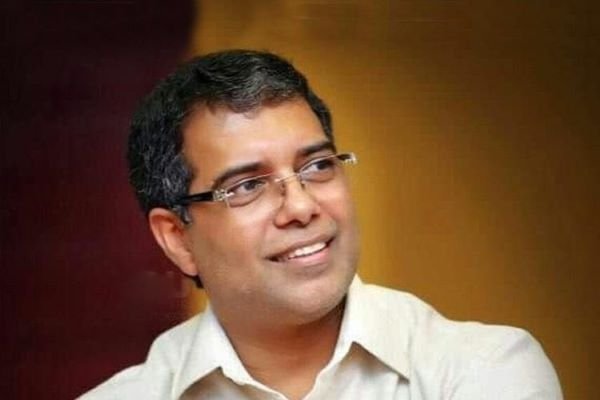
Note: Dr Indranil Khan is a practising clinical oncologist and presently the state vice-president of ABVP PaschimBanga

Hyderabad: Azam, a self-styled godman, arrested for raping a 19-year-old girl in a Dargah on the pretext of chasing away evils

In yet another horrific incident, a self-styled Muslim godman named Azam has been caught after allegedly raping a girl repeatedly on the pretext of chasing away evils from her house in Borabanda area of Hyderabad, reports ANI.

According to police reports, the rape accused Azam came in touch with the 19-year-old girl belonging to the same area and began to frequently visit her house. Later he suggested to her parents that their house was under the shroud of evil forces that needed to be chased away.

Azam further suggested that family should visit a Dargah in Bidar district of Karnataka to in order to get away with the evils, the police said. Azam accompanied the family to the dargah, an Islamic religious place, where he lured the victim and raped her.

“After their return from the trip, Azam again visited the house of the victim and asked her parents to stay outside while he recited some hymn to scare off the evils. On finding the girl alone, the accused once again raped her,” Panjagutta Additional Commissioner of Police Thirupatanna said.

A case under section 376 (punishment of rape) of the Indian Penal Code was registered at SR Nagar Police Station. The girl has been sent to Bharosa centre for medical assistance and counselling and the victim was sent to judicial remand, the police said.

In September last year, a case was registered against one Asif Khan “Ashu Maharaj”, who made a fortune cheating people, under section 376 and relevant sections of the POCSO after raping a minor girl.

Mainstream media has often used misleading images for crimes committed by Muslim clerics. In July last year, the Times of India turned one godman ‘Asif Noori’ who forced his male devotees into ‘unnatural sex’ into a Hindu saint when they used image of a Sadhu as representational image. Later, the Times of India even apologised for using a wrong representational image.