Home Blog Page 6372

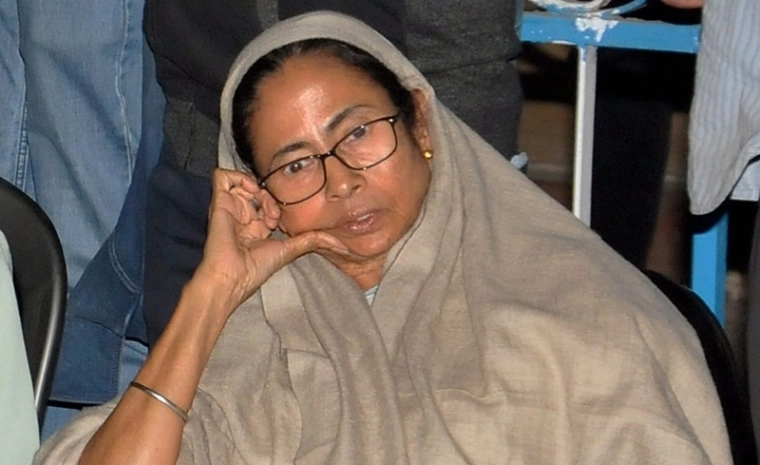
BJP demands Mamata Banerjee’s resignation as West Bengal Home Minister in the wake of violence across the state

BJP has demanded the resignation of West Bengal Chief Minister and All India Trinamool Congress (TMC) Chief Mamata Banerjee as the Home Minister of the state. BJP leader Mukul Roy has demanded Banerjee’s resignation in the wake of the recent incidents of violence in the State.


Political violence in West Bengal has become a routine. Several instances of violence were reported during the recently concluded Lok Sabha elections, while many such incidents continued to be reported after the polls.

Recently, clashes had broken out during BJP’s victory processions at Buniyadpur, and Gangarampur in the South Dinajpur district. These clashes were allegedly triggered when police entered into the victory processions accompanied by TMC workers who beat up BJP workers. The situation escalated quickly and police started charging batons and using teargas shells to disperse the crowd. Several BJP workers were injured during these clashes.

Later, the situation further aggravated when police reportedly prevented BJP workers from holding the funeral of BJP workers allegedly killed during the clashes in Basirhat’s Sandeshkhali.

In protest, BJP observed the black day in West Bengal today. 12-hour long general strike in Basirhat sub-division followed by a condemnation march to the Kolkata Police headquarters on June 12 has also been planned as a part of the protest.


BJP MP rakes up the reparations debate, argues discussions must start about how and when the British can start repaying India

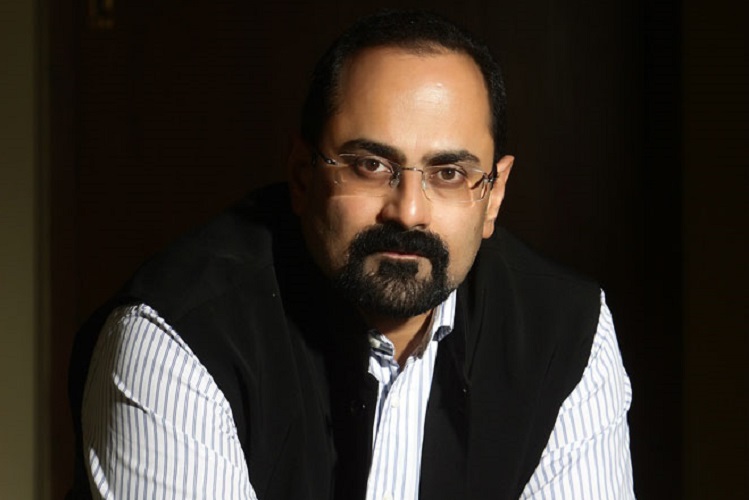
Calls have been made regularly for the United Kingdom to pay reparations to India for the exploitation of its economic resources during its colonial rule. The latest person to make that demand is Rajeev Chandrasekhar, BJP Rajya Sabha MP from Karnataka.


Rajeev Chandrasekhar tweeted that a discussion must be started to decide how and when Great Britain can start repaying its debt to India. He added that time has come for former colonial powers Great Britain, Holland, Portugal and Franch to start returing the wealth they took from their colonies.

An article linked by Chandrasekhar in his tweet cites a research study by renowned economist Utsa Patnaik and published by Columbia University Press to assert that the British Empire drained nearly $45 trillion from India between 1765 to 1938.

The British, the article argues, achieved it by establishing a monopoly over Indian Trade. They bought Indian goods using the money from the taxes they collected from the Indian citizenry itself. Then, the British were able to sell these goods at a much higher price to other countries, thus making further profit on the goods.

After the British Crown took control of India in 1858, they twisted the rule further to suit their objectives. While Indian producers were allowed to sell their goods to other countries, payment for them could only be made through special bills issued by the British Crown. When Indians cashed the bills, they were paid in Indian rupees from the taxes that were collected from the Indian citizenry.

The consequence of these policies was that while India maintained a trade surplus with the rest of the world, its own deficit increased in the national accounts as the profit was being appropriated by the British. Thus, India had to borrow money from the Brits to finance its own imports, thus strengthening Britain’s hold over the territory.

The author of the article, Jason Hickel, an academic at the University of London and a Fellow of the Royal Society of Arts, opines in the end, “What does this require of Britain today? An apology? Absolutely. Reparations? Perhaps – although there is not enough money in all of Britain to cover the sums that Patnaik identifies. In the meantime, we can start by setting the story straight. We need to recognise that Britain retained control of India not out of benevolence but for the sake of plunder and that Britain’s industrial rise didn’t emerge sui generis from the steam engine and strong institutions, as our schoolbooks would have it, but depended on violent theft from other lands and other peoples.”

Chandrasekhar will find support for his argument from senior Congress leader Shashi Tharoor who has made the case in the past. In a speech at the Oxford Union in 2015, Tharoor argued that the British must accept that it owes India a debt for its colonialism and owes India reparations for the economic and psychological decline of its people.

‘Opposition is still under the shock of election defeat which is their weakness’, PM Modi hits back at Rahul Gandhi’s ‘hatred’ comment

In an apparent veiled jibe at Congress President Rahul Gandhi, Prime Minister Narendra Modi said the opposition was still reeling the shock of the recently concluded Lok Sabha elections terming it their “weakness.”

PM Modi was addressing a thanks-giving public meeting in Renigunta organized by the Andhra Pradesh (AP) BJP on Sunday.

According to reports, he asserted his government’s commitment to accelerate work for the betterment of the states of Andhra Pradesh and Tamil Nadu despite BJP failing to open accounts in these southern states.

“Given the huge mandate we got, some people think expectations and aspirations (on the government) have increased. They also wonder what can Modi do. We should see it as India’s fortune and a great opportunity. I see it as a guarantee for a brighter India,” he said.

His jibe is seen as a retaliation to the recent comments by Gandhi in Wayanad, his parliamentary constituency. Gandhi, who won by a massive margin from this seat, had accused PM Modi’s election campaign of being filled with “lies, poison, and hatred” during his recent visit here.

Hitting back, PM Modi said, “That is their weakness. For us, the chapter of elections has ended. A new chapter of serving the 130 crore people of the country has opened for us.”

Highlighting that his strong government is at the centre, he took note of YSR Congress Chief YS Jagan Mohan Reddy’s comeback with a full majority in the state. He hoped the state would witness a steady road towards development under Reddy’s leadership.

“AP has infinite possibilities for growth. We will fully extend all co-operation from the Centre for the development of the state,” the PM assured.

PM Modi mentioned Tamil Nadu along with AP and thanked people of these states for playing a pivotal role in strengthening democracy.

“Whether or not we secured victory here, our objective always is to serve the people. We (BJP) are a dedicated system of workers and I am a part of it. Even after the elections, we will not lower our efforts to ensure the happiness of people and betterment of their lives. We will increase our efforts in this regard at the Centre and will especially show it in AP and Tamil Nadu,” he added.

He stressed on the fact that he has confidence in 130 crore Indians.

“With their contribution and support, I am confident we can give a new direction to the country,” he said.

Reminding people of ‘two good occasions’ in reference to the 150th birth anniversary of Mahatma Gandhi in October 2019 and the 75th anniversary of the nation’s Independence in 2022, he said, “These are two important occasions that could be inspirational, which the country should not miss. They give us a chance to recall the sacrifices of the freedom fighters and take a pledge for doing something for the country.”

Seeking the blessings of Lord Venkateswara to realize the dreams of 130 crore people of India, the PM highlighted the need for states and centre to work in coordination with each other.

“When we dream of a New India, we also wish that every state also should progress in the same manner. Only then can we build a New India. Sabka Saath, Sabka Vikas, jisme raajyom ka bhi saath, jan saamanya ka bhi saath. Jan saamanya ka vikas, rajyom ka vikas. We are moving ahead with that determination towards making this a reality,” he divulged.

“If that happens, I am sure, we will succeed in the right earnest and prosper.”

He stressed on the fact that winning elections was an electoral aim and that winning people’s hearts throughout 365 days is their constant endeavor. He also specified that his government is focussed on building the nation and not the party.

“This is not our nature, nor are we used to it. In the last five years, people have seen a government that is solely committed to the welfare of Bharat Mata. Hence, they gave us a renewed mandate to serve them for the second time,” he added.

Earlier on Sunday, Jagan Mohan Reddy had accompanied the PM during his visit to Tirumala shrine.

Former Pakistan President Asif Ali Zardari arrested in Islamabad in case of siphoning off millions through fake bank accounts

The National Accountability Bureau(NAB) in Pakistan arrested former Pakistan President and erstwhile co-chairperson of the Pakistan People’s Party(PPP) in the fake bank accounts case. Zardari has been accused of siphoning off millions to his private company’s account, allegedly through fake bank accounts.

A team of NAB officials arrested Zardari from his residence on Monday, hours after the Islamabad High Court bench comprising Justice Amir Farooq and Justice Moshin Akhtar Kayani dismissed a petition filed by Zardari and his sister Faryal Talpur soliciting an extension in their interim bail in the case.

While the court issued ordered NAB to arrest Zardari and his sister Talpur, they both have the option of appealing to the apex court.

Various police and NAB officials reached Zardari’s house in Islamabad after Court issued orders to arrest him. Police blocked all routes leading to and from his house to secure the arrest. A team of NAB officials informed the National Assembly Speaker at the Parliament House about his arrest warrant.

According to the sources cited by Geo News, NAB is expected to keep Zardari in the bureau lockup. In addition, it is suspected that the agency might not seek Talpur’s custody. Pakistan Muslim League-Nawaz (PML-N) leader Shahbaz Sharif had earlier urged NA Speaker Asad Qaiser to issue production orders for Zardari.

“Zardari has always complied with the demands of the NAB and has not used evasive tactics against them. NAB should have acknowledged this instead of proceeding to arrest him,” Sharif said in the Parliament.

The spokesperson for PPP Chairman Bilawal Bhutto-Zardari, Mustafa Nawaz Khokhar issued an appeal to PPP supporters across the country to remain calm and peaceful. “We are waiting for high court’s written order,” he said and added that future strategy will be formulated after the party receives the order.

It is pertinent to note that former Pakistan PM Nawaz Sharif is also lodged in jail over charges of corruption while former President Pervez Musharraf had fled the country fearing his arrest.

Throwback: When Yuvraj Singh owned the Nairobi Gymkhana Ground in 2000

2000 was a turbulent year in the history of Indian Cricket. The nightmare tour down under continued with no change in the side’s fortunes. After a comprehensive 0-3 defeat in the Test series, the side continued to suffer through the ODI tri-series as well, winning just 1 match out of 8. After the tour, Sachin Tendulkar stepped down and in one of the most important decisions in Indian Cricket history, Sourav Ganguly got the job.

Just when the new skipper was starting to settle in, the match-fixing saga reared its head up to take the game by storm. Overnight, Hansie Cronje went from a revered figure to an outcast, and he started mentioning names, big names in world cricket, few of them Indians. Suddenly every match was under a cloud, was it fixed, was it not fixed, every poor performance raising a doubt.

While the darkest hour in Indian Cricket claimed a couple of its stars, it also opened up the spot in the middle order for a youngster by the name of Yuvraj Singh.

By the time he made his debut, most cricket fans were already aware of the precocious talent of this young man. His exploits in underage cricket, and in Under 19 World Cup, in particular, meant his debut was eagerly awaited. He first got his chance in the ICC Knockout tournament in Kenya, and boy did he take that chance.

After failing to get an opportunity to bat against Kenya in the first game, Yuvraj got his chance against the might World Champions Australia. Walking into bat at 90/3 after the dismissals of the holy trinity, Sachin, Sourav and Rahul, it would have been natural to have some butterflies in the stomach. However, if there were any nerves, the young man showed no signs of them.

A glorious straight drive off Ian Harvey got him going, followed by a pull smashed to the square leg boundary, and the runs just started to flow. There was one blemish when he edged a McGrath delivery but thankfully for him, the very safe Mark Waugh somehow let that go past his hands and he carried on. Several trademark flicks, lofted drives, square cuts, on-drives later, he eventually was dismissed caught and bowled by Shane Lee while trying to accelerate at the end. As he walked off after scoring 84 from 80 balls, he got a well-deserved standing ovation from everyone in the stadium.

However, he was not done for the day yet. With Australia progressing smoothly at 86/2 in the 16th Over, Yuvraj produced the first of his brilliant moments in the field, to get rid of Ian Harvey. It was a slower ball, as most balls were with Venkatesh Prasad, Harvey was too early into the shot, the ball was in the air and Yuvraj, stationed at covers, produced a full-length dive to catch it with both of his hands.

Next wicket his fielding brought, was even more important. Michael Bevan was well set, and looking to do what he so often did during his career, guide Australia through in a chase. He knocked a ball to mid-off who was on the edge of the circle and took off for a single. One of the quickest runners in the game, Bevan thought he would complete the run, but Yuvraj turned out to be quicker. A direct hit from mid-off found Bevan short and put India firmly on the path to victory.

It got a little close, in the end, thanks to Brett Lee’s cameo, but Yuvraj had done enough to earn the victory for India. It took him a couple of years to firmly establish himself in that Indian middle order, but that day in Nairobi confirmed it to everyone watching that this guy belongs on the international scene.

Kashmiri Pandits cheer and chant slogans of Har Har Modi at Kheer Bhavani temple in J&K on the occasion of Jyeshtha Ashtami

Prime Minister Modi extended his greetings to the Kashmiri Pandit community on the occasion of Jyeshtha Ashtami and wished them the blessings of Mata Kheer Bhavani to give them strength, peace, and prosperity.


The festival is celebrated at the famous Kheer Bhavani temple at Ganderbal district of Jammu and Kashmir of Goddess Ragnya Devi. The name of the temple comes from the bhog (food offering) of Kheer offered by the devotees at the temple.


The devotees gathered at the temple today to offer prayers at the occasion of Jyeshtha Ashtami cheered and chanted slogans of ‘Har Har Modi, Ghar Ghar Modi’ in response to the PM Modi’s wishes. Thousands of Kashmiri Pandit devotees thronged the temple to celebrate the annual festival of Kheer Bhawani. Walking barefoot, the devotees carried rose petals and offered tribute to the goddess, while the men took a dip in the stream near the shrine. Jammu and Kashmir Governor Satya Pal Malik also visited the Kheer Bhawani shrine to take part in the ongoing festival. National Conference president Dr Farooq Abdullah, Congress state president Ghulam Ahmed Mir, BJP national general secretary Ram Madhav and several other political leaders were also present on the occasion.


Separatist leader and the Chief of Jammu and Kashmir Liberation Front (JKLF) Yasin Malik, had visited the temple in 2014 and had appealed to Kashmiri Pandits to return to their homes. Malik was detained in February this year and was charged under the Public Safety Act. He was allegedly involved in the abduction of Dr. Rubiya Syed, sister of Former J&K CM and PDP leader Mehbooba Mufti, killing of five Indian Air Force personnel in 1990 and killing of Justice  Neelkath Ganju who had pronounced death sentence to JKLF terrorist Maqbool Bhatt and Lassa Kaul, former director of Doordarshan Kendra in Srinagar.

Beef politics enters Kolkata: Initial event cancelled, another ‘Beef and Pork’ festival slated to occur in September

The saffron surge in West Bengal marked the Dawn of Religious Politics in the state. While the fate of parties in the state hitherto had been determined by political ideologies, going forward, it would be determined by the extent of religious polarization among the electorate.

With religious polarization came the politics of beef which until now had been largely restricted to North India and states such as Maharashtra. However, Kolkata became the Ground Zero for it when a beef festival was announced in the city. It was eventually cancelled after the organizers claimed to have received threats online and via calls.

The cancellation appeared to be the end of it. However, it seems it was merely the beginning of the next chapter in the story. Another event has been proposed which is slated to occur in September this year. It’s unclear how authentic it is as the organizers appear to be anonymous and not much detail has been provided.

In the description of the event ‘Kolkata Beef And Pork Festival’ on Facebook, the proposed date is 15th of September and it’s being hosted by a page called ‘Progressive Human’. The authenticity of the page is questionable as it appears to have been created very recently and had only 235 likes at the time of writing this report.

However, a lot of people appear to be taking this seriously as around a thousand people have marked themselves as attending this event while close to four thousand people said they were interested. The proposed venue for the first was Kolkata but the organizers say “We are planning to do the same event in each and every district in Bengal.”

While the organizers of the initial festival could legitimately argue that the motivations of the festival was not political, the organizers of this one quite clearly cannot make that claim. It is also interesting to note that it’s no longer just a Beef festival but a Pork festival as well.

The discussions on the event also prove that it’s extremely political.

While the overwhelming majority of the comments were by people who saw the event as means to fight fascism, there were one or two throwing abuses at the organizers and others politely asking people to desist from celebrating the consumption of beef. Even polite requests to cancel the event are being greeted with expletives and abuses.

If anyone was under the impression that only non-Bengalis were opposing the event, they are quite wrong. Bengalis too have expressed their resentment against the ‘festival’. Incidentally, they too were the subject of abject mockery and abuses by fellow Bengalis.

Others have criticized the initiative as well deeming it frivolous. The organizers were requested by one individual to not do anything that might vitiate communal harmony in the state and opined that “A festival is only successful when the whole community is involved.” He also advised them to take proper measures to make it happen. But that was after calling educated and well off people the “scum of society” and a shame.

In the post where the announcement of the cancellation of the initial event was made, the politicization of beef became quite apparent. Those who opposed the event were called terrorists and ‘chaddis’, references to GauMutra were bandied about. Some others expressed rather ‘problematic’ sentiments to put it mildly with one user saying that it was time to establish a “Muslim state”.

Meanwhile, a certain BJYM college outreach representative at BJYM claims that the event was cancelled due to the involvement of BJP and VHP leaders, something that one of the organizers hinted at as well. But Kalicharan Shaw, state committee member of BJYM West Bengal told OpIndia.com that the BJP was in no way involved with the cancellation of the event. “Karyakartas are dying everywhere. That is our foremost concern right now,” he said.

Overall, there is a certain celebratory mood in the saffron camp over what is being perceived as their most recent victory. And this Saffron Camp certainly includes a great many Bengali BJP supporters.

There are great ramifications of it for larger Bengal politics as well. It also shows that the liberal Bengali crowd have very little idea about the opinions and sentiments of their own brethren. While beef is available in plenty in Kolkata and violence hasn’t been reported ever in any restaurant that serves beef, people took great offence at the celebration of its consumption.

One Bengali lady summarized it quite eloquently in the cancellation post. She wrote, “Don’t mind anyone. I come from a strictly communist household. Yet if anyone dares to eat beef among us, my parents would go batshit crazy. This is the case in most Bengali households. Most of the people of different religions do not accept the consumption of their forbidden food. If it had been a pork festival another set of people would have threatened you. And this sentiment is being taken advantage of by you-know-whos of the country. And the fact that they stopped you will be a precedent now. Personally, I feel you could have organised a meat festival. Any kind of meat. Bringing out an anti-statement is always not the way to combat I feel.”

In light of these circumstances, one thing is for certain. Beef has been politicized in Kolkata by people who seek to make political statements by celebrating its consumption in festivals. While Bengalis may tolerate the knowledge of people consuming it, they might not tolerate someone celebrating it. And with the saffron surge in Bengal, it appears evident that Bengalis are now much more politically conscious than before. Beefeaters in Kolkata may rue the politicization of it but they have only themselves to blame for it.

They must also introspect on their own conduct. Calling people ‘fascists’ and ‘communal bigots’ merely for opposing the consumption of an animal motivated by their religious beliefs is quite unhelpful. If that criterion were a sufficient condition for being fascist and bigot, nearly every single human across the world can be labelled a fascist. Since we can agree that is evidently not the case, liberals ought to be careful about how they approach such issues.

Demonizing people and abusing them even for making polite requests will only lead to more enmity between people. But then, if liberals were capable of understanding such simple things, they wouldn’t have been so thoroughly rejected in electoral politics.

Bengali Hindus in Kolkata do consider cows sacred and if liberals believed that they would not face any opposition towards a beef festival, they were obviously quite wrong. It’s also the age of religious polarization in the state, therefore, it appears almost natural that a great many Bengali Hindus were positively disgusted with the festival and opposed it.

A great many of these beef eaters appear convinced that Mamata Banerjee and the local police will come to their aid. However, one has to take these assertions with a pinch of salt. The Chief Minister of West Bengal will be fully aware that the ordinary Bengali Hindu is quite averse to the consumption of beef. The BJP’s monumental rise in West Bengal has been entirely fueled by massive Hindu consolidation in its favour. Therefore, will Mamata Banerjee be enthusiastic in her support for Beef Festivals and risk alienating Hindus further? Only time can answer that question but politicians normally desist from hurting the religious sentiments of the electorate.

With the entrance of beef politics in Kolkata, the state of West Bengal resembles the ‘cow-belt’ in terms of its politics. Liberals have been using the term as a pejorative to insult fellow Bengalis and blame them for the rise of the BJP. But there’s nothing essentially derogatory about the term at all. The cow is Sacred, after all. And one thing appears certain, Bengal in general and Kolkata, in particular, is Ground Zero of the Cultural Revolution that is underway across the country.


NCP chief Sharad Pawar’s new theory: Claims India’s air strikes against JeM happened in Kashmir not Pakistan

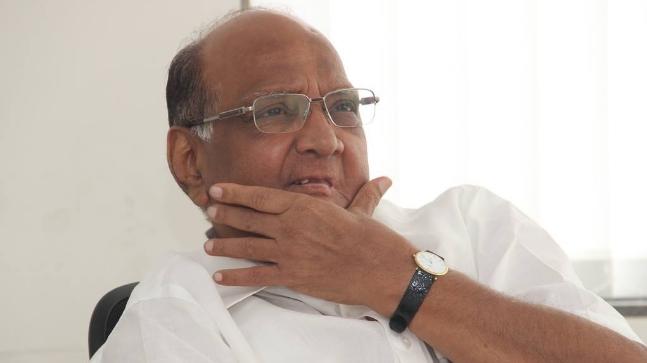
NCP chief Sharad Pawar, in an attempt to malign PM Narendra Modi’s statements of “hitting the enemy in his home”, raked up the Balakot airstrike once again, claiming that it actually took place in Kashmir and not in Pakistan.

During a live chat on Facebook, Pawar said, “It made a great impression on the people, especially the youth when they perceived Mr Modi talking tough on Pakistan after the Pulwama terror strike. However, people do not know what’s going on in the Line of Control (LoC) and have no access to information on the exact situation there. So, after the PM’s triumphal announcement of the Balakot air strikes, the public thought some action had been taken against Pakistan whereas the strikes took place in Kashmir,” said the NCP chief.

Ahead of the state Assembly elections in Maharashtra scheduled towards the end of this year, the NCP-Congress alliance is trying its best to keep its flock together with reports of the possibility of multiple defections to the BJP. The NCP-Congress alliance suffered huge electoral losses in the state in the recently-concluded Lok Sabha elections. Together, they won only five seats, while the BJP secured 23 seats and its ally Shiv Sena bagged 18 seats.

Moreover, accusing the BJP of creating a rift among different communities for electoral gains, Pawar during his live chat warned that one community standing against another was dangerous for the country’s social harmony.

In the aftermath of the Pulwama attack, the Indian Air Force had conducted air strikes on three locations of Balakot in Khyber Pakhtunkhwa, Chakoti and Muzafarrabad in Pakistan-occupied-Kashmir (PoK). The Indian Air Force fighter planes dropped had 1000 kg bombs on terror camps across the Line of Control in Pakistan during early hours of February 26 to avenge the Pulwama terror attack.

Since then the Balakot airstrike has been a raging topic of debate in the political arena. Even though neutral sources confirmed the airstrike, the usual suspects from the opposition like Congress’ Digvijaya Singh, Ashok Gehlot, Kapil Sibal, Sam Pitroda, Kamal Nath, Captain Amarinder Singh have raised their doubts about these strikes and demanded proof to pin down Modi.

However, with this statement now, Sharad Pawar, one of the veteran Indian politician who had admittedly added an extra bomb blast during the 1993 bomb blasts of Mumbai to portray that Muslims were the victims too, has also joined the long list of opposition leaders who have not only questioned the Balakot airstrikes but have also floated conspiracy theories regarding the Pulwama terror attack.

Kathua murder Case: 3 convicts awarded Life Imprisonment, other 3 get 5 year jail term

After the conviction was held for 6 out of the 7 accused in the Kathua murder case, the Pathankot court has pronounced the sentence for the 6 convicted in the rape and murder of a minor girl named in Jammu and Kashmir’s Kathua. The courts have sentenced Sanji Ram, Deepak Khajuria and Parvesh Kumar to life imprisonment while the remaining three- SI Anand Dutta, head constable Tilak Raj and special police officer Surender Verma have been sentenced to five years for destruction of evidence.


The District and Sessions Pathankot court judge Tejwinder Singh has handed life imprisonment to Sanji Ram, Deepak Khajuria and Parvesh Kumar under the Sections  302 (murder), 376D (gang rape) and 120B (criminal conspiracy) of the Ranbir Penal Code (RPC). They have also been sentenced to 25 years of rigorous imprisonment, and all the sentences would run concurrently. These three convicts are also ordered to pay a fine of Rs 1 lakh each. The seventh accused Vishal Jangotra was acquitted of all the charges.

The National Commission for Women has expressed dissatisfaction over the sentencing, saying it is not enough and they expected capital punishment in the case. NCW chairperson Rekha Sharma said that the state government should appeal against the verdict seeking the death sentence for the convicted persons.

According to the allegations mentioned in the charge sheet, an 8-year old girl was abducted and drugged before she was raped multiple times by several men. The charge sheet also mentions that the victim was held under captivity before being brutally murdered.

NCP chief Sharad Pawar continues his EVM scaremongering, now predicts riots over EVMs

The National Congress Party chief Sharad Pawar still appears to have not made peace with the results of the recently concluded Lok Sabha elections. Instead of humbly accepting the public mandate, Sharad Pawar has resorted to scaremongering, taking the beaten to dust argument of ‘EVM issues’, claiming that the seemingly calm population may soon take law in their hands if they realise that their votes are not going to the candidate of their choice.


Pawar still seems to be blind to the fact that the population of the country has rejected the opposition politics and once again reposed their faith in the leadership of the BJP’s PM candidate Narendra Modi.

In a bid to avoid the accountability of his party’s poor performance, Pawar raised a new theory to disparage the mandate the country has given. Pawar alleged that EVM and VVPATs had no problem but the machines with the electoral officers that is last counted have problems. Pawar further added that he is going to the depth of the issue, discussing with the technicians and experts and the opposition members.


Pawar and other opposition leaders who are alleging malpractice cannot bring themselves to the fact that the people of the country had utterly rejected their brand of politics. Instead of employing the familiar practice of blaming EVMs for their defeats, Sharad Pawar has now invented a new excuse of the fault in the machine of the electoral officers to escape accountability.

Sharad Pawar has been coming up with new EVM hacking theories on a monthly basis now. Last month, he had claimed that EVMs can be ‘controlled’ via mobile towers outside the polling booths.

Before that, he had claimed that he had voted for his own party but his vote had gone to the BJP. Some days later, he had claimed that he had seen his vote for NCP going to BJP.

After 2 decades of its formation, NCP faces a tough battle for its survival. 2019 Lok Sabha election saw once a powerful regional party NCP transform into a moribund organisation. Once its strong bastion, NCP won only 4 Lok Sabha seats from the state of Maharashtra.