

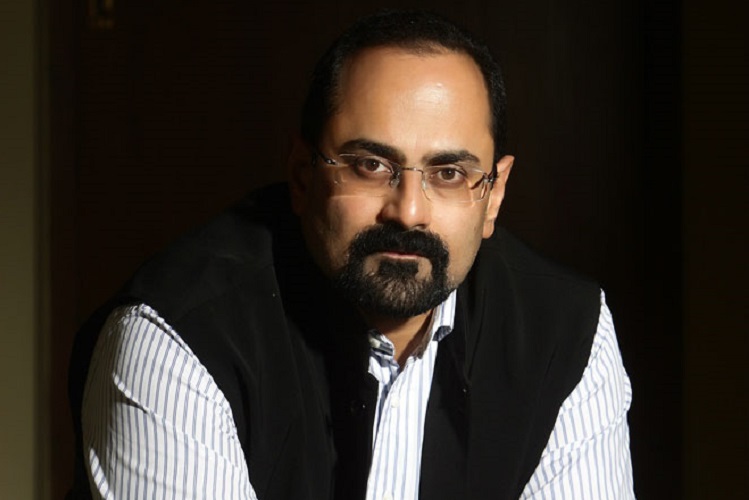
Calls have been made regularly for the United Kingdom to pay reparations to India for the exploitation of its economic resources during its colonial rule. The latest person to make that demand is Rajeev Chandrasekhar, BJP Rajya Sabha MP from Karnataka.
I think a discussion must start abt how n when #GreatBritain can start repaying its debts to #India !
Great Britain Holland Portugal France – its time that they start returning back the wealth they took from “colonies” n the people who it belongs to https://t.co/JggeIwID0S
— Rajeev Chandrasekhar ?? (@rajeev_mp) June 10, 2019
Rajeev Chandrasekhar tweeted that a discussion must be started to decide how and when Great Britain can start repaying its debt to India. He added that time has come for former colonial powers Great Britain, Holland, Portugal and Franch to start returing the wealth they took from their colonies.
An article linked by Chandrasekhar in his tweet cites a research study by renowned economist Utsa Patnaik and published by Columbia University Press to assert that the British Empire drained nearly $45 trillion from India between 1765 to 1938.
The British, the article argues, achieved it by establishing a monopoly over Indian Trade. They bought Indian goods using the money from the taxes they collected from the Indian citizenry itself. Then, the British were able to sell these goods at a much higher price to other countries, thus making further profit on the goods.
After the British Crown took control of India in 1858, they twisted the rule further to suit their objectives. While Indian producers were allowed to sell their goods to other countries, payment for them could only be made through special bills issued by the British Crown. When Indians cashed the bills, they were paid in Indian rupees from the taxes that were collected from the Indian citizenry.
The consequence of these policies was that while India maintained a trade surplus with the rest of the world, its own deficit increased in the national accounts as the profit was being appropriated by the British. Thus, India had to borrow money from the Brits to finance its own imports, thus strengthening Britain’s hold over the territory.
The author of the article, Jason Hickel, an academic at the University of London and a Fellow of the Royal Society of Arts, opines in the end, “What does this require of Britain today? An apology? Absolutely. Reparations? Perhaps – although there is not enough money in all of Britain to cover the sums that Patnaik identifies. In the meantime, we can start by setting the story straight. We need to recognise that Britain retained control of India not out of benevolence but for the sake of plunder and that Britain’s industrial rise didn’t emerge sui generis from the steam engine and strong institutions, as our schoolbooks would have it, but depended on violent theft from other lands and other peoples.”
Chandrasekhar will find support for his argument from senior Congress leader Shashi Tharoor who has made the case in the past. In a speech at the Oxford Union in 2015, Tharoor argued that the British must accept that it owes India a debt for its colonialism and owes India reparations for the economic and psychological decline of its people.


