Home Blog Page 6398

David Warner declared fit, will open for Australia

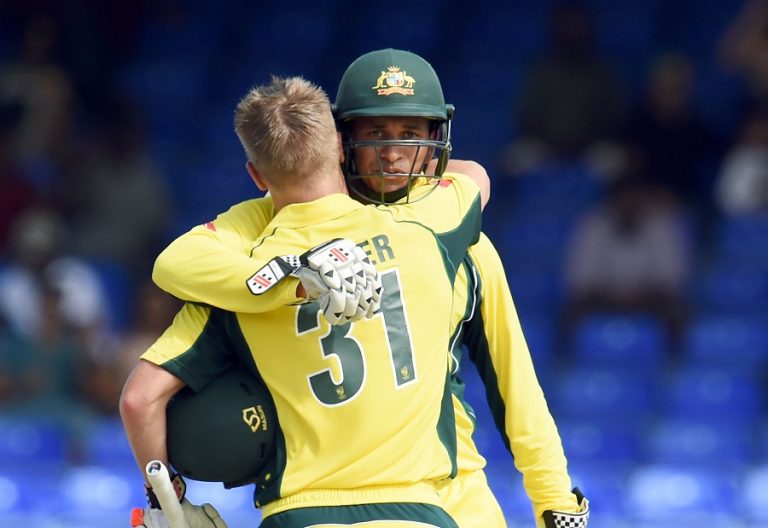
Australian opener David Warner who was doubtful for the opening game for Austalia in World Cup due to sore glute has been declared fit for the first game in the World Cup.

Earlier, Justin Langer had concern over his fitness as Warner is in good form and can play an important role in their road to semis.

Talking to Cricket.com.au before Warner’s fitness test, Langer said, “We’ll have a pretty good idea today, how he moves and how he pulls up in the morning.”

Australia will take on Afghanistan on Saturday in Bristol. The coach was waiting for the fitness test.

“But what I have expressed to him is it’s really important to be fair to the other players, we don’t want to be getting to Saturday morning and making a call, when a couple of other guys are wondering if they are going to play or not going to play.”

Warner was in tremendous touch in IPL and scored maximum runs (692) in the tournament despite playing 2 games less due to his commitment for the Australian team.

Sachin Tendulkar on Thursday picked David Warner as one of three players to watch out in this world cup.

“He’s obviously desperate to play,” Langer continued. “As all 15 players would, he is jumping out of his skin, his energy is up and he’s laughing a lot, which is a really good sign.”

The Australia – Afghanistan match is a day-night game. New Zealand and Sri Lanka playing the first match of Saturday.

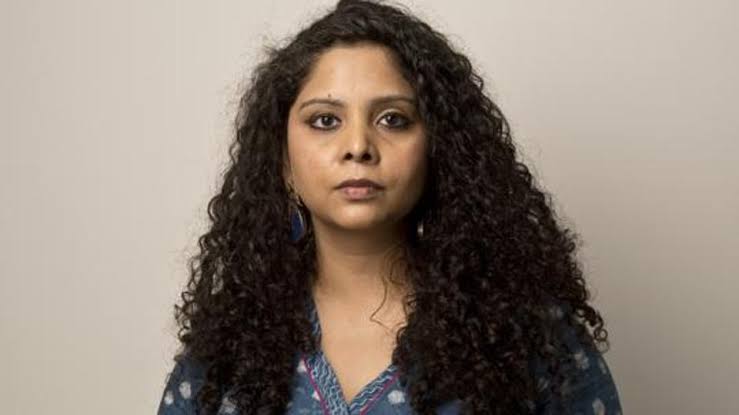
Journalist Rana Ayyub continues to smoulder as Amit Shah is appointed as Union Minister of Home Affairs

The meltdown that was triggered by an emphatic victory for the BJP in the recently concluded Lok Sabha elections seems to continue for Rana Ayyub as she carried on with her rant on Twitter. In the wake of Amit Shah being appointed as Home Minister, while many prominent journalists chose to stay mum, Rana Ayyub’s meltdown had severely compounded.


Rana Ayyub couldn’t bring herself to the terms that her nemesis Amit Shah is going to preside over the Home Ministry of the country. So profound is the meltdown that Ayyub has continued to cast smear on India’s newest Home Minister by asserting that he had been arrested for murder and extortion when he was Gujarat Home Minister.


However, in harmony with the quintessential liberal trait of having selective regards for the Indian judiciary, Rana Ayyub deceitfully obscures the fact that the courts had exonerated Amit Shah in the cases she had averred.

Ayyub’s meltdown had started when most of the Exit Polls had declared that BJP government at the centre is imminent. However, she held on to her horses until the Results Day when the early trends indicated that BJP is set to form a government at the centre with an overwhelming majority.

Even then, Rana Ayyub couldn’t digest the fact that her bete noires Modi and Shah will go on to form a stable government at the centre with a decisive majority. Lamenting on Twitter, Rana posted a series of tweets questioning the Congress incompetence against the robust BJP election machinery. She bemoaned that nothing worked for Congress in this election campaign as their numbers remained close to the 2014 digits, reflecting utter decimation for the principal opposition party.

With Shah reigning over the Home Ministry, one can expect Rana Ayyub to work overtime to fear-monger by vilifying the PMO and his cabinet ministers and painting a grim picture about the country on Twitter and other International forums.

Gurugram ‘hate crime’: Police says Barkat Alam may have been tutored to give it a communal angle

The case of a Muslim man in Gurugram being allegedly beaten up by some Hindu men in Sadar Bazar area had caught media attention on May 28 after newly elected BJP MP Gautam Gambhir had tweeted about it, insinuating it to be a hate crime and preaching about ‘secularism’.

While the usual suspects in the media jumped to the opportunity to keep the communal pot boiling, the police have almost denied the angle of hate crime in the incident. The day of the incident itself, the Gurugram police had stated that the incident was a case of a minor brawl in a drunken state. On 28 May, Gurugram Police Commissioner Mohammad Akil held a press conference in which he claimed that the victim might have been tutored.

Swarajya journalist Swati Goel Sharma delved into the entire incident and got in touch with Mohammad Barkat Alam’s cousin Murtaza over the phone. While he was initially even reluctant to talk on phone, on Sharma’s persistence, he eventually agreed to meet her in Gurugram on condition that no video is recorded. Murtaza, who is in his 40s, works in a tailoring shop in Gurugram’s Jacob Pura, around 30 kilometres from New Delhi.

According to the report, Murtaza and Barkat Alam hail from Begusarai in Bihar. While Murtaza was staying in Gurugram for the last few years Alam had come two weeks ago. Barkat, who lost his father at an early age, was earlier in Madhya Pradesh, where he worked as a mason.

On May 25, Barkat lodged an FIR (first information report) against unknown men at the city police station, saying that when he was returning from the Jama Masjid in nearby Sadar Bazaar around 10.15 pm, six unknown men cornered him. Four were on a motorcycle and two were on foot. They were drunk and told him that the skull cap was not allowed in the area. They hurled abuses at him, and the two men thrashed him and even threatened him with his life.

The police applied sections 153A (promoting enmity between groups on ground of religion), 147 (rioting) 149 (unlawful assembly), 323 (causing hurt) and 506 (criminal intimidation) of IPC or Indian Penal Code.

The incident was blown up the next day as Barkat gave statements to several television news channels claiming that he was forced to say ‘Jai Shri Ram’ and ‘Bharat Mata ki Jai’.

However, Gurugram Police had later said that many of Barkat’s allegations did not match with his statement in the FIR as well as with the footage obtained from CCTV cameras.

For instance, while Barkat said in the FIR that six men accosted him, CCTV shows two men, out of which, only one attacked him. Moreover, Barkat had told the media that his skull cap was forcibly removed, whereas the video showed the attacker hit him on his head which displaced his cap and Barkat himself had put the cap in his pocket. While Barkat told the media he was asked to chant Jai Shri Ram and Bharat Mata ki Jai, police said he did not mention it at all in the FIR.

Meanwhile, when the Swarajya correspondent met Barkat on Wednesday (29 May), he did not know that several of his claims had been refuted by the Gurugram police a day ago.

In his defence, Barkat told the correspondent that he did tell the police about the slogans but, being illiterate, he did not know what the cops ended up recording.

On the gaps between his allegations and the probe, Barkat says the CCTV seems to have captured only one angle and the other attackers were probably out of view. He also showed his white kurta torn at the shoulders and asks, “Is this kurta lying?”

“I stand by my statement,” Barkat said and showed reluctance to speak further.

Murtaza intervened and said that the police had been very helpful and cooperative. He maintained that because they were illiterate, he was not sure of the statement Barkat gave to the police. However, he regretted saying that had Barkat also stayed back for the Taraweeh namaz, that evening and not returned alone the incident would not have transpired.

Murtaza further divulged that a local man named Haji Shahzad Khan who had helped them get back the documents which the police had impounded after the incident, took Barkat to Delhi the next morning. Barkat too, obliged by the favour agreed to go with him.

According to Murtaza, “God knows what kind of videos” were made in Delhi. “I am his guardian. Shahzad should have asked me at least,” says Murtaza. “Wahan Dilli villi mein kya kya banwaya… uske saath kya kya video banwa diya” [There in Delhi, they made god knows what kind of videos],” he says.

However, it was not clear as to what Murtaza was trying to imply and whether Haji Shahzad Khan was instrumental in tutoring Barkat to give the incident a communal aspect, as the police had claimed.

Meanwhile, before the cousins could divulge further they were cut short by fellow tailors who asked the correspondent to leave citing trouble and said the matter is with the police and they should not be speaking to the media.

According to the Swarajya report, different people of the locality had different aspects. Many shop owners the correspondent spoke to, did not know about the findings in the police probe nor could they for certain say what had transpired that day.

However, one Sardar Tanwar, who runs a gifts shop opposite the sweets shop outside of which the incident took place, said some “village buffoons” roam around in the night and they could be behind the incident.

Meanwhile, another shopkeeper, Aman Dua, who runs a grocery stall just opposite the mosque, also confirmed that Muslims in the area wear skull caps all the time without any trouble.

While many locals said the ‘mahaul’ (atmosphere) is very peaceful and they find it hard to believe that such an incident has happened in the area, some Muslim stall owners said a different story.

Nausheer Ahmed, who sells dates outside the mosque, said that he is not surprised because two similar cases have taken place in the recent past.

The details of the ground report leave much to be answered. According to Swarajya, though the police have ruled out the communal angle, the fact remains that with non-availability of audio in the CCTV footage, this cannot be ruled out completely. Moreover, given the glaring gaps between Barkat’s allegations and the footage, one also wonders if he was really tutored as the police suspects?

How the forgotten majority played a major role in securing Modi a second term

When a political leader captures the imagination of people to evolve into a phenomenon, it is a positive boon for his very first electoral campaign. The citizenry is brimming with hope and enthusiasm while the leader usually has no record to be judged on. Hence a landslide victory is achieved with much ease.

But this boon of being an icon can rapidly devolve into a bane for re-election. The leader is perceived as a messiah by supporters who expect all their problems to be resolved promptly. Since all cannot be delivered in a single term, abject disenchantment and subsequent abandonment are quite inevitable.

This desertion by voters begins from the very first day. Some voters will be disappointed with the inaugural address because they think their leader is caving in on key issues. Some desert their leader because of the choice of cabinet ministers. Some voters give up by the end of the term because of the failure to implement a campaign promise that was close to their heart. The reasons may even be trivial, but the downward spiral endures.

The key is to retard this rate of desertion such that the numbers are adequate to secure a second term. Perhaps implement policies that appeal beyond the previous voter base. But it is impossible to recreate the magic that once sprung out of the bottle. Those elected as heroes will see their profile diminish with every successful election and will eventually be voted out as villains. Regular politicians have an advantage, there is no astronomic rise and hence there isn’t a precipitous fall.

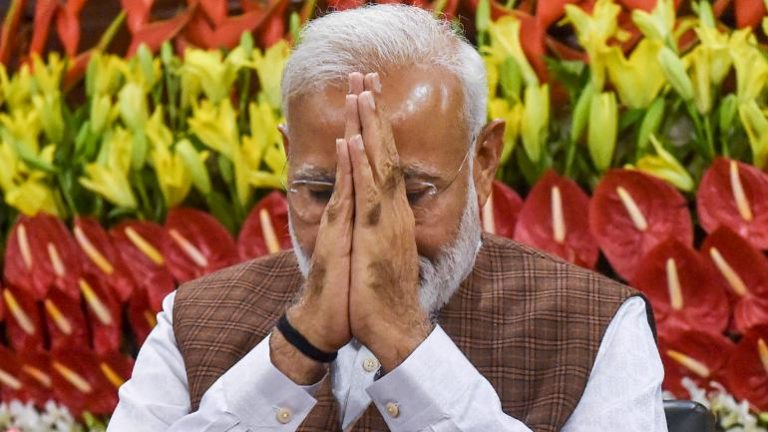
It was therefore nothing short of an astounding miracle that Narendra Modi not only managed to retain his remarkable mandate from 2014 but also managed to enhance it.
‘Experts’ who had initially predicted a certain doom for Modi offered several explanations for the emphatic victory. But one of the most convincing and poignant of explanations was offered in an open-air rickshaw while enduring the intense summer heat of Mumbai and engulfed in traffic that was beyond the range of vision.

“It is extremely hot this year in my home town as well,” said the friendly rickshaw driver in response to my whine about the sultry weather. As the conversation progressed, he proudly informed me that he hailed from a small town in the heartland of India.

“So did you vote for Modi?” was my first question, perhaps a frantic attempt to get my mind off the agonizing heat.

“Of course!” he retorted promptly as if it was the obvious choice to make. Before I could ask the reason, he launched into a very detailed elucidation.

“My name is Ram Sharan. I am forty-five years of age. For almost all my life I never had a toilet in our home. If we had to empty our bowels, we had either to go far away in open fields or there was the swamp area. The women had to wait until it was dark or just endure the great discomfort. There were occasions when a patrolling security guard or somebody else caught us. If it wasn’t the security guard it was a stray animal who chased us. We had no option but to cover up and flee, and eventually the clean-up. Everybody I know has suffered this experience several times in his or her life. Oh the humiliation!” said Ram Sharan shaking his head in utter dismay.

I had never heard their plight described in such detail, perhaps the shock showed on my face.

“I realize these details may nauseate you. But I implore you to listen to me further. The consequence of the lack of toilets was frequent epidemics of diarrhoea and cholera. If any of us suffered from a bout of diarrhoea or dysentery, we didn’t have any energy left to go to a faraway field, we would go near the house. Somebody from the family had to clean up but the stench would prevail. My young sisters stopped going to school because there were no proper toilets there. In fact, when I migrated to Mumbai and rented a room, I was absolutely elated to have a closed toilet just for myself,” Ram Sharan continued as he wryly laughed.

“Modi is the first Prime Minister to utter the word ‘toilet’ in his speech from the Red Fort. He was ridiculed for being trivial, they said leaders should only address matters of gravitas. But for millions like me, this was the issue that desperately needed to be talked about. Thanks to the Clean India mission, in 2015, for the first time in my life we had a proper toilet constructed in our house. In time, we had proper running water and a drainage system. Toilets were built all over my home town including the schools and offices. My nieces now attend school regularly and my sister doesn’t hesitate to go to work. This is something that my people will never ever forgot. I know of people who voted other parties in 2014 but switched to Modi after their toilets were built,” said Ram Sharan.

Before I could ask for other reason that he voted for Modi, he was on to it.

“My parents draw a small pension. They worked at a government office. At the end of every month, my parents, my uncle and aunt had to hire a taxi to the nearest government office. They were compelled to stand in queue for hours before the ‘top’ official arrived. The officials demanded various documents and derived great pleasure in sending them back for the lack of one. The money was received in cash and fifteen per cent or more was charged as ‘processing fees’ which was actually a bribe. There were times when my father felt like refusing the money owing to the indignity it was associated with. My mother suffers from an acute case of arthritis and travelling is such a hassle. But all was endured because we need the money,” said a distressed Ram Sharan as his voice turned shaky.

“Jan Dhan Yojana was, therefore, a blessing from heaven. You have to remember that being poor and not highly educated we never even dared enter the premise of a bank. Now each family member has a bank account. All welfare funds and other money I send is transferred directly to their account. For every transaction, there is a simple text message. They even have an ATM card and have learned how to use it. No extra money to be spent on a taxi. No time wasted going to the government office. Above all, no more humiliation at the hand of the top officer,” said Ram Sharan almost laughing out loud.

Before I could contemplate getting a word in he was on to his next point

“Document attestation was a considerable bother, we had to queue for hours outside the offices of government officials simply for a stamp and signature. I remember there was a time when I urgently to get my documents attested and all the top officials were away. I had to rush to the neighbouring village and get it done by a lawyer for which I was heavily charged. Because the Modi government began accepting self-attested documents our life is much easier. We just sign copies of our documents,” said Ram Sharan with a broad smile.

“The list of schemes that have touched the lives of regular people who live in small towns and village is endless. Because of the Ujwala Scheme has my mother and sister have a gas cylinder for the first time in her life. It is efficient and much easier and there is no smoke all over the house from the burning wood that caused my father to break into spells of coughing. I send money home so payment isn’t a problem,” said Ram Sharan proudly.

“I know of somebody who had developed a tumour, urgently needed an operation but he just could not afford it. Because of Ayushman Bharat, he was operated for almost no cost and is on his road to recovery. No more begging for money to pay for the treatment. His family would have been destitute without the sole breadwinner. There are so many who made great use of the Mudra Yojana for their small businesses, no more begging before greedy money lenders. The PMO’s website is very swift in resolving issues. All you have to do is talk to people in any small town or village and you will find hundreds of such stories,” said Ram Sharan as I reached my destination.

I said it sounded too picture perfect to me and that I knew there were problems.

“The farmers are in desperate need of support, the youth want jobs and are eager to be trained for better prospects. Demonetization did cause distress and losses for small businesses. So yes, we still have a myriad of serious issues that desperately need to be addressed. But when we weigh the gains versus pains, it is the gains that resoundingly triumph.” said Ram Sharan cheerfully as he drove away bidding me farewell.

Back in 2012, renowned economist Lant Pritchett called India a flailing state because “There is rampant absenteeism, indifference, incompetence, and corruption in the police, tax collection, education, healthcare, power, water supply and in nearly every routine service. In many sectors, the everyday actions of the field agents of the state – policemen, engineers, teachers, workers are usually beyond the control of the administration at the national or state level.”

Macro-economic plans and schemes devised to facilitate growth and elevate the underprivileged usually suffered an instant death at the implementation stage owing to the apathy, ineptitude, corruption and a lack of accountability that Pritchett mentioned. It was in this context that former Prime Minister Rajiv Gandhi famously remarked for every rupee that the government spends only fifteen paise of reaches the needy.

At times the plans are inherently deficient because they emanate from the experiences of those who are disconnected from the India that lives in the small towns and villages.  We may have grown as an economy, but sadly the growth has not trickled down to those who desperately need it. A perfect example of this failure was some of our citizens being compelled to defecate in the open or suffer humiliation for the most basic of services that are rightfully owed to them.

If one were to examine the schemes that mattered the amiable Ram Sharan; such as toilets, bank accounts, the self-attestation facility, even Mudra Yojana loan or Ayushman Bharat, the common thread across them all was a quest to live with dignity. For too long have many of our citizens suffered humiliation simply because they belong to a part of India has been forgotten by the powers that be. It took Prime Minister Modi, a man connected with the grassroots to empathize with their plight and address rather summarily. The perpetual cynics and compulsive contrarians will always find problems here as well and some of these issues may be valid. But for the beneficiaries, these are the significant first steps in their pursuit of dignity.

This has made Narendra Modi a symbol that is probably bigger than the man himself. The man may falter on occasions but the symbol will prevail and will never be abandoned easily. It is probably for this reason that we heard people say that the couldn’t fathom voting for anybody but Modi, despite their problems. It was rather injudicious of those campaigning against Modi to think that they could make inroads by hurling insults at him.
Partisan ‘experts’ continue to claim that cause of this victory was the ‘collective rise of the bigoted Hindutva fundamentalists against the minorities and enemy nations’. In a strange twist of irony, this assertion itself is replete with bigotry, in addition to being a disgraceful oversimplification.

The truth is in a country as vast as India it is impossible to comprehend the motivation behind every vote. But it is safe to assert that one of the main causes behind this landslide victory is the heartfelt gratitude from millions living in small towns and villages for giving them their dignity. In Prime Minister Modi, they see a man who hasn’t forgotten his roots despite scaling dizzying heights of accomplishments.


Kashmir: Over half a dozen Hijbul Mujahideen overground workers sending information to Pakistan identified by security forces

Upon the information given by two suspects who were arrested after they were caught filming the taking pictures of Ratnuchak Army station and sending them to Pakistan, more than half a dozen overground workers working for Hijbul Mujahideen, have been identified by the forces, as reported by Amar Ujala. The security forces raided many districts on Thursday including Kathua and Doda to capture these OGWs.

According to the report, 3-4 overground workers belonging to Kathua and Doda have also been captured, but this has not been confirmed officially. However, one of the arrestees has been identified as Abdul Kareem, a resident of Malhar in Kathua. A mobile phone has been seized from Kareem in which photos and videos sent to Pakistan were found. It has been revealed during the investigation that a huge racket is being operated by these people.

The report claims that it has been revealed during the investigation that the OGWs that were identified upon the information divulged by the two suspects have already sent the information related to more than a dozen military stations to Pakistan. They have sent information relating to Jammu city, military stations located at the border of Kathua, Udhampur, and Doda Kishtawad to Pakistan. The security of almost all the military stations of Jammu has been prepped up following this. There is also information about money being supplied to these OGWs through Hawala channels.

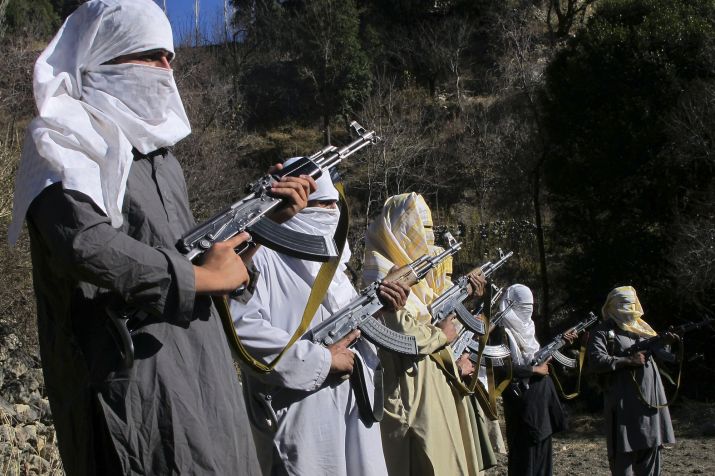
Recently there were reports of 16 terrorist camps being active in the territory of Pakistan where terrorists are being trained to infiltrate into Kashmir valley.

Within a day of assuming office, PM Modi fulfils pre-poll promise to create Jal Shakti Ministry

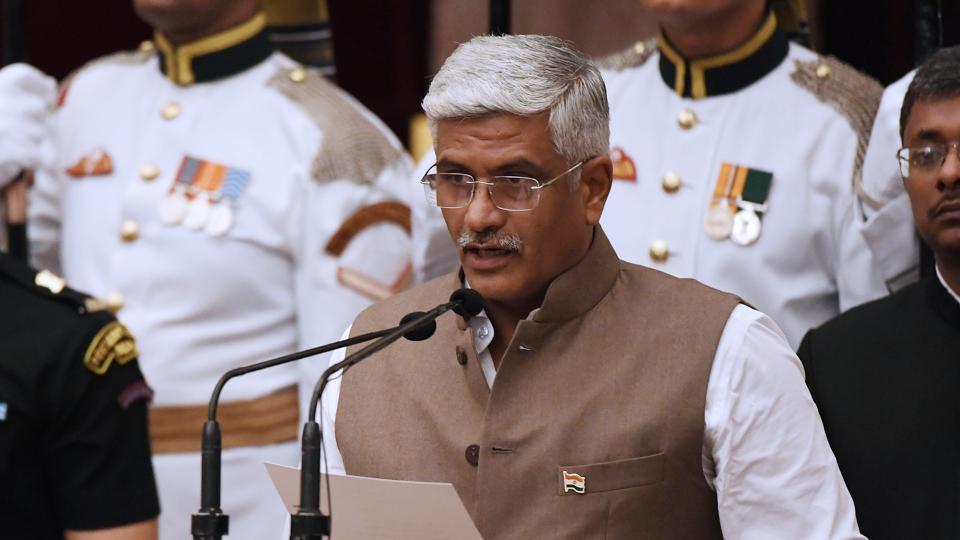
Within a day of taking the oath of office, Prime Minister Narendra Modi has announced the creation of a new ministry named Jal Sakti. Living up to his pre-poll promise, the announcement was made during the portfolio allocation today. In line with his promise of ensuring clean and safe drinking water to every household, PM Modi has appointed Gajendra Singh Shekhawat to head the newly-created department.

Shekhawat was elected as Member of Parliament from Jodhpur by defeating current Rajshtan Chief Minister Ashok Gehlot’s son Vaibhav Gehlot by over 2.7 lakh votes. He was sworn in as a Cabinet Minister during the oath-taking ceremony at Rashtrapati Bhawan yesterday. During the previous Modi government, he served as a minister of state (MoS) for agriculture and farmers’ welfare from September 2017.  Rattan Lal Kataria has been named as the Minister of State in the Jal Shakti ministry.

Gajendra Singh Shekhawat

In its manifesto for the 2019 Lok Sabha elections, BJP had promised to create a separate ministry of water. The decision to carve an independent department is to unify water management functions, treat the issues of water management holistically and ensure better coordination of efforts.

The Jal Shakti Ministry has been created by reorganizing the existing Ministry of Water Resources, River Development and Ganga Rejuvenation, which was previously headed by Nitin Gadkari. In addition, the Ministry of Drinking Water and Sanitation has also been added.

Modi government is committed to realizing former PM Atal Bihari Vajpayee’s dream. Vajpayee had conceptualized the idea of creating the Jal Shakti Ministry for river interlinking project to solve the issue of drinking water and irrigation. BJP had promised to launch Jal Jivan Mission under a special program ‘Nal se Jal’ which would ensure that piped water reaches every household by the year 2024.

This is an important move by the Modi government especially at a time when nearly 600 million Indians face “high to extreme water stress”, while 75% households do not have drinking water on their premises as per a report by NITI Ayog. The report also suggests that 70% of the water in the country is contaminated and that major cities in the country would run out of groundwater by 2020.

The Jal Shakti Ministry would direct its efforts in ensuring a sustainable supply of water through the conservation of water bodies and groundwater recharge.

Character assassination: ‘Liberals’ try to malign union minister Pratap Chandra Sarangi by raking up the murder of Christian Missionary Graham Staines

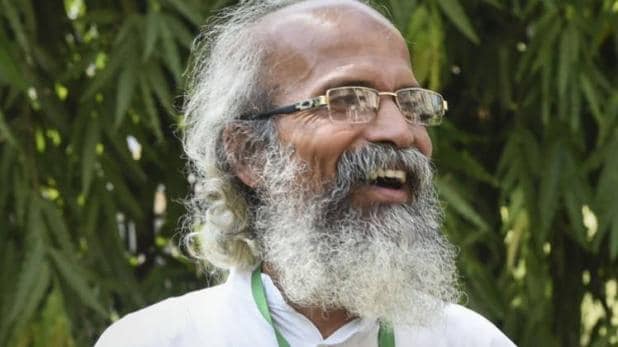
Pratap Chandra Sarangi, the newly elected BJP MP from Odisha, became an internet sensation overnight when pictures of him leaving his humble thatched house with a simple bag and campaigning on a cycle went viral. He was included in the council of ministers of the Modi government as a minister of state yesterday, he got one of the loudest cheers from the crowd during the Oath-Taking ceremony. He has been made minister of state for Micro, Small and Medium Enterprises ministry and Animal Husbandry, Dairying and Fishery ministry.

Perhaps troubled by Sarangi’s great popularity, liberals are now insinuating that the well-respected leader had something to do with the murder of Australian Missionary Graham Staines in 1999. Staines was burnt to death by a mob led by one Dara Singh along with his two children for his missionary activities.


The BBC, too, published a report titled ‘Pratap Sarangi: India social media hero minister’s dubious past’ where it is said, “He was the leader of the Bajrang Dal, a hardline rightwing group, when a Hindu mob brutally killed Australian Christian missionary Graham Staines and his two children in 1999.”

While directly blaming Sarangi or saying that he was involved is carefully avoided to prevent defamation suits, the insinuations are quite clear. Therefore, it’s important to thwart this attempt at character assassination.

The truth of the matter is, Dara Singh, an activist linked to Bajrang Dal and 12 others were convicted in 2003 for the murders. The Wadhwa Commission which was tasked with investigating the murder established Singh’s guilt, however, it had made it clear that there was no evidence at all to suggest that Bajrang Dal as an organization was involved with the crime in any manner whatsoever. Therefore, to drag in Sarangi’s name at all in connection with the murder appears quite malicious.

Moreover, the region in which Staines was working in was a communal hotbed due to the conversions carried out by Christian missionaries. It had created a lot of friction between the communities which frequently led to disputes and occasional violence. Only a year before he was murdered, Staines wrote in his journal that his missionary work was disrupted by certain people on motorcycles and later, the Police told him to pack up and leave as they couldn’t provide him with security due to elections.

Staines himself admitted to carrying out conversions. In one of his reports, he had said, ‘The first jungle camp in Ranchandrapur was a fruitful one and the Spirit of God worked among the people. About 100 attended, some were baptised at the camp. At present, Misayel and some of the church leaders are touring a number of places where people are asking for baptism. Five were baptised at Bigonbadi.’

The Wadhwa Commission report also clearly mentions that there was local anger against Staines who was perceived as someone who was emboldening the Christians in the area and furthering the spread of Christianity.

Thus, quite clearly, it appears to be a case where local communal tensions took a devastating turn as a mob led by Dara Singh burnt Staines to death. Evidence also suggests that Bajrang Dal was not involved in the matter in any manner whatsoever. Therefore, to specifically drag Sarangi into it is nothing less than character assassination.

In an interview with India Today while in prison when the trial was ongoing, Dara Singh said, “No. I didn’t kill them. But I spearheaded the movement against missionaries. I was also actively involved in the movement against illegal trade in cows and cow-slaughter. Since I was possibly the most famous name in the region, the police implicated me in the killings. The day the Staines were killed at Manoharpur, I was at least 12-13 km away from the place. But yes, I did not like Graham Staines. For that matter, I never liked missionaries.”

When he was asked why he did not like missionaries, he answered, “Christian Missionaries have been targeting our religion. They have been converting Hindus by deceit and inducements. Our religion is under siege. As a true Hindu, it was my responsibility to oppose them. Therefore I worked in the region organising people against conversions and cow slaughter.” He also denied ever being a member of RSS, VHP or Bajrang Dal.

Sarangi, too, like most Hindus, is quite concerned about conversions as everyone ought to be. Demonizing him for it only reveals the complete lack of understanding of social issues and implications of the demographic shift by the concerned individuals. And to drag him into the murder of Graham Staines is extremely despicable.

He comes from a humble background and defeated candidates who had a lot more financial resources. While it is true that he has seven criminal cases against him, he has been involved in a lot of protests which have ranged from anti-liquor movements to educations.

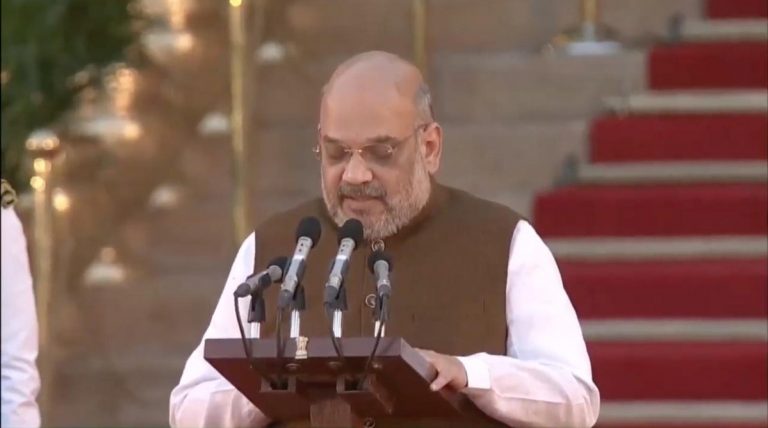
New sheriff in town: Three wishes for Home Minister Amit Shah

That was fun. All the rumors and speculation were just that. Speculation. Till the very last moment, the biggest leak that emerged from the corridors of the new Modi government was perhaps some portion of the dinner menu. I don’t know if the media even managed to get that right.

They were waiting and so were we. In the same line, mind you.

If you think you’ve seen the full liberal meltdown on May 23, you are very very wrong. You haven’t seen nothin’ yet. The election results left the liberal elite gasping for breath, quivering and whimpering in pain. Trust PM Modi to rub it in … and in style.

Dear right-wing friends, be sure to savour this moment. It is truly ours to enjoy. Go get drunk on liberal tears to your heart’s content.

But beyond the fun, there is a country to run. And I am confident that I speak for a lot of RW when I present these three wishes for Home Minister Amit Shah: the new sheriff in town.

(1) Wake up Naxals, because your time is up

As I can only express in Hindi, subah ho gayi mamu. For several decades now, large parts of India’s heartland have been stalked by a great evil. Not only is it a violent attack on the Indian state, but Naxal terrorism has also made hostages of the poorest and weakest sections of our people. In every election, the people in these mostly tribal areas come out in ever higher numbers to express faith in our democratic system. Very often, they come out to vote quite literally at the peril of their lives.

These people deserve better. We can’t let the Naxals hold our people back at gunpoint. Too many generations have been lost already behind the iron curtain of left-wing terrorism. In PM Modi’s first term, we saw the Naxals gradually squeezed into ever smaller territory as roads, railways and airports penetrated deep into the so-called “red corridor”.

Untitled.png
Naxal-terrorism, a year back.

It’s now time for the final assault. The knockout punch to pulverize Naxalism once and for all. To bury the threat forever.

This, in short, is my first wish from Home Minister Amit Shah.

And no, I haven’t forgotten the ‘backroom Naxals’, who operate under cover of journalists, intellectuals and academics. I think Arun Jaitley used to call them the ‘overground face of the underground‘. Enough! It is time to identify their incentives, clamp down on them and shut down their bogus NGO businesses. This applies not just to those who provide so-called intellectual covering fire for Naxalism, but to the support crew for any other kind of terrorism, such as in Kashmir. We have to take apart the elaborate web of NGOs and “civil society organizations” that wine and dine our ‘intellectuals’ with funds from all sorts of dark sources, from Pakistan’s ISI to vested business interests. Many of the leads are already in the public domain. These have to be pursued vigorously and professional sedition put out of business.

This is not a free speech issue. A clampdown on paid lobbyists for enemy states, terrorists and miscellaneous vested interests has nothing to do with free speech.

(2) Rein in the ‘missionary mafia’

The cultural identity of India is under attack from another quarter. The missionary mafia is trying to ravage the diverse garden of Hindu society, seize us by the roots and tie us all up with Western-oriented monotheism. One book. One god. One dogma for all, with no roots in India’s ancient culture.

They are aggressive and well funded. In our poverty lies their opportunity. Every adversity for India is a stroke of good fortune for them, whether it be a flood, an earthquake or a tsunami. They bring in money, resources and people from abroad, making a mockery of our laws on both immigration and foreign funding.

This daylight robbery needs to stop. It’s time to make the FCRA laws twice as strict and the penalties four times as harsh. Most important of all, we need to enact a strict nationwide anti-conversion law that should be enforced ruthlessly.

This is not about taking away the freedom of any person to choose their religion. This is about clamping down on organized cultural aggression. The Hindu religion is not Abrahamic, it does not seek converts, nor does it seek to dominate the world. If left unprotected, the one-sided cultural aggression will ultimately flush away our identity.

(3) National Register of Citizens 

If we want to stop the aggression from within, we need to know who is here. Are they Indians?

Even if we think beyond demographic aggression and only in economic terms, we simply do not have the resources to take care of everyone in the world. We have a right to put Indians first.

The NRC in Assam was a decent beginning to a very difficult task. But the NRC in Assam needs to be sharpened and the holes plugged. Stories abound of illegal immigrants who have smuggled their way into the list as bonafide Indian citizens. At the same time, many genuine Indians have been left out, which really hurts. Thereafter, the NRC must be applied nationwide, starting of course with West Bengal.

Of course, the NRC does not mean anything unless we also have the all-important Citizenship Amendment Bill. As the inheritors of ancient Bharat, we must fulfil our historic duty towards those from the Indian subcontinent who have nowhere else to go: the persecuted Hindus, Sikhs, Jains and Buddhists from what is today Pakistan or Bangladesh.

In short, these are my three wishes for our Home Minister. It’s time to take the gloves off.

Model-actress and cancer survivor Lisa Ray exposes Telegraph for inherent sexism

Of late, The Telegraph has veered increasingly towards the ideology of the Left and has taken the brand of ‘Woke Journalism‘ to another different level. While its thinly veiled activism is cheered by liberals across the spectrum, others do not quite appreciate their partisanship.

However, as has become the norm, ‘Woke’ institutions almost always fail to live up to the very principles they preach and when the masks fall off, behind their ‘Wokeness’ lies a very ugly face.

As it happened, The Telegraph’s mask fell off yet again today. Rather, this mask was pulled off by the very popular model turned actress Lisa Ray on social media. Ray expressed her disappointment at the picture, which the Kolkata based newspaper had chosen to publish alongside her article, on Twitter.


This ‘specific’ article talks about her memoir describing her experience with overcoming sexist stereotypes. Instead of publishing an author image provided by her, the newspaper chose to publish her seductive picture highlighting her sexual appeal. By using her sensuous image for an article that pivots on overcoming sexist stereotypes, the editors exposed their agenda of garnering readership at the cost of the dignity of a woman.

The irony is that these ‘woke’ media outlets are the first ones to berate others reminding them of not being feminist enough, all the while indulging in rabid forms of sexism themselves.

Sexism runs deep within the premises of The Telegraph, and this newspaper has a history of being sexist time and again. What’s amazing is that this fact doesn’t seem to affect its popularity amongst its liberal readers. Not too long ago, the liberals’ darling newspaper had mocked Union Minister Smriti Irani as ‘Aunty-National’ in one of its lead articles.

Much like the comedians of the AIB who were exposed in the ‘Me Too’ saga, The Telegraph reminds us that mask of Performative Wokeness cannot be maintained for long.

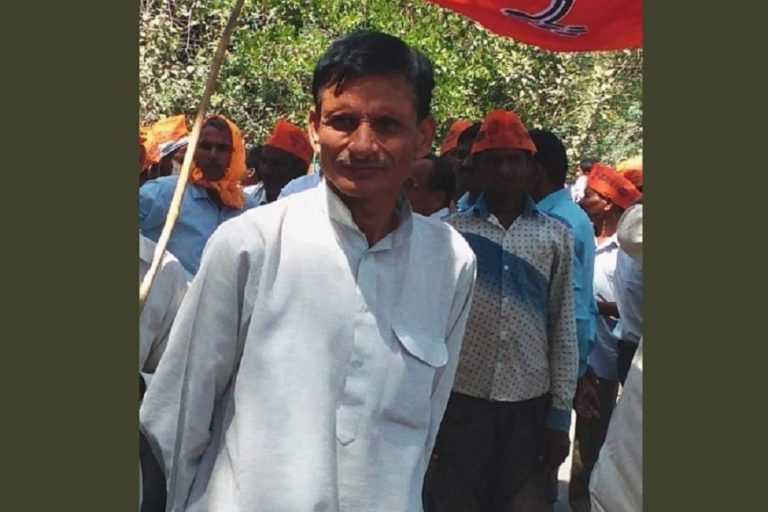
Wasim, main accused in the murder of Smriti Irani’s aide in Amethi arrested

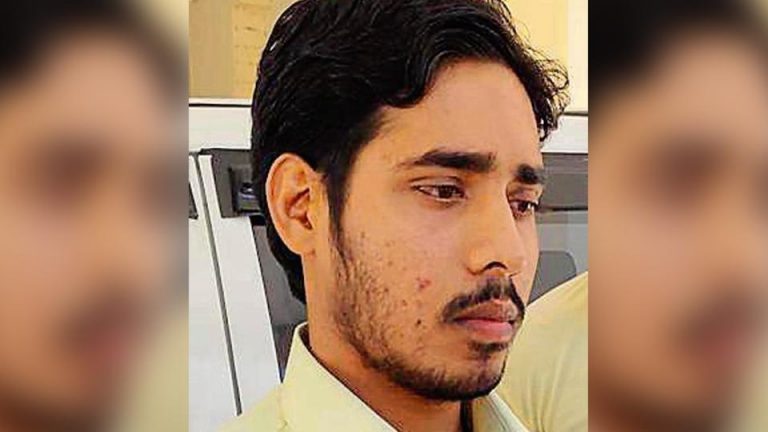
Wasim, the main accused in the murder of Smriti Irani’s close aide Surendra Singh has been arrested by the police after an encounter in Jamo Police Station. He has sustained a bullet injury on his leg and is currently undergoing treatment. As of now, all five accused in the murder have been arrested and four have been sent to jail.

As per reports, Singh’s family had named five suspects, Wasim, Nasim, Golu, Dharmnath and BDC Ramchandra and filed an FIR against them under section 302 and 120-B. All five have now been arrested. BDC Ramchandra is a local Congress leader as per reports.

Yesterday, various members of Congress’ social media team were caught spreading fake news regarding Singh’s murderers. The Uttar Police has denied a rumour that is being spread on social media that a BJP leader is behind the murder of BJP worker Surendra Singh in Amethi. Singh was a former village head who was a close aide of Amethi MP Smriti Irani and worked on the ground during the campaigning for Smriti Irani ahead of elections. Local BJP workers and his family members had alleged that he was killed for working for BJP. Irani defeated Congress President Rahul Gandhi from Amethi by a victory margin of over 50,000 votes.

Smriti Irani attended the last rite of Singh, and even gave her shoulder to the mortal remains of the victim in his last journey. She had said that she has taken a vow that she will take a death sentence for the culprits of the case, even if she has to go to Supreme Court.