Home Blog Page 6741

Indian Express and Hindustan Times reject article asking uncomfortable questions about Shah Faesal

0

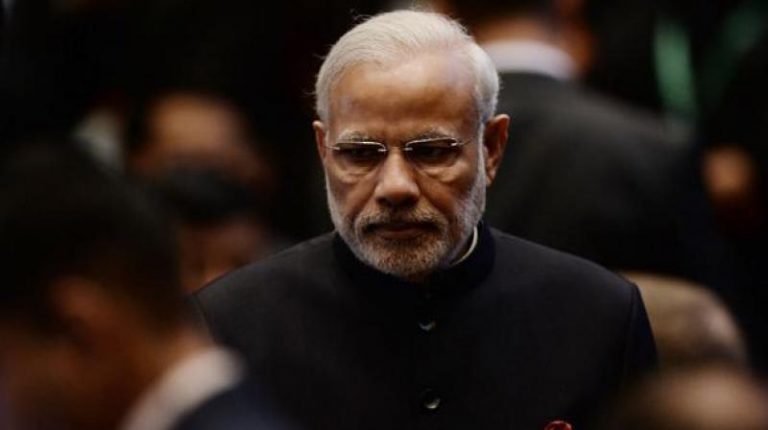
IAS officer Shah Faesal made national headlines when he resigned from the service earlier this month. The young officer said that he is resigning “to protest against the unabated killings in Kashmir and lack of any sincere reach-out from the Union Government”. The UPSC entrance test topper had also complained about “marginalization and invisibilization of around 200 million Indian Muslims at the hands of Hindutva forces reducing them to second-class citizens”. Basically, he was reflecting the views similar to the views of Kashmiri separatists. His comments were a big irony because he himself is a victim of terrorism in the valley, his father was brutally killed by terrorists, and now his thoughts are in alignment of the thoughts of his father’s killers.

Jammu and Kashmir is known for such paradox when it comes to terrorism. While on the one hand, the state participates in democratic process like voting in elections, the state also sees massive participation in the funeral procession of terrorists killed by security forces. Highlighting such paradoxes, Observer Research Foundation’s (ORF) associate fellow Khalid Shah has written an article, taking Shah Faesal’s turnaround as an example. The article is critical of Faesal, as the victim of the ‘sentiment’) is now positioning himself as a sympathiser of the champions of ‘resistance’ who promote gun, militancy and violence.

The article was sent to two prominent newspapers for publishing, but both of them refused to print it. The article was rejected by Indian Express and Hindustan Times.


Khalid Shah examines how both the terrorists and the victims of the same terrorists are martyrs in Kashmir. He also describes how while thousands attend funeral processions of terrorists, the victims of terrorism are forgotten quickly.

The rejection of the article by two prominent newspapers shows how mainstream media work to build a narrative. As the article didn’t suit the narrative they want to peddle, they refused to publish it. Khalid Shah has asked some very uncomfortable questions, how the victims of terrorism eventually become supporters of the same ideologies that drive the terrorists, which seems to too hot for the mainstream media to handle. But in the age of the internet, no views can be suppressed, no matter how uncomfortable it is, and the article can be read here.

At 7.3%, the average GDP growth over last 4 years has been highest for any government since 1991: PM Modi at Vibrant Gujarat

India’s average GDP growth at 7.3% over the last four and a half years has been highest for any Indian government since 1991, said Prime Minister Modi while inaugurating the 8th edition of the Vibrant Gujarat Global Investor Summit (VGGIS). The average rate of inflation, too, has come down to 4.6%, lowest for any Indian government since 1991.

Listing out the measures the Central Government has taken since last four-and-a-half years to boost the economy, PM Modi said, “In the last 2 years, we have moved toward a low-tax regime on the Corporate side. We have lowered the tax from 30% to 25% for new investments as well as small and medium ventures.” He added that the Foreign Direct Investment (FDI) worth USD 260 billion was received, which is about 45% of the FDI received in the last 18 years.

He further added that India is now the fifth largest producer of renewable energy in the world with 4th largest in wind energy and 5th largest in solar energy. Not just that, India has also become a net exporter of electricity. The large-scale distribution of LED bulbs has resulted in tremendous energy saving and transmission lines have been installed at an unprecedented rate.

Speaking on the Ayushman Bharat scheme, which has been lauded on an international level by World Health Organisation (WHO) as well as Microsoft founder and philanthropist Bill Gates, Modi said, heart stents have become cheaper by 85% and the cost of knee implant surgery has come down by 70%. With just heart stents getting cheaper, it will bring a total savings of Rs 4,500 crore for poor and middle-class people. Elaborating on the steps taken by the government to benefit the economically weaker section of the society, Prime Minister Modi said that for educational institutes and government jobs, 10% reservation will be provided to people from the economically weaker section. The central government, as well as state governments, are directed to implement the reservation criteria.

Speaking on the implementation of GST, PM Modi said GST and other tax reforms have reduced transaction costs and made the processes simpler. He even said how India is among the largest ecosystems in the world for startups.

President Kovind becomes the first President since Rajendra Prasad in 1953 to visit the Kumbh Mela

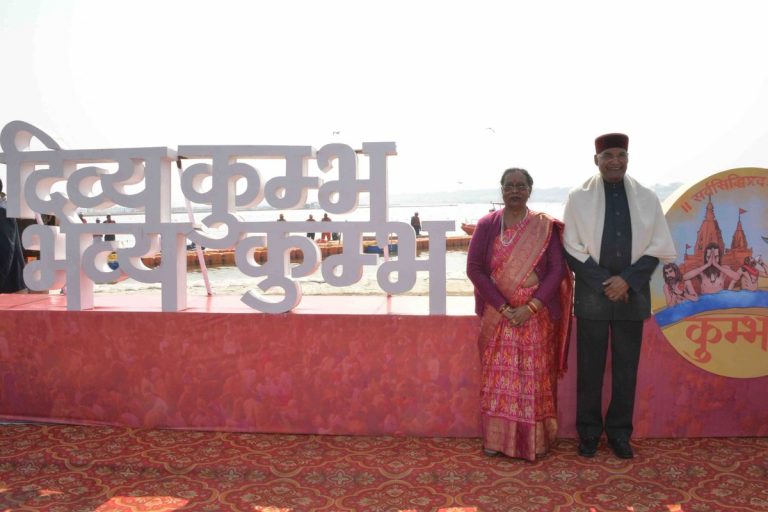
President Ram Nath Kovind became the first President since Dr Rajendra Prasad in 1953 to visit the Kumbh Mela when he offered prayers with his wife on Thursday. Chief Minister of Uttar Pradesh Yogi Adityanath and Governor Ram Naik were also present at the occasion.


The President inaugurated the Gandhian Resurgence Summit at Prayagraj and congratulated the Government of Uttar Pradesh and its people for organising the Kumbh. He also said that it is an important part of India’s cultural and spiritual heritage.


The President’s visit was organised on a day when the authorities expected less of a rush. He performed Ganga Pujan at the banks of the Triveni Sangam. Over 2500 security officers were deployed to ensure the President’s safety. Since it was two days after the Shahi Snan, the banks were expected to be less crowded.

The president arrived at the Bamrauli airport at 9.30 am and was taken in a chopper to Arail. From there, his convoy covered the 9 km distance to the Triveni Sangam by road.

The Kumbh Mela, designated as the world’s largest peaceful congregation, is being organised in the holy city of Prayagraj. The Mela, a spiritual event where devotees gather to wash away their sins in the waters at the confluence of three holy rivers, is expected to attract several crores of pilgrims from all over the world. On the day of the Shahi Snan itself, 1.4 crore devotees had taken the holy dip.

N Ram of The Hindu blatantly picks up the work of another journalist on Rafale to brand it an “exclusive”

The media community is generally known as one which disrespects each others’ work more than anything else. The five-star journalists often ride the information brought in by the beat reporters, hogging all the limelight and forgetting to even acknowledge the foot-soldiers who work tirelessly and honestly.

Something similar was done today by Narasimhan Ram of The Hindu. N Ram is a veteran. He is a prominent member of the Kasturi family that owns The Hindu group. He has been the Managing-Director of The Hindu since 1977 and its Editor-in-Chief from 27 June 2003 until 18 January 2012. Ram also headed the other publications of The Hindu Group such as Frontline, The Hindu Business Line and Sportstar. He was in fact awarded the Padma Bhushan by the Government of India during the Congress regime. After the decades of being in the profession, today, N Ram has shamelessly taken another journalist’s hard work and called it his own. A The Hindu “Exclusive”.

Today, N Ram wrote a shoddy article in The Hindu about the Rafale deal which the Congress has been trying and failing, to discredit. In this article, he has shamelessly taken the work of a defence journalist called Manu Pubby and not only passed it off as his own, but also presented a skewed version of his reportage.

The article proudly proclaims that the article is based on documents accessed by The Hindu exclusively.

N Ram writes that according to the “exclusive” documents and “new information”, the design and development cost was 1.4 billion euros, which was renegotiated by the Modi government at 1.3 billion euros.

The Hindu article by N Ram

In a September 18th 2018 article, Manu Pubby had already made these revelations that are today being touted by N Ram to be his “exclusive”.

Economics Times article by Manu Pubby

The only difference in the reportage is that while Manu Pubby reported only the facts as is, N Ram has peddled his agenda using Manu Pubby’s data to reach a bizarre conclusion that the ISE (India Specific Enhancements) when divided in 36 Rafales compared to being divided between 126 Rafales, the per unit cost increases. He forgets to take into account that the ISE is a fixed cost that would remain the same whether the country bought 1, 36, 126, or 500 Rafales. These points were mentioned in Pubby’s article.

N Ram then writes:

“The price quoted by the vendor for one flyaway bare-bones aircraft was €79.3 million. By 2011, the escalation cost factor had taken this per-aircraft price up to €100.85 million. In 2016, the 9% discount on the 2011 price obtained by the NDA government for the 36 Rafales it was buying from France through an Inter-Governmental Agreement brought this per-aircraft price down to €91.75 million”.

This was reported by Manu Pubby and Sushant Singh. In fact, the 9% cost reduction was mentioned by Eric Trappier in an exclusive interview to Manu Pubby himself.

N Ram then speaks about the objections that were raised during the negotiations. He names three people viz Rajeev Verma, Joint Secretary & Acquisitions Manager (Air), Ajit Sule, Financial Manager (Air), and M.P. Singh, Adviser (Cost). Interestingly, these objections were reported by Manu Pubby in details too. What Ram leaves out is how the dissent was finally resolved, the aspect which was reported by Manu. Of course, those aspects were left out because it did not suit the narrative Ram wanted to build.

Ram also talks about the 20% discount Eurofighter was willing to give. This aspect too was reported by Manu Pubby and he had mentioned the reason this was not considered – because it would violate the CVC standards.

In the end, absolutely nothing in N Ram’s is new. Several of these revelations were also made by Defence Analyst Abhijit Iyer Mitra in his numerous articles that talk about the Rafale deal.

The table used by N Ram itself defeats the purpose of his article as written by Sudhir in MyInd.net.

In the end, we are left with one thought and one thought only: Why did a senior journalist like N Ram put his name to such a shoddy article and especially, pass off others’ journalism as his own “exclusive”. After the most recent lie on Rafale was busted by OpIndia, one can only imagine the level of frustration that the Congress ecosystem feels since none of their hollow allegations seems to hold water. They wanted to drag Modi’s name down to their level, and that doesn’t seem to be happening even with all the chants of “chowkidaar chor hai”.

While N Ram has maintained the shoddy standards of The Hindu’s reportage, what is most tragic is how he has stolen from another journalist without giving any of the others their due credit.

In the face of such blatant plagiarism, Manu Pubby maintained his composure and tweeted his own article.


While LiveFist went ahead and called N Ram out for the plagiarism.


Though expecting ethics from The Hindu is a fool’s endevour, one hopes that at least now The Hindu and N Ram would give Manu Pubby and Abhijit Iyer their due credit instead of calling this as an “exclusive”.

Karnataka crisis: Congress summons MLAs to identify dissenters, warns absentees of expulsion

The new year has not kicked off well for the Congress-Janata Dal-Secular (JDS) government in Karnataka. Amidst allegations that the Bharatiya Janata Party has been indulging in poaching MLAs, the Congress on Friday has called for a meeting of its legislators for a show of hands, attempting to identify turncoats with a warning that absentees will be expelled from the party.

The Congress has been lately going hammer and tongs, alleging that the Bharatiya Janata Party was indulging in horse-trading and were luring three of its MLAs to camp at a Mumbai hotel in the “company of some BJP leaders as part of BJP’s “Operation Lotus” which is aimed at ousting the Janata Dal (Secular)-Congress government in the state.

Amidst rumours of few Congress MLAs, out of its total strength of 80, still missing, who are expected to be in Mumbai, former chief minister and CLP chief Siddaramaiah have threatened proceedings under the anti-defection laws against those who don’t attend the Friday meeting.

However, one of the alleged dissenters, B Nagendra, who arrived in Bangaluru to attend a court hearing, rubbished speculations that he had been poached by the BJP, but was unsure if he would attend Friday’s meeting.

“I have come to the city for a court hearing. There is no operation (to poach Congress MLAs). I went to Mumbai for personal reasons as I have business there. I keep going there often,” Nagendra said, insisting that he had never been out of contact.

Meanwhile, the state Congress president, Dinesh Gundu Rao speaking regarding the notice issued to the MLAs to attend the Friday meeting, said that the party had sought a legal opinion on the powers of the legislature party chief to issue such a notice and only after that had they gone ahead with the move.

A senior Congress leader, who wished to maintain anonymity, said the dissidents had been thwarted in their attempt to muster more support. “From the beginning, it was clear that there were at best around five people who would even think of such a move (switching sides),” this leader confirmed. What worked in the party’s favour was the fact that the dissidents could not muster much support. “The problem is that no legislator is in a position to resign and face the people once again for a bye-election. This is why we decided to force their hand in the matter and issued the notice to attend the meeting,” the Congress leader said.

The crisis for the Congress-JDs government increased when the rumours of four MLAs resigning, started doing the rounds. After two independent MLAs withdrew their support to the Congress-JD(S) coalition government, there were speculations that at least 12-13 Congress MLAs might resign in the coming days bringing the house strength to 106.

Though on the face, Kumaraswamy had claimed that his government is stable and intact maintaining that he was in touch with the Congress MLAs who are in Mumbai and all is well, the jitters of the coalition government were apparent as there were reports that the Congress is trying to lure BJP MLAs by offering them a ministerial berth, unconditionally. BJP had alleged that Congress is trying to poach BJP MLAs so as to stabilize the collapsing government.

Fearing poaching the BJP had positioned its Karnataka MLAs in a hotel in Gurugram. As reported by Republic TV, some BJP MLAs have claimed that Karnataka Chief Minister H D Kumaraswamy is trying to get in touch with them and poach them.

Senior BJP leader, CT Ravi while addressing a press conference said, “If the Congress still has any self-respect it should suspend or dismiss the dissidents.” Taking a jibe at the stitched government, Ravi furthered, “Dissidence is within your party, and, of course, we will add fuel to that fire, that’s politics. But if your MLAs do not respect you, then don’t blame us.”

Animosity between the three principal parties in the state has been at a feverish pitch.

Since the time Congress has stitched up an awkward alliance with the JDS, despite pretending to be together from the outside, the two have been acrimonious with each other. Similarly, evident animosities prevail between these two and the BJP.

While on one hand, what can be called a severe display of ill will, recently, the Congress MP from Karnataka had warned Amit Shah of facing a more graver disease than swine flu (H1N1 flu) if Karnataka govt is destabilised, on the other hand, Kumaraswamy’s predicaments with the Congress laid bare when he claimed that he was being treated like a clerk instead of a chief minister.

However, this was not the first time Chief Minister Kumaraswamy has lamented over his discomfort to work with the Congress party. Earlier in July, expressing his unhappiness over the coalition government, Kumaraswamy had cried saying he was unhappy and swallowing the poison of a coalition government.

Kumaraswamy also launched an attack on ally partner Congress over seat-sharing arrangement for the Lok Sabha elections. He said that ‘Congress should not treat JD(S) like third-grade citizens’.

PM Modi says ‘Indian Communists do not respect India’s history, culture or spirituality’: Here is why he is right

Prime Minister Narendra Modi has said that “Indian Communists do not respect India’s history, culture or spirituality,” while condemning the “most shameful” behaviour of Pinaryi Vijayan’s Communist LDF government on the Sabarimala Temple issue.

Predictably, the CPI (M) has gone ballistic against the comment on its Twitter handle but I ask what’s there to argue about really?

Let’s take India’s pre-independence history. Didn’t communists in Bengal assembly support The Partition? (It’s an irony though that communists, like Leftist Amartya Sen, had to flee East Pakistan to India whose unity they had betrayed). Wasn’t CPI (Communist Party of India) officially against the Quit India movement?

Or the annals of India after Independence. Didn’t the CPI chief B.T. Randive termed India’s freedom as fake (“yeh azadi jhooti hai”) and called for an armed revolution in 1948? Who do you think a section of Communists supported in the 1962 Indo-China War? (E.M.S. Namboodiripad among others argued in favour of China and dubbed India as the aggressor). Isn’t the pro-Chinese faction of those days is the Communist Party of India (Marxist) today? Didn’t the CPI (M) parrot the line of its masters in China in opposing the historic Indo-US nuclear deal in 2007?

And what to say of the “Eminent Historians” from the stable of Communism who have butchered the Indian history in India’s textbooks and academia. For instance, are you told the story of Battle of Talikota of 1565 when Vijaynagar Empire which had two Muslims as its main generals who, at the last minute, betrayed the legendary Hindu kingdom and went to the other side? (It practically ended the golden era of Hindu renaissance).

How do you think the story of the destruction of Hindu temples by invading Muslims is told to you? Famous Indologist Dr Koenraad Elst points out the instance that invading Muslims are blamed only for destroying 80 temples in India. Though one of these 80 entries read: Qutubuddin Aibak, the military general of Muhammad Ghouri, destroyed 1000 temples in Varanasi.

And how do you think dreaded Mughal Emperor Aurangzeb’s destruction of all the temples in Varanasi is explained away? That it was due to a Brahmin conspiracy as one of the Muslim princes had been abducted and hidden away in a temple? Any historical proof? My foot.

Can Indian communists deny that one of the main planks of their ideology is atheism? Isn’t it a fact that one of their leaders, Brinda Karat once led a savage attack against Baba Ramdev? What’s been their stance when the Kanchi Shankaracharya was sent to jail? Or on Sri Sri Ravi Shankar who gets targeted often? If these men don’t matter to you then isn’t Modi justified in claiming that Indian Communists do not respect India’s history, culture or spirituality?

Would these communists ever confess that Stalin killed more people than Hitler did before or during the Second World War? Would they acknowledge the genocides of a Mao Zedong or a Pol Pot? Or is that genocide of millions don’t matter in this case while a stray lynching sees them paint the town in red? What was their stance when Salman Rushdie’s book “Satanic Verses” was banned in India?

So thorough is Communists hold on our textbooks and academics that anyone who holds a contrary opinion is never allowed to rise up the academic ladder. But all those who fall in line are conferred with position and prestige.

There is a lot more which could be said about Communists and Naxalites, including the Urban Naxals, but this must wait—some other day, some other time.

Scribe asks whether The Wire refused to run a woman’s account of sexual harassment due to funding from TATA

Reputed columnist, Manu Joseph, has made a startling claim on Twitter. In November last year, he had claimed that The Wire had refused to report Anjuli Pandit’s account of sexual harassment at the Taj because of fear of the Tatas. Pandit is a former Tata Group Executive.


Then, Tata was believed to be a possible donor to The Wire. Siddharth Varadarajan, the Founding Editor of Wire, had vehemently denied the claim.


As per Pandit’s account, which was later carried in Indian Express, she narrates how complaining against her abuser, her boss, she was robbed of her personal and professional goals. In her article, she mentions, without giving any specific names, that she was turned down by Indian journalists who didn’t want to carry her story.

While the above conversation was long forgotten, a twist in the tale yesterday brought it back up. It was revealed that the Tatas have funded The Wire. Following the revelation, Joseph further asked Sidharth Bhatia, Founder Editor at Wire, if the funding from Tata had anything to do with their refusal to run Pandit’s account. Joseph further stated that the Wire ought to be questioned in this regard due to its ‘hypermoral’ positions regarding issues concerning women. No one from the Wire had issued a response at the time this report was written.


The Wire’s track record regarding sexual harassment issues has been extremely problematic despite its hyper-aggressive brand of feminism. In October, their consulting editor, Vinod Dua, was accused of stalking and sexual abuse by filmmaker Nishtha Jain. Soon after, another filmmaker had accused him of inappropriate behaviour.

On his part, Dua had claimed in a video that the accusations against him were not ‘real issues’ and that the women were indulging in mudslinging. Shockingly enough, it was the Wire that provided him with the platform for the video where he denigrated the alleged victims’ account of events. And despite the accuser’s wishes that Dua be fired so that a fair investigation could take place, the Wire continued to have him as their Consulting Editor.

Similarly, another journalist associated with The Wire, Akhil Kumar, who was accused of rape, was put back to work without offering any explanation. At least two women had accused Akhil Kumar of sexual assault and emotional harassment. However, The Wire had not issued any statement with regard to these allegations.

In the above cases, while the accused were associated with The Wire, the victims were not. However, The Wire’s history of dealing with harassment of their own employees has been questionable. Last year, The Wire journalist was allegedly heckled and manhandled while covering a story. Damayantee, who was on the receiving end of casteist abuses but the top bosses at The Wire asked her to let it go as a professional hazard because the perpetrators were Dalit and Leftist activists.

Bishop Franco Rape Case: Nuns supporting the victim to defy transfer order issued by Missionaries of Jesus

0

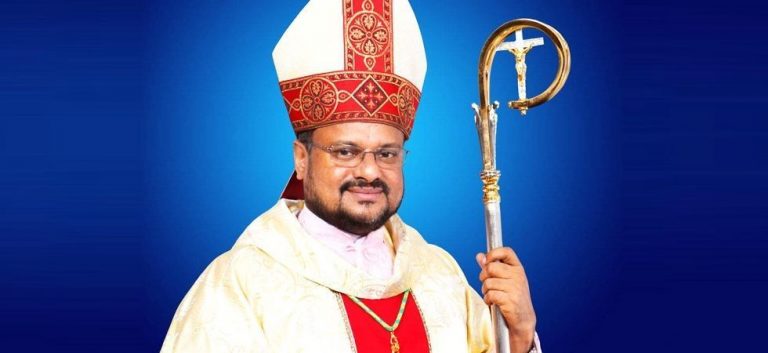
Sister Anupama, one of the four nuns served transfer notice, has slammed the notice and alleged that this is a ploy to break a unity of nuns to save Bishop Franco, who is facing rape allegations from one of their colleagues. On 16th  January, four out of the five nuns who supported the rape survivor nun were asked to leave the Kuravilangad convent, and go to convents, previously assigned to them. The letter accused nuns of  ‘issuing malafide statements’, and spreading baseless stories to ‘tarnish the image’ of the Missionaries of Jesus congregation.


On Wednesday, four of the five nuns who supported their fellow rape survivor nun — Sister Alphy Pallasseril, Sister Anupama Kelamangalathuveliyil, Sister Josephine Villoonnickal, and Sister Ancitta Urumbil —were asked to leave the convent in Kuravilangad. Each had been asked to return to the convent that they were previously assigned to by the Missionaries of Jesus. Accordingly, Sister Anupama who was at the forefront of the protests against Bishop Franco was asked to go to Chamiyari community in Punjab, which was assigned to her in March 2018. She has said that she will not comply with the transfer order, and continue to stay with the rape survivor nun, to support her in the legal battle. The other three nuns also have said that they will defy the transfer order.

“This is nothing but a vindictive transfer and the game plan of the Church is to split us to different places. Come what may, we will not move from here and we will be with the victim,” Sister Anupama was quoted by reports. She also added that survivor sister and supporting nuns have been subject to continued mental pressure. She also expressed fear if it continues nuns will face the same fate as that of Father Kuriakose, who was found dead last year in mysterious circumstances.

Sister Anupama alleged that Bishop Franco has great political backing and has enough money to ‘to take people in his pocket’.


The case had hit national headlines after a 44-year-old nun from Kerala had accused the Bishop Franco Mulakkal, the Bishop of the Diocese of Jalandhar, of raping her repeatedly in 2014 at a guesthouse in Kuravilangad and later on several occasions.

In the month of September in 2018,  the nuns of the Catholic Church Kerala had come forward to protest against the atrocities of Church. One the nuns who were protesting against the rape accused Bishop was relieved of her duties by the Syro-Malabar Church. The nun has accused that the action was taken against her because she stood for the truth.

Bishop Franco was arrested on September 21 last year and later released on bail. He is now based in Punjab.

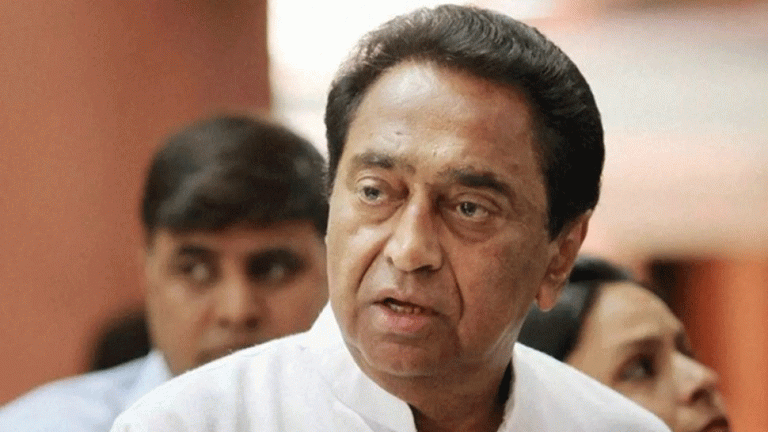
Congress govt in MP calls criminal cases against party workers ‘politically motivated’, approves process to withdraw them

The state cabinet in Madhya Pradesh, headed by CM Kamal Nath on Thursday, initialised the procedure to withdraw criminal cases registered against Congress workers, leaders and farmers in the last fifteen years.

Referring to these criminal cases as ‘politically motivated’, PC Sharma, minister for law and legislative affairs while speaking after the cabinet meeting in Bhopal on Thursday evening said, “We have decided to withdraw politically motivated cases slapped on thousands of people in Madhya Pradesh.”

“There are around 308 such cases pending in Bhopal alone. The total number of such cases in the state is in thousands and we would withdraw all these cases after due legal formalities,” Sharma added, confirming that one such case is pending on his name too.

He furthered that Jitu Patwari, minister for sports and youth welfare, who was also present at that occasion, too has a criminal case pending on his name.

The sports minister, while talking to reporters after the meeting, reiterated the state cabinet’s decision and said that a “proposal to develop a mechanism to withdraw such cases was approved by the Cabinet.”

The minister furthered that a committee would be formed in each district to examine such cases. “This committee will include the district collector, superintendent of police (SP) and the public prosecutor. The committee will submit a report about such cases to the home department, which will further take action in coordination with the law department,” he added.

Cases filed during the agitations launched by farmers and Dalits would also be scrutinised by this committee, the minister said.

Congress in its desperation to woo the voters during the assembly elections had promised in its election manifesto that they will withdraw all false criminal cases registered against farmers during the farmers’ agitations and political protests.

After the Congress government was formed in Madhya Pradesh, BSP supremo Mayawati had threatened to withdraw her support from the government unless cases registered against its members during the Bharat Bandh agitations in April were not withdrawn.

The saffron dawn: A tale of progression, coalition and trust

They say, without darkness, there cannot be light, and without some dark days, can one set the good days apart? When we put our individual selves in consideration, we all have had our share of days good and bad, but if we are to imagine years of seemingly everlasting turmoil, we probably would be rendered helpless amidst the angst and pain of unfavourable if not devastating derelictions.

Now let us imagine a collective of about 4 crore souls, shunted out of the picture of prosperity, of development, of equal rights for more than 6 decades under the same sun we all live and breathe in. Stripped down of fair dignity, oppressed by the very hands they healed, cast aside from the mainstream prejudiced as primitives and the worst of all, often portrayed as aliens by their own countrymen.

Yes, I am talking about the North East and the citizen of the North Eastern states of India. It is dry humour to enforce the clarification that North East India is indeed a part of India, as opposed to the shameful ignorance shared by many. Post Independence, India as a country grew leaps and bounds piggybacking the commendable talent pool of the nation. History witnessed the transformation of cities to metropolitan marvels, roadways and railways saw fancier wheels, the aerospace thundered with the rumbles of jet engines mightier than the Wright Brothers’ imagination, the country folk were introduced to gradually standardized lives, but what iota of these were bestowed upon the citizens of the Northeast? The “Hill Folks” or “Adivasis”, as they were called, left dejected with the bare minimum priority the government could possibly give.

Neglected and ignored to the epitome that even in the late 2000s, 60 years after independence, an average citizen of mainstream India stammered in naming all the states of the North East, let alone name the capital cities. In my college days, I had a hard time explaining where Agartala was or that Tripura was a part of India.

Whose fault would that be? That particular citizen’s, or, of the system as a whole that failed to educate the citizen? This is rhetoric. Please refrain from answering. The system that also failed to provide proper connectivity, power, resources when these were under the jurisdiction of the Government then in office. History stands by my words as I write, fresh as the boiling blood of all those who were made to live a life they never chose, contrary to the popular beliefs.

I thank my fate to live to see the silver lining that shone upon us after the dark clouds of geopolitical katabatic. The timing could not be more right, just as the indigenous folks were finally making their voice heard and their presence felt, the wind bore the news of a sweeping victory.

It was the 2014 Lok Sabha Elections, and BJP rode in victorious in a lotus adorned chariot, morphing the stagnant dynamics of the central powerhouse. Right from the onset of the new regime, the pro-development party kicked off with various schemes to boost the nation’s economy, trades, livelihood rural and commercial sectors. The Vision Document for Vision 2020, earmarked for the development of the North Eastern Region, otherwise coined as NER, brought about the first true rays of hope to the citizen of the states influenced.

What the Shri Narendra Modi led government dazzled the citizen of North East and the rest of the country with was the formation of the NEDA or North East Democratic Alliance on May 24th, 2016. Under the blitz wings and direction of Shri Himanta Biswa Sarma, Convener of NEDA, the till then dejected people of the NER started to trust the government and invited the shades of saffron into their home.

Strange? Not really, by the lines of the Look East Policy and the Vision Document, the sentiment of “Inclusive growth calls for Inclusive Governance” touched the heart of the masses, as it was evident that the government is truly looking for ontogeny and not simply expanding an empire. Through this democratic alliance, the local regional parties of the states, who were in opposition or struggling to get their voices heard had a backbone to count on and bring forth the much-awaited reforms to their own land, preserving their local sentiments and customs, state Acts and Rules. This way, they could empower themselves in ways acceptable to themselves and also be at par with the growth rate of the rest of the nation.

The alliance thus impregnated with the inception of various projects that focused on the upgradation of the highways, railways, power, internet, BPOs, organic food, assistance, timely implementation of projects & job creation, tourism and rural development sectors. The landform which was once considered inaccessible now had projects either approved or initiated that connected it even further than anyone had thought of, nationally and internationally.

The 1400 km long India-Thailand-Myanmar Trilateral highway project, the BBIN project, the Railway projects to Bangladesh, Nepal and Myanmar are to name a few. Apart from connectivity upgradation under NESIDS and NERSDS, the government also gave its prime focus on the agriculture and agri-based livelihood face, as 80% of the NER is based on the same. To uplift the domain, green revolution was initiated that ensures agri extensions, land reforms, rural credit and banking, export, as well as non-farm rural employment & income generation, handloom, handicrafts and animal husbandry. All these put together appear to be a mammoth of a task to practically execute any of it.

Hence, to the sceptical minds, I would like to bring forth one of the most practical approach that has been taken, which is the Track 10. The Track 10 scheme earmarks 10% of the Annual Budget of the Central Ministry for the NER that includes 53 non-exempted Ministry/Department that surrenders the unutilized portions of the funds to a get accumulated as a Non-Lapsable Central Pool of Resources or NLCPR. Through Track 10, the deficits of funds for the development of the NER are mitigated and that in terms aid the needs of the hour like North East Venture Fund (NEVF), Science and Technology Interventions in the North East Region (STINER) and better facilitate the World Bank initiative of North East Rural Livelihood Project(NERLP).

Through these schemes, the education and rural development sectors are armed to relentlessly wage war against all the odds that held the NER back. For the private sectors who are willing to come forth in the betterment of the regions are also welcome on a PPP basis for feasible projects. Such initiatives encouraged the local entrepreneurs to launch their startups. We have seen a great rise of the youth and especially the women in the battlefield of entrepreneurship in the past few years.

It really gladdens my heart to see the people taking charge of their own lives now, taking care of their families and also making a name in the world, carrying forward the glory of the Incredible North East. Tourism has started to flourish, and with better cooperation of the government and the local bodies, we can expect the North East to be the next happening hub of the country, especially as it shares multiple international borders, gateways and even the new International Internet Gateway in Tripura.

However, certain aspects are yet to be seen in effect. While the young minds and souls are now encouraged to start their own ventures and brisk a walk down the lane of entrepreneurship, we still face hindrances in the ground level. The schemes and plans set by the Government are attractive and pro-youth development, but the process of the same reaching down to the masses are still hazy.

Any entrepreneur seeking for financial help are made to go through an unnecessary series of ordeal. The sweet words of the government shall bear no fruit if they do not take the initiative to train the government employees at the lower levels to act upon the schemes and plans. It is indeed sad to see that many employees of the banking sector do not even know the full form of MSME, let alone help the customers avail the benefits.

One should bear in mind that the youth today are smarter than the people of older generation generally anticipate. Information of any kind are available in our fingertips, we can cross verify any law with a few taps on the screen and most importantly we know our fundamental and legal rights. It would be smart for anyone in the authority to proceed with caution if they seek to retain our trust. We want nothing else but the development of the region and the nation as a whole, along with the government in power.

Wonders happen when the right hands join instead on one’s own two hands in front of the world. What real development and prosperity takes are good intentions, proper communication and channels and most importantly trust and faith. The people of the North East put their faith in the BJP government to look for a brighter tomorrow together with the hope that the bond is not severed and the trust is not breached in this democracy.

On behalf of the 4 crore citizen of NE, I can boldly conclude with the sentiment “Humaara saath do, hum saath rahenge!”. Jai Hind!