Home Blog Page 7186

Hours after pleading with the BSF to stop firing, Pakistan resumes unprovoked firing at the border

Hours after pleading with the BSF to stop firing, Pakistan has resumed its unprovoked firing and shelling along the International Border (IB) in Samba district of Jammu and Kashmir on Sunday night. “Three border outposts are under fire from the Pakistani Rangers and the personnel deployed there are also retaliating to silence the Pakistani guns,” a senior BSF official told PTI. “However, there was no immediate report of any casualty in the shelling,” he said.

BSF had released a 19-second thermal-imagery footage of a Pakistani picket being destroyed across the border. “(Pakistan) Rangers called up the Jammu BSF formation today and beseeched to stop firing,” a BSF spokesman had reportedly said. “The befitting reply by the BSF units to the unprovoked shelling and firing across the IB by the Pakistani forces has forced them to plead for a ceasefire,” a senior official stated. The official further asserted, “For the last three days, the precision fire of BSF troopers on Pakistani firing locations inflicted heavy losses and yesterday this firing found their mark with one of the rangers in chicken neck area.” BSF Inspector General Ram Awtar stated, “There is a pattern to firing from Pakistan’s side. We have seen it for the past two years that Pakistani Rangers target the Indian side before and after the harvest season.”

Over 700 such incidents have been reported this year, leaving 38 people, including 18 security personnel, dead and numerous others injured. Earlier this year, the BSF had refused to exchange sweets with their Pakistani counterparts over ceasefire violations at the border. The decision was taken in light of the casualties India had suffered as a consequence of the ceasefire violations. The Ministry of External Affairs had also summoned Pakistan’s Deputy Commissioner Syed Hamid Shah over the repeated ceasefire violations.

Despite the repeated unprovoked violence by Pakistan, close aide of Rahul Gandhi, Mani Shankar Aiyer had praised Pakistan’s approach towards the Indo-Pak relationship and blamed India for not engaging in dialogue with Pakistan. More recently, Mani Shankar Aiyer praised Pakistan for its ‘tolerance’ and hailed Muhammad Ali Jinnah for his role in the freedom movement.

BJP’s evolution: from 1996’s Ramayana to 2018’s Mahabharata

0

They were both incarnations of Lord Vishnu, the preserver. Both Lord Rama and Lord Krishna were born on earth to fight evil and end injustice. Their paths could not have been more different. Yet, both are revered today all across the country, in different forms and cultures.

Rama chose to abide by the moral laws of propriety. While he was an incarnation of a God, he suffered all the earthly pains. At each stage, he chose to follow Dharma, and in the end, had to face suffering. This behaviour earned him the tag of “Maryada Purushottam”.

Krishna, on the other hand, chose a different path to fight evil. Krishna advocated that when battling an unethical evil force, there is no point in playing by the rules yourself. Hence Krishna is known for his “chhal-kapat” which he used regularly to beat his opponents.

In 1996, BJP had Atal Bihari Vajpayee. Post the Lok Sabha elections, BJP had managed to get the most seats but fell short of having the majority. The President chose BJP as the single largest party and gave them time to prove their majority. In the end, the effort failed and Vajpayee resigned as the Prime Minister, after giving an emotional and stirring speech. In the speech, he reiterated that he had not indulged in any horse trading. Although allegations were flying around, he even referred to statements of opponents, which clarified that he was not the type of person who would wheel around with bags full of money.

In 2018, BJP had BS Yeddyurappa. He was in a similar position as Vajpayee. He chose to try each and every trick in the book to lure Congress and JD(S) MLAs to his fold. This is not an isolated incident. BJP has cobbled up questionable alliances in many other states. They have combined with parties who are not ideologically aligned to them.

The difference is clear. The idea of this post is not to claim either Vajpayee, or Yeddyurappa or Amit Shah are the next incarnations of Vishnu. The idea is to show the clear and undeniable evolution of BJP, from the “maryada purushottam” era, to the “do whatever it takes to win” era we see now.

This change in attitude will and probably has come as a shock to the BJP faithful who have been following the party from the time of Vajpayee. The machinations may also disgust some new “idealistic” supporters of BJP, especially the younger crowd. At the same time, many who have been licking their wounds inflicted by Congress’s own skulduggery would be enjoying how the tables have turned.

What is the right view here?

There is no singular right view. Hindu scriptures have covered both the views and both the protagonists are hailed as Gods. In effect, both methods have been justified and both strategies have been normalised.

The choice is left to us.

In the author’s humble opinion, the choice is determined by what the end-goal is: Do you want to be known and revered as the “ideal man” and yet be a loser? Or do you want to end on the winning side irrespective of the costs involved?

Secondly, as a person, as a group, as a civilisation, is it not your duty to learn from the past? Do humans not have the right and responsibility to grow and mature from their past experiences? As has been said: doing the same thing over and over again and expecting different results is Insanity.

The BJP’s current choice of actions may flow from both the above:

A. They want to win.

B. They have seen what happens when only one side plays fair, hence they are playing by the rules which have been set by their opponents.

This obviously has caught the opponents off-guard. Their own tactics are now being used on them. All the chicanery which they had mastered and implemented over many years is being reversed on them. Yes, it will hurt them. It will hurt their allies in the media as well. And it is about time that it did hurt them as well.

India to utilize Artificial intelligence in Defence, says report

A report in Times of India states that India will infuse AI in its army in the foreseeable future. While other countries like China and the U.S have already focused on harnessing the power of Artificial intelligence (AI) and Machine Learning (MI) to develop Lethal Autonomous Weapons Systems (LAWS), India, not wanting to fall behind in the race to develop AI-powered surveillance and defence systems for future wars, has decided to prioritize AI in defence.

The defence establishment is now trying to harness the country’s technical and academic expertise in this arena. Stressing on the need to prioritize AI in defence during the DefExpo in Chennai last month, Prime Minister Narendra Modi said, “New and emerging technologies like AI and Robotics will perhaps be the most important determinants of defensive and offensive capabilities for any defence force in the future. India, with its leadership in information technology domain, would strive to use this technology tilt to its advantage.”

As per reports, the government has already put together a multi-stakeholder task force to formulate a comprehensive strategy and framework for ‘employment of AI for national security and defence needs’ in the coming years. Union defence production Secretary, Ajay Kumar told Times of India, “The world is moving towards AI-driven warfare. India is also taking necessary steps to prepare our armed forces because AI has the potential to have a transformative impact on national security. The government has set up the AI taskforce to prepare the roadmap for it.”

DRDO’s Centre for Artificial Intelligence and Robotics (CAIR) is also trying to develop various kinds of intelligent robots for a range of purposes. The task force is comprised of 17 members and is headed by TATA sons Chairman N Chandrasekaran. It also consists of IIT and IISc professors along with two to three-star generals and representatives from institutions such as ISRO, DRDO, Atomic energy commission. The task force is working on a roadmap with multiple objectives in mind.

Interestingly, this comes soon after the Indian Government committing Rs 150 billion for indigenization of ammunition, for the Indian Army.

Old Maoist bastions and Tribal areas turn towards BJP in West Bengal Panchayat polls

In the recently concluded panchayat elections in West Bengal, the Trinamool Congress remained victorious by a tremendous margin. But what is noticeable is the emergence of the BJP as the second largest party. While the TMC has scored a resounding 85% of the overall seats, the BJP has made significant inroads in certain areas.

According to reports, the BJP has not only managed to thwart the TMC wave in the tribal regions, it has registered success in former Maoist bastions of the state like Purulia and Jhargram. Not only in these two districts, BJP has surged in other areas like Bankura, Dakshin Dinajpur, Uttar Dinajpur, Birbhum, Paschim Medinipur, Malda, Alipurduar and Jalpaiguri districts. A report in The New Indian Express quoted West Bengal BJP chief Dilip Ghosh saying that this is the beginning of the downfall of the TMC. He also added that Mamata Banerjee rode to success with the support of the tribal population but the tribals have now vexed with the TMC and increasingly supporting the BJP. He further added that the BJP is promoting young leaders from these reasons.


Mamata Banerjee, however, refuses to acknowledge it. She blames that the BJP cadres have ‘entered’ from the neighbouring states and are unleashing terror on the masses with the help of the Maoists. But as claimed by the same report, TMC secretary Partha Chatterjee stated that the TMC will have to look into the reasons of its bad performance in the tribal areas.

In Jhargram district, all former Maoist strongholds have been won by BJP. Gram Panchayats like Lalgarh, Belpahari, Jamboni, Gopiballavpur, Nayagram and Sankrail are won by BJP. In Purulia district, all the Gram panchayats in Balrampur area and have been won by BJP. The same has been reportedly repeated former Maoist strongholds in Bankura district too.

According to a report in Livemint, Biswanath Chakraborty, psephologist and a professor of Political science in the Rabindra Bharti University has stated that BJP’s emergence in the tribal-dominated regions has a reason. He added that the tribals do not take betrayal kindly and over the years the areas have seen rampant corruption and the regions do not reflect the development story the TMC propagates. The same report also claims that the BJP district President Sukhamay Satpati in Jhargram has stated that the tribals have been unhappy with the state machinery rehabilitating former Maoists in the same areas. He added that the locals who suffered the atrocities of the Maoists are feeling they have been dumped as they see the very same Maoists being allowed to settle into new lives.

After BJP, the next largest number of seats have reportedly been won by independent candidates. The report quoted Prasenjit Bose, social activist and economist as saying that at least 1946 seats have been won by independent candidates and a lot of these candidates are dissenters from within the TMC. Bhangar, the area that has seen the anti-power grid agitation over the recent months also saw independent candidates winning despite threats and violence by TMC goons.

The BJP has reportedly won 644 of the 1944 gram panchayat seats in Purulia and 329 0f the 806 seats in Jhargram district. In total the BJP has taken its tally in gram panchayat seats from earlier 548 to 5759 and Panchayat Samiti seats from 33 to 764. The BJP has also won 23 Zilla Parishad seats this time.

The Panchayat polls were marred by widespread reports of violence, murder and even capturing of ballot boxes.

The ‘core’ needs to keep the faith

0

Karnataka results have split the Right-Wing electorate vertically into two. While some claim that the defeat is a result of inaction on the Core Hindu agenda, others say it was merely a case of slip between the cup and the lip. The truth depends on which side of the line you stand towards. The fact, however, remains that BJP started testing the water with their Temple fund utilization promise in their manifesto. That promise made the manifesto partially ‘Core’, albeit imperfect.

Twitter is replete with folks on the ‘right’ side of the political spectrum, warning Narendra Modi about similar results in 2019 if the Core Hindu agenda is not fulfilled. While I am a supporter of the Core agenda, I think such threats are pointless.

I think the 93rd Amendment is a travesty. Yes, I think sectarian purse should be abolished. And yes, I think temples must be governed by Hindus and not by a secular state. I believe deeply in the core ideology, though I differ from many of its supporters in not sharing an “all or none” approach.

The most common point of disaffection is that the Prime Minister has not done anything for Hindus. Ladies and gentlemen of the ‘core’, why was a manifesto that promised “proper utilization of temple funds” rejected in Karnataka? Is it not weird that you want BJP to fulfill the Core agenda and at the same time, you reject a manifesto that wants to test ‘Core’ waters? Haven’t you just told the politicians that you will punish them for perceived mistakes of the past, no matter what the present and future plan is? How do you expect the politician to take you seriously when you can’t stand by your own agenda – howsoever imperfect it is? On a related note: this particular promise was made because of mathas and not the folks who support the ‘core’ agenda.

A politician, any politician is in the business of winning elections. Any promise made to an interest group should come with a commensurate and tangible increase in his/her ability to win elections. It is the cynical reality of electoral politics. I elaborate my understanding of the Core agenda’s strengths and weaknesses vis-a-vis the electoral process below. In order to explain this, I broadly divide the polity [vote banks] into the following segments: Minorities, Majority Secular, Majority Hindu, and Majority Core. The reason I am not delving into caste groups is that ‘Core’ is basically a Hindu cause.

Minorities typically vote against BJP [a ~15% negative vote]. This leaves us with the other three voter segments. Of those, Majority secular is the largest group in Urban India. The Majority Secular are easily offended by political incorrectness, easily influenced/shamed by English Language Media, and believe in “Ganga Jamuna Tehzeeb”. When they hear anything that remotely affects their definition of “secularism”, they turn against BJP. This group has to be appeased, for their numbers are crucial to winning decisively.

The remaining urban Hindu vote is divided into Majority Hindu votes and a small fraction into ‘Core’ votes. The Majority Hindu vote often acts to counter the Minority consolidation. To my limited knowledge, ‘Core’ hasn’t exhibited an election-altering quorum, nor has there been a study of urban reception for #core ideology.

While Rural Hindus have more “Majority Hindus”, they are splintered easily on lines of caste. Even when they are not splintered, they are more worried about tangible Hindutva politics such as the Ram Mandir issue. The Core, again, gets short shifted.

While the Core team may claim sufficient strength to affect several seats [as it happened in Bangalore] via NOTA, I suspect they are spread across the city evenly, and won’t be able to leverage their numbers. In a close analogy, INC had more voters in Karnataka but their even spread across the state resulted in less number of seats.

So, if the ‘Core’ has no electoral pull in urban or rural seats, why should politicians take them seriously? The answer is civilizational. We expect one political party [BJP here] to fight our civilizational battles, without any immediate benefit. In business terms, this is a blue sky project, albeit a worthy one. We want someone to invest in us for our idea – with no prototype, nor any income streams in the near future; in the hopes that they will reap a huge benefit in the long term.

However, the person who invests in a blue-sky project is not a peer. S/he is a patron or a matron. And your project is at the mercy of the patron. No amount of philosophizing, or civilizational reasoning changes this simple equation. Core ideology needs political patronage at this stage of its evolution.

Most ‘Core’ voters will say at this point: “we won’t vote for BJP, and will refuse their patronage too”. The ‘Core’ team are entitled to take this stance. On the flip side though, let me assume for a moment that the ‘Core’ is more prevalent than it appears to be and they manage to defeat BJP in 2019. What next? I have already argued the case scenarios for both BJP and the ‘Core’ in one of my blogs.

If the ‘Core’ brings down NDA in 2019 [doesn’t matter if it is active or passive], this is my prediction:

“The ideological opponents will likely use everything at their disposal to hunt and smother the fledgeling RW. Especially since the RW has exposed its own thought leaders since 2014. Moreover, bringing back UPA3 will certainly bring back sectarian lawmaking with a vengeance.”

The last point about “sectarian lawmaking”, was elaborately dealt with by one of the stalwart tweeples of the ‘Core’ team, Hariprasad N [link to the article here].

So, is it a catch 22 for ‘Core’? Is it the case that they can neither demand what they want nor save face for their ideology? I do not think so. I think the issue is one of understanding the transactional nature of politics. And it is a simple one to address.

For some reason, we “citizens” tend to think less of politicians. This is a general comment, applying to almost all citizens and to politicians of all hues. We think all politicians [with very few honourable exceptions] as lesser humans who are up for a sale. We think of them as manipulative people, with no higher thought in their lives. We see them as tools for our upliftment, as mere agents for a change we wish to see around us. All of this and more is true of the nature of their jobs. But, it is also true that they are humans. They are people like us with likes, dislikes, convictions, virtues and vices. Just because we are only shown the worst of their species, we make the mistake of treating every one of them just the same.

My request to the ‘core’ is to actively shed this thought and engage with politicians as stakeholders in the future you envision. In TirukkuRaL, VaLLuvar says “இனிய உளவாக இன்னாதக் கூறல் கனியிருப்பக் காய் கவர்ந்தற்று” – to speak harsh words when you can speak sweeter ones, will have the same difference between attraction to ripe and unripe fruits.

We, the Hindu right and the #core, need to use the art of sweet talking our politicians. They are people, and luckily in BJP, many grass root politicians still believe in doing good for this country. Meet them halfway, convince them to buy into the ‘Core’ idea. Most importantly, have faith.

Maybe not everyone will listen to you, but then we have to try until we find one who will. That is our burden in this cause.


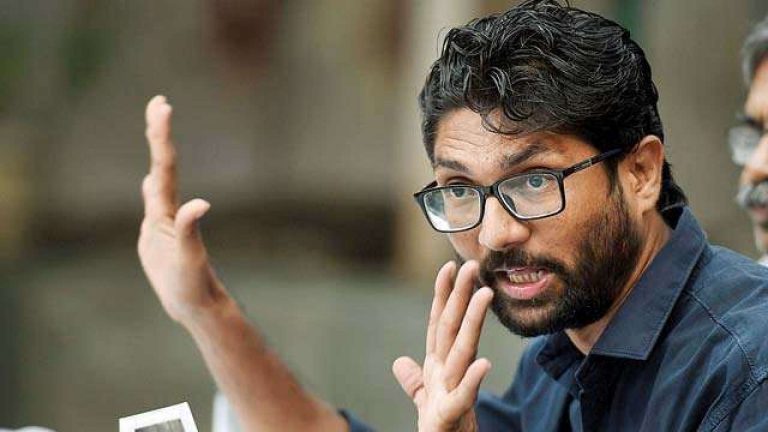
Jignesh Mevani plays the Dalit card to spread misinformation about death of a labourer

In an unfortunate incident, a ragpicker was brutally beaten to death in Rajkot, Gujarat on suspicion of him being a thief. In a video that has gone viral on social media, one Mukesh Vania is shown being beaten up with a stick, even as he pleads for mercy. According to reports, the people who beat him up did so on behest of the owner of the factory owned by one Radadiya, the Patidar community which supports Hardik Patel, the one who led the reservation agitation in Gujarat.

https://www.youtube.com/watch?v=vrPRm54gaOs

The report in Gujarati claims that the factory owner put allegations of theft on Vania, which enraged them and beat him to a pulp. While the reason for beating him up is not yet clearly known, the police have begun an investigation on the same and as of now, 5 workers have been arrested.

Meanwhile, divisive caste activist and Vadgam MLA Jignesh Mevani took to Twitter to spread the video giving partial information, focusing on the caste.


While he does mention the man beaten up to death, and there is no justification for taking the law into one’s hands, he fails to mention full details of the case, which is quite an irresponsible behaviour for an MLA, especially when there has already been a precedence. While Mevani was found maintaining silence when a Dalit family was brutally beaten up for refusing to convert to Islam, videos have emerged where he was seen inciting people to take to violence during the ‘Battle of Bhima Koregaon’ event held earlier this year. During the run-up to the Karnataka elections, Mevani had tried to instigate violence ahead of Prime Minister Modi’s rally in Karnataka, urging youth to hurl chairs during the event, for which a case was registered against him.

Karnataka Congress MLA rubbishes tape released by his own party, says no attempt to bribe by BJP

0

Congress MLA Shivaram Hebbar has dismissed the alleged claims made by his party against BJP of trying to bribe and poach its MLA’s through offering money and ministries in exchange for voting in favour of the B.S. Yeddyurappa led BJP government in Karnataka.

Shivaram Hebbar who defeated BJP candidate VS Patil Andalagi from Yellapur constituency, took to Facebook to rubbish the alleged tape conversation released by his fellow party man, VS Ugrappa.

Congress leader Hebbar took to Facebook to rubbish the allegation that his party had hurled against the BJP.

Congress leader Shivaram Hebbar took to Facebook to rubbish Congress’ claims of horse trading

Shivaram Hebbar said :

“I have got to know that the media has released a tape of BJP leaders talking to my wife. The person who is speaking in this call is not my wife and my wife has not received any calls from BJP. This is done to get some political points and I oppose it. The audio which has been released is fake. I thank the people who have given me an opportunity to work. I will work for the welfare of people”

In the tapes released by Ugrappa, two BJP representatives – B.S. Yeddyurappa’s son B Y Vijayendra and party leader BJ Puttuswamy allegedly heard approaching Hebbar’s wife, offering money and ministerial position to desert the Congress and vote in favour of BJP in the Karnataka assembly floor test.

In the tapes, Vijayendra and Puttuswamy can both be heard offering Rs 15 crore without a ministerial position and Rs 5 crore with a ministerial berth. Puttuswamy also allegedly can be heard promising to clear the slate as far as the trails faced by Hebbar’s son and wife in connection with mining.

These audio tapes were realised right before the pot-boiler called Karnataka assembly floor test. The test saw MLA’s being restricted to 5-star resorts and ferried, both sides accusing other of horse trading. There were rumours afloat about The floor test came to an end when BS Yeddyurappa resigned from the post of the chief minister right before the floor test giving the Congress + JDS alliance the opportunity to prove majority and form the government.

This revelation by the Congress leader raises a myriad of questions and one needs to wonder if the Congress leadership knew the tapes were fake and deliberately released it to shift the narrative in their favour.

Congress President offers support to members of media who want to take on Modi government

Addressing media for the first time after the Karnataka elections concluded, Congress President Rahul Gandhi vowed to give the boot to Prime Minister Narendra Modi, BJP President Amit Shah and the RSS, claiming they do not ‘respect’ any of the institutions of the country including the Supreme Court and the Constitution of India.

During the interaction, Congress President offers ‘support’ to media houses to ‘attack’ the Modi government.

From 10:17 minutes timestamp in the above video clip, Congress President Rahul Gandhi says, “The BJP has 100 percent attacking every single institution, including, my friend, you (media). It is also attacking all of you. Fortunately, some of you are very brave and you take them on and I am very proud of you. And unfortunately, some of you need a little bit of support from us or push from us to attack them.”

This statement from Rahul Gandhi does not really come as a surprise since a major section of the media has always been Congress sympathisers. In April, we had reported how Rahul Gandhi inadvertently exposed leftist propaganda website The Wire’s plan of a hit job on Arun Jaitley. We had also talked about how, briefly, they had switched sides towards AAP Supremo Arvind Kejriwal, but soon ditched him after he turned into a caricature of himself.

With things like a particular political party supporting media houses, which are usually talked about in hushed voices, out in the open, can the mainstream media be really trusted?

2019 general elections seem far more interesting than 2014 one.

Decoding Congress’ ‘give and take’ equation

0

Karnataka Elections had everyone on the edge. The high octane elections finished on a very dramatic note with BJP’s Yeddyurappa staking claim to form the government, Congress challenging it in Court, followed by floor test which concluded in a very emotional speech by Yeddyurappa before quitting as Chief Minister, paving way for Congress and JDS to form the government.

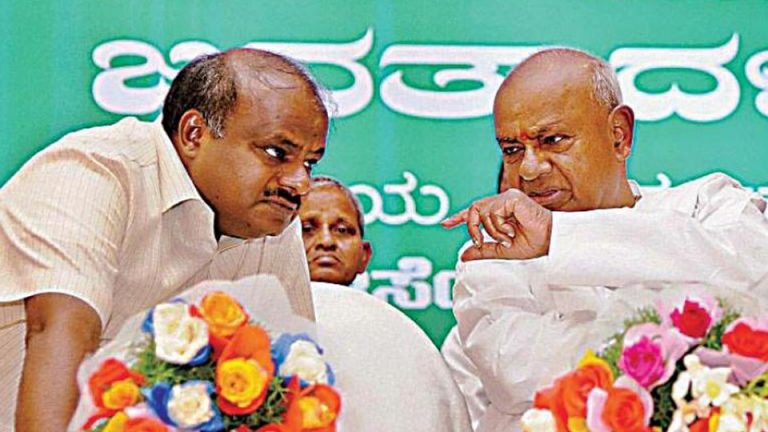
Since it became clear that BJP may come up as a single largest party, the Congress approached Janata Dal (Secular) (JDS) headed by former Prime Minister H. D. Deve Gowda and offered his son, H. D. Kumaraswamy post of the chief minister should JDS choose to join them in a post-poll alliance. JDS, of course, getting a chance to not only be the ‘kingmaker’ but the ‘king’, lapped up the offer. What followed, from the time of forging an alliance to the time of floor test, was allegations and counter allegations of horse-trading. JDS and Congress accusing BJP of subverting the democracy and poaching MLAs to prove majority. In the end, BJP claimed a moral victory and the Congress cheerleaders, who otherwise blame the EVM for losing elections, decided democracy has won.

Amidst all that, Congress leader Mallikarjun Kharge explained how Congress upheld constitutional principles and democracy.


It is amusing how if BJP indulges in making offers to join them, it is called ‘horse-trading’ and everyone calls the murder of democracy, but if Congress does the same, it is ‘give and take’ and hailed as a ‘fitting reply to the fascist regime’. Congress, with 78 MLAs, offered support to JDS, with 37 MLAs along with the offer of the chief ministerial post. They ‘gave’ post of chief ministership to H D Kumaraswamy to ‘take’ away one state from the BJP.

This reminds me of 1996 General Elections where Congress led by P V Narasimha Rao, plagued with scams and scandals, lost decisively but then neither of the other political parties had a majority to form a government. BJP was the single largest party with 161 seats but couldn’t cross the halfway mark. Atal Bihari Vajpayee was invited to form the government and asked to prove his majority within two weeks on the floor of the Parliament. While BJP tried to form a post-poll alliance, it could not reach majority. After trying for 13 days, Vajpayee conceded he could not manage more than 200 seats and resigned rather than face the confidence vote.

The Congress, despite being the second largest party, declined to form the government. Instead, offered external support to small regional parties, which were full of internal conflicts, and in an unexpected move, JDS’ H D Deve Gowda was made the Prime Minister of India. In less than two years, Congress withdrew support and the government collapsed.

It is fascinating how the ones who scream about ‘democracy being restored’ every time they win by hook or by crook never pause to once ponder about how the democratic mandate of the people is being shamelessly subverted. Yes, in a democracy majority rules. But if one has to uphold the ethos of democracy, one doesn’t elevate a party that has been booted by the people’s franchise to a ruling position. That is exactly what the Congress party did then, and that is exactly what it is doing now.

We all have read about history repeating itself, but this time around, we are actually witnessing the same. History is indeed repeating itself. One can only hope that Karnataka does not face the same political upheaval India faced for almost two decades after chief minister-elect H D Kumaraswamy’s father, H D Deve Gowda was elected the Prime Minister.

Perhaps for Rahul Gandhi and his band of hollow vessels, democracy can only be restored, when the will of the people can be subverted in order to serve the monarch.

India’s first Shia political party distances itself from ‘extremist Sunnis’ as the community leans closer to the BJP

UP Shia Central Waqf Board Chairperson, Syed Waseem Rizvi, launched India’s first Shia political party. The party has been named ‘Indian Shia Awami League’.


At the launch, Rizvi distanced himself from “extremist Sunnis” and asserted that “Islam and society need to be protected from them”.


“Though the Shia community is a part of the Muslim minority, on account of being just 20% of the total Muslim population, it has been an object of oppression and exploitation of the fundamentalist section of the Muslim minority. Since the Sunnis constitute about 80% of the Muslim community, benefits under the government schemes meant for the minorities along with other social and political benefits are always reaped by them,” stated the official party release.

In a conversation with ThePrint, Rizvi blamed Sunni extremism for riots and added that the Shia-Sunni conflict is irreconcilable. “Traditionally, vote bank politics has only catered to the Sunnis in India, since we are in minority…But when there are riots in the country because of Sunni extremism, we also get targeted due to our Muslim identity,” said the Shia leader before going on to state, “The Shia-Sunni conflict is irreconcilable…They (Sunnis) don’t even consider us Muslims, but because of them our identity is under threat.”

Waseem Rizvi has affirmed himself as a moderate Muslim in public life. In April, the Shia Waqf Board had moved the Supreme Court seeking a ban on the hoisting of green flags with crescents on them in Muslim majority areas which resembled those of a Pakistani political party. In his plea, Rizvi had alleged that it was a cause for tension between Hindus and Muslims. In February, he had asserted that Muslims who are opposed to the Ram Mandir at Ayodhya should move to Pakistan. He had further stated that those who want a Mosque to be built at the disputed site should join ISIS chief Abu Bakr Baghdadi. Earlier this year, Rizvi had also implored the Prime Minister to shut down Madrassas as they were breeding ground for terrorists. He appealed for the same in a letter to Uttar Pradesh Chief Minister Yogi Adityanath as well. Radical Muslims had also put a bounty of 10 lakh rupees on his head for his remarks on Madrassas.

Reports have emerged thick and fast in recent times of the Shia community’s growing affinity towards the BJP. An influential leader of the Shia community, Maulana Syed Kalbe Jawad Naqvi, last year praised the Prime Minister and had advised his community against voting for the SP-Congress alliance in the Assembly Elections. He had also asserted that Muslims were safest under Modi and Yogi governments. The All India Shia Personal Law Board (AISPLB) has also passed a resolution seeking a ban on cow slaughter and asked the Center to ban the practice of Triple Talaq. Maulana Yasoob Abbas, the spokesperson for the All India Shia Personal Law Board, had even said, “The Shia community will continue to support the BJP if it ensures better education and job opportunities for Muslim women.”

Even during the 2014 Lok Sabha elections, the Shia community in Varanasi is said to have overwhelmingly voted for the BJP. “Shias are supporting BJP because of local issues. Muslims from the Sunni sect oppose our Taziya procession and Azadari during Moharram in Dosipura. There is also a dispute over an Imambada land. BJP openly supports us and now we will support in return,” one Maulana Aqeel had said. For its part, the only Muslim Minister in Yogi Adityanath’s cabinet, Mohsin Raza, hails from the Shia community. Shia Personal Law Board member Maulana Yasoob Abbas had also met Yogi Adityanath after the latter became the Chief Minister and asserted that a delegation from the Board would soon meet the Saffron Clad Mahant and request for the setting up of a commission to ensure the development of Shias.

Shias are believed to constitute between 15-20% of the Indian Muslim community. It will be intriguing to see how the Shia community’s overtures towards the Bharatiya Janata Party pans out while the latter would look to gain the support of the community without having to sacrifice its image as a ‘Hindutva’ party.