Home Blog Page 7191

Durbaris are angry because BJP refuses to play dead

Why are the TV news anchors squirming like never before as BS Yeddyurappa is sworn in as Karnataka CM? Do you think these people do not know the long history of Congress governors acting in an arbitrary manner? Do you think they do not know how Congress dictators/Prime Ministers would dismiss Opposition state governments en masse … sometimes up to nine state governments at a time?

Of course, it is about partisanship. Some of it is about personal embarrassment. After all, many of India’s most well-known anchors spent much time covering Karnataka, following Siddaramaiah around, declaring him a “folk hero.” Then, the folk hero lost by 36,000 votes. Now, these anchors want to discuss everything except their shocking incompetence in analyzing election outcomes. They also want to keep people from discussing how Rahul Gandhi failed again.

But there is one more factor. And I believe its the biggest one. It’s their anger and surprise at a new Modi-fied BJP that refuses to play dead. Let me explain.

The year was 1999. Atal Behari Vajpayee’s government collapsed because it was one vote short. One vote!

That was the old BJP, always getting blindsided, fooled or taken for a ride.

The BJP struck a deal with BSP in the 90s to form the government in Uttar Pradesh based on a rotational CM post. Of course, Mayawati would go first. And of course, when it was the BJP’s turn to have the CM post, the BSP refused to support.

Same in Karnataka. In 2006, the BJP struck a deal with JDS to rule the state based on a rotational CM. Of course, Kumaraswamy would go first. And of course, when it was BJP’s turn to have the CM post, the JDS refused to support. How could it possibly be otherwise?

In the Bihar elections of 2000, the Samata Party (precursor of JDU) won just 34 seats. The BJP won nearly twice as many, i.e., 67 seats. Guess who the BJP offered the CM post? Nitish Kumar! And while Nitish’s government didn’t last, he had become the face of NDA in Bihar, a mistake for which BJP continues to pay even to this day.

The BJP is, by any standard, an electoral behemoth. In the last seven elections, the party has always won at least 100 Lok Sabha seats. To see how big this is, just try to count how many parties in India have ever touched 50 Lok Sabha seats even once!

But the BJP always punched below its weight and often laughably so. I wouldn’t say the durbaris “liked” the old BJP … but they were at least capable of coming to terms with it. As long as the BJP, even after emerging victorious, was willing to fall to the ground and beg forgiveness for winning … and promise the nobles in the ecosystem that their high status would not be affected.

As long as the BJP with 182 Lok Sabha seats in 1999 was willing to grovel before allies, willing to give them all the key Cabinet positions. Even the ministries that were technically with the BJP were offered to people who could be best described as newcomers and/or outsiders. Stool pigeons of the Congress saw it as an acknowledgement of intellectual inferiority on part of the BJP. You will see folks like Ram Guha often write fondly and with much satisfaction about this.

In other words, the ecosystem could make some sort of peace with the BJP, as long as they were willing to prostrate before the elite and play dead. This is the sort of mentality with which an arrogant Amartya Sen declared after 2014 results that he would “allow” Modi to rule. At that point, they were still very much consumed by the belief that Modi would ask them for their “permission,” whatever that means.

The thing is that their “permission” meant absolutely nothing to Modi. Zero. Zilch. Nada.

In fact, Modi would positively revel in showing how little he cared for that class. And this is what they cannot digest.

The BJP has been an electoral behemoth for a long time. But in terms of institutions, the party had almost no influence. Arguably, the BJP’s institutional imprint is smaller than even a tiny party like the CPIM. Twice in the last 20 years, the CPIM fell short of the minimum electoral performance required to maintain the status of a ‘national party.’ Both times, the Election Commission rewrote the definition of a national party, tailored it to suit the CPIM’s requirements and hand delivered them to the CPIM’s headquarters at A K Gopalan Bhavan in Delhi.

This is what *real power* looks like. When the institutions proactively surrender before you. The CPIM barely needed to ask. The Election Commission fell at their feet proactively without a murmur.

Compare this to the BJP which was running circles around the Election Commission in 2007 begging to keep its recognition merely as a political party.

Do I even have to remind people of the time the Supreme Court of India humbly agreed to the Emergency, pointing out that Indira Gandhi’s dictatorial move was almost “maternal”?

This status of the BJP as an outcast endured right up to the moment of May 16, 2014. Let me remind you that Narendra Modi, even in the campaign summer of 2014, could not get permission to address so much as a rally in Varanasi city, in the heart of a seat that he was contesting himself. The place where Modi was allowed to address a rally was so far from the population that hardly anybody could make it there: it was his only thinly attended rally in Uttar Pradesh that year.

A day before voting, the EC raided Modi’s offices in Varanasi. A smug NDTV announced to its viewers that “campaign material was seized” from the election office.

Untitled.png

Of course, you can’t punish a party for having election material in its election office. It was about sending the BJP a message … reminding them of their “aukaat.” Such was the complete, total and utter humiliation of the BJP, even days before they swept to power.

But tables have turned ever so slightly under the Modi regime. For the first time, at least a few decisions from India’s various “institutions” have gone in favour of the BJP. That is why you see the Congress agitating to have the EVMs cancelled, the Chief Election Commissioner sacked and the Chief Justice of India impeached.  The Raj Bhavans across state capitals have always been part of the servants quarters at 10 Janpath. They have always been used to show the BJP its place.

Suddenly, the Congress Party and the ecosystem sees a different face of Raj Bhavan. The people making the decisions have changed. And you can’t raid the BJP’s election office any more for the “crime” of possessing campaign material. That’s why they are so angry. Let them.

BSP Mayor suggests cancellation of Nauchandi Mela so Muslims are not ‘disturbed’ during Ramzan

Meerut Mayor Sunita Varma has sought to cancel cultural programmes during the centuries-old Nauchandi Mela as she believes it will disturb the Muslims during the month of Ramzan. It is the first time in the history of the Mela that it is facing such an order. The programmes were to continue till the 19th of May, however, the Mayor has decided to put a stop to it due to Ramzan.

Sunita Varma, who is a member of the Bahujan Samaj Party (BSP), told Indian Express, “A number of Muslim leaders living in the vicinity of the Nauchandi fair venue…have appealed to me to get these programmes cancelled as they will distract them from offering prayers. I have written a letter to the city commissioner, Manoj Kumar Chauhan, urging him to… respect religious sentiments.”

BJP councillors see the Mayor’s move as an attempt to create a division between Hindus and Muslims. “The (mayor)’s letter is nothing but a conspiracy to drive a wedge between the two communities. Cultural programmes during the fair have been organised for ages. None of our Muslim brothers have objected so far. Why now?” asked BJP councillor Pawan Jindal as per the Indian Express report.

Similar restrictions on Hindu events have been placed in other states in the past as well. The most notable was Mamata Bannerjee’s restrictions on Vijaya Dashami as the dates clashed with Muharram.  It also appears that only Hindu festivals are eligible to be restricted or banned. Sometimes, they are banned to protect the environment and on other occasions, for the sake of Muslim sentiments. Last year, the sale of firecrackers was banned in the Delhi/NCR region by the Supreme Court. On another occasion, the height of the Dahi Handi was also regulated by the Judiciary. Darjeeling Administration had banned the celebration of Chhat Puja in Siliguri on river banks over environmental reasons.

Sagarika Ghose gets panned for cooking up an odd defence for Congress and JDS

Controversial journalist Sagarika Ghose, who is well known for her contentious opinions, decided to jump on the bandwagon, to attack the BJP for trying to form the government in Karnataka. This bandwagon has already seen the contribution of former BJP leader Yashwant Sinha, who during the process of attacking his party, also managed to expose his hypocrisy.

The latest episode in Sagaraika’s “getting panned” series began with an analogy by journalist TS Sudhir, about the current electoral situation in Karnataka, where the BJP has fallen short of the majority mark.

Supposedly inspired by this, Sagarika too decided to try her hand at analogies and came up with something to do with an eighth grade student failing his exam:


In her tweet, while referring to the BJP, Sagarika compared the party to a failed student being passed by the examiners in the hope that he would get more marks in 15 days. Following this, she decided to use the adjectives “comical, absurd and shameful”.

This supposed analogy of indirectly endorsing the Congress + JD(S) alliance at the cost of the BJP, led many social media users to counter her claims:


With response to the counters Sagarika, came up with a response which looked like some form of a defence for the Congress and the JD(S), but was promptly countered again:


It remains to be seen whether she comes up with other such analogies, if and when the BJP manages to pass the floor test in Karnataka assembly.

Indian Railways to boost connectivity in North East

In a recent report, Indian Railways has said, it plans to invest more than Rs. 40,000 crore in infrastructure development in the North East states. The Indian Railways intends to connect the capital cities of five North-Eastern states and areas bordering China, Myanmar and Bangladesh with the rest of the country.

The plan is to connect the capital cities of Manipur, Mizoram, Meghalaya, Sikkim and Nagaland in the coming two years. The projects include laying over 1,500 km of rail lines and several engineering marvels such as India’s longest double rail-cum-road bridge, one of the longest tunnels in the country and the world’s tallest pillar-based rail bridge.

Indian Railways is also planning to connect neighbouring countries of Myanmar, Bangladesh in the future through the existing and future projects of North East states. The new line linking Agartala in Tripura and Bangladesh is also under construction. The plan also includes connecting the border regions of China right up to Tawang, by developing 180 kms of railway lines in Arunachal Pradesh.

These lines will connect the capital of all north east states with the current operational network in Guwahati which will significantly cut down travel time between the north eastern and other states of the country providing a cheaper mode to the people and boosting freight movement. There are other strategic railway lines which intend to help movement of defense forces.

PM had inaugurated the first line connecting Assam to the Garo hills regions of Meghalaya.

In the last three years, the government under Modi was successful in including five North Eastern states – Meghalaya, Arunachal Pradesh, Manipur, Mizoram and Tripura – to the broad gauge map of the country. As many as 29 new trains were introduced in the region in a span of just one year.

The success of the Indian Railways is not limited to the North Eastern region, it has been successful in connecting areas hitherto untouched areas due to security reasons. The Railways has developed railway infrastructure in Maoist affected areas of the Dantewada region of Chattisgarh. This is augmented by the central government’s outlay of Rs. 11,000 crore for road connectivity in 44 Maoists affected districts.

Last year, the Prime Minister had inaugurated the longest river bridge of 9 kms on the Brahmaputra. It is to be noted that North East is extremely important in terms of India’s strategic and economic ambitions, hence connectivity and development initiatives have got increased allocation from the present government.

So where was Rahul Gandhi through the entire post Karnataka election result drama?

0

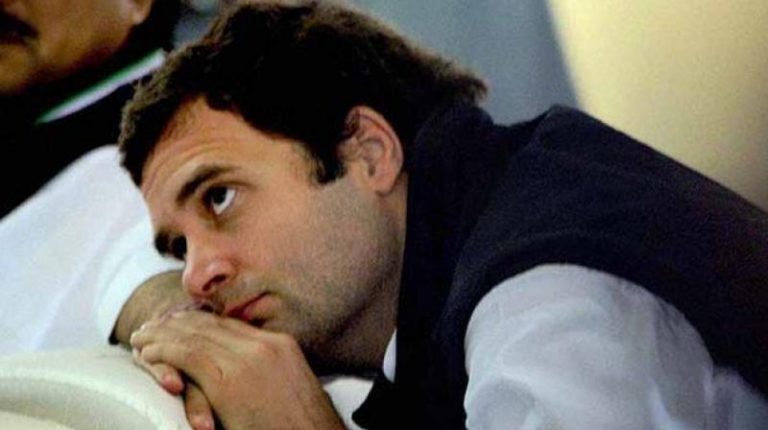
Rahul Gandhi was missing. Yes, you read that right. The Congress President and the beloved hallowed Prince of Indian liberals was nowhere to be seen. He has been missing for a while now, since the results of the Karnataka Assembly were declared, to be precise.

Rahul Gandhi has been hailed as the Congress’ Prime Ministerial candidate. He had even declared his wishes to be the PM of the country. He was being showered with praise and adulations during the whole campaigning process but now he has been missing.

BS Yeddyurappa was sworn-in as the Chief Minister of Karnataka a couple of hours ago after a long night of drama and adventure that would put the choicest Indian daily soaps to shame and right now, Congress leaders along with their new found best friends JD(S) cadre are holding a dharna in front of the Vidhana Soudha in Bengaluru, but, Rahul Gandhi is not there.


Rahul Gandhi was also nowhere to issue a statement or give his opinions when journalists and Congress’ lawyers were all over the residence of CJI Deepak Mishra late last night. In fact, the only traces of his existence since May 15th have been only a couple of tweets.

Rahul Gandhi was not there when Congress held a press conference on the Karnataka verdict. He did not even acknowledge the public’s mandate that had brought the Congress from its previous tally of 122 seats to 78 seats.

Rahul Gandhi was nowhere when Congress was cornered and in a move of absolute desperation, offered JD(S) the CM’s position on a platter. That is despite the fact that Congress had 78 seats and JDS a mere 37. It was not the Congress President Rahul, but his mother Sonia Gandhi, who had reached out to JD(S) supremo HD Devegowda. Interestingly, it was Congress leader Ghulam Nabi Azad who rushed from Delhi to save the day for the party, not the party President.

Ghulam Nabi at governor house

When the incumbent CM Siddaramaiah was busy in talks with HD Kumaraswamy and HD Devegowda, with whom he had had a fierce rivalry in the past and even agreed meekly to surrender his CM’s post to have JDS support Congress, Rahul Gandhi was still missing.

Many people did notice Rahul’s absence in the events.


Rahul Gandhi had been missing in all the high voltage political drama that has been unfolding in the last couple of days. Yesterday, the Congress had held another high profile press conference declaring that they will not accept the Governor’s decision to invite Yeddyurappa to form the government. Congress leaders like P Chidambaram, Kapil Sibal, Randeep Surjewala and several others were present, but, curiously, though the Press Conference was in Delhi, Rahul Gandhi was still Missing In Action.

Rahul’s Gandhi name and image were flashing everywhere in the run up to elections, but after the declaration of results, his absence is staggering. Though the mainstream media is too docile to the Congress to ask uncomfortable questions regarding its prince charming, shouldn’t the leader of the party which held power in the country for almost half a century and the one who has hopes to become the PM one day, be a little more involved in important political negotiations? Or is Rahul Gandhi comfortable only to read from custom prepared speech notes and pose prettily for photo ops? Is Rahul’s conspicuous absence the result of his inability to make negotiations or is it just sheer indifference? Are the Congress leaders really looking up to Rahul as their leader? If yes, then why are they not demanding more involvement from him?

Rahul has been known to vanish to undisclosed locations after crucial elections. Is it another of those clandestine trips abroad? If yes, it is definitely a shameful situation for Congress when their leader abandons them to scramble for themselves while they need him most.

Journalist refers to ‘Urdhva Pundra’, a tilak as ‘vagina’, gets schooled on Hindu sect of Vaishnavism

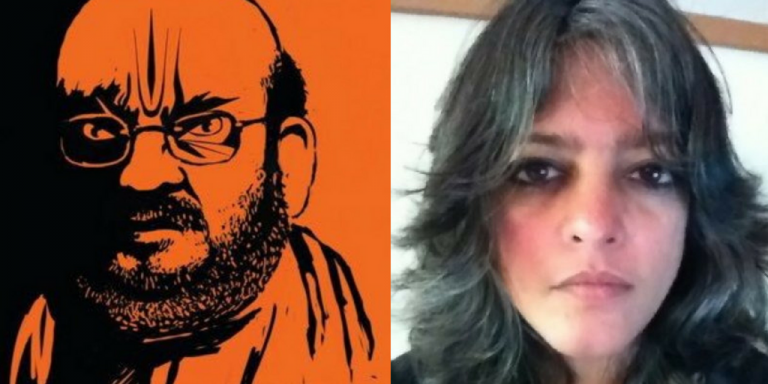
Journalist Mitali Saran, who writes columns for NDTV among other media houses, yesterday referred to the ‘Urdhva Pundra’, the tilak worn by followers of the Hindu sect Vaishnavism to show they are devotees of Vishnu, as a vagina.

While my inner feminist says referring to anything as a vagina shouldn’t be considered an insult, the fact that Saran used vagina to condescendingly mock the tilak on BJP President Amit Shah’s forehead is a problem. It can be seen that she compared the tilak to a vagina to sort of ‘ruin it’ for the viewers by her subsequent replies.


Saran probably thought the tweet would act as a bait since most self-proclaimed liberals believe right wingers cringe whenever they hear the word vagina while forgetting that Hindus worship Shiva Lingam. She was shut up by Twitter users who took it upon themselves to educate her on symbolism in Hinduism.


The Kamakhya temple mentioned above is a pilgrimage site in Assam where the deity, Kamakhya Devi is revered as ‘Bleeding Goddess’. It is believed that the ‘Garvagriha‘ or the sanctum sanctorum of the temple houses the mythical womb and vagina of the Hindu goddess Shakti. Interestingly, every year during the month of Ashaad (June), the Brahmaputra river near Kamakhya turns red. It is believed that the goddess ‘menstruates’ during this period.

This is not the first time self-proclaimed liberals have shown their obsession with a vagina. Swara Bhaskar, daughter of JNU professor for cinema studies and former censor board member Ira Bhasker, also showed her obsession with vagina during the release of the film Padmaavat.

As Amit Shah hits back, Rahul should stop crying over spilt milk and shed his sense of entitlement

0

The major hue and cry revolving around the turbulence caused by the current Karnataka elections have kept the entire Nation ready for any eventualities. The fiercely fought battle between the BJP and Congress ended in a nail-biting finish, for now, with a lot of allegations, counter allegations, continuous declarations, and denials.

The electrifying drama came to end with Yeddyurappa been sworn in as the Chief Minister with 15 days to prove his majority on the floor of the house. Both the bigwigs for months have been trying to woo the people of Karnataka leaving no stone unturned. While BJP on one side with Prime Minister Narendra Modi, as many as 22 Union Ministers, Chief Ministers of two states, national president Amit Shah and other party functionaries were participating in hefty campaigns, the Congress too played every card with utmost scrupulousness, from dividing Hindus into fractions by giving Lingayats ‘minority status’, to making under the table deals with radical Islamist outfit PFI, to attempting to tear the nation based on the North-South divide.

Congress in its desperation and lust for power, decided to form an alliance with the JD(S) and were all out praising the party, but things were very different during the campaign in the run-up to elections, where there were many instances when Congress leaders were seen openly criticising the JD(S).

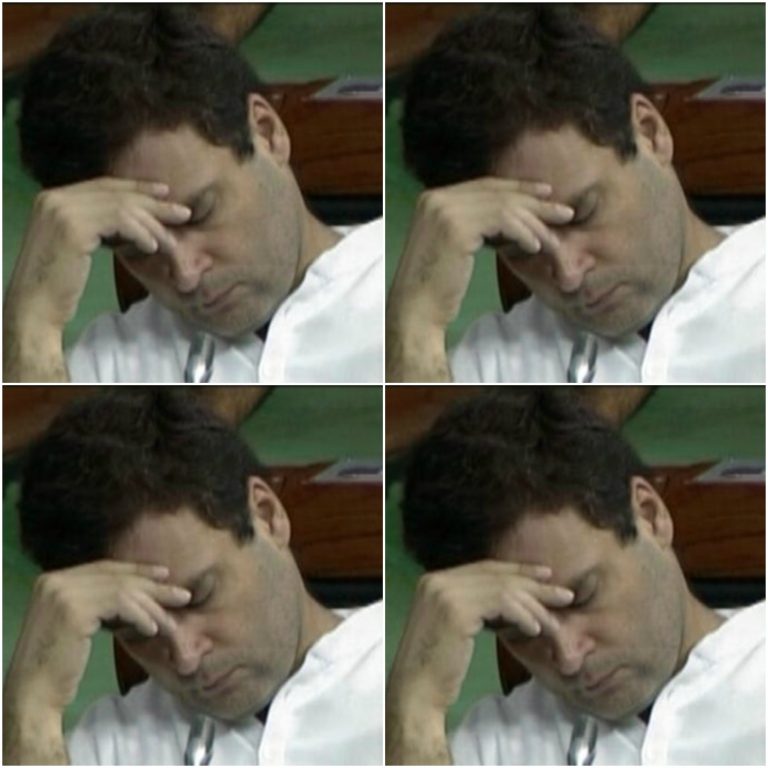
This is the third election Congress has lost straight after Rahul Gandhi has taken charge of the party. This mere frustration and desperation are maybe urging the Shehzaada, well not so anymore, to go out and make such comments on social media saying:


All this while when this high octane Karnataka elections drama was in its full swing Rahul Gandhi was absconding. The Nation had to wait for almost 36 hours before they could hear from the party President, who is perhaps pretending to be completely oblivious. Someone needs to shake up Mr Gandhi and ask him to be gracious enough to accept his defeat (which is now becoming the norm, not the exception) benevolently instead of playing this constant blame game.

However, BJP party president, Amit Shah did not leave this opportunity to lash back at the shehzaada by tweeting :


It’s high time the Congress Party stops believing that the throne belongs to them and will necessarily be with them always. It’s fine to be a desirous thinker and hold on to the belief that it is their birthright to sit on the throne but the designated prince should realize that dreams don’t necessarily come true. The constitution of our country makes us a democratic country and democracy still trumps dynasty.

Yashwant Sinha gets exposed as a hypocrite after he preaches against BJP’s ‘subversion of democracy’

Politician Yashwant Sinha who recently quit the BJP seems to have decided to join the “expert punditry panel” which has taken it upon itself to vehemently condemn the BJP for trying to form the government in Karnataka, despite it being the largest party by a margin.

As a result, Sinha on Wednesday evening decided to launch a scathing attack on the BJP for “brazenly subverting democracy” in Karnataka:


As seen above, Sinha expressed his happiness at leaving the BJP, which he claims was trying to subvert democracy in the Southern state, before alleging that it (BJP) would do the same if it failed to gain a majority during the 2019 Lok Sabha polls.

Sinha who is certainly entitled to his opinion – whatever it may be, though was taken on by aware social media users who took a walk down the memory lane, to expose Sinha’s glaring hypocrisy over this matter:


As claimed above, Sinha who is now expressing his deep reservations over BJP allegedly indulging in “horse trading” to form the government in Karnataka, had himself been part of erstwhile Prime Minister Chandra Sekhar’s dissident group in 1990, which broke away from VP Singh led Janta Dal government to gain power at the centre – with the outside support of Rajiv Gandhi’s Congress (I) MPs.

Going by an India Today report from 1990, Chandra Sekhar managed to form the government in the centre with the help of 211 Congress (I) MPs. His companion as per the report was 60 Janata Dal MPs, the group which styled itself as, Janta Dal (Socialist).

The said India Today report describes this political manoeuvre as, “Sabotage, backstabbing, horsetrading reminiscent of the fall of the Janata government in 1979 were once again on vulgar display”.

New York Times, which also reported about dissidents splitting VP Singh’s party claimed how the PM was dealt a crippling blow by this act, which was spearheaded by Chandra Sekhar.

The involvement of Yashwant Sinha is narrated in a Britannica biography, which describes him as joining Chandra Sekhar’s Janta Dal (Socialist) in 1990 after the Janta Dal split. It further points how he then “changed his loyalties” to the BJP a few years later.

The India Today report also states the prominence of Sinha in Chandra Sekhar’s dissident group, by describing his as part of the A team:

Yashwant Sinha in Chandra Sekhar government. Img via @India Today

Sinha was certainly rewarded back then for his “decision” with the Finance Ministry from 1990 till the government fell.

With Sinha himself being involved in “glaring subversion of democracy”, it raises the question as to how “deserving” is he to attack others for allegedly trying to do something similar – at least in his eyes.

BS Yeddyurappa delivers on BJP’s first promise hours after being sworn in as the Chief Minister

BS Yeddyurappa soon after taking oath as the Chief Minister of Karnataka, addressed a press conference in Bengaluru. He called his first cabinet meeting and decided to waive off the loans of farmers and weavers up to Rs. 1 Lakh.


This was a promise made by BJP in its manifesto for the Karnataka elections. BJP has formed the government in Karnataka, despite short of the majority mark of 112. The Governor Vajubhai Vala invited the BJP to form the government and prove his majority on the floor of the house within 15 days. The JDS-Congress failed to come up with the numbers as many of their MLAs were also reported missing and did not turn up to support the alliance.

The matter is also under consideration of the Supreme Court. The Congress party had approached the CJI late last night and in a midnight drama, contested BS Yeddyurappa’s swearing-in ceremony.

After hearing the matter for several hours, the three-judge bench reportedly refused to stay the oath taking ceremony at 9 am. The bench has reportedly stated that the Governor’s decision cannot be overruled as it is a constitutional authority. The bench, however, has made it clear that the government formation will be subjected to the final outcome of the case.

The bench asked for the letter that the BJP sent to the Governor claiming to form the government in Karnataka. As per the latest reports, the SC bench has now scheduled the further hearing of the matter at 10.30 am on Friday.

Earlier JDS and Congress joined hands to form a government with a coalition of 117 MLAs. Elections for 222 constituencies of Karnataka Legislative Assembly were held on 12th May. BJP secured its win in 104 constituencies, while Congress and JDS had secured 78 and 38 seats respectively. Interestingly, some members of JDS and Congress have been missing since the results and BJP is trying to use this to their advantage, and form the government in Karnataka.

Kashmir ‘conditional ceasefire’ : Has the Narendra Modi government learnt nothing from the past?

A wise man once remarked, “Civilizations die from suicide, not by murder.” With every passing day, British historian and philosopher, Arnold Toynbee’s words appear more and more appropriate not just for Europe but for India as well. It appears as days go by, we have lost the will necessary to survive and secure for our children and their children a future where they can thrive and prosper.

Home Minister Rajnath Singh has instructed the Security Forces not to launch any operations against terrorists in Jammu and Kashmir during Ramzan to ensure that Muslims can observe their festival in a peaceful environment while reserving the right to retaliate.


Our politicians may preach that terrorism has no religion. However, their actions and policies prove beyond any reasonable doubt that terrorism indeed has a religion and much of their policies are formed based on the constant fear that our actions, however necessary and just, may provoke a certain section of the population to take up arms against the nation. One is forced to ask how would operations conducted to eliminate terrorists disturb peace-loving Muslims from observing their sacred month and if certain people are indeed disturbed by operations conducted to eliminate terrorists, are they really peace loving?

History repeats itself, it is oft said, but people conveniently choose to forget that history repeats itself not because the entire universe is conspiring to make it happen so but because people do not learn from the events of the past and are even arrogant enough to believe they shall not suffer from similar consequences if they indulge in similar proclivities as those men who suffered the same in the past. A ceasefire during Ramzan has quite obviously been tried in the past as well. And the person to give it a try was, of course, another NDA Prime Minister, Shri Atal Bihari Vajpayee. Mr Vajpayee did get a lot of things right but the decision to pursue a ceasefire during Ramzan was not one of them.

Such ceasefires basically mean that the security forces have the right to retaliate when attacked but don’t initiate operations.

In the two months preceding the ceasefire from the 27th of November, 2000, 151 civilians had been killed as a consequence of the violence in the state. However, in the month of Ramzan, 96 civilians had died as a consequence. While 119 members of the security forces had died between September 26 to November 27, between November 28 to December 27 (Ramzan), 56 security-men had been murdered. Thus, there was hardly any decline whatsoever in the murder of security men during Ramzan and seemingly an increase in the deaths of civilians.

The ceasefire was eventually extended until May 31st, 2001. During the period between January 1st to May 31st, 233 security men and 445 civilians were killed and for the remainder of the year without any ceasefire in place, 389 security men and 627 civilians were killed (the numbers are provisional for the post-ceasefire period). Remarkably, while the terrorists suffered only 543 casualties during the ceasefire period in 2001, the number went up to 2094 for the post-ceasefire period (the numbers are provisional for the post-ceasefire period). Thus, there was a significant increase in the number of civilians killed during the month of Ramzan without any significant decrease during the post-ceasefire period. There was hardly any decrease in the casualties suffered by security forces as well during the ceasefire in Ramzan. However, the only thing that decreased during the ceasefire was the number of terrorists eliminated which dropped significantly during Ramzan and again increased remarkably post the ceasefire period which ended in May the following year.

The terrorists appear to be mocking the government’s decision of a ceasefire already. Within one and a half hour of ceasefire announcement by the government of India, terrorists have already targeted security forces in Shopian.


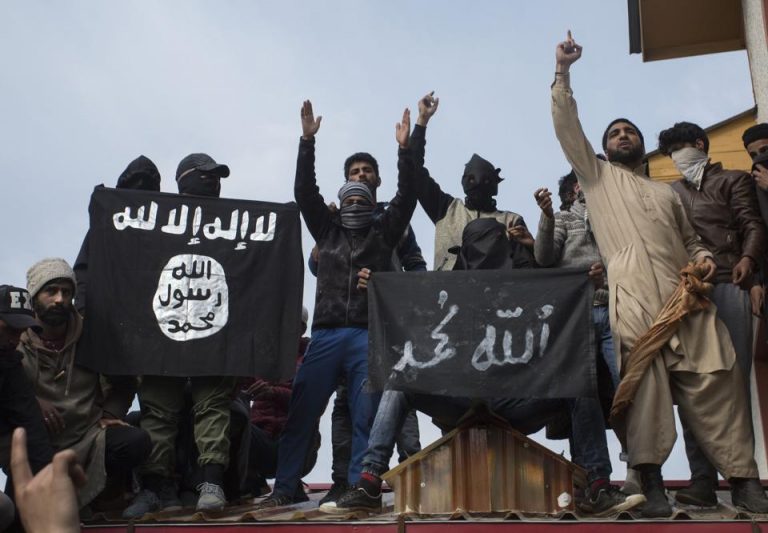
Moreover, terrorist attacks appear to increase during Ramzan. ISIS, for instance, has urged its supporters to commit more attacks during Ramzan and often called it the “holy month of Jihad”. A consequence of it has been the fact that in recent years, Ramzan has easily been the bloodiest part of the year. Most significantly, there is no evidence to suggest that the terrorists confine themselves to performing only acts of piety during the month while every shred of evidence suggests that terrorists do seek to commit acts of terrorism during the period. At a time when reports have emerged of ISIS gaining ground in Kashmir, does it really make any sort of sense for the government to tie arms of the security forces behind their back? And especially since there is not the slightest indication that their goodwill gesture will be reciprocated.

Negotiations can only be successful when both sides are clear about the intent behind it and the reasons to commit to such negotiations. When one side perceives a ceasefire as a goodwill gesture and the other a sign from above that their enemies are cowering before them and see it as a reaffirmation of the righteousness of their path, negotiations are fated to fail from the very beginning. The current ceasefire will suffer the same fate and only succeed in giving the terrorists enough time to recuperate and reorganize after they have suffered a series of heavy losses at the hands of the Indian Army.

A ceasefire is called between two conventional Army’s of two sovereign nations. Not between the Army and terrorists. Eliminating terrorists is the job of every sovereign nation and by furthering this “ceasefire” narrative the state unwittingly legitimises the skewed definition of peace that is oft repeated by Hurriyat, that the state is using ‘excess force’ and that use of such force is avoidable to maintain “peace”.

One wonders, what is the purpose of such a “ceasefire”? Many have said that perhaps this is a ploy to get the terrorists to lower their shields. Some have said that it is to reach out to the local population because the aim of Counter-Insurgency (COIN) is to reestablish the legitimacy of democratic government.

The aim of COIN is certainly to reinforce the legitimacy of democratically elected government and our Army’s COIN strategy is as good as any other country globally. ‘Operation Sadhbhavana’ is aimed at such a goal. The fact that the Army works hard to avoid civilian casualties and urges the terrorists to surrender rather than getting killed, is aimed towards that end. Who doesn’t remember the audio of a Major trying to convince Pakistani terrorist Abu Dujana to surrender? Who doesn’t remember the comfort with which the civilian, in whose house Dujana was holed up, spoke to the Army major? That is how legitimacy is restored. By instilling faith in the civilian population, that it is in their best interest to side with the state.

It is often theorised that the civilian population supports the side which can provide them with security. For example, if the terrorist presence is strong in a village, the villagers are likely to support terrorists. While if the Army presence is strong, and the civilians believe that the Army is equipped to provide them security in that village, they will support the army. Ergo, the way to win civilian trust is to let the Army do its job. Conduct aggressive operations to flush terrorists out, gain control of a village, thereby facilitating the process of trust between the civilian population and state.

The need to look for such ridiculous peace measures stem from two ailments. One is to not call out the Kashmir problem for what it really is. Islamic Jihad. And second, the urge of every single government to purport the cause of ‘benevolent state’. A benevolent state cannot fight the threat of radical Islam and that has to be understood not just by the government but even the population of the country on the whole.

The only saving grace appears to be the fact that the security forces reserve the right to retaliate and attack if necessary to protect the lives of the innocent.


Apart from this slim silver lining in the cloud, the decision does not bode well for anyone concerned.