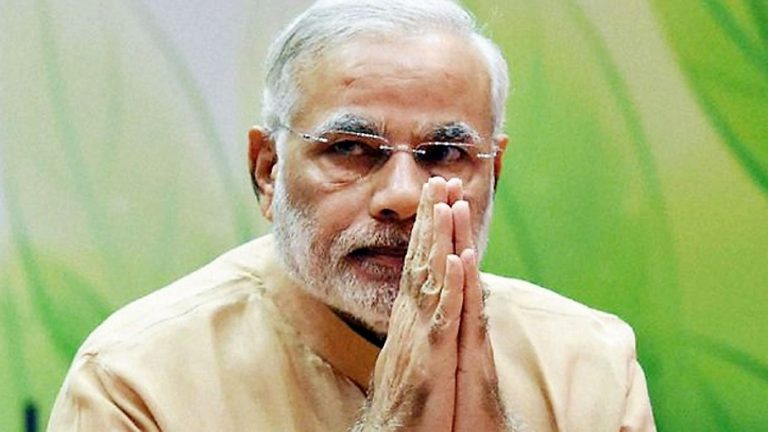
According to the Forbes magazine, Modi has been ranked among the top 10 most powerful people in the world. He ranks 9th on the Forbes 2018 list of 75 of the World’s Most Powerful People who make the world turn.
PM Modi is ahead of Facebook CEO Mark Zuckerberg, who ranks 13th, United Kingdom Prime Minister Theresa May ranked 14th, Chinese Premier Li Keqiang ranked 15th and Apple CEO Tim Cook ranked 24th.
Reliance Industries Chairman Mukesh Ambani, with a net worth of 41.2 billion dollars, is the only other Indian on the power list, ranking 32nd and Microsoft’s India-born CEO Satya Nadella is on the 40th spot.
Dethroning Russian President Vladimir Putin — who was on top for four consecutive years as the most influential person in the world, Chinese President Xi Jinping has topped the list for the first time ever.
According to Forbes, there are 17 new names on the list this year. The list of the world’s most powerful people was, Forbes says, compiled on the basis of the candidates’ “power over lots of people”, “financial resources”, “power in multiple spheres” and “active use of their power”.
“Modi has raised his profile as a global leader in recent years during official visits to US President Donald Trump and Xi Jinping. He has also emerged as a key figure in the international effort to tackle climate change, as warming affects millions of his country’s rural citizens,” Forbes said.
As per the Forbes, “Modi ‘remains hugely popular’ in the second most populous country on earth.” The magazine cited Modi government’s November 2016 decision to eliminate India’s two largest banknotes in a bid to reduce money laundering and corruption. It is interesting to note that on one side where the PM is being complimented for this bold step of his, the Congress party had strongly criticised demonetisation, saying the move has led to an economic slowdown. Asked how he would have rolled out demonetisation differently, Rahul Gandhi said: “if I was the Prime Minister and somebody would have given me a file with demonetisation written on it, I would throw it in the dustbin, out of the door and into the junkyard.” How is that the opposition is unable to see what everyone else can.
Interestingly, puncturing many holes in Congress’ narrative of ‘economic slowdown’, IMF has pegged India to be the fastest growing economy in 2018 with a growth rate of 7.4%.
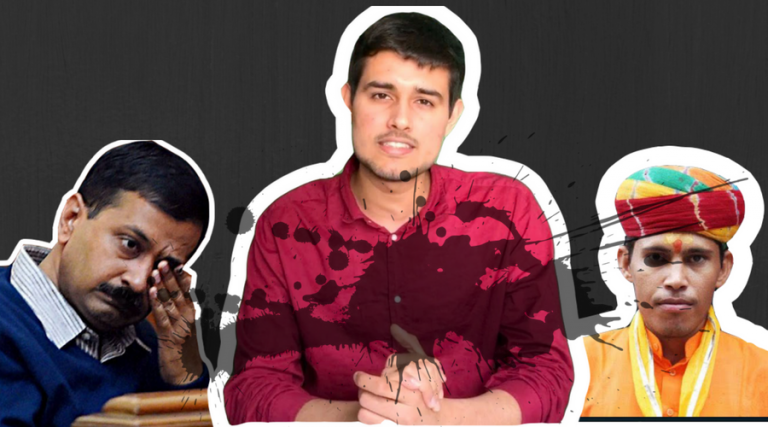
A police complaint has been filed by Advocate Alakh Alok Srivastav on behalf of software architect and BJP volunteer Vikas Pandey, against Aam Aadmi Party chief Arvind Kejriwal and conspiracy theorist and AAP supporter Dhruv Rathee, for accusing Pandey of offering a bribe to one Mahavir Prasad.
In a YouTube video posted by Rathee on 7th May, where he accused Congress supporting troll who was once followed by Kejriwal, Abhishek Mishra of offering ‘bribe’ of Rs. 50 lakh on behalf of Pandey to one Mahavir Prasad, self-proclaimed former BJP IT cell ‘insider’.
The complaint states that the information shared by Rathee and Prasad is false and is causing harm to his reputation. That the accused are deliberately spreading false allegations on various social mediums with the sole intention of ‘causing criminal intimidation, intentional insult and defamation’ to Pandey.
The complaint also states that Pandey intends to initiate civil and criminal defamation against the accused.
Rathee accuses the same Abhishek Mishra who was once seen cosying up with Arvind Kejriwal, who had once tweeted a fake news shared by Mishra, of now being a ‘BJP insider’ who offers bribes on behalf of BJP.
Kejriwal and Mishra have also met and spent quality time.
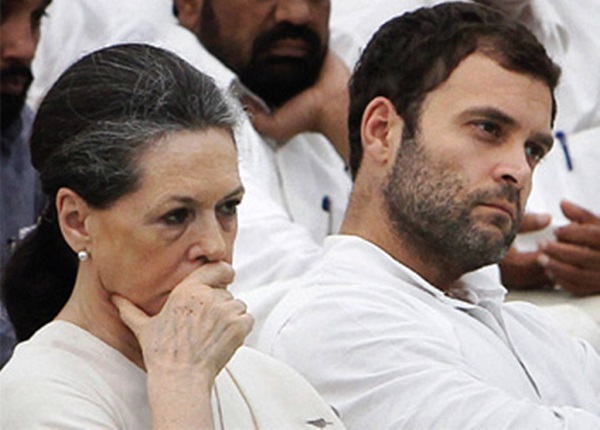
Perhaps after discovering Mishra consistently spreads fake news, Kejriwal unfollowed him. After that, Mishra was recently spotted getting up close and personal with Congress President Rahul Gandhi.
Republic TV has revealed that a certain national party is engaging in ‘need-based social profiling’ which essentially translates to customizing bribes for voters to buy off votes ahead of the Karnataka Assembly Elections. According to the report, a national party was hiring agents to manage votes by slum dwellers.
According to the expose, each voter was linked to a sop to be given. The business card of a Congress MLA was also discovered at the flat where thousands of voter cards were discovered. The voter cards were to be handed over to those they belonged to on the day of the polling. Two people, Venkatesh and Raghu, have been arrested in connection with the incident and FIR has been registered against 6 people.
Tanvir Ahmed of the JDS has condemned the Congress government over the incident. He says that based on the prima facie evidence, he assumes that the Congress party is involved in the scam although the Election Commission is yet to name the political party involved. He says that Siddaramaiah and Rahul Gandhi should take responsibility for the scam if it is indeed revealed that the Congress party is involved.
The Election Commission has apparently claimed that they have discovered goods and business cards related to a very particular national party. According to video evidence that has surfaced, multiple visiting cards of a Congress candidate, Maniratna, was found at a house that was raided.
The Congress party’s campaign to retain power in the state has been riddled by several controversies that it has been with. From internal turmoil over the list of candidates and Mani Shankar Aiyer making comments against the Prime Minister in Pakistan and glorifying Muhammad Ali Jinnah, the Congress has committed what could be dubbed a series of errors. With Prime Minister Modi on a campaign blitzkrieg and making scathing attacks on the Congress party and its President, the party could well be staring at the throat of defeat in the upcoming Karnataka elections.
Mewar is a region that defies conventional ideas and modern beliefs. Its people are proud. People may wonder why so, but a peek into Mewar’s history and a visit to the area will give all the answers one needs. This land in the Aravalli range of Rajasthan has seen people who gladly embraced death to protect the honour of their land, women who preferred stepping into blazing infernos instead of surrendering to invaders and kings who defended its sovereignty till the last drop of their blood. Mewar gave birth to legends like Rani Padmini and warriors like Maharana Pratap.
Years ago, while touring through the region, one of my friends asked casually the driver cum guide, “why do you people take so much pride in being from Mewar?” His answer came with a sombre smile, “because we remained free”. It took me some time to realise the profoundness of his words. Indeed, Mewar was the only region which never gave up, it kept fighting back relentlessly.
Map of India in 16th century. Foreign Jihadi Mughals had invaded and conquered most of Northern and Central India
But Mewar under #MaharanaPratap was independent Hindu kingdom like a tiny saffron drop amidst Mughal ocean.He fought back and never gave up when others surrendered pic.twitter.com/7qbd4FySAE
We all are very familiar with the saga of Rani Padmini’s Jauhar and Allauddin Khilji’s victory over Chittorgarh. But few realise the fact that the story did not end there. Khilji seized Chittorgarh in 1303. A distant kin of the slain ruler Rawal Ratan Singh named Hamir Singh regained control after killing Maldeva, the proxy under whom Khilji has left Chittor. With Hamir Singh‘s ascension in 1326, the first chapter in the glorious saga of Sisodiya dynasty was written. Hamir was the first ruler to take the title of Rana (Prime Minister). The Sisodiya dynasty submits to Eklingji as the supreme ruler of Mewar and serves under his name. With Hamir began a dynasty that is unmatched with any other in the history of India. In was in this line of valiant kings that Maharana Pratap was born in 1540.
Rana Pratap ascended the throne of Mewar in 1572. Sadly his ascension did not happen in Chittorgarh, for the fort was under seize by Akbar’s Mughal army since 1567 and Pratap’s father, Rana Udai Singh II had shifted his capital to Gogunda. Akbar tried a lot to sway the chieftains and leaders of Mewar towards himself, but the people recognised only their Ranas as their rulers. When Rana Pratap took the throne, he was well aware of an imminent war with the mighty Mughals. Through 1573, Akbar is believed to have sent a number of truce offers to the Maharana, but Maharana Pratap was not willing to compromise with the sovereignty of Mewar. In the meanwhile, though surrounded and outnumbered, Maharana Pratap never stopped preparing for battle.
Maharana Pratap knew that the hills of the Aravali range were his best defence. He had urged the villagers of the area to leave for the mountains so the raiding Mughal armies are strapped for food and sustenance. He befriended the tribal leaders including the Bhils and kept taking into confidence regional rulers and groups. The trade routes of the Mughals to Gujrat passed through Mewar, so Maharana started ordering raids on trading caravans. Finally, Akbar decided to engage in full frontal battle and ordered his general Man Singh of Amber to attack Maharana Pratap.
Maharana Pratap had previous information of the marching army. The Mewari troops laid waiting in the Haldighati pass near Gogunda. What happened in the few hours of 18 June 1576 has inspired countless poems, paintings and stories.
courtesy: Rajras.in
There are different opinions about the exact numbers of cavalry and infantry in the Mewari and Mughal side. But one thing all historians agree upon is that the Mewaris were severely outnumbered. Both sides had horses, elephants and archers, but the Mughals possessed a significant advantage, they had guns. The only advantage Maharana Pratap possessed was the rocky, hilly terrain that his troops were accustomed to. The battle has been immortalised in the poem by Shyamnarayan Pandey:
चढ़ चेतक पर तलवार उठा,
रखता था भूतल पानी को।
राणा प्रताप सिर काट काट,
करता था सफल जवानी को॥
The bravery of Maharana Pratap and his beloved horse has been the inspirations for many artworks, paintings and folklore in the region. One of the prominent stories says Maharana Pratap’s strength and skills were so fierce he cut down one of the Mughal commanders and his horse with a single stroke of his sword.
The battle is believed to have lasted only a few hours. Maharana Pratap’s soldiers showed exemplary courage and skills in the battle. Though there are disputed opinions about the results of the battle with a considerable number of experts believing that Maharana Pratap lost on that day, an examination of the aftermath definitely suggests otherwise.
Maharana Pratap lost many of his brave leaders and commanders that day. One of the bravest was the warrior Jhala Man who, sensing imminent danger to Maharana’s life, took his silver chhatra and rushed over to fight the Mughal army. The silver chhatra made the enemies confused and they took Jhala Man as Maharana himself. Jhala Man bought Maharana precious time to escape and take refuge in the hills.
The results of the battle of Haldighati were inconclusive. Though the Mughals did occupy Gogunda and the nearby regions, Maharana Pratap was relentless. He expertly gathered the remaining leaders, engaged the Bhils and other tribals and kept on attacking enemy camps. He led guerrilla attacks and took Mughal troops by surprise, he raided trade parties and all the while he never let Akbar rest in peace. Maharana Pratap had sworn an oath that he will not enjoy royal luxuries till he had freed Mewar from the Mughal clutches and he made good on that promise. Maharana Pratap ate from leaf-plates, slept on floors and lived in huts all through the struggle with Akbar’s army. Throughout the years, he faced lack of funds, weapons and struggled with hardships, but he never gave up. The people of Mewar never gave up. Soon he was able to take back most of the territory Akbar had occupied and the clashes continued.
Finally, Akbar shifted his focus elsewhere and Mewar saw some years of peace. Maharana Pratap had slowly regained most of Mewar and he ruled for several years in peace. In a time when almost entire northern India was under Akbar’s rule, Mewar remained as the bright, tiny drop of Hindu Pride.
Modern Indian history books have been unfair to Hindu Kings including Maharana Pratap. While the Mughals are glorified beyond reason, the relentless and often successful battles of Hindu Kings never get their deserved place in history books. Modern history books may have ignored Maharana Pratap and his predecessors, but he lives on the minds and hearts of the people of Mewar, and all Indians who take pride in their heritage. The battle of Haldighati might have been inconclusive, but when it comes to honour and valour, Mewar had the last laugh. Maharana Pratap fulfilled his oath to his motherland.
A 22-year-old tourist from Chennai became a victim of Islamist stone pelters of Kashmir on Monday after he died owing to critical injuries he suffered at their hands. This incident happened when the bus carrying him and other tourists came under the attack from a mob of stone pelters.
After the pelted stones caused serious head injuries to Thirumani Selvan, he was rushed to Sheri Kashmir Institute of Medical Sciences in Srinagar. But he, unfortunately, succumbed to his injuries.
Following this incident, Jammu and Kashmir Chief Minister Mehbooba Mufti met Thirumani’s grieving family to offer her condolences and commented that her head hung in shame.
The Times of India though seems slightly unaware of the immeasurable grief of Thirumani’s family, as they have now carried an article whose headline insinuated the newspaper’s alleged attempt to blame the victim:
Times of India headline Via @TOI
As seen above, the headline of the TOI report insinuates that the “Tamil Nadu tourist’s” decision to wear headphones while travelling in the bus, was supposedly the contributing reason for death. This angle was also peddled in the story’s content, in the following manner:
Immersed in music when the stones were being pelted, Selvan didn’t hear his father shout
Predictably people were not happy at TOI’s reporting and reacted accordingly:
Do you mean that earphone was the reason of his death? What type of journalism it is?
Yes, blame the earphones @timesofindia! And yeah, I see that 22 year old Thirumani was just some nameless ‘Tamil Nadu Tourist’ for you. But Akhlaq, Pehlu, Kafeel Khan, Mohammad Rafi Bhat, now THEY all had names! https://t.co/hdhvCauBm6
Such an act of victim blaming by TOI also may lead people to question whether the publication was trying to deflect attention from the radical stone pelters, who committed the brutal crime? And in order to do so, did it figure out a way to deflect the blame onto the earphones and the person wearing them.
In the latest report by India Today, the Inter-Services Intelligence (ISI) is planning to free several Tehrik-i-Taliban Pakistan (TTP) members lodged in jails and train them to wage jihad in a move to terrorize Jammu and Kashmir. The terrorists would be released on the condition that they would carry out the so-called ‘holy war’ in J&K, according to intelligence inputs.
The TTP members would infiltrate J&K and target security forces and establishments under the Masood Azhar led Jaish-e-Mohammed (JeM). This decision came after the success of Operation All-Out 1 and 2 carried out by Indian army in an attempt to flush out terrorists from Kashmir. Out of the total 67 terrorists eliminated by security forces this year, 27 were of foreign origin. The other terrorists belong to Jaish-e-Mohammad (JeM), Lashkar-e-Taiba (LeT) and Hizbul Mujahideen (HM).
TTP has earlier too been involved in ghastly terror attacks. On 16 December 2014, six gunmen affiliated with the Tehrik-i-Taliban (TTP) conducted a terrorist attack on the Army Public School in the northwestern Pakistani city of Peshawar. They entered the school and opened fire on school staff and children, killing 149 people including 132 schoolchildren, making it the world’s fourth deadliest school massacre.
TTP leader Wali-ur-Rehman, who was killed in a US drone strike, had pledged to send fighters to Kashmir to implement Sharia rule in India. The US had announced a $5 million reward for Rehman, who was involved in the murder of seven CIA officials in Afghanistan in December 2009.
Major General (retired) and defence expert PK Sehgal said “Pakistan and ISI have used the Taliban, al-Qaeda, JeM, LeT and HM but have failed to destabilize India. Now, Pakistan is using the TTP, which has been fighting its Army, against India as last resort.
Pakistan has long been accused of harbouring terrorism in its neighbouring regions and beyond. According to recent reports, ISI was overseeing the training of unemployed Sikh youths to stir up the Khalistani movement and carry out terror activities against India. A section of Sikhs now settled in Europe, the US and Canada are also being instigated against India with false and malicious propaganda. “Sikh youth are being trained at ISI facilities in Pakistan. Interdictions and interrogations have revealed the use of jailed cadres, unemployed youth, criminals, and smugglers by Pakistan-based Sikh terror groups for facilitating terror attacks,” the report said.
Cross-border terrorism has emerged as a great threat to the security of India. Terrorism originating from across the border has slowly attempted to strangle the democracy and sovereignty of India. However, it is agonizing to see that abnormally there are a few leftist propaganda websites, who have recently tried to rationalize terrorism by whitewashing ghoulish terror activities.
In a rally in Bangarapet, Karnataka, Prime Minister Modi launched another scathing attack on the Congress party on Wednesday. The Prime Minister said, “Congress is affected with 6 diseases and makes those 6 diseases viral wherever it goes. They are- Congress culture, Communalism, Casteism, Crime, Corruption, Contractor system. These six Cs are destroying the future of Karnataka.”
Watch from the 10 minutes 20 seconds mark :
[youtube https://www.youtube.com/watch?v=VoiEXWD9SaA]
The Prime Minister also attacked Rahul Gandhi for asserting yesterday that he was going to be Prime Minister next year should Congress emerge as the single largest party. He dubbed the Congress President ‘arrogant’. Narendra Modi also remarked that during the Prime Ministerial tenure of Manmohan Singh, the remote control of the PMO lay in 10 Janpath.
Y’day in Karnataka, someone made an important declaration. Ignoring those waiting in queue, those in alliances, those sitting with 40 years of experience, & said, “I am going to be PM!”. Declaring oneself a Prime Minister like this, isn’t it an evidence of arrogance?: PM in Kolar pic.twitter.com/EdZNA3qTyb
The Prime Minister also attacked the scion of the Gandhi dynasty in Chikkamagaluru for earning regular promotions without having any achievement to boast of.
The ‘naamdaar’ of Congress keeps getting promoted even if he doesn’t do anything. He was made General Secretary of the party in ’07. He said he’ll make a young team & bring new ideas, it has been 11 yrs & things are still what they used to be: PM Narendra Modi in Chikkamagaluru pic.twitter.com/VtlSmEaXo5
During his campaign blitzkrieg, Narendra Modi has also dubbed the Congress party ‘anti Minority, anti-Dalit, anti-OBC’. He also asserted that the party used ‘women empowerment’ only as a mere propaganda tool. During Modi’s campaigns, his audience also dispelled the linguistic chauvinism that the Siddaramaiah government has tried to prop up for electoral benefits by demanding that uninterrupted Hindi speech from Modi without the translator breaking the flow of his speech. The Prime Minister has also regularly attacked the Congress for being apathetic to the plight of farmers.
If the word ‘Protest’ were to be personified and had to reside on Earth, Tamil Nadu would be the perfect candidate to host it! Right after Jallikattu, the Tamizh pride has been marketed quite well and the political leaders are reaping good dividends of the harvest. In today’s world, a Whatsapp forward has become enough for people to come on the streets and protest. Lakes, trees, rivers, hills environment are the trigger words, but the core word that pulls loads of crowd has been ‘Tamizhan’.
So the soil is fertile, every other political leader in Tamil Nadu has been trying to sow the ‘seeds’ right before the upcoming 2019 Lok Sabha elections, and hoping for early state elections. When all such leaders are getting into the fray, how would Vaiko, leader of MDMK, miss out on such an opportune moment to brand himself and his party better. Vaiko was once a very lethal politician in the state, and his party MDMK was also seen as the alternative between ADMK and DMK. But all that glory died down and he was part of the third front along with DMDK-PWF-TMC which failed to create any impact on the 2016 election results. The seasoned politician is also known to have tried other ways of branding his party. Having seen all those steps fail, he chose to take the tried and tested step to achieve Political Nirvana: Protest.
Neutrino Project Protest :
It has been scientifically proven that neutrinos have no impact on human beings. Neutrinos have been bombarded in abundance by the sun every single day. These particles are charge-less, and have almost no mass and are abundantly found in the universe.
The usual pattern of fears has been used: miscarriage, cancer radiation, and destruction of ecology.
The chosen site falls under Seismic zone 2, probably the safest zone on the Earth. Vaiko claims it to be on seismic zone 35, an imaginary figure only known to him.
Kudangulam Project Protest :
The Indo-Russian nuclear project which has the potential to make India a self-sufficient nation in terms of energy was met with huge protests by the ignorant locals.
The misinformation of nuclear radiation was spread like wildfire throughout the state by leaders, who had clearly lost a narrative to be relevant politically.
In his attempt to gain voters, Vaiko had made this his party’s 2014 election manifesto to get the advanced nuclear power plant closed.
Vaiko wanting to close the power plant that makes India a self-sufficient energy nation could mean either of the two things :
a) Vaiko saw something wrong in the science that APJ Kalam missed out or
b) It’s a lazy way of stirring up emotions, to garner votes for the upcoming elections.
Sterlite Copper Protest :
The Sterlite Copper protest has had a direct effect on the Copper prices because of the closure of the Smelter plants. Copper prices have increased by over 9% since the plant closed.
The Satyavijayi team had already sensed a foreign hand involvement when conspiracy behind the protests was reported. Read here
The Indian defence sector depends upon copper for the production of arms and ammunition, a self-sufficient country on the way to becoming a Superpower isn’t what exactly our communist neighbour would want.
Influencers loaded with foreign funds seem to be loyal to the nation that has paid them and not the one they’re born in.
Vaiko has been a seasoned petitioner against Sterlite Copper and has been filing a writ petition in the courts since 2001.
When the ‘Protest’ fields provide a leader such a powerful launchpad, the people of the state should be vigilant to not let the political leaders use them for their gains. Because a leader who opposes a certain party today would change his preference and might even support the same party tomorrow as per his political ambitions. MK Stalin was accused as the architect of the 2G scam by Vaiko and had dared them to file a defamation case against him in 2016. A year later, he sees a future CM in MK Stalin.
An average youngster in Tamil Nadu today is bombarded with Whatsapp forwards, Media news, YouTube videos, Facebook memes about how industries, government projects are harmful to him. With the youngster drowning in misinformation, he loses his ability to question who gains out of all this? Who gains if the industries run away from TN? Who would gain if there are jobless youths on streets? What do these leaders children do?
Vaiko in his protests has claimed that Sterlite Copper has caused cancer to the residents of Tuticorin. The emissions from the plant have hit the health of many people living in the area. A point to be noted is that Vaiko’s son Vaiyyapuri is the distributor of a tobacco company in Tamil Nadu. Most of the cancer cases in India have been due to the usage of Tobacco, and it has become the sole reason for around 1 Million deaths in the country, it causes 1 death in 6 seconds! The people of Tamil Nadu need to know the perils of following leaders who don’t understand the adage ‘Charity begins at home’. Polarizing words, eloquent speeches, and ideas triggering emotions led one MDMK man to self-immolate against the Neutrino project. The person later succumbed to his wounds in Apollo Hospital Chennai. The people of Tamil Nadu should keep all these things in mind when someone tries to instigate them using Tamizh emotions.
A humble coolie at Kerala’s Ernakulam Railway station has managed to clear the state’s public civil services examination and credits Indian Railways’ free WiFi service for his success, as reported by PTI. Sreenath K who hails from the picturesque Munnar has been working as a heavy luggage coolie at the railway station for the past five years.
In order to pass his examination, Sreenath sought the help of a digital course, which he used to listen to while working. As quoted by PTI, Sreenath claimed it was his third attempt at the Kerala Public Service Commission examination. This year though was the first time sought the help of the WiFi available at the station.
Using the WiFi and its commendable speed of 20 to 20 Mbps, he used to download question papers, access examination forums and even saved money on buying books.
In order to listen to the study material, Sreenath used to put on his earphones while working and even solved questions mentally. Then at night when he was done with work he used to revise in his free time.
Sreenath though isn’t going to stop at Kerala’s state government job and has also applied for the Railways’ Group D posts like trackmen, gangmen among others. He claims that he will continue studying and appearing for examinations, which might someday get him a good job. He defines a “good job” as something which will enable him to change things in his village.
Such stories of students overcoming all odd to clear competitive examinations also extend to the UPSC exam. We had recently reported how the son of a poor tea seller in Rajasthan was on the verge of becoming an IAS officer after bagging the 82nd rank in UPSC.
The boy’s father who used to run a tea stall in Jaisalmer had despite his hardships left no stones unturned to support his son at every step, which included taking out a loan to fund his studies.
“The artist is the creator of beautiful things. To reveal art and conceal the artist is art’s aim. The critic is he who can translate into another manner or a new material his impression of beautiful things. The highest as the lowest form of criticism is a mode of autobiography. Those who find ugly meanings in beautiful things are corrupt without being charming. This is a fault. Those who find beautiful meanings in beautiful things are the cultivated. For these there is hope. They are the elect to whom beautiful things mean only beauty.” ~ Oscar Wilde in his famous preface to the book, ‘The Picture of Dorian Gray’
Oscar Wilde’s famous preface to the book is one of the finest commentaries on art, its utility and criticism. He underlines the fact that ‘criticism’ of art is a form of autobiography. I read this book a few years back, but I never thought I would find Wilde’s words relevant in the political domain.
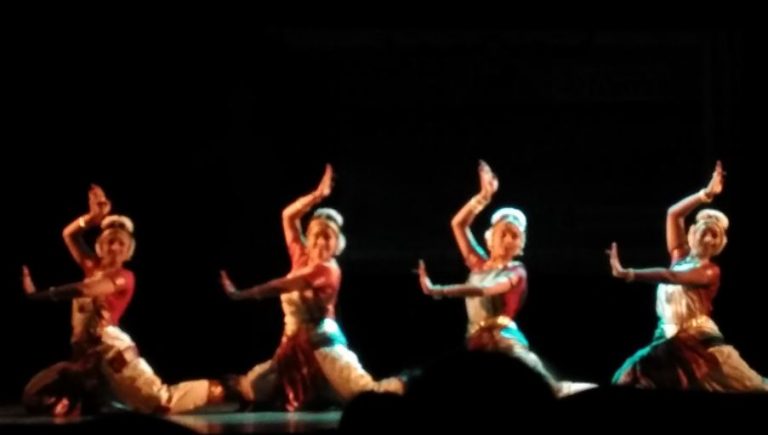
A typical ‘liberal’ is supposed to be ‘cultured’ and educated. But in the light of recent articles criticising a picture of Hanuman or the dance form of Bharatanatyam are shining examples of the perverted thought process of liberals and secularists alike. To quote Oscar Wilde, these liberals finding ‘ugly meanings in beautiful things are corrupt without being charming’.
Let us take a step back and analyse. Our classical dance forms like Bharatanatyam, Kuchipudi, Manipuri, Mohiniattam, Kathakali are all inspired by Hinduism and Hindu mythology. The inherent philosophy and creative space in Hinduism is the reason for the rich cultural heritage in India. Do you find a parallel to these art forms which are inspired by Islam or Christianity? No. Perhaps, these people are hell bent on diluting the importance or grandeur of our art forms in order to bring Hinduism down to the level of Abrahamic faiths.
A recent article that was a cause for outrage on social media
Rather than being a symbol of ‘majoritarianism’ the space for these art forms is shrinking day by day. Indian classical art cannot be considered a steady well paying ‘career’ in present-day India. This should change. In fact, I demand Hindutva brigade to step up efforts in preserving art forms that are closely related to Hinduism.
Our consciousness and pride about our heritage and culture must not be in reaction to hateful articles published by some portals. Our cultural pride must have a separate and sustained momentum of its own. Send your kids to learn Bharatanatyam or Carnatic music rather than Salsa. In North India, encourage kids to learn Hindustani music or Kathak. That is the surest way to protect our culture. Criticising ‘The Wire’ is a momentary act that will be forgotten in a day.
One may point out that our culture has been preserved silently without all the noise in media. A classic example of this was Yoga. Yoga was being practised by millions without much fanfare in media. Active promotion of it in the form of UN day for Yoga made it a spectacle. Similarly, our music and dance forms must also get a global recognition. Our art forms have the power to move the audience and the aesthetics that enthrals the heart.
Our classical dancers must become international icons like Shakira, Claude Monet or Micheal Jackson. They deserve it. To some extent, MS Subbulakshmi and Pandit Ravishankar did gain international fame during their time. One name that pops up in the contemporary music scene is that of Anoushka Shanker. We need Anoushka Shankar like figures in all Indian art forms.
I go back to Oscar Wilde’s preface again. He goes on to say “All art is at once surface and symbol. Those who go beneath the surface do so at their peril. Those who read the symbol do so at their peril. It is the spectator, and not life, that art really mirrors.” What a brilliant thought!
All art is at once surface and symbol. Bharatanatyam/Kathak and Carnatic music/Hindustani music are the surfaces. But they carry with them the symbolism of Indian civilisation. Our mythologies, our aesthetic tastes and our ethos. Again, ‘it is the spectator, and not life, that art really mirrors’. The criticism of Karan Acharya’s Hanuman or Bharatanatyam were a reflection of the mindset of the spectators rather than the ethos of India. Their sick minds filled with hatred for anything connected to Ancient heritage is something that must be recognised and condemned. But the project of Hindutva should not stop there.
It is the responsibility of Hindutva-wadis to preserve, spread and propagate our culture worldwide. If you are in India, make sure you attend concerts of Indian classical musicians or dancers even if you know nothing about it. It grows on you. If you are abroad, talk about Indian arts with your colleagues/classmates. Read and learn about it. That is a long term and meaningful action in response to the assault on Hindu heritage.