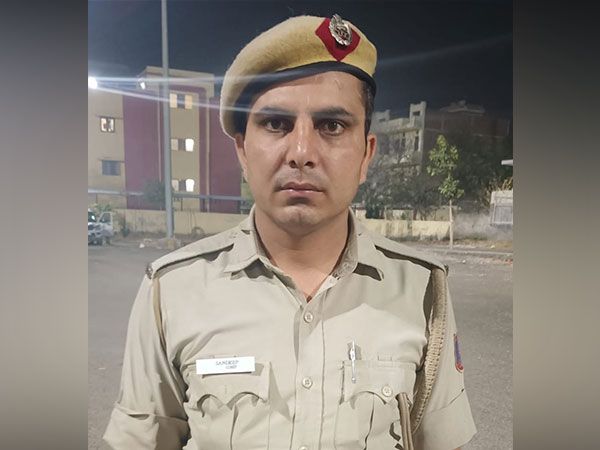
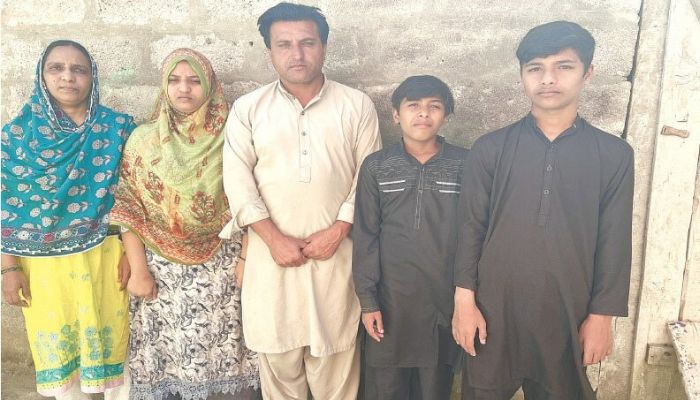
The District Sessions Court sentenced the twelve accused in the murder of former Indian cricketer Suresh Raina’s uncle Ashok Kumar to twelve years of imprisonment. The decision was pronounced by the District Court of Pathankot which also imposed a fine of Rs 2 lakh on each of the convicts.
The case was heard in the court of Additional District Judge (ADJ) Jitendra Pal Khurmi. The trial lasted for four years and the defence attorney presented arguments in favour of the perpetrators, however, the prosecution also produced all the evidence in the court which proved that the incident was committed by them. The court eventually gave its verdict after a tedious argument. They have been convicted of robbery and murder.
The convicts have been identified as Swarn alias Matching (28) from Uttar Pradesh, Shahrukh Khan alias Lukman (46) from Rajasthan, Mohabbat (26) from Rajasthan, Rihan alias Sonu (29) from Rajasthan, Aslam alias Naso (44) from Punjab, Tawajal Bibi (53) from Uttar Pradesh, Kazam alias Rida (60) from Uttar Pradesh, Chahat alias Jaan (38) from Uttar Pradesh, Jabrana (43) from Rajasthan, Sajan alias Amir (55) from Uttar Pradesh, Sehjan (18) from Uttar Pradesh and Chhaju alias Babu Mian (70) from Uttar Pradesh.
Background of the incident
The family of Ashok Kumar (58) was attacked by several unidentified miscreants on 19th August 2020, while they were sound asleep on the roof of their house. The incident happened in the Pathankot district’s Tharyal village. Kumar, a contractor by trade, was assaulted with sharp objects and instantly passed away. The neighbours were startled by the screaming and rushed into the house. They notified the police after witnessing the bloodied bodies of the family members. The police then hurriedly took Ashok Kumar’s son Kaushal Kumar (32) and wounded wife Asha Devi (55) to the hospital, where they both died while receiving treatment. His other son Apeen Kumar (24) and mother Satya Devi (80) also suffered severe injuries.
Amarinder Singh, the then-chief minister of Punjab, had taken notice of the matter and directed the creation of a Special Investigation Team (SIT) to look into it. The Inspector-General of Police (IGP) of Amritsar, the Senior Superintendent of Police of Pathankot, and the Superintendent of Police were among the individuals serving on the Special Investigation Team. During the inquiry, the SIT gathered evidence and discovered 100 persons who appeared suspect. Four years later, the 12 offenders were apprehended by the SIT from various locations. A case was filed at the Shahpurkandi Police Station following the arrests. The culprits were given a life sentence after the case was heard by the Pathankot District Magistrate Court.
On 8th August, the Waqf (Amendment) Bill, which seeks to “effectively address” issues related to the powers of the State Waqf Boards, registration and survey of waqf properties and removal of encroachments, was introduced in Lok Sabha by Minority Affairs Minister Kiren Rijiju. The bill was strongly opposed by Congress, DMK, NCP, Trinamool Congress, AIMIM and others saying its provisions were against federalism and the constitutional provisions.
While some members demanded the withdrawal of the bill, many suggested that it should be sent to a standing committee. Rijijiu agreed to the suggestions for further scrutiny of the bill by a parliamentary committee. The bill was sent to a Joint Parliamentary Committee (JPC) which recently invited public suggestions.
Source: JPC
The intent of the government is clear that is to regulate and bring some much-needed accountability through amendments. The rogue manner in which Waqf Boards across states have behaved in the past few years laying claims even on 1000s-year-old temples and predominantly Hindu-dominated areas must be stopped. However, mere amendments might just scratch the surface. There is no need to beat around the bush. There should be no hesitation in admitting that the Waqf system in India needs a thorough shake-up to save the rights and lands of communities other than Muslims.
A Brief History of Waqf in India
Waqf is an ancient system of endowments for religious causes of the Muslim community. In its current form, it has morphed into a vast empire with properties that could make real estate tycoons hide in a corner crying. Waqf Boards have their own set of rules that are exempted from any sort of scrutiny. So much so, that if land is arbitrarily declared Waqf property, the owner of the property would run pillar to post to find some legal way to take the ownership back. Even the government had to fight for years to get 123 properties in Delhi back from the Waqf Board that were “gifted” by the outgoing Congress-led UPA government in 2014.
Waqf is considered to be one of the significant branches of Islamic jurisprudence. However, the term “Waqf” has no mention in the Holy Book. The concepts seen are connotative in some of the verses. The foundational emergence of the idea can be found in the words and deeds of the Prophet. When Omer sought the advice of the Prophet for the pious use of a piece of land called Sammagh in Khaibar, the Prophet said: “Tie up the property and devote the usufruct to human beings and it is not to be sold or made the subject of gift or inheritance; devote its produce to your children, your kindred and the poor in the way of God.” In short, the Prophet dedicated a piece of land that he acquired in the canton of Khaibar for the use of travellers. Similarly, Abu Baker created a waqf in favour of his children.
The concept of Waqf was introduced in India with the advent of Islamic rule. During that period, waqf management was very theoretically centralized in nature. The idea of waqf in India dates back to the Delhi Sultanate when Sultan Muizuddin Sam Ghaor dedicated two villages in favour of the Jama Masjid of Multan and handed its administration to Shaikhul Islam. As Islamic rule flourished, the number of waqf properties increased.
In pre-British India, waqf was also closely linked to conversion and religious as well as cultural appropriation. In his book ‘The Preaching of Islam: A History of the Propagation of the Muslim Faith’, Thomas Arnold portrayed ‘Sufis’ as Islamic ‘missionaries’ among non-Muslims. Historian Muzaffar Alam in his book ‘The Languages of Political Islam: India 1200-1800’ also mentioned that Sufis used to convert Hindus to Islam. Richard Eaton in his work, ‘Approaches to the Study of Conversion to Islam in India’ called this process ‘accretion and reform’, whereby the Sufi saints would appropriate Hindu/local customs and nominally convert the population to Islam.
During the initial days, British India refrained from interfering with the Hindu and Muslim endowments. The first regulation that was Bengal Code Regulation XIX of 1810 was aimed to manage the rents and produce for the upkeep of mosques, temples and public buildings. In the same way, Madras Code Regulation VII 1817 was focused on the same for the Madras Presidency. By 1839, Christian missionaries’ objections led the British to reduce their control leading to mismanagement and embezzlement of temple and mosque funds. The then-government enacted the Religious Endowments Act of 1863 relieving the government of direct control and introducing management by local committees with court intervention when needed.
The Charitable Endowments Act of 1890 further established treasurers for charitable properties. In 1920, the Charitable and Religious Trusts Act allowed any interested person to seek judicial oversight of trusts, providing more stringent control.
The Mussalman Wakf Act of 1923 mandated proper accounting, but mismanagement persisted. Further, amendments like the Bengal Waqf Act (1934) and the Bihar Waqf Act were introduced. These legislations proved there was a need for dedicated laws to manage Muslim endowments which was in contrast with previous secular laws.
After independence, the Mussalman Waqf Act, of 1923 was applicable for managing Waqf properties. However, in 1954, the then-Congress Government introduced the Waqf Act, 1954, which centralised the administration of these properties. It also established Waqf Boards with significant powers. In 1984, the Waqf Inquiry Committee submitted a report leading to the Waqf (Amendment) Act which aimed to restructure the Waqf administration and address financial and operational loopholes. Later, The Waqf Act 1995 was enacted which consolidated and amended previous laws. It retained major provisions from the 1984 Amendment Act.
Why Waqf Act needs amendments?
The Waqf system involves property endowments for religious or charitable purposes, governed by Islamic law. However, the Waqf Act mandates taxpayer-funded surveys of Waqf properties every ten years, despite objections from the majority community (Section 4). The Act’s draconian provision (Section 40) allows the Waqf board to take over any property without notifying the current occupants, leaving them with the sole option of appealing to a Sharia-governed tribunal (Section 83), which non-Muslims find objectionable. Civil courts have no jurisdiction over such disputes (Section 85), and the Waqf Act contravenes the Limitation Act of 1963 by allowing perpetual claims on properties. The Act grants the Waqf board extensive powers, resulting in Waqf properties covering about 6 lakh acres nationwide, making it the third-largest landowner, raising concerns about the covert takeover of national resources under the protection of existing laws. This is just tip of the iceberg. Waqf, in its current form, has unlimited power which no autonomous body should have in a democratic country.
Cases where Waqf claimed land ownership
In Bihar, the Sunni Waqf Board issued a notice in the Hindu-majority Govindpur village of Fatuha near Patna claiming ownership of around 7 Hindu houses. The Sunni Waqf Board has been frequently issuing notices to residents of Govindpur village who have built houses and have been living there for many years. There are around 95% Hindu families living in this village. The Sunni The Sunni Waqf Board notice written in Urdu stated that this land belonged to the Waqf Board and that the residents should evacuate it within 30 30-day time period. The Waqf Board also erected a board regarding the same, which is still standing The afflicted continued to visit the officials but received no relief. When the residents approached the Patna High Court, the Waqf Board was unable to produce any proof for claiming the ownership of 7 Hindu houses and the Patna High Court thus granted relief to the Hindu residents.
In Kolhapur, the Mohamedan Education Society of Kolhapur and the assets it owned, worth Rs. 3,500 crores, were taken over by the State Waqf Board. On June 23, the waqf board sent directives to the trustee of the organization, stating that after carefully examining the paperwork, it had determined that the institution was a waqf institution and that its assets belonged to the waqf. However, the Mohamedan Education Society’s officeholders assert that the organization is not governed by the waqf board.
Even Allahabad High Court has to fight in the Supreme Court for its own land as someone built a mosque on it and the Sunni Waqf Board claimed ownership. On 13th March 2023, the Supreme Court of India dismissed the special leave petition submitted by the Waqf Masjid High Court and the UP Sunni Central Waqf Board against the High Court’s order to remove or demolish the mosque in its premises. The bench added if the construction is not removed within the 3-month period, the authorities will have permission to remove or demolish it. The court also permitted the petitioners to make a representation to the UP govt for an alternate land nearby which the state can consider if the law permits and if the lands are not required for any public purpose at present or in the future.
In August 2024, the Madhya Pradesh High Court overturned a decision by the MP Waqf Board that claimed the Burhanpur Fort as Waqf ownership. The Waqf Board claimed that the Tomb of Shah Shuja, the Tomb of Nadir Shah, Bibi Sahib’s Masjid, and the palace located in the Fort of Burhanpur were Waqf property.
In 2013, the Waqf Board requested the Archaeological Survey of India (ASI) to evacuate the sites, claiming ownership of them. However, the ASI filed a writ petition with the high court, contending that the property, located in Emagird village, Burhanpur, and spanning around 4.448 hectares, was already protected under the Ancient Monuments Preservation Act of 1904.
The ASI stated that these sites, which had been under their protection for decades, could not be reclassified as Waqf property without losing their status as protected monuments.
In April 2024, The Waqf Board’s controversial decision to declare the head office of the Surat Municipal Corporation (SMC), known as ‘Muglisara’ (Mughal Sarai), as waqf property, was finally quashed. In November 2021, the Waqf Board partially approved an application and declared the SMC Headquarters as Waqf property. The municipality then challenged the decision in the Waqf Tribunal in a legal battle. The tribunal finally passed an order on 3rd April 2024, dismissing the waqf board’s claim. The tribunal termed the Waqf Board’s order to declare SMC a Waqf property as illegal, against the established judicial principle of law, erroneous and arbitrary.
The Government’s proposal and call for change
The government of India deserves appreciation that it recognised that Waqf Boards need change. The proposed amendments suggest digitisation of assets, conducting annual audits by CAG and making Waqf properties publicly transparent under RTI. An advisory board with non-Muslim representation has also been proposed in the amendments. But we believe the scrutiny has to be far more. After all, it owns the third most pockets of land in the country. The Joint Parliamentary Committee has now sought suggestions from stakeholders including the public, NGOs, experts, and institutions. It is a must for every concerned citizen to tell JPC what changes they want in the Waqf Act.
Following are the changes already proposed in the Waqf Amendment Bill:
Formation of Waqf: The Act permits waqf formation through (i) declaration, (ii) recognition based on long-term use (waqf by user), or (iii) endowment when succession ends (waqf-alal-aulad). The Bill specifies that only a person practising Islam for at least five years can declare a waqf and must own the property. It removes waqf by a user and states that waqf-alal-aulad must not deny inheritance rights to any heirs, including women.
Government property as Waqf: The Bill stipulates that any government property identified as waqf will no longer be considered as such. In cases of uncertainty, the local Collector will determine ownership and report to the state government. If deemed government property, revenue records will be updated accordingly.
Determination of Waqf property: While the current Act authorizes the Waqf Board to decide if a property is a waqf, the Bill removes this provision. The absolute power will be in the hands of the District Collector who will decide if the property is Waqf or the Government’s land.
Survey of Waqf: The Act assigns the survey of Waqf to a Survey Commissioner and additional commissioners. The Bill shifts this responsibility to Collectors, with pending surveys to follow state revenue laws.
Central Waqf Council: The Act has a provision for a Central Wakf Council that advises the governments as well as the Wakf Boards. It is headed by the ex-officio chairperson, Union Minister in charge. It also provides for at least two members of the council to be women, while all members have to be Muslims. In this Bill, two non-Muslim members are included apart from MPs, former judges or eminent persons who can also be non-Muslims. The candidates of the Muslim organizations, scholars in Islamic Law and Chairpersons of the Waqf Board have to be Muslims, two being women.
Waqf boards: The Act allows the election of up to two members each from Muslim MPs, MLAs, MLCs, and Bar Council members to the Board. The Bill empowers state governments to nominate one person from each group, who need not be Muslim and requires two non-Muslim members. The Board must include at least one member each from Shias, Sunnis, and Backward classes of Muslims, and representatives from Bohra and Agakhani communities if they have waqf in the state. The Act requires at least two women members; the Bill specifies that two Muslim members must be women.
Composition of tribunals: The Act mandates the formation of Tribunals to resolve waqf disputes, chaired by a judge of a rank equivalent to Class-1, District, Sessions, or Civil Judge, with other members including a state officer of Additional District Magistrate rank and a person versed in Muslim law. The Bill removes the latter role, instead including (i) a current or former District Court judge as chairman, and (ii) a current or former officer of the rank of joint secretary to the state government.
Appeals on tribunal orders: Currently, Tribunal decisions are final, with limited appeal options in High Courts. The Bill removes the finality provision, allowing appeals to the High Court within 90 days.
Central government powers: The Bill gives the central government authority to regulate waqf registration, accounts publication, and proceedings of Waqf Boards. It also allows the central government to audit waqf accounts through the CAG or a designated officer, expanding upon the Act’s provision for state government audits.
Separate Waqf boards for Bohra and Agakhani: The Act allows separate Waqf Boards for Sunni and Shia sects if Shia waqf constitutes more than 15% of waqf properties or income in a state. The Bill extends this to include separate boards for Aghakhani and Bohra sects.
9 Suggestions for the Joint Parliamentary Committee (JPC)
Below are some suggestions for the Joint Parliamentary Committee (JPC) that could make a real difference.
1. Diversify the advisory board
Muslims make up only 14 per cent of the Indian population. Waqf boards, which own the third largest pockets of land in the country, remain only under the supervision of the Muslims. The government should consider bringing at least 40% participation of non-Muslims on the advisory boards of Waqf across states from different communities including Hindus, Sikhs, Jains, Christians and more. Furthermore, 60% Muslim representation should include representatives from all Muslim sects such as Sunni, Shia, Barelvi, Deobandi and more. A real representation will go a long way.
2. Report to government ministries
One of the most important amendments needed in the Waqf Act is the accountability of the advisory boards. They should report directly to a designated Ministry. A little oversight will not hurt anyone from any community, except those who perhaps have been enjoying the status quo for a long.
3. Judicial oversight
Waqf tribunals should be not autonomous bodies but should come under the supervision of High Courts and the Supreme Court. There is no need for a parallel justice system especially when non-Muslim communities are affected by it.
4. Equitable tax and subsidy treatment
The subsidies, taxes, debts, and rebates applicable to Waqf should be on par with those available to other religious and charitable organisations. There should be no special treatment.
5. Digitize and disclose
Digitisation of the waqf properties should be done as the top priority and the data should be available to the public. Any new addition to Waqf properties should be recorded and added to the data within 24 hours by all departments associated with it. Transparency should be at the same level as non-Waqf land asset records made available by the government.
6. Time-limited legal disputes
One of the biggest issues of this system is the pending legal matters. Any legal matter must be resolved within a specified time not more than three months. There is no need to drag the cases related to Waqf properties any longer than three months.
7. Rigorous annual audits
All Waqf Boards must undergo annual audits by the CAG or a separate designated authority. If regular businesses have to go through an audit, so should Waqf. Everyone in this country is equally answerable for their actions.
8. Scrutinise foreign funding
Foreign funding and funding from NGOs or organisations with vested interests should be banned with immediate effect. No one should be able to donate to the Waqf board without the government’s permission.
9. No more free-for-all land grabs
The ability to claim public, cultural, private and government properties as Waqf properties has to be snapped with immediate effect. If any property has to be declared as Waqf, it should be done through a long legal process that puts every step under strict scrutiny by different departments so that there is no chance of any possible land grab. Writing “Waqf” on any property should no longer be similar to writing a blank cheque.
A final note
The main aim of the amendments should be to dilute the powers of the Waqf Board so that they don’t run as per their whims and abide by the law of the land. The legal provisions should be formed in a way that scrutiny of Waqf Boards’ decisions becomes a must and everything goes through a proper judicial process.
The Congress party and its state government in Karnataka, which has been facing back-to-back corruption charges, are now facing serious allegations of Land Scam 3.0. Notably, on Monday (2nd September), BJP Rajya Sabha MP Lahar Singh Siroya demanded an independent investigation into the allotment of 19 acres of government land to an Institute run by the Congress President Kharge family’s trust, “free of cost”. He added that the 2017 audit report revealed that this was not done in the ‘larger public interest’.
Strikingly, the Congress party and its senior leaders are already facing mounting pressure from the opposition and legal troubles in the MUDA scam involving CM Siddaramaiah and the allocation of 5 acres of land to a trust managed and run by the family members of party President Mallikarjun Kharge, through ‘misuse of power’ and ‘flouting rules’.
Mr. Mallikarjun @kharge n his family are 'proudly' continuing the tradition that @RahulGandhi and his family have done for decades!
Cong leaders come to power by talking abt serving the poor, providing opportunities for the youth, 'khatakhat' & all that…but once in power,… pic.twitter.com/fz6PPb1hDs
A few weeks earlier, BJP MP Siroya flagged the irregularities and alleged scam in the allocation of a 5-acre plot to the Kharge family’s trust in an aerospace park near Bangalore. In a fresh revelation, he has now released documents stating that 19 acres of land were given to the Pali Institute, run by Siddhartha Vihara Trust – the Kharge family’s trust. While 16 acres (3 acres given later) were initially given to Pali Institute, run by Siddhartha Vihara Trust, on lease for 30 years, all 19 acres were later transferred ‘free of cost’ to the Institute run by Kharge family’s trust.
New documents reveal that 19 acres of government land was given FREE to the International Institute of Pali, Sanskrit and Comparative Philosophy in Gulbarga, run by the Siddhartha Vihara Trust managed by the Shri Mallikarjuna Kharge family. Trustees of the Siddhartha trust.. 1/7 pic.twitter.com/l5bMkCvBXC
Meanwhile, reacting to BJP MP’s allegations, Karnataka Minister Priyank Kharge defended the land allotment to the Pali Institute. Claiming that there are no wrongdoings in the allotment of government land to an Institute run by their family’s trust, he said, “Land is only leased to Pali Institute and there is no grant of land to Pali Institute. Land and any construction on the land is not owned by the Pali Institute.”
In a long post, Kharge claimed that the Karnataka Congress government assisted the Institute in line with the budget announcements of the Central and the state governments for the promotion of the Pali language.
. @LaharSingh_MP avare. Looks like your political brokering job isn’t doing too well and you need to win favour of your bosses.
Here are some facts for you:
The International Institute of Pali, Sanskrit and Comparative Philosophy, Kalaburgi has been established by the… https://t.co/Lket9dCxnk
— Priyank Kharge / ಪ್ರಿಯಾಂಕ್ ಖರ್ಗೆ (@PriyankKharge) September 2, 2024
BJP MP slammed Priyank Kharge for his lengthy post claiming that there was no wrongdoing in the government orders. Siroya reiterated his demand for a probe into this land allocation.
Thank you for your long cut and paste response to my short post. I have demanded for a probe and I stand by it. Also, if I don’t please my bosses can I please your bosses — the dynasty? https://t.co/Soz4aJAdV2
On 2nd September, the BJP MP released a detailed statement explaining the timeline of the land allocation as well as shared a media report which had accessed the deed documents of this said transfer of government land to an Institute-run by the Kharge family.
In his statement, Siroya said, “New documents reveal that 19 acres of government land was given FREE to the International Institute of Pali, Sanskrit and Comparative Philosophy in Gulbarga, run by the Siddhartha Vihara Trust managed by the Shri Mallikarjuna Kharge family.”
According to the reports, the trustees of this Siddhartha Vihar Trust include Congress President Mallikarjun Kharge, his wife Radhabai Kharge, his son-in-law and Gulbarga MP Radhakrishna, his son, who is also Karnataka Minister, Priyanka Kharge, and another son, Rahul Kharge. It was formed in July 1994.
The BJP MP added that the Congress President’s son-in-law Radhakrishna is the secretary of the Pali Institute.
According to the report in The File, the 19-acre land was allotted on lease in the name of educational purposes. However, the documents have revealed that the land worth approximately Rs 40 crores was allotted free of charge and an order was issued to that effect.
(Lease Deed, Credits – The File)
The report added, “The land was initially allotted on a 30-year lease basis to the International Trust for Pali, Sanskrit, and Comparative Philosophy in Survey No. 88/1 of Kusanur village, Kalburgi taluk.”
However, when the trust filed a request to modify this order, the then Congress government complied and issued an order to change the land allotted in lease form to ‘free’. According to the report, this was all completed in haste.
As per the Timeline, Siddaramaiah was the Chief Minister of Karnataka when the land was transferred to the Pali Institute free of cost and Priyanka Kharge was a Minister in his government. The File that accessed the government order and other documents in this regard has also included them in their report.
The report further states that the Kalburgi District Collector gave the lease deed to sitting MP Radhakrishna, who is also the secretary of the trust.
The content written in the government order and the Trust’s request statement to modify it
According to The File, the first order was issued on 4th March 2014, allotting 16 acres of land to the International Trust For Pali, Sanskrit, and Comparative Philosophy on a 30-year lease basis. This was done to establish a research center for Pali and Sanskrit languages in Survey No. 88/1 of Kusanur village for 30 years at 10% of the prevailing market price. Later it was sanctioned on a lease basis subject to the condition of increasing this lease amount to 10% every two years.
Two years later, another order was issued through which 3 acres of land in Survey No. 88/1 was further added to the previously leased land with the same conditions imposed as were mentioned in the 4th March 2014 order.
(Credits – The File)
Following these government orders, the Pali Institute submitted appeals to the government in March and August 2016. The Insitute claimed that it was doing special research related to the Pali language and was not undertaking any profitable activities other than educational purposes.
It added that it had representatives of both the central government and the state government, and its activities are supported by them. It lamented, “Thus the organization is not in a position to pay the expensive lease amount. Therefore, the proposed land should be allotted free instead of giving it on a 30-year lease.”
Accepting their request, the Congress government issued an order on 15th March 2017 through which all 19 acres were transferred to the Institute run by the Kharge family’s trust, free of cost, as stated by BJP MP Siroya.
(Audit Report on the said land allocation, shared by the BJP MP, Credit – The File)
The BJP MP noted that the 2017 audit report revealed that this was not done in the ‘larger public interest’ and thus demanded a probe into this land transfer and said, “I demand that this land transfer of 19 acres, like the KIADB land grant of 5 acres, should be probed by an independent agency.”
The BJP MP concluded by saying, “Another pertinent question to ask in this context is, did the Shri Siddaramaiah government come under pressure from Shri Kharge to grant parcels of land to their private trust or was the Congress government in Kamataka trying to please Shri Kharge?”
Last week, the Maharashtra police in Palghar arrested one doctor identified as Dr Mohammad Saad for posting derogatory social media status against Hindu saint Ramgiri Maharaj. The detained had posted a photo of Ramgiri Maharaj on social media demanding ‘Sar Tan Se Juda’ punishment for him. As per the local reports, the arrest happened as a result of a complaint filed by one individual identified as Rajesh Pal.
As per the complaint, Saad had posted a photo of Ramgiri Maharaj and captioned it saying, “Cow urine drinkers and cow dung eaters do not deserve to talk about our God. Whoever does so shall be issued Sar Tan Se Juda punishment.”
The incident is said to have happened weeks after Hindu saint Ramgiri Maharaj made alleged derogatory remarks about Islam and Prophet Mohammad. Saint Ramgiri Maharaj during a sermon in Panchale village of Nashik’s Sinnar region on 16th August indicated that several Islamists have disrespected women in the past because of the religious doctrine they follow.
You kept quiet during Nupur Sharma times… don't be silent this time.
— Sameet Thakkar (Modi Ka Parivar) (@thakkar_sameet) August 17, 2024
Widespread outrage attracting multiple FIRs against Ramgiri Maharaj
The remarks sparked wide outrage in several districts of Maharashtra including Chhatrapati Sambhajinagar, Nashik, Mumbai, and Pune with several Islamist leaders and organizations filing FIRs against Ramgiri Maharaj for allegedly hurting the religious sentiments of Muslims.
Maharashtra’s Chhatrapati Sambhajinagar city saw a spike in tensions in mid-August following a gathering of Muslims outside the City Chowk police station. The Muslim mob demanded death punishment for the Hindu saint at the police station. They also raised slogans of ‘Sar Tan Se Juda’, the video of which was making rounds on social media.
Further, an FIR against Ramgiri Maharaj was also booked under Section 302 (uttering words with deliberate intent to wound the religious feelings of any person) of the Bharatiya Nyaya Sanhita (BNS). The complainant, Rafehasan Ali Khan stated that the Hindu saint’s alleged derogatory remarks against Prophet Mohammed had the complete potential to create communal chaos in the state.
Meanwhile, another immediate complaint was filed in the Yeola region of Nashik district in Maharashtra. On 17th August, the Mumbra Police in Thane also filed an FIR against Ramgiri Maharaj for allegedly making derogatory remarks against Islam and Prophet Mohammed. 31-year-old Maulana Sajid-Ul-Rehman from Mumbra complained about the video after which the Mumbra Police in Thane booked the religious leader under sections 353(1)(B)(C), 353(2)(3), 299, 302, 196(1)(9), 356, 352, 351 of the Bhartiya Nyay Sanhita (BNS) for uttering words with intent to hurt religious feelings and others for outraging religious feelings, promoting enmity between groups over religion, intentional insult with intent to provoke breach of peace and criminal intimidation.
Also, in Pune’ Kondhwa region, several Islamists gathered at the city police station demanding the strictest punishment against the Hindu sage who is being supported by several Hindu community leaders amid the ongoing chaos.
Pune : Ramgiri Maharaj has made an objectionable statement about Prophet Muhammad (SAW). In response, people gathered at the Kondhwa Police Station , Pune to express their anger and demands for his arrest. #Punepic.twitter.com/HmALLUzA1j
The complaint copy filed at Kondhwa Police Station by Adv Tusif Chand Sheikh could be accessed by OpIndia. The complaint that booked Ramgiri Maharaj under sections 192, 196, 197, 299, 302, 353(2), 356(2), and 356(3) of the BNS, 2023 stated that Ramgiri Maharaj had made an alleged deliberate attempt to create communal tensions in the state.
“He has caused insult to the Islam following community and hurt the religious sentiments by commenting against Prophet Mohammed. His comments have complete potential to create communal chaos and disturb peace in the state. Strict action is a must,” Adv Sheikh, a complainant from Kondhwa could be quoted as saying.
Ramgiri Maharaj indicated changed context of his speech
Along with Islamists, several political leaders like NCP’s Jitendra Awhad, AIMIM’s Imtiaz Jaleel, etc claimed that the comments made by Ramgiri Maharaj were part of a political conspiracy. However, state CM Eknath Shinde extended support to the saint and stated that no one shall dare to even think of harming the saints in the state.
Ramgiri Maharaj meanwhile commenting on the issue stated that he did not say anything wrong and indicated that the context in which he made a statement about the Prophet Mohammad was changed to demand ‘Sar Tan Se Juda’ punishment against him.
“I did not say anything to create a rift. It was an hour-and-a-half sermon. A few parts of it were edited. I was talking about Bhishmacharya and Dharmaraj during the sermon. I was explaining what is Rajdharma and how should a king follow Rajdharma. I spoke giving an instance that injustice should not be tolerated. While raising this issue, the topic of Bangladesh came up,” Ramgiri Maharaj said.
Later Ramgiri Maharaj in the sermon stated that Hindus should stand together against the oppression of Hindus, atrocities that they usually face at the hands of Islamists. “I said that we should be organized against this, we should remain strong. No one should hate or envy. Don’t bother anyone. But if someone is harassing you, don’t bear it. What we said is written in the scriptures,” he said adding that nothing else could be said on this issue. “We are peace-loving people and our intentions are never to hurt anyone but to show society the truth,” he added.
As per the local reports, Ramgiri Maharaj also stated that he had complete trust in the Constitution written by Dr Babasaheb Ambedkar and the Indian Judiciary. “Whatever orders the court will pass, will be followed by us,” he had affirmed.
‘Sar Tan Se Juda’ protests across several states
It is important to note that massive protests erupted against Ramgiri Maharaj not only in Maharashtra but also in Madhya Pradesh, Uttar Pradesh forcing the administration to ensure peace. In Madhya Pradesh’s Chhatarpur, an Islamist mob gathered at the Kotwali police station and pelted stones at the police as they protested against the Hindu said for his alleged derogatory remarks. The police then booked around 150 people for injuring on-duty policemen and creating chaos at the premises. The administration had also executed bulldozer action against accused Islamists who possessed illegal properties. A detailed report on the case can be read here.
In Pune, hundreds of Islamists carried out a protest march without permission, and raised objectionable ‘Sar Tan Se Juda’ slogans in front of the Pune Collector’s office on 25th August. The Pune Police in this case booked around 300 persons under sections 189(2), 190, 196, and 223 of the Bharatiya Nyaya Sanhita (BNS), as well as sections 135 and 37(1) of the Maharashtra Police Act.
In the Mumbra region, several minors also participated in the Islamist protest and raised slogans of ‘Sar Tan Se Juda’ against Ramgiri Maharaj. The NCPCR then took cognizance of the event and asked the Thane administration to identify such children and produce them before the Child Welfare Committee. It also suggested organizing necessary counselling to be given to the children involved ensuring their psycho well-being and behaviour. The commission also stated that FIR be filed against all the perpetrators involved.
Amid this, in Uttar Pradesh, one Muslim identified as Imran extended support to Ramgiri Maharaj and indicated that the Islamists had misunderstood the context in which Ramgiri Maharaj had said things about Islam. He burnt the copy of the Quran and said that Islam was never a peaceful religion and that people following the religion were committing a mistake.
“Mohammed Paigamber has promoted all the wrong things. I agree I don’t know complete Islam but I have the guts to call out wrongdoings which these Maulanas and Muftis can’t do. I am just burning away this book. What these people have done to Bangladeshi Hindus is also wrong. Further, these Muslims are yelling slogans of ‘Sar Tan Se Juda’ against Swami Ramgiri Maharaj who spoke for Bangladeshi Hindus. These Muslims eliminated the context in which Swami Ramgiri Maharaj said and accused him of blasphemy. I am against all this, committing this act and accepting Sanatan Dharma,” he was quoted as saying.
The individual was arrested by the police and booked under sections 192, 299, 302, and 353 of the relevant act. Protests are also believed to have happened in the Belgavi region of Karnataka where Islamists demanded punishment against Ramgiri Maharaj.
Protests to cause fear in society need to pause
The current Islamist protests against Ramgiri Maharaj are reminiscent of the massive global protests against former BJP leader Nupur Sharma. Several Islamist communities around the world sought ‘Sar Tan Se Juda’ punishment for a woman who made similar alleged remarks that annoyed Islamists. Several Hindus who supported her were sliced in half, imprisoned, and tormented, causing fear and disgust across the Hindu community.
The Islamist criticism of Nupur Sharma’s alleged comments appeared to be a deliberate attempt to target a political leader, a woman, and, more importantly, a Hindu, to the point where global Islamists demanded ‘Sar Tan Se Juda’ punishment for her based on a video selectively posted on social media by Alt News’ Mohammed Zubair, without mentioning how her alleged remarks were in response to Tasleem Rehmani insulting Lord Shiva on live television. The incident prompted Islamists to cause havoc across the country. The same appears to be happening now in the case of Ramgri Maharaj.
Ramgiri Maharaj clarified the context in which he said what he said. He revealed that he made the statement in response to the ongoing atrocities committed by Islamists against Hindus in Bangladesh after the fall of the Hasina government. However, the Islamist community in India completely ignored the context and is now purposefully attacking the Hindu saint by disseminating an altered video of his one-and-a-half-hour sermon. The Islamist community in the state is additionally believed to have conducted counter-protests in the form of rallies demanding ‘Sar Tan Se Juda’ punishment, against Ramgiri Maharaj and the Sakal Hindu Samaj, which called for the safety of Hindus in Bangladesh.
Citizens of Maharashtra and India need to examine these delicate matters in the manner they deserve to be looked upon. Changing or omitting the context of particular words, propagating wild community sentiments via social media, purposefully attacking any individual, and then politicians playing politics on such matters are anything but indications of a failed individual conscience. It’s high time that targeting Hindus over such issues based on one community’s law stops. We all live in India, which is governed by the Constitution, which further protects ‘freedom of speech’, ‘freedom of religion’, and ‘expression’, all of which must be respected by every community within.
On Tuesday, 3rd September, the West Bengal legislative assembly passed ‘The Aparajita Woman and Child (West Bengal Criminal Laws Amendment) Bill 2024’ or the ‘anti-rape bill’. The bill is seen as an attempt to save Mamata Banerjee-led government’s face following RG Kar Medical College’s rape and murder case. Notably, the Chief Minister of West Bengal, Mamata Banerjee, had promised to pass a bill within 10 days to ensure capital punishment for the rapists.
VIDEO | West Bengal CM Mamata Banerjee (@MamataOfficial) speaks in the state Assembly as the TMC government tables the anti-rape Bill.
Titled the 'Aparajita Woman and Child Bill (West Bengal Criminal Laws and Amendment) Bill 2024,' the legislation aims to strengthen protections… pic.twitter.com/wlgVrhtm9R
Since the RG Kar Medical College Rape and Murder incident came to light, the Trinamool Congress (TMC) government of the state was under fire as there were allegedly several lapses in the investigation of the case initially by Kolkata Police. Furthermore, attempts to suppress the voices of the protesters had invited more criticism for the state government with even Supreme Court asking state machinery to avoid using force against the protesters.
The Bill can be seen as an attempt to divert the anger of the people of the state. While introducing the bill, CM Banerjee explained that the Bill further tightens the provisions of the Protection of Children from Sexual Offences (POCSO) Act and prescribes the death penalty for rapists if their acts result in the death of the victim or they suffer severe brain damage.
Mamata Banerjee said, “Under this, Aparajita Task Force will be formed. It will give punishment within 21 days of the preliminary report.” She also talked about the safety of female medical professionals and claimed that her government has sanctioned Rs 120 crore for the purpose which includes arranging toilets that are unavailable at this time. She said, “CCTV cameras will be installed everywhere. We have also made a provision of ‘Ratri Saathi’, which states that women will do 12 hours of duty, and if needed, doctors will extend their duty.”
“We have done this for the safety of women. Women working at night will be given full security, we have also asked hospitals, schools and mid-day meal centres to take appropriate steps,” the Bengal CM added.
Rape and murder of female doctor at RG Kar Medical College
On 9th August, a trainee female doctor’s body was found in the seminar hall of RG Kar Medical College in Kolkata, with subsequent examinations confirming that she had been raped. Her body bore 16 external and 9 internal injuries, and there were signs of bleeding from her eyes and private parts, indicating the brutal nature of the assault.
The rape and murder case of the 31-year-old trainee female doctor in Kolkata’s RG Kar Hospital has sparked nationwide protests to seek justice for the deceased victim. Hospital administration, Police, and the West Bengal government led by Mamata Banerjee have been facing massive public ire over the initial handling of the case and the subsequent ‘transfer’ of the controversial Hospital principal, Sandip Ghosh. Both the Calcutta High Court and the Supreme Court made several scathing remarks about the developments in the case, particularly ones revolving around Sandip Ghosh.
After the Netflix series ‘IC 814: The Kandahar Hijack’ triggered a row on social media over the names of the hijackers in the series , Netflix has updated its disclaimer with the real and code names of the hijackers.
“For the benefit of audiences unfamiliar with the 1999 hijacking of the Indian Airlines flight 814, the opening disclaimer has been updated to include the real and code names of the hijackers. The code names in the series reflect those used during the actual event. India has a rich culture of story-telling and we are committed to showcasing these stories and their authentic representation,” said Monika Shergill, Vice President, Content, Netflix India.
The updation of the disclaimer comes after the content head Netflix India Monika Shergill met the Joint Secretary, Ministry of Information and Broadcasting in Delhi on Tuesday. The meeting was held in view of certain contentious issues on the web series based on the Hijacking of IC-814.
Additionally, a Public Interest Litigation (PIL) had also been filed in the Delhi High Court by Surjit Singh Yadav, Chief of Hindu Sena, seeking a ban on the Netflix series.
The PIL alleged that the series distorts the actual identities of the terrorists involved in the hijacking. The petition claimed that the miniseries erroneously assigns Hindu names such as “Bhola” and “Shankar”–names associated with Lord Shiva–to the real hijackers Ibrahim Akhtar, Shahid Akhtar Sayeed, Sunny Ahmed Qazi, Zahoor Mistry, and Shakir.
BJP leader Amit Malviya had also criticised the series, saying that the filmmaker Anubhav Sinha legitimised the criminal intent of the hijackers.
“The hijackers of IC-814 were dreaded terrorists, who acquired aliases to hide their Muslim identities. Filmmaker Anubhav Sinha, legitimised their criminal intent, by furthering their non-Muslim names. Result? Decades later, people will think Hindus hijacked IC-814,” Malviya said in a post on X.
BJP leader Rajeev Chandrasekhar said he was happy that the Information and Broadcasting Ministry have taken congizance of the issue.
“I vividly remember IC-814. I was very aware of that accident and very involved in following that. Every man and woman in India and indeed in South Asia knows that the hijack of IC-814 from Kathmandu was committed by Pakistan’s ISI-backed terrorists. Now, nobody thinks that there were some people from India who did the hijacking. So how the people have Hindu names in that movie, I don’t know. But I’m very happy that the I&B Ministry and the GoI have taken cognizance of this,” Chandrasekhar said.
The Hijack drama is created by Anubhav Sinha and Trishant Shrivastava. It stars actors Naseeruddin Shah, Pankaj Kapur, Vijay Varma, Arvind Swamy, Patralekhaa and Dia Mirza.
The six-episode series is based the events of December 24, 1999 when an Indian Airlines flight IC 814 enroute to Delhi from Kathmandu was hijacked after take off from the Kathmandu Tribhuvan International Airport in Nepal shortly after it entered Indian airspace.
(This news report is published from a syndicated feed. Except for the headline, the content has not been written or edited by OpIndia staff)
Actress-turned-MP Kangana Ranaut’s film ‘Emergency’ which is based on the controversial period of the Emergency in India, has been postponed as the Censor Board of Film Certification (CBFC) has not provided it with the required certification for the release that was scheduled on 6th September. The delay has been attributed to the objections raised by the Sikh community’s representatives who have filed petitions in the court seeking a complete ban on the film. Kangana Ranaut, who herself has produced the film, expressed her frustration with the matter.
Kangana Ranaut said, “Meri film pe hi Emergency lag gayi hai. Bahut hi nirashajanak ye sthiti hai… [An Emergency has been imposed on my film now. It’s a terrible situation…]”. She questioned the inconsistencies in issuing certificates by CBFC noting that her film is not the first to depict the Emergency period. She pointed out that movies like ‘Indu Sarkar’ and ‘Sam Bahadur’ talked about that period and did not face any issues.
The contrary to the issue faced by film by Kangana Ranaut, Netflix’s new web series ‘IC 814: The Kandahar Hijack,’ directed by Anubhav Sinha streamed without any regulatory hurdles. It was only after the objections raised by the viewers that, the Ministry of Information and Broadcasting summoned Netflix India’s content head. The web series has attempted to mellow down the heinous crimes committed by the terrorists by hijacking the Indian plane.
The web series, based on the 1999 hijacking of Indian Airlines Flight 814 by Islamist terrorists, came under fire for distorting the grim realities of the event. In the web series, terrorists were shown playing antakshari with the hostages and even exchanging apologies.
Content moderation on OTT platforms is need of an hour
Looking at the type of propaganda content that runs freely on OTT platforms and gets removed or changed only after the uproar, there have been calls for strict moderation of the content on such platforms. Activists including Uday Mahurkar, founder of Save Culture Save Bharat Foundation and former Central Information Commissioner, have raised alarms over the double standards of content regulation between traditional cinema and OTT platforms.
In a recent letter addressed to the Ministry of Information and Broadcasting, Mahurkar criticised the unregulated nature of OTT platforms like Netflix. He accused these platforms of propagating content that undermines the country’s values and culture and distorting historical facts.
Dear Shri @AshwiniVaishnaw ji , the Draft Broadcasting Services (Regulation) Bill for which @MIB_India has invited suggestions is a toothless bill which promotes MIB patronage of P0rnographic content which is fuelling India’s r@pe crisis.
In his letter, he called into question the integrity of the self-regulatory framework currently governing OTT content. He said, “The content of many of the films and web series being streamed on OTT platforms nowadays is so horrendous, obscene, and unlawful that they would not even be approved for screening with an ‘A’ certificate in cinema halls by CBFC.” He further highlighted the inadequacy of the existing rules, stating, “The Information Technology (Intermediary Guidelines and Digital Media Ethics Code) Rules, 2021… have no effective mechanism for either screening or taking appropriate action for those who violate the guidelines.”
He specifically pointed out that OTT platforms are allowed to publish content without many restrictions when compared to traditional cinema. He said, “The Ministry of Information and Broadcasting is providing inadvertent patronage to pornographic content providers, enabling them to mainstream and normalize such content in India,” he wrote. He urged the government to take immediate action, citing the severe psychological impact of such content on young, impressionable minds. “The attempts to mainstream and normalize pornographic content by some OTT platforms is proving to have a severe psychological impact, especially on young impressionable minds, which is leading them to emulate the sexually perverted behaviour portrayed.”
The controversy about the content that is blocked by the censor board and that is allowed on OTT platforms has raised concerns over the lack of integrity in the latter. The hijacking of an Indian plane in 1999 resulted in the murder of a young engineer Rupin Katyal. Several passengers who were on the flight and their families still have the wounds of the incident.
Mahurkar specifically raised concerns over content published on OTT platforms such as MUBI, Netflix and ALTT (formerly known as Alt Balaji). He argued that there have been several reports in recent times that categorically pointed out that the accused in the cases were heavily addicted to porn.
He said, “The attempts to mainstream and normalize pornographic content by some OTT platforms is thus proving to be having a severe psychological impact, especially on young impressionable minds, which is leading them to emulate the sexually perverted behaviour portrayed in the pornographic content.”
While the certification process at CBFC needs to be standardised, the ministry must look for ways to moderate content on OTT platforms to ensure that no obscenity is displayed.
A day after ICICI bank exposed Congress’ half-baked lies against SEBI chief Madhabi Puri Buch, the party has refused to admit to its mistakes as it digs its heels on an issue that only exposes its poor understanding of finances and retirement instruments companies offer to woo their employees.
Congress spokesperson Pawan Khera on Tuesday questioned how could retirement benefits exceed the salary Ms Buch drew during her employment at ICICI. “How can the retirement benefits be more than the salary she drew in ICICI? We now want to demand that SEBI should come out clean, give clarification and respond to our charges,” Khera said.
#WATCH | Delhi | On allegations against SEBI Chairman, Congress leader Pawan Khera says, How can the retirement benefits be more than the salary she drew when she was in ICICI? We now want to demand that SEBI should come out clean, give a clarification and respond to our… pic.twitter.com/m4p5Evj1yu
A cursory glance at the response to the above tweet gives a glimpse into the buffoonery of the Congress spokesperson. But when you have Rahul Gandhi as your party leader, the followers are only going to be folks like Pawan Khera, Supriya Shrinate etc.
Anyway, Khera raised a question, pointing out that Buch’s average salary from 2007 to 2013-14, just before she retired from ICICI, was Rs 1.3 crore. However, the retirement benefit ICICI provided to Buch from 2016-17 to 2020-21 averaged Rs 2.77 crore per year. Khera questioned how a person’s ‘retirement benefit’ could exceed their salary as an employee.
Earlier, ICICI Bank rubbished Congress’ claims that Madhabi Puri Buch, the chairperson of the Securities and Exchange Board of India (SEBI), received salaries and ESOPs from the bank.
The Congress party had claimed a potential conflict of interest involving Madhabi Puri Buch, Chairperson of the Securities and Exchange Board of India (SEBI). On Monday, Congress spokesperson Pawan Khera alleged that Buch continued to receive a salary from ICICI Bank while serving as a SEBI member, which he claims represents a serious breach of ethics and accountability in public service.
Khera questioned SEBI’s integrity, arguing that the market regulator should uphold impartiality and independence. “How can fair regulation be ensured when SEBI’s head has been receiving a salary from a private entity like ICICI Bank?” he asked, stressing the importance of transparency within the regulatory body.
During the press briefing, Congress spokesperson Pawan Khera alleged that Buch received Rs 16.8 crore from ICICI Bank in 2017 and 2024, even while serving as a whole-time member of SEBI and later as its chairperson.
Khera further alleged that several ICICI Bank investigations were ongoing while Buch was receiving income from the group. He cited unnamed reports suggesting that the SEBI chief may have relaxed norms for the bank.
In response, the bank stated, “ICICI Bank or its group companies have not paid any salary or granted any ESOPs to Madhabi Puri Buch after her retirement, except for her retiral benefits.”
The bank clarified that Buch had opted for superannuation effective October 31, 2013. During her time with ICICI Group, she received compensation through salary, retiral benefits, bonuses, and ESOPs, as per the applicable policies.
The bank also explained that retired employees can exercise ESOPs within 10 years, indicating that Buch may have utilised these benefits later.
The bank emphasised that all payments made to Buch after her retirement were accrued during her employment with ICICI Group and consisted of ESOPs and retiral benefits.
While ICICI Bank’s brief response was enough to puncture holes in Congress’ claims against Buch, it, nevertheless, demonstrates the party’s willingness to institutionalise McCarthyism to attack corporates, officials in high positions, and influential leaders to insinuate crony capitalism against their arch-rivals, the BJP.
The baseless allegations against Buch came just weeks after another such malicious attempt was made by American firm Hindenberg Research to defame the SEBI chief and accuse her of “delaying” investigations in the Adani Group for her alleged links with the business entity. The allegations, however, weren’t bought by stock market watchers and trade analysts, who remain bullish on the Adani Group stocks.
With the controversy falling into oblivion, the Congress party came up with a fresh set of allegations to target Ms Buch, and sow doubts in the minds of an average citizen who may not be aware in detail of concepts like retiral benefits, ESOPs, etc.
ICICI, in its response, said Ms Buch may have exercised ESOPs and other retiral benefits she had accrued during her employment with ICICI. Employee Stock Ownership Plans (ESOPs) are employee benefit plans that grant workers ownership interest in the company. Organisations often offer employees ESOPs to align the interests of employees with those of the shareholders to achieve greater productivity and desired results, and fulfilling their goals.
In an ESOP, a company grants employees stock ownership, usually without requiring them to pay upfront. The shares are distributed to employees based on factors like their salary and length of service. Ms Buch may have received her share of company stocks based on her salary and her years of employment with ICICI.
Usually, there is a vesting period during which employees need to remain with the company before they fully own the shares. This helps motivate employees to stay with the company for a longer time.
After vesting, employees have the opportunity to “exercise” their stock options, allowing them to purchase shares at a set price, which is often below the market value. So Ms Buch may have had the option of buying shares below the market value and either selling them immediately to book profits or holding on to them till she believed would get her the best yield.
If the company does well, the share value rises, enabling employees to earn a profit by selling their shares at a higher price. As the share price of a company rests on multiple factors, including its performance and financials, it is also a fact that share price can’t be reined and good-performing organisations can see significant stock price appreciation, yielding better returns to employees than their salaries.
However, for the Congress party, which is recently obsessed with caste rhetorics, these profound concepts of ESOPs and retiral benefits must be hard to grasp, as reflected in the party’s recent hit job against Ms Buch. Or maybe the party is deliberately peddling lies, relying on its propaganda arms to amplify its allegations enough to create doubts in the minds of an average Indian, who they think has a similar IQ to their supreme leader and would lap up their claims as gospels.
A notorious Awami League MP (Comilla-6 constituency) named Bahauddin Bahar, who made derogatory comments about Durga Puja last year, has now taken refuge in India.
Bahauddin and his daughter Tahseen Bahar Suchana fled conflict-torn Bangladesh following the ouster of the country’s Prime Minister Sheikh Hasina.
Given that he belonged to the same party as Hasina and ‘protestors’ began hunting down the ruling politicians, Bahauddin escaped to India illegally about 10 days ago. He is currently staying with a politician in Kolkata and reportedly paying ₹10k each day for his stay.
কুমিল্লার সাবেক এমপি বাহাউদ্দিন বাহার এবং তার মেয়ে কুমিল্লা সিটি করপোরেশনের সাবেক মেয়র তাহসিন বাহার সুচনা ভারতে পালিয়েছেন। বর্তমানে বাবা মেয়ে কলকাতায় এক রাজনৈতিক নেতার আশ্রয়ে রয়েছেন।#BartaCenter#বার্তাসেন্টারpic.twitter.com/KsJWjDN5w1
Bahauddin’s daughter Tahseen entered India on Thursday (29th August) night through the Charanal border of Comilla’s Burichong upazila. A day later, she reportedly became active on Facebook.
On Saturday (31st August), she reached Kolkata after staying a day in Buxnagar. The illegal immigration was facilitated by one trader, close to an influential Awami League leader.
According to reports, Bahauddin Bahar and his daughter are planning to seek refuge in London.
House of Bahauddin Bahar vandalised, set on fire
Earlier on 5th August, it was reported that a mob of anti-government protestors attacked the residence of Bahauddin Bahar, located in Manoharpur Munsefbari area in Comilla city of Bangladesh.
In visuals that surfaced on social media, the protestors could be seen storming his house and later setting it ablaze.
The house of Awami Illegal Member of Parliament of Comilla-6 Constituency AKM Bahauddin Bahar was extensively vandalized and set on fire by the agitated crowd.
Awami League MP mocked Durga Puja, party goons attacked Hindus
On 4th October 2023, the Awami League MP (Comilla-6 constituency) stirred the hornet’s test by labelling Durga Puja as ‘Madjukto Puja‘ (festival of alcohol).
Bahauddin Bahar also claimed that if alcohol consumption was decreased, then, the number of Puja pandals would go down. He made similar comments associating ‘Durga Puja with alcohol’ on 12th October last year.
The development was confirmed by Rana Das Gupta, the General Secretary of the Hindu Buddhist Christian Unity Council.
When Hindus took out a protest march against the targeting of Durga Puja, they came under attack from amists belonging to the ‘Chhatra League’ and ‘Jubo League’.
Pakistan, whose claim to fame is breeding and exporting terrorism when they aren’t pleading with the International Monetary Fund (IMF) to provide their failing economy with bailout packages, has once again drawn the attention of the netizens for all the wrong reasons. The recent incident is related to Karl Edward Rice who is popularly known as Karl Rock on social media. Karl Rock travelled to Pakistan with the intent of exploring the nation but soon encountered people asking him to convert to Islam.
In a video uploaded on Karl Rock’s official YouTube account on 16th August, he can be seen talking to two young boys asking for donations in the name of a mosque/madrasa. “I just wanted to see what these guys are doing. Looks like they are taking donations.” He also gave them some money and added, “So that just goes into the donation box over there. This guy’s given money as well. This just helps support the locals.” He also went to the mosque to find out what was going on and saw some young boys inside gaining religious education.
“What happened,” one of the young boys asked him to which he replied, “I am seeing.” The former then told him to make a video because “it will come in handy.” Karl Rock told him that he was from New Zealand and mentioned, “I’m from overseas. I am roaming around and going to Gilgit.” The youngster again inquired whether he was from New Zealand and complimented the country’s cricket team. “I watch cricket. Your team is good.”
The YouTuber thanked him and questioned, “So the entire day you take money for the mosque?” The youth answered, “Yes,” and asked Karl Rock whether he was a Muslim. “No,” Karl Rock replied and then the young boy urged, “Become a Muslim, it’s good for you. Read the Kalma (the Muslim confession of faith), the mosque is right here. It’ll help you a lot. Do you know Kalma?” The YouTuber clarified, “I don’t understand. My Urdu is weak.” However, the persistent boy said, “You don’t know Urdu but do you know how to read Kalma?”
The young boy explained that he meant Kalma when the YouTuber misinterpreted the term as Karma, and reiterated, “Do you know Kalma? What is it?”
Karl Rock who had enough up to that point maintained, “I don’t understand it. Allah Hafiz (May God protect you),” before riding off on his bike and remarked, “So that’s what’s going on in there,” to hint at the religious conversion in the area. Surprisingly, the youngster stopped him and again parroted, “Come, we will read Kalma. Become a Muslim. It’ll help you a lot.” However, Karl simply said, “I don’t understand, brother. Bye.”
“While travelling through the remote Kaghan Valley in Pakistan’s Khyber Pakhtunkhwa province, I stopped to see why two young men were standing on the road with signs. I was a little too curious, so they asked if I wanted to convert to Islam. See what happens and how I get out of the situation. What would you do,” the description below the footage shared by Karl Rock read.
The YouTuber further noted, “While this is intimidating for foreign tourists, this young man didn’t have bad intentions. After I stopped, donated, and explored what was happening at the religious school, you can see why he thought I might be interested in joining.” The little kids might not have posed a threat but their action speaks volumes about the collective psyche of the country which was pointed out by the YouTuber’s next statement.
Karl Rock highlighted, “But while this fellow was harmless, later that day, in Naran, a local butcher tried more forcefully to convert me. My advice is to be cautious in remote areas of Pakistan and avoid being overly curious like me. If someone does try to convert you, it’s best to say you don’t understand and politely leave. Other travelers have told me they say they’re Muslim to avoid this altogether.” The YouTuber has nearly three million subscribers, more than 223K on Facebook and over 240K followers on Instagram.
The majority community in Pakistan is driven by the unwavering goal to force others to convert to Islam be it inside or outside the country. Notably, their celebrities, including popular cricketers such as Inzamam Ul Haq and Ahmed Shehzad, to name a few, have been captured doing the same even with players who belonged to other faiths.