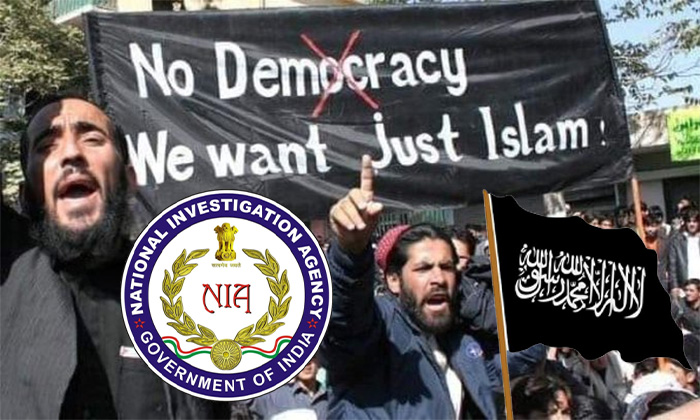
Students of High School, Manthala in Bhaderwah, Jammu and Kashmir have been protesting against teacher Arif Iqbal who has been insulting the Hindu religion in front of the pupils for a long time. He repeatedly made disparaging statements about Hinduism, insulting their religious feelings and mentally harassing the latter. The accused even told a student that he would pay Rs 15,000 to Rs 20,000 to their father and would sacrifice the youngster. While more investigation is ongoing, the alleged teacher has been suspended.
An individual who was also protesting along with the students stated, “Was he a teacher or on a mission from Tablighi Jamaat? He was frustrating children while extolling the virtues of his faith. He even forced female students in the tenth grade to rub their noses in his spit. The youngsters endured his atrocities for many days. On Friday, someone whistled either from outside or within the classroom, and he violently attacked every student. He beat them like animals.”
He added, “The teacher even thrashed the young girls. Their earrings fell off and some of them fainted due to the brutality. Afterwards, their parents arrived and all of them were given assurances. A large demonstration took place then just like today. They want the teacher to be arrested which is a genuine demand.” Another person declared, “Pakistan-sponsored terrorists want to infiltrate and take Jammu and Kashmir back to the 1990s. We have seen that time. We have born the lifeless bodies of our loved ones.”
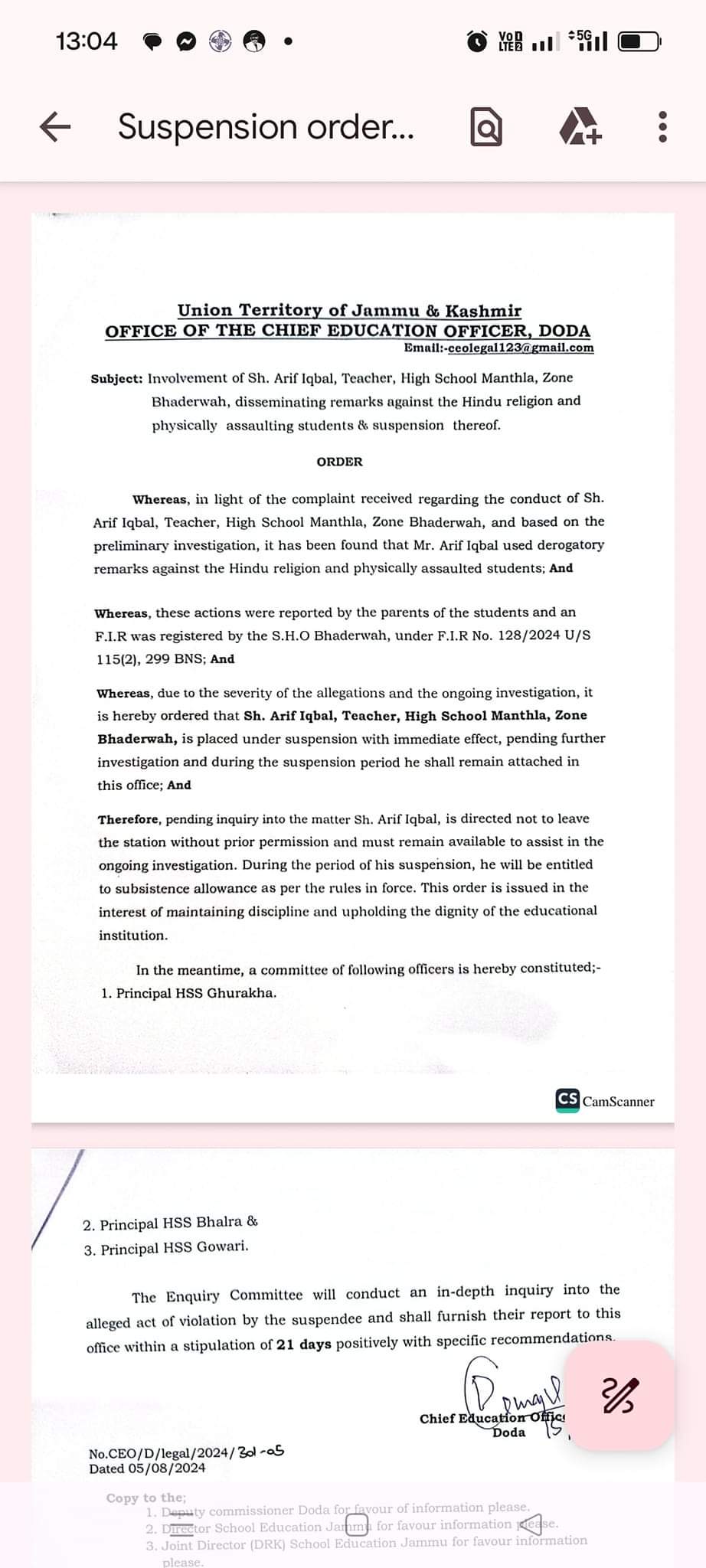
Meanwhile, Arif Iqbal has been ousted from his position by the office of the chief education officer, Doda, which highlighted that an initial inquiry established that he beat up children and made disparaging statements about the Hindu religion. The order read, “Whereas, in light of the complaint received regarding the conduct of Sh. Arif Iqbal, Teacher, High School Manthla, Zone Bhaderwah, and based on the preliminary investigation, it has been found that Mr Arif Iqbal used derogatory remarks against the Hindu religion and physically assaulted students.”
The parents of the victims reported these actions and a First Information Report (FIR) was filed by Station House Officer (SHO) Bhaderwah under F.I.R No. 128/2024 U/S 115(2), under section 299 (Deliberate and malicious acts, intended to outrage religious feelings of any class by insulting its religion or religious beliefs) of Bharatiya Nyaya Sanhita (BNS). It further mentioned, “Whereas, due to the severity of the allegations and the ongoing investigation, it is hereby ordered that Sh. Arif Iqbal, Teacher, High School Manthla, Zone Bhaderwah, is placed under suspension with immediate effect, pending further investigation and during the suspension period he shall remain attached in this office.”
Arif Iqbal has been instructed not to leave the station without permission while the issue is being looked into and he must continue to be accessible to help with the probe. The order noted, “During the period of his suspension, he will be entitled to subsistence allowance as per the rules in force. This order is issued in the interest of maintaining discipline and upholding the dignity of the educational institution.”
A committee comprised of Principal Higher Secondary School (HSS) Ghurakha, Principal HSS Bhalra and Principal HSS Gowari has been formed. It added, “The Enquiry Committee will conduct an in-depth inquiry into the alleged act of violation by the suspendee and shall furnish their report to this office within a stipulation of 21 days positively with specific recommendations.”
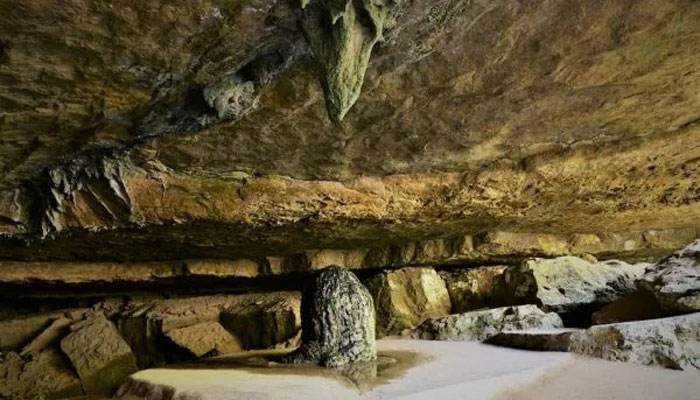
In a shocking development, Hindus have been banned from worshipping at a cave in Meghalaya that houses an ancient Shivalinga. Mawsynram Dorbar Shnong, a traditional village institution, has banned Hindu worship at Mawjymbuin Cave located in Mawsynram village in Khasi Hills. The ban has found support from churches and ministers in the government, while Hindu organisations are protesting against it. Mawjymbuin Cave has a natural stone formation of Shiva Lingam which is revered by Hindus.
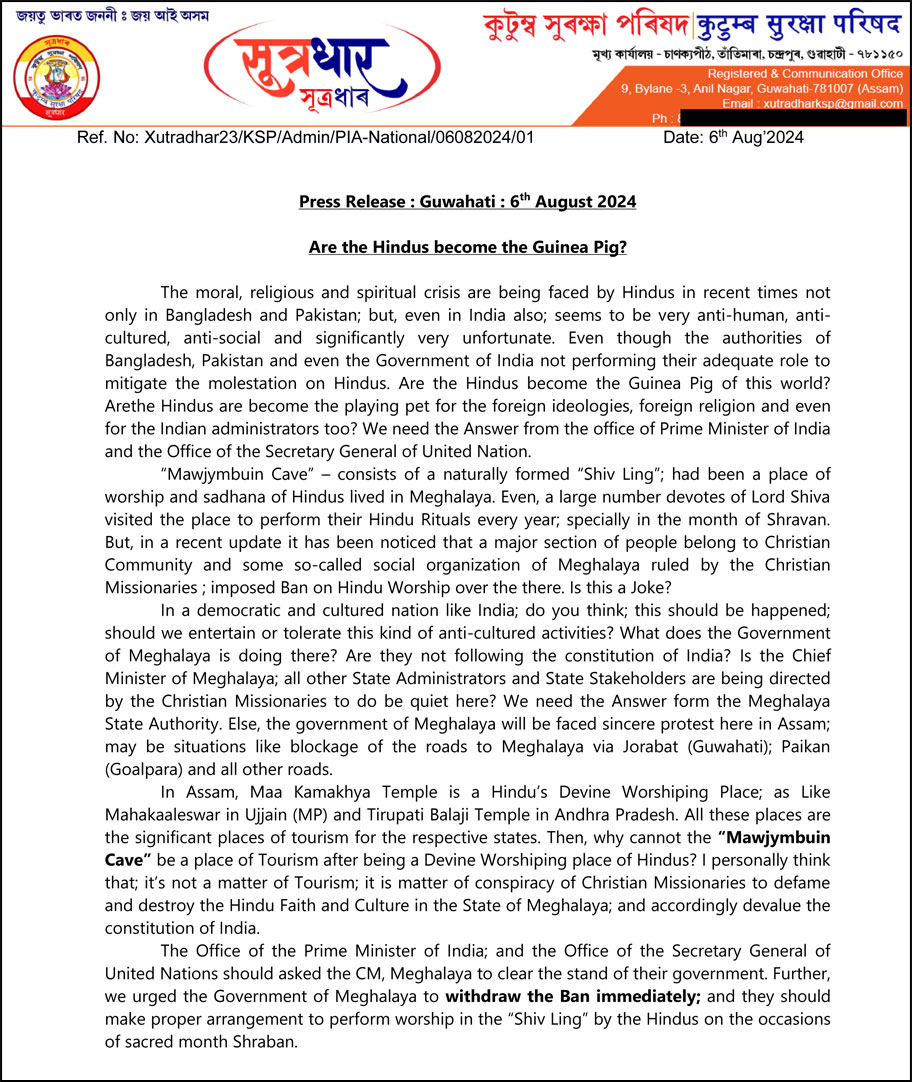
On 6th August, Kutumba Surakshya Parishad (KSP), held a press conference to mark their protest against Mawsynram Dorbar Shnong’s decision to ban Hindu worship in Mawjymbuin Cave. The decision to ban Hindu prayers has triggered protests by Hindu groups not only in Meghalaya but also in Assam.
Source: KSP
The decision to impose a ban came after reports suggested that Hindu devotees were planning to establish a place of worship at the cave. On 1st August, Mawsynram Dorbar Shnong’s executive committee announced that no group would be allowed to develop a place of worship at the cave. The decision came after the Hindu Yatra Pilgrimage group announced their plan to use the site for worship on 10th August and 11th August.
The group had initially requested permission from the East Khasi Hills Deputy Commissioner, RM Kurbah, which was refused. Then, they approached the Dorbar Shnong for permission. Dorbar Shnong expressed surprise at the fact that they were being bypassed initially by going directly to the DC.
Contrary to Hindu groups, local student groups Khasi Students’ Union (KSU) South West Khasi Hills District and KSU Lawbah Border Area Circle have supported the decision to ban Hindu prayers at the site. Though the Hindu groups have opposed the ban, Assistant Rangbah Shanong of Mawsynram, Hiamdor Rapsang, said in a statement that the decision was not against the Hindu faith but the aim was to prevent turning a tourist attraction into a public worship place.
Support to ban from student organisations
Student union leaders have issued a joint statement stating they would come out in support of the ban in the form of protests if needed. The statement read, “We will not accept any attempt to use force to establish the place of worship despite opposition from the Mawsynram Dorbar Shnong.” They emphasised the “need to preserve the natural form” of the cave.
Rulling coalition supports the decision to ban Hindu prayers
The ruling National People’s Party endorsed the resolution adopted by the Mawsynram village council to prevent Hindu religious rituals at the Mawjymbuin cave. Party spokesperson HM Shangpliang said, “Every NPP member is with the dorbar in this matter.” He added that the cave cannot be converted into a place of worship.
Meghalaya’s tourism minister Paul Lyngdoh supported the decision to ban worship at the site and highlighted the status of the cave as a tourist attraction that is visited by people of all faiths. He emphasised that if the cave is turned into a place of worship for any community, it would adversely affect tourism. “The decision is logical and reasonable as the cave is a major tourist attraction. Allowing a particular religion to set up a place of worship can harm tourism in the area,” the minister told reporters. “People from across the globe visit Mawjymbuin. A secular country like India cannot promote a place of worship in any tourist destination,” he further added.
The Meghalaya govt is keen to develop the site as a tourist place, not a religious place, the ruling coalition said.
Hindu organisations threaten to protest against the ban on Hindu worship
Responding to the ban, the Kutumba Surakshya Parishad (KSP), a Hindu organisation from Assam, threatened to block roads leading to Meghalaya from Assam if the ban was not lifted. In a press conference, KSP President Sanjay Ranjan Borah said that the organisation has demanded that the Meghalaya government should revoke the ban and make arrangements for Hindu worship during the sacred month of Shravan.
He said, “We need the answer from the Meghalaya state authority. Else, the Meghalaya government will face sincere protest here in Assam; there may be situations like blockage of the roads to Meghalaya via Jorabat (Guwahati); Paikan (Goalpara) and all other roads,” Borah said. He also urged Prime Minister Narendra Modi’s office to intervene in the matter.
Political and Religious Tensions
Speaking to the media, Borah accused social organisations and Christian missionaries in Meghalaya of hatching a conspiracy to defame and destroy the Hindu faith and culture. He said, “Why cannot the Mawjymbuin Cave be a place of tourism after being a divine worshipping place of Hindus? It’s not a matter of tourism; it is a matter of conspiracy of Christian Missionaries to defame and destroy the Hindu faith and culture in the state of Meghalaya.”
OpIndia talked to Borah to understand the matter further. In a statement, he said, “Mawjymbuin Cave” – consists of a naturally formed “Shiv Ling”; had been a place of worship and sadhana of Hindus lived in Meghalaya. Even, a large number of devotes of Lord Shiva visited the place to perform their Hindu Rituals every year; especially in the month of Shravan. But, in a recent update it has been noticed that a major section of people belong to the Christian Community and some so-called social organizations of Meghalaya ruled by the Christian Missionaries; imposed a Ban on Hindu Worship over there. Is this a Joke?”
He mentioned how Hindu temples in other states are major tourist attractions and questioned why Mayjymbuin Cave cannot be the same. He said, “In Assam, Maa Kamakhya Temple is a Hindu Devine Worshiping Place; Like Mahakaaleswar in Ujjain (MP) and Tirupati Balaji Temple in Andhra Pradesh. All these places are significant places of tourism for the respective states. Then, why cannot the “Mawjymbuin Cave” be a place of Tourism after being a divine worshipping place of Hindus? I think that; it’s not a matter of Tourism; it is a matter of conspiracy of Christian Missionaries to defame and destroy the Hindu Faith and Culture in the State of Meghalaya; and accordingly devalue the constitution of India.”
Mawjymbuin caves
In recent years, Mawjymbuin caves in Mawsynram in Khasi Hills have emerged as a tourist and religious hotspot in Meghalaya. The cave is famous for the naturally formed ‘Shivalinga’, which is made of stalagmite. This stalagmite in the Mawjymbuin cave resembles the ‘Shivalinga’ of Amarnath cave. The giant natural Shivling inside the cave has turned the spot into a sacred shrine for Hindus.
During the month of Shravan, hordes of Hindu pilgrims across the country visit the cave as part of the Kanwar Yatra. Lakhs of devotees clad in saffron attire walk barefoot to reach the cave and pay obeisance to the Shivalinga during the yatra.
The violence in Bangladesh after the fall of Sheikh Hasina has been unrelenting, especially against the Hindu minority of the Islamic nation. There have been several instances reported of Hindus coming under attack by Islamist mobs. Hindu houses have been burnt, some have been lynched and the unabated violence has engulfed several Hindu Temples in the country.
OpIndia spoke to a few Bangladeshi Hindus who told us that the dire situation is only getting worse for Hindus. Speaking to OpIndia, the Hindus in Bangladesh said that Jamaat-e-Islami members have been making a list of Hindu businesses and Hindu houses since the fall of Sheikh Hasina.
“They have made a list of the Hindu houses and Hindu businesses. There are some local Muslims who are trying the help us, but there are thousands trying to kill us”, the man said.
The Hindus who spoke to OpIndia said that the violence has been unabated throughout the night with Hindus hiding in fear.
It is pertinent to note that the World Hindu Federation, Bangladesh chapter has also released a list of incidents of violence where they have listen at least 3 abductions of Hindu women.
The Hindus, on the condition of anonymity due to security concerns also said that many are unable to move to safer locations because the Jamaat-e-Islami groups and others Islamists are roaming the streets with guns, making it impossible for them to move to safer locations.
Further, the mobile network and internet is being shut off intermittently so it is difficult for them to communicate with one another.
“It seems like they are doing everything they can to ensure Hindus don’t come together as a community to protect one another”. he said.
“The violence has not stopped. But because of these constraints, only a fraction of the instances are coming out in the open”, he added.
With over 2,200 people, mostly those linked to Jamaat-e-Islami being given bail after the fall of Sheikh Hasina, the situation is feared to get worse for the Hindu minority of Bangladesh.
“In some areas, the violence is now slowing down. But it also seems like a calm before the storm. The violence is unabated in rural areas even now”, he said.
The fact that Jamaat-e-Islami was making a list of Hindu houses and businesses was also corroborated in a report by BBC.
Speaking to a local Hindu, the BBC reported that the Hindu man’s mother, who runs a local school, received a phone call from her business partner, saying that people were making lists of properties to attack. The partner then said, “Your name is not on the list. But please be careful.”
On 5th August, it came to light that Jihadis attacked Hindus’ houses, shops and temples in Bangladesh in the guise of protests against the Sheikh Hasina government. Despite the resignation by Hasina from the Prime Minister’s post, the protests continued and so did the attack on Hindus. Minister of External Affairs Dr S Jaishankar has also expressed concerns over attacks on Hindus and other minorities in Bangladesh. Earlier, OpIndia reported about the list of several attacks released by the Bangladesh Hindu Buddhist Christian Unity Council and attacks reported by The Daily Star, a Bangladeshi newspaper. Several videos and photos of attacks on Hindus surfaced on social media.
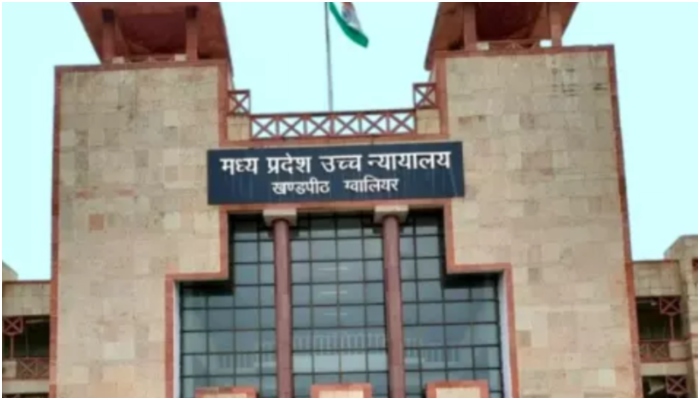
On Tuesday, 6th August, the Madhya Pradesh High Court overturned a decision by the MP Waqf Board that claimed the Burhanpur Fort as Waqf ownership. The Waqf Board claimed that the Tomb of Shah Shuja, the Tomb of Nadir Shah, Bibi Sahib’s Masjid, and the palace located in the Fort of Burhanpur were Waqf property.
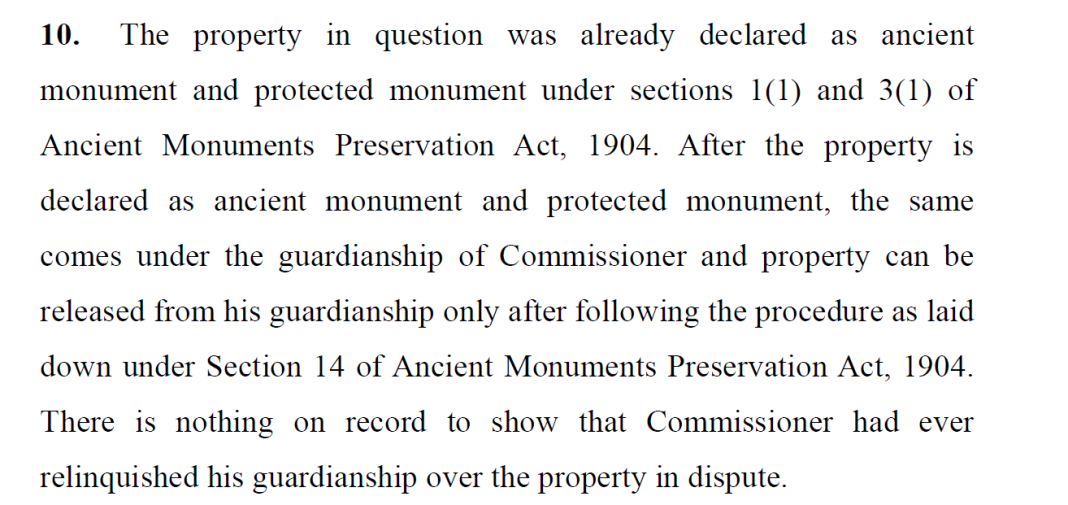
In 2013, the Waqf Board requested the Archaeological Survey of India (ASI) to evacuate the sites, claiming ownership of them. However, the ASI filed a writ petition with the high court, contending that the property, located in Emagird village, Burhanpur, and spanning around 4.448 hectares, was already protected under the Ancient Monuments Preservation Act of 1904.
The ASI stated that these sites, which had been under their protection for decades, could not be reclassified as Waqf property without losing their status as protected monuments.
Significant Courtroom Decision:
The Madhya Pradesh High Court has nullified an order by the MP Waqf Board, which declared the Tomb of Shah Shuja, Tomb of Nadir Shah, Bibi Sahib’s Masjid, and the palace within the Burhanpur Fort as Waqf property.
The Waqf Board, on the other hand, contended that it had appropriately declared the property as Waqf and hence had the jurisdiction to force the ASI to remove the premises. It further contended that the ASI should have sought the Waqf Tribunal rather than filing a writ petition.
In its July 26 assessment, Justice GS Ahluwalia’s bench noted that the properties had been officially designated as ancient monuments as far back as 1913 and 1925 through notifications issued under the Ancient Monuments Preservation Act, of 1904. It added that there was nothing documented to show that they had ever been released from the Chief Commissioner’s custody as provided under Section 11 of the Ancient Monuments Preservation Act, 1904.
It stated that the Waqf Board predicated its ownership claim on a notification issued under Section 5(2) of the Waqf Act of 1995 when the Act came into functioning. However, the Board failed to submit the entire notification to the court. Although no parties challenged the notification, the Board was unable to identify any legal provision that would render the notification issued under the Ancient Monuments Preservation Act, 1904 null and void unless the property was released by the Central Government or the Commissioner.
The court upheld the ASI’s stance by citing the Supreme Court’s ruling in Karnataka Board of Wakf vs. Government of India (2004), which ruled that properties listed on the Register of Ancient Protected Monuments are unquestionably owned and maintained by the Government of India.
As a result, the court determined that the notification referred to by the Board was incorrect. It stated that once a property was declared an ancient monument and protected monument, it could not be said to be an existing Waqf property on the date of the Waqf Act, 1995; thus, even if a notification had been sent declaring it to be a Waqf property, it would not consequently nullify the notifications issued under the Ancient Monuments Preservation Act, 1904.
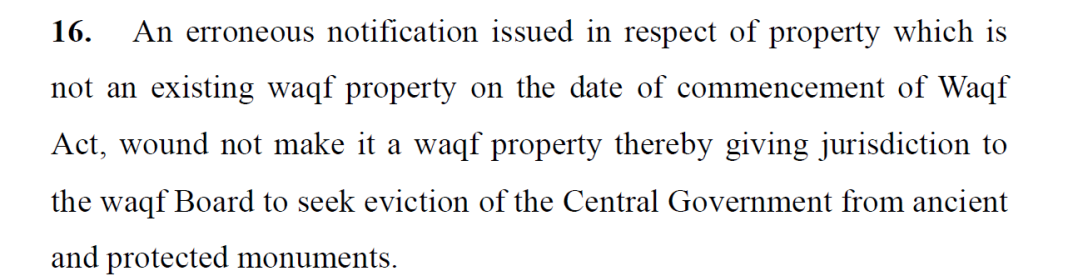
“An erroneous notification issued in respect of property which is not an existing Waqf property on the date of commencement of Waqf Act, would not make it a Waqf property thereby giving jurisdiction to the Waqf Board to seek eviction of the Central Government from ancient and protected monuments,” the high court held.
Justice GS Ahluwalia further remarked, “Why not claim the Taj Mahal as Waqf property? Tomorrow you might say the entire India is Waqf property. It won’t work like this that you’ll issue notifications and the property will be yours.” The court ruled that the CEO of the MP Waqf Board committed significant illegality by considering the monument’s waqf property and ordering the ASI to remove it.
The protests against the government in Bangladesh have descended into violence against the Hindu community. Numerous Hindu temples, homes, and other places that belonged to the Hindu community have been targeted for destruction. Countless Hindus have been victimized by the rampaging Islamists so far. Amid the turmoil, a video depicting Islamists breaking new benchmarks for savagery and hatred towards Hindus has gone viral.
In the video, Islamists can be seen encircling a dead victim lying on the ground. There’s a pool of blood beneath the deceased man’s broken head, and his hands are bound in handcuffs. Many men are gathered around him. With the aid of a stick, one man, whose face cannot be seen in the video, strips the deceased person naked and checks the victim’s private part for circumcision. Shouting ‘Hindu, Hindu’ over the corpse, the crowd hovering over the dead body laughs, realizing that the man is a Hindu because he is not circumcised.
Notably, the video in question is being taken down from all social media platforms, therefore we are not sharing it here.
Screengrab from the viral video
Hindus singled out and targeted by Islamists in Bangladesh
In Bangladesh, political turmoil ensued over reservations for government jobs. The Islamists seized the opportunity to launch an unbridled attack on the minority Hindus in the country.
On 5th August, it came to light that Jihadis attacked Hindus’ houses, shops and temples in Bangladesh in the guise of protests against the Sheikh Hasina government. Despite the resignation by Hasina from the Prime Minister’s post, the protests continued and so did the attack on Hindus. Minister of External Affairs Dr S Jaishankar has also expressed concerns over attacks on Hindus and other minorities in Bangladesh. Earlier, OpIndia reported about the list of 54 attacks released by the Bangladesh Hindu Buddhist Christian Unity Council and attacks reported by The Daily Star, a Bangladeshi newspaper. Several videos and photos of attacks on Hindus surfaced on social media.
As the day passed by, more details of the attacks with photos and videos surfaced. Apart from the 54 attacks reported earlier, yesterday (August 6, Tuesday), OpIndia detailed 7 more incidents of targeted violence against Hindus in Bangladesh after the coup against Sheikh Hasina.
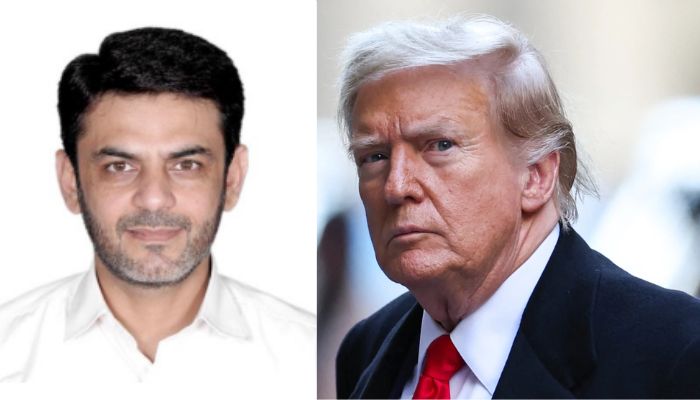
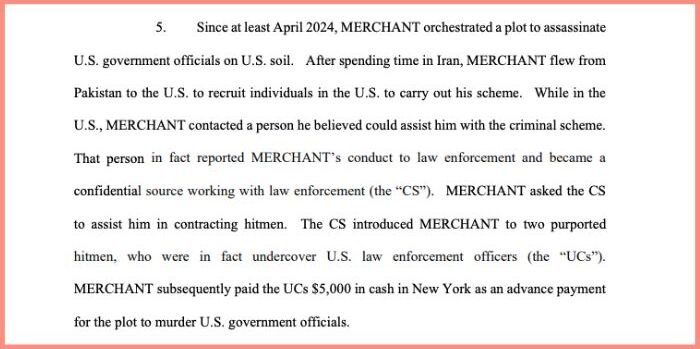
The US Justice Department has charged a Pakistani man identified as Asif Raza Merchant with alleged links to the Iranian government for seeking to carry out political assassinations in the United States, potentially targeting US government officials, according to court documents unsealed on Tuesday (6th August). This case has led the US government to increase security for former President Donald Trump and other officials.
While the criminal complaint does not name Donald Trump explicitly, multiple sources have told reporters that one of the intended targets of the alleged plot was Trump.
According to the court document, a federal complaint unsealed in Brooklyn has charged Asif Merchant, also known as “Asif Raza Merchant,” a 46-year-old Pakistani national, with murder-for-hire in connection with a foiled assassination plot targeting a politician or US government officials on American soil. The accused Pakistani national has a wife and children in Pakistan and another wife and children in Iran. Asif Raza frequently travelled to Iran, Iraq and Syria.
The plot was thwarted by law enforcement before any attack could be executed. Merchant is currently in federal custody in New York, according to the press release released by the FBI.
“Fortunately, the assassins Merchant allegedly tried to hire were undercover FBI Agents,” said Acting Assistant Director Christie Curtis of the FBI New York Field Office. “This case underscores the dedication and formidable efforts of our agents, analysts and prosecutors in New York, Houston, and Dallas. Their success in neutralizing this threat not only prevented a tragic outcome but also reaffirms the FBI’s commitment to protecting our nation and its citizens from both domestic and international threats.”
“Working on behalf of others overseas, Merchant planned the murder of US government officials on American soil,” said US Attorney Breon Peace for the Eastern District of New York. “This prosecution demonstrates that this Office and the entire US Department of Justice will take swift and decisive action to protect our nation’s security, our government officials and our citizens from foreign threats.”
Merchant travelled to New York City and worked with a hit man to carry out the assassinations in late August or early September, federal prosecutors said in a court complaint. The complaint says the plot was intended to target high-ranking US officials, potentially including Trump.
FBI investigators believe that the intended targets included Trump and other current and former US government officials.
According to the court document, Merchant orchestrated a plot to assassinate a politician or US government officials on US soil. In approximately April 2024, after spending time in Iran, Merchant arrived in the United States from Pakistan and contacted a person he believed could assist him with the scheme. This individual reported Merchant’s intentions to law enforcement and became a confidential source.
“On or about April 10, 2024, MERCHANT flew from Pakistan to Istanbul and then on to Houston, Texas on or about April 13, 2024, to recruit individuals to carry out his plot to assassinate U.S. government officials. Soon after arriving in the U.S., MERCHANT contacted the CS, under the guise of wanting to discuss potential business opportunities in the U.S. On or about April 22, 2024, MERCHANT traveled from Texas to New York to meet with the CS in person. MERCHANT told the CS that he and his uncle in Pakistan sold “yarn-dyed” clothing and suggested that the CS help MERCHANT sell the clothing in the U.S. MERCHANT instructed the CS to create a corporation in the U.S. which would enable them to do business together (“Corporation 1”),” the document reads.
In May this year, Asif Raza Merchant returned to Texas and dialled to the Confidential Source. Merchant offered him an opportunity to earn $100,000 in the “yarn-dyed” clothing business. The accused wanted to discuss the assassination plot with the CS in person.
In early June, during a meeting with the confidential source, Merchant outlined his assassination plot and suggested that this opportunity would not be a one-time event. He made a gesture resembling a gun while discussing the killing and specified that the targets would be “here,” referring to the United States.
“Those hurting Pakistan and the Muslim world would be killed”
Merchant’s plan included various criminal activities: stealing documents from a target’s residence, organizing protests, and ultimately assassinating a political figure or government official. He expressed concerns about security measures surrounding potential targets and discussed multiple scenarios for carrying out the assassination.
The Pakistani accused told the CS that “people who will be targeted are the ones who are hurting Pakistan and the world, [the] Muslim world. These are not normal people.” He also expressed his affinity for Iran.
Merchant asked the CS to arrange a meeting with trustworthy people who could execute his plan. The accused asked CS to bring people who could do the killing, 25 people who would pose as protestors to cause distraction and a woman to do reconnaissance. He also sought an untraceable phone to secure communication with those involved in the assassination plot.
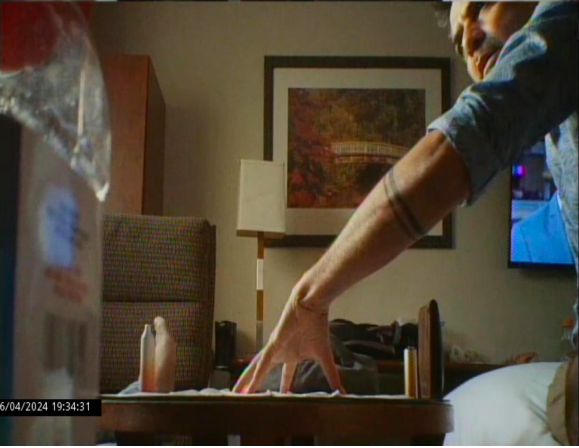
In a hotel room, Merchant used a napkin and certain objects to show a potential assassination plot, including the target, the crowd, the nearby buildings and streets. Merchant repeatedly asked CS about his strategy for assassinating the “target”.
Asif Raza Merchant gaming out the assassination plot on the napkin in a hotel room
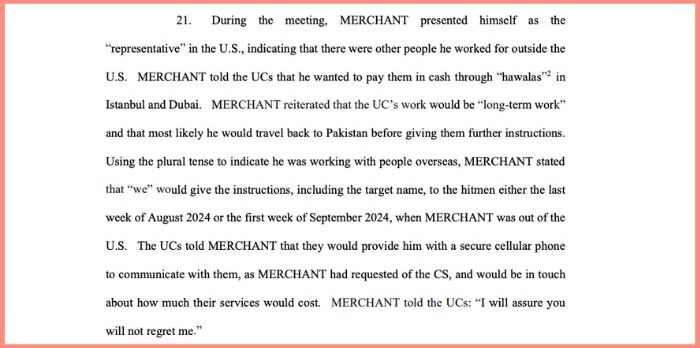
Asif Raza Merchant assured payment to UCs through Hawala
In mid-June, Merchant met with individuals he believed were hitmen but were in reality, undercover FBI agents (UCs). During these meetings, he sought their services for theft and assassination and indicated that he would provide instructions on whom to kill after leaving the US. During the meeting, Merchant claimed to be a representative in the US suggesting that he worked for other people outside the US. Asif Raza Merchant also told the UCs that he would pay them via “hawala” in Istanbul and Dubai.
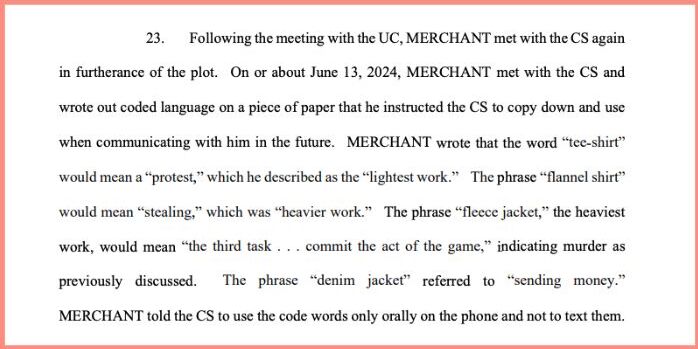
The codes for the Trump assassination plot
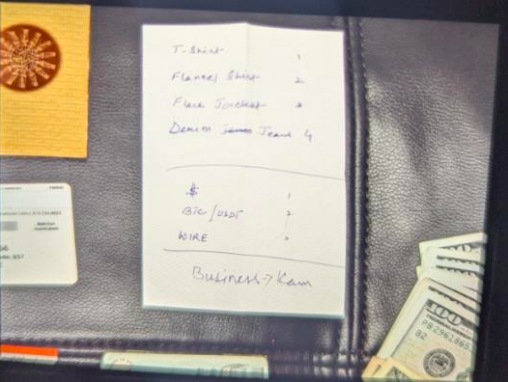
On 13th June 2024, Merchant met the Confidential Source again and wrote down certain code words for him and others involved in the plot to use for safe communication. The accused wrote that the word “tee-shirt” would mean a “protest,” which he described as the “lightest work.” The phrase “flannel shirt” would mean “stealing,” which was “heavier work.” The phrase “fleece jacket,” the heaviest work, would mean “the third task, commit the act of the game.”
Moreover, the accused Pakistani national instructed the Confidential Source to run a legitimate clothing business as they discussed earlier. He said that this would serve as a front for the plot so they could maintain communication. He also told the CS that the money being used for the assassination plot was Halal which means permissible in Islam.
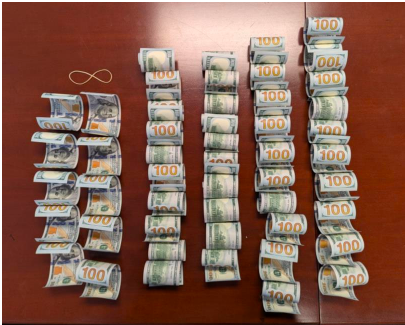
$5000 seized by FBI
Merchant arranged to pay USD 5,000 in cash as an advance for the assassination services and successfully delivered this payment on 21st June. Following this transaction, he made plans to leave the country on 12th July 2024, one day before Trump’s assassination attempt. However, law enforcement intervened and arrested him before he could depart.
Handwritten note with “codes” scribbled on it seized by the FBI from Asif Raza Merchant’s wallet (All images via US Justice Department)
Notably, it was earlier reported that the United States had received intelligence from a human source about an Iranian plot to kill Donald Trump weeks before the assassination attempt against the former US President leading to increased security measures for Trump. At that time, the officials said that there is no known connection between this Iranian plot and the 20-year-old who attempted to assassinate Trump on 12th July.
On Tuesday, August 6, Separate Dhaka Metropolitan Magistrate Courts granted bail to 2200 members of the Bangladesh Nationalist Party (BNP) and banned outfit Jamaat-e-Islami. They had been lodged in jail over recent turmoil across the country centring quota reform movement.
The accused who have been granted bail include BNP standing committee members Amir Khasru Mahmud Chowdhury, Nazrul Islam Khan, Senior Joint Secretary General Ruhul Kabir Rizvi, Shamsur Rahman alias Shimul Biswas, Saiful Alam Nirob, Rafikul Alam Maznu, Jamaat Secretary General Mia Golam Parwar and Bangladesh Jatiya Party Chairman Andaleev Rahman Partho.
Several other inmates who have been released on bail belong to the Pakistan-linked Jamaat-e-Islami (JeI) Bangladesh, the Islamist radical banned group, that has been running havoc on the streets of Bangladesh after the violent ouster of Sheikh Hasina and terrorising minority communities, particularly, Hindus.
Earlier, OpIndia reported how Pakistan’s ISI, Bangladesh Nationalist Party and Bangladesh JeI were the main actors that orchestrated and fueled the Hasina Out campaign in India’s neighbourhood. It is pertinent to note that JeI is a banned Islamist outfit that was responsible for the genocide of the Hindus and Bengali-speaking Muslims during the 1971 war.
India banned JeI in February 2019 in the wake of the terror attack in Pulwama that claimed the lives of forty paramilitary CRPF members.
Back then, the government had detained 350 leaders of the Jihadi terror outfit. Moreover, 70-Srinagar-based bank accounts were seized, assets worth Rs 52 crore were confiscated and action was initiated under the Unlawful Activities (Prevention) Act. The government crackdown had also affected the separatist organisation’s 400 schools, 350 mosques and 1000 seminaries across Jammu and Kashmir. In 2019 it was estimated that Jamaat-e-Islami has properties worth Rs 4,500 crores.
This year, on 27th February, the Union Home Ministry extended the ban on Jamaat-e-Islami (JeI) Jammu and Kashmir for another five years with immediate effect declaring it as an “unlawful association.”
The radical Jamaat-e-Islami J&K has long been at the centre of the Kashmir dispute, supporting separatist ideas and contesting Indian sovereignty over the area. It adheres to the teachings of Hasan Al Banna, Syed Qutb and Maulana Maududi which state that politics and society must be in line with Sharia. It backs Pakistan’s illegal claim to Kashmir.
Apart from terror activities, JeI Hind has been fueling and attempting to mainstream radicalism and extremism in India. In October 2023, the radical Islamic organisation Jamaat-e-Islami Hind (JIH) hosted an event to show ‘solidarity’ with the Hamas terrorists who massacred hundreds of innocent civilians in Israel.
OpIndia earlier widely reported how Jamaat-e-Islami orchestrated the hijabprotests in Karnataka using foreign funds. Apart from SIMI’s offshoot PFI, Jamaat-e-Islami also played an active role during the Hijab protest in Karnataka. Incidentally, the Hijab protesters had also received backing from the Pakistan branch of JeI and the nexus indicated that a meticulous plan had been hatched to instigate Muslim students in the coastal districts of Udupi, Dakshina Kannada to create chaos that could have eventually been used to radicalise and recruit young Muslims into their organisation.
The radical Islamist outfit had also supported AAP councillor Tahir Hussain who was arrested in connection with the murder of Intelligence Bureau sleuth Ankit Sharma during the anti-Hindu Delhi riots.
Now, amidst the unrest in Bangladesh, Islamists, including members of JeI have seen an opportunity to kill and torture the minority Hindus in the country and loot their properties. OpIndia has extensively been reporting on how Hindu minorities are being selectively targeted by Islamists under the garb of civil disobedience and non-cooperation with the Sheikh Hasina government.
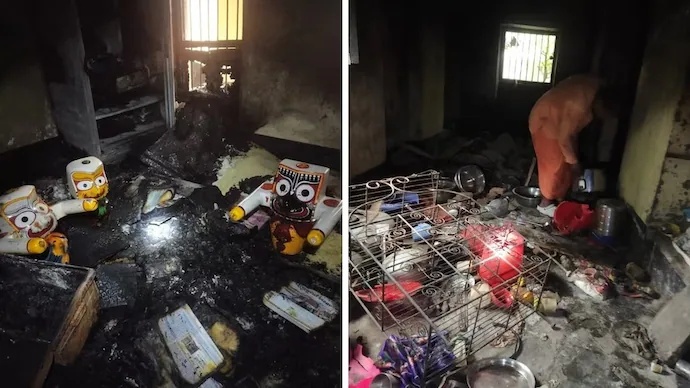
On 5th August, Sheikh Hasina resigned from the post of the Prime Minister of Bangladesh following months of protests against her government and Bangladeshi Army took over the administration. Amidst the unrest in the neighbouring country, Islamists saw an opportunity to kill and torture the minority Hindus in the country and loot their properties. One of the most devastating stories coming from Bangladesh is of famous Bangladeshi singer Rahul Ananda whose house was looted and burnt down by an Islamist mob.
On the afternoon of 5th August, an Islamist mob reached the house of the singer and frontman of the band Joler Gaan, Rahul Ananda. He was living in a rental house that was attacked. When the attack happened, Rahul, his wife Shukla, his son Tota and other family members were there. Somehow, they managed to escape and took shelter at an unknown location. Saiful Islam Journal, founding member of Joler Gaan said, “Rahul Da and his family are shaken and take shelter in a secret place known to only a few. We could not contact him yet. It was not even his house, it was a rental he had been living in for decades. I came to know the incident happened around 4 pm. From what I have heard, a group of goons attacked the residence and Rahul Da, Shukla Di (Rahul’s wife), Tota (his son) and other family members somehow got out.”
Speaking to The Daily Star, a family source said, “As soon as they had broken the gate, they started ravaging the house taking whatever they could find for themselves. They took everything from furniture and mirrors to valuables. After that, they torched the whole house along with Rahul da’s musical instruments.” There were around 3,000 irreplaceable musical instruments at the house which he designed and made over the years. The monetary value of household items could be close to Tk 10 lakh, but Jarnal said, “But how could you put a price on the instruments which he so lovingly built?”
Sadly, some of the “friends” of the singer tried to whitewash the incident as an attack on a Hindu singer suggesting the attack took place because the house was adjacent to Bangabandhu Sheikh Mujibur Rahman’s in Dhanmondi 32.
On their Instagram account, the band posted a video comprising of old visuals of the instruments and the condition of the house post-attack. The video is heartbreaking, to say at least.
In a long Facebook post, they posted a song and wrote that Rahul’s house was not just his but of the whole team. They created several songs and many melodies there. It was the official studio of Water Music where the team did all the studio work including recording mixing and editing. The post read, “Maybe we can rebuild this musical instrument, song or arranged family in a long time. But, how can I extinguish this fire of anger and vengeance? Why can’t we conquer everything with love and affection? If I fail to come forward in the same way to protect the freedom I dream of, then I sing my song in a broken heart with extreme disappointment, humiliation and shame.”
Notably, in September 2023, France’s President Emmanuel Macron made a friendly visit to Rahul’s house making it a centre of attention across the country.
The house, where Rahul lived, was a 140-year-old place which has now been burnt to ashes with all the memories and history it contained.
The National Investigation Agency (NIA) on August 6 informed that they have filed a chargesheet against 4 men for radicalising youths and recruiting them for terrorist outfit ISIS. The accused have been identified as Jameel Basha, Mohammed Hussain, Irshath and Syed Abdur Rahman, a statement issued by the NIA said. The accused have been charged under the relevant sections of the IPC and UA (P) Act.
The chargesheet relates to the case filed by the NIA Chennai branch in August last year, based on the investigation into the blast triggered by an explosives-laden car outside the Sangameswarar Temple temple at Kottaimedu in Coimbatore in 2022.
The charge sheet pertains to case RC-01/2023/NIA/CHE, which was initiated by the NIA Chennai branch in August 2023 following discoveries made in the Coimbatore car bomb blast case, the statement read.
The NIA, during the investigation into the explosion that was triggered outside an ancient temple in Coimbatore, had established that the majority of the accused arrested in the case were engaged in the recruitment of gullible youth to the ISIS fold for the commission of unlawful and terrorist activities.
The religious indoctrination was carried out by the accused at an Arabic language centre called Madras Arabic College (at Coimbatore), later rechristened as Kovai Arabic College, the statement said.
Jameel Basha was the patron and chief mentor, who had guided his alumni to establish Arabic language centres at the district level, it said. The centre at Coimbatore was set up by Mohammed Hussain and Irshath.
According to NIA’s statement, Jameel Basha’s live or recorded speeches were played for the students at these centres. Social media platforms were also utilized to radicalize young people.
The IED planted in a car exploded outside the Coimbatore temple “as part of the violent jehad espoused by the accused”, the agency said.
The investigation agency further stated that accused Jamesha Mubeen, who died, was radicalized by accused Syed Abdur Rahman and swore allegiance to Darul-e-Islam, or ISIS. He carried out the IED blast as part of the terrorist group’s anti-India campaign.
Coimbatore blast
On October 23, 2022, there was an explosion at about 4 AM in a Maruti car just opposite the Kottai Eswaran temple in the Ukkadam area of Coimbatore. The vehicle, a Maruti 800 hatchback, was shattered into pieces as a result of the bomb blast. One Islamist accused identified as Jamesha Mubin also died in the incident.
It was reported earlier, that Mubin was an engineering graduate and was influenced by ISIS. He was caught on CCTV, loading a large object (LPG cylinder) wrapped in a white bag onto his Maruti 800 car. It was around 11:25 pm. Mubin was accompanied by 3 other men, namely, Mohammad Riyaz, Feroz Ismail, and Mohammad Navaz Ismail.
The Police during the investigation also recovered unexploded LPG cylinders, steel balls, glass pebbles, and aluminum and iron nails from the spot. A total of 6 people, namely, Mohammad Thalka, Mohammad Azarudheen, Riyaz, Nawaz, Afsar Khan, and Feroz had been arrested in connection to the case. The accused were charged under Section 174 of the Code of Criminal Procedure and Section 3A of the Explosive Substances Act by the Ukkadam police.
Coimbatore car blast terrorist Jamesha Mubin was completely radicalised
Investigators probing the October 23 Coimbatore blast had concluded that Jamesha Mubin was indeed on a suicide mission as he had shaved his body before the mission, a usual practice of suicide bombers following ISIS ideology.
Among the handwritten entries in Tamil that Tamil Nadu police found at Jamesha Mubin’s home in the Kottaimedu neighbourhood of Ukkadam were references to Muslims as “second-class citizens,” the Citizenship (Amendment) Act, the hijab dispute in Karnataka, and a flow diagram with the names of Gods from various religions.
Along with a prayer that featured on the IS flag, Mubeen inscribed on the slate in Tamil, which translates to ‘those who dare to touch Allah’s house will be uprooted,’ according to the source. “We have evidence that he was influenced by videos of Sri Lankan Easter bombings mastermind Maulvi Zaharan Bin Hashim,” the official said.
Mubeen also left a scribbling on a white piece of paper that stated the call to Jihad,” an officer said.
Following concerns and criticism regarding the Budget proposal to remove the indexation benefit on long-term capital gains (LTCG) from the sale of unlisted assets, the government has decided to offer taxpayers a choice in cases of property sales. Taxpayers can choose to either pay LTCG tax at a rate of 20 per cent with the indexation benefit or at the new rate of 12.5 per cent without the indexation benefit. Taxpayers would be expected to pay the lower of the two tax amounts, according to amendments in the Finance Bill.
These amendments are seen as a significant rollback of the earlier LTCG-related Budget announcements. Initially, the government defended the new LTCG tax regime, arguing that the removal of the indexation benefit was offset by the lower 12.5 per cent tax rate for most property transactions. However, the proposals faced backlash, with demands for a rollback or relief from various sectors, including real estate investors and property owners.
“For the transfer of a long-term capital asset, such as land or buildings, by an individual or Hindu Undivided Family (HUF), acquired before July 23, 2024, the taxpayer can calculate their taxes under the new scheme (12.5 per cent without indexation) and the old scheme (20 per cent with indexation) and pay the lower of the two amounts,” a source explained, detailing the key amendment.