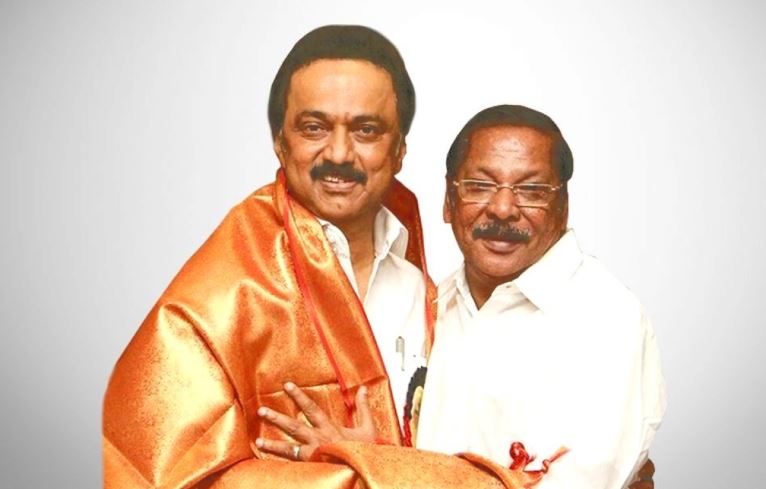
Senior Dravida Munnetra Kazhagam (DMK) leader, former Rajya Sabha MP and party’s organisational secretary R S Bharathi came under fire from Bharatiya Janata Party (BJP) Tamil Nadu state president K Annamalai for his remarks made during a protest his party staged against NEET-UG examination. The former claimed that the Dravidian movement was the cause of the ubiquity of BA degrees in Tamil Nadu and as a result, even a dog could now earn a bachelor’s degree. K Annamalai asked Chief Minister MK Stalin to take action against him for insulting the student community.
Kancheepuram MLA Ezhilarasan, the wing secretary of the DMK students, organized the demonstration named “No More NEET” where R S Bharathi alleged, “I am a lawyer BL educated. Ezhilarasan is BE, BL. All these did not come from a clan or gotra. If it was not for the alms of the Dravidian movement and communal GO, so many doctors and so many people with B.E degrees would not have come. When I studied BA, only one person in the town had studied BA. Then they will write the title on the name board outside the house. Now everyone in the town is studying for a degree, even a dog is getting a BA degree. Dravidian movement is responsible for this development.”
The controversial statement drew a strong response from the BJP as K Annamalai slammed R S Bharathi and charged that his remarks had insulted the entire student community and added it was wrong to portray that the success of students was because of some favour being done by the DMK. Furthermore, he mentioned that the DMK, which had opened just 5 medical colleges in the state was going around town claiming that it was responsible for increasing the number of doctors in the state. He accused that the party has only created people like R S Bharathi who insult the students who advance in life because of their hard work and the efforts of their parents but give credit to DMK for their growth.
எப்போதெல்லாம், திமுக ஆட்சிக்கு, பொதுமக்களிடையே பலத்த எதிர்ப்பு வருகிறதோ, அப்போதெல்லாம், அறிவாலய வாசலிலேயே இருக்கும் திரு. ஆர்.எஸ்.பாரதியை ஏவி விடுவார்கள் போல. கள்ளக்குறிச்சியில், திமுக ஆதரவோடு நடந்த கள்ளச்சாராய விற்பனையில் 65 உயிர்கள் பலியானதை மடைமாற்ற, திரு. ஆர்.எஸ்.பாரதியைக்… pic.twitter.com/yLjpcK9Lkh
Notably, R S Bharathi is notorious for giving contentious statements in the past as well. He previously claimed that the Dalits would never have been able to become judges in the state. He was taken into custody by the Central Crime Branch of the Chennai city police in May 2020 over the remarks. He referred to a judge and declared that the indulgence of the DMK leadership during the period of former chief minister M Karunanidhi led to the admission of numerous Dalits into the court.
“If Tamil Nadu remains the best state, it is because of the Dravidian movement. No Harijan has become a judge of the High Court in Madhya Pradesh. After Karunanidhi became Chief Minister A Varadarajan was appointed as HC judge. Seven or eight others from the Adi Dravidar community went on to become judges after that. It is the alms given by the Dravidian Movement,” he claimed while addressing an event in Anbagam (the DMK youth wing headquarters), but later apologized for his remarks.
He didn’t even spare the highest court in the country and charged, “Ava(Brahmins) have come back. I say with heartburn that the Supreme Court has become a Rashtriya Swayamsevak Sangh (RSS) camp. I am an advocate, but this is my grievance.”
He also slammed senior Bharatiya Janata Party leader H Raja and called him a “loafer” and then a “Brahmin dog.” He announced, “Had I not held a position in the party, I would have become a terrorist to take on these people (those criticising the Dravidian movement). People in other states are fools. Particularly, in North India they are all fools.” He even went so far as to draw comparisons between the media outlets and Mumbai’s “Red Light Area.”
He alleged, “They have a debate on this. These television guys are scoundrels. No one is as corrupt as them. They are running the channels like the red light area in Mumbai. Just because they are getting money, they raise anything (issue). The press guys don’t have any jobs. They don’t write anything when others do something. When (Arvind) Kejriwal hired Prashant Kishor, they didn’t write about it. Narendra Modi used him but they didn’t write. Many others employed him, but no one wrote. However, when he came to DMK in Tamil Nadu, they talked out of jealousy.”
The DMK leader also made racist and derogatory comments about the people of Nagaland in 2023 while attacking the governor. He alleged, “What is the governor doing? He just wants to create problems for the ruling government. We have seen so many governors, but what he does is create a fuss and drag us into a fight. He refuses to sign the bills we send. I addressed a gathering about what happened to him in Nagaland. They chased him away,” at a function commemorating the 100th anniversary celebrations of former Tamil Nadu Chief Minister and DMK patriarch Karunanidhi.
He added, “Don’t mistake me. I am just quoting an example. The people of Nagaland eat dog meat. If someone who eats dog meat themselves has so much self-respect that they chased away this governor, then imagine how much self-respect Tamils, who consume food with salt, would have. The day he was chased away, the people of Nagaland celebrated it like Deepavali.”
Last year, he ridiculed north Indian labourers in yet another attack on the governor and in a public meeting claimed, “I had earlier stated that those who sell Soan papdi and Panipuri don’t know the pride of Tamil Nadu. I said this in a meeting. I came to know that many have come from Bihar and I think the Governor (RN Ravi) has similarly come by train. There is an old saying in villages, ‘Don’t count the leaves (banana leaves used as plates for feast), if you are asked to pick it.’ The governor’s job is similar to picking up leaves. The address is like the food on the leaves. You (Governor) are a cook. You should have cooked it and left it at that. If you plan to keep something, will the person who is eating be quiet? I’m not boasting. If it was Jayalalithaa’s rule, he (Governor) would have been attacked and that party men also would not be quiet.”
The state of Maharashtra is witnessing a massive increase in crime incidents against Hindus. Especially after the Lok Sabha Elections where the Muslim community in the state managed to get the NCP (Sharad Pawar), Shiv Sena (UBT), and INC in the majority, Islamists have seemingly become fearless and are launching unnecessary attacks on the Hindu activists or leaders. The state stood shaken last week as it saw around 7-8 incidents where the Islamists attacked the Hindu community people just for belonging to one particular region.
1. Akshay Dhavre attacked for raising voice against Islamists in Pune:
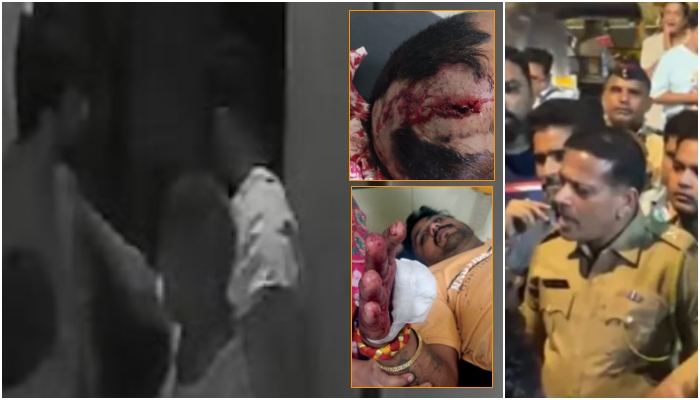
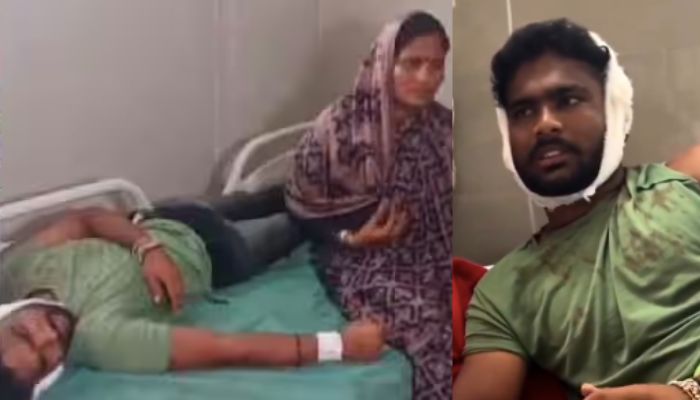
The most dreadful incident happened in the Lohiyanagar region of Maharashtra’s Pune district last week when a Hindu activist identified as Akshay Dhavre was attacked by Atul Khan, Salman Sheikh, Sultan Sheikh, Aslam Patel, Asif Sheikh, and 4 others. The Hindu Dalit activist was attacked by the Islamists only for belonging to a particular region and keeping an association with the BJP.
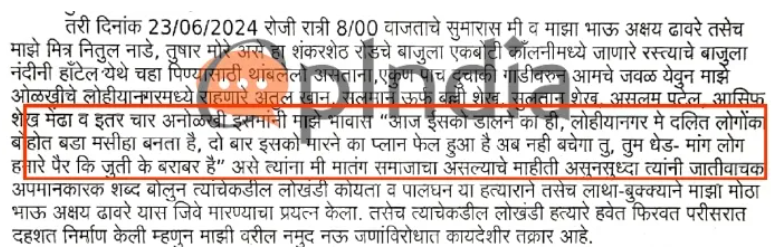
A detailed report in this case was obtained by OpIndia. The accused persons were booked by the Khadak Police Station u/s 307, 324, 323, 143, 147, 148 of the Indian Penal Code, 1860, sections 4 and 25 of the Arms Act, 1959; sections 37(1), 135 of the Maharashtra Police Act, 1951 and sections 3(1)(2) and 3(1)(10) of the SC/ST Act, 1989.
On 23rd June, Sunday the victim and his friends were having tea on the Shankarsheth Road. The accused persons, from nowhere arrived on the spot on bikes and began issuing threats to Akshay. “Today we’ll do with him. He is God for many Dalits in Lohiyanagar. Earlier two attempts to kill him were foiled. Not this time,” the accused persons were heard saying as mentioned in the FIR.
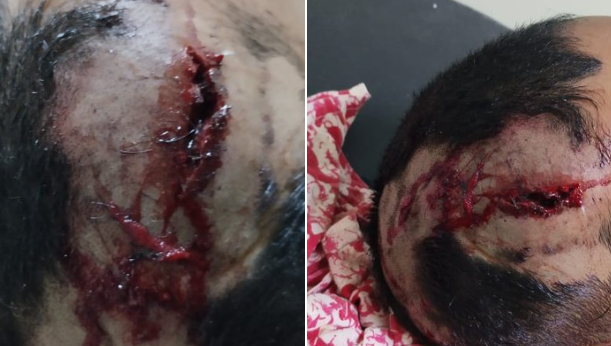
The accused persons later launched a sword attack on Akshay who managed to foil it by moving aside. In this, however, he lost his thumb. Later, Salman Sheikh and Asif Sheikh attacked the victim from behind resulting in severe injuries on his head and back. Also, the other accused persons assaulted the victim and his friends after which the latter ran to save their lives.
Meanwhile, the accused persons followed the victim and his friends and said, “Hum yaha ke baap hai. Hamare khilaf agar koi bolega to hum use jinda nhi chodenge (We rule over this locality. We won’t spare anyone who would talk against us).” A detailed report of this case can be read here.
— Legal Rights Observatory- LRO (@LegalLro) June 24, 2024
2. Rohit Thorat, another Hindu Dalit leader attacked in Pune:
On June 27th, another similar incident was reported from the Lohiyanagar area of Pune district. Hindu Dalit leader, Rohit Thorat was attacked by a group of people identified as Afridi Sheikh, also known as Budha, Sadiq Sajja, Izaz Sheikh, and four additional accomplices. Thorat’s attack looks to be a targeted act of violence directed at his advocacy and efforts to improve the Dalit community. Thorat has been outspoken about the challenges and injustices that his community faces, making him a possible target for those who oppose his work.
FIR copy of the said incident has been obtained by OpIndia.
Image- LRO
As per the FIR copy obtained by OpIndia, the victim was stopped and assaulted by the accused persons in the Gangadha area of Pune when he was on his way home from a relative’s place. The accused persons crashed their autorickshaw vehicles onto the bike on which the victim was traveling and began threatening him. They then launched an attack on the victim using sharp weapons.
The Police have imposed sections 307, 504, 341, 506, 34 of the Indian Penal Code, 37(1), 135 of the Maharashtra Police Act, and sections 3(1)(r), 3(1)(s), 3(2), 3(v), 3(2)(va) and 6 of the SC/ST Act, 1989.
3. Third dangerous attack on Hindu activist in Pune’s Lohiyanagar: LRO
In a series, the third dreadful attack on a Hindu activist was reported from the Lohiyanagar area of Pune district. On July 3rd, Matang Hindu Dalit youth, Adarsh Bharat Hanuvate was attacked, the incident of which was shared by the Legal Rights Observatory (LRO) on social media. LRO accused the Pune City Police of torturing Hindus and concealing the crime in a desperate bid to protect the perpetrators.
3rd #Jihadi attack on #Dalit youth at Lohia Nagar, Pune! Matang Hindu Dalit youth Adarsh Bharat Hanuvate attacked by Jihadis in a bid to vacate Dalits n usurp their land. @PuneCityPolice torturing Hindus in a desparate bid to cover up crime n to shield Izalmists! We urge HM… pic.twitter.com/BSDDtfIhpi
— Legal Rights Observatory- LRO (@LegalLro) July 3, 2024
Apart from Pune and Mumbai, the state witnessed attacks also in other parts of the state like Nanded, Sabhajinagar and Thane.
4. Muslim students assault 4 Hindus for celebrating T20 World Cup win in Nanded, Maharashtra
On June 29th, around 20-25 Muslim youngsters launched an attack on 4 Hindu students after the latter celebrated India’s T20 World Cup win in the Shrinagar area of Maharashtra’s Nanded region. The accused persons barged into the rented apartment of the 4 victims and assaulted them with sticks and iron rods. The victims identified as Vikas Madvi, Raosaheb Narwade, Balaji Pormad, and Kapil Patil suffered serious injuries after which a police complaint was filed. The entire incident got recorded in the CCTV footage in which the accused can be seen barging into the apartment of the victims. The owner of the apartment confirmed the incident and said that all the accused persons belonged to the Muslim community.
5. Hindu woman molested in Thane, threatened not to file an FIR
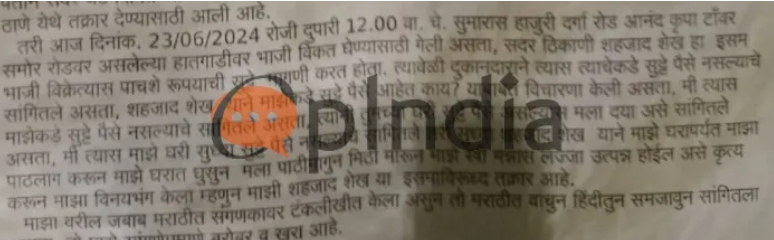
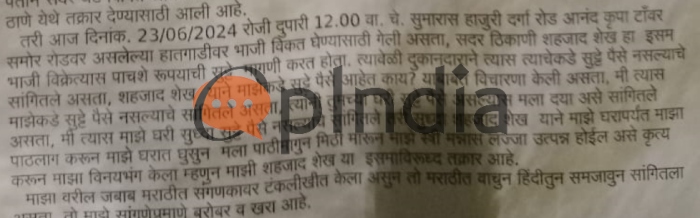
On the 27th, an FIR was registered by Thane Police against one Shehzad Sheikh u/s 354, 354D, and 452 of the IPC after he molested a Hindu woman and forced her to keep her mouth shut. The incident happened last week in the Hajuri Dargah region of Thane which is Muslim dominated area. The accused molested a Hindu woman residing in the area. Later, as per the Sakal Hindu Samaj, when the woman went to seek shelter in a nearby temple, around 100-150 Muslims entered the temple wearing shoes and threatened the woman not to file a police complaint.
Earlier, the Hindu community claimed that the police resisted filing an FIR in the case but later the accused was arrested. However, it is alleged that the accused was being protected by an individual identified as Vikas R who faked his contacts with CM Eknath Shinde. He is said to have pressured the police to take minimal action against the accused. The accused as per the LRO was just put in judicial custody instead of police custody.
Sakal Hindu Samaj, Thane on June 30th organized a massive protest and demanded strict punishment against the accused. The Hindus also stated that their religious feelings had been hurt after Muslims entered the temple wearing shoes. The FIR copy of the said incident has been obtained by OpIndia. The Hindu locals demand the strictest punishment against the accused and safety for the Hindu community residing in the area.
6. Nasirullah raped minor boy inside madrassa in Thane
On Wednesday (26th June), a First Information Report (FIR) was registered against a man for raping an 11-year-old boy inside the premises of a madrassa in Bhiwandi city in the Thane district of Maharashtra. As per reports, the accused was identified as Nasirullah. The incident occurred when the victim was studying in the madrassa. Nasirullah sexually assaulted the minor boy and performed ‘unnatural sex.’
The accused has been booked under the Prevention of Child Sexual Offences (POCSO) Act. The cops have now launched a search operation to nab Nasirullah.
7. Hindu family in Pune assaulted by Monty Sayyed, Jameer, and others after argument over Eid goat hitting a child
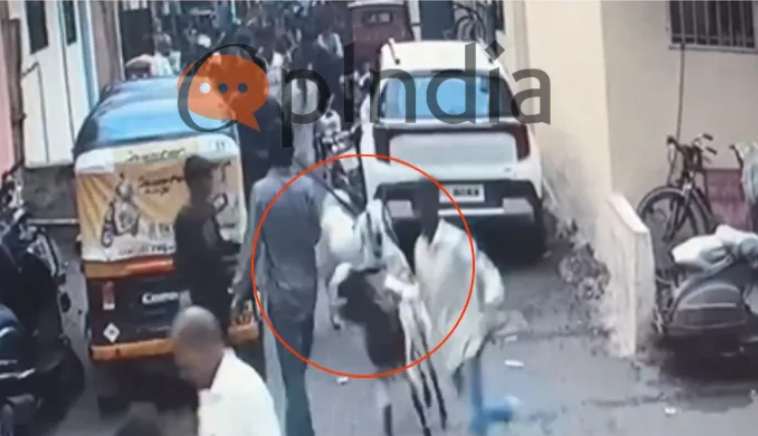
On 17th June this year, a Hindu family residing in the Yerwada region of Pune was brutally assaulted by a large Muslim mob resulting in severe injuries. The incident happened when the 3-year-old Hindu girl from his family was playing in the courtyard. Meanwhile, the 3-4 minor boys belonging to the Muslim community, residing in the same area were playing with the goats which their family had got for slaughter on Bakrid.
One of the goats ran and hit the girl after which her family rushed to the courtyard to see what had happened. As they asked the boys about the incident they began arguing with the Hindu family members and also began assaulting them. The members from the minority community pelted stones at the Hindu family. They also attacked the family using rods and sticks.
The Police had booked 5 persons and detained 12 in the case including minors. The FIR copy of the said incident was obtained by OpIndia. The sections imposed by the Pune Police in the given case were sections 143 (unlawful assembly), 147 (punishment for rioting), 149, 323 (voluntarily causing hurt), 504 (intentional insult or provocation), and 337 of the Indian Penal Code, 1860. A detailed report of this case can be read here.
8. Mira Road: Hindus insulted assaulted by Islamists for stopping goat slaughter in residential society
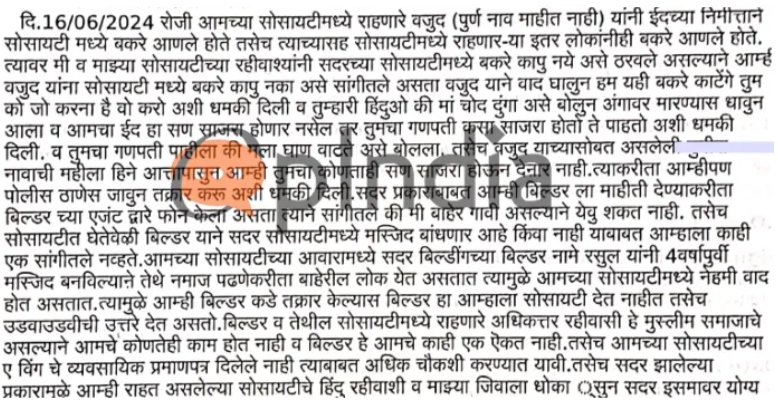
This interesting case from the Mira Road region of Mumbai was exclusively reported by OpIndia on 18th June. The Kashigaon Police Station booked an individual named Vajud, a resident of Hill Galaxy Apartment, for insulting and threatening Hindus and abusing the religion saying, “Hinduo ke m** ki ch**”. The FIR was filed under sections 295A and 153A of the Indian Penal Code, 1860.
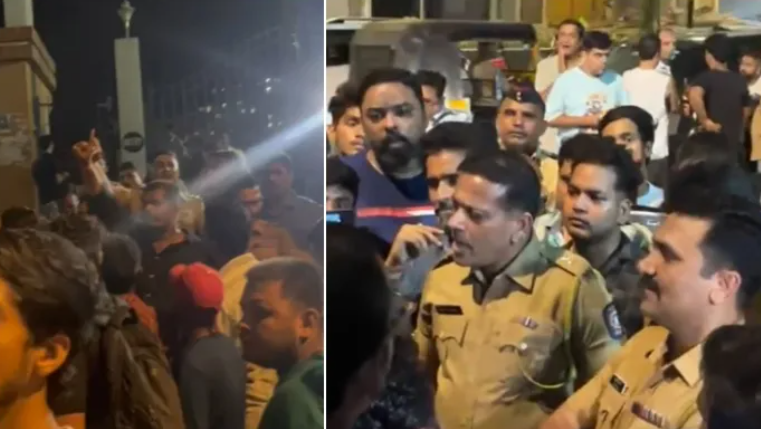
The incident happened on 16th June when Muslim residents residing in the Hill Galaxy Apartment and JP North Celeste Society on Mira Road got goats inside the society premises for illegal slaughter ahead of the Bakrid festival. The Hindus protested against the incident and called the police. However, the police allowed the goats saying that there was no livestock policy within the society.
Images obtained by OpIndia
Amid this, the Hindus launched massive protests and objected to the slaughter on the society’s premises. However, the Muslim residents argued with the Hindus and claimed that they would slaughter the goats on the society’s premises.
The FIR copy which has been obtained by OpIndia says that the Muslims threatened the Hindus saying they (Muslims) would slaughter the goats within the society premises, come what may. “Do whatever you can. We will slaughter animals here only, within the society premises. Hinduo ke m** ki ch**,” Vajud said as per the FIR.
In the complaint, the resident further said that the accused individual also insulted Lord Ganesh. “You people celebrate the Ganesh festival. Do we say anything then? We feel enraged and puking when we see your Lord Ganesha. We will see how you celebrate your Ganesh festival here,” Vajud threatened the Hindus.
A detailed report in this case can be read here and here.
Conclusion
The incidents from the state don’t stop here. Several such dreadful cases have been reported from the state in the past. But these incidents have shaken the Hindu community to the core leaving them traumatized and scared. These 8 incidents have occurred in the past 15 days posing a greater challenge for the ruling party to make efforts to save the Hindu community.
The communal tensions in the state have been on the rise in the past few years. The Islamists have launched attacks on Hindus in the state on various occasions. The Hindus here were attacked during the Ram Navmi festival in Chhatrapati Sambhajinagar, Mumbai, Malad, and Jalgao where the Islamists pelted stones and torched vehicles last year. They were also attacked during the Muslim festivals like Ramzan and Eid. In March, a Muslim mob in the Kamgar Colony in the Chikalthana area of Chhatrapati Sambhaji Nagar attacked Hindus warning them not to perform Aarti at a Hanuman Mandir during the Ramazan month.
Then on Eid, massive chaos erupted in the Mira Road region of Mumbai after Muslims got goats for slaughter in the residential premises. The Islamists also threatened the Hindus saying that they would slaughter the goats in the society as the latter protested. A detailed report in this case can be read here and here. Apart from these, incidents of rape, molestation, and child abuse at the hands of Islamists are also rising.
With the given current political scenario, the Mahayuti government in the state comprising the BJP, Shiv Sena (Shinde), and NCP (Ajit Pawar) need to look into the matter, especially in the cases where the Hindus are being attacked only for belonging to a particular region, like in the case of Akshay Dhavare who compromised his thumb to save his life. The current laws and the administration are evidently failing to protect the Hindu community in the state.
On the other side, Islamists who supported the I.N.D.I Alliance in Maharashtra and issued fatwas against the BJP in the last Lok Sabha elections appear to have lost their fear and are attacking Hindus. They (Islamists) appear to believe that they now have the power to change the state’s leadership by voting out anyone who does not support Hindutva, which could pose a threat to the Mahayuti government ahead of the State Assembly Elections.
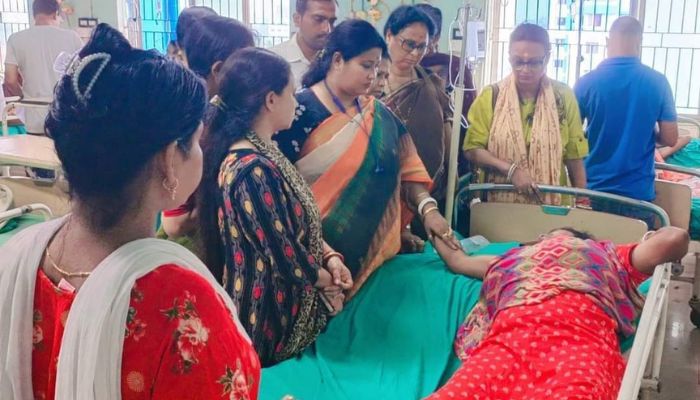
On Tuesday (2nd July), a woman was reportedly stripped and thrashed by goons for being a BJP worker. The incident occurred in Kaugachhi village in Jagatdal in North 24 Parganas district of West Bengal.
The BJP has accused the ruling Trinamool Congress (TMC) party of orchestrating the attack. As per reports, the TMC goons in Jagatdal have been threatening the woman and her family ever since the Lok Sabha election results were declared on 4th June this year.
They had previously vandalised the BJP worker’s house as well. On Tuesday, the victim was obstructed from taking water from a local tap by TMC workers. This led to a heated argument between the woman and the musclemen of the ruling party.
When the victim returned home, the goons reportedly ambushed her house. They stripped and assaulted her with a sharp weapon. When the family members of the woman intervened, the accused also attacked and injured them.
Following the assault, the goons fled the scene. The woman was late rescued and admitted to the B N Bose Sub Divisional Hospital. When her condition deteriorated, she was rushed to the Sagar Dutta Medical College in Kolkata.
The family of the victim has cited political rivalry as the motive behind the attack. The woman’s mother informed, “Trinamool Congress people stormed the house, and stripped my daughter and thrashed her. While trying to save my daughter, her grandfather and I were injured.”
TMC cries foul, dubs incident as ‘local neighbourhood dispute’
She further added, “My saree was also torn. Our family has been tortured for a long time. There was earlier an attack at our house.”
The local Trinamool Congress unit has dismissed the case as ‘local neighbourhood dispute’, which has supposedly no political angle.
On Wednesday (3rd July), people carried out protests outside the local police station, demanding justice for the woman (who is now said to be in a critical condition).
Woman stripped by Shafiqul-led mob in Cooch Behar
On 27th June, a Muslim woman was stripped, dragged for 1 km by her hair and thrashed for over an hour by goons for supporting the Bharatiya Janta Party (BJP).
The incident took place in Ruidanga village in Matha Bhanga-II block in Coochbehar district of West Bengal. As per reports, a group of TMC goons attacked the woman for being a worker of the Opposition BJP in the State. The victim’s father had filed a complaint with the police.
According to the police complaint, the local TMC cadre had prevented the woman from stepping out of her house since the Lok Sabha elections were announced on 4th June 2024.
The victim was assaulted when she was en route home from a nearby park. A group of TMC goons attacked her, stripped her and then dumped her clothes in a river.
They had also threatened to break her house if she dared to step out again. The Cooch Behar police had detained 4 people, including the primary accused Shafiqul, in connection to the case.
Shafiqul was accused of capturing the naked picture of the victim during the assault and disseminating it on social media platforms.
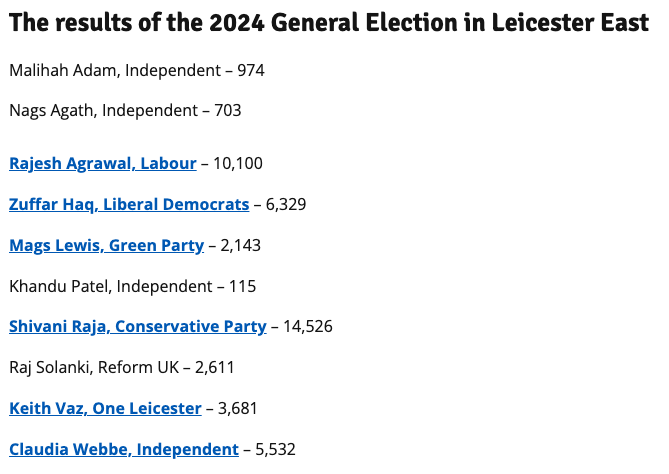
In a big win for the conservatives in Leicester East, Conservative candidate Shivani Raja has won the elections. This is the first time in 37 years that a non-Labour candidate has won in Leicester East. It is noteworthy that Leicester East has historically been a strong hold of the Labour Party. Despite a Labour-wave election, Shivani Raja won from the very area which saw anti-Hindu violence in 2022.
Shivani Raja emerged victorious as she received 14,526 votes, followed by Rajesh Agrawal of Labour in second place with 10,100 and Zuffar Haq of the Liberal Democrats in third place with 6,329. Claudia Webbe and Keith Vaz, Leicester East’s two former MPs, came in fourth and fifth, respectively. Vaz represented the One Leicester party receiving 3681 votes, while Claudia Webbe ran as an independent getting 5532 votes. The voter turnout here was 61%.
Source: Leicester Mercury
Notably, Shivani Raja is a first-generation British citizen born in Leicester and an unapologetic Hindu. According to her website, Shivani Raja’s parents moved to Leicester from Kenya and India in the late 70s. She completed her education at De Montfort University. She graduated in Pharmaceutical and Cosmetic Science and later worked with some major cosmetics brands in England.
Last month she joined the celebration of 50 years of Sanatan Mandir in Leicester.
?✨ Celebrating 50 Years of Sanatan Mandir! ✨?
For half a century, our Leicester community has focussed on fostering unity, devotion, and service. Together, we’ve built a legacy of faith, compassion, and rich cultural heritage.
Amidst a wave in favour of the Labour Party in national elections, Conservative leader Shivani Raja triumphs on Labour stronghold
The centre-left Labour Party is set to secure a decisive victory in Britain’s general election. This outcome ends a 14-year reign of the Conservative Party and positions Labour leader Keir Starmer to assume the role of prime minister imminently.
Being a Conservative candidate, Shivani Raja has achieved a historic victory in the Leicester East seat, traditionally a stronghold of the Labour Party. This win is particularly significant given the constituency’s long-standing allegiance to Labour, making Raja’s triumph a noteworthy shift in the political landscape. Leicester East, a home to diverse communities, has consistently supported Labour candidates for decades, making this Conservative win a remarkable political change.
Notably, Claudia Webbe had in the past openly supported Khalistani separatists and their so-called ‘referendum’ last year after a mob of frenzied Khalistanis laid siege on the Indian High Commission in London. She was earlier expelled from the UK’s Labour Party after being found guilty of harassing a woman named Michelle Merritt for 18 months.
Moreover, the victory of Shivani Raja, a Hindu candidate, is also symbolic given the recent history of the area. In 2022, Leicester East was the epicentre of violence against Hindus, resulting in tensions within the community. The unrest highlighted deep-seated issues that needed addressing. It underscored the importance of representation and leadership that could bridge divides and take a strong stand against anti-Hindu elements there. Raja’s win can be seen as a significant step towards healing and progressing from the incidents of 2022. Her election signals a desire for change and a move towards a more inclusive and representative leadership, aiming to ensure peace in Leicester East.
Anti-Hindu Leicester violence
In 2022, Leicester witnessed a series of anti-Hindu violence, marking a significant escalation in communal tensions. OpIndia reported that the unrest began in September 2022 following a cricket match between India and Pakistan, quickly spiralling into clashes. Hindu homes, businesses, and places of worship were targeted, leading to widespread fear and insecurity within the community. The violence was fueled by misinformation and inflammatory rhetoric on social media, exacerbating the already volatile situation. Police intervention was necessary to restore order, and several arrests were made. The events highlighted deep-rooted issues of communal discord and the need for robust measures to ensure the safety and harmony of all communities in Leicester.
A fact-finding report, presented by the Centre for Democracy, Pluralism and Human Rights (CDPHR) before the UK’s House of Commons revealed how the Leicester attack on the Hindu community was a direct assault on “democratic institutions and rule of law.” It added that the attack on Hindus was a direct fallout of territorial tensions and localised majoritarianism. It must be mentioned here, that Leicester East is a Muslim-dominated area with a minority Hindu population. OpIndia extensively reported that anti-Hindu violence was instigated by individuals like Majid Freeman, and Mohammed Hijab among others, who spread inflammatory content and misinformation.
A case of love jihad has come to light in Dehradun, Uttarakhand where a Muslim young man named Azam befriended a minor Hindu girl from Sahaspur by posing as Ajju and then raped her. The victim has now lodged a police complaint and a First Information Report was registered on this basis. The accused has also been arrested. Senior Superintendent of Police (SSP) Ajay Singh informed that the victim approached the authorities on 2nd July and submitted a complaint against Ajju alias Azam.
The complaint revealed that she was underage in the year 2017 and was studying in class 9th when Azam introduced himself as Ajju and befriended her. The girl further unveiled that the 22-year-old perpetrator lured and then proceeded to sexually assault her. He even recorded explicit videos of her. He used them to blackmail her and sexually exploited her regularly. He threatened to share the footage on social media when she protested. She mentioned that she remained quiet out of fear due to fear of public shame, however, it only emboldened the culprit.
The girl ultimately made the decision to file a complaint and narrated the entire ordeal after she arrived at the Sahaspur police station after which a case was brought against Azam. The investigation was handed over to Inspector Rashmi Rawat. The police apprehended the offender from his house near Mental Hospital Shankarpur after receiving a tip-off from an informer. He is the son of Jamshed Ali, a resident of Kedarwala. The cops also recovered the obscene videos and photos of the complainant from his mobile phone and sent him to jail.
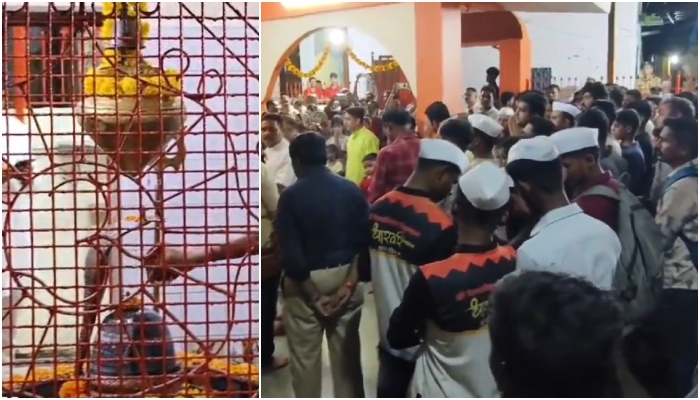
On Thursday, July 4th, Hindus living in the Hazuri region of Thane staged a protest in a local Shiv temple by organizing Maha-aarti after a woman was molested by one accused identified as Shehzad Sheikh. The video of the Maha-aarti was shared by the Legal Rights Observatory (LRO) which alleged that local corporator Vikas R faked his close ties with CM Eknath Shinde to pressure Thane Police to ‘protect’ the accused. “This resulted in just judicial custody instead of police custody,” LRO tweeted.
#Thane Maharashtra, Hindus organized massive Mahaarati at #Hazuri in Thane where #Jihadi mob attempted mob lynching of Hindu woman n desecrated temple when rape attempt survivor Hindu woman took shelter at local Shiv Mandir! Local corporator Vikas R faked CM @mieknathshinde close… pic.twitter.com/BQGdE97ivF
— Legal Rights Observatory- LRO (@LegalLro) July 5, 2024
The incident is said to have happened on June 23rd in the Hajuri Dargah region of Thane which is Muslim dominated area however, the FIR in the case was filed on the 27th u/s 354, 354D, and 452 of the IPC. As reported earlier, the complaint was registered by Thane Police against one Shehzad Sheikh after he molested a Hindu woman and forced her to keep her mouth shut.
The Hindu woman had gone to the vegetable shop of the accused where the duo had a minor exchange of words over monetary change. The woman said that she did not have change but the accused insisted she get the change if she wanted to buy the vegetables. The woman then went to her home where the accused followed her. He then barged into her house and molested her. However, he managed to flee from the spot as the woman yelled for help.
FIR copy obtained by OpIndia
As informed by the Sakal Hindu Samaj, the woman was being forced not to file a complaint by the other Muslims residing in the locality. Scared, she later went to seek shelter in a nearby temple where around 100-150 Muslims entered the temple wearing shoes and threatened the woman not to file a police complaint.
The accused was caught by the police after the intervention of the Hindu community. Earlier, the Hindu community claimed that the police resisted filing an FIR in the case but later the accused was arrested. However, it is alleged that the accused was being protected by an individual identified as Vikas R who faked his contacts with CM Eknath Shinde. He is said to have pressured the police to take minimal action against the accused. The accused as per the LRO was just put in judicial custody instead of police custody.
Sakal Hindu Samaj, Thane on June 30th organized a massive protest and demanded strict punishment against the accused. The Hindus also stated that their religious feelings had been hurt after Muslims entered the temple wearing shoes. The FIR copy of the said incident has been obtained by OpIndia. The Hindu locals demand the strictest punishment against the accused and safety for the Hindu community residing in the area.
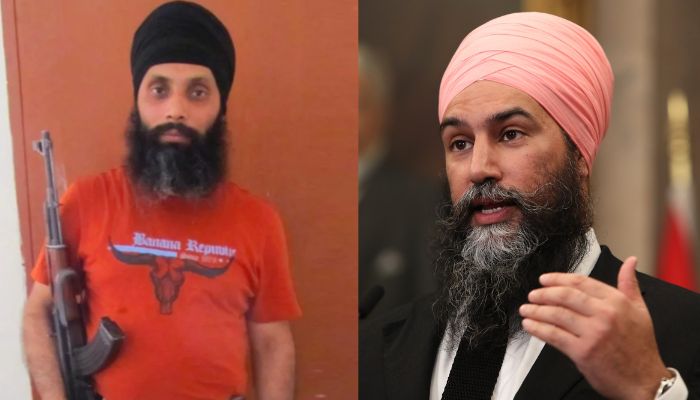
A year after the assassination of Hardeep Singh Nijjar in Canada, it has now come to light that the slain Khalistani terrorist donated money to prominent Canadian politician Jagmeet Singh and his New Democratic Party (NDP).
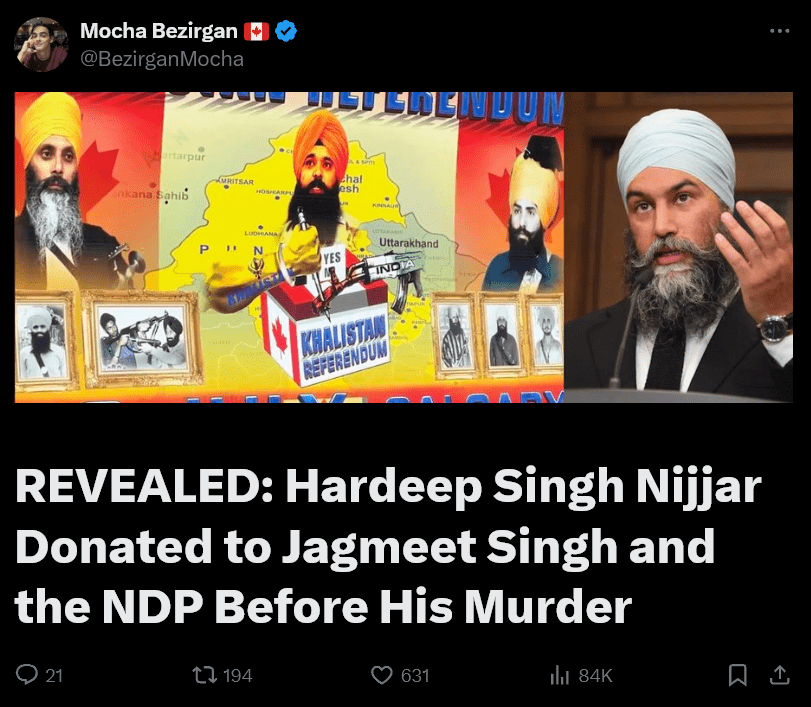
The revelations were made by investigative journalist Mocha Bezirgan in an article on X (formerly Twitter) on Thursday (5th July). Jagmeet Singh, a known Khalistani sympathiser, has received the donation from Nijjar in 2017.
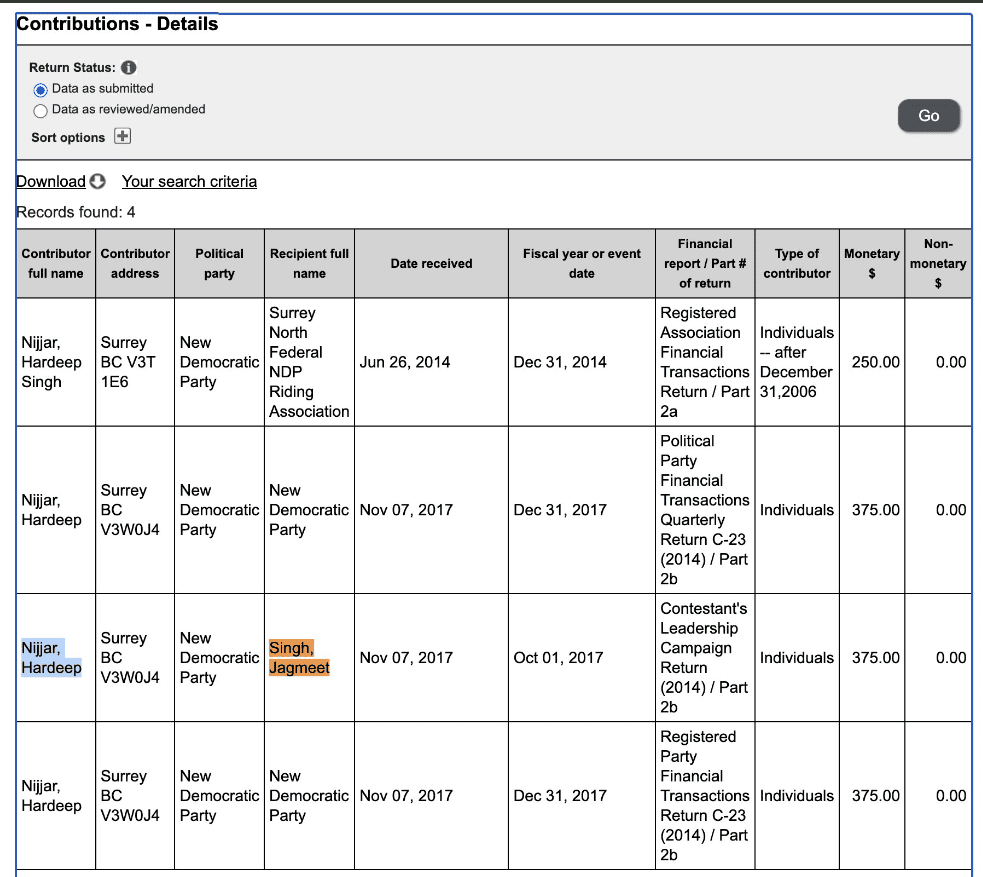
“Elections Canada records show that a Hardeep Nijjar with a postal code of V3W 0J4 donated to the NDP and to Jagmeet Singh in 2017. A simple Google search revealed that the postal code is associated with Nijjar Plumbing & Heating Ltd, Nijjar’s plumbing company where his son Mehtab Nijjar works, as per LinkedIn records,” Berizrgan pointed out.
Screengrab of the article by Mocha Bezirgan
Interestingly, the New Democratic Party leader Jagmeet Singh refused to condemn Air India bomber Talwinder Singh Parmar in 2017.
According to investigative journalist Mocha Bezirgan, terrorist Hardeep Singh Nijjar donated to Singh just days after he refused to denounce terrorist Talwinder Singh Parmar.
“Elections Canada records show that various Khalistan supporters and Gurdwara managers make donations to politicians with family ties to the World Sikh Organization, regardless of whether they are Liberal, Conservative, or NDP,” he pointed out.
Who was Hardeep Singh Nijjar
Hardeep Singh Nijjar was a controversial figure. He was designated as a Khalistani terrorist by the Government of India. He was killed on 18th June 2023 in a possible gang war.
However, the Canadian government blamed the Government of India and Indian agents for killing him. Notably, four persons who were arrested in his murder case in May 2024 were associated with the Lawrance Bishnoi Gang.
Nijjar was a Sikh separatist leader who propagated the demand for a separate Sikh nation, Khalistan. He was living in Surrey, British Columbia Canada and was chief of Guru Nanak Gurdwara.
India has accused Nijjar of involvement in several violent incidents, including the 2007 bombing of a cinema in Ludhiana and an attempted murder in 2021. National Investigation Agency has named him in the case of the attempted murder of Hindu leader Kamaldeep Sharma.
In 2015, Indian agencies apprehended Mandeep Singh Dhaliwal who was a Surrey resident during his visit to India. A few days later, it was revealed that he was associated with a Khalistani terror training camp in Canada. He told Punjab police during interrogation that he had plans to carry out terror activities in Punjab and was sent by Nijjar to attack leaders of Sects. Furthermore, he informed the police that he was working with another terrorist to get arms and ammunition from Pakistan.
Globe and Mail talked to two people associated with Dhaliwal. They told on the condition of anonymity that Dhaliwal attended an arms training camp in 2015. Furthermore, five other Sikh radicals also took training at those camps. They were trained by Nijjar to operate weapons and GPS. They also learned how to communicate securely and did target practice at three different sites in the Lower Mainland.
Nijjar was also linked to gangster-turned-terrorist Arshdeep Singh Gill or Arsh Dala. He is the head of the Dala Lakhbir gang which uses Canada as a base for running an extortion ring in Punjab.
In Karnataka’s Kalaburgi, a Hindu youth was brutally assaulted by several Muslim youths for dancing to the Ram Mandir song in the wedding procession of his friend. The incident unfolded in Itga village under Gulbarga University Police Station precinct on Monday (1st July), when the victim danced in a friend’s wedding procession after playing the Ram Mandir song “Agar Chhua To Mandir ko, Teri Aukhat Dikha Denge” played over DJ.
Karnataka: Hindu youth Bhimashankar Dasara (19) was brutally thrashed and threatened to be k!lled – for playing/dancing at a friend's wedding on Ram Mandir song, in Kalaburagi.
Two arrested, accused names as per complaint – Khanpasha, Khajapasha, Mashak Patel, Feroze, Kashim,… pic.twitter.com/IsHBC8nBRr
The next morning, five or six Muslim youths allegedly broke into Bhima Sankar’s house and brutally thrashed him. The attackers have reportedly been identified as Khanpasha, Khajapasha, Mashak Patel, Feroze, Kashim, Madar and Naeem.
The Hindu victim’s family has said that they are terrified after the attack and that there is a threat to their life. Meanwhile, reports say that some Muslim youth involved in the attack also suffered injuries. A case has been registered in the matter on the complaint lodged by the victim’s mother and an investigation is underway. After the incident, there is a tense atmosphere in Itga village and police personnel have been deployed to ensure peace.
Recently, a similar incident was reported wherein there was a clash in Kolar City close to Arahalli Gate between two Hindus and Muslims. A DJ started playing music in front of the mosque during the 515th anniversary of Nadaprabhu Kempegowda’s birth, which led to an altercation between the two groups, however, the police intervened.
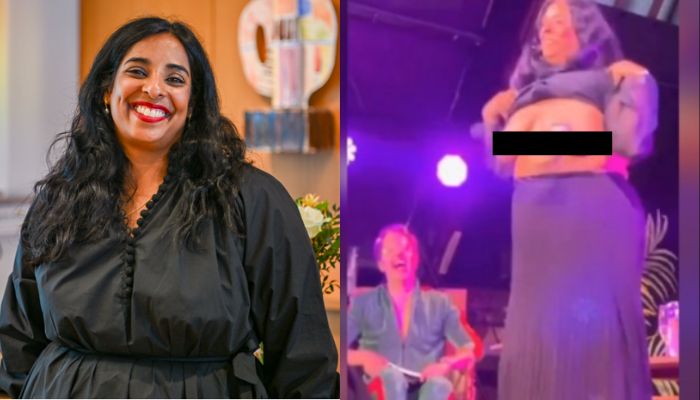
In June this year, the Minister of Culture and Gender Equality in Norway courted controversy for flashing her breasts during the Oslo Pride event. A video of the incident has now gone viral on social media.
The Norwegian legislator, Lubna Jaffery, was awarded the ‘Fag Hag 2024’ award during the event for being a top ‘patron of queers’. Soon after, she lifted her top to expose her breasts.
Jaffery was seen wearing covers over her areola region. The disturbing action of a sitting Minister not only drew praise from the audience but also Norway’s top leadership.
Ladies and gentlemen, I present to you the Norwegian Minister of Culture and Equality, Lubna Jaffer, at a Pride event in Oslo, Norway.
Lubna is flashing her titties (!?) at the Pride event «Queer Talk».
When quizzed about the incident, the 44-year-old Lubna Jaffery emphasised, “I am very grateful to have been named Fag Hag, the main patron of queers, during Oslo Pride this year. This is a great honor…Put yourself out and (do) not take yourself too seriously.”
Norwegian PM, Oslo Pride Head praise Lubna Jaffery
The organiser of the event, Joakim Aadland, commented on the controversy and remarked that it was the best thing to have happened during the ‘Oslo Pride’ in several years.
“I think it’s wonderful that we have a minister who goes ‘all-in’ and is not afraid to put herself forward a little. I’ve never experienced the applause she received in the ten years we’ve had Pride. So it’s clear that the audience appreciated Lubna’s stunt,” he claimed.
Similarly, Norwegian Prime Minister Jonas Gahr Store also heaped praise on Lubna Jaffery for her appearance at Oslo Pride. “Lubna is a confident, free and wonderful person who is warmly welcomed at cultural events all over the country,” he was heard saying.
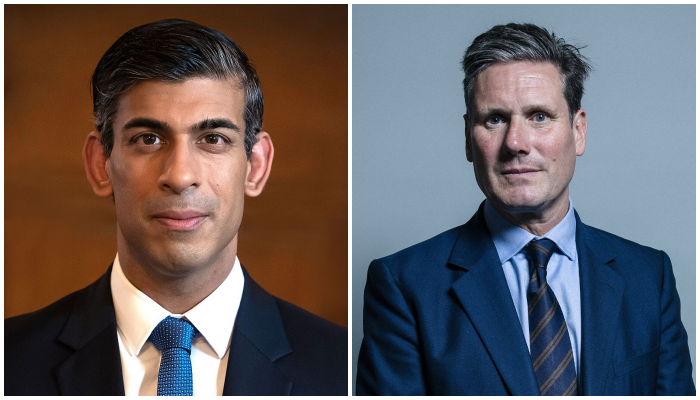
The centre-left Labour Party is set to secure a decisive victory in Britain’s general election, according to a comprehensive exit poll. This outcome ends a 14-year reign of the Conservative Party and positions Labour leader Keir Starmer to assume the role of prime minister imminently, CNN reported.
The exit poll, conducted by Ipsos for BBC, ITV, and Sky, predicted Labour would capture 410 seats, relegating the Conservatives to a mere 131 seats. This landslide marks a clear rebuke of the ruling party by British voters, an anticipated outcome amidst mounting discontent.
Votes are being tallied throughout the night, with expectations high for Starmer to replace Rishi Sunak as prime minister by Friday morning, according to CNN.
While falling short of more dramatic predictions made during the campaign, these results signify a significant decline for the Tories since their landslide victory under former Prime Minister Boris Johnson in 2019.
Since then, internal strife and a series of scandals have plagued the Conservative Party, failing to reverse public skepticism about their performance. In contrast, Starmer’s disciplined campaign centered on the promise of “Change,” resonating with voters disenchanted by the Tories.
According to the exit poll, the Liberal Democrats are projected to secure 61 seats, reclaiming their position as Britain’s third-largest party in Parliament. Meanwhile, Reform UK, a right-wing populist group led by Nigel Farage, is forecast to secure 13 seats, with the Green Party likely to secure two.
Starmer, a former barrister who entered Parliament in 2015 and assumed Labour leadership in 2020, has steered his party towards the political center. His platform emphasizes revitalizing public services while maintaining fiscal responsibility.
This victory stands as a counterpoint to rising populist sentiments across Europe, even as insurgent parties like Reform UK attracted voters with anti-migration rhetoric, siphoning support from the Conservatives. Conversely, the Tories lost centrist voters in affluent southern English regions to the Liberal Democrats, as reported by CNN.
While Starmer’s projected seat count may fall short of Tony Blair’s 1997 landslide, when Labour last ousted the Conservatives, it ensures a robust parliamentary majority for governance.
As the transition of power unfolds, a battle ensues for control of the opposition. Right-wing Tories sought alliances with Farage’s bloc during the campaign, facing opposition from moderate Conservatives intent on anchoring the party in the political center.
Regarding foreign policy, particularly Britain’s stance towards Russia’s aggression in Ukraine, no significant shifts are expected with Starmer’s ascension. He has committed to maintaining Britain’s supportive stance towards Kyiv.
Additionally, Starmer has called for a ceasefire in Gaza amid Israel’s conflict with Hamas, coupled with efforts to secure the release of Israeli hostages held by the militant group, CNN reported.
(This news report is published from a syndicated feed. Except for the headline, the content has not been written or edited by OpIndia staff)