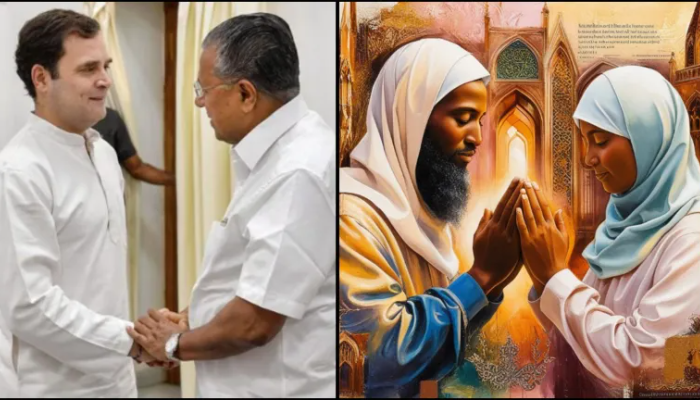
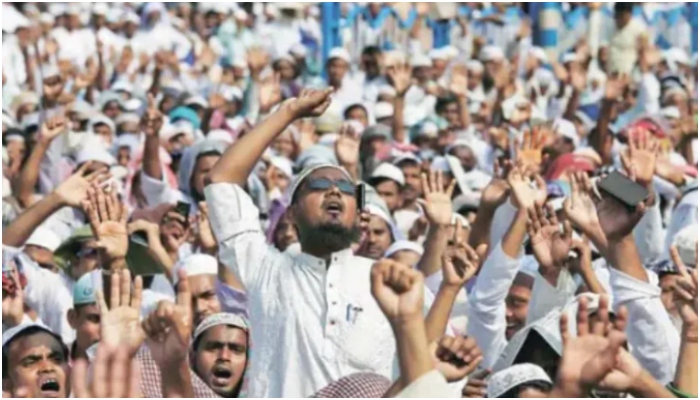
According to media reports, the data presented in the Kerala Legislative Assembly (Niyamasabha) shows that the state currently has 5,45,423 employees who are working in different departments. The data revealed that out of them, 73,774 Muslims work for the state government which makes up 13.5% of all state government workers. Furthermore, there are more Christians than Muslims in the state administration. 73,714 employees of the state government are upper-caste Christians.
22,452 workers who are members of the Latin Church are employed by the Kerala government. 2,399 employees have converted to Christianity. 929 workers identify as Nadar Christians. The number of all Christian communities in government jobs in Kerala is 99,494 and their percentage in the same is 18.25%. 1,73,268 Muslims and Christians serve the state government and constitute 31.5% of the workforce. Notably, around one-third of state workers are classified as Christians and Muslims.
Meanwhile, only 27 Jains work in the state government. There are 10,513 employees from Scheduled Tribes and 51,783 employees from Scheduled Castes. 7,113 Brahmins work for the state government as well, which makes up less than 1.5% of all government workers. There are just 26 Yadavs and 28 Kshatriyas working in government positions. The Ezhava community, a caste that is regarded as backward, forms the majority. The Kerala government employs 1.15 lakh members of this community and 1.08 lakh members of the Nair community.
Additionally, 955 workers do not identify with any particular category. About half of Kerala’s population is Muslims and Christians. 22% of respondents believe in Christianity and 27% in Islam while there are adherents of multiple sects in both religions. The Kerala government is frequently targeted by the opposition for the state’s lack of diversity in the workforce. In addition, the opposition has attacked Kerala’s Congress-Left coalition administration for the state’s debt and poor financial situation and regularly attacks the ruling side in the assembly.
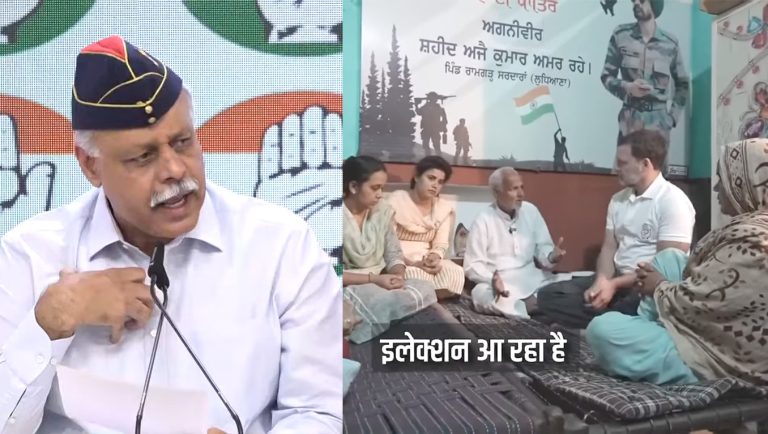
After lying about the Agnipath scheme in Parliament, Rahul Gandhi took his lies one step ahead today and claimed that the family of Agniveer Ajay Kumar, who lost his life in Kashmir, has not received any compensation from the central govt. However, soon the Indian Army clarified that the family has already been paid ₹98.39 lakh, and approximately ₹67 lakh more will be paid after due process, taking total amount to ₹1.65 crore.
Later in the day, Ajay Kumar’s father and other family members also clarified that they had already received ₹98.39 lakh. After the lies of Rahul Gandhi were busted, now the Congress party has taken a hilarious turn. In a press conference held to address the issue, the party accused the government of making more payments to the deceased Agniveer’s family compared to the promised amount.
The claim was made by Congress leader Col. Rohit Chaudhary, Chairman of the Ex-Servicemen Department after a reporter pointed out that Ajay Kumar’s family is getting ₹1.65 crore in total, out of which over ₹98 lakh has already been paid. Responding to this, Col. Rohit Chaudhary accused the Modi government of hiding behind the Indian Army, for the tweet by the Indian Army’s Additional Directorate General of Public Information (ADGPI) clarifying the payments made.
He said that the Army should clarify how an insurance amount of ₹98 lakh has been paid when the policy mentions an insurance coverage of ₹50 lakh. Citing the Agnipath scheme, Col. Chaudhary said that as per the scheme, Ajay Kumar’s family should receive a total of ₹1 crore only, which includes ₹48 lakh insurance, ₹44 lakh one-time ex-gratia, full salary up to 4 years for unserved period, balance accumulated in Seva Nidhi fund, and ₹8 lakh from battle casualty fund.
‘When the policy says that Agniveer’s family will receive ₹1 crore, how this ₹1 crore became ₹1.67 crore, govt must answer’, Col. Rohit Chaudhary said. He added that in armed forces even a rupee can’t be paid extra, and govt is paying ₹67 lakh to Ajay Kumar’s kins.
Here the Congress leader made wrong calculations, because the ₹1 crore only includes ₹48 lakh insurance, ₹44 lakh ex-gratia and ₹8 lakh from the battle casualty fund. The other amounts like unpaid salary and Seva Nidhi Fund will be different for each individual, and those amounts are additional to the ₹1 crore amount.
It is notable that Ajay Kumar’s family has received three different amounts so far, ₹48 lakh from the Agniveer Pay accounts office towards insurance cover, another group insurance of ₹50 lakh from ICICI, and ₹39,000 from army.
He also questioned whether govt is adding any amount being paid by private organisations like insurance companies. Col. Rohit Chaudhary tried to insinuate that the insurance amount of ₹50 lakh received by the family was paid by the insurance company in its own capacity, and the govt can’t take credit for it. He also questioned why this ₹50 lakh insurance is not mentioned in the Agnipath scheme.
It is true that while the ₹48 lakh insurance is mentioned in the Agnipath scheme, the ₹50 lakh insurance is not. That is because, the ₹50 lakh insurance is available for all defence personnel, not just Agniveers.
The three armed services have a joint package with several banks including SBI, HDFC, ICICI etc, where the salary accounts of the personnel are maintained. The zero balance salary accounts include several other benefits, which include Complimentary Personal Accidental Insurance (Death) cover of ₹50 Lakhs to all ranks. The same scheme includes ₹1 crore cover for air accidental death, and up to ₹50 lakh cover for disabilities.
Therefore, the ₹50 lakh paid to Ajay Kumar’s family was given under this scheme, it was not paid by ICICI bank on its own like the Congress party is claiming. Insurance companies pay insurance covers from premiums received. And in the case of Agnipath scheme, the armed personnel are not paying any premium, the govt is paying all the premiums for all the group insurance schemes.
Therefore, it is wrong to claim that ICICI paid ₹50 lakh to Ajay Kumar’s family from its own fund. It was paid as part of the MoU ICICI bank has signed with the government of India.
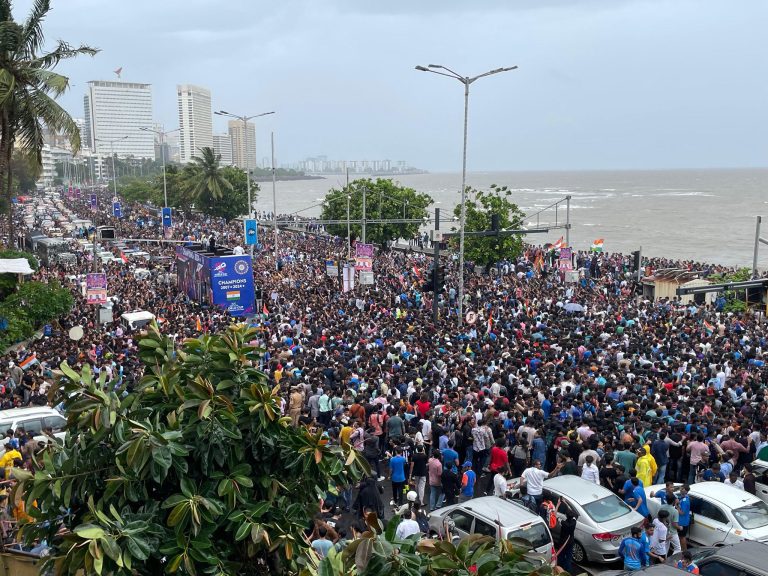
Fans have covered every inch of Mumbai’s Marine Drive waiting to lay their eyes on the T20 World Cup-winning Indian team.
While the sound of waves continues to hit on one side, the sound of Indian fans cheering for their World Cup-winning players rises from the other side.
The cricket fever has gripped Mumbai as fans have turned up in numbers to witness Team India’s victory parade, which will begin from Marine Drive and conclude at the Wankhede Stadium. With anticipation in their eyes and hope of catching a glimpse of their favourite stars, the entire world continues to see a spectacle on the streets of Mumbai.
Donning the Indian jersey, with the national flag in their hands, fans have created an electric atmosphere to welcome the Rohit Sharma-led side that ended the 13-year-long World Cup drought. The jubilant fans have danced to the tune of the Indian team’s success.
The Indian team arrived at the Mumbai airport and gathered around the players as they made their way out of the airport. Hardik Pandya held the prized T20 World Cup trophy as the players made their way out of the airport.
Earlier in the day, the Indian team arrived at the airport in New Delhi in the early morning hours. After their arrival, the Indian players and team management met Prime Minister Narendra Modi at his residence for breakfast.
During their meeting with the Prime Minister, the Men in Blue wore a special jersey sporting two stars over the BCCI’s emblem. The stars represented the two T20 World Cup wins. The word ‘CHAMPIONS’ was written on the jersey in bold letters.
Post-meeting, the victorious cricketers departed for the Delhi airport to take a flight to Mumbai, for the grand victory parade.
Shiv Sena leader Pratap Sarnaik told ANI that India captain Rohit Sharma, Suryakumar Yadav, Shivam Dubey, and Yashasvi Jaiswal will meet Maharashtra Chief Minister Eknath Shinde on Friday at the Assembly.
“Today’s program in Mumbai has been organised by BCCI. Team India players from Mumbai including Captain Rohit Sharma, Suryakumar Yadav, Shivam Dubey and Yashasvi Jaiswal will come to the Maharashtra Assembly tomorrow to meet CM Eknath Shinde. Being a member of MCA, I invited the players and they have accepted my invitation,” Sarnaik said.
Mumbai Cricket Association (MCA) Secretary Ajinkya Naik has said that there will be free entry for public for the victory parade celebrating India team’s win.
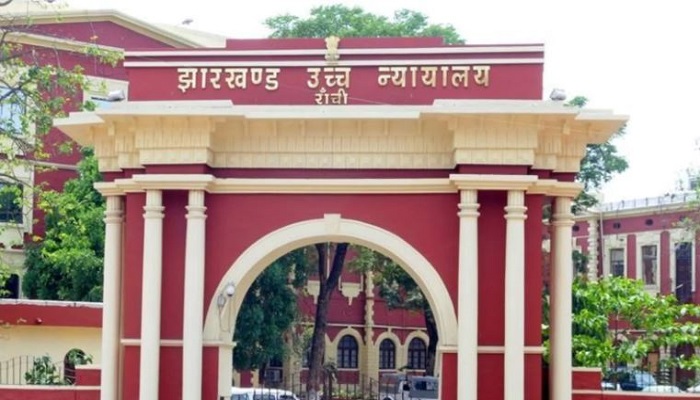
The Jharkhand High Court has become more strict in response to increased infiltration into the state. It has ordered action to remove Bangladeshi infiltrators from the state. The High Court, while hearing a petition, also requested a report on the presence of infiltrators within the state.
On Wednesday (July 3, 2024), a bench consisting of Justices Sujit Narayan Prasad and AK Rai issued orders to oust Bangladeshi infiltrators from the state. The High Court directed the state administration to locate the infiltrators currently in the state within two weeks, identify them, and produce a report detailing the actions taken against them. The High Court additionally asked for a report from the Central Government.
The High Court’s strictness was obvious at the hearing of Daniel Danish’s plea. According to the plea, prohibited Bangladeshi organizations are systematically marrying and converting tribal girls from Jharkhand in the state’s Santal Pargana districts, which border Bangladesh. New madrasas are also developing. 46 new madrassas have opened in this location. Godda, Deoghar, Dumka, Jamtara, Sahibganj, and Pakur are the districts that make up Santal Pargana.
This observation by the High Court underscores the problem in Jharkhand, which has gradually become a canker. The districts of Santal Pargana share boundaries with West Bengal. First, infiltrators enter West Bengal from Bangladesh before traveling to Jharkhand.
The matter of changing demography is not new
Several cases have already surfaced that highlight the Jharkhand High Court’s comments. Earlier in March 2024, Aaj Tak reported on only the issue raised in the plea. According to an Aaj Tak article, Bangladeshi Muslim infiltrators enter India through West Bengal. Following this, they settle down. Some of them target tribal girls and forcefully marry them.
After marriage, the girl’s legal identification remains tribal. Following that, land is acquired in the name of the girl, or her own land is taken over. According to the study, infiltrators from Bangladesh receive funding to carry out these activities. The purpose of retaining the girl’s tribal identity is to receive government advantages. In addition, in many localities, girls who married Muslims were forced to contend for election.
According to Aaj Tak’s report, the Bangladeshis who are penetrating this area are doing so for mining purposes. Overall, the identity of this place is steadily changing. Bangladeshi infiltrators are also given bogus identity documents as soon as they enter Jharkhand. People who have already settled here also help them with this.
Infiltration not only in land but also in elections
The problem with Bangladeshi infiltrators extends beyond marriage and property theft. It is even associated with the Lok Sabha elections. Anant Ojha, Rajmahal MLA, told OpIndia a few days ago that Muslim votes have grown dramatically in parts of his area’s villages.
According to Anant Ojha, he received 672 votes in 2019 at his assembly booth number 187. It rose to 1461 by 2024. This indicates it increased by almost 117%. With this, the number of votes cast at the government madrasa booth climbed by 754 to 1189. There are at least 73 such booths within this assembly where voter growth is abnormal.
MLA Anant Ojha told OpIndia that all of these booths are located among Muslim communities. During the same time period, the population of 17 booths with a Hindu population decreased. He had also filed a complaint with the State Election Commission on this matter. The State Election Commission has asked that a team be formed and action taken in this regard.
It is said that physical voter verification is also being discussed in this location. However, the extent of the problem continues to grow. In such a case, the court has also had to intervene. It remains to be seen what action the state administration will take against the Bangladeshi infiltrators following the court judgment.
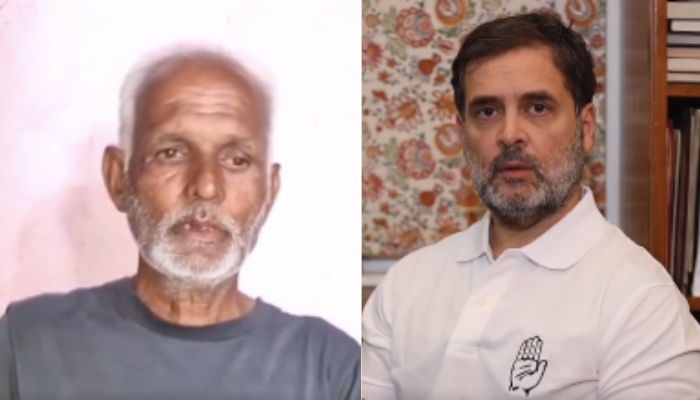
A controversy erupted after Leader of Opposition (LoP) Rahul Gandhi released a video in which martyred Agniveer Ajay Kumar’s father said that they had not received the promised compensation from the government. However, now he has clarified that the family has received 98 lakh rupees.
Speaking to IANS on Thursday (4th July), martyred Agniveer Ajay Kumar’s father said, “The central government had already given Rs 50 lakh, now Rs 48 lakh has also come in both the bank [accounts]. I didn’t have the information earlier but we have got Rs 50 lakh also. Agniveer Yojana should be scrapped. Politics should not be on Agniveer. Rajnath [Singh] is also right, Narendra Modi is also right and Rahul Gandhi is also right. We did not know that we were receiving all the amount. The army also said that incomplete work will also be completed…”
Ludhiana: "The central government had already given 50 lakh, now 48 lakh has also come, politics should not be on Agniveer, the army also said that incomplete work will also be completed…" says father of Martyr Agniveer Ajay Kumar pic.twitter.com/0EGcJaoVKc
On Wednesday, July 3, Leader of Opposition and Congress leader Rahul Gandhi accused Defence Minister Rajnath Singh of “lying” on the floor of the Lok Sabha over the Agniveer scheme and demanded an apology.
In a video posted on X, Rahul Gandhi alleged that the minister had lied in Parliament about the issue of compensation to families of killed Agniveers.
“The importance of truth in every religion. Rajnath Singh lied before Lord Shiva’s photo about the compensation to the country, its armed forces, and Agniveers. I have said in my speech that don’t listen to me or his (Rajnath Singh) speech, but listen to the family of Agniveer family,” the Leader of the Opposition said in a video message.
सत्य की रक्षा हर धर्म का आधार है!
लेकिन रक्षा मंत्री राजनाथ सिंह ने शहीद अग्निवीर के परिवार को सहायता मिलने के बारे में संसद में झूठ बोला।
उनके झूठ पर शहीद अग्निवीर अजय सिंह के पिता जी ने खुद सच्चाई बताई है।
As reported earlier, Rahul Gandhi shared the video of the father of Agniveer Ajay Singh who lost his life in Jammu and Kashmir and said that despite Singh’s claims, his family had not received the promised compensation. The Congress leader also demanded an apology from the Defence Minister.
Ajay Singh’s father said, “Rajnath Singh made the statement that families of killed soldiers have been given Rs 1 crore compensation but no such assistance had been received by his family. Rahul Gandhi is raising our voice in Parliament that families of martyrs must get all necessary help. Agniveer recruitment must stop and regular recruitment should be reinstated.”
However, the Indian Army soon issued a clarification and said that it salutes the supreme sacrifice made by Agniveer Ajay Kumar who lost his life in the line of duty and his family has already been paid Rs 98.39 lakhs. Ex-gratia and other benefits amounting to approximately 67 lakhs will be paid on final account settlement shortly post-due police verification.
On Wednesday, July 3rd, the Legal Rights Protection Forum (LRPF) filed a complaint against Calvary Ministries in Telangana’s Bellampally region run by Christian Pastor R Praveen Kumar and Sharon. The complaint was filed after the Pastor was allegedly found imposing cruelty and medical negligence in the name of miracle healing towards a little girl who was suffering from kidney failure.
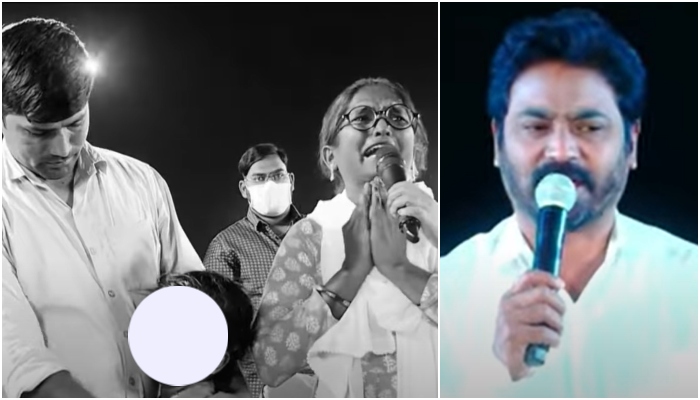
As per the LRPF, a video was posted on 16th May on the official YouTube channel of Pastor Praveen Kumar in which a mother of a little girl explained that her daughter was suffering from kidney damage. The mother could be seen crying in the video as she stated that her little girl had been under treatment at the Intensive Care Unit (ICU) of Niloufer Hospital, Hyderabad for the last 3 days and that she had got her to the Calvary Church’s Miracle Healing Show in Hyderabad for her life to be saved.
According to the girl’s mother, physicians advised them that the girl would not survive any longer, so they took her immediately from the ICU to the Calvary Church, despite the doctors’ warnings. She also stated that they signed an undertaking paper stating that doctors would not be responsible if anything happened to their daughter’s life. According to the mother’s statement, the girl was unable to move owing to kidney damage but can now walk.
“It is evident from the video posted on Pastor R Praveen Kumar’s YouTube channel that, instead of providing sufficient medical treatment to the little girl during her critical situation, her parents took her to the Miracle Healing Show organized by Pastor Praveen Kumar and Sharon under the impression that her daughter would be cured with their prayers. It is also evident from the video that the little girl, who was just brought from the ICU after rejecting ongoing medical treatment by her parents, was subjected to cruelty and forced to walk during the Miracle Show by Pastor Praveen Kumar,” LRPF said in the complaint filed with the NCPCR.
“The act of cruelty by Pastor Praveen Kumar and Ms Sharon of Calvary Ministries towards the little girl who was suffering from serious kidney damage. Moreover, the video-graphed the minor girl child and uploaded it on their YouTube to project themselves as Miracle Healers. This is an act of causing damage to the dignity and privacy of the victim girl,” the organization added in the complaint.
Calvary Ministries is a trust registered under registration number 39/2013. Its registered office is at Somagudem in Mancherial District, Telangana.
The trust was incorporated in 2003. As per the LRPF, Pastor R Praveen Kumar, President of the Calvary Ministries Trust, and his wife, Sharon, have put on enormous Miracle Healing exhibitions in Bellampally and Hyderabad in the name of religious prayer gatherings.
The complainant states that the Pastor and his wife are giving the impoverished, uneducated, marginalized, and weaker sectors the erroneous impression that they can treat any critical medical conditions with their prayers, something doctors and medical specialists cannot do.
In this sense, they have arranged for a few persons to appear at large crowds and provide false testimony that their medical problems have been healed thanks to Pastor Praveen Kumar’s prayers. These testimonial videos are being shared on their official YouTube channels for publicity.
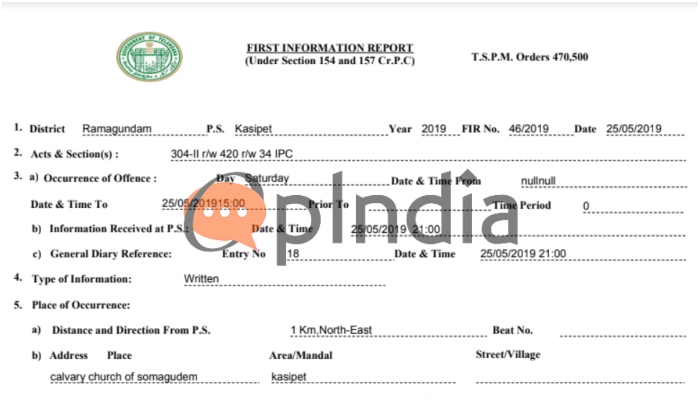
It is crucial to note that the Pastor and his wife were booked in the year 2019 in a similar case. On 25th May 2019, an FIR was registered against the duo under sections 304-II, 420, and 34 of the Indian Penal Code, 1860 at Kasipet police, Bellampally after a 21-year-old person died due to negligence of the Pastor.
The case was filed in response to a complaint initiated by Girishetty Mangamma who stated that her son Girishetty Rajesh, 21, who was suffering from a severe fever, went to the Miracle Healing Show at Calvary Church in the hopes that the prayers of Pastor Praveen Kumar and Sister Sharon would cure him.
As his health deteriorated, he desired to leave the Church grounds and travel to the hospital for medical attention. However, Pastor Praveen Kumar, sister Sharon, and other pastors refused to allow her son to be taken to the hospital, and he died in Calvary Church. The FIR copy of the said incident has been obtained by OpIndia.
Section 5 of the Drugs and Magic Remedies (Objectionable Advertisements) Act, 1954, forbids the advertisement of Magic Remedies for the treatment of specific diseases and ailments. The subsection further reads: “- No person carrying on or purporting to carry on the profession of administering magic remedies shall take any part in the publication of any advertisement referring to any magic remedy which directly or indirectly claims to be efficacious for any of the purposes specified in section 3”.
Section 7 of the Drugs and Magic Remedies (Objectionable Advertisements) Act, 1954 deals with punishment provisions and plainly states: “–Whoever contravenes any of the provisions of this Act [or the rules issued thereunder] shall, on conviction, be penalized – a) in the case of a first conviction, with imprisonment for up to six months, a fine, or both; b) in the case of a subsequent conviction, imprisonment for up to one year, a fine, or both.
The complaint has been registered with the NCPCR seeking strict action against the accused persons.
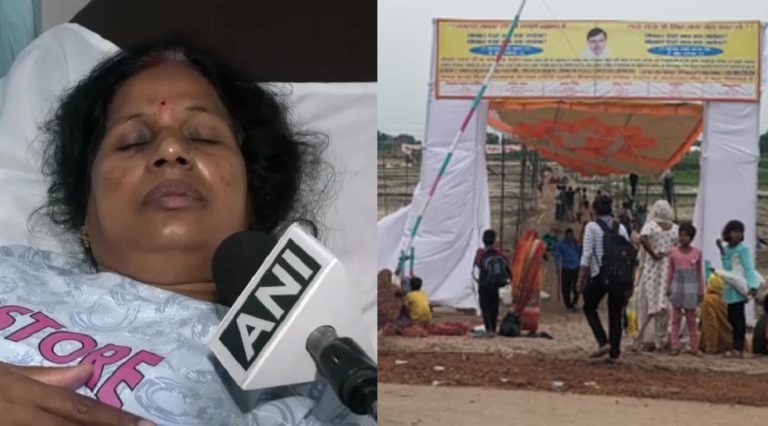
Uttar Pradesh Police constable Sheela Maurya, who was on security duty at the Hathras religious event, said the stampede occurred as a large number of people rushed to exit the venue together. In the Hathras stampede, 123 people were killed.
Maurya said that she helped various women get over the situation but eventually, she also fell and suffered injuries.
“I was deputed in front of the stage. There was a huge crowd there after the event concluded. People started falling over each other. I helped many women but later even I fell and suffered injuries. The problem was that there was a huge crowd and everyone started exiting the venue together. At the time, I was only trying to save people. The CM asked me about the incident yesterday,” she said.
She said that the ground was muddy because of rain, and it was hard for people to get out.
“There are farmlands there, that’s how people tried to make it out,” she added.
Earlier in the day, the Uttar Pradesh Police conducted a search operation at Ram Kutir Charitable Trust in Mainpuri for ‘Bhole Baba’, a self-styled godman who conducted a Satsang in Hathras.
An FIR has been registered on the incident naming organizers of the prayer meeting but ‘Bhole Baba’ has not been named yet.
Meanwhile, Deputy Superintendent of Police (DSP), Mainpuri Sunil Kumar on Thursday said “Baba has not been found inside the ashram.”
“There are 40-50 sevadars inside the ashram. He (‘Bhole Baba’) is not inside, neither he was yesterday nor he is today…” said DSP Mainpuri Sunil Kumar.
SP City Rahul Mithas said, “I had come to check the security of the ashram. Nobody was found here.”
The police force was deployed around the ashram today early morning.
On Wednesday, Uttar Pradesh Chief Minister Yogi Adityanath visited the spot and ordered a judicial probe into the incident.
A three-member Judicial Inquiry Commission under the chairmanship of Justice (retd) Brijesh Kumar Srivastava has been constituted to ensure comprehensiveness of the subject matter and transparency in the inquiry, according to an official statement.
The Judicial Commission will investigate the various aspects of the Hathras stampede in the next two months and after the investigation, a report will be submitted to the State Government.
The preacher ‘Bhole Baba’ identified as Suraj Pal is also known by the names of Narayan Sakar Hari and Jagat Guru Vishwahari.
(This news report is published from a syndicated feed. Except for the headline, the content has not been written or edited by OpIndia staff)
The Jharkhand High Court recently ordered the state government to identify the Bangladeshis who have entered India illegally and prepare an action plan to take action against them and send them back. A bench of Justice Sujit Narayan Prasad and Justice AK Rai gave the judgement on 3rd July after hearing the petition of Daniel Danish in which the court was told that in regions including Santhal Pargana, adjacent to Bangladesh, banned organisations of the neighbouring country are converting ST (Scheduled Tribe) girls of the state to Islam in the name of marriage. The incidents are being carried out in a planned manner and it is imperative to put an end to them.
Notably, there has reportedly been a sudden increase in the number of madrasas in the districts of Santhal Pargana. There are 46 new madrasas there and they are being utilised for anti-national activities, according to the plea. The intruders are also occupying the land in addition to exploiting the local females. The court has ordered the government to provide a progress report on the matter in less than two weeks and specify the number of infiltrators from Bangladesh that they have identified, how many of them have been stopped, and how many were sent back.
Moreover, the court also asked the central government to submit a response on the issue and declared it a grave matter. It pointed out that state governments alone cannot handle it and the center and the state should work together. therefore, the centre should also inform the court about the measures they have taken in this regard. The centre presented its case to the court during the hearing as well and informed that state governments now have permission to detect infiltrators and take appropriate action as the Modi administration granted them the authority.
The deputy commissioners (DCs) of Deoghar, Pakur Dumka, Sahebgunj, Godda and Jamtara were given orders by the court to create an action plan and take measures to prevent refugees from entering Bangladesh. The chief secretary was directed by the court to become involved in the matter as well and work with the DCs of the districts that make up Santhal Pargana. According to the bench’s oral observation, illegal immigrants have entered the state and are using all benefits. It stated that this should cease and that the government should take action to send them back.
The petitioner told the bench that the state government is denying infiltration in the state and doesn’t even acknowledge any conversion in the Santhal area. Hence, the centre should be directed to take action against the Bangladeshi intruders in such a situation. Now, the next hearing in the case is to be held on 18th July. He revealed, “The court also said that illegal immigration is not a concern of a district or the state but the whole country. The demography of the area will undergo a drastic and unwanted change which will affect the tribal populace of the Santhal Pargana.”
Importantly, the Allahabad High Court earlier expressed strong opinions regarding the subject of conversion. Observing the peril of Christian conversion, it warned that the majority population of the nation would eventually become a minority if the conversion proceeded in this manner. The bench of Justice Rohit Ranjan Agarwal delivered the significant statement and highlighted that the conversion of Indians should cease right away, no matter where or how it transpires.
In the world of luxury fashion, brands like Louis Vuitton Moët Hennessy (LVMH), Armani, and others are synonymous with opulence, exclusivity, and high price tags. These brands cater to a clientele that pays a premium for what they perceive as a superior quality and status symbol. However, beneath the glamorous facade lies a troubling reality: the exploitation of low paid workers who toil under harsh conditions to produce these high-end handbags at a shockingly cheap price.
A recent exposé by the Italian police, which uncovered workshops employing Chinese workers under exploitative conditions, has sent shockwaves through the global fashion industry. This revelation casts a harsh light on the darker side of luxury fashion, highlighting the human cost behind the opulent facades of high-end brands.
Over the past few months, Milan prosecutors have been investigating Dior, an LVMH company, regarding its use of third-party suppliers. A Reuters report said that these companies exploited workers who were producing bags for a very small fraction of their retail price.
According to documents investigated by police, Christian Dior paid a supplier merely $57 to produce bags worth around $2,780. These expenses exclude raw materials like leather. The prosecution alleged that Dior failed to take “appropriate measures to check the actual working conditions or the technical capabilities of the contracting companies.”
On this, Fabio Roia, president of Milan’s court system said, “Why does it cost so little to manufacture the product? The brands need to ask themselves this question.”
The conditions in these workshops were appalling, with workers enduring long hours, inadequate pay, and unsafe working environments. Many of these workers were undocumented Chinese migrants, further exacerbating their vulnerability to exploitation.
Workshops operating 24×7, workers living in deplorable conditions
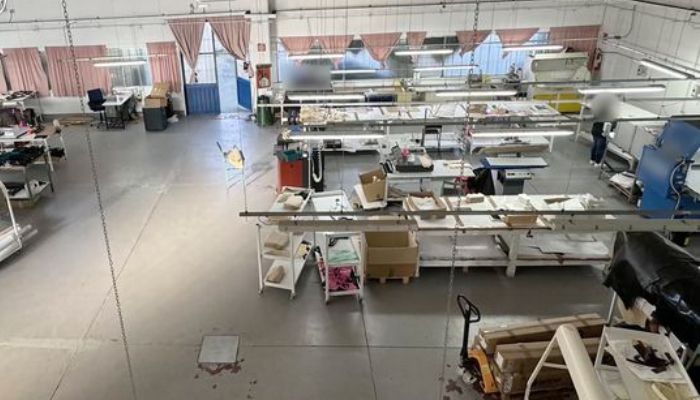
The investigations carried out in March and April this year on the suppliers the suppliers, named Pelletteria Elisabetta Yang SRL, New Leather Italy SRLS, AZ Operations SRLS, and Davide Albertario Milano SRL, revealed that workers were sleeping at the production plant to meet round-the-clock manufacturing requirements. Data on electricity consumption further showed that work was getting done at night and even on holidays.
Workshop where Armani products were made in northern Italy (Image: Italy’s Carabinieri police/AP)
Moreover, the subcontractors in question were Chinese-owned businesses, with the majority of employees coming from China. The inquiry discovered that two workers were illegal immigrants, while seven others lacked the necessary documents. What is even more shocking is that safety devices on machines were removed to expedite manufacturing.
The court document said that the staff was working “in hygiene and health conditions that are below the minimum required by an ethical approach.”
The Italian authorities also probed Giorgio Armani’s contractors. Armani was also accused of failing to adequately manage its suppliers. The investigation revealed that Armani paid contractors $99 per bag for goods that retail for more than $1,900 in stores.
In reaction to these revelations, Milan judges put Dior and Armani units under judicial administration for one year which implies they will be closely scrutinised yet permitted to continue operations meanwhile.
The prosecution underlined that such labour violations are a common practice in the luxury fashion sector, employed to drive up profits. Court records referred to these acts as a “generalised and consolidated manufacturing method.”
“Made in Italy” label being used as a deception?
The “Made in Italy” label is a hallmark of quality and craftsmanship, used extensively by luxury brands to justify their high prices. However, the exposé reveals a starkly different reality. By employing Chinese workers in Italian workshops, these brands can legally use the “Made in Italy” label, despite the fact that the actual labour conditions resemble those found in sweatshops rather than artisanal ateliers. However, the practice adopted by Dior and Armani undermines the authenticity and integrity of the label, deceiving consumers who believe they are purchasing products made under fair and high-quality conditions.
Most importantly, luxury brands like Dior and Armani enjoy significant cost advantages by outsourcing production to workshops that employ cheap labour. By paying workers minimal wages and providing poor working conditions, these brands significantly reduce their production costs. This cost-saving allows them to maintain high-profit margins while keeping prices competitive. In contrast, law-abiding companies that adhere to fair labour practices and pay decent wages face higher production costs, making it difficult for them to compete on price.
This concern was also raised by Fabio Roia, the president of the Milan Court who said, “The main problem is obviously people being mistreated: applying labour laws, so health and safety, hours, pay. But there is also another huge problem: the unfair competition that pushes law-abiding firms off the market.”
Notably, Smaller and emerging brands, in particular, bear the brunt of this unfair competition. Lacking the financial clout of established luxury brands, these companies often struggle to compete on price while maintaining ethical standards. The exploitation of cheap labour by larger brands creates an uneven playing field, where smaller, ethical brands find it challenging to survive and thrive. This not only stifles innovation but also limits consumer choice by driving ethical companies out of the market.
Workers exploitation in big brands has been found before
This, however, is not the first time that workers’ exploitation in major luxury brands has been exposed. In May, a Public Eye investigation revealed that fast-fashion retailer Shein was having its suppliers work 75-hour workweeks with low compensation violating Chinese labour rules, despite the company’s commitment to discontinue the practice in 2021. The workers also turned out to be working in warehouses with fire risks. In China, it was reported in 2020 that 83 foreign and Chinese companies benefitted from the assignment of nearly 80,000 Uyghur workers to their factories under abusive labour transfer programs.
In the year 2021, Uniqlo and Zara owner Inditex came under a French investigation over forced labour abuses linked to China’s Uyghurs. Even Swedish brand H&M allegedly used similar methods in Myanmar, prompting an investigation and eventually forcing the company to close its business there.
Moreover, popular brands like Gucci, Gap, Inc., Adidas, Prada, Zara, Puma, and Fendi among others have in the past been accused of labour exploitation. A 2020 report by NYT said that major luxury brands including Dior, and Saint Laurent use Indian embroiderers for their products and pay them very small wages for the same while making huge profits out of these products.
This, however, is not limited to major fashion and footwear brands but transcends to popular tech companies, the toy industry, automotive industry among others. Back in 2011, similar allegations were made against Apple, through its supplier Foxconn in China’s Shenzhen. It was reported that seven Chinese workers at Foxconn committed suicide over deplorable working conditions. Even HP, Samsung, and Microsoft have faced worker exploitation allegations. Similarly, in the automotive industry, major companies like Volkswagen, and BMW among others have been accused of using slave labour in countries like Brazil etc.
Notably, countries like China, India, Bangladesh and Vietnam among others offer a vast pool of labour willing to work for low wages due to economic necessity. For large fashion brands, this presents an opportunity to reduce production costs significantly. By outsourcing manufacturing to regions where labour is inexpensive, brands maintain high-profit margins while selling their products at premium prices. This practice, driven by the desire to minimize costs and maximize profits, however, raises serious ethical concerns and exposes the hidden human cost of fashion.
The use of cheap labour is often hidden from consumers, who are enticed by the allure of luxury and craftsmanship. Labels like “Made in Italy” or “Made in France” evoke images of skilled artisans working in pristine ateliers, yet the reality may involve exploited workers toiling in substandard conditions, as revealed in the latest case of Dior and Armani. This deception undermines consumer trust and calls into question the authenticity and value of luxury products.
Brands must commit to greater transparency in their supply chains, ensuring that all workers are treated fairly and ethically. Moreover, consumers should also stop blindly running behind big brands for the sake of flaunting their wealth. People’s character should be their ’status symbol’ not essentially the handbags they carry, the clothes and shoes they wear. The true cost of fashion should be measured not just in dollars, but in the dignity and well-being of the people who bring these products to life.
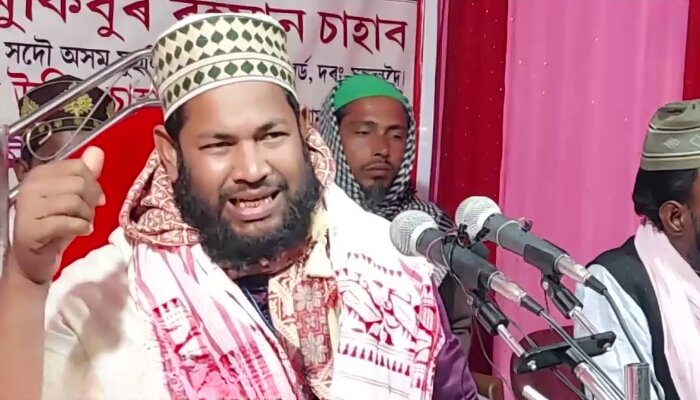
Assam Police arrested radical Islamic preacher Mufti Mukhibur Rahman Azhari for his inflammatory statements against the authorities on Tuesday, 2nd July. He was apprehended by the Darrang district police on the directives of Director General of Police G P Singh after a provocative video of the accused went viral on social media which included a demand for a violent protest against the Lakhimpur police station and the superintendent of police.
Azhari planned for the gherao (encirclement) of the Lakhimpur Police Station on 6th July and made threats to organize large agitations to cause disruptions to daily life in the state between 6th and 10th July.
Mufti Mukibur Rahman Azhari from Assam calls for violence in the State after a man pleaded not to kill Gauvansh during Eid, Mufti arrested.
Darrang, Assam: Police detained controversial Islamist Mufti Mukibur Rahman Azhari from Assam following provocative comments and… pic.twitter.com/QLRGsIDTJJ
The remarks transpired after an Islamic cleric Mustafa Kamal previously appealed that cow sacrifice is not required by Islam and noted that while sacrifice is significant, it was never stated in Islam that cows should be the sole animals sacrificed. Islamists in Assam disapproved and condemned the cleric’s comments. Assam Minister Pijush Hazarika also expressed his outrage over threats made by Mufti Mukibur Rahman Azhari in a social media post.
Minister Hazarika wrote, “All this because during Eid, a person from the minority community had appealed to the people not to sacrifice cows. It is unimaginable that such a benign appeal could flare hatred that he is now challenging Assam Police in a live video and calling for violence Is this where Assam is going today?”
Look at the audacity!
This person belonging to a special community is giving Open Threat to gherao Lakhimpur Police Station on July 6. He is also threatening to come out with large number of people from July 6 to 10 and disrupt normal life.
The mufti during a Facebook live session was heard declaring that he would gherao Lakhimpur police station and the residence of that “devil” (Mustafa Kamal) between the 6th and 10th of July, and boasted that many others voiced their intention to join him. Mukhibur Rahman Azhari announced, “I’m eager to find out how brave that person is. I came in for a live session since I received a call from someone at Uttar Lakhimpur Police Station today. During the break, I will give you his phone number. He enquired as to my identity. I was asked not to come on the 6th. I replied that if you were the OC (officer in charge), you could have my word that I would show up on the day, Insha’allah.”
The radical Islamist further challenged that even a phone call from the SP (Superintendent of Police) or DCP (Deputy Commissioner of Police) wouldn’t be able to suspend his plans.
Abusing Mustafa Kamal, he said, “I would still go Insha’allah. That man has started this game and it is his last. I would put an end to the game. I work very hard to propagate Islam. Now, you insult Islam? You abuse Rasool (Prophet Muhammad). He pronounced Rasool to be Shaitaan. I’ll leave even if they cut my legs or break my hands. I’ll go, no matter which police he calls. I earn 3 to 4 lakh a month. This man only earns through RSS (Rashtriya Swayamsevak Sangh). He can file a case for defamation, but it is true. He had met a Bangladeshi atheist also. He is 100% RSS.”
Azhari once again reiterated that nothing would be able to prevent him from launching a jihadi agitation at the police station and alleged, “The affront to Islam and our Rasool is intolerable to me. I will wage a war and protest. You can show my video to the SP. But I will protest according to the constitution. I will create a disturbance. The constitution of Babasaheb Ambedkar has granted us the freedom to believe in the Hadith, the Quran, Allah, and Rasool.”
“Who granted him permission? Which RSS provided him permission to disparage our Nabi and Quran? I’m going to grab hold of him. If you disrespect Islam, the Quran, Rasool, or Nabi, we won’t sit silently. We’re not going to be idle. Assam is not your father’s property. I’ll travel to your city and to your area to assess your level of bravery,” Azhari threatened Mustafa Kamal.
Law authorities acted swiftly as the incendiary video gained popularity on social media and arrested Mufti Mukibur Rahman Azhari on 2nd July. The Dhula police station opened case 97/24 against him which has been brought before the Mangaldoi court. In an effort to prevent any more disturbance, authorities are also keeping a close eye on the situation.