Home Blog Page 19

‘Machchhar’ means more than a mosquito: The fascinating story behind Captain Smit Machchhar’s Gujarati surname

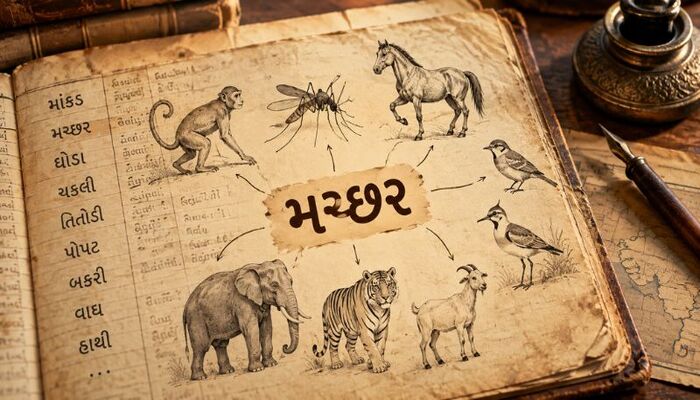
Some surnames are so unique that they stick in your memory right from the moment you hear them for the first time. One such surname is ‘Machchhar’ (Mosquito). In everyday conversation, the word ‘Machchhar’ conjures up the image of a creature buzzing near one’s ear on a summer night; yet, when the same word appears after a person’s name, one wonders about the origin of such a surname.

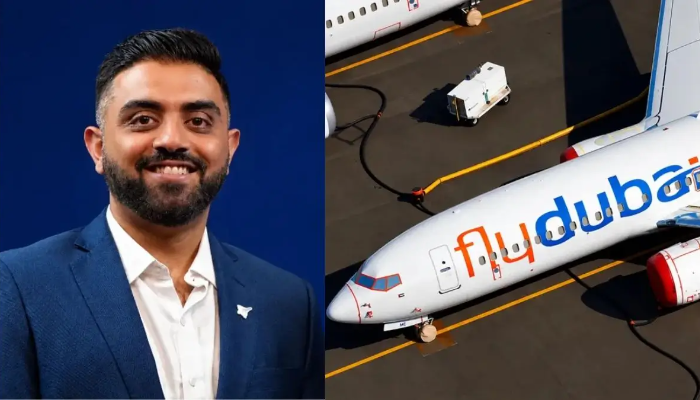
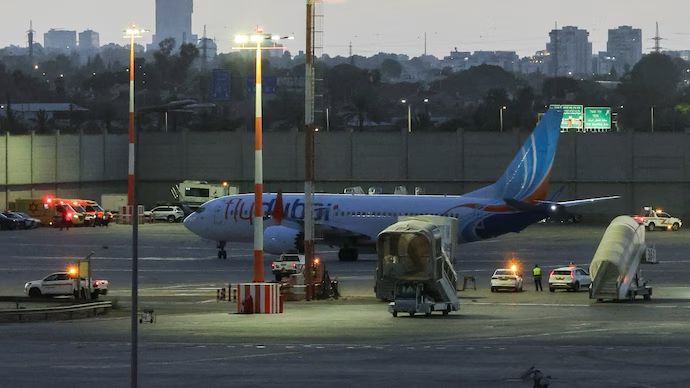
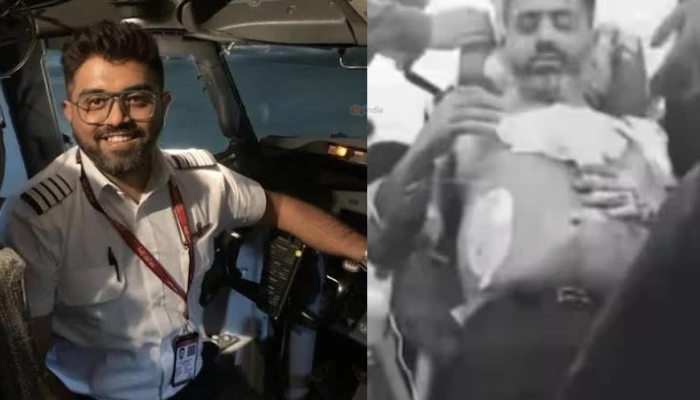
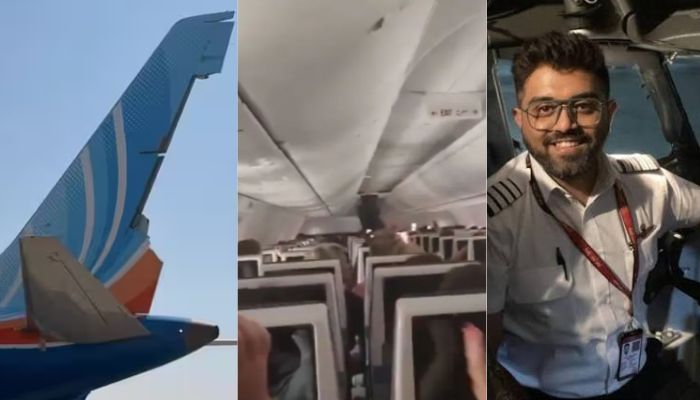
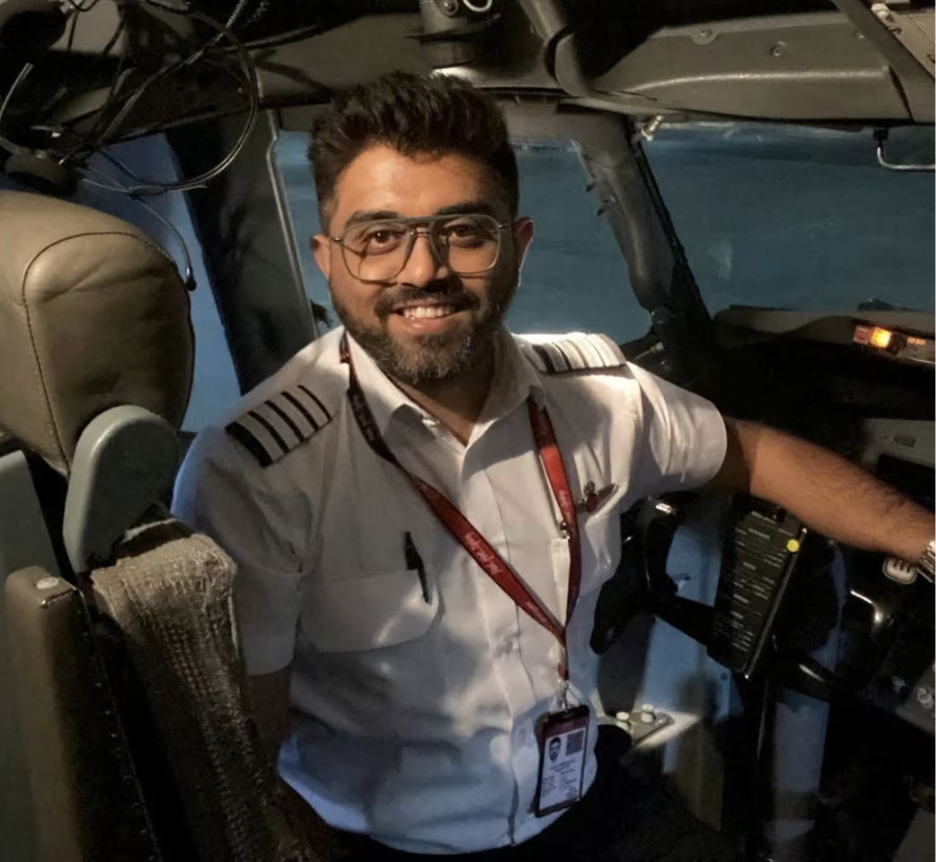
Captain Smit Machchhar, with his distinctive surname, is once again in the headlines. He became a global talking point after he valiantly prevented a Jihadi crashing attempt on a Flydubai flight en route from Dubai to Tel Aviv. Despite being brutally stabbed by his Omani co-pilot, Smit Machchhar managed to open the cockpit door, allowing passengers to bring the aircraft under control. The plane made an emergency landing safely at Tabuk Airport in Saudi Arabia. All 174 passengers on board landed safely, and Smit Machchhar was widely praised for his courage.

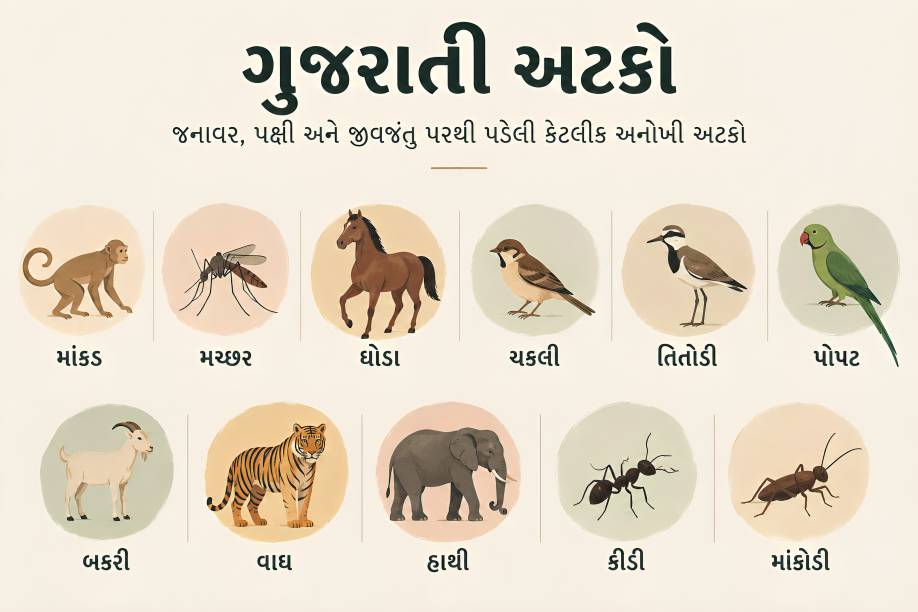
Smit Machchhar’s courage attracted global applause. However, apart from his valour, his surname also gained wider attention and made people question: how does a person come to have ‘Machchhar’ as a surname? While such a surname might surprise people around the world, in Gujarat, such surnames are common. In the state, one finds surnames like ‘Mankad’ (Bedbug), ‘Ghoda’ (Horse), ‘Chakli’ (Sparrow), ‘Titodi’ (Lapwing), ‘Popat’ (Parrot), ‘Bakri’ (Goat), ‘Tagh’ (Tiger/Leopard), and ‘Hathi’ (Elephant). These surnames are unique not only because of how interesting they sound but also because their origins are linked to simple but fascinating stories, often about a person’s life, appearance, temperament, village, home, or even a joke.

An old book titled History of Gujarati Surnames (Gujarati Upnamon no Itihas) examines surnames derived from animals, birds, or insects. Such surnames are rare and are more prevalent in the Kathiawad region of Gujarat. No conclusive account can be given regarding the origins of these surnames. There are multiple possibilities, and in many instances, conjecture outweighs concrete evidence. Therefore, it is not possible to provide an accurate account of the origins of such surnames; however, we can glance through all the stories linked to their origins.

Surnames do not always carry a single meaning

We often associate surnames with a specific meaning. For example, ‘Gandhi’ implies a particular Gandhi family, ‘Patel’ signifies a specific lineage, and ‘Desai’ denotes a particular heritage. However, the history of surnames is not so straightforward. A word can be carried by different families as a surname and can acquire a distinct meaning for specific reasons. A surname might originate from a place name, a profession, an ancestor’s name, or an existing epithet; alternatively, a nickname given in jest might evolve into a permanent surname over generations.

This holds for surnames derived from animals or insects. Just because ‘Bagh’ (Tiger) and ‘Hathi’ (Elephant) are both names of animals, it is not enough to assume that the two surnames share a common origin. Similarly, while ‘Mankad’ (Bedbug) and ‘Machchhar’ (Mosquito) might sound like equally peculiar surnames, they could well have originated under entirely different circumstances and be unrelated to one another. The origins of each such surname need to be examined individually. This is where the subject becomes intriguing; the question is no longer merely about how the name ‘Machchhar’ came to be. Instead, the question becomes: how did people in the Gujarat of the past assign such surnames to identify individuals within their society?

Sometimes surnames originate from unique nicknames.

In the old times, a person’s official name could be different from the name by which the local community knew him. For example, a person with short stature, despite having a proper assigned name, might be called using words like ‘Cheenti’ (Ant, referring to his small height). Similarly, if an individual’s face resembled a bird’s, he might acquire a bird-related name; if his temperament was like that of a certain animal, he might adopt that animal’s name as a nickname. Over time, the nickname becomes one’s identity that eventually extends to the entire family. The origin of a nickname can be just as simple as that.

The reference ‘Cheenti’ is an interesting example. An ant is a tiny insect; perhaps a person was very short, which led him to be referred to as ‘Cheenti’ by people around him. However, discussions around such surnames reveal many possibilities. While some theories suggest that such unique names, which later become surnames, might stem from ancient symbols, it is unlikely that a group chose such a small creature as an ant to represent them. This small example holds the key to the entire discussion. The story behind this nickname is not as straightforward as the name itself appears at first glance.

Three stories behind the surname ‘Ghoda’

Upon hearing the surname ‘Ghoda’, one naturally thinks of a horse. However, the book outlines several possibilities regarding the origin of this surname. The surname is found among the Nagar community of Kathiawad. One possibility links it to a village named ‘Vadadara’ in Kathiawad. People hailing from the village may have borne the surname ‘Ghoda’. A second possibility connects it to lakes and villages named ‘Ghodasar’. It is conceivable that there were multiple lakes named ‘Ghodasar’ in Kathiawad, alongside a village of the same name. People migrating from the vicinity of such a lake or village might have come to be known as ‘Ghoda’.

There is a third possibility as well, reflecting the vibrant character of Kathiawad. One belief holds that the Nagar people of Kathiawad were once so robust that they could swim across the deep waters of Ghodasar Lake, from one bank to the other, just like horses! That is why they were referred to as ‘Ghoda’. It is certainly fascinating to delve into the lore of old Gujarat; to learn how a single surname can be rooted in a village, a lake, or even a folktale concerning a person’s physique.

From ‘Chakli’ to ‘Titodi’: Appearance and manner of speaking

One story regarding the origin of the surname ‘Chakli’ states that it was used for a person who had a small mouth and was likened to a bird. The word might also have been used to refer to a person with a very soft voice. Another interesting possibility links the word to a location; for example, the junction of four roads is known as ‘Chaklo’. A person living there might have been called ‘Chaklawala,’ a term that was eventually shortened to ‘Chakli.’ The book mentions a similar possibility.

‘Titodi’ is also the name of a bird. It is possible that an individual acquired this nickname due to their physical appearance, and the name subsequently became his lineage’s identity. Therefore, one need not assume that a surname carrying a bird’s name necessarily signifies a religious symbol, a family emblem, or an ancient tradition. Sometimes, even a simple surname originating in a village persists across generations.

The same applies to the surname ‘Tota’ (Parrot). This surname is found among both the Parsi and Hindu communities. The book suggests that a person might have been called ‘Tota’ because their nose resembled a parrot’s beak. Another possibility is that an exceptionally intelligent person, someone who could recite things from memory, was compared to a parrot, which is known to have a sharp memory. While it is common to call a small child ‘Tota’ when they speak in a frail or squeaky voice, it is particularly intriguing to consider how this same term could become the permanent surname of an adult.

‘Bakri’ doesn’t just mean ‘goat’

The surname ‘Bakri’ (Goat) sounds equally amusing. It is possible that it would have been used for a person based on his temperament and behaviour. It is also possible that the name might have been given to someone who raised goats. Alternatively, the book suggests it is quite likely that the person possessed a gentle and innocent nature, much like a goat, earning them the moniker. Even a voice resembling a goat’s bleat could have led to such a surname.

In Gujarati colloquialism, there is a long-standing tradition of using animal analogies to contrast a person’s outward appearance with their inner nature. Is it really surprising that a saying about someone being ‘like a tiger in appearance, but like a goat in temperament’ becomes common in a village and, years later, turns into a family identity? The book presents a similar possibility for the surname ‘Bakri’.

‘Machchhar’ does not only mean a mosquito.o

The book records ‘Machchhar’ as a surname originating from Kathiawad. Two main reasons are cited for its origin. While the word ‘Machchhar’ immediately brings to mind the insect (mosquito), older Gujarati dictionaries reveal another meaning for the word; the Bhagavadgomandal defines ‘Machchhar’ as ‘passion’ or ‘enthusiasm’. Thus, the same word signifies a buzzing insect on the one hand, while on the other hand, it expresses intense emotion or passion within a person.

There are diverse stories linked to the origins of the surname ‘Machchhar’. Regarding its origin in Kathiawad, one theory suggests that a man in a particular family was extremely ‘Mathsarvala’—meaning full of anger, hostility, or envy. People began calling him ‘Mathsar’, and over time, the word likely morphed into ‘Machchhar’. Another possibility is that the family lived in an area infested with mosquitoes; they were referred to as ‘Machchharvala’, and eventually, ‘Machchhar’ became the surname.

It is worth noting here that neither of these explanations is a verified historical fact; the book presents them merely as beliefs and possibilities. Therefore, one cannot definitively claim that the surname ‘Machchhar’ originated in this specific manner. Nevertheless, both possibilities illustrate that a surname need not stem from a major political or religious event; an individual’s temperament or a family’s place of residence can be sufficient grounds for its adoption.

The book also highlights an interesting social aspect: children from some families bearing this surname disliked it and chose to adopt new ones. Moreover, changing surnames is not an unusual occurrence. Gujarati surnames have evolved.

Therefore, even though a ‘mosquito’ is currently being discussed worldwide as the name of a brave pilot, viewing the word ‘Machchhar’ (mosquito) solely as an insect would be to take an overly narrow view of the surname’s history. For different families, this very word could have originated from a joke, a place of residence, or an ancestor’s temperament.

‘Mankodi’ is also an old identity.

The surname ‘Mankodi’ also comes up in this sequence. ‘Mankodi’ is considered a humorous surname. It is possible that someone with a jolly nature who used to joke with, tease, or poke fun at others, and consequently acquired the nickname ‘Mankodi’. There is another possibility as well. In colloquial speech, the words ‘Keedi’ and ‘Makodi’ are often used together. Thus, it is conceivable that a close relative or friend, who was always in the company of someone nicknamed ‘Keedi’, began calling that person ‘Makodi’, and the name eventually became the family’s surname. This reinforces the point that surnames are not selected from a dictionary; rather, they emerge organically from the living language shared among people through banter, teasing, familiarity, and relationships.

The story behind ‘Mankad’

Upon hearing the word ‘Mankad’, one immediately associates it with ‘Machchhar’ (mosquito). Both are names of insects and sound peculiar. However, there is no reason to assume that these two surnames share a common origin. The book clearly states that the names ‘Mankad’ and ‘Machchhar’ likely emerged independently, without any mutual connection. The surname ‘Mankad’ is prevalent among the Nagar families of Kathiawad. An interesting possibility arises from a family’s own tradition; they trace their lineage back to the sage Markandeya. It has been suggested that the descendants of Markandeya, initially known by the name Markandeya, eventually adopted the surname ‘Mankad’ through a linguistic transformation.

Yet, this is not the only possibility. Just as it has been suggested that people living in a mosquito-infested house might be called ‘Machchhar’, it is equally plausible that a family residing in a home teeming with bedbugs (khatmal) came to be known as ‘Mankad’. Alternatively, if an individual in the family possessed a restless nature, constantly hovering like a bedbug, jumping about, and never allowing anyone to sit still, they might have been nicknamed ‘Mankad’, a moniker that subsequently became the identity of the entire family. While the book treats these as mere conjectures, the family’s actual link to the sage Markandeya makes that particular theory more compelling. Thus, ‘Mankad’ signifies more than just a bedbug; the word may well represent a surname rooted in the tradition of sages and the fabric of folk life.

‘Tiger’ is not just an animal.

Upon hearing the surname ‘Tiger’, one naturally envisions a powerful individual, a hunter, or an ancestor with a tiger-like nature. However, the story presented in the book is different. It introduces Vadheshwar Mehta, the head of a family and a man considered the most influential in his time; his presence commanded respect wherever he went. It was for this reason that he came to be known as ‘Tiger’, a name that subsequently became the surname for the entire family. Here, a subtle shift alters the entire narrative: while the name ‘Tiger’ typically evokes the image of a wild animal, the true origin of the surname may lie not in the animal itself, but in an individual’s name and social standing.

‘Hathi’ does not always refer to an elephant.

The book outlines three possibilities regarding the surname ‘Hathi’ (Elephant). A person might be called ‘Hathi’ because of an elephant-like physique or an elephant-like walk. A third possibility is that the nickname originated from a close relative or friend who bore the nickname ‘Ghoda’ (Horse). Given the association between ‘Hathi’ and ‘Ghoda’ in royal parlance, often reflected in expressions linking the two, it is suggested that the nickname could have arisen from such a social identity. Here, too, there is no definitive answer; the possibilities of an elephant-like physique, an elephant-like walk, or a connection to a relative all remain open.

Did these surnames originate from totems?

This brings us to an old and intriguing concept: the ‘totem’. In ancient times, certain human groups adopted an animal, bird, plant, or natural object as a symbol of their identity. Within such groups, the name of that animal or object became linked to the group’s identity. References to this tradition can be found in various ancient societies across the world; the concept is discussed, for instance, in the Encyclopedia of the Social Sciences. So, did Gujarati surnames also originate from the totems of such ancient groups?

While this idea is plausible, there is insufficient evidence to support it. One might conceive of totems corresponding to surnames like ‘Ghoda’ (Horse), ‘Vagh’ (Tiger), or ‘Hathi’ (Elephant). However, it seems highly unlikely that an ancient group would choose tiny insects such as ants, mosquitoes, or bedbugs to represent them. Since the custom involved creating replicas of these totems out of clay, stone, or wood and displaying them near the group’s settlement, representing such minute insects as symbols in this manner would have been difficult.
Furthermore, if we examine the history of Gujarati surnames, another issue arises. According to the book, many Gujarati surnames have not remained static, despite their antiquity. Surnames have frequently changed due to various factors such as the adoption of new professions, migration, a dislike for existing surnames, or a desire to adopt a new one. Therefore, more evidence is required to substantiate the claim that a surname originating from a totem thousands of years ago has persisted unchanged across generations. Thus, while the concept of the totem cannot be entirely dismissed, it is also inappropriate to attribute every surname derived from an animal, bird, or insect to a totem.

Sometimes, a joke becomes history.

Perhaps the most human aspect of this entire subject is humour. Someone might have an animal-like appearance, be very short, have a peculiar voice, or possess a nasty temperament. Someone else might constantly tease others. To taunt a person, villagers might start calling them by the name of an animal. Initially, it is just a joke. Even after that person is gone, the nickname remains. Eventually, people come to know their son by the same nickname. For the grandson, it becomes a family name. And after two or three generations, a child might not even know why people used to call their great-grandfather by that name.

Some surnames may have been nicknames given in jest by relatives, in-laws, or close acquaintances. Today, when we hear a surname, we immediately try to understand its meaning. However, the meaning of a surname and its origin are not the same thing. The current meaning of ‘Machchhar’ is ‘mosquito,’ but the original meaning of the nickname ‘Machchhar’ could be ‘a family living in a mosquito-infested area,’ or it could be a modified form of the word ‘Matsar,’ or something else entirely.

One word, many family stories

The list of Gujarati surnames derived from animals and insects is short, yet it offers a glimpse into the culture of Gujarat. Ant, horse, sparrow, tit, parrot, goat, mosquito, monkey, bedbug, tiger, and elephant- these surnames appear together. However, the greatest mystery of this list is not simply why so many animal names became surnames. The real intrigue lies in understanding how each name likely originated from the diverse lives of people. The reason could be a person’s physical appearance, temperament, voice, location of their home, a specific village or lake, an ancestor’s name, family ties, or even just a joke.

Thus, grouping ‘Mankad’ (bedbug) and ‘Machchhar’ (mosquito) together might lead us to think they belong to the same category, yet their backstories could be vastly different. ‘Ghoda’ (horse) and ‘Bagh’ (tiger) are both names of powerful animals; however, the former might stem from associations with a specific place, physique, or folklore, whereas the latter may refer to an influential ancestor. ‘Hathi’ (elephant) could refer to a resemblance in physique or gait; ‘Chakli’ (sparrow) to facial features or habitat; ‘Tota’ (parrot) to the shape of the nose or a habit of talking; and ‘Bakri’ (goat) to temperament. ‘Chinti’ (ant) might have related to size, while ‘Mankad’ (bedbug) could hold multiple meanings ranging from the tradition of sages and ascetics to the common household insect.

Perhaps these surnames should not merely be seen as ‘quirky’ labels. They represent the unwritten memories of a society. Things that often go unrecorded in official documents remain alive in everyday speech. The name by which a person was addressed, the reason for it, who first used it, and how it eventually became the family name- all of this is sometimes preserved within just two or three syllables of a single nickname.

Perhaps that is why it is easy to laugh at a surname like ‘Machchhar’ (Mosquito); yet, once one grasps the possibilities hidden behind it, the name becomes far more intriguing. The recent Flydubai flight incident has brought the surname into the spotlight, but the story of the origins of the surname ‘Machchhar’ is a historical one. It reflects a traditional method of identification in the folk culture of Gujarat, where a person’s home, temperament, identity, surroundings, and even their penchant for jokes could all converge to turn a single word into a family name.

A surname is often more than just a name; it can be the untold story of an obscure ancestor. Surnames like ‘Mankad’ (Bedbug), ‘Machchhar’ (Mosquito), and ‘Ghoda’ (Horse) make these stories particularly fascinating. This is because the name immediately conjures up an image of an insect or an animal rather than a human being, even though a real person lies hidden behind it.

(This article is a translation of the original article published on OpIndia Gujarati.)
Euthanasia for kids – murder or mercy: As a child with terminal illness is euthanised in the Netherlands, read what their law says and the public debate around it

A two-year-old child with severe, terminal medical issues has been euthanised by doctors in the Netherlands. According to reports, this is the first tragic occurrence of its kind under the expanded euthanasia laws, as the baby becomes the youngest person in the world to undergo this procedure.

In 2024, the Dutch government made a historic decision to remove age limitations on administering euthanasia to terminally ill kids. Earlier, assisted dying in the Netherlands was tightly limited to newborns under the age of one and adolescents aged 12 and above. The principle is that the doctor must use medical insight to come to the conclusion that ending the child’s life is the sole practical way to end their excruciating and hopeless agony.

The gender of the toddler, who was born during a holiday in a different nation, remains undisclosed to the public. Nearly the entirety of their existence was spent struggling with profound brain damage, cerebral palsy and visual dysfunction resulting from an extremely premature delivery occurring at merely 26 weeks and 3 days of gestation.

The circumstances surrounding the procedure were examined by a medical review board. The child’s attending doctor pursued independent second opinions after confirming that no medical intervention could ease the patient’s agony. Additional treatment was tried, but had to be stopped because of the negative effects.

The Dutch Committee for Late-Term Abortion and Termination of Life in Newborns and Children stated that the child also experienced serious respiratory distress due to mucus-filled lungs and uncontrollable epileptic seizures that did not improve with medication.

According to the independent medical review, the child’s “unbearable suffering was clearly visible.” It expressed that all essential facets of human functioning were significantly and permanently compromised.

The board stated, “Despite all medical and non-medical interventions, the parents and the doctor observed no improvement in the child’s condition and were convinced that the child was suffering unbearably and without prospect of relief.” 

A life marked by profound brain damage, continuous seizures, unrelenting pain and no recovery

An official government report conveyed that the child was initially admitted to the neonatal intensive care unit (NICU). It read, “Severe complications emerged due to extreme prematurity, including recurrent infections accompanied by sepsis, a systemic inflammatory response to pathogens that causes tissue and organ damage.”

Afterwards, the baby was transferred to the Netherlands at four and a half months of age, and an assessment was carried out.

The analysis highlighted, “Brain MRI demonstrated extensive cerebral injury, encompassing periventricular leukomalacia (PVL), white matter damage resulting in spastic cerebral palsy and the occipital cortex, the posterior part of the cerebral cortex, was similarly affected with highly anticipated cerebral visual impairment (CVI).”

Infantile epileptic spasm syndrome (IESS), formerly known as West syndrome, was identified when the child was eight months old. This is an acute epilepsy syndrome that is characterised by difficult-to-treat epilepsy, which causes developmental delay and frequent, excruciating discomfort.

The epileptic seizures persisted even as the treatments advanced, culminating in the development of a chronic sleep disturbance. It was pointed out that the child behaved in a highly restless manner. Sleep disturbance, coughing fits and swallowing difficulties developed as a result of the epileptic seizures that continued regardless of the treatments.

The baby had a critical developmental delay, with an approximated age of six weeks, in spite of being nearly two years old at the time. There was absolutely no language development, and the cerebral visual impairment further restricted the opportunities for interaction. According to the diagnosis, the child would require lifelong care for all routine daily tasks.

It was further noted that the progression of respiratory issues might be accelerated by the presence of scoliosis. According to the doctor, the child’s unsafe swallowing habit also made it easier for food or contents from the stomach to enter the airways and induce aspiration pneumonia, a lung infection brought on by aspiration.

Hence, the likelihood of death at a very young age due to such complications was considered very high.

“During the child’s short life, there was a complete lack of development and improvement. All facets of ‘being human’ in terms of motor skills, behaviour, and personality were severely impaired, and this would not improve,” the report asserted. The child’s pain was apparent during periodic epileptic seizures, which were expressed through crying, arching of the back and shortness of breath.

The doctor believed that there was a drastic rise in the child’s misery and there was a major risk of additional issues at such a young age because of the inability to reduce the existing pain, as well as the presence of conditions with a short life expectancy alongside no possibility of improving quality of life.

A difficult decision confronts the parents

The diagnosis, prognosis, and available treatments were extensively explored with the parents because the child was unable to interact in any manner. As examinations provided increased clarity and the child’s condition visibly deteriorated, the parents decided to terminate the life. The parents maintained their position during the doctor’s repeated discussions with them on the matter.

The goal was to end or at least lessen the child’s suffering, and the parents feared that the suggested remedies would only exacerbate it. The doctor talked about palliative alternatives with them on multiple occasions.

However, they did not want the option of prolonged sedation that would result in starvation, in which case the child would eventually die from a lack of fluids and nutrients, and their concern was understood. The doctor sought an independent evaluation from another doctor outside of his own area, who also determined that ending the life was the only reasonable method to alleviate or eliminate the pain.

There are no standards for performing euthanasia on children under the age of twelve in the nation.

The doctor opted to gently put the child to sleep at the request of the parents, with escalating doses of morphine and midazolam intravenously to trigger drowsiness or a reduction in consciousness. The child went into a very deep state of sleep and died when the doctor gave coma-inducing medications, propofol and thiopental.

According to the report, the committee found that the doctor acted with due care after taking into account all relevant facts, circumstances, and considerations. The evaluation verified that all ethical and legal requirements set forth by Dutch law had been met before taking the measure.

The euthanasia law of the Netherlands and its 2024 extension

Euthanasia is defined as “the active ending of life on request” in the Netherlands, which was the first country to allow it in 2002. The law has strong public support and is only permitted under certain conditions. Belgium, its neighbour, was the first nation to allow euthanasia for all children in 2014.

Adults were authorised to use it, followed by newborns in cases where a dying patient was in pain and palliative care was not working, after which children were included as well by the Dutch government. Notably, Articles 293 and 294 of the Dutch Criminal Code make assisted suicide and euthanasia illegal.

The government has outlined, “The only exception is when the procedure is performed by a doctor who has satisfied six statutory due diligence criteria. These criteria are laid down in the Termination of Life on Request and Assisted Suicide (Review Procedures) Act. The doctor is also required to notify the municipal pathologist.”

Paediatric euthanasia is prohibited by law, but it can be executed under recognised standards with little chance of legal repercussions.

Euthanasia was originally legalised for adults and children who were 12 years of age or older, then newborns and at present kids between 1 and 12. The Royal Dutch Medical Association’s (KNMG) view that a doctor’s intention to relieve suffering occasionally clashes with their duty to save life, which was reflected in the approval.

Therefore, a decision has to be made about which obligation to uphold in such circumstances. The KNMG acknowledged that euthanasia should only be utilised as a last resort, following the failure of all other methods to alleviate suffering.

“Sometimes, a child is so severely ill that the parents and doctor together decide that there is no alternative but to terminate the life. The doctor must always exercise due medical care,” the government stresses.

The step can be taken only when a child has a fatal illness and is in excruciating pain with no possibility of recovery, and it is permissible to end their life. The government emphasises, “This means the child is in constant, severe pain. And that there is no cure and no reasonable alternative to relieve the child’s suffering, even through palliative care.”

The doctor and the parents might choose to end the child’s life in these cases. However, the parents and, if feasible, the patient have to be consulted. The government directs, “A doctor’s decision about terminating the life of a child aged 1 to 12 must be based on general medical standards and current medical knowledge. The doctor must exercise proper medical diligence when performing the procedure.”

This legalisation in the Netherlands has been a complex project. It involved public debate, litigation, legislation, regulation, and continuing revaluation. The Dutch developed a regulatory strategy that differs from that of other nations owing to this approach.

Technically, euthanasia is unlawful and regional oversight committees must be notified of every such case. These committees consist of “4 doctors specialising in relevant areas of medicine, a lawyer and an ethicist.”

They submit their findings to a public prosecution service, which has the authority to ascertain whether to file criminal charges against the doctor who does not adhere to the law and offer sufficient care to the patient.

The detailed requirements that govern the process: Late-term abortions, euthanasia of newborns and kids aged 1-12 years

According to the Dutch Criminal Code’s Articles 82a, 289, and 296, a late pregnancy termination or a life-ending act involving a newborn or a child between the ages of one and twelve is illegal. The decision to pursue criminal charges in this regard is made by the Public Prosecution Service (Openbaar Ministerie or OM).

The review committee evaluates the doctor’s actions and expresses the outcomes in an opinion, which is forwarded to the OM for an autonomous decision.

In the case of patients ranging from one to twelve years of age, the essential prerequisite mandates that the doctor must arrive at the conviction, rooted in medical understanding and best practices, that life termination constitutes the only appropriate intervention to address the child’s incurable and unbearable distress.

The doctor has to approach the parent(s) beforehand when a late pregnancy or life-ending procedure is intended for a baby or child aged 1-12 years. They must agree, and the patient’s report should be delivered to the appropriate authorities. The doctor cannot move forward in the absence of consent from parents.

An independent doctor should be consulted if possible. The doctor must report the procedure to the municipal coroner. The latter would inspect the body and ascertain the cause and reason of death before contacting the public prosecutor, who gives the nod for burial or cremation.

“The doctor has to send the completed notification form, including all relevant supporting documents, to the committee. He or she must report to the review committee within three months of the procedure,” after which another form and pertinent paperwork are to be handed over to the committee.

The committee must convene every eight weeks to analyse the received report. It is comprised of 6 persons: a chairperson, four expert doctors and an ethicist. The evaluation is based on the documents, ensuring that the doctor acted in the appropriate manner. He or she could also be asked to respond with an oral explanation or supply further documents if needed.

In fact, doctors are routinely told to explain the report orally, as prescribed by the regulations. The committee’s ruling conveys whether the doctor operated in compliance with the specified standards of care.

It is then forwarded to the doctor and published online in anonymous form. The Public Prosecution Service obtains the committee’s judgement if it is satisfied with the doctor’s conduct and then decides whether or not to proceed with the prosecution.

On the other hand, the Public Prosecution Service and the Inspectorate General for Health Care (IGJ) receive the committee’s conclusion if it finds that the parameters of due diligence have not been followed. These bodies individually determine, within their respective authority and role, whether and what steps should be taken.

The Public Prosecution Service is given a strong recommendation by the committee and the former, in turn, renders an independent decision pertaining to the case.

The wider debate surrounding the recent case

The news that a 24-month-old was euthanised in the Netherlands has sparked a comprehensive debate over this sensitive issue, with people both opposing the decision and acknowledging the circumstances that led to it. Some have questioned the ethical implications of the move, while others have sought to understand the hard medical realities faced by the family.

A user claimed that “they are killing one-year-old children with disabilities and epilepsy in the Netherlands.” He also quoted Dr Bert Keizer, a prominent Dutch physician, author and geriatrician and wrote, “Anyone who embarks on euthanasia ventures on a slippery slope along which you irrevocably slide towards the indiscriminate killing of defenceless patients.”

A person accused that murder was being legalised in the Netherlands.

Another user remarked “cold-blooded murder” and wanted the United States to pull out of the North Atlantic Treaty Organisation (NATO), referring to the European Union as leeches.

An individual questioned why a dying child had to be “killed.” She commented, “The child is dying. I don’t get it. Is it just about the money?” She inquired if it is like euthanising a dog to alleviate its suffering and facilitate a peaceful death, adding, “Why not let nature just take its course?”

However, others defended the step, highlighting the basis which drove the doctor and the parents in this direction. According to a “pro-life” supporter, the decision was “justified” by severe health issues affecting the baby, such as developmental delays, physical impairments, and epileptic seizures.

A netizen posted information about the diagnosis and prognosis of the child for “those who are too lazy to read the actual article and don’t want to realise and admit that this was an act of mercy as a desperate last resort, not an irresponsible and easily made decision.”

A woman asked, “If the child was suffering and dying already, isn’t this the most humane way to speed up the inevitable?”

A user stated that those against the decision were “monsters” because the baby suffered from sepsis and had major mental and physical disabilities “that would make it impossible to live any sort of quality life. It would be in pain for life, unable to even communicate.”

The heartbreaking circumstances behind an impossible choice

There can be no denying that the decision to end a life is an extraordinarily difficult one, and when it involves a child, it becomes all the more challenging and excruciating. It is one of the most extreme choices anyone can encounter.

Yet, in certain devastating circumstances, people might find themselves under unbearable pressure to take a course of action they would never willingly accept, but have to undertake when every other avenue has been exhausted. A couple narrated their story in an article for The Guardian last month.

They shared, “Our daughter had a genetic syndrome – not inherited from either of us but a completely random genetic error that occurred during cell division – that put her chance of living until birth at something close to 1%. Even if she were safely born, she could never have children of her own without drastic intervention and would require medical care throughout her life – care we could not afford to provide.”

They designated the option that was presented to them as “horrendous” because they had to terminate the pregnancy “after fighting so long to become pregnant.”

Similarly, a woman conveyed how she had to make the same harrowing choice after a 20-week scan, in a 2021 article for the media outlet.

She disclosed, “We were told our baby had a congenital diaphragmatic hernia (CDH). Her diaphragm hadn’t formed completely, resulting in her internal organs clustering in her chest. Her lungs wouldn’t develop properly and, if she survived until birth, there was a chance her life expectancy could be measured in single figures, a significant portion of it spent in hospital.”

She explained that the prognosis was so extreme that this was the only way the couple could ensure their baby did not suffer.

Another woman walked the daunting path in 2014 after the “test indicated her fetus could have a rare condition called triploidy, which means it has 69 chromosomes instead of the normal 46, and causes many developmental issues such as heart, kidney and neural tube defects. In almost all cases, the pregnancy ends in miscarriage or stillbirth. The few babies that make it to delivery die within hours or days.”

Conclusion

The sanctity of life is of paramount importance, and every possible measure must be taken to preserve it. At the same time, it cannot be denied that certain situations can arise in which parents and family members are faced with extraordinarily difficult choices. That does not make the ethical questions surrounding euthanasia any less significant. It makes the need for stringent safeguards, careful medical assessment and compassion in such cases even more fundamental.

Beyond Generation: Inside India’s gigawatt-scale renewable energy storage revolution

India’s energy transition has crossed a historic threshold. With non-fossil fuel capacity now exceeding 50% of the national grid—amounting to approximately 283 GW of solar, wind, and hydro generation—the fundamental challenge is no longer merely generating clean electrons, but firming them. The sheer intermittency of renewable energy dictates that the massive solar surges absorbed during the day must be strategically stored to prevent severe baseload shortages during the evening peak hours. This structural reality has catalysed what is now a gigawatt-scale renewable energy storage revolution across the subcontinent.

At the core of this transition is a diversified, multi-vector storage architecture designed to secure India’s sovereign energy future and achieve the ambitious target of 500 GW of non-fossil capacity by 2030. The state apparatus has recognised that reliance on spinning thermal reserves is outdated, and has consequently initiated a massive infrastructure pivot towards advanced storage technologies.

The primary pillar of this strategy relies on Pumped Storage Projects (PSP), frequently termed “water batteries”. By leveraging India’s vast topographical variations, the government is aggressively pursuing gigawatt-scale closed-loop pumped hydro systems. These massive civil engineering marvels use off-river reservoirs to store gravitational potential energy, providing critical long-duration baseload capacity without disrupting natural riverine ecosystems.

In parallel, electrochemical storage is being deployed at an unprecedented velocity to act as the grid’s agile shock absorbers. Battery Energy Storage Systems (BESS), predominantly utilising thermally stable Lithium Iron Phosphate (LFP) chemistries, provide the sub-second response times necessary for frequency regulation and immediate voltage support. The national network of battery storage is rapidly expanding, currently reaching over 92 GWh in total capacity. Furthermore, to break reliance on imported supply chains, the strategic horizon is actively shifting towards Advanced Chemistry Cells (ACC), Sodium-ion alternatives, and deep-storage Vanadium Redox Flow Batteries (VRFB). Other emerging vectors, including green hydrogen and thermal storage, are also being integrated to decouple power generation from immediate demand.

This physical infrastructure boom is entirely underwritten by a drastic overhaul of the national policy framework. The most decisive intervention is the historic Green Energy Corridor Phase-III (GEC-III) scheme, commanding a massive ₹1.86 lakh crore outlay. This scheme structurally mandates the concurrent deployment of 50 GWh of battery storage alongside major transmission upgrades, effectively ending the era of unbuffered renewable transmission.

Supplemented by robust Viability Gap Funding (VGF), comprehensive Central Electricity Authority (CEA) guidelines, and ₹18,100 crore Production-Linked Incentive (PLI) schemes for domestic ACC manufacturing, the Indian government has successfully transformed dormant topography and raw chemical cells into highly bankable grid assets. Ultimately, this coordinated strategy effectively replaces thermal baseload dependency with dispatchable green power, marking a structural maturation of the national grid and ensuring a resilient energy storage foundation.

Read the full article on Chapter 1 Magazine.

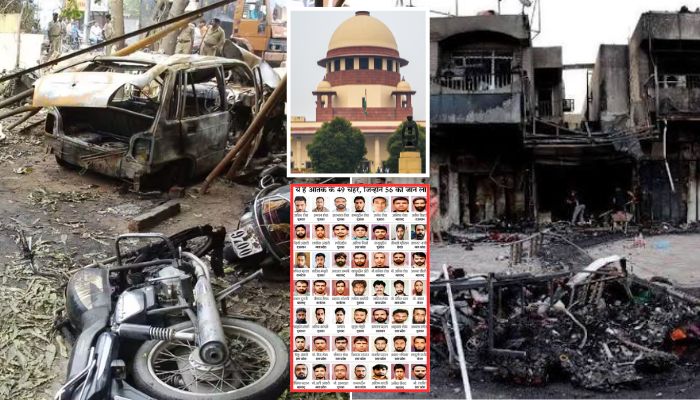
Supreme Court stays death penalty of Ahmed Barelvi who conspired the 2008 Ahmedabad blast: Read about the deadly attack and the terrorists who killed 56 people

On Thursday, September 1, the Supreme Court stayed the execution of the death sentence awarded to terrorist Ahmed Bawa Abbu Abubakar Barelvi, one of the 38 convicts sentenced to death in the 2008 Ahmedabad serial blasts case. A bench of Justices Vikram Nath, Sandeep Mehta and Augustine George Masih passed the order while hearing Barelvi’s challenge to the Gujarat High Court judgment that had upheld his conviction and death sentence.

Barelvi had challenged the High Court’s decision before the Supreme Court. During the hearing, his lawyer told the court that his conviction was based entirely on conspiracy. Taking note of the submissions, Justice Vikram Nath ordered that the execution of the sentence be stayed. The Supreme Court also issued notice to the Gujarat government and sought its response to the plea.

Barelvi’s lawyers also requested a translated copy of the Gujarat High Court judgment, pointing out that the trial court records were in Gujarati. The legal team appearing for Barelvi included advocates Ashwin Vaish, MS Mukarram, Ashutosh Thakur, Amit Kumar, Harsh Jha, Yashaswi Dasari and Uttam Panwar.

The Supreme Court’s order is the latest development in a case that has continued for nearly two decades and involves one of the deadliest terror attacks in Ahmedabad.

2008 Ahmedabad serial blasts killed 56 people

The Ahmedabad serial blasts took place on July 26, 2008. A series of coordinated explosions hit different parts of the city within around 70 minutes. The blasts targeted crowded public places and several other locations, including hospitals, buses, parked bicycles and cars.

A total of 21 bombs exploded across Ahmedabad. The attacks killed 56 people and injured more than 200 others. One of the striking features of the attack was that explosions also took place at hospitals where victims of the blasts were being treated.

Two days after the Ahmedabad blasts, several live bombs were recovered from different locations in Surat. Those bombs, however, did not explode.

The police registered 20 FIRs in Ahmedabad and another 15 FIRs in Surat. Investigators later connected the two sets of cases, saying they were part of the same terrorist conspiracy involving Indian Mujahideen, described by the prosecution as a breakaway faction of the banned Students Islamic Movement of India (SIMI).

The investigation led to a long-running trial

The cases were eventually combined for a joint trial. In total, 78 people were tried in connection with the case; one had turned approver. The proceedings continued for several years as the prosecution presented evidence about the blasts, the conspiracy and the roles of the accused.

The Special Court in Gujarat delivered its verdict on February 8, 2022. It convicted 49 people and acquitted 28 others after giving them the benefit of doubt. One accused was granted pardon after becoming an approver, while four approvers who later retracted their statements were convicted during the proceedings.

The convictions covered several serious offences. These included murder under Section 302 of the Indian Penal Code, attempt to murder, criminal conspiracy under Section 120B, and provisions relating to waging war against the State. The accused were also convicted under provisions dealing with promoting enmity between different groups and other offences under laws including the Unlawful Activities (Prevention) Act, Explosive Substances Act and Prevention of Damage to Public Property Act.

Special Court awarded death sentence to 38

After convicting 49 people, the Special Court considered the question of punishment. On February 18, 2022, it awarded the death penalty to 38 convicts and sentenced the remaining 11 to life imprisonment until death.

The court treated the case as a “rarest of the rare” matter. Special Judge Ambalal R Patel, who conducted the trial, announced the operative part of the sentencing order in court.

The 38 convicts were awarded capital punishment under Section 302 of the Indian Penal Code along with relevant provisions of the Unlawful Activities (Prevention) Act. The court also imposed fines on the convicts.

Forty-eight convicts were ordered to pay a fine of Rs 2.85 lakh each. Another convict, Mohammed Usman Agarbattiwala of Vadodara, was ordered to pay Rs 2.88 lakh. He was the only convict found guilty under the Arms Act. The court directed that the money collected through the fines be used for compensation to the victims’ families.

The sentencing order ran into 7,015 pages. The court also ordered compensation for those affected by the blasts. The families of the 56 people killed were to receive Rs 1 lakh each, while people who suffered injuries were also entitled to compensation according to the nature of their injuries.

Gujarat High Court upheld the death sentences

The 2022 Special Court judgment was then taken up by the Gujarat High Court. The High Court had to consider the appeals filed by the convicts as well as the State government’s request for confirmation of the death sentences.

On July 7, 2026, the Gujarat High Court upheld the convictions and sentences of the 38 people awarded the death penalty. It also upheld the life sentences given to 11 others.

A Division Bench of Justices A.Y. Kogje and Samir Dave dismissed the criminal appeals challenging the Special Court’s verdict. The court also allowed the State government’s reference seeking confirmation of the death sentences, which is required in death penalty cases.

Court cited scale of attack and conspiracy

While upholding the death sentences, the High Court referred to the large number of deaths, the scale of the conspiracy and the intention to create widespread terror.

The court also examined the roles and records of the 38 convicts. It noted that the Special Court had considered both circumstances that could support a lesser punishment and those that made the crime more serious before deciding on the death penalty.

The High Court said the large number of deaths, the scale of the conspiracy and the objective of creating fear across society were among the factors supporting the punishment. It also referred to the conduct of some convicts during the trial, their criminal antecedents and disciplinary action taken against some of them in jail.

For the 11 people who received life imprisonment, the High Court said their roles included participation in terror training camps in Gujarat and Kerala and providing logistical support for the conspiracy. The court referred to activities such as procuring scooters, plastic containers and clocks used in the conspiracy and arranging shelter for others.

Who were the convicts?

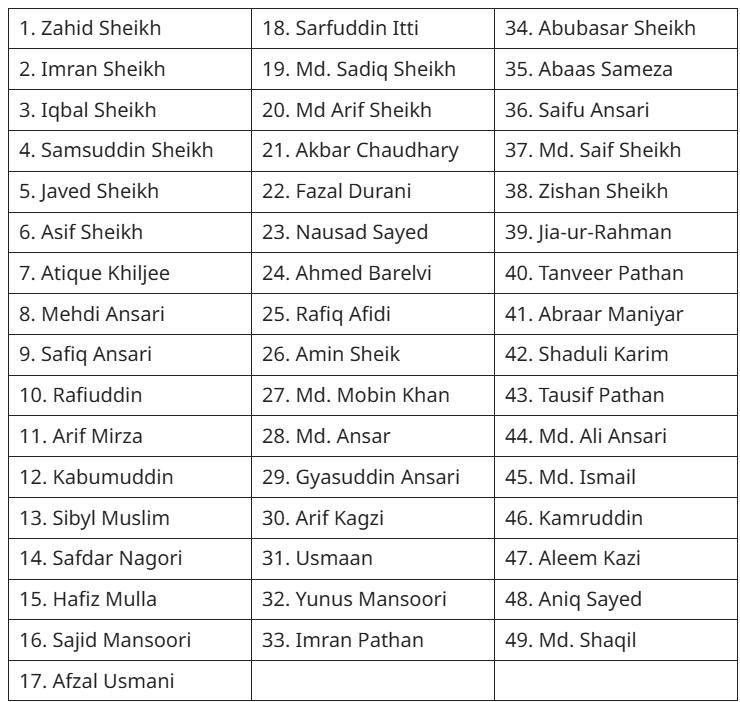
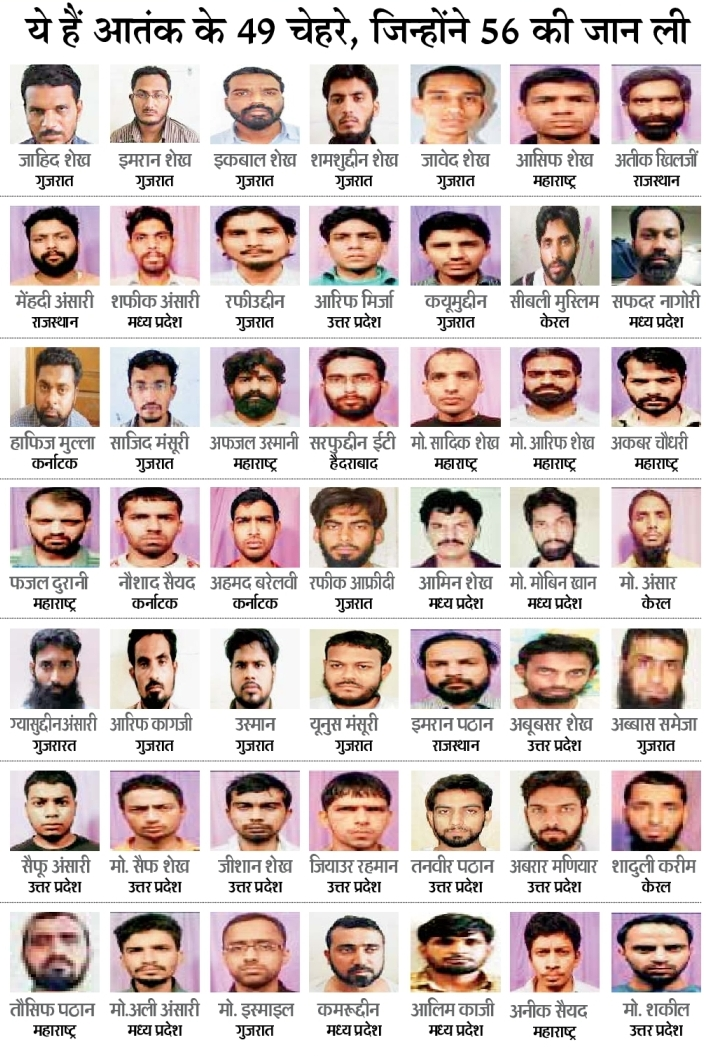
The 49 people convicted in the case were linked to the terrorist organisation Indian Mujahideen. The convicts included former SIMI leader Safdar Nagori and associates from 11 states. The list of all 49 convicts in the case is given below.

Source: Dainik Bhaskar

The Special Court’s 2022 decision was significant because it was the first time that 38 people were sentenced to death in a single case. The prosecution’s case involved a large network and a coordinated conspiracy behind the Ahmedabad attacks.

The case also involved multiple locations and a large volume of evidence. The investigation covered the Ahmedabad explosions as well as the recovery of unexploded bombs in Surat.

What happened to the victims?

The 2008 attacks left 56 people dead and more than 200 injured. The blasts caused damage at several public locations and also struck hospitals treating people injured in the attacks.

The courts have ordered compensation at different stages of the case. The Special Court initially directed payments to the families of those killed and people injured in the blasts. The Gujarat High Court later increased the compensation, directing Rs 10 lakh for each deceased victim’s family, Rs 5 lakh for each person with grievous injuries and Rs 1 lakh for those with simple injuries. It was directed to complete the payment by March 30, 2027.

Case now before the Supreme Court

After the Gujarat High Court upheld the convictions and death sentences, Ahmed Bawa Abbu Abubakar Barelvi approached the Supreme Court. His petition challenges the High Court judgment confirming his conviction and capital punishment.

During the Supreme Court hearing, Barelvi’s counsel argued that his conviction was based on conspiracy. The lawyers also sought a translated copy of the Gujarat High Court judgment because the trial court records were in Gujarati.

The Supreme Court has now issued notice to the Gujarat government and sought its response. It has also stayed the execution of Barelvi’s death sentence.

The stay means that the death sentence against Barelvi will not be carried out while his challenge is being considered by the Supreme Court. The larger Ahmedabad serial blasts case, however, remains rooted in the July 26, 2008 attacks that killed 56 people, injured more than 200 and led to one of the country’s longest-running terror trials.

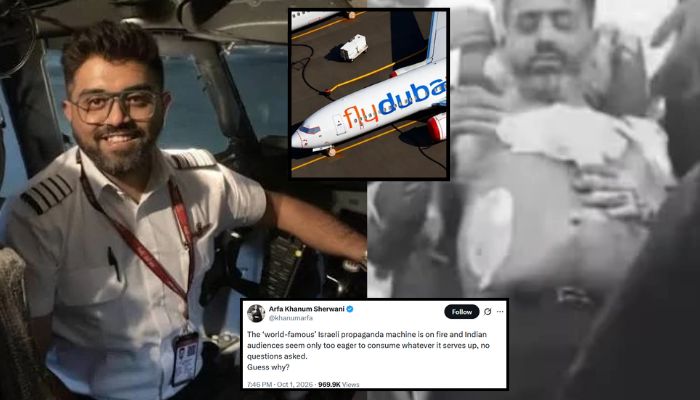
Captain Smit Machchhar hailed as a hero after Flydubai cockpit attack: How Islamo-leftists in India downplayed his bravery by pushing alternative narratives

Captain Smit Machchhar has recently captured global attention following a harrowing and unprecedented incident in the skies. While piloting a Flydubai flight from Dubai to Tel Aviv carrying Israeli passengers, an extreme security threat unfolded directly inside the cockpit. His Islamist Omani co-pilot abruptly launched a knife attack against him and attempted to seize control of the aircraft with the clear intention of crashing it. 

Despite being critically wounded and bleeding, Captain Machchhar showed immense courage and presence of mind. Refusing to let the disaster spiral out of control, he raised an emergency alert and made the vital decision to open the cockpit door. This allowed passengers to rush in, overpower the assailant, and neutralise the threat before it could turn into a 9/11-style catastrophe. His exceptional bravery saved the lives of nearly 180 people on board.

The aircraft was eventually diverted to Saudi Arabia, where Captain Machchhar received medical treatment, while leaders and the public worldwide hailed him as a true hero.

Islamo-leftists’ attempts to downplay the achievement

While the rest of the world and several prominent international leaders praised the Indian pilot for his incredible heroism, the whole domestic Islamo-leftist ecosystem reacted with scepticism. 

Instead of acknowledging his life-saving actions, the leftists came up with several propaganda angles and attempted to downplay his achievements and cast doubt on the nature of the terrorist attack perpetrated by the Omani pilot, whose identity remains heavily shielded. The self-proclaimed journalists, but actual propagandists and commentators, rushed to frame the event through a cynical political lens, shifting the focus away from the thwarted jihadist attack and instead targeting India, Hindu identity, and Israel.

Narrative manipulation and blame it on Israeli propaganda

The attempt to distort the narrative manifested through various social media statements from well-known leftist commentators. Arfa Khanum Sherwani from the leftist propaganda website The Wire took to her X account to cast doubt on the entire event. She wrote, “The ‘world-famous’ Israeli propaganda machine is on fire and Indian audiences seem only too eager to consume whatever it serves up, no questions asked. Guess why?” By saying this, she attempted to dismiss the verified hijacking attempt as a mere Israeli propaganda.

Similarly, propagandist and donation fraud accused Rana Ayyub sought to frame the incident through the lens of anti-Muslim sentiment and indirectly called the whole incident Islamophobic. 

In her X post, she claimed, “The Indian right wing’s love affair with Israel and Netanyahu is ultimately rooted in one thing: its visceral hatred of Muslims. Their admiration for Modi and Netanyahu comes from the same impulse- leaders who will subjugate Muslims and ‘show them their place’ in the world.”

Another extreme voice in the ecosystem vented direct blame at the Israeli Prime Minister, posting: “Meet Captain Smit Machchhar. Single-handedly destroyed the plan of Netanyahu. They were prepped to fake a major attack, blaming it on Iran. Gujju Pilot came out of syllabus. Attacking your own citizens & blaming neighbours is an old tactic used by a specific group.”

Adding to this bizarre chorus of cynicism, another leftist voice, actor-turned-YouTuber Kamal Rashid Khan, took to social media to trivialise the danger and feed personal animosity towards the captain. Dismissing the life-or-death reality of the threat, he posted on X: “Now, when I fly, then the first thing I will do is ask whether the captain of the plane is Smit Macchhar. If Smit is the pilot, then I will not fly in that flight for even free.” 

Continuing his petty attacks, he further wrote: “Pilot Samit Macchar always wanted to become famous, so he was on podcasts and other stuff. Finally, he has become famous.”

Selective outrage and hypocrisy

This leftist ecosystem’s propaganda highlighted a deep pattern of selective outrage, particularly regarding figures like Arfa Khanum Sherwani, who calls herself a journalist. She heavily promotes narratives questioning international events; she remains conspicuously silent on major jihadist attacks in India, such as the Pahalgam terrorist attack where 26 civilians lost their lives in April last year. In the Pahalgam terror attack, Pakistani terrorists, in a calculated and cold-blooded operation, gunned down 26 civilians after specifically identifying them as Hindus. 

At the same time, she publicly mourned at the uninvited funeral of the Supreme Leader of Iran, Ayatollah Ali Khamenei, in Iran. For individuals within this ideological framework, the terror attacks are often written off as false flags. 

For Arfa, figures like Ayush Malik, who convert to Islam, are elevated as icons and national heroes, and genuine heroes celebrated globally are dismissed as fabrications.

How the incident could have been used to push anti-India and anti-Hindu narratives 

The situation could have taken a catastrophic turn had the plane actually crashed, potentially paving the way for malicious exploitation by these islamo-leftists and anti-India forces. In the event of a tragedy, the Hinduphobic and anti-India coterie would likely have descended upon the wreckage to manufacture narratives of Muslim victimhood, turning Captain Machchhar into a convenient scapegoat while letting the actual perpetrator fade into the background. 

Neo-Nazis, racists, and cross-border elements from Pakistan would have seized the opportunity to run aggressive smear campaigns against India and Hindus, branding Indian pilots as “unsafe” and “incompetent.”

This dynamic echoes the 26/11 Mumbai attacks, where brave police officer Tukaram Gopal Omble risked his life to capture Ajmal Kasab alive, preventing the attackers from hiding behind false-flag narratives of “Hindu terror.” Just as Omble’s immense sacrifice exposed the truth behind that dark chapter, Captain Machchhar’s quick thinking blocked a devastating tragedy. It prevented the Islamo-leftists from flipping the narrative against India and the Hindus.

Conclusion

When confronted with an act of extraordinary courage that captured the admiration of the entire world, the domestic Islamo-leftist ecosystem found itself cornered. Unable to suppress or ignore the global praise for Captain Smit Machchhar, who risked his life to prevent a catastrophic disaster, these propagandists resorted to desperate tactics. By attempting to reframe a thwarted jihadist hijacking as “Israeli propaganda” or twisting it into an instance of “Islamophobia,” they revealed a deep-seated bias that routinely prioritises ideology over human lives and national pride.

Ultimately, their desperate manoeuvres to downplay Captain Machchhar’s monumental achievement failed to distort the truth. Just as past national trials exposed those who sought to weaponise tragedy for partisan and communal agendas, this incident laid bare the transparent hypocrisy of the Islamo-leftist coterie. Captain Machchhar stands firmly as a global hero whose quick thinking and immense bravery saved hundreds of lives, leaving propaganda-driven detractors scrambling to salvage narratives that collapsed under the weight of facts and heroism.

Smit Machchhar hailed for averting 9/11-style terror attack against Israel: Read how leftists, racists would have attacked India if the Flydubai plane had crashed

Smit Machchhar is a name that is likely to echo through the annals of aviation history for years to come. He is the Indian captain who, despite being critically injured himself, acted decisively to prevent what could have turned into another 9/11-style catastrophe. He was flying a Flydubai flight bound for Tel Aviv from Dubai, carrying Israeli passengers, when an unprecedented scene unfolded inside the cockpit. 

His Islamist Omani co-pilot stabbed him and attempted to seize control of the aircraft, with the intention of crashing it. However, a gravely wounded Machchhar refused to let the situation spiral out of control. He raised an emergency alert and made the crucial decision to open the cockpit door, allowing passengers to rush in and overpower the attacker, neutralising the threat.

His exceptional courage and presence of mind in those critical moments helped save the lives of nearly 180 people on board. The aircraft was eventually diverted to Saudi Arabia, where Machchhar is currently undergoing treatment. The Indian government has assured him of full consular and medical assistance, while Prime Minister Narendra Modi has spoken to his wife and parents.

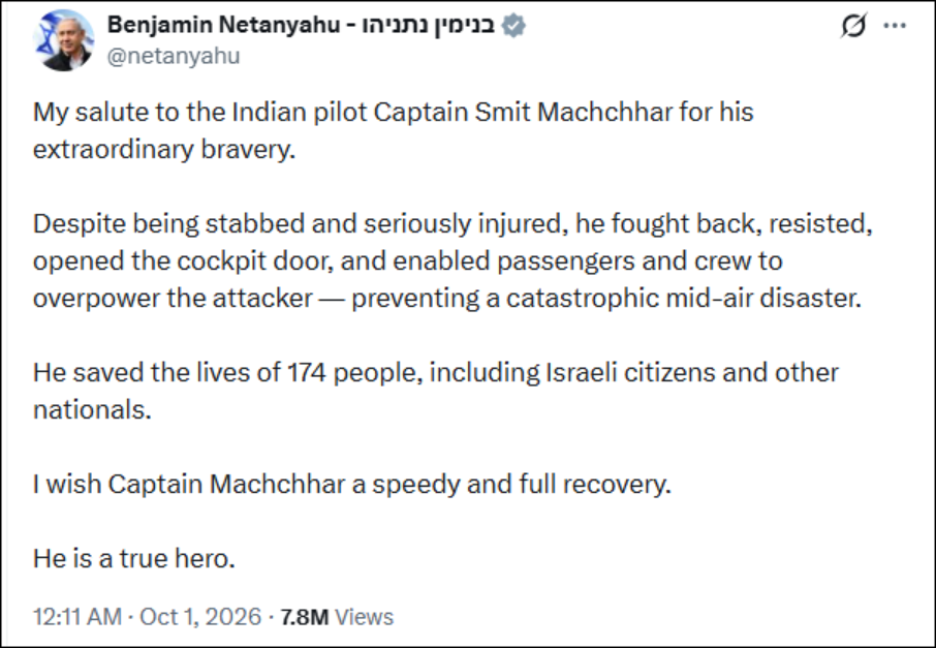
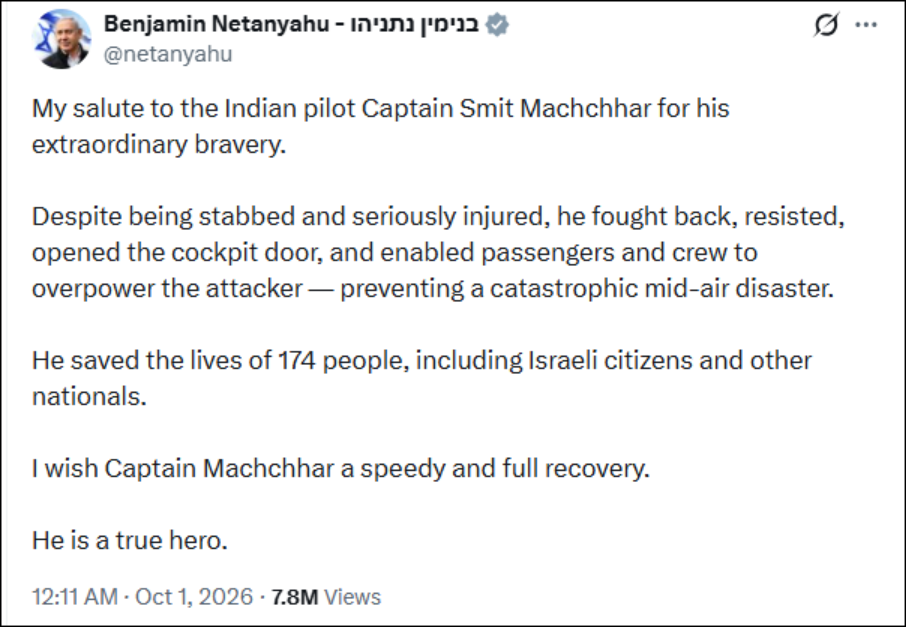
His valiant actions have received widespread recognition from PM Modi, his Israeli counterpart Benjamin Netanyahu, United States President Donald Trump and others. He is being hailed as a “hero” by the public, of course, except the Islamo-leftist cabal, racists and other usual suspects.

There is no doubt that he deserves all the attention and praise for his remarkable bravery and resolve in the face of such perilous circumstances. But the episode also raises a chilling question: how different would the response have been had Machchhar failed?

How the tragedy would have been weaponised against India

The world could have witnessed another devastating terrorist attack, with hundreds of lives potentially lost and the truth about what actually happened possibly buried alongside the victims. The Hinduphobic and anti-India coterie, who have either gone conspicuously silent or are already attempting to manufacture narratives of Muslim victimhood in this incident, would be among the first to descend on the tragedy like vultures for their agenda.

Neo-Nazis and racists would have joined them to point fingers at the Indian pilot. The loss of innocent lives would barely have registered amid their perverse eagerness to find yet another opportunity to run a smear campaign against India and Hindus. Machchhar would have been turned into the convenient target while the actual perpetrator remained out of the spotlight.

More disturbingly, there would also have been individuals who celebrated the deaths simply because the victims were Jews, while simultaneously exploiting the occurrence to vilify India. Social media, meanwhile, would have been flooded with the familiar mix of hatred, mockery and vile jokes, an ugly pattern witnessed after an Air India plane crashed in Ahmedabad last year and other tragedies involving Indians.

Such incidents would have been cherry-picked to draw forced parallels and fabricate a supposed pattern of behaviour among Indian pilots, to use as an excuse for an outrageous portrayal of xenophobia. Every aviation instance involving an Indian, however remote or unrelated, would have been dragged into the conversation as purported evidence of a larger trend.

The discussion would not have been about the event, as the Indian and Hindu roots of the pilot would be the defining feature of the story. Old incidents would have been resurrected, isolated mistakes presented without context, and completely different circumstances conveniently stitched together to paint a picture devoid of merit and only for the purpose of propaganda. 

The facts would have similarly been replaced by the most offensive stereotypes and prejudices against Indians. A wider campaign of ridicule and xenophobia would have been in motion, with Indians singled out and their nationality regularly invoked, as if it made the tragedy self-explanatory. 

Predictably, Indian pilots would have been branded as “unsafe” and “incompetent,” just one flight away from a possible disaster. This is perhaps one of the most unsettling parts of the alternative outcome.

The jihadi assault would not have ended after claiming hundreds of lives. The deceased would have been reduced to a footnote, the truth distorted, and an Indian pilot who was himself a victim made into a scapegoat and his community persistently demonised.

The event would have been weaponised into a full-blown display of hatred against Hindus and Indians, and conspiracy theories beginning to circulate even before authorities had reached the site of the wreckage or issued any official confirmation. Social media would have been treated as the first courtroom, with unfounded claims, speculations and lies being presented as facts and transformed into ammunition against the community.

A misleading narrative focused on Indians and Hindus would already have taken hold by the time any credible information could reach the broader public, rendering them more vulnerable at the time when they are encountering repeated attacks and hostility from Islamists and racists around the world.

Pakistan would have amplified the anti-India rhetoric

While the anti-India ecosystem would have been handed a golden chance, how could its prime member, Pakistan, let such a moment pass without hitting out at its historical adversary? Pakistan-linked social media accounts have already shown their penchant for circulating fabricated claims, fake allegations, doctored footage and bogus narratives targeting its Hindu-majority neighbour.

They would have posed as Westerners, Arabs or even Indians, and joined the chorus, bombarding social media with disinformation, Hinduphobic rhetoric and abuses.

The objective would be to capitalise on the window of uncertainty before the truth emerged and turn it into an indictment of India and Hindus. The irony would have been hard to miss. Pakistani extremists do not care for the Israeli passengers, given their enmity for the Jewish community, even rejoicing in their misfortunes and sufferings.

Hence, the incident would have been stripped of its human dimension for the objective of India bashing. Pakistan is known not only for sponsoring terrorism across the border with the stated objective of “bleeding India by a thousand cuts,” but also for trying to inflame tensions within India through disinformation, deceptive claims and the exploitation of sensitive issues.

As a result, it would have had every wicked incentive to grab this opening. Moreover, it would hardly have been surprising if Bangladesh too had joined the chorus, as the country has decided to follow the bloody footsteps of the Islamic Republic amid the growing influence of Islamists and the brutal persecution of Hindus. 

Truth would have been the biggest casualty, besides the lives lost

The truth undoubtedly would have been the greatest casualty of the attack, as the culprit would be introduced as a Muslim victim of the crash by the Islamo-leftist group, while the responsibility would be squarely laid at Machchhar, with his Hindu identity serving as a basis for the accusation.

Oman’s limited history of aviation terrorism would then have been employed selectively to insist that the possibility of an intentional attack was implausible, further muddying the details and strengthening the propaganda against Machchhar. The terrorist would have been recast as a victim and mourned while the actual casualty would be derided, insulted and grotesquely blamed for the deaths of those he had fought to save.

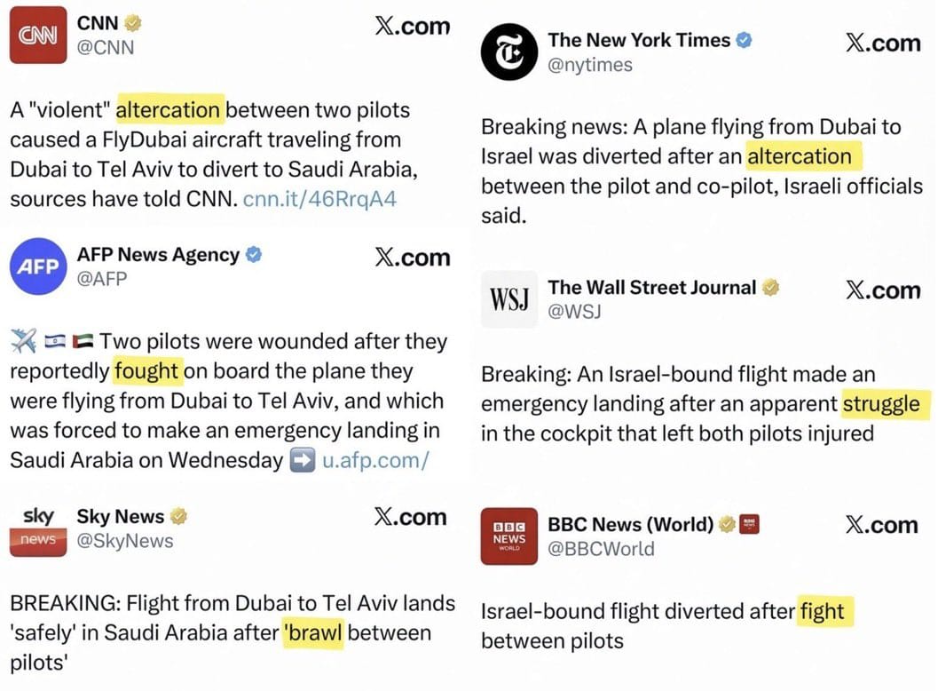
The liberal mainstream media is already infamous for its reluctance to call out Islamist terrorism and even offer explanations, sanitise or justify the acts that should instead be unequivocally condemned. The same has been evident in the ongoing case, which was initially characterised as an altercation between two pilots.

Thus, who would have actually sought the truth amid such a deluge of propaganda and deliberate obfuscation?

A chilling reminder

The episode could be seen as reminiscent of 26/11, when police officer Tukaram Gopal Omble, at the cost of his own life, helped nabbed Mohammed Ajmal Amir Kasab alive and, in doing so, ensured that the attackers did not simply disappear into the dense fog of the massacre. The capture proved crucial in establishing their identities and Pakistani links, exposing the reality behind the carefully planned onslaught on Mumbai.

The ruling United Progressive Alliance (UPA), led by the Indian National Congress, had already projected the non-existent “Hindu terror” or “saffron terror” as a serious threat to the nation at the time. A meticulously devised plan was underway to blame the Rashtriya Swayamsevak Sangh (RSS) and Hindus for the bloodshed. Pakistan wanted to take advantage of this political climate, with the Lashkar-e-Taiba (LeT) terrorists masquerading as “kalava” wearing Hindus to create a false impression.

Had Omble failed to apprehend Kasab, the entire narrative would have been flipped to promote the false bogey of “Hindu terror,” as Pakistan and its sponsored terrorists would have escaped any scrutiny. The result could have been eerily similar had Machchhar been unable to stop the Omani fundamentalist, with complete accountability assigned to him, and the assailant reframed as a victim.

Conclusion

The present development has greatly upset the anti-India and Hindumisic crowd, whose utter disregard for the victims and their families has been quite apparent. Thus, it is a matter of immense relief that Machchhar was able to avert the terrorist assault, and he deserves commendation for it.

However, there is another point that deserves to be highlighted. Lapses, whether deliberate or inadvertent, are ordinarily attributed to the individual responsible and not extended to their country, race or religion as they should be. However, Indians and Hindus are often denied this alleged privilege.

Machchhar is being celebrated today for all the right reasons, but this also serves as a reminder of how fragile the line between truth and an invented narrative can be. Had those vital moments taken place differently, the very same incident could have been turned on its head, with an entire country and community unfairly targeted for the actions of an Omani individual that they had nothing to do with.

Can an Omani pilot fly a plane to Israel? The question at the heart of the Flydubai crisis

The passengers of Flydubai Flight FZ1073 are safely back in Israel. The aircraft that plunged thousands of feet after a violent struggle inside its cockpit has landed after a failed attempt to replicate a 9/11-style attack on Israel; the injured Indian captain is receiving treatment, and the attacker, an Omani national, is in Saudi custody.

But one of the biggest questions arising from the extraordinary incident has little to do with what happened inside the cockpit.

It is this:

How was an Omani national serving as a pilot on a commercial flight to Israel in the first place?

The question has assumed significance because Oman does not have diplomatic relations with Israel, while reports have emerged that Flydubai’s agreement to operate flights to Israel contains a requirement concerning the nationality of pilots. At the same time, the publicly available 2020 air-services agreement between Israel and the United Arab Emirates does not appear to contain a blanket prohibition on crew members based on nationality.

That distinction could prove crucial.

What happened aboard Flydubai Flight FZ1073?

On September 30, Flydubai Flight FZ1073 was operating from Dubai to Tel Aviv with 174 people aboard, most of them Israeli passengers.

According to Israeli officials and passengers, the flight descended rapidly after an altercation erupted in the cockpit. The co-pilot, identified in reports as an Omani national, attacked the Indian captain, Smit Machchhar, with a bladed weapon.

The identity of the Omani national is kept under wraps. But his colleague described him as a religious zealot who prayed throughout the day and refused to shake hands with women.

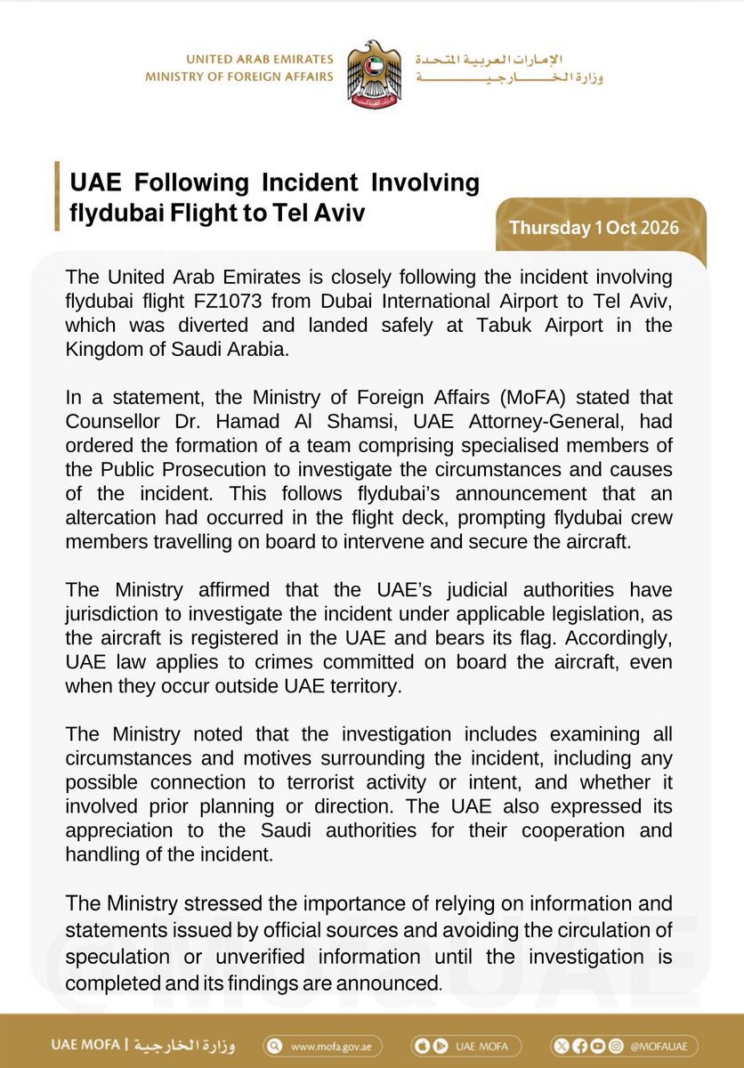
The aircraft lost roughly 14,000 feet in less than 30 seconds before the situation was brought under control. The injured captain managed to open the cockpit door, allowing passengers and crew members to intervene and restrain the attacker. The aircraft was subsequently diverted to Saudi Arabia and landed safely in Tabuk.

The passengers were later flown back to Israel.

The motive remains under investigation. Israeli officials have examined the possibility of a terrorist attack, while Flydubai has cautioned against drawing premature conclusions. Reuters reported on October 1 that Israeli officials’ initial assessment was that the co-pilot appeared to have acted alone, although the investigation was continuing.

But another investigation is now taking shape: how did the Omani pilot get assigned to this particular route?

Oman does not have diplomatic relations with Israel

Israel and the UAE established diplomatic relations in 2020 under the Abraham Accords. Flydubai subsequently launched its first scheduled service between Dubai and Tel Aviv in November 2020. Israel’s Foreign Ministry records the inaugural Flydubai flight as arriving at Ben Gurion Airport on November 26, 2020.

Oman, however, has not normalised diplomatic relations with Israel.

That does not automatically mean an Omani citizen cannot work for an international airline or even operate an aircraft that enters Israeli airspace or lands in Israel. Nationality and diplomatic recognition are not, by themselves, the same thing as aviation operating rights.

And this is where the details of the agreements become important.

Did Flydubai have a rule barring Omani pilots?

The Jerusalem Post reported that Flydubai’s agreement to operate in Israel contains an explicit clause stating that pilots flying to Israel must come from countries that have normalised relations with Israel.

Oman does not fall into that category.

Following the incident, Israeli Transportation Minister Miri Regev sought the suspension of Flydubai flights to Israel and asked authorities to investigate whether the airline had violated the terms under which it was permitted to operate. The Jerusalem Post reported that Israeli authorities were also examining how the Omani national had been assigned to the route.

That would make the nationality question highly consequential.

If such a requirement genuinely exists in a binding agreement between Flydubai and the Israeli authorities, investigators would need to establish why an Omani national was assigned to a Tel Aviv-bound flight.

Was there an exemption?

Was the requirement interpreted differently?

Was the rule contained in a separate operating arrangement rather than the bilateral treaty?

Or was there simply a compliance failure?

Those are very different possibilities.

But there is an important complication: the public UAE-Israel aviation agreement

The publicly available UAE-Israel Air Services Agreement does not appear to say that pilots must be nationals of countries maintaining diplomatic relations with Israel.

The agreement grants designated airlines from each country rights to operate international air services on specified routes. It also contains provisions dealing with aviation security, the application of laws and regulations, and airline personnel.

Most importantly, the agreement’s personnel provisions are broad.

Article 13 deals with commercial activities and permits designated airlines to bring their own managerial, commercial, operational, sales, technical and other personnel into the territory of the other party. It states that such personnel requirements may be met by the airline’s own personnel “of any nationality.”

That wording matters.

If the publicly available bilateral agreement is the only governing instrument, there is no obvious nationality-based prohibition on an Omani member of an Emirati airline’s crew.

In other words, the bilateral agreement itself does not appear to establish a simple rule saying that only Israelis, Emiratis or nationals of countries recognising Israel can serve as crew.

That is why the reported Flydubai-specific clause needs to be examined separately.

So can an Omani national legally fly a UAE airline to Israel?

Based on the publicly available bilateral agreement, there does not appear to be a blanket prohibition based solely on Omani nationality.

But that is not the same as saying that an Omani pilot was unquestionably authorised to operate Flight FZ1073.

There could be additional conditions in:

  • Flydubai’s operating agreement with Israel;
  • security arrangements governing flights to and from Ben Gurion Airport;
  • Israeli aviation-security requirements;
  • crew-clearance procedures;
  • airline-specific employment or route restrictions; or
  • subsequent agreements or directives not contained in the publicly available treaty text.

This distinction is essential.

The 2020 bilateral agreement and a separate operating or security arrangement are not necessarily the same document.

Therefore, the central question for investigators is not simply “Is Oman recognised by Israel?”

It is:

“What precise rule governed the nationality and clearance of pilots operating Flydubai flights to Israel on September 30, 2026?”

Why does the distinction matter?

There is a major difference between an airline employing an Omani pilot and an Omani pilot being specifically cleared to operate a flight into Israel.

An international airline can have pilots from dozens of nationalities. A pilot does not ordinarily need his or her country to maintain diplomatic relations with every destination served by the airline.

But countries can impose additional security requirements on specific routes.

Israel, in particular, maintains extensive aviation-security procedures. Airlines operating to Ben Gurion Airport are subject to Israeli security requirements and regulatory oversight.

Therefore, if Israel had imposed a specific nationality restriction on pilots operating a particular route, compliance with that restriction would become a matter for the airline and the relevant authorities.

And if no such restriction existed, then the mere fact that the pilot was Omani would not, by itself, establish a regulatory violation.

What exactly did the agreement say?

This is where the public record becomes particularly interesting.

The UAE-Israel Air Services Agreement contains provisions requiring crews and airlines to comply with the host country’s laws and regulations. It also contains aviation-security provisions incorporating international obligations concerning unlawful interference with civil aviation.

But the publicly available text does not appear to contain the reported rule that every pilot operating to Israel must hold a passport from a country that has normalised relations with Israel.

That means one of two things could ultimately emerge.

Either there is a separate Flydubai-Israel arrangement containing the reported nationality requirement, in which case investigators will have to determine why it was apparently breached.

Or the reported requirement has been misunderstood, inaccurately described, or applies under circumstances different from those currently being reported.

Until the actual document is made public, it would be premature to declare that the UAE breached the bilateral aviation agreement.

What happens to Emirates and other UAE carriers?

The issue could also extend beyond Flydubai.

The UAE operates multiple airlines with services to Israel, including Emirates, which launched its Dubai-Tel Aviv service in 2022. Israel’s Foreign Ministry records the inauguration of Emirates’ flights to Tel Aviv in June 2022.

If the nationality requirement exists only in Flydubai’s specific operating arrangement, it may not automatically apply to Emirates.

But if the restriction is actually contained in the bilateral framework between Israel and the UAE, then authorities would have to clarify whether it applies to every UAE-designated carrier.

That distinction is particularly important because the publicly available treaty language appears broader than the reported Flydubai-specific restriction.

Then there is the security question

The nationality issue is only one part of the puzzle.

The more immediate aviation-security question is how the attacker obtained access to a weapon inside the cockpit.

Israeli aviation security is known for extensive screening procedures, and the cockpit itself is among the most secure areas of a commercial aircraft.

If the weapon was brought aboard by the pilot, investigators will have to establish how it passed through security procedures and whether it was concealed or otherwise permitted.

Alternatively, if it was an authorised aircraft or cockpit item, investigators will need to establish exactly what object was used and under what circumstances.

The fact that the attacker was a member of the flight crew fundamentally changes the security question.

The aviation system is designed to prevent outsiders from entering the cockpit.

But what happens when the threat is already inside?

Who will investigate?

The case also presents an unusual jurisdictional puzzle.

The aircraft belonged to a UAE airline.

The flight departed from Dubai.

It was bound for Israel.

The attacker was Omani.

The captain was Indian.

Most passengers were Israeli.

And the aircraft ultimately landed in Saudi Arabia, where the suspect was detained.

Saudi authorities therefore have direct custody of the suspect and control over the initial criminal investigation. The UAE has an obvious interest because Flydubai is a UAE carrier. Israel has a major security interest because the aircraft was bound for its territory and most passengers were Israeli.

Israeli authorities have already been examining the incident, while Saudi and UAE authorities are also involved. Reuters reported that the investigation into the motive remained ongoing on October 1.

The resulting investigation is therefore likely to involve several jurisdictions and multiple layers of aviation, criminal and national-security law.

The bigger question: was the route itself improperly staffed?

That may ultimately become one of the most important questions arising from FZ1073.

The dramatic story is of a cockpit struggle at altitude, an injured captain, passengers storming the flight deck and an aircraft making an emergency landing in Saudi Arabia.

But once the immediate crisis is over, aviation regulators will have to look at the paperwork.

Who approved the crew?

What nationality restrictions applied to the route?

Who verified the pilot’s eligibility?

Was the Omani pilot properly cleared to operate into Israel?

And if there was a restriction, at what stage did the system fail?

The answers could determine whether the presence of an Omani pilot on the flight was perfectly lawful, an administrative violation, or evidence of a more serious security lapse.

For now, one thing is clear: the fact that the co-pilot was Omani does not, by itself, prove that he was legally barred from flying to Israel.

The publicly available UAE-Israel air-services agreement does not appear to impose such a blanket nationality ban. At the same time, credible Israeli reporting says a separate Flydubai operating arrangement may contain precisely such a restriction.

Until that document is produced and its legal status established, the question remains open.

And that may be the most intriguing unanswered question from Flight FZ1073: not merely who was allowed into the cockpit, but who was authorised to fly the aircraft into Israel in the first place?

The art of fiction: How one Wikipedia Editor created the myth that Muslims made ‘scientific inventions’ during the ‘golden age of Islam’

The 1416-year-old religion of Islam had a golden age. It was an era that was marked by scientific temperament, remarkable inventions and discoveries. If you believed it, then you too are a victim of a myth that was consciously created and mainstreamed by a Wikipedia editor, ‘Jagged 85.’

The year was 2012. The infamous editor was banned from the ‘free encyclopedia.’ But the damage was already done. He had made over 87,000 article edits since 2005. He used dubious anecdotes, fraudulent quotations and unverified sources to peddle the narrative that Muslims made massive scientific developments and revolutionised mankind through their discoveries and inventions.

The long list of his make-believe claims includes –

  1. Muslims invented funnels and sieves
  2. Al-Razi invented dissolving substances and sublimation
  3. Jabir ibn Hayyan invented cheese glue
  4. Ibn Sahl first described the parabolic mirror
  5. An Islamic water clock from the 12th century had the earliest copper pipes
  6. Avicenna formulated momentum as weight times velocity
  7. The Brethren of Purity proposed a heliocentric universe in the 10th century
  8. Darwin drew on Ibn Miskawayh’s work to develop the theory of evolution
  9. Al-Ghazali directly influenced Descartes’ later philosophical work
  10. Taqi al-Din invented the telescope sometime in the 1570s
  11. Avicenna discovered microorganisms
  12. Muhammad ibn Musa discovered gravity between planets
  13. Al-Biruni discovered elliptical planetary orbits
  14. Al-Jazari invented flow regulators and feedback control
  15. Raqqa had a major glass factory where 300 different glass recipes were used, or—most amazingly—Al-Battani discovered relativity a millennium before Einstein.

He had made hundreds of fake claims and maliciously attributed them to papers and history books. These lies now regularly feature on X as they have infiltrated scholarly literature.

“It has been found that many edits involve the undue promotion of Islamic and other non-European scholarship and achievements. In addition, there has been a severe misuse of sources: misrepresenting what a source has asserted; reporting only one side from a source; quoting out of context; inventing claims using a source related to the topic but which does not verify the claim. Jagged 85 was indefinitely blocked on 17 September 2012, and was community banned on 22 September 2012 (ANI permalink). The cleanup lists below show all article edits made by the user,” reads the Wikipedia page of its former Editor.

Screengrab of the Wikipedia page discussing the antics of ‘Jagged 85’

The modus operandi was simple. His claims had some shred of truth, which he would extrapolate to make sweeping claims of scientific breakthroughs. American internet personality Jordan Lasker (who uses the pseudonym Cremieux Recueil) explained it in his Substack post –

“Take the claim that Muslims invented funnels and sieves between 721 and 925. Jagged_85 did cite a source, it just didn’t say what it was cited for. What it actually provided readers was a list of laboratory equipment used by Muslim scholars, among which one could find funnels and sieves. The crucial issue, however, is that it never said they invented them, and in fact, it showed that they had been in use since Antiquity by Roman and Greek scholars. That last bit went unmentioned in places where the work was cited,” he pointed out.

The strategy was to make the work look scholarly while drawing sweeping, exaggerated conclusions from the citations. Lasker highlighted 2 other such cases.

He wrote, “What about the claim that Al-Razi invented dissolving substances and discovered sublimation? There was a source cited for this claim too, but what it said was that Al-Razi described their operations, not that he discovered them. That achievement was given to the Greeks. Jabir ibn Hayyan’s invention of cheese glue? Sourced to a document that said he translated a medieval recipe; other sources show us that adhesives of this variety were in use in ancient Egypt. Ibn Sahl inventing the parabolic mirror? This came from a source that mentioned plenty of earlier investigators.“

Screengrab of the Wikipedia page discussing the antics of ‘Jagged 85’

Jordan Lasker highlighted one case from 2010 when ‘Jagged_85’ invented the notion of “Avicennian logic” and deliberately conflated it with Avicennism.

The manipulation exposed a vulnerability in ‘verifiability principle’ of Wikipedia. Because ‘Jagged_85’ often cited print journals and obscure library books that were unavailable online. As a result, typical amateur editors with no access to libraries had no way to verify his claims. And the intentional distortion by the Wikipedia Editor soon found a place in scholarly discussions.

Lasker noted, “Despite this, if you look up Avicennian logic or Avicennism today, you can find distorted notions of what Avicennism is, and plenty of people talking about Avicennian logic, as if it’s a real thing, with attributions to the sources used by Jagged_85. But these attributions are false; the sources don’t support the claims scholars have made about them, and because they were miscited in the ways Jagged_85 cited them, we know they got their backing from his Wikipedia edits.“

The lies peddled by ‘Jagged_85’ to attribute Islamic influence on literature, medicine and psychology influenced his co-religionists as well, including University of Manchester professor emeritus Salim Al-Hassani. This was evident when the duo claimed that Muslims invented the elephant clock. They were later cited, and the fake story became mainstream.

Leftist propaganda channels like CNN also helped in mainstreaming the lies.

Lasker pointed out, “False claims laundered from Wikipedia make it into academic circles and further into the zeitgeist, because they inform people about things they can say and should believe. They go further than that because they are believed, and because, in these cases, they are plausible—by virtue of academic acceptance, Wikipedia presence, scholarly bona fides, etc.—and people want to believe them.“

Screengrab of the CNN report

“It is fashionable to talk about an exaggerated Muslim Golden Age and era of invention. Muslims are newly being introduced into Western societies, so just as Christopher Columbus began to be celebrated to welcome Italians into America, we now find it worthwhile to talk about how Western scholars and historical geniuses were actually inspired by Muslims in ages long past, forgotten, and perhaps even intentionally obscured…Who knows how many Jagged_85 edits have survived in the public consciousness, making people feel wrongly ‘informed’ about Islam and the Muslim world? Knowing just a few dozen of them, I can personally attest that I see them multiple times a year,” he concluded.

OpIndia dossier and its 6 key revelations

OpIndia had published an extensive 187-page dossier in 2024. Wikipedia, in all its communication, purports that it is a free-for-all online encyclopaedia which depends on the ‘wisdom of the crowd’ to generate ‘free knowledge’ for the entire world.

They essentially claim that Wikipedia is a free, fair and ‘neutral’ platform. Wikipedia’s pronounced ideological bias has been carefully and structurally cultivated.

There is existing research, including the analysis of Wikipedia’s co-founder Larry Sengar, which has detailed how Wikipedia is not neutral. The research cites three prior researches to bolster its case. Research by the Manhattan Institute published in June 2024 by David Rozado concluded that Wikipedia heavily leans towards the Left.

The Critic Research focuses on two internet policies of Wikipedia – Neutral Point of View and Reliability. The research concludes that it is
the editors who decide which sources are reliable to be cited and which are not.

Those considered reliable lean Left and Right-leaning are blacklisted. Therefore, a Neutral Point of View merely means that ‘reliable sources’ are represented thoroughly. Not that all points of view would be represented.

Third is Larry Sengar who has widely criticized Wikipedia for being Left-leaning, unreliable and biased. While Wikipedia claims that everyone is free to edit, the truth is that there are only a handful of people who have the ultimate say in what content is added and what isn’t.

It is also a handful of people who have the power to ban edits, ban editors, decide disputes, delete pages, lock pages, override content etc. There are merely 435 active administrators across the world who have sweeping powers. There are only 10 active members of ArbCom.

It is also true that there are many editors and administrators who are actively paid by the Wikimedia Foundation under the ‘editor retention program’. Further, the Wikimedia Foundation pays many of them in the name of ‘grants for projects’.

Wikipedia indeed has a solid hierarchy just as any other publishing house with strict editorial control and editorial lines that the editors and administrators toe. The Tides Foundation and Wikimedia Foundation give money to each other, but chart it as ‘anonymous’ donations
because they are not obligated to reveal details when it’s a donor-directed fund.

The Wikimedia Foundation has enough money to keep Wikipedia alive and running for decades, even if does not earn another penny either from donations or donations from corporations. The fact that the Wikimedia Foundation continues to get donations and grants much beyond what it needs to run Wikipedia, in the name of Wikipedia, points to a few things.

Firstly, the Wikimedia Foundation is spending millions in grants to further its own business interests. Second, it is extending grants to Left organisations with the money it collects in the name of keeping Wikipedia alive and claiming that without these donations, Wikipedia would
cease to exist (a lie).

All of this happens behind the garb of keeping ‘knowledge free’ and Wikimedia uses this trope to skirt the law of the land, especially in India, as would be demonstrated further in this paper. According to the Wikimedia Endowment Fund page current, here are some notable patrons of the Tide Foundation run endowment fund which is noteworthy:

  1. Amazon – $5 million+
  2. Google.org – $2 million +
  3. George Soros – $2 million +
  4. Musk Foundation – $2 million+
  5. Facebook – $1 million+
  6. The Rothschild Foundation – $50,000+

The Tides Foundation and the Wikimedia Foundation provide donations and grants to several anti-Hindu, anti-India organisations and elements.

They have given grants to Hindus for Human Rights (HfHR) which has links to Islamists and Khalistanis and was formed in 2019 by two Islamist advocacy groups, Indian American Muslim Council (IAMC) and Organization for Minorities of India (OFMI).

The Tides Foundation has disbursed grants to the Association for India’s Development (AID) which has campaigned for Naxal Binayak Sen, funded Arvind Kejriwal’s NGO and also has connection to separatists.

Further, Tides has funded AMAN Public Charitable Trust (AMAN) – The trust lists several prominent organizations as partners, including the Rajiv Gandhi Foundation, Tides Foundation, Ford Foundation, Oxfam, European Commission for Humanitarian Organisations, and others.

Aman has received funding from the Tides Foundation, which has been linked to various organizations that promote left-leaning agendas, including anti-Hindu and anti-India narratives. Aman Public Charitable Trust is connected to the NewsClick-China funding scandal, where it is alleged that Chinese entities funded NewsClick to disrupt Indian sovereignty.

NewsClick’s founder, Prabir Purkayastha, was arrested on charges of receiving more than ₹80 crore from Chinese companies. Dilip Simeon,
the Chairman of Aman Public Charitable Trust, was named in the NewsClick FIR by Delhi Police for his involvement in attempts to sabotage India’s 2019 General Elections.

Tides Foundation also has worked with Alliance India, which is chaired by DY Qureshi. Links have also emerged in the research with the OCCRP, George Soros and the Adani Attack.

Wikimedia Foundation funds Arts+Feminism which spread fake news about CAA in India, leading to violence. It also funds Whose Knowledge, which in turn is connected with Equality Labs and Black Lunch Table.

It also funds Black Lunch Table separately. It is pertinent to note that Whose Knowledge, funded by the Wikimedia Foundation partners with Art+Feminism, Equality Labs and CIS – all of which receive funds from the Wikimedia Foundation among others.

It also partners with ‘Black Lunch Table’ – which is also funded by the Wikimedia Foundation. Wikimedia Foundation also funds Access Now. On the Board of Access Now is Seema Chisti.

Seema Chisti, who is the wife of Communist Sitaram Yechury and editor of TheWire, is also an advisor at National Foundation for India –
which funds AMAN along with Tides Foundation, Ford Foundation and others.

Other advisors include Dhanya Rajendran of The News Minute and P Sainath. Interestingly, Dhanya Rajendran and P Sainath, both have featured prominently in the NewsClick-China funding case.

Apart from funding through CIS-India, we also found that Wikimedia pays individuals like ‘ArtWhoring’ for collaborations in promoting programs like ‘Know The Wiki’.

Wikimedia Foundation, which owns Wikipedia, has no presence in India. It has declared in the BBC documentary controversy that it is a foreign entity and therefore, Indian courts have no jurisdiction over it.

Despite having no presence in India, it has consistently funded entities and individuals to further its own business and ideological interests in India.

Wikimedia Foundation regularly solicits donations from India. That donation, since it comes from individuals, it not against the law. However, Wikimedia not only takes donations from India, it spends millions of dollars in India as well.

All of this, while refusing to submit to Indian laws. While it continues to toe a rigid editorial line on Wikipedia, it insists that it is an intermediary and not a publisher.

By definition, an intermediary is not supposed to follow a specific editorial line. It is meant to merely be a platform for the public to air their own views. However, that is not the case with Wikipedia.

Firstly, not everybody can air their views on Wikipedia. Secondly, only a small group of editors and administrators have the final say on the nature of content that is added in any articles, making the articles one-sided, biased, and toeing a specific ideological line.

Thirdly, several of these so-called ‘volunteers’ are paid by the Wikimedia Foundation to further their ideological and business interests.

The sources that are allowed to be quoted in Wikipedia articles also suffer the same bias, often injected by editors and administrators who are directly paid by Wikimedia Foundation.

With all of these realities, Wikipedia does not fall under the intermediary category, but the publisher category – additionally – a publisher that is actively undermine the interest of India without following the law of India – financially or editorially.

Netanyahu, Trump to Modi: How the world reacted to the show of life-saving bravery of Indian pilot Smit Machchhar 

At 34,000 feet, an Indian pilot, Captain Smit Machchhar, stood between 180 people and catastrophe on 30th September 2026, as a religious extremist Omani first officer attacked him with an axe in a bid to eventually crash the Flydubai flight FZ1073 with 174, mostly Israeli passengers aboard. As the heroic Indian pilot undergoes treatment, the world lauds his extraordinary courage. 

Israeli PM Netanyahu hails Smit Machchhar as a hero 

Hours after the Indian pilot helped avert a 9/11-style catastrophe, Israel’s Prime Minister Benjamin Netanyahu praised Captain Smit Machchhar for his extraordinary courage and prayed for his speedy recovery.  

“My salute to the Indian pilot Captain Smit Machchhar for his extraordinary bravery. Despite being stabbed and seriously injured, he fought back, resisted, opened the cockpit door, and enabled passengers and crew to overpower the attacker — preventing a catastrophic mid-air disaster. He saved the lives of 174 people, including Israeli citizens and other nationals. I wish Captain Machchhar a speedy and full recovery. He is a true hero,” PM Netanyahu wrote on X. 

Meanwhile, Israel’s Ambassador to India, Reuven Azar, said, “He should be praised. Not only our leader, our prime minister, but also our president and the head of the Israeli parliament and the entire people of Israel are admiring the fact that Captain Smit Machchhar used all his experience and his character to really do what was needed to do, because if he hadn’t opened the door, the plane could have crashed.” 

Indian Prime Minister Narendra Modi says ‘India is proud of Captain Machchhar 

Prime Minister Narendra Modi spoke on behalf of the Indian people when he said that India is proud of Captain Smit Machchhar. 

“Captain Smit Machchhar is a HERO. In the face of the gravest danger and despite being seriously injured, he showed immense courage and an unwavering resolve to protect the lives of others. His valour helped save hundreds of lives and avert a great tragedy. Praying for his speedy recovery, renewed strength and good health, PM Modi posted on X on 1st October. 

Later in the day, during his speech at the UPSC centenary celebration in New Delhi, PM Modi said, “In the incident that occurred yesterday, Captain Smit of India demonstrated remarkable patience, presence of mind, and courage; indeed, as the Prime Minister of Israel stated today, an Indian prevented a 9/11-style tragedy. 140 crore Indians salute Captain Smit and are praying for his well-being.” 

Meanwhile, the government in Captain Machchhar’s home state, Gujarat, has announced that Flydubai Captain Smit Machchhar will be given the ‘Vishisht Gujarat Garima Award’. 

Israeli Knesset Speaking saying people of Israel are praying for Captain Machchhar 

Amir Ohana, the Speaker of the Israeli Knesset, said that the people of Israel are praying for Machchhar’s quick recovery.

“The people of Israel are praying for Captain Smit Machchhar, the brave Indian pilot who fought off his co-pilot’s mid-air attack to save the Israeli passengers aboard flydubai flight FZ1073. In a moment of terror, he showed extraordinary courage. Today, our hearts are with him and his family,” Ohana said. 

US President Donald Trump hails Captain Machchhar’s courage and presence of mind 

Speaking to reporters at the White House on 30th September, after a call with Israeli PM Netanyahu, Trump called Captain Smit Machchhar a “hero”. He said that Machchhar was “in very bad shape” but “had the sense to…open the door and scream” for help and described the co-pilot as “perhaps a terrorist or perhaps a whack job.”  

Aviation experts call Captain Machchhar’s opening of the cockpit door while wounded a “very brave thing” 

The Aviation and industry experts have analysed and appreciated Captain Machchhar’s actions under extreme wounds. 

Ajay Singh, the chairman of Machchhar’s former employer said that unlocking the door would definitely have required “real courage”. Singh noted that the handle that opens the cockpit door is on the co-pilot’s side. In that case, a stabbed captain would have had to reach across toward the attacker to unlatch it.  

Singh added that a code entered from outside does not open a modern reinforced door and that the pilot still has to physically unlock it. He added that by unlocking the door in time, Machchhar essentially saved dozens of lives. 

“I was incredibly proud. The job of a pilot is to save the lives entrusted to him. He did a tremendous job in saving lives. All of SpiceJet is proud of him, and all of India is proud of him. The handle that opens the cockpit door is actually on the co-pilot’s side. It would have needed real courage after being stabbed to reach out to the co-pilot’s side and open the door,” he said. 

Meanwhile, Captain C.S. Randhawa, president of the Federation of Indian Pilots, called it “a very brave thing” and “a very good job.” 

Kashi Vishwanath and Somnath Temple offer special prayers for Captain Smit Machchhar 

As Captain Smit Machchhar is undergoing treatment, the priests at the historic Somnath Temple in Gujarat performed the Mahamrityunjaya Mantra Japa ritual to pray for the wounded captain’s speedy recovery. 

“For the pride of the nation, brave pilot Smit Machhar, a special grand worship was performed at the first Jyotirlinga, Shri Somnath, for his excellent health and long life. During the flight to Tel Aviv, displaying indomitable courage, wisdom, and unparalleled dedication to duty, he foiled a cruel conspiracy like 9/11 and saved 180 precious lives. For the Indian pilot Smit Machhar, a special grand worship of Shri Somnath Mahadev was performed, and the continuous ‘Mahamrityunjaya Mantra Japa Ritual’ has been initiated. May Lord Shiva, with His special grace, swiftly restore this brave young man to complete health. Jai Hind!” Somnath Temple administration stated. 

Similarly, special prayers were offered at Shri Kashi Vishwanath Temple for the health and long life of Captain Smit Machchhar. 

Yaniv Hayoun: The Flydubai passenger thanks Captain Machchhar 

Speaking to India Today, Yaniv Hayoun, an Israeli national and a passenger who got injured during a confrontation with the Omani Muslim attacker, thanked Captain Machchhar. 

“I want to tell him (Captain Smit Machchhar), thank you. If we could not have entered the cockpit, all the passengers, including my family, would have died,” he said. 

Israeli national thanks Captain Machhar for saving lives of her countrymen 

In a viral video message, an Israeli national, Einav Avizemer, thanked Captain Machchhar and India for saving the lives of dozens of Israelis and other nationals. 

Smit Machchhar: The Indian pilot who emerged as a savior  

Captain Smit Machchhar is an experienced Indian aviator and former SpiceJet pilot. Machchhar has more than 13 years of commercial aviation experience and approximately 9,750 hours of flying experience, primarily on Boeing 737 aircraft. More than 6,400 of those hours were accumulated as a pilot in command.  

Before joining flydubai, Machchhar spent around 11 years with SpiceJet in India.  

Smit Machchhar eventually became a senior commander and later a Line Training Captain, meaning that he was entrusted with training and checking other pilots. In June 2022, he joined flydubai as a direct-entry captain. 

At around 6:49-7:05 am on 30th September 2026, the Flydubai FZ1073 flight departed the International Airport and climbed toward cruise altitude near 34,000 feet.  

Hardly two hours in, as the aircraft approached Israeli airspace, the cockpit erupted.   

According to the information given by Israeli Prime Minister Benjamin Netanyahu, Israeli officials, and passenger accounts, the Omani co-pilot stabbed the Indian captain repeatedly with the emergency axe, injuring his head and hands. The Omani Muslim pilot then moved to the controls in an apparent attempt to disable instruments or force a crash. 

The Indian pilot Smit Machchhar, bleeding profusely and lying on the cockpit floor in a pool of his own blood, managed to release the cockpit door lock before losing consciousness.   

Due to this, passengers and crew forced the door, subdued the Omani pilot, and two off-duty pilots who were travelling as passengers took the controls. The Flydubai aircraft’s rudder showed damage.  

At around 9:45 am local time, the aircraft landed safely at Tabuk’s Prince Sultan bin Abdulaziz Airport in Saudi Arabia after a distress call received at 8:44 am. 

Smit Machchhar was joined by a dentist, Dr Shota Musaev, a plumber, Yaniv Hayoun, and the crew in saving over 170 lives on the Flydubai flight.   

Indian pilot Smit Machchhar averts 9/11-style attack: What exactly happened on the FlyDubai plane

The date 30th of September 2026 will be etched in history as a brave Indian pilot, Smit Machchhar, saved 174 passengers and 6 crew members aboard a Tel Aviv-bound Flydubai flight FZ1073 from a deliberate crash by the Omani pilot. After the Omani Muslim first officer stabbed the Indian captain and attempted to crash the Boeing 737 MAX 8 aircraft, the accused pilot was neutralised by passengers and crew. The flight later made an emergency diversion to Tabuk, Saudi Arabia.

The Flydubai plane lost thousands of feet of altitude in under a minute before control was regained. Later, all passengers were flown to Israel, and both pilots were hospitalised in Tabuk. The heroic Indian pilot Smit Machchhar is reported to be stable after treatment. 

From altercation, hijacking to deliberate crash attempt claims: What exactly happened on the Flydubai flight 

From CNN, The New York Times, AFP, The Wall Street Journal, Sky News, to BBC and some other legacy media outlets, all initially reported that the Flydubai flight made an emergency landing after a violent altercation ensued between the Indian and the Omani pilot. 

Many online criticised the legacy media, stating that given their reputation for shielding Islamic terrorists and covering up their crimes, it seemed that the deliberate crash attempt by the Omani pilot was being given an ‘altercation between pilots’ spin. While none of these media outlets updated their specific reports, the further coverage shifted from the ‘brawl’ narrative to a hijacking bid and the foiled crash attempt. 

Amid all the misinformation and narrative concoctions, it is pertinent to understand what exactly happened on the Flydubai flight on 30th September. 

At around 6:49-7:05 am, the Flydubai FZ1073 flight departed the International Airport and climbed toward cruise altitude near 34,000 feet. 

Hardly two hours in, as the aircraft approached Israeli airspace, the cockpit erupted.  

According to the information given by Israeli Prime Minister Benjamin Netanyahu, Israeli officials, and passenger accounts, the Omani co-pilot stabbed the Indian captain repeatedly with the emergency axe, injuring his head and hands. The Omani Muslim pilot then moved to the controls in an apparent attempt to disable instruments or force a crash. 

The flight tracking data indicated a rapid descent, with reports citing roughly 14,000 feet in less than 30 seconds or around 17,000 feet in under two minutes.  

In no time, the crew transmitted the general emergency code 7700 and later, the hijack code 7500.  

In a prompt response, Israel scrambled fighter jets. 

The Indian pilot Smit Machchhar, bleeding profusely and lying on the cockpit floor in a pool of his own blood, managed to release the cockpit door lock before losing consciousness.  

Consequently, passengers and crew forced the door, subdued the Omani pilot, and two off-duty pilots who were travelling as passengers took the controls. The Flydubai aircraft’s rudder showed damage. 

At around 9:45 am local time, the aircraft landed safely at Tabuk’s Prince Sultan bin Abdulaziz Airport in Saudi Arabia after a distress call received at 8:44 am. 

The Saudi authorities immediately took the Omani co-pilot into custody, and both pilots were rushed to hospital. 

A Flydubai flight passenger, Almog Itali, described how the plane became a ‘rollercoaster’ before it “dropped down like a massive G-force” for around 30 seconds.   

Smit Machchhar was joined by a dentist, Dr Shota Musaev, a plumber, Yaniv Hayoun, and the crew in saving over 170 lives on the Flydubai flight. 

As replacement flights arrived later that day, passengers continued their journey to Tel Aviv.  

Notably, the Omani pilot is reported to be an Islamist fanatic. As per a fellow pilot, the attacker is a religious extremist who would pray excessively throughout the day and refused to shake hands with women.  

“He prayed excessively throughout the day and refused to shake hands with women,” the pilot told Israel’s Channel 16. 

On 1st October, Israeli Prime Minister Benjamin Netanyahu praised Captain Smit Machchhar for his extraordinary courage and prayed for his speedy recovery. 

“My salute to the Indian pilot Captain Smit Machchhar for his extraordinary bravery. Despite being stabbed and seriously injured, he fought back, resisted, opened the cockpit door, and enabled passengers and crew to overpower the attacker — preventing a catastrophic mid-air disaster. He saved the lives of 174 people, including Israeli citizens and other nationals. I wish Captain Machchhar a speedy and full recovery. He is a true hero,” PM Netanyahu wrote on X. 

Refuting the ‘brawl’ narrative, Israeli authorities have said that they view it as a serious security incident.

UAE launches investigation

Meanwhile, Flydubai has suspended its Israel services pending investigation. The UAE General Civil Aviation Authority has opened a formal inquiry. So far, black-box data has not been publicly detailed. The Emirati authorities will probe the circumstances and motives, including whether it was linked to any terrorist activity or involved prior planning or direction.

Notably, the UAE judicial authorities have jurisdiction over the Flydubai incident because the aircraft is registered in the UAE and flies under its flag. The Emirati authorities have said that UAE law applies to crimes committed on board “even if they occur outside the country’s territory.”

Flydubai assigning an Omani national as pilot to an Israel-bound flight violates Israel-UAE agreement 

The flight’s co-pilot is an Omani citizen, as per Israeli media reports, which is in blatant violation of the aviation agreement between the United Arab Emirates and Israel, since Oman does not have diplomatic relations with Israel or recognise Israel as a country. 

The Israeli Transportation Minister Miri Regev has accused Flydubai of violating the Israel-UAE aviation agreement.  

Smit Machchhar: Who is the Indian captain who helped avert a 9/11-style disaster 

Captain Smit Machchhar is an experienced Indian aviator and former SpiceJet pilot. Machchhar has more than 13 years of commercial aviation experience and approximately 9,750 hours of flying experience, primarily on Boeing 737 aircraft. More than 6,400 of those hours were accumulated as a pilot in command. 

Before joining flydubai, Machchhar spent around 11 years with SpiceJet in India. 

Smit Machchhar eventually became a senior commander and later a Line Training Captain, meaning that he was entrusted with training and checking other pilots. In June 2022, he joined flydubai as a direct-entry captain. 

Smit’s experience includes the Boeing 737-800 and Boeing 737 MAX variants—the same aircraft family involved in Wednesday’s emergency. 

An Israeli official quoted by N12 described the incident in stark terms, saying that one pilot stabbed the other and attempted to “do 9/11”, either by taking control of the aircraft and bringing it down or deliberately crashing it. 

Israeli Prime Minister Benjamin Netanyahu also said the co-pilot had attempted to crash the plane and praised those who intervened to prevent the disaster. Reuters reported that Israeli officials were treating the incident as a deliberate attack, while the investigation into the exact motive and sequence of events continued. 

Smit Machhar’s bravery “managed to prevent a 9/11 disaster,” Israeli Prime Minister Benjamin Netanyahu told CNN. 

In a Bona-Fide Banter podcast in 2025, Smit Machchhar said revealed that he was born into a family in the textile business, and becoming a pilot wasn’t Machchhar’s “childhood dream”. Destiny, however, brought Machchhar into civil aviation, and now he has become a global hero who saved dozens of lives.