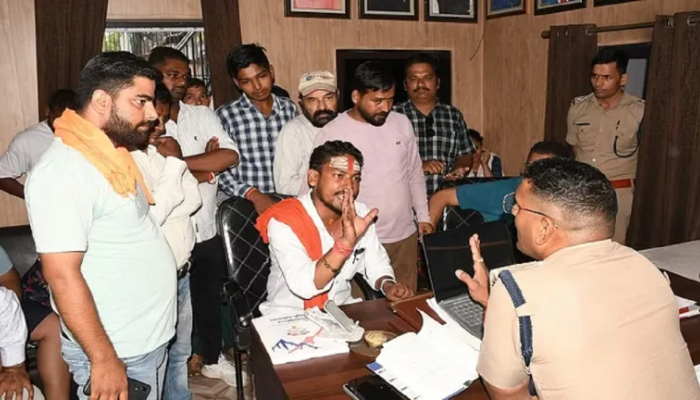
The Banbhoolpura region of Haldwani in Uttarakhand was in the news a while back because of rioting and illegal land occupation. It has now come to light that a Muslim youth lured and abducted 13 and 15-year-old Hindu girls which has resulted in tensions in the area. Hindu organizations learned about this occurrence and went to the police station, demanding that the girls be recovered as soon as possible. The minors were reported missing on 20th June.
According to preliminary information, the accused who is also from the area was spotted with the girls before they went missing. He reportedly took them with him to Lalkuan from whence he is alleged to have travelled to Badaun in Uttar Pradesh. On 21st June 2024, the family members of the victims and Hindu organizations led by Jogendra Rana surrounded the police and demanded their return. The protest lasted for an hour and the demonstrators were pacified after the authorities assured them the underage girls would be found immediately.
One of the two girls studies in the 11th class while the other is in the 9th standard, and they live in the same residence. The family of the latter stays as tenants in the house. A Muslim boy trapped the duo and allegedly eloped with them. He even threatened the brother of one of the girls due to which the families are expressing concern about their safety.
हल्द्वानी लव जिहाद!
एक मुस्लिम लड़का कल रात दो नाबालिक हिंदू बच्चियों (13, 14 वर्ष) को भगाकर ले गया है। उनकी अंतिम लोकेशन यूपी के बंदायूं में मिलने की सूचना है। अक्रोशित हिंदू संगठन बनभूलपुरा थाने पहुंचा और पुलिस से बच्चियों के सकुशल बरामदगी की मांग करी।#Haldwani#Uttarakhandpic.twitter.com/LOMSQoVYWI
Neeraj Bhakuni, the in-charge of the Banbhoolpura police station reassured the irate citizens that the female students would be returned securely in a short amount of time. A team of Uttarakhand Police has been dispatched to Uttar Pradesh to locate them. The agitation was suspended following the promise.
Notably, the violence in the area resulted in five fatalities and hundreds of injuries including male and female (at least 250) authorities. The chaos broke out on the evening of 8th February after the administration took measures to remove encroachments which resulted in the loss of life and property. At least ninety-two people including mastermind Abdul Malik, have been arrested and the Unlawful Activities Prevention Act (UAPA) has been invoked against over three dozen perpetrators. In our ground reports, eyewitnesses and victims told OpIndia that the rioters were attacking administration officials, police personnel, journalists, and commoners after asking for their names and allegedly spared the Muslims. They also tried to burn Police officials and journalists alive.
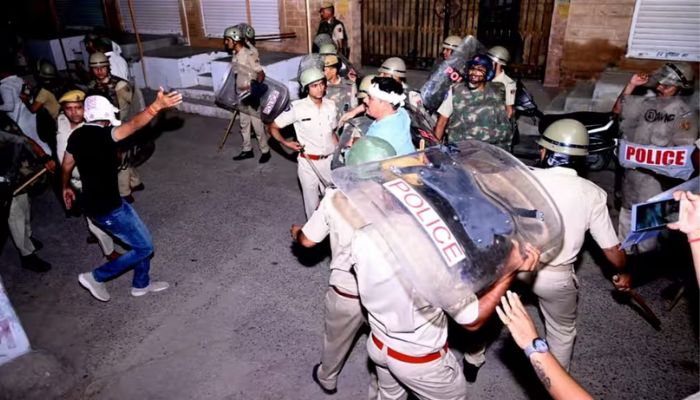
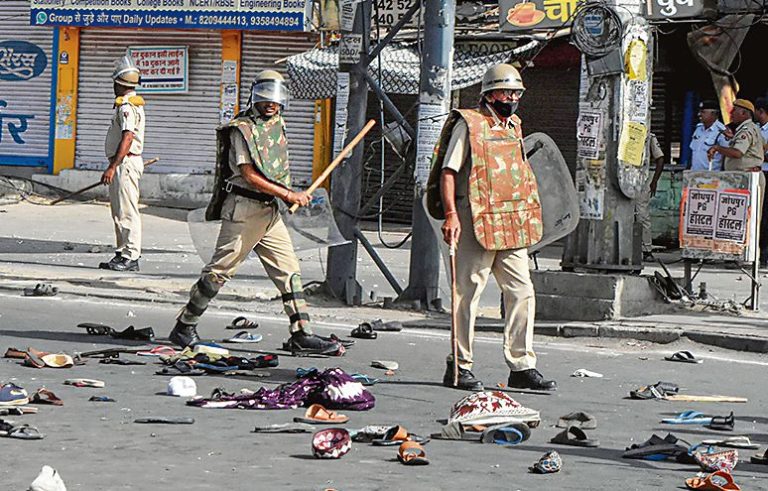
Violence and communal tensions broke out in the Soorsagar police station area in Jodhpur, Rajasthan on Friday night (21st June). After the Police intervened, it brought the situation under control. However, peace in the region ended briefly after miscreants from the Eidgah started pelting stones. Two Police personnel also suffered injuries in the stone pelting. As per reports, the miscreants indulged in arson, set a shop on fire, and torched two vehicles including a Police van.
The Police have imposed Section 144 in the area. Additionally, they have detained at least 51 people and filed 2 FIRs in this matter.
The altercation which turned violent erupted over the forced construction of two new gates in the rear wall of Eidgah. Locals in the area have been opposing the gate as it hinders the movement of people at the backside of the Eidgah. Locals also allege that the construction doesn’t adhere to the legal protocols of the local municipality.
On Saturday, the DCP in Jodhpur East, Alok Shrivastava issued section 144 in parts of the Soorsagar area. Furthermore, an additional police force and the Rajasthan Armed Constabulary (RAC) force were deployed in the area to reinstate the peace.
According to the Police, the dispute erupted between two groups late in the evening on Friday over the construction of a wall on the backside of the Eidgah. The confrontation turned violent, after which the police arrived at the scene. They dispersed the crowd using lathi-charge and firing tear gas shells. However, after some time, the people regrouped and started pelting stones.
Jodhpur West Deputy Commissioner of Police Rajesh Kumar Yadav stated that tension escalated last night when some individuals threw stones, injuring two policemen. A senior police officer said, “A shop and a tractor were set on fire, and a jeep was vandalised.” Although the situation was brought under control late Friday night, the area remained tense.
Jodhpur police commissioner Rajendra Singh stated that locals protested when the staff proceeded to inaugurate the gates at Eidgah on Friday night.
He added, however, the police and the local municipality officials reached the spot, and the matter was settled between the two groups at around 9:30 pm followed by a negotiation in the presence of five members from both groups.
Singh further stated, “The agreement prompted an immediate closure of the gates and the mob was dispersed.”
He said that tension sparked when a group of 10 to 15 people suddenly started pelting stones in Vyapariyon ka Mohalla and retaliation surfaced from the other group.
Singh said, “The dispute has been going on for the last few days…The incident took place at around 10:15 pm (on Friday) when a group of 10 to 15 locals pelted stones at another group from the Eidgah.”
Police Commissioner Rajendra Singh stated that two FIRs had been lodged following complaints from both parties.
Speaking with reporters, Union Minister and BJP MP from Jodhpur, Gajendra Singh Shekhawat said, “The government is serious about the matter. Necessary action will be taken against the ones who tried to disturb the peace in Jodhpur city.”
Following the development, Soor Sagar MLA Devendra Joshi and city MLA Atul Bhansali arrived at the spot late at night. Describing the incident as “unfortunate,” MLA Devendra Joshi said that the culprits behind the violence will not be spared.
Nonetheless, authorities have detained individuals from both groups and are conducting raids in the locality to apprehend suspects.
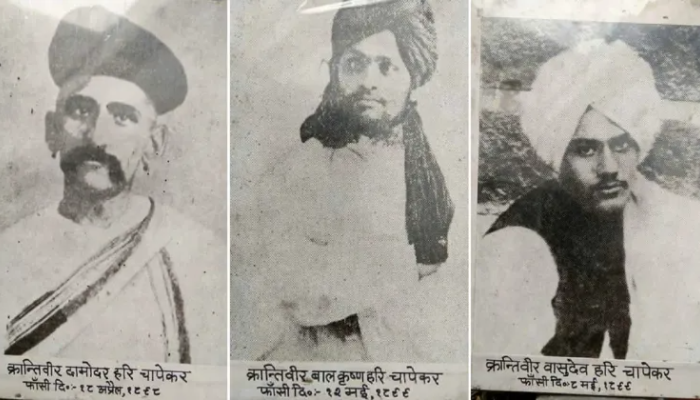
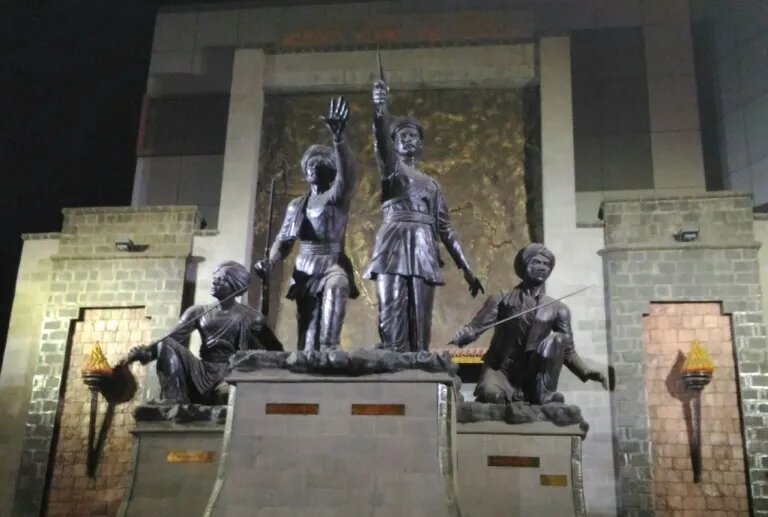
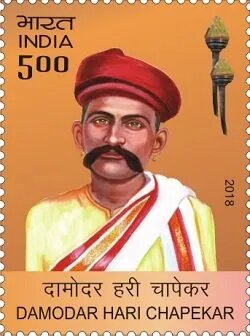
On this day 127 years ago, two brothers decided to avenge indignities and brutalities meted out on Indians by the Britishers by assassinating one of their senior officers. The Chapekar brothers assassinated Englishman Walter Rand for his ruthless and culturally insensitive handling of the epidemic, reigniting a spark of revolution among the nationalists four decades after the famous 1857 revolt, the war of Indian independence, as Savarkar aptly described.
The Poona region during that time was in the grips of a horrifying bout of plague. To curb the epidemic, the British had appointed an insolent officer known for his rude and merciless conduct. It was then that the Chapekar brothers, who were already finding means to take on the cruel English rule, found a purpose and a goal to terrorise the British Raj.
But the lesser-known tale of the Chapekar Brothers also has an even lesser-known facet. These days, one can presume that “Satyanarayan Katha” is to be performed if someone mentions that there is a puja at home. However, things weren’t always like this. It was uncommon two centuries ago for Satyanarayan Katha to be narrated during household pujas. The Skanda Purana, which Hari Vinayak translated sometime about 1890, tells us nearly the same version of this Sanskrit tale. Notably, he was also the father of three brave martyrs who embraced death after killing a cruel Englishman 127 years ago on 22nd June for dishonouring Indian women in a cruel display of his authority.
Due to Hari Vinayak’s limited resources, he used to perform kirtans in courts and other public spaces for a living. His Kirtan band did not have a separate musician, partially because of budgetary constraints and partly because he wanted to teach his boys about his vocation. He involved his three boys in this work. It was for this reason that Damodar, Balkrishna, and Vasudev did not receive special school education. Learning languages like Sanskrit and Marathi in the family was fairly easy for them. Furthermore, they had to engage with the most influential pundits of their era as a result of their regular trips to locations like the royal courtrooms. In his autobiography, Damodar Hari wrote that associating with intelligent individuals helped him learn more than just acing a few tests.
If one were to inquire today, Hari Vinayak is not remembered for his translation of Satyanarayan Katha but for his sons. According to the certificate, Hari Vinayak and his wife lived with their poorly-educated boys close to Pune, Maharashtra. Chinchwad, now regarded as an industrial district, was a mere hamlet then. The plague spread in Pune at the end of 1896 and by February 1897, the disease took a horrific form as the number of deaths exceeded that of bubonic plague deaths by twice. At that point, forty years had passed since India’s last significant independence movement and foreign powers had strengthened their hold over the entire nation.
ICS officer Walter Charles Rand was picked after witnessing the horrible form of plague so close to Mumbai (then Bombay) which the British received as a dowry. His methods of controlling the epidemic were harsh. The military officers who accompanied him would break into homes, search people for signs of the plague, and transport them to an isolated camp. They would strip all men and women naked after entering homes to conduct their examination. It was obvious to the three brothers that Walter Rand was to blame for the mistreatment of these women. In retaliation for this persecution of their compatriots, they decided to assassinate him.
A short while later, on 22nd June 1897, the Diamond Jubilee of Queen Victoria’s coronation was to be celebrated. Damodar, Balkrishna and Vasudev decided to execute their plan on this day. Each brother had a sword, a handgun or a gun when they stepped out. They were supposed to wait for Walter Rand at what is known today as Senapati Bapat Marg but as he was passing, they failed to recognise his vehicle as it was covered. Damodar Hari hid his weapon and waited for Walter Rand to come back. He then hurried after his vehicle as soon as he drove off, calling out to his brothers, “Gundaya aala re” (the thug is here).
Damodar Hari pulled the curtain of the carriage and fired a shot. Walter Rand’s military bodyguard, Ayrest, rode directly behind him. Balkrishna Hari shot him in the head and killed him instantly. However, Walter Rand didn’t die there and was taken to Sassoon Hospital. He passed away on 3rd July 1897. Dravid brothers testified to the incident. On 18th April 1898, Damodar Hari was hung after being apprehended based on their identification. Despite managing to escape, Balkrishna Hari was arrested in January 1899 as a result of a companion’s betrayal. he was hung on 12th May 1899.
The Dravid brothers who made statements against his siblings were slain by Vasudev Hari. On the same evening (9th February 1899) he and his friends Khando Vishnu Sathe and Mahadev Vinayak Ranade attempted to assassinate Chief Constable of Police Rama Pandu but were captured. The Chapekar brothers, Balkrishna Hari and Vasudeo Hari, along with Mahadeva Vinayak Ranade, were found guilty on March 8, 1899, and sentenced to death by hanging. They were subsequently executed: Vasudeo Hari on May 8, 1899, Mahadeva Vinayak Ranade on May 10, 1899, and Balkrishna Hari on May 12, 1899.
Like with the case of Vinayak Savarkar, the tale of the Chapekar brothers’ valorous deed has been forgotten with the vicissitudes of time, often because of the Nehruvian-Marxist historians whose entire focus since the independence was to glorify and lionise the Indian National Congress leaders and cast aside revolutionaries as inconsequential to the country’s Freedom struggle. History books still have sections disproportionately dedicated to the Gandhis, Nehrus, etc. but the sacrifices made by the Chapekar brothers barely find any mention.
The history of India’s fight for freedom is often recounted from the viewpoint of the non-violent movement. However, the narrative of armed resistance to colonial rule is equally significant. Figures like Vinayak Savarkar, Aurobindo Ghosh, Rashbehari Bose, Bagha Jatin, Sachindra Nath Sanyal, Bhagat Singh, Chandrashekhar Azad, and Subhas Chandra Bose are still well-remembered. Their stories are typically portrayed as individual acts of heroism rather than as part of a broader movement with a cohesive strategy or substantial impact on the overall struggle for independence. But Sanjeev Sanyal in his book “Revolutionaries: The Other Story of How India Won Its Freedom” eloquently makes a case for how the revolutionary movement was not just a manifestation of isolated incidents of anger but a well-coordinate strategy to overthrow the British rule from the country.
In his seminal book on Veer Savarkar, ‘Savarkar: Echoes from a Forgotten Past‘, author Vikram Sampath mentions in remarkable detail the life of the three Chapekar brothers, their growing-up years and their inspiration behind the assassination of the Englishman Walter Rand. Relying on primary sources of information, national archives, and a host of other sources, Sampath recounted the pure detestation Chapekar brothers had for the English, which only intensified with Rand’s repressive plague control measures in the Poona region, where his troops entered the temples and brought out women from their houses, broke idols and burnt holy books under the pretext of controlling the pestilence, following which they drew up an elaborate plan to assassinate the chief responsible for the indignities.
As for the Satyanarayan Katha, unfortunately, there is no historical account of its popularity throughout India before Chapekar’s translation, no matter how far you search. The Chapekar brothers might not have received the recognition they deserve, either in literature, movies or other media, but the next time you hear Satyanarayan Katha, try to keep in mind how religion honours its martyrs. A nation exists because of its religion.
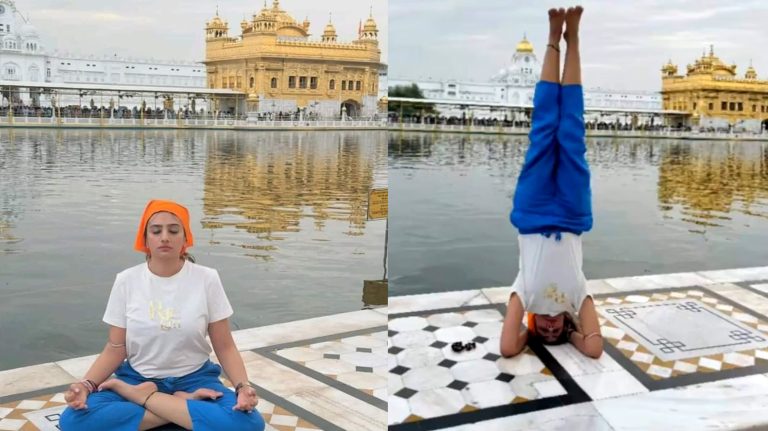
In a shocking development, the Shiromani Gurdwara Parbandhak Committee (SGPC) has filed a complaint against a woman for performing Yoga inside the Sri Darbar Sahib premises, popularly known as Golden Temple, in Amritsar. The step was taken after visuals of the Instagram influencer performing Yoga in Sri Darbar Sahib Prakrama on International Yoga Day on 21 June appeared on social media.
The committee has also ordered action against three employees of Prakrama for allegedly not performing their duties diligently. Shiromani Committee President Harjinder Singh Dhami said that ‘no one can be allowed to act against Guru Mati at Sachkhand Sri Harmandir Sahib, but some people deliberately ignore the sanctity and historical importance of this holy place and commit heinous acts.’
Dhami said that Sikh sentiments were hurt by the act of the woman Archana Makwana, and therefore a complaint has been filed against her. He said that the woman has already apologise for the act, and added people should not do such act that requires to apologise later.
— Shiromani Gurdwara Parbandhak Committee (@SGPCAmritsar) June 22, 2024
Talking about the development, General Manager of Sri Darbar Sahib Bhagwant Singh Dhangera said that images of Makwana doing Yoga in the premises appeared on social media, CCTV cameras were checked to verify. After analysing the footage, it was found that the woman posed in a Yoga position for only about 5 seconds.
As a result, action has been initiated against three sevadars – Gaganpal Singh, Harjinder Singh and Palwinder Singh – over the allegations of dereliction of duty. Two of these employees already have been suspended, and the other has been fined ₹5,000 and transferred to Gurdwara Garhi Sahib Gurdas Nangal.
Bhagwant Singh Dhangera added that woman’s behavior has hurt the sentiments of the Sikhs, due to which a police complaint has been filed against the girl.
The phots and videos have already been removed by Archana Makwana from her Instagram account.
The National Board of Examinations in Medical Sciences (NBEMS) is scheduled to conduct the National Eligibility cum Entrance Test (NEET) Post-Graduate (PG) 2024.
Speaking exclusively to ANI, Dr Rakesh Sharma, OSD to President and Member, Governing Body, NBEMS said, “All eyes of the nation are on NBEMS for the conduct of NEET PG 2024 and we will not let down the hope of the nation. We will conduct the test through a computer-based test (CBT) mode throughout the country.”
On Standard Operating Procedure (SOPs) for successfully delivering and maintaining transparency, he said, “NBEMS has robust SOPs for conducting exams because of which NBEMS has been successfully delivering the exams year after year. These SOPs are stringently followed. NBEMS has worked very hard on maintaining the secrecy of the question paper and there is no chance that there will be any leakage of the question paper.”
He further said that NBEMS is supported by medical colleges, faculty, MoHFW, Flying Squads, Deans and Principals, Vice-chancellor and other agencies, “NBEMS has support from various medical colleges, faculty, MoHFW and other agencies. NBEMS has already briefed the chief secretaries and DGP of all states for safe and secure conduct of the exam.”
The NEET-PG 2024 will be conducted in 292 cities, the participating candidates are 2,28,757 including 1,05,791 female and 1,22,961Male candidates, five transgender, Overseas Citizens of India 223, Non-OCI 195 and 119 NRI.
NBEMS has also introduced the concept of the flying squad which enhances the surveillance of examination centres over and above the routine protocols.
Flying squads include chancellors of Universities, current and former members of the Governing Body – NBEMS, Vice Chancellors, Member – NMC, Principals, Dean’s HODs of Medical Colleges, and Faculty of NBEMS accredited Institutes.
The Flying Squad members will be visiting all the test centres and submit their report focusing on exam security and the use of unfair means.
The command centre will also be set up at NBEMS Headquarters, 10 regional command centres and other monitoring centres will work in close coordination with continuation supervision of test Centres.
The Candidates are advised to arrive at the test hall at least an hour before the scheduled time.
Meanwhile, the National Testing Agency (NTA) is facing criticism over alleged irregularities in this year’s National Eligibility-cum-Entrance Test (Undergraduate) exams and NET exam. This resulted in several protests across the country with protestors and political parties demanding to disband the NTA.
(This news report is published from a syndicated feed. Except for the headline, the content has not been written or edited by OpIndia staff)
A curfew has been imposed in five police station areas of Jodhpur in Rajasthan after incidents of violence, including stone pelting and arson, broke out in a locality in the city, police said on Saturday.
Speaking to ANI, Nishant Bhardwaj, ADCP, Jodhpur said, “Yesterday, on June 21, communal unrest broke out between two communities. Stone pelting happened and there was pelting against the Police as well…Using all our forces, the situation was brought under control. Right now, the situation in the area is fine. Many were taken into custody for pelting stones at Police and for spreading unrest.”
Rajasthan Cabinet Minister Jogaram Patel has appealed to all communities to uphold harmony and said that action will be taken against those who try to create disturbances.
“Our tradition has been to live in harmony…If an anti-social element makes yesterday’s incident in Soorsagar as the base and tries to remove harmony, it can’t be tolerated. I urge all communities to uphold love and harmony. If someone tries to give it a different form, then action has been taken against them by the Police. Further action will be taken if any such thing is found. Right now, the area is peaceful. Action has been taken against the guilty and suspects,” Patel said.
The clash took place on Friday night over a dispute regarding the opening of gates and a police force was deployed in Soorsagar area in Jodhpur to control the violence.
Section 144 has been imposed in five police station areas Pratap Nagar, Pratap Nagar Sadar, Devnagar, Rajiv Gandhi Nagar and Soorsagar in Jodhpur after stones were pelted by the mob and DCP West issued the order.
Rajasthan Minister Jogaram Patel warned of strict action if anyone tried to flare up communal tensions in the region.
Jogaram Patel said, “Our tradition has been to live in harmony. If an anti-social element makes yesterday’s incident in Soorsagar as the base and tries to remove harmony, it can’t be tolerated. I urge all communities to uphold love and harmony. If someone tries to give it a different form, then action has been taken against them by the Police. Further action will be taken if any such thing is found. Right now, the area is peaceful. Action has been taken against the guilty and suspects.”
He urged people from all the communities to maintain harmony and not come under the influence of those trying to flare up communal violence. “Our district officials and police forces are taking all the steps to control the situation. We will not allow the tensions to escalate. Discussions will be held to solve the issue”
(This news report is published from a syndicated feed. Except for the headline, the content has not been written or edited by OpIndia staff)
Amid the controversies over multiple competitive exams like NEET-UG and UGC-NET, the Union Education Ministry on 22 June constituted a High-Level Committee of Experts to ensure transparent, smooth and fair conduct of examinations. This comes two days after Union Education Minister Dharmendra Pradhan announced the formation of a high-level committee to probe into the issues pertaining to the functioning of the National Testing Agency (NTA) amid the allegations of irregularities in the NEET-UG examination.
A press release issued by the ministry said that in order to ensure transparent, smooth and fair conduct of examinations through the National Testing Agency (NTA), the Department of Higher Education under the Ministry of Education gas constituted a High-Level Committee of Experts. The committee will make recommendations on Reform in the mechanism of the examination process, Improvement in Data Security protocols, and the Structure and functioning of the National Testing Agency.
Dr. K. Radhakrishnan, former ISRO chairman and Chairman BoG of IIT Kanpur, will be the chairman of the committee. Five other experts will be members of the committee, while a joint secretary of the ministry will be the member secretary.
The list of members of the experts committee is as follows:
Dr. K. Radhakrishnan, Former Chairman, ISRO and Chairman BoG, IIT Kanpur –Chairman
Dr. Randeep Guleria, Former Director, AIIMS Delhi – Member
Prof. B J Rao, Vice Chancellor, Central University of Hyderabad – Member
Prof. Ramamurthy K, Professor Emeritus, Department of Civil Engineering, IIT Madras – Member
Shri Pankaj Bansal, Co-Founder, People Strong and Board Member, Karmayogi Bharat –Member
Prof. Aditya Mittal, Dean Student Affairs, IIT Delhi – Member
Shri Govind Jaiswal, Joint Secretary, Ministry of Education, Govt. of India – Member Secretary
The Terms of Reference of the committee are as follows:
(i) Reform in mechanism of examination process (a) To analyse the end-to-end examination process and suggest measures to improve efficiency of the system and to forestall any possible breach. (b) To conduct a thorough review of the Standard Operating Procedures (SOPs)/Protocols of the NTA, and suggest measures to strengthen these procedures/protocols along with monitoring mechanism to ensure compliance at every level.
(ii) Improvement in Data Security protocols (a) To evaluate the existing data security processes and protocols of NTA and recommend measures for its improvement. (b) To examine existing security protocols related to the paper-setting and other processes for different examinations and make recommendations to enhance robustness of system.
(iii) Structure & Functioning of National Testing Agency (a) To make recommendations on the organizational structure and functioning of the National Testing Agency (NTA) for implementation of recommendations given under point (i) and (ii) and clearly defining the roles and responsibilities of functionaries at every level. (b) Assess the current Grievance Redressal Mechanism of the NTA, identify areas of improvement and make recommendations for enhancing its efficiency.
The Committee has been asked to submit its report to the Ministry within two months from the date of issue of this order. The press release said that the Committee can co-opt any Subject Matter Expert to assist them.
A strange case of sex-change surgery has come to light in Muzaffarnagar, Uttar Pradesh. A person named Mujahid has accused another person named Omprakash of coercing him to visit a hospital, where Dr. Farooqui allegedly removed his genitals as part of sex-change surgery. However, the hospital released a video where Mujahid could be seen giving his consent for the surgery.
After getting information about the allegations by Mujahid, members of the ‘Bharatiya Kisan Union’ came out in support of Mujahid. They staged a protest on Wednesday (19th June) to demand action against Omprakash and Dr. Farooqui. However, the hospital released a video featuring Mujahid, where he expressed his desire to undergo the sex-change operation willingly and without coercion.
As per reports, the matter pertains to the Begrajpur Medical College. Mujahid alleged that Omprakash coaxed him into being admitted to the hospital, where Omprakash allegedly colluded with doctors to perform sex-change surgery on him. He also accused Omprakash of committing ‘indecent acts’ with him over several months.
After Mujahid made these allegations, the Medical College released a video in which he gave consent for the operation, asserting that he wanted to undergo sex-change surgery willingly. In the video, Mujahid stated that he desires to change his gender and has been informed about all the complications of the surgery. He also acknowledged that he understands that after this operation, he will not be the same as before.
Mujahid emphasized in the video statement that he was neither mentally ill nor under any duress, stressing that he chose to undergo the operation without any pressure.
आरोप हैं:- ???
मुज़फ्फरनगर मे ओमप्रकाश ने मुजाहिद का बहला-फुसलाकर उसका लिंग कटवाकर लड़की बना दिया
In the video, Mujahid also states that he is undergoing the operation voluntarily, and in case of any incident during this time, neither the hospital, doctor, nurse nor anyone else will be held responsible. He asserts that he himself takes full responsibility.
Kirti Goswami, the CMS of the Medical College, stated that Mujahid had been visiting the plastic surgery department for one or two months. He underwent various tests and then chose to undergo the sex-change surgery on his own accord. Accordingly, Dr. Raza Farooqui of the hospital performed the sex-change surgery on Mujahid.
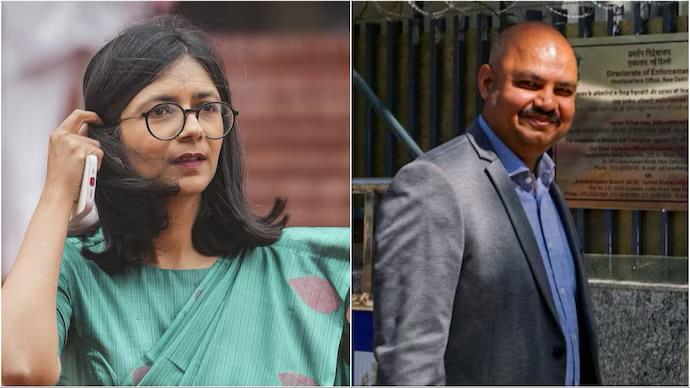
Delhi’s Tis Hazari court on Saturday extended Judicial custody of Bibhav Kumar for the next 14 days. He was produced through video conferencing (vc) after the expiry of judicial custody.
He was remanded to judicial custody on May 31 after his interrogation in AAP MP Swati Maliwal’s alleged assault case. Metropolitan Magistrate Gaurav Goyal extended judicial custody till July 6.
Advocate Karan Sharma counsel for the accused appeared through video conferencing.
The court has directed to produce the accused through video conferencing on the next date of hearing.
Earlier, an order was passed by the court in application of the accused seeking direction to produce him through video conferencing due to safety and security reasons.
He was arrested on May 18 by Delhi Police. A case was registered by Delhi police after receiving a complaint from Swati Maliwal on May 16. The incident of the alleged assault occurred on May 13.
(This news report is published from a syndicated feed. Except for the headline, the content has not been written or edited by OpIndia staff)
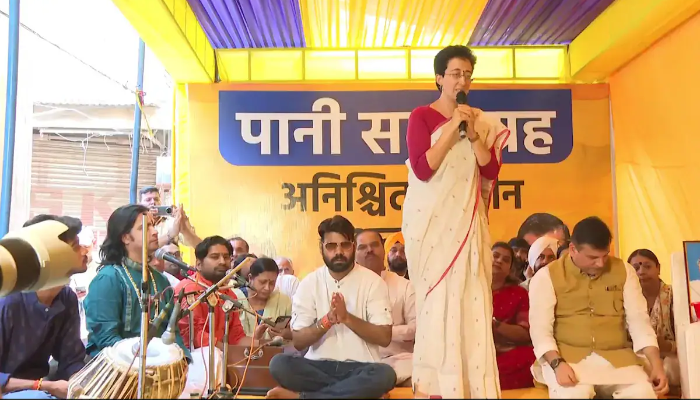
On 21st June, Delhi Water Minister and senior Aam Aadmi Party (AAP) leader Atishi Marlena began an indefinite hunger strike demanding that Haryana release Delhi’s “rightful” share of water. The national capital has been experiencing a severe water scarcity, with the Bharatiya Janata Party-ruled state of Haryana, she alleged, reducing the city’s water supply, directly impacting about 28 lakh residents. Sunita Kejriwal, the wife of Chief Minister Arvind Kejriwal, was among the prominent AAP leaders present during the event which she to as “Paani Satyagraha.”
However, the Delhi unit of BJP has termed the fast as a sham and wrote, “What kind of indefinite satyagraha is this, where Atishi goes to eat and rest in an AC room during lunchtime and at night? A big scam is going on.” The party also shared a video of empty chairs as well as the podium with images of Atishi Marlena and Arvind Kejriwal in the background on social media to drive the point home.
ये कौन सा अनिश्चितकालीन सत्याग्रह है, जहां आतिशी लंच के समय और रात में AC कमरे में खाने और आराम करने चली जाती हैं !
Meanwhile, Bharatiya Janata Party leader Manjinder Singh Sirsa also uploaded a video to question the Delhi minister and charged, “AAP’s minister Atishi Marlena claims it to be her second day of hunger strike and is going to the temple. First of all, I don’t understand how the followers of Marx and Lenin could visit temples. What can be a bigger fraud than this? This is equally fake as her hunger strike. She disappears during the day and in the evening. She takes her meals and then claims to be fasting.
He added, “If you truly choose to go on a hunger strike, do it in opposition to the tanker mafia and the MLAs from your party who have embezzled crores from the mafia while denying the Delhi people access to water. Arvind Kejriwal used to criticize the same tanker mafia in his videos, claiming that they have looted crores from Delhi and taken their water. If voted to power he would destroy their unjust authority. Atishi stop your drama and provide water to the citizens of Delhi.”
Atishi Marlena, a Minister from AAP, stages a so-called hunger strike but disappears in the afternoon & evening, and today on the second day she went to the temple. Marlena and temple, Marx and Lenin started going to the temple…
The Delhi Jal Board should have made preparations for the water problem earlier, according to BJP’s Bansuri Swaraj, considering that the weather agency had repeatedly warned of the extreme heat. The MP further questioned why, given that the AAP is in government in both Delhi and Punjab, they had not requested water from the Bhagwant Mann government. The AAP leader’s decision to stage her protest at Bhogal was reportedly motivated by her intention to run in the Assembly election the following year from the Jangpura seat, according to the BJP.