Home Blog Page 1005

Delhi excise policy scam: No relief from any Court, CM Arvind Kejriwal to return to Tihar Jail today

Delhi Chief Minister Arvind Kejriwal will return to Tihar jail on Sunday as his interim bail in a money laundering case linked to the alleged Delhi liquor policy scam ends on Saturday (June 1).

Kejriwal was given interim bail by the Supreme Court to campaign for the Lok Sabha elections on May 10 and was asked to surrender to Tihar jail on June 2.

The Delhi CM had earlier moved the Supreme Court for an extension of interim bail. On Wednesday, the Supreme Court rejected his plea, stating that since he was given liberty to move the trial court for regular bail, the plea here is not maintainable.

Meanwhile, Delhi’s Rouse Avenue Court on Saturday reserved the order on the interim bail plea moved by Kejriwal, citing medical reasons in a money laundering case related to the alleged excise policy scam.

The court fixed June 5 for the pronouncement of the order on the plea seeking 7-day bail, while refused to pass the order today itself as requested by Kejriwal’s Lawyer.

Senior Advocate N Hariharan, who appeared for Kejriwal, submitted that the interim bail was to campaign for his party (the Am Aadmi Party), which is a national party.

“I am out for 20 days and had I not done it, you would’ve said see he didn’t campaign and fell ill. It was a lot of stress due to the campaigning and you know that stress is a aggrevator of diabetes. What was alarming was that keto levels rose in the urine. The aspect of concern is the high level of sugar and the keto numbers,” Kejriwal’s advocate submitted in the plea.

Appearing for the Directorate of Enforcement (ED), Solicitor General Tushar Mehta and Additional Solicitor General SV Raju submitted that Arvind Kejriwal suppressed facts including about his health conditions. During preliminary arguments, ED lawyers stated that they have objections to filing interim bail as well.

This court cannot modify the Supreme Court order. He’s on interim bail because the SC granted it, what he is asking here is an extension of the Supreme Court order,” the ED lawyers submitted.

“This interim bail plea is required to be dismissed as it is full of suppression of facts. The Supreme Court had granted Liberty to him that he can file regular bail but the liberty to seek an extension of interim bail was not granted to him. He has said that these tests require 7 days, but the nature of the test has been suppressed,” they further stated.

ED also raised maintainability issues on interim bail plea and submitted that instead of getting a medical test done, he was travelling across. Medical tests would take more than one hour.

ED further submitted that the applicant in fact has gained 1 kg weight and falsely claimed that he has lost 7 kg weight. The Registrar of the Supreme Court has passed a speaking order and the same has been suppressed by them. There is a reason for suppression and it is because he had been travelling for campaigning purposes, but he didn’t get the tests done then, ED said.

Recently Kejriwal through his legal team filed two different bail applications before the concerned court. His regular bail plea is listed for a hearing on June 7, 2024.

Earlier, Arvind Kejriwal posted an emotional message on Friday and said that he is proud that he is going to jail to save the country from dictatorship.

In his video message, Kejriwal said, “Tomorrow the 21 days are getting over, the day after tomorrow I have to surrender. I don’t know how long they will keep me in jail this time. But my spirits are high. I am going to jail to save the country from dictatorship. I am proud of this. They tried to break me many times, tried to make me bow down but I didn’t.”

Kejriwal was arrested by the ED on March 21 in connection with a money laundering probe relating to alleged irregularities in the now-cancelled Delhi excise policy 2021-22.

(This news report is published from a syndicated feed. Except for the headline, the content has not been written or edited by OpIndia staff)

BJP demolishing the myth of it being a ‘North Indian’ party, gaining in every state in South India: How Exit Polls highlight pan-India appeal of PM Narendra Modi

On Saturday, 1st June, pollsters and news channels joined hands to publish much-anticipated exit polls for the Lok Sabha Elections 2024, after voting concluded for the same. The exit polls show that there is a significant shift in the Indian political landscape with Prime Minister Narendra Modi’s popularity touching new heights.

Contrary to the opposition’s propaganda campaign that the South of India is anti-BJP, the exit polls predict BJP doing remarkably well in southern states, and likely to emerge as the single largest party in those states combined. Further, as per the exit polls, the Bharatiya Janata Party (BJP) is expected to not only maintain its ground but expand its influence in several states dispelling the opposition’s claims of anti-incumbency.

PM Modi’s growing popularity across India

PM Modi has enjoyed continuous widespread support across the nation. If we look at the past five years, despite some major events like Covid, Russia-Ukraine war, and Israel-Hamas war, which affected the world at large, it seems inevitable that the BJP-led NDA will form the government once again. PM Modi’s leadership, policies, and vision for the country resonated with a large portion of the population adding crores of new voters to the party.

Exit poll data for Lok Sabha elections 2024

According to the average of all exit polls, the NDA is expected to secure 373 seats in the Lok Sabha Elections 2024, which significantly surpasses the required 272 mark for a majority. The BJP alone is projected to get more seats compared to the 2019 elections where the party secured 303 seats. In case exit polls turn into real numbers, it will ensure PM Modi takes oath as the Prime Minister for the third time. The I.N.D.I. Alliance, on the other hand, is predicted to win around 150 seats.

Detailed Exit Poll predictions from various sources

ABP – C-Voter: NDA 368, INDI 167, Others 8

India News – D-Dynamics: NDA 371, INDI 125, Others 47

India Today – My Axis: NDA 381, INDI 148, Others 14

India TV – CNX: NDA 386, INDI 124, Others 33

Jan Ki Baat: NDA 377, INDI 151, Others 15

News 24 – Today’s Chanakya: NDA 400, INDI 107, Others 36

News Nation: NDA 360, INDI 161, Others 22

Republic TV – Matrize: NDA 360, INDI 125, Others 45

Republic TV – P-MARQ: NDA 359, INDI 154, Others 30

Sudarshan – Prabodhan: NDA 380, INDI 98, Others 65

TV9 – Polstrat – Peoples Insight: NDA 359, INDI 154, Others 30

If we look at the state-wise projections, Uttar Pradesh, Bihar, Delhi, Madhya Pradesh, Gujarat, Karnataka, Telangana, Andhra Pradesh, Jharkhand and Assam will play a vital role in BJP-led NDA’s victory.

The myth of anti-BJP South

For years, there has been a contention that the Southern states in the country have anti-BJP sentiment. However, recent exit polls predict a significant shift. States like Karnataka, Telangana, Andhra Pradesh, Kerala, and even Tamil Nadu may witness a rise in the influence of the BJP. The change in the mindset of the voters can be attributed to several factors including governance, strategic alliances and development projects even though the parties that were in power in the state were anti-BJP.

No signs of anti-incumbency

Prime Minister Narendra Modi has already been in the chair for 10 years. Generally, in a vibrant democracy like India, change is expected at the Centre. However, in the case of the 2024 elections, the typical trend of anti-incumbency where the ruling party loses support over time is missing from the political landscape of the country. It is notable, particularly in the states where BJP has been in power, that the pro-incumbency sentiments have prevailed. The electorate seems to appreciate BJP’s efforts in improving healthcare, infrastructure, foreign policy and economic stability.

BJP gaining ground in more states

Notably, BJP’s expansion is not limited to the Southern states. The party is making significant inroads in other regions as well. For example, in states like West Bengal, Odisha and the Northeast, BJP’s support has increased significantly over the years. This broadening base highlights the party’s ability to connect with diverse demographics and address their concerns effectively.

The political landscape of India changes frequently. However, BJP’s consistent work and pro-poor policies have shown how the party in power can increase its influence on the voters. BJP’s expanding influence challenges previous notions about regional strongholds and anti-incumbency. The results will be announced on 4th June and unlike the fall of BJP from power in 2004, the stars seem to favour PM Modi-led government to return to power for the third consecutive time reshaping the political map of India.

West Bengal: TMC goons show ‘Khela’ of violence, murder BJP worker and run away with his severed head

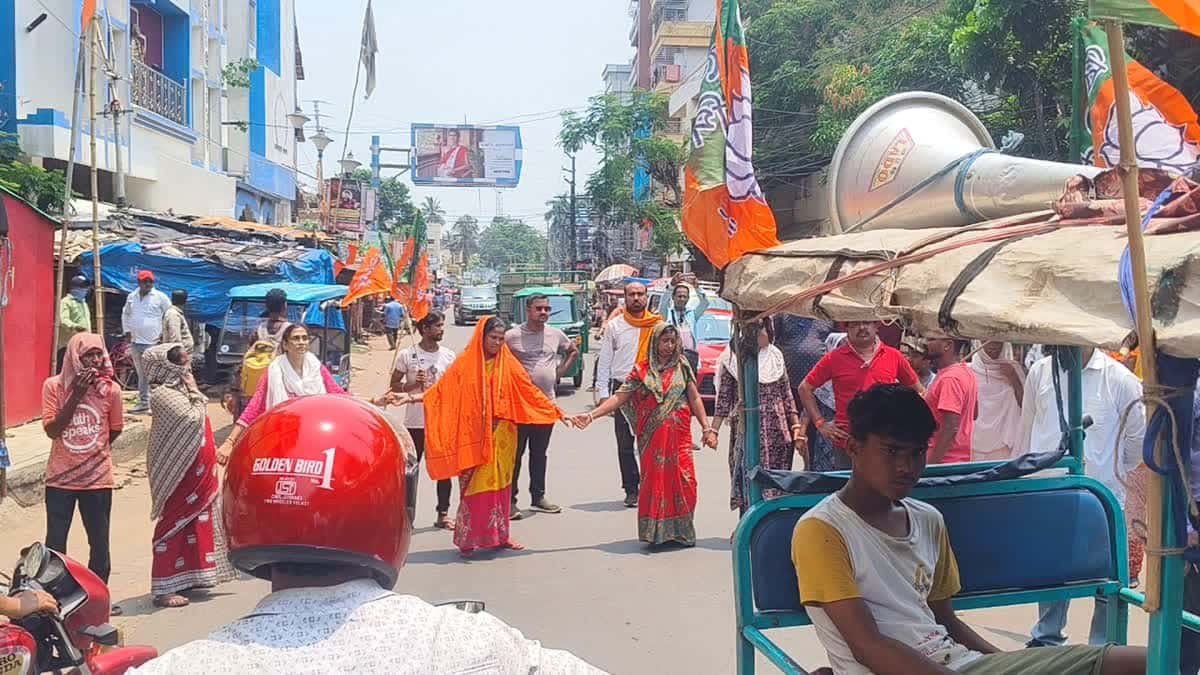
On Saturday (1st June), a BJP worker was brutally murdered by a mob of 10-11 Trinamool Congress (TMC) goons in Chandpur village in Nadia district of West Bengal. The incident took place during the 7th Phase of Lok Sabha elections in the State

As per reports, the victim was identified as Hafizul Sheikh. He had recently joined the BJP. The accused first shot Sheikh and then severed his head from the rest of the body.

In visuals that have come to light, the beheaded body of Hafizul Sheikh could be seen lying unattended on one side of the road.

While speaking about the incident to the media, the victim’s brother said, “Sheikh was playing carrom at that time. An influential politician from the Chandpur village, belonging to the Trinamool Congress, and his accomplices came here and shot my brother twice.”

“Thereafter, they severed his head and took it away. This took place in broad daylight. Those involved in the heinous incident are criminals and anti-social. They did not stop here. The TMC goons then went to the house of other BJP workers an attacked them with bombs,” he added.

Sheikh’s brother stated that TMC goons Qasim, Sohoj, Nasim, Sobuj, Ali, Bandu and others were involved in the gruesome murder of his the victim. He said that the victim was earlier a member of the CPIM but had recently joined the BJP.

“My brother was a good man,” he said, demanding a CBI probe into the matter.

Assembly elections 2024: BJP set to retain Arunachal Pradesh with over 2/3rd majority, SKM heading towards clean sweep in Sikkim

On Sunday, June 2, counting of votes for the assembly elections in Arunachal Pradesh and Sikkim is taking place. While in Arunachal Pradesh Bharatiya Janata Party (BJP) is set to retain power with a 2/3rd majority, ruling Sikkim Krantikari Morcha (SKM) is heading towards a clean sweep in Sikkim. Notably, BJP had won 10 seats unopposed in Arunachal Pradesh as Congress failed to find candidates to field against them.

The counting of votes for the in Arunachal Pradesh and Sikkim began at 6 AM on Sunday, and as per latest information, BJP is on track to win 43 out of 60 seats in Arunachal Pradesh, National People’s Party (NPEP) is leading in 7 seats, while Congress is ahead in only 1 seat in the state.

Meanwhile, in Sikkim, SKM is leading in 31 out of 32 seats in Sikkim, making it a clean sweep for the incumbent party. Sikkim Democratic Front (SDF) is ahead on 1 seat.

Arunachal Pradesh and Sikkim went to polls along with the first phase of Lok Sabha elections on April 19. The total voter turnout in Sikkim was 79.88 per cent while Arunachal Pradesh saw 82.95 per cent voting.

The contest in Sikkim was between the ruling Prem Singh Tamang-led SKM and Pawan Kumar Chamling’s SDF. The BJP and Congress have also fielded candidates for the elections in Sikkim but are unlikely to win any seat in the assembly.

For the 60-member Arunachal assembly, the key fight was supposedly between the ruling BJP and the Congress, but Congress couldn’t even find candidates to contest. The BJP fielded candidates in all 60 seats, while the Congress contested in only 19 seats. The National People’s Party (NPP) and the Nationalist Congress Party (NCP) also fielded candidates in Arunachal Pradesh.

BJP to maintain lead in Haryana, sweep Uttarakhand and Himachal Pradesh: Exit Polls

0

As voting for the 2024 Lok Sabha elections concluded on Saturday, exit polls have predicted that the Bharatiya Janata Party (BJP) will maintain its lead in Haryana, Uttarakhand, and Himachal Pradesh, while also putting up a strong performance in Jammu.

Axis My India has predicted 6-9 seats for the BJP-led NDA and 2-4 seats for the INDIA bloc in Haryana. BJP is predicted to get 48 per cent votes, while the INDIA bloc’s vote share is expected to be at 44 per cent.

Times Now ETG has predicted 7 seats for the BJP-led NDA and three seats for the INDIA bloc.

According to ‘Today’s Chanakya’ exit poll by News 24, NDA is expected to win six seats, and Congress is expected to win four seats.

Haryana sends 10 members to the Lok Sabha.

The BJP-led NDA is expected to continue its clean sweep streak in the state of Uttarakhand.

Uttarakhand sends five seats to the lower house.

Both Times Now ETG and News 24’s ‘Today’s Chanakya’ exit polls have predicted the BJP winning all five seats in the state.

In Himachal Pradesh, NDA is expected to win all four seats, according to Axis My India.

According to India TV exit polls, NDA is expected to win 3-4 seats in the state.

The Times Now ETG has predicted the BJP to win three seats in the state and one seat for the INDIA bloc.

In Jammu and Kashmir, NDA is expected to win 2-3 seats according to Axis My India exit poll. The INDIA bloc is also expected to win 2-3 seats.

According to India TV exit polls, NDA is predicted to win 2-3 seats while the INDIA bloc can win 0-3 seats.

Jammu and Kashmir has a total of five Lok Sabha seats, out of which two are in Jammu and three in Kashmir.

Goa, which sends only two seats to the lower house, is expected to present a close contest.

Axis My India exit poll has predicted 0-1 seats for both NDA and INDIA blocs.

ABP C Voter has predicted 1-2 seats for NDA and 0-1 seats for the INDIA bloc.

The voting for the 543-member Lok Sabha was held across seven phases. The counting of votes is scheduled for June 4.

(This news report is published from a syndicated feed. Except for the headline, the content has not been written or edited by OpIndia staff)

Goa Police bust international sex trafficking ring that targeted young single Ugandan mothers, arrest kingpin

0

Goa’s Mandrem Police launched a crackdown on a major international sex trafficking racket in a joint operation with the NGO Anyay Rahit Zindagi.

The raiding team arrested kingpin Jojo Nakintu, a Ugandan national, and unearthed a systematic operation wherein economically weak and single mothers from Uganda were on the target list of the traffickers, officials said.

Two victims have been rescued.

According to police, an FIR under sections 370 IPC and sections 4, 5, and 7 of the Immoral Traffic (Prevention) Act has been registered against the accused.

The rescued women have been lodged in a Protective home at Merces.

As per SP North Akshat Kaushal, economically weak and young single mothers from Uganda were falsely promised jobs of employment at restaurants and cafes in Goa. After being brought to India, the traffickers threatened the young women and seized their passports and visas, forcing them into prostitution under threat of violence.

The racket, a close-knit group involving the trafficker Jojo Nakintu, operated largely online, leveraging escort websites to solicit clients as well as offline, standing on the beach and roads at Arambol.

The initial information regarding this racket was received when one of the victims contacted the embassy. Through the assistance and support of the embassy, Goa police were able to reach out to the location of the victims.

Further investigation into the same was ongoing.


(This news report is published from a syndicated feed. Except for the headline, the content has not been written or edited by OpIndia staff)

Lok Sabha Elections: All Exit Polls unanimously predict a massive victory for NDA with over 370 seats, BJP alone to cross majority mark

On 1st June evening, the voting for the World’s largest election concluded, in a largely peaceful poll process barring some violence in West Bengal. While the results of the votes will be counted on 4th June, several poll agencies and media houses collaborated to conduct exit polls. As per the results predicted by these exit polls, BJP-led NDA is set to return to power with a huge verdict, while INDI Alliance is predicted to suffer a massive defeat.

While a large number of exit polls were conducted, all of them have returned similar numbers, and it is a unanimous verdict among the pollsters that Narendra Modi is set to become the prime minister for the 3rd term. Against the PM Modi’s call for over 400 seats for NDA, the alliance is predicted to win over 360 seats, as per most exit polls.

Taking the average of all exit polls announced, NDA is expected to win 373 Lok Sabha seats, exactly 100 more than 273 seats required to form the government at the centre. The leaderless INDI Alliance may win 138 seats, while other parties, which are not part of the any of the two major alliances, are predicted to win 31 seats.

Among the different exit polls, the News24 – Today’s Chanakya has given the highest number to NDA, predicting 385 to 415 seats, with a median of 400 seats. It is followed by the India TV – CNX exit poll which has predicted 371-401 seats for NDA. On the other hand, Sudarshan News – Prabodhan has predicted the lowest 98 seats for INDI Alliance. Sudarshan is the only poll to predict two-digit number for the opposition alliance.

As per almost all exit polls, BJP alone will cross the majority mark, while the Congress party is not expected to improve much.

Republic TV this year conducted two exit polls, through Matrize and P-MARQ, and both have given similar numbers.

Notably, some exit polls have predicted a range instead of a fixed number, and for those polls, the median of the range has been used.

Note: This report has been updated with 3 exit polls which published final results later

Exit polls predict BJP opening account in Kerala, DMK-led alliance dominating Tamil Nadu

The exit polls on Saturday predicted that DMK and its allies are expected to win most of the 39 Lok Sabha seats in Tamil Nadu and the Congress-led alliance will retain its dominance in Kerala with the BJP and its allies also slated to win a few seats in the two southern states.

The exit polls predicted the BJP-led NDA creating history by winning Lok Sabha seats in Kerala.

According to the Axis My India exit poll, the BJP-led NDA is expected to win 2-4 seats in Tamil Nadu. The INDIA bloc, which has both DMK and Congress in it, is set to win 33-37 seats.

The exit poll predicted a marked rise in NDA’s vote share in Tamil Nadu which is expected to go to 22 per cent. INDIA bloc is predicted to get 46 per cent. Tamil Nadu sends 39 MPs to the Lok Sabha.

According to News 18 exit poll, NDA is expected to win 1-3 seats in Tamil Nadu while the INDIA bloc can win 36-39 seats in the state.

In Kerala, the Axis My India exit poll predicted that the BJP-led NDA is to win 2-3 seats in Kerala. It said Congress-led UDF would win 17-18 seats and LDF, led by CPI-M, is expected to win 0-1 seat.

The exit polls has predicted 27 per cent vote share for NDA in Kerala, which will be the highest the party has ever got in the state. The predicted vote share of LDF and UDF are 29 per cent and 41 per cent respectively.

The News 18 exit poll predicted 1-3 seats for NDA in Kerala. It said UDF is expected to win 15-18 seats and LDF 2-5 seats.

The Times Now-ETG has predicted one seat for the BJP in Kerala. It said Congress-led UDF and CPI(M)-led LDF are expected to win 14-15 and four seats respectively.

Kerala sends 20 seats to the lower house of Parliament.

The voting for the 543-member Lok Sabha was held across seven phases. Votes will be counted on June 4.

(This news report is published from a syndicated feed. Except for the headline, the content has not been written or edited by OpIndia staff)

Illustrator Priyanka Paul (Artwhoring on Instagram), shows Lord Ram being slapped, faces massive backlash over her Hinduphobic posters

On Saturday (1st June), several X users registered strong protests against controversial Instagram user Priyanka Paul and accused her of hurting the religious sentiments of the Hindu community by painting and peddling ‘Hinduphobic’ posters. Notably, Priyanka Paul, an “Ambedkarite Feminist” goes by the user name artwhoring on Instagram. She has been recurrently garnering media limelight with her posters that derange Hindu Gods and Goddesses, sparking outrage among the Hindu community. 

The recent controversy erupted over her painting, which insults Lord Ram. In the picture, Dr. B.R. Ambedkar is seen assaulting the Hindu god with the religious slogan ‘Jai Shri Ram’ written halfway, while Dr. Ambedkar assaults the deity while chanting ‘Jai Bhim!’ Using the same template, Paul has also insulted MK Gandhi and Indian Prime Minister Narendra Modi.

Subsequently, many users shared her other derogatory paintings of Hindu deities. Many of them have tagged Maharashtra Police demanding legal action against her for hurting religious sentiments. Some users also tagged retail outlets like Redbubble that have been selling clothings that have Hinduphobic art printed on them and demanded action against them.

Some users shared a picture of a tattoo on her arm in which she insults Lord Ram. The Hindu deity is seen tied to a tree while Dr. Ambedkar is physically attacking him with a whip. In the caption, she ranted that some people urged her not to get a derogatory tattoo of the Hindu deity, warning that it could land her in legal trouble for hurting the religious sentiments of the Hindu community. However, she went ahead, as it only cost her Rs 24,000, implying that this was not a significant consequence for the tattoo.

The captions read, “The fugliest creatures on this planet have been threatening me ki yeh tattoo mehenga padega mujhe… bro its like a 24,000 tattoo ur right it indeed was kaafi mehenga.

Responding to an Instagram user’s post that shared concerns about the lives of all humans, in the wake of ‘All Eyes on Rafah’ AI-generated Image row and selective outrage by Indian and world celebrities, she made derogatory remarks against Hinduism.  

In her reply status, she added the text, “Religion teaches to keep humanity first? Maybe every religion in the world does, but not Hinduism buddy, Hinduism begins and ends with UNTOUCHABILITY. So idk who tf yall are lying to with this bullshit,” along with foul language. 

It is pertinent to note that in an interview with media outlet Platform, artwhoring creator Priyanka Paul had prophesised that art should draw attention to issues of Feminism, caste-based discrimination, and other such concerns “without unnecessarily sensationalizing”. However, Paul who had said, “Art has to capture attention and doing that without unnecessarily sensationalizing something is important”, has been notorious for painting Hinduphobic pictures and hurting the Hindu religious sentiments. 

According to a popular Hindu activist X user, Randomsena, some people associated with the page or its followers have submitted a formal complaint in the Thane, Ambernath (East) Police station area. Meanwhile, Paul has made her Instagram account private. 

Real Direct Benefit – The Silent Wave of Modi Schemes in 2024 Elections

“This is a no-wave election” has become the common saying of the opposition as the 2024 elections have progressed. They often reference 2019, highlighting the nationalism wave following the Central Government’s Balakot Strike in response to the Pulwama attack. This time, they assert, there is no such wave.

Some political analysts have even stated that, in the absence of a central government-driven wave, the opposition’s narratives—such as “BJP will change the constitution,” “PM Modi is a dictator,” and “This is an election to save democracy”—have gained traction. They argue that this shift in narrative has resonated with the public and “hawa change kar gayi hai.” As a result, they suggest that the Modi Government might fall short of securing a majority this time.

However, all this rhetoric just tells us how much (or how little) the opposition knows about the Indian electorate. It is no wonder that PM Modi keeps winning election after election, and the opposition keeps wondering how he does it.

What Wins Election India

One of the few models that have accurately predicted all US elections since 1984, including Donald Trump’s win in 2016 and Joe Biden’s win in 2020, is the Structural Model developed by Allan Lichtman, a professor based in Washington, D.C. The model, detailed in his book, “Predicting the Next President: The Keys to the White House 2016,” uses a system of “keys” to predict election outcomes. These keys are based on the idea that elections primarily reflect the performance of the party in power and consider population behaviour at a macro level. They are unlike polling methods that sample individual people and extrapolate to the larger population, which tend to have sampling biases and projection issues.

This begs us to question, are there such powerful “Keys” to predicting electoral wins in India at the macro level, especially for national elections? Turns out there is.

The two largest keys to retaining power in India have always been, first, “Mehengai” or Inflation – something that every politician in India is well scared of. And second, the Direct Benefit Programs reaching people. If we combine both the keys into a single key, we get what can be called as “Real Direct Benefit to People,” i.e., direct benefit in the form of subsidies, deliveries, and other benefits that reach people, adjusted for inflation.

The History of Real Direct Benefit Keys

Therefore, the single largest key to retaining power in India has always been increasing direct benefits for people, adjusted for inflation—what I call “Real Direct Benefit.” All other political issues and narratives are built on top of this foundation. This has been the secret sauce used by Congress in earlier eras. UPA did it in Term 1 via MNREGA and Loan Waivers, reaping the benefit of 60+ more seats and a positive voter swing in its favour in 2009, despite bombs going on, guns being fired in Mumbai hotels.

PM Modi’s first term also saw a massive increase in direct benefits through successful and well-delivered Modi Schemes. In fact, he achieved a large Direct Benefit Distribution with extremely low inflation – almost a miracle. And we had 2019, where he returned bigger and better – something that I predicted before the 2019 election using this analysis, as published at SwarajyaMag.

I also strongly agree with Pradeep Gupta of AxisMyIndia when he says that Balakot or no Balakot, PM Modi would have done almost as well in the 2019 elections. He had already delivered what was needed, touching the lives of millions through his Awas Yojana, Toilet scheme, LPG Cylinders, Mudra Yojana, and so many other Modi Schemes.

An important part to remember is that the Direct Benefit Programs can’t be mindless, or the government risks massive inflation. This was observed in UPA’s 2nd term when it suffered through massive inflation (an inevitable outcome if you also distribute money and do not increase economic production) and had no new Direct Benefit program. The heavy inflation robbed the benefit receivers of any actual benefit money received. Anger boiled in the streets, and UPA2 had a devastating blow in 2014, with PM Modi acting as an anchor for an alternative, getting a majority in India after a long time.

Similar are the stories of PV Narasimha Rao and Atal Bihari Vajpayee. Both decreased subsidies; PM Rao also had high inflation, and we saw the result. For PM Vajpayee, it is apt to remember experiences shared by Yashwant Sinha, who commented that when he campaigned in rural regions, people said that because of him, their stoves are not burning – kerosene going from Rs 2 per liter to Rs 9 per liter. Such negative distribution directly impacts the people on the ground, and voting really is the only response that they can give. So despite Sensex, economy, and roads being constructed, we had 2004.

As far as keys to power are concerned, PM Modi has achieved a miraculous feat in his last 10 years. He has overseen India’s and the world’s largest direct benefit programs through his Modi Schemes, all while masterfully controlling inflation, which is currently much lower than historical levels in India. And this is the silent wave that will deliver him a bigger and better mandate in 2024.

The Extensive and Miraculous Modi Schemes

Before we go deeper into the Modi Schemes, it is essential to understand that PM Modi’s record on inflation has been exceptional. In fact, data reveals that he has the record for the lowest Inflation across all PMs of India, with an average CPI inflation of 5.03%, compared to say PM Manmohan Singh of 8.3%. PM Modi’s second term has seen moderate inflation at 5.7% compared to PM Singh’s second term inflation at 10.1%.

Lower inflation is important as it retains the value of the benefit that reaches people, and therefore, each paisa received packs a much bigger bang. On the other hand, in the case of high inflation, as was seen in the 2nd term of PM Singh, any benefits received get subdued by corresponding increase in prices.

But PM Modi has not only outperformed on inflation; he has presided over the largest benefit distribution programs worldwide, present, or past. And this inflation-controlled expansion of Modi Schemes is the silent wave that is coursing through the nation in the 2024 elections.

So, for those who feel that 2024 is a no-wave election, they must know that the wave is the Anna wave of those 80-crore people who receive 5 kg of Anna every month to ensure no one goes hungry. The wave is a Jal wave of clean tap water provided to over 115 million households. The wave is the Awas wave of over 33 million homes built for countless families – a game-changer for many who were living in slums or kachcha houses.

The wave is of countless lives saved via PM Jan Arogya Yojana (PM-JAY), the world’s largest government-funded health insurance scheme, providing health coverage to over 107 million households who availed hospitalization benefits worth Rs 82,000 crore. The wave is of those 100 million LPG connections that have significantly reduced indoor air pollution in rural households. It is of 500 million bank accounts opened. And of 100 million toilets constructed making India open defecation free.

The wave is also Pradhan Mantri Mudra Yojana (PMMY), which has sanctioned 43 crore (430 million) loans to small and micro enterprises, fostering grassroots entrepreneurship. Of these, 31 crore Mudra loans have been extended to women. This is the wave of benefit schemes like Kisan Samman Nidhi Yojana, Atal/Virdha Pension Yojana, and other such schemes directly reaching people 100 percent without leakage.

Such a strong series of waves! All without inflation going up. And then the Analyst surprisingly say that this is a no-wave election! Perhaps it is because they can only see the waves that touch them, not the ones that cover 80% of the people of India. For this 80% Modi Schemes are miraculous in the country where nobody used to care for them, and where amongst the few schemes that reached them, 85% of the money used to be siphoned off.

What to Expect in 2024 Election Results

As the key to power in India goes, with control of inflation, even 1 or 2 schemes are good enough to provide for an Incumbency and the PM returning. Here, PM Modi has provided for a series of schemes, targeting the overall lifecycle of the citizenry; there is little doubt, if any, that he will return bigger and better this term as well.

How much better? Going by the 2019 and other historical precedents, we can possibly assume a 4-6% improvement in votes and perhaps 20 to 30, or more, seat additions. While the exact improvement can be debated, there should be no doubt that 303+ is the minimum that should be expected.

Before concluding, let us also shortly talk about the lower voter turnout in the early phases of the election, which seems to have balanced out later. Despite the BJP’s extensive national programs like the Awas, Anna, and Jal schemes, which offer significant benefits, not everyone votes for the BJP. Factors such as existing beliefs or religious considerations may deter people from supporting the BJP. Often, such non-BJP voters initially withdraw from voting altogether before gradually shifting their allegiance to the BJP over several election cycles. Some may never vote for the BJP but may choose not to vote for any party, acknowledging the benefits received from the BJP, contributing to the overall lower voter turnout. This pattern has been previously observed in Gujarat. And this may well be the reason of lower turnout observed in initial phases of current elections.