Home Blog Page 105

18 years before Delhi Red Fort blast, Al Falah University produced another jihadi: Read link to the 2008 serial bombings and Congress’ massive betrayal

As the investigation into the Jaish-e-Mohammad-linked terror module connected with the Red Fort blast deepens, the Al Falah University in Faridabad, Haryana, seems to be emerging as a haven for people involved in terrorist activities. After the arrest of multiple terror accused doctors working at the university in connection with the terror module and the blast, investigators have come across another terror accused associated with the varsity, who was involved in a series of blasts that happened in 2007 and 2008 across various Indian states. The terror accused is Mirza Shadab Baig, the main accused in the 2008 serial bombings in Delhi and Ahmedabad, who is on the run and is believed to be living in Pakistan.

Who is IM terrorist Mirza Shadab Baig

Mirza Shadab Baig is a native of Baridi Calganj village of the Azamgarh district, Uttar Pradesh. He is also said to have lived with his family in Raja ka Qila Mohalla in Azamgarh. Baig is an alumnus of Al Falah University. He completed his B.Tech. in Electronics and Instrumentation from the Al Falah Engineering College, Faridabad, Haryana, in 2007. His connection with the university was reportedly established by the investigating agencies after the 2008 Ahmedabad serial blasts, and now his association resurfaced amid the ongoing investigation in the terror module. Baig was last traced in Afghanistan in 2019 and carries a bounty of ₹1 lakh.

Mirza Shadab Baig in connected with the 2008 serial blasts

As per reports, Baig headed the Azamgarh module of the terrorist outfit Indian Mujahideen (IM)(formerly known as SIMI – Students Islamic Movement of India), whose founding members Riyaz Bhatkal (Riyaz Ismail Shahbandri) and Iqbal Bhatkal (Iqbal Shahbandri) are also believed to be in Pakistan. Baig, who briefly stayed in Saudi Arabia, played a key role in merging two terror groups: one from Azamgarh and the other from Delhi. He is also credited with recruiting several young people for terrorist activities.

Police records from he 2008 Delhi serial blasts reportedly show that Baig lived in the Zakir Nagar area of Delhi, where he used to host his terror associates and indoctrinate recruits with Jihadi ideology. He also conducted recce operations for the Delhi and Ahmedabad serial blasts and was directly involved in planting explosives at India Gate. His ID cards were found by the police in his rented accommodation in Zakir Nagar.

Baig’s terror network played a vital role in coordinating serial blasts in Delhi and Ahmedabad. In 2008, he travelled to Udupi, Karnataka, to obtain explosives for the Jaipur serial blasts. He provided a huge quantity of detonators to IM operatives Riyaz and Yasin Bhatkal. Baig was also among the conspirators of the German Bakery Blast case in Pune.

The serial explosions that jolted the entire country

The 2007 Gorakhpur serial blasts

In the years 2007 and 2008, the country witnessed a series of bomb blasts across some major cities, including the national capital. In May 2007, a blast occurred in Gorakhpur, Uttar Pradesh, in the Golghar Market area, located around 4 km away from the Gorakhnath Mandir. Three explosives packed in lunch boxes exploded in succession, leaving 6 people injured. The bomb blasts were carried out by IM and Harkat-ul-Jihad-al-Islami (HuJI). Notably, the then Samajwadi Party government in Uttar Pradesh unsuccessfully tried to withdraw the case against the two accused, Khalid Mujahid and his associate Tariq Qasmi, who were arrested for their involvement in the blast. The STF had recovered a large cache of explosives from their possession.

The 2008 Jaipur serial explosions

Next year, in May 2008, a series of 9 explosions, one after another, rocked Jaipur city in Rajasthan. Nine explosives detonated over busy marketplaces and tourist destinations such as Manak Chowk Khanda, Chandpole Gate, Badi Chaupad, Chhoti Chaupad, Tripolia Gate, Johri Bazar and Sanganeri Gate in 15 minutes. Authorities prevented another explosion by defusing another unexploded bomb that was found close to Chandpole Bazar. The bombings were executed with bicycles loaded with metal splinters, RDX, and ammonium nitrate to increase the number of casualties. Over 71 people were killed, and more than 185 were injured by the explosions. IM took the responsibility of the blasts, and the HuJI Bangladesh was also found to be involved during investigations. Four terrorists, Saifur Rehman, Mohammad Saif, Sarwar Azmi, and Mohammad Salman, were granted life sentences by a Jaipur special court in April this year. The mastermind of the explosions, Aatif Amin, was killed in September 2008 in Delhi during an encounter at Batla House.

The 2008 Ahmedabad multiple explosions

On 26th July 2008, a series of 21 successive bomb blasts wreaked havoc across the city of Ahmedabad. 21 explosions took place at 14 different locations in the city, including Khadia, Raipur, Sarangpur, Maninagar, Hatkeshwar Circle, Bapunagar, Thakkarbapa Nagar, Jawahar Chowk, Govindwadi, Isanpur, Narol, and Sarkhej in a span of 70 to 80 minutes. A big network of the Indian Mujahideen terrorists was exposed during the investigation of the blast. The Gujarat police had said that these explosions were executed as an attempt to take revenge for the 2002 post-Godhra riots. A total of 56 innocent citizens were killed in this attack, while 243 people were injured. Two of the explosions took place at the L. G. Hospital, Maninagar, and Ahmedabad Civil Hospital’s Trauma Centre, causing haunting visuals. In February 2022, a Gujarat court convicted 49 out of the total 77 accused in this case. 38 of the convicts were granted a death sentence, while the remaining 11 were sentenced to life imprisonment until death. 

The 2008 Delhi Serial Blasts

In September 2008, five synchronised explosions took place within a span of about 31 minutes at various busy and crowded locations in Delhi, including  Ghaffar market, Connaught Place and Barakhamba Road. Around 25 people were killed and over 90 were injured in the blasts. Four explosives were diffused by the police. IM took the responsibility for the blasts through an email. In the aftermath of the serial blasts, the Delhi Police hunted down the terrorists in the famous Batla House encounter, which was mourned by the Congress matriarch Sonia Gandhi.

The Batla House Encounter

Weeks after the 2008 serial blasts in the national capital, a team of seven Delhi Police officials, led by encounter specialist Mohan Chand Sharma, reached L-18, Batla House. The Police team was working on a specific input that some IM operatives wanted in serial blasts were hiding in Batla House in Jamia Nagar. An exchange of fire ensued between the police personnel and the terrorists in which Atif Ameen and Mohammad Sajid were killed. One of the terrorists, Mohammad Saif, was arrested while Shahzad and Junaid managed to escape. Unfortunately, Police Inspector Sharma was injured during the crossfire and later succumbed to his injuries. Head Constable Balwinder was also injured. One of the terrorists who escaped is believed to have become an ISIS recruiter.

Even though the country lost a brave cop in the Batla House encounter, it served the dual purpose of neutralising the terrorists and, at the same time, exposing the true colours of the Congress party and the entire Congress ecosystem, which started peddling conspiracy theories to suggest that the encounter was a false-flag operation. In the race to appease the Muslim community and whitewash Islamic terrorism, top politicians from major political parties, including the Congress, Trinamool Congress and Aam Aadmi Party (AAP) caste aspersions on the entire police action.

When the death of terrorists brought tears to Sonia Gandhi’s eyes

Congress heavyweight Digvijaya Singh outrightly claimed that the Batla House encounter was fake. Speaking during an election rally in Uttar Pradesh in 2012, Senior Congress leader Salman Khurshid went on to claim that Sonia Gandhi, the Congress President, cried bitterly after seeing the images of the slain terrorists. “When we showed Sonia Gandhi the images of the ‘incident’, she started crying bitterly and with folded hands, she said Please do not show me these pictures. Immediately go and speak to the Wazir-e-Azam (Dr Manmohan Singh) and discuss the matter. I talked to the PM and it was decided that the matter will be further investigated,” Khurshid said.

Congress ecosystem’s usual whitewashing of Islamic terrorism

While on one side, senior politicians tried to mislead the general public on the serial blasts and the subsequent police action, on the other hand, the so-called social activities ran a parallel smear campaign against the Narendra Modi government in Gujarat and the police action in the Batla House. The entire left ecosystem, as usual, blamed the security forces for failing to prevent the terrorist attacks and diverted attention from the main problem of Islamic terrorism.

A similar pattern of whitewashing the acts of Islamic terrorists and unfairly putting the blame on the government and the security forces was seen during the recent Red Fort blast. Soon after the blast, the Congress ecosystem became active and started justifying the act of terror. Unshockingly, Congress leader Husain Dalwai gave a clean chit to the terrorists behind the Red Fort blast and instead blamed the RSS for provoking the incident. Dalwai termed the blast as a “repercussion” of the “injustice” being inflicted in Jammu and Kashmir. He endorsed the opinion of the former J&K Chief Minister Mehbooba Mufti, who justified the attack, saying that the attack was carried out by terrorists frustrated with long-standing wrongs in the Valley.

Presidential reference case: Everything you need to know about the Supreme Court judgement on timelines for acting on bills, deemed assent and more

The Supreme Court on Thursday (20th November) struck down the timelines it had previously set for Governors and the President to act on Bills passed by state legislatures. The Constitution Bench held that prescribing rigid timelines or creating the idea of “deemed assent” amounts to overstepping judicial limits and interfering with the powers assigned to constitutional functionaries.

A Bench led by Chief Justice of India BR Gavai, along with Justices Surya Kant, Vikram Nath, PS Narasimha and Atul S Chandurkar, ruled that its earlier judgment from April, which required Governors and the President to take decisions within a fixed period, was “incorrect” and violated the Constitution’s separation of powers. 

The Court said that Articles 200 and 201, which deal with the assent process for state Bills, deliberately use flexible languages like “as soon as possible”, the court cannot convert this into strict deadlines. 

The Supreme Court also made it clear that the earlier concept of “deemed assent” which meant that a bill would automatically become law if the Governer of President failed to act in time, is unconstitutional. The Bench said this goes against the very structure of the Constitution, under which assenting to a Bill is a specific constitutional duty that cannot be bypassed or replaced by judicial orders. 

This ruling came in response to a Presidential Reference filed by President Droupadi Murmu under Article 143(1). She asked the Supreme Court to clarify whether the judiciary can impose timelines or create procedural rules for the Governor and President when the Constitution itself is silent.

The Supreme Court examined fourteen questions referred by the President. 

1. What are the constitutional options before a Governor when a Bill is presented to him under Article 200 of the Constitution of India?

The Court clarified the Governor has three clear options. They can give assent to the Bill, return the Bill to the legislature with comments for reconsideration, or reserve the Bill for the President’s consideration. The Bench emphasised that the Governor cannot “withhold assent” and simply sit on the Bill. If they choose to withhold assent, they must return it to the state legislature.

2. Is the Governor bound by the aid & advice tendered by the Council of Ministers while exercising all the options available with him when a Bill is presented before him under Article 200 of the Constitution of India?

No. The Court said that under Article 163, the Governor acts on the Cabinet’s advice except in matters where the Constitution gives them discretion. Assent to Bills is one such discretionary function. If the Governor were bound by the Cabinet in this process, they would never be able to return a Bill, because no Cabinet would advise against its own legislation.

3. Is the exercise of constitutional discretion by the Governor under Article 200 of the Constitution of India justiciable?

The Supreme Court clarified that courts cannot question the merits of why a Governor took a particular decision. That means, courts cannot review the wisdom of the decision. However, the Supreme Court ruled that “prolonged, unexplained, and indefinite inaction” is subject to judicial review. If a Governor sits on a Bill without taking any decision, the court can direct them to act.

4. Is Article 361 of the Constitution of India an absolute bar to the judicial review in relation to the actions of a Governor under Article 200 of the Constitution of India?

Article 361 gives personal immunity to Governors and the President, meaning they cannot be sued personally. But the Court said this immunity does not stop courts from examining the office of the Governor if there is constitutional silence or inaction. The immunity belongs to the person, not the constitutional role.

5. In the absence of a constitutionally prescribed time limit, and the manner of exercise of powers by the Governor, can timelines be imposed and the manner of exercise be prescribed through judicial orders for the exercise of all powers under Article 200 of the Constitution of India by the Governor?

No. The Constitution uses the phrase “as soon as possible”, and the Court said this flexibility is intentional. The judiciary cannot turn this into a fixed timeframe of one to three months. The April 2025 judgment was therefore incorrect.

6. Is the exercise of constitutional discretion by the President under Article 201 of the Constitution of India justiciable?

The Court said the President’s decision on a Bill reserved for their consideration cannot be reviewed on merits. Much like the Governor, the President’s decision-making discretion cannot be questioned by courts, except in cases of undue delay.

7. In the absence of a constitutionally prescribed timeline and the manner of exercise of powers by the President, can timelines be imposed and the manner of exercise be prescribed through judicial orders for the exercise of discretion by the President under Article 201 of the Constitution of India?

Again, the answer is no. The Supreme Court said it cannot prescribe deadlines for the President’s decision-making. Such timelines would interfere with constitutional design.

8. In light of the constitutional scheme governing the powers of the President, is the President required to seek advice of the Supreme Court by way of a reference under Article 143 of the Constitution of India and take the opinion of the Supreme Court when the Governor reserves a Bill for the President’s assent or otherwise?

No. The Court clarified that consulting the Supreme Court under Article 143 is completely discretionary. The President is not required to approach the Court for every Bill that is sent to them.

9. Are the decisions of the Governor and the President under Article 200 and Article 201 of the Constitution of India, respectively, justiciable at a stage anterior into the law coming into force? Is it permissible for the Courts to undertake judicial adjudication over the contents of a Bill, in any manner, before it becomes law?

No. Courts can review enacted laws, but not Bills. A Bill is not a law until it receives assent. So the Court cannot examine its contents at the pre-enactment stage.

10. Can the exercise of constitutional powers and the orders of/by the President/Governor be substituted in any manner under Article 142 of the Constitution of India?

No. The Court made it clear that Article 142, which allows the Supreme Court to do “complete justice”, cannot be used to override the Constitution. The idea of “deemed assent”, created by the April judgment, was rejected because it replaces the Governor’s constitutional role.

11. Is a law made by the State legislature a law in force without the assent of the Governor granted under Article 200 of the Constitution of India?

No, A bill becomes a law only after assent is granted. Without that, it has no legal existence. 

12. Is it mandatory for any Bench of the court to first decide whether the issues before it involve substantial questions of law that must be referred to a five-judge Bench under Article 145(3)?

The Court declined to answer. It said this question was irrelevant to the reference. Article 145(3) mandates that cases involving substantial interpretation of the Constitution be heard by at least five judges. The Court stated this query was irrelevant to the functional nature of the reference regarding legislative assent.

13. In view of the proviso to Article 145(3) of the Constitution of India, is it not mandatory for any bench of this Hon’ble Court to first decide as to whether the question involved in the proceedings before it is of such a nature which involves substantial questions of law as to the interpretation of constitution and to refer it to a bench of minimum five Judges?

The Court said the question was too broad but clarified one thing: Article 142 cannot be used to override provisions like Articles 200 and 201, which involve assent. The Governor’s constitutional role cannot be bypassed.

14. Does the Constitution bar any other jurisdiction of the Supreme Court to resolve disputes between the Union Government and the State Governments except by way of a suit under Article 131 of the Constitution of India?”

The Court declined to answer this question. Article 131 gives the Supreme Court original jurisdiction over disputes between the Centre and States. The Bench deemed this irrelevant to the specific issues regarding the Governor’s powers.

The background of the case

This reference to the Supreme Court came after President Droupadi Murmu, exercising the President’s power to consult the Supreme Court under Article 143(1) of the Constitution, referred a list of 14 questions to the Court seeking its advisory opinion on them. 

The controversy arose after a judgement delivered on 11th April by a two-judge Bench in the  case of State of Tamil Nadu v The Governor of Tamil Nadu & Anr. That ruling had set strict timelines for Governors to act on Bills and held that “constitutional silence” could not be used to delay the legislative process.

The April judgment said that Governors must act within “a reasonable time” and cannot indefinitely sit on Bills passedgover by elected legislatures. While acknowledging that Article 200 does not specify a timeframe, the Court nevertheless imposed its own: one month in some situations and three months in others. It even introduced a concept of “deemed assent” if the Governor or President failed to act within this period.

The verdict also said that the President’s decision under Article 201 must not be indefinitely delayed and should normally occur within three months.

This prompted the President to refer fourteen questions to the Supreme Court, asking whether these directions were constitutionally permissible, and whether imposing timelines or creating procedural mechanisms where the Constitution is silent amounts to judicial overreach.

Why the Supreme Court reconsidered the earlier judgement 

Following the April ruling, Solicitor General Tushar Mehta, representing the Union government, argued that the judiciart cannot direct a constitutional authority like the Governer in matters involving legislative discretion. Doing so, he said, would violate the principle of separation of powers. 

He also offered a hypothetical situation to explain why discretion is necessary: what if a State legislature passes a Bill declaring that the State no longer wants to be part of India? In such a case, the Governor must have the power to refuse assent.

Attorney General R. Venkataramani also told the Court that it is not the judiciary’s role to rewrite or “improve” Article 200. The structure of the Constitution, he said, intentionally gives the Governor some independent judgment.

Because of these concerns, the Constitution Bench was formed to review the matter and provide clear answers.

SIA raid at Kashmir Times: AK-47 cartridges and pistol rounds seized in Jammu office, even as liberals defend the newspaper accused of anti-national activities

0

In a shocking development, several items related to firearms were recovered during a raid conducted by the State Investigation Agency (SIA) of the Jammu and Kashmir Police at the Jammu office of Kashmir Times on Thursday, 20th November morning. As per reports, AK-47 cartridges, pistol rounds and three grenade levers were recovered during the searches at thew newspaper’s office.

Officials said the raid was part of an ongoing investigation into activities that were found to be harmful to the interests of the country.

The SIA team arrived early at the English-language newspaper’s office and searched multiple sections, going through computers, digital devices, and documents. During the search, several materials were seized, and investigators confirmed the recovery of firearms from the premises.

A case has been registered against the newspaper and its promoters, including Executive Editor Anuradha Bhasin, under Section 13 of the Unlawful Activities (Prevention) Act (UAPA) for promoting anti-national activities and spreading disaffection against the country. Sources said Anuradha Bhasin will be questioned by SIA officials about her links and her role in what investigators believe to be part of a coordinated publicity network.

Authorities described the operation as part of a broader crackdown on those involved in anti-terror propaganda. More summons and questioning sessions are expected in the coming days. The Kashmir Times, founded by veteran journalist Ved Bhasin and now run by his daughter Anuradha Bhasin, was under scrutiny earlier as well when its Srinagar office was sealed in 2020. The paper stopped its print edition a few years ago and has been operating solely in its digital format since.

Liberals rush to defend Kashmir Times

Soon after news of the raid broke, several journalists and activists rushed to defend Kashmir Times, framing the SIA action as an attack on press freedom rather than a security operation. Their social media responses drew sharp reactions.

Senior journalist Suhasini Haidar posted on X, “Criticising the government is not the same as being inimical to the state,” tagging the official handle of Kashmir Times.

Her statement suggested that the government was targeting the paper simply for being critical of its policies.

Meanwhile, Kashmir Times issued its own statement on X, writing, “SIA Raids: Another Attempt to Silence Us.” It called the accusations “baseless,” claimed that its Jammu office had been shut for four years, and described the raids as a “coordinated crackdown.” The post added that they had not received any formal notice or explanation from the authorities.

These reactions drew attention to how some media and political voices quickly portrayed the raid as a freedom-of-expression issue, even though firearms, pistols, and a grenade were reportedly recovered from the office.

Delhi Red Fort blast and linked investigations

Investigations are currently underway into the massive car blast that took place near Delhi’s Red Fort on 10th November. The explosion killed 13 people and injured more than two dozen. The prime accused behind the attack has been identified as Dr Umar un Nabi, a key member of a radicalised module that authorities say was planning larger acts of terror.

According to reports from the National Investigation Agency (NIA), the group was preparing to carry out a Hamas-style drone strike similar to the October 2023 assault in Israel. During interrogation and forensic checks, investigators discovered that the accused had been working on weaponising commercial drones and developing crude rockets to carry explosives.

NIA officials confirmed that another suspect, Jasir Bilal Wani alias Danish, was arrested in Srinagar for helping the module design long-endurance drones capable of carrying heavy explosive loads. He also reportedly helped modify drones to transmit live visuals during potential strikes. Investigators said the module wanted to weaponise drones for an aerial attack on a crowded area to cause mass casualties.

The NIA also found video material showing Umar un Nabi speaking about suicide bombing, calling it a “profound religious act” rather than an act of violence. The clip surfaced as part of the agency’s digital evidence collection and is being studied to understand the extremist motivations behind the Red Fort attack plan.

The agency continues to investigate links between the Delhi module and handlers in Jammu and Kashmir. Officials believe the same network may have had connections with groups attempting to spread propaganda through certain media channels that are now under scrutiny by the SIA.

US approves fresh Javelin missile deal with India: Everything you need to know about the $93 million package and why it matters

The United States has cleared a new $93 million weapons package for India on Wednesday (19th November), giving New Delhi access to another batch of Javelin anti-tank missiles and Excalibur precision-guided artillery rounds. The approval was announced after the Defence Security Cooperation Agency (DSCA) formally notified the US Congress about the proposed transfer. 

This is yet another forward step in deepening defence cooperation between the two countries at a time when India is upgrading its military capabilities to deal with modern battlefield challenges.

According to the DSCA, the fresh package includes 100 FGM-148 Javelin missiles, 25 lightweight command launch units, and 216 Excalibur artillery rounds. The request from India also covers lifecycle support, security inspections, operator training, refurbishment services for the launch units, and other elements needed to fully operate the systems. Washington said that India would have “no difficulty absorbing” the new equipment into its armed forces, given its experience with similar systems.

The agency also confirmed that the Javelin systems, jointly developed by RTX and Lockheed Martin, along with the Excalibur rounds will help India strengthen homeland defence and deter regional threats. The Excalibur sale alone is valued around $47 million, which brings the total package $93 million. 

At the same time, the DSCA stressed that the transfer will not upset the military balance in the region and that any potential offset agreements would be handled later between India and the defence manufacturers. 

What the new deal means for India

The DSCA said the sale fits directly into Washington’s broader foreign policy and security goals, particularly in the Indo-Pacific region. It noted that India remains and important defence partner and plays a major role in maintaining stability, peace and economic growth in South Asia. The new equipment, it added, will give Indian forces more accurate first-strike capability and improve their ability to respond to current and emerging threats. 

The US government also clarified that the deal will not require any additional American military or contractor personnel to be stationed in India. It will also have no negative impact on US defence readiness.

Understanding the FGM-148 Javelin missile

The FGM-148 Javelin is among the most widely used and battle-tested anti-tank guided missile systems in the world. It’s a man-portable, shoulder-fired weapon designed for the destruction of heavily armored targets: main battle tanks, bunkers, fortifications, and even low-flying helicopters. The missile entered service with the US military in 1996 and has since become a key part of infantry operations in several countries.

A Javelin missile fired from a U.S. Stryker Infantry Carrier Vehicle (Image via Lockheed Martin)

The particular popularity of the Javelin is based on its “fire-and-forget” capability. Once the missile is launched, it automatically tracks and hits the target with infrared guidance. The soldier operating the launcher does not have to guide it manually, nor does he need to stay exposed to enemy fire. In other words, this gives troops the freedom to fire the missile and immediately take cover or move to a safer location.

This missile came into the spotlight during the 2022 Russian invasion of Ukraine as Ukrainian forces used it extensively to destroy Russian T-72 and T-90 tanks. Its performance, proven in real combat, has given it a reputation as one of the best anti-tank weapons available in the world today.

The Javelin is also known for its top-attack mode: the missile climbs after its launch and then dives down on the target from above, hitting the tank’s roof, usually its weakest part. Its soft-launch system lets soldiers fire it safely from inside bunkers, buildings, or other enclosed spaces; it will be useful in both open-field and urban warfare.

Specifications and technical details

The FGM-148 Javelin is around 1.2 meters long, with a diameter of 127 mm, and weighs around 22.1 kg. The missile carries an 8.4 kg tandem-charge high-explosive anti-tank warhead, which is designed to pierce modern armour, including explosive reactive armour. Although exact penetration figures remain classified, US military documents say the Javelin is capable of cutting through armor well in excess of 762 millimeters of rolled homogeneous steel.

Its effective range is 2.5 km, extending to 4.5 km with a Lightweight Command Launch Unit (CLU) for most operational conditions. The missile cruises at a speed of about 140 m/s and at different altitudes with respect to the mode of firing, up to 150 meters in top-attack mode, or about 50 meters in direct attack mode.

The system utilizes a Command Launch Unit fitted with day and night sights. The infrared night sight features 4x and 9x magnification options, offering soldiers the ability to detect targets even in poor visibility. The CLU itself weighs 6.4 kg and can also be used independently as a surveillance device.

Image via CSIS

Javelin’s soft launch mechanism prevents missile exhaust from hitting the operator, enables fires from inside confined spaces and buildings, lowers recoil for shoulder-launched fires, and minimizes launch smoke trails that indicate launch locations and invite counterfire.

The weapon is shoulder-fired but can also be mounted on light vehicles. It takes roughly one minute to reload and reacquire a target, and only about 72 hours of classroom training is needed to become a qualified operator, much quicker than older systems like the M47 Dragon, which required up to 10 days.

How Javelin missiles will strengthen India’s Armed forces

For the Indian military, the addition of Javelin missiles brings several advantages that fit well into its current defence needs. India is steadily upgrading its infantry capabilities, especially to counter the growing presence of enemy armoured vehicles along sensitive borders. The Javelin’s ability to destroy heavily armoured tanks from long distances gives Indian troops a major edge during combat. 

The Javelin’s battlefield performance has already been proven in Ukraine, where it played a major role in neutralising Russian tanks. Its top-attack capability is especially important for India, as it allows soldiers to strike modern armoured vehicles in a way that bypasses their strongest frontal armour.

The missile’s soft-launch mechanism and fire-and-forget technology also make it suitable for India’s varied terrain, whether soldiers are positioned in mountain areas along the northern borders or operating in dense urban environments. The ability to fire from enclosed spaces gives Indian soldiers more flexibility and safety during operations.

The DSCA stated that the procurement will “improve India’s capability to meet current and future threats by providing precision capability equipment, which will increase first strike accuracy in its brigades.” The agency added that India will be able to integrate the systems easily into its existing force structure.

Overall, the Javelin systems and Excalibur rounds will not only improve India’s ground combat strength but also deepen military ties between India and the United States, an important partnership for the stability of the Indo-Pacific region. 

How Assam CM Himanta Biswa Sarma helped Nitish Kumar formulate the Rs 10,000 scheme for women: Inside NDA’s stunning Bihar victory

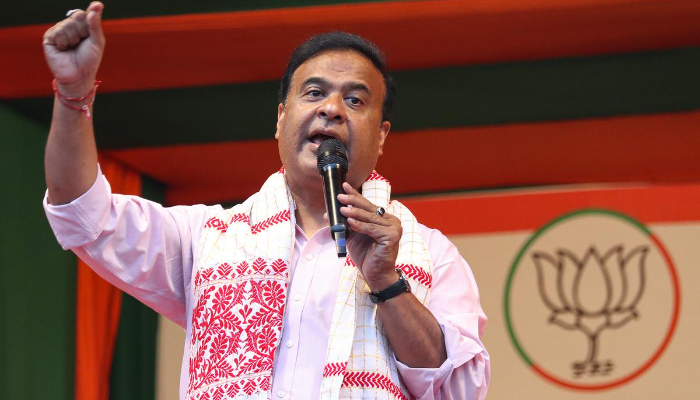
The Mukhyamantri Mahila Rojgar Yojana, which helped deposit Rs 10,000 each into the accounts of 1.5 crore women in Bihar before the elections, is being counted as one of the key reasons behind the NDA’s big win in the state. Much of the credit for this popular “das-hazari” scheme, as it came to be known, goes to Assam Chief Minister Himanta Biswa Sarma, who helped shape the plan in coordination with the Nitish Kumar government.

Sarma said that it was Prime Minister Narendra Modi’s dream of making three crore “lakhpati didis” that inspired the idea. At the request of JD(U) national working president Sanjay Jha, Sarma sent his team of officers to Bihar about five months ago to make a presentation before senior officials, including the then Chief Secretary Amrit Lal Meena and current Chief Secretary Pratyaya Amrit.

The presentation was based on Assam’s “Jeevika Rs 10,000 model” and later became the base of the Mukhyamantri Mahila Rojgar Yojana.

While JD(U) acknowledges Sarma’s contribution, the party describes the scheme as a result of collective ideation. JD(U) chief spokesperson Neeraj Kumar said it was an expansion of Bihar’s existing plan, the Satat Jeevikoparjan Yojana, under which people from certain traditional occupations were already being given Rs 10,000 to shift to new sources of income, along with additional help of up to Rs 2 lakh to start small businesses.

According to a BJP leader who attended the Assam officials’ presentation, Sarma’s team suggested that Rs 10,000 should be offered to women as seed money to help them come up with a business idea. After further discussions by Bihar bureaucrats, it was decided that an additional loan of up to Rs 2 lakh could be given to each woman, provided she or her husband was not a taxpayer, depending on the viability of her plan.

Sarma said Assam’s experience with its own women empowerment project, the “Arunoday” scheme, had also inspired other state initiatives. He mentioned that Madhya Pradesh’s popular “Ladli Behna Scheme,” which gave Rs 1,000 per month to women, was also modelled on Assam’s program. That scheme helped the BJP return to power in the Madhya Pradesh Assembly elections in 2023.

JD(U) leaders said that the idea for a women-focused plan became urgent after RJD’s Tejashwi Yadav announced the “Maa Bahin Maan Yojana,” which promised Rs 2,500 per month to every woman if the Mahagathbandhan came to power. With women seen as strong supporters of Nitish Kumar, the NDA wanted a program that could both empower women and appeal to this voter base.

Nitish Kumar himself had been under some pressure to follow up on promises made when he was leading the Mahagathbandhan government in 2023. At the time, he had said that after the caste survey report, one member from every economically weak family earning below Rs 6,000 a month would be given Rs 2 lakh each year. With opposition parties questioning the delay on that front, the new scheme came as a major move ahead of the election.

Neeraj Kumar said the “das-hazari” scheme was an improved and broader version of the older programs that Bihar had been running in partnership with the central government’s National Rural Livelihood Mission. BJP spokesperson Kumkum Bhardwaj added that the credit should also go to the Modi government at the Centre since Jeevika programs in states are funded through the NRLM.

She said the Pradhan Mantri Jan-Dhan Yojana laid the foundation for real financial inclusion of women, while NRLM became the backbone of their economic empowerment.

Bhardwaj described the initiative as the beginning of a new period of women-led growth under Prime Minister Modi’s leadership. “This is a renaissance, with India’s women at the heart of the country’s economic progress,” she said.

However, the Opposition questioned the timing of the scheme, pointing out that around 1.21 crore women received Rs 10,000 just before the election code of conduct came into effect, while another 30 lakh women got the money after the polls were announced.

Jan Suraaj leader Prashant Kishor, reacting to his party’s poor performance in the Assembly polls, said that government resources, including Jeevika workers, were used during the campaign to attract voters. He claimed that in every Assembly seat, 60,000 to 62,000 people were promised Rs 10,000 immediately and another Rs 2 lakh later, and officials told them these benefits would continue only if the NDA came back to power.

Kerala: Mother and stepfather attempt to lure minor into ISIS; face stringent UAPA charges in Thiruvananthapuram

0

On 14th November, a fresh case of ISIS recruitment emerged from Thiruvananthapuram, Kerala, adding to the state’s troubling history of radicalisation attempts. According to media reports, a mother and her second husband have been booked under the Unlawful Activities (Prevention) Act as they attempted to push their 16-year-old son to join the Islamic State terrorist organisation.

An FIR has been registered at the Venjaramoodu Police Station on the complaint of the relatives of the boy, who accused his mother and stepfather of showing him ISIS videos when he was in the UK. An investigation into the matter has been initiated following the FIR and the National Investigation Agency (NIA) is also collecting intelligence inputs.

Mother and stepfather pushed teen to join ISIS

According to the police, the boy, who hails from the woman’s first marriage, travelled with her and her second husband, Ansar, to the United Kingdom in 2021. It was during that time the couple tried to push him to join ISIS. The boy told investigators that his mother and stepfather repeatedly showed him ISIS propaganda videos and pressured him to study the organisation’s ideology. They forced him to consider joining the terrorist outfit. The coercion attempts reportedly created friction within the household and the teenager resisted the extremist ideas being pushed on him.

The return to Kerala

After spending several years in the UK, the family returned to Kerala earlier this year. Soon after their arrival, the mother and stepfather admitted the child to a madarsa in Attingal. Media reports quoted unnamed police sources suggesting that the couple then left the country again and the boy stayed at the madarsa.

Behavioural changes noticed at the madarsa

It was at the Attingal madarsa that the first red flags were raised. Authorities at the institution observed a sudden and worrying change in the teenager’s behaviour. There were patterns that deviated from routine conduct and indicated distress. The institution informed the child’s relatives in Kerala and alerted them about the boy’s abnormal behaviour, suggesting he needed immediate attention. This communication became the turning point that eventually brought the matter before the police.

Child’s reletives filed complaint

Following the communication from the madarsa, the boy’s relatives visited him. They were shocked by what he told them about the attempts his parents made to push him to join ISIS. They immediately approached the Venjaramoodu Police Station with concerns about whether the teenager had been exposed to extremist content.

Police swung into action and questioned the child. He directly accused his mother and stepfather of attempting to push him to join ISIS by showing him propaganda videos. His statement became the basis for the UAPA case.

Investigators are being cautious

The FIR has been registered at the Venjaramoodu Police Station under various sections of the UAPA. Superintendent of Police KS Sudarsan said that the FIR has been registered on the teenager’s complaint. The investigators are verifying the claims made by the complainant before moving ahead. As the matter is related to an international terrorist organisation, and considering the previous cases of radicalisation in the state, the investigators are being cautious and carrying out the investigation in a confidential manner to determine if it is related to a broader international radicalisation network.

What teenager’s statement revealed

Kerala Police believe, based on the teenager’s initial statement, that the alleged coercion occurred entirely during the family’s stay in the United Kingdom. The boy told the police that there was repeated exposure to ISIS videos. His stepfather glorified extremist ideology and pressured him to join the terror group.

NIA has begun collecting intelligence inputs

Various units of the state police are mapping the family’s movements, digital activity and overseas associations. Meanwhile, the NIA has begun gathering information at a preliminary level. The agency has not taken over the case as of now. Kerala has witnessed multiple ISIS recruitment attempts in the past decade, and security agencies have been on heightened alert due to inputs suggesting renewed activity among banned organisations.

Kerala’s previous encounters with ISIS recruitment attempts and sleeper-cell alerts

Kerala has remained under the scanner of national security agencies due to repeated instances of individuals joining, attempting to join or being recruited by ISIS-linked networks. From cases involving youth from Kasaragod joining the Islamic State to multiple arrests linked to online radicalisation, the state has been navigating a persistent pattern of extremist influence. Reports of sleep cells active in Kerala also raised concerns in 2021.

The ISIS involvement in Kerala was initially traced in 2013. As early as 2014, ISIS established roots in Kerala, with modules encouraging religious conversions and aiming to attract professionals to join its troops in Afghanistan and Syria. Plenty of Kerala men and women are said to have joined the ISKP (Islamic State of Khorasan Province) in recent years. The United Nations warned in its 2020 terrorism report that there are a substantial number of ISIS terrorists in the Indian state of Kerala.

The banned terrorist organization Popular Front of India (PFI) is by large responsible for making Kerala a hotbed of ISIS recruitments. The radicalization of Muslim youths and the conversion of non-Muslims to Islam was spearheaded by the PFI terrorists. This was also cited in a report filed by the National Investigation Agency in front of a court in Kochi in September 2022.

The manufactured outrage over Amar Sonar Bangla shows how Bengal’s cultural icons have become convenient shields for Mamata’s political insecurities

The political theatre in West Bengal has never lacked melodrama, but the recent uproar over Rabindranath Tagore’s Amar Sonar Bangla sets a new bar for absurdity. A state that once prided itself on intellectualism now seems content with emotional manipulation every time the Trinamool Congress senses its ground slipping. And in the most predictable move imaginable, a simple question from the BJP about the political use of a cultural composition has triggered Mamata Banerjee into her favourite performance: the teary-eyed guardian of Bengali pride crying that the “BJP hates Bengal.”

The moment the controversy began, the usual script unfolded. TMC leaders launched their customary shrill accusations, and their friendly media outlets rushed to paint the BJP as a cultural outsider trying to defile Bengal’s sacred icons. The argument is tired and hollow, but TMC relies on it because it works. A commentary in The Quint followed this pattern exactly, portraying Mamata Banerjee as the protector of Bengali pride while depicting the BJP as a clumsy intruder. What it conveniently ignores, however, is that no political party has trivialized Bengal’s cultural heritage as consistently as the TMC. From Tagore to Nazrul to Bankim, these icons are brought out only when the ruling party needs emotional camouflage. The Amar Sonar Bangla uproar is simply their newest diversion.

For a party that has overseen industrial decline, rampant corruption, and deteriorating law and order, the TMC desperately needs distractions. That is why every time hard questions arise unemployment, syndicate activities, political violence Mamata instinctively retreats into the same stale emotional refuge. She does not present data, policy, or accountability. She presents hurt sentiments. She finds a cultural symbol, claims it is under attack, and demands that everyone look the other way. This time, she has chosen Amar Sonar Bangla, a Tagore masterpiece that is also the national anthem of Bangladesh. The BJP’s entirely reasonable inquiry about whether political rallies should invoke a neighbouring nation’s anthem was twisted instantly into an existential threat to Bengal’s identity. The outrage is not organic; it is manufactured, calculated, and cynically executed.

Let’s be very clear: Tagore does not belong to the TMC. Tagore does not belong to any political party. He is a national figure, a global figure, and a towering intellectual whose work transcends modern partisan opportunism. But Mamata’s supporters behave as though Tagore is a private asset of the TMC, to be brandished whenever the party needs to silence its critics. The same government that panics when anyone mentions Bangladesh in a political context has no problem courting Islamist organizations, engaging in selective vote-bank theatrics, and inventing bizarre cultural purity tests. When the TMC does it, they call it secular. When the BJP questions it, they scream “anti-Bengal.” The hypocrisy is breath-taking.

What the TMC’s reaction really reveals is insecurity. A confident party does not rely on emotional hostage-taking. A confident leader does not weaponize culture to cover administrative failures. Mamata Banerjee, however, has turned this into an art form. Whenever cornered, she does not talk about jobs, investment, safety, or governance. Instead, she performs. She sings poems, quotes Tagore, and unleashes dramatic accusations that Bengal’s culture is being assassinated by outsiders. It works because subnational pride is a soft spot easy to exploit, easy to manipulate. And the TMC has mastered that manipulation.

In contrast, the BJP’s biggest strategic mistake in Bengal may not be insensitivity but restraint. For years, it has attempted to engage Bengal on development, infrastructure, and national issues. Meanwhile, the TMC thrives on sentimental theatrics and emotional blackmail. In such an environment, even a mild question from the BJP becomes fodder for hysterical narratives of cultural “invasion.” The party is attacked not for what it says, but for daring to speak at all.

The tragedy is that as the state drowns in these artificially inflated cultural wars, Bengal’s real concerns are shoved aside. Industries continue to exit. Youth unemployment grows. Corruption allegations pile up. Political violence remains a grim routine. Yet none of these issues dominate public discourse because the ruling party ensures that the conversation never leaves identity politics. Who cares about factories when you can accuse the BJP of disrespecting Tagore? Who needs accountability when emotional outrage is easier to manufacture?

The truth is that cultural nationalism is not the problem. What Bengal suffers from is selective cultural nationalism a version that allows TMC leaders to declare themselves sole custodians of “authentic Bengali identity” while dismissing every opposing voice as foreign or hostile. This is not pride; it is cultural gatekeeping. It is political insecurity hidden behind Tagore’s silhouette. And it insults the very culture it claims to protect.

Bengal deserves better than this spectacle. It deserves leaders who do not treat its icons as political shields. It deserves a political environment where cultural expressions are celebrated, not manipulated. It deserves debates about future possibilities, not constant panic about imagined cultural threats. The Amar Sonar Bangla controversy is not about Tagore, not about culture, not about pride; it is about a ruling party that has mastered emotional distraction to avoid being held accountable for a decade of misgovernance.

The sooner Bengal recognizes that its cultural heritage is being used as a prop in this theatre of insecurity, the sooner it can reclaim its genuine legacy not one of fragility and victimhood, but one of courage, clarity, and intellectual honesty.

SC overturns its earlier order mandating demolition of infrastructural projects constructed without environment clearance: Read what the top court said

0

The Supreme Court, on Tuesday (18th November), overturned its earlier judgment passed on 16th May, which declared the grant of ex-post facto or retrospective Environmental Clearances (ECs) by the Centre to building projects and constructions a “gross illegality” and an “anathema”. In the impugned judgment, the Apex Court had directed the demolition of public projects worth ₹20,000 crore, which had received ex-post facto ECs after paying a penalty. The projects included AIIMS in Odisha, a greenfield airport in Karnataka, and a huge effluent treatment plant.

The review order of a bench of Chief Justice of India BR Gavai and Justices K Vinod Chandran and Ujjal Bhuyan, with a 2:1 majority, was delivered in a review petition filed by the Confederation of Real Estate Developers’ Associations of India (CREDAI) seeking recall of the previous Supreme Court verdict. The impugned order annulled a notification, dated March 14, 2017, issued by the then Ministry of Environment and Forest (now the Ministry of Environment, Forest and Climate Change), which provided for ex-post facto ECs.

Demolition of public projects would cause hardships

The petitioner contentioned, inter alia, that the judgment would result in extreme hardships, including shutting down and demolition of already completed and operational infrastructural projects. The Solicitor General Tushar Mehta, appearing for the Steel Authority of India (Union Government), submitted before the Apex Court the details of central projects worth Rs 8,293 crore and another 29 projects worth Rs 11,169 crore in states, which have already received EIA (environmental impact assessment) clearance, are lagging due to a lack of final EC. He added that if these projects are demolished, it would have a devastating impact on public interest and the exchequer.

Demolition of large buildings will add to pollution and loss of public money: CJI Gavai

To arrive at the decision, CJI Gavai examined the question, “Whether it would be in the public interest to demolish all such projects and permit the money spent from the pocket of the public exchequer to go in the dustbin?” CJI Gavai allowed the petition, noting that it the earlier judgment of the court is not recalled, it will lead to the demolition of various buildings/projects constructed out of public exchequer to the tune of nearly ₹20,000 crore. “If the judgment under review is not recalled, it will have serious consequences in terms of demolition of projects which are either completed or about to be completed soon and which are of vital public importance constructed out of the public exchequer… and thousands of crores of rupees would go to waste,” CJI Gavai remarked, adding that demolition of a large number of buildings would create more pollution.

He pointed out that the earlier judgment of the Supreme Court suffered from a contradiction, as on one hand it permitted mining companies to halt their operations, seek ex-post facto ECs and then resume operations after paying compensation, and on the other hand, it straightaway ordered the demolition of public projects that obtained ex-post facto ECs after paying adequate penalty. Concurring with the CJI’s opinion, Justice K Chandran observed that the judgment under review was per incuriam as it did not take into account the aspects of the power conferred under the Environment Protection Act, 1986 (EP Act) and the legal principles regarding an undertaking given in derogation of the statutory provisions.

Justice Bhuyan wrote a dissenting opinion, criticising the majority’s decision

Justice Bhuyan, who was part of the bench that delivered the impugned verdict, penned a strong and lengthy dissent. Criticising the majority opinion, Justice Bhuyan termed the review judgment as a “step in retrogression”. “It is unfortunate that a false narrative is being created, pitting the environment against development… Environmental law cannot countenance the notion of an ex post facto clearance. This is contrary to both the precautionary principle as well as the need for sustainable development,” Justice Bhuyan said.

I would like to painfully observe that the deadly Delhi smog reminds us everyday about the hazards of environmental pollution. Supreme Court, as the highest constitutional court of the country has the duty and obligation under the Constitution of India and the laws framed thereunder to safeguard the environment. It cannot be seen backtracking on the sound environmental jurisprudence that has evolved in this country, that too, on a review petition filed by persons who have shown scant regard for the rule of law,” he strongly remarked.

Ram Mandir-Babri dispute, bulldozer justice, Delhi riots, and more: Decoding USCIRF’s 2025 Report and its multi-year campaign against India, especially Hindus

0

Each year, the United States Commission on International Religious Freedom (USCIRF) releases what it calls an “independent assessment” of global religious freedom. In practice, the report functions less like a neutral evaluation and more like a geopolitical cudgel, selectively deployed against nations that refuse to conform to the organisation’s ideological preferences or America’s fluctuating strategic priorities. India, a civilisational democracy of 1.4 billion people, has long been a favourite target.

Predictably, this year too, the USCIRF placed India under “Countries of Particular Concern” and even recommended a review of U.S. arms sales. The political motivations are transparent: Washington is displeased with India’s oil purchases from Russia, a position dripping with hypocrisy, considering the United States itself continues trade with Moscow. Into this environment arrives USCIRF’s 2025 report, a document remarkable not for insight, but for its distortions.

Ram Mandir: USCIRF’s deliberate historical erasure

The most startling example is its description of the Ram Mandir consecration ceremony in Ayodhya. The report claims that PM Modi inaugurated a temple “built on the ruins of the Babri Masjid,” as if the event were an act of majoritarian triumphalism rather than the lawful culmination of a centuries-old dispute resolved by India’s Supreme Court.

This portrayal conveniently omits all archaeological and historical evidence that the Babri structure had been raised atop an earlier Hindu temple, a fact documented by the Archaeological Survey of India’s extensive excavations and corroborated by British-era records in the National Archives of India, which openly referred to the site as “Masjid-i-Janmasthan.” Even after Mughal encroachment, Hindus continued to worship at the spot, preserving its identity as Shri Ram’s birthplace.

The 2019 Supreme Court verdict, delivered after decades of hearings, weighed all evidence before awarding the land to the Hindu claimants. For USCIRF to insinuate wrongdoing in a ceremony conducted pursuant to that judgment amounts to a casual dismissal of India’s constitutional institutions. Is the organisation suggesting that a democratically elected government and a unanimous Supreme Court are incapable of adjudicating their own domestic disputes? Or does USCIRF believe it possesses superior civilisational and historical knowledge?

Whitewashing the Delhi riots: Turning extremists into peaceful protesters

The report next attempts to rewrite the events of the 2020 Delhi riots. It claims that Umar Khalid, Sharjeel Imam and Meeran Haider were imprisoned merely for “peacefully protesting” the Citizenship Amendment Act (CAA). This characterisation is not only false but fundamentally dishonest.

The violence that engulfed Delhi in February 2020, killing more than 50 people and injuring hundreds, was not a spontaneous outburst by peaceful demonstrators. It was a coordinated attack deliberately staged during a high-profile diplomatic visit to embarrass the Indian state. Umar Khalid has been identified as a key conspirator, with the chargesheet containing transcripts, mobilisation evidence, and testimonies revealing an organised plot.

Sharjeel Imam’s recorded speech calling for the blockade of the Siliguri Corridor, India’s vulnerable “Chicken Neck”, shows the secessionist impulse underlying his activism. To describe these men as benign protesters is to insult the victims of the riots and to reveal USCIRF’s eagerness to rehabilitate individuals whose actions fall far outside the realm of peaceful dissent.

The bulldozer lie: Distorting law enforcement as communal persecution

Equally misleading is USCIRF’s accusation that India “demolished Muslim-owned properties, including mosques, deemed illegal.” This framing is divorced from reality. Demolition drives across multiple states, from Delhi to Madhya Pradesh to Uttarakhand, targeted illegal encroachments constructed on public land, riverbeds, pavements and government-owned plots. These were not actions driven by faith or identity but by the need to enforce land-use norms and public safety.

In some instances, mosque committees themselves admitted that parts of certain structures were built on encroached land and even volunteered to remove them. The USCIRF narrative transforms routine civic enforcement into a communal conspiracy, conveniently ignoring the legal and administrative realities that apply uniformly regardless of religion.

Anti-conversion laws: USCIRF’s refusal to acknowledge ground realities

The report’s attack on anti-conversion laws reveals similar ideological rigidity. These laws, enacted by states from across the political spectrum, seek to curb fraudulent, coercive or inducement-based conversions, practices widely documented in FIRs and testimonies across several regions.

India’s anti-conversion laws do not prohibit voluntary change of faith; they regulate coercion, fraud and exploitation of vulnerable populations. Moreover, the federal structure of the Indian governmental model offers states to frame their own laws to deal with specific menaces, including the scourge of religious conversions, which have increased dramatically with the use of newer deceptive methods by missionaries to entrap unsuspecting and vulnerable sections of the society.

Yet USCIRF reduces this complex social phenomenon to an “anti-minority” campaign, choosing to ignore testimonies from victims of conversion rackets and the widespread concerns expressed by communities themselves. This signals a refusal to engage with India on its own lived social realities.

Cow protection: USCIRF’s willing blindness to cultural context

Its criticism of cow protection laws reflects the same unwillingness to acknowledge cultural context. The cow holds both civilisational and constitutional significance in India, with the Constitution’s Directive Principles calling for its protection. Just as Western societies regulate or forbid the consumption of culturally sensitive animals, whether horses, dogs, or whales, India’s cow protection laws are a reflection of long-standing societal ethos. But USCIRF’s ideological lens does not permit such nuance. Instead, it mechanically classifies these laws as expressions of majoritarian oppression, revealing more about its cultural incomprehension than about India.

A report driven by ideology, not evidence

The fundamental weakness of the 2025 USCIRF report lies not simply in its factual errors but in the worldview that shapes it. Year after year, the commission mirrors U.S. foreign-policy anxieties, criticising nations that assert strategic autonomy while overlooking rights violations by America’s favoured partners. Its analysis of India reads not like a neutral evaluation but like an ideological mandate drafted by activists who neither understand nor respect India’s pluralistic civilisation. It demands that India conform to American models of secularism, ignoring the reality that Indian secularism is premised on equal respect for all faiths, not forced invisibilisation of the majority.

What the report offers is not a survey of religious liberty but a political text wielded with increasing clumsiness. It attempts to delegitimise India’s courts, elected institutions, and law-enforcement mechanisms through selective outrage and motivated framing. In the name of protecting religious freedom, USCIRF ends up undermining the sovereignty and cultural rights of one of the most diverse democracies in the world.

How the 2024 and 2023 reports reveal USCIRF’s multi-year propaganda campaign

The 2025 report does not stand alone. It is the newest chapter in a multi-year pattern of targeted hostility, made evident in the 2024 and 2023 USCIRF and State Department reports.

The 2024 report followed the same formula. It claimed that India’s religious freedom was “deteriorating,” repeated allegations about hate speech during elections, and recycled the bulldozer, anti-conversion, and cow-slaughter narratives. It even recommended classifying India as a “Country of Particular Concern” and floated the idea of sanctions, precisely what the 2025 report now amplifies. India rejected that report in its entirety, stating that USCIRF was operating with a preconceived political agenda rather than a human-rights mandate.

India’s reaction to the 2023 report was even more explicit. In June 2024, MEA spokesperson Randhir Jaiswal condemned the document as “deeply biased,” “vote-bank driven,” and an exercise steeped in “misrepresentation, imputations and selective use of facts.” He pointed out that the report went so far as to question the validity of India’s constitutional provisions, laws, and even Supreme Court judgments, a level of overreach that no sovereign democracy can accept. Jaiswal also highlighted USCIRF’s hypocrisy in criticising India’s FCRA and foreign-funding norms when the United States itself enforces even stricter regulations.

He reminded Washington that while the U.S. lectures India on hate crimes and religious freedom, the Indian government has repeatedly documented racial attacks, temple vandalisation, hate crimes against Indian-origin citizens, and police excesses inside the United States itself, none of which USCIRF has ever meaningfully addressed. That silence speaks volumes.

Viewed together, the 2023, 2024 and 2025 reports demonstrate a consistent pattern. USCIRF relies on the same fringe activists, riot-accused individuals, separatist sympathisers, and Maoist-linked personalities as its “victims.” It repeats the same allegations with minimal variation year-to-year. It frames India’s legal and cultural landscape through an ideological lens imported from American academia. And it attempts to weaponise the CPC designation as a diplomatic tool rather than offer a nuanced or factual assessment.

The years-long campaign of vilifying India

The 2025 USCIRF report is not simply biased; it is the culmination of a years-long campaign to frame India as a violator of religious rights irrespective of evidence or judicial fact. When an organisation repeatedly recycles the same allegations, relies on discredited sources, ignores court verdicts, and disregards cultural context, the problem lies not in the country being assessed, but in the assessor.

USCIRF is not documenting religious freedom in India. It is manufacturing a narrative. And it’s credibility is as low as the IQ of a popular opposition leader in India.

Death sentence for Sheikh Hasina in 2025 Bangladesh has a disturbing echo of the Zulfikar Ali Bhutto saga from 1978 Pakistan

Zulfikar Ali Bhutto, the former Prime Minister of Pakistan, was hanged to death in 1979, and a hardcore Islamic fanatic military general, Zia-ul-Haq, took the reins of power into his hands. Fast forward to 2025, a redux of that dubious trial and execution tactic is playing out in Bangladesh, wherein a controversial tribunal has sentenced ousted Prime Minister Sheikh Hasina to death in absentia for ‘crimes against humanity’.

Hasina has been sentenced to death for allegedly masterminding the brutal state crackdown on last year’s student-led ‘July Uprising’ that toppled her 15-year rule. The crackdown on the protestors resulted in over 1,400 deaths. It must be noted that while the initial protests were indeed student-led, the movement was eventually hijacked by Jamaat-e-Islami, Bangladesh Nationalist Party (BNP) and other Islamist outfits.

The sham trial of Sheikh Hasina: A political farce

The International Crimes Tribunal (ICT), established under the interim government led by Mohammad Yunus, sentenced Sheikh Hasina and former Bangladesh Home Minister Assaduzaman Khan to death. While the ICT and Mohammad Yunus claimed that a fair trial would take place, it turned out to be a sham trial orchestrated by a rigged judicial system. The tribunal’s conduct throughout the trial and its absolutely biased verdict indicate that the entire trial was driven by political vengeance and the imperative of completely obliterating Sheikh Hasina and her political influence. Justice and accountability were the least of this tribunal’s concerns.

These are not mere sweeping allegations; rather, the legal proceedings in this case indicate that Sheikh Hasina’s trial was fundamentally flawed from its inception. There was a lack of basic due process. The trial bore the hallmark of a kangaroo court constituted only to dismantle political opposition.

Sheikh Hasina has been living in exile in India since her unceremonious ouster in August 2024. The former Bangladesh Prime Minister was tried without her presence or proper legal representation. The ICT rejected Hasina’s multiple requests for delays to allow her to appear, denying her the right to cross-examine witnesses or the presented evidence.

While the Yunus government did ask the Modi government in India to extradite Hasina to face the court in Bangladesh, India essentially denied such requests, given the obvious threat to Hasina’s life in her once-homeland and now a territory taken over by fundamentalists baying for her blood.

Sources close to Sheikh Hasina have described the evidence presented by the prosecution as “fake and fabricated”. It is being said that the evidence presented in the court against Hasina carried no forensic or documentary proof establishing her direct connection with the orders for using lethal force against the protestors. Several international human rights bodies have also raised questions over the impartiality of the tribunal.

Not to forget, the ICT, originally set up in the year 2009 to prosecute 1971 war crimes, was repurposed overnight by the Yunus-led unelected government to target and prosecute Awami League leaders, especially Sheikh Hasina.

The fact that the “International Crimes Tribunal of Bangladesh” is a sham, rigged body can be understood from the fact that Awami League leaders were exclusively put on trial for alleged human rights violations, only after the unelected Yunus government made sure that all senior judges and advocates who were not blatantly hostile to Sheikh Hasina were sacked.

The unelected Yunus government amended the laws to empower the ICT through executive fiat, as such amendments would otherwise have required parliamentary approval. The ICTA 2024 amendment expanded the scope and powers of the ICT ridiculously, as if the changes were being made only to tighten the noose around Sheikh Hasina’s neck.

In a nutshell, the “International Crimes Tribunal of Bangladesh” is neither impartial nor international in any way.

Bangladesh’s former Information Minister, Mohammad Ali Arafat, has dubbed the trial and the verdict against Sheikh Hasina “scripted” and a “sham”.

“This is a scripted, sham trial… The entire proceeding was controlled by Muhammad Yunus and his administration, he said, adding that Bangladesh has been taken over by Jihadists, including those from the Jamaat-e-Islami, led by Muhammad Yunus.

Meanwhile, Sheikh Hasina has also dismissed the trial and her conviction as a sham and also rejected the tribunal’s legitimacy.

Zulfikar Ali Bhutto in Pakistan, Sheikh Hasina in Bangladesh: Different timelines, similar trials

The farce of a trial against Sheikh Hasina bears a striking resemblance to the 1978 trial and execution (in 1979) of Pakistan’s Prime Minister Zulfikar Ali Bhutto under the regime of military dictator General Muhammad Zia-ul-Haq. Much like Sheikh Hasina in 2024, Bhutto, the founder of the Pakistan Peoples Party (PPP), was ousted in a 1977 coup. Her ouster came amidst disputed elections.

Zulfikar Ali Bhutto was charged with orchestrating the assassination of a political rival, Ahmed Raza Kasuri. He was tried by the Lahore High Court, and the proceedings were riddled with irregularities.

The saga of Bhutto’s downfall began in 1977, when he was accused of committing fraud in the parliamentary elections. Protests erupted, and on 5th July 1977, military general Zia-ul-Haq spearheaded a coup and overthrew Bhutto.

In no time, General Zia imposed military rule, political activities were brought to a complete standstill, and Zulfikar Ali Bhutto was arrested. Just as in the case of Sheikh Hasina, Bhutto’s trial was marred with bias, restrictions and heavy influence of the Jihadist General Zia-ul-Haq. Most of Bhutto’s trial took place in secret sessions, further confirming that the proceedings were indeed unfair and were only a sham that eventually led to Bhutto’s judicial murder.

The only difference remains that Bangladesh’s Yunus pretends to be a tolerant and progressive leader, all while pandering to Islamists. Zia-ul-Haq, on the contrary, did not care to hide his Jihadist mindset behind any progressive-liberal veneer.

Zulfikar Ali Bhutto (Image via Dawn)

Bhutto’s unfair trial in the Lahore High Court went on, and he, along with four other accused, was convicted and sentenced to death. The PPP leader challenged the verdict in the Supreme Court. However, in an outrageous 4-3 decision delivered on 6th February 1978, the apex court of Pakistan upheld the death sentence. While then Chief Justice Anwarul Haq, Justice Nasim Hasan Shah, Justice Dorab Patel, and Justice Muhammad Afzal Cheema upheld the death sentence, the three dissenting judges, Justice Safdar Shah, Justice Aslam Riaz Hussain, and Justice Qaiser Khan, wanted to acquit Bhutto or at least commute the sentence.

It is said that the Supreme Court bench that upheld Bhutto’s death sentence was stacked with General Zia’s loyalists. Much like in Sheikh Hasina’s case of in-absentia farce, while Bhutto’s trial went on for months, the verdict was pre-decided. With all avenues of clemency exhausted as President General Zia-ul-Haq refused to intervene, Zulfikar Ali Bhutto was hanged to death at the Rawalpindi Central Jail on 4th April 1979.

Bhutto’s hanging remains one of the most controversial episodes in the judicial and political history of Pakistan. Many political leaders, human-rights groups, and Supreme Court judges have criticised the sheer lack of due process in Bhutto’s trial.

Zulfikar Ali Bhutto being taken to Lahore High Court in 1978 (Image via The F.E. Chaudhary Gallery)

In March 2024, nearly four decades after Bhutto’s hanging, the Pakistani Supreme Court observed that the former Prime Minister did not receive a fair trial.

Announcing the unanimous during the hearing of case moved by then President Asif Ali Zardari in 2011 to revisit his father-in-law’s (Bhutto) conviction, Chief Justice Qazi Faez Isa said, “The proceedings of the trial by the Lahore High Court and the appeal by the Supreme Court of Pakistan do not meet the requirements of the fundamental right to a fair trial and due process enshrined in Articles 4 and 9 of the Constitution and later guaranteed as a separate and fundamental right under Article 10A of the Constitution.”

While none of the Pakistani top leaders have ever had a truly secular mindset, which is also reflected in the anti-India and bigoted rhetoric, Bhutto was any day a better and progressive leader than Zia-ul-Haq.

Pakistan’s descent into Islamic fanaticism under Zia-ul-Haq

Zulfikar Ali Bhutto’s departure marked the onset of General Zia’s full-throttle Islamisation of Pakistan. He pivoted Pakistan from a fragile democracy to an Islamic theocratic-militarist state that sowed the seeds of Islamic extremism that continues to hold the South Asian nation in its clutches.

Whatever secular element was left in the Pakistani law was erased as General Zia introduced Federal Shariat Courts in the year 1980 to enforce Islamic law.

In 1979, Zia-ul-Haq enacted the Hudood Ordinances, a set of laws which not only criminalised adultery, theft, and alcohol but also imposed punishments as per the Islamic Sharia, including whipping, amputation, and stoning. One of the most controversial of these ordinances was the Offence of Zina Ordinance. This ordinance criminalised sex outside marriage, disproportionately targeting women and non-Muslims. These laws made it difficult for women, especially rape victims, to seek justice as the burden of proof required four Islamic religious witnesses for a charge of rape to be filed against the accused.

General Zia-ul-Haq during a rally Peshawar 1978 (Image via Wikimedia Commons)

Instead of delivering justice to the victim, these laws resulted in the prosecution of rape victims for ‘Zina’ or unlawful sex. While in 2006, some amendments were made to this law, its core outrageous and discriminatory provisions remain unchanged. In addition, Zia also brought Qisas and Diyat laws. Notably, as per Sharia, blood money or Diyya or Diyat is accepted by the victim’s family from the murderer in case the death was unintentional or accidental or if the deceased victim’s family decides to forgive the murderer and not seek retribution or Qiyas or Qisas. Zia introduced laws that valued women’s testimony and blood money compensation (diyat) at half that of a man.

To further Islamise Pakistan and ensure that any real or fabricated insult to Islam is met with the harshest punishment, under Zia’s regime, the blasphemy laws in Pakistan were expanded, carrying mandatory death penalties. The strengthening of the blasphemy laws has impacted Pakistan in such a way that decades after Zia-ul-Haq died, Islamic vigilante killings persist in the country, with Hindus and other non-Muslim communities, even some Muslim castes, being its victims.

Although Zulfikar Ali Bhutto backed the Operation Gibraltar in Kashmir and led Pakistan into the 1965 war, only to lose against India, Zia-ul-Haq played his role in the creation of an Islamic terrorism arc in the region that has benefitted Pakistan’s de facto rule, the Pakistan Army, while taking the lives of countless innocent people in India, Pakistan and Afghanistan.

In his bid to consolidate power, Zia-ul-Haq funnelled American and Saudi aid via the CIA’s Operation Cyclone to the Afghan Mujahideen, radicalising the Pakistani people. Under his Islamisation program, Zia-ul-Haq widely promoted Deobandi madarsas, with reports saying that such radical madarsas exploded from around 900 in 1971 to 8,000 by 1988. These madarsas had one objective: to indoctrinate Pakistanis with fundamentalist Wahhabi-Salafi Islamic ideology. Zia-ul-Haq essentially turned Pakistan into the staging ground, recruitment centre, training hub and arms conduit for the anti-Soviet Jihad that went on for a decade from 1979 to 1989.

With over $10 billion in US and Saudi money, the ISI under Zia-ul-Haq formed the deadliest Islamic Jihadi infrastructure in the world.

General Zia’s Islamisation project eventually contributed to the birth of the Taliban and al-Qaeda networks that continue to carry out terrorist attacks on non-Muslims. Zia-ul-Haq’s Islamic fanaticism and its application as state policy pushed Pakistan into a spiral of military coups and dominance, terrorism and sectarian violence. His push for establishing Sunni orthodoxy led to the creation of several Sunni violent outfits like Sipah-e—Sahaba, which carried out terror attacks and killings of Shias.

In fact, a faction of the Islamic terrorist entities created, fostered and harboured by the Pakistani military regime since Zia’s tenure has become a Frankenstein’s monster harming its very creators. The very Islamic terror groups Pakistan created, funded, shielded and used against India have gone out of the Pakistani military’s control. The situation has reached a point where the Pakistani military and its puppet government call these terrorists ‘Fitna-al-Khawarij’, ‘Fitna al Hind’, Afghani terrorists and whatnot to pin the blame on foreign entities, while in reality, these ‘demons’ are the Pakistani military establishment’s own creation.

General Zia’s ambition of coalescing Islamism into the core of Pakistani society’s consciousness was not confined to erecting madrasas, recruiting and arming Jihadis. The entire education system of Pakistan was turned into a Jihadi extremism factory. The Zia regime got textbooks rewritten to glorify Islamic Jihad, portray Hindus and India as eternal enemies, and his military rule as ‘divine obligation’. With little changes here and there, Pakistan continues to teach distorted history and Islamic extremism to produce generations radicalised from childhood. Anyone who calls out this systemic radicalisation there is deemed as someone ‘not Muslim enough’, ‘enemy of Islam’ and whatnot.

This is the opprobrious legacy Zia-ul-Haq left. The damage done by General Zia continues to drag Pakistan deeper into the abyss of extremism and anarchy. In Pakistan, the civilian government, elected government and terms like democracy are nothing but a farce. Elections continue to be rigged, political parties continue to require the Army’s blessing and backing to come, and most importantly, stay in power. Any deviance from the Army-prescribed agenda results in ouster from power, jailing, and even killing of the elected or selected leaders.

PTI’s Imran Khan remains a prime example of this. He won the elections, had the Army’s support initially, but his attempts at curbing military dominance in governance and policymaking led to his abrupt ouster from power. Khan landed in jail and continues to languish there while a military-backed puppet regime has been installed.

In fact, a new Zia-ul-Haq is emerging in Pakistan, the self-appointed madarsa-bred ‘Field Marshal’ Asim Munir. While violence, bombings have always been a ‘normal’ in Pakistan, such is the dominance of the army that despite thousands of soldiers killed in various attacks by TTP and Baloch freedom fighters, among other militant groups, as well as a humiliation at the hands of Indian Armed Forces during the Operation Sindoor in May this year, Asim Munir appointed himself as ‘Field Marshal’. Not only this, Munir has, through the puppet government led by Shehbaz Sharif has also secured constitutional amendments to ensure his grip on power remains tight till he breathes his last.

After Yahya Khan, Zia-ul-Haq, and Pervez Musharraf, Pakistan is once again falling into the hands of an Islamic fanatic military dictator, Asim Munir, whose Islamic extremist rhetoric, particularly his vitriolic speeches against India and Hindus, echoes the jihadist mindset of the previous military dictators.

While Pakistan never had a secular leader, it was always about lesser extremist verses more extremist. Even Zulfikar Ali Bhutto, despite being a leftist-socialist, was no saint. Bhutto in his UNSC speech of 1965, declared that Pakistan would “wage a thousand-year war” against India. Bhutto’s successor, military dictator and the reason behind his death, Zia-ul-Haq, was no different. General Zia only took forward Bhutto’s ambition in a more aggressive fashion and vowed to “bleed India with a thousand cuts”.

Be it socialist Bhutto or military dictators Yahya Khan, Zia-ul-Haq, Pervez Musharraf or now the dictator-in-the-making, Asim Munir, all have been equally hateful towards India while the degree of their Islamic fanaticism varied.

The byproduct of having hatred and religious fanaticism as state policy has been the economic downslide of Pakistan. The country is surviving on loans from the IMF and foreign countries. Pakistan has not seen political stability for many years. And now, Bangladesh is heading in the same direction.

Bangladesh heading the Pakistan way

Bangladesh, which came into existence in 1971 with India’s military support against Pakistan’s oppressive rule, is rapidly becoming the very menace it fought against and freed itself from. Just as it was in the case of Zia’s 1977 putsch against Bhutto, Sheikh Hasina’s ouster empowered Islamists overnight. In Pakistan, religious minorities and sects within the Muslim community not deemed ‘Muslim enough’ by Sunni hardliners became victims of Zia’s Islamisation project. In Bangladesh, Hindus and other religious minorities became the first casualty in the student protest-turned-Islamist-takeover-mission.

Bangladesh is witnessing a drastic rise in Islamism and anti-India sentiment after Yunus came to power. He first revoked the ban on the radical Islamist outfit ‘Jamaat-e-Islami’, which was involved in leading the anti-Hindu pogrom after Sheikh Hasina’s ouster last year. Thereafter, he released the leader of the radical outfit ‘Ansarullah Bangla Team (ABT)’, Muhammad Jasimuddin Rahmani.

At the same time, Muhammad Yunus downplayed the targeted attacks on the Hindu community by violent Muslim mobs. He has gone on record, from lamenting about attacks on Hindus to saying that the claims of atrocities are ‘exaggerated‘.

In that way, the controversial US asset was able to placate Islamic extremists. Given that the Awami League was against Islamism, the interim government first banned its student wing, ‘Chhatra League,’ and then the parent party.

Under the watch of Muhammad Yunus, Bangladesh saw a drastic rise in vigilante Muslim mobs or Tawhidi Janta, which unleashed violence under the pretext of protecting the tenets of Islam.

The Yunus regime introduced new textbooks for primary and secondary students, which falsely claimed that the first declaration of independence of Bangladesh was made by Ziaur Rehman (a favourite icon of Muslim hardliners in Bangladesh).

Islamist leaders and ex-army officials like Fazlur Rahman publicly made anti-India remarks, with some even daydreaming about capturing India’s northeast states. Similarly, an ‘adviser’ to the Muhammad Yunus-led interim government of Bangladesh named Mahfuz Alam had threatened to capture India on the occasion of Vijay Diwas on 16th December 2024.

To appease Islamists, the Yunus regime stopped the recruitment of music teachers in government primary schools. In November this year, the Yunus regime scrapped the posts of assistant teachers for music and physical education in primary schools. This came after Bangladesh Jamaat-e-Islami leader Mia Golam Parwar had lashed out at the decision to recruit music and dance teachers. He dubbed it ‘completely unacceptable’ and ‘a suicidal move for the nation’. Islami Andolon Bangladesh (IAB), Hefazat-e-Islam and Khelafat Majlish, among Islamic extremist outfits, also declared music as ‘un-Islamic’ and threatened to unleash violence and chaos.

In July this year, the Muhammad Yunus-led interim government issued an ordinance plunging Bangladesh into authoritarianism. The ordinance eliminated the right of employees to protest against the government. He also issued a notice stifling criticism of his regime by students and educational institutions.

The descent of Bangladesh under Yunus into the swamp of Islamism is multi-faceted. Besides empowering Islamists, antagonising its oldest friend and protector, India, the Yunus regime is leaving no stone unturned to push the Islamist agenda in all institutions of the country. In this vein, the ‘Bangladesh Bank’ gave a farman (diktat) barring female employees from wearing ‘short dresses’, ‘short sleeves’ and ‘leggings’ in July this year. The directive by the Central Bank of Bangladesh also recommended that women wear headscarves and hijab. Earlier, Islamists had unleashed havoc on university teachers in Bangladesh by labelling them as ‘anti-hijab.’

In July 2025, an Islamic outfit named ‘Jamaat-Char Monai’ announced its plans to turn Bangladesh into a Sharia-compliant nation like Afghanistan.

In April this year, Muslims belonging to the radical outfit ‘Hefazat-e-Islam’ hung the effigy of a woman, stripped and defiled it with shoes to demand the abolishment of the Women Affairs Reform Commission in Bangladesh.

Previously, OpIndia had reported on the alarming rise of rape cases in Bangladesh under the watch of Muhammad Yunus. In the meantime, Islamists who committed heinous crimes against women were freed by the top court of the country.

While Bangladesh was no ‘utopia’ under Sheikh Hasina’s rule, the country was witnessing economic growth, improved standard of living, had political stability and good relations with neighbouring countries. Bangladesh’s textile industry was booming, and infrastructure projects were taking shape of reality; however, Sheikh Hasina also sparked criticism for centralising power.

And, now with Hasina gone, the country, instead of witnessing the restoration of democracy in its truest form, considering the anti-Hasina agitators dubbed her a ‘dictator’, is grappling with an economic slump. The inflation is over 8% and food prices are surging dramatically. Reduced investment, shrinking revenue, empty markets and skyrocketing inflation are the present reality of the ‘post-revolution’ Bangladesh under the Yunus regime.

As per the International Monetary Fund (IMF) estimates, Bangladesh’s GDP growth has slumped from 4.2% in the fiscal year 2024 to 3.7% in the FY2025. Bangladesh grapples with low tax collection, banks lacking capital and slowed economic reforms.

Beyond the economic front, unlike Muhammad Yunus, who is mollycoddling Pakistan despite the latter’s outright refusal to apologise for the horrific atrocities the Pakistani Army committed against Bengalis before 1971, Sheikh Hasina never rushed to embrace her people’s oppressors.

While the Yunus regime is busy erasing the contributions and legacy of ‘Bangbandhu’ Sheikh Mujibur Rehman and India’s decisive role in Bangladesh’s liberation, Hasina acknowledged India’s military help against Pakistani oppressors, and also resolved several of the Indo-Bangladesh issues amicably through dialogue. Unlike Yunus, who downplays anti-Hindu violence and dismisses criticism as ‘India’s propaganda’, Sheikh Hasina tried to keep Islamic extremism and violence against minorities in check.

Apparently, Muhammad Yunus is trying to pull off a ‘Zia-ul-Haq’ playbook before the elections in Bangladesh. Although by banning Hasina’s Awami League from contesting elections, Yunus had already done half the work. In only a few months long rule, the Yunus regime is erasing the legacy of Mujibur Rehman, the leader of Bangladesh’s liberation movement and Sheikh Hasina’s father, destroying the secular fabric of the country, dismantling Hasina’s party Awami League and antagonising traditional allies like India.

The parallels between the sham trials of Zulfikar Ali Bhutto and Sheikh Hasina

While decades separate Zulfikar Ali Bhutto and Sheikh Hasina, there are parallels in their cases. Both reached the pinnacle of power and popularity in their respective countries, and both ended up getting accused of centralising authority. Both faced allegations of electoral fraud and dictatorial conduct by the opposition. Both of them were abruptly and forcibly removed from power, and their departure plunged their countries into the jaws of Islamist fanatics and triggered chaos.

Both Bhutto and Hasina faced legal proceedings marred by political vendetta and bias. Both received death sentences, and their countries underwent coup-fuelled Islamisation. In both cases, the judiciary was weaponised. The adversaries of both Bhutto and Hasina used courts and special tribunals for sham trials to end their political careers and even their lives.

However, there are also differences in the situations of Bhutto and Hasina. Firstly, the nature of charges brought up against them differs. While Bhutto was arrested and tried before the court physically, Sheikh Hasina was forced to flee her country on 5th August 2025 and was thus prosecuted in absentia. Bhutto was hanged to death in 1979 after all avenues of clemency were exhausted. Hasina, on the contrary, resides in India under the protection of the Indian government. It is highly unlikely that the Modi government would extradite Sheikh Hasina to Bangladesh. The India factor remains decisive in Hasina’s case.

Interestingly, the public perception about Bhutto and Hasina also varies. While Bhutto eventually was elevated to the status of a martyr of military justice, or rather injustice, Hasina, other than her loyal support base, is subjected to criticism by her country now under the heavy influence of Islamists. It remains to be seen how Sheikh Hasina, who once led Bangladesh’s economic turnaround, will engineer her political resurrection.