Home Blog Page 1107

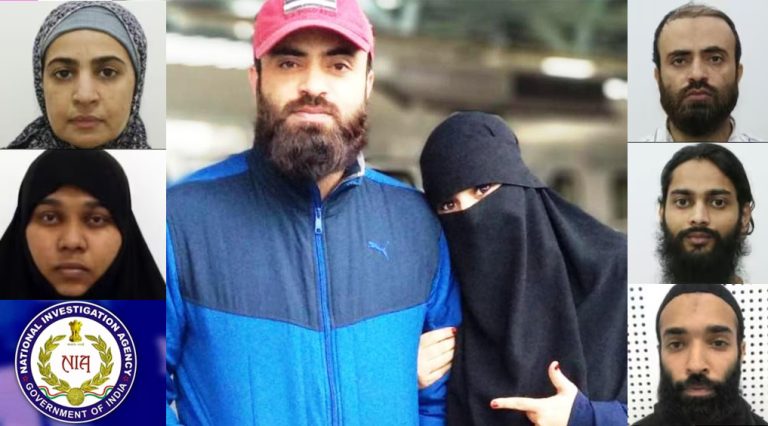
NIA special court convicts Jahanzaib Sami Wani, his wife Hina Bashir Beigh and 3 others for anti-India activities, links with ISKP

On 6th May, the National Investigation Agency (NIA) Special Court in New Delhi handed down varying prison terms to five accused including a Kashmiri couple in a case concerning a plot by the outlawed Islamic State-Khorasan Province (ISKP) group to propagate the ideology of the Islamic State of Iraq and Syria (ISIS) and incite terror in India through violent acts.

The convicts include 36-year-old Jahanzaib Sami from Srinagar, having multiple names such as Dawood Ibrahim, Xaib, Abu Muhammed Al-Hind, and Abu Abdulla. The others are Jahanzaib’s wife Hina Bashir, a native of Kashmir; Abdullah Basith, a resident of Hyderabad; and Sadiya Anwar Shaikh and Nabeel Siddick Khatri, both from Pune. They are charged under various sections for their alleged association with the banned Islamic State Khorasan Province (ISKP), an affiliate of the ISIS. They were charged with conspiring to generate disaffection against the government, promoting enmity among different religious communities and carrying out subversive activities.

Jahanzaib Sami Wani and his wife Hina Bashir Beigh, from Okhla Vihar, Jamia Nagar were taken into custody by the Delhi Police Special Cell on 8th March 2020, on charges that they had connections with the ISKP, an ISIS front. The two intended to carry out anti-national and subversive activities in India. On 20th March of the same year, NIA re-registered the case and began its inquiry. The agency also apprehended Sadiya Anwar Shaikh and Nabeel Siddick Khatri during the inquiry from Pune on 12th July 2020.

The NIA court sentenced accused Jahanzaib Sami who pleaded guilty to a range of jail terms, from 3 to 20 years, including a fine, for offences under sections 17, 18, 38, and 13 of the Unlawful Activities Prevention Act (UAPA) as well as sections 120B and 124A of the Indian Penal Code (IPC) in its ruling. He was accused of plotting to create a caliphate in India and of organizing 100 Improvised Explosive Devices (IED) explosions across the nation in a single day.

Additional sessions judge Chander Jit Singh observed, “For any organisation to survive, continue and act to achieve its objectives, availability and movement of funds is one of the most important factors. In absence of funds, despite having the most dedicated cadre, an organisation cannot inch forward. Therefore, to say that funds are the lifeline of an organisation would not be an exaggeration.” According to the NIA, the perpetrator incited the minority community by disseminating hateful slogans, drawing graffiti in public areas and posting it on social media and global media sites.

The court added, “Convict Jahanzaib Sami was also involved in procuring arms, remote of IED, and suicide jackets. Convict was also involved in raising funds through Bitcoin, which is a veiled method of raising funds online, therefore, he can be said to be a person of reasonable intelligence who cannot take shelter under the arguments of not understanding the impact of his (mis)deeds.”

“NIA investigations had revealed that the accused was also raising, receiving and providing funds through cryptocurrency to promote the ideology of ISIS, a banned global terror outfit. Sami was also involved in exploiting the sentiments of gullible youth to fuel the anti-CAA/NRC (Citizenship Amendment Act/National Register of Citizens) protests,” the agency noted. According to sections 38 and 39 of the UAPA, the second accused Hina Bashir Beigh has been sentenced to seven years in prison for each of the two offenses. She had admitted to being an ISIS member and to have assisted her husband in finding others who shared her beliefs to further the terrorist group’s evil plans against India.

Abdullah Basith has been sentenced to the time he has already served after being found guilty under sections 38 and 39 of the UAPA. A self-confessed ISIS member, according to the NIA probe, he supported Jahanzaib Sami in compiling the ISIS magazine “Voice of Hind.” Furthermore, accused Sadiya Anwar Shaikh was determined culpable of violating sections 38(2) and 39(2) of the UAPA as she professed to be an ISIS member and attempted to unite all terrorist organizations under the ISIS banner. She was sentenced to seven years in prison for each of these crimes. “She had also tried to procure a suicide jacket through accused Jahanzaib Sami, the NIA probe in the case has revealed,” the press release read.

According to sections 17, 38, and 39 of the UAPA, Nabeel Siddick Khatri has been pronounced responsible and faces sentences of 15, 8 and 8 years, respectively, for giving Jahanzaib Sami money to buy weapons. He also carried out pre-emptive bombings to advance ISIS ideology in collusion with Jahanzaib Sami. If he does not pay the penalty imposed under section 17 of the UAP Act, he will be sentenced to an additional two years in jail or an amount of Rs. 2.5 lakh.

August 2020 also marked the arrest of Abdur Rahman, also known as Dr Brave, following an additional probe. He is still on trial. An MBBS student from Bengaluru, he travelled to Syria in December 2013 after being radicalized by the other accused individuals. He had taken part in a number of ISIS terrorist operations in Syria and had gained information on how to create both a laser-guided anti-tank missile software for ISIS and a medical application for treating ISIS terrorists. NIA filed a charge sheet in this matter under the number RC-11/2020/NIA/DLI on 20th March 2020 and a supplemental charge sheet on 12th January 2021.

Air India Express cabin crew ends strike, airline agrees to take back termination letters of ‘sick’ employees

On Thursday, May 9, the Air India Express cabin crew agreed to end its ongoing strike. The cabin crew withdrew the strike after the airline agreed to look into issues raised by them, news agency PTI reported. Following the decision by the cabin crew to end the strike, Air India Express has agreed to take back the termination letters and reinstate the ‘sick’ employees who had been fired.

Over a hundred flights were cancelled since May 7 as a section of the cabin crew reported sick in a protest against alleged mismanagement. On Thursday, the airline issued termination letters to around 25 cabin crew members who were on strike. The remaining cabin crew members who reported sick were given an ultimatum by Air India Express to go back to work by 4 pm on 9th May or else they would be fired. However, now, the stalemate seems to have ended.

Following the cancellation of several flights and the inconvenience to passengers, the government had to get involved. At the request of the Regional Labour Commissioner Ashok Perumalla, a meeting was held on Thursday between Air India Express Union and the airline CEO to reach a solution. Apparently, after the meeting, a middle ground has been reached and the strike will end, much to the relief of the travelers.

Earlier, on the evening of 8th May, several crew members got notifications of termination from the airline. The airline stated that the crew members’ action “pointed to a pre-mediated and concerted abstention from work without any justifiable reason”.

In the email notice of termination it sent to the affected employees, the airline added that the widespread sick leave “violated the Air India Express Limited Employees’ Service Rules as are applicable” in addition to breaching the relevant laws.

According to the statement, the crew members who were scheduled to fly on 7th May informed the Scheduling team at the last moment that they were unwell and accordingly reported sick. “It is noted that at around the same time, an overwhelming number of other cabin crew members have also reported sick and not reported for their duties. This clearly points to a pre-mediated and concerted abstentation from work without any justifiable reason,” the statement added.

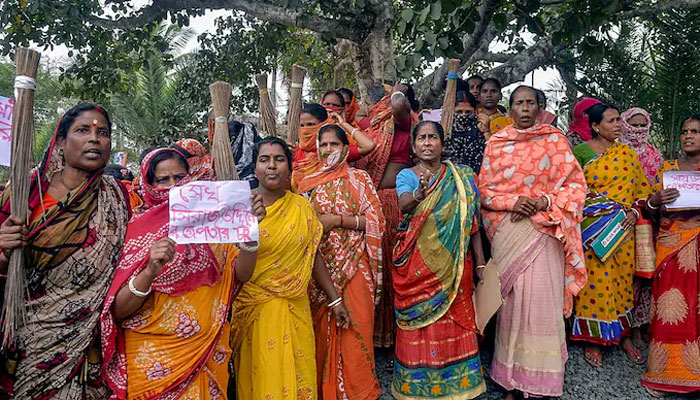
2 women from Sandeshkhali withdraw complaints of rape: With 700 complaints and threats reported in 2021, here are 5 unanswered questions in the case

0

In a recent development, two women in the politically charged region of Sandeshkhali withdrew their complaints of rape against the members of Trinamool Congress (TMC) on 9th May. The development has stirred up a political controversy with TMC targeting the Bharatiya Janata Party (BJP) and social unrest in the state of West Bengal.

A woman and her mother-in-law have withdrawn complaints of rape against TMC leaders. They claimed they were forced to sign blank papers at the behest of National Commission for Women. As two out of three complaints have been withdrawn, it has left unanswered questions in the Sandeshkhali case.

Five unanswered questions in the Sandeshkhali Case

The pressure factor

The first question arises in the matter is, if there was pressure on the victims to retract their statements. If there was pressure, was it political, social or personal? There is an atmosphere of fear and coercion in Sandeshkhali. According to a 2021 report from The Print, women have been gang-raped in the TMC office and police asked one of the victims to compromise. It has been three years since the complaint was made and the question of undue pressure on the victims persists. The intimidation faced by the Hindu victims in West Bengal is unprecedented.

Safety and Security

How safe are the victims in Sandeshkhali? How safe do they feel after coming forward with their complaints especially when the environment in the region is politically charged? The repeated threats and acts of violence were reported by OpIndia in 2021 which highlighted the dangerous conditions under which the victims and their families live in the region.

Role of law enforcement agencies

Is there any evident pattern of influence or intimidation affecting how law enforcement agencies handle these cases? There have been reports of the inaction of West Bengal police and allegations against them of collusion with the ruling party TMC. The criticism of such collusion has been in the media for years but as complaints have been withdrawn, the question arises if the police are under pressure from the ruling party or if could they be working for them. NHRC’s findings pointed towards the compromised state machinery which cannot be ignored in this case. It was noted that the law enforcement agencies of the state were reluctant to safeguard the victim’s rights and ensure justice.

Political dynamics

There have been accusations against the ruling party TMC leaders and now the accusations have been retracted. What does it reveal about the political dynamics of the region at play? Can justice be served without being partial in the matter in such a politically charged atmosphere? The involvement of the political parties in these sensitive cases suggests that their manipulation by the influential individuals might be the reason behind retracting the complaints and it will potentially harm the criminal investigation.

The Unresolved Cases

There are over 700 complaints of violence and intimidation reported in just six days in June 2021. The question arises as to why these cases remained unresolved. The overwhelming numbers of complaints show that there has been a systematic failure of the state agencies as they failed to address and resolve the allegations.

These questions demand answers. Furthermore, there should be a call to reassess the mechanisms of justice in the state of West Bengal. As the complaints have been withdrawn, it has made it even more difficult to resolve the broader issue of violence, intimidation and political interference in such cases.

Understanding the rise of insurgency and violence in Balochistan amid escalation in attacks on outsiders from Pakistan’s Punjab and China in the region

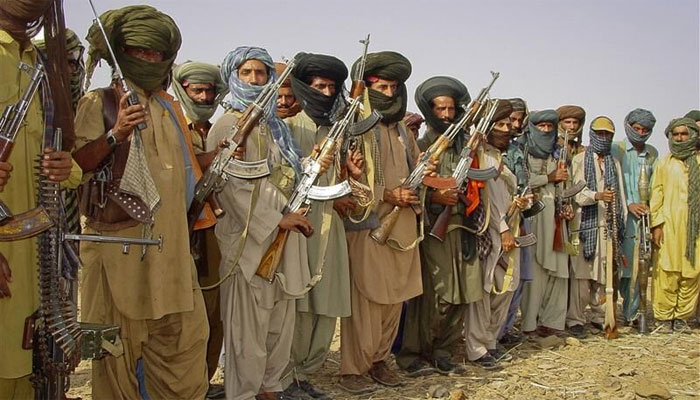
In recent times, Balochistan has witnessed a surge in violence where Baloch separatist groups have specifically targeted outsiders, especially from Pakistan’s Punjab province and China. In the most recent incident, seven labourers from Punjab province were gunned down while asleep in their rooms. Notably, there has been a rise of 96% in violent incidents in the Balochistan region in 2024 compared to the previous year. The incident took place during the wee hours of 9th May at Surbandar in the Gwadar area of Balochistan. Last month, 11 people from Punjab working in Balochistan were killed.

Historically, Balochistan has been a hotspot for separatist activities. The Chief Minister of Balochistan, Mir Sarfaraz Bugti, condemned the attack and termed it as an act of terrorism. In a statement, he vowed not to spare the culprits behind the attack. He said, “We will use all necessary force to deal with the terrorists and those who support them. Every drop of Pakistani bloodshed will be accounted for.”

So far, no group has taken responsibility for the attack. However, it is believed that Baloch Nationalist Groups could be behind it as they have been active in the region.

Background of ethnic tensions

This is not the first time “outsiders” got attacked in the region. There have been several instances where people from Punjab and China were targeted. The main reason behind the attacks has been the perception that those who come from “outside” represent external influence and it would undermine the culture and rights of the locals. If we look at the history of the region, the assassination of Nawab Akbar Bugti in 2006 was the pivotal event that escalated the anti-outsider sentiments among the local insurgents.

In 2019, OpIndia interviewed Dr Allah Nazar Balock, founder and chief of the Balochistan Liberation Front. He said that the people of Baloch had no intention to join the democratic process of Pakistan as they have different cultures, languages, psyches, histories, and compact geography, albeit Pakistan occupied Balochistan by force. He said, “They (Pakistan) have no interest in the welfare of Balochistan and the Baloch nation. They are only interested in our 750-mile-long coast and minerals. So we Baloch have no way other than resistance, to divert the attention of the world towards oppressed Baloch.” Notably, this is one of the main reasons for attacks on Chinese nationals in the region.

The current wave of violence

There has been a spike in the incidents of violence in Balochistan. Data available in the public domain reveals that in 2022, there were 406 fatalities in the region. It increased to 466 in 2023 which was the highest number since 2016. Insurgent groups that are highly active in the region include the Balochistan Liberation Front (BKLF) and the Baloch Liberation Army (BLA). They often justify the violence suggesting it is a way to show resistance against the exploitation of the natural resources and erosion of the culture of Balochistan due to the influx of non-local labour on projects such as the China-Pakistan Economic Corridor (CPEC).

“Nothing is being invested in Balochistan. Punjabi establishment is plundering it with both hands and Baloch resources are booty of war for Pakistan”, Dr Allah Nazar Baloch said in the interview with OpIndia.

CPEC is a multi-billion-dollar road project that is the result of a deal between the governments of Pakistan and China. The idea behind the project is to provide China with a clear path to transport its products from China to ports in Pakistan connecting it to the rest of the world. CPEC is not only facing financial issues but also facing resistance from the locals as the government of Pakistan has failed to convince the locals that the project is beneficiary for them. Furthermore, India has also registered its objection to the project as it passes from Pakistan Occupied Kashmir (PoK).

Specific incidents and claims

The insurgent groups have explicitly targeted those who were suspected of being in collaboration with the Pakistani security forces or being involved in the CPEC projects. Targeted killings of workers from Punjab and attacks on Chinese nationals have underlined the severity and specific nation of the threat. For example, the attack of 13th August 2023 on the convoy carrying Chinese nationals in Gwadar resulted in several casualties of both Chinese nationals and Pakistani security personnel. BLA claimed responsibility for the attack.

Impact on the region

The repeated attacks have destabilised already distressed Balochistan and pose a significant challenge to the economic ambitions of the financially drowned Pakistani government. CPEC was believed to be the cornerstone of Pakistan’s economic future but it has been marred by opposition from Baloch insurgents and violent attacks. Baloch people argue that CPEC is benefitting the outsiders at the expense of the local population.

The role of the Pakistani state

It has to be noted that there has been no stability in Pakistan for years, whether it is economic or political. Amidst such a situation, Pakistan has responded to the Baloch resistance with a mix of military operations and attempts at negotiations. However, due to instability at the centre, the Pakistani government as well as the military has failed to control the violence.

The problem of political instability was also raised by Dr Nazar in the interview with OpIndia. He said, “There is no democracy in Pakistan. The most important thing that compels the Baloch to rebel is oppression and slavery. When I see that my nation is deprived of all aspects of life and ignored in every field, even lacking in a drop of water what else am I supposed to do? Some federalist parties who are puppets of Islamabad, show them as representatives of Baloch but this is not reality. On the other hand, everyone knows that ISI and the Pakistan military are the shadow government in Pakistan. The common Baloch people are supporting the Balochistan Liberation Front and other freedom-seeking organizations.”

Military action on insurgents is also seen as one of the reasons why peace remained elusive in the area. Military raids and blockades have resulted in further grievances and numerous reports of human rights violations. India has also expressed concerns about human rights violations in Balochistan on several occasions.

In September 2016, India raised the human rights violation issue in Balochistan at the United Nations. In a statement, India said, “The people of Balochistan, amongst other provinces, have been waging for decades a bitter and brave struggle against their daily abuse and torture. Religious and sectarian minorities such as Hindus, Christians, Shias, Ahmaddiyas, Ismailis and others continue to face discrimination, persecution and targeted attacks in Pakistan. Places of worship belonging to minorities have been destroyed and vandalized. Blasphemy laws remain in force and are disproportionately used against religious minorities.”

The situation in Balochistan requires a deep understanding and multifaceted approach along with support from the World leaders including India. It is essential to address the legitimate concerns of the people of Balochistan and ensure they get the rightful ownership of the resources. Furthermore, it is essential to respect the cultural and economic rights of the native population. All stakeholders including the Pakistani government and international actors have to get involved to find a resolution for the problems faced by the people of Balochistan due to regional projects.

OpIndia’s interview with Dr Allah Nazar Baloch can be read here.

‘Abhishek Banerjee offered money to make false comments’: Woman seen in Sandeshkhali sting video says it is doctored, points out her audio and video do not match

In the case of a sting video widely shared by Trinamool Congress where some people are seen saying that the rape allegations made by women in Sandeshkhali are bogus, another person seen in the video have said that the video is edited, and she never made the comments heard in the video. Jaba Rani Singha, who had appeared in the video, where she appeared to be said that she signed on the official complaint with ‘false charges’ against TMC leader Sheikh Shahjahan, have now said that the video is doctored, and the charges are not false.

This comes after BJP’s Sandeshkhali mandal president Gangadhar Koyal, who also appeared in the sting video saying the charges were false, claimed that the video is doctored and hi-tech methods were used to edit his audio.

Notably, in the sting video, Jaba Rani Singha’s comments are not lip-synched with the video, what she seemed to be saying does not match her lip movements and facial expressions. This gives credence to her allegation that the video has been doctored.

Talking to Bongo TV, Jaba Rani Singha asserted that she is committed to the movement by the Sandeshkhali woman against the TMC strongman Sheikh Shahjahan and his aides.

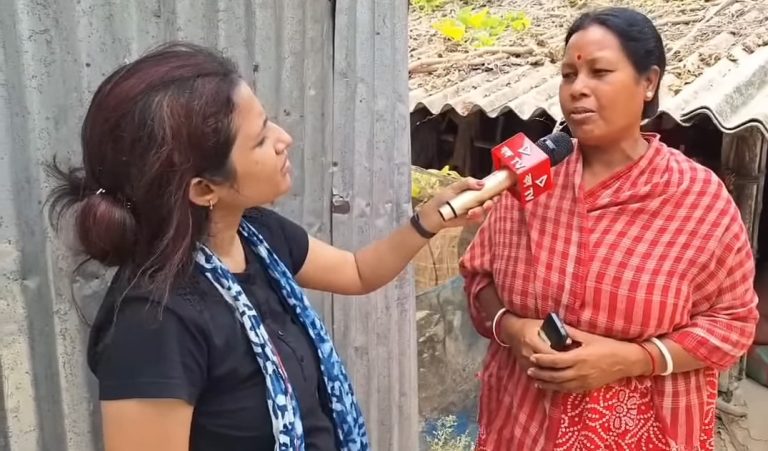
Talking about the video, Jaba Rani Singha said that some people had called to fill up a form saying that she will be paid money against her job card. They had claimed that Suvendu Adhikari sent them.

However later that they threatened her to make comments against the protests, saying her family will be harmed if she does not say what they asked. They also offered to drop a case registered against her, and asked her to quote a price for making the false statements. She added that at last, the two men who were talking to her revealed that TMC leader Abhishek Banerjee sent them, and asked her to demand whatever she want in exchange of saying that the allegations of Sandeshkhali women are false.

However, she refused to make the comments as per their demands. She added that she didn’t know that the conversion was being recorded. Jaba Rani Singha said that she talked to the two men for around 1 hour, but only 2-3 sentences were being repeated in the video. She also said that the conversation took place in the day, while in the sting video it is nighttime.

Jaba Rani Singha said that while it appears in the sting video that she accepted that the allegations are false, her comments were in response to some other queries, and the audio recordings of her responses were misused with some other queries to make the sting video.

Another woman accompanying her noted the video and audio are not in synch in the sting video, Singha’s voice can be heard even while she is saying on video, which proves that it is an edited video.

Trinamool Congress leaders including Mamata Banerjee has been sharing the sting video on social media platforms to claim that the allegations by women in Sandeshkhali are false. The video features Gangadhar Koyal, Jaba Rani Singha and Shanti Dolui, BJP Mandal President. However, now two the three, Gangadhar Koyal and Jaba Rani Singha, have said that their videos are doctored and they never said that the Sandeshkhali charges are false.

Earlier Gangadhar Koyal had said, “The viral video targeting me is part of a conspiracy and collusion. My words have been tampered with. High-tech method has been used to tamper my voice. Me, my party and the women of Sandeshkhali have been targeted to tarnish their image and also tarnish the image of LoP Suvendu Adhikari. This was their conspiracy.” He also demanded CBI inquiry into the matter.

Bareilly: Murdered 14-year-old girl was forcibly converted to Islam, was being stalked for months, Fariyad was threatening her and her brother: Exclusive details of the FIR

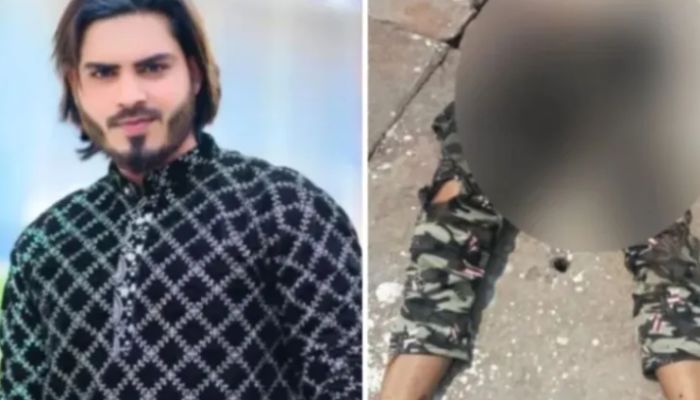
In Bareilly, Uttar Pradesh, a Muslim youth identified as Fariyad raped a Hindu minor after converting her to Islam and then murdered her by throwing her in front of a running train. As a result, the body of the minor was divided into two pieces. A complaint has been lodged against the Muslim accused and he has been arrested.

According to the FIR lodged, the 15-year-old Hindu girl resident of Faridpur was being harassed by a Muslim youth living nearby for the last seven months. Due to this, the Hindu minor was scared. The victim had also informed her parents that accused Fariyad had converted her to Islam forcefully.

The accused, who runs a barber shop in the area, had also been threatening to kill the Hindu minor. He used to threaten to kill her brother as well. The family members of the victim said in the FIR that the minor had left her house on Wednesday (May 8, 2024) for her college studies.

The accused forcefully abducted the Hindu minor on his bike from the road. After this, he raped her and then took her to a nearby railway line and threw her in front of a moving train.

The girl was crushed to death after being hit by a moving train. Her body was chopped into two parts. This incident happened on a river bridge, her body was recovered from a nearby water body. On receiving information about the matter, the family members of the Hindu minor reached the spot and informed the police.

After getting information about the matter, the police arrested the accused. A case has been registered against the complainant under various sections including murder, rape, POCSO, and forced religious conversion. OpIndia has the FIR copy of this case. Bareilly Police is investigating the matter. The family members of the deceased have performed her last rites.

1993 Bombay blast convict Ibrahim Moosa campaigns for Shiv Sena (UBT) candidate Amol Kirtikar, video viral from Mumbai

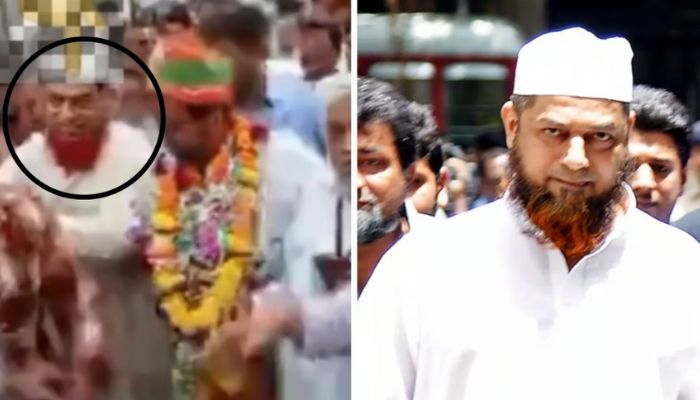
Amid the Lok Sabha elections 2024, Ibrahim Moosa, one of the convicts in the 1993 Bombay bombings, was seen campaigning for Amol Kirtikar, the Maha Vikas Aghadi’s (MVA) candidate for Mumbai North West Lok Sabha constituency, on Wednesday (8th May). A video showing Moosa campaigning for Kiritikar went viral over the internet on Thursday (9th May). 

Moosa had been convicted by the court in the year 2013 for supplying arms to actor Sanjay Dutt and was awarded 10 years of imprisonment under the sections of TADA. He has been released from jail after serving his jail term. However, soon after getting out, he stepped into politics and joined the election campaign of Amol Kirtikar, a member of the Uddhav Thackeray section of Shiv Sena.

Ameet Satam, a Bharatiya Janata Party (BJP) MLA took cognizance of the video and lashed out at Amol Kritikar and the Congress when Moosa was spotted at the latter’s poll campaign in Andheri West on Wednesday evening.

“Yesterday evening in Andheri West, 1993 bomb blasts case accused Baba Moosa was seen campaigning and supporting Mumbai North West MVA candidate Amol Kirtikar on the field. It is now extremely clear that the fight is not just between nationalist forces and tukde tukde gang but a battle between India and Pakistan. Mumbai ke hathyaro ke saath Congress ka haath. Everyone should recognize the torch that wants to burn Mumbaikars,” he said. 

Moosa, also known as Baba Chauhan, was convicted in the 1993 Bombay bomb case. He has been accused of transporting firearms to actor Sanjay Dutt’s home before the serial bombings. According to the prosecution, Moosa, mobster Abu Salem, and others visited Dutt’s house on January 15, 1993, to inform him that the weapons would be delivered the following day.

The weaponry was later removed, except for one AK-47 rifle found in Dutt’s hands, which led to the actor’s conviction. The serial bombs that happened in 1993 killed 257 people and injured over 700.

NDA has fielded Shiv Sena (Eknath Shinde) MLA Ravindra Waikar for the Mumbai North West seat against Amol Kirtikar. This has resulted in a direct election contest between Shinde Sena’s Waikar and Uddhav Sena’s Kirtikar. The Mumbai North West constituency covers Jogeshwari East, Dindoshi, Goregaon, Versova, Andheri East, and Andheri West areas.

Waikar, a senior aide to Shive Sena (UBT) president Uddhav Thackeray, switched sides in March and joined leader Chief Minister Eknath Shinde’s Shiv Sena. He has served as a four-time chairman of the BMC’s Standing Committee and a three-time MLA of the undivided Shiv Sena from Jogeshwari.

Elections in the Mumbai North West constituency are set for May 20. The votes will be counted on June 4, and the results will be announced that same day.

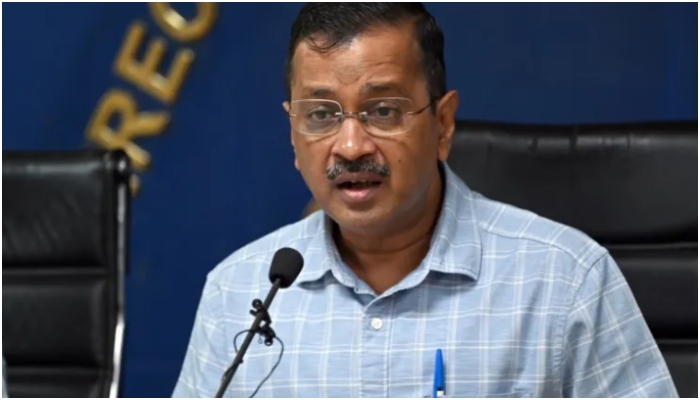
Campaigning in elections not a fundamental right, bail to Kejriwal for electioneering will be discriminatory: Enforcement Directorate to Supreme Court

On Thursday, May 9, Enforcement Directorate filed an affidavit in the Supreme Court opposing interim bail for Delhi CM Arvind Kejriwal. Supreme Court is set to hear the bail plea of Kejriwal on Wednesday, May 10. The Delhi CM is in custody since March 21, after he was arrested in the Delhi Excise Policy Scam.

A day ahead of the bail hearing, ED filed the fresh affidavit in which it emphasised that no political leader has ever been granted interim bail for campaigning even if he is not contesting polls. “The right to campaign for an election is not a fundamental, constitutional or legal right. To ED’s knowledge, no political leader has been granted interim bail for campaigning even though he is not the contesting candidate,” the affidavit read.

Notably, Arvind Kejriwal is trying to use campaigning for the elections as the reason to get interim bail from the Supreme Court. Earlier, the Delhi CM had used same excuse to dodge ED summons when he skipped the summons in the name of campaigning for assembly elections in 5 states late last year.

Saying that granting bail to Arvind Kejriwal will be discriminatory in nature, ED said that no politician could be arrested and kept in judicial custody if they are granted interim bail for poll campaigning.

The ED mentioned in the affidavit, “Around 123 elections have taken place in the past three years and if interim bail is granted for election campaigning then no politician can be arrested and kept in judicial custody since elections take place all year round.”

It also said that Arvind Kejriwal or any other politician cannot cannot claim a special status higher than that of an ordinary citizen in the name of election campaigning as it would be discriminatory.

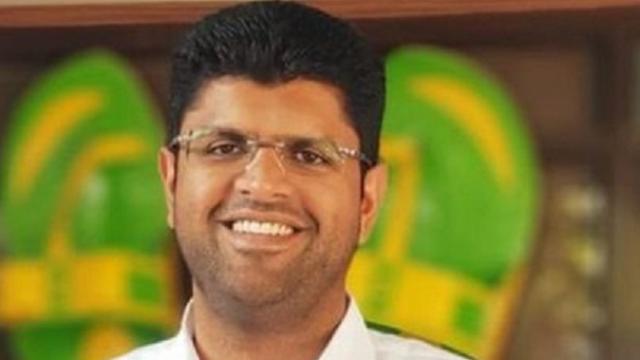
Haryana: JJP supremo Dushyant Chautala renews offer of support to Congress to try and bring down incumbent BJP government

Amid the political crisis in Haryana brought on by the withdrawal of support to the BJP government by three Independent MLAs, former deputy chief minister and Jannayak Janta Party (JJP) supremo, Dushyant Chautala, wrote to Governor Bandaru Dattatreya on Thursday, seeking his urgent intervention in ending the prevailing political deadlock and impose President’s Rule if the incumbent was unable to prove its majority in the Assembly.

In his letter, Dushyant urged the Governor to seek a floor test at the earliest and impose President’s Rule if the government failed to prove its majority in the House.

“Given the developments and the clear stance of the party, i.e., JJP, which does not extend its support to the present government and is open to backing any other political party for government formation, it is evident that the incumbent government no longer commands a majority in the legislative assembly,” Dushyant wrote to the Governor.

Earlier in the day, the JJP chief renewed his offer of ‘outside support’ to the Congress in bringing down the incumbent BJP government, saying that the Governor is vested with the power to order a floor test, adding that if the government doesn’t have the majority, he should enforce President’s Rule in the state without wasting a second’s time.

Speaking to ANI, the former deputy CM said, “The government that was formed two months ago is now in a minority after two MLAs, who supported them–one from the BJP and the other an Independent MLA–resigned. Three Independent MLAs, who were with them, also withdrew support and conveyed the same to the Governor. The JJP has clearly stated that in the event of a No Confidence Motion against this government, we will support it. We have also written to the Governor, clearing our stand. Now, the onus is on the Congress to take this step (seek a floor test). They have to decide if they would do what’s necessary to corner and bring down this government.”

On May 7, the Haryana government suffered a big jolt after three independent MLAs withdrew support from the Nayab Saini government, pushing the dispensation into a minority. The three MLAs were Randhir Golan from Pundri, Dharmpal Gonder from Nilokheri and Sombir Singh Sangwan from Charkhi Dadri. All of them decided to extend support to the Congress.

However, the BJP appeared confident of retaining power, with former chief minister Manhora Lal Khattar claiming that several leaders of the Congress and the JJP were in touch with his party.

The development came amid the Lok Sabha polls and within two months after Nayab Saini took over as CM, replacing Khattar. In the House of 90 members, the BJP has 39 MLAs, the Congress 30, the Jan Nayak Janata Party has 10, the Haryana Lokhit Party (HLP) has one, and the Indian National Lok Dal has one, along with seven Independents.

The BJP, which had 41 MLAs initially, were reduced to 39 after the Karnal and Rania seats fell vacant following the resignation of two MLAs.

Six of the seven Independent MLAs support the incumbent BJP earlier. However, with three Independents withdrawing support, the BJP, at present, has the support of only three Independents and one HLP MLA, taking its strength in the Assembly to 43 MLAs.

All 10 Lok Sabha seats in the state would go to the polls in the penultimate phase, on May 25.

(This news report is published from a syndicated feed. Except for the headline, the content has not been written or edited by OpIndia staff)

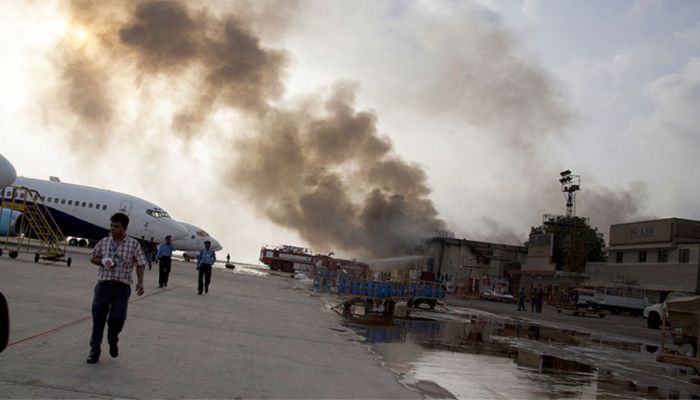
US Embassy issues advisory warning about terror threat at Karachi Port in Pakistan, asks officials to restrict access to concerned areas

On Tuesday (7th May), the US Embassy in Pakistan issued an advisory highlighting a threat of terror attack on Karachi Port in Pakistan. The Embassy asked the US government officials to restrict their access to the airport given the threat of a terrorist attack.

“The US Consulate General Karachi is aware of a threat of a terrorist attack at Karachi Port. In response to such situations, the US Embassy and Consulates sometimes restrict access to certain areas for official US government personnel.  Karachi Port is temporarily restricted for official US government personnel,” the advisory read.

The advisory further asked the officials to avoid crowded places in Pakistan and keep a low profile. “Be aware of your surroundings. Stay alert in locations frequented by tourists/Westerners,” it added.

Earlier, the US Embassy in Russia had also issued an advisory warning about imminent plans by terrorists to attack Moscow in March 2024. This alarm came after Russia’s Federal Security Service (FSB) claimed that a planned synagogue shooting by a group associated with the Islamic State’s Afghan arm (ISIS-Khorasan) had been foiled.

“The Embassy is monitoring reports that extremists have imminent plans to target large gatherings in Moscow, including concerts, and U.S. citizens should be advised to avoid large gatherings over the next 48 hours,” the embassy said issuing an alert to the US officials.

The embassy asked all US citizens living in Russia to leave immediately but did not disclose detailed information regarding the nature of the threat. The caution advised avoiding large gatherings, especially concerts, for the next 48 hours and remaining careful in crowded locations.

The FSB revealed that an ISIS-Khorasan cell working in Russia’s Kaluga region had planned to attack a synagogue with guns. Reportedly, the attack happened on 22nd March at Crocus City Hall in Krasnogorsk near Moscow causing bloodshed. 

Later the Embassy also issued a travel advisory asking US citizens to avoid travelling to Russia given the threat posed by the terror attack.