Home Blog Page 1185

‘Nehru said ‘bye bye’ to Assam during the war with China’: Amit Shah recalls how Nehru govt left the northeast state to its fate in 1962 war

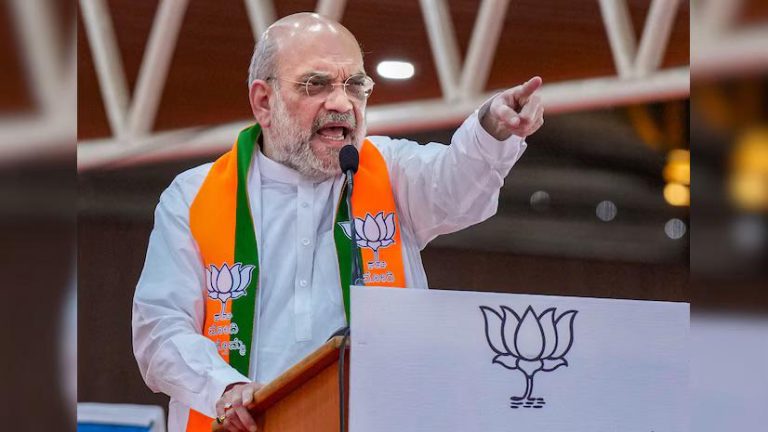
Union Home Minister Amit Shah asserted on Tuesday that China’s ambitions to seize Indian territory under Prime Minister Narendra Modi’s leadership are futile, contrasting this with the alleged negligence of Congress, particularly highlighting former Prime Minister Jawaharlal Nehru’s actions during the 1962 Indo-China conflict.

Speaking at an election rally in Lakhimpur, Assam, near the Arunachal Pradesh border, Shah criticized Nehru’s response to the Chinese invasion, recalling that “bye-bye” was effectively said to Assam at that time. He emphasized the enduring memory of 1962 for the people of Assam and Arunachal Pradesh, noting the historical background when Arunachal was part of Assam as the North-East Frontier Agency, under a different administration. The region later achieved Union Territory status in 1972 and statehood in 1987.

Shah credited Modi for ensuring that China could not encroach upon an inch of Indian soil, citing the example of India’s defence of Doklam for 45 days, which led to a Chinese retreat. He highlighted Modi’s role in restoring peace in the Northeast and fostering its development.

Aiming at Rahul Gandhi and the Congress party, Shah questioned their contributions to Assam, alleging that injustice had been done to the state since the era of Indira Gandhi. He highlighted the BJP’s initiatives, such as signing peace accords resulting in 9,000 youths joining the mainstream by renouncing violence.

Shah further emphasized the BJP’s recognition of Assam’s cultural icons, such as conferring the Bharat Ratna on singer-composer Bhupen Hazarika and honouring Ahom General Lachit Borphukan with a statue for his historical achievements.

The Home Minister also addressed issues of illegal migration and encroachment, accusing the Congress of neglecting Assam’s borders and the Modi government of taking decisive action to secure them. He contrasted the BJP’s fulfilment of promises with the alleged unfulfilled commitments of previous governments, citing the example of the Assam Accord versus the BJP’s timely implementation of the Bodo peace accord.

Highlighting significant financial allocations to Assam under the Modi government, Shah pointed out that Rs 4.15 lakh crore had been allocated in the last decade, compared to Rs 1.62 lakh crore during the preceding UPA government’s tenure. He concluded by asserting that the Modi government had not only transformed Assam but the entire Northeast region.

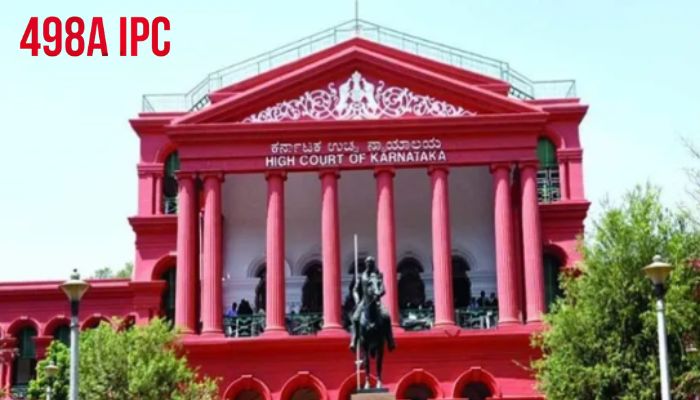
Husband’s relatives are often booked under Section 498A without any evidence: Karnataka HC expresses concerns over misuse of the IPC section

The Karnataka High Court recently remarked that the relatives of the husband are often implicated in cases of cruelty to the wife under Section 498A of the Indian Penal Code (IPC) without any evidence against them. It added that even relatives who don’t stay with the complainant are made accused with omnibus (broad/general) allegations to bring them under the purview of this provision. 

Notably, on multiple occasions, the courts have expressed concern over the misuse of Section 498A (husband or relative of husband of a woman subjecting her to cruelty). Expressing concerns, Justice CM Joshi said the provisions are quite often misused and minor differences between couples have ended up landing before the court. 

The court noted, “It is pertinent to note that the provisions of Section 498 of IPC are quite often misused and minor differences between the couple are being brought to the Court unnecessarily by roping in all the family members of the husband, who are staying elsewhere than the place of stay of the couple. In fact, there would not be any evidence to show that the relatives of the husband had also a role in the alleged dispute between the husband and wife.” 

Justice Joshi added that differences between the couple may be for various reasons but the same are camouflaged for reasons “which really did not happen” so that the case comes within the purview of Section 498A. 

The High Court made these remarks while quashing the FIR and chargesheet against eight relatives of a man who were booked under Section 498A for cruelty to his wife. The court, however, upheld the proceedings against the husband and mother-in-law of the complainant. 

The court examined the complaint of the woman and noted that the allegations were mainly against her husband and mother-in-law. Regarding other accused in the case, the Court stated that the involvement was remote and they were not even residing in Mumbai where the couple lived. 

It added that the involvement of the eight other accused in the alleged harassment meted out to the complainant is not forthcoming either from the FIR or from the investigation papers. Such involvement of eight other accused was only in the form of omnibus allegations against them and specific details of their harassment are not narrated.

Accordingly, the court gave partial relief to the petitioner by quashing the proceedings against all the accused except her husband and mother-in-law. 

It is pertinent to note that the High Court relied on the earlier Supreme Court observation in connection with ‘omnibus allegations’. In simple terms, Omnibus allegations refer to generic or broad allegations that are vague, and lack specifics and details.  

Regarding such allegations, the Supreme Court had observed, “..upon consideration of the relevant circumstances and in the absence of any specific role attributed to the accused-appellants, it would be unjust if the appellants are forced to go through the tribulations of a trial, i.e. general and omnibus allegations cannot manifest in a situation where the relatives of the complainant’s husband are forced to undergo trial.”

Meanwhile, in an unrelated case, the Telangana High Court also held that omnibus allegations under Section 498 A of the Indian Penal Code (Cruelty) do not warrant prosecution.

‘Columnist’ Andy Mukherjee goes on a blocking spree after Indians point out gaping holes in his Bloomberg op-ed claiming South India is ‘rejecting’ Modi

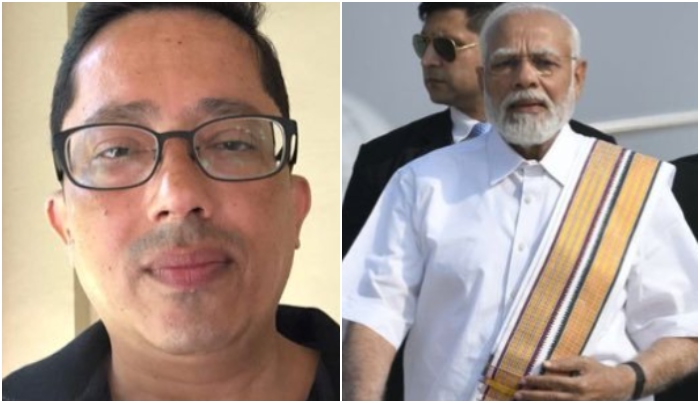
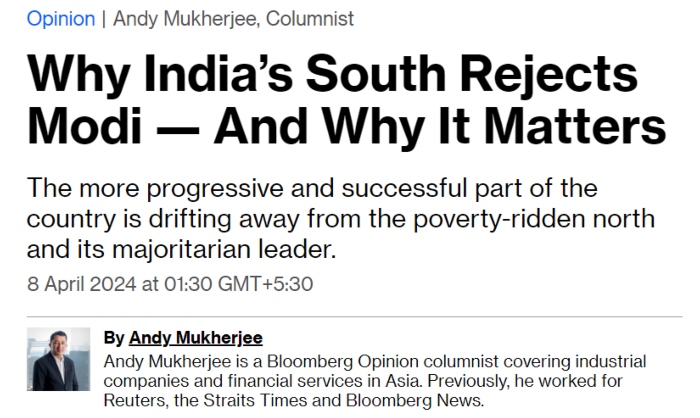
Ahead of the upcoming Lok Sabha elections, Bloomberg ‘columnist’ Andy Mukherjee has written a bizarre opinion piece attracting the eyeballs of several who keep an interest in Indian politics and the Modi-led national government. In an outstretched article published on 8th April 2024, Mukherjee indicated that the southern part of India ‘rejected’ Modi and that they didn’t ‘fall prey’ to his political activities even after he inaugurated Ram Mandir in Ayodhya.

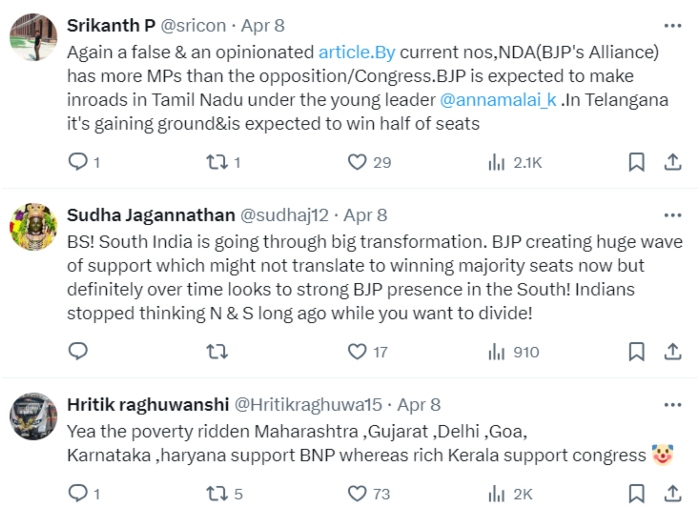
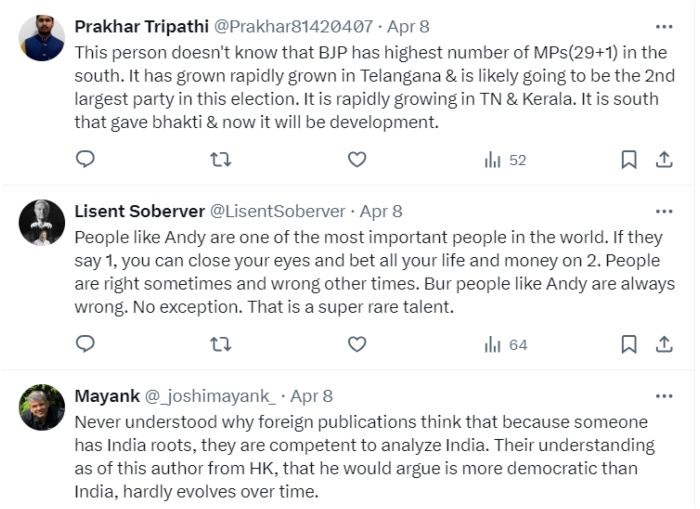
Further, on being questioned about his ‘research’ and ‘political analysis’, he went on to block people on the social media platform. Several X (former Twitter) users posted screenshots of Mukherjee blocking them after they happened to question him about his take on politics related to South India and BJP.

Founder of Garuda Prakashan, Sankrant Sanu lashed out at Mukherjee for making bizarre comments about the ruling party and South Indian politics and said that the ‘columnist’ had very little knowledge about the country and its culture.

“This shows how little he understands India and dharma. When you understand why there is Rameshwaran in the South linked to Ayodhya in the North and Ramanathan, Ramalingam, and Ramakrishnan are all common Southern names you’ll get a clue about India,” he said sharing the screenshot of Mukherjee blocking him.

One of the users from Maharashtra’s Mumbai was also blocked on X after she questioned Mukherjee over the claims he made in Bloomberg. “Andy will make big claims on dying democracy, the North-South divide, Ram Mandir, etc, etc, and simultaneously block people who question his baseless claims. And the West Media just waits for such ‘writers’ to lap up anything against India,” she tweeted posting a picture of Mukherjee blocking her on X.

Several other X (formerly known as Twitter) users shared similar experiences. They said that the leftists loved talking about the so-called ‘death of democracy’ in India and on the other hand blocked people from asking questions or expressing opinions on their ‘political analysis’.

The netizens meanwhile also slammed the ‘columnist’ for writing the opinion without any logical base. The users indicated that Mukherjee was deliberately criticizing the Modi-led government saying that it had no support of the South Indian voters ahead of the Lok Sabha elections 2024. He also indirectly attempted to create a divide between the North Indians and the South Indians and alleging the national political party for its extra focus on the former.

What did Mukherjee write in the Bloomberg opinion?

In the opinion article titled ‘Why India’s South Rejects Modi — And Why It Matters’, published in Bloomberg Business on 8th April, ‘columnist’ Andy Mukherjee stated that South India, the more progressive and successful part of the country was drifting away from the ‘poverty-ridden’ north and its majoritarian leader.

“Ten years of Modi’s polarizing rule have caused a yawning gulf in what voters are getting from their government and what they even want from it. Economic prosperity and social progress, the top concerns in the South, have no place left in the North. Modi didn’t create a vacuum of hope. He just filled the hole in people’s material lives with religious fervour,” wrote Mukherjee.

“It’s a passion that finds its release in tormenting people of non-Hindu faiths, particularly Muslims who account for 14% of the population. Another five years of the same majoritarianism might strain the nation’s federal fabric and jeopardize India’s future as a pluralistic, free-market democracy of 1.4 billion people,” he added.

While commenting about the construction of Ram Mandir, Mukherjee said that the South Indians allegedly have very little interest in Ayodhya’s Ram Mandir as it already has its beautiful temples. “The majority community has come to view a militant assertion of its religious identity as the ultimate civilizational goal. So when Modi inaugurates a Hindu temple, built at the same spot where mobs destroyed a 16th-century mosque in 1992, they see him as a saviour. He has come to restore their wounded pride by avenging the Muslim conquests that later flourished into the Mughal dynasty famous for the Taj Mahal,” he wrote.

“The south, where Islam arrived with sea-borne commerce rather than conquest, can’t understand the fuss over yet another temple, not when it has many grand ones of its own and has spent 100 years asserting marginalized people’s rights of worship,” he added.

He also said that the Modi-led government focussed on targeting Christians and ‘innocent’ Muslims for loving women. “Who’ll bet on a region where politicians promulgate “love jihad” laws to punish young Muslim men for loving Hindu women and vigilante groups attack churches? It’s a simple truth that India’s 80% Hindu population doesn’t need protection from 14% Muslims and 2% Christians. What it needs to be saved from is bad education, poor public health, high unemployment, and crushing poverty,” he opined.

Andy Mukherjee and his anti-India articles

It is crucial to note that Andy Mukherjee has a history of publishing anti-India articles on the global platform. Earlier in March 2022, Andy Mukherjee wrote a column arguing if India can overthrow Visa and Mastercard with its homegrown Rupay payment services. In his opinion piece, Andy asserted that Rupay must have an international approach instead of its current domestic-centric focus. However, while contending so, Mukherjee ironically also denigrated Rupay’s foreign tie-ups with Discover and Japan’s JCB International Co., stating that if the goal is to lower the nation’s reliance on foreign payment services, partnering with overseas companies is not a good solution. 

In another article titled “India Shouldn’t Fall for Putin’s Rupees-for-Rubles Deal”, dated March 31, 2022, Andy Mukherjee made a case against India buying discounted Russian oil in rupees, contending that such a transactional relationship between Moscow and New Delhi could irk the West.

In still another article, Mukherjee advised the Central Bank of India to raise rates more to “regain credibility”. The article that was published on 5 May 2022 said the Reserve Bank of India’s unhurried approach toward inflation has caused damage to the Indian economy, and its decision to hike 40 basis points in benchmark rates will be a hard slog. 

Andy Mukherjee, a doomsayer of sorts who rarely gets it accurate, had also penned an article about the looming wheat crisis in India. The author claimed that India has flip-flopped on its decision to feed the world with its ban on wheat export as it was facing a “chapati crisis” at home. 

Mukherjee advocated Chinese vaccines during COVID

However, the best piece of advice Andy Mukherjee had for the government of India was about importing Chinese coronavirus vaccines. In May 2021, barely four months after India kickstarted its inoculation campaign, Mukherjee authored an article declaring that India’s vaccine strategy had failed.

Amid delays in vaccine production, Andy suggested the government procure Chinese-made vaccines to inoculate its over 1.4 billion population to blunt the impact of the pandemic and foster immunity to fight future variants of the ever-evolving coronavirus.

Thankfully, the Indian government did not heed his advice and ploughed on with its vaccination drive.

Notably, it seems that Mukherjee has always moved to write opinion pieces against India on the global platform demeaning the ground reality in every given case. For instance, in the case of COVID-19 vaccines, Mukherjee gave unasked advice to the Indian government saying that it should import the Chinese vaccines. However, in reality, the vaccine program run by India was praised all over the world. The country also exported several parcels of vaccines to several countries including China ensuring the safety of every possible individual during the COVID spread. As per the reports, India exported 30.1 crore COVID-19 vaccine doses to China.

In the given case also, Mukherjee is choosing to blatantly ignore and block the users from trying to question the logic and basis behind writing such an opinion piece ahead of the Lok Sabha elections 2024 that might create a divide between the North and the South region of the country. This is similar to a trend that Congress and other leftists adopted almost a year ago after it badly lost in three southern states winning just in Telangana.

BJP’s hold on the South Indian states

Prime Minister Narendra Modi paid three visits to South India in January 2024. These visits encompassed the five southern states comprising of Andhra Pradesh, Telangana, Karnataka, Kerala, and Tamil Nadu. He travelled to Kerala and Tamil Nadu thrice in a single month. He also visited Kerala and Tamil Nadu on February 27th and 28th.

The South appears to be a major aspect of the Bharatiya Janata Party’s campaign for the 2019 Lok Sabha election. Despite its big 2019 victory, the BJP only won 29 of the 129 seats in the five southern states. Of the 29 seats, 25 were in Karnataka alone, with the remaining four in Telangana. In Andhra Pradesh, Tamil Nadu, and Kerala, the BJP did not win any seats. The party also has never won a seat in Kerala.

In 2014, the BJP won 21 southern seats, 19 in 2009, 18 in 1999 and 2004, and 20 in 1998. In previous elections, its score in these states has stayed below seven. However, this time, even the minority community people in Kerala think that the BJP is the only party that can free Kerala of corruption and terrorism.

Also, in the case of Tamil Nadu, PM Modi recently said that he wanted to see the state develop. “I go to Tamil Nadu not just for votes. To build a developed India, we need developed states. Tamil Nadu is at the forefront of this,” he said in an interview with ThantiTV.

The Prime Minister’s statement has merit. Tamil Nadu and Kerala play an important role in India’s transition to the developed world. Tamil Nadu is currently India’s second-largest state economy, accounting for 8.8% of total GDP. The state GDP of Tamil Nadu is expected to reach $294 billion in the fiscal year 2023 alone.

Modi has consistently emphasized that he, rather than Nehru or any previous Prime Minister, is the true champion of independent India. He recently stated that he was the first prime minister born in independent India. To realize his economic vision for India, he requires the BJP to be a dominant force in Tamil Nadu and other South Indian states, especially Kerala. 

Lok Sabha Elections 2024

The Lok Sabha Elections 2024 are scheduled for 16th April 2024 and will have seven phases. In Kerala, polling will be held in a single phase on 26th April 2024. The results will be announced on 4th June 2024.


Chandigarh: Woman burnt alive in a park at night, case registered against male friend

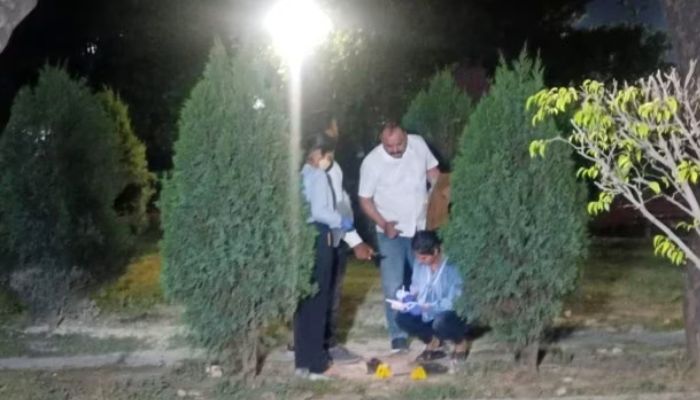
On the night of 8th April, a 27-year-old woman was allegedly burnt alive by her male friend in a park in Sector 35, Chandigarh.  

The victim has been identified as Rani, a resident of Sohana in Mohali. Vishal, her friend, was with her when the incident took place at around 11 PM. The police have registered a case against Vishal at the Sector 36 police station for alleged murder, Indian Express reported.

According to police officials, the woman sustained 80% burns to her arms, legs, and torso. She was taken to the Government Multi Specialty Hospital (GMSH) in Sector 16, where doctors sent her to PGI Chandigarh. The victim died of burn injuries while being treated in the early hours of Tuesday, April 9.

Citing initial investigation, the police said that the victim and suspect were in a relationship. The victim wanted to marry Vishal, however, he was reluctant.

“They went to the park on Monday night, and he allegedly set her on fire. A passer-by who initially heard a commotion and later spotted the woman in flames called the police control room. A duty magistrate recorded the victim’s statement but what she said is yet to be revealed,” a police officer told IE.

The authorities recovered combustible liquid in a bottle, the victim’s burned clothes and slippers, as well as a spray, at the crime scene. Notably, the police have not ruled out the possibility that the victim and her friend were under the influence of alcohol when the incident transpired.

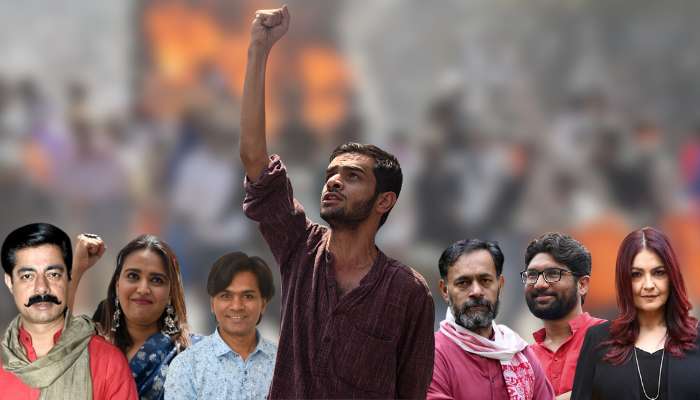
Anti-Hindu Delhi Riots: Umar Khalid was in touch with Swara Bhaskar, Sushant Singh, Alt News, Pooja Bhatt, set false narrative on social media and media, prosecution reads WhatsApp chats

On 9th April, Delhi Karkardooma Court heard the prosecution’s arguments in Umar Khalid‘s bail matter. Umar Khalid is one of the accused in a larger conspiracy case in the anti-Hindu Delhi Riots 2020.

In his arguments, the prosecution cited a previous judgment where the court rejected Khalid’s bail to prove that a surface-level analysis of the evidence in the matter was already done while denying bail. In the judgment, it was said that Khalid is connected with many accused, and all evidence must be seen in totality.

Furthermore, the court noted in the previous judgment, “In a case of conspiracy, it is not necessary that the accused is present at the spot.” It is crucial, as Khalid’s lawyer argued he was not present at the scene when the riots broke out. Furthermore, the court had said, “On perusal of chargesheet and documents, the court had decided that the case against Umar Khalid is prima facie true.”

The prosecution also pointed out that Khalid’s bail plea was rejected by the Delhi High Court. He added that the defence’s argument presented in the court for the ongoing matter in the last hearing was already made in front of the Sessions and High Court, where bail pleas were denied.

In its judgment, the prosecution mentioned that the High Court had said, “We have examined material part of CS. Material available in totality has to be considered while granting or rejecting bail. The name of Umar Khalid finds repeated mention from the beginning of conspiracy till the end of the riots.” The prosecution added that the High Court had “fully agreed” with the Sessions Court’s decision to reject the bail plea and said the accusations appear to be prima facie valid.

Speaking on the defence’s argument that there were discrepancies in the chargesheet, the prosecution said the present case was for bail and not discharge. “It has to be rested at the time of cross-examination. The detailed examination of evidence of the merits of the case is not to be taken at the bail stage, which might negatively affect the trial,” the prosecution added.

Furthermore, the prosecution also discussed the portions of the previous judgment where CDR analysis was discussed. The prosecution said, “The CDR is a matter of evidence, and the veracity can be confirmed only during cross-examination—this is a matter of trial.”

The prosecution made the argument to point out that the Sessions and High Court had previously heard all of the defence arguments in this hearing. The arguments were evaluated, and bail was denied. Notably, the defence had argued that the High Court previously did not do a surface-level analysis of the evidence and hence asked the court to do that and grant bail. Countering his argument, the prosecution said that the study was done, and only after that was the bail denied by The High Court.

Furthermore, the prosecution replied to the allegations laid down by the defence in the argument about the “vicious media trial” against Umar Khalis. The prosecution said that the defence made an application before the court supported by an affidavit and claimed that SC was pleased to “dismiss SLP”.

The prosecution cited the Supreme Court’s order in the Natasha case, where the court specifically said that the judgement wouldn’t be treated as precedent. Here, the prosecution basically noted that the defence was not accurate when the Supreme Court said they were “pleased to dismiss SLP.”

The prosecution said, “The SC has made the embargo in interim direction clear and final.” The prosecution pointed out that parity cannot be sought based on bail for Natasha, Devangana, etc., as the SC said the order won’t be taken as a precedent.

The prosecution said, “3 people have been let out on bail. They have been let out by lifting the embargo. The HC has upheld the bar of 43D5. The courts have done a surface analysis of evidence in Umar Khalid’s case by both courts even before Vernon’s judgement. Therefore, the case remains unaffected by Vernon. Both cases have also said that 43D5 will remain. The others were given bail on an order lifting embargo of 43D5 – but also said it will NOT be treated as precedent. It means “it was not by law”.”

Pointing out the delay in the trial, the prosecution went through the list of adjournments sought by Umar Khalid himself. Out of 14 times, seven adjournments were sought by Khalid in the Supreme Court. The prosecution’s mention of the adjournments sought by Khalid shows that there was essentially a concerted effort to delay the trial so that they could later claim the delay as grounds for demanding bail. This particular point was raised by the prosecution in a hearing in 2023, and the trial said, “People on bail are trying to stall hearings so that those in jail can demand bail on the argument of delay.”

‘Umar Khalid has a habit of creating media and SM narrative’, said the prosecution

During the arguments, the prosecution pointed out that the cellphone data shows he was in the habit of creating media and SM narrative. The prosecution named several celebrities and activists who were in contact with Khalid. Notably, Khalid regularly sent them reports by The Wire, The Quint and other publications to set a narrative on social media and several of them were shared by the said celebrities and activists.

Conversation With Jignesh Mewani

The prosecution mentioned WhatsApp chants between Umar and Jignesh Mevani. He pointed out that Khalid sent Jignesh a link to a report by The Wire and requested that he share it on Twitter.

Conversation with Yogendra Yadav

The prosecution shared a conversation between Yogendra Yadav and Khalid. Yadav confirmed he had tweeted what Umar had asked to.

Conversation with Pooja Bhatt

The same message to propagate “#FreeDrKafeel” was forwarded to Pooja Bhatt.

Umar Khalid in conversation with Sushant Singh and Raghu Karand

Khalid shared an article by The Quint with Karand and Sushant, which Sushant then shared on Twitter.

Messages in the WA group ‘Hum Bharat Ke Log’

In the “Hum Bharat Ke Log” group, he requested to schedule protests after the Supreme Court hearing. He urged the members to issue an official statement on the arrest of “students of Jamia.” He also encouraged everyone to use specific hashtags so the posts could trend on social media.

Conversation With Rasika

In May 2020, he had a conversation with Rasika, and he said he needed help amplifying social media posts.

Umar Khalid in conversation with Sanjukta

Khalid shared a link with Sanjukta and asked her to push a report by The Quint where Zuckerberg called out Kapil Mishra.

Later, In June, Umar asked her to amply Quint’s report, to which she replied that it was already done and shared the link to the post.

Conversation with Swara Bhaskar

In the conversation about Kafeel Khan, Further, Khalid told Swara that Kolkata Park Circus Shaheen Bagh wanted her to join.

Conversation with Onir

He shared The Quint report with Onir, which he shared on Twitter.

Umar Khalid and Alt News’s Archit’s conversation

Khalid also contacted the Alt News team. Alt News asked if they could quote Umar Khalid, but Umar Khalid said he didn’t want to be quoted, so AltNews complied.

The prosecution also mentioned chats with Harjit Singh Bhatti and Shal Mali. Bhatti was assured that Khalid Saifi would be admitted to AIIMS. Furthermore, Anu Chenoy put Shal and Khalid in touch.

The prosecution pointed out how Khalid used the media to circulate his messages. He said, “Umar Khalid wrote the letter to the Delhi commissioner. He gave it to the media. The media published it, and then the articles were circulated internally. This is what is called procuring witnesses.”

The prosecution then played an interview of Khalid’s father with The Wire’s Arfa Sherwani to show how he was lying and creating a narrative. Arfa talks about how Umar is not getting bail and how his father’s petition has been withdrawn from the SC. Arfa asked his father why he didn’t get bail and if he still trusted the judiciary. Ilyas talked about 14 adjournments and how it felt when there were deliberate delays. Earlier, defence refrained from informing the court that Khalid’s father was ex-SIMI member.

Further hearing in the matter will occur on 10 April at 3 PM.

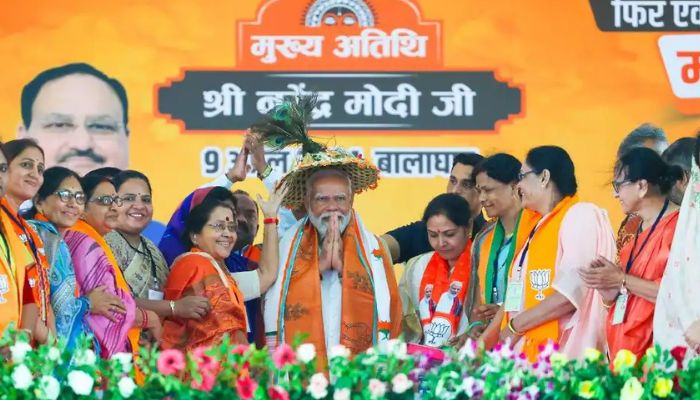
‘Modi bhakt hai Mahakal ka, jhukta hai keval janta ya Mahakal ke saamne’: PM Modi slams I.N.D.I. Alliance for issuing threats to him 

On Tuesday (9th April), Prime Minister Narendra Modi came down heavily on the I.N.D.I. Alliance asserting that those who have come to fill their coffers (scammers/corrupts) should not issue threats to Modi. He added, “Modi jhukta hai to janta Janardan ke samne ya Mahakal ke samne”. (Translation – Modi only bows before the public or before Mahakaal.) 

Addressing a rally in Balaghat, Madhya Pradesh, PM Modi said, “For Modi, my India is my family. Those who have joined politics to fill their coffers, should not give threats to Modi…Modi bhakt hai Mahakal ka. Modi jhukta hai to janta Janardan ke samne ya Mahakal ke saamne.“

PM Modi added that he would not be deterred by I.N.D.I. Alliance’s “Geedar Bhabki” (empty/false threats). 

The Prime Minister further stated, “I am a bhakt of Mahakal. I have learned to bring anti-national forces to Justice. We are not afraid of these Geedar Bhabki. People of the I.N.D.I. Alliance are angry with Modi. For doing the Pran Pratishtha of Ram Lala (in Ayodhya), these people abuse Modi. The I.N.D.I. Alliance has entered the field vowing to end Sanatan Dharma. Hundreds of crores of cash are being received from their parties. Congress people are trying to save corrupt people. I guarantee you that I will retrieve the money of corruption from every locker it has gone into. This work will be done even faster in the next five years.”

Notably, several I.N.D.I. Alliance leaders, including Congress leader Pawan Khera, while claiming a ‘witch hunt’ by central agencies had issued threats that if they “get ED for a week or so”, the incumbent PM and HM, BJP leaders Narendra Modi and Amit Shah respectively, will “line up to join them”.

Meanwhile, during his Balaghat rally, PM Modi urged voters to wipe out the Congress party again from the state. Taking a dig at internal fight in the opposition bloc, he said, “Four-five months ago, you came together to completely wipe out Congress in the (Madhya Pradesh) Assembly polls. Now in the Lok Sabha polls, they are not fighting with the BJP, they (referring to I.N.D.I.A. bloc) are fighting amongst each other.” 

Taking a swipe at the Congress party’s functioning style, PM Modi stated, “Congress still cannot get rid of its old mentality. When the first Adivasi woman came forward to become the President of the country, the Congress party left no stone unturned to defeat her.”

Highlighting the importance of upcoming elections for Viksit Bharat, the Prime Minister asserted, “The 2024 Lok Sabha elections are a crucial election of the India of 21st century. This is not just an election…It is a mission of construction of new India.”

PM Modi also highlighted a slew of achievements of his government in the last ten years adding that it was just a trailer. Using the analogy of ‘Phuljari’ and rockets (crackers for Diwali), he explained that the development works undertaken during the ten years of the Modi government were for laying the groundwork for a developed India.

Prime Minister Modi also emphasised that there is a notable change in India’s global standing. He highlighted that while the Congress government used to seek international aid for its issues in the past, now the tables have turned. He noted that many nations, even those in conflict with each other, now reach out to India to address their worries. This acknowledgment elevates the spirits of every Indian, he remarked.

‘Not going to get in the middle of this’: US steers clear, refuses to comment on Pakistan’s claims about India getting terrorists assassinated

On Monday (8th April), the United States said that it “will not get into the middle of the situation” following allegations by Pakistan on India and has urged both countries to avoid escalation of tensions and resolve differences via dialogue.

The response by US Department of State spokesperson Matthew Miller came after he was asked about Washington’s stance on a recent UK media report citing Pakistani officials alleging that India carried killings of individuals associated with terrorism and extremism on Pakistani soil.

Indian officials have termed the allegations as “false and malicious anti-India propaganda.”

“We have been following the media reports about this issue. We don’t have any comment on the underlying allegations, but of course, while we’re not going to get in the middle of this situation, we encourage both sides to avoid escalation and find a resolution through dialogue,” Matthew Miller said during a press briefing.

Miller said this when he was asked about the US response to the recent report in The Guardian newspaper.

Earlier, in January too, Pakistan’s attempts to link India with the deaths of two Pakistani nationals were dismissed by the Ministry of External Affairs with official spokesperson Randhir Jaiswal terming it as “peddling false and malicious anti-India propaganda”.

Jaiswal had said, “We have seen media reports regarding certain remarks by Pakistan Foreign Secretary. It is Pakistan’s latest attempt at peddling false and malicious anti-India propaganda. As the world knows, Pakistan has long been the epicentre of terrorism, organised crime, and illegal transnational activities.”

“India and many other countries have publicly warned Pakistan, cautioning that it would be consumed by its own culture of terror and violence. Pakistan will reap what it sows. To blame others for its own misdeeds can neither be a justification nor a solution,” he added.

Jaiswal made the remarks after Pakistan Foreign Secretary Muhammad Syrus Sajjad Qazi claimed Islamabad had “credible evidence” of links between Indian agents and the assassination of two Pakistani nationals in Sialkot and Rawalkot–Shahid Latif and Muhammad Riaz.

As OpIndia reported earlier, in the past few months, unknown gunmen have been making headlines for selectively targeting terrorists on foreign soil, from Pakistan to Canada. So far, around 21 terrorists have been killed on foreign soil by these unknown men, of which, the maximum were eliminated in Pakistan.

Among the targets eliminated by unknown men were Lashkar-e-Taiba (LeT) terrorists like Riyaz Ahmed, Mufti Qaiser Farooq, Khwaja Shahid alias Mia Mujahid, Akram Khan Ghazi, Mohammed Muzammil, Sajid Mir, Hanzala Adnan, LeT chief Hafiz Saeed’s son Ibrahim Kamaluddin.

In addition to LeT terrorists, the unknown men have killed many Jaish-e-Mohammad (JeM) terrorists including the 2016 Pathankot attack’s mastermind Shahid Latif. Alongside LeT and JeM, the unidentified assailants have also eliminated some terrorists belonging to another Pakistan-based terrorist outfit ‘Al-Badr’. A detailed list published by OpIndia of terrorists killed by unknown men in recent months can be checked here.

Notably, British propaganda newspaper The Guardian had recently published a contentious article titled ‘Indian government ordered killings in Pakistan, intelligence officials claim.’ Relying on anonymous sources, the article attempted to demonise PM Modi as a facilitator of ‘extra-territorial killings.’

Based on claims by its Pakistani sources, The Guardian accused the Modi government of neutralising a whopping 20 terrorists on Pakistani soil through its ‘sleeper cells’ in the United Arab Emirates (UAE).

The British newspaper alleged that India began this policy of killing terrorists on foreign soil following the deadly Pulwama terror attack of 2019, which claimed the lives of 40 Indian jawans. This propaganda piece with numerous factual errors was dismissed by the Indian Ministry of Foreign Affairs as “false and malicious anti-India propaganda.”

(With inputs from ANI)

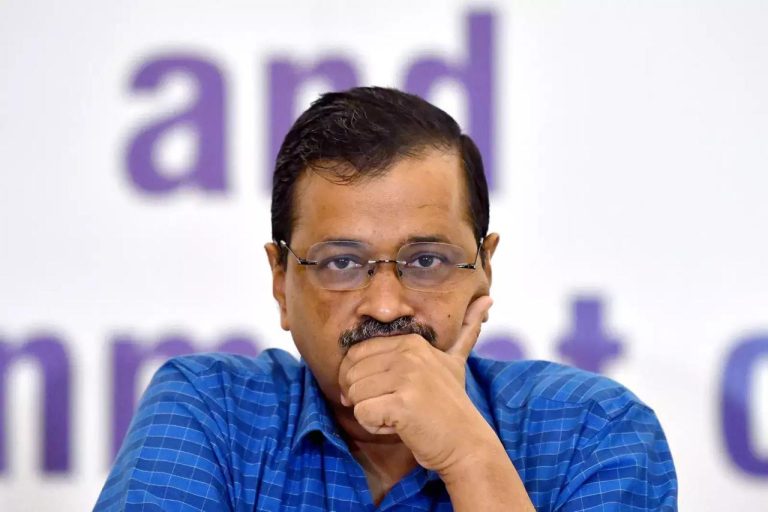
Delhi HC dismisses Kejriwal’s plea against his arrest by ED in liquor policy case, asserts that ED’evidence shows his involvement

The Delhi High Court on Tuesday came down hard on Chief Minister Arvind Kejriwal in connection with a plea challenging his arrest by the Enforcement Directorate in the Liquor Policy scam.

Making grave observations against the involvement of CM Kejriwal, the Delhi HC said the evidence shows he conspired and was actively involved in the use and proceeds of the crime.

“The evidence gathered by the ED indicates that Mr Arvind Kejriwal conspired and played an active role in the utilization and concealment of proceeds of crime. The ED’s case also suggests his involvement both in a personal capacity and as the convenor of AAP.”

The Delhi HC also dismissed the defendant’s aspersions over the statements of the approver considered in the case. The court noted, “The law of approver is over 100 years old and not one year old. it cannot be suggested that it was enacted to implicate the present petitioner (Kejriwal), says Delhi HC it reads out the verdict.”

“The investigating agency in criminal jurisprudence cannot be instructed to conduct an investigation based on the convenience of an individual. The investigation will proceed according to its own course,” the court said in the plea filed by Kejriwal.

The court said it won’t lay down different categories of laws, one for common citizens and another for granting special privileges to a Chief Minister.

Kejriwal’s plea against his arrest by ED was dismissed by the Delhi HC. The Delhi CM is currently in the Tihar Jail in the liquor policy case under judicial custody.

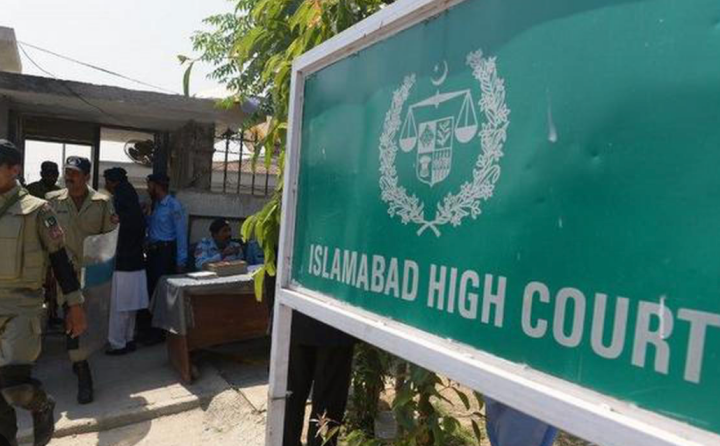
Threats to judicial autonomy in Pakistan: Judges accuse ISI of undue interference, indicating a dangerous mix of politics and military in judiciary

The recent tumult within Pakistan’s judicial system, exemplified by the courageous stand taken by judges from the Islamabad High Court, casts a sombre light on the diminishing independence of the judiciary. Their letter addressed to the Supreme Court, accusing the Inter-Services Intelligence (ISI) of undue interference, underscores a distressing reality concerning the nation’s democratic integrity. 

Adding fuel to the fire, the discovery of threatening letters containing anthrax, was sent to Chief Justice of Pakistan along with few of judges who dared to challenge the status quo. These incidents not only endanger individual lives but also pose a grave threat to the fundamental tenets of democracy and the rule of law. At the heart of the matter lies the alleged politicization of judicial affairs, skewing the balance of justice in favour of vested interests. Such manipulation undermines the principle of impartiality, corroding the very essence of a fair and just legal system.

The prevailing sentiment suggests that the recent endeavours may be rendered fruitless, given the historical context. During the PTI administration in 2018, the dismissal of Justice Shaukat Aziz Siddiqui was later acknowledged as ‘wrongful’ by the Supreme Judicial Council in March 2024. Justice Shaukat Aziz Siddiqui himself publicly accused operatives of the ISI, led by Major General Faiz Hameed, of influencing the constitution of benches at the Islamabad High Court and meddling with the proceedings of the accountability court in Islamabad. If these allegations hold true, it raises serious questions about the impartiality of verdicts issued by the National Accountability Bureau (NAB) and the Islamabad High Court (IHC), particularly those concerning former Prime Minister Imran Khan, potentially impacting his eligibility to contest in general elections.

These developments are perceived as repercussions of the events that unfolded on May 9th and previous controversies involving the Prime Minister and the Pakistan Army. Similar conspiracies have been witnessed in Pakistan’s past, indicating a recurrent pattern of interference and manipulation within the judicial system. This dangerous precedent jeopardizes the foundation of democracy itself.

The complicity of the establishment in these events cannot be ignored. Instead of safeguarding democratic institutions, it appears to be aiding in the erosion of judicial autonomy since independence, paving the way for what can be described as authoritarian regime. This facade of democracy masks a systematic weakening of its core principles. In essence, the current scenario paints a grim picture of democracy in Pakistan. The autonomy of the judiciary, a cornerstone of any democratic society, hangs in the balance. All stakeholders must unite in confronting this challenge and reaffirming their commitment to democratic values and the rule of law.

Nevertheless, it is crucial to delve deeper into the ramifications of these developments. Interference in judicial matters not only compromises the independence of the judiciary but also undermines public trust in the institution. When the judiciary is perceived as a pawn in political games, its legitimacy is called into question.

Furthermore, the intimidation tactics deployed against the judiciary through threatening letters are an outright assault on judicial freedom and safety. Such actions foster an environment of fear and coercion, potentially hindering the judiciary’s ability to fulfil its duties without bias or influence.

The complicit role of the establishment raises serious concerns about its commitment to democracy and accountability. Instead of upholding democratic principles, it appears to be compounding the challenges faced by the judiciary, further eroding the foundations of democracy.

The emergence of a hybrid regime threatens to subvert the very essence of democracy, undermining its core values of equality, freedom, and justice. This trend necessitates a collective effort to safeguard democracy from within, lest it be dismantled by the very forces meant to protect it.

In conclusion, the current state of affairs within Pakistan’s judiciary serves as a stark reminder of democracy’s fragility. It underscores the urgent need to preserve and fortify judicial independence. It is incumbent upon all stakeholders to heed this warning and work towards restoring the principles of democracy and the rule of law. The future of the nation hinges on it.

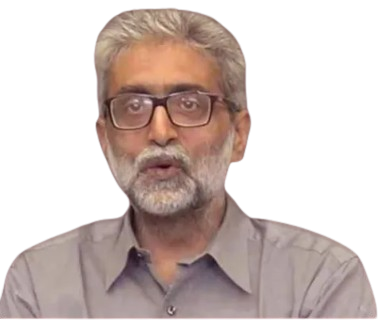
You can’t escape your liability: Supreme Court asks Bhima Koregaon violene accused ‘Urban Naxal’ Gautam Navlakha to pay Rs 1.64 crores spent on his security cover

On Tuesday (9th April), the Supreme Court slammed the Bhima Koregaon case accused Gautam Navlakha, directing him to pay the dues for the security cover given to him during his house arrest. Notably, during the last hearing while opposing his bail plea, the National Investigation Agency (NIA) had submitted before the bench that the Urban Naxal, Navlakha owed Rs 1.64 crore as expenses for the security provided to him during his house arrest.

The bench comprising Justices MM Sundresh and SVN Bhatti hearing the matter had been apprised that the plea for house arrest was made by Navlakha on grounds of health issues. 

During the hearing, the bench remarked, “If you have asked for it (house arrest), you have to pay (the costs for security cover). You cannot escape your liability.”

Advocate Shadan Farasat (representing Navlakha) contested the calculation claiming that they have no issues paying up for the security cover. Retorting to it, Additional Solicitor General SV Raju rubbished it as an ‘excuse’ arguing that they were trying to avoid payment. He remarked, “Every time they say this. I want to see the currency paper (payment), not your (Navalkha’s counsel) file.”

Following the arguments, the bench asked Navlakha’s counsel to submit their objections (about calculations). Subsequently, the court listed the matter for 23rd April when it would hear the issue and decide on his pleas. 

During the last hearing, ASG Raju informed the bench that Navlakha, arrested in the Elgar Parishad-Maoist links case, had only paid ₹ 10 lakh till now as part of expenses incurred for round-the-clock security.

Appearing for the accused Navlakha, Senior advocate Nitya Ramakrishnan had disputed the figure of Rs 1.64 crore. She alleged that the agency’s calculation of the payable amount was wrong and went on to accuse the agency of “extortion”.

Ramakrishnan claimed, “They cannot demand one crore from citizens for keeping them in custody.”

Responding to her argument, the ASG replied that citizens are not entitled to house arrest and strongly objected to the use of the term “extortion”.

The developments in the Gautam Navlakha case

The case relates to the inflammatory speeches made at the Elgar Parishad conclave held in Pune on 31st December 2017. A day after the inflammatory speeches, violence erupted near the Koregaon-Bhima war memorial on the outskirts of the western Maharashtra city. According to the Police, the speeches had triggered the violence. 

Gautam Navlakha, having Maoist links, was arrested by Pune police from Delhi on August 28, 2018, in connection with the Bhima-Koregaon – Elgar Parishad case. Initially, he was kept under house arrest. However, following a Supreme Court order, he was sent to judicial custody in Taloja Central Prison in April 2020.

The Urban Naxal Navlakha has been under house arrest at a public library in Mumbai since November 2022. On 10th November 2022, the SC granted ‘house arrest’ of Gautam Navlakha on ‘medical grounds’ despite vehement opposition by the probing agency. 

Later, on 19th December 2023, the Bombay High Court granted him bail. In its order, the division bench comprising Justices AS Gadkari and SG Dige noted that Navlakha merely intended to commit the terrorist act and did not attempt the same. However, the court stayed its order accepting NIA’s request to file an appeal before the Supreme Court. 

The NIA had opposed his bail application, submitting that he had been introduced to a General from Pakistan’s Inter-Services Intelligence (ISI) for recruitment, indicating his connection with the organisation.

Meanwhile, in these hearings, the Supreme Court has been extending this stay on HC’s order granting bail to the Urban Naxal, Gautam Navlakha.

Evidently, while concluding today’s hearing, Justice MM Sundresh remarked, “We will extend the interim stay on bail also till then (23rd April, next date of hearing). Navlakha’s regular bail plea is accordingly adjourned.”