Home Blog Page 1186

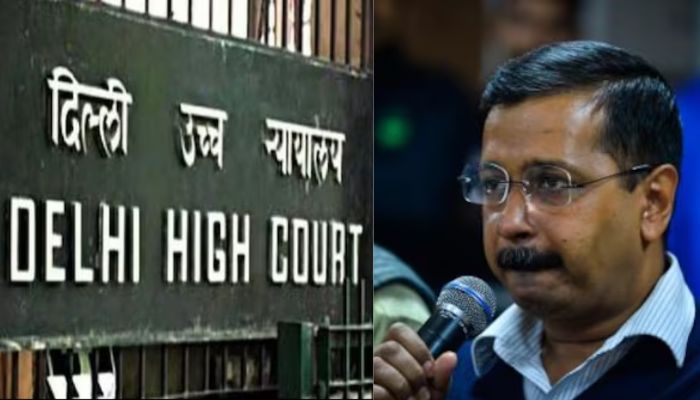
Tihar jail is getting overcrowded because of this: Delhi High Court slams AAP government’s education department over ‘sad state of affairs’ in govt schools

On Monday (8th April), the Delhi High Court came down heavily on the Delhi government’s Education Department over the lack of basic facilities like textbooks, notebooks, furniture, and the shortage of classrooms in Aam Aadmi Party government-run schools in Delhi. Reprimanding the CM Arvind Kejriwal-led AAP government for its negligence, the court said that the Delhi government is responsible for jails like Tihar getting overcrowded since schools are not functioning properly.

A division bench of Acting Chief Justice Manmohan and Justice Manmeet Pritam Singh Arora took cognisance of a report submitted by advocate Ashok Agarwal representing petitioner NGO ‘Social Jurist, A Civil Rights Group’, which had been asked by the court to visit the district’s schools in the previous hearing.

The schools in question are GGSSS Khajoori Khas, GGSSS East Gokal Pur, SKV C-1 Yamuna Vihar, SKV Khajoori Khas, GGSSS Sonia Vihar, newly constructed SKV Sriram Colony Khajoori Khas, GGSSS Bhajanpura, GGSSS Dayalpur, GGSSS Sabhapur and SKV Khader Badarpur.

“You are the secretary. You should have known all this. Why do I have to call you? You should be going on ground level on your own. That is your job… Your job is affecting lives of young children. They are in charge of education. You are not supposed to just publish announcements in newspapers that schools are hunky dory. There are 144 children in one classroom… This is very sad state of affairs,” the bench said.

“Problem is no senior functionary’s child is studying in these schools, therefore, you don’t get any feedback… No wonder Delhi jails are full. The capacity of Tihar is 10,000, but it has 23,000 inmates. This is because schools are not functioning. Do you understand the correlation?” the bench added.

Agarwal said that one of the district’s schools GGSSS Bhajanpura was run in a tin building. Here, around 1800 girls and 1800 boys study in morning and evening shifts respectively. Moreover, in SKV C-1 Block Yamuna Vihar, Agarwal said that two sections are often merged in a single classroom due to a serious shortage of classrooms. This is a double shift school where around 5000 to 6000 girl students study in the morning shift and a similar number of boys in the afternoon shift.

The court stated that the authorities’ “lack of planning” resulted in “apathy” among the students for school, and that accountability must be fixed for the officials. It further questioned how children were supposed to study in a tin building during the summer heat.

The bench also stated verbally that broken furniture in school classrooms should be repaired and maintained on a regular basis, as it was not broken “yesterday”. According to the report submitted by Ashok Agarwal, due to a lack of classrooms, children from two sections have to sit together in the same classroom, where one section is taught one subject by a teacher and the other section is taught a completely different subject by another teacher.

The bench, then asked the senior official, “Did you take any action against your officers? You have to take action against your junior officers. Why aren’t they telling you what is happening at the ground level? We should not have to call you to court and tell you, you must know. Now you are confirming the facts in the report.”

The court directed the Secretary (Education) to file a detailed affidavit within a week and listed the matter for 23rd April.

“The Secretary (Education) assures and undertakes to the court that he will take steps to drastically improve the situation in a time-bound manner. He assures this court that there is no shortage of funds. He states that books, furniture, and writing materials shall be provided to all the students. Let a detailed affidavit be filed by the Secretary to the report. The secretary shall also fix the responsibility on the officials who have been remiss in performing their duties,” the bench said in its order.
Indian student Mohammed Abdul Arfath found dead in the US under mysterious circumstances. Here are the 10 other cases from 2024 alone

An Indian student who has been missing since March this year has been found dead in the US state of Ohio, the Consulate General of India in New York said on Tuesday.

The Consulate said it is “anguished” to learn about the death of Mohammed Abdul Arfath and is in touch with local authorities to ensure a thorough investigation into his death.

“Anguished to learn that Mr. Mohammed Abdul Arfath, for whom search operation was underway, was found dead in Cleveland, Ohio. Our deepest condolences to Mr Mohammed Arfath’s family, the Consulate General of India in New York said in a post on X.

It said that all possible assistance is being extended to the bereaved family to transport his mortal remains to India.

Arafat, a native of Hyderabad, went to the US for his Master’s degree in IT from Cleveland University in May 2023 but was missing since March 7 this year.

His father, Mohd Saleem, said that after ten days, they received a phone call from an unidentified person who claimed Arafat had been kidnapped and demanded a USD 1200 ransom for his release.

On March 21, the Consulate General of India in New York said they are in touch with Arfath’s family and authorities in the US to find him.

“@IndiainNewYork is in touch with Mr. Mohammad Abdul Arfath’s family and authorities in the US. We are working with local law enforcement agencies to find him at the earliest,” the Consulate General of India in New York posted on X.

It had made the statement on X in response to a post that mentioned that a 25-year-old Hyderabad student had gone missing and his father received a call to pay a ransom of USD 1200. Recently the Indian community has seen a rise in such tragedies.

Mysterious death of Indians in US

Earlier on 5th April, it was reported that an Indian student named Uma Satya Sai Gadde died in the US state of Ohio. The cause of death remains unknown.

A 23-year-old engineering student at Boston University, Paruchuri Abhijit, was found dead in an abandoned car on 11th March this year. He hailed from the Burripalem in Guntur district of Andhra Pradesh. Abhijit is believed to have been murdered by unidentified assailants.

On 27th February, Indian dancer Amarnath Ghosh was murdered by unidentified men while he was out in the St Louis Academy neighbourhood.

On 2nd February, a 41-year-old Indian-origin man named Vivek Taneja succumbed to his injuries after being grievously assaulted by an unidentified man in downtown Washington in the United States.

A day earlier, Shreyas Reddy Beningeri, who had been pursuing a graduate degree from Lindner School of Business, died in Ohio.

One Neel Acharya, an Indian student pursuing a double master’s at the Purdue University in Indiana, went missing on 31st January. Later, his dead body was recovered by the police.

Earlier on 20th January, Akul Dhawan, an 18-year-old Indian-American student, was found dead near the University of Illinois. He reportedly froze to death after being denied entry into a nightclub.

Another Indian student Vivek Saini was brutally killed with repeated blows from a hammer by a homeless man inside a store in Lithonia, Georgia, US on January 16th this year.

Two students named Nikesh and Gattu Dinesh were found dead in their room in Connecticut in the United States on 14th January 2024. They were students of the Sacred Heart University and believed to have died due to ‘carbon monoxide poisoning’.

Besides the 11 cases of mysterious death, an Indian student named Sameer Kamath committed suicide on 5th February while another student named Venkataramana Pittala died in a jet-ski accident.

(With inputs from ANI)

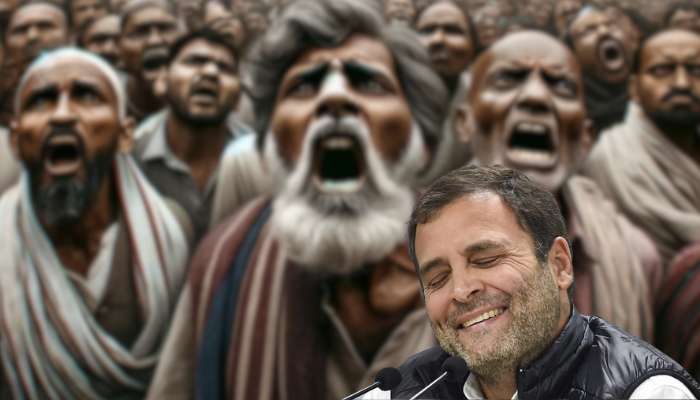
Wealth redistribution: Rahul Gandhi wants to make India the lab rat for an idea that has already failed all over the world

On 6th April, Congress leader and I.N.D.I. Alliance’s possible PM Face for Lok Sabha Elections 2024, Rahul Gandhi, promised an ultra-left idea of ‘wealth redistribution’. He claims that it would eradicate poverty and socioeconomic inequality. Gandhi said if Congress (with the alliance parties) came to power, his party would conduct a financial and institutional survey to ascertain who has wealth in the country. He said the grand old party would then distribute the wealth to the backward castes and ‘minorities’ based on their population, based on caste census data.

No matter how ridiculous it sounds, the idea is not a new recipe for economic disaster. It has been talked about in India several times, like during the COVID pandemic; Yogendra Yadav had suggested it under the action plan “Mission Jai Hind”.

The concept of wealth redistribution is associated with communist and socialist ideologies. Over the past, it has been implemented in various forms, and most of the time, it resulted in massive disaster. Initially, it may look good, but in the long run, it kills the economy and puts the country in such a vulnerable position that coming back from it seems almost impossible.

Those who support the idea claim wealth redistribution addresses economic inequality and promotes social justice. However, all over the world, policies aiming at wealth redistribution have failed to deliver the promised outcomes.

The Soviet Union Collapse

The most infamous examples of failed wealth redistribution occurred in the Soviet Union after the Bolshevik Revolution in 1917. The Soviet government introduced several radical economic policies to redistribute wealth and resources. The government took over private properties and nationalised them. The industries were brought under the state’s control.

In no time, the policies led to widespread inefficiencies, shortages and economic stagnation. Those who claim that a specific set of businesses houses accumulated wealth while the other side of the world is poor forget or conveniently skip to point out that a business is successful because of a lot of reasons. It is not successful only because of policies.

The economy under the Soviet Union struggled to innovate. They were not able to adapt to the market conditions. As a result, consumer goods were scarce. The standard of living declined rapidly, and ultimately, in 1991, the union collapsed. It has to be noted that not everyone is skilled to run businesses, especially when resources are ‘distributed’ without the necessary skills or desire to take good business decisions.

The Mao disaster in China

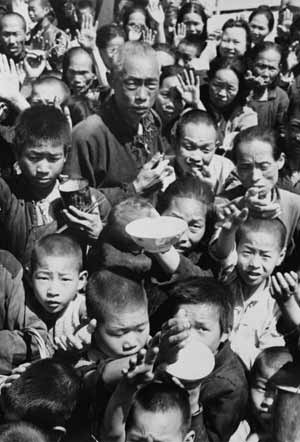
Another example of failed wealth redistribution came under Mao Zedong’s Great Leap Forward and Cultural Revolution. His policies were framed to collectivise agriculture and industrialise the economy via centralised planning. However, the policies became a massive disaster, resulting in widespread famine, economic chaos and social upheaval. Millions lost their lives from starvation, and China faced a severe economic setback. Only after Mao died did Deng Xiaoping bring economic reforms and economic growth and development back on track.

China famine. Source: Alpha History

The untimely ‘demise’ of Venezuela’s wealth bubble

Latin American countries like Venezuela tried wealth redistribution in the West and failed miserably. Hugo Chavez and his successor, Nicolas Maduro, brought socialist policies to redistribute wealth and nationalise key industries. However, the corruption, mismanagement and collapse of oil prices led to severe economic crisis. The currency value dipped to a level of no return. Venezuela faced hyperinflation, a shortage of essential goods and widespread poverty, leading to the mass migration of millions of people who fled the country for a better life abroad.

Source: The Kootniti

The Zimbabwean Catastrophe

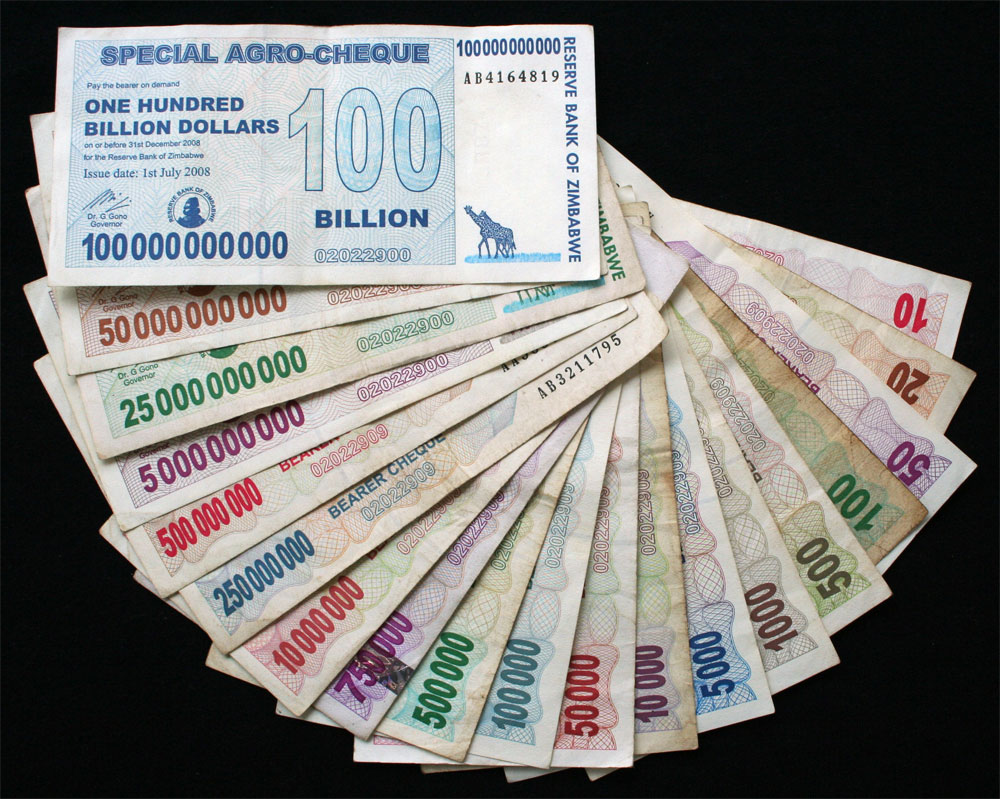
Another example can be seen in Zimbabwe under the leadership of Robert Mugabe. His policies were aimed at redistributing land from white farmers and giving it to the black Zimbabweans. However, how the program was initiated led to violence and economic instability. The agricultural productivity of the country collapsed. Zimbabwe was once known for supplying food grains to the whole of Africa. However, Mugabe’s policies led to food shortages and economic decline.

Source: Wiki

No matter which example you pick from history, it did worse for the country where such policies were implemented. The failure of redistribution policies is attributed to a combination of factors, which may include irresponsible centralised planning, lack of incentives for innovation and productivity, widespread corruption and political repression.

Not everyone can manage wealth

What is the idea behind wealth redistribution, anyway? To allow the marginalised to have their businesses? Or give funds to those who never saw enough cash to buy a refrigerator? There is no need to take money from those who have it and distribute it among the marginalised. At every level, there are government schemes that can help them.

On the other hand, there are several examples in India where one businessman failed, but the other succeeded using his vision and skills. Not everyone can be a successful businessman, knows how to manage money, and can be a skilled or unskilled worker.

Some societies function at their own personal level, and disturbing them will lead to economic disaster. For example, if someone does not know how to promote a business but gets unconditional money for the same, he or she may, without putting a mind to it, spend it on ads with zero leads in return. On the other hand, a skilled entrepreneur may use social media platforms to promote his or her business at almost zero cost. The same goes for every sector and every aspect of society when it comes to wealth.

Take the example of the Ambani brothers. When the businesses were divided, what Anil Ambani got looked more promising. However, over time, some bad business decisions put him in a tight position, and he has almost disappeared from the business world. On the other hand, his elder brother Mukesh Ambani is doing exceptionally well and has increased his worth by several folds. It is not that Anil lacked leadership skills, but there must have been some bad decisions that he made over time, leading to the economic collapse of his companies.

When we talk about wealth and resource redistribution, it will take away wealth and resources from the experts and give to those who do not even know how to run a sustainable business. Not everyone can run a factory, and not everyone should do it either.

History teaches us to repel wealth distribution

History shows that the idea of wealth redistribution must be repelled. It is a failed idea that stemmed from extreme Communist ideology. Karl Marx, in his Communist Manifesto, said that wealth should be distributed according to the precepts, “From each according to his ability, to each according to his need.” While the Communists worshipped Marx, in reality, his work and his theories led to millions of deaths worldwide. If any government or any leader is interested in reducing economic inequality, it must be pursued through sustainable and inclusive economic policies. The idea should be to promote innovation, entrepreneurship, and individual freedom. It is the only way to eradicate poverty; nothing else works in the long run.

‘She did nothing wrong but spoke the truth’: Dutch leader Geert Wilders speaks to former BJP leader Nupur Sharma, hails her as a ‘brave lady’

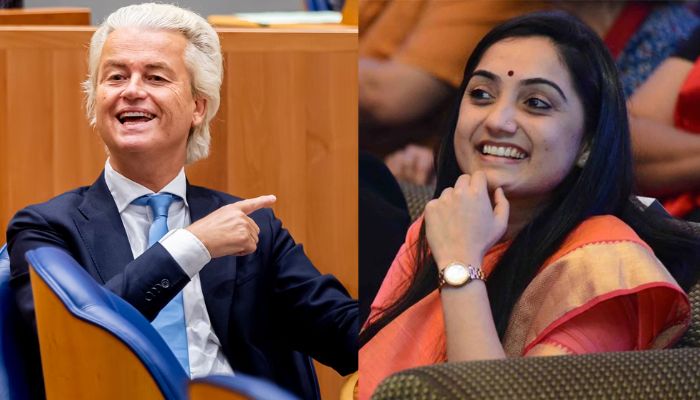
On Monday (8th April), Geert Wilders, a Dutch politician and member of parliament in the Netherlands had a telephone conversation with former Bhartiya Janata Party leader Nupur Sharma. Wilders hailed Sharma as a “symbol of freedom” and a “brave lady”.

Taking to X Geert Wilders said that the loss of freedom and legal troubles faced by Nupur Sharma over “truthful” remarks on the Islamic prophet that were derived from reliable Hadiths was “unfair”.

“Had a great talk with @NupurSharmaBJP today, she is a symbol of freedom, not only for India but for the whole free world. Her loss of personal freedom and legal troubles in the last two years are most unfair ‘cause she did nothing wrong but spoke the truth. What a brave lady!” Wilders posted.

Notably, Geert Wilders has constantly supported Nupur Sharma ever since the prophet controversy erupted in 2022. In February this year, Wilders had sent a message of support to Sharma. He also expressed his wish to meet her during his visit to India.

“I sent a personal message of support to the brave Nupur Sharma, who is threatened by Islamists for years now only for speaking the truth. Freedom-loving people all over the world should support her. I hope to meet her one day while visiting India,” the Partij voor de Vrijheid (PVV) leader posted on X on 17th February.

Back in October 2022, Wilders known for his highly critical opinions on Islam supported former Bharatiya Janata Party (BJP) spokesperson Nupur Sharma after Islamists hounded her for her remarks during a debate on Times Now.

It is pertinent to recall that Nupur Sharma had criticised Islamist Taslim Ahmed Rehmani for repeatedly using derogatory language against Sanatan Dharma and referred to Shivling as a fountain during a debate on the disputed structure at Gyanvapi in Kashi in May 2022. She questioned what he would feel if she cited passages from Islamic texts.

Mohammed Zubair, a co-founder of Alt News, cleverly removed Taslim Rehmani’s inflammatory comments and uploaded the out-of-context footage on social media to claim that she insulted the Islamic Prophet Muhammed. The severe allegations led to massive protests and riots across the nation as well as many FIRs were filed against her. The Indian government came under fire from Islamic countries which issued strong statements condemning Nupur Sharma after which she was suspended from the party.

Murderous slogans like “Gustakh-e-Rasool ki ek hi saza, sar tan se Juda, sar tan se Juda (There is only one punishment for being disrespectful to Rasool (Prophet Muhammad), their head separated from their torso, their head separated from the torso,” were raised in the streets by rabid mobs as extremists attacked and killed Hindus including Kanhaiya Lal in Rajasthan and Umesh Kolhe in Maharashtra for supporting her.

Tata’s military-grade satellite successfully placed into orbit by Elon Musk’s company SpaceX’s Falcon 9 rocket

On April 7th, Tata Advanced Systems Ltd (TASL), a Tata Sons company, successfully launched India’s first military-grade geospatial satellite constructed wholly by the private sector, reported the Economic Times. 

TSAT-1A, a sub-metre resolution earth observation satellite, was launched in conjunction with Satellogic. However, the complete functionality of the said satellite will be achieved in a few months. 

The launch proceeded from the Kennedy Space Center in Florida, using SpaceX’s Falcon 9 rocket. The TSAT-1A, built at the Vemagal plant in Karnataka, was part of the payload on the Bandwagon-1 mission.

TSAT-1A, weighing less than 50 kg, now orbits the Earth in low-earth orbit, ready to produce high-resolution imagery with exceptional precision, less than one meter per pixel. TASL officials verified that the satellite has entered its planned orbit and will be thoroughly tested in the next weeks to ensure full performance.

Once operational, TSAT-1A is planned to primarily serve the government and armed forces, providing high-resolution military-grade imagery. According to reports, the major consumers would be the government and armed forces, but the company will also cater to commercial customers. According to ET, plans are already underway to construct a ground center in India for data download and processing.

While India possesses a few ISRO-built military spy satellites, this is the first private-sector project of its kind.

TSAT-1A is unique among Earth observation satellites because of its sub-meter resolution imaging capabilities, which provide incredibly detailed views of the Earth’s surface. This precision is especially useful for applications that require high-resolution data, such as urban planning and environmental monitoring.

Compared to other satellites, TSAT-1A’s multispectral and hyperspectral imaging technologies offer a greater range of data collection options. These features allow the satellite to acquire photos from many bands of the electromagnetic spectrum, providing greater detail than typical optical images.

TSAT-1A is also known for its high collection capacity, dynamic range, and low latency delivery. This means it can acquire more photographs in less time, with a broader range of light sensitivity, and transport them to ground users more swiftly.

Currently, India has a limited number of military espionage satellites developed by ISRO. TASL plans to construct a constellation of comparable satellites in the future, with its production facility capable of producing up to 25 low earth orbit (LEO) spacecraft each year. These satellites are being developed in collaboration with Satellogic Inc., a market leader in sub-meter resolution earth observation satellites.

Meanwhile, the Indian Space Research Organisation (ISRO) possesses satellites capable of sharing imagery, but their applications are limited due to the enormous coverage required. India presently relies on US corporations for its imaging needs. And the necessity has grown as a result of disputes with China along the Line of Actual Control (LAC).

ISRO has also collaborated with the National Aeronautics and Space Administration (NASA) to create a Synthetic Aperture Radar satellite for Earth observation.

Kerala: After Idukki diocese, Syro Malabar Catholic Church’s Thamarassery diocese screens The Kerala Story, says nothing wrong in screening movie that isn’t banned

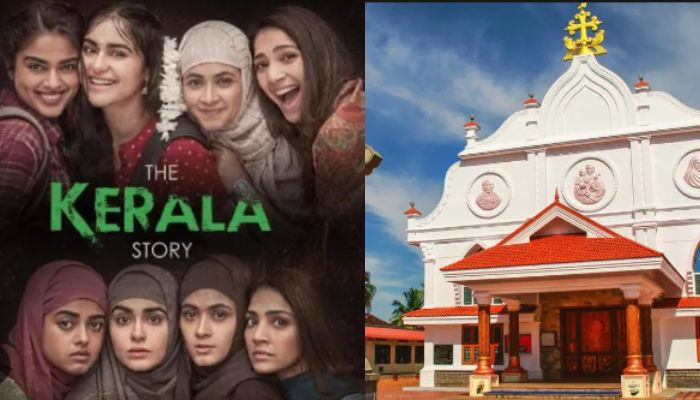
A day after the Idukki diocese under the Syro Malabar Catholic Church in Kerala screened The Kerala Story for its young students, the Thamarassery diocese of the same Church has also decided to screen the movie.

The decision was announced by the Church amid the row over the Idukki diocese’s screening of the movie for teens to warn them of the dangers of love affairs.

The Themarassery diocese in north Kerala stated that they will screen the movie in all the Kerala Catholic Youth Movement (KCYM) units. They said that the decision was announced as even the Chief Minister opened up about organised recruitment for terrorist groups in the state.

The diocese said that there was nothing wrong with screening a movie that was not banned in the state. According to reports, the KCYM questioned why the political parties were scared of the movie.

The Idukki diocese screened the movie on Sunday, 7th April for students from grades 10 to 12 as part of catechism classes. Father Jins Karakkat, chairman of the Idukki Diocese Media Commission, gave a statement on the same saying, “The movie was screened to educate youngsters about the dangers lurking behind love affairs and marriage.”

The students were asked to watch the movie and review it after discussion within their groups. The dioceses also circulated a book on the matter among students.

Father Karakkat said intensive training programmes for children are held every year during vacation. He said that specific topics are selected for the programme and books prepared for it.

“This year, the programme was held on April 2, 3 and 4. The theme of the textbooks prepared for the children of Classes 10, 11, and 12 was love relationships,” he said.

Various diocese’s under the Syro Malabar Church have often raised the issue of the dangers of love jihad with their community. In 2021, the bishop of Pala diocese of the Syro-Malabar Church issued a circular on Saturday to warn Christian families against various ‘groups’ trying to trap young girls from their community.

Bishop Mar Joseph Kallarangatt of the Pala diocese, in his circular elaborated on how certain people are laying traps to befriend young girls of the local community through phone calls.

“You must be aware of the various sections and groups that have been trying to trap our female children with various tactics,” read the opening lines of the letter. 

In September 2021, Bishop Mar Joseph Kallarangatt of the Pala diocese of the Syro-Malabar Church stated that young Christian boys and girls of Kerala are being targeted for not just ‘Love Jihad’ but for ‘Narcotics Jihad’ too.

On 5th April, Doordarshan announced that The Kerala Story would be on Friday following which Chief Minister Pinarayi Vijayan condemned the decision.

He said that this is an attempt at polarization just before the Lok Sabha elections. Kerala Congress leader VD Satheesan has also demanded that the government channel back off the move to screen the ‘The Kerala Story’ on Doordarshan, saying the movie is a “collection of untruth.”

It is important to note that Adah Sharma-starrer ‘The Kerala Story’ is one of the successful movies of 2023. The film saw popularity and ran well but there were attempts to corner the film and ban it for the subject matter.

The film brought a spotlight on subjects like forced/lured religious conversions, ISIS brides, and love jihad. The film was even banned in West Bengal initially and the makers had to plead before the Honourable courts to get its ban lifted, which was eventually lifted.

Chhattisgarh: Old Ram Mandir which was shut by Maosists 21-years-ago reopened in Sukma with help from CRPF jawans

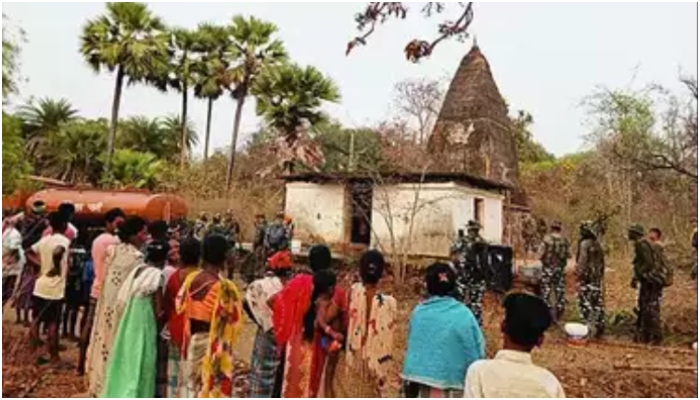
On Monday (8th April), an ancient Ram temple that was shut by the Naxalites in the Bastar region of Chhattisgarh was reopened after 21 years. The villagers in the Kerlapenda village, located about 90 km from the Sukma district headquarters of Bastar division cleaned the temple and performed the puja of the idols of Lord Rama, Goddess Sita, and Lakshman ji before worshipping.

Recently, Prime Minister Narendra Modi addressed an election rally ahead of the Lok Sabha elections and slammed the Congress party and the INDI Alliance on the Ram temple issue. “The dream came true after 500 years. It is natural for the people of Chhattisgarh to be happy, as it is Lord Ram’s maternal grandparent’s house. But Congress and INDI alliance are angry with the construction of Ram Mandir,” the prime minister said at a rally in Chhattisgarh’s Bastar.

“The royal family of Congress rejected the invite for Ram Mandir’s ‘Pran Pratishtha’. The Congress leaders who termed this decision wrong were removed from the party. It shows that Congress can cross any limit for appeasement,” he added.

According to the reports, the villagers and tribal people in the Naxal-affected Chintalnar region of Sukma danced with joy as the ancient temple in the Bastar region was reopened after 21 years.

CRPF jawans from the 74 Corps worked with locals to revive the temple.

Sukma SP Kiran Chavan commented on the matter and said that the temple was closed by the Naxalites in the year 2003 and that the Maoists had threatened the villagers saying that no one should open it or visit to worship. “Villagers said that in 2003 when Naxals were most active, they had threatened the villagers to close the temple and said that no one should open it or visit to worship. The reason as understood was that the region was particularly the core zone of Maoists where they would camp, hold meetings, and use it as a corridor for their movement among other activities,” Chavan was quoted as saying.

Since the opening of approximately 40 security camps throughout the Bastar region, jawans have been able to visit the interior villages. A new CRPF camp was established between Kerlapenda and Lakhapal, and local tribals who had previously never interacted with outsiders became acquainted with security forces.

The said temple was spotted by one of the jawans who inquired about it. The locals then approached them and explained that Maoists attempted to cause damage to the temple in 2003, forcing it to close.

“There was a time when villagers used to organize a religious fair at the spot. At the request of tribal villagers, we initiated the reopening of the temple and extended our support in cleaning and organizing,” Himanshu Pandey, CRPF commandant of 74 battalions was quoted as saying by Times of India.

Notably, a medical camp was also organized on Monday (8th April) and villagers were initially terrified to go to the temple. However, later they could be seen dancing to the tunes of Ram Bhajans.

The temple’s exact origin is unknown, but locals say that worshipping Lord Ram is part of a mythology, thus they believe the temple was built in the 1970s. The community of 800 is currently planning a ‘bhandara’ for the upcoming Ram Navmi, and they wish to celebrate the festival in the temple.

‘Go back, No vote for you’: Congress workers stop Shashi Tharoor from campaigning, raise slogans against him in his election constituency in Kerala

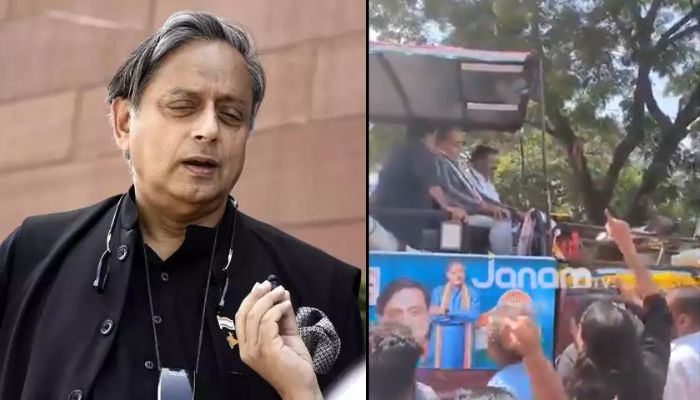
On Sunday (7th April), a group of Congress workers stopped party MP Shashi Tharoor during an election campaign in Balaramapuram in Thiruvananthapuram city of Kerala.

In a video shared by Janam TV, they were seen shouting him down and raising slogans against the Congress leader. The party workers said, ‘Go back’ and ‘no vote for you’.

The embarrassing incident took place when Tharoor was on his campaign trail along with local Congress MLA M Vincent. The development comes just weeks before voting in the State of Kerala for the upcoming Lok Sabha elections.

The incident has reportedly irked the Congress leadership in Kerala. Other political parties are now sharing the video on social media in a bid to mock the grand-old party.

As expected, the Congress party is now downplaying the incident as a minor altercation and accused the ruling CPIM party in the State of orchestrating the event.

Congress leader VD Sathwesan told The Times of India, “Tharoor is a prominent leader of the party and he is regarded highly among party workers. Many such attempts are being made by those who want to tarnish Tharoor’s image. CPM workers are behind this incident.”

Party MLA M Vincent, who was with Shashi Tharoor then, also claimed that it was a minor incident and that the protesters’ grievances were sorted.

It must be mentioned that Shashi Tharoor is a Member of Parliament from the Thiruvananthapuram Lok Sabha constituency since 2009.

Main accused in Baba Tarsem Singh murder case killed in encounter with Uttarakhand STF

0

 The main accused in Baba Tarsem Singh’s murder case was killed in an encounter with Uttarakhand Special Task Force (STF) in the Bhagwanpur area of Haridwar in the early hours of Tuesday, the state’s top police officer said.

Amarjeet Singh alias Bittu, a shooter with Rs 1 lakh bounty on his head, was killed while his accomplice fled, Uttarakhand Director General of Police (DGP) Abhinav Kumar told ANI.

The Uttarakhand STF and Haridwar Police have launched a joint operation to nab the absconding accused, the DGP said.

The police said that more than 16 cases have been registered against Amarjeet Singh.

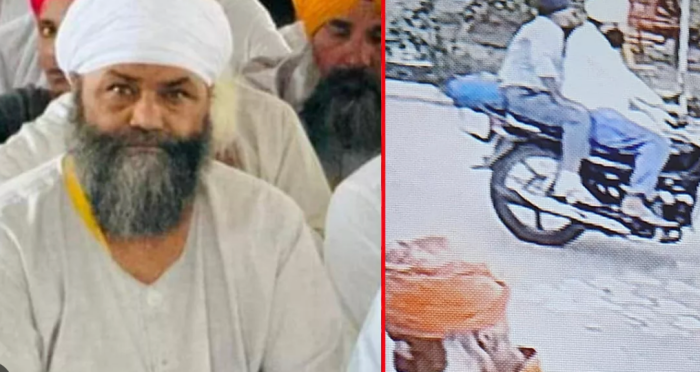
Nanakmatta Gurdwara’s ‘karseva’ chief Baba Tarsem Singh was shot dead on March 28 by two bike-borne assailants at the Nanakmatta Gurdwara in Udham Singh Nagar.

Earlier on Sunday, the Udham Singh Nagar Senior Superintendent of Police (SSP) increased the reward amount for both the absconding main accused (shooters), Amarjit Singh and Sarabjit Singh, from Rs 50 thousand to one lakh each.

Three more accused were also arrested in the case. They were allegedly involved in orchestrating the crime by assembling criminals, providing resources, and supplying weapons, police said.

DGP Kumar had said that Uttarakhand Police had taken Baba’s murder as a challenge and the STF and police were constantly looking for both the killers.

The police will deal strictly with the criminals if they commit such heinous crimes in Uttarakhand, the DGP added.

Chief Minister Pushkar Singh Dhami has also kept a constant watch since the Baba Tarsem Singh murder and has given strict instructions to the police to nab the accused.

(This news report is published from a syndicated feed. Except for the headline, the content has not been written or edited by OpIndia staff)

Pune: Samosas stuffed with condoms, stones and tobacco supplied to Tata Motors canteen, Rahim Shaikh, Azhar Shaikh, Mazar Shaikh, Azar Shaikh and Vicky Shaikh booked

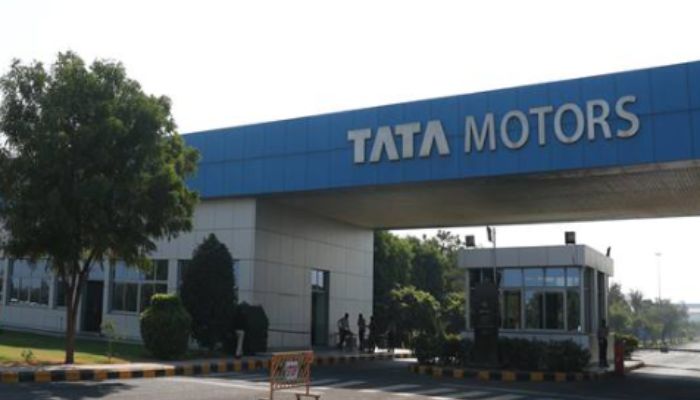
Condoms, stones and tobacco were found stuffed inside samosas in the canteen of Tata Motors in Pune, Maharashtra. The police have registered an FIR against 5 people in this case.

It has now come to light that the accused – Rahim Shaikh, Azhar Shaikh, Mazar Shaikh, Azar Shaikh and Vicky Shaikh – committed the crime in anger after the company cancelled their contract. One accused has also been arrested while further probe is underway.

According to reports, the incident took place in Pimpri Chinchwad area of ​​Pune. Kirtikumar Shankarrao Desai, an officer of a company based in Chikhali here, complained to the police on Sunday (7th April 2024).

In this complaint given at Chikhli police station, he stated that his company received an order for food supplies from a company in Chikhli. In this order, Kirtikumar entered into an agreement with a company named SRS Enterprises for the supply of samosas.

The name of the owner of SRS company is Rahim Shaikh. According to Kirtikumar, one day a bandage that is applied on wounds was found in the samosas being supplied by SRS.

After receiving this complaint, Tata Motors terminated its contract with SRS and gave the order to supply samosas to another Pune-based company, Manohar Enterprises. SRS owner Rahim Shaikh got angry about this and hatched a conspiracy along with his associates Azhar Sheikh and Mazar Sheikh.

On 27th March 27, 2024, Rahim Shaikh gave orders to his workers to stuff samosas with condoms, gutkha and stones. Rahim got these samosas distributed between 7.30 and 9 in the morning.

When the company staff complained about this, Kirtikumar filed a complaint at the police station. An FIR has been registered against Rahim Shaikh, Firoz Shaikh, Vicky Shaikh, Azar Shaikh and Mazar Shaikh.

Action has been taken against all of them under Sections 328, 120-B and 34 of IPC. So far, one accused is reported to have been arrested. The matter is being investigated.

Recently, a similar case was reported from Vadodara, Gujarat. Beef was found in the samosa sample taken from a shop named ‘Hussaini Samosawala’ in Chipwad area.

Police have registered a case and arrested 6 people who have been identified as Yusuf Shaikh, Naseem Shaikh, Hanif Bhatiara, Dilawar Pathan Moin Habdal and Mobin Shaikh.

This business was running on the 5th floor of a building without a license. ‘Hussain Samosawala’ used to supply raw samosas to many shops in Vadodara where the shopkeepers would fry it and sell it to the customers.