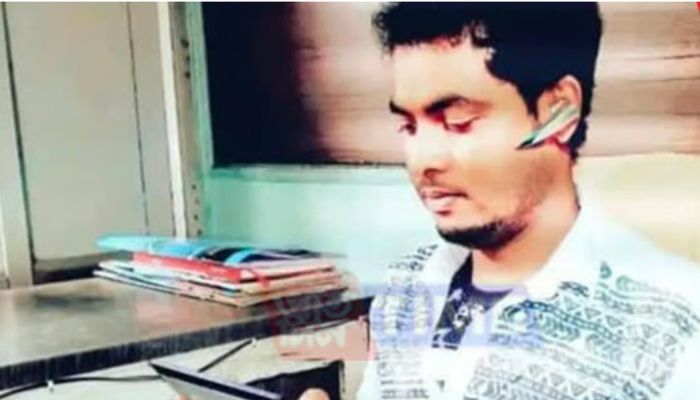
The Chandmari Police on 18th March, Monday, arrested Hamidul Islam from Guwahati’s GS Road locality in a case of love jihad. The accused disguised as a Hindu man named Jun and trapped a Hindu woman.
According to local reports, a woman in Guwahati filed a complaint with the police alleging that the accused identified himself to her as a Hindu man and lured her into a relationship. Hamidul Islam belongs to Rangiya area.
During this relationship, the accused established physical relations with the victim, impregnating her not once but at least five times. The accused forced her to undergo an abortion every single time.
“I feel victim to love jihad. Initially, he portrayed himself as a Hindu,” the victim reportedly said. She claims to have discovered his true identity as their relationship progressed.
The accused also duped the victim financially, resulting in a loss of a staggering Rs 12 lakh. He orchestrated schemes further coercing her to give him the money.
The Chandmari police reportedly said, “The accused has been identified as Hamidul Islam. He deceived the young woman and managed to defraud her of a substantial sum amounting to 12 lakhs rupees over the course of their three-year relationship.”
As per reports, famous regional YouTuber who goes by the name Sunny Golden is the brother of the accused Hamidul Islam. Sunny Golden has 128,000 followers on Facebook, his YouTube channel has 639,000 subscribers. However, his Instagram page appears to have been deleted.
Authorities in Assam are cracking down on the mance of Love Jihad under the stringent policy of zero tolerance for the same as declared by Assam Chief Minister Himanta Biswa Sarma.
Prime Minister Narendra Modi on Tuesday reaffirmed India’s commitment to safeguarding freedom of navigation and combating piracy and terrorism in the Indian Ocean region.
His remarks came in response to a message from Bulgarian President Rumen Radev, expressing gratitude for the safe return of seven Bulgarian nationals.
On Monday, the Bulgarian President expressed his gratitude to the Indian Navy for successfully carrying out a rescue operation on the hijacked Bulgarian ship, MV Ruen.
PM Modi expressed appreciation for the President of Bulgaria Radev, and conveyed India’s satisfaction that the seven Bulgarian nationals were safe and would soon be returning home.
“Appreciate your message President @PresidentOfBg. We are happy that 7 Bulgarian nationals are safe and will be returning home soon. India is committed to protecting freedom of navigation and combating piracy and terrorism in the Indian Ocean region,” said PM Modi in a post on X.
Appreciate your message President @PresidentOfBg . We are happy that 7 Bulgarian nationals are safe and will be returning home soon. India is committed to protecting freedom of navigation and combating piracy and terrorism in the Indian Ocean region. https://t.co/nIUaY6UJjP
The “Rouen” ship with eight Bulgarians, nine Myanmarese and one Angolan citizen on board was captured by pirates in the Arabian Sea in December last year.
In an official post on X, the Bulgarian President said, “My sincere gratitude to PM @narendramodi for the brave action of Navy rescuing the hijacked Bulgarian ship “Ruen” and its crew, including 7 Bulgarian citizens.”
Meanwhile, Bulgaria’s foreign minister Mariya Gabriel in a Facebook post said on Saturday that she held a conversation with the Indian Ambassador to Bulgaria Sanjay Rana for the Indian Navy’s Operation on MV Ruen and thanked him for rescuing Bulgarian nationals.
In a recent post on Facebook Bulgaria’s foreign minister Mariya Gabriel said, “Today, March 16, with the help of the Indian Navy, the crew of the ship “Rouen” hijacked on December 14, 2023, including seven Bulgarian citizens, was released.”
“Thanks to the efforts of the Indian military, the entire crew of the ship was freed. All sailors are in good health and efforts are currently being made for their timely return to Bulgaria,” she added.
Speaking regarding the incident, she stated that the ship “Rouen” with eight Bulgarians, nine Myanmar and one Angolan citizen on board was captured by pirates in the Arabian Sea in December last year. The Ministry of Foreign Affairs, in close cooperation with all competent institutions, the overseas representations of the Republic of Bulgaria in the region and international partners is actively involved in the efforts to release the Bulgarian crew.”
On March 16, at the Ministry of Foreign Affairs, a conversation was also held with the Indian ambassador in Sofia, Ambassador Sanjay Rana and an additional request was made to the Indian side for assistance and to take all possible actions to protect the life and health of the crew.
She added in her statement, “I am extremely grateful for the assistance of the Indian side in the process of releasing the Bulgarian sailors.”
(This news report is published from a syndicated feed. Except for the headline, the content has not been written or edited by OpIndia staff)
On Friday (15th March), propaganda web portal The News Minute published a report titled “‘Close’ to Modi, exempt from taxes: Torrent Group bought electoral bonds worth Rs 185 Cr” to insinuate quid pro quo between BJP and electoral bonds donor Torrent Group.
Danya Rajendran – the editor of The News Minute – also shared a post on her X handle to establish a link between the two without concrete proof. However, it has emerged that the Torrent Group has donated money to the Aam Aadmi Party (AAP) too among others.
Sudhir Mehta’s Torrent Group bought electoral bonds worth Rs 185 cr. Notably, his company was exempt from paying property tax worth Rs 285 crore by then Maha CM Devendra Fadnavis in 2019. Mehta is also considered close to Modi
In its report, The News Minute mentioned that in 2019, then Maharashtra Chief Minister Devendra Fadnavis granted “a company” exemption from paying property taxes of Rs 285 crore. “After the Election Commission released SBI’s data on electoral bonds last night, we now know the same company bought electoral bonds worth Rs 185 crore from May 7, 2019, to January 10, 2024,” The News Minute claims.
The report goes on to claim that Torrent Pharma’s chairman emeritus Sudhir Mehta is close to Prime Minister Narendra Modi, insinuating that this close association with the top BJP brass earned exemptions for the company in Maharashtra.
TNM went on to establish how Adani and Mehta had been PM Modi’s “old friends” and had stood down CII when it “came down heavily on Modi in 2003 when he was CM shortly after Gujara riots”.
What with its intent to pin a charge on PM Modi using the issue of electoral bonds, TNM conveniently left out a significant piece of information that Torrent Group had also donated Rs 1 crore to the Aam Aadmi Party (AAP).
The Torrent Group donated Rs 1 Cr to AAP
TNM essentially implied that all the Rs 185 cr spent by the Torrent Group to purchase the electoral bonds were given to the BJP alone. However, there is no proof backing this claim.
On the other hand, it is well established that the group gave Rs 1 Cr to the Aam Aadmi Party by purchasing their electoral bonds before the 2019 general elections. AAP is among the ten political entities that disclosed their donors on Sunday, 17th March.
According to AAP’s submission to the ECI, the Bajaj Group stands out as the party’s primary donor of electoral bonds. This detail subsequently appeared on the ECI’s website and was presented before the Supreme Court.
Between 23rd April 2018, and 25th May 2019, the party received electoral bonds totalling Rs 5.75 crores from various contributors.
Following the data required by the Supreme Court and disseminated by the ECI, AAP garnered a cumulative sum of Rs 65.45 crores from 18th April 2019 to 26th July 2023, positioning it as the 11th highest recipient of electoral bonds among political entities.
On 10th April 2019, the Bajaj Group extended a donation of Rs 3 crores to AAP, distributed in three equal parts. It also reveals that AAP received Rs 1 Cr from the Torrent Group. It is also reportedly the 10th largest donor donating to political parties.
In a horrifying case, a Luhiana resident was recently arrested in Canada for allegedly stabbing his wife to death, as reported by Canadian media CBC. According to reports, the accused identified as Jagpreet Singh had arrived in Canada only a week prior to the incident. After stabbing his wife to death, the accused purportedly made a video call to his mother and showed his wife’s dead body over the phone.
The incident took place, a week after Singh reached Canada, on late Friday night (15th March) in Abbotsford, Canada. The deceased victim has been identified as Balwinder Kaur (41) a resident of Mallah village of Jagraon.
According to reports in the Canadian media, “Abbotsford police (AbbyPD) responded to reports of an assault in progress in a home along Wagner Drive on Friday, March 15, around 10:50 pm.” Later, the Police officials found Kaur inside the home with life-threatening stab wounds. Despite efforts by the first responders to save her life, she died because of stab wounds.
CBC News reported that Balwinder Kaur’s husband Jagpreet Singh was charged with second-degree murder in relation to the fatal stabbing. He was arrested on the scene.
Meanwhile, her family said that their daughter was stabbed to death by her husband Jagpreet Singh alias Raju (50). He is a resident of Kanchan Colony, Pakhowal Road, Ludhiana. According to the family of the deceased woman, Jagpreet Singh had gone to Canada just a week ago.
Speaking with The Indian Express, her sister, Rajwinder Kaur said, “After stabbing my sister to death, Jagpreet made a video call to his mother back home in Ludhiana and said ‘main ehnu sadaa layi sulaata (I have put her to sleep forever).”
She added that Jagpreet was obsessed with thoughts of reaching Canada, and since Balwinder had reached there, he was forcing and harassing her to arrange his travel at the earliest. The couple also had regular arguments related to finances as Jagpreet had stopped working and was unemployed, the sister of the deceased victim added.
Recalling the harrowing 15th March incident, Rajwinder said that Jagpreet made a video call to his mother in Ludhiana while his son Gurnoor was also around.
According to her, Jagpreet turned the camera towards Balwinder who was lying unconscious, with blood all around. Seeing the blood, everyone on the other side, including his mother, Gurnoor, and other family members started screaming. They asked if Balwinder was alright. Then Jagpreet said, “I have put her to sleep forever.”
Later, the couple’s son Gurnoor informed everyone stating, “Papa ne mummy numaar ditta (our father killed our mother),” as per her aunt Rajwinder.
Demanding justice for her sister, Rajwinder said, “We were not on talking terms with Jagpreet since he had started harassing my sister. Saada taa sab kuch chala gaya (We have lost our everything). We just want the strictest punishment for him now.”
She further told The Indian Express that Balwinder and Jagpreet got married in 2000 and they had two children – a daughter Harnoorpreet Kaur (22) and a son Gurnoor Singh (18).
She stated that their daughter Harnoorpreet had gone to Canada around four years ago on a study visa but she started facing health issues.
Kaur, the deceased victim’s sister, continued, “Then my sister Balwinder went to Canada in 2022 to take care of her daughter. However, since the time she had reached there, her husband was constantly hectoring her to call him to Canada at the earliest. My sister was taking care of all expenses alone as Jagpreet had stopped working. Earlier, he used to work as a driver, but when my sister started sending him money, he stopped working. Balwinder was not only managing the expenses of her daughter’s medical treatment and education alone but also used to send money to Jagpreet. But even then, he was harassing her to call him to Canada.”
According to Rajwinder, her sister worked at a private hospital in Ludhiana to run the household and in Canada, she was working at a store. She had also incurred some debt and borrowed money from her siblings to send her daughter to Canada. However, Jagpreet used to harass her and say that she would have to repay the debt on her own as he won’t contribute to it.
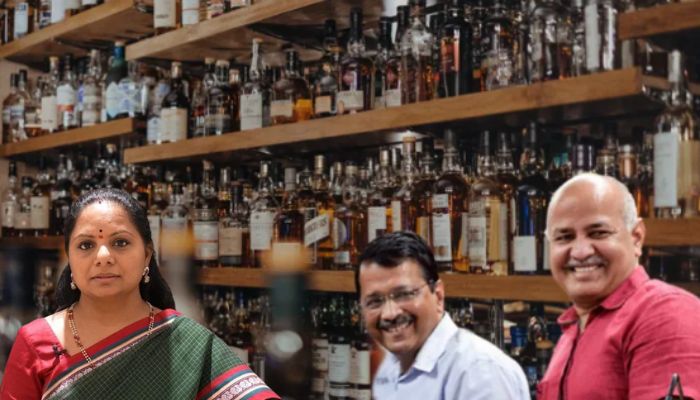
In a startling revelation in the Delhi Liquor Police scam case, the Enforcement Directorate (ED) on Monday (18th March) said that their investigation has revealed that BRS leader K Kavitha and others conspired with top AAP leaders Arvind Kejriwal and Manish Sisodia in the formulation and implementation of Delhi Liquor policy.
ED investigation revealed that K Kavitha along with others conspired with the top leaders of AAP including Arvind Kejriwal and Manish Sisodia for getting favours in the Delhi Excise policy-formulation and implementation. In exchange of these favours, she was involved in paying…
According to the ED, in exchange for these favours, BRS leader Kavitha paid Rs. 100 crores to the AAP leaders. By the acts of corruption and conspiracy in the formulation and implementation of Delhi Excise Policy 2021-22, a continuous stream of illegal funds in the form of kickbacks, from the wholesalers was generated for the AAP, ED said as quoted by news agency ANI.
The financial probing agency added that in the entire conspiracy, K Kavitha and her associates had planned not only to recover the proceeds of crime paid in advance to AAP, but also to further generate profits/proceeds of crime.
Sharing the details and update about the case, ED said that it arrested K Kavitha on 15th March in the Delhi Liquor Policy Scam case. Subsequently, New Delhi’s Special PMLA Court gave her remand to ED. The agency has been granted permission for custodial interrogation for 7 days till 23rd March.
The agency also carried out a search at K Kavitha’s residence in Hyderabad on 15th March, the day when she was arrested. According to the ED, during the search proceedings, relatives and associates of K Kavitha obstructed the ED officials from performing their duty.
Directorate of Enforcement (ED), Headquarters office has arrested K Kavitha on 15.03.2024 in the case of Delhi Liquor Policy Scam. The Special PMLA Court, New Delhi has remanded her for ED custodial interrogation for 7 days till 23.03.2024. A search was also conducted at the… pic.twitter.com/qOMqeQH1YN
So far, the central probing agency has conducted searches on 245 locations across the country including Delhi, Hyderabad, Chennai, Mumbai, and other places. It has arrested 15 persons including Senior AAP leaders Manish Sisodia and Sanjay Singh, along with Vijay Nair in this case.
ED has filed 1 Prosecution Complaint and 5 Supplementary Complaints in this matter. The agency statement also added that out of Proceeds of Crime generated, assets worth Rs. 128.79 Crore have been traced and attached vide Provisional Attachment Orders dated 24.01.2023 and 03.07.2023.
Further investigation is underway in this case.
Click here to understand the Delhi Liquor policy scam case in which BRS leader and daughter of Former Telangana CM KCR, K Kavitha is accused of being a member of the ‘South Cartel.’
Meanwhile, once while denying Manish Sisodia’s bail, the apex court in October 2023 had noted that a money trail of Rs 338 crore has been tentatively established in the case.
Far-left propaganda portal The Wire on Monday had another moment of embarrassment as it pulled down an article that raised aspersions on the integrity of the electoral bonds list released by the State Bank of India citing claims made by The Quint ‘journalist’ Poonam Agarwal.
“This story has been removed because the claims made by the reporter have not been substantiated,” The Wire article titled ‘Journalist Who Purchased Electoral Bonds Points To Possible Discrepancy In Released List” read, harking back to the time when the far-left propaganda portal had to suffer the ignominy of withdrawing stories on Tek Fog and Meta for peddling lies.
The article included Agarwal’s tweet posted on March 17, 2024, wherein she claimed that the electoral bonds list released by the SBI had named her as a purchaser of the bond on 20 October 2020 while she had purchased the bonds in April 2018. Casting aspersions on the list, The Quint ‘journalist’ had tweeted wondering if it was an error, inaccuracy or if her namesake had purchased the bond, which she said would be a big coincidence.
Several left-leaning organisations, including The Wire, lapped up the claims made by Poonam to throw shades on the electoral bonds list released by the SBI and insinuate that the bank might have altered the details. However, soon after Poonam claimed that the list falsely showed her name as a purchaser of the electoral bonds in 2020 and the left-leaning media amplified those claims, a YouTube video by her for The Quint where she explains her purchase of the electoral bonds in 2020 surfaced online, with many X users questioning her claims and insinuations of SBI list being tampered.
Here’s the video:
Hours after The Wire withdrew its story, Poonam took to X, formerly known as Twitter, to admit that she had indeed bought electoral bonds in 2020, and blamed the fiasco on her poor memory citing COVID-19. After being caught lying about the purchase of the electoral bonds, Ms Agarwal urged to not question the SBI data.
“Clarification: I have come across a video that I recorded at The Quint in which I am showing an #ElectoralBond dated 20/10/2020/ I don’t remember purchasing a bond in 2020 but only in 2018. Unique number will clear my doubts. Till then let’s not question SBI data,” she tweeted.
Left-leaning ideologues had hailed Poonam Agarwal for her ‘revolutionary journalism’
It is noteworthy to mention that several notable left-leaning ideologues had hailed Poonam Agarwal as a revolutionary over her “investigative journalism” on electoral bonds. Sushant Singh acclaimed her as a “bonafide star” whose story forced the centre to acknowledge that every bond could be tracked using a secret serial number that was only visible in UV light.
The Wire ‘journalist’ Arfa Khanum Sherwani urged her followers to subscribe to Poonam Agarwal’s YouTube channel and watch her videos on electoral bonds.
Ravish Kumar, among the foremost leftist ideologues and known lately for being a YouTuber, also went into raptures over Poonam Agarwal for her story on electoral bonds having hidden alpha-numeric codes that the government could use to draw a link between donors and political parties.
SBI’s response in SC busts far-fetched insinuations by The Quint’s Poonam Agarwal on electoral bonds
As Poonam Agarwal’s claims of discrepancy in the electoral bonds list released by SBI fall flat, it is worth noting that the submissions made by the State Bank of India in the Supreme Court earlier today busted the other set of insinuations made by her about the hidden alpha-numeric code on electoral bonds. Poonam Agarwal, who was booked for abetment of suicide in the Army Jawan’s suicide case in 2017, had alleged that the electoral bonds were not completely anonymous and that the secret codes on them could be used by the Centre to link donors with political parties.
Senior advocate Harish Salve, representing SBI, revealed that the bond numbers issued by the banks are only available on the bond and not anywhere else. The bank also added that the hidden alphanumeric code was a security feature and not for auditing purposes.
In essence, the SBI conveyed two things. First, just because the bond contains hidden numbers, it doesn’t mean they can be used to link donors with political parties. Second, they don’t have a record of the alpha-numeric codes on the bonds, shattering the web of insinuations that The Quint ‘journalist’ Poonam Agarwal had weaved in her report that was widely hailed in the leftist circles as “pathbreaking journalism”.
The Quint journalist had tried projecting her assumptions as facts by claiming that the secret codes on the electoral bonds could be used to draw a link between donors and the political parties, thereby compromising the promised anonymity to the donors, while also being a tool of surveillance for the Centre to know who was donating to which political party.
Another ridiculous argument that Agarwal furthered is that the watermark is enough and the alpha-numeric hidden code was not needed for security purposes. This doesn’t hold water because that would mean even currency notes don’t need serial numbers printed on them for security as they, too, have watermarks.
Since SBI has confirmed it hasn’t documented the figures, if the Supreme Court presses, SBI might scan the bonds and release the numbers, potentially connecting them to the recipient political parties. However, linking them to the donors seems a remote possibility. But the revelation has put paid to the far-fetched assumptions and leaps of faith made by Poonam Agarwal.
Some political parties like the DMK and AIDMK were able to publish the donor names presumably because the companies may have given them the bonds directly. But for others, like the TMC and JDU, which said many donated them anonymously with some bonds being dropped in drop boxes, it is impossible to furnish the data if the parties didn’t keep the record.
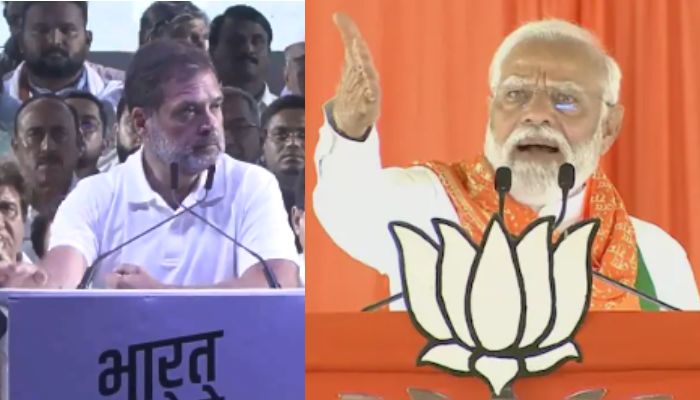
Notably, on 17th March, while concluding the Bharat Jodo Nyay Yatra, Rahul Gandhi addressed a rally where he made the controversial remark. Subsequently, BJP charged the Gandhi scion of fanning anti-Hindu sentiments and misogyny.
Later, Prime Minister Narendra Modi berated the I.N.D.I. Alliance leader Rahul Gandhi for his ‘fight against Shakti’ remark. PM Modi also asserted that he is willing to sacrifice his life in the service of Nari Shakti. He also stressed that this Lok Sabha election will be between those who want to destroy Shakti and those who want to seek blessings from Shakti, adding that 4th June will be a showdown, “Muqabla 4 June ko ho jayega.”
In an attempt to do damage control after his controversial remarks, Rahul Gandhi shared a post on X where he tried to give his controversial remark a non-Hinduism-centric spin by re-defining “Shakti’ itself.
मोदी जी को मेरी बातें अच्छी नहीं लगतीं, किसी न किसी तरह उन्हें घुमाकर वह उनका अर्थ हमेशा बदलने की कोशिश करते हैं क्योंकि वह जानते हैं कि मैंने एक गहरी सच्चाई बोली है।
जिस शक्ति का मैंने उल्लेख किया, जिस शक्ति से हम लड़ रहे हैं, उस शक्ति का मुखौटा मोदी जी हैं।
According to the Congress leader’s post, PM Modi is the mascot of ‘Shakti’ that he is fighting against. He alleged that PM Modi does not like his words and always tries to change the meaning of them by twisting them.
Linking all his anti-Modi tropes with his definition of ‘Shakti’, the Congress leader added, “It is the Shakti that has captured India’s voice, India’s institutions, CBI, IT, ED, Election Commission, media, Indian industry and the entire constitutional structure of India in its clutches.”
Continuing with the usage of the word that means Divine Feminine in Hinduism, Rahul Gandhi further alleged, “For the same Shakti, Narendra Modi ji waives off loans worth thousands of crores from Indian banks, while an Indian farmer commits suicide when he is unable to repay a loan of a few thousand rupees.”
Joining different issues together, the Congress scion added, “The same Shakti gives India’s ports, India’s airports, while India’s youth are extended the gift of Agniveer, which breaks their courage.”
While saluting the same Shakti day and night, the country’s media suppresses the truth, Rahul Gandhi added.
In a diabolical stance, after describing PM Modi as the mascot (leader) of Shakti, the post goes on to refer to PM Modi as the “slave of the same Shakti”.
The post reads, “Narendra Modi ji, a slave of the same Shakti, imposes GST on the poor of the country, without controlling inflation, he auctions the country’s property to increase that Shakti.”
Rahul Gandhi concludes by saying, “I recognise that Shakti, Narendra Modi ji also recognises that Shakti. This is not a religious Shakti of any kind, this is the Shakti of unrighteousness, corruption, and falsehood. That’s why whenever I raise my voice against him, Modi ji and his machinary of lies get upset and enraged.”
However, it is important to note that even before PM Modi addressed the issue, several netizens expressed shock at Rahul Gandhi’s bizarre interpretation of Shakti and accused him of being a Hinduphobic and misogynistic politician.
Shakti is deeply ingrained in Hindu theology, philosophy, and mythology
Shakti is considered to be the divine feminine which is the energy present in all beings. In Hinduism, there is no concept of fighting against Shakti, instead, Shakti is what helps fight against evil.
According to Hindu mythology, there are 10 Mahavidyas (also Dus Mahavidya) who are the manifestations of Goddess Shakti. They are Kali, Tara, Tripura Sundari, Bhuvaneshwari, Chinnamasta, Bhairavi, Dhumavati, Bagalamukhi, Matangi, and Kamala. All these Mahavidyas reside in Manidweepa (the eternal supreme abode of Shakti).
Click here to read the full concept of Shakti which is deeply ingrained in Hindu theology, philosophy, and mythology, and has a rich history dating back thousands of years.
On Saturday (16th March), the West Bengal police detained BJP leader Indranil Khan for protesting against the non-submission of 3,94 lakh Utilisation Certificates (UCs) by the Mamata Banerjee-led-government.
Khan, the State President of Bharatiya Janata Yuva Morcha (BJYM), sought accountability from the Trinamool Congress (TMC) dispensation of about 3.94 lakh pending UCs during ‘Yuva Adda’ programme held in Hazra More in Kolkata.
While the event was disrupted by the city police, it brought into focus allegations of misappropriation of funds to the tune of 2.94 lakh crores by the State government.
#WATCH | Kolkata: West Bengal police detains Bharatiya Janata Yuva Morcha (BJYM) State President Indranil Khan and other party workers while the ‘Yuva Adda’ programme was underway at Hazra More. (16.03) pic.twitter.com/KeoY47DZIR
For those unaware of the matter, Utilisation Certificates are official documents issued by the government upon the completion of a project. These projects are undertaken across various governmental departments such as education, agriculture, health, urban development etc.
A UC is issued only after it is ensured that funds, sanctioned by the government on completion of a particular project, are utilised in the manner intended by it.
Once a Utilisation Certificate is submitted by the government, it tells the auditors that a project has been completed and that there has been no misappropriation of funds.
CAG report on West Bengal
In March 2022, the supreme audit institution ‘Comptroller and Auditor General of India (CAG)’ tabled its 154-page report on West Bengal where it highlighted that the the TMC government did not submit a whopping 3,94,162 UCs till March 2021.
This is despite the fact that Rule 330A of the West Bengal Treasury Rules (WBTR) and Subsidiary Rules (SR) 1997, read with the Finance Department’s order (August 2005), makes it compulsory for the government to issue Utilisation Certificates within 1 year of release of funds.
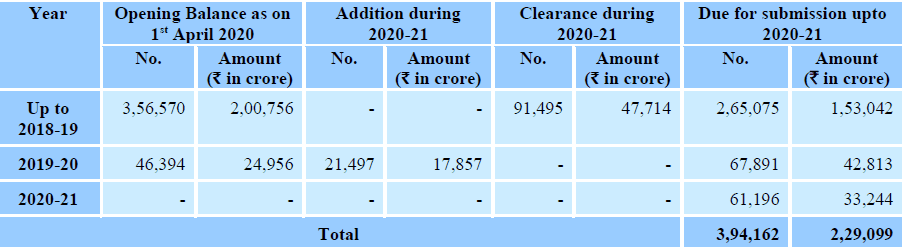
CAG found that UCs for funds amounting to ₹2,29,099 crores have been outstanding till March 2021.
Age-wise arrears in the submission of Utilisation Certificate, table via Page 87 of the CAG Report 2020-2021
“Audit scrutiny revealed that as of March 2021, a total of 3,94,162 UCs in respect of grants aggregating ₹2,29,099 crore had not been submitted.”
The CAG noted that between 2016-2017 and 2020-2021, the number of outstanding Utilisation Certificates of the West Bengal government increased by 59.91% while the associated pending amount increased by 87.77%
“…There has been no improvement as number of pending UCs and the amount increased by 59.91 per cent and 87.77 per cent respectively, over that reported in the Audit Report of 2016-17 (2,46,484 UCs for ₹1,22,008 crore),” the supreme audit institution emphasised.
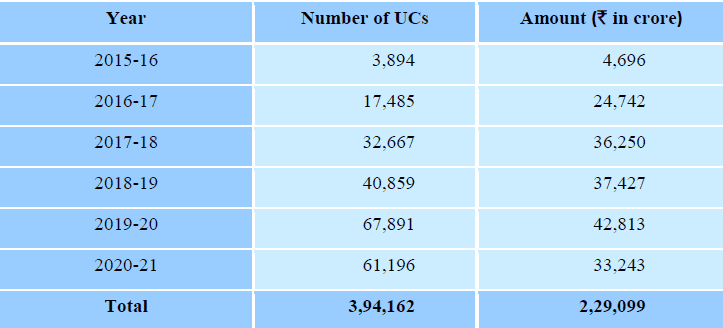
Year-wise breakup of outstanding Utilisation Certificates, table via Page 88 of the CAG Report 2020-2021
On page 88 of the report, CAG pointed out that the pending Utilisation Certificates during the 2018-2021 period accounted for a whopping 49.54% of the total amount of all outstanding UCs.
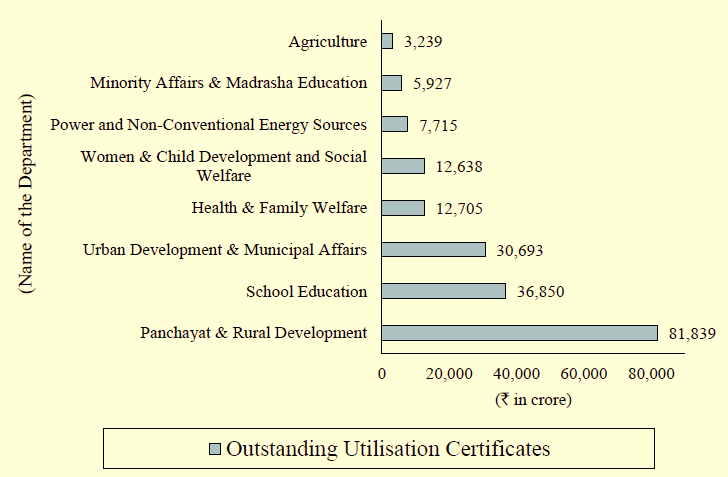
It stated that the West Bengal government did not submit the majority of its Utilisation Certificates, relating to the Departments of Panchayat and Rural Development (₹81,839 crores), School Education (₹36850 crores) and Urban Development & Municipal Affairs (₹30,693 30,693 crores).
“Outstanding UCs of these three departments accounted for 39.30 per cent of the total UCs outstanding and 65.20 per cent of the total outstanding amount,” CAG underlined.
Outstanding amount of UCs in 8 departments since 2002-03, chart via Page 88 of the CAG Report 2020-2021
Concerns and Recommendations of CAG
On pages 88 and 89 of its 2020-2021 report, the supreme audit institution noted that pendency in submitting outstanding Utilisation Certificates could risk the possibility of misappropriation of funds sanctioned by the West Bengal government.
In the absence of UCs, it could not be ascertained whether the recipients had utilised the grants for the purposes for which these were given. This assumes greater importance as pendency in non-submission of UCs is fraught with the risk of misappropriation,” CAG stated.
On Page 125 of the report, it further urged the TMC dispensation, “The Government may ensure timely submission of utilisation certificates by the departments in respect of the grants released for specific purposes.“
PIL alleges scam, BJP seeks accountability from TMC govt
In January 2023, a Public Interest Litigation (PIL) was filed before the Calcutta High Court, accusing the Mamata Banerjee-led-West Bengal government of spending ₹2.29 lakh crores without any documentation.
“A report submitted by the CAG of India for the year ended 31 March, 2021 with respect to the finances of the State of West Bengal points out various glaring incongruities and irregularities which point towards the misappropriation and perpetration of a financial scam of massive proportions by which the public exchequer has been defrauded,” the petition read.
It added, “From the report of the CAG of India, it can be seen that UCs (Utilisation Certificates) to the tune of Rs 2,29,099 crore are yet to be received from various departments of the Government of West Bengal with the biggest defaulters being the Departments of Urban Development and Municipal Affairs, School Education, Panchayat and Rural Development with each such Department failing to submit UCs to the extent of Rs 30,693 crore, Rs 36,850 crore, Rs 81,839 crore respectively. Thus, effectively Rs 2,29,099 crore of the public exchequer’s money have been spent without there being even an iota of any documentation such as UCS which are mandatorily required.“
In the meantime, the leading Opposition party in West Bengal, BJP had accused the ruling TMC government of engaging in corruption, loot and scam. It had sought the whereabouts of the utilised funds (received from the Centre)and the reason for reluctance in submitting the utilisation certificates.
BJP leader Gaurav Bhatia had dubbed the non-submission of UCs as the ‘mother of all scams.’ Party President (West Bengal) Sukanta Majumdar remarked, “Her government has tried to loot public money everywhere. The CAG report is a slap on her government’s face and exposes it.”
Mamata govt blames BJP instead
After being cornered over the CAG report by the BJP, West Bengal Chief Minister Mamata Banerjee alleged that the report was compiled by the saffron party.
“It is a total lie. The CAG had no information on what to write and what not to. It is a distorted fact and written by the BJP,” she claimed during a sit-in demonstration in February this year.
Later in the month, West Bengal Chief Secretary Bhagwati Prasad Gopalika and Finance Secretary Manoj Panth held a press conference and alleged that the CAG report was fraught with discrepancies.
“The state government does not accept the CAG report. A total of 8 departments have been mentioned and it talks about two lakh twenty-nine thousand crore rupees. There has been a misunderstanding. The 2021 report mentions 20 years, meaning it’s a 20-year calculation. We cross-checked with eight departments, all submitted UC up to 2022,” Bhagwati Prasad Gopalika claimed.
Manoj Panth alleged, “If they were not getting UC for 20 years then why didn’t they say earlier…Its is a wrong report.”
CAG rubbishes claims of TMC govt
Following the press conference by two civil servants of West Bengal, The Print spoke to a senior official of the Comptroller and Auditor General of India (CAG).
While rubbishing the claims made by the TMC government and its secretaries, the official said, “The West Bengal government’s statements against the CAG report are seemingly more political than factual.”
He added, “UCs are issued by the state government, so naturally the data and documents are directly taken from the state for audit. So, if the UCs were submitted, the CAG wouldn’t report otherwise. There is no error.”
“Before a CAG report is submitted, it is scrutinised eight to nine times. There are three on-field and three office scrutinies. Every corresponding document is supplied for data in a report,” the official concluded.
Conclusion
The Mamata Banerjee-led-West Bengal government has been under the scanner over multiple scams, which took place under its regime since 2011.
As such, it will not come as a surprise if the misappropriation of funds is detected by investigative agencies as the underlying reason for the non-submission of 3,94,162 Utilisation Certificates for funds amounting to ₹2,29,099 crores.
With just a month away for the 2024 Lok Sabha elections to commence, the BJP is trying to corner the TMC dispensation over this particular case. The recent protest led by BJYM leader Indranil Khan was a part of the same political strategy.
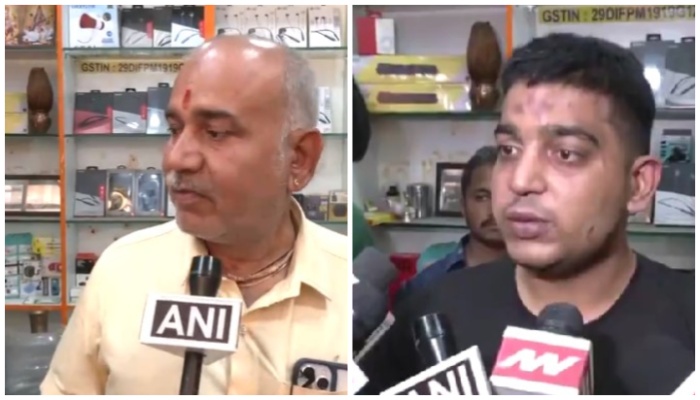
Mukesh, the owner of a Hindu store in Bengaluru, Karnataka, was beaten up for playing the Hanuman Chalisa in his shop. The incident occurred on Jumma Masjid Road in the Siddanna Galli area on Sunday, March 17. Mukesh’s father, speaking to the media lamented that his son was brutally assaulted for simply playing Hanuman bhajans inside his own store.
He said that Mukesh, his elder son was playing the Bhajans softly inside the shop, yet he was thrashed by the Muslim youths. “When I reached, I saw Mukesh soaked in blood,” Gopal Singh told the media while demanding strict action against the perpetrators.
“I was not present here but my son told me that he was playing devotional songs at that time. In the evening we do puja, so obviously, he must have played bhajans only. I learnt that they came to fight with him. The sound was low only, however, they beat him up. We want justice…,” said Gopal Singh, father of Mukesh, who fell victim to an attack by a group of Islamists for upholding his religious convictions.
#WATCH | Bengaluru, Karnataka: "I was not present here but my son told me that he was playing devotional songs at that time. They had come to fight with him. The sound was low only. They beat him up. We want justice…," says Gopal Singh, father of the shopkeeper who was attacked… pic.twitter.com/4bZvXLQocN
Meanwhile, the Bengaluru Hindu shop owner Mukesh also told the media how a group of local Muslims in the area attacked him and threatened to kill him if he failed to comply with their demands to stop playing Hindu devotional songs.
The Hindu shop owner, who spoke with ANI about what transpired, said that on Sunday, March 17, at around six o’clock in the evening, three or four local Muslims approached him and asked him to stop playing Hanuman bhajans inside the shop. When Mukesh refused to comply with their demands and inquired what the issues they were having, the Muslims said that it was time for their Azaan.
Mukesh added that he attempted to persuade them that there was still time for Azaan, but they refused to hear him and grabbed him by the neck. When Mukesh stepped out of his shop to confront them, the accused started beating him up and threatened to stab him with a knife, he said.
Mukesh responded in the positive when asked if he would be able to identify the accused. He said they were Muslim youths from the area.
#WATCH | Bengaluru, Karnataka: "I was playing Hanuman bhajan. 4-5 people came and said it is time for Azaan and if you play it we will beat you. They beat me and also threatened me that they would stab me with a knife," says the shopkeeper who was attacked by a group of over five… https://t.co/0ONOXqm2Swpic.twitter.com/QaS7joDqe8
Bengaluru Hindu shop-owner attacked for playing Hanuman Chalisa near mosque, police deny communal angle
Notably, Halasuru Gate Police Station in charge in Bengaluru, Karnataka, while speaking to OpIndia had denied any communal angle in the matter. “The FIR has been registered, and three people have been arrested. Three main accused were arrested yesterday night and an FIR has been registered. Enquiry is going on. Suleiman, Shahnawaz and Rohit are the main accused. There is no communal angle. It was about playing a song near the masjid. They [the accused] were telling the complainant to lower the volume of the speakers. There was an altercation over this,” the Halasuru Gate Police Station incharge said.
When OpIndia asked about the alleged reluctance to register an FIR in the matter, the officer said, “No, we had immediately done an FIR, took action and conducted searches…but some people diverted the matter saying it was a Hindu-Muslim fight.”
Earlier it was reported that the Hindu victim submitted a complaint at Halasuru Gate Police Station in Bengaluru demanding that an FIR be registered. However, it was claimed that the police were reluctant to register an FIR against the accused. Following this, a large group of local traders gathered outside the police station and pressured the authorities to register an FIR. Subsequently, the police lodged an FIR and initiated an investigation.
Incidentally, CCTV footage of the incident went viral in which the 5 to 6 accused could be seen coming to the victim’s shop on Sunday evening.
? ????? ????? ?????? ??? ???????? ?? ? ?????? ??? ?? ??? ?????? ???? ?? ??????????, ?????????, ??? ??????? ??? ??????? ???????. Freedom of Religion only for minorities?… pic.twitter.com/ZxgHPuwiLd
Initially, a verbal argument ensues as seen in the video. The argument soon escalated to assault as the accused youths dragged the Hindu victim out of his shop and thrashed him. The footage shows the victim singlehandedly confronting the attackers. However, he was seen getting knocked to the ground.
On Monday, the Taliban said Pakistan conducted two airstrikes in Afghanistan, resulting in the deaths of five women and three children. Additionally, the Taliban retaliated by firing heavy weapons at Pakistani forces along the border, a report published by Reuters said.
The two neighbouring nations have been accusing each other regarding a series of recent Islamist militant attacks in Pakistan. Pakistan insists these attacks originated from Afghan territory, a claim the Taliban in Afghanistan refute.
“The Islamic Emirate of Afghanistan does not permit anyone to jeopardize security by using Afghan land,” stated Zabiullah Mujahid, spokesperson for the Taliban administration. Mujahid mentioned that the airstrikes targeted the eastern border provinces of Khost and Paktika, resulting in the loss of lives.
In response, the Pakistani foreign office released a statement indicating that Pakistan had conducted “intelligence-based anti-terror operations in the border regions inside Afghanistan.”
The nature of these operations was not specified, but it was stated that they targeted members of the Hafiz Gul Bahadur militant group following an attack on a military post in Pakistan on Saturday.
Meanwhile, the Taliban’s defence ministry released a separate statement asserting that its security forces had aimed at Pakistani troops along the border in retaliation for the airstrikes.
Furthermore, the Taliban foreign office mentioned that it had summoned Pakistan’s head of mission to express condemnation for the attacks.
In a statement broadcast on state television, the Pakistani military remarked that “a recent surge of terrorism has the complete backing and facilitation of Afghanistan.” While not directly referencing any airstrikes, it indicated that the attack on Saturday was orchestrated by militants harboured in Afghanistan.
Pakistan’s government and security officials have consistently stated that such attacks have increased in recent months, with many attributed to the Pakistani Taliban (TTP) and launched from Afghan territory.
“Pakistan’s foreign office stated that over the past two years, it has consistently raised serious concerns with the interim Afghan government regarding the presence of terrorist organizations.”
The most recent attack occurred on Saturday, when a vehicle carrying explosives and multiple suicide bombers detonated at a military post near the Afghan border, resulting in the deaths of seven Pakistani security force members.
In response to Pakistan’s accusations, the Afghan Taliban has refuted claims that it allows militant groups to operate from its territory.
Taliban spokesman Mujahid commented in the statement, “Pakistan should not attribute the lack of control, incompetence, and issues in its territory to Afghanistan.” He added, “Such incidents can lead to severe consequences beyond Pakistan’s control.”