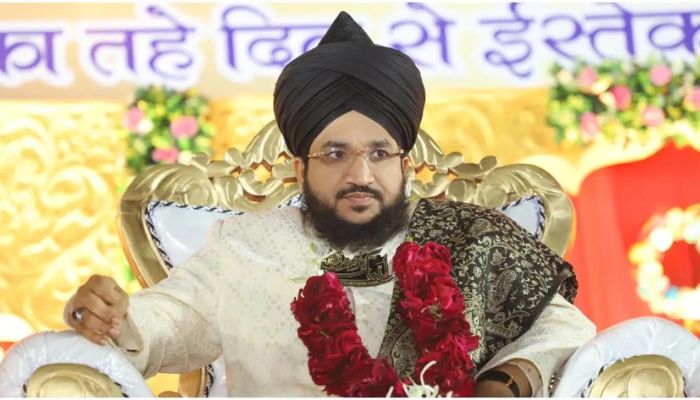
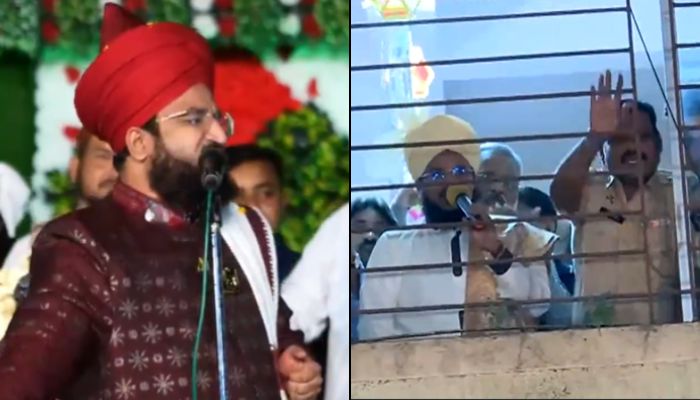
A day after the Gujarat police arrested Salman Azhari in connection to his hate speech against the Hindu community, several old videos of the radical Islamic preacher went viral on Monday (5th February).
The videos were shared on X (formerly Twitter) by popular user ‘Incognito (@incognito_qfs)’. In the videos posted by him, Salman Azhari was seen addressing his radical supporters and making extremely Hinduphobic remarks.
He was seen mocking Hindus as lovers of ‘cow dung (gobar).’ Salman Azhari was heard saying, “I want to thank Allah that he did not make me obsessed with gobar (cow dung). I am thankful to Allah for not considering gobar as beautiful (noor).”
Thread ?#MuftiSalmanAzhari is a repeat offender and regularly makes hate speeches against Hindus.
The hate preacher was seen asking his followers to teach their children about executing ‘Jihad’ and occupying temples belonging to the Hindus.
“Do not tell your children to act according to the circumstances. Teach them that we are going through a test today and if Allah wants someday, we will give azaan from idol-worshipping places (temples) built on mosques (disputed claim).” he was heard saying.
2. Asking muslims to teach their children to wait for opportunity and do Jihad at the right moment. pic.twitter.com/XhkYHL9tRv
Salman Azhari was also seen glorifying Mughal tyrant Aurangzeb and mocking the atrocities committed by him against the Hindu community.
“Whenever we take the name of Aurangzeb, some people start having problems. I do not know how badly Aurangzeb beat them that they still feel the pain today,” the Islamist said in one video.
3. Mocking Hindus. He very well knows Aurangzeb killed thousands of Hindus & destroyed hundreds of temples. pic.twitter.com/jTtPcvQOl8
He had also fantasised about harming India, similar to Pakistanis, through ‘Ghazwa-e-Hind.’ Azhari claimed, “Ghazwa-e-end will happen when the end (qayamat) will come close. Hadiths have said that Prophet himself will join that fight. This means that Prophet will be alive till the end and carry out this war against Hind (India).”
4. Fantasizing about Ghazwa-e-Hind which means ultimate conquest of Bharat by Jihadis. pic.twitter.com/1L5b8iaGLE
On Wednesday (31st January) evening, Mufti Salman Azhari made derogatory remarks against the Hindu community during his 56-minute-long speech in Junagadh city of Gujarat.
In the contentious video that went viral on social media, the radical Islamic preacher was heard saying, “Abhi to karbala ka akhiri maidan baqi hai…Kuch der ki khamoshi hai, fir shore ayega… Aaj kutton ka wakt hai, kal hamara daur ayega (The final battle of Karbala is yet to come… a moment of silence, then there will be noise again. The dogs are having their time today. Our time will come tomorrow).”
His provocative remarks against the Hindus were applauded by his supporters, who yelled ‘Labbek ya Rasulullah’ in unison. But this was not the only genocidal comment made by Salman Azhar on that day.
“Aaj Kutton Ka Wakt Hai, Hamara Daur Ayega”: Video of Mufti Salman Azhari’s hate speech in Junagadh goes viral, action sought pic.twitter.com/FFqabYMXGY
Prior to his ‘dog reference’, Salman Azhari spoke in the context of the Ram Mandir Pran Prathiostha at Ayodhya and the legal battle surrounding the disputed Gyanvapi Masjid in Varanasi.
“If you keep idols inside a mosque, then, it will not become an idol-worshipping place (referring to temples),” he had stated. Azhari defended the tendency of Islamic invaders to appropriate religious structures of non-Muslims and pagans.
“You have kept 1 idol ( at Ram Mandir) but there were 360 idols at Kaaba. Even then, the Kaaba belonged to the Muslims. This did not atop the Islamic pilgrimage of Hajj,” he continued.
"masjid me ek butt rakh dene se masjid buttkhana nahi banti. tumne ek rakha hai kaabey me toh 360 rakhey they lekin tab bhi kaaba kaaba hi tha"
"jab maidan khula rehta hai toh, waha kutton ka raj ho jata hai"
“…Dear Muslims, the revolution will begin from your homes. They (Hindus) do not have the courage to convert your mosques to idol-worshipping places (referring to temples). You have yourself abandoned the mosques,” Azhari further added.
While referring to the Hindus as ‘dogs’, he emphasised, “We have a saying – When the ground is left open, dogs take over the place. But if you keep using the ground, then, they won’t become the shelter for dogs.”
Arrest of Salman Ahzari
Following his speech, a First Information Report (FIR) was registered against him. On Sunday (4th February), a team of Gujarat police reached Mumbai and arrested Salman Azhari in connection to his genocidal comments.
The cops also obtained a 2-day transit remand to take the Islamic hate preacher to Junagadh in Gujarat. As expected, Muslim ‘journalists’ came to defend Azhari on social media and seek his immediate release.
Islamists also gathered outside the Ghatkopar police station and tried to intimidate the police into releasing the hate preacher.
The Ministry of Coal has achieved a noteworthy milestone in coal production, reaching an impressive 99.73 million tonnes (MT) in January 2024.
According to the Ministry of Coal, this marks a substantial growth of 10.30% compared to the figures recorded in the corresponding month of the previous year, which stood at 90.42 MT.
Coal India Limited (CIL), a key player in the coal sector, contributed significantly to this achievement by producing 78.41 MT in January 2024.
This represents a notable growth of 9.09 per cent compared to the production figures of 71.88 MT in January 2023. The cumulative coal production up to January 2024 demonstrates a commendable leap, reaching 784.11 MT (Provisional) for the fiscal year 2023-24.
This growth of 12.18 percent outshines the production figures of 698.99 MT recorded during the same period in the fiscal year 2022-23.
The coal dispatch also experienced a substantial boost in January 2024, reaching 87.37 MT. This indicates a robust growth rate of 6.52 per cent compared to the dispatch figures of 82.02 MT recorded in January 2023.
Coal India Limited (CIL) demonstrated outstanding performance in dispatch, reaching 67.56 MT in January 2024, showcasing a growth of 4.83 per cent compared to 64.45 MT in January 2023.
The cumulative coal dispatches up to January 2024 stood at 797.66 MT (Provisional) for the fiscal year 2023-24, reflecting a commendable growth of 10.82 per cent compared to 719.78 MT during the corresponding period in the fiscal year 2022-23.
As of January 31, 2024, the coal stock held by coal companies recorded a notable surge, reaching 70.37 MT.
This surge underscores the robust performance and efficiency of the coal sector, which exhibits an annual growth rate of 47.85 per cent.
Simultaneously, the coal stock at Thermal Power Plants (TPP), specifically at the identified location DCB, marked a notable increase to 36.16 MT on the same date, with an annual growth rate of 15.26 per cent.
These statistics highlight the resilience and commitment of the coal sector to meet the nation’s energy demands.
The Ministry of Coal continues to spearhead efforts to foster sustained growth and efficiency within the sector, ensuring a stable and robust energy supply for the country.
(This news report is published from a syndicated feed. Except for the headline, the content has not been written or edited by OpIndia staff)
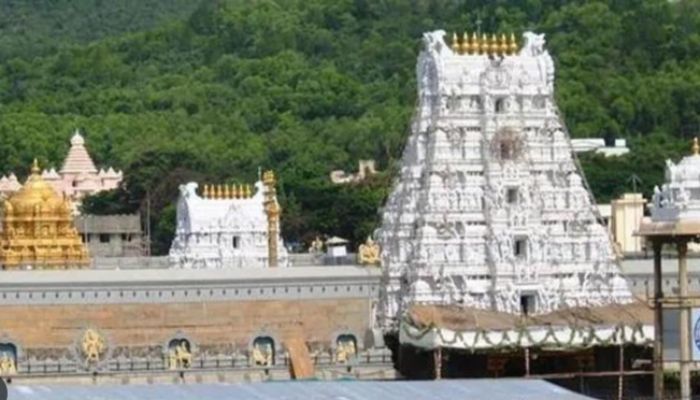
In a bid to prevent conversion, the Hyderabad Tirumala Tirupati Devasthanams (TTD) reportedly plans to set up a platform for non-Hindus to adopt Sanatan Dharma (or Hinduism).
The chairman of the TTD trust board, Bhumana Karunukar Reddy said that the platform aims to spread the values of Hinduism and prevent religious conversions.
“The TTD has decided to set up a platform, which will provide an opportunity for people of any faith to declare their faith in Hinduism, belief in Hindu gods and adopt Sanatana Dharma, which has been the way of life for centuries,” Reddy said.
The TTD also offered assistance to the management of the Ayodhya Ram Mandir. The TTD manages the temple of Bhagwan Venkateshwara in Tirumala.
The new announcement was made by Reddy on the second day of the Dharmika Sadas being held in Astana Mandapam in Tirumala.
Reddy said that this platform would be the first of its kind in the country and that the temple would become the place for people to declare their faith in Hinduism.
He also said that the Dharmagurus of various peethams and mathas participating in the Dharmik Sadas wanted TTD to take the lead to spread Sanatana Dharma by stopping religious conversions.
“The idea is to spread the values embedded in the great epics, heritage, culture and religious texts of Hindu religion among the public, especially the younger generation of today,” he said.
On 2nd February, the TTD said it will soon explore the option for Muslim “devotees” to participate in Srivari Seva or voluntary service for the deity in Tirumala.
The statement came in response to a request from a “Muslim devotee” identified as Hussain Bhasha of Naidupeta. During the monthly “dial you EO” program, TTD executive officer AV Dharma Reddy said there are Muslim devotees of Bhagwan Venkateswara.
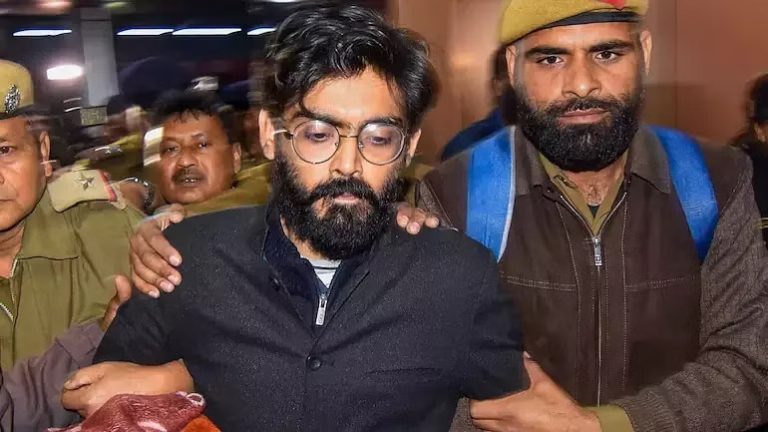
It has been four years since Sharjeel Imam, the Islamist separatist, was arrested by the Delhi Police. On the 28th of January 2020, weeks before the Delhi anti-Hindu riots, Sharjeel Imam was taken into custody after his seditious speeches inciting violence against Hindus and the State. Subsequently, he was charge-sheeted as one of the main masterminds of the Delhi anti-Hindu riots and charged under the stringent UAPA. In an over 15,000-page chargesheet filed, the Delhi Police traced in painstaking detail how Sharjeel Imam, Umar Khalid and several others masterminded the Delhi violence since the 5th of December 2019.
From the very beginning, the corporate media ensured that the anti-Hindu rhetoric shaping since 2019 was pushed under the rug. Further, the media ensured that the pre-planned violence was branded anti-Muslim, when it was anti-Hindu. As for Sharjeel Imam – he was branded as an educated Muslim activist merely speaking up for the rights of his co-religionists. The whitewashing went to a point of claims that the seditious speeches that Sharjeel gave were a legitimate form of resistance and that there was nothing seditious about it. Further, his involvement in the planning of the violence was summarily glossed over. For example, retired Judge Madan B Lokur, along with others, released a “Citizen’s report” in October 2022 where the detailed WhatsApp chats, witness testimonies, photos etc proving Sharjeel’s involvement in masterminding the violence were completely ignored. Instead, the report focussed on mythical anti-Muslim rhetoric that led to the violence, the demerits of UAPA and other such rhetorical issues.
With 4 years of Imam being in custody, the shameless whitewashing raised its ugly head again with several Islamist journalists, leftists and their allied media houses demanding his release, claiming that his speech was not seditious and that he had nothing to do with the violence.
TheWire published a report headlined, “No Convictions, ‘No Support From Activists’ as Sharjeel Imam Spends Four Years in Jail” in which it tried to drum up sympathy for the accused. TheWire quoted his brother, Muzammil, saying “Four years of his life have been wasted. If he was out, he could have studied more, he could have researched more. He is yet to complete his PhD. But his morale is not low. He keeps smiling and gives our mother hope as well saying ‘Ammi, sab thik ho jayega’ (Mother, everything will be alright)”. Muzammil was further quoted as saying, “For any political prisoner who is in jail, a sense of stability is lost for their family. For my mother, it’s just the two of us. In a way life has come to a standstill since that sense of stability is lost.”
Muzammil further claimed that he was falsely implicated in the Delhi Riots conspiracy since his arrest came much before the violence was sparked in February 2020. The younger brother of Sharjeel Imam goes on to lionise Imam and also paint him as a victim of the system.
One more complaint that Muzammil had was that Imam was not getting enough support from the liberal ecosystem. That critique was echoed by another prominent individual, whose role in the Delhi Riots has largely been muted so far.
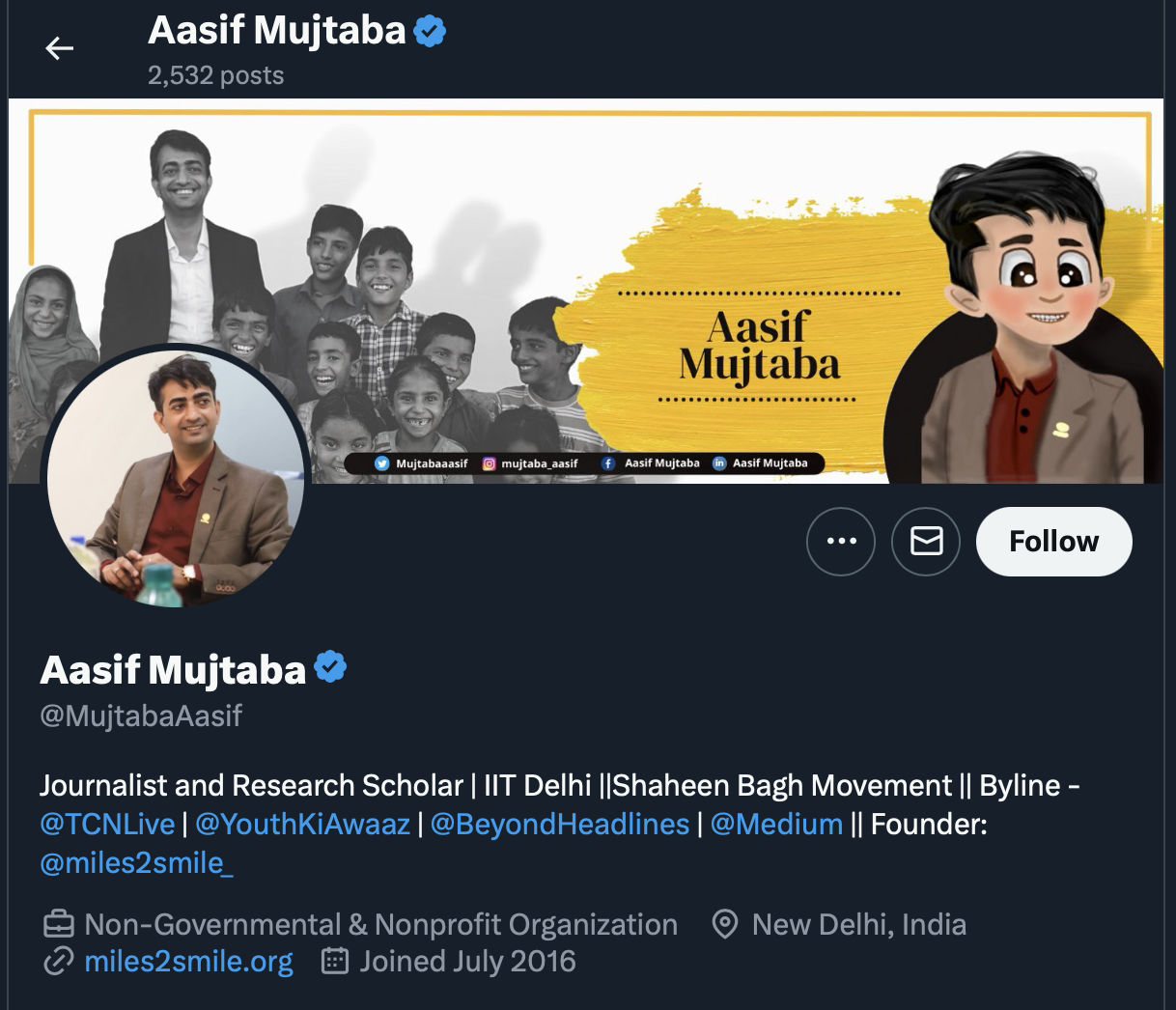
Aasif Mutjaba, the founder of Miles2Smile, who proudly displayed “Shaheen Bagh movement” in his bio as an accomplishment also took to Twitter to talk about Sharjeel Imam, his 4 years of being in jail and the supposed injustice of it all.
“The elites of political activism, the most renowned names…they refrained from speaking about Sharjeel or extending him any support. Today, whatever solidarity he has is a result of an organic support from the masses,” said Muzammil. (2/n)https://t.co/wsCfC3Dk1F
He called himself the “younger brother” of Sharjeel Imam, as he kept imploring people to stand in solidarity with him, painting him as an innocent scholar and also claiming that the state was prejudiced against him. He further claimed that Sharjeel Imam’s thoughts, words and ideology is being misinterpreted by many.
As his younger brother, I wanted to bring to a wider audience the ideas of Sharjeel Imam, which have been misinterpreted by different people as they wished. (9/n)https://t.co/edG49WVKF3
After the statements of Muzammil and Aasif Mutjaba, it becomes important to not only recall Sharjeel’s involvement in the planning of the violence but also, how Muzammil is lying and the involvement of Aasif, which was hitherto muted.
Sharjeel Imam’s involvement in the planning of the riots
The Delhi Riots chargesheet number 59, which spans over 17,000 pages, tracks in excruciating detail the conspiracy to foment riots and unrest that started shaping on the 5th of December itself. 5th was the day after the Citizenship Amendment Bill was tabled in parliament. In short, on the 5th of December, Sharjeel Imam made WhatsApp groups of Muslim students and on the 6th of December, he started distributing pamphlets in mosques. Pamphlets which were written by Sharjeel Imam himself were distributed in the Jama Masjid area by the MSJ group. This fact was revealed by the chats recovered between Sharjeel Imam and Arshad Warsi. The pamphlets were communal and essentially aimed to incite hate in the Muslim community by invoking the Supreme Court decision in the Ram Janmabhoomi case. Some of the pamphlets read “Law of Allah above all else” and “The command of Allah is above every law”. The pamphlets had misinformation about CAB and also, spoke about the destruction of the illegal structure previously on Ram Janmabhoomi, called Babri.
In the subsequent days, there was misinformation spread about CAB, protest marches held by United Against Hate and Sharjeel Imam categorically talking about “doing something big” next week. It is pertinent to note that violence had broken out on the 15th of December as well.
There were several meetings that were held between these “intellectuals” who were spreading fake news against CAB. On the 8th of December, this meeting was held, a picture of which is added to the chargesheet.
The picture of the 8th December meeting
On the same day, a WhatsApp group was formed called the ‘CAB TEAM’. The core members of the team were following:
Yogendra Yadav
Umar Khalid
Sharjeel Imam
Nadeem Khan
Parvej Alam etc.
Thereafter, “minutes of the meeting” of this core CAB team was shared in WhatsApp groups made by Sharjeel Imam (who was present at these meetings).
There were a few extremely points that must be highlighted. These were:
Avoid over-secularisation of this movement. They asserted that since the CAA is supposedly against Muslims, the nature and character of this movement should also have a ‘Muslim characteristic’.
Contact AMU and Jamia. It is pertinent to note that here is where the violence was triggered in December.
Contact international media like BBC, TRT and Al Jazeera.
Make contact with local mosques through 2-3 leaders.
United Against Hate called for a protest on the 19th of December, which was to be strengthened.
Interestingly, all these points had larger implications during not only the December violence but also the February riots. The fact that mosques were being mobilised and also international media which had sympathies with Islamists were getting involved were also factors that played a major role in perpetuating a false narrative after the February riots and also, helped in the coordination and execution of the riots.
Sharjeel Imam’s involvement in the planning of the riot is, therefore, not a mystery. He was involved right from the start in the planning of the violence and also incitement through his seditious speeches.
The transcript of his speeches where he clearly talked about Muslims taking to the streets and bringing India to a standstill is mentioned. He further talks about cutting off Assam, indulging in violence and tells Muslims even to be ready to face violence. He also talks extensively about how Nationalism is antithetical to Islam and that the Constitution must not be followed.
Here is a short excerpt that proves he was not only talking about Chakka Jam but violence against the State and also separatism.
It is our responsibility to cut off Assam. Assam and India should be cut and separated, only then they will listen to us. You know the condition of Muslims in Assam. CAA has been implemented there. People are being put in detention camps. Isn’t it? And there, well, the butcher of common people is going on. In 6-8 months it will be known that all the Bengalis were killed. Be it Hindu or Muslim. Ok? If we have to help Assam, then we have to block the way to Assam for the army. Do you understand? Whatever is being supplied for the army and whatever is being supplied from here, stop it. And we can stop it because chicken neck belongs to Muslims. That area is mostly Muslim. What will a leader like Kanhaiya do? They will go and raise slogans of the revolution, get photographs clicked, and come back. There will be applause from our people, but their faces will be there as leaders. And not a single productive thing has come out of it to date. Not a single productive thing has come out to date. Remember this thing. Remember this thing if the public is angry, then it is the responsibility of the politician, scholar, whatever it is, to make productive use of that anger. We can use it productively. Rather than waste in the photo session. Ok.
Well, I understood one more thing – even the matter of sensitization is not in our control till now. It is under the control of those who worship the Indian nation. Whether it is Left or Congress. Everything is under their control. It will come under our control if we form a group of Muslim scholars. And make such a group in which there is no debate among ourselves whether we are nationalist or not. Ok? The mask to be kept in the front is a different matter.
There are two interesting excerpts from his speech in Gaya, Bihar, delivered on the 23rd of January. It should be remembered that this speech was uploaded to Sharjeel Imam’s own Facebook page.
The first excerpt is: “तो इस चीज को याद रखें कि अभी बोहोत Urgent मामला है, बोहोत urgent मामला है। हमारे पास 4 हफ्ते है, 28 दिन है, अगला जो hearing है । अगले hearing तक सरकार तो छोङो Court को उसकी नानी याद आ जाये, ये आप की जिम्मेदारी है |”
In this, Sharjeel Imam asks his Muslim brethren to remember that the matter is very “urgent” and that they specifically have 4 weeks – 28 days. After that, he says, that not just the goverment, but even the court should shiver – and this responsibility he squarely places on the shoulders of Muslims.
It is pertinent to note that this speech was delivereed on the 23rd of January. It was exactly after a month – on the 24th of February – that Delhi anti-Hindu riots started – just as predicted by Sharjeel Imam when he told Muslims that they have only 4 weeks (28 days) to ensure that there is enough mayhem to scare the government and the courts.
In the second excerpt, he says, “िल्ली में तो वैसे भी, दिल्ली को ये कश्मीर बना नहीं सकते आपको भी पता है | इन्हीं की जलालत होगी, हमारी नहीं होगी, अगर ये दिल्ली में गोली चलवायें, Army लगवायें तो ये जलालत किसकी है ? मुसलमानों की नहीं सरकार की जलालत है। सरकार को जलील होना पङेगा।”
Here, is it clear that he is predicting enough mayhem for there to be a Kashmir-like situation where the government would be pressed to deploy the Army. But he also says that since it is Delhi, they will not be able to do so due to the glare of the media. They can’t turn Delhi into Kashmir. He also says that they will be beaten up a little (Muslims) but then, the Army cannot be deployed. The fact that he predicted enough mayhem that the centre might consider deploying the army itself reveals his real plans of violence. That, coupled with the fact that he mentioned the exact timeframe (4 weeks) in which the mayhem would reach its peak, reveals that he was an intrinsic part of the planning of the Delhi anti-Hindu riots.
How Sharjeel Imam’s younger brother, Muzammil, is lying
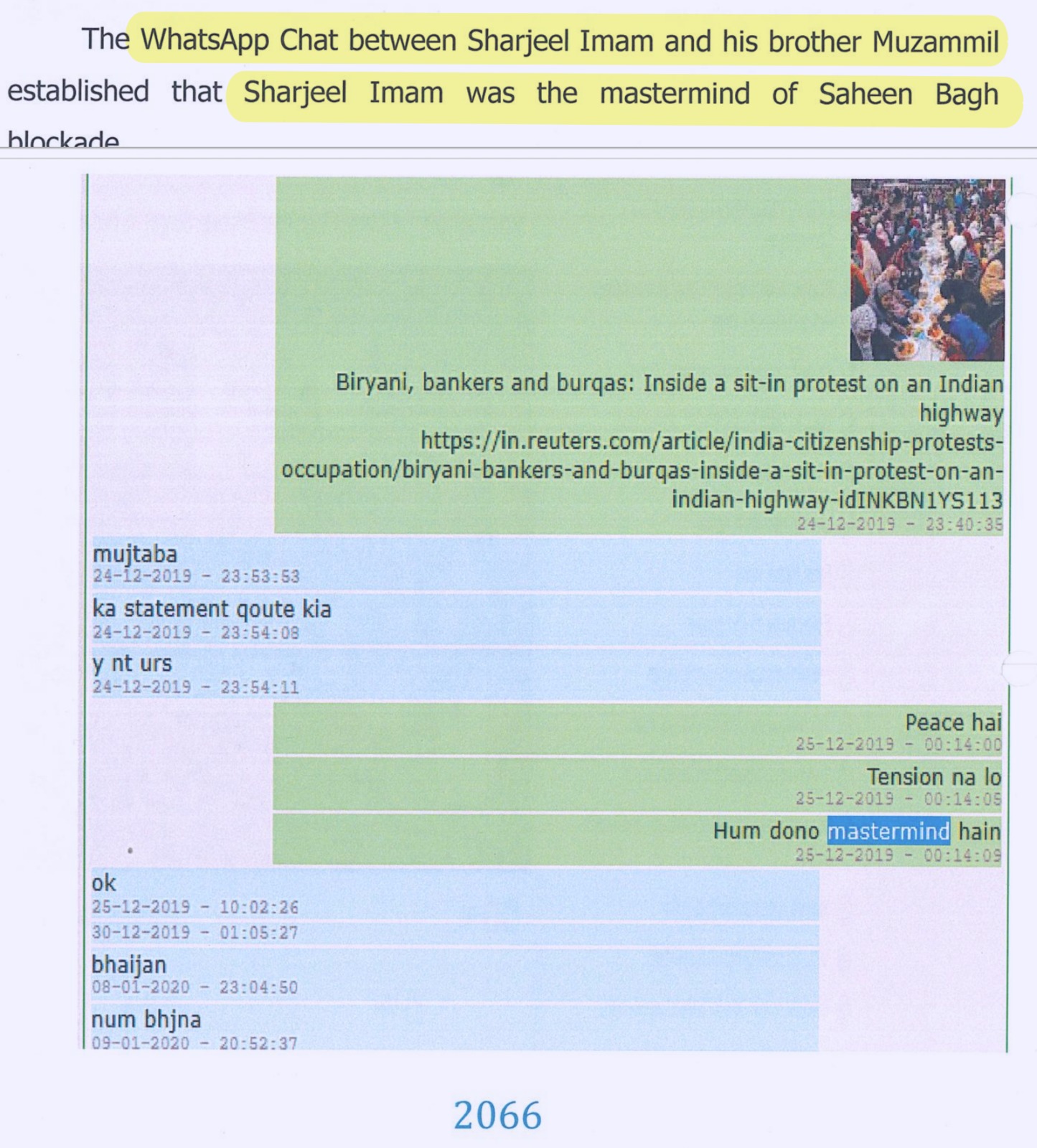
In the 59/2020 chargesheet which details the conspiracy of the Delhi anti-Hindu riots, there is a specific WhatsApp chat which was recovered from the phone of Sharjeel Imam. This is one where he is talking to his younger brother – Muzammil – the same one who is now claiming that Imam had nothing to do with the violence or the incitement to violence and is but an innocent scholar.
Sharjeel Imam’s chat
In this chat, Muzammil shares a Reuters article on the Shaheen Bagh protests and rues that they have only taken a quote from Aasif Mujtaba and not Sharjeel Imam. Sharjeel Imam then categorically responds to Muzammil saying that it does not matter since they are the “masterminds” (Sharjeel Imam and Aasif Mujtaba).
Here is the quote by Aasif Mujtaba that Muzammil was talking about:
“The masterminds of the intricately organized operation are two young engineers, trained at the elite Indian Institute of Technology (IIT) – Aasif Mujtaba and Sharjeel, who gave only one name. Mujtaba said he and Sharjeel identify volunteers, delegate tasks, bring in speakers from outside the area, and made sure the protesters avoided any confrontations with police”.
It is, therefore, evident that Muzammil knew about the exact extent of Sharjeel Imam’s involvement in the planning of the violence. His cacophonous chest beating and victim playing now is only post-facto rhetoric knowing fully well that his brother was the mastermind and stands to be in deep trouble if the court proceedings are conducted without pressure. Something is to be said about The Wire too, which seems to be running the tear-jerking lies of Muzammil without any sort of due diligence about what the chargesheet in the violence says. It is, of course, entirely possible that The Wire knows the extent of Imam’s involvement and is actively trying to save the culprit, given their shameless defence of Tahir Hussain in the past as well.
Aasif Mujtaba – the mastermind along with Sharjeel Imam
Aasif Mujtaba is the founder of Miles2Smile, an NGO supposedly working for the upliftment of Muslims. He also mentions Shaheen Bagh proudly in his Twitter bio.
Miles2Smile Foundation is a dubious organisation that gained popularity for its “relief work” for illegal Rohingyas and Muslim victims of the Delhi anti-Hindu riots in 2020.
The organisation, founded by Aasif Mujtaba (named by Sharjeel Imam as his co-conspirator), came into existence in June 2020 (with their Twitter ID being created in April 2020), right after the Delhi anti-Hindu riots, in which, Sharjeel Imam was arrested and chargesheeted.
On the website of Miles2Smile, as one of their first efforts, it mentions that they ran a medical camp at Al-Islah public school for those Muslims affected by the Delhi anti-Hindu Riots.
Interestingly, a Scroll report from 2020 also mentions how Harsh Mandar was involved in this same school, giving “relief” to Muslims affected – after the anti-Hindu violence.
The scroll report reads:
‘The local effort is now shored up by volunteer networks, like those run by activist Harsh Mander’s Karwan-e-Mohabbat. They have arranged an emergency camp at Al Islah school in Babu Nagar, where medical and legal aid is dispensed”
It is pertinent to remember here that Harsh Mandar had also delivered a speech inciting Muslims over CAA.
The Rohingya and Nuh connection of Miles2Smiles Foundation
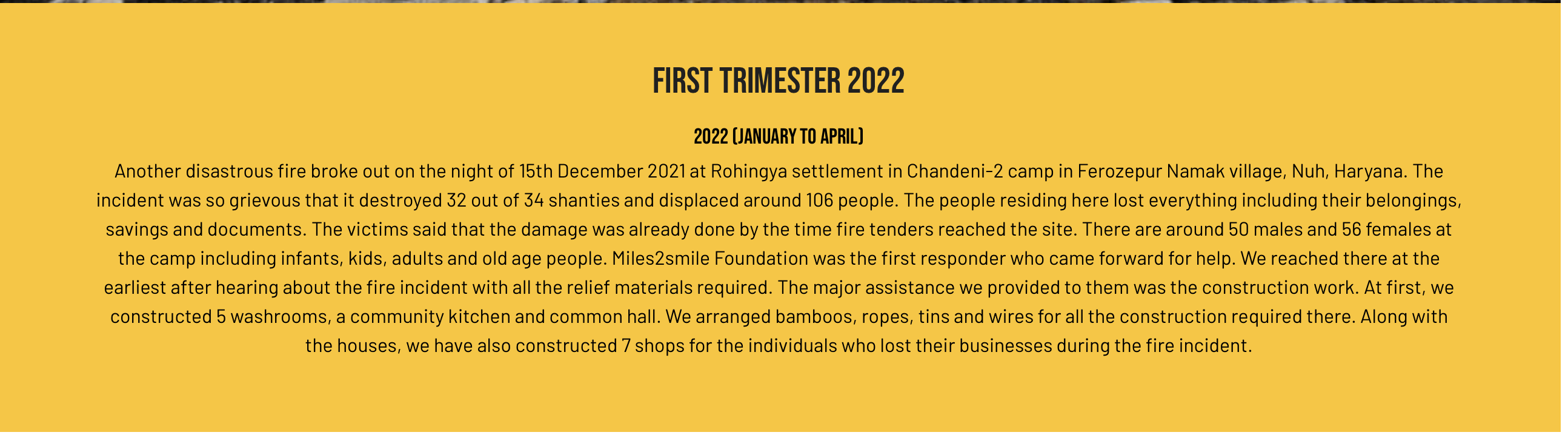
According to Aasif Mujtaba, the founder of the Miles2Smiles Foundation, the organisation had set up a learning centre at a Rohingya camp at Nuh in Haryana. The organisation had raised funds for the construction work for the Rohingya Refugees at Nuh in Haryana and had also built housing units, he had claimed on Twitter. It is worth noting that Nuh belongs to Mewat in Haryana, the region that is notoriously known as “Mini Pakistan“, where tales of abduction, rapes and forced conversions of Hindus have been routinely reported.
OpIndia had reported how it is likely that Aasif Mujtaba built the structures to house Rohingyas illegally without taking permission from the government given that he had cried foul when the government was carrying out an anti-encroachment drive.
Miles2Smile has worked with illegal Rohingyas since its foundation and up until recently.
On their website, they have listed their work with illegal Rohingyas extensively.
Even after the Nuh violence against Hindus, Mujtaba was talking about the plight of illegal Rohingyas.
For the past 2 years, there has been many occasions when I had a long conversation with Mews ( Muslims of Mewat). While going for Rohingya relief works or for other educational projects, we would often stop at a tea shop for tea and good conversations. I can say it without any… pic.twitter.com/h3LgB6zB8V
A fundraising campaign was started in 2022 to help the ‘victims’ of anti-encroachment drives across the country. Various state governments, including Uttar Pradesh, Madhya Pradesh, Gujarat and the New Delhi Municipal Corporation authorities in the national capital, had razed down buildings belonging to encroachers, following which a campaign has been launched, apparently to help the ‘victims’ of the anti-encroachment drive.
Mohammed Zubair, the co-founder of the alleged ‘fact-checking’ website Alt News, put out a tweet initiating a fundraising campaign to “help people whose buildings and shops” were demolished. He asked local volunteers to help in collecting the names of the people who would need help.
Plan is to start one single campaign which would have all the names, The raised amount should directly go their accounts from the platform. Request local activists/Reporters to DM.
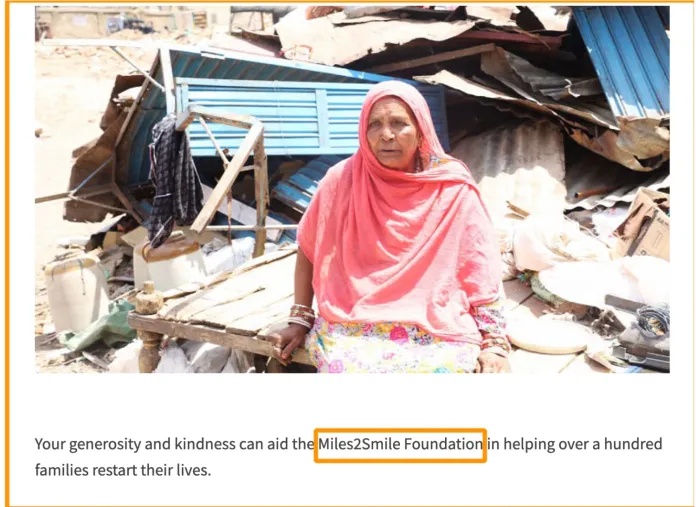
According to the fundraising platforms Ketto’s links shared by Mohammed Zubair, the rehabilitation work is being carried out by Miles2Smile Foundation.
Zubair had also congratulated Miles2Smile for the donation drive.
Of 1Cr+, @miles2smile_ received 30L from Ketto yesterday ( Pending funds would be transferred by Ketto tomorrow), They've distributed 19.5L today to 10 people. Remaining would be transferred as an when they receive (at the earliest). Thanks to one and all. ❤️? https://t.co/SwHADhRZEX
Right after the Delhi anti-Hindu Riots, AltNews and Mohammad Zubair were at the forefront of whitewashing the roles of Islamists in unleashing violence against Hindus.
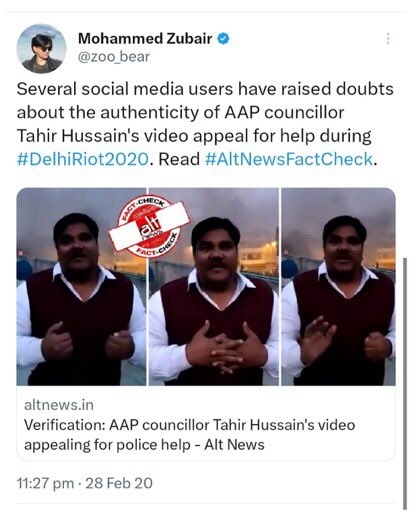
Alt News, known for dubious fact-checking and whitewashing Islamists under the garb of fact-check, had hopped on the opportunity to help prove Tahir Hussain’s innocence. In a bid to verify a video wherein Hussain was seen as seeking ‘police help’, Alt News concluded, “Unlike the claim on social media, Alt News could not spot any signs of the video being edited in the high definition version.” Further, giving credence to his claims, the fact-checking website noted, “In conclusion, the video of AAP councillor Mohammed Tahir Hussain appealing for help was sent out on February 24.”
OpIndia had earlier reported how Tahir Hussain had confessed in a disclosure statement that he chose his own house as a launchpad for the riots. Given that his house was a high-rise building and was under construction at that time, it was easy to collect stones and bricks without raising any suspicion.
He confessed that he and his co-conspirators had started collecting stones, bricks and other ammunition, well in advance so that they could teach those, who were in support of the CAA, a lesson when the time was right. To that end, 2 to 3 days before the riots broke out, he had also got his licensed pistol released from the police station.
While gearing up for the riots and collecting ammunition to teach Hindus a lesson, Tahir Hussain said that he had instructed his supporters to be “ready for anything and in every manner” and also ensure that all the CCTV cameras, private and government-installed, in the area, were broken so the evidence of the riots could not be captured.
It must be mentioned that all of this was done well before the anti-Hindu riots broke out in Delhi. Tahir Hussain admitted that he, along with his brothers Shah Alam, Arshad, Abid, Shahid, Irshad and several others were present at his residence.
Given the role of Sharjeel Imam in planning and inciting the riots, it is evident that Muzammil and Aasif Mujtaba’s pleas of innocence are driven by far more than their sense of community with Imam. From the chargesheet itself, it is evident that Muzammil knew that his brother was the mastermind of the violence and also knew about the involvement of Aasif Mujtaba. Further, Mujtaba himself was named as a co-conspirator by Sharjeel Imam. Despite this, the corporate media along with elements like AltNews, who gave covering fire to Tahir Hussain, the murderer of Ankit Sharma, have been eulogising him and his organisation, Miles2Smile, without delving into the specifics of the case against Sharjeel Imam. It is, therefore, evidence that there seems to be a sinister ploy afoot to whitewash the criminals who planned and executed the violence against Hindus, violence which started in December 2019 and culminated in the 2020 Delhi anti-Hindu Riots.
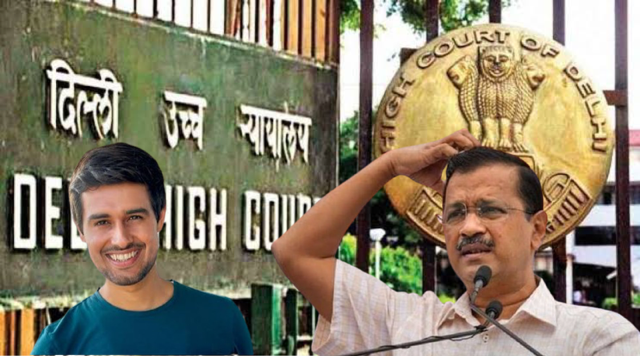
The Delhi High Court on Monday refused to dismiss a criminal defamation case filed against Delhi Chief Minister Arvind Kejriwal for retweeting a defamatory video titled ‘BJP IT Cell Part 2’ uploaded by YouTuber Dhruv Rathee.
"Retweeting Defamatory Content Attracts Action Under Section 499 Of IPC:" Delhi High Court refuses to quash summons against Delhi CM Arvind Kejriwal in defamation case for retweeting an allegedly defamatory video posted by YouTuber Dhruv Rathee in 2018.… pic.twitter.com/yGCmbxZmn8
Justice Swarana Kanta Sharma affirmed the trial court’s decision to summon Arvind Kejriwal in the case.
The single-bench judge mentioned that Kejriwal possesses a substantial following on X (formerly Twitter) and was aware of the consequences of retweeting the video.
“Retweeting defamatory content does amount to defamation,” the Court noted.
The case was initiated by Vikas Sankrityan, also known as Vikas Pandey, a supporter of Prime Minister Narendra Modi and the founder of the social media page ‘I Support Narendra Modi.’
Pandey took to X to thank his lawyers for their support in the case. “HC rules against @ArvindKejriwal in the defamation case by me. He had shared a video against me made by Dhruv Rathee. I thank my lawyers @raghav355 & @ThisIsTheMukesh who took this case up probono and have been fighting against a few of highest paid lawyers in India in the case,” he tweeted.
HC rules against @ArvindKejriwal in the defamation case by me. He had shared a video against me made by Dhruv Rathee. I thank my lawyers @raghav355 & @ThisIsTheMukesh who took this case up probono and have been fighting against few highest paid lawyers in India in the case. pic.twitter.com/OFLWrceskz
The case pertains to a defamatory video posted by YouTuber Dhruv Rathee, who asserted that Pandey serves as the second-in-command of the Bharatiya Janata Party (BJP) IT cell and alleged that Pandey had offered ₹50 lakhs through an intermediary to Mahavir Prasad to retract his accusations that the ruling party’s IT cell spreads misinformation and fake news.
Prasad made these allegations in an interview with Rathee, which was uploaded on Rathee’s YouTube channel on March 10, 2018, titled ‘BJP IT Cell Insider Interview.’ Subsequently, on May 7, 2018, Rathee released another video titled ‘BJP IT Cell Part 2,’ accusing Prasad of being offered money.
Delhi Chief Minister Arvind Kejriwal retweeted this video on May 7, 2018. Pandey argued that Kejriwal’s retweet contained false and defamatory allegations against him. He contended that, given Kejriwal’s substantial following and without verifying the authenticity of the claims, the Delhi Chief Minister disseminated the video to a wide national and international audience.
On July 17, 2019, Kejriwal was issued a summons by the Additional Chief Metropolitan Magistrate. Despite Kejriwal’s appeal to the Sessions Court to quash the summons being rejected, he approached the High Court challenging both the Magistrate’s and Sessions Court’s orders. He also sought the dismissal of the criminal defamation case filed by Pandey.
Arvind Kejriwal to continue his apology spree? Had earlier apologised to Bhadana, Majithia, Nitin Gadkari, Kapil Sibal, and Lt. Arun Jaitley
With the Delhi HC quashing Kejriwal’s plea, the Delhi CM has little option than to furnish an apology to Pandey, something which has done in the past to end his legal mess. In August 2017, Kejriwal apologised to Avtar Singh Bhadana for calling him corrupt in 2018. In March 2018, Kejriwal apologised to former Punjab Cabinet Minister Bikram Singh Majithia, whom he had accused of being a part of the drug trade in Punjab. Kejriwal had also tendered apologies to Nitin Gadkari and Congress leader Kapil Sibal for making defamatory statements against them. Arvind Kejriwal had also apologised to former Union Minister Lt. Arun Jaitley for allegations against him during his tenure as the DDCA president.
Assam’s Sonipur Police has arrested two US citizens in Tezpur for violating tourist visa norms by attending a Christian conversion ceremony.
The US nationals have been identified as John Matthew Boone (64) with passport No. 644539186 and Michael James Flunchum (77) with passport Np. 681022887.
Sonitpur Assistant Superintendent of Police (ASP) Madhurima Das reportedly said that the police has informed the Foreigner Regional Registration Office (FRRO) in Kolkata and it is likely that the US nationals will be issued Leave-India notices.
A $500 fine was imposed on the duo and they were released after. Boone and Flinchum had attended the inauguration of a Baptist Christian association office on 31st January.
“A Baptist association had held a building inauguration function in Tezpur and Baptist leaders from different parts of Assam had gathered there. The two US nationals were also present there. The building itself is incomplete, it is half-done, so we have to say that they had come for conversion activities. Since they were in the country on tourist visas, they cannot participate in any religious meet,” the ASP said.
According to police sources cited by the Assam Tribune, the US citizens had entered Assam a few days ago after travelling in different parts of India.
They attended the inauguration of the North Bank Baptist Christian Association office at the Baptist Mission Complex in Tezpur on 31st January.
According to tourist visa norms, foreigners travelling to India are not permitted to attend religious preaching or conversion programmes.
In October 2022, the Assam government instructed the police force across districts to monitor foreigners participating in conversion activities in violation of visa norms.
They were also instructed to monitor religious gatherings and the travel documents of foreigners who attended them.
Following this, 27 Bangladeshis, Swedish and German foreign nationals were reportedly detained and deported in a month for preaching at religious events in Assam.
Assam Chief Minister Himanta Biswa Sarma has spoken about protecting “indigenous faiths” from conversion activities at the 8th International Conference and Gathering of Elders organised by the International Centre for Cultural Studies in Dibrugarh.
He had said, “Unfortunately, indigenous communities in India often become the target of conversion efforts by mainstream religions. Missionary activities carried out by various religious groups can result in a decline in population who practise indigenous faith.”
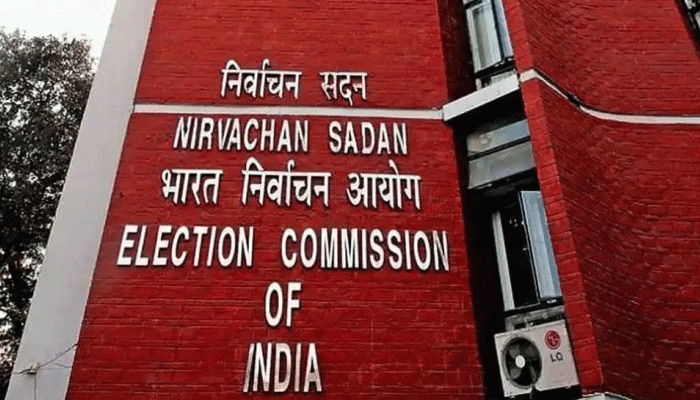
The Election Commission of India on Monday said that Political Parties should refrain from using children in election campaigns in any form whatsoever including the distribution of posters/pamphlets or participation in slogan shouting, campaign rallies, election meetings, etc.
In a press note by the ECI, it was said that in continuation of its earlier directives to parties and candidates to address plummeting levels of campaign discourse and to maintain respectful discourse towards Persons with Disabilities (PviDs), the Election Commission of India has issued strict directives regarding the use of children in any election-related activities.
“Political parties are explicitly directed not to engage children in any form of election campaign, including rallies, slogan shouting, distribution of posters or pamphlets, or any other election-related activity. Political leaders and candidates should not use children for campaign activities in any manner including holding a child in their arms, carrying a child in a vehicle or rallies,” the ECI said.
“This prohibition extends to the use of children to create the semblance of a political campaign in any manner including use through poem, songs, spoken words, display of insignia of political party/candidate, exhibiting ideology of political party, promoting achievements of a political party or criticizing the opponent political parties/candidates,” it added.
The ECI further said that however, the mere presence of a child accompanied by their parent or guardian in proximity of a political leader and who is not involved in any election campaigning activity by the political party, will not be construed as a violation of the guidelines.
“District Election Officers and Returning Officers shall bear personal responsibility for ensuring compliance with all relevant acts and laws about child labour. Any violation of these provisions by-election machinery under their jurisdiction will result in severe disciplinary action,” the ECI said.
(This news report is published from a syndicated feed. Except for the headline, the content has not been written or edited by OpIndia staff)
On Wednesday (31st January) evening, Mufti Salman Azhari made derogatory remarks against the Hindu community during his 56-minute-long speech in Junagadh city of Gujarat.
In the contentious video that went viral on social media, the radical Islamic preacher was heard saying, “Abhi to karbala ka akhiri maidan baqi hai…Kuch der ki khamoshi hai, fir shore ayega… Aaj kutton ka wakt hai, kal hamara daur ayega (The final battle of Karbala is yet to come… a moment of silence, then there will be noise again. The dogs are having their time today. Our time will come tomorrow).”
His provocative remarks against the Hindus were applauded by his supporters, who yelled ‘Labbek ya Rasulullah’ in unison. But this was not the only genocidal comment made by Salman Azhar on that day.
“Aaj Kutton Ka Wakt Hai, Hamara Daur Ayega”: Video of Mufti Salman Azhari’s hate speech in Junagadh goes viral, action sought pic.twitter.com/FFqabYMXGY
Following his speech, a First Information Report (FIR) was registered against him. On Sunday (4th February), a team of Gujarat police reached Mumbai and arrested Salman Azhari in connection to his genocidal comments.
The cops also obtained a 2-day transit remand to take the Islamic hate preacher to Junagadh in Gujarat. As expected, Muslim ‘journalists’ came to defend Azhari on social media and seek his immediate release.
Islamist tries to give clean chit to Salman Azhari
One such ‘journalist’ in particular Mohammed Asif Khan, infamous for peddling fake news, claimed that the Islamic hate preacher was being ‘falsely implicated’ based on a cropped video.
He had shared a clip of Salman Azhari to falsely claim that the latter’s comments were not directed at the Hindu community.
In the video shared by him, the preacher was heard saying, “People mock us saying if Muslims are true, then, why are they being killed in Palestine, Iraq, Sham, Yemen, Afghanistan and Burma? Forward my response to these tyrants.”
He claimed that Muslims are ‘born to die’ for the Faith. “Remember even if we die, our death will not end Islam. If Islam was to end, it would have ended in Karbala (Iraq). Islam is the truth. And it awakens after every Karbala.”
Here is the full video of Mufti Salman Azhari.
He was talking about Palestine and Muslim countries,and then he recited a couplet.
Salman Azhari brazened out, “Don’t be afraid, Muslims. The honour of Allah remains. Islam is alive. The Quran is still there. Those who fight with us everyday, remember the last war of Karballa awaits your destiny.”
He further added, “A moment of silence, then there will be noise again. The dogs are having their time today. Our time will come tomorrow.” Mohammed Asif Khan used the short clip to suggest that the derogatory comment of Salman Azhari was not directed at Hindus.
He insinuated that the Islamic hate preacher was talking about the ongoing situation in Palestine. Mohammed Asif Khan tweeted, “He was talking about Palestine and Muslim countries,and then he recited a couplet. Hindutva IT cell cropped his video and circulated it with false claim that he targeted a community.”
The missing context
In his desperate attempt to give a clean chit to his co-religionist, the Muslim ‘journalist’ forgot to tell his supporters that Azhari had referred to Hindus as ‘dogs’ in the same speech.
Prior to his ‘dog reference’, Salman Azhari spoke in the context of the Ram Mandir Pran Prathiostha at Ayodhya and the legal battle surrounding the disputed Gyanvapi Masjid in Varanasi.
“If you keep idols inside a mosque, then, it will not become an idol-worshipping place (referring to temples),” he had stated. Azhari defended the tendency of Islamic invaders to appropriate religious structures of non-Muslims and pagans.
“You have kept 1 idol ( at Ram Mandir) but there were 360 idols at Kaaba. Even then, the Kaaba belonged to the Muslims. This did not atop the Islamic pilgrimage of Hajj,” he continued.
"masjid me ek butt rakh dene se masjid buttkhana nahi banti. tumne ek rakha hai kaabey me toh 360 rakhey they lekin tab bhi kaaba kaaba hi tha"
"jab maidan khula rehta hai toh, waha kutton ka raj ho jata hai"
“…Dear Muslims, the revolution will begin from your homes. They (Hindus) do not have the courage to convert your mosques to idol-worshipping places (referring to temples). You have yourself abandoned the mosques,” Azhari further added.
While referring to the Hindus as ‘dogs’, he emphasised, “We have a saying – When the ground is left open, dogs take over the place. But if you keep using the ground, then, they won’t become the shelter for dogs.”
Conclusion
This particular segment of Salman Azhari’s speech preceded the reference to Karbala and the ‘time of the dogs’. He had spoken in the context of Ram Mandir and the disputed Gyanvapi mosque and labelled Hindus as ‘dogs’, who somehow strayed into the ground of Muslims.
In this context, he spoke how ‘Muslims become stronger’ after each fight of Karbala and how they are not afraid to die for the sake of Allah in any part of the world.
‘Journalist’ Mohammed Asif Khan shrewdly omitted this important context to claim that the radical Islamic preacher was talking about worldly affairs and did not make derogatory references to any community. Later, other Islamists took to social media to make the same dubious claim.
Disseminating conspiracy theories to absolve co-religionists of any wrongdoing is a common strategy adopted by Islamists. The desperate attempt to give Salman Azhari a clean chit is part of their sinister modus operandi.
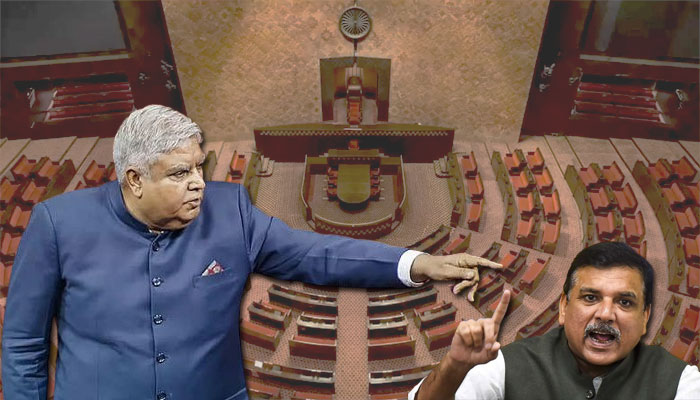
On 5th February, Rajya Sabha Chairman and Vice President of India Jagdeep Dhankhar refused to allow jailed Aam Aadmi Party leader Sanjay Singh to take oath as a Member of Parliament. Chairman Dhankar said the matter is currently with the Privileges Committee. Singh was arrested and charge-sheeted in the Delhi Excise Policy money laundering case.
Earlier on 3rd February, Rouse Avenue court allowed him to take oath as Rajya Sabha MP while in custody. Singh is in judicial custody, which was extended till 17th February. Special Justice MK Nagpal allowed his request to be taken while he was in custody. Singh withdrew the plea and sought interim bail to attend the ongoing Parliament session and to take the oath. Furthermore, he must appear before a court in Sultanput, Uttar Pradesh, on 7th February.
Though Singh was granted permission to file his election nomination and collect his membership certificate from the returning officer, the court dismissed his regular bail on 22nd December 2023. His bail plea is pending at Delhi High Court.
His plea was heard by the bench of Justice Swarna Kanta Sharma, who reserved the order after hearing arguments from both sides. While Senior Advocate Mohit Mathur represented Singh, Additional Solicitor General (ASG) SV Raju appeared for the Enforcement Directorate (ED) in the case.
ED opposed the bail plea filed by Sanjay Singh in its reply and said he was involved in creating a particular purpose vehicle to launder the proceeds of crime that would have been generated from the business arising out of the policy changes as conspired by him and his co-conspirators.
ED added that he was then involved in acquiring, possessing, concealing, dissipating and using proceeds of crime generated from the Delhi Liquor Scam during the policy period of 2021-22. ED arrested Singh on 4th October 2023.
Sanjay Singh was selected as Rajya Sabha MP from Delhi in January 2018. In January 2024, he completed his 6-year tenure as Rajya Sabha MP and was sent to Rajya Sabha again from Delhi. As per the regulations, he was scheduled to re-take the oath for his second tenure as Rajya Sabha MP. However, due to his alleged involvement and arrest in Excise Duty Scam, Singh was not allowed to take oath.
Delhi Excise Policy Scam
ED filed its first chargesheet in the case in 2022. The agency said it has so far undertaken over 200 search operations in this case after filing an FIR after taking cognisance of a CBI case that was registered on the recommendation of the Delhi lieutenant governor. The CBI inquiry was recommended based on the findings of the Delhi Chief Secretary’s report filed in July showing prima facie violations of the GNCTD Act 1991, Transaction of Business Rules (ToBR) 1993, Delhi Excise Act 2009, and Delhi Excise Rules 2010.
The liquor policy for 2021-22 was put into effect by the Delhi administration on 17th November 2021. However, it was canceled at the end of September 2022 due to accusations of corruption. According to the agencies, the new regulation led to monopolisation and gave economic advantages to people who weren’t eligible for liquor licenses. Meanwhile, Manish Sisodia and the Delhi administration have denied any wrongdoing.
According to the ED, the now-scrapped excise regime extended an incredibly high 12% profit margin for wholesalers and nearly 185% profit margin for retailers. Further, favors were extended through cartelisation.
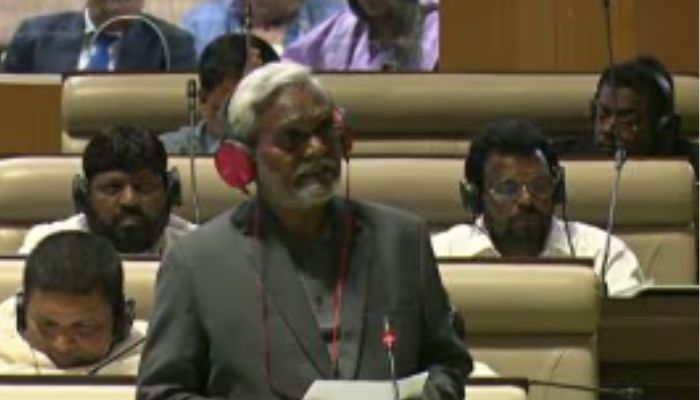
The Champai Soren-led alliance government survived floor test as it secured support from 47 MLAs, garnering 6 more than the halfway mark. 29 votes were cast against the JMM-led coalition government in the state.
The recent political crises was triggered after Hemant Soren was arrested by the Enforcement Directorate in a money laundering case, hours after he resigned from the post of Chief Minister of the state. However, despite being in the agency’s custody, the court had allowed him to attend the trust vote.
Champai Soren had moved the confidence motion in the 81-member state Assembly after the JMM chief was arrested on 31st January. When Hemant Soren was the CM, Champai Soren was the state transport minister. He had staked claim to form the government and was appointed Chief Minister by the Governor on 2nd February.
Prior to the trust vote, CM Champai Soren had lauded Hemant Soren and claimed him as a victim of a witch hunt. On his term, Hemant Soren also played himself a victim of Centre’s so-called vendetta politics while portraying it as a harassment of the “tribal”.
Earlier, a section of the Legislators registered a protest against Jharkhand Governor CP Radhakrishnan’s speech prior to the floor test. When the Former Jharkhand Chief Minister, who was arrested by the ED, came inside the assembly, he was welcomed by some JMM MLAs who raised slogans of ‘Hemant Soren Zindabad’.
#WATCH | Former Jharkhand CM Hemant Soren enters State Assembly in Ranchi to participate in the floor test of CM Champai Soren-led government to prove their majority. pic.twitter.com/L0tAqri0LN
The Jharkhand Assembly which has a total strength of 81 seats, has 41 as the halfway mark. Prior to the floor test, the JMM-led coalition had a comfortable majority with 48 MLAs, including 29 from JMM, 17 from Congress, and one each from RJD and CPI(ML).
Contrarily, the NDA had support of 29 MLAs, with BJP having 26 seats and AJSU having 3. The remaining 3 seats belonged to Independents and others.
Fearing cross voting and internal power struggle owing to the ongoing political crises in the state, the coalition MLAs of the ruling alliance were taken to Hyderabad. The MLAs spent the weekend at Leonia Resort under tight security and were inaccessible to outsiders and other guests of the resort.