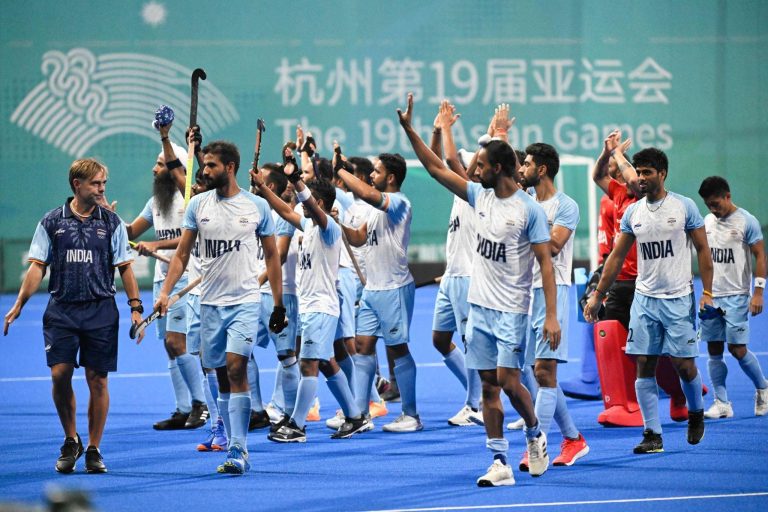
The Indian hockey team’s dream run culminated in a gold medal as they registered a thumping victory over Japan in the finals at the Asian Games. With this victory, the Indian hockey team has sealed its berth for the next Olympics, scheduled to take place in Paris in 2024.
This marked the fourth gold medal for the Indian men’s hockey team at the Asian Games, following their victories in the 1966 and 1988 editions held in Bangkok and Incheon in 2014.
The Indian team showcased a dominant performance, netting a total of five goals while their opponents only managed to score once. This is one of the most dominating performances by the Indian hockey team in the finals of a multination tournament.
India’s leading scorer was Harmanpreet Singh, efficiently converting two penalty corners in the 32nd and 59th minutes. The first goal, however, was credited to Manpreet Singh in the 25th minute. Amit Rohidas added another goal from a penalty corner in the 36th minute, and Abhishek secured a field goal in the 48th minute.
India commenced its journey in the Asian Games with a commanding victory over Uzbekistan, triumphing with an impressive 16-0 scoreline. The momentum continued as they secured wins against Singapore with a score of 16-1, Japan with 4-2, and arch-rivals Pakistan with a dominant 10-2. Subsequently, they vanquished Bangladesh with a decisive 12-0 victory and proceeded to conquer South Korea in the semi-finals, emerging victorious with a score of 5-3 against their Asian counterparts.
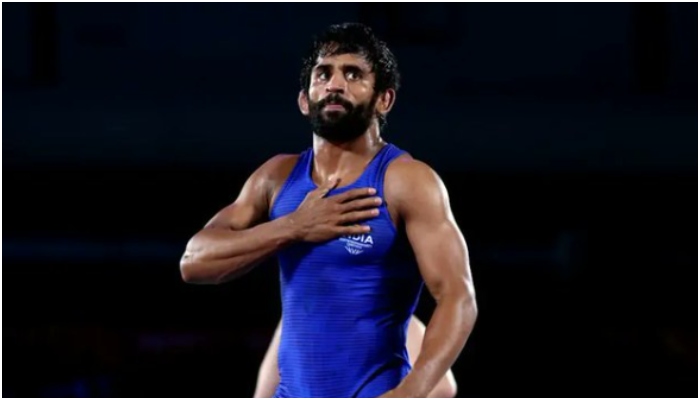
Iranian Rahman Amouzadkhalili defeated Indian wrestler Bajrang Punia 8-1 in the Asian Games semifinals on Friday in Hangzhou, China. Two-time world champion Bajrang Punia’s preparedness for the competition proved less than ideal as a result of protests against the Wrestling Federation of India (WFI) president and controversy concerning his selection in the games.
Despite having two straightforward victories to start the day, Bajrang struggled against the tough Iranian opposition and was unable to advance to the finals. According to the reports, Bajrang easily defeated a Filipino wrestler in his opening match to earn a technical victory.
Indian wrestler Bajrang Punia loses in the semifinals of men's 65kg at #AsianGames.
He then competed against a Bahraini wrestler, whom he easily defeated with a score of 4-0. Rahman Amouzadkhalili, the current Asian champion and the global champion in 2022, was the opponent he faced in the semifinals. The Iranian wrestler defeated Bajrang, gaining the lead right away with a four-pointer, and won the match 8-1 in the end.
Bajrang Punia still has a chance to win a bronze medal after losing in the semifinals because participants of the semifinals can go on to play for third place. Whether Bajrang will secure a medal at the 2018 Asian Games will depend on how well he performs in the bronze medal match.
Netizens sharply commented on Punia’s loss and said that this was ‘Politician Bajrang Punia’ who lost the match. “Wrestler Bajrang Punia will play for Bronze Medal match,” said one of the users.
Politician Bajrang Punia Lost ?
Wrestler Bajrang Punia will play for Bronze Medal match ?
It is notable that Olympic medallist Bajrang Punia and World Championship medallist Vinesh Phogat were exempted from trials for the Asian Games in July this year. The Indian Olympic Association’s (IOA) ad-hoc committee granted exemptions to Punia and Phogat from the trials for the men’s freestyle 65 kg and women’s 53 kg categories. This decision was met with stiff opposition from coaches, current and former athletes, and their parents.
The Delhi High Court had dismissed the plea filed by ace wrestlers Antim Panghal and Sujeet Kalkal against the decision. The plea had challenged the exemption granted to wrestlers Bajrang Punia and Vinesh Phogat which allowed their direct entry into the Asian Games 2023. The duo demanded fair trials however their plea was dismissed by the Court.
Bajrang Punia was part of the Wrestelers group who protested against the WFI head Brij Bhushan Sharan Singh. In April 2023, they went to Jantar Mantar and demanded an investigation into the allegations of sexual harassment of female wrestlers by Bharatiya Janta Party MP Brij Bhushan Sharan Singh during his tenure as the president of the Wrestling Federation of India.
The Delhi Police then filed two FIRs and ten complaints against the politician regarding the case. The FIRs and complaints were registered at Delhi’s Connaught Place police station. The complaints were registered on April 21, and the FIRs were filed on April 28.
According to the FIRs, he was charged with requesting sexual favours. Ten molestation accusations were also brought against him. The claims included specifics about his attempts at inappropriate contact, which comprised of placing his hand over the girls’ chests and moving it to the back, among other things. The first of the two filed FIRs contained the assertions made by the wrestlers, while the second described complaints presented by the parent of a juvenile.
In the meantime, BJP leader refuted all of the charges and stated that he had complete confidence in the country’s legal and judicial systems. One of the relatives of one of the victims also was quoted as saying that the wrestlers were plotting to trap WFI chief for political gains.
It is to be noted that several derogatory slogans were raised in the midst of the wrestler’s protests. It was reported that slogans like ‘Modi Teri Kabar Khudegi’ and also anti-India ‘Azadi’ slogans were raised during the protests.
It is notable that similar slogans were raised by protestors in many protests in the past. Anti-CAA protests, Shaheen Bagh protests, farmers’ protests, and various other protests in JNU are known for these Azadi slogans.
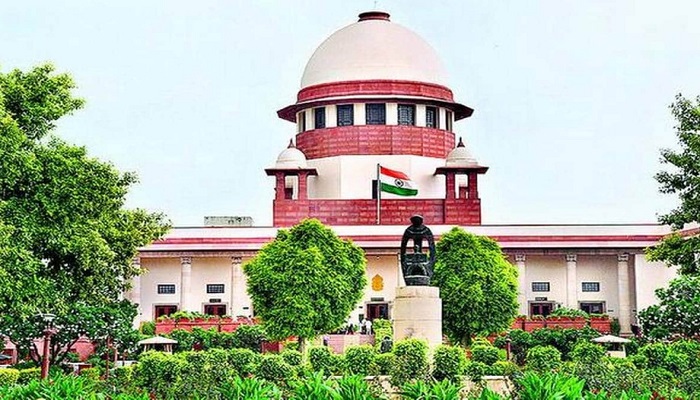
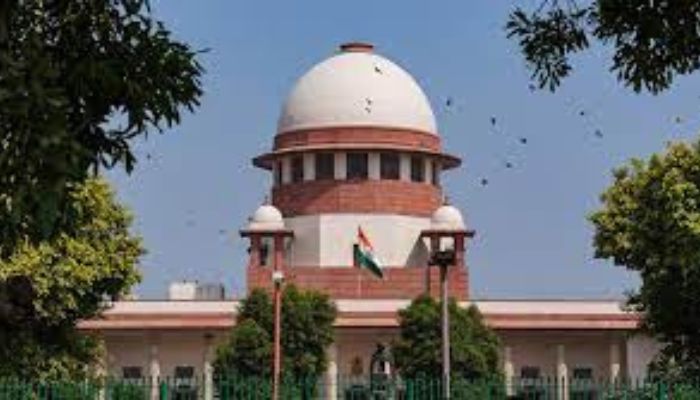
The Supreme Court on Friday issued notice to the Bihar government on the plea challenging a caste-based survey in the state and refused to stay anything arising out of the publication of the data of the caste census.
A bench of Justices Sanjiv Khanna and SVN Bhatti made it clear that it is not going to stay anything at this point. The court said that it cannot stop the state government or any government from taking a decision as that would be wrong.
The court, however, said it would consider any issue with regard to data of caste-based survey and examine the issue regarding the power of the state govt to conduct such exercises.
The court also sought to know from the Bihar government why they published the data. The court was hearing petitions challenging the Patna High Court’s decision to uphold the caste survey initiated by the Bihar Government.
The petitioner’s lawyer has apprised the court that the Bihar Government has already published the caste survey data, prompting concerns and challenges from various quarters.
Among the petitioners are organizations like Ek Soch Ek Prayas and Youth for Equality, who have contested the legality and authority of the caste-based survey.
The central government also entered the legal fray, filing an affidavit with the Supreme Court, emphasizing that the Census Act of 1948 bestows exclusive authority upon the Central Government to conduct census-related activities.
The affidavit reaffirmed the government’s commitment to uplift Scheduled Castes (SCs), Scheduled Tribes (STs), Socially and Educationally Backward Classes (SEBCs), and Other Backward Classes (OBCs) in line with constitutional provisions and applicable laws.
One of the petitions, represented by advocate Tanya Shree on behalf of petitioner Akhilesh Kumar, contested the Patna High Court’s dismissal of pleas challenging the Nitish Kumar government’s decision to conduct the caste-based survey. The High Court’s order was issued on August 1.
The petitioner had argued that the state of Bihar lacked the constitutional competence to initiate a caste-based survey and usurped the exclusive authority of the Union Government in conducting a census.
The petitioner had highlighted that the Bihar government’s notification dated June 6, 2022, and the subsequent appointment of a District Magistrate for supervision violate constitutional provisions, including the distribution of powers between the state and the union.
The petitioner contended that the entire exercise is without legislative competence and is riddled with malafide intentions.
The petitioner underscored that only the Union Government possesses the authority to conduct a census in India, rendering the Bihar State Government’s notification null and void.
The Patna High Court had previously dismissed similar pleas contesting the caste-based survey ordered by the Nitish Kumar administration.
The survey aims to collect data related to people of all castes, sub-castes, and socioeconomic conditions, covering an estimated population of 12.70 crores across 38 districts in Bihar.
(This news report is published from a syndicated feed. Except for the headline, the content has not been written or edited by OpIndia staff)
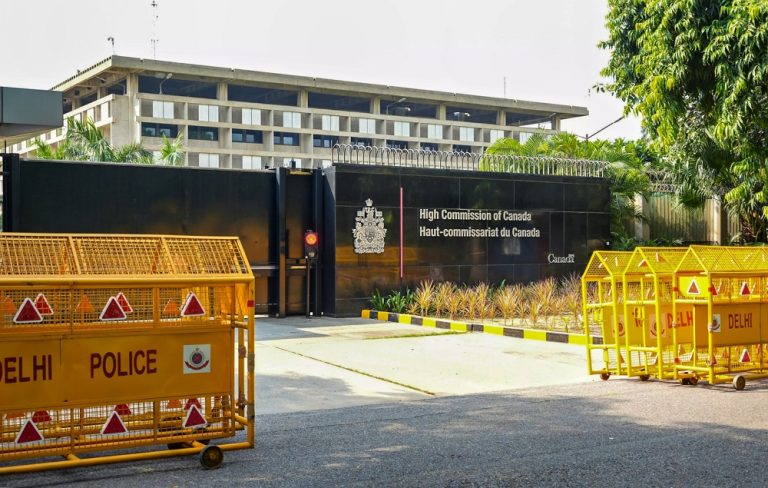
Amid the ongoing diplomatic standoff between India and Canada in light of the latter’s allegation of Indian involvement in the killing of Sikh separatist leader Hardeep Singh Nijjar, a Toronto-based media publication, CTV News, claimed in a report that a majority of the Canadian diplomats working in India, outside the national capital, have been moved to either Kuala Lumpur or Singapore.
The report comes a day after the Indian side sought reduction of Canada’s diplomatic staff in India.
In a weekly presser on Thursday, the official spokesperson of the Ministry of External Affairs (MEA), Arindam Bagchi told reporters, “Given the much higher presence of diplomats or diplomatic presence here…and their continued interference in our internal matters, we have sought parity in our respective diplomatic presence. Discussions are ongoing on the modalities of achieving this”.
“Given that Canadian diplomatic presence is higher, we would assume that there would be a reduction,” he added.
Stating that India’s focus is on achieving ‘parity’ in terms of its diplomatic presence, the Ministry of External Affairs called for a reduction in Canadian diplomats in India citing their continued “interference” in India’s “internal matters”.
Amid the diplomatic sabre-rattiling between the two countries, New Delhi suspended visa operations to Canada and called for a reduction in Canadian diplomatic staff in India.
CTV News, in its report, claimed that Ottawa has until October 10 to trim the number of Canadian diplomats serving in India to a level comparable to that of Indian diplomats serving in Canada.
While earlier reports stated that 41 diplomats would have to depart, people the CTV News contacted, said the request is particular to one of parity.
Earlier, Canadian Prime Minister Justin Trudeau alleged during a debate in Parliament, claimed the Indian government was behind the fatal shooting of Nijjar.
Trudeau, during a debate in the Canadian Parliament, claimed that his country’s national security officials had reasons to believe that “agents of the Indian government” carried out the killing of the Canadian citizen, who also served as the president of Surrey’s Guru Nanak Sikh Gurdwara.
However, India has outrightly rejected the claims, calling it ‘absurd’ and ‘motivated’.
Notably, Canada has yet to provide any public evidence to support the claim about the killing of Hardeep Singh Nijjar.
Softening his tone amid the diplomatic tensions, Trudeau said Ottawa wants to “work constructively with India”.
Nijjar, who was a designated terrorist in India, was gunned down outside a Gurdwara, in a parking area in Canada’s Surrey, British Columbia on June 18.
(This news report is published from a syndicated feed. Except for the headline, the content has not been written or edited by OpIndia staff)
A man named Safar Shah who worked at an automobile service centre was sentenced to double life imprisonment in a 2020 case for sexually assaulting and killing a 17-year-old schoolgirl named Gopika from Thuravoor by a special court on 4th October in Kerala’s Kochi. The victim was a plus-two student and four months pregnant.
The accused was found guilty of kidnapping the victim from Kaloor before sexually violating her at a tea farm in Valparai after which he ended her life on 7 January 2020. Judge K Soman of the Protection of Children from Sexual Offences Act (POCSO) court in Ernakulam pronounced that he shall remain behind bars for the remainder of his natural life for the heinous crime of rape and impregnation of the minor. He was incarcerated in 2020.
According to section 5 (j)(ii) of the Pocso Act (for raping and impregnating a minor girl) and section 302 (for murder) of the Indian Penal Code, the court sentenced him to life in prison for all of the charges. The court reportedly ordered him to serve a total of five years in prison for the crimes of kidnapping the girl and destroying evidence under the Indian Penal Code with the stipulation that he would first serve these two sentences consecutively before beginning his life sentence. It also assessed the prisoner a fine of Rs. 2.5 lakh.
The background of the crime
The 32-year-old was having an affair with her and sexually abused her several times from August 16, 2019. He had gone to the Gulf and returned after her insistence and begun to work as a s driver in Kochi. She, however, had no desire to continue their relationship and started making arrangements for raising the child by herself which fueled his resentment and animosity towards her.
Gopika left her home in Ernakulam near Kaloor for school as usual, but instead climbed into Safar Shah’s stolen car and the two drove about the city. They left for Athirappilly in the evening, covered the area along with Vazhachal, entered the thick forest and arrived in Valparai late at night.
He lured the young female away from her school in a vehicle by stressing that he had something to say to her after she disengaged from their relationship and promised to bring her back in the evening. She was abducted by him under the guise of bringing her to Athirappilly Waterfalls in Chalakudy Taluk of Thrissur District and stabbed to death with a knife on the way because she withdrew from their friendship. He was apprehended on his way back from the tea estate.
The dead body which was dumped in a coffee plantation in Valparai was later discovered by the police in school uniform. Her parents registered a complaint with the Kochi Central Police when she failed to return from her school. Her father told the authorities that Safar Shah had harassed and intimidated her by morphing her photographs. The Central Police registered a case and forwarded the information to other stations.
The culprit wasn’t initially considered a suspect in the investigation of the missing girl, however, he was caught during an inquiry into car theft. He had driven her to Valparai in the vehicle from his workplace.
Blood stains were inside the four-wheeler when it was stopped and inspected at the checkpoint. The specifics of the murder were revealed after the offender was nabbed and interrogated. The corpse was also uncovered later that night. He was found to be behind the murder based on circumstantial proof.
The girl was four months pregnant and had been sexually assaulted prior to the horrific event, according to the autopsy report. A DNA test established that she was impregnated by him. She was attacked severely in the chest and abdomen by him who then killed her. She had four serious chest wounds as well as more than twenty little and large ones on her body. He expressed no regret over his gutwrenching action and admitted that he killed her with a knife after she rejected his love and abandoned the deceased in the coffee garden.
The proprietors of the auto repair shop where he worked in Ernakulam’s Maradu district had reported a stolen vehicle to Maradu police as well as cited his disappearance. The Marad checkpoint was traversed by the stolen car before it entered Tamil Nadu, per information provided to Malakappara police. Malakappara is a border town between Tamil Nadu and Kerala. Malakappara cops rushed after him after learning his whereabouts on his mobile device. The Valparai checkpoint was also made aware of the situation.
Valparai is another hill resort in the Western Ghats of Tamil Nadu. The vehicle was halted by Valparai police before it landed at the checkpoint, but the girl was not found inside upon inspection. Smears of blood were spotted and he was taken into custody.
Safar Shah made an attempt to trick the Malakappara police team and led them on a wild goose chase in search of the body of the student who disappeared in Kochi. They searched for four hours before eventually locating it in a Valparai coffee farm. Murder, torture and charges related to the POCSO Act were brought against him.
He received bail from the high court on 12 May and was given permission to leave the prison on 19 May because the investigating official failed to submit the chargesheet within 90 days. Later, it turned out that the charge sheet was submitted, but the counsel made wrong submissions for the accused and the prosecution in the court. The incident led to major controversy as many believed that the decision was a result of misleading the court.
The government apologised for its “inadvertent” error and asked that the court return his bail application. Furthermore, concerns were voiced that there was a substantial possibility that he would pressure the prosecution’s witness. The court acknowledged the aforementioned problems and revoked the bail along with ordering his arrest. However, ten days had already passed and the criminal was on the loose in the society.
Persecution of Hindus in West Bengal, governed by Chief Minister Mamata Banerjee’s Trinamool Congress (TMC) government has prompted some Hindus in the state to seek help from Uttar Pradesh Chief Minister Yogi Adityanath, as they see no recourse for their concerns in West Bengal. They reached out to CM Yogi during his public gathering in a bid for support.
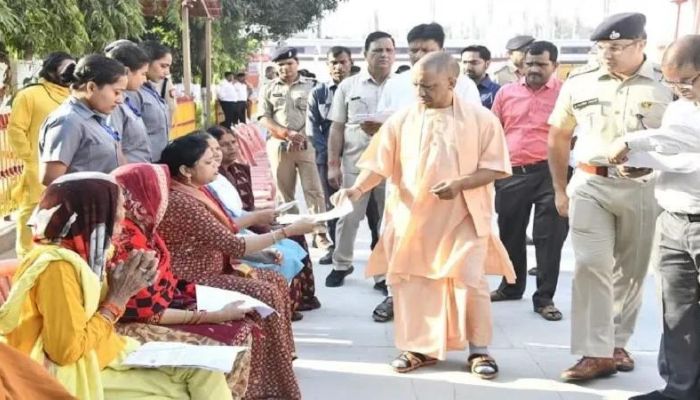
On Thursday, 5th October 2023, some Hindu families from Bengal attended a public gathering held by Uttar Pradesh Chief Minister Yogi Adityanath in Lucknow. During this event, they appealed for support in light of the harassment and hardships faced by Hindus in West Bengal, describing their situation as dire and seeking help as they found themselves in a vulnerable position.
According to media reports, several members of the Hindu community from West Bengal, who have been facing difficulties, approached Chief Minister Yogi Adityanath during a public gathering in Lucknow. They expressed their concerns, stating that in Bengal, some individuals, especially those from the Muslim community, are illegally encroaching upon their lands. They conveyed to CM Yogi, “The people taking over our land are issuing threats to us. Now, you are our last hope.”
When Chief Minister Yogi Adityanath responded with, “I am not the Chief Minister of West Bengal, someone else is,” the individuals insisted, saying, “But you can protect the Hindus.” Following this, Yogi Adityanath listened to their concerns and assured them of assistance. In addition, the CM also heard the problems of other people in attendance.
Meanwhile, Chief Minister Yogi Adityanath has taken significant action in response to the Deoria incident. Acting on his directives, the Sub-District Magistrate, District Magistrate, two Tehsildars, three Revenue Officers, the Head Constable, four Constables, two Block Development Officers, and the Police Station in charge have been suspended. He stated that those found guilty will face appropriate action.
CM Yogi expressed his displeasure with the fact that numerous land-related complaints had been filed. These complaints were forwarded to the online police department and the revenue department for investigation. However, officials from both departments did not take it seriously, nor did they address the issue promptly.
Prior to this, on Wednesday, 4th October 2023, Chief Minister Yogi Adityanath directed officials to prioritize the resolution of land disputes and public issues. He also issued strict orders against land mafias and mining mafias. The Chief Minister instructed that land survey cases should be resolved within 48 hours.
Yogi Adityanath conveyed a clear message to officials, emphasising that no one should be allowed to encroach upon the land of any weak, impoverished, entrepreneur, or businessperson in Uttar Pradesh. He explicitly stated that in cases of land disputes, the responsibility would lie with the district and tehsil authorities. In such circumstances, individuals are expected to fulfil their responsibilities correctly.
किसी भी कमजोर, गरीब, उद्यमी, व्यवसायी की भूमि पर कोई कब्जा न करने पाए।
It is noteworthy that Uttar Pradesh Chief Minister Yogi Adityanath holds public gatherings, known as “Janata Darbars,” in two locations, Gorakhpur and Lucknow, where he listens to people’s issues and works towards their resolution. He actively engages with relevant officials on the spot to address these problems effectively. During Yogi Adityanath’s Janata Darbars, ordinary citizens bring forth their concerns, and in this context, Hindus from West Bengal have approached him in the hope of receiving help.
The Central Government has notified the Supreme Court that reservations for Scheduled Castes, Scheduled Tribes, and Other Backward Classes will be provided in temporary postings lasting 45 days or beyond. It went on to say that orders had been issued to all Ministries and Departments to strictly implement the reservation for temporary positions.
The union government represented by Additional Solicitor General KM Nataraj said this to the bench comprising justices Sanjv Khanna and SVN Bhatti in response to a writ petition seeking SC/ST/OBC reservation in temporary jobs.
It referred to the Office Memorandum no. 41034/4/2022-Estt. (RES-I) dated November 21, 2022, issued by the Department of Personnel and Training, Ministry of Personnel, Public Grievances and Pensions, Government of India, which guaranteed reservation to SC/ST/OBC candidates in temporary appointments lasting 45 days or more, as well as prior Office Memorandums issued in 1968 and 2018.
The OM also pointed to a report by the Parliamentary Committee on the Welfare of Scheduled Castes and Scheduled Tribes, which found that the guidelines for reservations in temporary positions were not being followed in full by all departments.
…all the Ministries/Departments are requested to ensure that reservations for Scheduled Castes/Scheduled Tribes/Other Backward Classes shall be made in all temporary appointments which are to last for 45 days or more. These instructions should be conveyed to all concerned for strict compliance,” the ministry said.
Taking these OM into consideration, the bench dismissed the writ petition. The Court underlined that if there is a violation of this Office Memorandum, it will be open to the petitioners or an aggrieved party to seek proper legal remedies.
The court further recorded the statement of the Union Government’s counsel that a mechanism is present for dealing with instances of failure in abiding by the 21/11/2022 Office Memorandum.
For the petitioners, senior advocates Sanjay Hegde, Ayush Negi, AOR, Kartik Venu, Adv, Vishakha Upadhyay, Adv, and Shikhar Chanda, Adv appeared before the court.
The Delhi Police’s Special Cell, in its FIR against NewsClick founder and Editor-in-Chief Prabir Purkayastha, stated that People’s Dispatch Portal, owned and maintained by PPK Newsclick Studio Pvt. Ltd. has been used for intentionally peddling false narratives through paid news in lieu of crores of rupees of illegally routed foreign funds as part of a conspiracy.
It is further learnt that foreign funds include those from big Chinese Telecom companies such as Xiaomi and Vivo, among others. “Foreign funds in crores have been infused illegally in India by Indian and Foreign entities inimical to India in pursuance of conspiracy with the intention to disrupt the sovereignty and territorial integrity of India, to cause disaffection against India and to threaten the unity, integrity, and security of India,” Delhi Police stated in the FIR.
Delhi Police through a remand application on Wednesday alleged that NewsClick founder Prabir Purkayastha conspired to peddle the narrative that Kashmir and Arunachal Pradesh are disputed territories with the help of a Shanghai-based company.
Delhi Police informed the court through the remand application that secret inputs revealed that Prabir Purkayastha, Neville Roy Singham (said to be an active member of the Propaganda Department of the Communist Party of China) and some other Chinese employees of Neville Roy Singham-owned Shanghai-based Company by the name of StarStream have exchanged emails which expose their intent to show Kashmir and Arunachal Pradesh as not part of India.
The remand plea further stated that such attempts by these persons reveal their conspiracy to peddle a narrative, both globally and domestically, that Kashmir and Arunachal Pradesh are disputed territories.
“Their attempts to tinker with the northern borders of India and to show Kashmir and Arunachal Pradesh as not parts of India in maps amount to an act intended towards undermining the unity and territorial integrity of India,” Delhi Police stated. “The accused persons also conspired to disrupt supplies and services essential to the life and abet damage and destruction of property by protraction of farmers’ protests through such illegal foreign funding”, they added.
Meanwhile, Purkayastha on Friday moved the Delhi High Court seeking the quashing of FIR registered against him and others. His plea also challenged a trial court order granting remand to him and HR Head Amit Chakravarty in the matter.
On Thursday, Patiala House Court of Delhi allowed a plea moved by Prabir Purkayastha and Amit Chakravarty for the supply of a copy of FIR to them.
Since April 2018, such fraudulent funds in crores of rupees have been received by PPK Newsclick Studio Pvt. Ltd through illegal means during a short span of five years from Worldwide Media Holdings LLC, USA and others, the remand report stated.
“Such foreign funds have been fraudulently infused by one Neville Roy Singham through a complex web of several entities including Worldwide Media Holdings (incorporated by Jason Pfetcher, a close associate of Neville Roy Singham, People Support foundation (Jodie Evans, wife of Neville Roy Singham being director), Justice and Education Fund, GSPAN LLC (owned by Neville Roy Singham), The Tricontinental Ltd Inc US, Centro Popular De Midas, Brazil,” it added.
It was learnt that both Tricontinental India Pvt Ltd and GSPAN India Pvt Ltd were incorporated by The Tricontinental Ltd, USA and GSPAN LLC USA respectively to infuse funds in India by circumventing the existing rules for receipt of foreign funds by NGOs.
Further, it is learnt that Gautam Navlakha who has been a shareholder in PPK Newsclick Studio Pvt Ltd since its inception in the year 2018, remained involved in anti-Indian and unlawful activities such as actively supporting banned Naxal organisations and having anti-national nexus with Gulam Nabi Fai who is an agent of ISI of Pakistan.
It was also learnt that Gautam Navlakha has been associated with Prabir Purkayastha since 1991 when they incorporated Sagrik Process Analyst Pvt Ltd, stated Delhi Police.
(This news report is published from a syndicated feed. Except for the headline, the content has not been written or edited by OpIndia staff)
On Thursday (5th October), Austrian politician Gunther Fehlinger, who runs a lobby group named European Committee for NATO Enlargement, participated in an X space hosted by pro-Khalistani X handle Sikh Narrative. In this discussion, he guided Khalistani terrorists on how to carve a separate nation out of India. It is notable that Gunther Fehlinger wants Rahul Gandhi to become the Prime Minister of India. He has praised Rahul Gandhi on multiple occasions while running his anti-India anti-Modi propaganda.
As the name of his group suggests, Gunther Fehlinger wants to expand NATO by including several other European countries, including Austria, Kosovo, Ukraine, Armenia, Moldovo etc. He is not an official of NATO, as many people assumed, and has no link with the military alliance.
Informing about his participation in the X space discussion titled ‘Sikhs For Justice, Khalistan, and NATO with Gunther Fehlinger’, the NATO advocate on the eastern European countries wrote in his X handle post, “I discussed for 2 hours today with Sikh Narrative how to achieve independence of Khalistan and free the people of India from the yoke of pro-Russia autocrat Narendra Modi by Ex-India. I learnt a lot myself about the horrors & genocidal nature of today’s BRICS and India.”
Gunther Fehlinger said, “All the opposition leaders of the separatist movements in India need to work together. And then you sign declarations like what we have done now with the Russian opposition where they all agree on mutual cooperation after independence, on regional integration after independence, where they say for peaceful cooperation, a process where their borders are also very clear with other regions of India or that of Ex-India. So that is very important. Otherwise, everybody will say, ‘Encouraging the independence of Khalistan leads to a big civil war or big bloody process’. Nobody in the West wants to have a big civil war or a big independence war in India.”
Gunther Fehlinger guided Khalistani terrorists to devise a strategy of harnessing global support to separate from India. He said, “So, ultimately if you want to have support in public global opinion, then you need to have a process like this where all the other independence movements and the separatists in India say ‘Okay, we discard the Indian Union but we are absolutely ready to work together peacefully in good neighbourly relations’. Similar to this in the ex-Soviet Union, we are supporting Ukraine. Similar to the ex-Yugoslavia. We have also the Regional Cooperation Council.”
Detailing how Eastern Europe went on to become a part of NATO, he said, “We have all these mechanisms built up to help countries that are emerging out of a failed union. We have a regional cooperation infrastructure on energy because when you really go for independence there will be so many transactional costs. I always say, let’s avoid the war which is normally the price for independence.”
Explaining the modes of foolproof Balkanisation of India, Gunther Fehlinger told Khalistani terrorists, “You can also be sure it is very expensive to have independence. So you need to have a cooperation platform process prepared. There, you work still together on border facilitation, cross-border policing, infrastructure interconnectivity, energy infrastructure connectivity, and doing these things that neighbouring countries need to do. You need to show that you understand all these things and that you are not just emotional to get independence out of India but you are like a very mature movement and that you understand exactly what it means, that you understand it is risky and dangerous and expensive; but you prepared well. So, in this way, it will be more acceptable to the international global public to support Khalistan.”
A Khalistani terrorist Jatinder S Grewal who identifies himself as the International Policy Director of the Khalistani terrorist outfit Sikhs For Justice was also participating in this discussion. He asked Gunther Fehlinger, “Do the Sikh people of Punjab qualify for independence based on them being defined as a people under the UN or UNESCO definitions or guidelines for people? What are the prospects of having internal or external soft determination? India did have a state in their territory which they gave some autonomy to which was Kashmir. But recently they suppressed all that autonomy and completely eliminated any form of internal soft determination possible within the Indian Union. Based on that what would you say to those who may question that while India is democratic why do you want independence?”
Khalistani t£trot IST now has NATO speaker to tell them what to do. Did you all remember this guy Gunter Fehlinger was the one who arranged Rahul Gandhi’s latest visit to Europe. So in nutshell kangress party working with people who wants to break india. Listen to him, he is… pic.twitter.com/wmXjRCTPBW
In his answer to this question, Gunther Fehlinger said, “Look, I resort to giving a historic example and everybody should refer to that historic example. The most historically important example everybody from Khalistan must know is that of Kosovo. Kosovo in the year 1991 made an independence referendum where 99 per cent of the people were in favour. But the international community did not recognise it. And it led to a very tragic situation because we recognised Macedonia but we didn’t recognise Kosovo.”
Explaining the case of Kosova further, he said, “And then of course there was one decade of internal suppression of Kosovo under a very very brutal regime. And then it led from 1997 to 1999 to the independence war which Yugoslavia was close to winning. We as NATO had to intervene in the Yugoslavian war in 1999 and ultimately Kosovo gained independence.”
Gunther Fehlinger added, “That is one role model you have to look at. But it is also a difficult one. Because in the case of Khalistan, NATO will not come to help you. So you have to be also careful on that one. Because you don’t have to lose this one. Because there will be no military intervention to help Khalistan if you are completely suppressed by the Indian forces.”
Advising Khalistani terrorists to identify their potential candidate to become the president of Khalistan, Gunther Fehlinger said, “What you need to learn of course is to learn from the peaceful recognition campaign of President Rugova who was the historic president of Kosovo. And he has really gone through the birth and he has spread the gospel of Kosovo freedom. That is very important. You need one leader in the Sikh movement for the future President whom you vote for after the independence referendum and this person must go all over the world and explain the case of Khalistan independence and recognition. And over time, I think it will be successful. But of course, it will be strategic and you need to agree on one person to be your leader and your future president.”
He further said, “That is all not so easy. But exactly this is why it worked in Kosovo and in many other countries as well. Because the decision of Khalistan will not be taken in Khalistan yourselves but will be ultimately taken in the global court of public arena and you need to win this. This is the most important recommendation I have.”
Another Khalistani terrorist Amarinder Singh asked Gunther Fehlinger, “Should NATO expand to South Asia? and with Khalistan expanding from the Himalayas to Central Asia and South Asia, what are your thoughts on this?”
On this question, Gunther Fehlinger answered, “Look, NATO is basically about keeping the Americans and the Europe engaged against Russia for European security. This is our most important task as NATO. I am against the global expansion of NATO, especially in very fragile areas. We have experienced it in Afghanistan. It was not very successful. I think that is not the future.”
Adding about the possible ways for NATO to join hands with Khalistan, he said, “But we of course have a global partnership program where Japan is a part and Australia is a part. That kind of global partnership program is absolutely possible. It would not include a complete military alliance but it is kind of a status. More important is that we target the membership of the economic union which we have the OECD. And this is absolutely possible for Khalistan in future.”
Khalistani terrorist Amarinder Singh further asked, “What would NATO gain for making Khalistan a member and how does the landscape of Khalistan change by allying with NATO?”
Answering this question, Gunther Fehlinger said, “I think membership is a difficult thing. Because first, you need to go to independence. Then you need to transform into a free Western society. So, I think that will be very complicated. But a global partnership program is absolutely possible. It would be very good because it would also assist in the transformation of Khalistan into a modern successful market economy and democracy. To answer concretely, NATO membership – No. But part of the free world and other institutions – absolutely yes.”
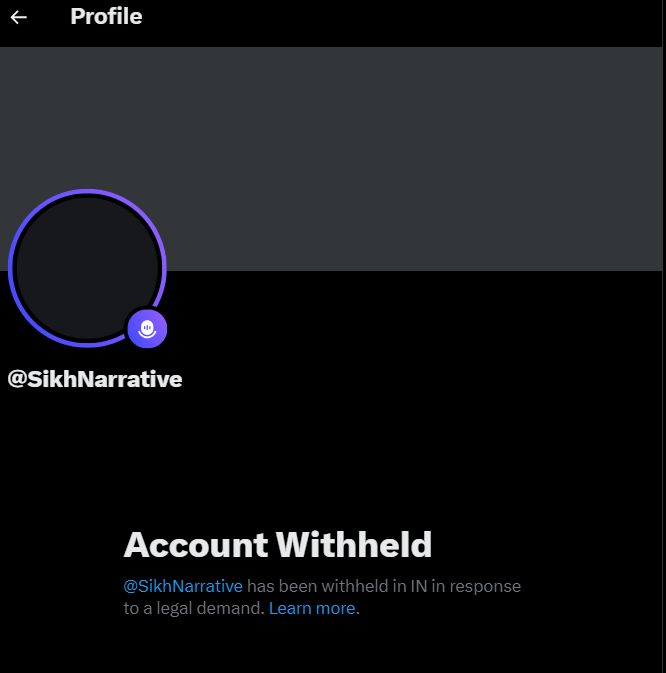
Khalistani terrorist Amarinder Singh then invited the NATO advocate for a referendum in Canada. He said, “A democratic exercise of Khalistan referendum is being conducted under the supervision of the Punjab Referendum Commission. It is happening in the Western countries. It is just not totally unfair to the Sikh nation but unfair to the world and the international community to reject the Khalistan referendum. I think we are all witnessing the history. You also supported the upcoming referendum on 29th October in Canada. We will most welcome you if you come there and supervise the activity.” It is notable that the X handle of the Sikh Narrative is withheld after this space.
Who is Gunther Fehlinger?
While during the discussion Gunther Fehlinger gave the impression that he is a NATO official and the Khalistani participants also seemed to believe the same, the fact is that he is not associated with NATO. He is not a high-ranking official of NATO, as people seemed to believe.
Gunther Fehlinger is an Austrian politician lobbying hard for the enlargement of the European Union and NATO. He runs a lobby group named the European Committee for NATO Enlargement, and currently calling for the inclusion of Kosovo, Ukraine, Armenia, Austria and Moldova in the North Atlantic Treaty Organization.
Due to the inclusion of the word NATO in his organisation’s name, many people frequently mistake him for a high-ranking official of the military alliance. But the fact is, he has no links with NATO and he is merely a lobbyist calling for an expansion of NATO. He also calls for other international organisations to include more members, like the EU and OECD.
It also seems that the European Committee for NATO Enlargement is just a one-person group, consisting only of Gunther Fehlinger. The so-called ‘European Committee’ does not have a website, and does not even have social media accounts in its name. Last month he wrote in a tweet, “I confess that the European Committee for Nato Enlargement is just me!”
I confess that the European Committee for Nato Enlargement is just me! Me and millions of Ukrainians, Bosnians ?? and citizens from Kosovo ?? & some Austrians & Irish ☘️ who are unfairly ? by @POTUS & @Bundeskanzler to join @NATO live in security under American ?? ☢️ ☔️ pic.twitter.com/75nYYk9BKr
Therefore, Gunther Fehlinger is just a lone ‘activist’, more of a social media activist, and he has just made up the name ‘European Committee for NATO Enlargement’ to mention in his social media accounts. There is no evidence that such a group actually exists.
Users on Quora have given a unanimous verdict on him, that he is a ‘single nutjob’. When a user asked how he could be fired for asking to break up Brazil, other Quora users noted that he did not appear to have a job from which he could be fired.
Gunther Fehlinger frequently makes highly controversial comments on other countries, and people on social media often target NATO over his comments assuming him to be a NATO official due to the title of his ‘group’.
Yesterday (5th October) he called for the Balkanisation of India, by posting a map of India on X showing it divided into several smaller nations. The map is similar to what Islamist and Khalistani terrorist groups often publish. This seems to be his modus operandi, to make controversial comments on countries that he has probably never been to, in an effort to make his name more recognisable.
In the guise of batting for peace, prosperity, and security, he actively endorses the Balakanisation of various global powers, including the BRICS countries. He often shares the maps of the BRICS countries showing the split into various smaller countries and mentions them with the prefix ‘ex’ underlining that these countries no longer exist.
He has posted maps calling for breaking up several countries, not just India. On 26 August, he called for ‘dismantling’ Russia.
Dismantling will start ? with Russia 2024 Rest of #BRICS has choice to decide to turn into Federal Market Democracies inside @OECD or they will be dismantled and their successor states will be integrated in Free World of Federal Market Democracies #FehlingerDoctrinepic.twitter.com/Xr9OmOL3wP
On the same day, he also talked about breaking up Brazil into 5 different states. He added that these ‘better free’ five new states will be able to join NATO and OECD (Organisation for Economic Co-operation and Development). Angry Brazilians responded to him with threats to dismantle Austria ‘again’, referring to the destruction of the Austro-Hungarian Empire after World War I.
He also supports the demand for an independent Cape in South Africa, another BRICS country.
His bizarre demands and claims are occasionally published by the media, often to clarify that he is not a NATO official, and Gunther Fehlinger thinks it is an achievement because he appeared in the media. Last month, he said that NATO should bomb the Serbian capital Belgrade, triggering angry reactions against NATO on social media. He has been asking NATO to include Kosovo and Bosnia, and attack Serbia, including imposing sanctions and isolating the country.
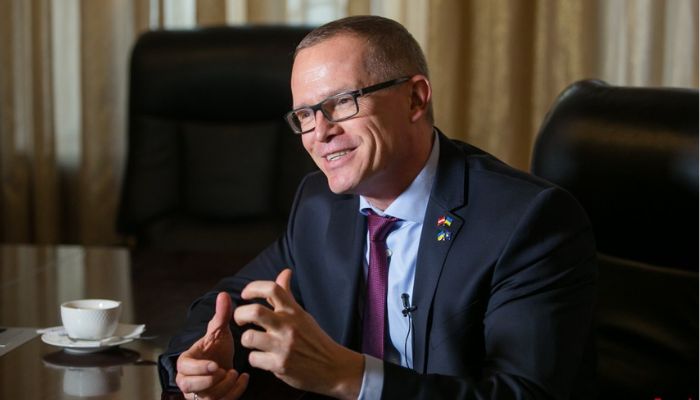
When he called for Armenia to join NATO, it caused people to believe it was an offer by NATO. This prompted Deputy Minister of Foreign Affairs of Armenia, Vahan Kostanyan, to clarify that Fehlinger is not a representative of NATO and Armenia has not received an invitation to join NATO. The minister had to clarify to the people that Gunther Fehlinger is only the head of an organization, the name of which simply includes the word NATO.
Outside misled social media users, there is no evidence of him being taken seriously by anyone, and certainly not NATO and EU and other organisations he wants to expand.
In fact, last month NATO Press Officer Daniele Riggio confirmed to the media that Fehlinger has no official connection with NATO. The Press Officer in the Press and Media Section of the Public Diplomacy Division at NATO Headquarters in Brussels stated that Gunther Fehlinger’s comments are his own and do not reflect the point of view of the military alliance.
In the last many days, he is seen advocating the indefensible cause of independent Khalistan and has repeatedly aligned with Khalistani terrorists and separatists. Every now and then he keeps participating in such discussions on various X posts or spaces. Several Khalistani supporters on social media are amplifying his posts believing that he is a real NATO official.
Gunther Fehlinger wants Rahul Gandhi to become the Prime Minister of India
On 25th August 2023, Gunther Fehlinger posted from his X handle, “I call for support for Indian opposition. President of the United States, and President of the European Union, We must support Rahul Gandhi as the next prime minister of India in 2024. We have tried with Narendra Modi but he is pro-Russia pro-China pro-BRICS and a disaster for India and the Free World. He must go.”
From the two facts that Gunther Fehlinger supports Khalistan and that he supports Rahul Gandhi as the Prime Minister of India it is evident that the NATO expansion advocate in Europe looks at the Congress scion as the Indian leader who might facilitate the Balkanisation of India at the will of the Western forces.
In his talk in the X space as well, he advocated that all the anti-India forces in India should come together and that all the oppositions in India should align with each other to make separate parts of India as independent countries carved out of the nation. His affinity to Rahul Gandhi and his support to the Wayanad MP for the top job in the country therefore holds a notion that Rahul Gandhi might be a useful pawn to those who want to undermine the sovereignty of the nation.
Rahul Gandhi’s foreign tours, especially his Europe tours, Khalistan supporters attending his talks and his anti-India blabbers on foreign soil, and his repeated pitch for foreign intervention in India should therefore be looked at through this lens so that it can be seen how desperately he is trying to undermine the national interests for cheap political gains and how external elements are eager to take advantage of it.
Kavita Krishnan, a far-left communist ideologue, recently shed light on how she tried shielding NewsClick, a leftist rag under the scanner in a Chinese funding row after the New York Times had approached her for comment following its explosive investigation that revealed how its benefactor, Neville Roy Singham, has links with the top echelons of the CCP and is involved in funding organisations for propagating Chinese talking points.
In an article published in the leftwing propaganda outlet, The Scroll, Krishnan offered a glib defence of the NewsClick portal and its links to China by denigrating the Modi government and attributing vendetta motives to them. It is the same cliched argument that left-liberal “intellectuals” and opposition politicians resort to when caught red-handed indulging in subversion and anti-national activities.
Titled “NYT’s report has been weaponised against Indian journalists. I had warned the paper about it”, Krishnan cunningly tries to whitewash NewsClick propagandists as ‘Indian journalists’, with an emphasis on their nationality as a means to tap into the nationalist sentiments and absolve them of any wrongdoing. Ironically, Krishnan and her ilk go hammer and tongs against the Centre when it invokes nationalism in matters about national security.
This hypocrisy aside, the article is generously sprinkled with strawman arguments and leftwing propaganda tropes to unfairly accuse the Modi government of repression and sweep the embarrassing links of NewsClick with the China-funded patron under the carpet.
For instance, the article is dishonest in not revealing that Prabir Purkayastha and the NewsClick team were introduced to Chinese handlers by Neville Roy Singham to defend China’s handling of COVID-19. Not just that, Krishnan is also insincere in hiding the fact that Purkayastha took instructions from Singham on how to report the India-China border standoff. The purported email exchanges between the two that surfaced online demonstrated the well-oiled Chinese propaganda machinery’s directions to leftist media portals like Newsclick to parrot the Chinese line, irrespective of the fact that it violates and impinges on national interest or goes against India’s stated sovereign boundaries.
Instead, Krishnan grotesquely tried to characterise NewsClick and its propagandists as the victims of media repression. She claims that when the New York Times approached for her comments on its investigation that found the involvement of NewsClick in propagating Chinese propaganda, she warned the American daily that it would be “weaponised” by the Modi government to further tighten the noose around “journalists” doing their jobs.
Such gaslighting is a hallmark of not just India’s leftwing ecosystem but the global left, where aggressors are painted as victims and police action against potential culprits is characterised as “fascism”, “authoritarianism”, “repression”, and with other such loaded jargon.
Krishnan summarily rejects the findings of the damning investigation by the New York Times that found links between NewsClick and China’s propaganda machinery, not based on any hard evidence but on her conviction informed by her communist inclinations. In a nutshell, she wants her readers to believe that the NYT investigation was junk, that it didn’t prove the criminality of NewsClick and its staff and that it only served as a catalyst for the Modi government to act against ‘journalists’.
According to Krishnan, the NewsClick ‘journalists’ were not paid propagandists of the Chinese regime because she says so. Krishnan does not bother to furnish any evidence to counter the assertions made by the Indian law enforcement agencies and the New York Times investigation. Instead, she wants everyone to take her claims as gospel and that ‘journalists’ of NewsClick were being persecuted for “continuing to do their duty as journalists”.
Intellectual dishonesty is another trait long mastered by the leftists. Krishnan passingly mentions that a case against NewsClick and its links with China has been under the scanner of Indian law enforcement agencies long before the New York Times investigation surfaced online. With The New York Times, which has rarely aligned with the democratically elected Modi government that has refused to adhere to the leftist worldview, arriving at the same conclusions as the Indian law enforcement agencies regarding NewsClick’s links with China is a scathing indictment of the communists and propagandists who are paid for by China to promote its propaganda and undermine Indian interests.
However, instead of questioning NewsClick, Krishnan passed the buck on the Indian government, leaning on leftist rhetorics against it to brand it as a regime bent on squelching media freedom.
After refusing to be quoted by the New York Times, Krishnan reportedly “took great pains’ to dissuade the lead reporter of the American daily from referencing NewsClick in the American daily’s story. She then trotted out the same tropes leftwing ideologues resort to when exposed for harbouring extraterritorial loyalties in their bid to topple a government that refuses to abide by their ideological principles.
Additionally, Krishnan also used the New York Times article to promote her longstanding propaganda of discrediting punitive action against those accused of riots, arson, and vandalism, including those charged under UAPA, and shielding them as victims of political repression. She then goes on to lavish praises on the NewsClick and its staff, hailing it as a beacon of ‘journalistic integrity’, relegating the grave accusations against it by the NYT investigation as mere ‘financial ‘impropriety’. Taking money from China is after all just a ‘financial impropriety’, as per Kavita, notwithstanding the fact that money is often used as an instrument to sway public opinion and run propaganda.
Krishnan then goes on to make a fantastic leap of faith, claiming that the democratically elected Modi government drew inspiration from Xi Jinping’s rule in China and that New Delhi was in close cooperation with Beijing in rationalising China’s treatment of Uyghurs and human rights abuses. Only lamebrained could conceive that India was cooperating with China at a time when the two countries were embroiled in a tense border standoff and had had a deadly clash at the Galwan Valley. That Krishnan thinks New Delhi is in cahoots with Beijing underscores her poor understanding of geopolitics and India’s foreign relations.
But to acquit NewsClick and its ‘journalists’, Krishnan not only goes on to make that outlandish claim but also takes great pain to make her case, citing India’s abstention in UN votes that are subject to realpolitik and rooted in Indian interests. Rather than posing questions to NewsClick and its propagandists over links with China, Krishnan slams the NYT for its story, as if NewsClick was beyond reproach and cannot be questioned for its purported links with China’s propaganda machinery.
Resorting to banal rhetorics that has been relied upon for far too long by the opposition parties and leftwing intellectuals hostile to the Modi government, Krishnan claims that the recent raids against NewsClick and its ‘journalists’ was what she had warned the New York Times when they had first approached her for a comment on the Neville Roy Singham story.
Krishnan and those who share her views regard any outlets or individuals disseminating information against the Modi government as reputable news sources and journalists of unwavering ethical standards. They believe that challenging them on substantial accusations is an attempt to “suppress the media”. Krishnan’s latest piece in The Scroll is one such shoddy attempt to project NewsClick and those associated with it as honest and upright, regardless of their links with China-funded benefactor, purported email exchanges with Chinese handlers, NYT investigation, and the action by the Indian law enforcement agencies that reveal NewsClick may not be as noble and virtuous as Krishnan claims it to be.
Krishnan’s refusal to acknowledge the Chinese links of NewsClick and its ‘journalists’ and her attempt to project police action against them as media suppression once again demonstrates that the Indian Left ecosystem would rather have the country subverted by a foreign power in their pathological hatred of a man rather than hold to account a propaganda website masquerading as a news portal and undermining the country’s sovereignty.