The Women’s Reservation Bill, referred to as Nari Shakti Vandan Adhiniyam, has been passed by the Lok Sabha. The 128th Constitution Amendment bill got 454 votes in the lower house, and only 2 lawmakers voted against it. The bill comfortably got 2/3rd the vote required for a constitutional amendment.
The two parliamentarians who voted against the bill were AIMIM MPs Asaduddin Owaisi and Imtiaz Jaleel. Owaisi had opposed the bill during the discussion on the bill in the lower house. He opposed it because it does not include specific reservations for Muslim and OBC women, saying it would provide reservations only to “savarna women”.
The bill, when becomes law, will provide one-third reservation to women in the lower house of the parliament, and state assemblies including Delhi. The bill was presented in the Lok Sabha by the government on 19th September, a day after it was cleared by the Union Cabinet.
Historic moment! The passage of the Women's Reservation Bill in the Lok Sabha is a giant leap towards gender equality in India. Let's celebrate this step towards empowering our women and creating a more inclusive democracy. मोदी है तो मुमकिन है। pic.twitter.com/FMS2fXzWOJ
The bill has become the first bill to be passed by the Lok Sabha in its new chamber in the new parliament building. “The ‘Nari Shakti Vandan Adhiniyam’ will ensure more women become members of Parliament, assemblies,” PM Modi said in his first speech in the new Lok Sabha chamber after the bill was tabled.
While the bill has been passed by the Lok Sabha, there will be no reservation for women in the 2014 Lok Sabha polls. The bill says that it will come into effect only after the delimitation exercise, which will be based on the latest census figures. As the delimitation had been paused till 2026, this means the bill can come into effect only after 2017. It is likely that 2029 Lok Sabha elections will see 33% reserved seats for women.
Once the bill becomes an Act, it will be in force for 15 years. However, the term of the law can be extended. According to law minister Arjun Ram Meghwal, the number of women in the lower house will become 181 from current 82 after the law comes into effect.
It is notable that past several governments tried to pass the bill, but unable to do so because of lack of consensus among parties. The bill was passed by the Rajya Sabha in 2010, however, as it was not taken up by the Lok Sabha, it had lapsed.
The passage of the bill saw a rare consensus in the Lok Sabha, as almost all parties supported the bill, including the Congress party. Both Sonia Gandhi and Rahul Gandhi spoke in favour of the bill. However, they demanded quota for SCs, STs and OBCs within the bill, and also demanded its immediate implementation.
Home Minister Amit Shah told the house that it is better if a Delimitation Commission decides seats to be reserved for women. He said that if the government prepares the list, and seats like Wayanad and Hyderabad get reserved, politicians like Rahul Gandhi and Asaduddin Owaisi will accuse the govt of playing politics using the bill.
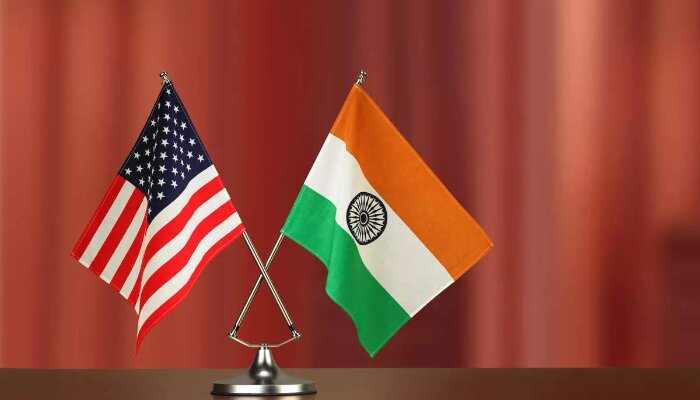
India has reportedly invited the US President Joe Biden to attend the Republic Day celebrations on January 26, 2024, media reported on Wednesday (20 September). According to the media reports, US President Joe Biden along with heads of Australia and Japan have been invited by India as the chief guest for next year’s Republic Day Parade.
Speaking at an event organised by Ananta Aspen Centre, a non-partisan and not-for-profit centre, US Ambassador to India, Eric Garcetti revealed the same.
US President Joe Biden has been invited to the January 26-Republic Day celebrations by PM Modi, during the bilateral meeting on the sidelines of the G20 summit, says US Ambassador Eric Garcetti. #JoeBiden#US#USPresident#RepublicDay#India
He stated that the invitation was extended to Biden by PM Modi on the sidelines of the bilateral meeting that took place between the two leaders at the recently concluded G20 Summit. However, there hasn’t been an official confirmation from the government side about the invite to QUAD leaders.
PM Modi has invited President Biden to be the chief guest at Republic day, says US ambassador Garcetti in Delhi https://t.co/aamtiGbyxL
Egyptian President Abdel Fattah el-Sisi was the chief guest at this year’s Republic Day parade. Previously, in 2018, India had invited former US President Donald Trump as the Chief guest for the Republic Day celebrations, however, due to prior domestic commitments, he declined the invitation.
If Biden confirms, then this will be the second time a US President will be at India's Republic day on 26th January. Last time it was Obama in 2015.
If these reports prove accurate and Joe Biden participates in the Republic Day event, he would become the second U.S. President to attend India’s Republic Day as the Chief Guest. Notably, In 2015, Barack Obama was the first US President to attend India’s Republic Day parade as Chief Guest.
Recently, US President Joe Biden visited India for the G20 Summit where PM Modi reportedly extended the invitation. During the bilateral, India and the US settled the seventh and last outstanding World Trade Organisation (WTO) dispute. The previous six disputes were resolved during PM Modi’s state visit to the US in June 2023.
Regarding the visit, the India-US joint statement read, “Prime Minister Narendra Modi welcomed United States President Joseph R. Biden, Jr., to India today, reaffirming the close and enduring partnership between India and the United States. The leaders expressed their appreciation for the substantial progress underway to implement the ground breaking achievements of Prime Minister Modi’s historic, June 2023, visit to Washington.”
On Tuesday (19 September), Polish President Andrzej Duda likened Ukraine to a drowning man while defending his government’s decision to impose a grain embargo on Ukrainian agricultural products. During a media briefing outside the UN headquarters in New York, he targeted Ukraine for going against them at the World Trade Organisation (WTO) and challenging their decision to ban grain imports from Kyiv.
“We are dealing a bit with a drowning person. Everyone who has ever taken part in rescuing a drowning person knows that a drowning person is extremely dangerous; and that he can drag you to the depths. He has unimaginable strength due to personal fear, the influence of adrenaline, and perhaps “simply drown the rescuer,” the Polish President was quoted saying in Polish media outlet PAP.
The Polish President asserted that it has to first protect its own interest otherwise if Ukraine (drowning man) causes harm to it, they would not be able to help it.
Duda further said, “It is a bit like the situation between Poland and Ukraine. Ukraine is under Russian attack, undoubtedly in a very difficult situation, Ukraine is grasping at everything it can. Can you blame it for that? Of course, you can complain. Should we act to protect ourselves from the drowning person causing harm? Of course, we must act to protect ourselves from harm being done to us, because if the drowning person causes harm and drowns us, he will not get help. So we have to take care of our interests and we will do it effectively and decisively.”
EU solidarity?
Poland's Duda on Ukraine grain: "Should we act to protect ourselves from being harmed by a drowning man? Of course we must act to protect ourselves from a drowning man causing us harm, because if the drowning man causes us harm and drowns us, he won’t get any… pic.twitter.com/VRrHjPRhj9
Going ahead, he reminded Ukraine that it has been receiving help from Warsaw and that their country serves as a transit nation. He also highlighted that the ban doesn’t prohibit the transit of Ukrainian grain. He noted that Ukraine should remember that it receives help from Poland.
He said, “It would be good for Ukraine to remember that it receives help from us and to remember that we are also a transit country to Ukraine.”
He added, “There are business circles that have interests in Ukraine and would like to sell grain as quickly as possible at the lowest possible cost. We have to defend ourselves against it.”
Regarding his meeting with Ukrainian President Volodymyr Zelensky, he claimed that despite his plans, the two could not meet because of “organisational reasons”.
He said that the scheduled speeches by various leaders at UNGA got delayed which impacted their plans. However, he said that it was possible that he would meet Zelensky later.
On the issue of Ukraine’s move to sue their country at the WTO, Duda said that if Ukraine filed the complaint, Poland would explain the situation before the tribunal.
The backdrop of the ongoing Polish-Ukraine dispute
In May, the European Union imposed a restriction on Ukrainian grain. This was done to allow Poland, Bulgaria, Hungary, Romania, and Slovakia to ban the domestic sales of Ukrainian wheat, maize, rapeseed, and sunflower seeds. However, this ban still permitted the transit of such cargoes for export elsewhere.
On 15 September, the restrictions over the Ukrainian grains expired and the European Commission announced that it would not extend restrictions on imports of agricultural products from Ukraine. However, on its part, Kyiv agreed that it would take measures to limit imports from its side and not flood the neighbouring countries’ markets.
Nevertheless, Poland, Hungary, and Slovakia went ahead and imposed unilateral restrictions on the import of Ukrainian agriculture products, a grain embargo. Additionally, Poland categorically asserted that their restrictions will remain in place indefinitely.
Regarding the Polish-Ukraine dispute, media agency Politico reported that Kyiv will sue Poland, Hungary, and Slovakia over their refusal to drop a ban on Ukrainian agricultural products based on their interview with Ukraine’s Trade Representative Taras Kachka.
Kachka said, “These arbitrary prohibitions are ridiculous.”
On Monday (18 September), Ukraine’s economy minister, Yulia Svyrydenko said that her country had filed a complaint with the WTO against the three countries over the ban.
Following the development, a WTO spokesperson confirmed that Kyiv had taken the first step in a trade dispute by filing a complaint to the global trade body, Reuters reported.
Ukraine’s decision to sue European nations some of which are its ardent supporters in the ongoing war against Russia, didn’t go well with Polish leaders who hinted that Poland could stop helping Ukraine if Polish citizens don’t support its move to assist Ukraine, hinting that Ukraine’s WTO move had caused angst in Poland.
Hinting about its dissatisfaction, the government said that Poland will likely cut financial support to the million Ukrainian refugees it is hosting.
On Tuesday, Deputy Foreign Minister Szymon Szynkowski vel Sęk told Polish media PAP that the Polish government is “unyielding” on grain embargo from Ukraine citing the need to protect the interests of Polish farmers.
According to him, the steps taken by Ukraine have a negative impact on mutual relations. He also asserted that Ukraine’s move undermined the sympathy for Ukraine that Poles have.
He noted, “Ukraine’s actions make no impression on us… but they do make a certain impression on Polish public opinion. This can be seen in the polls, in the level of public support for continued support for Ukraine. And this harms Ukraine itself.”
Poland may stop supporting Ukraine amid a conflict over grain supplies, Deputy Foreign Minister Szymon Szynkowski vel Senk said in an interview with PAP.
“We want to continue to support Ukraine, but for this we need the approval of the Poles. If he doesn’t exist, we won’t be… pic.twitter.com/e8MaqnzPHy
He said, “We would like to continue supporting Ukraine, but, for this to be possible, we must have the support of Poles in this matter. If we don’t have it, it will be difficult for us to continue supporting Ukraine in the same way as we have been doing so far.”
Indian World Forum has issued a statement condemning the pro-Khalistan elements flourishing in Canada and asked the government of Prime Minister Justin Trudeau to undertake measures to curb anti-Indian activities on its soil.
It read, “Indian World Forum strongly condemns the disgruntled activities by unlawful organizations including Sikhs for Justice for stalking and purporting violence on the Indian diaspora in Canada.” It mentioned that all members of the Indian diaspora, whether they are Christians, Hindus, Muslims, or Sikhs contribute significantly to the advancement of Canadian society on the economic and social fronts.
It highlighted the regular desecration and attacks on Hindu temples as well as the serious threats to the lives of Indian diplomats due to the violence inflicted by the Sikh separatists. “Repeatedly Indian diaspora and their places of worship have been targeted there. The harmful activities of such organizations including numerous attempts to target the Indian diplomatic missions and its personnel in Australia, Canada, the United Kingdom and the United States of America is a matter of great for the Indian diaspora.”
The organisation asked the Canadian Government “to consider and act seriously on nefarious elements including Arshdeep Singh Dhalla and Gurpatwant Singh Pannun (both designated terrorists by India) from using its soil against mankind and heinous activities.”
The press release further added, “Any attempt to cause danger to the Indian diaspora and their investments in Canada will violate the sanctity of the UN Charter and its conventions. In India we warmly host our Canadian brethren and our culture ensures the well-being of the Canadian Diaspora in India.”
The notification was undersigned by Puneet Singh who is the president of the Indian World Forum.
Indian World Forum issues press statement, "Indian World Forum strongly condemns the disgruntled activities by unlawful organizations including Sikhs for Justice for stalking and purporting violence on the Indian diaspora in Canada…Indian World Forum urges the Government of… pic.twitter.com/H2wOjvSiyZ
The tension between Canada and India escalated particularly after the G20 summit when Prime Minister Narendra Modi conveyed his serious grievances to his Canadian counterpart on the sidelines of the summit where the former pointed out the use of Canadian soil for anti-India and Hinduphobic activities by Sikh radicals.
India has repeatedly asked Canada to take action against the growing anti-India activities in the country, however, has only received a very underwhelming response from the other side.
On the other hand, the Canadian government blamed India based on ‘strong allegations’ for the murder of Khalistani terrorist Hardeep Singh Nijjar and expelled a top Indian diplomat. India then summoned Cameron MacKay, Canada’s High Commissioner to India and threw out a senior Canadian diplomat in response to the country’s hostile behaviour and political support to anti-India elements.
Furthermore, India’s Ministry of External Affairs issued an advisory for Indian nationals and students in Canada and advised them to exercise caution citing the surge in anti-India activities and politically-endorsed hate crimes.
Travel advice is also included in the MEA’s guidance which cautions Indian citizens from booking flights to Canada. The Ministry has recommended Indian nationals not to travel to violent areas emphasising the threats and attacks against Indian diplomats and patriotic Indians.
The government of Canada has shied away from taking stern action against the Khalistani extremists in its country and catered to vote bank politics despite frequent objections from India which have resulted in the souring of diplomatic relationships between the two countries.
On Wednesday, September 20, the National Investigation Agency (NIA) issued a list of wanted gangsters who have been accused in the terror-gangster nexus case registered by the probe agency in August last year. The list features dreaded gangsters including those known for supporting the Khalistan propaganda and are based in Canada. Among the gang leaders and criminals listed by the NIA, gangsters Goldy Brar, Arshdeep Singh Gill and Lakhbir Singh Landa are known for supporting pro-Khalistan terrorists.
Taking to X, the probe agency released the pictures of 43 accused gang leaders and criminals in the case numbers RC-38/2022/NIA/DLI and RC-39/2022/NIA/DLI registered in August last year. The accused persons have been involved in killings, extortion, and running and promoting crime syndicates. The NIA had alleged that the accused persons were allegedly involved in conspiring to carry out terror attacks in Delhi and were obtaining funds for the same through smuggling of weapons.
In its post, the NIA included pictures of Lawrence Bishnoi, Jasdeep Singh, Kala Jatheri alias Sandeep, Virender Pratap alias Kala Rana, and Joginder Singh, as well as their full names. It underlined that many of these gangsters are based in Canada.
Persons shown in photos below are accused in the NIA Cases RC-38/2022/NIA/DLI or RC-39/2022/NIA/DLI. If you has any information about properties/assets/ business owned by them in their name or in name of their associates, friends & relatives, please WhatsApp DM @ +91 7290009373. pic.twitter.com/tkgicw4ouo
The NIA also asked for information on the properties/assets/businesses they owned in their own names or in the names of associates, acquaintances, and relatives. It has also requested details regarding their business partners, workers, employees, and collection agents.
“Persons shown in the photos below are accused in the NIA Cases RC-38/2022/NIA/DLI or RC-39/2022/NIA/DLI. If you have any information about properties/assets/ business owned by them in their name or in the name of their associates, friends & relatives, please WhatsApp DM @ +91 7290009373,” the NIA posted on X.
The full list of 43 names released by NIA is given below:
Lawrence Bishnoi
Jasdeep Singh
Kala Jatheri alias Sandeep
4.Virender Pratap alias Kala Rana
Joginder Singh
Rajesh Kumar alias Raju Mota
Raj Kumaralias Raju Basodi
Anil Chippi
Mohammad Shahbaz
Goldy Brar Ansari
Sachin Thapan Bishnoi
Anmol Bishnoi
Vikramjit Singh alias Vikram Brar
Darman Singh alias Darmaniot Kahlon
Arshdeep Singh Gill
Surender Singh alias Chiku
Dalip Kumar alias Bhola
Parveen Wadhwa aliasPrince
Yudhveer Singh
Vikas Singh
Lakhbir Singh alias Landa
Gaurav Patyal alias Saurav Thakur
Sukhpreet Singh alias Budda
Amit Dagar
Kaushal Choudhary
Asif Khan
Naveen Dabas alias Naveen Bali
Chhotu Ram alias Bhat
Jagseer Singh alias Jagga
Sunil Balvan alias Tillu Tajpuria
Bhupinder Singh alias Bhupi Rana
Sandeep alias Bandar
Sukhdool Singh
Gurpinder Singh
Neerai alias Pandit
Daler Singh
Dinesh Sharma
Manprit Singh Peeta
Hariom alias Titu
Harpreet
Lakhveer Singh
Irfan alias Chhenu Pehalwan
Sunny Dagar
The NIA’s move comes after hostilities between India and Canada rose after Prime Minister Justin Trudeau recently accused the Indian government of being involved in the killing of Khalistani terrorist Hardeep Singh Nijjar. On June 18, Nijjar, a designated terrorist in India, was killed outside a Gurdwara in a parking lot in Canada’s Surrey, British Columbia.
The controversy around Nijjar’s murder recently erupted after Canadian Prime Minister Justin Trudeau on September 18 accused India of killing the Khalistani terrorist on Canadian soil. Without providing any proof, Trudeau claimed that Canada is pursuing “credible information” about Indian agents being involved in Nijjar’s killing. After the bizarre statement by Trudeau, Canada expelled one Indian diplomat over it, the Indian government rejected all of Canada’s allegations. In a swift response, the Ministry of External Affairs stated that any allegation of India’s involvement in Nijjar’s killing is ‘absurd and motivated’.
The International Council of Cricket was at the receiving end of online criticism on Wednesday afternoon after it released its much-awaited World Cup anthem ahead of the quadrennial tournament scheduled to take place in India starting this October.
A raft of social media users took to X, formerly known as Twitter, to haul ICC over the coals for the anthem, claiming that it was a big disappointment for everything that the tournament represents.
The anthem, titled ‘Dil Jashn Bole,’ features Bollywood actor Ranveer Singh in the lead role. Pritam, a highly accomplished music composer, has crafted the music for this anthem. Additionally, the anthem showcases the choreography of Dhanashree Verma, who is married to Yuzvendra Chahal, the renowned India leg-spinner. In the three-minute and 22-second-long anthem, viewers embark on a visual voyage across India aboard the ‘One Day Express.’
But the anthem failed to dazzle X users, who were particularly critical in roasting the ICC for releasing a song that failed to strike a chord with the audiences like earlier ones had done, primarily the one released before the 2011 World Cup.
A social media user deemed the World Cup anthem a “Monumental disaster” and expressed disappointment at the song released by the ICC.
Monumental disaster! What a disappointing World Cup anthem have they released. Can’t they have come up with something better and refined? Such loud and garish lunacy is cringeworthy to say the least https://t.co/n5xu8C9EUI
Ajeet Bharti, a popular political analyst and commentator, was so disappointed with the new anthem that he remarked that it would have been better if ICC had not released the song altogether if it had to come up with something like this.
ये क्या बनासीर बना दिए हो बे @bcci? सड़कछाप चलताऊ लिरिक्स, शोर भरा संगीत, घटिया वोक ग्राफिक्स… नहीं भी बनाते तो सही ही रहता, किस फैन ने माँगा कि गीत बना दो? क्रिंज की परिभाषा है ये गीत। pic.twitter.com/K1W6lCyH3f
Another popular X user, @theskindoctor, who is known for his sarcastic jibes, took a dig at the ICC in his characteristic manner, asking ICC to not release “masterpieces of such magnitude for the public as it diminishes their exclusivity and sanctity.”
Awesome song! Masterpieces of this magnitude shouldn't be made available to the general public, as it diminishes their exclusivity and sanctity. Please consider keeping it exclusively for use in ICC and BCCI offices, and refrain from releasing it to the general public.
The World Cup commences with defending champion England facing off against New Zealand, the last edition’s runner-up, at the Narendra Modi Stadium in Ahmedabad. India will embark on their World Cup campaign against the five-time winners Australia on October 8 at the Chidambaram Stadium in Chennai. In this year’s event, a total of 10 teams are participating. Each team will compete against all others, and the top four teams will progress to the semi-finals.
Ahead of the assembly polls slated later this year, several Bharatiya Janata Party (BJP) leaders, including a former member of parliament (MP) of BJP from Balaghat Bodh Singh Bhagat have joined the Congress party along with their supporters.
These leaders took the membership of the Congress in the presence of state Congress chief and former chief minister Kamal Nath at the state Congress office in Bhopal on Wednesday.
The leaders who joined the congress party include Bodh Singh Bhagat from Balaghat, Dilip Singh from Rewa, Rajesh Patel and Sumit Choubey from Budni and Prabhat Joshi, Dr Bhim Singh Patel and Chandrashekhar Patel from Vidisha along with their supporters.
According to the Congress, Rajesh Patel from Budhni, Chief minister Shivraj Singh Chouhan’s constituency, came with convoy of around 150 vehicles to joined the party.
Addressing the program on the occasion, Bodh Singh Bhagat said, “It is my fortune that I am taking membership of Congress. Congress Leader Rahul Gandhi led the Bharat Jodo Yatra in the severe cold and gave a message that there should be an atmosphere of brotherhood in the country. I was very impressed by it.”
The 15-month tenure of the Congress government has left an impact on the people’s heart which they did not forget. The congress government was collapsed by conspiracy but he can assure that the public would not forgive them (BJP), he added.
“My fight with the BJP was of adulteration, fake fertiliser, fake seeds, fake medicines. I also raised this issue but my voice was overshadowed. Balaghat MLA Ghori Shankar Bisen has been included in the cabinet against whom and there is a case in Lokayukta in connection with disproportionate assets,” he added.
When elections are near Chief Minister Shivraj Singh Chouhan is giving lollipops to people but people of the state have understood everything. Today, there is not even the right to speak in the country. If someone speaks that person is put behind the bars, Bhagat said.
“Today, I have taken the membership and there are no conditions in love. I have not demanded anything from Kamal Nath. Whatever responsibility is given to me, I will accept it,” he added.
On the other hand, speaking on the occasion Kamal Nath said, “I welcome everyone in the congress party. Bodh Singh has been in Parliament with me. You are not supporting the Congress, you are supporting the truth.”
Today, there is no limit to corruption in the state. Every person is either a victim or witness to corruption. Such a system has been created that gives money and takes work. Today, farmers are facing problems in getting fertilisers and seeds, he added.
“The upcoming assembly polls is not an election of any party or any candidate, it is the election of the future of Madhya Pradesh. In the last 5 months, CM Chouhan’s lie machine has been running at double the speed. If CM Shivraj did not lie, then his food didn’t digest,” Nath said.
Don’t support Kamal Nath or the Congress party but support the truth, he added.
The state is scheduled to go for the Assembly polls later this year. Through the polls, the state will elect legislators from 230 Assembly constituencies.
(This news report is published from a syndicated feed. Except for the headline, the content has not been written or edited by OpIndia staff)
On 18th September, the Prime Minister of Canada accused India of having involvement in the murder of Khalistani terrorist Hardeep Singh Nijjar on Canadian soil. Moving a step further, Canada expelled a top Indian diplomat. In the aftermath, India denied the allegations and expelled a Canadian diplomat who had to leave India in 5 days. Interestingly, Canada has been a long-time supporter of Khalistani separatists. So much so, Justin Trudeau’s father, Pierre Trudeau, had refused India’s request for the extradition of Khalistani terrorist Talwinder Singh Parmar, chief of Babbar Khalsa. Parmar continued to live in Canada and planned the Kanishka bombing, in which 329 people were killed, including 268 Canadians.
While Canada has supported the separatism movement against India, its backyard is not as silent as it may look. For decades, the residents of Quebec have been asking for a separate nation. Most of Quebec is predominately French, and there have been two referendums already, the second of which Canada won only by a margin of around 54,000 votes.
The history of Canadian colonisation
The history of colonisation in Canada began back in the 1530s. Canada was, in fact, the first French colony. It was claimed for France by Jacques Cartier in 1534. The permanent French settlement began in Canada in 1608. The main aim of the settlement was the fur trade. For almost 150 years, Canada remained a French colony.
Quebec in Canada. Source: Britannica
In the 1760s, the British attacked Canada and defeated France in a French and Indian War. As a result, Canada was divided into Upper Canada (British) and Lower Canada (French). The Lower Canada is now called Quebec. In 1867, Canada was united with the British North America Act.
The nationalism that led to seperatism
The demand for a separate nation comes under French Canadian nationalism. According to Britannica, the sense of nationalism among the French Canadians resulted from economic and social changes in Quebec since 1890. Notably, before the 1890s, the people of Quebec mostly thrived on agriculture and seasonal work in the timber trade.
However, with the growth of the hydroelectric power and wood pulp industry, Quebec quickly peaked in the industrial revolution. Manufacturing plants were established in Quebec and Ontario, leading to the migration of French Canadian workers into the cities.
The sense of discrimination developed among the French Canadians from this point in time as very few facilities were available for them. The quick rise in the French Canadian population and lack of workable land pushed them to low-paying jobs in the urban industries. Later, it pushed them further to establish urban slums, especially in Montreal.
In the next three decades, Quebec flourished in terms of industry and became Canada’s most urbanised and industrialised province. The rapid industrialisation led to a head-on clash between traditional Roman Catholic agriculture favouring the population and industrialisation favouring the population. Between 1936 and 1959, Quebec saw a turmoil of political change. Especially when Premier Maurice Duplessis came to power, he preferred to support the Roman Catholic Church as Quebec’s chief agency of social welfare and education and foreign investment, which opposed most of the new social and educational initiatives launched by other regional governments.
Following the World War II, Montreal and other urban centres saw a rapid growth. The French-speaking urban middle class was now shifting to businesses and white-collar professions. The general public was getting more educated, with more students completing high school and entering Canadian colleges and universities.
During that period, Pierre Trudeau, who later became Prime Minister of Canada, became one of the idealist leaders who opposed the ideas of Duplessis. In 1959, Duplessis died, which led to major political changes in the region.
In June 1960, the Quebec Liberal Party came to power under Jean Lesage. Some of the major steps taken at that time included the removal of the Roman Catholic Church from most secular activities and the provincial government’s involvement in economic development. The changes brought by the regime, including the nationalisation of the power sector, the provincial pension plan and the creating of investment capital, are known as the Quiet Revolution.
The demand for seperate Quebec nation
In 1966, the Union Nationale defeated the Liberals and came to power. Though they remained fundamentally federalist, the stress had now shifted to obtaining greater provincial power. The opinions among the leaders ranged from demanding special status for Quebec to supporting a separate and independent country altogether.
The demand led to the establishment of Parti Quebecois, which advocated secession from the confederation. In the 1970 elections, the party under the leadership of Rene Levesque won 24 per cent of the popular votes against the Liberals. Though Liberals remained in power with 72 of 95 assembly seats, the political turmoil continued in the region.
Separatism comes with an armed tussle, and Canada also faced it in the early 1960s. According to Britannica, a section of separatists was inspired by refugees from Algeria and the armed revolution of Cuba at that time and practised terrorism. The bombings began in 1963 and continued for years. While most French and English Canadians believed it was an “un-Canadian” thing to do, armed separatism continued to rise.
The movement’s peak came in 1970 when a terrorist group named Quebec Liberation Front or Front de Libération du Québec kidnapped the British trade commissioner, James Cross, and Quebec’s labour minister, Pierre Laporte. They later murdered Laporte. Irked by the incident, the Quebec government sought federal intervention, leading to the enactment of the War Measures Act. All usual civil rights were suspended. Around 500 people were arrested, and federal troops were deployed in Quebec. The people of Canada mostly supported the act.
The French language bills
In 1974 and 1976, Quebec’s provincial legislature passed Bill 22 and Bill 101. These bills declared French as the province’s official language. A mandate was issued to establish French-language schools for immigrants and required the use of the French language in the workplace. Though the francophone residents of Quebec were happy with the new laws, the English-speaking and other Quebeckers and the rest of the Canadians were not that pleased.
The first referendum
In 1982, the Canadian federal government introduced a new Constitution through the Constitution Act. This act included a Charter of Rights and Freedoms to address human rights concerns, particularly among French Canadians. However, Quebec did not accept this Constitution Act. In 1984, the Liberal Party lost control of Parliament to the Conservative Party, and Prime Minister Brian Mulroney made it a priority to address constitutional tensions with Quebec.
In 1987, Canadian Prime Minister Brian Mulroney and Quebec Premier Robert Bourassa met at Meech Lake in Ontario, which led to the Meech Lake Accord. This Accord proposed changes to the Canadian Constitution that recognised Quebec as a “distinct society” within Canada, emphasised the coexistence of French and English speakers as essential to Canadian society, and granted Quebec a say in choosing Supreme Court justices, shaping immigration policy, and vetoing constitutional amendments. While Bourassa was content with this Accord, it stirred controversy among non-Francophone Canadians who believed that it gave Quebecois a privileged position over other groups like Indigenous peoples and women.
Despite receiving approval from Ottawa and eight provincial governments, the Meech Lake Accord failed in 1990 due to opposition from Manitoba and Newfoundland.
The referendums for a separate state
In 1992, the Quebec government proposed a referendum to decide whether Quebec should become an independent country or remain a part of Canada. The national government suggested a meeting in Charlottetown, Prince Edward Island, to prevent Quebec from leaving to discuss the country’s rules. They aimed to satisfy everyone, including Quebec, Indigenous groups, groups with special rights, and provinces with different economic needs. However, it proved to be a difficult task to make everyone happy. In the end, only four provinces agreed to the Charlottetown plan, while six, including Quebec, rejected it.
In 1995, Quebec held a second referendum to decide whether it should separate from Canada. The results were incredibly close, with 49.4% of the population voting in favour of Quebec’s secession, while 50.6% voted against it. Before the referendum, people across Canada had engaged in discussions about what it truly means to be Canadian. The outcome of the vote carried significant emotional and political weight.
In 1998, Lucien Bouchard, a popular politician from the Bloc Québécois party, suggested that Quebec negotiate a better deal with the national government. The federal government then asked the Supreme Court, the highest court in Canada, if Quebec had the right to leave. In 2000, the court ruled that Quebec cannot leave unilaterally, but the national government must take the matter seriously if most people in Quebec express a desire to leave. Otherwise, it could be seen as an unfair government.
As the controversy around Canadian Prime Minister Justin Trudeau’s bizarre claims pertaining to the killing of Khalistani terrorist Hardeep Singh Nijjar and India’s befitting response has sparked debates, a vicious narrative is being pushed that the menace of Khalistani extremism started to strain India-Canada relations from 2015 onwards while the Narendra Modi-led government held the reins of power at the center and BJP-Akali Dal alliance in Punjab.
Former Ambassador KC Singh during an IndiaToday show hosted by Rajdeep Sardesai on September 19th said that since 2015 the BJP ally Akali Dal is responsible for creating the feeling that Sikhs are being persecuted. Singh further asserted that it was Union government representatives who called the participants of the Farmer’s protest “Khalistanis”. Singh blamed the Indian government, claiming that following Operation Blue Star, the Khalistan menace had settled and it only resurfaced following the 2015 desecration incident. The former diplomat insinuated that it is pointless on the part of the Indian government to blame Canada’s Trudeau government for its step against India.
As reported earlier, Canadian Prime Minister Justin Trudeau ahead of the G20 summit in New Delhi was making desperate attempts to garner support from the country’s western allies for its baseless anti-India allegations. Trudeau’s attempts to corner the Modi government fell flat as the Indian government did not give any opportunity to the Canadian PM to push his vicious narratives against India during the G20 summit in New Delhi. PM Modi did not hold any bilateral talks with the Canadian PM, rather the two leaders had a pull-aside meeting wherein PM Modi expressed strong concern over Khalistani extremism in Canada.
Interestingly, while the narrative is being pushed claiming the upsurge of Khalistan elements in Canada and the Indian government’s perusal of the issue with Canada is a ‘recent, Modi regime’ phenomenon, history suggests otherwise. Back in 2010, the then Prime Minister Dr. Mammohan Singh had warned his Canadian counterpart Stephan Harper over the rising support among Canadian Sikhs for Khalistani elements active in Punjab.
PM Singh met PM Harper on the sidelines of the G20 summit and expressed India’s objection with regard to Canada allowing the Khalistani ‘movement’ to thrive.
Two years later, the Indian government once again warned Canada’s ruling dispensation led by the Conservative Party of Canada which now sits in the opposition against the issue of Khalistani extremism in Canada. The then Minister of State for Foreign Affairs Preneet Kaur had told PM Harper during his six-day visit to India that the “revival of anti-India rhetoric in Canada” has become a major concern for India.
A CBC News report suggests that Minister Kaur’s comments came after several Khalistani flags and seals at parades and temples were seen in British Columbia back then. While the then-Canadian Prime Minister said that Canada supports a united India, he downplayed the Khalistani terrorism movement by calling it “marginal”.
Canada’s negligence towards the rise of the Khalistan movement there and its lethargic attitude towards India’s warnings and concerns over the anti-India activities on Canadian soil have persisted over the years no matter which party was at the helm of power there.
Pokharan nuclear test, Kanishka bombing and Canada’s surging hostility towards India
On May 18, 1974, India achieved a historic feat as it conducted a successful nuclear bomb test in Rajasthan’s Pokharan. However, Pierre Trudeau, the then Prime Minister of Canada and father of present Canadian PM Justin Trudeau accused India of misusing the Canada-made CANDU reactors for its nuclear bomb.
Since then, Pierre Trudeau turned hostile towards India. This coincided with the rise of Khalistani extremism in Canada with the influx of Khalistani elements into the country seeking refuge. Pierre Trudeau had refused the extradition request of Khalistani terrorist Talwinder Singh Parmar in 1982. In that year, the Indian government under then-PM Indira Gandhi had sought the extradition of Parmar, who was accused of killing police officers. However, the Pierre Trudeau-led government declined the request citing a bizarre reason that India, although a member of the Commonwealth did not recognise the British queen as its Head of State.
Notably, Babbar Khalsa, the Khalistani terrorist group, was led by Talwinder Parmar. In 1985, the group attacked an Air India plane named Kanishka in mid-air off the coast of Ireland while it was flying from Montreal to London. In total, 329 persons were killed in the incident, with 268 of them being Canadian nationals.
The horrendous bombing transpired after the Pierre Trudeau government shielded Talwinder Parmar by rejecting India’s request to extradite the Khalistani terrorist. Ironically, Parmar was never convicted. The Khalistani terrorist was killed by Punjab Police in 1992 in an encounter.
Parmar was allowed to thrive in Canada and carry out his planning and execution of the bombing under the nose of Canadian intelligence and law enforcement officials. Police officials were aware that he was planning an attack. However the RCMP and CSIS ignored the intel.
In 2010, Justice John Major-led commission of inquiry gave a report in which Canadian police and spy agencies were blamed for grave negligence and hampering the investigation. In the report, Justice Major said that the authorities should have known that the Indian aircraft was a terrorist’s target. He called the failure of the Royal Canadian Mounted Police (RCMP) and Canada’s spy agency, Canadian Security and Intelligence Services (CSIS) to prevent the bombing “inexcusable”.
Former EAM SM Krishna had raised the issue, stated that despite intelligence, Canada failed to prevent the Kanishka attack
Canada’s failure in preventing the Kanishka Bombing by the Khalistani terrorists is evident from the response by the then Minister of External Affairs SM Krishna to MP Sobhana Bhartia back in 2010 wherein the minister disclosed that the Canadian intelligence agencies had crucial information pertaining to the possibility of a bomb attack on an Air India flight. Minister Krishna added that the Canadian government agencies “failed to appreciate the nature and seriousness of the threat of Sikh extremism.”
The Canadian Commission of Enquiry’s investigation of the bombing of Air India-182 found that Canadian Security Intelligence Service (CSIS) surveillance was “ineffective”. The minister stated citing the Enquiry Commission findings that despite knowing about the risk of sabotage, Transport Canada and the Royal Canadian Mounted Police (RCMP) Protective Policing exhibited a lack of flexibility by continuing to rely on anti-hijacking security measures that did not address the threat of bombing. In terms of airport security, there was a lack of coordination and communication within the RCMP as well as between the RCMP, Transport Canada, and airlines.
In April 2010, Liberal Party leader and MP, Ujjal Dosanjh also warned against the rising “Sikh extremism” in the country saying that “it is getting worse”.
“It’s more entrenched, it’s more sophisticated and sometimes it’s double-faced,” Dosanjh said back then. He added that second and third-generation youths are being poisoned. Dosanjh said that the “militancy” emerging among the Khalistan elements is worse than what it was a generation ago at the time of the Air India flight bombing.
Canada continues to shield Khalistanis
Over the years governments changed in Canada, from Conservative Party to the ruling Liberal Party, the governments there have failed to crush the Khalistani elements in the country despite repeated warnings from the Indian governments. With time and resources, sometimes active patronage from the political leaders, the Khalistanis have turned into a significant vote bank for the Liberal Party. PM Trudeau has been hell-bent on defending the Khalistani terrorists, and their anti-India activities including the pointless referendums, attacking and defacing of Hindu temples as well as forming an alliance with political parties like the New Democratic Party (NDP) which has been openly backing Khalistani terrorists and their ‘demands’.
Under Justin Trudeau’s leadership, Indo-Canadian ties have been strained owing the Trudeau’s deliberate incompetence in acting against Khalistani terrorists targetting Hindu temples, carrying out anti-India activities and even openly threatening Indian diplomats. PM Trudeau’s standard response in this regard has been that his government supports “freedom of expression” and the right to protest even if it comes at the cost of ruining relations with India.
The Freedom of Expression excuse is another massive irony because Trudeau’s own government had ruthlessly clamped down on Canadian truckers protesting against stringent Covid mandates.
In his pursuit to please his pro-Khalistan vote-bank, Trudeau has chosen to alienate and antagonize a major global economy and trade partner, all in the name of ‘supporting’ a wanted criminal and terrorist who was repeatedly denied citizenship by the Canadian authorities.
A history-sheeter named Gausjaman Khan attempted to kill a girl by slitting her throat in Sultanpur, Uttar Pradesh after which the state police arrested him within 5 to 6 hours. He was shot in the leg and apprehended along with his brother Afroz Khan who was also wounded during the police action. According to reports, the incident transpired late on the night of 18 September.
अन्तर्जनपदीय व जनपद सुलतानपुर में आपराधिक कृत्य व वर्तमान में हत्या के प्रयास में संलिप्त अभियुक्तगण के साथ दिनांक 18.09.2023 थाना बल्दीराय क्षेत्रान्तर्गत हुई पुलिस मुठभेड़ में 02 अभियुक्त गिरफ्तार/घायल pic.twitter.com/YAssUFqTkz
A girl from Sultanpur’s Baldirai police station area was working in Delhi and had a romantic relationship with the accused who committed crimes regularly and was imprisoned. He was released from jail and learned that she had decided to marry someone else.
He was outraged and called her to Delhi under the pretext of an outing. They roamed around for an entire day after which took her to the canal track located at Harora Bazar in the Dhanpatganj area and slashed her throat with a knife before dumping the body in Sharda Canal. The victim, however, managed to swim out of the water. She knotted her stole securely around her neck and arrived at Dhanpatganj Common Service Centre (CSC).
She was referred to the medical college by the doctor after she received first aid. The police opened an investigation after receiving a complaint from the female’s brother and they began looking for the offender who was absconding after the occurrence. His brother, Afroz was reportedly with him during the instance. The probe is based on the account narrated by the hospitalised victim.
The police established the whereabouts of the two culprits during the inquiry who fired bullets at the officers when they were raided and were hurt during the ensuing exchange of gunfire. They were then taken into custody and are receiving treatment. Gausjaman Khan reportedly used to perpetrate crimes in Mumbai as well.
It is important to remember that a girl recently lost her life in Uttar Pradesh because Muslim youths pulled her dupatta while she was riding a bicycle. She was routinely harassed by them. The Uttar Pradesh Chief Minister Yogi Adityanath had instructed to take tough measures against such elements after the tragic episode came to light.