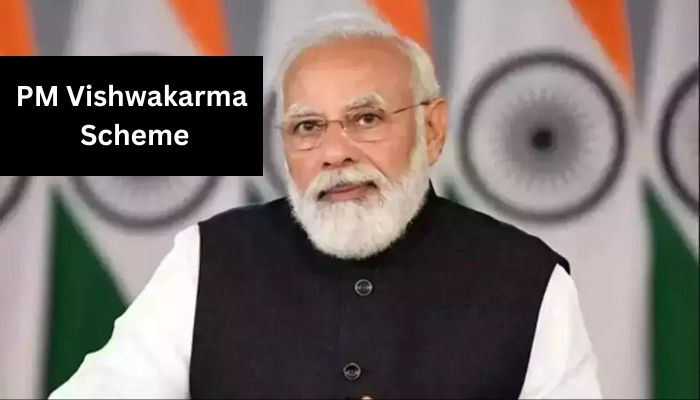
On Sunday (September 17), Prime Minister Narendra Modi launched the Pradhan Mantri Vishwakarma scheme at the India International Convention and Expo Centre in the National Capital with the objective of supporting traditional artisans and craftsmen.
With the vision to keep the age-old traditions and culture alive, the Modi government has introduced the scheme with an outlay of ₹13000 crores. As India enters the Amrit Kaal, the government is focused on preserving the country’s rich heritage and supporting local arts, crafts and products.
Under the Pradhan Mantri Vishakarma scheme, the traditional craftsmen will be registered on the PM Vishwakarma portal through biometric verification. They will be provided with an ID card and a PM Vishwakarma certificate.
सिर्फ 1 दिन शेष!
आदरणीय प्रधानमंत्री श्री नरेन्द्र मोदी जी 17 सितंबर 2023, विश्वकर्मा जयंती के अवसर पर ‘पीएम विश्वकर्मा योजना’ का करेंगे शुभारम्भ।
The artisans will also receive basic and advanced skill training and a toolkit incentive of ₹15000. They will be provided with free credit support up to ₹1 lakh without any collateral. A second trance of ₹2 lakh credit support will be provided at a concessional 5% interest rate.
The craftsmen will receive incentives for marketing support and digital transactions. Through the PM Vishwakarma scheme, the Modi government wants to strengthen the Guru-shishya parampara of teaching traditional skills.
One of the primary objectives of the fully funded Central scheme is to improve the reach and quality of the products of the Vishwakarmas and integrate them with domestic and global value chains.
"PM Vishwakarma Yojana will help us a lot, we will get the training and low-interest loan under this scheme", says Kanti Prasad, a Potter
From shoemakers to toy makers, pottery, and other people engaged in traditional crafts, PM Vishwakarma Scheme would provide them with free… pic.twitter.com/VGuHilGjC9
It must be mentioned that the Union Cabinet gave a nod to the scheme on August 16 this year. A total of 18 traditional crafts are covered under the PM Vishwakarma Scheme.
These include Basket/ Mat/ Broom Maker/ Coir Weaver, fishing net maker, tailor (Darzi), washerman (Dhobi), garland Maker (Malakaar), Barber (Nai), Doll and Toy Maker (Traditional), Mason (Rajmistri), Cobbler (Charmkar/ Shoesmith/ Footwear Artisan), Sculptor (Moortikar/Stone Carver), Stone Breaker, Potter (Kumhaar), Goldsmith (Sonar), Locksmith, Hammer and Tool Kit Maker, Blacksmith (Lohar), Armourer, Boat Maker, Carpenter (Suthar).
The scheme falls under the ambit of the Ministry of Micro, Small and Medium Enterprises (MSMEs). The Modi government has planned multiple activities under the PM Vishwakarma scheme, which includes the identification, and verification of artisans, facilitating credit and marketing support and providing skill degradation training.
#WATCH | Parliamentary Affairs Minister Pralhad Joshi says "I want to extend my wishes to Prime Minister Modi on his birthday and pray for his long life…In the name of 'Vishwakarma', PM Modi is launching a huge scheme 'Vishwakarma Yojana'…We had informed everyone to attend… pic.twitter.com/IGN49mlHXl
While speaking about the development, Parliamentary Affairs Minister Pralhad Joshi says “I want to extend my wishes to Prime Minister Modi on his birthday and pray for his long life…In the name of ‘Vishwakarma’, PM Modi is launching a huge scheme ‘Vishwakarma Yojana’…We had informed everyone to attend the ceremony here.”
It must be mentioned that PM Modi had announced the initiative for craftsmen and artisans from the ramparts of the Red Fort on the occasion of Independence Day. He had said, “The government will launch ‘Vishwakarma scheme’ with an allocation of Rs 13,000 to 15,000 crore in the next month for those with traditional skills.”
The launch of the Pradhan Mantri Vishwakarma Scheme coincides with the 73rd birthday of Prime Minister Narendra Modi.
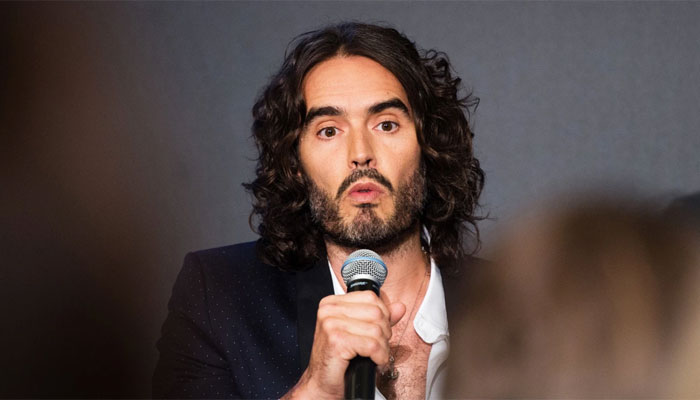
In a joint investigation by The Sunday Times, The Times and Channel 4 Dispatches, at least five women have accused UK comedian Russell Brand of rape, sexual assault and emotional abuse. One of the victims, identified in the report as Alice, alleged she was only 16 years old when the incident happened while Brand was 31. All the incidents reportedly took place over a seven-year period when Brand was at the height of his fame between 2006 and 2013. Notably, Brand has talked openly about his sex addiction and was treated for the same.
Four of the five women have decided to remain anonymous in the reports. The Dispatches documentary on the issue was aired on the night of 16th September. As per The Times report, Brand’s representatives were informed in advance about releasing the details of the allegations and given ample time of at least eight days to respond to the allegations. It was further pointed out that the information was provided to help him recall the incidents. However, his attorneys initially said it was impossible to respond in such a timeframe due to the “vast litany of questions”, and most of the victims were anonymous.
The attorneys further claimed that Brand believed there was a deeply troubling agenda behind the allegations, “namely the fact that he is an alternative media broadcaster competing with the mainstream media”. Though Brand’s attorneys stopped responding to the queries when the media house provided him with another opportunity to respond, a statement was released online on the 15th of September. However, The Sunday Times did not receive any direct communication over the evidence that Brand claimed to have contradicted in the reporting.
One of the most shocking allegations against Brand was his relationship with a 16-year-old girl while he was in his early 30s. The relationship between the schoolgirl and Brand lasted for three months, and according to the victim, he often referred to her as “the child”. Alice, the victim in the matter, mentioned that he emotionally abused and controlled her.
In the conversation with the Dispatches, she accused Brand of forcing “his penis down her throat”. She added that he stopped only after she punched him in the stomach to stop him.
The second victim claimed Brand raped her in a Los Angeles home in 2012. When she sent him a message to say he scarred her for life, Brand responded by saying he was “very sorry”. The victim had met Brand at an after-party of his Brand X chat show. She allegedly did not report the crime because she feared his stature then.
The third victim alleged Brand assaulted her in LA and later threatened her of legal action if she went public. The fourth victim described the “sexual assault” as “physical and emotional abuse”. Several other women reportedly accused Brand of physical and emotional abuse, sexual harassment and bullying. Those who came forward were not in contact with each other and remained anonymous.
Allegations of grooming against Russell Brand
In 2006, Alice met Brand at a shopping centre. At that time, Brand was becoming a household name with his shows, including Big Brother’s Big Mouth and as a BBC radio presenter. Brand met her for the first time in Leicester Square, where she was shopping. She recognised him from TV. Speaking to the reporters, she said he took her bags and proceeded to critique her purchases. He then took one dress out and told her, “You are going to wear this on our date this week”. Her mother made Alice text Brand to tell him her age, assuming he would back off, but it made no difference.
On the first date, she was visibly a teenager who was dressed and wearing makeup. Brand again asked her age to confirm she was 16 to understand where he stood legally. Initially, Brand was “charming and attentive,” making her feel special. However, things changed with time. Before having a physical relationship for the first time, when Alice informed him she was a virgin, he got excited and called her “my baby”. He said, “You are like my little dolly,” and became “preoccupied” with her innocence and being “pure”.
Her mother was not pleased with the relationship but could not do anything as 16 is the legal age of consent in the UK. In the conversation with the Sunday Times, the parents described Brand’s behaviour as grooming. They alleged Brand suggested to her how she could deceive her parents to visit him. Furthermore, he gave her scripts on how to lie to her parents.
Once, when her mother accompanied her to Brand’s house to meet him, he stopped her at the door, leant down and “kissed the mother on the mouth”. Her mother was upset and pleaded with Alice to leave with her, but she chose to stay. Towards the end of the relationship, Brand allegedly sexually assaulted her. She said, “I was sat up in the bed, up against the headboard, and he forced his penis down my throat, and I couldn’t breathe. It was just choking me, and I couldn’t breathe, and I was pushing him away, and he wasn’t backing off at all.”
She added, “I had to punch him really hard in the stomach to get him off. I cried, and he said, ‘Oh, I only wanted to see your mascara run anyway.’ Then I knew at that point that he didn’t care about hurting me physically or emotionally… It shouldn’t take you having to punch someone and wind them to get them off you. It shouldn’t be a physical fight.”
The relationship ended when Brand invited her, and she found another woman in his bed. She said, “I was so angry, and I said to him, ‘Why would you do this to me? This is so humiliating.'”
In 2020, Alice contacted Brand’s former agency, Tavistock Wood and alerted them of his behaviour to ask for an apology. She was promised a response once he returned from a wellness retreat. However, what came back was the response of his attorneys accusing her of seeking financial gain. Replying to The Guardian’s query on the matter, Tavistock Wood said, “Russell Brand categorically and vehemently denied the allegation in 2020, but we now believe he has terribly misled us. TW has severed all professional ties with the Brand”
During his time with BBC and Channel 4, Brand’s behaviour towards women was an “open secret”. Questions and concerns were raised over his hosting a programme on Channel 4. Alice, who worked for Channel 4, said, “The solution that was offered was that we would take the female members of the crew – women who have worked hard to get into this industry – and now can’t work on certain shows because they are afraid they might be attacked or harassed. I was stunned.”
‘As if we worked as a pimp for him’
Former crew members at Big Borther’s EFourum said during his time with the channel, Brand would make the staff approach young women in the audience so he could meet them after filming. They said it felt as if they worked as a “pimp” for him. One of the crew members said she remembers women calling her in tears as they were treated “poorly” by Brand. His behaviour was at the top of the discussion on the sets.
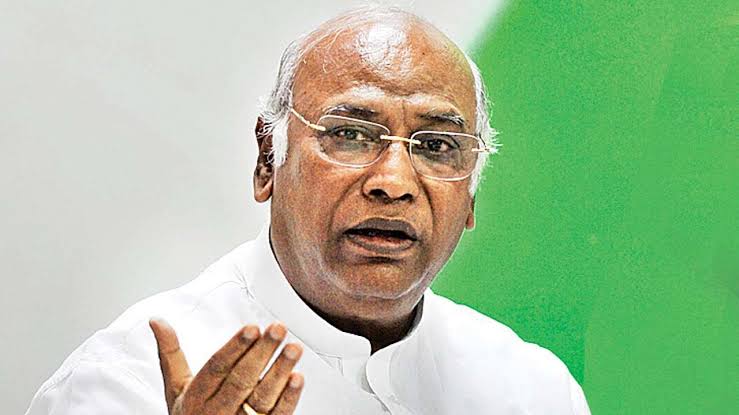
Congress President Mallikarjun Kharge on Saturday expressed his disappointment over the late invitation to the flag hoisting function in the new Parliament building and said that he will not be able to attend the function on Sunday.
Mallikarjun Kharge wrote a letter to Rajya Sabha Secretary General, Pramod Chandra Mody, and said, “Dear P C Mody ji, I am writing this letter with a sense of disappointment that I have received your invite for flag hoisting function tomorrow at New Parliament building only on September 15 quite late in the evening.”
Congress President further said that in advance, meetings of the newly constructed CWC were scheduled for September 16 and 17 at Hyderabad.
“Since the programmes had been fixed much in advance. I am presently in Hyderabad to hold the meetings. As I will return to Delhi late night on September 17, it will not feasible for me to attend the function scheduled for tomorrow morning,” Mallikarjun Kharge said in his letter.
The Vice President of India and Rajya Sabha chairman Jagdeep Dhankar will unfurl the national flag at the new Parliament building on September 17, a day before the forthcoming Session of Parliament, 2023.
Lok Sabha Speaker Om Birla will also attend the occasion. The event coincides with both the auspicious occasion of Vishwakarma Puja and the birthday of Prime Minister Narendra Modi.
Union Minister of Parliamentary Affairs Pralhad Joshi, Deputy Chairman, Rajya Sabha, Harivansh, Ministers of State of Parliamentary Affairs Arjun Ram Meghawal and V. Muraleedharan with Leaders of Political Parties in Rajya Sabha and Lok Sabha and other dignitaries will be present on the occasion.
(This news report is published from a syndicated feed. Except for the headline, the content has not been written or edited by OpIndia staff)
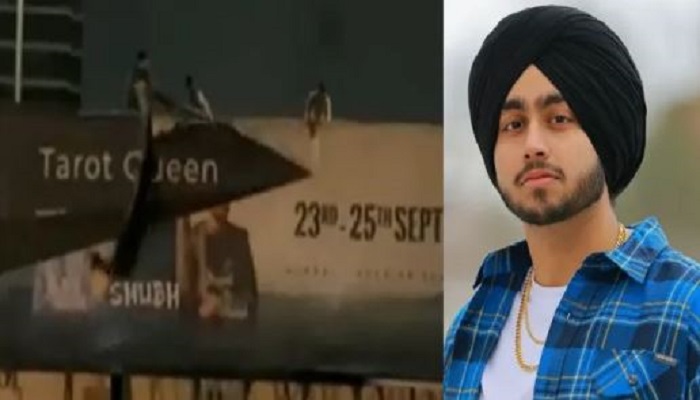
On Saturday (16 September), the Bharatiya Janata Yuva Morcha (BJYM) members removed posters for the upcoming event of a Canada-based singer and Khalistan supporter Shubneet Singh alias Shubh in Mumbai, Maharashtra. BJP’s youth wing, BJYM is protesting against his program and has called the organisers to cancel the event. BJYM has categorically stated that there is no place for any Khalistan supporter in this country.
#WATCH | Mumbai, Maharashtra: Bharatiya Janata Yuva Morcha (BJYM) members remove posters for the upcoming event of Canadian Singer Shubh pic.twitter.com/KkbQvkj0FG
Highlighting that Maharashtra is the auspicious land of Chhatrapati Shivaji Maharaj, Bharatiya Janata Yuva Morcha (BJYM) President Tajinder Singh Tiwana also asserted that there is no place for Khalistanis in the state. The BJYM leader warned that if the programme is not cancelled the organisers will have to face their opposition.
#WATCH | Mumbai, Maharashtra: Bharatiya Janata Yuva Morcha (BJYM) President Tajinder Singh Tiwana says, "There is no space for Khalistanis who are the enemy of integrity and unity of India. We won't let Canadian singer Shubh to perform on the auspicious land of Chhatrapati… pic.twitter.com/nNEAAJU9ps
He said, “There is no space for Khalistanis who are the enemy of integrity and unity of India. We won’t let Canadian singer Shubh perform on the auspicious land of Chhatrapati Shivaji Maharaj, Mumbai…If no proper action is taken then the organisers will have to face our opposition.”
He also issued an appeal to the youth of Mumbai that instead of listening to this anti-national Canadian singer, they should use their energy in nation-building and boycott this show.
Apart from this, Tajinder Singh Tiwana has also shared the photo of the memorandum given to the police on Instagram. In this memorandum, he accused Shubh of sharing a distorted map of India on social media and demanded a case to be registered against him. Tiwana highlighted that Shubh had posted the story on Instagram on March 23, 2023. In this, he had shared the map of India without Jammu-Kashmir and North-Eastern states.
Notably, earlier in the year, when Punjab Police launched a manhunt to nab Khalistani terrorist, Amritpal Singh, Shubh openly came out in support of Khalistani elements and shared a distorted map in which several North Indian states including Punjab and J&K were not included.
According to media reports, Singer Shubh’s program is to be held from 23rd to 25th September at Cordelia Cruises, Mumbai.
In the wake of his act and his upcoming program in Mumbai, a delegation of BJYM leaders peacefully submitted a memorandum to the Mumbai Police and the organisers to cancel the program. They added that if appropriate action is not taken the organisers will have to face protest.
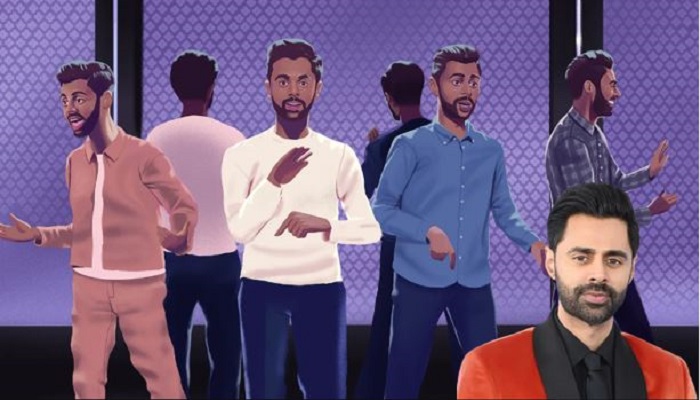
On Friday (15 September), the New Yorker published an extensive report titled Hasan Minhaj’s “Emotional Truths”, revealing how Indian-origin stand-up comic Hasan Minhaj had made up stories of racial harassment.
It highlighted that Hasan Minhaj had, on multiple occasions, recounted harrowing experiences he claimed to have faced as an Asian/Muslim American. The news magazine, through extensive research and first-hand experience with the involved stakeholders, added that the majority of these stories never actually happened to him, including the infamous ‘Anthrax scare’ story.
In fact, the magazine also received validation for most of the claims it found to be untrue directly from Minhaj himself. The comedian himself admitted to fabricating stand-up stories of racial discrimination to embellish his stories and deliver “punch lines”.
The author confronts Hasan Minhaj regarding his “real-life” experiences shared onstage
The New Yorker report described Minhaj’s approach to comedy stating that he leans heavily on his “own experience” as an Asian/Muslim American and sharing harrowing stories of “law enforcement entrapment” and personal threats.
The report added that for many of his fans, Minhaj has become an avatar for the power of representation in entertainment. The magazine added that when it tried to confirm some of the stories that comedian Hasan Minhaj had told onstage they were unable to confirm a majority of these stories and after weeks of efforts, the author Malone got a chance to personally seek responses from Minhaj about these stories.
Interestingly, in his interaction with the author of the report Clare Malone, for the first time, Minhaj acknowledged that many of the anecdotes he had shared in his Netflix specials, “The King’s Jester” and other shows, were indeed untrue.
He, however, stood by his work stating, “Every story in my style is built around a seed of truth. My comedy Arnold Palmer is 70% emotional truth—this happened—and then 30% hyperbole, exaggeration, fiction.”
In a comprehensive dig into Minhaj’s comic work, the news report specifically highlights three stories – the first story pertains to a so-called trap set up by law enforcement agencies to frame Muslim youths in cases of Jihad.
In his 2022 Netflix standup special, “The King’s Jester”, he narrated a story of an F.B.I. informant who according to him infiltrated his family’s Sacramento-area mosque, in 2002, when he was a junior in high school. Narrating the story, Minhaj claimed that a well-built white man, who asserted that he had converted to Islam, gained the trust of the mosque community. He added that the ‘white man’ whom he referred to as Brother Eric, also gave weight training to the community’s teenage boys.
The comedian argued that Eric wanted to frame the teenage Muslim boys by drawing them into conversations on Jihad and then implicating them. However, he was suspicious of Eric’s identity from the beginning and tried to mess with Brother Eric.
He further narrated that this didn’t go well and soon after his decision, police arrived on the scene and they slammed Minhaj against the hood of a car.
On the show, Minhaj added that many years later, when he was watching TV with his father, he saw a story about Craig Monteilh. Craig had become an F.B.I. informant in Muslim communities in Southern California by assuming the cover of a personal trainer and he recalled that Craig was none other than Brother Eric who wanted to implicate innocent Muslim teenagers of Minhaj’s locality.
During his narration, a large screen behind Minhaj flashed news footage from an Al Jazeera English report on Craig indicating that Minhaj’s hunch was proved right.
After narrating his ‘own real-life story,’ which was later found to be untrue, about how the administration was allegedly trying to frame innocent Muslim teenagers, Minhaj transitions to the case of Hamid Hayat, a resident of the Sacramento area. He adds that Hayat spent 36 years in prison based on a confession that his attorney’s claim was coerced.
Minhaj adds that he thinks about Hamid all the time.
However, the New Yorker interacted with Craig Monteilh, or the so-called ‘Brother Eric’ in Minhaj’s autobiographical anecdotal story. During an interview with the author of the New Yorker report, Clare Malone, Craig informed her that Minhaj’s story is a fabrication. Craig said, “I have no idea why he would do that.”
The report also stated that Monteilh was in prison in 2002 and did not begin working for the F.B.I. on counterterrorism measures until 2006. Details of his undercover actions were documented in a legal case that eventually reached the Supreme Court. Monteilh clarified that his work was limited to Southern California and did not include the Sacramento area.
Speaking on the Brother Eric story, Minhaj told Clare Malone that it was based on a hard foul that he received during a game of pickup basketball in his youth.
Apparently, he and other teenage Muslims played pickup games with middle-aged men whom they suspected were officers. Out of them, one made a show of pushing Minhaj to the ground. Admitting that both stories were made up, Minhaj insisted that they were based on “emotional truth.”
According to him, the broader points he was trying to make justified concocting stories in which to deliver them, and said, “The punch line is worth the fictionalized premise.”
The Anthrax scare episode and the fiasco regarding his interaction with the Saudi delegate around the time of Jamal Khashoggi’s death
Later in his Netflix Special show, ‘The King’s Jester’, Minhaj spoke about the consequences he had to face because of some segments he ran on his other show, “Patriot Act” in connection with the killing of Jamal Khashoggi and Indian Prime Minister Narendra Modi’s Hindu nationalism.
In the backdrop of his narration, the big screen displayed threatening messages that were sent to Minhaj. He then goes on to narrate the story of the scariest threat and a letter sent to his home which was filled with “white powder”.
He further narrated that the contents accidentally spilled onto his young daughter and the child had to be rushed to the hospital. Though it was found out not to be anthrax, it insinuated that Minhaj’s comic actions have real-life consequences.
Later that night, he learned from his infuriated wife that she was pregnant with their second child. Minhaj recalled her saying, “You get to say whatever you want onstage, and we have to live with the consequences. I don’t give a shit that Time magazine thinks you’re an “influencer.” If you ever put my kids in danger again, I will leave you in a second.”
However, New Yorker’s research found that neither the New York Police Department, responsible for investigating possible Bacillus anthracis incidents (the bacteria that causes Anthrax), nor local hospitals have any record of an incident matching Minhaj’s description.
Hasan Minhaj the stand up comic, made up stories of racism against him, to garner sympathy. Even used his young daughter.
All these performative wokes are charlatans. Frauds who either have been exposed, or are waiting to be exposed.
Furthermore, both front-desk and mailroom staff at Minhaj’s previous residence have no recollection of such an incident, and neither do the security personnel from the ‘Patriot Act’ show nor Minhaj’s security guard from that period.
Interestingly, during his interaction with the author, Clare Malone, Minhaj admitted that his daughter had never been exposed to a “white powder” and that she hadn’t been hospitalised.
During the interaction, Minhaj stated that he had opened up a letter delivered to his apartment and it had contained some sort of powder. To which, Minhaj jokingly said to his wife, “Holy shit. What if this was anthrax?”
Though there were security concerns at the time and Netflix had hired protection for Minhaj, he claimed that he’d never told anyone on the show about this letter.
However, he has used this so-called white powder incident to harp victimhood on multiple occasions. In many interviews, he discussed the white powder incident without clarifying that the events he describes onstage, including his daughter’s hospitalisation, didn’t happen as he described.
When asked if he wasn’t manipulating the audience, Minhaj said, “No, I don’t think I’m manipulating. I think they are coming for the emotional roller-coaster ride.” He brazened it out saying, “To the people that are, like, ‘Yo, that is way too crazy to happen,’ I don’t care because yes, f–k yes—that’s the point.”
On the issue of whether his portrayal of a traumatic experience involving his child or law enforcement entrapment was distasteful? Minhaj said, “It’s grounded in truth.”
When Malone asserted, “But it didn’t happen to you,” he replied, “I think what I’m ultimately trying to do is highlight all of those stories. Building to what I think is a pointed argument” as opposed to a “pointless riff” of jokes.
Similarly, he also concocted a story revolving around his meeting with Saudi delegates. He fabricated the timeline of actual events to insinuate that hours before the news of Jamal Khashoggi’s death aired, he had met with Saudi delegates despite reservations from his wife and others.
In one podcast – on John Heilemann’s podcast earlier this year, Minhaj described his work as “the dynamic range that theatre and storytelling and comedy allow you to explore.”
The New Yorker report further goes on to expose that the comedian often excluded fact-checking staff and researchers to suit his “emotional truth”.
According to former employees and researchers of the show “Patriot Act” which Minhaj hosts, they felt that Minhaj was dismissive of the fact-checking process. A female researcher said, “[Minhaj] just assembled people around him to make him appear different and much smarter and more thoughtful.”
They noted that Minhaj considered fact-checking a hindrance in the creative flow during a final rewrite, and would often ask a pair of female researchers to leave the writers’ room.
However, Minhaj denied these allegations claiming that each line and word was fact-checked at least 8-10 times.
In the exhaustive list of lies, Minhaj also tweaked actual events and fabricated things to make racial discrimination claims. The New Yorker in its painstaking research established that he lied about his personal story involving a white girl and her family in which he claimed that the family discriminated against him because of his brown skin.
Hasan Minhaj has coined a new term: You can appropriate someone else’s truth and mix them with your lies to state “emotional truth”.
The report highlights Minhaj’s extensive lies and his habitual offence of twisting facts/timelines and fabricating stories to present a perverted form of oppression stories in the guise of his real-life experiences.
I rolled my eyes when I first saw today’s Hasan Minhaj article because we all exaggerate and edit stories for the stage but after reading it I’m actually floored, this is psychotic behavior and it defeats the entire purpose of standup comedy. https://t.co/FWYdxRw2sj
To sum it up, the report added that when it came to his stage shows, Minhaj told Clare Malone, “the emotional truth is first. The factual truth is secondary.”
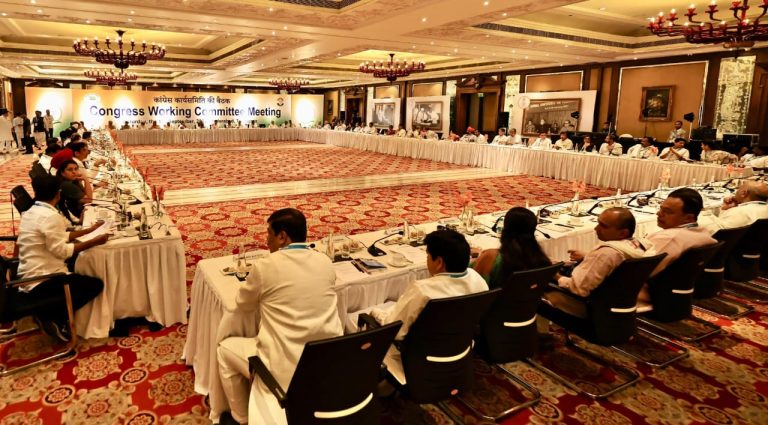
Congress leader P Chidambaram on Saturday said that his party is unwilling to be drawn into any controversy surrounding Sanatana Dharma and further informed that there was no discussion on it during the Congress Working Committee meeting which is underway in Hyderabad.
Addressing the press conference in Hyderabad, P Chidambaram said, “There has been no discussion on Sanatana Dharma (during CWC meeting). The Congress president has made it absolutely clear that the Congress party is not willing to be drawn into any controversy on Sanatana Dharma. We believe in ‘Sarva Dharma Sama Bhava’ (“All religions are the same) and we stand by that position. That has been the consistent position of Congress party for many decades and we are not getting drawn into any controversy over that issue.”
The controversy related to the issue of Sanatana Dharma erupted after Tamil Nadu minister and DMK leader Udhaynidhi Stalin had said that the Sanatana religion should be eradicated. The DMK leader also drew a parallel between diseases like dengue, and malaria and the ‘Sanatana Dharma’.
Reacting to these remarks, the DMK and INDIA bloc received sharp criticism from the BJP and Prime Minister Narendra Modi.
Launching a scathing attack on the INDIA bloc, Prime Minister Narendra Modi in Chhattisgarh’s Raigarh appealed to the people of the poll-bound states, stating that the Opposition has a “hidden agenda to end Sanatana Dharma”.
“This INDI alliance adopted a resolution to end our ‘Sanatana’ culture. They are bent on destroying the ideologies, cultures and traditions that have kept the country and our people together for centuries,” PM Modi said.
Earlier on Friday Bharatiya Janata Party (BJP) president JP Nadda hit out at opposition bloc INDIA and alleged that the agenda of Sonia Gandhi and Rahul Gandhi is to “abuse and disrespect” Sanatan Dharma.
“Nowadays, there have been many talks on Sanatana Dharma. On 1st September this INDI alliance held a meeting in Mumbai. On 3rd September their strong ally DMK’s Chief’s son Udhayanidhi Stalin insulted Sanatan Dharma. The next day on September 4, Mallikarjun Kharge’s son Priyank Kharge who is also Minister in the Karnataka government disrespects Sanatan Dharma,” Nadda said.
“Till now Sonia Gandhi and Rahul Gandhi have been silent on this. I allege that both mother and son have formulated the agenda to abuse and disrespect Sanatan Dharma in the Mumbai meeting which is handed over to DMK and other parties. This is the agenda of Mata Sonia and Beta Rahul,” he added.
Meanwhile, P Chidambaram also informed that there have been requests by members of the Congress Working Committee (CWC) that a Bharat Jodo Yatra 2 should be organized from the eastern parts of the countries to the west. “That matter is under consideration,” he said.
This is the first meeting of the reconstituted Congress Working Committee, the party’s top decision-making body under Mallikarjun Kharge’s presidency. The party is strategizing for the upcoming assembly elections in the five states.
(This news report is published from a syndicated feed. Except for the headline, the content has not been written or edited by OpIndia staff)
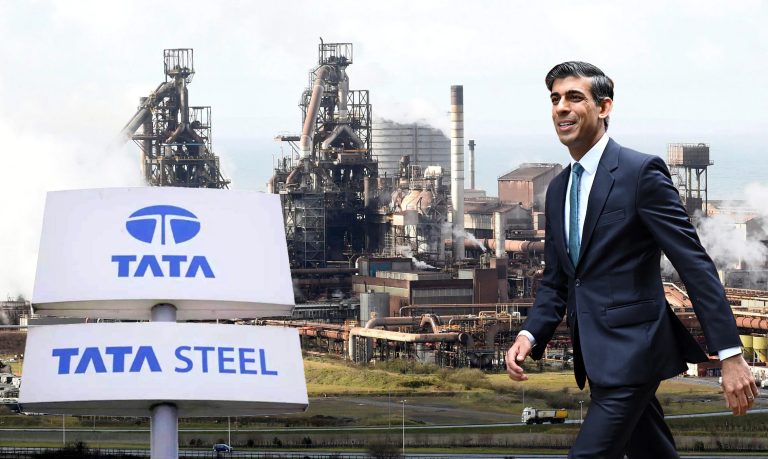
In a significant announcement, the UK government and Tata Steel on 15 September unveiled a combined investment package worth 1.25 billion pounds which included a 500 million pound government subsidy in Wales, where the largest steelworks in the United Kingdom are located. Tata Steel and the UK government will invest in a state-of-the-art Electric Arc Furnace steelmaking plant at the Port Talbot site with a capital cost of £1.25 billion, said a statement by Tata Steel.
PM Sunak took to X (Twitter) to react to the crucial business deal. He called it a “big day for UK steel” and highlighted that it would “save thousands of British jobs and secure the future of the steel industry in Wales.” He also mentioned that the development came after a “£4 billion investment we secured from Tata Group.”
A big day for UK steel ??
We've agreed a joint £1 billion investment with @TataSteelLtd to save thousands of British jobs and secure the future of the steel industry in Wales.
India’s Tata Steel owns the Port Talbot steelworks, which is the biggest steel-producing plant in Britain. However, the plant is running into losses, raising questions about its future, which prompted this mega deal.
The capital at the Port Talbot would modernise manufacturing with state-of-the-art Electric Arc Furnace steelmaking and decrease Britain’s overall carbon emissions by approximately 1.5%. It has been dubbed as one of the largest UK government support packages in history. According to Tata Steel, the proposed investment would reduce the Port Talbot site’s carbon emissions by around 5 million tonnes a year.
The UK government said the transition to electric furnace was expected to reduce the UK’s entire business and industry carbon emissions by 7%, Wales’s overall emissions by 22% and the Port Talbot site’s emissions by 85%.
The company will be replacing the two blast furnaces at the plant with Electric Arc Furnaces, which will reportedly result in the loss of around 3,000 jobs, as electric furnaces require substantially less manpower to run compared to fossil fuel-fired blast furnaces. The plant currently has around 4,000 employees. However, as the deal means that the plant will not close down, it will result in the protection of the remaining jobs, including jobs at downstream units. According to the UK govt, around 5,000 jobs across the UK will be saved by the deal.
Tata Steel released a statement which read, “The project would bolster U.K.’s steel security and would be the first major step towards decarbonisation of the local steel industry, reducing direct emissions by 50 million tonnes over a decade. With a high degree of circularity, it would leverage strategic, domestically available scrap steel and promote local value addition within the UK.”
The planned project would make Tata Steel U.K. a sustainable, capital-efficient and profitable company while ensuring that the steel industry at Port Talbot would continue after the changeover. The press release further conveyed that the venture has a strong investment case owing to the assistance of the U.K. Government.
Tata Steel will also set up 2 Centres for Innovation at the Henry Royce Institute in Manchester and at the Imperial College, London. The company already operates a research and development centre at the University of Warwick (co-located with Jaguar Land Rover’s automotive research centre and the Advanced Steel Research Centre) and also works closely with the Steel and Metals Institute at Swansea University.
It proclaimed that the carbon-intensive, unsustainable iron and steelmaking facilities at Port Talbot, where many of the existing “heavy end” assets, such as blast furnaces and coke ovens are approaching the end of their operational life, would shortly be the subject of consultation by Tata Steel U.K.
The proposed project would also entail reorganising Tata Steel’s balance sheet, potentially eliminating the company’s ongoing cash losses from its U.K. operations and legacy investments’ non-cash impairment.
Tata Steel U.K. observed that it would work hard during the transition and project phase to ensure an uninterrupted and dependable supply of products to meet customer and market commitments, including through the import of additional steel substrates from dependable supply chains for consumption by its downstream units.
Tata Group Chairman N. Chandrasekaran noted, “The agreement with the U.K. Government is a defining moment for the future of the steel Industry and indeed the industrial value chain in the U.K. It has been an absolute pleasure to work with His Majesty’s Government and the Honourable Prime Minister Rishi Sunak in developing the proposed transition pathway for the future of sustainable steelmaking in the U.K.”
He remarked, “The proposed investment will preserve significant employment and presents a great opportunity for the development of a green technology-based industrial ecosystem in South Wales.”
He called it a “defining moment” for the future of the steel industry. “It has been an absolute pleasure to work with His Majesty’s government and Prime Minister Rishi Sunak in developing the proposed transition pathway for the future of sustainable steelmaking in the UK.”
“Tata Steel U.K. has been facing significant challenges due to the heavy end facilities approaching their end of life. The proposed project with one of the largest investments in the U.K. Steel Industry in recent decades, provides an opportunity for an optimal outcome for all stakeholders,” pointed out T.V. Narendran, CEO and Managing Director of Tata Steel.
He stressed, “We will undertake a meaningful consultation with the unions on the proposed transition pathway in the context of future risk and opportunities for Tata Steel U.K. With the support of the U.K. Government and the dedicated efforts of the employees of Tata Steel U.K. along with all stakeholders, we will work to transform Tata Steel U.K. into a green, modern future-ready business.”
According to UK Business and Trade Secretary Kemi Badenoch, the government is providing a “historic” amount of support. She stated, “It will not only protect skilled jobs in Wales but also grow the UK economy, boost growth and help ensure a successful UK steel industry.”
The plan, per British Finance Minister Jeremy Hunt, is a “landmark moment” for sustaining UK steel production, promoting sustainable economic growth, reducing emissions, and generating green jobs. “It is right that we are ready to step in to protect this world-class manufacturing industry and to support a green growth hub in South Wales.”
However, Tata Steel has added that the investment is subject to all relevant information and consultation processes before decisions are made. If everything goes as planned, the new investment project could be operational within 36 months of the receipt of relevant regulatory and planning approvals. Tata Steel will work to finalise the terms of the grant funding agreement with the UK Government and engage with the Welsh Government to seek requisite approvals and permits for the proposed project. The company will disclose any detailed transition and restructuring plans, in due course, subject to the outcome of all applicable consultation processes, it said.
Tata Steel had initially demanded £1.5 billion in subsidy, but has agreed with £500 million.
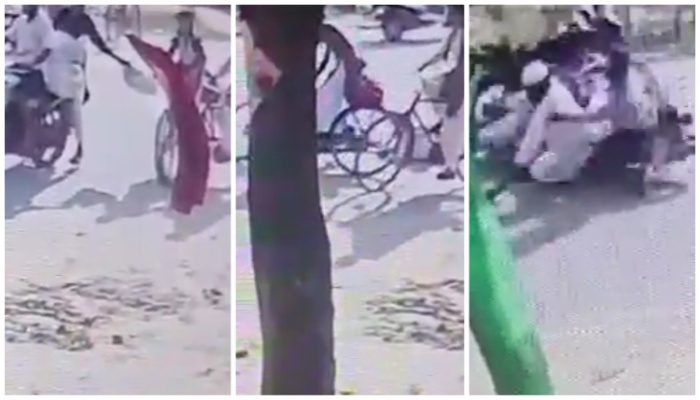
In the Ambedkar Nagar district in Uttar Pradesh, a schoolgirl died an unfortunate death after she met with a road accident while she was returning home from school on Saturday, September 16. The horrifying incident, which was captured on CCTV, occurred when a youth allegedly belonging to ‘a particular community’ attempted to molest her while she was riding her cycle, causing her to fall on the road and get hit by another bike passing by. She was rushed to the hospital where doctors declared her dead.
Based on the CCTV footage and information gathered from the eyewitnesses, the police arrested the accused. An investigation has been launched in the case, the Ambedkarnagar police took to X to inform.
दिनांक 15.09.2023 को जनपद अंबेडकरनगर थाना हंसवर क्षेत्र अंतर्गत मोटरसाईकिल की चपेट में आने से एक साईकिल सवार स्कूली छात्रा की मृत्यु के सम्बन्ध में अपर पुलिस अधीक्षक द्वारा दी गई बाइट https://t.co/6isf3OyFLLpic.twitter.com/ETVBdVPW1c
The matter pertains to the Hirapur market area falling under the jurisdiction of the Hanswar police station in Ambedkar Nagar, UP. The victim was identified as a native of Barhi Aidilpur in the Hanswar police station area. The 17-year-old victim was studying at Ramraji Inter College in Haripur.
Notably, the reports that emerged initially said that the deceased was returning from her school on her bicycle. Suddenly a speeding bike approaching from Tanda town in Ambedkar Nagar district collided with her cycle in the Hirapur market area, killing her instantly. The bystanders quickly caught hold of the biker and handed him over to the police. The police took him into custody and also impounded his bike.
Later, CCTV footage from the area emerged, revealing what had truly occurred. The video, which has now gone viral on social media, clearly shows the deceased schoolgirl and one of her friends, who were in their school uniforms, riding back on their respective cycles. They are spotted riding on the left side of the road when suddenly, a speeding bike approaches them from behind. The pillion rider grabs the victim’s dupatta and then the bike speeds away. The girl loses her balance as a result of the impact, and her cycle drifts to the middle of the road. At that very instance, another bike coming from behind collides with the girl’s cycle and she falls on the road. It was reported that the girl died on the spot.
यूपी के अम्बेडकरनगर में शर्मनाक वारदात। स्कूल की छुट्टी के बाद साइकिल से घर जा रही छात्रा का दुपट्टा बाइक सवार युवकों ने खींचा। दुपट्टा खीचने से सड़क पर गिरी छात्रा। पीछे से आई बाइक ने छात्रा के सिर पर चढ़ाई गाड़ी। छात्रा की हुई मौत। सम्प्रदाय विशेष से जुड़े आरोपी पहले भी स्कूल… pic.twitter.com/VfZTUMBf7o
It is reported that the student was frequently harassed by these ‘samuday vishesh’ youths on her way to and from school. The deceased girl had also complained to her parents about this.
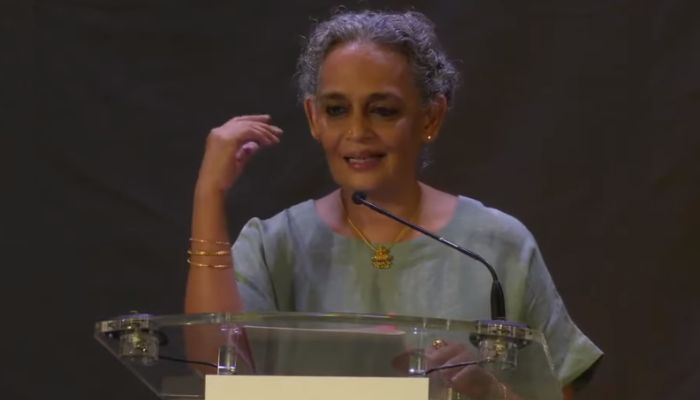
On Tuesday (September 12), controversial author Arundhati Roy went on an anti-India tirade at the 45th Prix Européen de l’Essai, which was held in Lausanne city of Switzerland.
Roy, who was felicitated with the Lifetime Achievement award at the ceremony, exploited the opportunity to fearmonger about India and its democracy. At the very onset, she claimed that her writings have mapped how India somehow descended into ‘majoritarianism and then into full-blown fascism.’
While accusing the BJP of disseminating ‘Hindu supremacy’, she alleged, “Elections are a season of murder, lynching and dog-whistling – the most dangerous time for India’s minorities, Muslims and Christians in particular.”
Arundhati Roy desperately attempted to present her ‘figment of imagination’ and her distorted version of India, a manifestation of her far-left politics, as the gospel truth. She claimed that the ‘evil’ has somehow been normalised in streets, classrooms and public spaces.
The controversial ‘author’ accused the media of pandering to ‘fascist majoritarianism’ and the Modi government of comprising the ethos of the Indian Constitution. “If the current regime wins a majority in 2024, it is very likely that we will see a new Constitution,” she brazened it out.
She further claimed, “Even in the unlikely event of an electoral defeat, the supremacist poison runs deep and has compromised every public institution that is meant to oversee checks and balances.” Arundhati Roy also cast aspersions on the integrity of the Indian Supreme Court, and dubbed it as ‘weak’ and ‘undermined.’
Arundhati Roy spreads canards about ‘delimitation’, hints at secessionism
The controversial author tried to drive a wedge between the ‘Hindi-speaking States’ in the North and the Southern States by falsely claiming that the government was engaging in ‘delimitation’ to award more parliamentary seats to the former.
“This will cause great resentment in the southern states and has the potential to balkanise India,” she hinted at possible secessionism (breakdown and eventual seperation) of the Southern part from the Union of India.
It must be mentioned that in 2002, the Atal Bihari Vajpayee government enacted the 84th Amendment Act to prevent delimitation till the year 2026. This was done to encourage population stabilisation in line with the family planning programmes undertaken by the States and the National Population Policy strategy of the Centre.
Delimitation has thus been frozen for over 24 years despite the population increase across the country. There will be no increase in electoral constituencies in the 2024 Lok Sabha elections.
The decision was taken way back in 2002 and is not a political ploy by the current government to benefit itself, as suggested by Roy. She also drew false equivalences between ‘delimitation’ to ‘gerrymandering,’ which is an undemocratic redistricting policy used in the US by policymakers to benefit them electorally.
Controversial author whines about being labelled ‘traitor’ and ‘anti-national’
Arundhati Roy claimed that she was ‘mocked’ and ‘criticised’ when she started fearmongering about India, way back in 1998 (25 years ago). However, she is now hopeful that her propaganda-laden essays will live on to instil the same sentiment in generations to come.
“…In 1998 a BJP-led Hindu nationalist government came to power. The first thing it did was to conduct a series of nuclear tests. They were greeted by most people, including writers, artists and journalists, in a language of virulent, chauvinistic nationalism,” she lamented.
The self-proclaimed ‘fairy princess of the literary world’ alleged that she was dubbed a ‘traitor’ and ‘anti-national’ for publishing her essay titled [pdf] ‘The End of Imagination’ in Frontline and Outlook.
“I received those insults as laurels, no less prestigious than the Booker Prize. It set me off on a long writing journey, about dams, rivers, displacement, caste, mining, civil war – a journey that deepened my understanding and entwined my fiction and nonfiction in ways that they can no longer be separated,” she said.
Arundhati Roy was understandably counselled by people around her to stop her anti-India propaganda. But the defiant ‘caste baiter’ in her did not stop. “I was sternly lectured (mostly by upper-caste men) about how to write, the subjects I should write about, and the tone I should take,” she claimed.
Arundhati Roy hails BBC documentary on PM Modi, peddles debunked claims
The controversial ‘author’ promoted the BBC documentary on Prime Minister Narendra Modi, which attempted to shield Islamists responsible for burning the Sabarmati Express and killing 59 Hindus (29 women and 10 children) in the process.
“The BBC broadcast a two-part documentary called India: The Modi Question…The BBC film implicates Modi in the abetment of mass murder…Episode 1 of the BBC film The Modi Question is about the 2002 anti-Muslim pogrom which raged through the state of Gujarat after Muslims were held responsible for the burning of a railway coach in which 59 Hindu pilgrims were burned alive,” she claimed.
Just like the BBC, Arundhati Roy also tried to insinuate that the Muslim co were ‘wrongly blamed’ for the Godhra carnage. As a matter of fact, 31 Islamists were found guilty of setting the Sabarmati Express on fire. 11 of them were handed the death penalty by a special fast-track court on March 1, 2011.
Their names include Abdul Razzak Kurkur, Ismail Suleja, Jabbir Binyamin Behra, Ramzani Binyamin Behra, Mehboob Hassan, Siraj Bala, Irfan Kalandar, Irfan Patadia, Hassan Lalu, Mehboob Chanda, & Salim Zarda. However, their death penalty was later commuted to a life sentence in October 2017.
Among the convicted, the other 20 were awarded life sentences. Those criminals included Suleman Ahmad Hussain, Abdul Rehman Abdul Majid Dhantiya, Kasim Abdul Sattar, Irfan Siraj Pado Ghanchi, Anwar Mohmmad Mehda, Siddik, Mehboob Yakub Mitha, Soheb Yusuf Ahmed Kalandar, Saukat, Siddik Mohmmad Mora, Abdul Sattar Ibrahim Gaddi Asla, Abdul Rauf Abdul Majid Isa, Yunus Abdulhaq Samol, Ibrahim Abdul Razak Abdul Sattar Samol, Saukat Yusuf Ismail Mohan, Bilal Abdullah Ismail Badam Ghanchi, Farook, Ayub Abdul Gani Ismail Pataliya, Saukat Abdulah Maulvi Isamail Badam, Md Hanif.
Now, check the names of those men who were awarded life imprisonment for the Godhra train burning incident in 2011.
Despite attempts by the BBC and the likes of Arundhati Roy to downplay the Godhra train carnage, the conviction of the 31 extremists will continue to decimate all conspiracy theories. Nonetheless, the far-left ‘author’ did not stop at that and continued –
“Modi had been appointed – not elected – chief minister of the state only a few months before the massacre. The film is not just the murdering, but also the 20-year journey that some victims made through India’s labyrinthine legal system, keeping the faith, hoping for justice and political accountability.It includes eyewitness testimonies, most poignantly from Imtiyaz Pathan, who lost ten members of his family in the “Gulbarg Society massacre” in which 60 people were murdered by a mob, including a former Member of Parliament Ehsan Jaffri who was dismembered and burnt alive. He was a political rival of Modi’s and had campaigned against him in a recent election. It was one of several similarly gruesome massacres that took place over those few days in Gujarat.”
The BBC film revealed an internal report commissioned by the British Foreign Office in April 2002, so far unseen by the public. The fact-finding report estimated that “at least 2,000” people had been murdered. It called the massacre a pre-planned pogrom which bore “all the hallmarks of ethnic cleansing.” It said reliable contacts had informed them that the police had been ordered to stand down. The report laid the blame squarely at Modi’s door. After the Gujarat pogrom, the US denied him a visa. Modi won three consecutive elections and remained Gujarat’s chief minister until 2014. The ban was revoked after he became Prime Minister.
Following the 2002 Godhra train carnage and the subsequent riots, a section of the media and civil society portrayed then-Chief Minister Narendra Modi as the man ‘who orchestrated the riots.’ Although the Supreme Court-appointed Special Investigation Team gave him a clean chit in 2012, the same cabal continued peddling the same lies.
After having realised that their unsubstantiated claims were failing to convince people, the coterie began claiming that Narendra Modi did not ‘do enough’ to stop the riots. It’s a classical ruse used by propagandists to shift goalposts, every time they are caught lying red-handed. The story of Arundhati Roy is no different.
Hindenburg Research and OCCRP
Arundhati Roy also raked up the Adani-Hindenburg Research report controversy, which led to a fall of over $100 billion in the market cap for the Indian conglomerate. She accused the Modi government of favouring Adani and engaging in ‘crony capitalism.’
“A small US firm called Hindenburg Research which specialises in what is known as activist short-selling published what is now known as the Hindenberg Report, a detailed expose of shocking wrongdoing about India’s biggest corporation – the Adani group.
The Hindenburg Report accuses the Adani Group of engaging in a “brazen stock manipulation and accounting fraud scheme”, which – through the use of offshore shell entities – artificially overvalued its key listed companies and inflated the net worth of its chairman. According to the report, seven of Adani’s listed companies are overvalued by more than 85%. Modi and Adani have known each other for decades. Their friendship was consolidated after the 2002 Gujarat pogrom,” she claimed.
When the Hindenburg Research report was published on January 24, 2023, the Adani Group trashed the report as a ‘malicious combination of selective misinformation and stale, baseless and discredited allegations’. Later, it published a 413-page response and pointed out how the US-based investment research firm sought to benefit from its damning report.
“This is rife with conflict of interest and intended only to create a false market in securities to enable Hindenburg, an admitted short seller, to book massive financial gain through wrongful means at the cost of countless investors,” the Indian conglomerate had said back then.
While the share price of Adani Enterprises has recovered considerably, it is still below the price level before the report was out. She also made references to the George Soros-funded Organised Crime and Corruption Reporting Project (OCCRP) report, which was published on August 31, 2023.
“The Hindenburg Report accuses Adani of pulling “the largest con in corporate history”. On August 30, the Guardian and the Financial Times published articles based on incriminating documents obtained by the Organized Crime and Corruption Reporting Project that further substantiate the Hindenburg Report,” Roy said.
The propaganda artist also accused Gautam Adani of helping Narendra Modi during the launch of the latter’s political career and funding ‘violent Hindu nationalism’ with his corporate money. She alleged that PM Modi returned the favour by supposedly helping him to grow his wealth in the past 9 years.
“Just as Adani stood by Modi in his time of need, the Modi government has stood by Adani and has refused to answer a single question raised by members of the opposition in Parliament, going so far as to expunge their speeches from the parliament record,” Arundhati Roy claimed.
Arundhati Roy calls for foreign intervention against India, cries foul over CAA and abrogation of Article 370
Throughout her address at the 45th Prix Européen de l’Essai, the controversial ‘author’ expressed her resentment for Western democracies for not acting against India and its democratically elected government.
This became evident when she claimed –
“None of this has made any difference whatsoever to the leaders of Western democracies. Within days of the Hindenburg-BBC moment, after “warm and productive” meetings, Prime Minister Modi, President Joe Biden and President Emmanuel Macron announced that India would be buying 470 Boeing and Airbus aircraft. Biden said the deal would create over million American jobs. The Airbus will be powered by Rolls Royce engines. “For the UK’s thriving aerospace sector,” PM Rishi Sunak said, “the sky is the limit.”
In July Modi travelled to the US on a State visit and to France as the Chief Guest on Bastille Day. Can you even begin to believe that? Macron and Biden fawned over him in the most embarrassing manner, knowing full well that this would be spun into pure campaign gold for the 2024 general elections in which Modi will stand for a third term. There is nothing they would not have known about the man they are embracing.“
Arundhati Roy was upset that NGOs such as Oxfam India and Amnesty International were raided by India’s central agencies for financial irregularities and violation of the Foreign Contribution Regulation Act (FCRA) Rules.
“They would have known about the hounding of opposition politicians, students, human rights activists, lawyers and journalists, some of whom have received long prison sentences, about the attacks on universities by police and suspected Hindu nationalists, the rewriting of history textbooks, the banning of films, the shutdown of Amnesty International India, the raid on the India offices of the BBC, the activists, journalists and government critics placed on mysterious no-fly lists and the pressure on academics, both Indian and foreign,” she lamented.
A close reading of the legislation [pdf] tells us that CAA is aimed to fast-track the citizenship of religious minorities, from three neighbouring countries of Afghanistan, Pakistan and Bangladesh, who entered India illegally before December 31, 2014.
The law evidently does not apply to the Muslim community as they are not minorities in the above-mentioned countries. This law neither prevents any non-citizen from applying for citizenship nor takes away the citizenship of any individual. As such, it does not constitute discrimination in any way.
“They would have known about the situation in Kashmir, which beginning in 2019 was subjected to a monthslong communication blackout – the longest internet shutdown in a democracy – and whose journalists suffer harassment, arrest and interrogation. Nobody in the 21st century should have to live as they do, with a boot on their throats.They would have known about the Citizenship Amendment Act passed in 2019 that barefacedly discriminates against Muslims, the massive protests that it touched off and how those protests only ended after dozens of Muslims were killed the following year by Hindu mobs in Delhi (which, incidentally, took place while President Donald Trump was in town on a state visit, and about which he uttered not a word),” she said.
While calling for the world powers to insolate India and interfere in its internal affairs, Arundhati Roy emphasised,
“Still, the world’s powers choose to give Modi all the oxygen he needs to destroy the social fabric and burn India down. To me, this is a form of racism. They claim to be democrats, but they are racists. They don’t believe their professed “values” should apply to non-white countries. It’s an old story of course.It doesn’t matter. We will fight our own battle – and ultimately we will win our country back. However, if they imagine that the dismantling of democracy in India is not going to affect the whole world, they must indeed be delusional.“
Far-left author lies about Nuh riots, viral corporal punishment video
Without naming Gaurakshak Monu Manesar, the propaganda artist put the onus of the Islamist carnage in the Nuh district (Mewat region) on ‘a hugely popular Hindu vigilante.’ This was despite the fact that he was not even in Nuh when Islamists alleged mayhem on the streets in his name.
Roy also conveniently ignored the killing of 5 people (most Hindus) and presented Islamists as the victims, who had to defend themselves. She claimed, “The town of Nuh abuts Gurgaon, where major international corporations have their offices. The Hindus in the march carried machine guns and swords. The Muslims defended themselves. Predictably, the march ended in violence.”
Her only focus was the killing of an Islamic cleric, which did not even take place in Nuh but in far-off Gurugram as a form of counter-violence. She also twisted the infamous ‘corporal punishment video from Muzaffarnagar and shamelessly gave it a communal spin.
“I have just watched a chilling little video filmed in a classroom of a small school. The teacher makes a Muslim child stand by her desk and asks the rest of the students, Hindu boys, to come up one by one and slap him. She admonishes those who haven’t hit him hard enough. The action taken so far has been that the Hindus in the village and the police have pressurised the Muslim family not to press charges. The Muslim boy’s school fee has been refunded and he has been taken out of school,” she claimed.
#WATCH | UP: "My son is seven years old. This incident happened on 24th August. The teacher made the students beat my child again & again. My nephew made the video and had gone to school for some work…My seven-year-old child was tortured for an hour or two. He is scared…This… https://t.co/qQ7FaiPbzapic.twitter.com/zEelhTdK6G
The incident took place at the Neha Public School in Khubbapur village in Muzaffarnagar district of Uttar Pradesh on August 24, 2023. When the matter came to light, the victim’s father categorically stated that there was no religious or Hindu-Muslim angle in this case.
Additionally, the cousin of the kid named Nadeem, who recorded the video, and the police also denied the communal angle. This however did not stop the leftist-Islamist ecosystem from reiterating the lies and creating an atmosphere of communal disharmony.
Towards the end of her propaganda-loaded speech, Arundhati Roy claimed, “We are braced for more bloodshed, mass killing, false-flag attacks, pretend-wars and anything to further polarise an already-polarised population…If Modi wins in 2024, all avenues of dissent will be shut down. None of you in this hall must pretend you didn’t know what was going on.”
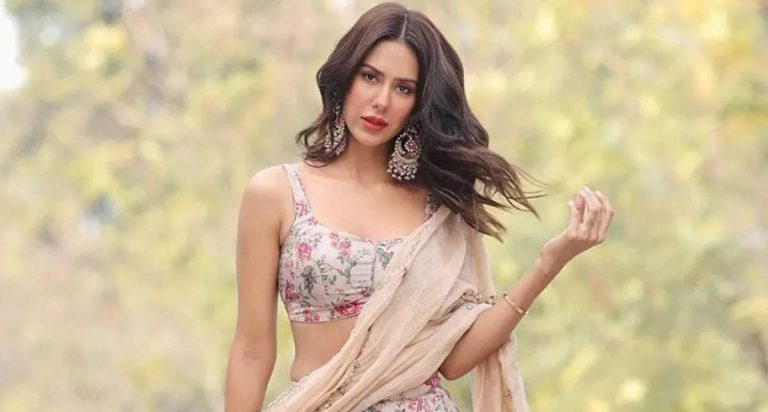
On Saturday (16 September), old tweets of Punjabi actress Sonam Bajwa created a social media storm in which several users alleged that she is a ‘crypto-Christian’ and is close to the notorious evangelist Ankit Sajwan. Apparently, Christian pastor Sajwan has been holding large congregations to en-mass convert poor and gullible individuals.
Sonampreet Bajwa popularly known as Sonam Bajwa is an Indian actress who is predominantly active in the Punjabi industry and is also popular on social media platforms. Apart from Pollywood, she has also worked in Tamil and Telugu films.
At the centre of the social media storm are the actress’ old posts in which she admitted that she “follows Jesus” and has referred to Christian Pastor Ankit Sajwan as her “spiritual father”.
In one of her posts, the actress talked about her relationship with Jesus claiming that many users would not understand it.
In December 2017, Sonam Bajwa tweeted, “I follow JESUS but I am not a religious Christian. I aim to have a relationship with him not religion. Someone like you won’t get it.”
I follow JESUS but I am not a religious Christian. I aim to have a relationship with him not religion. Someone like you won’t get it https://t.co/VNDJFfAeZe
However, on 23 June 2018, the Punjabi actress wished Christian Pastor Ankit Sajwan on his birthday. She also thanked him for being an amazing brother, “Pastor”, and “Spiritual Father”. She further added thank you for truly showing what God-kind of relationships are.
Later, on 16 August 2018, Ankit Sajwan wished the actor on her birthday saying, “Happy B’day Sonam. Love your kindness and humility. You are Daddy’s beloved and we love you so much. Have an awesome B’day.”
It is important to note here that Ankit Sajwan is an “influential” Christian pastor who has met several senior politicians including Delhi CM Arvind Kejriwal and Deputy CM Manish Sisodia for bestowing Christ’s prayers on them.
In the backdrop of these posts, several users have alleged that the Punjabi actress Sonam Bajwa is a crypto-Christian, and evangelists like Ankit Sajwan are using her fame to en-mass convert gullible people into their religious fold.
One social media user said, “She’s a Crypto Christian. Look at her old posts there are hundreds of posts about Jesus. We have to be aware of these newly converted Christians.”
She's Sonam Bajwa. Currently she's really popular in Punjabi Industry and Social media. She's a Crypto Christians. Look at her old posts there is hundreds of post about Jesus. We have to aware of this newly converted Christians. pic.twitter.com/l749x5JNTe
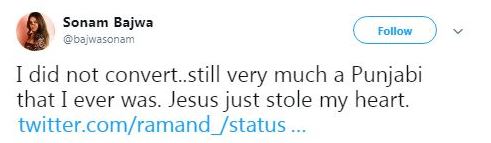
Sonam Bajwa – Jesus stole my heart ❤️, I owe everything to Jesus. She is believed to have been converted to Christianity. Sonam Bajwa (Sonampreet Kaur Bajwa) was born in Rudrapur, Uttarakhand in a Sikh family but she has deep faith on Jesus Christ. pic.twitter.com/a2jLKmVdN4
Evangelical ‘preachers’ are ‘Christianising’ village after village in Punjab
Christian missionaries and evangelical organisations are best known for their multilevel marketing techniques. Their network comprises healthcare centres, education centres, and everything that a family living in the hinterland or below the line of poverty is in need of. In some cases to attract youngsters, rockstar-kind of ‘conversion’ concerts are held where Christianed Western concepts are presented as paragons of modernity to attract Gen-Z and youth.
With a multi-pronged ploy, they achieve their evangelical and one true objective by first detaching the villagers from their roots. In a well-defined and well-designed strategy to uproot the Sanatan society, the slow indoctrination is coupled with a slyly crafted inculturation campaign. This inculturation includes every possible way to disguise the Gospel in local culture and traditions be it through Yeshu Jayanthi to Yeshu Kathakali.
The concept of inculturation is deeply enshrined in Christianity. It “denotes the presentation and re-expression of the Gospel inform and terms proper to a culture.”
Through techniques like ‘inculturation’ and ‘indoctrination’, evangelists have been achieving success in ‘Christianising’ village after village.
While the exact number of forced or lured conversions is hard to arrive at, according to one estimate in a limited geographical span, the missionaries converted as many as 1 lakh people and adopted 50,000 villages in a span of one year. Claiming that the pandemic lockdown was ‘godsent’, they promised to provide medical aid and two square meals amidst the financial crisis and lured the hapless villagers into the fold of Christianity.
Interestingly, there are many Pentecostal Pastors who are leading Christian conversion menace in Punjab and they include individuals from Former police officer pastors to ambitions of the ‘largest Church in Asia.