Home Blog Page 1987

Delhi: Wall of newly built govt school building in Education Minister Atishi Marlena’s constituency collapses

On Saturday, the 8th of July, part of a newly constructed Delhi government school at Sriniwaspuri in Delhi’s Kalkaji assembly constituency collapsed amid heavy rainfall in the National Capital. As per media reports, the government school comes under the assembly constituency of Delhi Education Minister Atishi Marlena. 

Many vehicles parked at the location were heavily damaged when the wall came down crashing amid the heavy downpour. 

After the incident, BJP leaders hit out at the AAP’s Delhi education model and accused the Delhi government of indulging in corruption during the construction of the newly built government school.

BJP leader and former MCD chairman Rajpal Singh also said that the school in Sriniwaspuri of the Kalkaji area was constructed just four months ago. Singh highlighted the fact that the government school whose wall collapsed in this incident falls in the assembly constituency of Delhi Education Minister Atishi. 

He stated that it was constructed at a cost of about Rs 16 crores. Despite this, the school wall collapsed like a house of cards just four months after its construction was completed.  

Singh added, ‘Can anyone imagine how big the accident could have been if the school was open and children were sitting inside it?’

He said that this school is an example of why they accused the Delhi government of taking 40% commission while running the administration in Delhi. Subsequently, he demanded that an FIR should be registered in this entire matter and strict action should be taken against the culprits.

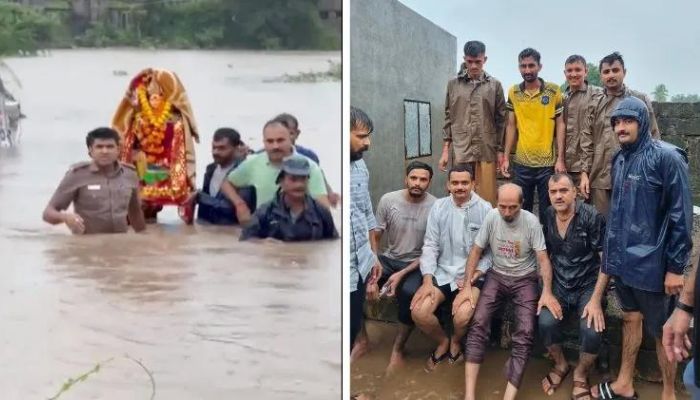
Amid heavy downpours in Delhi that began Saturday Morning, there have been several reports of houses and walls collapsing but it is said that those buildings were reportedly in dilapidated condition. 

According to the Delhi Fire Service, incidents of house or wall collapse were reported from about 15 places in Delhi on the 8th of July when the above incident happened.

As per ANI, the back side wall of Deshbandhu College, which is located in the Kalkaji area of Delhi, collapsed. Approximately 15 luxury cars and 10 to 12 motorcycles and scooters were damaged in this incident.

As per ABP news, the electric pole also fell down on a house during the rain and there was an eminent danger of local residents being exposed to electric shock.

Chhattisgarh liquor scam: Rs 776 crore of 2,161 crore scam money went to political executives, says ED

On 4th July, Enforcement Directorate (ED) submitted its charge sheet in the liquor scam by Anwar Dhebar, the prime accused and brother of Raipur mayor Aijaz Dhebar. As per the charge sheet, at least Rs 776 crore out of Rs 2,161 crore collected in the scam went to “political executives”.

There were plans to replicate the scam in Jharkhand, but the ED busted his operations. Apart from Dhebar, ED has named Trilok Singh Dhillon, who is the former MD of Chhattisgarh State Marketing Corporation Limited (CSMCL) and a well-known liquor businessman, hotelier Nitesh Purohit and an aide of Dhebar named Arvind Singh. They were arrested between May and June 2023.

ED noted how money was collected through commissions and bribes in four different ways. Part-A was bribes collected from distillers. The payment was made on per case basis and procured by CSMCL. Around Rs 496 crore were collected.

Part B was the sale of unaccounted country liquor. Around Rs 1,173 crore were collected. Part C was bribes taken from distillers to allow them to form their own cartel and have a fixed market share. Around Rs 280 crore was collected. Part D was bribes collected from FL-10A or foreign liquor license holders, and Rs 211 crore was collected from them.

ED said, “The Part-A and Part-C commissions were entirely handled by Anwar Dhebar, who transferred the entire collection to the political executives of the state (Chhattisgarh). Thus, an amount of (over) ₹776 crore in the form of Part-A and Part-C collection went to these political executives through Anwar Dhebar and Indian Administrative Service (IAS) officer Anil Tuteja.”

The agency added Dhebar has not disclosed the names of the beneficiaries who received money out of this Rs 776 crore. It added, “But many incriminating documents and records have been received from the Income Tax department, and investigation to trace these proceeds of crime worth ₹776 crore is going on.” Furthermore, it was found that Dhebar moved between 80 crore to 100 crore in cash to Mumbai and Delhi through Hawala. “Large amounts of cash were paid to the ruling party in the state for electioneering,” ED added.

Speaking on Dhebar’s plans to replicate the same model in Jharkhand, ED said, “Following the grand success of his conspiracy in Chhattisgarh, he decided to implement the Chhattisgarh model of Part-A and Part-B (collection) in Jharkhand too and successfully ran it for three to four months till it was abruptly ended due to ED action”.

The agency added, “The distillers, FL-10 (A) licensees, (and) manpower suppliers of Chhattisgarh in their respective statements have admitted to these facts and stated that they were coerced by Anwar Dhebar and his associates to work in Jharkhand also.”

The anti-money laundering probe agency is coordinating with the Ranchi office to investigate the matter. Information has been sought from the Jharkhand excise department as well. ED noted that the way Dhebar formulated the scam while citing the statement of Naveen Kedia of Chhattisgarh Distillers Ltd, it was like he worked as “an excise minister only”.

The investigation into the matter will take time, as ED said that a large part of the money trail is yet to be traced. Large amounts were also transferred outside India to countries like the Netherlands and UAE via hawala operators. The agency further said that several benami assets had been created using the money from the scam. It added, “ED will work with foreign investigative agencies to soon identify and get hold of these fugitives.”

Chhattisgarh Liquor Scam

The Enforcement Directorate (ED), in its prosecution complaint filed in the special PMLA court, has alleged that a whopping Rs 2,161 crore was generated in the Chhattisgarh liquor scam.

It alleged that the nexus in the scam comprised senior government officials, politicians, and other individuals. The scam has caused a loss of a staggering Rs 2,161 crore to the exchequer, ED stated in court.

ED has named Anwar Dhebar (51), brother of Raipur mayor Aijaz Dhebar of the Congress, Arunpati Tripathi (55), an Indian Telecom Services official, businessman Trilok Dhillon (59), and their aides Nitesh Purohit (51) and Arvind Singh (48).

Anwar Dhebar was apprehended by the ED in May and remanded to four-day custody. Following his arrest, ED attached 119 immovable properties worth Rs 121.87 crore in the case. ED has also attached assets of Anil Tuteja and Arunpati Tripathi in May. Fourteen properties of Tuteja worth over 8.83 crores and Dhebar’s Raipur hotel Vennington Court were also attached.

ED found that between 2019 and 2022, unaccounted illicit liquor worth 30-40% of the overall liquor sales in the state was sold at the behest of the syndicate.

While NAN scam-accused IAS officer Anil Tuteja managed the money collected in the scam, Anwar Dhebar, brother of Raipur’s Mayor Aijaz Dhebar, was the kingpin of the syndicate and after the deduction of a specific percentage, all the money went to Anwar.

ED pointed out that they collected hundreds of crores in cash from “every possible point of access in a distributed hierarchical manner.” The actors involved in the scam would keep a small percentage of the collection and transfer the remaining funds to Dhebar.

ED said, “It was found that the corruption was systematic and so deep-rooted with multiple associates in different State Departments, that the accused persons and syndicate was forced to maintain detailed logs and accounts of the collected money lest there may be pilferage from the crime money itself.”

Following the revelations made by the ED, PM Modi hit out at the Congress govt in the state. He said, “One of the 36 promises made in Congress’s manifesto was liquor ban in the state. Five years on, the Congress government has committed thousands of crores of liquor scams. Newspapers are filled with reports on the same.”

West Bengal Panchayat poll violence: State election commission didn’t provide the list of sensitive booths, BSF reveals

On July 9, 2023, senior Border Security Force (BSF) officials made a significant disclosure regarding the recent panchayat elections held in West Bengal and the associated large-scale violence. BSF DIG S S Guleria accused the State Election Commission of withholding crucial information from the central security forces for deployment at sensitive polling stations during the elections.

According to Guleria, the Border Security Force had repeatedly written letters to the State Election Commission, requesting information about sensitive polling stations. However, except for June 7, no information was provided on any other day. The officer stated that only the number of sensitive booths was disclosed, without any details about their locations or other relevant information.

Guleria further revealed that the BSF was deployed based on the orders of the local administration. Despite the arrival of 59,000 columns of Central Armed Police Forces (CAPFs) and State Armed Police from 25 states for election duty, they were not adequately utilized at sensitive polling stations. The state authorities had declared only 4,834 sensitive booths, with only CAPFs deployed there, even though there were many more sensitive polling stations than that.

The panchayat elections held on July 8 in West Bengal were marred by widespread violence across the state. Reports emerged of booth capturing, damage to ballot boxes, and attacks on presiding officers from districts such as Murshidabad, Behar, Malda, South 24 Parganas, North Dinajpur, and Nadia. Tragically, the violence resulted in the loss of over 30 lives and numerous injuries.

The State Election Commission had established a total of 61,636 polling stations for conducting elections to 3,317 grampanchayats, 341 panchayat samitis, and 20 zila parishads in West Bengal. To ensure the safe conduct of elections, 59,000 personnel from the Central Armed Police Forces and other state police forces were entrusted with the responsibility of guarding the polling stations, including the 4,834 sensitive booths where only CAPFs were deployed.

It is worth noting that under the Trinamool Congress Party’s rule, West Bengal has witnessed a deteriorating law and order situation. Mamata Banerjee’s government has been unsuccessful in containing the escalating violence, particularly the targeted killings of RSS and BJP workers, which have become distressingly commonplace. The use of bombs as a means of political rivalry has also become alarmingly frequent, even at the block or village level. Despite the significant number of political killings, mainstream media outlets have refrained from labelling it a murder of democracy due to the apprehension of potential vindictive actions from Mamata Banerjee’s government.

Syria revokes accreditation of BBC journalists over alleged “subjective and politicised” reports regarding Assad family connection with illegal Captagon trade

On Saturday, July 8, the information ministry of Syria announced the cancellation of the BBC’s accreditation due to “misleading reports”. The accreditations of an unknown BBC correspondent and cameraman have been revoked as a result of “subjective and false information and reports” on Syria, according to a statement on the information ministry’s website. Other BBC reports have been termed as “politicised.”

The BBC Radio correspondent in Syria’s accreditation was also revoked, according to the ministry.

According to the information ministry, the BBC has “from time to time provided subjective and fake information and reports about the reality” in Syria since the conflict began in 2011. More than 500,000 people have been killed, millions have been displaced, and much of the country’s infrastructure and industry have been destroyed during the conflict.

The ministry statement further stated that BBC was cautioned “more than once, however, the British broadcaster continued to air its misleading reports founded on statements from terrorist entities and those hostile to Syria”, the ministry stated further stated.

The statement said that “as a result of the channel’s failure to adhere to professional standards and its insistence on providing politicized and misleading reports to world opinion”, the Ministry of Information decided to revoke the accreditation of the channel’s correspondent and cameraman in Syria, and also to revoke the accreditation of the BBC correspondents in Syria.

Responding to the development, the BBC said it provided impartial, independent journalism. “We speak with people across all political spectrum to get the facts. We will continue to provide unbiased news and information to our Arabic-speaking audiences worldwide,” a BBC spokesperson told Middle East Eye.

Syria’s government and other authorities place strict restrictions on media coverage and require accreditation and permission to report.

Is the Assad family “directly” involved in the Captagon trade?

Last month, the BBC published a report claiming “direct links” between the trade of an amphetamine known as Captagon and President Bashar al-Assad’s family, as well as the Syrian military. Syria has denied any involvement in the Captagon trade.

Notably, the United States, Britain, and the European Union have laid blame on Syria’s government for Captagon’s production and export, mentioning the president’s brother and commander of the army’s Fourth Division, Maher al-Assad as a key figure.

Captagon is a highly addictive amphetamine-type drug that is primarily produced in Syria and extensively smuggled throughout West Asia. Over the years it has been claimed by the media that al-Assad, his associates, and his family have profited from the drug’s sales, which are estimated to be worth several billion dollars per year. The pills have become a lifeline of sorts for them as Syria is faced with an economic crisis ongoing since the outbreak of the civil war in 2011.

In May this year, the Arab League voted back Syria to its fold after a suspension of over ten years. 

“In July 2022, the headquarters of Raji Falhout, the leader of a regime-allied militia, were overrun by a rival group in the southern Syrian city of Suweida. They found bags of what appeared to be Captagon pills, as well as a machine that could be used to press pills, Falhout’s Syrian military ID card, and an unlocked mobile phone,” a BBC report published on June 27 read.

BBC claimed to have accessed the WhatsApp messages exchanged between Falhout and one Lebanese named Abu Hamza regarding the pill-pressing machine. Abu Hamza was reported to have been identified as Hussein Riad al-Faytrouni linked to Hezbollah. Hezbollah is known to be an ally of the Assad government.  

History of Captagon

Fenethylline hydrochloride, also known as Captagon, is a drug that was first produced in West Germany in the 1960s and is used to treat depression, narcolepsy, and attention deficit disorder. Due to the drug’s addictive properties, it was outlawed in the 1980s, but soon after, counterfeit Captagon pills started to appear in several Middle Eastern nations.

Captagon has been used by ISIS terrorists over the years for enhanced abilities like increased alertness and suppressed appetite during wars. Illegal manufacturing of Captagon probably combines multiple highly addictive stimulants with compounding effects into one harmful little pill, as opposed to just two primary ingredients used in Captogon produced in the 1960s. These illegally produced Captagon has the potential to permanently alter the brain circuitry that controls impulse control and judgement, impairing one’s capacity for reason and rational thought.

Uttar Pradesh: Islamic conversion racket run by doctors and engineers busted by the police in Ghaziabad, read details

An engineering and medical professional-led Islamic religious conversion gang was discovered by Ghaziabad’s Khoda police station. Neeru Bisht, a resident of Khoda, is one of the six individuals in the Delhi-National Capital Region (NCR) who fell victim to their nefarious agenda. The family noticed her donning the hijab and performing Namaz at home and the entire matter came to light.

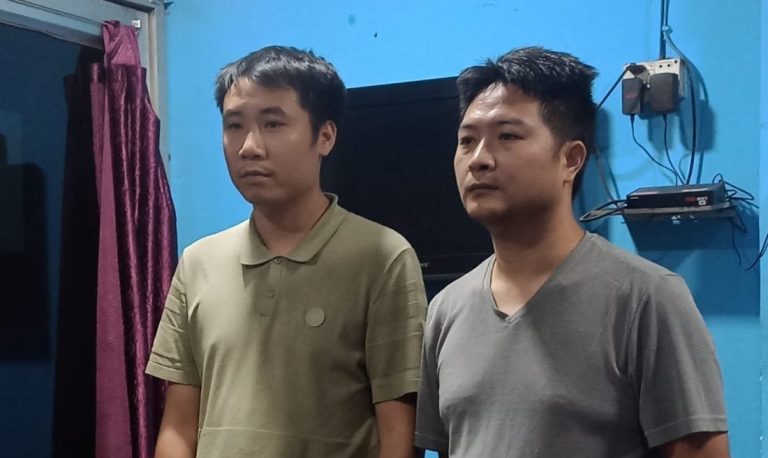
The police reportedly tracked down the syndicate on 8 July on the basis of her father’s complaint. They apprehended their leader, Dr Abdullah Ahmed, his associate Mohammad Museer who is an engineer by profession and a call centre employee named Rahil. Interestingly, Rahil and Abdullah who were both Hindus had also undergone religious conversion. The former was previously named Rahul Agarwal whereas the latter was known as Saurabh Khurana.

According to Deputy Commissioner Of Police (Trans Hindo) Vivek Yadav, they brainwashed Neeru as well as five other persons from Delhi to embrace Islam. Ajay Rathore, Amrit Singh and Kapil Anand were converted by Abdullah while Ajay, to whom Museer had formerly imparted mathematical lessons as a tutor, was similarly influenced by the latter.

Even Rahul Agarwal alias Rahil, a resident of Sangam Vihar in Delhi, was converted by Museer and given the Muslim name by him. The former married Neeru after meeting her online and converted her to Islam. He is presently employed by I Energizer, a call centre in Noida’s Sector-58 where she had also worked formerly.

Abdullah, who lives in R New Colony in Palwal, is enrolled in a madrasa in Deoband to study Alim (God in Islam). He completed his BDS (Bachelor of Dental Surgery) at Aligarh Muslim University in 2014 and changed his religion in the same year. Museer, a Sangam Vihar inhabitant in Delhi, has a diploma in civil engineering and is currently pursuing a B.Tech (Bachelor of Technology).

According to the police, the wires of this racket are also connected to Aligarh and Deoband. The accused’s mobile devices contained videos of Maulanas from both of these locations. The material was used for religious conversion. Additionally, clips of controversial religious leader Zakir Naik were also found on them.

Neeru wanted to become a suicide bomber

Rahil approached the girl using his original name Rahul Agarwal. He convinced her that he was madly in love with her and that he could not survive without her. He told her that he wanted to marry her on multiple occasions.

In January of this year, he revealed his true identity to her in the belief that she had grown intense feelings for him. He pretended to be the victim in front of her and complained that his parents were against their union because they were from different religions. She accepted when he pressed her to become a Muslim.

Neeru’s father informed that he had begun to suspect his daughter due to her persistent unusual behaviours. She confessed to learning Sharia, the Islamic code of law, when he questioned her. He revealed that she was brainwashed to the point that she began observing Islamic customs, such as five times performing Namaz and adorning a burqa.

He disclosed that his daughter had grown so radicalised that she wouldn’t even hesitate to kill someone who disagreed with her religious ideology and refused to convert to Islam. He further added that she had become so fervent in her beliefs that she even expressed a desire to carry out a suicide bombing and attain ‘martyrdom’ for the sake of jihad.

In order to stop Rahil aka Rahul Agarwal from continuing on the path of terrorism, the father denounced him to the police. As a result, the Ghaziabad police held the offender and began an investigation.

Converting unsuspecting Hindu girls since 2017

Rahil has been carrying out his evil project to convert Hindu females to the Sharia since 2017. He initially became friends with his prey by assuming the identity of Rahul Agarwal, his Hindu name before he embraced Islam. Afterwards, he used his charisma to seduce the victims and get them involved in a relationship. He later indoctrinated them in the name of Islam after they developed feelings for him. He then indoctrinated the girls before finally manipulating them to convert to Islam.

Conversion through Fortnight

Notably, Ghaziabad police exposed a case of converting children to Islam using the video game “Fortnite.” The police described the nefarious strategy used by Islamists to persuade and coerce impressionable young minds to become Muslims through online games. The authorities verified that four teens who were converted via an online gaming application were instructed to read Quranic passages in order to win.

Following the filing of a First Information Report under the pertinent provisions of the Indian Penal Code (IPC), a team was assembled to look into the matter. A Maulavi in Ghaziabad was arrested first, before one Shahnawaz Khan.

UK: Indian-origin employee wins a landmark case, receives Rs 24 crore as compensation from Royal Mail over workplace bullying

In a significant victory against workplace harassment, a Royal Mail employee of Indian origin has been awarded over £2.3 million (approximately Rs 24 crore) in compensation after her claims of bullying were substantiated by an employment tribunal. Kam Jhuti, who had lodged her complaint nearly eight years ago, alleged that she faced intimidation and harassment from her superior when she raised concerns about a colleague receiving an illegitimate bonus.

According to reports, the tribunal determined that her boss’s treatment had a profoundly detrimental impact on Jhuti, describing it as “catastrophic”. In a recent remedy decision appended to the protracted case, the tribunal stated, “The total award by the respondent to the claimant amounts to GBP 2,365,614.13.” However, payment of the award is temporarily suspended pending the outcome of Royal Mail’s appeal against the tribunal’s initial judgment on remedies, which was communicated to the involved parties on October 3, 2022. Both parties have the option to request the suspension be lifted.

The decision further specified that Royal Mail must immediately pay Jhuti £250,000 gross as part of the total compensation award, as agreed upon by both parties. This payment is not subject to suspension and must be made within 14 days of the hearing’s date.

Earlier, the tribunal had concluded that the postal service had acted in a “high-handed, malicious, insulting, and oppressive” manner during the course of the case.

During a Supreme Court hearing in 2019, it was revealed that Jhuti had joined Royal Mail’s MarketReach unit in London as a media specialist, earning £50,000 per year, in September 2013. In October of the same year, while observing a colleague, she began to suspect that they were not adhering to Ofcom’s guidelines and were violating the company’s policy on Tailor-Made Incentives (TMIs) for bonuses. Jhuti alleged that the colleague had manipulated performance targets to secure a bonus for themselves, essentially defrauding the company.

Later that month, a TMI expert within the organization confirmed Jhuti’s suspicions by acknowledging that media specialists were inappropriately offering TMIs.

As the investigation progressed, Jhuti experienced stress and raised concerns about her boss’s behaviour. Although she was assigned a new line manager, her progress was deemed insufficient, and in March 2014, she was signed off with work-related stress, anxiety, and depression. She never returned to work.

Following an initial employment tribunal in 2015, Jhuti’s claims of unfair dismissal were upheld after the Supreme Court ruled in her favour. Since an appeal is pending, the Royal Mail is currently obligated to pay only £250,000 from the overall compensation amount.

Yemen: Islamist group ‘Houthis’ ban imports from Sweden after man burns Quran outside masjid on Eid

Days after an Iraqi refugee named Salwan Momika stomped on a copy of the Quran and set another on fire outside a mosque in Stockholm on the occasion of Eid-al-Adha, the Houthi movement in Yemen has banned imports from Sweden.

Houthi-run TV channel Al Masirah quoted the trade Minister as saying, “Yemen is the first Islamic country to ban imports of Swedish goods after its violations and desecration of Muslims’ holiest.”

He called upon other Islamic nations to ban imports from the Scandinavian country. The Houthi trade Minister also said that imports from Sweden were limited and that the ban had a symbolic value. He also said that it was the least thing that they could do to protest against the burning of Quran.

Who are the Houthis

The Houthi movement (also called Ansar Allah) is an Islamist movement comprising Zaydi Shiites from the Houthi tribe. Iran has been accused of providing military support to Houthis and using them as its proxy for shared geopolitical interests.

They control the Northern part of Yemen, including the cities of Sa’dah and Sana’a, and fight the coalition of Gulf countries led by Saudi Arabia.

Interestingly, the radical Islamist Houthi movement was designated as a terrorist group by Donald Trump prior to leaving the Oval Office. The decision was, however, reversed after Joe Biden became the US President.

The Quran burning incident in Sweden

Prior to Eid-Al-Adha, on June 28, the Swedish Police gave one Salwan Momika permission to burn the Quran at a demonstration outside the largest mosque in Stockholm after a Swedish court struck down the police’s ban on Quran-burning demonstrations.

Two other requests, one by a private citizen and the other by an organisation, for similar activities that include Quran burning were turned down by police in February outside the Turkish and Iraqi embassies in Stockholm. 

The appeals court concluded in June that the protests should have been permitted. It ruled, “The order and security problems that the police had cited had not been clearly connected to the planned event or its immediate vicinity.”

Before this, Danish far-right politician Rasmus Paludan burnt a copy of the Quran next to the Turkish embassy in the country’s capital prompting Turkey to halt discussions with Sweden about its NATO membership in January this year.

As Congress tries to attack Modi govt on inflation, data shows BJP govts keep inflation in check while it balloons during Congress rule

On 7th July, several pro-Congress social media handles attacked Prime Minister Narendra Modi on inflation with the hashtag ‘ModiFlation’. They claimed that the prices of daily-use products skyrocketed and increased 2-3 times over the past ten years since PM Modi took charge in 2014. Comparing the prices from 2013, Congress and its followers attacked the Government of India, claiming the present government has been unable to control the prices.

The trigger point, it appears, was the price of seasonal vegetable tomatoes that are selling anywhere between Rs 120 to Rs 150 per KG. Notably, perishable vegetables’ price increases yearly during monsoon owing to limited supply. The prices often come down within a couple of months to normal. However, political parties habitually used this period to attack the government, claiming it failed to control inflation.

Data shows BJP kept inflation under check

Coming to the allegations of “uncontrolled” inflation in the past ten years, the data shows a whole different story. OpIndia studied the data from World Bank since 1991 to find out how different political parties or alliances performed while being in power at the centre. As per the data from 1991 to 1995, when Congress was in power, the inflation stayed between 13.90 per cent in 1991 to 6.33 per cent in 1993, which was the only month inflation was under 10 per cent. In 1992, it was 11.80 per cent, and in 1994 & 1995, it was 10.20 per cent.

In 1996, Janata Dal came to power, and there was a slight drop in the inflation rate. In 1996, the inflation rate was 8.98 per cent, while in 1997, it was 7.16 per cent.

In March 1998, BJP took power from Janata Dal. For the first year, which was 1998, inflation was 13.20 per cent. However, inflation was under strict control in the following years and did not cross 5 per cent even once. In 1999, it fell to 4.67 per cent, followed by 4.01 per cent in 2000, 3.78 per cent in 2001, 4.30 per cent in 2002, 3.81 per cent in 2003 and 3.77 per cent in 2004.

Inflation was kept under check whenever BJP was at the centre. Source: World Bank

After one year of Congress rule, the inflation rose slightly to 4.25 per cent in 2005. That was the only year under UPA rule when inflation was under 5 per cent. It was 5.8 per cent in 2006. 6.37 per cent in 2007 8.35 per cent in 2008, 10.90 per cent in 2009, 12 per cent in 2010, 8.91 per cent in 2011, 9.48 per cent in 2012 and 10 per cent in 2013.

Within months BJP-led NDA government came to power in 2014, inflation dropped to 6.67 per cent from 10 per cent. In 2015, it went below 5 per cent at 4.91 per cent, followed by 4.95 per cent in 2016, 3.33 per cent in 2017, 3.94 per cent in 2018 and 3.73 in 2019.

In 2020, the Covid pandemic hit India hard, adversely affecting the economy. The production and supply chain was affected by the pandemic. However, the inflation rate was kept under check. It ballooned up to 6.62 per cent in 2020, followed by 5.13 per cent in 2021, 6.70 per cent in 2022, and RBI has forecasted it will be 5.1 per cent in 2023.

Data shows that the inflation under the BJP-led NDA government has mostly stayed under 5 per cent per year. On the other hand, UPA managed to keep inflation under 5 per cent only in the first year of its rule after NDA lost the Lok Sabha election in 2014. Otherwise, under Congress-led UPA, inflation always remained over 5 per cent, with seven instances where inflation went beyond 10 per cent per year.

Digvijaya Singh tweets false and fabricated ‘quotes’ from MS Golwalkar, FIR registered for defamation

On Saturday, 8th July 2023, an FIR was lodged in Indore, Madhya Pradesh, against former Chief Minister and Congress leader Digvijaya Singh for his contentious tweet about MS Golwalkar, the former Rashtriya Swayamsevak Sangh (RSS) chief. Golwalkar, popularly known as Guruji, is revered as a staunch patriot and a guiding light for patriots in India. Singh’s tweet has sparked controversy and led to legal action being taken against him.

Advocate Rajesh Joshi filed the FIR at Tukoganj police station in Indore, citing that Digvijaya Singh shared a picture of Golwalkar Guruji accompanied by comments describing him as anti-Muslim and anti-Dalit. RSS workers have strongly objected to this post, stating that the information shared is false and unnecessary. Consequently, Singh has been booked under sections 153A, 469, 500, and 505 of the Indian Penal Code, with the crime FIR number 311/23.

Singh’s tweet focused on certain statements made by Golwalkar, with Singh claiming that these statements showed Golwalkar’s opposition to equal rights for Dalits, OBCs, and Muslims. The RSS promptly responded, asserting that Singh was distorting the statements. The RSS accused Singh of misrepresenting Golwalkar’s views through a cropped image with the intention of creating social disharmony.

Digvijaya Singh tweeted a photograph with several controversial comments, purportedly quoting Golwalkar. The comments attributed to Golwalkar in the tweet included statements expressing a preference for British rule over granting equal rights to Dalits, OBCs, and Muslims. Golwalkar has also been held responsible for other contentious remarks in this image.

Digvijaya Singh wrote in his tweet, “What was Guru Golwalkar ji’s view on Dalits, OBCs and Muslims and national rights over water, forest, and land?” Along with this, a picture was shared in it and some controversial text was written on it. The image claims that the quotes are taken from Golwalkar’s book ‘We and Our Nationhood Identified’.

According to the text written on the picture, Golwalkar has written in his book, “Whenever power comes to hand, first hand over the government’s wealth, state land and forest to your two-three trusted rich people. Make 95% of the people beggars, after that power will not go out of hand for seven lives.”

The image further claims that in 1940, Golwalkar had said, “I am ready to serve the British all my life, but I don’t want the freedom that gives equal rights to Dalits, OBCs, and Muslims. “

Advocate Rajesh Joshi, in Indore, claimed that a false and inappropriate post with a picture of former RSS chief late Madhav Sadashivrao Golwalkar, popularly known as MS Golwalkar, was circulating on social media, with the aim of tarnishing the image of the Rashtriya Swayamsevak Sangh. Consequently, an FIR has been lodged against Digvijaya Singh.

PM Modi in France: India likely to sign deal to procure Rafale Marine fighter jets during the visit

Following the signing of significant defence deals with the United States during Prime Minister Narendra Modi’s state visit there, India is expected to sign a deal with France now to purchase the naval/marine version of the Rafale fighter jets. The final decision is likely to be made at the defence acquisition council meeting before Prime Minister Narendra Modi departs for France next week. PM Modi will be in France on July 13-14 as the Guest of Honour at the Bastille Day Parade.

During his visit, Prime Minister Modi will meet with French President Emmanuel Macron to discuss a broad range of issues, including joint production of military platforms, the prospective purchase of Rafale-Marine (Rafale M) fighter jets for the Indian Navy’s indigenously-made INS Vikrant aircraft carrier, nuclear reactors, and deeper cooperation in space, among others. 

After trials at the navy’s shore-based test facility (STBF) in Goa last year, the Indian Navy reportedly picked the twin-engine, canard delta-wing multirole Rafale-M over Boeing’s F/A-18 Block III ‘Super Hornet’. Although there is little information about the price, media reports suggest that Rafale-M will be cheaper than the version bought by the Indian Air Force earlier.

The fighter planes are likely to be acquired through a government-to-government deal rather than through an open tender process to facilitate the process and save time as well.

As a short-term solution, the Indian Navy has been looking into options to replace its ageing MiG-29K. As a long-term solution to its need for carrier-based fighters, India continues to be working on developing its own Twin-Engine Deck-Based fighters (TEDBF). However, because it will be some time before the aircraft is developed in-house, the Navy is reportedly opting to move ahead with the acquisition to meet its aviation requirements.

Rafale and Rafale-M: The benefit of commonality

By the end of 2022, France had delivered all 36 Rafale fighter jets to India. The two Rafale fighter jet variants—Rafale and Rafale-M—share more than 80% of their components. Reports suggest that this would contribute to commonality in repairs and maintenance for Rafale fighter jets with the Indian Air Force and Indian Navy. Furthermore, the Indian Air Force already operates 36 Rafale fighter jets from two bases in India. Rafale pilot training for the two services can also be common to an extent. 

PM Modi’s France visit

Prime Minister Narendra Modi is set to arrive in Paris on July 13. He will be welcomed by French President Emmanuel Macron.

On the first day, PM Modi is expected to address a diaspora event at La Seine Musicale, a performing arts centre located on IIe Seguin island in the scenic Seine River in the western suburbs of Paris. The La Siene Musicale is at present hosting the “Namaste France” Festival, which is organised by the Indian Embassy in France and the Ministry of Culture.

Later, President Macron will be hosting PM Modi for a private dinner at his official residence, the Elysee Palace.

Both leaders will discuss pertinent bilateral issues and those of global concern during this private dinner, and formal delegation-level talks are scheduled after the Bastille Day parade on the Champs Elysees in the presence of President Macron on July 14.

On the ground, a 269-man contingent of the Indian Army from the Punjab Regiment and Rajputana Rifles will take part in the parade, while one Indian Air Force Rafale fighter will be the star of the show, with three others joining it for a formation.

The Indian Navy will also be represented at the event by INS Chennai, an indigenously designed and built guided missile destroyer. The ship’s crew will be present at the Bastille Day celebrations in Brest.