

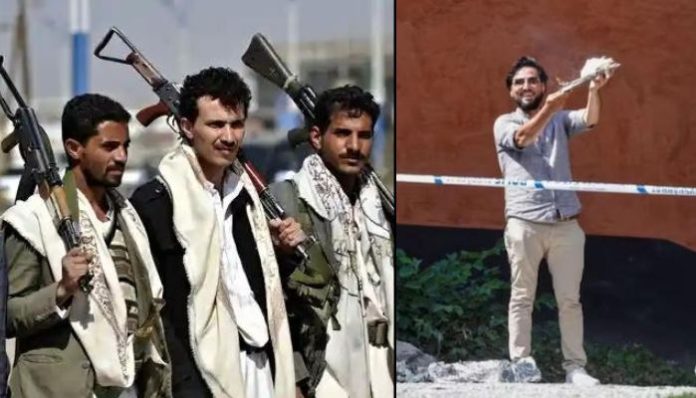
Days after an Iraqi refugee named Salwan Momika stomped on a copy of the Quran and set another on fire outside a mosque in Stockholm on the occasion of Eid-al-Adha, the Houthi movement in Yemen has banned imports from Sweden.
Houthi-run TV channel Al Masirah quoted the trade Minister as saying, “Yemen is the first Islamic country to ban imports of Swedish goods after its violations and desecration of Muslims’ holiest.”
He called upon other Islamic nations to ban imports from the Scandinavian country. The Houthi trade Minister also said that imports from Sweden were limited and that the ban had a symbolic value. He also said that it was the least thing that they could do to protest against the burning of Quran.
Yemen's Houthi authorities ban Swedish imports over Koran burning https://t.co/UURTfyDnyH pic.twitter.com/9EdjeKBym4
— Reuters (@Reuters) July 8, 2023
Who are the Houthis
The Houthi movement (also called Ansar Allah) is an Islamist movement comprising Zaydi Shiites from the Houthi tribe. Iran has been accused of providing military support to Houthis and using them as its proxy for shared geopolitical interests.
They control the Northern part of Yemen, including the cities of Sa’dah and Sana’a, and fight the coalition of Gulf countries led by Saudi Arabia.
Interestingly, the radical Islamist Houthi movement was designated as a terrorist group by Donald Trump prior to leaving the Oval Office. The decision was, however, reversed after Joe Biden became the US President.
The Quran burning incident in Sweden
Prior to Eid-Al-Adha, on June 28, the Swedish Police gave one Salwan Momika permission to burn the Quran at a demonstration outside the largest mosque in Stockholm after a Swedish court struck down the police’s ban on Quran-burning demonstrations.
Two other requests, one by a private citizen and the other by an organisation, for similar activities that include Quran burning were turned down by police in February outside the Turkish and Iraqi embassies in Stockholm.
The appeals court concluded in June that the protests should have been permitted. It ruled, “The order and security problems that the police had cited had not been clearly connected to the planned event or its immediate vicinity.”
Before this, Danish far-right politician Rasmus Paludan burnt a copy of the Quran next to the Turkish embassy in the country’s capital prompting Turkey to halt discussions with Sweden about its NATO membership in January this year.


