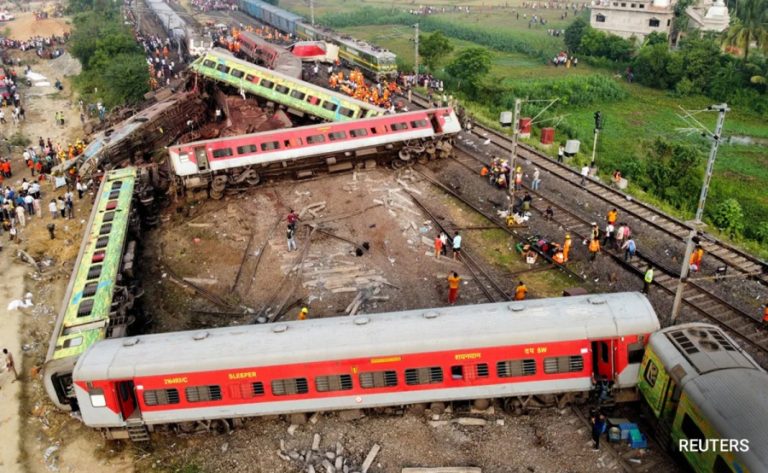
NDRF Jawan Venktesan NK, who was onboard the Coromandel Express which derailed in Odisha, was among the first to alert his force about that tragic accident. While talking to ANI, Venktesan NK said, “I alerted my team about the accident. I informed the Odisha NDRF team. Within one hour an NDRF team was on the spot. The nearby civilians helped us a lot in providing food, water and first aid.” “The accident happened around 6:50 pm. There was a loud noise inside the train. Everybody was scared and people started praying to god. I asked people not to lose their cool and made them understand that something might have happened. The train slowed down after that. I asked them to settle down. I was in the AC coach. After the train stopped, I got down to see and realised that an accident had happened,” Venktesan NK further said.
Upon his return from Odisha after the horrific railway accident, which killed over 270 people and left over 1000 injured, Railway Board Chairman, AK Lahoti on Monday evening briefed top officials in the Prime Minister’s Office on the update on ground, including the ongoing investigation.
“Chairperson of the Railway Board will be meeting top officials in the Prime Minister’s office, including the Principal Secretary to the Prime Minister about the details from the ground,” reliable sources had earlier told ANI.
While the enquiry ordered by the railway ministry is currently underway, the government has also sent a request to the Central Bureau of Investigation (CBI) to take up the matter.
“There is a need to have a deep investigation by a professional agency to rule out any deliberate interference,” top government sources told ANI.
Within hours of the rail accident, the chairman railway board was on the ground with the Union Minister for Railways Ashwini Vaishnaw and has returned only today. So he is likely to brief the details to the PMO that has been keeping a constant watch on the developments on the ground.
The triple train accident in Balasore happened on Friday evening. At least 275 people were killed, while more than 1,000 were injured in the accident that took place near the Bahanaga Bazar area on June 2.
The Odisha government on Monday informed that 151 bodies from the triple train accident that took place in Odisha’s Balasore district have been identified till today morning.
On Saturday, Prime Minister Narendra Modi took stock of the Balasore accident site from ground zero and also visited the injured being treated at the hospital. Before leaving Delhi for the accident site, PM Modi had also chaired a high-level review meeting on the same.
(This news report is published from a syndicated feed. Except for the headline, the content has not been written or edited by OpIndia staff)
The British Broadcasting Corporation (BBC) has reportedly admitted that they evaded taxes in India and are now committing to pay Rs 40 crores in tax arrears. According to a report in Times of India, BBC is yet to file revised returns or provide their commitment to the Tax Authorities in writing. The report said that tax sources have said that BBC has only made a statement of intent so far and no payment has been received by the IT department.
According to a report by India.com, the BBC has agreed to cough up Rs 40 crores to make up for their tax evasion over a period of almost 6 years – from 2016 to 2022.
In February 2023, the BBC offices were surveyed by tax authorities for 3 days. After the survey, the Finance Ministry had issued a statement explaining the depth of tax fraud committed by the BBC.
Without naming BBC, the statement said that a survey action under section 133A of the Income tax Act, 1961(the Act) was carried out at the business premises of group entities of a prominent international Media Company at Delhi and Mumbai.
The statement noted that BBC is engaged in the business of development of content in English, Hindi and various other Indian languages; advertisement sales and market support services, etc in India.
The statement said that the income/profits shown by various group entities under BBC India do not match their scale of operations in India, as the quantity of content in India is substantial. In the raid by the Income tax department, which has been described as a survey, several pieces of evidence were found that show that tax has not been paid on certain remittances which have not been disclosed as income in India by the foreign entities of the group.
The ministry further informed that the survey revealed that BBC India had made remittances to its foreign offices for utilising the services of seconded employees, or temporary employees sent from overseas. While such remittances are subjected to withholding tax, BBC avoided it.
Further, the I-T department also found discrepancies and inconsistencies with regard to Transfer Pricing documentation. Such discrepancies relate to the level of relevant Function, Asset and Risk (FAR) analysis, incorrect use of comparables which are applicable to determine the correct Arms Length Price (ALP) and inadequate revenue apportionment, among others, the statement said.
The ministry has said that the survey operation has resulted in the unearthing of crucial evidence by way of statements of employees, digital evidence and documents which will be further examined in due course. “It is pertinent to state that statements of only those employees were recorded whose role was crucial including those connected to, primarily, finance, content development and other production-related functions,” the ministry said.
Interestingly, while the ‘Liberal’ ecosystem in India had tried to defend the BBC and blame the Modi government for conducting the survey at the BBC premises, the broadcasting company has a notable past of tax evasion and fraud. For example, Thousands of public employees, including those at the BBC, were not paying their taxes at the source, according to a 2012 report from the public accounts committee in the United Kingdom (UK). The full report on BBC’s history of tax evasion can be read here.
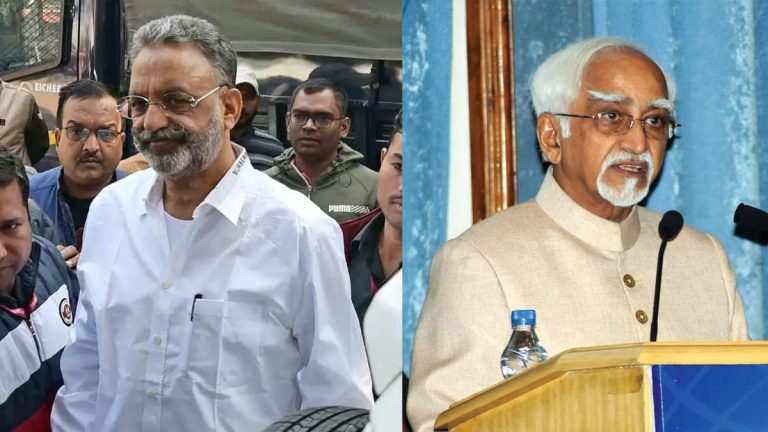
Gangster-turned-politician Mukhtar Ansari was convicted by a special MP-MLA court in Varanasi on Monday in the 1991 Awadhesh Rai murder case. He has been awarded life imprisonment in the case of murder of Congress leader Awadhesh Rai, brother of MLA Ajay Rai, on 3 August 1991.
Every time Mukhtar Ansari appears in the news, people mention that he is a relative of former vice president Hamid Ansari. It is often said Hamid Ansari is Mukhtar Ansari’s uncle, while some say they are cousins. While that is not true, it is also not completely untrue.
In fact, Mukhtar Ansari himself has claimed that he is related to Hamid Ansari. In February 2021, while opposing the UP government’s plea to shift him to the state from Punjab, he had said that he comes from an illustrious family with several well-known persons and freedom fighters. In this, he had also named Hamid Ansari.
Mukhtar Ansari said in an affidavit filed at the Supreme Court that he was a “part of a family that has made immense contribution to the Indian freedom movement and has given India many leaders in the form of Shri Muhammad Hamid Ansari who was the vice president of India, Shri Shaukatullah Ansari who served as the governor of Odisha, Justice Asif Ansari who was the judge of the Allahabad high court, and his own father Subhanullah Ansari who was a freedom fighter and social worker.”
It has been widely reported in media that Mukhtar Ansari comes from a distinguished family. His paternal grandfather Mukhtar Ahmed Ansari was the president of the Congress party. While his maternal grandfather Mohammad Usman was a Brigadier in the Indian Army. His father Subhanullah Ansari was also a politician and had a clean image. Mukhtar’s brother Sibgatullah Ansari is a member of Samajwadi Party and two-time MLA from 2007 to 2012.
Similarly, his family is indeed related to the family of Hamid Ansari, but they are not first cousins or direct uncle-nephew, as often alleged. According to available reports, they are distant relatives. Talking to newschecker, Shuaib Ansari, son of the elder brother of Mukhtar Ansari, has clarified that Hamid Ansari is a distant relative and not an immediate relative of Mukhtar Ansari.
Another member of the family said that Hamid Ansari and Mukhtar Ansari’s father Subhanullah Ansari were second cousins. Therefore, Hamid Ansari is not Mukhtar Ansari’s real uncle, but they belong to the same extended family. Hamid Ansari and Subhanullah Ansari are grandnephews of the freedom fighter Dr Mukhtar Ahmed Ansari.
Other well-known names from the clan include Jamia Millia founder and former Congress president Dr Mukhtar Ahmed Ansari, former MP and former governor Dr Shaukat-Ullah Shah Ansari, former Kerala Chief Justice M Ahmad Ansari, Justice Asif Ansari of Allahabad High Court, among others.
Due to the distant nature of the relationship between Hamid Ansari and Mukhtar Ansari, locals consider them not relatives. In an OpIndia ground report, one villager from Mau village had said that they merely belong to the same village, and have no blood relation.
On the 4th of June, The New York Times, which has often been terribly racist towards India and her achievements published an article headlined “Money for Show Horses, Not Work Horses, on Indiaʼs Rails”. In the article written by Alex Travelli, the New York Times acknowledges that railway safety has improved drastically since the Modi government took over, however, somehow reaches the conclusion that not enough is being spent on safety, but instead, resources are being spent on speed and comfort instead.
“In a country where major industry and political fortunes alike are often tied to a vast, interwoven rail system, India has lavished public resources on new trains, but its purse strings have been much tighter when it comes to ensuring the safety of those already racing along its tracks”, the NYT article read.
If propaganda was an art, The New York Times would probably be Mozart. They carefully start with their conclusion, helping the readers’ make up their minds, believing their conclusion, without providing the facts on the basis of which they reached the said conclusion. They instead quoted some ‘experts’ to make their point.
Talking about the Balasore triple train accident, the New York Times makes strange assertions claiming, “But most of Mr. Modi’s initiatives have been aimed not at the basic steps needed to get trains from Point A to Point B without mishap, but at improving speed and comfort. He regularly extols higher-fare new electric Vande Bharat trains connecting bigger cities and has made an early priority of a Japanese-style bullet train, though it can do nothing to improve the lives of the country’s ordinary passengers”.
Interestingly, NYT makes this assertion while acknowledging that “The budget for the train system, one of the largest in the world, is five times as much this year than when he took office”.
To make their claims believable, NYT quotes experts and the CAG report. “A report last year by India’s auditor general, an independent office, found that less money was being allocated for track renewal work and that officials had not even spent the full amount set aside”, the report says. However, it is important to keep in mind that CAG reports are meant to keep government departments on their toes and by no means does the report state that insufficient amount is being spent towards safety of railways.
In fact, further in the article, after reaching a conclusion essentially against the Modi government, the NYT article itself acknowledges that railways safety has improved drastically under the Modi government.
The article says, “Derailments were once frequent, with an average of 475 per year from 1980 to about the turn of the century. In the decade leading to 2021, that number dropped to just over 50, according to a paper railway officials presented at the World Congress on Disaster Management. Rail safety in India, more generally, has also improved, with the number of serious train accidents dropping steadily: to 22 in the 2020 fiscal year from more than 300 annually two decades ago. By 2020, for two years in a row, India had recorded no passenger deaths in rail accidents — a milestone hailed by the Modi government. Until 2017, more than 100 passengers were killed every year”.
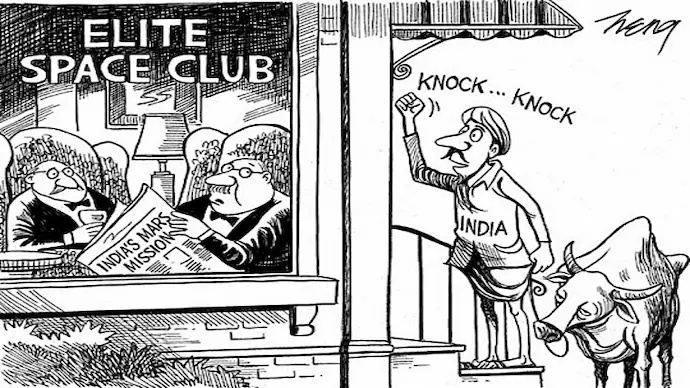
It is, therefore, evident that despite understanding how the railways’ safety has improved under the Modi government, a feat that would not be possible had a substantial amount of money not been spent on upgradation, the NYT chose to reach the conclusion that the Modi government is spending money on vanity projects and comfort instead of safety. This argument is certainly not surprising when made by The New York Times, given its history of racism against India. The argument is similar to saying why India should spend on going to the moon when there are poor people who sleep on the road – an argument that NYT had made once with this cartoon.
Racist cartoon by NYT
Be that as it may, there are several important facts that The New York Times has perniciously omitted from their article. For the benefit of NYT and its readers, here are some facts related to the Indian government, the safety of railways improving drastically since the Modi government took over and the money being spent to that end.
Measures taken by the Modi government to improve railways’ safety
Enough funds have been allocated to implement various modernisation measures for the rail network. A capital outlay of ₹2.40 lakh crore has been provided for the current financial year. Since 2014, there has been a substantial increase in fund allocation for New Line, Electrification, Gauge Conversion and Doubling Projects. The average Annual Budget allocation for these works was the highest-ever Rs 67,001 crore during 2022-23, which is 481% more than the average annual budget outlay of 2009-14, which was Rs. 11,527 crore).
Since independence, around 21,400 route km of the railway network was electrified till 2014, which was 33% of the total route. After the Modi govt came to power, over 37,000 route km have been electrified. According to railways, India now has around 90% of railway electrification completed. Interestingly, India is now global leader among major countries in railway electrification. In comparison, in USA only around 1% of route is electrified, and for Canada, the figure is only 0.2%. Australia, Russia, and China have electrified 10%, 51% and 68% of their routes respectively, while the figure for European Union is 56%.
After independence, the expansion of the railway network had almost stopped, it did not expand much beyond what was laid by the British. That has changed under the Modi government. During 2014-2022, 20,628 km sections of new lines were laid, ad 5,507 km Gauge Conversion and 11,151 km of Doubling was done.
During the financial year 2022-2023, 5,227 km of Complete Track Renewal was carried out. In the last 10 years, a Complete Track Renewal of 37,159 kms of track was completed. While 2,885 km was renewed in 2013-2014 (while the Congress govt was in power), in 2022-2023, that number has increased to 5,227 km.
For the purpose of track upgradation, a Modern track structure, consisting of 60kg, 90 Ultimate Tensile Strength (UTS) rails, Pre-stressed Concrete Sleeper was used. As on 31st March 2023, 65% of Broad Gauge Track was completed.
The Railways have started using long rails to minimise joins, and long rail panels of 260-metre and 130-metre lengths are being manufactured for this purpose. And for joints, the older fishplate joints with bolts are being replaced with welded joints. On most broad gauge tracks, earlier short-welded 39-metre rails have been replaced with long-welded rails, covering almost 90% of the total BG track in the network.
The old manual switching and signalling systems have been replaced by Panel Interlocking, Route Relay Interlocking, and Electronic Interlocking systems. This means now track alignments can be changed by just pressing a button, instead of pushing and pulling levers. These systems have improved safety and the efficiency of the rail network considerably.
97% of the stations now have modern Signaling Systems with electronic and relay-based interlocking.
In another improvement, the Two-aspect colour-light signals have been replaced with Multiple Aspect Colour Light Signals at 6,396 Stations out of total 6,506 stations. In two aspect signals, two colour lights are used, red for stop and green for go. In Multiple Aspect Colour Light Signalling, two yellow lights are added to it. One yellow light is lit to indicate caution and both are used to indicate attention.
Indian Railways now use Block Proving Axle Counters to ensure that a train has entered a line or exited a line at a station so that the next train can be allowed to enter that line. Earlier, it was a manual job. Now, the axle counters placed at both ends of track sections ensure that the track section is empty before permitting another train in that section. It eliminates human error and controls the safe movement of trains between stations.BPAC systems have been installed at 6,364 Block Sections out of 6,607 Block Sections in the BG network.
The Railways have undertaken a massive mission to remove unmanned level crossings, converting them to manned LCs, and also providing overbridges and underpasses with the collaboration of respective road authorities. Along with this, manned level crossing gates are being interlocked with signals on broad gauge routes, to ensure that no gate is left open when a train crosses a road. In the next phase, the Railways plans to eliminate all manned level crossings, by providing overbridges and underpasses everywhere a road crosses a railway line. The Railways is now closing average 676 manned level crossings per year, up from 199 during 2009-2014.
A major and ongoing project is the replacement of the older ICF (Integral Coach Factory) design coaches with Linke Hofmann Busch (LHB) coaches which have several advantages. Coach production units of the railways are now making only LHB coaches. LHB coaches have anti-telescopic features, don’t climb over each other in case of a crash, have better disc brakes, and are less prone to derail.
The most important safety improvement being undertaken by the Railways is the Kavach anti-collision system. While the system has been installed on only small segments of tracks, work is on to install it on the entire network gradually. The Kavach system can apply brakes to control speed if the driver fails to do so. It is interfaced with the existing electronic interlocking system, and is designed to prevent head-on and rear-end collision between two trains running on the same track.
As a result of these measures, the number of consequential train accidents has decreased by over 2.4 times from 118 in 2013-14 to 48 in the year 2022-23.
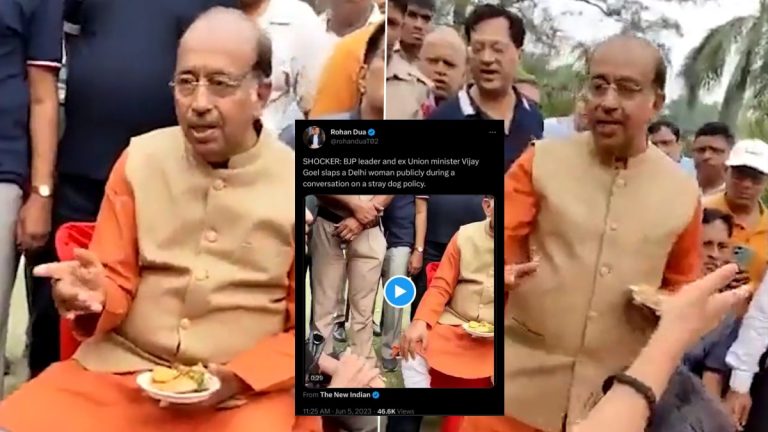
On the 5th of June, digital news portal The New Indian shared a video of BJP leader Vijay Goel with the claim that he slapped a woman publicly. The New Indian tweeted, “BJP leader and ex-Union minister @VijayGoelBJP slaps a Delhi woman publicly during a conversation on stray dog policy”.
An Archive tweet of The New Indian can be accessed here.
This video was then shared by Rohan Dua, who is the Executive Editor of The New Indian. Dua tweeted, “SHOCKER: BJP leader and ex Union minister Vijay Goel slaps a Delhi woman publicly during a conversation on a stray dog policy”.
SHOCKER: BJP leader and ex Union minister Vijay Goel slaps a Delhi woman publicly during a conversation on a stray dog policy.pic.twitter.com/MeAuJ5kzoL
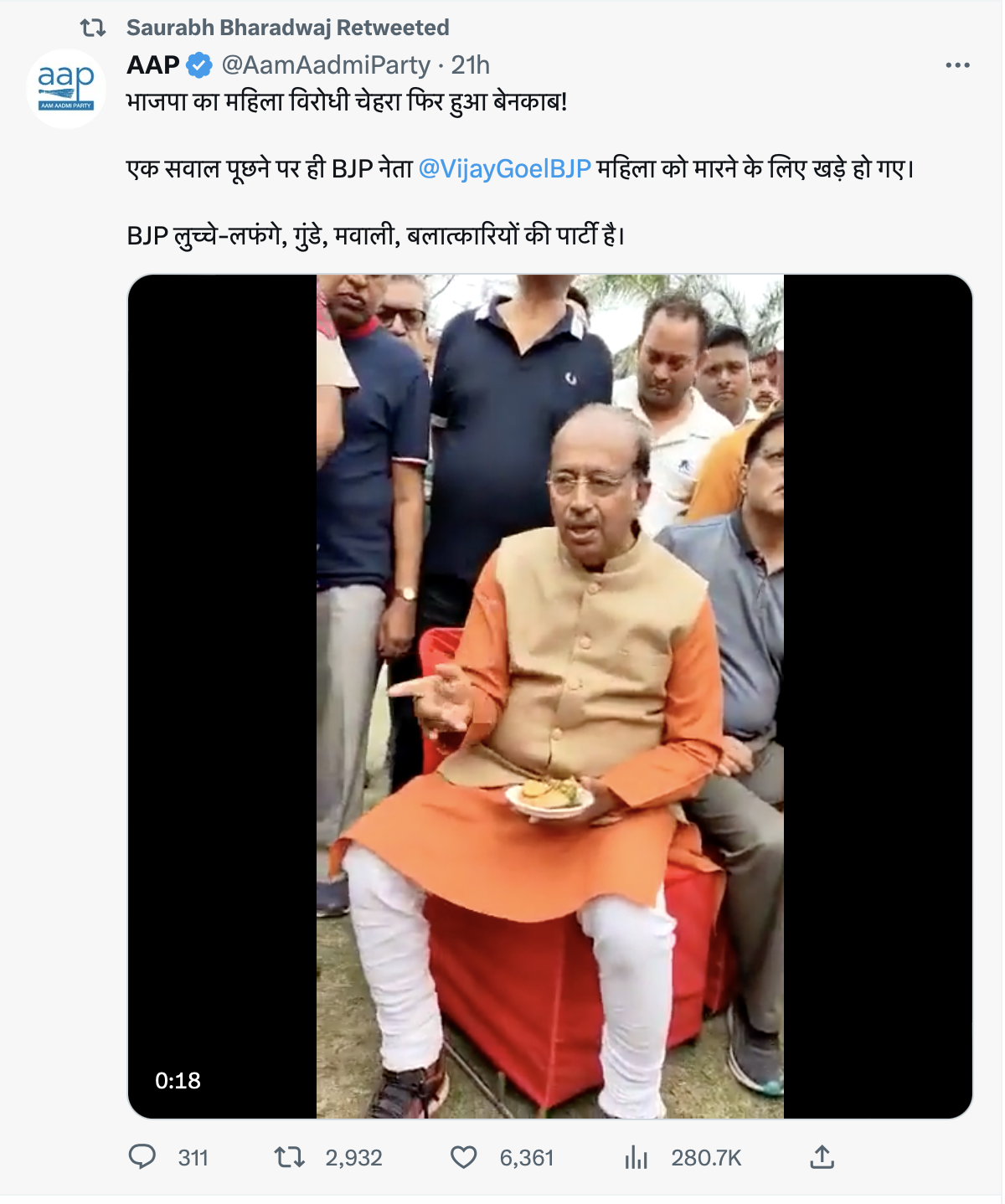
There were several other leaders who spread these videos. Saurabh Bharadwaj of AAP retweeted the video shared by the official handle of his party.
Re-Tweet by AAP leader
What is the truth? Did Vijay Goel slap a woman during a strategy meet to manage stray dog menace?
The video, which was shared by The New Indian and Rohan Dua quickly went viral and several politicians and their supporters shared it widely to attack Vijay Goel, claiming that he had slapped a woman publicly.
BJP leader Vijay Goel took to Twitter to release a video where he vehemently denied these charges. He said that the video was deliberately taken from an angle where one can’t see what really transpired. He said he had made these activists sit down and was talking to them while calling them ‘beti’. He further said that he had merely asked them to not record the conversation and listen to what he was saying. He flatly denied the charges that he had slapped anyone.
मेरे खिलाफ सोशल मीडिया पर झूठा वीडियो काफी फैलाया जा रहा हैं
In his video, Vijay Goel names Saurabh Bharadwaj, Yogita Bhayana and The New Indian, saying that they have uploaded a video claiming that he slapped a woman. He said the meeting was to form a strategy to handle the stray dog menace in Model Town.
He said that these elements who had come there were made to sit down respectfully and then he had a conversation with them about the menace. He said nobody was slapped and nobody’s phone was snatched.
In the video, it was evident that Vijay Goel was sitting on a chair and talking to them about RWA feeding stray dogs. Thereafter, he gets up to ask one of the women to stop recording a video.
Here is the specific video from which it is evident that Vijay Goel did not slap the woman, nor did he attempt to snatch her phone.
After fake news was spread by The New Indian, political parties and leaders, Yogita Bhayana and others, netizens have taken to Twitter to demand police action against those who shared the fake news including the media platform.
Netizens have also demanded action against Mohammad Zubair, the co-founder of AltNews, who claims to be a fact-checker. He shared the fake video as well.
— Right Minded Indian ?️? (@ImdesiHypocrite) June 5, 2023
Earlier, ‘animal activist’ Yogita Bhayana had gate crashed a meeting by Vijay Goel on stray dogs, got slapped by a woman
On May 10, a group of animal ‘activists’ gate-crashed former union minister and Bharatiya Janata Party leader Vijay Goel’s seminar on the menace of stray dogs at Constitution Club to mark their protest. Two women, one of which was animal activist Yogita Bhayana, exchanged slaps. Videos of the incident had gone viral on social media, including the “slap-gate”. In the video, when Bhayana and other activists were being forced out of the meeting by the attendees and the police, she slapped a woman and got slapped in return.
Bhayana claimed the organisers of the seminar misbehaved with them. She said, “We wanted to speak our minds. Rather than giving us a platform, they started thrashing us.” She further claimed the organisers used a photograph of a ‘ferocious dog’ across the city in promotional posters for the seminar. She further claimed that the seminar aimed to have a discussion on the lines of an ‘anti-stray dogs’ drive.
Even at that time, Vijay Goel had accused the animal activists of disrupting the event. The full report can be read here.
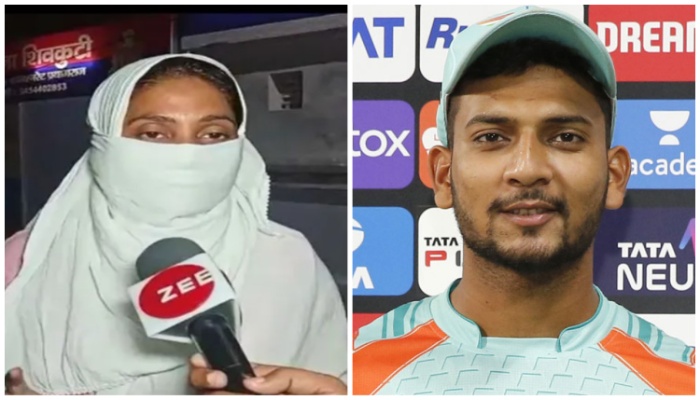
On Monday, June 5, a female police constable posted in the Shivkuti police station in Prayagraj, Uttar Pradesh, accused IPL cricket player Mohsin Khan’s brother, Imran Khan, of alleged love jihad. In her complaint, the female police officer said that Imran Khan married her by pretending to adopt Buddhism. Soon after, he started pressuring her to convert to Islam. Not only this, she accused Imran Khan of coercing her to have sex with his father Multan and brother Mohsin Khan.
Mohsin Khan is an Indian fast bowler who plays for Uttar Pradesh in domestic cricket and Lucknow Super Giants in Indian Premier League.
Female constable in Prayagraj, UP has accused her fellow constable Imran Khan of #lovejihad
The victim, who is a resident of Varanasi, has now in a video message, pleaded with Uttar Pradesh Chief Minister Yogi Adityanath for help.
She is heard telling that when she had first approached the police with a complaint against her husband Imran Khan and his family, the police were reluctant in registering the complaint. After a lot of deliberation, the Prayagraj police on February 23, 2023, registered a case was registered against the accused Imran Khan, however, the officers did not invoke the stringent sections of the SC/ST Act against the accused. She also alleged that since the accused’s brother is a famous and influential person, his and his father’s names have been removed from the FIR.
Narrating her ordeal, the victim said that she met Imran Khan in 2016 in Moradabad where she went for police training. Imran Khan, who was also in the police, trapped her in his love affair. He adopted Buddhism and married the victim under the Special Marriage Act in 2018. Following their marriage, Imran started pressuring her to convert to Islam. He also forcefully changed her name to Zaira Banu.
“Imran had converted to Buddhism just to trap me and the entire family of the accused is involved in this conspiracy. Even after converting to Buddhism, he continued to go to mosques to offer namaz. He also took me to mosques in Ajmer and Barabanki. In 2019, I went to Imran’s house for an event where his brother Mohsin Khan raped me at night,” the victim said, adding that she has a three-year-old child, whom Imran forcefully tried to circumcise, which she vehemently opposed.
The woman added that Imran had lied to her about his first marriage. She said that to trap her, Imran sent her an affidavit saying that he had divorced his first wife but he continued to live with her. “I have given all the evidence related to this case to the investigator. Even after this, no one in the police station is ready to listen to me. I am left with no option but to end my life,” the victim lamented, adding that she had even tried committing suicide on the railway track, but her friend saved her.
Speaking about the case, ACP Shivkuti Rajesh Yadav, said that it was a case of dispute between the couple. He said that since Imran Khan was previously married there are many technical flaws in this case. Only when the investigation is completed, can the police decide on the next course of action, he said.
DCP Deepak Bhukar, meanwhile, has also taken cognizance of the matter. He asked the victim to present her case before the police and assured her that her testimony would be taken into account while conducting the probe.
Love Jihad or Grooming Jihad cases have been reported almost on a daily basis across the country. OpIndia has covered hundreds of cases in the last few years where Hindu girls were lured into a relationship by Muslim men posing as Hindu men. Many of them were brutally murdered after they refused to convert or did not respond to their advances. OpIndia’s complete coverage of Grooming Jihad cases can be seen here.
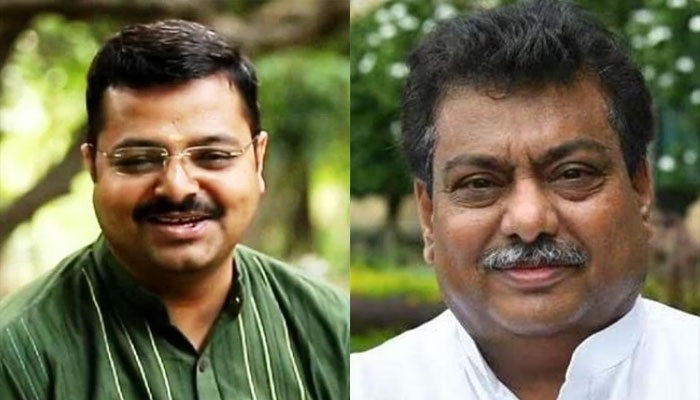
On June 4, Minister for Commerce and Industry in Congress-led Karnataka Government MB Patil threatened pro-Hindu activist Chakravarthy Sulibele with jail time. Patil’s reaction came after Sulibele drew a parallel between the current Congress regime in Karnataka and Hitler for attempting to cancel an event commemorating Veer Savarkar. In his statement, Patil said if Sulibele continued to “incite communal strife” in the state, he would face jail time. Sulibele is the founder of Yuva Brigade.
Patil made the threatening remarks during a press conference. Countering Sulibele’s comparison between the Congress government and Hitler’s regime, Patil said those remarks were inflammatory and divisive. He accused Sulibele of instigating disturbance in the state over the past four years. Sulibele was local about several issues including halal, hijab and azaan.
He said, “Ask Sulibele, what has he done in the past. Sulibele, the disasters committed in the past by you and your ilk, like the Hijab, textbook row, halal and azaan, will be rectified. In case, you continue this, I want to tell you that you would spend time in jail.”
BJP criticised Patil for threatening Sulibele
BJP criticised Patil for his remarks. BJP MP from Karnataka Tejasvi Surya called it an abuse of power. He said such abuse of power was a common feature of the Siddaramaiah government. In a tweet, he wrote, “Karnataka Minister Sri @MBPatil’s threat to jail Sri Sulibele Chakravarthy only further proves Sulibele’s accusation that this is a Hitler-ish Govt that is keen to curb freedom of speech. In less than a fortnight of assuming office, these open threats to abuse power are a common feature of the Siddaramiah government. We will fight every abuse of power, both inside and outside courts.”
Karnataka Minister Sri @MBPatil’s threat to jail Sri Sulibele Chakravarthy only further proves Sulibele’s accusation that this is a Hitler-ish Govt that is keen to curb freedom of speech.
In less than a fortnight of assuming office, these open threats to abuse power is a common…
During the program commemorating Veer Savarkar on his 140th birth anniversary, Sulibele compared the Congress government to Hitler’s regime. He said, “It hasn’t been a week since they came to power and they wanted to cancel this programme. If they are not ready to listen to others, what are they? My friends, this is Hitler’s government.”
Responding to Patil’s threats, Sulebele said, “We call a government Hitler’s government when they don’t have the patience to listen to the truth, which is sometimes uncomfortable. They have the power and they will do what they want. It is not new for someone like me who has come here through struggle. We are ready.”
He added, “You [Patil] should have some control over your speech. As the public has given you the mandate to rule, you should let go of arrogance, which will spoil your and your government’s name.”
On June 5, journalist Malini Parthasarathy announced that she has stepped down from the board of The Hindu Group Publishing Private Limited. She said that while her term as Chairperson of the board is over, she has also resigned from the board. In a statement on Twitter, she hinted at having a disagreement with the board.
My term as Chairperson of The Hindu Group Publishing ends. However, I have also resigned from the Board of the THGPPL as I find the space and scope for my editorial views shrinking. My entire endeavour as Chairperson and Director, Editorial Strategy was to ensure that The Hindu…
In a tweet, Malini wrote, “My term as Chairperson of The Hindu Group Publishing ends. However, I have also resigned from the Board of the THGPPL as I find the space and scope for my editorial views shrinking. My entire endeavour as Chairperson and Director, of Editorial Strategy was to ensure that The Hindu Group revives its legacy of fair and unbiased reporting. Also, my efforts were to free our narrative from entrenched ideological bias. Since I find the scope of my efforts has narrowed, I have decided to move on. I thank all my well-wishers and friends who have supported this challenging journey.”
According to The News Minute citing sources, Malini Parthasarathy had proposed the role of Editorial Director after her term as board chairperson ended, but the board rejected this proposal.
‘Sengol’ and other controversies
In recent times, Malini got into a debate with RSS ideologue S Gurumurthy regarding The Hindu fact-checking the ‘Sengol’ controversy. The Hindu claimed in a report that the Union Government’s remarks about ‘Sengol’ being presented to the first Prime Minister Jawaharlal Nehru as a sign of transfer of power by Lord Mountbatten was false. The newspaper claimed that it was just an ordinary gift by saints to the first PM, and was not seen as a symbol of the transfer of power by Nehru and others. Gurumurthy rebutted The Hindu’s claims to which Malini replied if his claims were found to be true, required amendments would be made to the report by The Hindu.
Her response was criticised and left-liberals accused her of appeasing the BJP-ruled central government. At that time, N Ran came out in support of the reporter who did the alleged “fact-check” for The Hindu over Sengol during a press conference in Chennai that was organised to allegedly “debunk” the Government of India’s story about Sengol.
In the past, differences between Malini and others in the publishing group were exposed in public several times. She has often aired her differences with others over ideological issues, and had several disagreements with N Ram, her cousin and the former Editor-in-Chief.
In January 2023, Malini Parthasarathy rebuffed their journalist S Anandan who took a dig at Hindu god Lord Hanuman while trying to mock External Affairs Minister Dr S Jaishankar. Parthasarathy was reacting to Hindu journalist S. Anandan’s tweet where he was mocking Dr Jaishankar’s statement on how he draws foreign policy lessons from Mahabharata, the Hindu epic. To mock this statement by Dr Jaishankar, S. Anandanm asked which batch of IFS were the Hindu gods from. Parthasarathy then said how the disrespectful tweet does not represent the position of The Hindu.
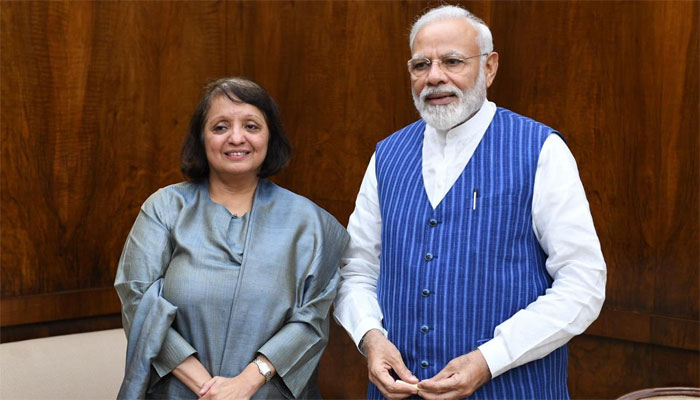
In January 2021, she was slammed by N Ram for meeting PM Modi. N Ram was responding to a Twitter user who had asked why “Hindu’s hard-earned legacy is being squandered away”, referring to the tweet of Malini Parthasarathy. She had posted a photograph of her meeting with PM Modi, informing that she had an “illuminating conversation in which he (the PM) shared his perspective on issues of current public interest.” N Ram said, “What I can assure you is that we will do our very best to prevent The Hindu’s “hard-earned” reputation and legacy of 142+ years “being squandered away”.
Malini did not remain silent over this grave allegation made against her by the former editor-in-chief of the Hindu newspaper. She tweeted that the 142+ years of hard-earned reputation of the publication does not get destroyed by meeting the prime minister, as N Ram thinks. She tweeted, “Our 142+ years of hard-earned reputation was built by reporting that was factual & not driven by political prejudice or bias.”
Malini joined The Hindu as a newsroom leader in 1996. She continued her position till 2004 after which she held the position of Executive Editor. Her most recent tenure as Executive Editor at the publishing house was from 2015 to 2016. In July 2020, she assumed the role of Chairperson of the Board after N Ram stepped down.
The post-mortem report of Sakshi, the victim of Delhi’s Shahbad Dairy murder case, has revealed the barbaric nature of the crime perpetrated on her by her ‘friend’ Sahil Sarfaraz.
The 16-17 page chargesheet received from the hospital by the Delhi police revealed that the 16-year-old girl’s internal organs, including the intestine, were left hanging out of her stomach after being brutally stabbed 16 times by the accused.
The autopsy report further said that the attack on her was so severe that it left as many as 70 bones completely smashed. The preliminary findings of the post-mortem report also said that the girl suffered a ruptured skull during the attack. Her left lung was punctured and the intestine protruded out.
“A total of 11 wounds were detected on her vital organs and that caused her death. Her left lung was punctured due to stabbing and her intestines were protruding from the body. There was a deep wound below the abdomen,” the report read.
It further said that the maximum wounds were present from the shoulder to the hip region. Many of Sakshi’s internal organs had stopped working due to accused Sahil’s brutal attacks.
This post-mortem report has been included in the investigation by Delhi Police. Additionally, a team has been formed under the direction of Inspector Rajeev Ranjan, who is quickly compiling the charge sheet by including all the scattered evidence, including the CCTV grab of the incident showing Sahil stabbing the girl multiple times with a knife. This police team’s top primary objective is to get the accused punished for the grisly murder he committed in full public view on Sunday (May 28, 2023).
It is expected that the police would take Sahil to the location to re-create the crime scene.
Meanwhile, the knife and shoes recovered by the police from the crime spot, have been sent to the forensic lab for scientific investigation. Here, the experts would try matching the DNA of the deceased’s parents with the blood splatter found on the knife.
The police have also taken 8 mobile phones into their possession, which they are investigating for further evidence. The police further said that it has come to the fore that Sahil was also associated with a gang of local goons and he was under the influence of alcohol when he committed the brutal murder.
It may be recalled that the Delhi Police had earlier said that the murder could have been premeditated as Sahil, the 20-year-old accused, had purchased the knife used in the murder a fortnight ago.
“During questioning, Sahil said that he had bought the knife used in the murder about 15 days ago from a weekly market,” police sources said. The accused has not, however, disclosed the location from which he bought the knife and police are investigating, the sources said.
The police had also said that Sahil fled the city after the murder and switched off his phone. Police said that technical surveillance was put on him after the accused had called his father. He reached Bulandshahr in Uttar Pradesh after changing two buses where he was ultimately arrested.
Following his arrest, pictures emerged showing Sahil with a Kalava (Hindu religious thread) tied to his hand. Police had said that the matter will also be investigated from the angle of ‘Love Jihad’.
The CCTV visuals also appeared where the accused can be seen stabbing the girl multiple times and then hitting her head with a boulder. Several locals can be seen present there but no one intervened in the matter. The police had registered FIR in the matter under section 302 of the Indian Penal Code (IPC) at Shahbad Dairy Police Station.
As per the police, the accused was in a relationship with the victim girl, but they had a quarrel on Sunday night after which he killed her with multiple assaults.
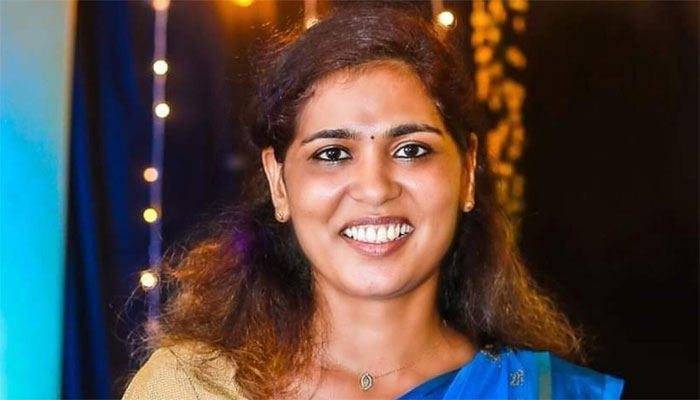
On June 5, the Kerala High Court quashed the case against controversial ‘activist’ Rehana Fathima that was being heard in the lower court in the matter related to publishing a video of her children painting on her half-nude body. Fathima was booked under Sections 13, 14 and 15 of the Protection of Children from Sexual Offences Act, 2012 (POCSO), Section 67B (d) of the Information Technology Act, 2000 and Section 75 of the Juvenile Justice (Care and Protection of Children) Act, 2015 after she uploaded the video of her children painting on her breasts. Her two minor children (a boy and a girl) were 14 and 8 years old at the time of publishing the video.
Half-nude body of man is conceived as normal but female body is overly sexualised: Kerala High Court
Her counsel argued that the video was made to impart sex education to her children and get rid of the stigma about nudity. Earlier, the High Court had dismissed her plea seeking anticipatory bail in the matter. The court had observed that she was free to give sex education to her children in the way she wanted within the four walls of her house. However, by publishing the video, prima facie she attracted offences relating to the obscene representation of the children.
While rejecting her bail plea, Justice PV Kunhikrishnan observed, “The petitioner feels that she should teach sex education to her children. For that purpose, she asks her children to paint on her naked body and then upload the same on social media. I am not in a position to agree with the petitioner that she should teach sex education to her children in this manner.”
However, now the High Court has quashed proceedings against Rehana Fathima. In the recent judgment, the court raised concerns about the unequal treatment of naked and semi-naked male and female bodies in society. The court observed that nudity should not be automatically equated to sexuality without considering the proper context. It was argued that the mere sight of the bare upper body of a woman should not be assumed to be sexual, obscene or indecent in nature. The court pointed out the sculptures of nude women in temples that are considered art and sacred.
Nudity should not be tied to sex. The mere sight of the naked upper body of the woman should not be deemed to be sexual by default: Kerala High Court pic.twitter.com/9NnDJJJbD1
The court said while men walk with bare chests during festivals and rituals in Kerala which is acceptable when it comes to women their bodies are often seen as sexual objects. The court further added that women’s autonomy is frequently questioned and restricted leading to discrimination.
Interestingly, the court repeated the fictional story of Nangali and the ‘breast tax’ to counter the prosecution’s argument that “the naked upper body of the petitioner is exposed in the video, and hence it is obscene and indecent”. The court said, “This is a State where women of certain lower castes had once fought for the right to cover their breasts.”
Despite the fact that the story of Nangali has been debunked repeatedly, it has been used multiple times by the “experts”. So much so, Chief Justice of India Dhananjaya Yashwant Chandrachud referred to the fictional story during a lecture in December 2022. Referring to the story of Nangeli, a lower caste woman who, as per the story, cut off her breast to oppose the breast tax, he said, “It was a cry of anguish against social stratification. When Dr BR Ambedkar dressed in a three-piece suit, he reclaimed his community’s status in society.”
According to several arguments made by historians, the story of Nangeli is a fiction based on folklore that had no names whatsoever. In 2018, OpIndia published a detailed report on the origin of the story of Nangeli. Detailed reports on the story of Nangeli and ‘breast tax’ can be read here.