Home Blog Page 2202

Parkash Singh Badal passes away

Shiromani Akali Dal Patriarch and former Punjab Chief Minister Parkash Singh Badal passed away on Tuesday evening. He was 95 years old.

Born on 8 December 1927, in Abul Khurana, near Malout, he belonged to a Jat Sikh family. He graduated from the Forman Christian College in Lahore, now in Pakistan. He started his career in politics in 1947 as a Sarpanch of village Badal and was later elected to Punjab Vidhan Sabha in 1957 for the first time. He served as Punjab CM from 1970 to 1971, from 1977 to 1980, from 1997 to 2002, and from 2007 to 2017.

He received the Padma Vibhushan, second highest civilian award from Government of India in 2015.

Gujarat: Kamu Sheikh, Sadiq, Ramzan, and two others allegedly murder Shaista for being in love with Brijesh; Hindu boy seeks probe

In a shocking case reported from the Navsari City of Gujarat, Mohammed Kamu Sheikh, Sadiq Mohammed Sheikh, Ramzan Sindhi, Siddiqi Sheikh, and Shoaib Sheikh have been accused of allegedly murdering a girl named Shaista. Shaista was in love with a Hindu boy named Brijesh and this is reportedly the reason the accused persons are said to have killed her.

According to the Navbharat Times, the Gujarat Police has received a complaint against the family members of Shaista. The complaint was registered by Brijesh, who alleged that the girl was brutally abused and beaten to death for falling in love with a Hindu boy. Brijesh also said that the family members secretly buried the dead body and tried to conceal the matter. He has demanded an investigation into the case and also a post-mortem of the dead body.

Brijesh and Shaista were in a romantic relationship. But the family members of Shaista were opposed to their relationship. They also had issued threats to Brijesh and had asked him to stay away from her.

Later, Shaista decided to go to Valsad, away from her family who was not happy with her decision to be with Brijesh. She then happened to call Brijesh and asked him to fetch her away. While Brijesh reached Valsad, the family members of Shaista contacted Brijesh and told him to get her back to them. They also assured them that they won’t file any police complaint and would leave him unharmed.

Brijesh decided to trust the family members of Shaista and asked the girl to go back to her family. In his complaint, he said that he last saw her with a person named Sadiq, who made her sit in his car and took her to her family. He said that after that, Shaista was brutally abused by her family members and beaten to death.

According to Brijesh, Shaista was last seen on April 20 and after that, she was murdered. He has filed a complaint against five of her family members named Mohammed Kamu Sheikh, Sadiq Mohammed Sheikh, Ramzan Sindhi, Siddiqi Sheikh, and Shoaib Sheikh, and has demanded a post-mortem of the dead body.

Apart from Brijesh’s police complaint, it has also come to the fore that some notorious accused are also involved in the incident. One of them also runs a gambling den. Brijesh says that there are more persons involved in the crime. He also added that there is a threat to life as well. However, the father of Shaista has denied all the allegations and has said that she had committed suicide and also left a note before allegedly taking the extreme step. The police, however, are investigating the case from all angles.

Rs 45 crores spent on renovations undertaken at the official residence of Delhi CM Arvind Kejriwal: Report

A recent investigation by Times Now Navbharat found that the official bungalow of Delhi CM Arvind Kejriwal in Civil Lines was renovated at a cost of almost Rs 45 crore. The report, termed “Operation Sheesh Mahal,” said that Rs 44.78 crore of taxpayer funds were utilised for the renovations, raising questions about the Aam Aadmi Party’s commitment to promoting austerity.

The channel obtained documents that indicate the curtains at Arvind Kejriwal’s residence were priced at around Rs 5-8 lakh per piece.

According to the documents, 23 curtains were approved for installation at the residence of Delhi CM and AAP national convenor, with a total cost of Rs 97 lakhs.

Imported from Vietnam, the marble used for the renovation of Delhi CM Arvind Kejriwal’s residence cost around Rs 3 crores. The flooring was done using ‘Deor Pearl Marble’, known for its superior quality. Additionally, Rs 21,60,000 was spent on the chemical adhesive used to fix the marble.

The documents also reveal that a sum of Rs 40 lakhs was spent on installing six almirahs at the official residence of Delhi CM Arvind Kejriwal.

Arvind Kejriwal had in 2013 rejected government bungalows for smaller flats

It is worth noting that Aam Aadmi Party has long fashioned itself as the common man’s party, publicly championing the cause of austerity and attacking its political opponents over their purported extravagance. In 2013, Arvind Kejriwal stated that he and his AAP ministers would not occupy the government-provided bungalows and instead opt for smaller government flats.

Ten years on, the lofty promises and claims made by them appear nothing but political grandstanding as the latest Times Now Navbharat investigation now reveals, raising questions about the party’s professed commitment to economic prudence and frugality on being elected to power.

Atiq Ahmed’s Ahmedabad connection: The gangster was eyeing a land deal and Bapunagar assembly seat, and was assisted by former AIMIM and SP candidate

Dreaded gangster politician Atiq Ahmed has seemingly taken a lot of his secrets to the grave with him. Uttar Pradesh police established that the gangster-politician Artiq Ahmed fearlessly ran his crime syndicate using a mobile phone from inside Sabarmati Jail. Now, the Uttar Pradesh police are in pursuit to find out what did he use the cellphone, obtained through a police informer during his term at the Sabarmati central jail, for?

Bapunagar SP leader assisted Atiq Ahmed while he was lodged in Sabarmati jail

According to police sources, Atiq Ahmed was eying a land deal in Ahmedabad and was being assisted by a Bapunagar resident Altaf Pathan, a police informer who had fought two elections, including a civic body one. He had also fought assembly elections from AIMIM and Samajwadi Party tickets.

Atiq Ahmed has been detained at Sabarmati Central Jail since June 2019. During this time, he used many mobile phone numbers. According to media sources, Ahmed was interested in the land of a textile mill in Bapunagar. So, he along with Altaf Pathan, and a senior politician spoke to reality developers in the city to buy land.

Altaf’s video became popular during the assembly elections.

It’s worth noting that this is the same Altaf Pathan, also known as Altaf Basi, whose video went viral during the last assembly elections. Altaf sobbed and begged people to vote in that viral video.

Altaf Khan, alias Altaf Bassi, was a Samajwadi Party candidate in Bapunagar at the time. Previously, he is claimed to have been nominated by Asaduddin Owaisi’s party.

Atiq was interested in the textile mill site in Bapunagar

Other information has emerged in addition to Atiq Ahmed’s Ahmedabad link. According to several media sources quoting unidentified officials, Atiq Ahmed was interested in a textile mill land in Bapunagar. So he, together with Altaf Pathan and a benami leader, approached the city’s real estate developers about purchasing the land.

Media reports quoted some police sources as saying that one of Atiq Ahmed’s close aides in jail, Mehraj, came to Ahmedabad 10 days before Atiq was taken to Sabarmati jail.

Mehraj gave various gifts to high-level police officers and a senior politician to ensure that Ahmed enjoyed various facilities in jail, said the source, adding, “Pathan gave a phone to Ahmed that he used till March. When the authorities began raiding the jails in Gujarat, he discarded the gadget and was deprived of a mode of communication.

Pathan, who used to be the confidant of a senior police officer, is believed to have fled to Dubai even before Ahmed and his brother were shot down by three men in Prayagraj, where the UP police escorted them.

Atiq Ahmed forced a senior politician to allow him to contest elections

A former aide of Ahmed said, “Atiq had his say in the Gujarat assembly elections as he had pushed a senior politician to allow him to contest from the Bapunagar assembly seat.”

Recently, the Special Investigation Team (SIT) probing the assassination of the mafia don Atiq Ahmed and his brother Ashraf Ahmed revealed that one of their assailants, Arun Maurya, was a part of the Whatsapp group ‘Sher-e-Atiq’ created by Atiq Ahmed’s son Asad Ahmed. The revelation was reportedly made while SIT was interrogating the three shooters, Arun Maurya, Sunny Singh and Lovelesh Tiwari.

The Whatsapp group was created by none other than Atiq Ahmed’s son Asad Ahmed, who was killed in retaliatory firing by the Special Task Force of the Uttar Pradesh police on 13 April. The WhatsApp group was created before the murder of Umesh Pal. Old videos of Mafia Atiq Ahmed and stories of how he used to terrorise people used to be shared in the group.

Asad Ahmed was the administrator of this group, which included 56 members from 14 districts. Asad’s friends and members of the Ateeq Ahmed gang were associated with the Sher-e-Ateeq group. The WhatsApp group was deleted a couple of days before the murder of Umesh Pal.

‘PM Modi has empowered Muslims more than anyone else’: Firoz Bakht Ahmed, the grand nephew of Maulana Abul Kalam Azad

0

On Tuesday, Firoz Bakht Ahmed, the grand nephew of Maulana Azad, the Former Minister of Education of India lauded the PM Modi-led government and said that he has empowered the Muslims and other minority communities more than anyone else. Ahmed said that the leader has maintained good relations with the Muslims from the very beginning and has empowered them since he was the Chief Minister of Gujarat.

“Right from when he was the Chief Minister of Gujarat, he has maintained wonderful relations with the Muslim community. The Prime Minister has never believed in the Muslim appeasement but he has done empowerment without any appeasement,” he said while talking to the Times Now.

Ahmed further added that six Islamic nations had bestowed upon Prime Minister Narendra Modi their biggest and most prestigious civil awards. “In one of the Sufi conferences, he took 99 names of Allah. He is popular among the Muslims. Today, even Pakistani citizens are saying that they want a Prime Minister like Narendra Modi. He has left no stones unturned as far as the progress, the prosperity and peace in India is concerned” he added.

Modi, further according to Ahmed, is considered an eminent world leader and that speaks a lot. “During the crisis in Ukraine, he got out the medical students under the flag of India and he also rescued the Pakistani students. That too speaks a lot,” he said.

This is a day after members of various religious communities, including Muslims and Christians in Australia, praised Prime Minister Narendra Modi at an event held in Melbourne for his “ability to respect all communities.” The Vishwa Sadbhawana event an initiative of the NID foundation was organised at Bunjil Palace in Melbourne in Australia on April 23.

Dr Tariq Butt, a member of the Ahmadiyya Muslim Community who hailed from Lahore in Pakistan said, “What I can say personally from my side I’ve got lots of Indian friends and I’ve seen them now getting united and doing many activities. We’ve been part of their activities as well. I think there is now more outreach between Indian Muslims and Pakistani Muslims altogether. We want to bring more commonalities than differences. Modi hai toh mumkin hai.”

“PM Modi has the charisma where people are following him regardless of their religious inclination which is good,” he said adding that the Indian PM is doing the right thing by encouraging the communities to engage with other communities to promote harmony and peace.

Imtiaz Ahmed Naveed, an Ahmadiyya Muslim from NSW, Australia also lauded PM Modi for trying to bring peace. “Whatever news I see, I feel that he is working very hard, he is bringing all religions at one platform, talking about their progress, trying to bring peace. I think he’s trying his best,” he said.

Religious leaders, intellectuals, scholars, preachers and researchers attended the event organised by the NID Foundation in association with The Indian Minorities Foundation (IMF), NID Foundation New Delhi, and Namdhari Sikh Society.

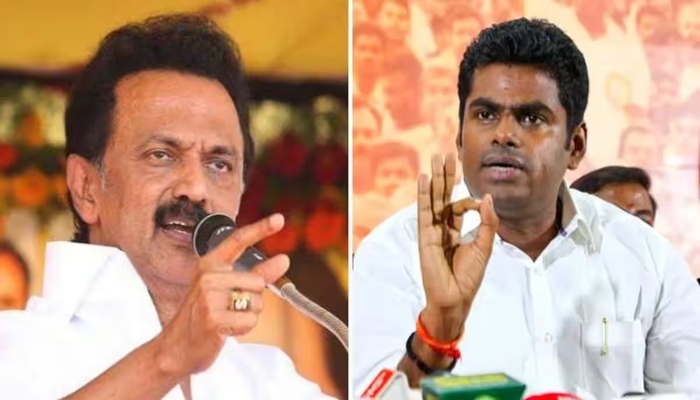
‘Listen to DMK ecosystem crumbling from within’: BJP leader Annamalai releases another purported audio of Tamil Nadu Finance Minister

On April 25, K. Annamalai, the President of Tamil Nadu’s BJP, released a 57-second audio clip, which he claimed was the voice of Tamil Nadu’s Finance Minister, Palanivel Thiaga Rajan, for the second time. The individual in the recording is heard criticising the ruling DMK.

“Listen to the DMK ecosystem crumbling from within. The 2nd tape of TN State FM Thiru @ptrmadurai. Special Thanks to TN FM for drawing a proper distinction between DMK & BJP! #DMKFiles,” Annamalai tweeted along with an audio file.

In the audio clip, the man expressed his long-standing support for the “one man, one post” principle since he entered politics. He lavished praises on the BJP for the clear distinction between those responsible for managing the party and those serving the people. However, he suggested that such a division of duties and powers was lacking within the DMK.

Towards the end of the audio clip, the individual can be heard referring to the ruling Chief Minister M.K. Stalin, his son Udhayanidhi Stalin, who is also the Minister for Youth Welfare and Sports Development, and his son-in-law V. Sabareesan. The statement was made in an apparent reference to the party’s leadership.

The person in the recording said, “Therefore, after observing this for eight months, I came to the conclusion that this is not a sustainable model.” The person, allegedly Palanivel Thiaga Rajan, further suggests that he was mulling over resigning from the post before the situation was exacerbated and that he would have no regrets as he did not quit early.

Annamalai shares purported audio of TN Finance Minister Palanivel Thiagarajan

Earlier last week, Tamil Nadu BJP president K. Annamalai shared an audio clip of Tamil Nadu’s finance minister Palanivel Thiagarajan allegedly speaking about his cabinet colleague and Chief Minister MK Stalin’s son Udhayanidhi Stalin, which instantly went viral.

The finance minister – commonly referred to as PTR — is allegedly heard asserting in the audio recording that MK Stalin’s son and minister Udhayanidhi Stalin and son-in-law V Sabareesan had accumulated wealth through illegal means. Sabareesan, an essential DMK strategist, is married to Stalin’s daughter Senthamarai.

The man, allegedly the state finance minister, said, “Both Udhayanidhi and Sabari realised that they made more money in one year than their grandparents did in their lives. And now it is getting to be a problem. How to handle it? How to not get caught? It’s all playing like… can’t really tell pretty close. Will say 30,000 crores.”

The DMK Files

K Annamalai, the president of the BJP in Tamil Nadu, disclosed a series of papers titled “DMK files” on alleged corruption within the DMK government on Friday. According to the BJP leader’s calculations and estimates, the DMK leaders’ assets were “worth Rs 1.34 lakh crore”. Annamalai further intimated that the AIADMK, a BJP ally that leads the Opposition alliance in Tamil Nadu, will not be spared in his corruption discovery.

In a press conference he addressed on 14th April 2023, Annamalai said, “DMK files will not end with a single part; every party that ruled the state will be exposed before 2024. If I am going to expose corruption, I will have to expose the corruption of everyone.”

Karnataka: Arts topper Tabassum says she has been wearing hijab since she was 5, terms govt order for uniform dress code in schools as ‘injustice’

0

In an interview with India Today, Karnataka’s 2nd PUC 2023 topper Tabassum Shaik said she chose education over hijab to reach a position where she can ensure the injustice (of a uniform dress code mandate in educational institutions) never happens again. She was referring to the court order banning all kinds of religious attires from educational institutions.

When asked about her views on the hijab controversy, Shaik said, “It was a period of uncertainty. I was very confused and depressed. The hijab is an integral part of my identity and also my religion. But first, it is a part of my identity. It is something which I have been wearing since I was five. It was very difficult for me to give it up, and I did not want to. It is a secular country. I should be allowed to wear my Hijab while I pursue my education. So it felt very unfair. Very unjust.”

“When the verdict came out, my parents encouraged me to comply with the orders. I did not attend college for two weeks because I was very confused about what I should do. But my parents said that if I was able to acquire an education, then I could get to a position where I could prevent such injustices from happening in the future. So that was my main motive for continuing to attend college,” she added.

Interestingly, it was presented as if she chose education over hijab. “I decided to give up the hijab (in college) and pursue my education. We will need to make some sacrifices for education,” Shaikh was quoted as telling The Indian Express. However, from her recent statements, it seems she favoured Hijab in educational institutions, and it has become her life’s motive to fight the government order that mandates an uniform dress code and bans all religious attires from educational institutions.

Karnataka Hijab row

The hijab controversy in Karnataka gained momentum since the first week of January last year after eight Muslim girls were denied entry to classes in a Udupi college because they were wearing hijabs. The college authorities had informed that the hijab was not a part of the uniform dress code mandated for the students.

The Muslim girls, adamant about wearing hijab, then filed a petition in High Court seeking permission to attend classes with hijab. They stated that wearing the hijab was their ‘fundamental right’ granted under Articles 14 and 25 of the Indian Constitution and ‘integral practice of Islam’.

The controversy spiralled as Hindu students in Karnataka styled with saffron scarves around their necks and protested against Muslim girls continuing to wear hijab to college. Tensions also prevailed at some educational institutions in Udupi, Shivamogga, Bagalkote, and other parts, as stones-pelting and violence were reported from various parts of the state.

As reported earlier, the students had begun to wear hijab to schools and colleges after they had met the Campus Front of India (CFI), the student branch of the Islamist organization Popular Front of India (PFI), in October 2021. The students confessed that they had spoken with the CFI.

Bombay HC directs a residential society to act against security guards for using sticks to scare dogs

On Monday, the Bombay High Court directed a residential society in Mumbai to address grievances from its members regarding security guards who use sticks to intimidate, menace, or harm animals.

The bench comprising of Justices GS Kulkarni and RN Laddha instructed the society to address such complaints promptly, as using sticks on animals could be regarded as a form of cruelty towards them.

“Insofar as the Security Guards causing any scare/threat to the animals by using sticks is concerned, we direct the society to entertain complaints from the petitioner and other members of the society in this regard, so that appropriate action can be taken against such Security Guards who are indulging in such actions,” the bench said.

“This would be necessary as we are of the clear opinion that such coercive methods would certainly amount to an act of cruelty to the animals. This apart, such methods being used by the Security Guards or any other persons would aggravate the behaviour of the animals, apart from inflicting cruelty to the animals,” the High Court further added.

The Court was hearing a petition filed by Paromita Puthran, a resident of RNA Royale Park CHSL, with regard to a disagreement about the designated areas within the society for feeding stray dogs.

Puthran asked for specific feeding areas to be earmarked for stray dogs in the housing society, alleging that the society was refusing to do so and was also preventing her from feeding the dogs.

In compliance with the orders of the High Court, Abodh Aras, as the Chief Executive Officer of “The Welfare of Stray Dogs” organization, surveyed the society and produced a report identifying appropriate areas for feeding stray dogs.

After examining the report, both the society and Puthran arrived at a mutual understanding to reassess the areas in question and designate suitable feeding spots, taking into account the suggestions provided in the report.

In addition, Puthran volunteered to provide drinking water to the dogs, which the Court urged the society to accept.

The parties need to amicably resolve the dispute as it should not be that drinking water is not provided to the dogs. It would be an obligation of the residents of the society to always make provision for adequate water to be made available to the animals more particularly considering the onset of the summer season,” the High Court said.

Puthran alleged that the society had hired bouncers to deter dogs from accessing the premises.

However, the society gave an assurance to the court that these were simply security personnel, and not bouncers as alleged by Puthran.

Afterwards, the bench dismissed the petition, while allowing the petitioner the liberty to pursue suitable legal measures against the security personnel, in case of any breach of the law.

Delhi excise policy case: CBI files chargesheet against Manish Sisodia and 3 others

0

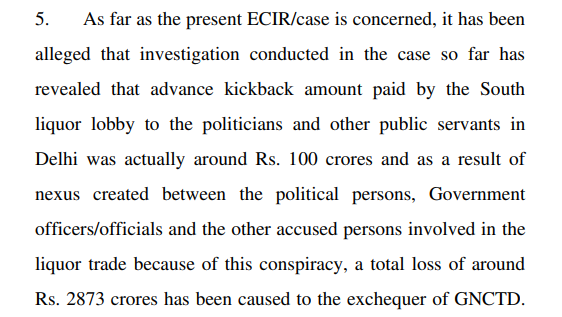
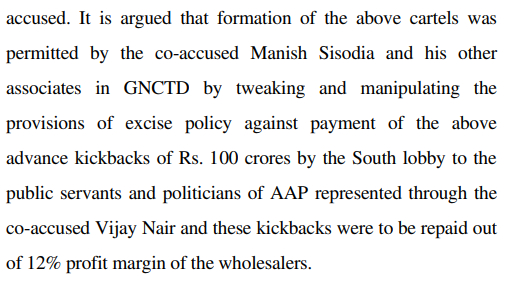
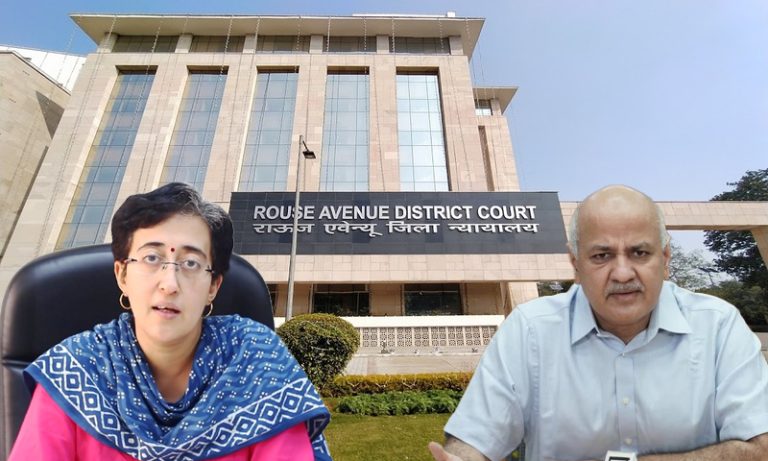
The Central Bureau of Investigation (CBI) on Tuesday filed a chargesheet against former deputy chief minister of Delhi Manish Sisodia and three others in the Delhi excise policy case.

According to sources, the supplementary chargesheet has been filed under IPC sections 120B (criminal conspiracy), 420 (Cheating) and other section of the Prevention of Corruption Act. An official confirmed that the supplementary chargesheet has been filed against former Delhi Deputy CM Manish Sisodia, Amandeep Singh Dhall, Arjun Pandey and Butchi Babu Gorantla in the Delhi excise policy case.

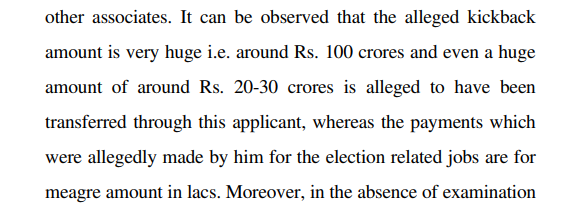
In its first chargesheet in the case, CBI alleged that around Rs 20-30 crore was arranged by suspect Abhishek Boinpally at the behest of South Group and paid to Vijay Nair via Dinesh Arora in cash between July and September 2021. Allegations have also been made that Sisodia intervened personally to get Mahendru-promoted Indo Spirit’s application processed after anomalies were initially flagged.

Former Excise Commissioner Arava Gopi Krishna’s name is also mentioned in the chargesheet in column 12 as a suspect.

Court noted that out of four accused, two accused Manish Sisodia and Amandeep Dhall are in Judicial custody presently.

Butchibabu has been granted bail in the matter on March 6, 2023.

Arjun Pandey was never arrested in the case by the prosecution agency, noted the court.

(This news report is published from a syndicated feed. Except for the headline, the content has not been written or edited by OpIndia staff)

Chief of Army Staff General Manoj Pande bats for Agnipath Scheme, reiterates saying ‘it would be win-win for both Army and recruits’

0

On Tuesday, Chief of Army Staff, General Manoj Pande stressed on the significance of the Agnipath scheme and said that the agniveers will benefit the force and society as they are more technologically sound. General Pande was speaking at the third edition of the Republic Summit 2023 in New Delhi.

“The benefits of the scheme are manifold but largely what it’ll help us is to bring a much youthful profile for the Indian Army. We’ll have more technologically adapted youth joining the military. The technological threshold will be much better. We’ll also have a fitter army so the ability of soldiers who would be at the frontline would increase,” he said.

“At the end of four years,” he continued, “the soldiers will carry a unique resume, they will imbibe all the values and rest of the qualities that a military stands for. Their contribution to the society and to the nation at large will be significant.”

When asked about the criticism revolving around the Agnipath scheme, General Pande said that the criticisms have been taken care off and at the end of the four years, people will see the results. “It is going to be the win win situation, not only for the military but for the society and the nation at large. This is transformative scheme and implementation is the key here. There are some changes and issues which we need to pay attention to and we are currently doing it. The current issue which we are looking here at present is the duration for which we train a new soldier,” he stated.

The Chief of Army Staff also informed the Indian Armed Forces about 5 domains of change in addition to the Agnipath programme. He continued by outlining five areas of change for the Indian Armed Forces at the Republic Summit, those being, force restructuring and optimisation, infusion of technology and modernisation, systems, processes and functions, realms of human resources management and Agnipath Scheme and jointness and integration.

“On our own side in the last 9-10 years, a lot of impetus has been given to the borders. Made significant strides in terms of connectivity and communication infrastructure. Communication infrastructure has also improved. More needs to be done. I am hopeful as far as the infrastructural development goes. We are moving in the right direction,” he said.

Earlier also, in June 2022, General Manoj Pande had said that the Agnipath scheme was a win-win for both the youngsters and the Army. He had said that the scheme would not be rolled back and had added that there would be positive changes and the scheme as required when it is rolled out. Massive clashes erupted in several parts of India after the government launched the Agnipath scheme. Students protested against the scheme and said that serving in the Army for four years is not reasonable and those leaving the service after 4 years would have a path full of uncertainty ahead of them.

On June 14, Defence Minister Rajnath Singh, along with the chiefs of three armed forces, launched the Agnipath scheme for the recruitment of youth in the armed forces. Those who get enrolled in the armed forces under this scheme are called Agniveers. The enrollment under the scheme is open for both men and women for a four-year period, including the training.

The Defence Minister then had said that after the four-year service period, Agniveers will get preference in PSUs, and State Governments’ jobs. The scheme allows the patriotic and motivated youth to serve in the armed forces for a short period of four-year.

The recruits under the Agnipath scheme, also known as Agniveers, get attractive benefits that include a customized monthly package clubbed with risk and hardship allowances as applicable in the three services. After Agniveers complete four-year of service in the armed forces, they also are slated to get a one-time ‘SevaNidhi’ package that would comprise their contribution, including accrued interest thereon. As of 2022, the Government had announced the recruitment of 46,000 Agniveers.