Home Blog Page 2201

Here’s how Kejriwal used Rs 45 crore to ‘renovate’ his house during Covid, and how he could have used it to lessen Aam Aadmi’s struggle during pandemic instead

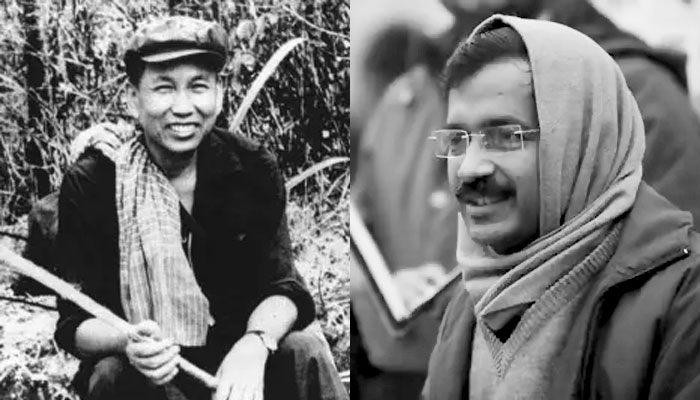
Delhi Chief Minister Arvind Kejriwal who has time and again diligently portrayed himself to be adoring a common man’s lifestyle, has spent Rs 45 crores to renovate his official bungalow located at Civil Lines in New Delhi. He is said to have used this huge amount of money to make a few changes to his already existing bungalow during the Covid pandemic when the citizens of Delhi were facing a severe shortage of life-saving facilities at the hospitals.

According to a report by Times Now, the taxpayer’s money that Kejriwal used for renovation and not really ‘construction’ of the Chief Minister’s residence, could have been better utilized for the benefit of Delhites during Covid. Notably, Rs 45 crores could have been utilized to build 224 Mohalla clinics. Considering how badly Delhi struggled during the pandemic, the amount could have been utilized to purchase 12,459 oxygen concentrators. As many as 2,25,000 PPE kits and 2,710 ventilators could have been purchased during the Covid. But, Kejriwal seemingly had to ‘renovate’ his house on priority.

How he spent Rs 45 crores

The said property has been approximately renovated for Rs 44.78 crores out of which more than Rs 1 crore was sanctioned to buy only the curtains. Kejriwal is said to have selected a curtain design costing Rs 7,94,000 per piece for his residence and had ordered 23 such curtain pieces. He also ordered ‘Deor Pearl Marble’, known for its superior quality for Rs 3.30 crores. The said amount was used to buy the marble and polish it. Additionally, Rs 21,60,000 was spent on the chemical adhesive used to fix the marble.

Further, the Chief Minister ordered 6 hand-crafted wool carpets for a total of Rs 20 lakhs. Rs 63 lakhs were spent on renovating two kitchens and Rs 4 crores were spent on wall paneling. Also, another Rs 40 lakhs were spent on redoing the wardrobes and dressers in his room, his parents, and also the bedrooms of his two children.

As per a report in Indian Express, the first sanction by PWD for the renovation work was on September 1 2020, for RCC framing works and alarm systems. The second sanction was on May 2021 for fixing modular kitchens, laundry and pantry etc.

Last year he used taxpayers money to construct a swimming pool

It is worth noting that last year, the Delhi CM had also used Rs 21 crores of taxpayer’s money to construct a swimming pool inside his residence. It was also said that Kejriwal had got the pool modelled as per the standards of luxury Maldives hotels.

Moreover, in 2014, Arvind Kejriwal stated that he and his AAP ministers would not occupy the government-provided bungalows and instead opt for smaller government flats. Aam Aadmi Party has long fashioned itself as the common man’s party, publicly championing the cause of austerity and attacking its political opponents over their purported extravagance.

Kejriwal wears basic shirts and keeps a cheap Reynolds pen in his pocket. The pictures of them are often used by AAP leaders to claim how simple and humble their CM is.

Ten years on, the lofty promises and claims made by them appear nothing but political grandstanding as the latest Times Now report now reveals, raising questions about the party’s professed commitment to economic prudence and frugality on being elected to power.

BJP demands resignation

The BJP took cognizance of the renovation and stated that when Delhi was struggling with Covid, CM of Delhi was spending crores on getting his house renovated. Calling Kejriwal a ‘luxurious king’ and demanding his resignation, Leader of Opposition in the Delhi Assembly Ramvir Bidhuri added, “In 2013, he used to say he will neither take a house, security or official vehicle. But he ended up spending Rs 45 crore on the renovation of his house.”

The AAP responded to this and said that the property that was renovated did not belong to the CM but was a government-allotted house. It also said that the cost had to be seen in the context of the amount spent by other governments on similar projects. “The estimate for the new Prime Minister’s sprawling house alone is Rs 467 crore, while the actual cost of the Central Vista project is estimated to be Rs 20,000 crore. Further, the renovation cost of the PM’s 7 RCR residence was three times the estimate. Just renovation was carried out at a whopping Rs 89 crore against an estimated cost of Rs 27 crore,” the party said in its statement.

It also further said that the BJP was raising this issue to divert the public attention from the real issues. “They don’t wish to respond to serious allegations made by former J&K Governor Satya Pal Malik who has attributed the Pulwama attack to lapses of the Modi government,” the party said.

However, Delhi BJP president Virendra Sachdeva said that while several other projects amid the pandemic were postponed, the renovation work of the CM’s house continued. “Kejriwal should own moral responsibility and resign,” he said.

Aamir Khan attends National conclave Mann Ki Baat @ 100, praises PM Modi for communicating with the people of the country 

0

On April 26, Bollywood actor Aamir Khan attended the National conclave Mann Ki Baat @100 organised by the Information & Broadcasting Ministry ahead of the 100th edition of Prime Minister Narendra Modi’s monthly address to the nation to be broadcast on April 30. The actor lauded the Prime Minister for his innovative approach to communicating with the people of the country.

The actor said that such initiative by our leader is important, which leads to conversations and suggestions. “It’s a very important piece of communication that the leader of the country does with the people, discussing important issues, putting forward thoughts and giving suggestions. That is how you lead by communication. You tell your people what you’re looking at, how you’re seeing the future. How you want their support in that? This is what is the very important communication that happens in Mann Ki Baat,” said the actor.

Along with Aamir Khan, the day-long conclave organised by the centre ahead of the 100th episode of Mann Ki Baat, saw actor Raveena Tandon, IT veteran TV Mohandas Pai, Kiran Bedi and Nikhat Zareen as the panellists.

Vice-President Jagdeep Dhankar inaugurated the event in the presence of the Union Minister for Information and Broadcasting Anurag. Around 100 esteemed citizens from various parts of the country who have been mentioned by the Prime Minster in various episodes of “Mann Ki Baat” will also attend the event. 

The event will mark the release of two books by the Vice President. The first, a coffee table book on ‘Mann Ki Baat@100’, highlights the journey of ‘Mann Ki Baat’ and how the programme has resulted at the beginning of a new epoch in direct communication between the Prime Minister and the citizens.

The second book, ‘Collective Spirit, Concrete Action’ by Shri, SS Vempati, former CEO of Prasar Bharati, documents the fascinating facets of PM Modi’s ongoing conversations with the world’s largest democracy, highlighting social, economic, environmental, cultural, health, and fitness issues that resonate with the very heart of our nation.

The inaugural session will be followed up by 4-panel discussion sessions highlighting the wide-ranging themes of the Prime Minister’s interactions during Mann Ki Baat. Each session will be facilitated by an eminent personality. The sessions will highlight the transformative impact that Mann Ki Baat has catalyzed across sectors throughout India, effectively connecting the citizens directly with the Prime Minister and empowering them to become agents of change. Commemorative postage stamp and coin to be unveiled to mark 100 episodes of ‘Mann Ki Baat’.

More than 100 crore people have listened to PM Modi’s Mann ki Baat, IIM Rohtak survey shows

Prime Minister Narendra Modi’s monthly radio broadcast ‘Mann Ki Baat’ was one of his unique attempts to connect with the masses after coming to power in May 2014.

While people listened to the radio occasionally and preferred FM stations, PM Modi brought the focus of the nation back to the national broadcaster All India Radio (AIR). Mann ki Baat became the talk of the town with its monthly broadcast. Scores of people would wait in anticipation of the program to hear what PM Modi will talk about that month.

As Prime Minister Narendra Modi’s ‘Mann Ki Baat’ approaches its 100th episode on April 30, a survey conducted by the Indian Institute of Management, Rohtak shows that at least twenty-three crore people have ‘listened to or viewed’ Prime Minister Narendra Modi’s monthly radio broadcast regularly and over 100 crore people have listened to it at least once. 

It further said about 96 per cent of people are aware of the monthly radio program, Mann Ki Baat, and 41 crore people have the scope of converting from occasional audience to regular audience.

Last month, it came to light that the program fetched almost 5 times in revenue than the amount spent on advertising and promotions for the show.

Atiq Ahmed’s brother-in-law Akhlaq Ahmed suspended from govt doctor post for providing shelter to Guddu Muslim

On Tuesday, April 25, Uttar Pradesh Health Department suspended slain mafia Atiq Ahmed’s brother-in-law Akhlaq Ahmed, a senior government doctor posted in Meerut. Akhlaq Ahmed has been accused of providing shelter and money to Umesh Pal murder accused Guddu Muslim. 

According to Dr Akhilesh Mohan, the chief medical officer of Meerut, Akhlaq Ahmad has been suspended on government orders. Akhlaq was posted at the Bhavanpur Community Health Centre in Meerut as a paediatrician.

According to Superintendent of Police, STF, Brijesh Singh, Akhlaq was apprehended by the Uttar Pradesh Police’s Special Task Force (STF) on April 1 from Nauchandi and taken to Prayagraj.

Reportedly, when the accused persons in the Umesh Pal murder case arrived in Meerut after the crime, Akhlaq not only gave them shelter but also money. CCTV footage of the same was recovered by the police.

Speaking about the action taken against Akhlaq Ahmed, UP Minister Brajesh Pathak said, “The doctor in question (Akhlaq Ahmed) not only tarnished the image of the state government but also brought a bad name to his department.” 

Moreover, Minister Pathak said that Dr Akhlaq Ahmed indulged in unethical activities which were in clear violation of the Government Service Conduct Rules.

Notably, Atiq Ahmed and his brother Ashraf Ahmed were gunned down on April 15, 2023, while they were taken for a medical examination.

Umesh Pal murder

Umesh Pal, a key witness in the 2005 murder case of BSP MLA Raju Pal, along with his police security guards Sandeep Nishad and Raghvendra Singh was shot dead on February 24 outside Umesh Pal’s residence in Prayagraj’s Dhoomanganj.

A case was filed against Atiq Ahmad, his brother Ashraf, his wife Shaista Parveen, two sons, aides Guddu Muslim and Ghulam, as well as nine other people at the Dhoomanganj police station on the basis of a complaint filed by Umesh Pal’s wife Jaya Pal. Asad and Ghulam were neutralised in a police encounter in Jhansi earlier this month when they tried to fire at police officers.

‘Janeu ceremony is criminal offence, family should be jailed’: Ambedkarites, ‘liberals’ unite to attack a mother for sharing pictures of son’s Upanayana

On April 25, a mother shared some pictures of her son’s upanayana ceremony on the social media platform Twitter. The aim was to share the joy with the world. But in turn, the anti-Brahmin hate found its way into her mentions.

Rupa Murthy, who is an RSS/BJP supporter, shared a photograph of the Upanayana ceremony of her son Kishan that was performed on the auspicious day of Shankara Jayanti last year. She wrote, “Last year, on this auspicious day of Shankara Jayanti, we performed the Upanayana ceremony of our son Kishan. Please bless him.”

The Ambedkarites and liberals found the post and launched an attack against Murthy and her son. Author and member of the Editors Guild Dilip Mandal said, “What is this? We don’t do these things in our Hindu families. Also, why is that boy wearing such strange clothes? He seems unhappy.”

Nitin Meshram, the lawyer who ensured a rapist of a 4-year-old child got a life sentence instead of capital punishment, got irked and demanded legal action against Murthy and her family. He said, “Upanayana violates Articles 15 and 17 of the Constitution and must be made a criminal offence. The moment someone is declared Brahmin, the varna and caste hierarchy begins to reincarnate, which violates the principle of equality under Article 14. Caste is outlawed by the Constitution, and therefore, such ceremonies shall be punished with three years of rigorous imprisonment and a fine of three lakh rupees.”

Twitter user UrbanShrink said, “Isn’t he too old to be fed?” To him, a Twitter user Jagisha Arora called him a “man child”.

A Twitter user AbbakkaHypatia said, “mentally traumatising your own children. No one can do it like brahmins.”

Another Twitter user Nuke_Amar said, “Just an Upper Caste thing, a ceremony to consolidate Brahminical hegemony and strengthen their varna and caste dominance. Otherwise, what is the significance of doing Upanayana in our society?”

Prof Karunyakara Lella, who calls himself Dalit Historian and Ambedkarite Thinker, said, “There are Brahman Hindu Indians who are different from Shudra (OBC/Backward Castes) Hindu Indians. That seems to be the message from Upanayana (ceremony to reassert Brahman Hindu Indian identity). Thanks to Ambedkar, we Dalit Indians have nothing to do with these people.”

A Twitter user Kumaar4742 claimed the ceremony celebrates oppression. He said, “Declaration of one’s as a caste supremacist implies established that: The person give adherence to such practices still believes in racism based on genes. By celebrating oppressive rituals, the person is celebrating the oppression of oppressors regime over tribes and Dalits.”

Murthy did not take the attack lightly. In one of the posts she wrote, “Supreme Court advocate, Nitin Meshram, is known for helping Firoz, a rapist & murderer of a 4-year-old girl, secure a stay on his death penalty. Meshram had famously tweeted “Live Your Life Firoz”. Yes, he wants the rapist murderer of a little girl to go live his life, and that does NOT frighten him.”

She added, “Then we have Professor Dilip Mandal, who is a journalist, thinker and an activist of the Jai Bheem Brigade. He is today celebrating the passage of the anti-caste bill, by the California State Judiciary Committee. Fabulous. But you know what threatens these two Grown, Established Middle-Aged Men? Do you know what threatens their very existence? The JANEU OF A 17-YEAR-OLD BOY. Yes, a boy they have never met, a boy who doesn’t know of their existence, that boy’s Janeu has threatened them. It has threatened them so much, that they want Upanayana Ceremony to be declared a punishable offence. An offence that comes with 3 years rigorous imprisonment and a fine of Rs.3 lakhs. And yes, these two, who are perfectly ok targeting a MINOR for wearing a Janeu, for being a Brahmin, are anti-caste activists. That MINOR boy is my son.”

UP: In a bid to implicate girlfriend’s father, Kanpur youth Amin steals his phone to send death threat to CM Yogi

On Tuesday, April 25, the man who threatened to kill Uttar Pradesh Chief Minister Yogi Adityanath has been arrested by the police. The accused has been identified as Amin who wanted to falsely implicate his girlfriend’s father by giving a death threat to CM Yogi. The accused was arrested from Babu Purva locality in Kanpur. 

Accused Amin had called and sent a threatening message over WhatsApp to the emergency helpline number-112 on April 23. In the said message the accused wrote, “CM Yogi ko maar dunga jald hi (Will kill CM Yogi very soon).”

Right after receiving the threat message, the UP Police initiated action and registered an FIR against an unknown person under sections 506, 507 of the IPC, and section 66 of the IT Act at the Sushant Golf City Police Station in Lucknow. 

The owner of the number was contacted by Lucknow Police after they traced the call, and he said his phone had been stolen two days prior. Later, neighbors came forward to tell police that a man named Amin devised a plan to frame the father of his girlfriend.

Amin reportedly got frustrated after his girlfriend’s father expressed displeasure over their relationship. In an act of rage, he stole his girlfriend’s father, Sajjad Hussain’s phone and used it to threaten CM Yogi.

According to Anand Prakash Tiwari, joint commissioner of the Kanpur Police, the accused intended to falsely implicate his girlfriend’s father, as he was opposed to their relationship. He was not attempting to threaten CM Yogi. Amin is currently being questioned and will be produced in court on Wednesday.

In a video byte posted on Twitter, Kanpur Police informed that Babu Purva Police has arrested accused Amin and recovered a mobile phone and SIM card from his possession. Police also informed that three cases have been registered against the accused, one of which has been lodged by Sajjad Hussain for harassing his daughter, another case has been registered for stealing Sajjad’s mobile phone and the third case has been registered against Amin for calling over 112 emergency number and giving misleading information and issuing death threat.

Notably, a few days back a Jharkhand resident named Aman Raja had also threatened to kill CM Yogi, Aman Raja had published a Facebook post wherein in declared that he wanted to kill the UP CM. Currently, UP ATS is investigating the case. 

Government of India notifies guidelines for halal certification of meat products: What it means, what the guidelines say and what Hindu orgs are saying

On April 6, the Commerce Ministry, Government of India, notified guidelines for halal certification of meat and meat products specifically for export purposes. As per the notification, the meat and meat products originating from India can be exported as ‘halal certified’ only if the facility from which they are produced, processed and packaged has a valid certificate issued by a body accredited by a Board of Quality Council of India (QCI). The meat producers are allowed to export non-halal meat and meat products like before without any change in the process.

Furthermore, despite the Indian halal certification, the producer/supplier/exporter of the meat and meat products is required to meet the requirements issued by the importing countries. The Government had called for suggestions of the draft guidelines on halal certification in January this year for the export of meat and meat products as proposed by the directorate general of foreign trade (DGFT), which is an arm of the commerce ministry that deals with import and export-related matters.

In the notification, the DGFT pointed out that the existing halal certification bodies in the country would have to get accreditation from National Accreditation Board for Certification Bodies (NABCB) for Indian Conformity Assessment Scheme (i-CAS) Halal.

It read, “Meat and meat products shall be allowed to be exported as ‘halal certified’, only if produced, processed and/or packaged in a facility having a valid certification under the i-CAS of the Quality Council of India (QCI), issued by a certification body duly accredited by the NABCB as per the guidelines issued/amended from time to time.”

Products covered under the notification

Meat and meat products like the meat of bovine animals, fish, the meat of sheep and goats, sausages and other similar products are covered under the notification. Notably, for now, it applies only to meat and meat products, and no other products have been notified under the same process.

Why halal certification?

Halal certification already exists in India, but it is not regulated. Many countries prefer only halal products to get imported; thus, the companies in India get the certification from private entities. The objective of the new certification system is said to streamline the certification of meat and meat products as halal from the country only by Government authorised entities. It has been further claimed it would open new opportunities for halal-based entrepreneurs among the large Muslim population in the country.

What is Halal?

The notification issued by the Government of India talked in detail about what is Halal and provided definitions in detail. Here is what it says in the letter.

Islamic Shariah

The revelation on Prophet Muhammad (PBUH) in relation to the beliefs, sentiments and acts of the ordered, whether conclusive or presumptive.

Source: GoI

Halal

The term Halal is used for products, services or systems which are considered lawful (Tayeib) or permissible under the Islamic Shariah law that do not consist of or contain any part that is considered as unlawful (haram) according to Islamic law, and/or the actions permitted by Shariah law without punishment imposed on the doer.

Haram

The term Haram refers to anything that is prohibited or forbidden in the Islamic law.

Halal Product

Any product which is allowed to be consumed or used according to Islamic Rules by eating, drinking, injecting, inhaling, applying or wearing should comply with the requirements mentioned in this standard.

Halal Food

Halal food means food and drink and/or their ingredients permitted under the Shariah law and that fulfil the following conditions:

a) does not contain any parts or products of animals that are non-halal by Shariah law or any parts or products of animals which are not slaughtered according to Shariah law;

b) does not contain najs according to Shariah law;

c) safe for consumption, non-poisonous, non-intoxicating or non-hazardous to health;

d) not prepared, processed or manufactured using equipment contaminated with najs according to Shariah law;

e) does not contain any human parts or its derivatives that are not permitted by Shariah law;

f) during its preparation, processing, handling, packaging, storage and distribution, the food is physically separated from any other food that does not meet the requirements stated in items a), b), c), d) or e) or any other things that have been decreed as najs by Shariah law.

Najis

A term in Arabic language that means impurity or impure, dirty, polluted, contaminated, dirt, or filth. Najis according to Shariah law are:

a) dogs and pigs and their descendants;

b) halal food that is contaminated with things that are non-halal;

c) halal food that comes into direct contact with things that are non-halal;

d) any liquid and objects discharged from the orifices of human beings or animals such as urine, blood, vomit, pus, placenta and excrement, sperm and ova of pigs and dogs except sperm and ova of other animals;

NOTE. Milk, sperm and ova of human and animals, except dog and pig, are not najs.

e) carrion or ha/al animals that are not slaughtered according to Shariah law; and

f) khamal and food or drink which contain or mixed with khamar.

There are three types of Najs:

i) mughallazah which is considered as severe najs which are dogs and pigs (khinzirj including any liquid and objects discharged from their orifices, descendants and derivatives;

ii) mukhaffafah which is considered as light najs. The only najs in this category is urine from a baby boy at the age of two years and below who has not consumed any other food except his mother’s milk; and

iii) mutawassitah which is considered as medium najs which does not fall under severe or light najs such as vomit, pus, blood, khamar, carrion, liquid and objects discharged from the orifices, etc.

Slaughtering (Tazkeya)

According to Shariah law the slaughter act is that severs the trachea (halqum), oesophagus (mari) and both the carotid arteries and jugular veins (wadajain) to hasten the bleeding to drain blood and the death of animal.

OpIndia has not changed a single word of the definitions and descriptions.

As it is a Sharia practice, it can only be achieved by forcing the companies to appoint Muslims who are well-versed in Sharia law and practices to ensure the food and services are “Halal”.

Responsibilities of the management

Notably, under the organisation and management responsibility section, it is mentioned that it will be the organisation’s responsibility to ensure there is a competent person to check compliance. That means they have to appoint a Muslim or a qualified person who is well aware of the Islamic Sharia Law. No matter how much it emphasises on “someone who is well-versed in Islamic laws”, it is the unsaid rule that the person who is going to ensure compliance will be a Muslim.

Furthermore, it adds, “The management shall ensure that they are trained on the Halal principles and its application,” which means everyone who is in control of the manufacturing and supply chain has be to be trained on the Halal principles.

If a slaughterhouse is providing Halal meat, then the premises shall be dedicated for Halal slaughtering and Halal processing only. This is one of the reasons that companies do not provide Jhatka meat and meat products if they are Halal certified. It is much easier for them to stick to one process of slaughtering rather than establish two separate sections.

Source: GoI

Slaughter only by Muslims

One of the major aspects of Halal slaughtering is that it has to be done by a practising Muslim only. That means in slaughterhouses where halal meat is prepared, non-Muslims, Hindus or Sikhs, cannot get a job. This discriminating practice deprives thousands of Hindus and Sikhs of the Kasai community of regulated jobs in the sector. Furthermore, even if a Hindu or Sikh wants to run a slaughterhouse to export Halal meat, he has to appoint only Muslims for the slaughter process.

SourceL GoI

Halal certification bodies in India

There are many private organisations that provide Halal certification to Indian companies. Many of them are recognised by the Middle Eastern countries that require the products to be Halal if the Indian companies want to sell their products in those countries. These organisations are Halal India Private Limited, Jamait Ulama-E-Maharashtra, Jamait Ulama-i-Hind Halal Trust and many others. Among these Jamait Ulama-i-Hind is one of those organisations that have raised eyebrows. OpIndia reported how this particular organisation provide legal aid to terrorists. According to a New Indian Express report, the Jamiat Ulema-e-Hind has offered its services to around 700 accused. What is worrying about such interventions is that they have been able to get acquittals of at least 192 terror accused since 2007.

Halal in India

The trade notice issued in January this year mentioned that non-Muslims are accepting Halal products in India. It read, “Due to changed Consumer Perception, the Halal market attracts Muslim and non-Muslim consumers. However, the perception towards Halal products and purchase intention are not quite the same, as Muslim consumers usually consider Halal food products mainly because of religious issues. In contrast, the increasing demand from non-Muslim consumers around the globe is influenced by the growing concern of the health-conscious community that request well-prepared product in terms of the slaughtering process, cleanliness and other reasons. Furthermore, culture assimilation in a multiracial country like India has shaped the purchase intention of non-Muslim consumers towards Halal food products.”

Excerpt from Halal circular by GoI issued in January 2023.

Hindu organisations react to notification

In January 2023, when the government of India sought a reply on the Halal India certification, several Hindu organisations submitted their reply. One of them was Hindu Janajagruti Samiti. OpIndia reached out to the National Spokesperson of the organisation for his comments. He said, “We submitted our reply to the government in March last week. However, it seems the government has decided not to act on the suggestions submitted by other Hindu organisations and us.” Notably, the last date of the submissions was in February, but HJS mentioned in its submission that the timeframe given was insufficient. Interestingly, many were unaware of any such notification, let alone have time to make any submissions in this regard.

Shinde added that the government, in its notification, has decided to continue with the organisations that are giving the Halal certification in India instead of forming a special cell for the same under the Food Safety and Standards Authority of India (FSSAI). He said, “If the organisations that are already giving the certification can get accreditation from the government and do it legally, it will not change the structure at all. These organisations would keep getting the money that could have gone to the government’s treasury if there had been a Halal certification body under the government’s department.”

Pointing to the largest Halal certification body in India that is Jamiat Ulama-i-Hind, which is known for supporting terrorists and providing them with legal aid. “Do you think that the money this organisation collects will not be used to provide legal aid to the terrorists and anti-India elements after they get accredited by the government for Halal certification? What is the assurance that these organisations will not support any anti-India activity using the money they earned by giving Halal certification? Government has to establish a rule where the money can be used and ensure the organisations stick to it,” he added.

Shinde added that the Government already has a well-established standard for food safety under FSSAI that is not linked to any religion. He said, “FSSAI regulations ensure the safety of the food items. What was the need to bring a specific certification linked to a particular religion?” Though the government has notified us that the new certification is only for the meat and meat products that are to be exported, Shinde believes that it is going to be a slippery slope.

Hindus and Sikhs prefer to eat Jhatka meat and meat products. He said, “Hindus and Sikhs avoid Halal meat and meat products as per their religion. However, most of the outlets in India do not indicate if they are serving Halal or Jhatka meat.” In the submission, HJS said that the Halal industry has expanded to non-halal products and services, including housing, service providers, taxis, vegetarian food items, makeup products and more. The organisation pointed out how food chains like Mc Donalds, KFC, Burger King, and Pizza Hut have “proudly” announced they only serve Halal meat and meat products on their outlets. Even after the outrage, these outlets have decided not to act upon the dietary requirements of the Hindus and Sikhs, that collectively make up the majority of the meat-eating population in the country.

Source: HJS

Shinde again emphasised that there was no urgency to bring the notification. He also pointed out that saying it is “Halal” and stamping the meat and meat products with a Government issued stamp will not mean anything. He said in 2020 a decades-old racket was busted in Malaysia where meat claimed to be Halal beef turned out to be Kangaroo meat imported from Australia. “If they cannot assure Halal meat in Islamic countries, what significant change would such hurried notification bring to India?” Shinde questioned.

Alternative for non-Muslim population

Shinde emphasised the need for proper marking of Halal meat and meat products in the Indian market. He urged the government to establish a rule that companies, restaurants etc., must be bound to announce that they are serving Halal-certified food and services. Furthermore, he said that there should be an alternative certification for non-Halal food items and services to make sure the religious sentiments of non-Muslims are not hurt in the process.

Hindus and Sikhs should have a choice to eat and use services that do not go against their religious practices. Forcing Hindus and Sikhs to accept Halal should not be done at this scale. Shinde said, “The documentation released by the government talks in detail about what Halal is and the requirements to make something Halal. It is an Islamic practice.”

‘Provision for reservation on basis of religion against ‘secularism’: Karnataka stands by scrapping Muslim reservation, files response in Supreme Court

Karnataka Government has filed an affidavit in the Supreme Court defending its decision to scrap four per cent OBC reservation for Muslims in the state. The state government also submitted that the provision of reservation on the basis of religion would also be contrary to the concept of Secularism. 

Karnataka Government has filed the affidavit in response to various petitions challenging its decision to scrap four per cent OBC reservation for Muslims in the state. In the affidavit, Karnataka Government said the Petitioners herein have sought to give a colour to the exercise in question which is completely baseless.

“The timing of the decision, etc are immaterial without the Petitioners clearly demonstrating that the reservation on the basis of religion is constitutional and permissible. Merely because reservations have been provided in the past on the basis of religion, the same is no ground for continuing the same for perpetuity, more so when the same is on the basis of an unconstitutional principle,” Karnataka Govt said in its affidavit. 

Karnataka Government submitted that Petitioners have directly approached the top Court under Article 32 of the Constitution, without approaching the Karnataka High Court and therefore urged the top court to dismiss the petition on this ground alone 

Karnataka Government submitted that historically, the State of Karnataka has adopted conscious governance initiatives through affirmative action to address social and economic backwardness and to make public service more inclusive and representative of the population. 

Karnataka Government said the State Government took a conscious decision to not continue with the reservation on the sole basis of religion as the same is unconstitutional and contrary to the mandate of Articles 14 to 16 of the Constitution of India. 

As far as the reservation solely on the basis of religion is concerned, it is humbly submitted that the same is not justified, Karnataka Govt said and cites three Backward Classes Commission Reports. 

The state govt said that the aim of reservation, as envisaged in the Constitution, is to promote social justice by providing affirmative action to those who have historically been marginalized and discriminated against in society. The same has been enshrined in Articles 14 to 16 of the Constitution of India. Article 14 provides for equality before the law and prohibits the State from denying to any person, equality before the law or equal protection of laws. 

The state government submitted that reservation solely on the basis of religion is also contrary to the principles of Social Justice. As the concept of social justice aims to protect those who are deprived and discriminated against within the society, the state government further added and said, “Including within the said ambit an entire religion would be an antithesis to the concept of social justice and the ethos of the Constitution.” 

Karnataka Government submitted that therefore reservation cannot be extended to any community on the sole basis of religion. “It is humbly submitted that the provision of reservation on the basis of religion would also be contrary to the concept of secularism,” the government said. 

Karnataka Government said that the Muslim community suffers no prejudice as they can avail the benefit of EWS reservation which is 10 per cent. 

“It is most respectfully submitted that the grant of reservations in a state and redistribution thereof is purely an executive function dependent on the ground realities. The issue with regards to which group should be treated as a backward class and what benefits should be available to them is the Constitutional duty of every State,” the Karnataka Government said. (ANI) 

“In the present case as well, the reservation which has been deleted had been conferred upon the Muslim community as a whole. On the other hand, the specified backward communities within the Muslim community continue to get the benefit of the reservation,” the affidavit said. 

The Supreme Court on Tuesday morning adjourned till May 9 hearing on a plea challenging the Karnataka Government’s decision to scrap four per cent OBC reservation for Muslims. Meanwhile, Karnataka Govt assured again no admissions or appointments will be taken place on the basis of the government order scrapping four per cent OBC reservation for Muslims till May 9. 

The court was hearing various petitions challenging the government order scrapping four per cent OBC reservation for Muslims. 

Karnataka’s Chief Minister Basavaraj Bommai’s government recently scrapped the reservation of four per cent given to Muslims. 

The Karnataka government last month scrapped the four per cent OBC reservation for Muslims and distributed it to the two dominant communities, Veerashaiva-Lingayats and Vokkaligas. The government also decided to move OBC Muslims to the 10 per cent Economically Weaker Section (EWS) category. 

It also decided to move OBC Muslims to the 10 per cent Economically Weaker Section (EWS) category. 

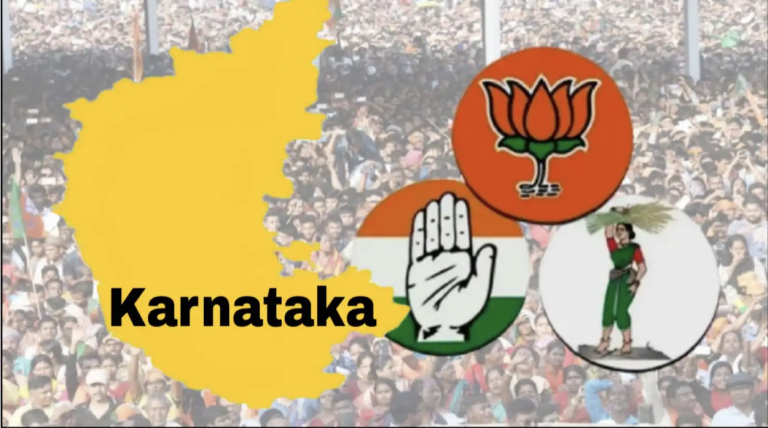
Meanwhile, the Assembly election in Karnataka is scheduled to be held on May 10 and the counting of votes will take place on May 13.

(This news report is published from a syndicated feed. Except for the headline, the content has not been written or edited by OpIndia staff)

A tale of extraordinary revenge: How a Mumbai bakery shop owner framed actress Chrisann Pereira in a drug case in Sharjah

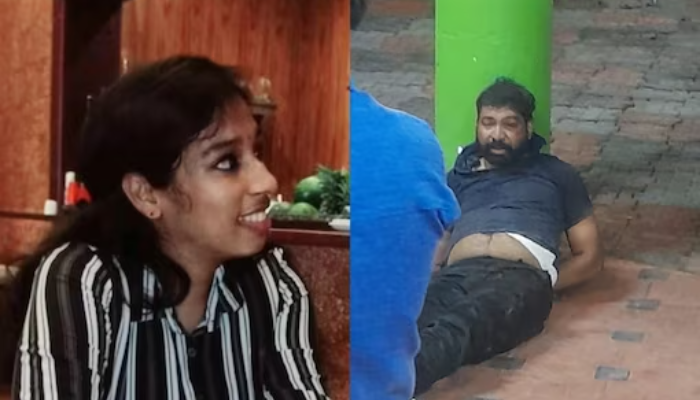
The day was April 1, 2023. Actress Chrisann Pereira landed at the Sharjah International Airport but to her surprise, there was none to receive her.

A little later, she discovered that there was even no hotel booking in her name. In a state of panic, the 27-year-old actress called her father in Mumbai. Chrisann told him that she was asked to carry a trophy with her.

Her father asked her to notify the police, stationed at the airport. And soon, Chrisann was behind bars. It has been 24 days since the actress is serving time in Sharjah prison.

The chain of events, leading to her travel to the United Arab Emirates (UAE) and the subsequent arrest, is nothing short of a movie plot.

On March 23 this year, Chrisann’s mother Pramila received a message from a man named Rajesh Borate. He introduced himself as ‘Ravi’ and claimed that he was from a talent management company.

He informed Pramila about an audition for a web series, which was supposedly taking place in Sharjah. Rajesh thereafter met Chrisann on March 31 and gave her a trophy. He told her to carry it with her and hand it over to someone in Sharjah.

Fast forward to April 1, the security at the Sharjah airport found cannabis and opium stuffed inside the trophy. The actress was taken into custody. Her family notified the Mumbai police, which initially took no action.

Later, a First Information Report (FIR) was lodged at Vakola police station and a probe was launched into the matter. The Mumbai police found that Chrisann Pereira was framed by a bakery owner named Anthony Paul and his accomplice Rajesh.

Reportedly, Paul’s sister stays in the same building as Chrisann’s mother Premila. The duo had a heated argument on two different occasions, once for not wearing during mask the Covid-19 pandemic and over her pet causing a nuisance in her building.

An angry Anthony Paul sought to take revenge against Premila by framing her daughter as a ‘drug mule’ in Sharjah. He used Rajesh to carry out its nefarious designs and tipped the Sharjah police about Chrisann being in possession of drugs.

The Mumbai police arrested both Paul and Rajesh on Monday (April 24) and booked them under relevant provisions of the Indian Penal Code (IPC) and Narcotic Drugs and Psychotropic Substances (NDPS) Act.

They were produced before a court on Tuesday (April 25). The cops are now hoping to extradite the actress from Sharjah by presenting their findings and using diplomatic channels.

It has now come to light that Paul had similarly tried to frame 4 other individuals, namely, Ken Rodricks, Clayton Rodricks, Munisha and Rishikesh Pandya. While three managed to escape, Clayton was also arrested by the Sharjah police.

The family of actress Chrisann Pereira is now waiting for her safe return to India. The actress has performed in movies such as ‘Sadak 2’, ‘Thinkistan’ and ‘Batla House.’

WhatsApp launches new feature, users can now use account on multiple phones

WhatsApp users will now be able to use their account on multiple phones, as the popular messaging platform launched a new feature on Tuesday. 

WhatsApp said in a blog on Tuesday, “Last year, we introduced the ability for users globally to message seamlessly across all their devices, while maintaining the same level of privacy and security.” “Today, we are improving our multi-device offering further by introducing the ability to use the same WhatsApp account on multiple phones,” it added. 

Notably, the feature has been a highly requested one by the user, the statement added. 

The users can now link their phone as one of up to four additional devices, the same as when they link with WhatsApp on web browsers, tablets and desktops. It will ensure that personal messages, media, and calls are end-to-end encrypted. Also, if the primary device is inactive for a long period, it will automatically log out of all companion devices, the statement added. 

With the rollout of this feature, users can switch between phones without signing out and pick up their chats where they left off. 
The additional employees will now be able to respond to customers directly from their phones under the same WhatsApp Business account. 

This update has started rolling out to users globally and will be available to everyone in the coming weeks. 

WhatsApp further informed that in the coming weeks, it will be introducing an alternative and more accessible way to link to companion devices. The user will just need to enter the phone number on WhatsApp, instead of scanning the QR code. 

“We look forward to introducing this feature to more companion devices in the future,” the statement added.

(This news report is published from a syndicated feed. Except for the headline, the content has not been written or edited by OpIndia staff)

WHO warns of ‘huge biological risk’ after fighters in conflict-torn Sudan occupy laboratory storing samples of diseases like polio and measles

Amid mounting fears that the ongoing power struggle between the country’s army and its primary paramilitary organisation will devolve into a devastating civil war, the World Health Organisation said Tuesday that fighters have taken a national public laboratory in the capital city of Khartoum in Sudan storing samples of various pathogen such as polio and measles.

Calling it an “extremely, extremely dangerous” situation, Nima Saeed Abid, the WHO’s representative in Sudan warned there is a “huge biological risk associated with the occupation.”

“There is a huge biological risk associated with the occupation of the central public health lab… by one of the fighting parties,” Nima Saeed Abid, told reporters in Geneva.

Without taking names, Abid said that fighters “kicked out all the technicians from the lab… which is completely under the control of one of the fighting parties as a military base.” It is unclear if the occupying fighters belong to the Sudanese armed forces or the rival Rapid Support Force (RSF) paramilitary group.

Abid claimed he received a call from the head of Sudan’s national laboratory in Khartoum on Monday, a day before a 72-hour truce arranged by the US between Sudan’s warring generals went into effect after 10 days of urban battle.

The UN health agency also documented 14 strikes on healthcare facilities throughout the war, killing eight people and wounding two.

It also cautioned that “depleting stocks of blood bags risk spoiling due to a lack of power.”

“In addition to chemical hazards, bio-risk hazards are also very high due to the lack of functioning generators,” stated Nima Abid.

Sudan crisis

More than 400 people have died in clashes between Sudan’s military and its main paramilitary force and control of Khartoum’s presidential palace and airport is now questionable following disputed claims from both sides. The fighting poses a threat to the stability of Sudan and the wider region.

An apparent power struggle between the two main factions of Sudan’s military dictatorship led to the outbreak of violence.

The WHO retweeted a post from Sudan’s Health Ministry on Sunday saying at least 420 people had been killed and 3,700 injured in the fighting so far. 

As war rages intensified in Sudan, countries scrambled to evacuate their diplomats and citizens from the Sudanese capital on Saturday and Sunday. France on Monday evacuated 388 people from 28 countries, including Indian nationals.