Home Blog Page 2240

FIR registered against a pastor and others for conducting Christian prayers at a Hindu temple in Warangal: Report

0

An FIR has been reportedly registered against pastor Mr Gandham Arun Kumar and others for conducting Christian prayers inside a Hindu temple in Warangal, Telangana, earlier this week.

Legal Rights Protection Forum, a non-profit activist group, took to Twitter to inform that the pastor and others involved in the incident have been booked after a complaint was lodged by Sub Inspector Sri D. Sambaiah. The FIR was registered against sections 295-A, 153a, 153b, 504, 505 r/w 34 of IPC.

The matter pertains to Christians conducting prayers in a Hindu temple constructed by the Kakatiya dynasty in Fort Warangal, a video of which had gone viral on social media, drawing outrage from several quarters on the internet. The temple is reportedly under the control of the Archeological Department and being administered by the Telangana Endowments Department.

Members from Vishwa Hindu Parishad (VHP) and Bajrang Dal launched a protest, calling for action against the organisers of the program and claiming that it was an affront to Hindu deities.

To file a complaint, they proceeded to the Mills Colony police station and met with DCP Srikanth Rao and ACP Ramala Sunitha.

Later, while addressing the media, they claimed that the local Hindu community was concerned after learning about the large-scale prayers being held directly in front of Ramalayam and Swayambu Ramalingashwara Swamy temple near Gundu Cheruvu.

Lord Rama’s “pada mudras” and “shanku chakras” can be found inside Ramalayam, and the temple’s yearly Mahashivaratri festival is a well-attended occasion.

The members of VHP and Bajrang Dal questioned how the Christian community could arrange large-scale prayers in front of the temple and serve non-vegetarian food. Such occurrences, they asserted, had the potential to cause religious unrest and disrupt the peaceful environment in the surrounding area.

They also cautioned that if authorities did not take action, VHP and other Hindu organizations would begin a protest. Speakers at the event included Sriram Uday Kumar, Bandi Rohit Yadav, S. Sairam, Aditya Sai, P. Raju, Harish, Manohar, Sandeep Reddy, and Koteshwar.

Vadodara: Family of Muslim girl create a ruckus at the marriage registrar’s office after she eloped with Hindu boy, sent to women’s home

0

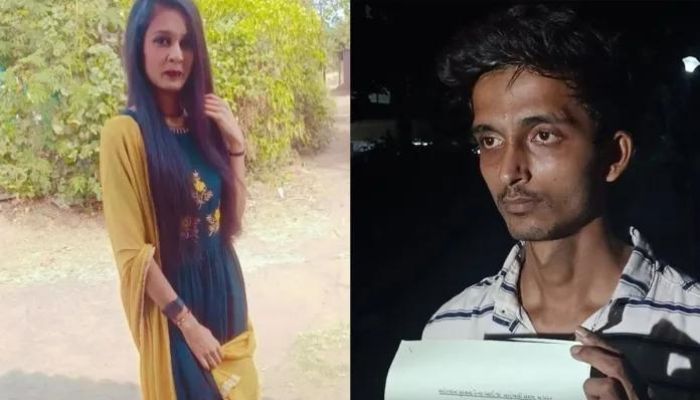
A Hindu man and a Muslim woman who had recently eloped reached the sub-registrar’s office in Vadodara city to fulfil the last formalities of their inter-faith marriage registration when a crowd gathered there and caused great pandemonium.

A complaint had been filed at the Karjan police station about the woman’s disappearance. She was in a relationship with a Hindu man, of which her family in Vadodara was aware. She and her partner both vanished a few days ago after they eloped together.

The family members of the girl and others gathered at the Sub Registrar’s office on the sixth floor of Kuber Bhavan in Vadodara when found out that the couple had arrived for registration of their marriage. After learning about the ruckus at the office, the police arrived and protected the interfaith couple. The pair, who are both adults, were taken to the ninth floor by the Raopura police to protect them. However, they were followed by several people from the Muslim group.

Furthermore, later a team of district police officers came to the Sub Registrar’s office to take the girl’s statement about the missing report that was lodged by her relatives. Kuber Bhavan remained in disarray well into the evening as the relatives of the Muslim girl continued to create lots of noise. Later the woman was taken to Nari Sanrakshan Gruh.

A similar interfaith marriage case had previously come to light in the Hasthal village of Kalavad Taluka in the Jamnagar district. Here, the father, Kishore Karsariya and sister of a Hindu man Hiren, who married a Muslim girl, Muskan Yusuf, were assaulted and forbidden from entering the village.

The couple eloped, got married and started living together in Rajkot which didn’t go down well with the latter’s family. 

Rajkot: Rafiq rapes Hindu friend’s minor daughter after inviting her home, arrested

A disturbing case of a rape of a minor Hindu girl has come to light in Rajkot, Gujarat. The accused, Rafiq Arab, a friend of the victim’s father, called the girl to his home on the pretext of giving her the keys of a moped and then raped her. Rafiq was arrested by the Rajkot Women’s Police Station and has been slapped with relevant sections under the POCSO Act.

As per the information provided to the police, Rafiq is a friend of the victim’s father. Rafiq lived near the victim’s residence and used to frequently visit her home. One day, he dialed his Hindu friend’s home, which was answered by the victim. Rafiq asked the girl to bring her mobile phone and a moped he had left at her house. When the 16-year-old girl, a Class 9 student, arrived at Rafiq’s house with the keys, he was alone. Exploiting the opportunity, he detained and assaulted the victim.

The complaint filed by the victim said that Rafiq tied the girl’s legs and subsequently raped her. He then threatened the girl against informing anyone about the incident, adding that he would publicise in society that she had a boyfriend if she talked about the incident.

According to the information, he tied the legs of the victim and raped her. After this, he threatened the victim that if she told anyone about it, he would publicize that she had a boyfriend. Upon returning home, the teenager began to experience abdominal discomfort. Her family took her to the hospital, where the victim recounted the entire incident to them.

The girl’s parents filed a complaint at the women’s police station. Subsequently, the police apprehended Rafique from his workplace, following the case’s registration. Initially, Rafique vehemently denied the charges. However, after intense interrogation by the police, he confessed to his crime. The accused has been charged under the POCSO Act and section 376 of the IPC.

Veer Savarkar’s grandson Satyaki Savarkar files defamation case against Rahul Gandhi in Pune for his comments in London

Another defamation case has been filed against Congress leader Rahul Gandhi after his conviction in a defamation case that resulted in his disqualification from Lok Sabha. Satyaki Savarkar, the grandson of Vinayak Damodar Savarkar, has filed a complaint against Rahul Gandhi over his comments on Veer Savarkar.

The defamation complaint under sections 499 (defamation) and 500 (punishment for defamation) of the Indian Penal Code has been filed before the court of a judicial magistrate in Pune.

“Today, I have filed a complaint for criminal defamation against Rahul Gandhi for his false allegations made in this speech against my grand father late Shri. Vinayak Damodar Savarkar,” Satyaki Savarkar said on Twitter today evening. He also posted a clip of a video of Rahul Gandhi’s speech where the Congress leader had alleged that Savarkar’s ideology included being happy after beating Muslims.

The disqualified Lok Sabha MP had claimed that Savarkar has written in his book that once he felt very happy after he and his friends beat up a Muslim man. He had said that this is the ideology of BJP.

Rahul Gandhi had made the comments during his recent trip to the UK, which was filled with controversial remarks by him. During an interaction with the Indian diaspora organised by the UK chapter of the Indian Overseas Congress (IOC) on 5 March, he had claimed that BJP’s ideology is “cowardice.”

Referring to External Affairs Minister Jaishankar’s remarks on China, Rahul Gandhi had said, “If you notice the statement of the Foreign Minister, he said China is much more powerful than us. To think China is more powerful than us, how can I pick a fight with them? At the heart of the ideology is cowardice.”

He then went on to say, “Savarkar, in his book, said that he felt happy after he along with 5-6 others beat up a Muslim man. If five people beat up one person and one of them feels good, this is cowardice. If you want to fight then go fight single-handedly.”

Speaking to portal The New Indian, Satyaki Savarkar’s counsel Anirudh Ganu said that Gandhi’s claims are totally baseless and Veer Savarkar did not mention any such event anywhere. “His statement is totally false,” he said.

Supreme Court to hear petitions in July seeking SC status for Dalits who converted to Islam and Christianity

On 12th April 2023, the Supreme Court announced that on 11th July 2023, it would hear arguments on whether and to what degree Commission recommendations that are not approved by the government may be relied on, as well as whether the caste system can be attributed to Islam or Christianity, given their form and character. These problems will be addressed by the Court in a group of petitions contesting the exclusion of Christians and Muslims from the Constitution (Scheduled Caste) Order, 1950.

Following a brief hearing, the Bench of Justices Sanjay Kishan Kaul, Ahsanuddin Amanullah, and Aravind Kumar pronounced their decision, noting that the plaintiffs claim that waiting for the newest Commission’s report will be an endless activity and that the matter will never see the light of day. The Court agreed with their contention that the documentation on record is adequate to proceed with the hearing.

Additional Solicitor General K Nataraj appeared for the union government while advocate Prashant Bhushan, senior advocate Colin Gonsalves, and senior advocate CU Singh argued for the petitioners. The Court acknowledged the ASG’s view that the Court should await the findings of the Panel chaired by Judge KG Balakrishnan.

The court also recognised that the counsel opposing the petition on behalf of plaintiffs has also pursued to raise issues regarding the nature and character of the two religions Islam and Christianity and whether the caste system can be attributed to Christian and Muslim religious faiths by prolonging reservation post-conversion. The Court noted that it will also evaluate the consequences of a Commission’s report that has been dismissed by the government. If the empirical data in the report can be accepted.

The Court instructed listing on the matters on the regular board on 11 July for directives. The Court appointed nodal counsel on both sides and ordered the submission of convenience compilations. AoR Nachiketa Joshi is the nodal Lawyer on behalf of the respondents.

The petitioners urged to uphold the report of the Justice Ranganath Mishra commission

When the matter was summoned, Attorney Prashant Bhushan representing the petitioner contended that it is a purely legal and constitutional question as to whether the state may discriminate on the basis of faith. He said that the Ranganath Misra Commission investigated the matter and determined that it is discriminatory. He stated that the Centre has now said that they have rejected the report.

The matter, according to Assistant Solicitor General K. Nataraj, can only be decided based on the data that would be obtained. Justice Kaul asked, “There is no difficulty in examining the constitutional position. What will be the status of the Ranganath Misra Commission report? How do we rely on a report that has not been accepted by the centre? If a report is not accepted, what is the status of the finding or empirical data? Can we accept the imperial data from a report is not accepted?”

He further said, “To what extent can a report not accepted by the government be relied upon? What is the structure of the religions, do they recognise the caste system and what is the effect of it? There are reports to this effect that the problem is not wished away by conversion.”

The case is 20 years old

The writ plea submitted in 2004 contests the exclusion of Christians and Muslims from the Constitution (Scheduled Caste) Order 1950, claiming that the Constitution (Scheduled Castes) Order 1950, as periodically modified, is discriminative and violates Articles 14 and 15 of the Constitution by differentiating against Scheduled Caste converts to religions other than Hinduism, Sikhism, and Buddhism.

The Supreme Court had adjourned the set of petitions on the prior day of the hearing to decide whether or not to await the findings of the newly established Commission led by former Chief Justice K. G. Balakrishnan. In its 2007 report, the former Justice Ranganath Misra Committee supported the extension of reservation entitlements to converted Dalits.

The plaintiffs before the Court argued that the social and economic disabilities of Scheduled Castes who convert to Christianity persist in the majority of cases even after their conversion and that there can be no distinction in this regard between Scheduled Castes who convert to Sikh and Buddhist religions and Scheduled Castes who convert to Christianity.

According to the Central Government’s Counter Affidavit opposing the plea, Christianity is an egalitarian religion that does not acknowledge caste. It indicates that the criteria used to determine whether a caste or group is suitable for inclusion in the Scheduled Caste list include immense social, educational, and economic backwardness resulting from ancient untouchability practises practised by Hindus centuries ago. According to the Center, ST converted to Christianity cannot be compared to SC converted to Christianity.

What is the Constitution (Scheduled Caste) Order 1950?

According to the Constitution (Scheduled Castes) Order, 1950, no one who practises a faith other than Hinduism, Sikhism, or Buddhism can be a member of a Scheduled Caste. On January 23, 2023, the Supreme Court refused to hear a petition contesting the Centre’s 2022 move to appoint a committee chaired by former CJI KG Balakrishnan to investigate the provision of scheduled caste status to Dalits who converted to Christianity or Islam.

Imran in Agra slaughters a cow to implicate Rizwan: UP Police says it’s a Muslim vs Muslim case, rejects alleged links of culprits with Hindu Groups

On April 6, 2023, the Agra Police released a press release reporting the arrest of two cow-slaughterers, Imran Qureshi aka Thakur and Shanu alias Illi. Manish Jat, Saurabh Sharma, Brijesh Bhadoria, Jitendra, and Ajay all of who claimed to be members of the ‘Hindu Mahasabha’ were identified as accused in the case.

Sanjay Jat, Saurabh Sharma, Brajesh Bhadoria and Jitendra Kushwaha are also arrested. Notably, police are charging Jitendra with being a part of the conspiracy despite the fact that he is the complainant in the registered FIR.

Some political parties and media outlets used this issue as an excuse to disparage Hindu organisations. After speaking with all the stakeholders, OpIndia conducted a ground investigation of the entire matter to ascertain the truth behind all the allegations.

The backstory of the case

The entire incident began at 1 in the morning on March 30, when Jitendra filed an FIR of cow slaughter in the vicinity of the Agra Police Etmaddaula police station. As per the complaint, four people, including Rizwan, Nakeem, Bijju and Shanu were slaughtering a cow and selling beef in the bushes near the Gautam Nagar cave.

Jitendra and his friends, Vishal and Manish Pandit, the complaint said, had visited the spot, only to discover that the accused had fled, leaving the butchered cow behind. They urged the police to take strong action against the culprits, branding them as cruel cow slaughterers. The police began their inquiry after filing the FIR (a copy of which is available with Opindia) under Sections 429 of the IPC and 3/5/8 of the Uttar Pradesh Prevention of Cow Slaughter Act.

Police uncovered shocking facts during the investigation

On April 5, the police learned of the presence of five individuals in the city who were involved in the killing of cows. Furthermore, the police came to know that the perpetrators were planning to escape on a bike and a scooter. However, two of them, Shanu and Imran, were apprehended while riding a scooter during the police raid.

Three charges have already been filed against Imran in Agra while Shanu has six active cases in the city. Most of these cases are of cow slaughter. Salman and another offender managed to get away. 

Both of the arrested accused confessed that they had a history of animosity with Agra residents, including Nakeem, Bijo, and Rizwan, during their interrogation. They suspected that Nakeem, who worked for the Agra Municipal Corporation, had a role in sending Jhallu and Imran to jail some time back.

Since then, both of them desperately wanted to teach him and his friends a lesson. So they elaborately planned to slaughter a cow and later place the blame at the feet of Nakeem, Rizwan, and others. To execute their machinations, Shanu, Imran, and others killed a stray cow in an empty field in Gautam Nagar.

The dubious role of Sanjay Jat and his team

The cow slaughterers roped in Sanjay Jat, Saurabh Sharma, Brijesh Bhadoria, Ajay, and Jitendra to lure them to their adversaries. They added that Sanjay Jat and his friends knew about the occurrence beforehand and were prepared to instigate trouble for Nakeem and others by filing an FIR following the cow’s death.

It is alleged that all of them were continuously in touch with one another, both on the phone and in person, before and after the incident. According to the plan, Jitendra filed an FIR against Rizwan, Nakeem, and others after the occurrence, and he and his friends pressured authorities to take the latter into custody.

Two arrests are made so far

In view of the conspiracy in this case, the police have slapped section 120B of the IPC and section 420 of cheating after arresting Imran and Shanu. Salman and the others have evaded capture thus far. The name of the absconding accused, Jhallu, was mentioned, but he was discovered to be incarcerated. Afterwards, the police clarified that the arrested duo lied about his name.

The police are also looking for Jitendra, Sanjay Jat, Saurabh Sharma, Brijesh Bhadoria, and Ajay who are apparently a significant part of this arrangement. Police press notice is available on OpIndia.

The Chakrapani faction of ‘Hindu Mahasabha’ is conducting an internal inquiry

Sanjay Jat and his accomplices are rumoured to be connected to the Chakrapani group of the ‘Hindu Mahasabha.’ Rishi Trivedi, the state president of this organisation, cast doubt on the police’s premise while informing about the outfit’s ongoing internal probe. He disclosed that after the inquiry, the final result would be announced at a news conference. He also attacked the police for being late and cleared himself and his associates, except for Sanjay Jat, of any wrongdoing.

After being on for a time, Jitendra and Sanjay Jat’s cell phones were turned off when OpIndia contacted them to get their side of the story.

The police have strong evidence

When speaking to OpIndia, SHO Etmaddula Inspector Rajkumar emphasised that the police had not built their suspicions on the testimony of a single person but rather on the availability of concrete evidence against Sanjay Jat and the other members of his gang. He characterised the police’s procedure as completely impartial and highlighted that, as a result of their sharp vigilance, no unfavourable incident of any kind transpired even after the nefarious plans were hatched surrounding the auspicious occasion of Ram Navami.

Sanjay Jat has more than 1 dozen cases in his name

The station in charge has already declared Sanjay Jat as wanted in 14 counts which were recorded in Agra and its neighbouring areas. We were also informed that he was arrested for extortion just days before in Agra. The police officer contended that he is aware of how sensitive the subject is and that only conclusive proof is being used to guide the action.

Sanjay Jat is rejected by ‘Hindu groups’

A member of the ‘Bajrang Dal’ in Agra spoke with OpIndia on the condition of anonymity and unveiled that the working methods of Sanjay Jat and his associates are already under question. He labelled the accused and his aides as being capricious. Moreover, SHO Etmaddaula informed us that Sanjay Jat and the other conspirators are already rejected by the ‘Hindu Mahasabha’ and other authentic Hindu bodies.

Leftists and Islamists indulge in rumour mongering

The leftist group of media and some political parties have tried to establish that the members of ‘Hindu Mahasabha’ had slaughtered cows to trap Muslim youths. Rahul Ishwar, Prashant Bhushan, Rana Ayyub, Saurabh Bhardwaj of ‘Aam Aadmi Party (AAP)’, The Wire, Samajwadi Party Media Cell, Scroll, Manisha Pandey etc. did not even mention the names of the cow slaughterers in their posts.

They are overlooking facts and desperately trying to pin the guilt on Hindus. Interestingly, the image they are circulating is that of Imran and Shanu in police custody and not any member of ‘Hindu Mahasabha.’

Source: OpIndia Hindi

According to them, the Muslims are the target of a Hindu plot to blame them for cow slaughter. Police disclosures, however, indicate that the conflict was amongst Muslims, with participants from Hindu groups apparently acting as collaborators. It is also important to note that Imran and Shanu, the young men who killed the cow, are Muslims who apparently cooperated with other Hindus to file a lawsuit in order to end their long-standing animosity with Rizwan and others.

Conman Sukesh releases alleged chat conversations revealing connection of Telangana’s ruling party with Delhi’s liquor scam, ’15 kg ghee’ makes an appearance

0

Conman Sukesh Chandrasekhar, who is presently incarcerated in Delhi’s Mandoli jail in connection with the Delhi Liquor Scam, recently released sensational screenshots of a WhatsApp conversation he had with Kalvakuntla Kavitha, an MLC and the daughter of Telangana’s chief minister, K. Chandrasekhar Rao. Recently he had said that he will release 700 pages of WhatsApp chats showing the involvement of AAP leaders in the liquor scam.

Chandrasekhar frequently referred to Kavitha as his ‘Akka’ (older sister) in the messages. Notably, K. Kavitha has been questioned by both the Enforcement Directorate (ED) and the Central Bureau of Investigation (CBI) regarding this case.

“Sorry to bother you, need a small detail,” the text stated and mentioned a package to be given to someone called ‘AK.’ “Should I send it to JH,” he questioned to which apparently K. Kavitha replied, “No, I will ask Arun to call you. It should be sent to the office.”

He agreed and told, “SJ bro said it has to be sent to you today itself,” and assured her that he will coordinate everything. The TRS leader then inquired about his father’s health. He thanked her for asking and said, “He is undergoing therapy.”

The MLC urged him to, “Get out soon.” He responded with, “Yes Akka, God willing on it!” She told him that they will talk later to which he responded with, “Ok Akka anytime,” and gave his regard to her father, the incumbent Telangana CM, KCR.

He sent another message, “Akka delivered,” and requested her to inform AK or SJ. She answered, “Spoken to Manish,” and he thanked her in response. According to Sukesh, AK and SJ here means Arvind Kejriwal and Satyendar Jain.

More messages unveiled the conversation about 15 crores which are referred to as ’15 kg ghee’ by them. “Bro ghee tin ready,” he announced to the politician. “Full na,” she inquired to which he assured her that it is indeed 15 kg. She then told him to send it to ‘sister HYD.’ He appeared to be a little confused at that and asked, “Bro? Not Delhi?” When she affirmed in response, he quipped, “Ok bro will do.”

Sukesh Chandrasekhar has already said that 1 kg ghee means Rupee 1 crore, a codeword used to talk about money given to TRS by AAP. He had claimed that Kejriwal gave instructions for the delivery of Rs 15 crore to the TRS office, referring to it as 15 kg ghee.

Moreover, he had recently released a letter in which he accused the Aam Aadmi Party (AAP) and the Bharat Rashtra Samithi (BRS) of being complicit in the Delhi Liquor Scandal.

“The chat will clearly show your instructions for the delivery of the 15 crores to the TRS office and also will show the token of acceptance and confirmation from the TRS leader, which was instructed by you (Kejriwal ji) and Satyendar Jain (currently in Tihar Jail),” the letter read.

He claimed that his disclosure will reveal the connection between AAP, TRS and the infamous South Block, asserting, “The chat screenshot will show how the leader of TRS instructs the delivery of 15 crores @ 15 kg ghee to an associate Arun Pillai who kept the boxes of cash in a black Range Rover Sport 6060 with an MLC sticker on the front windshield parked inside the TRS headquarters.”

The Delhi Liquor Policy scam pertains to the Delhi Excise Policy 2021-22. It was scrapped on July 30 after Delhi Lieutenant Governor VK Saxena recommended a CBI inquiry into the alleged irregularities in the policy. The former deputy chief minister of Delhi, Manish Sisodia is in jail in connection to this case. The AAP leader was arrested in February following an interrogation by the CBI.

Bathinda army station shooting described as ‘fratricide’ by police, say 2 persons in civilian clothes behind it, two jawans reportedly detained for questioning

0

On April 12, two Jawans of the Indian Army were detained by the security agencies in Bathinda Army Station shooting case, as per a report by DD News report. On the other have, police have said that two people in civilian clothes were behind the attack. Four jawans were shot and killed in the shooting incident that happened at around 4:35 AM. No other soldiers were injured. A search operation was conducted by Quick Reaction Teams and the area was cordoned off and sealed. In a statement, defence minister Rajnath Singh said an inquiry into the matter is underway.

The incident has been described as ‘fratricide’ by officials, which means the killing of a member of one’s own group, or the killing of one’s brother or sister. This means that two jawans are suspects in the case. However, it is not clear if the two jawans detained for questioning are the same jawans who are prime suspects in the case. Reportedly police have said that the shooters are still at large.

The four victims of the unfortunate event have been identified as Gunners Sagar Banne (25), Kamalesh R (24), Yogeshkumar J (24) and Santosh M Nagaral (25). None of them was from Punjab. The families of the deceased Jawans have been informed by the Army.

Though the Punjab Police denied any terror links in the case, the investigation is being carried out from all possible angles. On the hand, Bathinda SP D Ajay Gandhi said in a statement that two people in civilian clothes opened fire at the Army Station and an FIR against two unknown attackers has been filed.

Reports suggest that the shooting incident happened due to some internal reason, and the enquiry will also focus on an INSAS rifle and 28 bullets that went missing two days back. It is believed the shooting was carried out using that rifle as empty cartilages of INSAS rifles were found at the scene. Of the 28 missing bullets, 19 empty shells have been recovered, but the rifle is still missing.

“It is not a terror incident, it is an internal issue, appears to be fratricidal issue. Our investigation teams have reached with all forensic equipment,” a Punjab Police official said.

In a press release, Army said, “The area continues to be sealed off and joint investigations with Punjab Police are being coordinated to establish the facts of the case. All aspects including the possible case of involvement of an INSAS rifle along with 28 rounds reported missing two days back are being ascertained.”

While police along with military police are investigating the matter, no arrests have been made so far. However, the terrorism angle has been ruled out.

The military base at Bathinda is located about 280 km northwest of the national capital Delhi, and the Pakistan border is less than 100 km west of the town.

Singer Mika Singh thanks PM Modi for being able to use Indian currency at Doha airport, here is how it shows INR getting stronger

On 12th April 2023, singer Mika Singh posted a video from his Twitter handle in which he thanked PM Narendra Modi for enabling transactions in the Indian currency at the Doha airport in Qatar. Mika Singh made this video in a shop at the Doha airport.

Mika Singh wrote, “Good morning. I felt so proud to be able to use Indian rupees whilst shopping at the Doha airport in the Louis Vuitton store. You can even use rupees in any restaurant. Isn’t that wonderful? A massive salute to Narendra Modi for enabling us to use our money like dollars.”

In the video attached, he said, “Hello, I am in Doha right now. And it is a very proud moment that using the Indian currency, we can shop. You can buy the things you want by using Indian currency. Thanks to Modi Ji. Salute to you. Because of you, this Indian currency will be accepted in the whole world, like it is accepted in Qatar.”

This is not the only instance when Indians visiting foreign countries have shared on social media about the Indian currency being accepted for transactions abroad. One Arun Deshpande has also shared it from his Twitter handle on 5th April 2023. He wrote, “Payment in Indian rupees for coffee at Dubai airport. Did we ever think we would see this day when Indian rupees are used in regular shops in other countries? Modi hai to mumkin hai”

In this post, Arun Deshpande shared the Facebook page of one Vynateya Iyengar who wrote about his experience of using the Indian currency at the Dubai airport as he was returning to Bangalore.

Indian rupees are accepted for transactions at airport terminals in the Gulf countries since 2019. In July 2019, Gulf News reported that duty-free shops at all three terminals of Dubai International Airport and at Al Maktoum Airport had started accepting the Indian rupee. Before that, Indians were required to convert the rupee into Dollar, Dirham or Euro to do shopping at Dubai’s duty-free shops. Doha airport in Quatar started accepting the rupee since last year, resulting in the pleasant experience by Mika Singh.

It is notable that in March 2023, the Reserve Bank of India (RBI) gave permission to banks from 18 countries to open Special Vostro Rupee Accounts (SVRA) and use Indian rupees to settle payments. The 18 countries are Fiji, Botswana, Guyana, Germany, Kenya, Israel, Malaysia, Mauritius, Myanmar, New Zealand, Oman, Russia, Seychelles, Singapore, Sri Lanka, Tanzania, Uganda and the United Kingdom. The banks from these countries operating across the world can now use Indian currency for transactions directly. This is why many Indians who travel to foreign countries have started sharing their experience of using Indian rupees abroad.

The government also provided this information in the parliament. In answer to a query, Union Minister of State for Finance Bhagwat Karad remarked that banks from these 18 countries will have to approach authorised dealer banks in India, which will seek authorization from the RBI to create such an account following the proper procedure.

The decision was made against the backdrop of the commodities crisis that followed the commencement of the Ukraine war. Local currency trade has been proposed as a remedy to wartime sanctions.

‘Right to trade does not mean a carte blanche to run illegal meat shops, abide by public safety rules’: Gujarat HC

On Tuesday, April 11, the Gujarat High Court noted that the right to freedom of trade may be a fundamental right but it is not carte blanche as it ruled that the rights of meat traders and vendors even if fundamental, have to yield to public safety and hygiene. 

A division bench comprising Justices NV Anjaria and Niral Mehta denied relief to illegal meat shops. The owners of the meat shops sealed by the civic authorities for not complying with mandatory norms and on the grounds of selling meat in unhygienic conditions sought permission to continue the business. 

According to a division bench of Justices, NV Anjaria and Niral Mehta, the State authorities have a responsibility to guarantee that food is safe, which they do by implementing the food safety standards and other regulatory measures outlined in the various statutes into practice.

There is a right to food safety for consumers of all foods, including meat and meat products. Together with the right to the food itself, Article 21 of the Constitution also guarantees the right to hygienic food. A right to safe food is envisaged under Article 21 as well. When meat dealers persist in conducting business even when the meat is unstamped or the slaughterhouse is not licensed or in compliance with regulations, this would represent the flip side of the coin, the bench noted.

According to a public interest litigation (PIL) petition, which claimed that the businesses were operating in breach of a number of mandatory regulations, the High Court issued an order closing the shops.

The PIL petition demanded that the Supreme Court’s ruling and the Prevention of Cruelty to Animals Act’s requirements that only licensed slaughterhouses be permitted to conduct animal slaughter be put into effect. It was argued in the PIL that thousands of meat shops were selling unstamped meat which clearly indicated that the meat was not procured from slaughterhouses but was procured by killing animals in the local shops.

While the shop owners invoked the fundamental right to freedom of trade under Article 19(1)(g) of the Constitution, the High Court bench stated that the Right to freedom of trade may be a fundamental right, but not carte blanche.

“The freedom to trade or right to do business have to yield the public health norms and the restrictive compulsions needed to be enforced in the larger public good. The right to free trade in food items like meat, or any such food has to be sub-serving to public health and food safety requirements,” the bench noted.

Furthermore, they emphasized that since Ramzan is underway, the State should liberally intervene to allay their complaints and approve the opening of the shops, allowing them to sell the meat.

To this, the court outlined that the meat shop owners who were otherwise flouting the norms of the law, cannot be allowed to assert unrestricted freedom to run their shops or slaughterhouses. 

“The applicants cannot draw for them a such unrestricted right to do the business on the canvass. A bare ground may not be permitted to be advanced to justify seeking laxity in food safety or pollution norms. The activity of running unlicensed slaughterhouses and selling unstamped meat could not be approved or permitted without the stakeholders complying with the applicable laws,” the bench stated.

It further stated that the petitioners had not disputed any of the Acts’ or Regulations’ provisions on the grounds of which action had been taken against them.

According to the Court, the provisions of the 2006 Food Safety and Standards Act and the Food Safety Regulations requiring meat shops to uphold sanitation and other requirements are legitimate constraints on the owners’ ability to operate their businesses.

Furthermore, it was said that not all slaughterhouses and meat shops were required to close, and those that complied with the rules were allowed to continue operating.