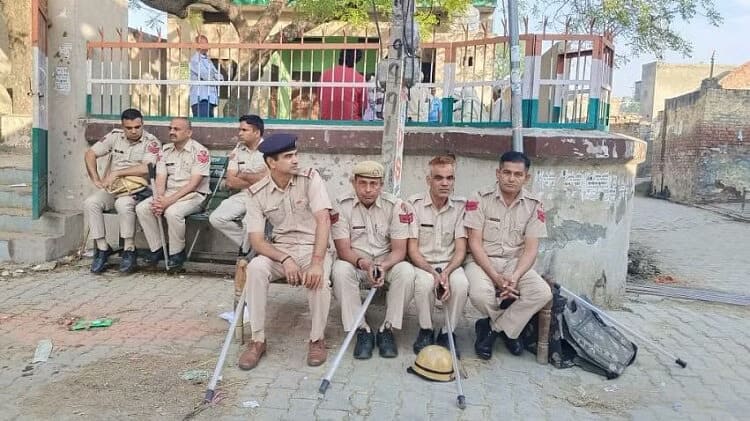
On Sunday (April 9) night, tensions broke out in Haryana after a clash between people from two different communities. The incident allegedly took place in Sandal Kalan village in the Sonipat district of Haryana.
As per reports, a group of 15-20 men from one community assaulted people from another community with bamboo sticks. About 9 people were injured in the alleged attack and were later admitted to the Sonopat Civil Hospital for medical treatment.
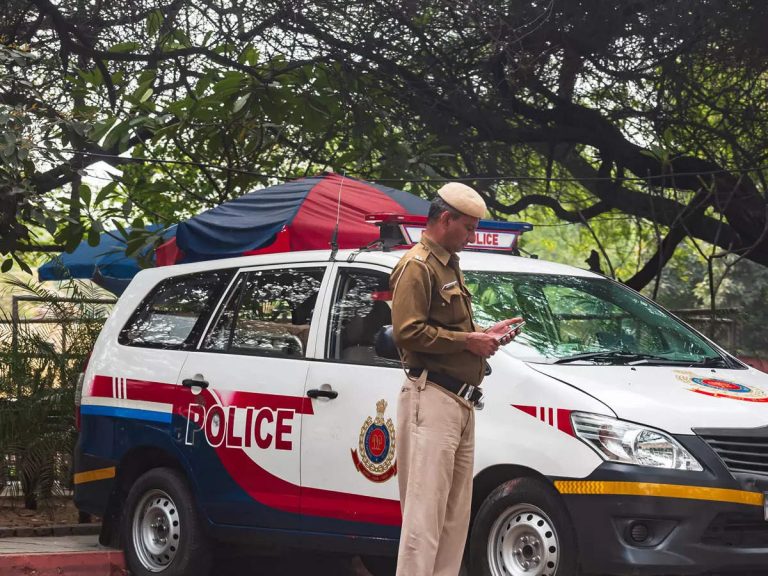
Although the motive of the alleged assault is not known, the police registered a case against 19 people. Reportedly, 16 men have been detained so far in connection to the case.
हरियाणा के सोनीपत के गांव में सांप्रदायिक तनाव, 15 लोगों के घायल होने की सूचनाhttps://t.co/smwhXUROiK
A large contingent of police was deployed in the Sandan Kalan village in the aftermath of the incident. The alleged attackers are said to be locals of the same village.
Reportedly, a similar incident took place in Sonipat on March 31 this year after a group of men allegedly hoisted a religious flag atop a mosque. 5 people have been arrested in connection to that case.
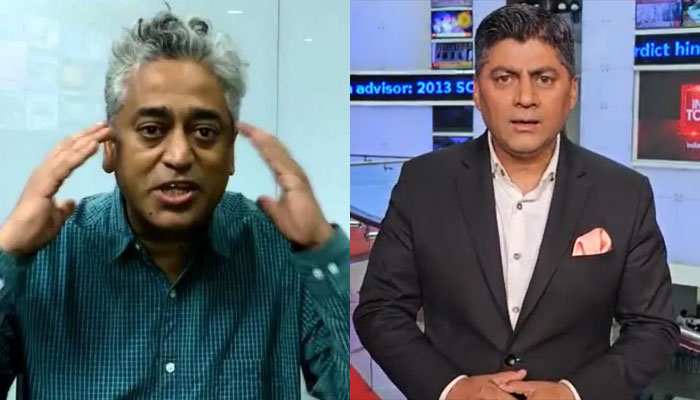
On April 7, India Today’s consulting editor and news anchor Rajdeep Sardesai was left dumbfounded when Managing Editor and anchor Gaurav Sawant gave him a befitting reply over his rant on Mughals.
History writing must be left to professional historians not politicians: @sardesairajdeep
Mughal history should never be erased from textbooks: @gauravcsawant
In his statement at a debate on removing Mughals from the textbook, Sardesai said that History writing must be left to professional historians and not politicians. He said, “The problem is the moment politics enters history, it gets poisonous. [It becomes] left versus right. You can’t erase the Mughals from our history. The Mughals represent part of India’s great pluralistic culture. How can you just eliminate them and only show them as villains?”
He further added that he was not suggesting to tell Akbar was the greatest leader but at least keep him in the textbooks. Let the youth learn about other leaders and historical figures. Sardesai claimed it was a political agenda to remove the Mughals, and it was on the lines of Pakistan that led a generation in neighbouring countries to hate India. “Is that what we want young Indians hating anything which is even remotely considered Muslim or Islam?” he added.
Replying to Sardesai, when Gaurav Sawant said, “I completely agree with Rajdeep Sardesai that Mughal history should never be erased from India’s textbooks”, for a second, there was a glare of happiness on Sardesai’s face, but it turned into shock in no time. Sawant added, “This country must know what Akbar was all about, that Babur was an invader in India. Babur was not from this land.”
He further spoke about how Akbar killed around 40,000 Hindus in the battle of Chittor and made his disciples count the Jeneus of Hindus to measure how many Hindus had been killed. “This is a history book not written by a politician but a historical account written by James Todd,” Sawant noted. He also pointed out how Akbar awarded Badauni, a Mughal historian, for saying he would soak his beard in the blood of infidel Hindus.
Sawant continued to talk about historical documentation of the history of the Mughals by Father Monserrete, who was a Portuguese Jesuit. Father Monserrete mentioned in his commentary on the journey in India that the religious zeal of Muslims had destroyed idols and Hindu temples.
When Sardesai tried to intervene, Sawant stopped him and talked about how Jahangir had the fifth Sikh Guru, Shri Guru Arjan Dev Singh, who compiled the Adi Granth, killed in 1606. He said, “Do you know how [he was] made to sit on a hot plate and killed?” Sardesai started whataboutery suggesting atrocities were done by Hindu kings, including Chattrapati Shivaji Maharaj. To which Sawant replied that by all means, students must be taught everything but “Please look at Chattrapati Shivaji Maharaj entirety, and you will not find a better Hindu ruler in this country.”
Going further, Rajdeep expressed his frustration over the atrocities of the Mughals being discussed, “A history without any positive attributes and thereby by the mean in which Mughal history you clearly want to suggest that they had no contribution.” Irked by his comments, Sawant pointed out that if we want to talk about the truth and facts, it is essential to know how Mathura, Kashi and Ayodhya were destroyed because of the fact that they were the base of the civilisation that we come from. He emphasised the importance of learning about the roots of the Indian civilisation that lived in these ancient cities.
‘Hindu destroyed Buddhist temples’ claimed Rajdeep
During the discussion, Rajdeep claimed Hindu kings destroyed Buddhist temples. He questioned, “What about Buddhist temples destroyed by Hindu kings?” Twitter user TrueIndology listed how Hindu kings built Buddhist temples and challenged Sardesai to prove the contrary. He said, “Dear Rajdeep Sardesai, I CHALLENGE you to name three Hindu kings who destroyed Buddhist temples. Just three. Au contraire, I can give you the names of hundreds of Hindu kings who built Buddhist establishments. From their own authentic inscriptions and records.”
This myth of Hindu kings destroying Buddhist temples was planted by Marxist propagandists.
One of the names they frequently cite is Mihirakula. They claim that the Hindu (Huna) king Mihirakula destroyed Buddhist temples.
He further added, “Marxist propagandists planted this myth of Hindu kings destroying Buddhist temples. One of the names they frequently cite is Mihirakula. They claim that the Hindu (Huna) king Mihirakula destroyed Buddhist temples. This myth is based on very late sources and sectarian texts which were written centuries after the alleged events took place. It is repeated even today by propagandists. But this Mihirakula myth is BUSTED by a contemporary source, an eye witness and an inscription.”
He also talked about a copper scroll inscription that was discovered in Talaqan, Afghanistan that was issued by Hephthalite Huns of Mihirakula’s line. “It records the donation to a Buddhist stupa by these kings. Yet, completely disregarding the primary evidence, one propagandist after another repeated the myth that Hephthalites destroyed Buddhism in Gandhara,” Trueindology added.
Remarkably, a copper scroll inscription was discovered from Talaqan, Afghanistan.
This inscription was issued by Hephthalite Huns of Mihirakula’s line.
It records the donation to a Buddhist stupa by these kings.
he pointed out how the so-called historian Romila Thapar was debunked over her claims that Pushyamitra Sunga destroyed 84,000 Buddhist monasteries. She had to take back the claims.
This Torana was donated to Bharhut Stupa by a Shunga vassal named Dhanabhuti.
Far from persecuting Buddhists, Shungas patronized Buddhist temples.
Disregarding this archaeological evidence, Shungas are accused of destroying Buddhist stupas.
It is important to note that the ecosystem is here to defend the Mughals and becomes triggered by even false claims of removing the glorifying chapters from history books. Interestingly, Sardesai mentioned that he was listening to a podcast by William Dalrymple, which talked in detail about the contributions of Bahadur Shah Zafar in terms of culture. He went on to call Zafar a genius.
‘No big temples’
Sawant, towards the end of the discussion, pointed out that despite four major religions under Sanatan Dharma, that are Hinduism, Sikhism, Jainism, and Buddhism, originating from India, there are no big temples left. Notably, there are many in South India, but in North India, most temples were destroyed, and Islamic structures were built on them. Sita Ram Goel covered a list of such structures in his book “Hindu Temples – What Happened to Them“.
‘Mughal chapters not removed’, NCERT says media speculations are false
Several media reports had widely speculated that the National Council of Educational Research and Training (NCERT) had amended its publications, notably the 12th-class History book, and removed certain chapters on the Mughal empire. After the rumour gained traction, the director of NCERT, Dinesh Prasad Saklani, addressed the issue and refuted the claims that various news outlets were spreading. He told ANI that the chapters on the Mughals had not been removed. He stated that only the overlapping chapters had been dropped, alleviating the additional strain on children’s shoulders.
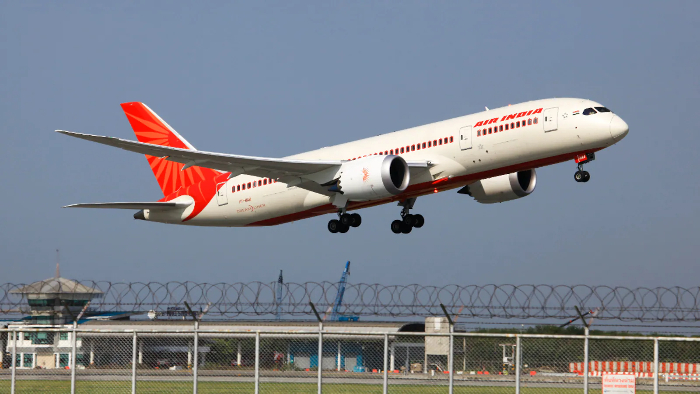
An Air India’s London-bound flight returned to Delhi airport after a mid-air brawl in which a passenger caused “physical harm” to cabin crew members.
An Air India official told ANI, “AI-111 Delhi to London flight with 256 passengers landed safely at Delhi airport after an unruly behaviour of passenger created ruckus on board.” The flight, which took off for Heathrow Airport (London) at around 6:30 am on Monday returned to Delhi airport at around 10 am after the crew reported to pilots about the physical altercation mid-flight.
In a statement, Air India said, “Air India flight AI 111 scheduled to operate Delhi-London Heathrow on April 10, 2023, returned to Delhi shortly after departure due to the serious unruly behaviour of a passenger on board. Not heeding verbal and written warnings, the passenger continued with unruly behaviour including causing physical harm to two of the cabin crew members.” “The pilot in command decided to return to Delhi and the passenger was handed over to the security personnel upon landing. An FIR has also been lodged with the police. Safety, security and dignity of all on board are important to us at Air India. We are providing all possible support to the affected crew members. We regret the inconvenience caused to the passengers and have rescheduled the flight to depart for London this afternoon,” Air India said.
After the plane landed at Indira Gandhi International Airport, Air India filed a police complaint about the passenger’s “indecent behaviour” at the police station. Legal action is being taken against the said passenger.
The airline said it has also informed the aviation regulator Directorate General of Civil Aviation (DGCA) about the incident.
This is not the first time Air India witnessed such a ruckus on a flight. Earlier, in January, a man, identified as Shankar Mishra was arrested of allegedly urinating on a woman on board an AI flight on November 26 last year. The Delhi Police arrested him on January 6 this year.
In an inebriated condition, Mishra urinated on a 70-year-old woman on an Air India flight on November 26 last year. Delhi Police had registered an FIR against him on January 4 on a complaint given by the woman to Air India.
The police registered an FIR under sections 354, 509, and 510 of the Indian Penal Code (IPC) and Section 23 of the Indian Aircraft Act. Both the accused and the victim are from outside Delhi.
(This news report is published from a syndicated feed. Except for the headline, the content has not been written or edited by OpIndia staff)
The British newspaper The Times published a report on Monday, April 10, that stated that India has halted trade talks with the British government following the attacks on Indian High Commission in London. The attacks were carried out by Khalistani supporters living in Britain. However, India has now denied these reports and said that they have not halted the trade talks.
Ministry of External Affairs denies media reports of India halting trade talks with the #UnitedKingdom over Khalistan supporters’ rampage.
Khalistanis and Pakistanis have always targeted Indian High Commission in London, it has always been a soft target for them whenever India decided to act against Pakistan-backed terrorism in India. Due to the large Pakistani diaspora in the United Kingdom, even their politicians have encouraged these attacks, in violation of the Geneva Convention.
As per a report in The Times, India paused trade talks with the United Kingdom following the recent attacks by Pakistan-backed Khalistanis on Indian High Commission. Notably, following the controversial Brexit vote, the UK banked on trade with countries like India to make up for its divorce from Europe.
As per the report in The Times, to get the negotiations back on track, the UK home office, in the coming weeks, is planning an announcement, and is also planning to finally crack down on Sikh extremists and supporters of the Khalistan movement calling for the independence of Punjab in India.
A trade deal with India has been a stated goal of the British government, especially after it cut off from Europe following Brexit. However, the recent incidents, with Khalistanis being allowed to attack Indian High Commission in London have thrown a spanner in the works. With its current financial situation, Britain can’t afford to antagonise India but as per domestic politics, they can’t afford to crack down on Khalistanis attacking the Indian embassy.
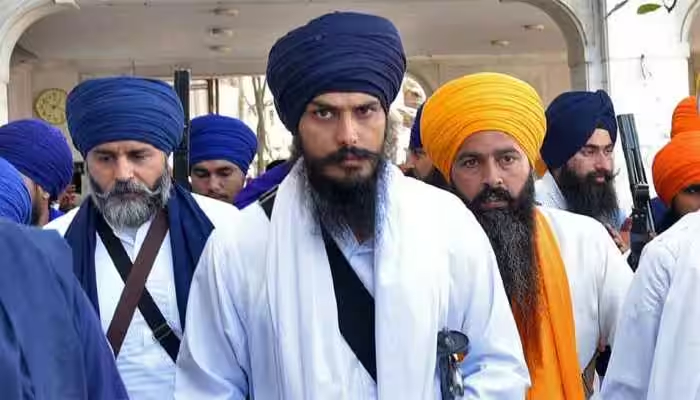
The recent attacks on Indian High Commission in London started after India cracked down on the fugitive Amritpal Singh who was a champion for Khalistan. While he remains on the run, his aides were arrested and Khalistanis in UK and USA attacked Indian High Commissions to register their support for the separatist leader.
Meanwhile, a UK trade department spokesman told The Times, “The foreign secretary has condemned the recent acts of violence at the Indian high commission, and we are working with the Metropolitan Police to review security and make changes to ensure the safety of its staff.”
However, the Indian government has now dismissed The Times’ report and said that the Khalistani attacks on Indian High Commission are not going to stop the trade talks between India and the UK.
* This report has been updated based on the Indian government’s response to The Timesreport
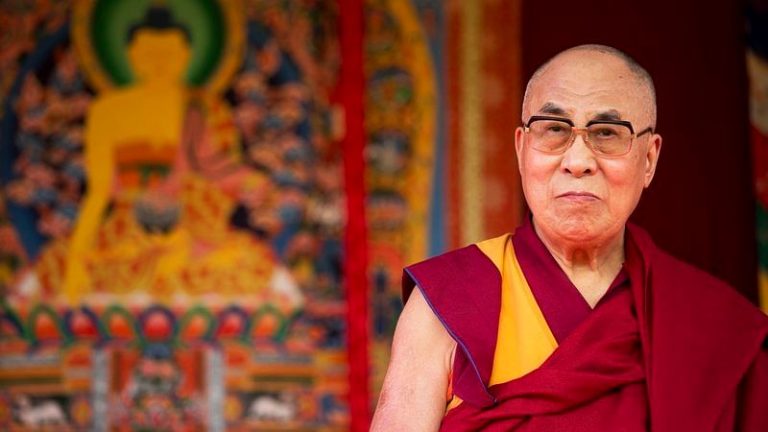
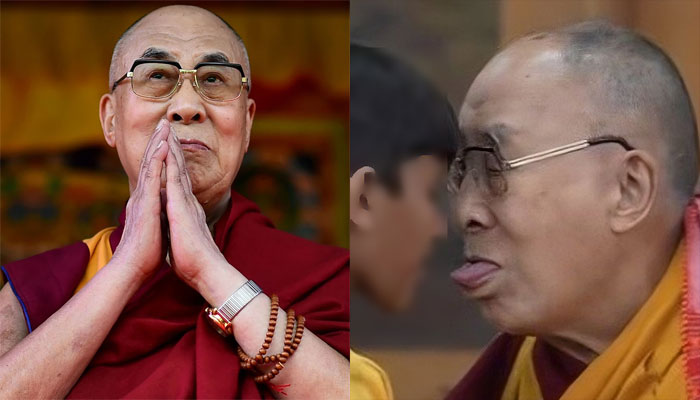
In a statement, the official handle of The Dalai Lama wrote, “A video clip has been circulating that shows a recent meeting when a boy asked His Holiness The Dalai Lama if he could give him a hug. His Holiness wishes to apologise to the boy and his family as well as his many friends across the world for the hurt his words may have caused.”
“His Holiness often teases people he meets in an innocent and playful way, even in public and before cameras. He regrets the incident,” the statement further read.
“Suck my tongue”: viral video caused outrage
It is notable here that a recent viral video showed the Dalai Lama kissing a little boy on the lips by drawing his head close. He is then seen sticking his tongue out and saying “suck my tongue”, while the people around him laugh.
So the Dalai Lama is kissing an Indian boy at a Buddhist event and even tries to touch his tongue.
A 30-year-old pregnant woman died during treatment after being allegedly shot at by her neighbour in the Samaypur Badli area for objecting to loud music, police said on Sunday.
Two accused have also been arrested, said Delhi police. The deceased has been identified as Ranju.
According to the police, the woman was eight months pregnant and also suffered a miscarriage after the incident.
Detailing the incident, the police said, “A PCR call was received at around 00:15 AM on April 3 at Samaypur Badli Police Station infroming that a woman has been allegedly shot by her neighbour when she asked him to stop the DJ.”
The accused has been identified as Harish, added the police.
Police said, “Upon receiving the information over call, the police reached the spot and found that the injured lady was already shifted to Max Hospital, Shalimar Bagh Delhi. The crime scene was inspected by the crime team.
“Doctors at the hospital mentioned that the victim had suffered a gunshot injury in her neck,” added the police.
Later, the police also recorded the statement of an eyewitness, who is the sister-in-law of the injured.
In her statement, the eye-witness alleged, “Harish lives across the street in the same colony at Samaypur Badli area. On April 2, there was a programme of “kuwa pujan” of Harish’s son in which DJ was playing.”
“Hearing loud noise my sister-in-law Ranju and I came to the balcony and asked Harish to stop the DJ. After this, a bullet hit her which was fired by Harish who took the gun from Amit,” added the eye-witness.
“On the basis of the statement of the victim’s sister-in-law, a case U/s 307/34 Indian Penal Code and 27 Arms Act was registered against the accused involved. Both Harish and Amit have been apprehended,” said the police.
The police later also informed that they have added section 302IPC in FIR.
Further investigation into the matter is underway.
(This news report is published from a syndicated feed. Except for the headline, the content has not been written or edited by OpIndia staff)
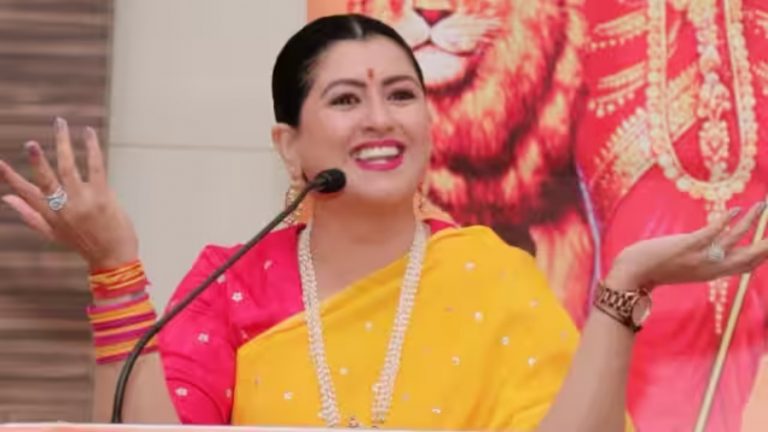
On Sunday, April 9, Hindu activist Kajal Hindustani was reportedly arrested by Gujarat’s Una police. This comes after a case was registered against her for an alleged ‘hate speech’. According to local media reports, Kajal Hindustani has been sent to Junagadh jail following an appearance in front of the Magistrate at his residence.
On March 30, the Ram Navami procession (Shobhayatra) was taken out in Una of district Gir Somnath, Gujarat. Following the procession, an event was organized where Hindu activist Kajal Hindustani was one of the speakers. The Dharmasabha took place at Raavanvadi near Trikon Bagh.
During her speech, Kajal raised several issues, including Love Jihad and Land Jihad. The local Muslims deemed her speech controversial and took the entire city hostage. There were reports of stone pelting at various places, and the city was on the edge for two days. In addition to this, the infamous Sar Tan Se Juda slogans were also raised against her.
OpIndia has accessed the FIR filed by the Gujarat police. The complainant in the case was ASI Kantibhai Ram and the FIR was filed on the 2nd of April 2023. According to the FIR copy accessed by OpIndia, the police mentioned the reason for the delay in the filing of an FIR against Kajal Hindustani. ASI Kantibhai Ramjibhai says in the FIR that the Muslim community leaders approached the police over the speech and a written complaint was filed on 31st March 2023. Seven people had signed it, under the name “Samast Muslim Samaaj” (the entire Muslim community). Police then said that only one person can file the FIR, and then community leaders went back. Police during night patrol also reached out to Muslim leaders and were informed that the leaders will let the police know by noon of April 1st. Thereafter, the Muslim side did not reach out to the police again.
It is pertinent to note that on the 1st of April, even as the Muslim leaders failed to reach out to the police again despite multiple follow-ups, violence erupted with the Muslim mob going on a rampage against Hindus.
The FIR says:
“During this religious meeting, her speech was delivered from the stage through a loudspeaker in which she called upon the Hindu people to convert the sisters of the Muslim community in her speech, thereby breaking the dignity of the women of the Muslim community. Also, she gave a speech that violated the religious sentiments of women and men of the Muslim society and gave her speech with the purpose of spreading intentional agitation between the Hindu and Muslim societies, in which he spoke arrogant, arbitrary and fabricated things about religion and condemned Muslim society with lowest choice of words.
Regarding the maulvi of the Muslim religion, using low-level words like Mullah, Thulla, she also criticized the Maulana by devising slanderous things. Thus, by encouraging the feelings of enmity, hatred and hatred between the Hindu and Muslim community, she incited the large community present in the meeting and also called upon the present community to act according to her speech, thereby destroying the unity, brotherhood and communal harmony of the city. Kajal Hindustani has insulted the religious beliefs of the Muslim people and the sentiments of the Muslim community through her speech and condemned the religion”.
Essentially, there are three points which the complaining, ASI Kantibhai Ram has mentioned in his complaint and the FIR is based on.
She asked Hindu men to convert Muslim women and according to the complainant, that is an insult to the Muslim woman’s dignity.
Such assertions also insult Muslim men and the entire religion of Islam.
She insulted the Maulvis by calling them Mullahs and Thullas.
She apparently “fabricated” things about Islam to condemn the Muslim community in “lowest choice of words”.
Interestingly, if one peruses the speech of Kajal Hindustani, she did not ask the Hindu men to convert Muslim women. She said that if Muslim women want to escape the evils that befall them as a result of the practices of the Islamic community, then they should marry Hindu men of their own volition. She, in no way, asked the Hindu men to go out and convert Muslim women.
The FIR also says that she “fabricated” things against Islam and the Muslim community. In her speech, Kajal Hindustani spoke about the menace of Love Jihad, Land Jihad and other forms of aggression and violence that is unleashed regularly against the Hindu community. All of the things mentioned by Kajal Hindustani have evidence to them and are not in any way fabricated or anecdotal in nature. In the FIR itself, the police have failed to point out which part of her speech was fabricated, so to speak. The FIR merely makes a general, sweeping statement on the basis of which Kajal Hindustani seems to have been arrested.
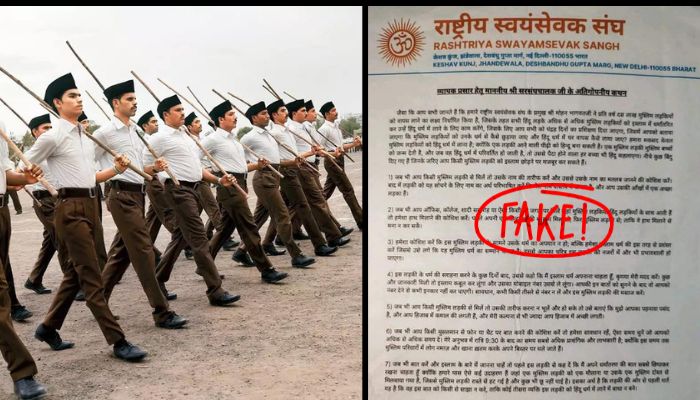
On Saturday (April 8), Islamists took to social media to claim that the Rashtriya Swayamsevak Sangh (RSS) is conspiring to ‘entrap’ Muslim women in India.
The basis of the conspiracy theory was a fake letter, bearing the letterhead of the RSS, asking Hindu men to trick Muslim women into their love trap. Islamist handles posted copies of the letter en masse on Twitter with the hashtag ‘Bhagwa_Love_Trap.’
The fake letter outlined ways/ Standard Operating Procedures (SOPs) to build trust, ‘forge’ romantic relationships and establish physical connections with the intent to ‘convert Muslim women into Hinduism.’
?FAKE NEWS ALAERT – A group of fake handles including verified, are circulating forged letter of RSS (un-dated/no undersigned) having “SOP” of “trapping MusIim girls”. This is a highly communally charged & coordinated effort Cc @Uppolice@DelhiPolice@MIB_India@KanchanGupta 1/ pic.twitter.com/3NE0IQainz
The letter, falsely attributed to the RSS, also vowed to provide a 15-day training programme to help teach Hindus to entrap Muslim women. Despite being well aware that such dubious theories can lead to a law and order situation, Islamists continued to share the fake letter on social media.
Popular OSINT handle ‘The Hawk Eye’ pointed out that several verified Twitter handles were also peddling anti-Hindu propaganda.
According to the OSINT handle ‘D-Intent Data’, AIMIM supporter Shahavaj Anjum Siddiquee was the first to post the screenshots of the fake letter.
It also found discrepancies in the logo of the RSS, printed on the letter. “Upon research, we found an original statement of RSS on a news portal website, upon closely observing we found that logo is different than original,” the Twitter handle said.
“Also we visited RSS official website and other social media platforms, no such statement is available. Mainly, fake letter doesn’t contain any official stamp or signatory from RSS,” D-Intent Data emphasised. The OSINT handle sought the immediate intervention of the law enforcement authorities into the matter.
On the contrary, Islamists have been luring vulnerable Hindu women to Islam as part of their nefarious ‘grooming jihad‘ and now falsely accusing the Hindu community and the RSS of doing the same thing. Dozens of cases have been documented where Islamists have been found to target Hindu women under false identities.
Controversy has erupted around Buddhist spiritual leader Dalai Lama after a video went viral on social media in which he asked a young boy to “suck his tongue” after he kissed the kid on the lips. The netizens were furious and demanded action against Dalai Lama.
Disclaimer: the video below could be triggering.
So the Dalai Lama is kissing an Indian boy at a Buddhist event and even tries to touch his tongue.
In the video, the child leaned to pay his respect, but the spiritual leader patted a kiss on his lips. A few seconds later, he stuck his tongue out and pointed to his mouth, saying, “Can you suck my tongue”.
Reacting to the video, many netizens have called Dalai Lama’s behaviour ‘creepy’ and ‘disgusting’. Twitter user Sangita said, “Utterly shocked to see this display by the #DalaiLama. In the past, too, he’s had to apologise for his sexist comments. But saying – Now suck my tongue to a small boy, is disgusting.”
Utterly shocked to see this display by the #DalaiLama. In the past too, he’s had to apologize for his sexist comments. But saying – Now suck my tongue to a small boy is disgusting. pic.twitter.com/z2qMGignHO
Another Twitter user ElyiusThor said, “This is a disgusting, vile and shameful display by a religious leader. Had this been the action of a Catholic priest, it would have been all over the mainstream media, but because it’s by an exiled Dalai Lama, they will just sweep it under the carpet away from public view.”
This is a disgusting, vile and shameful display by a religious leader. Had this been the action of a Catholic priest, it would have been all over the mainstream media, but because it’s by an exiled Dalai Lama, they will just sweep it under the carpet away from public view. pic.twitter.com/jy2UXrHkUu
Dalai Lama has sparked controversies in the past as well. A few years ago, he said that if his successor was to be a woman, she would have to be an “attractive” one. Later, he had to apologise for the comment.
However, his followers and supporters are justifying it by saying he was “joking around” and there is a tradition to stick out their tongue in Tibet as a mark of respect. According to Berkeley University, “Sticking out one’s tongue is a sign of respect or agreement and was often used as a greeting in traditional Tibetan culture. According to Tibetan folklore, a cruel ninth-century Tibetan king had a black tongue, so people stick out their tongues to show that they are not like him (and aren’t his reincarnation).”
Elon Musk has sparked a row with the BBC after labelling the broadcaster as a “government-funded media” organisation, however, Britain’s national broadcaster was quick to push back against the categorization, reported CNN.
The label now appears on outlets that receive some government funding, including BBC, PBS, NPR and Voice of America. However, it does not appear on other government-backed outlets, such as Canada’s CBC or Qatar’s Al Jazeera. The @BBC account – which has 2.2 million followers – is currently branded as government funded. The label has not been given to the BBC’s other accounts, including BBC News (World) and BBC Breaking News, reported CNN.
Twitter has not given a definition for what it considers “government-funded media” to constitute.
In a statement provided to CNN, the BBC said, “We are speaking to Twitter to resolve this issue as soon as possible. The BBC is and always has been, independent. We are funded by the British public through the licence fee.”
BBC is predominantly funded by UK households via a license fee, which is also required to watch non-BBC channels or live services. This is supplemented by income from commercial operations.
BBC’s branding comes after a row erupted between Musk and the American NPR network after Musk changed NPR’s label to “state-affiliated media” – which effectively suggested the US government could influence its editorial policy and compare it to outlets such as the Kremlin-funded Russia Today.
Following backlash from NPR – who said it would not tweet from the account while the label was in place – it was instead changed to “government-funded media,” reported CNN.
The label from Twitter even sparked a backlash from the White House, with Press Secretary Karine Jean-Pierre saying “there’s no doubt of the independence of NPR’s journalists.”
NPR receives some funding from public institutions but the vast majority comes from sources such as corporate sponsorships and NPR membership fees.
Twitter defines state-affiliated media outlets as outlets “where the state exercises control over editorial content through financial resources, direct or indirect political pressures, and/or control over production and distribution.”
Critics of the move have pointed out that Twitter CEO Elon Musk’s other companies, Tesla and SpaceX, have received billions in government funding, grants and subsidies throughout the years, but neither of them has a “government-funded” label on their Twitter accounts, reported The Hill.
(This news report is published from a syndicated feed. Except for the headline, the content has not been written or edited by OpIndia staff)