Home Blog Page 2355

Surat Court convicts Rahul Gandhi for defamation, sentences him to 2 years in jail, gets bail to appeal in higher court

0

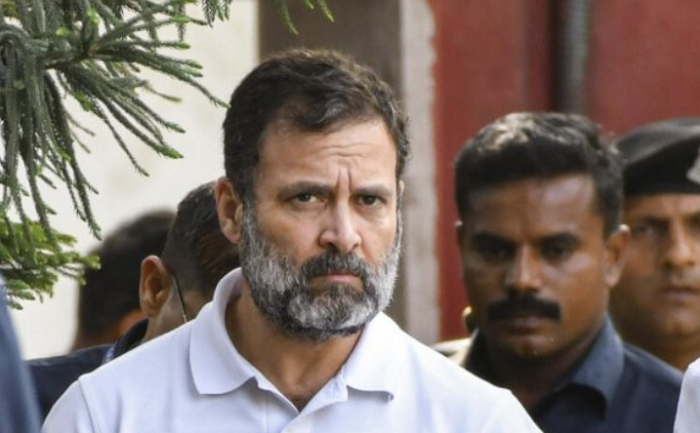
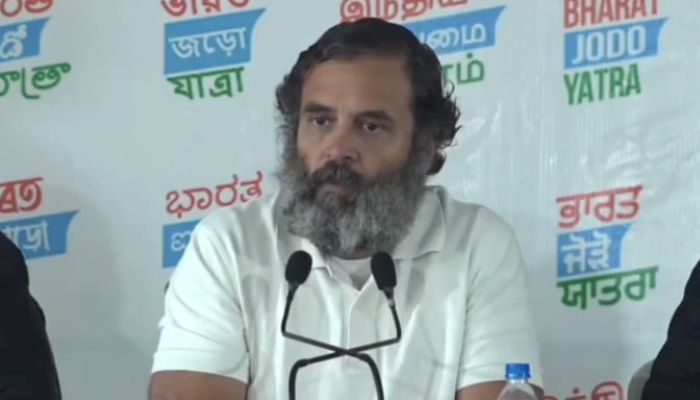
On Thursday, March 23, Congress leader Rahul Gandhi was sentenced to two years of imprisonment by the Surat District Court in a 2019 criminal defamation case. The case against Gandhi was filed by BJP MLA and former Gujarat minister Purnesh Modi for his “Modi surname” remarks. The Congress leader was then given bail by the judge later, and the ruling was postponed for 30 days so that the Congress leader could file an appeal with a higher court.

The defamation suit was filed by Purnesh Modi after Gandhi made derogatory remarks against ‘Modi surname’ at a Lok Sabha election rally in Karnataka’s Kolar on April 13, 2019. “Why all the thieves, be it Nirav Modi, Lalit Modi or Narendra Modi, have Modi in their names,” the leader had said during the rally.

Purnesh Modi had filed a complaint under Sections 499 and 500 of the Indian Penal Code and had stated that the Congress leader had defamed every person who carried the surname ‘Modi’.

Reportedly, the video of the remarks made by Gandhi was captured by the video surveillance team and video viewing team duly notified by the office of Deputy Commissioner and District Election Officer, Kollar District.

In February this year, the Gujarat High Court revoked the preliminary hold on the criminal defamation case. Rahul Gandhi was in the courtroom when the judge delivered the decision. He had appeared before the Court on the previous three dates as well. Rahul Gandhi on the other hand has maintained that he didn’t want to say anything bad when he made the disputed comment.

After finding him guilty of violating Sections 499 (Defamation) and 500 (Punishment for Defamation) of the IPC, the Court of Chief Judicial Magistrate HH Varma sentenced him to two years in prison. Rahul Gandhi’s request however has resulted in the suspension of his sentence and the granting of bail, which would allow him to file an appeal against his conviction within 30 days.

Over 1,000 artefacts in the Metropolitan Museum of Art linked to traffickers and looters: Report

According to a recent report by the International Consortium of Investigative Journalists, the Metropolitan Museum of Art in New York has more than 1,000 artefacts in its collection that are linked to people who were allegedly involved in crimes related to the antiquities trade.

In an investigation of the Met’s antiquities collection, the ICIJ and nonprofit organisation Finance Uncovered discovered that at least 1,109 items had previously been acquired by people who had been charged or found to have committed crimes, including looting and trafficking.

There are 309 of these artefacts on display in the museum. Nearly half of these artefacts originate from countries with rigorous export regulations that have been in place for decades.

On the basis of the museum records, ICIJ stated that many such relics were taken down after international regulations restricting the movement of antiquities across national borders were already in effect.

Several ancient artefacts in the Met’s collection lack records tracing them to their country of origin, according to ICIJ and Finance Uncovered. Among more than 250 Nepalese and Kashmiri artefacts listed in the museum’s inventory, just three can be traced back to their original regions.

The Metropolitan began purchasing artefacts from American-born antiquities dealer Robert E. Hecht in the 1950s and kept doing so even after Hecht was accused of smuggling by Italian prosecutors in 1959 and 1961.

As the statute of limitations ran out, the prosecution against Hecht was subsequently dropped, and Hecht passed away in 2012 after persistently denying any involvement in the illicit export of artwork.

Further, the Met is home to more than 800 items that originally belonged to Hecht’s business colleague Jonathan P. Rosen, who was indicted in Italy with Hecht in 1997. According to The Los Angeles Times, Rosen donated 10,000 ancient Iraqi tablets to Cornell University in 2013. The Cleveland Museum of Art agreed to return items in its collections from Rosen in 2008 after finding out that they had allegedly been stolen. Rosen’s attorney disputed that the tablets had been obtained unlawfully at the time.

85 more artwork in the Met’s collection are associated with Subhash Kapoor, a former Manhattan art dealer who was handed a 10-year prison term last year for crimes related to trafficking. Kapoor was accused of theft and illegally exporting statues from the Varadharaja Perumal temple, a Hindu temple outside the city of Kanchipuram in Tamil Nadu.  These items then made their way to his Manhattan gallery, Art of the Past.

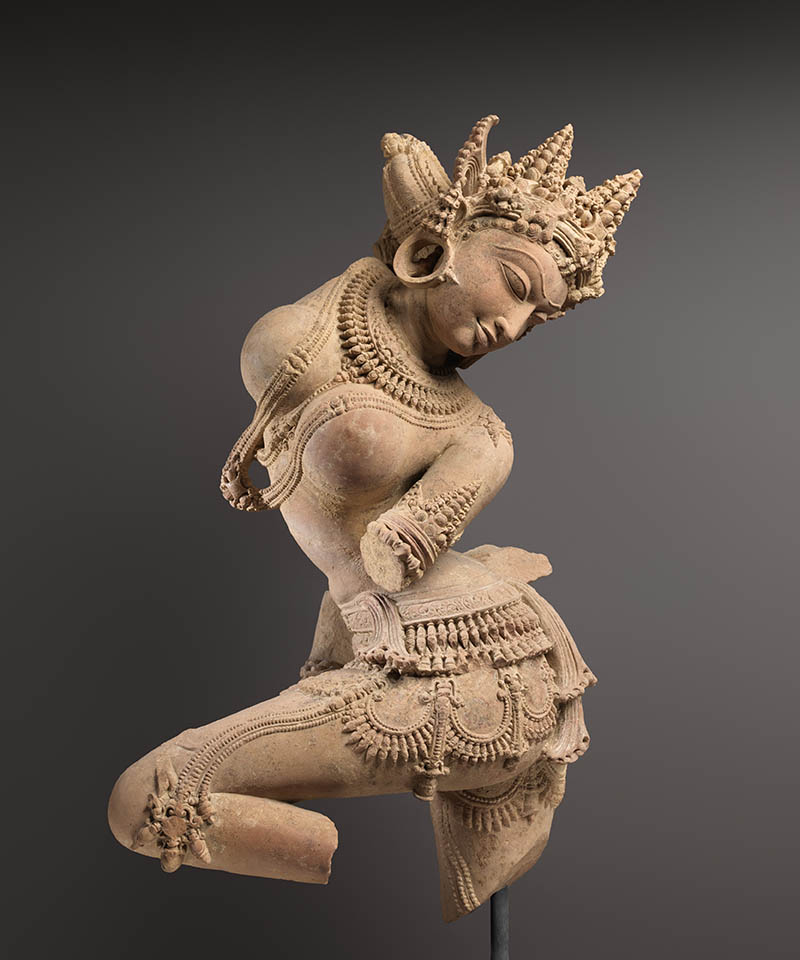
Celestial Dancer, one of the prominent Indian artefacts held by the Met, was purchased as part of a deal involving Art of the Past, Kapoor’s Manhattan gallery at the time. The gallery manager admitted to selling Asian artwork that was stolen in 2013, which was two years after Kapoor’s imprisonment. 

“Then in 2015, as Kapoor faced trial on smuggling charges in India, the Met received the piece as a donation from wealthy collectors who had purchased it from his gallery,” ICIJ report stated.

ICIJ linked an archived version of the Metropolitan Museum’s website wherein it was stated that the 12th ‘Celestial Dancer’ artefact ornamented a North Indian Hindu temple in Uttar Pradesh’. 

Celestial Dancer (Image via The Metropolitan Museum of Art, New York)

The executive director of the anti-trafficking group Antiquities Coalition, Tess Davis, told the ICIJ that “The Met sets the tone for museums around the world. What hope is there for the rest of the art market if the Met is allowing all of these things to fall through the cracks?”

An ICIJ and Finance Uncovered report stated that their analysis of 94 Kashmiri artefacts in the Met’s collection shows that none of them has detailed provenance outlining how they left Kashmir. Only four of them have records of ownership dating back to 1970, the year UNESCO approved a convention to preserve cultural property, making them the pinnacle of provenance. Eight artefacts were purchased from art dealers who were earlier faced indictment.

Vijay Kumar, the co-founder of India Pride Project (IPP) told ICIJ that “the Met’s collection of Kashmiri artefacts are essentially blood antiquities, acquired during years when much of the population was fleeing what has been described as an ethnic cleansing.” He also added that the museum was encouraging looting and smuggling from a known conflict zone by buying these artefacts.

Notably, Vijay Kumar’s India Pride Project had in December last year traced two of the stolen Hanuman and Narsimha idols to the Metropolitan Museum of Art in New York City.

These idols were reported, stolen from the Sri Varathraja Perumal temple in Melakasakudi, Nedungadu in the Karaikal district

Mumbai: BMC brings bulldozer to demolish illegal construction around Mazar at Mahim coast after MNS chief warns to build Ganesh temple there

0

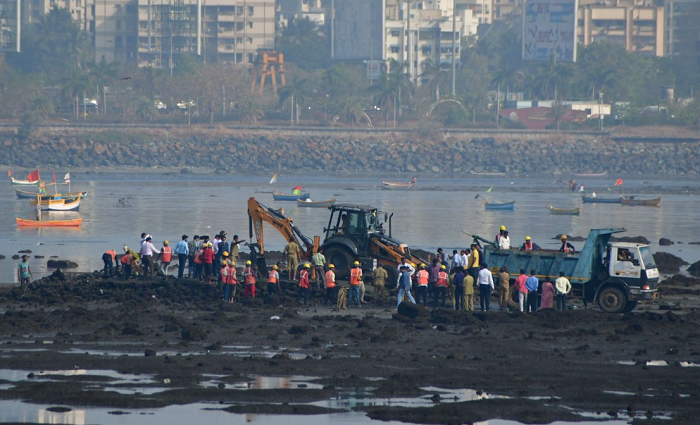
The Brihanmumbai Municipal Corporation (BMC) on Thursday began the demolition of the illegal construction around the Mazar that has illegally come up off the Mahim coast in Mumbai. Several of the BMC officers gathered at the spot this morning and surveyed the area. The coporation has also deployed bulldozer to pull down the illegal construction of around the Mazar in question.

According to the local reports, the authorities are taking action against the illegal construction around the Mazar and not the Mazar itself. It is claimed that the Mazar is old and the land on which it is built is 600 years old. Further as per the ABP Maza report, only illegal construction around the Mazar is being demolished and the officers have no intention to raze down the Mazar.

Along with the BMC officers, the authorities working at the Mahrashtra Maritime Board have also reached the spot to verify the incident. Maharashtra Minister Deepak Kesarkar also commented on the issue and said, “Now there is a government that walks on the path of Balasaheb Thackeray. Raj Thackeray raised the issue which was earlier raised by Balasaheb Thackeray. Proceedings have been initiated under the Coastal Regulation Zone (CRZ) and if any kind of construction has to be done in the sea, then permission should be taken under the CRZ.”

This is a day after Maharashtra Navnirman Sena (MNS) chief Raj Thackeray played a clip in his Gudi Padwa address and exposed that an ‘illegal dargah’ has come up off the Mahim coast in Mumbai. He demanded removal of the illegal dargah and said that if it is not demolished immediately, then his party would construct a huge Ganpati temple at the same place.

He also slammed the Municipal authorities for staying indifferent to illegal constructions. The video of his speech was shared widely on social media. He could be heard saying in the video that a ‘new Haji Ali’ was being prepared in the middle of the sea in broad daylight and yet the police and the municipality could not see it.

“I want to ask the Constitution-abiding Muslims of the country: Do you condone this? I don’t want to flex, but when needed I will have to do it,” Raj Thackeray said adding that the ‘illegal dargah’ was built near the dargah of Makhdum Baba in Mahim.

The Mahim Dargah Trust however took cognizance of the incident and said that the ‘illegal dargah’ as alleged by Thackeray is 600 years old. “This place is 600 years old. It is not built recently as claimed by Thackeray. Basically, Hazrat Makdoom Ali Shah used to sit at this place and take lessons from Hazrat Khwaja Khizr Ali Shah. This is a historical place,” said Suhail Khandwani, Trustee of Mahim Dargah.

The video Raj Thackeray was widely circulated through social media, and some people asserted that Mahim’s mysterious dargah was even visible on Google Maps. However, local reports reveal that the BMC is pulling down only the illegal construction around the Mazar and has no intention to raze down the illegal Mazar.

With anti-Hindu violence and anti-India forces being allowed to fester in UK, time has come for India to consider leaving the Commonwealth

In the wake of multiple attacks on Hindus and those of Indian origin in England and the recent attack on the Indian Mission in London, voices are growing louder in India urging the country to consider leaving the Commonwealth. The British government’s failure to take strong action against the violence and anti-India forces operating on its soil has led to calls for India to reassess its relationship with the Commonwealth.

The attacks on Hindus in England have been a cause for concern for some time now, with reports of increased violence and harassment targeting members of the community. However, the recent attack on the Indian Mission in London has raised the stakes considerably, with many in India viewing it as a direct attack on the country’s sovereignty itself.

Indians argue that it has been a mute spectator to the violence directed against India and Hindus, failing to take decisive action to contain anti-India forces operating on its soil. The Indian government has expressed its concern to the British authorities on numerous occasions, but the response has been deemed inadequate by many.

The growing discontent with the British government’s handling of the situation has led to a call for a reassessment of the country’s relationship with the Commonwealth. While India has historically maintained ties with the UK and other Commonwealth nations, there is a sense that this relationship may no longer be tenable given the current situation.

England, a safe haven for anti-India forces

In recent years, England has increasingly become a safe haven for anti-India forces and Khalistani separatists, raising concerns about the country’s role in supporting such groups. The UK has turned a blind eye to such activities, and it allows its soil to be used by Khalistani separatists and even Islamists as a base for their operations.

Last year, Islamist mobs in Leicester targeted Hindus and Hindu businesses. Vandalisation, arson and street riots happened and England Police hardly took any action. In fact, the Mayor of Leicester was seen meeting the mastermind of the anti-Hindu violence.

Hindus were attacked again and Hindu religious symbols were desecrated by Islamists when the Hindus came out to protest peacefully against the violence by the Islamists.

How did India become a member of the Commonwealth?

The date was 16 May 1949, Jawaharlal Nehru moved a motion in the Constituent Assembly, he asked the members of the Constituent Assembly to ratify the Indian government’s decision to continue its association with the Commonwealth of Nations. Many members of the assembly were beyond astonished and saw this as a question mark on India’s newly found sovereignty. Nehru introduced the Objectives Resolution declaring with great zeal that India would be a sovereign republic. This was effectively a rejection of dominion status in favour of complete independence and also implied the severing of India’s ties with the Commonwealth. So, most expected that India would discontinue its Commonwealth membership. And now Nehru was introducing a motion to cage India in the Commonwealth of Nations which many saw as nothing but colonial baggage.

Yet behind the scenes, Nehru’s perspective towards the Commonwealth was slowly changing. He began to believe that Commonwealth membership would bring political and economic benefits to India. Specifically, it would ensure close ties with England – still India’s largest trading partner.

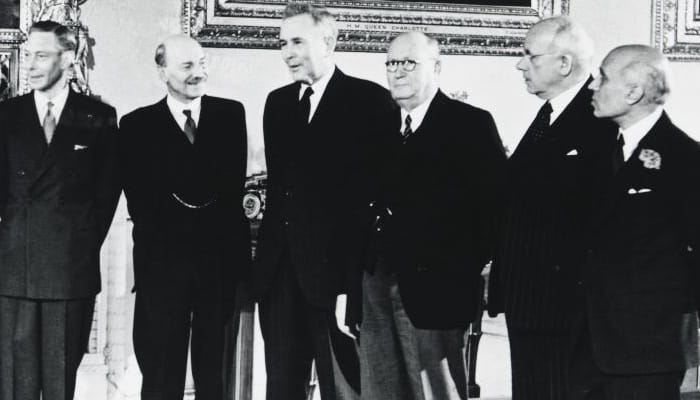
In 1949, Nehru attended the Commonwealth Prime Minister’s Conference, where he told other Prime Ministers that India would like to remain a member of the Commonwealth even though it had declared itself as a republic. The Conference after much deliberation accepted this arrangement.

Nehru now wanted the Assembly to ratify India’s decision to remain in the Commonwealth. In his speech, while moving the motion for ratification, Nehru expected criticism. many members voiced their opinions against the decision of a sovereign republic which had fought so hard to become independent to accept British overlordship upon India. Nehru tried convincing these members by saying that India’s membership of the Commonwealth will have no bearing on the country’s independence and tried persuading the members as to why this was beneficial for India. Many Assembly members, however, were not convinced. The motion was still passed and India became a member of the British Commonwealth of Nations.

Arguments in favour of leaving the Commonwealth

The argument for India leaving the Commonwealth in the current context is based on clear evidence that the British government has failed to take decisive action against the violence and harassment directed against India and Hindus in England, and has allowed anti-India forces to flourish on its soil. This has led some in India to question the value of the country’s continued membership in the Commonwealth.

It can be argued that India’s membership of the Commonwealth represents a colonial baggage that must be shunned, as it is a remnant of the country’s subjugation to British colonial rule. India should therefore distance itself from the Commonwealth and forge its own path without any colonial baggage.

Proponents of leaving the Commonwealth argue that by remaining part of the organization, India is implicitly endorsing the actions of the British government and sending a message that it is willing to tolerate violence against its diaspora and Mission.

There are also concerns that the British government’s failure to act against anti-India forces operating on its soil could have wider implications for India’s security and stability. By allowing these forces to operate with impunity, the UK is seen as indirectly supporting efforts to destabilize India and undermine its sovereignty.

Furthermore, some argue that India’s continued membership in the Commonwealth has little practical value and that leaving the organization would have minimal economic or political repercussions. The Commonwealth is primarily a symbolic organization, and India’s departure would not necessarily impact its relationships with other Commonwealth nations or its standing in the international community

Overall, the argument for India leaving the Commonwealth is based on a combination of symbolic, practical, and security concerns. While there are potential drawbacks to such a move, some in India believe that the benefits of taking a firm stand against violence and anti-India forces outweigh the potential costs.

Despite certain concerns about the diplomatic and political ramifications, the calls for India to consider leaving the Commonwealth are growing louder by the day. It remains to be seen whether the Indian government will take decisive action in response to the perceived failure of the British authorities to address the violence directed against India and Hindus.


Madhya Pradesh: four Tablighi Jamaat members from Gujarat and MP drown in Narmada, three bodies recovered

0

On March 22, four members of Tablighi Jamaat drowned in the Narmada river in Madhya Pradesh. As per reports, three of those who died were from Gujarat, and one was from Madhya Pradesh. The incident took place in the Anjad Police Station area’s Mohipuri, district Badwani at around 10 AM. The police were informed about the incident. The rescue operation was initiated to recover the bodies.

Reportedly, eleven members came to Mirzapur to participate in a Tablighi Jamaat event. Ten among them were from Gujarat, and one was from Mirzapur’s Manawar Police Station area. They went to Mohipura to take a bath in Narmada.

One of them slipped and fell into deep waters. Three members of the group jumped to rescue him, but none could come out. The other seven are safe. Those who died were between the ages of 30 to 40. The dead bodies of Asra, Junaid and Mohammad Kifayatullah were recovered.

Tablighi Jamaat gained prominence during Covid

Tablighi Jamaat is a global Islamic missionary movement that urges Muslims to return to the way Islam was practised during the time of Prophet Muhammad. The focus is on rituals, dress, and personal behaviour, and it is considered one of the most influential Islamic religious movements of the 20th century. It has become the world’s second-largest Muslim congregation after the Islamic holy pilgrimage of Hajj. It came in the news in India when the gathering of its members in Delhi became one of the earliest hotspots of Coronavirus in the country. The Tablighi Jamaat event was not only attended by Indian Islamic clerics but also by foreign nationals.

NIA conducts raids in Nagpur, Gujarat and Gwalior in Ghazwa-e-Hind case

0

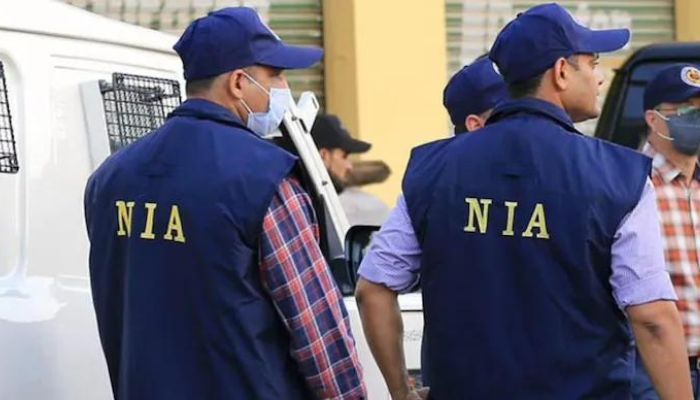
The National Investigation Agency (NIA) on Thursday conducted searches at three locations in Nagpur in its ongoing probe into Gazwa-e-Hind case that is linked to the radicalization of impressionable youth over various social media platforms for carrying out violent terrorist acts. 

The places searched by the NIA officials included the residential premises of the suspects involved in anti-national activities and the radicalization of impressionable youth through social media. The NIA initially registered the Gazwa-e-Hind case on July 22 last year at Phulwarisharif Police Station in Bihar. 

In the Phulwari Sharif investigations, the NIA said, “It is revealed that accused Margub Ahmad Danish, a self-radicalized individual, was in contact with a number of foreign entities on the WhatsApp group “Ghazwa-e-Hind” created by him”. 

“In this group, terrorist acts and activities in Kashmir were being glorified with the view to radicalize impressionable youth. He had also created another WhatsApp group in the name of Ghazwa-e-Hind BD and was propagating conquest of India through violence,” the NIA had said earlier. 

On January 6 this year, the NIA filed a charge-sheet against an accused in NIA Special Court in Bihar in the case. 
Earlier on March 15 The National Investigation Agency (NIA) also raided 15 locations in Jammu and Kashmir as well as in Punjab in a case related to terror conspiracy hatched by Pakistan-based proscribed organisations to radicalize youth of the Union Territory and target members of minority communities, security personnel and religious events and activities. 

(This news report is published from a syndicated feed. Except for the headline, the content has not been written or edited by OpIndia staff)

Rahul Gandhi convicted in defamation case by Surat District Court, know what the case is about

Surat District Court today held Congress leader and Wayanad MP Rahul Gandhi guilty in criminal defamation case filed against him over his remarks insulting the Modi surname. A case was filed against Rahul Gandhi by Gujarat BJP leader Purnesh Modi for making derogatory comments against the Modi community in Gujarat.

During an election rally in the run-up to the 2019 elections, Rahul Gandhi had mocked an entire community by saying, “Nirav Modi, Lalit Modi, Narendra Modi… how come they all have Modi as a common surname? How come all thieves have Modi as a common surname?”

Bharatiya Janata Party MLA from Surat Purnesh Modi had filed a complaint against the Congress leader for defaming the entire Modi community. Former Congress President Rahul Gandhi was booked under Sections 499 and 500 of the Indian Penal Code, which deal with criminal defamation.

In June 2021 Rahul Gandhi had appeared before a magistrate’s court in Surat to record his statement.

During the hearing, the Gandhi-scion Rahul Gandhi denied making any defamatory remarks on people with “Modi” surname. According to Desh Gujarat, a lawyer has said that Rahul Gandhi responded to every question with, “I don’t know, I don’t know, I don’t know”.

As the magistrate asked Rahul Gandhi if he had accused Prime Minister Narendra Modi of giving Rs 30 crore to an industrialist, the Congress leader claimed that he was a national leader who raises issues of corruption and unemployment in his addresses in the interest of the nation. The Gandhi-scion claimed that it was his right to raise such issues in the rallies.

When the court asked if he had said all people with Modi surname were thieves, Gandhi claimed he never said such words. Prior to that, Rahul Gandhi had appeared before the court in October 2019 and had also pleaded not guilty for his comment.

Chhattisgarh: Clashes in Bastar over death of a tribal woman who had converted to Christianity, locals protest, demand cremation instead of burial

0

Tensions erupted in the village Bhejripadar in tehsil Tokapal of Bastar district, Chhattisgarh this week after the funeral of a Christian woman was protested by local villagers who demanded she should be cremated instead of being buried. The deceased woman, Mate Bekko was a tribal woman earlier who had lately converted her religion to Christianity. The villagers gathered during her funeral and opposed her burial process.

According to the reports, Mate Bekko breathed her last on March 19. The local villagers gathered for her funeral and stated that she shall be cremated and not buried. On refusal by her family members who also had converted their religion to Christianity, the local villagers happened to escalate the protest by pelting stones. The clashes broke when the body of the Christian woman was being taken by her family to the burial ground. After this, the family members of the deceased woman left the body on the street while on their way to the burial ground and returned home.

However, the police was informed by one of the villagers who reached the spot to pacify the matter. The Police officers were also injured as the protesting villagers continued to pelt stones amid the protest. Later, the police controlled the situation and called the family members of the deceased woman to take the body away for burial.

The body was then taken to the private land owned by the woman’s husband, Mosu Bekko for burial on the very same day. The protesters, however, happened to reach there and continued to protest against the burial. They also raised religious slogans and demanded that the body be cremated instead of being buried.

The following day, that is on March 20, the Police took severe cognizance of the protests and deployed heavy police force at the residence of the Bekkos. The woman was then buried in the backyard of her husband’s private land in the presence of the police. Reports mention that the protesters tried to create chaos on the day of the burial, but the police managed to keep them away from the burial ground.

The Inspector General of Police (IG), Bastar issued a statement in the case and said, “A situation of tension arose between the two groups, but the police force and administrative officials present on the occasion managed to counsel the people and end the disagreement. The district collector and senior superintendent of police (SSP) of Bastar have visited the spot. The additional district magistrate and additional SP are present on the spot with the police force. Stringent legal action will be initiated against those trying to disturb the law and order situation.”

Police are visiting communities to warn residents not to believe rumours about religious conversions as tension continues to simmer. The community now has more police presence.

The tribal community existing in Chhattisgarh face the frequent threat of religious conversion to Christianity. Earlier on February 28, the state police had detained around 6 people, including women, for conducting a gathering to forcefully convert people to Christianity. The accused persons had organized a religious gathering under the pretext of curing the diseases of the attendees in the Kurdeg village of Jashpur, Chhattisgarh.

Also, in November last year, a group of non-Christians were seen being encouraged to convert to Christianity by some pastors. The video of the incident had gone viral over the internet in which a group of four evangelists were seen attempting to persuade Hindu villagers to embrace Christianity by offering various kinds of allurements such as money, medicines and the promise to ‘revive’ their deceased family members. The incident was reported from the Rajpur block division in the Balrampur district in Chhattisgarh.

Recently, in January 2023, it was reported that the converted Christians had launched an attack on the tribal sect in Ekda region of Narayanpur. The Christian converts had attacked the tribals with iron rods and wooden sticks. The converts later alleged that the tribals had vandalized the Narayanpur Bangalapara church. Tribals on the other hand stated that the converts had been forcing poor tribals to convert their religion to Christianity.

Khalistani separatist fugitive Amritpal Singh blackmailed women with obscene videos, chatted with married women: Reports

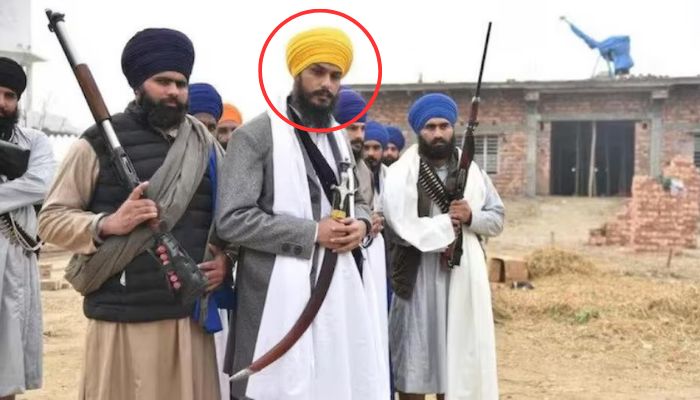
Pro-Khalistan leader Amritpal Singh, who has been on the run from law enforcement authorities, chatted with multiple women and used to blackmail them with obscene videos.

As per a report by India Today TV, the Whatsapp chats and voice notes of the ‘Waris Punjab De’ chief revealed that he was actively seeking casual/ non-serious relationships with single and married women.

Amritpal Singh lamented how women supposedly become too attached to him and justified the idea of extra-marital relationships as long as the marriage in question is unharmed.

He aspired to have commitment free-relationships and regularly had video chats with women on Snapchat. India Today TV was able to access 12 voice recordings of the pro-Khalistan leader.

Amritpal Singh had a long list of women followers, whom he messaged routinely, on Instagram. “So our extra marital is confirmed?… Our honeymoon will be in Dubai,” he wrote in an Instagram chat. He was also seen sending kisses on video calls and talking about ‘small marriages.’

On March 18 this year, the Punjab Police launched a massive crackdown on Amritpal Singh with support from central agencies. Around 150 of his associates and followers have been arrested so far, including actor Daljeet Kalsi who is believed to be his advisor and finance.

Singh managed to escape after a car chase on March 18 and is on the run. Punjab Police revealed Singh has connections to SFJ and ISI. His treasurer received funds from Pakistan. Four of his associates were shifted to Dibrugarh, Assam.

The state govt suspended mobile internet and imposed Section 144 in the state. Internet in some locations is still suspended. NIA reached Punjab to take over the case on March 21 this year.

Cow urine jibe, threats of assault: Pro-Khalistani Dal Khalsa UK member abuses Gujarati Hindu man in London

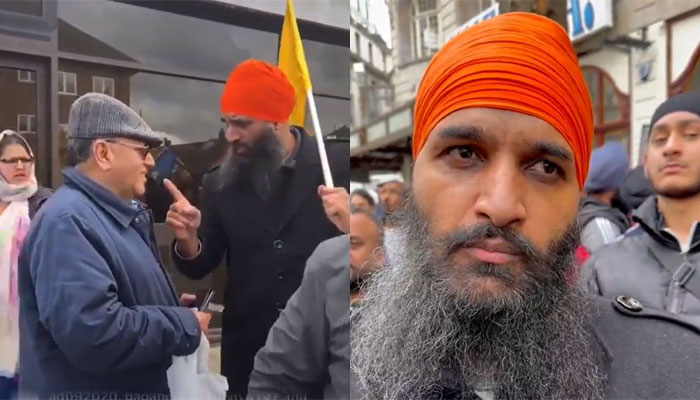
On March 22 (local time), a video surfaced on social media where a pro-Khalistani Sikh was seen abusing a Gujarati Hindu in London during a protest against the Government of India over the crackdown on Amritpal Singh. The viral video shows a Gujarati Hindu man trying to have a conversation with the protesting pro-Khalistanis when one of them got agitated and started shouting at him.

The agitated pro-Khalistani, who was donning a Khalistani flag and raising ‘Khalistan Zindabad’ slogans, said, “You Gujaratis need to listen carefully. Run away, or I will slap you. If you want to have Langar, have it quietly and leave. Your cow urine-drinking community has created a lot of drama. Tell every Gujarati. If the war starts, this time, we will fight in Gujarat. We will fight inside your house. Now go and drink cow urine.” He later challenged the Gujarati Hindu man to do whatever he could do.”

The abusive man in the video has been identified as Dal Khalsa UK member Gurcharan Singh. He is an active member of the pro-Khalistan organisation and is often seen protesting against India. Stop Hindu Hate Advocacy Network (SHHAN) wrote a detailed thread on Gurcharan.

Earlier, Gurcharan was seen with designated Khalistani terrorists. SHHAN posted a photograph of Gurcharan with Khalistan Tiger Force (KTF) terrorist Paramjit Singh Pamma who is on the National Investigation Agency’s (NIA) most-wanted list.

In another video, Gurcharan was seen protesting against India.

In 2018, he was caught on camera by Republic saying China, Pakistan, and Maoists were funding Khalistani groups’ activities. Furthermore, he admitted to having funded Aam Aadmi Party in the 2017 Assembly Elections. “Look at Punjab. AAP won the elections. They won 95 seats. We were on the ground. Campaigning for the party. We funded the party to see how a campaign makes a difference. And it does make a difference. People voted for AAP. They did not win because of the EVM,” Gurcharan Singh said on camera. He claimed the aim behind funding and support to AAP was not the party’s victory but to disrupt the political forces in Punjab. Gurcharan had sided with China and said the idea of having a Dal Khalsa office in China was to assure them of support if they took over Sikkim.

In another video, he said there is no place for Indian Tiranga anywhere, and it should be replaced with the Khalistan flag. He further propagated that the Indian national flag is based on “fascism” and is “genocidal”.

Gurcharan Singh once admitted in an interview that Indian Government refused his visa.

Terrorists use cow urine jibe

The anti-Hindu cow urine jibe is one of the most popular ways among terrorists, and Leftist liberals, to abuse Hindus and Indians.

Not to forget, in 2019, a Pakistan-backed Jaish-e-Muhammad terrorist in a suicide attack killed as many as 40 CRPF soldiers in Pulwama, Kashmir. Following the attack, a video was released in which the terrorist could be heard saying he wanted to punish and kill the ‘cow urine drinkers’ in the name of Allah. The terrorist, identified as Adil Ahmed Dar alias Waqas was seen admitting that he had joined the Jaish-e-Mohammad a year ago. In the video, he referred to Indians as “Gae ka Peshab Peene Wale” (People who drink cow urine).

TMC leader Mahua Moitra is among the politicians who often use the cow urine jibe to attack BJP supporters. DMK leader Dr DNV Senthilkumar S also mocked the BJP-ruled States in the North by making the ‘gau mutra’ jibe on the floor of the parliament.

Crackdown on Amritpal Singh

On March 18, Punjab Police and central agencies launched a massive crackdown on pro-Khalistan separatist leader Amritpal Singh. So far, over 110 associates of Singh have been arrested. However, he is still on the run. Internet was suspended on March 18 for one day, but the suspension was extended for two more days. Police have alleged that Singh was in contact with ISI and received funds from Pakistan. Furthermore, it has been reported that Singh was creating a private army in the guise of an anti-drug drive and de-addiction centre. Following the crackdown, official Indian Government establishments in London and San Francisco were attacked by Khalistanis.