Home Blog Page 2376

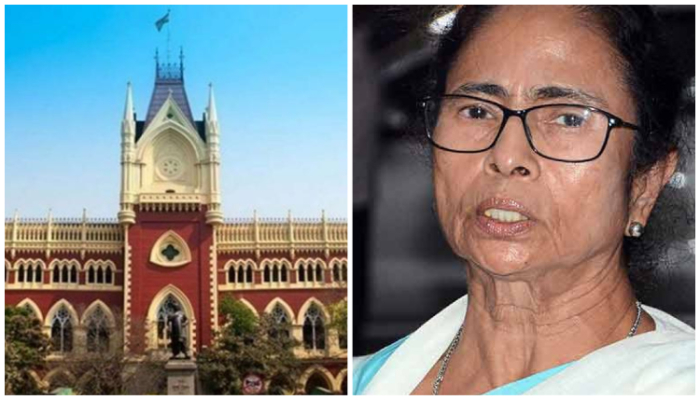
Big blow to Mamata Banerjee: Calcutta HC says state govt has no right to appoint Vice-Chancellors of universities, quashes 29 appointments

Coming as a big blow to Mamata Banerjee-led government in West Bengal, the Calcutta HC on March 14, 2023, ruled that the State has no right to appoint, re-appoint, or extend the tenures of Vice Chancellors. Having said this, the High Court also cancelled the appointment of Vice Chancellors in 29 state-run universities made by the TMC government.

Hearing a public interest litigation challenging amendments made to the law by the state govt in 2012 to 2014, a division bench comprising of Chief Judge of the Calcutta High Court Prakash Shrivastava and Justice Rajarshi Bharadwaj further said that considering the importance of the post of vice-chancellor in the university, it is essential that the appointment of Vice-Chancellors should be strictly in accordance with the provisions of law.

The court said that the amendments made to the West Bengal Universities Act in 2012 and 2014 by the Mamata Banerjee government cannot be sustained, and directed the govt to make suitable amendments to make them compatible with the law. The Court found that the amendments violated the established norms of VC appointments as determined in UGC regulations. The court also said that a state govt can’t make laws that violate UGC rules.

“This Court has taken note of the importance of the post of vice-chancellor in the university, therefore, it is essential that the appointment of the vice-chancellor should be strictly in accordance with the law. It would not be in the interest of the students and administration of the universities to continue the concerned respondents as vice chancellor of the university once it is found that they have been appointed without following the due procedure and contrary to the provisions of the Act and that too by an authority not competent to appoint,” the bench said in its 46-page judgment.

“Therefore, their appointment is contrary to the provisions of the UGC Regulations, 2018. It is also undisputed that the search committee formed for the appointment of all the VCs did not have one member nominated by the Chairman, UGC, therefore, their appointments are contrary to the UGC Regulations, 2018,” the bench opined.

Significantly, the procedure prescribed under the University Grants Commission (UGC) Rules, 2018 is that a VC be appointed by a ‘search committee’ comprised of a representative from the UGC, the State University, and the Governor.

The State government amended this system or procedure by changing the West Bengal Universities Law Act, which replaced the mandated representation of the UGC with that of the State government.

After the West Bengal government led by Mamata Banerjee arbitrarily made these amendments, it continued to appoint and re-appoint vice-chancellors at state-run universities. In some cases, the tenure of certain VCs was also increased.

Notably, in the case of State of West Bengal vs Anindya Sundar Das, the Supreme Court ruled last year that where the chancellor (Governor) has the authority to select or reappoint the vice-chancellor, the State government cannot usurp that authority by altering the statute.

Citing this order, the Calcutta High Court on Tuesday stated that since the power to appoint, reappoint and extension of tenure has been delegated to the Governor, the state government cannot take over the powers based on the amendments.

The court also noted that in some of the Vice Chancellors in the 29 universities had been appointed by the Governor, however, their tenures were extended by the state government by surpassing the Governor.

“Hence, the orders extending their tenure as vice chancellor passed by the State government cannot be sustained. When the State has no power to appoint or reappoint the vice-chancellor, the State cannot appoint a vice-chancellor by giving the additional charge, therefore orders passed by the State government giving additional charge of vice-chancellor are also bad in law,” read the order passed by the High Court.

Jagdeep Dhankar alleges West Bengal govt appointed several VCs to universities without Raj Bhavan’s consent

It is pertinent to note here that last year, the then Governor of West Bengal, Jagdeep Dhankar, had raised concerns over the manner in which the VCs were being appointed in the State. He had alleged that the state government had appointed several Vice-Chancellors to universities without Raj Bhavan’s consent. Dhankhar had written on Twitter that vice-chancellors of 25 universities in the state were appointed illegally without his approval.

On this issue, Dhankhar had openly called out CM Mamata Banerjee and Education Minister Bratya Basu seeking a response from them over their directive. He also called out the re-appointment of Sonali Chakravarti as the VC a ‘classic case of patronage’.

Following the allegation, Mamata Banerjee’s cabinet announced that the Chief Minister would take over as chancellor of all state-run universities. This meant that Banerjee would replace Jagdeep Dhankhar, who was the then Governor of the state and had the responsibility of serving as the chancellor of state-run universities in Bengal.

Defence Ministry approves proposals worth Rs 70,500 crore for buying howitzers, BrahMos missiles, UH Maritime helicopters

0

In a big push towards ‘Make-in-India’ in the defence sector, Defence Ministry on Thursday approved proposals worth Rs 70,500 crore for buying different weapon systems for the Indian defence forces.

A meeting of the Defence Acquisition Council (DAC) headed by Defence Minister Rajnath Singh was held on Thursday. The DAC has given approval for proposals to buy 60 Made-in-India Utility Helicopters (Maritime) and BrahMos supersonic cruise missiles for Indian Navy, 307 Advanced Towed Artillery Gun Systems (ATAGS) howitzers for Indian Army and 9 ALH Dhruv choppers for Indian Coast Guard, officials said.

A Defence Ministry release said that to keep pace with the emerging technologies and counter the adversaries in the Western and Northern front, the necessity of the new weapons and its integration with the delivery platforms was felt by the Government.

To achieve the same objectives, the DAC accorded the approval to Indian Air Force’s proposal for Long Range Stand-Off Weapon (LRSOW) which will be indigenously designed, developed and integrated on SU-30 MKI aircraft.

The deal of buying 60 Utility Helicopter (Maritime) choppers amounts to Rs 32,000 crore. The helicopters are designed to meet the warship requirements of the force.

DAC accorded Acceptance of Necessity (AoN) for capital acquisition amounting to over Rs 70,500 crore under Buy Indian-IDDM (Indigenously Designed, Developed and Manufactured).

According to the Ministry of Defence, out of the total proposals, Indian Navy proposals constitute more than Rs 56,000 crore, which largely includes indigenous BrahMos missiles, Shakti Electronic Warfare (EW) systems and Utility Helicopters (Maritime).

While this additional procurement of BrahMos missile system will enhance the maritime strike capabilities and Anti-Surface Warfare Operation, the addition of Utility Helicopters will multiply the operational readiness of the Indian Navy in domains such as search and rescue operations, casualty evacuation and Humanitarian Assistance Disaster Relief (HADR).

Similarly, Shakti EW systems will equip and modernise the frontline Naval ships to counter any Naval Operations by the adversaries.

The accordance of AoN for Medium Speed Marine Diesel Engine under the Make-I category is a significant step as, for the first time, India is venturing into the development and manufacturing of such engines indigenously to achieve self-reliance and leverage the capabilities of the industries towards the goal of ‘Aatmanirbhar Bharat’, said the Defence Ministry release.

For Artillery modernisation, in addition to the ongoing Dhanush Gun System and K-9 Vajra-T Gun System, AoN for procurement of 155mm/52 Caliber Advanced Towed Artillery Gun System (ATAGS) along with High Mobility Vehicles (HMVs) and Gun Towing Vehicles (GTVs) for the Indian Army was accorded by the DAC.

It also accorded AoN for procurement of Advance Light Helicopters (ALH) MK-III from Hindustan Aeronautics Limited (HAL) for the Indian Coast Guard. The Helicopter will be able to carry a suite of surveillance sensors which will enhance the surveillance capabilities. It will also give full night capability and Instrument Flight Rules (IFR) capability for the operations of the Indian Coast Guard.

Including today’s proposals, the total AoN granted for capital acquisition in the financial year 2022-23 is over Rs 2.71 lakh crore, out of which 99 per cent of the procurement will be sourced from Indian industries. Such a quantum of indigenous procurement will galvanise the Indian industries towards achieving the goal of ‘Aatmanirbhar Bharat’, the release said.

The Navy has more than 150 warships in its fleet and wants them to be equipped with at least one helicopter each and is looking at procuring them through the Make in India route first.

The Indian Navy warships are deployed all along the Indian Ocean Region and warships are provided with helicopters for reconnaissance and surveillance along with other operations required by the fleet to be carried out.

Further, ATAGS howitzers will be procured for deployment along the borders with China and Pakistan.

The ALH choppers are operated by all three defence forces including the Army, Navy and Air Force along with the Indian Coast Guard. The ALH Dhruv has become one of the important parts of helicopter missions undertaken by all three forces.

In January this year, DAC cleared three capital acquisition proposals amounting to Rs 4,276 crore for buying indigenous Helina anti-tank missiles and air defence systems to be developed for taking down enemy aircraft.

In December last year, the DAC accorded the approval for Acceptance of Necessity (AoN) for 24 Capital Acquisition Proposals.

(This news report is published from a syndicated feed. Except for the headline, the content has not been written or edited by OpIndia staff)

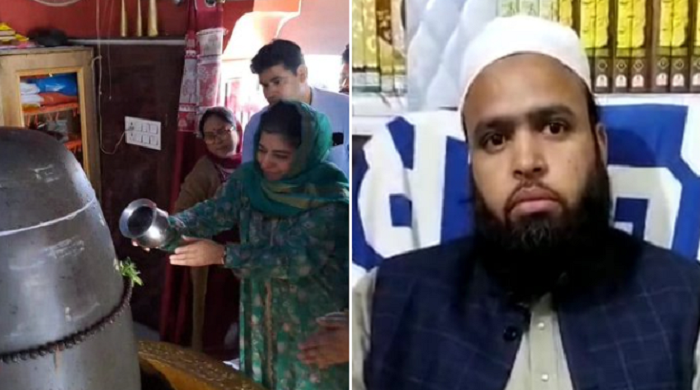
‘It is my personal matter’: says Mehbooba Mufti after Deoband Maulana Mufti Asad Qasmi slammed her for offering water to Shivling

0

On Thursday, Maulana Mufti Asad Qasmi of Madrasa Jamia Sheikhul Hind criticized former Jammu and Kashmir Chief Minister Mehbooba Mufti, who visited the Navagraha temple in Poonch district and offered water to a Shivling. He said that what Mehbooba Mufti has done is inappropriate and not permitted in Islam.

Qasmi, who is also a former student of Darul Uloom Deoband and national vice-president of Ittehad Ulema e Hind said, “Be it Mehbooba Mufti or any other common Muslim, everyone is aware of what our religion says, what our religion allows and what all is prohibited in our religion.”

“This is India, everyone here is free to do whatever he wants… However, what Mehbooba Mufti has done is inappropriate and not permitted in Islam. It is not that what Mehbooba Mufti has done will strip her of her religion, but what she has done is against the principles of Islam,” he added.

To this, Mufti responded and said that she very well knows her religion and was aware of what she was doing. She slammed the Islamic clerics who hit out at her and said, “I don’t want to comment on what Deoband maulana has said. I know my religion very well. It is my personal matter where I go,” said the PDP chief.

“We are a secular nation. We follow ‘Ganga Jamuni tehzeeb’. I respect all religions. I went to a temple built by our leader, Late Yashpal Sharma ji. It is a beautiful temple. Someone at the temple handed me a vessel full of water with love. I respected his affection and devotion and did Jal Abhishek of Shiv Lingam,” she added.

Reportedly, the BJP also slammed the PDP chief and said that her visit to the temple in the first place was a drama and gimmick. Several Twitter users also supported the statement issued by Deoband maulana and criticized Mufti for not following Islamic principles while others mocked her saying that finally the leader was preparing to perform ‘ghar wapsi’.

“Finally she has realized that her ancestors were Hindu. It will be appreciated if she returns to Sanatan whether for political reasons or anything else,” said one of the Twitter users.

“I am not against any religion but whatever she did is against Islam. Shame on you for doing all this,” said a Muslim social media user.

Meanwhile, the BJP said that Mufti visiting the temple was a drama. State spokesperson Ranveer Singh said that Mehbooba Mufti is not going to achieve anything by doing this gimmick. He recalled how in 2008, Mehbooba Mufti and her party opposed the allotment of land to the Amarnathji Shrine Board. “Mehbooba Mufti’s party did not allow the temporary transfer of land to the Shrine Board for construction of huts for the pilgrims,” he said.

Uttar Pradesh: Taslim, Arif and others kidnap and rape Dalit minor girl, assault her mother

On Tuesday, March 14, a case of rape of a minor girl from the Budaun district in Uttar Pradesh has come to light. According to the police, the incident reportedly happened on the night of Tuesday (March 14) when the victim, who is from a Dalit family, had reportedly gone to defecate in an open field with her mother. The accused raped the minor girl and also brutally thrashed the mother who sought to prevent the accused from abducting her daughter.

The accused identified as Taslim, Arif, Abrar and Israr, have been booked for rape and assault. The police have also invoked relevant sections of the POCSO Act in the case. While the three accused- Taslim, Arif and Israr have been arrested and sent to jail, the police are on the lookout for Abrar.

According to authorities, when the mother-daughter duo went to defecate on Tuesday night, the four accused approached them. As they tried to take the minor girl forcibly, the victim’s mother attempted to intercede and stop them. The accused then brutally thrashed the mother, because of which she fainted and fell on the ground. The accused then dragged the victim to a deserted area where they took turns to rape her.

When the mother regained consciousness, she began crying for assistance. Her son arrived at the scene after hearing her screams. He then summoned his neighbours. The accused ran as the locals approached. The son picked up his mother and sister and took them home. The villagers, meanwhile, began searching for the accused and eventually found them hiding. They grabbed them and beat them up severely. While Abrar managed to escape, the other three accused were handed over to the police.

On Wednesday, the victim’s brother filed a complaint against the four accused, based on which the police filed an FIR for threat, assault and rape.

Notably, a video of the victim’s brother confirming the incident has surfaced on social media. In the video shared by Twitter user Ashwini Santra 1998, the victim’s brother is heard saying that the accused were family members of a local villager named Asarfi. He confirmed that his sister is in critical condition.

Jairam Ramesh tutors Rahul Gandhi in the middle of a press conference to avoid him turning into a joke, fails to stop the inevitable

On 16th March 2023, Congress MP Rahul Gandhi addressed a press conference to share information about his meeting with the Lok Sabha speaker Om Birla in which Rahul Gandhi claimed to have requested the speaker to allow him to speak in the parliament to answer the allegations levelled against him by some MPs from the Bharatiya Janata Party.

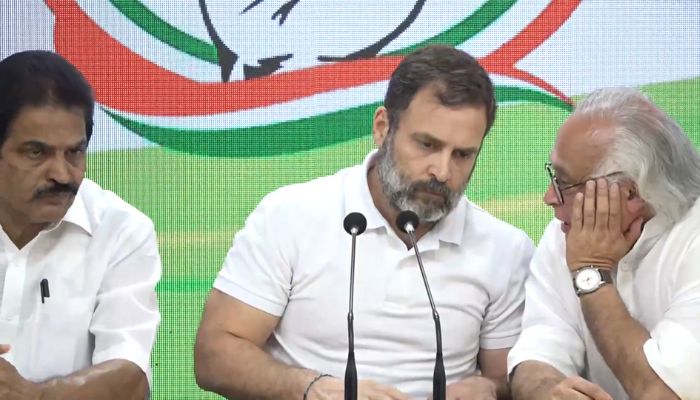
During this press conference, Rahul Gandhi was tutored by senior Congress leader Jairam Ramesh who attempted to correct one of the sentences of the Congress scion in order to avoid him turning into a joke. However, the suggestion by Jairam Ramesh was audible through the microphone, and the video of the incident went viral making it more embarrassing than Jairam Ramesh might have thought it would be.

In his press conference, Rahul Gandhi said that he visited the Lok Sabha speaker to request that he should be allowed to speak in the parliament to answer the allegations raised by some of the BJP MPs against him about his remarks in his speech in London where he raised questions about the Indian democracy. Rahul Gandhi said that this started after his speech in parliament in which he pointed toward the alleged bond between Prime Minister Narendra Modi and industrialist Gautam Adani.

While concluding his press statement, at around 6:37 in the live streaming tweeted by the Congress party’s official Twitter handle, Rahul Gandhi said, “I would like to go into the details with you, but unfortunately, I am a member of parliament and I am hopeful that I will be allowed to speak in the parliament. So I would like to first place my statement on the floor of the house and then after that, I would be happy to have a discussion with you that you want.”

As soon as Rahul Gandhi uttered the words, ‘unfortunately, I am a member of parliament’, Jairam Ramesh noticed it, and immediately after Rahul Gandhi completed his sentence, Jairam Ramesh leaned towards the Wayanad MP and said, “Unfortunately, I am a member of parliament. They can make a joke. So, saying, ‘unfortunately, for you,’ will do.”

After this, Rahul Gandhi ‘corrected’ his sentence and said, “I want to make it clear. Unfortunately, for you, I am a member of parliament. And, as the allegation has been made in the parliament, by four ministers, it is my democratic right to have the opportunity. So if Indian democracy would be functioning, I would be able to say my piece in parliament. Actually what you are seeing is a test of Indian democracy.”

As soon as the video of this incident went viral, Twitter users made even bigger jokes about Rahul Gandhi than Jairam Ramesh might have thought there would be. Gaurav Sharma tweeted, “Still what he said later makes sense, unfortunately for us, he is a member of Parliament.”

Mohit wrote, “Somehow and fortunately, he admitted that even for a moment that it’s unfortunate of him to be an MP.”

Adarsh Shaw posted, “Even at this age Rahul Gandhi needs spoon-feeding. I won’t say plzz grow up Rahul because he can’t.”

A Twitter user @petivaadak wrote, “Fortunately, for us, a full-time comedian.”

One Raghavendra Upadhya wrote, “It is our unfortunate/misfortune that Rahul is an MP !!!!!”

Jethaanand

Jethaanand remarked, “Unfortunately for congress, he will make sure that BJP gets 400+ seats.”

9 convicted in Delhi anti-Hindu riots: The arduous process, the lacking ecosystem and how we owe a debt of gratitude to a few good men

In July 2020, OpIndia published an elaborate report that traced how violence was carefully incited and executed since December 2019, leading up to the Delhi anti-Hindu riots. Since 2019 January, Assam had seen sporadic violence against Citizenship Amendment Bill. This violence was carefully extrapolated by Congress, AAP, Islamists and assorted leftists to spark violence in India.

What was lost in the shrill cacophony of the intolerant minority, however, was that the context of the Assam protests was completely different. The people of Assam were in essence, not protesting against the exclusion of Muslims from CAB, they were, in essence, not even protesting against giving Citizenship to persecuted religious minorities from neighbouring Islamic nations like Pakistan, Afghanistan and Bangladesh. What they were protesting was the settlement of any refugee in the state of Assam which even included Hindus – to preserve Clause 6 of the Assam Accord.

The coverage of OpIndia traced the misinformation being spread and the violence being fomented right from the 1st of December 2019, when a Congress politician stood up in the Parliament and labelled Amit Shah and Narendra Modi as illegal immigrants. Jairam Ramesh had added at the time that Congress will form an alliance with like-minded parties and entities to oppose CAB and NRC (there was, and still is not, any draft of a guideline issued for nationwide NRC).

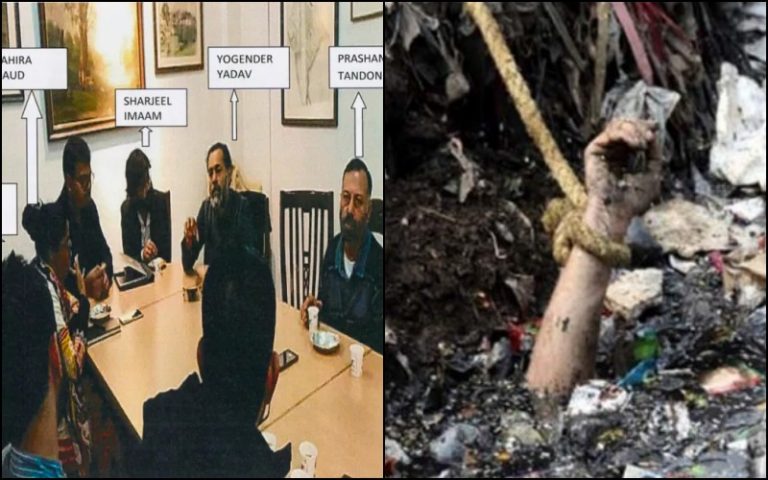
Thereafter, from Assaduddin Owaisi calling it the Nuremberg laws to Sonia Gandhi delivering a speech saying the fight against CAA is an ‘aar ya paar ki ladai’, asking people to come out on the streets, politicians played with fire. Simultaneously, emboldened by Congress’ rhetoric, Islamists started organising themselves. The chargesheet filed in the larger conspiracy case traces Islamists (Umar Khalid, Sharjeel Imam and others) and protestors for hire like Yogendra Yadav, conspiring to foment violence ever since the 4th of December 2019.

Throughout December, January and even February, before the anti-Hindu riots, OpIndia documented widespread violence against Hindus from various parts of the country. Along with the violence, several speeches were delivered that exhorted Muslims to take to the streets and inflamed passions with misinformation, half-truths and whole lies.

Finally, on the 23rd of February, the Delhi anti-Hindu riots broke out, with several people losing their lives. We reported tales of horror – of Ankit Sharma being brutally stabbed multiple times, of Dilbar Negi’s limbs being chopped off and the rest of him being burnt alive, of women from Chand Bagh saying their daughters were stripped and sent home amidst sexual taunts from Muslim rioters and Muslim owned schools being used as terror launch pads.

The narrative that was peddled, however, to everyone’s utter shock, was that the violence and hate that was being unleashed against Hindus since the beginning of December, culminating into planned violence in February 2020, was an ‘anti-Muslim pogrom’. There was hardly any proof for it except the surface-level, facetious argument about body count in the February violence.

The charge sheet, the on-record speeches, the evidence of planning of the violence, the footage of the violence – everything was simply discarded by the global ecosystem – Muslims were the victims, Hindus were the aggressors, despite mounting evidence to the contrary.

By the time the cases were to be tried in the court of law, the chips were already stacked against the prosecutors, who were met with the arduous task of not only arguing the chargesheets, tediously put together, but also the constant onslaught by the defence lawyers, the judiciary and the global ecosystem – an ecosystem that had created such a mountain of lies that it was a battle just to chip away at it with the truth.

Despite the evidence collected and a meticulously put-together conspiracy chargesheet, the first conviction in the case was that of a Hindu – Dinesh Yadav. It was a flimsy conviction most likely to be overturned in High Court on appeal. Almost immediately, the narrative that was being built for months, of the Delhi Riots being an anti-Muslim pogrom was rekindled with renewed vigour.

No legal website or media house bothered to analyse just how fallacious the conviction was. There was absolutely no evidence to tie him to any violence, the witnesses in the case (the supposed victims) changed their story and turned hostile, there was nothing incrementing that was found on his person or his residence, yet, he was sent to jail for 5 years simply because he was Hindu. An analysis of that case can be read here.

With the judiciary throwing caution (and sometimes the law) to the wind, the prosecutors had their task cut out for them. In riot cases, often, the police lose interest since the cases drag on for years. In the case of the Delhi Riots, the special cell did a remarkable job in putting together a 15,000-page chargesheet, with hundreds of pages of supplementary chargesheets, documenting the conspiracy to create violence. While the police did their job, arguing that a chargesheet in court is an entirely different matter.

In several cases, when the lawyers attempt to reach out to eyewitnesses, they flat-out refuse to testify. Imagine being a poor Hindu vendor whose shop was burnt to ashes by a violent Muslim mob. 2 years on, if a lawyer tells you that you need to testify in open court against the Muslims of your locality, who still live there, would you? Knowing that the Muslim mob can come back and ruin the little you have rebuilt? Would you chase justice, that may or may not be delivered, or safeguard your life, limb and livelihood?

With witnesses shying away from testifying, they also battle a crippling resource crunch. As someone who has spent 3 years working on reporting Delhi anti-Hindu riots, I can safely testify that even going through the chargesheets, the organisations that are active now, the lies being spread, the legal arguments that have to be strung together and making sense of the millions of threads in the case is no mean task. The lawyers working on this case essentially work on a pay-per-day basis. They are on the payroll of the government (since they are public prosecutors) and hardly get additional resources to deal with such complex cases.

While those defending accused persons like Sharjeel Imam, Umar Khalid etc have the strength of the ecosystem backing them, the public prosecutors are mostly armed with conviction and a sense of duty. For example, in 2020 itself, Jamiat-Ulama-i-Hind started securing bail for those Muslims accused in the Delhi anti-Hindu riots and started providing extensive legal help to the accused. They also filed a writ petition in court. From CPIM submitting a fake fact-finding report blaming Hindus to former Judges like Madan Mohan Lokur muddying the water with his ‘Citizens Report’, the ecosystem that works to defeat the State’s case with lies and more lies is endless.

As the riot cases go on for years, change of guard at the respective police stations also hardly helps. Even as a journalist covering the Delhi Riots cases, it becomes almost impossible to orient someone else to the several nuances of the ongoing proceedings in the court. One can only imagine how difficult it must be for newly posted police officers to get oriented with the case enough to help the cases move forward and for the prosecutors to collect the necessary information with the help of those who have no knowledge of the cases. With thousands of cases to investigate, the arduous task of continuously working on an elaborate riots case becomes even more daunting.

The recent conviction of 9 rioters comes as a bright spot in the otherwise bleak progress of the Delhi Riots cases. Bleak not because those meant to work on these cases are not doing their job, but because they are up against a conglomerate with indomitable will.

On Monday, March 13, Delhi’s Karkardooma court convicted nine persons involved in the 2020 anti-Hindu Delhi riots. The court noted that the main objective of the convicts who joined the unruly mob guided by ‘communal feelings’ was to cause ‘maximum damage’ to the properties belonging to the people of the Hindu community.

The accused identified as Mohd Shahnawaz, Mohd Shoaib, Shahrukh, Rashid, Azad, Ashraf Ali, Parvez, Mohd Faisal, Rashid alias Monu and Mohd Tahir have been charged Sections 147 (rioting), 148 (rioting, armed with a deadly weapon), 436 (Mischief by fire), 452 (House-trespass with preparation to assault), 454 (Lurking house-trespass), 392 (robbery), 427 (mischief) read with Section 149 (unlawful assembly) of IPC. 

Justice Pulastya Pramachala said that the involvement of the accused in the riots is proven beyond doubt. ASJ Pramachala pronounced the accused guilty and stated: “I find that charges levelled against all the accused persons, in this case, are proven beyond doubt. Hence,  those charged are convicted for offences covered under Sections 147, 148, 380, 427, 436, and 149 of the IPC in addition to Section 188 of the IPC.” 

Moreover, ASJ Pramachala said, “On the basis of the assessment of the evidence in this case and further reasoning, I am convinced with the version of prosecution against the accused persons. It is well established, that all the named accused individuals, in this case, joined an unruly mob that was motivated by communal feelings and had as its objective to inflict the maximum damage to the properties of the people belonging to the Hindu community.”

The observation by the court is not particularly surprising. Tahir Hussain, one of the main conspirators of the violence, had in his disclosure statement stated categorically that the aim was to “teach Kafirs a lesson”.

The court had observed, “On his (Hussain’s) provocation/instigation, the Muslims turned violent and became volatile on February 24 and 25 and started burning shops and pelting stones and petrol bombs on Hindu community and also targeted their houses situated in that locality. Thereupon, the uncontrolled mob turned into rioters and in process of rioting caught hold of Ankit Sharma and dragged him to Chand Bagh Pulia and caused his death by inflicting multiple injuries using sharp and blunt objects/weapons in a brutal manner and a view to conceal the evidence, all of them in furtherance of their common intention, threw his dead body in the drain.”

It would bode well to remember that Tahir Hussain had, during the violence, painted himself as the victim of the communal violence instead of the perpetrator.

To this date, the shameless ecosystem has not deleted their tweets defending Tahir Hussain. Here are just two examples:

Be that as it may, while the conviction of Dinesh Yadav was taken as the deliverance of justice, even though the judgement was terribly flawed, the current judgement convicting Muslim rioters has been slyly and tacitly questioned even by legal portals which are supposed to delve into nuances far more than average media. LiveLaw for example was quick to point out that the 9 convicted were acquitted only a few weeks ago by the same court in a separate FIR. That those convicted were acquitted earlier in a separate FIR should actually be concerning because the evidence is clearly not ambiguous. Legal platforms, however, slyly cast aspersions on this conviction and never raised their voice against the genuinely terrible judgement convicting Dinesh Yadav.

One of the arguments used in court quite often in the case of the Delhi Riots is that the police delayed the filing of FIR and therefore, the case is malicious. This argument has come up several times in the court of law and finds special mention in the Citizen’s Report by Justice Lokur as well. The law says that if the police can provide an adequate reason for the delay in filing the FIR, then it cannot be used as a reason to dismiss the authenticity of the case. Now, let us look at that argument from a purely non-legal, logical perspective. There were hundreds of FIRs filed, thousands of pages of chargesheets and supplementary chargesheets prepared and uncountable evidence collected.

When a case is this vast, it is entirely possible that there would be some delay in some cases. However, without a legal and logical explanation, to a lay reader, the police and the prosecutors would seem lazy, irresponsible and almost complicit in letting the perpetrators walk free. It is perhaps the perception that the narrative would create which is being used as a weapon by those who want to ensure the rioters and Jihadis walk free with no consequence whatsoever. With the prosecutors, lawyers and police officials unable to comment on the record, the leftist and Jihadi ecosystem almost have a free run in tarnishing the narrative in their favour.

Had these Muslim rioters not been convicted, those following the Delhi Riots cases would also question the prosecutors as to why they failed at their job. They would be questioned about why they could not prove their case, why the evidence was not adequate and whether they are a part of the conspiracy to ensure Muslim perpetrators walk free.

I reached out to people who are directly involved in the Delhi Riots cases to understand how they deal with not just the pressure of a global ecosystem trying to deny the truth, but also the questions that come their way when the ecosystem scores a victory against them.

“It is never easy to try riot cases in the court of law. Prosecutors are often terribly short of resources, and while they work tirelessly, most others tasked with seeking justice move on with their lives and get busy with the thousands of cases that are pending. The police lose interest after a point and the witnesses simply refuse to testify because they don’t want to relive the trauma they faced during the violence. What we are left with often is fighting a battle with very few arrows in our quiver”, a lawyer said.

“The truth is that the government of India, the police and even the Judiciary does get affected by public discourse. There is no point denying it. Those who fight to free perpetrators have the world at their disposal to turn the discourse in their favour. We hardly have anything or anyone. Our greatest weapon is public memory and perhaps, it is our greatest weakness too because Hindus often forget their own plight”, he continued.

The lawyer is not wrong. Public perception and the pressure built, based on facts, do have a massive impact on how seriously the cases are taken up not just by investigating authorities and the government of India, but also by the judiciary. It has been three years since Delhi burnt. It has been three years since Ankit Sharma was pulled out of the drain and Dilbar Negi was burnt alive. It has been three years since Jihadis orchestrated a pogrom to “teach Kafirs a lesson”. While this time we remember the names of the victim, it remains to be seen if we will also remember to pursue the case to its logical conclusion.

If we as a collective let the memory of the Delhi anti-Hindu riots fade and if we as a collective get swayed by the daily outrage cycle, they will win. They will get away with murder. They will walk free – free to orchestrate another pogrom. This time, they could not wash away the memory of those we lost. The question is – will they get away with it simply because we have been conditioned to forget our own persecution?


Global Terrorism Index: Pakistan overtakes Afghanistan in number of terrorism deaths, Balochistan Liberation Army emerges as a fastest growing group

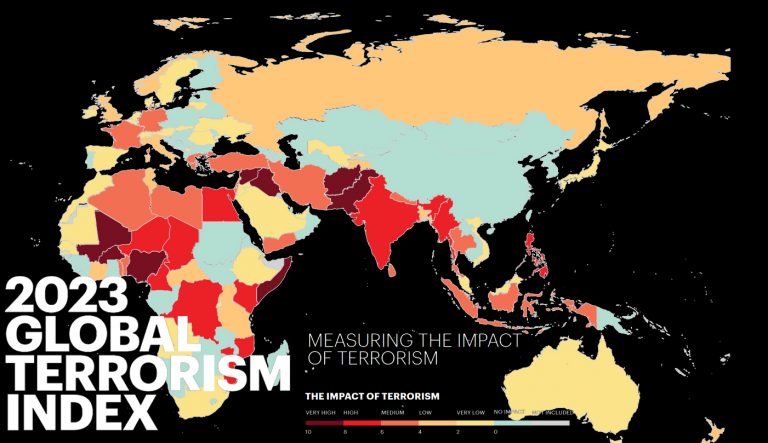
According to the annual Global Terrorism Index (GTI) study, released by the Institute for Economics and Peace in Australia, Pakistan has surpassed Afghanistan as the country with the highest number of deaths due to terrorist attacks in South Asia, a position held by Afghanistan since 2017.

However, Afghanistan continued to top the overall Global Terrorism Index, while Pakistan’s rank was 6th, up three positions from 2021. India’s rank remained unchanged at 13.

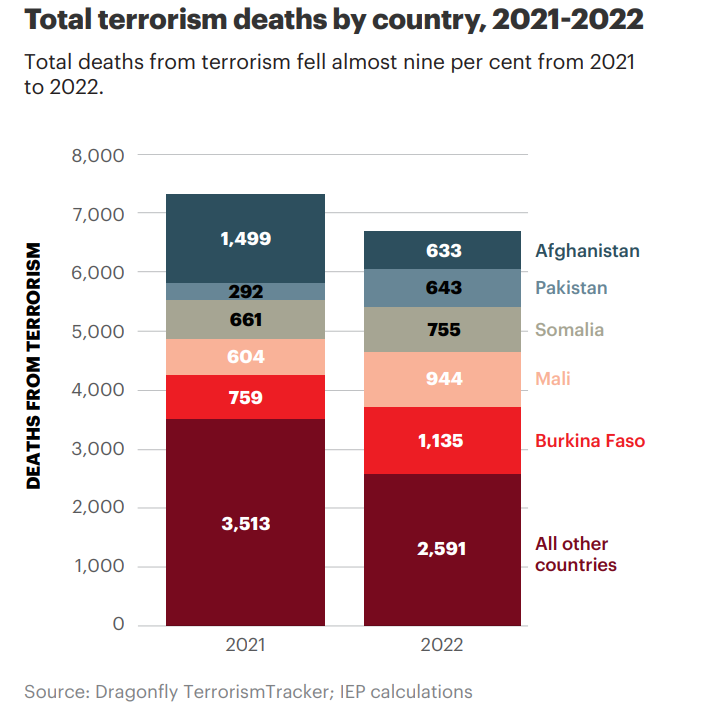
Balochistan Liberation Army (BLA) is the rebel group with the largest growth rate in Pakistan, where terror-related deaths have increased by 120%. The number of people killed as a result of terrorism in Pakistan increased dramatically to 643, which is the second-largest rise in the past year, as the number was 292 in the previous year. The number of deaths due to terrorism in Afghanistan in the same year was 633. As a result of the rapid increase in deaths, Pakistan has climbed four spots to rank sixth on the index.

The West African Country of Burkina Faso had the largest number of deaths globally, increasing from 759 to 1,135 in 2022. Pakistan was in 4th position in terms of the number of terrorism deaths, after Burkina Faso, Mali and Somalia.

Majority deaths are of military personnel

The military personnel accounted for at least 55% of all casualties due to terrorism in Pakistan. Similar to how the radical Taliban did in Afghanistan, the Tehreek-e-Taliban-e-Pakistan (TTP) has been carrying out terrorist operations against Pakistani security forces in an effort to establish an Islamic state that complies with Sharia law.

BLA was accountable for 36% of all terrorism-related mortality in Pakistan, a nine-fold rise from the year before. With this, the outfit has surpassed the TTP as the nation’s most deadly militia group. While strikes in 2022 killed 7.7 persons on average, up from 1.5 the year before, BLA’s lethality rate has reached its highest level. 95% of the 233 deaths associated with BLA in 2022 were military personnel.

BLA’s gunmen, in 2022, bombed and opened fire at two separate security stations for the Frontier Corps in Pakistan in February of last year, which is when the group is reported to have carried its most severe assault. The group claimed responsibility for the attacks and that they had killed 195 soldiers in total throughout both operations, despite the fact that no official death toll was confirmed.

BLA’s fight to liberate Balochistan

The largest province of Pakistan, Balochistan, which shares borders with both Iran and Afghanistan, is claimed by BLA, a Baloch ethnonationalist organization, to be the object of their struggle for total liberation and independence. BLA has engaged in an armed conflict with Pakistan in support of the Baloch people’s purported right to self-determination.

The role of Islamic State of Khorasan

Terrorism is still predominantly centred near Pakistan’s border with Afghanistan, where 63% of attacks and 74% of killings occur. The surge in deaths across the country is the result of the TTP and the Islamic State of Khorasan’s (ISKP) increased terrorist activity.

The Federally Administered Tribal Areas witnessed 13 ISKP strikes along the Afghanistan border, followed by Khyber-Pakhtunkhwa (KP) with eight, and Balochistan with two. The terror group’s bloodiest incursion in Pakistan, in 2022, took place in KP, where a suicide bomber targeted a Shia mosque during Friday prayers, killing at least 56 people.

Afghanistan most impacted by terrorism

Afghanistan remained the country most impacted by terrorism for the fourth consecutive year, despite attacks falling by 75% and deaths being reduced by 58% in 2022. The country recorded 633 deaths in 2022. The drop can largely be attributed to the Taliban taking control of the country after the fall of Kabul in August 2021.

The ISKP, which has been Afghanistan’s most active terrorist organisation since the Taliban took control, is accountable for 422 fatalities in 2022, approximately 67% of all terrorism-related deaths there.

The GTI is a composite measure made up of four indicators, including incidents, fatalities, injuries and hostages. The impact of terrorism within a particular nation is calculated using a five-year weighted average that takes into account the varying degrees of importance of the numbers in a data set. 

Pakistan experiences terrorist acts frequently. Five heavily armed ISKP terrorists stormed the Karachi Police Chief’s (KPO) five-story office building in Pakistan last month. The country is currently dealing with a massive economic crisis as well as precarious political situation.

Chhattisgarh Police uses tear gas, water cannons, chilli powder shells against BJP members protesting for implementation of affordable housing scheme

0

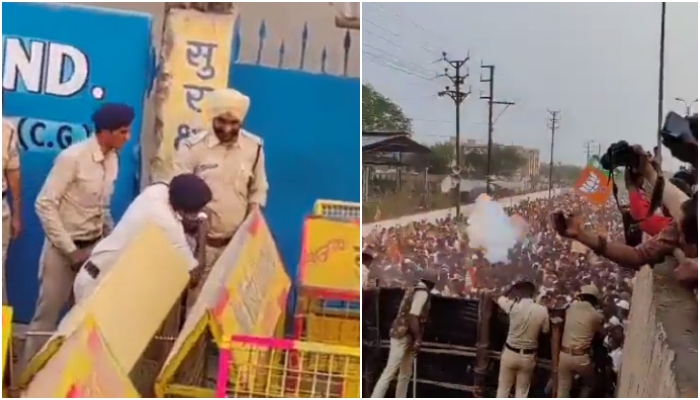
On Wednesday, the Chhattisgarh Police used water cannons, tear gas shells, and chilli powder shells against the BJP members after the party, led by state president Arun Sao, marched towards the Chhattisgarh Assembly. BJP led the peaceful protest against the state government’s perceived inability to give affordable housing to eligible recipients of the Center’s housing program.

According to the reports, the Chhattisgarh Police increased security and erected barricades to stop the demonstrators from moving towards the Legislative Assembly while the Chhattisgarh government’s budget session was taking place at Vidhan Sabha. As the BJP leaders attempted to scale the barriers and march towards the Vidhan Sabha, clashes broke out between the demonstrators and the Chhattisgarh Police.

Several BJP leaders, including state president Sao, were arrested by the Police. The Police also used water cannons, tear gas shells, and chilli powder shells against the BJP workers. The videos of this went viral over social media. Several BJP members were also reportedly injured amid the clashes.

The protest march was led by BJP Chhattisgarh President Arun Sao, former Jharkhand CM Raghubar Das, and BJP Chhattisgarh in-charge Om Mathur. The BJP maintained that 20 lakh families, including 16 lakh urban families had been kept away from the benefits of the central govt’s ambitious ‘housing-for-all’ scheme. Arun Sao also washed and scrubbed the feet of the beneficiaries who took part in the protest.

“Since 2018, people have been deprived of basic amenities. They (Congress) talk about conducting a survey to identify the beneficiaries. Why can’t they go by the data they collected in 2011 during their rule in the state?” former CM Raman Singh said.

Further taking a dig at Chief Minister Bhupesh Baghel, Raman Singh said, “His health minister T S Singh Deo also resigned because of the massive corruption. Bhupesh Baghel is loyal to the Gandhi family but not to the people of Chhattisgarh. If the BJP comes to power in 2023, our CM will enter the CMO only after the rehabilitation of the poor via PM Awas Yojna.”

BJP state president Arun Sao also tweeted against the Congress-ruled state government and indicated that the people of Chhattisgarh demanded change. “It has become clear from today’s assembly gherao that the people of Chhattisgarh want change and are ready to throw out this corrupt Congress government,” he wrote.

Meanwhile, Congress spokesperson Sushil Anand Shukla claimed that BJP’s protest was a complete failure. “It was a failure as they claimed to gather 1 lakh people and but the total footfall was not more than 10,000. I appreciate Chhattisgarh police for maintaining the law and order situation. The PM must release 60% funds for the scheme and the BJP should stop blaming us,” he said.

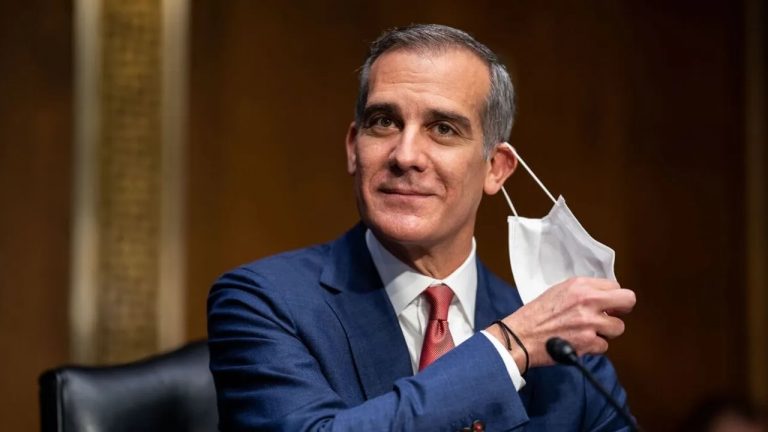
Eric Garcetti, USA wokes, the Biden administration and India: What if we give the US Ambassador the benefit of doubt but have a Plan B ready

When I first saw video snippets of Eric Garcetti, the US Ambassador designate for India, my reaction was also very similar to other nationalist Indians. I even tweeted that feeling. After all, this guy was talking more like a Governor General Lord Auckland sent by the Viscount of Melbourne to be tough on the coolies. Or sent by Spanish Infanta to take charge of the inquisition and keep the heathens in check.

I had tweeted that in that case, he might as well stay in the US and not come. Or just talk to George Soros, the patron saint of the group he wishes to “engage”. Why travel to India to talk to minions when the boss is right there?

But since then, I’ve had chance to think a bit more and I am now convinced, we are probably being too hasty in judging him and the US Biden administration.

So here is my take in brief: give him the benefit of doubt but keep a Plan B handy.

I’ll elaborate on both.

Benefit of doubt

First, let’s be realistic. He’s appointed by the Biden administration. Given the mental state of Biden or the lack of it, that effectively means the fringe woke left has selected him. What do you expect? A Trumper wearing a MAGA cap? He comes here with all the best that goes with woke left in the US including some links to sexual harassment scandals. 

Second, since he needed the votes of Dems who control the Senate and the fringe left that runs the Democratic party. Most Republicans voted against him along with 3 Dems. In the hearing, he had to make the right noises to keep both sides happy. In fact, that’s exactly the job of a diplomat. If the left bloc vetoed him, he was toast. 

As the voting numbers show, he needed the Republican’s help to cross the chasm. As we all know, in politics, everything happens behind doors. Who wants to speculate on what he promised them in exchange for support? In fact, one of the Republican Senators that backed him spoke of India’s role in the Quad and the importance of an Ambassador in advancing that agenda. 

Third, these “human rights” and other woke ritual mantras are just that – you need to chant them to retain membership at the club. Like BLM banners that suddenly appeared in most corporate web pages in the US. If you don’t have them, you are a bigot. No other proof need to be offered. Why not spend the $20 or whatever it takes to change your home page? When the Ukraine war started, it was replaced with pro-Ukraine banners. Again, the same difference.

What you actually do hardly matters. As the joke goes the only African American in most US CEO gatherings is Elon Musk. That’s the way the USA runs. My point is, don’t judge Eric by the mantras he chants. In fact we Indians are also getting used to upper caste/class in various realms that owe their position to birth using wokeness to erase the sins of birth and continue to enjoy their power, periodically spouting diversity or equality mantras as camouflage.

Third, he’s coming at a time when both sides are getting busy with elections. Both sides not only have other fish to fry but are extra sensitive to soundbites. 

That brings me to a major point – does the US admin even care about having Rahul Gandhi as PM? The honest answer is, we don’t know. We can only speculate.  Yes, there are strong signals that suggest the extended Soros/Ford ecosystem wants him in the PM chair. And pumping huge money to realise that goal.

Despite the fact that woke left in the US are practically commies, with huge sympathy for murderous thugs like Chavez, to give one example, the fact is also that they are now locked into a multi-year/decade anti-China position. That pretty much sets their foreign policy priorities and outlook for the rest of our lifetime. I am not exaggerating. Republican pressure and US public opinion will keep them there. 

They must also know that our clown Prince is practically controlled by JNU Stalinist, Maoist fringe on deputation from Politburo. Unlike US fringe left that is commie but anti-China, our fringe left is commie and pro-China. His recent utterances in UK, where he was almost arguing for the Chincoms must have sent a clear message, if that was in any doubt at all.

I believe other than making some harmless noises, US would really not mind another Modi term even if Biden were to return in 2024. No one in Washington likely wants uncertainty in terms of Quad, defense partnership etc., dealing with a kichdi Indian regime that effectively reports to Beijing.

Of course, it is entirely possible that Rahul has also assured the Americans the left loony Beijing serfs  he keeps close to are just useful idiots that can be discarded once back in power so they need not worry too much. We never know.

But any open interference in Indian elections with loose remarks will only destroy whatever little chances Rahul has of returning India to UPA loot era. Rahul Gandhi will have to spend his entire campaign denying his links to the US and Soros. 

All of this assures me that we are only watching some drama but the real action is behind the scenes.

Plan B Embrace his Wokeness make it work for all of us

But what if we are wrong?

It is foolish indeed to be without a Plan B. And what is our Plan B? Well, embrace the wokeness of Ambassador Garcetti, and expect him to live up to his own stated ideals. After all we are all people of colour following an indigenous faith is that is facing genocide and cleansing.

Let him “engage” the Ranaas and Zubairs or Owaisis for all he wants. Who cares? But let us make sure he is also kept busy meeting victims of STSJ, their families, anti-Hindu remarks by the “liberals”, hate propaganda against Hindus in sections of media and so on. Just like Ranaa or Saba, we must make a habit of marking him and UN copy on every tweet that highlights bigotry, anti-Hindu hate and Hinduphobia by Stalinist rapist butcher left or its academic serfs, along with murders, beheadings and other crimes against Hindus that are not going to stop just because he has come. 

He must also be kept busy with petitions that highlight anti-Hindu hate in the USA and offensive tweets by academics based there, whether of Indian origin or otherwise. He must be asked to cancel them. Or take a stand.

He will have a choice – listen to our voices too, not just Arfa or Ranaa. And stay true to his ideology of equality and diversity – or refuse and confirm his bias and hypocrisy. Either way suits us. We can go to town with it.

He must entirely keep off Indian society and politics, or be neutral and engage all sides. If he wants to enter the muck that is Indian politics, let us get him to enter up to his neck. Not just touch it with a 10 feet stick from a distance. Our democracy can deal with that. There is nothing to be afraid.

What we must NOT do is also clear – no kneejerk reactions. No wallowing in self pity. No drama or foolish acts. Just cold facts.

Chances are he will shut up and go back to chai biscoot in a few weeks. 

France: Garbage piles up all over Paris after sanitation workers join pension age strike, refuse to collect waste

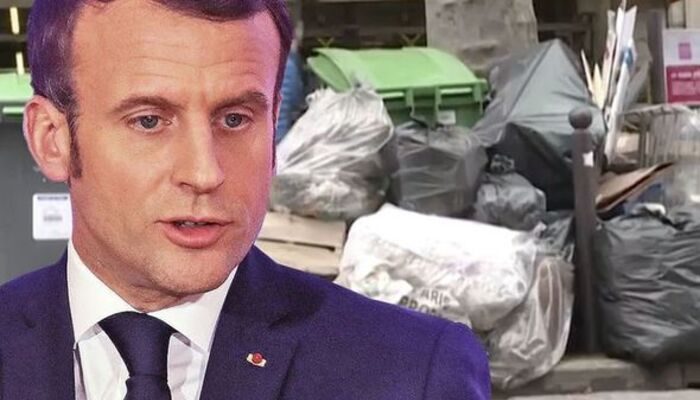
Paris, the French city of art, fashion, and culture that attracts tourists from all over the world has been stinking as the garbage has been clogging its streets for days. This comes after sanitation workers launched a strike against the pension reforms bill introduced by President Emanuel Macron-led government. 

Despite widespread opposition, the bill to raise the retirement age by two years that is from 62 to 64 advanced on Wednesday as a committee of legislators from both houses of the French parliament approved it. With 193 votes in favour and 114 votes against, the bill was approved by the French parliament’s upper house.

Garbage piles tarnish the ‘city of lights’

The workers’ strike has impacted half of the districts in Paris, Nantes, Rennes, and Le Havre. On Tuesday, the city’s waste piles weighed more than 7,000 tonnes, as per reports. While comparable issues are present in other French towns as well, the shambles in the nation’s capital are drawing attention globally.

The piled-up trash has left entire pavements covered in black bags and overflowing trash has affected three incineration plants outside of the French capital. The household garbage management company in Paris, Syctom, stated that it has not yet turned to call the police and is instead rerouting rubbish lorries to additional storage and treatment facilities in the region. 

According to Reuters, the protesting workers stopped fuel deliveries from leaving TotalEnergies and Esso refineries earlier on Friday. This caused a disruption in the power supply and delayed maintenance at some Electricite de France nuclear reactors.

What do the protestors say?

On Wednesday, 1.7 million people, according to the hard-left Confédération Générale du Travail (CGT) trade union federation, while 480,000, according to the interior ministry, took to the streets nationwide.

Several people believe that this policy is unjust to those who start their jobs early. Now, waste collectors and drivers can retire at 57 years old, but under the reform plans—which still permit early retirement for people who encountered difficult working conditions—they would have to put in more years of work.

According to the CGT, garbage employees’ life expectancy is 12–17 years lower than the national average.

Politics amidst protests

A number of left-leaning politicians have expressed their support for the strike by garbage collectors on social media, and some members of the leftist La France Insoumise (France Unbowed party) have rallied to donate €20,000 to the workers’ strike fund.

Louis Boyard, Member of Parliament for Val-de-Marne has extended support to the protestors. 

“We owe this historic movement against #ReformeDesRetraites to the workers. This movement will be held together in solidarity. This morning by handing over €20,000 to the garbage collectors on strike. This afternoon at the demonstration. The government is cracking up. We will win,” Boyard tweeted on March 11.

Fear of the spread of rat-borne diseases

It is pertinent to note that Paris is one of the worst rat-infested cities in the world, with 1.5 to 1.75 rats for every resident. In July last year,  the French National Medicine Academy issued a warning regarding the “threat to human health” posed by rats and the diseases they can pass on to humans.

While speaking to Le Parisien newspaper, specialist Romain Lasseur said “The strike triggers a change in rat behavior. They’ll rummage around in trash cans, reproduce there, and leave urine and faeces behind. We have a serious health risk for both the general public and waste collectors.”

President Macron turns down the call by unions for a meeting

On March 9, the French President in a letter addressed to the unions turned down their demand for an urgent meeting saying that the unions had enough time to negotiate earlier. In the letter, President Macron stated that the government had already made concessions, such as raising the retirement age from 62 to 64 years, instead of the 65 initially planned. 

President Macron has asserted that he aims to make the French economy more competitive. In order to make the French pension system financially sustainable in the upcoming years, Macron reaffirmed his views and insisted on the necessity of raising the retirement age.