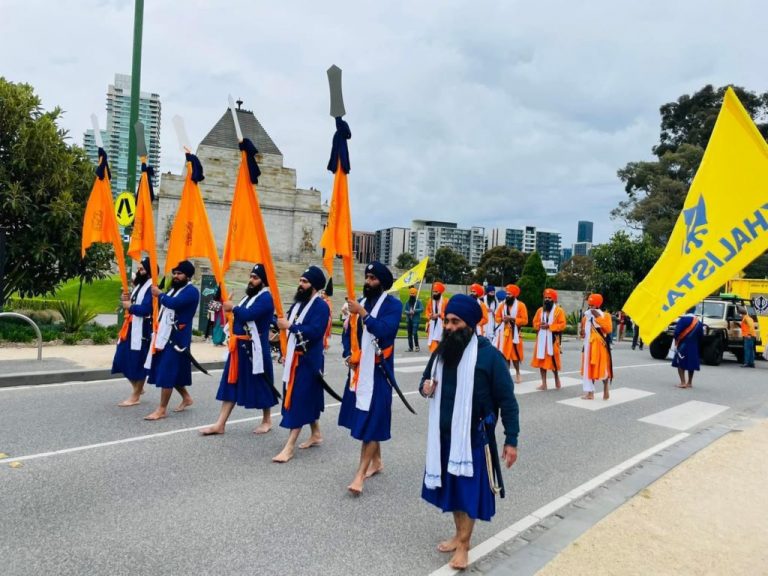
On January 30 (local time), the High Commissioner of India in Australia, Manpreet Vohra, called on the Premier of Victoria, Daniel Andrews, to discuss ways to stop extremist Khalistani groups in the country. In a tweet, Vohra said, “It was a privilege to call on Premier of Victoria Daniel Andrews today. Discussed our strong and growing bilateral relationship, the violence in Melbourne yesterday, and how to stop extremist Khalistani groups engaging in further activities prejudicial to peace and harmony.”
It was a privilege to call on Premier of Victoria @DanielAndrewsMP today. Discussed our strong and growing bilateral relationship, the violence in Melbourne yesterday, and how to stop extremist Khalistani groups engaging in further activities prejudicial to peace and harmony. pic.twitter.com/BSA9xlGNX6
Earlier, Vohra visited BAPS Shri Swaminarayan Mandir in Melbourne, which was recently attacked by Khalistani elements. He said in a tweet that he discussed the concerns over the vandals and violence that took place in Melbourne.
Paid respects today at the sacred BAPS Shri Swaminarayan Mandir in Melbourne, a place of spirituality and service. Discussed the peaceful community’s concerns over recent attack by vandals, and the disturbing violence witnessed yesterday in Melbourne.@HCICanberra@cgimelbournepic.twitter.com/kthxa5oJ7d
He said, “Paid respects today at the sacred BAPS Shri Swaminarayan Mandir in Melbourne, a place of spirituality and service. Discussed the peaceful community’s concerns over a recent attack by vandals and the disturbing violence witnessed yesterday in Melbourne.”
Attack on Hindus in Melbourne
On January 29, several videos appeared on social media showing Indian Australians being attacked by Khalistanis with swords while carrying the Indian tricolour. Reportedly, Indian Australians had notified the Victoria Police that they had planned a protest at the Federation Square in Melbourne against the rising pro-Khalistan activities in the country. Australian Hindu Media informed that the police arrested a sword-yielding Khalistani at Federation Square during the Khalistan event.
Earlier, The Australian Hindu Association Inc wrote a letter to the Minister of Police in Victoria seeking an investigation into Hinduphobic crimes committed by Khalistani-elements in the Australian state.
Earlier this month, three separate anti-Hindu attacks on temples have taken place in Australia, all of which were organized by locals who support the Khalistani propaganda.
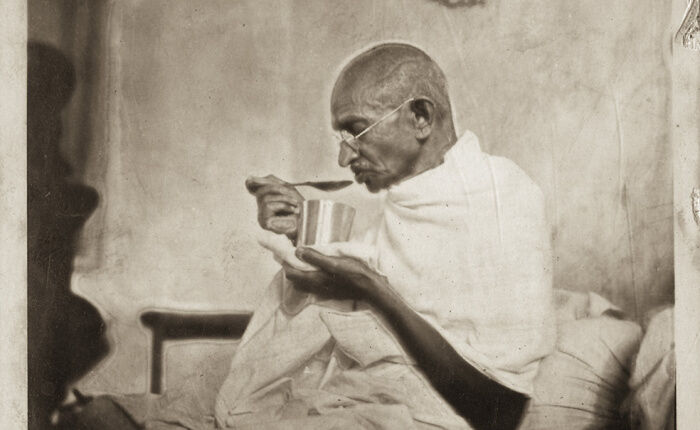
Mohandas Karamchand Gandhi. Growing up, history school books glorified him as the scrawny man from the coastal town of Porbandar in Gujarat who brought down the British empire singlehandedly with nothing but non-violence. He has been eulogised as the epitome of sacrifice and humility who wanted nothing but India’s independence. We were almost made to believe it was just him vs the mighty British empire.
Over time, one grows older, reads up more on Gandhi, his contemporaries and those who were part of freedom movement and struggle before him. One realises that maybe MK Gandhi wasn’t truly the ideal ‘mahatma’. That for all the ‘De di humein azaadi bina khadag bina dhaal‘ was the ‘kamaal‘ of ‘Sabarmati ke sant’ only in the song. That MK Gandhi wanted the Union Jack, the British national flag, included part of our own flag after Independence. Some freedom, right? With symbol of colonialism right on there on our symbol of immense pride of freedom. Of swarajya (full independence).
Then you learn about how MK Gandhi, instead of upholding an Indian’s right to free speech condemned ‘Rangeela Rasool’, a satirical book on Islamic religious figure. The book wasn’t written to prove some sort of bravado. In 1923, some Muslims had published highly offensive books, “Krishna teri Geeta jalani padegi” and “Uniseevi sadi ka Maharshi”. The first book used derogatory and offensive words against Lord Krishna and other Hindu deities while second book had derogatory remarks on Arya Samaj founder Swami Dayanand Saraswati.
In response to this provocation by Islamists, Pandit Chamupati Lal, a close friend of Mahashay Rajpal, wrote a short satirical piece on the Islamic Prophet, Mohammed. The book written under the name ‘Doodh ka doodh, paani ka paani’ enraged Muslims. The colonial government banned this book in 1924. The Muslim community, partly emboldened by MK Gandhi’s endorsement of their hurt sentiments and whitewashing of the provocation against Hindus, filed multiple cases against the book under 153A.
In May 1927, Mahashay Rajpal, who published the book, was acquitted of all charges with the court observing that commentary based on facts on historical figures, including the prophet of Islam, cannot be said to promote enmity between groups. As soon as the verdict was delivered, Muslim mobs went into a frenzy. They rioted and demanded the head of Mahashay Rajpal. They were chants about how the murder of Rajpal was acceptable because, under Sharia, the punishment for blasphemy is death.
With the Muslim mobs going on a rampage, 295A was passed to assuage the feelings of the mobs and in the same year, there were two unsuccessful attempts at Mahashay Rajpal’s life. On April 6th, 1929, a 19-year-old carpenter named Ilm ud din stabbed Mahashay Rajpal on his chest eight times while he was seated in the outer verandah of his shop.
Nearly 100 years later, Nupur Sharma, a former BJP spokesperson, is now living under constant fear for her life because she just repeated with the Islamic scriptures say about their religious figures. Not even satirically. But the radicals have been further radicalised and now even if they don’t like the ‘tone’ of how you said something written in their scriptures, they’d start baying for your blood. MK Gandhi was in a position to nip the radicalisation in the bud. If he was as influential as our school history books tell us, nonviolence would’ve prevailed over assassination of Mahashay Rajpal. After all, his life was his message, right? Maybe he could have asked rioting mob to choose nonviolence and maybe then Nupur Sharma might not be living her life with death constantly threatening from nearest loudspeaker.
And then there was the Moplah massacre of Hindus. Indian Muslims, especially in Malabar, coastal Kerala, supported the Caliphate in Turkey and wanted to establish similar Islamic rule (Caliphate, or Khilafat), in India. MK Gandhi extended his support for the ‘Khilafat movement’. He probably thought that Indian Muslims would join the nationalist movement en masse if he supported their demand for an Islamic caliphate. Except, Indian Muslims then had the two-nation theory and Pakistan was carved out of India without full population exchange, as suggested and recommended by Dr BR Ambedkar, and we know the fate of minorities in Pakistan now.
But coming back to the Khilafat movement and MK Gandhi’s explicit support, over 10,000 Hindus were killed by Moplah Muslims. Thousands of Hindu women were raped, temples desecrated. On 25th September 1921, 38 Hindus were beheaded and thrown in the well by Moplah Muslims. It has been documented by the district collector of Malabar at the time how even after 2-3 days, several Hindus who were beheaded and thrown in the well were crying out for help. Despite this, MK Gandhi extended support to them in hopes they would turn ‘nationalists’ and fight the British Empire along with Hindus.
The ‘Khilafat’ movement was so whitewashed in our school history books written by the Congress led governments that for the longest time we were being fed that the ‘khilafat’ meant ‘against’, like ‘khilaf’ and not caliphate, i.e. Islamic rule. And as Hindus were being butchered, MK Gandhi asked them to ‘cooperate’.
There is more. 16th August, 1946 – a year before Independence. A call to massacre Hindus was made in Bengal by Muhammad Ali Jinnah, MK Gandhi’s counterpart for Pakistan, who believed Hindus and Muslims could not coexist. It is called as the ‘Direct Action Day’ (also, this part has been mostly skipped from our school history books). Hindus were massacred, raped. Jinnah had chosen the 16th of August as Direction Action Day because it was the 18th day of Ramzan, the day when the Battle of Badr was fought and won by Prophet Muhammad himself, against the kaafirs. It is considered to be won by Allah’s divine intervention by Muslims and it led to the violent occupation of Mecca.
On the 16th of August, 1948, Calcutta was littered with posters lionising Jinnah and reminding Muslims that they had to follow the footsteps of the Prophet. It is reported that Syed Muhammad Usman, mayor of Calcutta, had issued a widely circulated leaflet that said: Kafer! Toder dhongsher aar deri nei! Sarbik hotyakando ghotbei! (Infidels! Your end is not far away! You will be massacred!). The aim was to make Bengal ‘land of the pure’ and rid it of the Kaafirs (non believers, that is, Hindus). This was their ‘Battle of Badr’.
Hindus were beheaded, limbs chopped off, women raped and taken away as sex slaves. MK Gandhi asked the Hindus to die with a smile on their face. On 17th August, 1946, Gopal Patha took up arms to protect the Hindus. Throughout the night, Gopal Patha, along with his young men from the Bharat Jayati Bahini worked on a plan on how they could defend Hindus from the Muslim barbarians. From the 18th to 20th, Gopal Patha and his men put up a brave fight, paying the Muslim League goons back in equal measure, if not more.
On 19th August, 3 days after unleashing violence upon Hindus to establish the ‘land of the pure’ and two days after a small set of Hindus retaliated instead of dying with a smile, Muslims were feeling ‘unsafe’ and ‘threatened’. And on 21st August 1946, Viceroy’s rule was brought in in Bengal.
That MK Gandhi chose to let Hindus or fellow Indians die because he did not want to ‘upset’ the Muslim League and Muslims in India, is a fact not too well documented because of that time’s political leadership’s love for whitewashing barbarity and watering down atrocities on Indians who were Hindus, specifically because they were Hindus.
But 75 years later, it is not wrong to criticise MK Gandhi or question his actions. He was a human and should not be made into a demi-god above criticism. Questioning him and his actions does not and should not make one a ‘Godse bhakt’. Nathuram Godse, who assassinated MK Gandhi, committed a crime. Murder is a crime and nothing, no anger would justify taking law into own hands. Criticising Gandhi is not justifying his assassination and no way condoning Godse’s actions. Having said that, criticising him should also not be considered blasphemy. He was a politician and like every other politician in India should have his actions scrutinised.
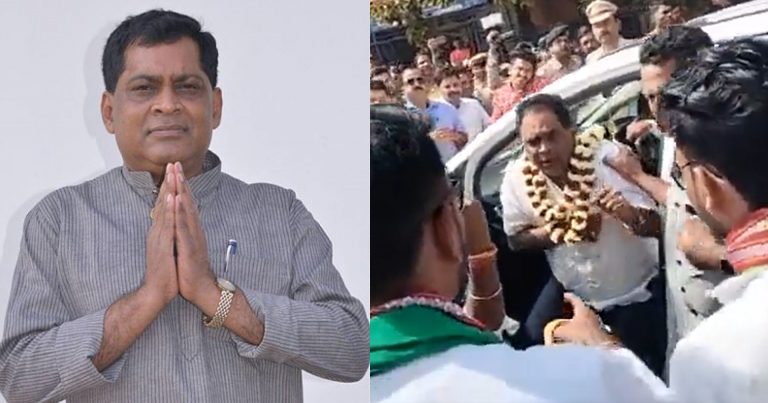
Odisha Health Minister Naba Kishore Das, who was shot by police officer Gopal Das, succumbed to his injuries in the hospital during treatment. Das succumbed to multiple gunshot wounds he sustained at Brajarajnagar in Jharsuguda today morning. He was undergoing treatment at Apollo Hospital in Bhubaneswar.
The Hospital sources informed that Naba Kishore Das passed away in the evening on Sunday, 29 January. “On operating, it was found that a single bullet had entered and exited the body, injuring the heart and left lung and causing massive internal bleeding and injury. The injuries were repaired, and steps were taken to improve the pumping of the heart. He was given urgent ICU care. But despite the best of efforts, he could not be revived and succumbed to his injuries.” a statement from the Apollo Hospital read.a statement issued by the hospital said.
Police ASI Gopal Das had fired shots at him at around 12.30 PM when the health minister reached Gandhi Chowk in Brajarajnagar for a scheduled programme. He was shot from point-blank range which hit his left chest, leaving him seriously injured. The accused ASI was nabbed by locals after the incident, who was then handed over to the police.
The critically injured minister was taken to the Jharsuguda district headquarters hospital. Nabad Das was then airlifted to Bhubaneswar in an air ambulance and admitted to Apollo Hospital, Bhubaneswar.
Videos have emerged showing the incident, which show the ASI walking towards the minister’s car, and then shooting, causing the minister to fall back on the car seat.
Visual of Gopal Das -Police ASI firing bullets at Minister #NabaDas .
The shooter cop is being interrogated, but the cause of the attack is not known yet. The wife of accused Gopal Das claimed that her husband has been suffering from mental disorder for the last seven-eight years.
Attack on Minister #NabaDas: “My husband (ASI Gopal Das) was suffering from mental ailments and high BP. He was on medications. I do not know whether he had enmity with Minister Naba Das,” says wife of ASI Gopal Das who shot the Health Minister pic.twitter.com/eHbODQnCQu
Wife Jayanti said that Gopal was taking medicines and appeared quite normal, and she is not aware of any personal enmity between Gopal Das and the minister.
Chief Minister Naveen Patnaik has directed the Crime Branch to take up the investigation into the matter, following which a team of Odisha Crime Branch headed by a senior police official proceeded to Brajarajnagar where state Health Minister Naba Das was shot at. The team is led by Additional Director General Arun Bothra.
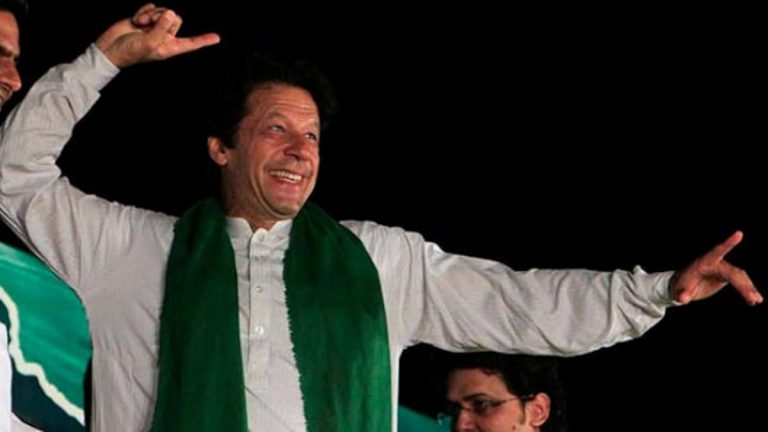
Former Prime Minister of Pakistan and Pakistan Tehreek-e-Insaf (PTI) chief Imran Khan’s helicopter rides cost the national kitty Rs 1 billion, reported The Nation.
Khan has come under the scanner for his helicopter rides while in office. The expense details were presented in the Pakistani Senate. The VVIP helicopter rides of Khan cost around one billion rupees that were carried out on the instructions of the Prime Minister’s Office from 2019 to 2021, reported The Nation.
The federal government in its written response informed the Senate that according to the details provided by the Cabinet Division, an amount of Rs 946.3 million was spent on VVIP helicopter missions by 6 Aviation Squadron under instructions of the PM’s Office from 2019 to 2021 when Imran Khan was the prime minister of the country.
Before this, the government had informed the upper house that Khan used the official helicopter to commute from his Bani Gala residence in Islamabad to PM House for 1,579.8 hours from 2019 to March 2022.
The amount of Rs 434.43 million was incurred on these trips from the national exchequer, reported The Nation.
Unveiling the details of the expenditures of camp offices, the government said that a total amount of Rs 26 million was spent from the official funds on camp offices by former prime ministers since 2008.
Former prime minister Yousuf Raza Gilani had three camp offices, two in Lahore and another one in his hometown Multan during his tenure from March 2008 to June 2012, which cost an amount of Rs 10.8 million, reported The Nation.
Meanwhile, incumbent National Assembly Speaker Raja Pervez Ashraf had one camp office on Chakwal Road while he was in office from June 2012 to March 2013 and an amount of Rs 5.5 million was spent on it.
Similarly, Pakistan Muslim League-Nawaz (PML-N) supremo and former prime minister Nawaz Sharif had his camp office at his residence in Jati Umra, Lahore during his tenure from June 2013 to July 2017, which cost an amount of Rs 4.5 million, reported The Nation.
His successor Shahid Khaqan Abbasi had his camp office at his residence in Islamabad while he was in the office of prime minister from August 2017 to March 2018. An amount of Rs 5.2 million was incurred on it from it the exchequer.
Notably, while Pakistan is on the brink of economic chaos, the political class is using exchequer money for their movements when the nation is reeling under heavy debts.
(This news report is published from a syndicated feed. Except for the headline, the content has not been written or edited by OpIndia staff)
After a 75-year-old French actress alleged that she is being held “hostage” in a house at Calangute in North Goa since earlier this week, the Goa police said there is a property dispute over the house which is being heard by a court.
In a video released to the media on Thursday, actress Marianne Borgo claimed she is in a “scary and dangerous situation” at her residence in Calangute, a beach town in North Goa District. North Goa Superintendent of Police Nidhin Valsan told ANI that the issue is regarding a property in Calangute village of North Goa.
“There are two parties claiming to be the owner of the property. One is the French lady and the other a lady who is a resident of Nepal. Both claim to be owners of this property,” said the North Goa SP.
The police said that the French lady had given an application in the honorable high court. But her application was dismissed by the court and he was directed to approach a civil court by the High Court.
“The matter is pending in the civil court and Monday (Jan 30) is the next date. It is a sub judice matter,” he added.
Regarding the allegation of being kept as a hostage, the police said, “Our police inspector has visited the property. Our officers are in regular touch with the lady. It was found that both parties are claiming to be the owners of the disputed house. The French lady and her maid are staying inside a room in the house. The house is not locked from the outside. When the police officers knocked on the door, the French lady as well as her maid opened the door. And she has kept two private security persons.”
The SP said, “The other party which is from Nepal has also kept some security. But the people are moving without any restraint.” The police dismissed allegations of anyone being held hostage.
“Allegations of being kept captive or hostage cannot be substantiated,” Nidhin Valsan, North Goa SP told ANI.
The police said that some documents were found in which the French lady is claiming to have given money to a party for buying the disputed house, and the other party claims to be the wife of the original owner who has now expired.
So the matter is pending in the court, which will decide, the police said.
(This news report is published from a syndicated feed. Except for the headline, the content has not been written or edited by OpIndia staff)
Due to the paper leak from a coaching centre in Atladra, Vadodara, the Gujarat government cancelled the Panchayat Junior Clerk recruitment competitive exam on Sunday morning, a few hours before it was scheduled to be taken.
The Gujarat Panchayat Service Selection Board (GPSSB), which was to administer the exam for 1,181 positions beginning at 11 am, at 2,995 locations throughout the state, received at least 9.53 lakh registrations.
At least 15 individuals were arrested by the Gujarat (Anti-Terrorist Squad) ATS team in connection with the case, including the primary accused Bhaskar Chaudhary, who operates coaching centres in Vadodara and Ahmedabad, as well as another principal accused Jeet Nayak, who works in a printing press in Hyderabad, and Pradip Nayak, who runs a coaching institute in Odisha.
KL Hightech, a Telangana-based company, was given the contract to print the recruitment exam’s question papers. The question paper was leaked by Jeet Nayak and given to Pradip Nayak. The latter was previously taken into custody by ATS Gujarat.
Ketan Barot, another accused, is currently in police custody. He is a well-known name for nine years in the admissions industry. Ketan has been incarcerated due to a fake admission case. The alleged paper leaker has previously been in Delhi’s Tihar Jail. His Disha Education Consultancy manages Gorakhandha. Ketan is a property owner in Ahmedabad and Barot Baid. He is currently being questioned by Gujarat ATS.
“We have got a tip off about the paper leak on Saturday night after which we raided a coaching centre in Atladra in Vadodara and found a hard copy of the question paper,” stated Superintendent of Police (SP) Gujarat ATS Sunil Joshi.
Gujarat ATS was continuously keeping a watch on people who were related to previous paper leak incidents. 15 accused have been arrested from Vadodara with question papers. The government decided to cancel the exam. Further investigation is underway: Sunil Joshi, SP, Gujarat ATS pic.twitter.com/upmKgcUQei
Currently, five distinct locations throughout the nation and two locations in Gujarat have seen raids conducted by various teams of the Gujarat ATS. The officer said that disclosing the details of the raids may jeopardize the probe.
He further added, “The Government had instructed police and agencies to keep a close vigil over the persons who were involved in illegal activities like providing the competitive exam papers in lieu of money. We came to know Saturday night only that someone that someone had managed one hard copy from the printing press. After which we raided a coaching class in Atladra of Vadodara and caught the accused. We also recovered the hard copy of the exam paper from Pradip Nayak.”
The board, meanwhile, in a statement informed the candidates about the situation and advised them not to visit the examination venues.
આ પંચાયતી પરીક્ષા રદ કરી સરકાર નો નિર્ણય ખુબજ સરાહનીય છે ભલે ઉમેદવારો ને મુસાફરી નો ધક્કો ખાવો પડે પરંતુ આ કૃત્ય કરનારાઓ ને સજા કરી ને આ પ્રવૃત્તિ બંધ કરવી જરૂરી છે.good job#ગુજરાત panchayati seva mandal#Gujarat sarkar pic.twitter.com/7Z6vGyg3qX
“In the larger interest of the candidates, it has been decided by the board to ‘postpone’ the competitive examination to be held on 29-01-2023 at 11-00 am, which all the candidates are requested to take note of. Every candidate is advised not to go to the examination centre for the above reasons. The sadar exam will be held afresh at the earliest, the date of which will be announced by the board shortly,” the board has said.
Sandeep Kumar, the chairman of the Gujarat Panchayat Service Selection Board, today, said that an interstate group was responsible for the leak of the junior clerk recruitment exam paper, which has now been revoked.
Guj | One suspect was held by the police early morning today. During questioning, he revealed about the paper leak. 15 accused caught till now. This appears to work of an organised gang: Sandip Kumar, Incharge Chairman, Gujarat Panchayat Service Selection Board on paper leak pic.twitter.com/2w1400VcAC
“Interstate organized gang is behind the junior clerk paper leak. It is an organized crime. Police were on alert mode because of the competitive exams schedule, through human intelligence and technical surveillance, ATS was able to crack the racket, and has arrested 15 accused in this connection,” he told media persons.
According to Kumar, the board decided to cancel the tests in the interest of the greater good and will announce new dates in 100 days. In addition, he stated that exam participants will not be required to pay bus fares to and from their exam locations.
He said that during the last five years, the GPSSB has successfully filled 21,000 positions in 41 different panchayat cadres out of more than 30 lakh applicants.
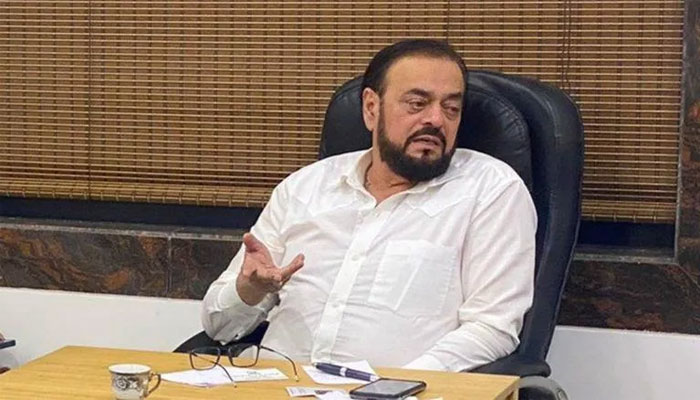
On January 28, Samajwadi Party leader Abu Azmi cited an RTI reply from 2021 and perpetuated the Kashmiri Hindu genocide denial. Using the RTI reply, he claimed that ‘only 89’ Hindus were killed due to terrorism in Kashmir.
Speaking to India TV on the ban on BBC’s documentary on Gujarat Riots, Azmi said, “BBC made a documentary, and it will create a law and order problem? PM Modi has a lot of influence on the international platform. Why did he not raise his voice against BBC? He should ask people to watch the hate-filled film on Kashmir. The Kashmir where 1700-1800 people died, out of which only 89 were Kashmiri Pandits. Rest all of them were Muslims, and few were Sikhs.”
Actress Ayesha Takia’s father-in-law Abu Azmi added, “This information came as a reply of RTI. It tells the figure of how many Pandits were killed because of terrorism. A total of 1724 people were killed. Only 89 were Pandits. Now subtract 89 from 1724 and see how many Muslims died. And you are promoting this film? I admire your guts. The tickets were distributed for free. Even I could get enraged to see how Muslims terrorised Hindus in Kashmir. But the RTI reply shows a different picture. Are you still okay with promoting such a film? But the film that BBC made… Freedom of speech and expression is a law. Go and file a case against BBC. Everyone has the right to speak and listen. Let them listen to what [BBC is] saying. If BBC is wrong, file a case against it. Ban BBC. But you are stopping students from watching it. Have a big heart [PM Modi]. Allow them to watch and give their remarks.”
He also added an RTI reply on his Facebook account. The RTI reply was originally published by RTI activist PP Kapoor in December 2021, a few months before the official release of filmmaker Vivek Agnihotri’s film The Kashmir Files. In the reply, it was mentioned that since the inception of terrorism in 1990, 89 Kashmiri Pandits had been killed. Furthermore, the government informed that a total of 1,635 people of other faith died by the terrorists in the valley. This particular RTI has been used repeatedly by the left-liberals and seculars to whitewash the crimes committed against Kashmiri Hindus.
However, the RTI reply clearly mentioned that the number of Kashmiri Hindus killed because of terrorists mentioned in the reply was from 1990. That means any Kashmiri Pandit killed by terrorists before the said date was not included in the reply.
According to a fact-check done by India Today in March 2022, it was mentioned that several news reports quoted Jammu and Kashmir’s police saying that over 200 Kashmiri Pandits had been killed due to terrorism since 1989.
In 2008, an Indian Expresses report noted that 209 Kashmiri Pandits had been killed by terrorists since 1989. The report suggested that 109 people were killed in 1990 out of these 209, which that means before 1990, 100 Kashmiri Hindus were already killed.
Another point that needs to be considered here is that in 1990, the exodus of Kashmiri Hindus happened amidst the ongoing genocide. There are reports that clearly suggest that Hindus were warned to leave the valley. Hundreds of thousands of Hindus left the valley leaving only a handful of Kashmiri Hindus in Kashmir. It was impossible to kill Kashmiri Hindus in the valley if they had left the valley altogether. Since they left the valley, the struggle after the genocide has continued to date.
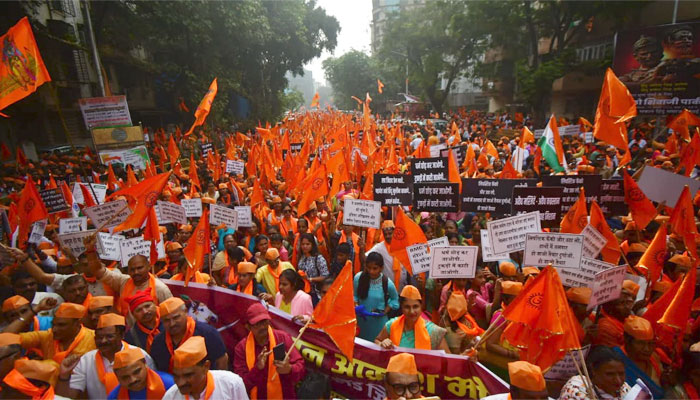
On January 29, almost a lakh Hindus participated in ‘Hindu Jan Aakrosh Morcha’ in Mumbai organised on behalf of Sakal Hindu Samaj, Mumbai, to raise their voice and concerns against ‘love jihad’ and ‘land jihad’. The march started from Chhatrapati Shivaji Maharaj Park in Dadar and ended at Prabhadevi’s Kamgar Maidan. Sakal Hindu Samaj is the umbrella body of Hindu organisations.
Hindu organisations, Utsav Mandals and NGOs working for the welfare of citizens and Hindus participated in the march. The Hindus also raised their voice against the noise from illegal loudspeakers in mosques. They also demanded action against alleged land grabbing in the name of religion. The participants of the march chanted slogans against love jihad, and demanded anti-conversion laws.
Notably, the march was conducted peacefully, and all regulations laid out by the authorities were followed for the smooth completion of the event. The police made arrangements for the rally, and diverted traffic from some roads on the route of the rally.
As per the schedule, the march started at 10 AM. Speakers, especially women from different sections and backgrounds, took on the stage and expressed their concerns over increasing cases of love jihad. Hyderabad MLA T Raja Singh was the keynote speaker at the event. He made a passionate speech and urged Hindus to stay united.
Leaders and workers of Hindu outfits, including Rashtriya Swayamsevak Sangh (RSS), Bajrang Dal and Vishwa Hindu Parishad (VHP), were also present at the event. Several leaders and MLAs of BJP and Eknath Shinde faction of Shiv Sena also participated in the rally. Mumbai BJP president Ashish Shelar, MLA Pravin Darekar, MLA Atul Bhatkhalkar, MLA Nitesh Rane were among the BJP leaders who participated in the rally.
The march covered an area of 4 KM. Both videos and photos of the massive march went viral on social media platforms.
Speaking to OpIndia, VHP spokesperson and JT Secretary, Mumbai to Goa, Shriraj Nair, said, “Almost one lakh Hindus participated in the march and raised their voice against love jihad and land jihad. The government should bring anti-conversion laws to save Hindus from the atrocities.” “We started the march at 10 AM sharp at Chhatrapati Shivaji Maharaj Park. The program ended after 4 KM march at Prabhadevi’s Kamgar Maidan at around 4 PM.”
BJP MLA Nitesh Rane said that there has been an attempt to oppress Hindus, and Hindus need to come together and give a message.
The BJP and Shiv Sena (Shinde) leaders attacked the Uddhav Thacheray faction of Shiv Sena for not participating in the rally. They said that Uddhav Thacheray has left Hinduism, and now he only has to ally with AIMIM.
However, Shiv Sena MP Sanjay Raut attacked the Hindu Jan Aakrosh Morcha, saying that Hindus are having to protest when the country is being ruled by two Hindu leaders, Narendra Modi and Amit Shah. He said that even in Maharashtra it is claimed to be a pro-Hindu govt now, but it is unfortunate that the public has come out in the streets. ‘This shows that Hindus are not getting justice from the leaders who consider themselves as Hindutva leaders,’ Sanjay Raut said.
‘Despite the rule of powerful Hindu leaders in Kashmir, Kashmiri Pandits are clamoring for justice. Mulayam Singh Yadav, who opened fire on Hindus, was felicitated by the Center with the Padma Vibhushan. This protest march is also going on to protest this. Therefore, this protest march should be welcomed,’ Sanjay Raut said.
On the occasion of India’s 74th Republic Day celebrations, propaganda news outlet ‘The Print’ published an article that attempted to gloss over the brutal Goan inquisition by Portuguese invaders.
The opinion piece, authored by one Anirudh Kanisetti, tried its best to portray the colonisers as highly accommodative of the natives. At the very onset, the author insinuated that ‘real history’ was somehow different and that Abrahamic religions were in fact willing to compromise with Indians.
He also cast aspersions on the valour of the natives and Hindu kings, who resisted foreign invasions. “We might like to believe that Indians only converted away from Hinduism by force after many acts of valiant ‘resistance’…It is completely isolated from real, complex historical dynamics,” he alleged.
By citing historian Kirti N. Chaudhuri, Anirudh Kanisetti then tried to contextualise the colonisation by claiming that there was a “dangerous vacuum in maritime networks” in the Indian Ocean.
Screengrab of the article by Anirudh Kanisetti on The Print
“It was at this crucial juncture that the Portuguese finally discovered how to bypass the gunpowder empires that controlled West Asian gateways to the Indian Ocean. Within mere decades, they implemented a leaner, meaner version of earlier grand strategic doctrines,” he wrote.
The Print columnist then went on to eulogise the strategies adopted by the Portuguese to colonise Goa. “Instead of periodic raids and tribute missions, they worked with permanent fortresses on land and moved warehouse fortresses to the seas — galleons”, he added.
The Print columnist also adored how the colonisers could demand tributes on their own accord and execute raids whenever it pleased them. “Situated in the estuary of the great river Mandovi, toward the centre of India’s West Coast, Goa was a natural target for Portuguese attention,” Anirudh Kanisetti suggested.
Like a true colonialism apologist, he claimed that a war-torn province (referring to the present-day State of Goa) was “fortified and transformed into a sprawling city, half-European and half-Indian” by the Portuguese.
Portuguese were different from other Europeans, suggested Anirudh Kanisetti
“As Portugal’s power grew, so did Goa’s. Within the century, Goa had become one of Asia’s largest cities, larger even than distant Lisbon, and was declared the seat of the Archbishopric of all Asia in 1557. The Portuguese were clear that they were here to stay,” he emphasised.
Later in his propaganda-laden piece, Anirudh Kanisetti claimed that the Portuguese were different from other Europeans, who believed that it was their right to rule and spread Christianity into the world.
He downplayed the brutal tactics, adopted by the invaders, and wrote, “In practice, Portuguese people made many compromises on Indian shores.” The Print columnist suggested that the invaders appeased the Brahmins by stalling the education of the socially backward Hindu communities.
“Brahmins and landowners, had much less to gain from conversion—often fleeing en masse when they faced discriminatory measures by the Portuguese and persecution from the Goa Inquisition. Their eventual conversion required changes in Portuguese approaches — the education of lower castes gradually ceased, thus retaining the older social order,” he said.
The Print columnist downplays predatory evangelical conversions
“Conversions were not always forceful. Professor Xavier writes that locals might have seen the Virgin Mary (for instance) as yet another local goddess,” The Print columnist goes on to downplay the atrocities committed by the Portuguese on the natives.
He also portrayed the appropriation of Hindu deities to further predatory Christian evangelist practices as a noble gesture. “The Christian Pelican, used as a metaphor for Jesus, is represented as an Indian hamsa or mayura bird,” he added.
Dear @ShekharGupta@ThePrintIndia do you have the professional integrity to publish my rebuttal to this gross distortion of Goan history by this half-baked self-certified ‘public historian’ named @AKanisetti? This article is pure bilge completely negating history of Goa. pic.twitter.com/OqGvzOKEiD
“The Virgin Mary, carved in ivory imported from Portuguese holdings in Africa, is depicted with sari-like drapes with thick, Indian ornamented edges. Nagas are carved on wooden candlesticks that once decorated church altars,” Anirudh Kanisetti further eulogised the colonisers.
He concluded, “The infant Jesus, in a uniquely Indian variation, is depicted sitting and dozing, head resting on his palm in a motif likely derived from the sleeping Vishnu.”
The real history of the Portuguese Inquisition of Goa
The Portuguese inquisition of Goa started when Vasco Da Gama returned to Portugal after discovering the route to India via Africa’s Cape of Good Hope. Upon his return to Portugal in 1510, Gama told the Portuguese royals about the undiscovered route to India, which gave the Portuguese an opportunity to colonise the Western coast of India and particularly Goa.
Pope Nicholas V soon issued a diktat which gave the kingdom of Portugal a monopoly on forcing Christianity upon the locals of the newly discovered areas (and mainly India), along with the monopoly to trade on behalf of the Roman Catholic Empire in Asia. Soon after, the Portuguese sent troops to capture a portion of Goa and set up a colony in the coastal city.
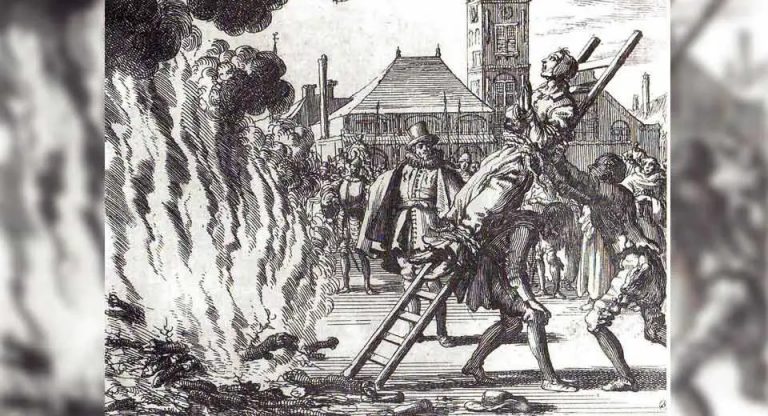
In Goa, the Portuguese were angered by the locals following a religion (Hinduism) other than Christianity and ordered all temples within the colony to be closed; this marked the beginning of the bloody Goan inquisition that comprised gross human rights violations and mass executions of the local Hindu, Jew and Muslim populations.
In 1541, idol worship was forbidden in the Portuguese colony of Goa and over 350 temples were destroyed by the Portuguese soldiers. It had been officially declared that being a believer of any religion other than Roman Catholicism was forbidden for residents of Goa.
The infamous Francis Xaviers and Martin Alfonso were sent to Goa by King John III of Portugal in 1542 to initiate the process of converting Goan residents to Roman Catholicism. On their arrival in Goa, they were enraged by the New Christians of Goa secretly practising their previous religions (either Judaism, Hinduism, or Islam), while also upholding their Hindu values and traditions.
A disturbed Francis Xavier wrote to King John III of Portugal on 16th May 1546 to impose an inquisition on Goa in an attempt to ‘discipline’ the residents and make them follow Catholicism.
The inquisition banned apostasy and banned the sale of books in the Konkani, Marathi, Sanskrit, and Arabic languages. The use of Konkani was also forbidden in the colony of Goa.
Upon the imposition of the inquisition in Goa, life became comparable to hell for the local Hindu population, who were often on the receiving end of persecution and were targeted in particular by the sadistic Christian missionaries.
The Christian missionaries called the Hindus ‘uncultured’ and ‘savages’, who worshipped black idols ‘resembling demons’; they took it upon themselves to force Hindus into leaving their religion and succumbing to Christianity.
An inquisition office was thereby set up which aimed to discriminate against Hindus on all matters possible.
Sublime Novak Djokovic put up a dominant show against Stefanos Tsitsipas of Greece to win the men’s singles final match 6-3, 7-6(4), 7-6(5) here at the Rod Laver Arena to claim the record-extending 10th Australian Open title.
With this victory, the Serbian tied Rafael Nadal’s record of 22 Grand Slam crowns. With his victory over Tsitsipas, the 35-year-old returned to the top spot in the ATP Rankings for the first time since last June.
Djokovic defeated Tsitsipas, who would have taken the top spot himself with a win in Sunday’s final, to record his 10th straight tour-level victory. Djokovic will now replace Carlos Alcaraz as World Number 1.
Despite Tsitsipas saving two break points from 15/40 to hold for 1-1 in the first set, Djokovic’s customarily reliable and accurate groundstrokes dominated the early going. The Greek was unable to duplicate the escape in the fourth game, when Djokovic secured the sole break of the set, as he repeatedly applied pressure to Tsitsipas’ backhand.
Tsitsipas’ thunderous serve and massive forehand only slowly started to go off as he realised he needed to alter the pace of the game. The third seed took advantage of the fervent atmosphere at Rod Laver Arena to increase his level on many occasions in the second set when the Greek responded to winning critical games by encouraging his supporters in the crowd.
Nevertheless, Djokovic managed to prevail despite Tsitsipas earning the only break point opportunity of the set (which also served as a set point) at 4-5, 30/40. Despite dropping three straight games to give up a 4/1 advantage, he arrowed a magnificent forehand winner to save the set point and remained composed to win the tie-break.
With his lone break of the match coming in the first game of the third set, Tsitsipas once more made a comeback threat. But Djokovic answered right away, as he has frequently throughout his career on stages this size. Prior to sealing a third set that was dominated by serve and his historic victory with a powerful tie-break performance, he broke back in the following game.
(This news report is published from a syndicated feed. Except for the headline, the content has not been written or edited by OpIndia staff)