Home Blog Page 2579

Vivek Ranjan Agnihotri’s ‘The Kashmir Files’ awarded the ‘Best Feature Film on Human Rights’ by LIFFT India

‘The Kashmir Files’, directed by director Vivek Ranjan Agnihotri, has been awarded as the ‘Best Film on Human Rights’ by the LIFFT India Awards 2022. Lift India announced the awards for theatre, performance art, literature, feature film, animated film and other categories for the year 2022 on December 25, and Kashmir Files has been selected for the award of Best Feature Film on Human Rights.

Just Let Me Go from Portugal has been awarded the best feature film, and the Ajjo-Daughter of India by Ramji Bali has been selected for the best feature film on women’s rights.

Director Vivek Ranjan Agnihotri expressed his happiness over the social media platform and said, “Happy to inform that The KashmirFiles has been awarded as ‘Best Film on Human Rights’ by LIIFT 2022. My gratitude to the people of India.”

This award for the Kashmir Files comes a couple of weeks after the film was awarded ‘the Golden Film of Indian Cinema’ at the Indian Television Awards (ITA). The director shared a glimpse of the award night and said that ‘the Kashmir Files’ was a people’s film. “Thank you, ITA for giving the Golden award to The Kashmir Files. This is a people’s film. I m just the medium. We dedicate this award to all Kashmiri Hindu victims of Genocide,” he had tweeted.

Reportedly, the movie has also been nominated for the Switzerland International Film Festival. The film ‘The Kashmir Files’ takes the viewers back to 1989, when due to rising Islamic Jihad, a large number of Kashmiri Hindus were forced to flee the valley. According to estimates, roughly 100,000 of the valley’s total 140,000 Kashmiri Pandit inhabitants migrated between February and March 1990. More of them fled in the years that followed until just about 3,000 families remained in the valley by 2011.

The movie which was released on March 11 this year, proved to be one of the biggest hits of the year. Though the film was praised all over the world, a section of Indian opposition parties and leftists tried to run down the film or discredit the story shown within. While some directly called the film a pack of lies, others tried to target the BJP over the issue. Multiple theories were also peddled to discredit the film and its makers, but the public verdict muted all the criticism.

The Kashmir Files starring Darshan Pathak, Anupam Kher, Mithun Chakraborty, and Pallavi Joshi in the lead roles earned around Rs 337.23 crore, making it the first Hindi film to cross the Rs 300 crore club during the coronavirus pandemic.

LIFFT India which has honoured the film as the ‘Best Film on Human Rights’, is a brand owned by Actor Riju Bajaj. The organization seeks to appreciate and showcase the best of films, television, and new media content from around the world. LIFFT in LIFFT India is an acronym that stands for ‘Literature, Illusion, Film, Frame, Television, and Theatre’.

CRPF denies Congress’ claim of security breach in Rahul Gandhi’s Bharat Jodo Yatra, points out 113 violations of protocols committed by the Congress leader

0

Central Reserve Police Force (CRPF), which is providing round-the-clock security cover to Congress senior leader Rahul Gandhi during his ongoing Bharat Jodo Yatra, has refuted the party’s claims that there was a security breach during the Delhi leg of Bharat Jodo Yatra.

The CRPF also pointed out how Rahul Gandhi himself has, on several occasions in the past, disregarded protocols. It also mentioned how even during the Delhi leg of the Bharat Jodo Yatra, Rahul Gandhi violated security guidelines.

“Delhi leg of Bharat Jodo Padyatra for 24th December ASL involving all stakeholders was conducted on Dec 22. All security guidelines have been strictly followed and Delhi Police has informed that sufficient deployment of security personnel was made,” the CRPF informed while it refuted the allegations leveled by the grand old party.

The Congress claimed on December 28 that there were “significant security breaches” in the Bharat Jodo Yatra when it entered the national capital last week.

‘Since 2020, there have been 113 violations observed and duly communicated’, CRPF denies Congress ‘security breach’ claims

Denying the Congress party’s claims, CRPF stated that appropriate security arrangements have been made for Rahul Gandhi. “It may be pointed out that during visits of the protected, the required security arrangements are made by the CRPF in coordination with state police and security agencies”, the CRPF was quoted as saying by TOI.

The federal police organisation further stated that it has, on multiple occasions, observed infractions of laid down rules and regulations by Rahul Gandhi and has informed him about the same on a regular basis. Since 2020, there have been 113 violations observed and duly communicated, said the CRPF, adding that even during the Delhi leg of Bharat Jodo Yatra, the protectee has violated security guidelines and CRPF will be taking up this matter separately.

Notably, the Congress Party had written to the Union Home Minister Amit Shah on Wednesday alleging “significant security breaches” in the Bharat Jodo Yatra when it entered the national capital last week. It had blamed the Delhi Police for remaining “mute spectators” when the safety of Rahul Gandhi was “compromised on multiple occasions”.

The Party said that the Delhi Police “failed” to maintain a perimeter around Rahul Gandhi, who was leading the foot march.

In his letter, Congress general secretary KC Venugopal requested the Centre to take “immediate steps” to ensure the safety and security of Rahul Gandhi, a Z plus category protectee, and others joining the yatra.

The party also claimed that intelligence operatives from the BJP-led Haryana government illegally invaded one of the yatra’s campsites as it was moving through the state.

The letter read that the Intelligence Bureau is interrogating people who participated in the Yatra to harass participants and prevent eminent personalities from joining the Bharat Jodo Yatra. It added that the party has already filed a police complaint against unknown persons for illegally entering the Yatra containers in Haryana.

The Congress leader said according to Article 19 of the Constitution, every citizen has a Constitutional right to assemble and move freely throughout the territory of India, Bharat Jodo Yatra is a Padyatra to bring peace and harmony to the country.

Congress refuses to implement Covid protocol in Bharat Jodo Yatra as advised by govt

Although Congress has been crying foul and blaming the Delhi police and CRPF for a security breach, the grand old party itself has shown no interest in adhering to guidelines and regulations. Notably, recently, Union Health Minister Mansukh Mandaviya urged the Congress leaders to follow standard Covid guidelines as new cases of the pandemic are rising in several countries, including China where it has reached alarming levels.

Mandaviya in his letter stated that the arrangement of masks and sanitisers should be done and all the Covid protocols should strictly be followed. Besides, only those people who have been vaccinated should be allowed to participate in the Yatra. 

The Congress, however, refused to implement the Covid protocol in Bharat Jodo Yatra as advised by the government. In fact, instead of taking Minister Mandaviya’s letter seriously and acting accordingly, Congress senior leader and Rajasthan CM Ashok Gehlot and other Congress leaders started politicising a serious health issue like Covid.

Karnataka: FIR registered against BJP MP Sadhvi Pragya Thakur in Shivamogga for saying Hindus should sharpen their knives to defend themselves

On Wednesday, December 28, an FIR was registered against BJP MP Sadhvi Pragya Thakur at Kote Police Station in Karnataka’s Shivamogga over her ‘controversial speech’ at the southern region annual convention of Hindu Jagran Vedike.

On December 25, the Lok Sabha MP from Bhopal, while addressing a gathering of Hindu activists said that Hindus have the right to retaliate against those who attack Hindus and their dignity. 

While recalling the brutal murder of Bajrang Dal activist Harsha, Pragya Thakur said that Harsha and several other activists from the Bajrang Dal, Bhartiya Janata Party and its youth wing Bhartiya Janata Yuva Morcha (BJYM) have been killed with knives. She had urged the crowd to sharpen their vegetable knives to give a befitting response to those who dare to attack them. 

“Keep your daughters protected. Keep firearms in your homes. Keep the knives used to chop vegetables sharp, if nothing else. If our vegetables will be cut properly, the heads of our enemies will also be cut well. I’m not sure when or what situation will come up. Everyone has the right to self-defence. We have the right to respond appropriately if someone breaks into our home and attacks us,” Thakur said.

On the basis of a complaint made by HS Sundaresh, the president of the Shivamogga District Congress Committee, the FIR was filed in accordance with sections 153A, 153B, 268, 295A, 298, 504, and 508 of the Indian Penal Code (IPC).

Notably, a 26-year-old Hindu activist named Harsha was brutally murdered on February 22, 2022, in Shivamogga. Tailor by occupation, Harsha was a member of the Hindu organization Bajrang Dal, and was seen sporting saffron shawls in some demonstrations amidst the Karnataka Hijab Row to demand a uniform dress code in educational institutions.

‘Sare Jahan Se Achcha’ fame and ‘liberal’ hero Iqbal seeded two-nation theory in the presidential address on December 29, 1930: Read details

Muhammed Iqbal, one of the most significant proponents of the two-nation theory and the creation of Pakistan in the first half of the 20th century. Indians know him as the man behind the famous composition ‘Sare Jahaan Se Achcha’. For Nehruvian Secularists, Iqbal has come to be regarded as a beacon of unity and tolerance between Hindus and Muslims in India.

However, with a little knowledge about him, one would realise that Muhammad Iqbal was an ineffective representative of the outlandish idea of Ganga-Jamuni Tehzeeb. With Nehruvian Secularism destroying his sense of reality, the liberals only saw Iqbal as someone worth admiring. It’s no surprise then that in India, the last country that needs any more violence, Iqbal’s words were praised.

In modern-day India, his legacy is largely thought to be contained to these two lines alone and largely ignored. And it’s not hard to see why – there’s no mention of the Tarana-e-Milli that he composed in 1910. In Tarana-e-Milli, the Islamist nature of Muhammad Iqbal becomes apparent. It was written using the same metre and rhyme scheme as ‘Sare Jahaan Se Achcha’ and is for children. The first stanza in this composition contrasts with the sixth, which says, “Cīn o-ʿArab hamārā, Hindūstāṉ hamārā, Muslim haiṉ ham, wat̤an hai sārā jahāṉ hamārā”. This vision of the Ummah in poetry; is an Ummah which does not constrain itself to any national boundaries but believes it has an Allah-given right to rule over the world. Unfortunately for Ummah lovers, that vision is unlikely to come true.

There was a radical transformation in Muhammad Iqbal’s worldview. He’d been on this path for years, but it came to fruition when he left the United Kingdom from 1904-1910. It’s believed that his transformation into an Islamic fundamentalist took place during this time, which in turn led him to become fervently dedicated to the creation of Pakistan. Toward the end of his life, Muhammad Iqbal would be seen as a tireless advocate for Pakistan.

The presidential address at the 25th Annual Session of the All India Muslim League on the 29th of December, 1930

In his speech, Iqbal said by carefully studying Islam, its laws and polity, culture, history and literature, he became aware of its significance as a “world fact”. While speaking about Islam and Nationalism, Iqbal talked about how Luther challenged the idea of Christianity, and a similar revolt was impossible in Islam. He stated that though European values had entered the minds of the young Muslims of that time, it was not possible to see the fate Christianity was facing happening to Islam. He added in Islam, God and the universe, spirit and matter, Church and State, are organic to each other, unlike in Europe, where the duality of spirit and matter was uncritically accepted. In a way, Iqbal presented Islam as a better religion than Christianity.

Seeding the idea of two nations

While speaking about the unity of an Indian Nation, Iqbal started propagating the idea of ‘homelands’ based on the ideas and principles of Islam for Muslims. He emphasised Muslims being a minority in India and how it was not possible to find a principle of mutual harmony and cooperation among religions and castes. Iqbal added that the experiences showed individualities in a larger whole in India, and every group, divided on caste and religion, had ‘intense jealousy towards the collective existence’. He stated that in the historic space, the ancient land (India) suffered greatly due to the ‘inherent incapacity of the people’ to cooperate and live in harmony. The reason, according to him, was the people suspect each other’s intentions and have ‘inwardly aim at dominating each other’.

Source: iqbalcyberlibrary.net

“Perhaps we are unwilling to recognise that each group has a right to free development according to its cultural traditions. But whatever the causes of our failure, I still feel hopeful. Events seem to be tending in the direction of some sort of internal harmony. And as far as I have been able to read the Muslim mind, I have no hesitation in declaring that if the principle that the Indian Muslim is entitled to full and free development on the lines of his own culture and tradition in his Indian home-lands is recognised as the basis of a permanent communal settlement, he will be ready to stake his all for the freedom of India,” he added and seeded the idea of two nations in his speech.

Citing Nehru Report, he said, “Even the authors of the Nehru Report recognise the value of this higher aspect of communalism. While discussing the separation of Sind, they say, “To say from the larger viewpoint of nationalism that no communal provinces should be created is, in a way, equivalent to saying from the still wider international viewpoint that there should be no separate nations. Both these statements have a measure of truth in them. But the staunchest internationalist recognises that without the fullest national autonomy, it is extraordinarily difficult to create an international state. So also without the fullest cultural autonomy – and communalism in its better aspect is culture – it will be difficult to create a harmonious nation.””

Source: iqbalcyberlibrary.net

‘Muslims’ demand for a Muslim India within India is justified’

It was interesting to note that initially, during his speech, Iqbal emphasised having a “separate Muslim autonomous state” within India. This is the point that most ‘Iqbal sympathisers’ pick that he was not in favour of a separate country but an equal opportunity for Muslims in India.

Iqbal said that while comparing India to European countries, people do not consider that India has different races, languages and religions, and a “common race consciousness does not determine their behaviour”. Stating it was not possible to apply European democracy to India without recognising the existence of communal groups, he said that the demand of Muslims for the creation of a Muslim India within India was “perfectly justified”.

Source: iqbalcyberlibrary.net

In a personal capacity, Iqbal said he would like to see a single self-governed state comprising Punjab, North-West Frontier Province, Sind and Baluchistan under British Empire or without it. He said, “The formation of a consolidated North-West Indian Muslim State appears to me to be the final destiny of the Muslims, at least of North-West India.” He added, “The proposal was put forward before the Nehru Committee. They rejected it on the ground that, if carried into effect, it would give a very unwieldy State. This is true in so far as the area is concerned; in point of population, the state contemplated by the proposal would be much less than some of the present Indian provinces. The exclusion of Ambala Division, and perhaps of some districts where non-Muslims predominate, will make it less extensive and more Muslim in population – so that the exclusion suggested will enable this consolidated state to give more effective protection to non-Muslim minorities within its area.”

Calling India ‘the greatest Muslim country in the world’, Iqbal claimed that the idea of a separate Muslim nation should not raise the alarm either for the Hindus or for the British. Iqbal further noted the importance of troops from the “North-West Indian Muslims” as part of the Indian Army at that time. He said that the centralisation of Indian Muslims would have intensified a “sense of responsibility” and “deepened” patriotic feelings. Interestingly, he noted that Punjab was providing 54 per cent of the Indian Army troops, an area that has a 56 per cent Muslim population. However, he did not mention how many of the troops were Sikhs and Hindus, as they were a large part of the Indian army under British Empire.

Notably, according to the National Army Museum (UK) website, there were around 4 lakh soldiers in the armed forces at the time of partition. 2,40,000 men, mostly Hindus and Sikhs, went to India, and 1,40,000 Muslims went to Pakistan. In this number taken into consideration, the idea that 54 per cent of Indian Army men were from Punjab, it would not be correct to say that most of them were Muslims.

He cited Srinivasa Sastri’s thoughts on creating a separate Muslim state along the northwest border, where he stated that the demand by the Muslims was actuated by a desire “to acquire means of exerting pressure in emergencies on the Government of India.” Negating his thoughts, he said, “I may frankly tell him that the Muslim demand is not actuated by the kind of motive he imputes to us; it is actuated by a genuine desire for free development which is practically impossible under the type of unitary government contemplated by the nationalist Hindu politicians with a view to secure permanent communal dominance in the whole of India.”

According to Iqbal, Hindu politicians of that time desired “communal dominance” across the country. He also negated the speculations of Islamic rules in Muslim-controlled states and said the meaning of the word religion was differently applied to Islam.

He added, “The character of a Muslim State can be judged from what the Times of India pointed out some time ago in a leader on the Indian Banking Inquiry Committee. “In ancient India,” the paper points out, “the State framed laws regulating interest rates; but in Muslim times, although Islam forbids the realisation of interest on money loaned, Indian Muslim States imposed no restrictions on such rates.” I, therefore, demand the formation of a consolidated Muslim State in the best interests of India and Islam. For India, it means security and peace resulting from an internal balance of power; for Islam, an opportunity to rid itself of the stamp that Arabian Imperialism was forced to give it, to mobilise its law, its education, its culture, and to bring them into closer contact with its own original spirit and with the spirit of modern times.”

The ‘fear’ of power going to the hands of Hindus

Iqbal talked extensively about how the British Empire was ‘playing’ behind the curtains, and possibly the complete power would go to the hands of Hindus. He was against the inclusion of Princes in the formation of British India or Federal India as a whole. According to him, the demand of a 33 per cent share in the house of British India’s parliament and the same in the case of Federal India’s parliament was the right thing to ask so that there was an “equal” distribution of the power among the communities.

If demands are not met, revolt

After talking in detail about having “equal opportunities” within Indian Federal State, either under British Empire or without it, Iqbal said if the demands were not met, the Muslims of India should prepare for an “Independent and concerted political action”. He said, “If these demands are not agreed to, then a question of very great and far-reaching importance will arise for the community. Then will arrive the moment for independent and concerted political action by the Muslims of India. If you are at all serious about your ideals and aspirations, you must be ready for such an action.”

Source: iqbalcyberlibrary.net

This is the point where Iqbal talked about Muslims coming together and working as a single force. He talked about the importance of having a ‘herd’ consciousness that connected Muslims to Islam. He further expressed his concerns towards the fact that Muslims had desires for individuality that were harming the community. Furthermore, the lack of born leaders was also a problem for the community, as per Iqbal.

In conclusion, he talked about the importance of 70 million Muslims in India to Muslim communities across Asia. He said being largely concentrated in India, the country’s Muslims not only have to think about the “Indian crisis” of that time from an Asian point of view but also from the point of Indian Muslims. He said, “Our duty towards Asia and India cannot be loyally performed without an organised will fix on a definite purpose. In your own interest, as a political entity among other political entities of India, such equipment is an absolute necessity.”

Speaking about the importance of political action in the near future, he said, “Our disorganised condition has already confused political issues vital to the life of the community. I am not hopeless of an inter-communal understanding. Still, I cannot conceal from you the feeling that in the near future, our community may be called upon to adopt an independent line of action to cope with the present crisis. And an independent line of political action, in such a crisis, is possible only to a determined people, possessing a will focalised by a single purpose.”

Besharam Rang: Censor Board advises Pathaan filmmakers to make certain changes in film, including songs

The Central Board of Film Certification (CBFC) has advised makers of Shah Rukh Khan and Deepika Padukone’s upcoming film ‘Pathaan’ to implement certain changes in the film, including in its songs, and submit a revised version, chairperson Prasoon Joshi has said. 

The film recently reached the CBFC examination committee for certification and went through the due and thorough examination process as per the board’s guidelines. Helmed by Siddharth Anand ‘Pathaan’ which also stars John Abraham is scheduled for theatrical release in January 2023, in Hindi, Tamil and Telugu. 

One of its songs ‘Besharam Rang’ courted controversy over the orange-coloured bikini sported by Deepika Padukone. 
CBFC chairperson, Prasoon Joshi said, “Pathaan went through the due and through examining process as per the CBFC guidelines. The committee has guided the makers to implement the advised changes in the film including the songs and submit the revised version prior to theatrical release. 

Joshi said that “CBFC is always committed to find the right balance between creative expression and sensibility of the audience and believe that we can always find solution through meaningful dialogue between all stakeholders.” 

“Whilst the process is getting duly followed and implemented I must reiterate that our culture and faith is glorious, intricate and nuanced. And we have to be careful that it does not get defined by trivia which takes the focus away from the real and the true. And like I have said earlier as well, that the trust between creators and audience is most important to protect and the creators should keep working towards it.” 

The film’s track ‘Besharam Rang’ dropped online on December 12, and soon it became the talk of the town. While several liked the peppy track, there were also some who found the song objectionable over the use of saffron and green costumes. A slew of activists in Indore even staged a protest and set effigies of Deepika and Shah Rukh on fire. 

Madhya Pradesh minister Narottam Mishra speaking to mediapersons a couple of days after the release of the track ‘Besharam Rang’ had objected to the use of saffron costumes in the song. He said the film contained some objectionable scenes, and threatened to ban Pathaan in Madhya Pradesh if those shots are not replaced. 

“The costumes in the song at first glance are objectionable. It is clearly visible that the song of the film ‘Pathaan’ has been shot with a dirty mindset.” 

Meanwhile, Yash Raj Films recently released the second song of the film ‘Jhoome Jo Pathaan,’ which received massive responses from the fans.

(This news report is published from a syndicated feed. Except for the headline, the content has not been written or edited by OpIndia staff)

‘Viscera wasn’t preserved’: CID probe ordered in the death case of millionaire Russian tycoon and his friend in Odisha

0

On Wednesday, the post-mortem reports of the two Russian nationals who died under mysterious circumstances in a hotel in Odisha revealed that the Russian MP and businessman Pavel Antov died of internal injuries after falling from his third-floor window, two days after his roommate Vladimir Bydanov died of a heart attack in his room.

On December 22 and 25, two Russian tourists died under mysterious circumstances in a hotel in Odisha, India. As per reports, on December 21, four Russian tourists checked into Sai International Hotel in Rayagada, Odisha. One of them, Vladimir Bydanov, was found dead inside the hotel room on December 22. Reports suggest that Bydanov died from a heart attack, and Pavel Antov allegedly committed suicide after attending his funeral on December 25.

The details of the post-mortem report were made public by the Odisha Police a day after Odisha DGP Sunil Kumar Bansal ordered a CID probe into the ‘unnatural’ death of the two Russian nationals. According to the reports, Antov died after falling from the hotel roof on December 24.

The Police stated that Antov had apparently arrived in Rayagada on a tourist visa with Bydanov and two other pals to celebrate his 66th birthday. “Bydanov was discovered asleep in a hotel room on the first floor, surrounded by empty wine bottles. Doctors declared him dead after rushing him to the district hospital,” the officer said adding that the deceased’s other associates are being interrogated. Meanwhile, the hotel owner confirmed to the Police that Antov was visibly disturbed following the death of Bydanov.

In another such report following the death of Russian MP and businessman Pavel Antov who was a critic of Russian President Vladimir Putin, the forensic experts stated that the Odisha police failed to preserve the viscera of the deceased before cremation and that it did not seek the viscera samples.

Lalmohan Routray, Rayagada’s top public health official, stated that viscera samples of Bydanov were stored for laboratory testing. When an autopsy does not reveal the cause of death, samples of the liver, heart, spleen, lung, and kidney are submitted for forensic testing. “Antov exhibited various injury marks, which were most likely caused by the fall. The police had not expressly requested that viscera samples be sent “said the doctor who performed Antov’s autopsy.

Also, former officers and legal experts slammed police for failing to follow regular operating procedures, as per a report in the Times of India. Bipin Bihari Mishra, the ex-DGP of Odisha, believes the viscera should have been preserved for further testing. “That would have been an ideal situation,” he said.

However, the Police stated that autopsy and viscera reports were not the only things that could progress the investigation in the given case. “Viscera samples would definitely be desired by us, although autopsy and viscera reports are not the only things to rely on in the investigation. Two separate cases of unnatural deaths have been registered,” a state police crime branch officer said.

As reported earlier, one of the persons who died in Odisha was a critic of Russian President Vladimir Putin. Dubbed the ‘highest-earning elected politician’ in Russia, Antov was a multi-millionaire who runs a successful sausage business. He was elected PM by the main pro-Putin party, United Russia. He has been an open critic of the President for the ongoing war in Ukraine. In June this year, Antov had termed the Russia-Ukraine war as Russian ‘terror’ wounding Ukrainian civilians.

Following his remarks, he was under intense pressure, after which he withdrew his comments and apologized for the same. In a social media post, he had called his statement ‘an unfortunate misunderstanding’ and a ‘technical error’. He backed President Putin and said he always had supported him and sincerely backed the military operations in Ukraine.

Jharkhand actress and YouTuber Riya Kumari shot dead in Bengal during a robbery attempt, police suspect foul play

0

On Wednesday, December 28, an actress named Riya Kumari was shot dead during a highway robbery attempt in West Bengal’s Howrah district.

Riya Kumari, an actress and YouTuber from Jharkhand famous by her stage name Isha Alya, was on her way to Kolkata from Ranchi along with her husband Prakash Kumar, and her three-year-old daughter. They were travelling to Kolkata via National Highway 16 in a car.

It was around 6 AM when Riya Kumari’s husband and film producer Prakash Kumar stopped his car near Mahishrekha, which comes under the Bagnan police station area, to relieve himself. Soon three people attacked Prakash and attempted to snatch his wallet, however, Riya Kumari stepped out of the car to help her husband. However, one of the robbers opened fire and shot Riya, and fled the spot.

As per the statement given by Prakash Kumar, after Riya was shot, he drove the car for three kilometres looking for help. He noticed some people along the highway in Kulgachia-Pirtala after which the locals assisted Kumar to take his wife to the SCC Medical College and Hospital in Uluberia where the doctors declared her brought dead. 

According to Kumar, the attackers spoke in the Bengali language, which they could not understand. Reportedly, Prakash while speaking to the media did not rule out the personal enmity angle. However, he said that he had no idea why would they be attacked and assumed that the killers of his wife were tourists like him. 

Briefing on the incident, police said that the car has been sent for forensic examination. Police are questioning Prakash Kumar. The daughter of the deceased victim will be questioned later. Police will question locals who helped Prakash take Riya to the hospital. 

It is pertinent to note that police have reportedly sensed foul play after recording Prakash Kumar’s statement. 

Police noticed that Prakash’s statement has too many coincidence factors that raise doubts. 

The question that the investigating officers are concerned about is how the perpetrators learned that Kumar will stop the car. Second, why did Prakash not realize they were being followed? Additionally, the place where Prakash stopped the car was not a parking spot.

Officers suspect foul play as a result. Further, a state official stated that the investigators are attempting to determine whether CCTVs were installed anywhere in the vicinity.

Twitter logs out users worldwide, outage remains for over an hour

On December 29, social media platform Twitter’s desktop version faced an outage as users got logged out from their accounts worldwide. As per the Reuters report, the users experienced the outage at around 7:40 PM ET.

As per the downdetector.com website, the outage in India started at around 5:30 AM and remained there for at least three hours. While some users could log in, many continued to experience the problems.

Twitter desktop was down for hours worldwide. Source: Downdetector.com

Twitter user 5050RecordLabel said the account was automatically logged out and when they tried to login, it said the user was already logged in.

Source: Twitter

Twitter user Reggie Chatman Jr reported the issue with some humour.

Source: Twitter

Another Twitter user Rachel Alexander called it ‘good news’.

Source: Twitter

Twitter user Donwill tried to figure out what the problem was as he was getting logged out from Twitter Desktop.

Source: Twitter

Twitter user Mike Dudas also reported the problem called Twitter “an absolute dumpster”.

Source: Twitter

Reports suggest that the outage was not limited to just the desktop version, but some Android users also faced similar problems. Notably, in the last few weeks, several Twitter users have reported that they were logged out from all platforms and could not log in as Twitter 2-Factor-Verification (2FA) method was unable to send code on linked mobile numbers.

Many Twitter users had to communicate with Twitter for days to regain the access.

56 locations related to PFI raided in Kerala, details

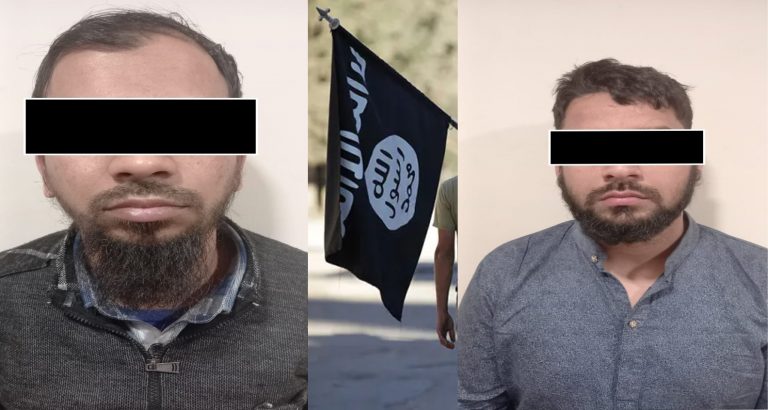
The National Investigation Agency (NIA) on Thursday carried out searches at 56 locations in Kerala in the Popular Front of India (PFI) conspiracy case, sources said. 

The searches are still going on at the premises and offices of several suspects having links with cadres of PFI, an organisation banned by the Ministry of Home Affairs in September this year with its associates, and affiliates for a period of five years under Unlawful Activities (Prevention) Act, 1967 by declaring it as an unlawful association. The raids started early on Thursday in coordination with state police following specific inputs against PFI cadres who are accused of their involvement in several terrorist acts and the murder of several persons, including Sanjith (Kerala, November 2021), V-Ramalingam (Tamil Nadu, 2019), Nandu (Kerala, 2021), Abhimanyu (Kerala, 2018), Bibin (Kerala, 2017), Sharath (Kamataka, 2017), R.Rudresh (Kamataka, 2016), Praveen Puyari (Karnataka, 2016), and Sasi Kumar (Tamil Nadu, 2016). 

The MHA had earlier said that the criminal activities and brutal murders have been carried out by the PFI cadres for the sole objective of “disturbing public peace and tranquillity and creating a reign of terror in the public mind”. 

The MHA has also mentioned “international linkages of PFI with Global Terrorist Groups”, and that some activists of the outfit have joined the Islamic State of Iraq and Syria (ISIS) and participated in terror activities in Syria, Iraq and Afghanistan. 

Some of these PFI cadres linked to ISIS have been killed in these conflict theatres and some have been arrested by State Police and Central Agencies also the PFI has linkages with Jamat-ul-Muyahideen Bangladesh (JMB), a proscribed terrorist organization”. 

The NIA had carried out searches at more than 150 locations across the country against PFI cadres so far this year.

(This news report is published from a syndicated feed. Except for the headline, the content has not been written or edited by OpIndia staff)

Iranian Chess player competes at tournament without hijab

0

Iranian Chess player Sara Khadem, also known as Sarasadat Khademalsharieh, recently took part in a tournament without wearing a hijab, CNN reported on Wednesday citing Iranian news agency Jamaran. 

Since the start of anti-government protests in September, Khadem is the most recent athlete to compete without a hijab. The protests in Iran were triggered by the death of 22-year-old Mahsa Amini after she was detained by the police force. 

According to reports in the local media, Khadem was photographed competing in the FIDE World Rapid and Blitz Chess Championships in Almaty, Kazakhstan, without wearing the headscarf, which is required by Iranian law. 

According to the International Chess Federation, the chess player was born in 1997 and is currently ranked number 10 in Iran among active players worldwide (804th overall), as per CNN. 

Iranian climber Elnaz Rekabi competed in South Korea earlier in October without wearing the required hijab, later explaining that it had fallen off inadvertently. It’s not clear, though, whether Rekabi was coerced into saying what she did. 

According to CNN, Iran’s deputy sports minister Maryam Kazemipour, in a statement said earlier that athletes who violated Islamic principles afterwards “regretted” their behaviour and “are searching for a chance to make up for their error.” 

According to Amnesty International, as of November, Iranian authorities are seeking the death penalty for at least 21 people in connection with the protests. 

Last year, in Iran, at least 333 people were executed, according to the Iran Human Rights. The report further revealed that 55 executions, which contribute 16.5 per cent, were announced by official sources.

As many as 83.5 per cent of all executions included in the 2021 report (278 executions in total) were not announced by the authorities. At least 183 executions (55 per cent of all executions) were for murder charges, according to the report. 

Iran has suspended its so-called morality police, which penalised women for not adhering to a stringent dress code, the Iranian prosecutor general said after the anti-hijab protest continued into the third month, triggered by the death of 22-year-old Mahsa Amini after she was detained by the police force. 

Iran’s Attorney General Mohammad Javad Montazeri said the morality police “was abolished by the same authorities who installed it”, The New York Times reported. 

Notably, Amini was arrested in Tehran on September 13 for dressing “inappropriately.” Three days later, she died while in custody. It sparked demonstrations and clashes with security forces where many people lost their lives.

(This news report is published from a syndicated feed. Except for the headline, the content has not been written or edited by OpIndia staff)